Our Fight For Freedom

“There are special people in our lives who never leave us even after they are gone. In loving memory of all the men that have passed away since the burning of Long Kesh 15th & 16th October 1974. Rest in peace. Also remembering the blanket men and women, all republicans who have lost their lives in our fight for freedom. Rest in peace. Ní fhéadfaıdís sınn a bhrıseadh [They cannot (lit. would not be able to) break us].”

This Celtic cross memorial was erected to commemorate the fiftieth anniversary of the burning of Long Kesh. According to Derry Now (which has photos of the launch) the cross is one of four to be be raised in various areas. For the one in Newry, see Davey Morley.

Click image to enlarge
Copyright © 2025 Paddy Duffy
T06188

Our Community Transformation

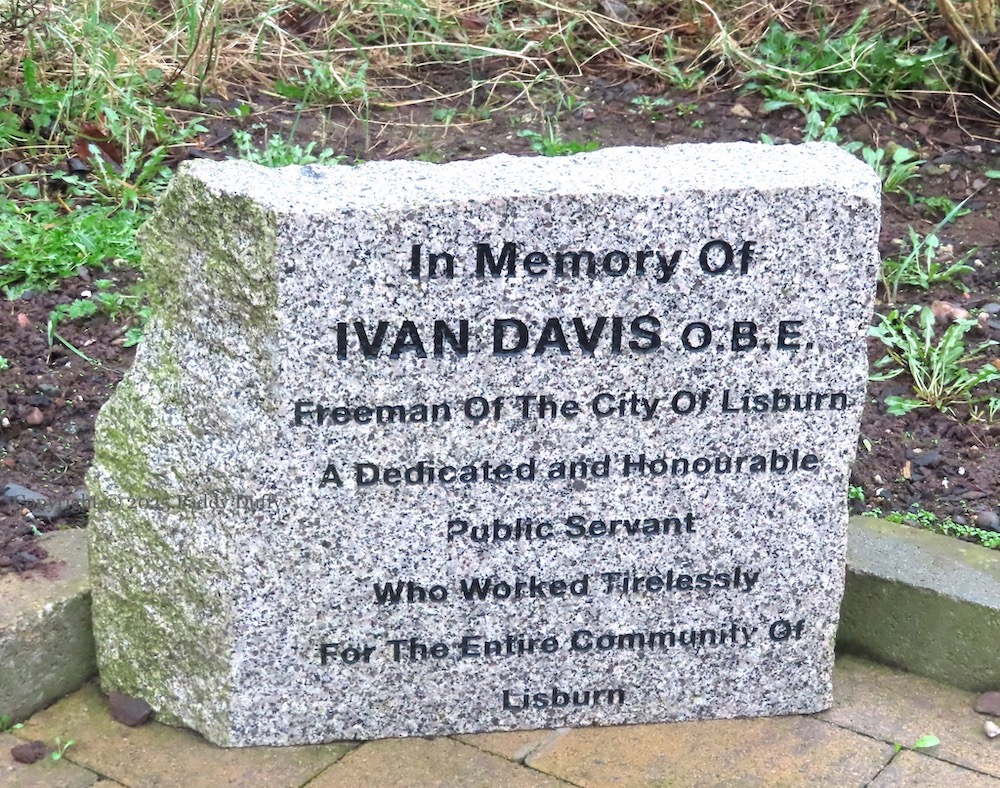
Ivan Davis was a DUP and then UUP politician who was a Lisburn borough councillor (and mayor 1991-1993) and member of the Assembly for Lagan Valley from 1998 to 2003, before being ousted in favour of the anti-Agreement Jeffrey Donaldson (BBC). He died in 2020 (BelTel). The stone in his memory is in the garden at the top of Old Warren: “In memory of Ivan Davis O.B.E. Freeman of the city of Lisburn, a dedicated honourable public servant who worked tirelessly for the entire community of Lisburn.”

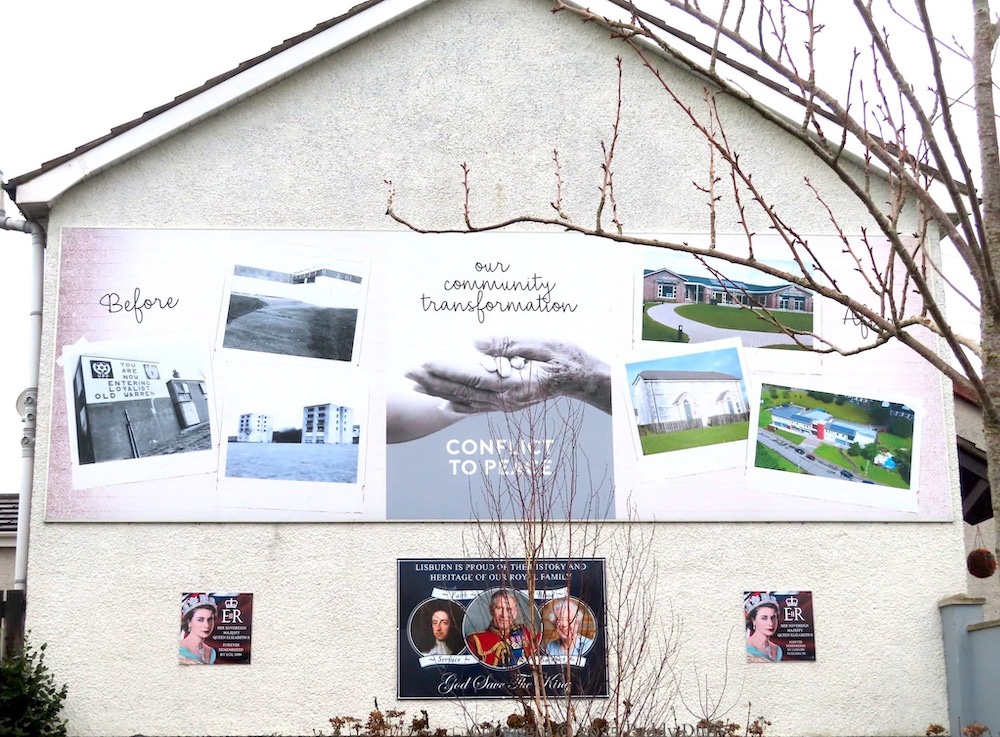
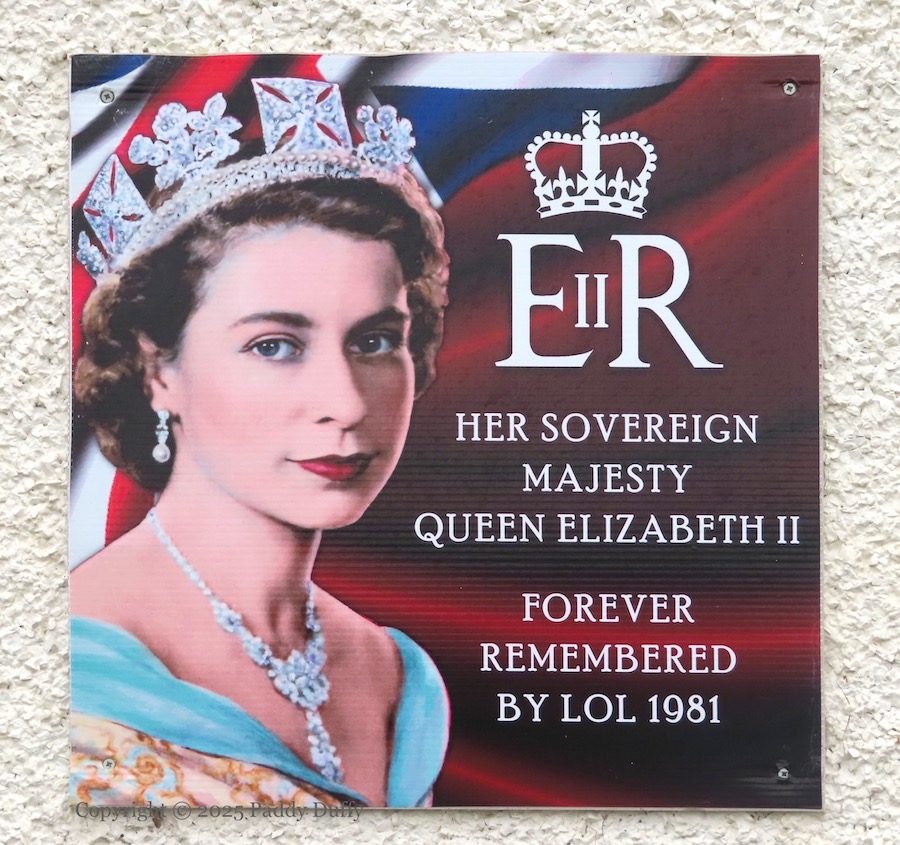
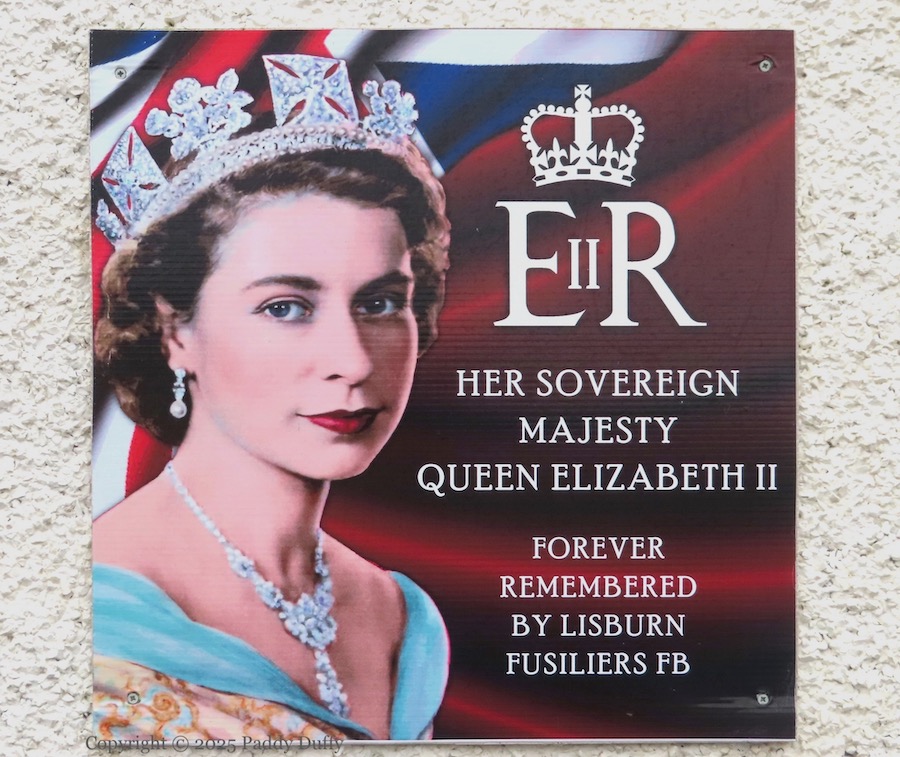
The boards on the wall were seen previously in 2023’s Conflict To Peace – which includes a colour photograph of the old UDA mural – and 2024’s Faith, Blood, Service, Sacrifice.

Avonmore Park, Old Warren, Lisburn

Click image to enlarge
Copyright © 2025 Paddy Duffy
T06099 T06100 T06101 T06102 T06103 T06104

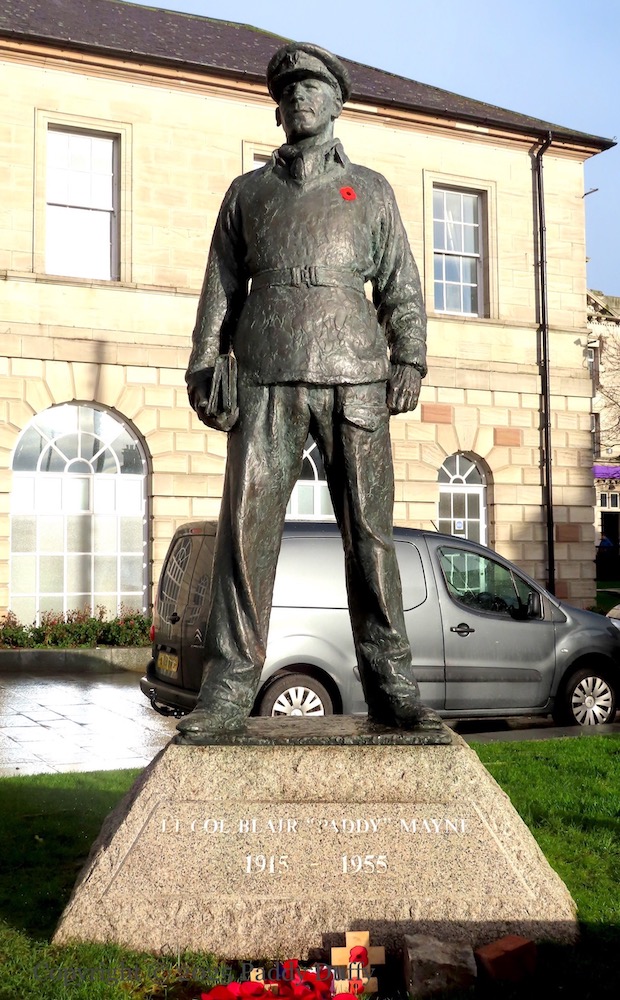
Colonel Paddy

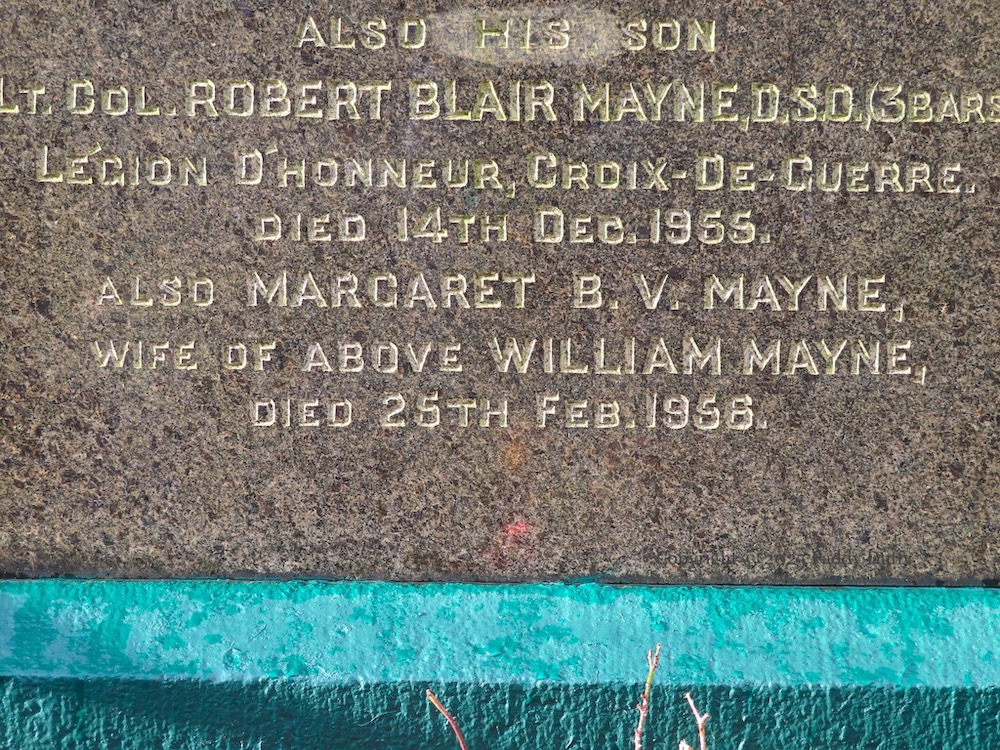
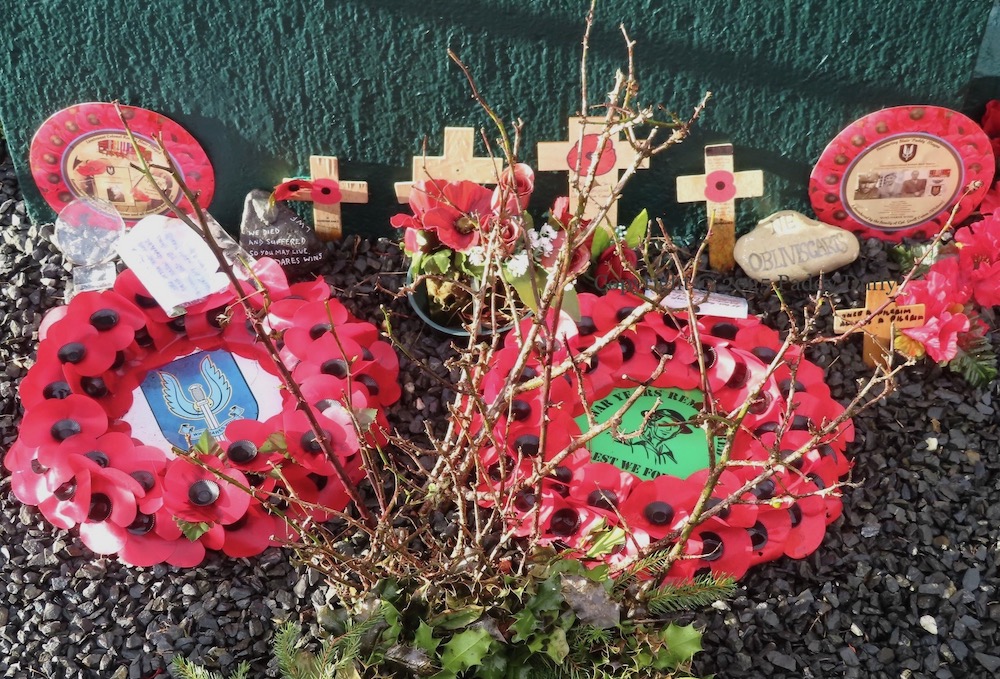
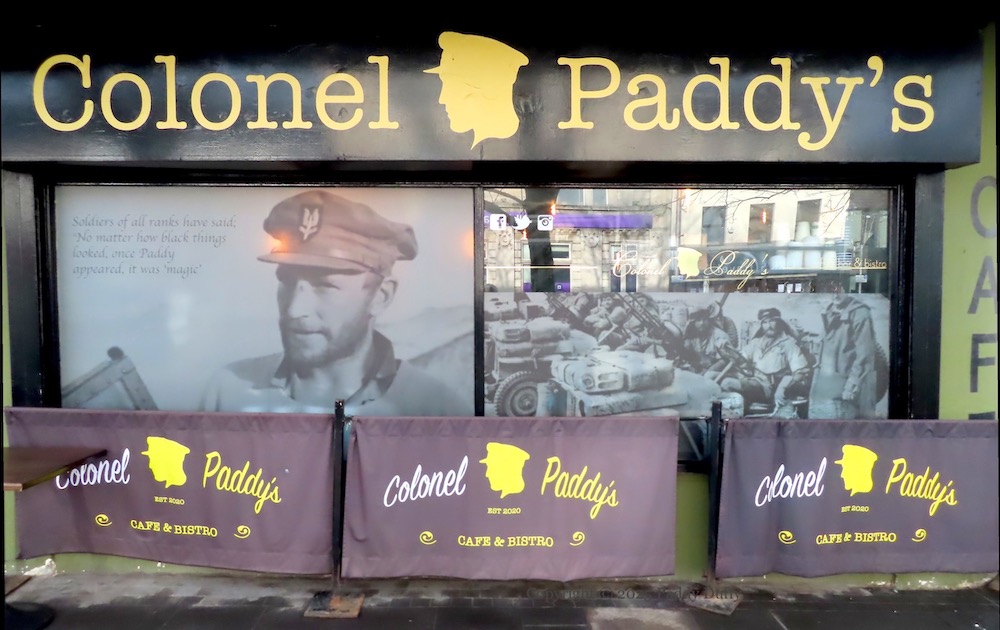
A statue to WWII hero Robert Blair “Paddy” Mayne (1915-1955) stands in Conway Square, in front of the Newtownards town hall and close to the “Colonel Paddy” café (final image); the family grave is in Movilla Abbey. He is featured in the nearby mural at Russell & Co solicitors and there was previously a mural in his honour in the Movilla area of the town.

The plaque at the base of the statue reads: “Lt Colonel Robert Blair “Paddy” Mayne was born in Newtownards and attended Regent House Grammar School. From an early age his talent on the rugby field was apparent, with successes playing for his school, his country and the British Lions. Blair Mayne is, however, remembered principally for his military prowess. He first served with the Office Training Corps at Queen’s University Belfast where he was studying law. However, his military career began in earnest in 1939 when he obtained a commission in the Royal Artillery. He went on to serve with the Royal Ulster Rifles, the Cameronians and the newly formed 11th Scottish Commando with which, in 1941, he first saw action at the Litiani River in Syria [WP] and was mentioned in dispatches for his bravery. The offer from Colonel David Stirling to join “L” Detachment of the newly formed Special Air Services followed and it was on a subsequent raid in the North African desert that he gained the Distinguished Service Order (DSO). Later acts of outstanding bravery in Sicily, France and North Western Europe added three bars to his DSO and his regiment ended the war in Norway assisting with the surrender of German forces there. Lt Colonel Maybe was also honoured by the French and Belgian nations when he was awarded the Croix de Guerre and the Legion d’Honneur (with palme). Following the war Blair Mayne continued to practice law and was appointed Secretary of the Law Society, although due to injuries sustained in combat he was unable to resume his rugby career. He died in a car accident in Newtownards on 10th December 1955. His funeral was the largest ever witnesses in the town and was attended by senior military figures and other dignitaries. At his graveside his former padre said: “The gift of leadership and the ability to inspire complete devotion and loyalty were his to an exceptional degree.” Blair Mayne is buried in the family play in Movilla Cemetery, Newtownards. This statue was erected by Ards Borough Council and funded by public subscription with assistance of the Arts Council of Northern Ireland’s National Lottery Fund.”

Click image to enlarge
Copyright © 2025 Paddy Duffy
T06047 [T06044] T06045 T06046
T06048 T06049 T06050 [T06051] [T06052]
T06043

Continuing Conflicts

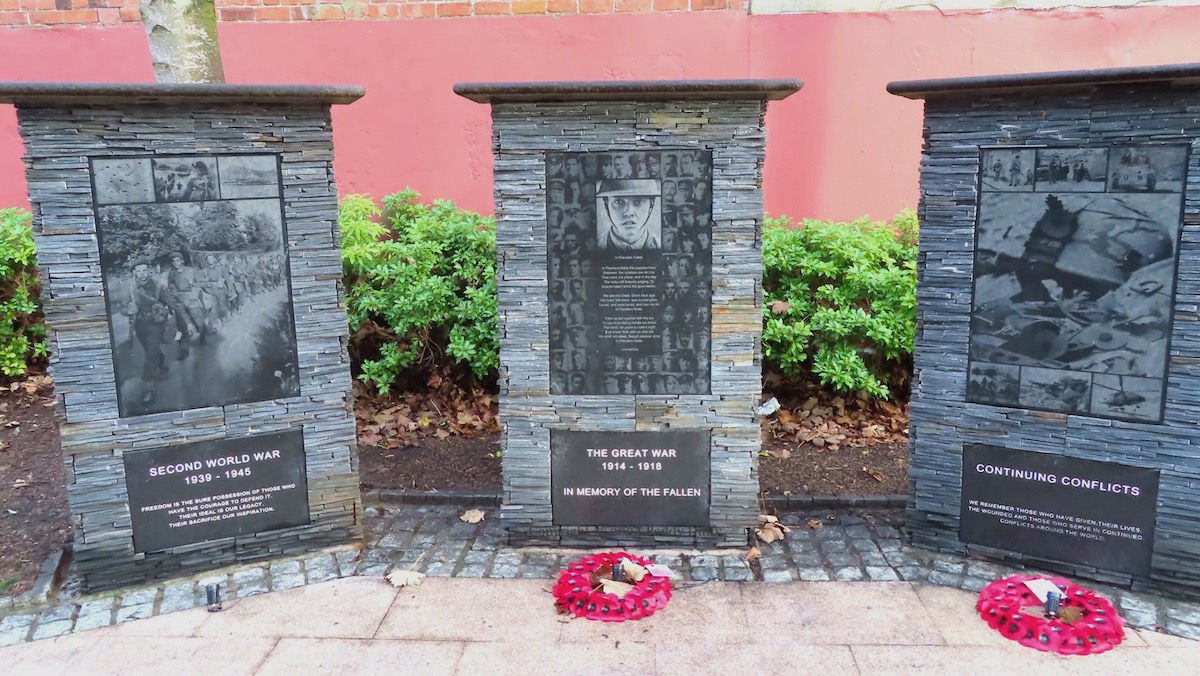
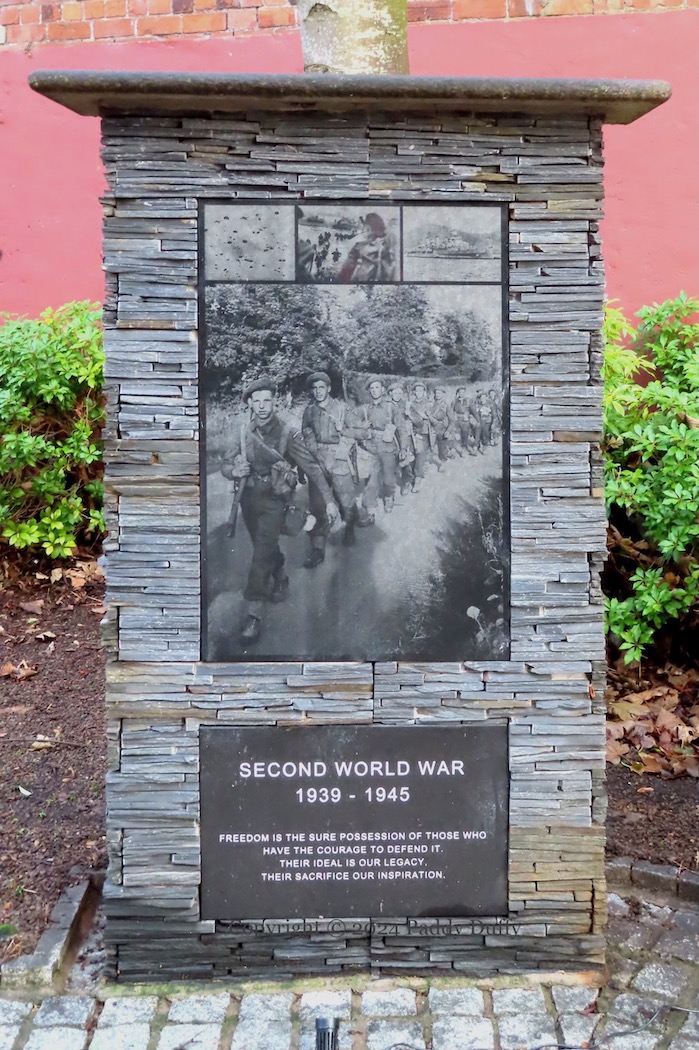
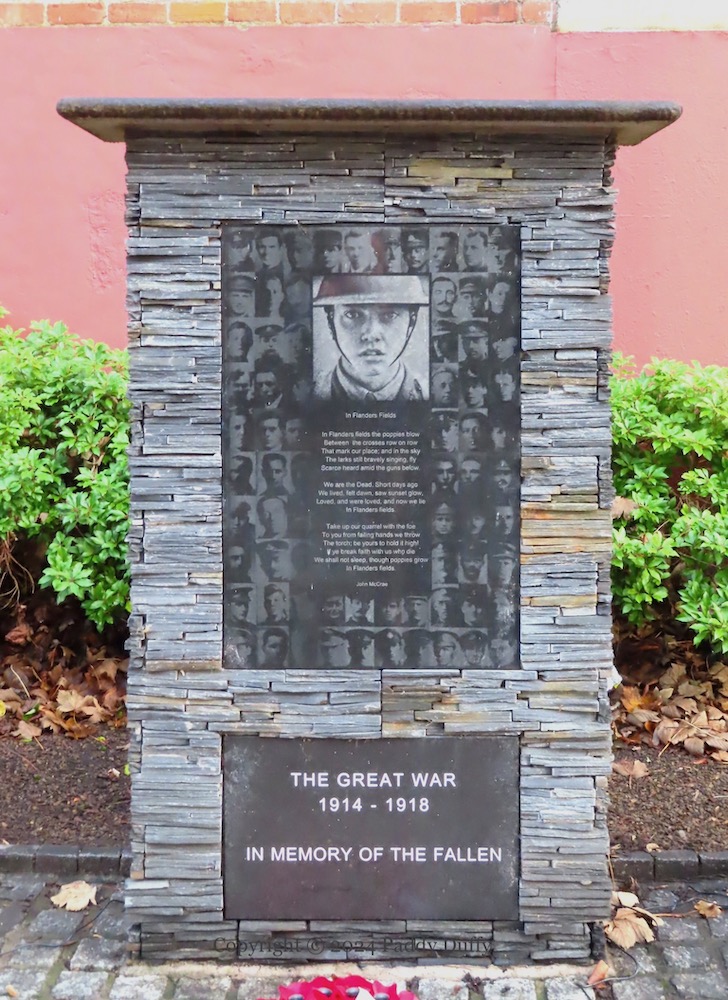
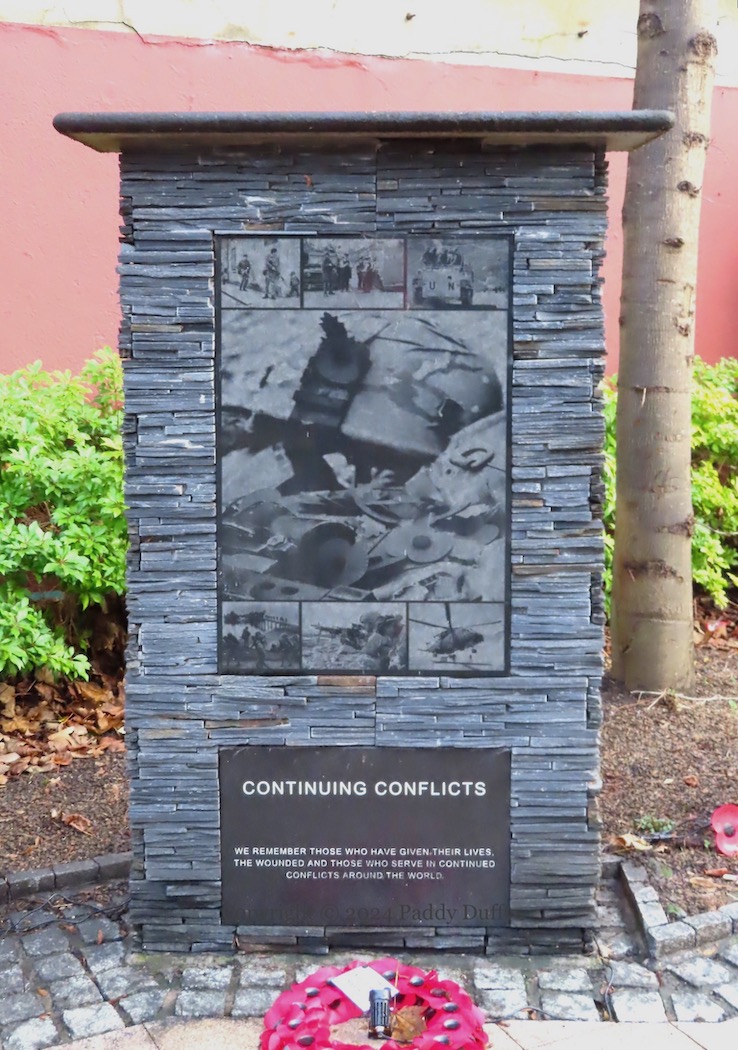
The war memorial garden in City Way (Sandy Row) commemorates those from the Great War, World War II, and “Continuing Conflicts” which includes the “Troubles”. There is also a fourth, smaller, stone, with John Maxwell Edmonds’s memorial epitaph.

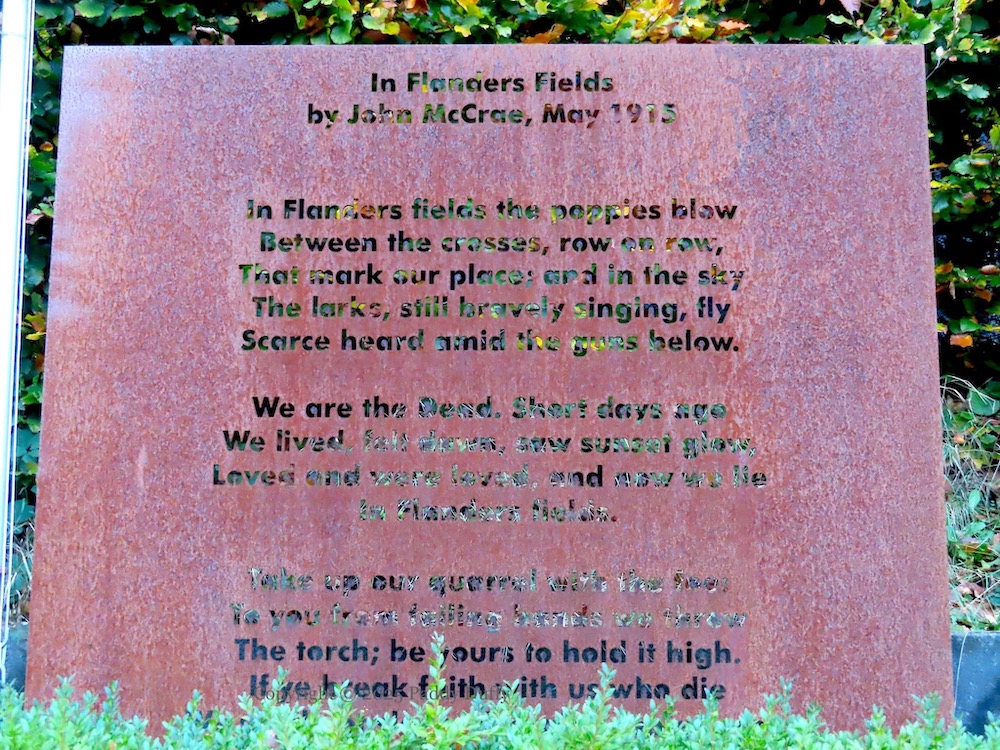
“The Great War 1914-1918: In memory of the fallen”, with John McCrae’s poem ‘In Flanders Fields‘.
“Second World War 1939-1945: Freedom is the sure possession of those have the courage to defend it. Their ideal is our legacy. Their sacrifice is our inspiration.”
“Continuing Conflicts: We remember those who have given their lives. The wounded and those who serve in continued conflicts around the world.”

Click image to enlarge
Copyright © 2024 Paddy Duffy
T05933 T05934 T05935 T05936 T05937

Brıogáıd Dhoıre

The IRA Derry Brigade/Brıogáıd Dhoıre Óglaıgh Na hÉıreann memorial at the shops on Racecourse Road, Shantollow, Derry, includes quotes from Robert Emmet (not: Emmett) – “When my country takes her place among the nations of the Earth, then and not until then let my epitaph be written” – and the 1916 Proclamation – “We declare the right of the people of Ireland, and to the unfettered control of Irish destinies to be sovereign and indefeasible” – in both English and Irish.

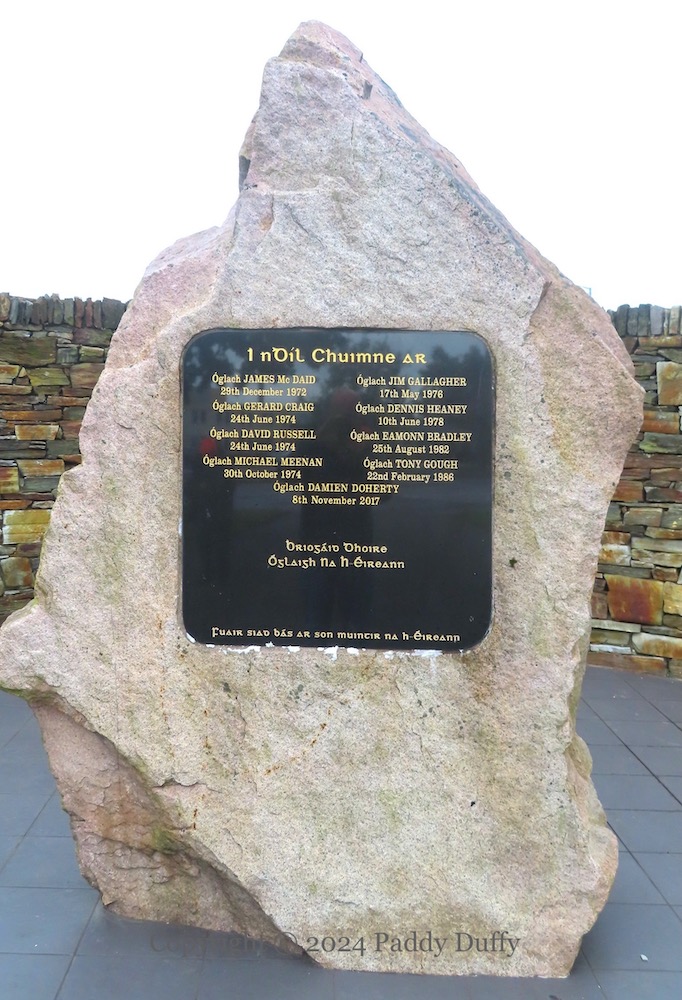
Seven members of the Derry Brigade are listed on the central stone: Junior McDaid, Gerard Craig, David Russell, Michael Meenan, Jim Gallagher, Dennis Heaney, Bronco Bradley, Tony Gough, and (a new addition compared to 2003) Damien Doherty. “Fuaır sıad bás ar son muıntır na hÉıreann”.

“Nuaır a ghlacfaıdh mo thír dhúchaıs a háıt cheart ı measc náısıún uıle an domhaın, ansın, agus chan go dtí sın, déanaıgí feartlaoı s’agamsa a scríobh amach. – Roıbéard Eıméıd 1803” – “When my country takes her place among the nations of the earth, then and not until then let my epitaph be written – Robert Emmett 1778-1803”

“Dearbhaıonn muıd gur cheart go mbeadh seılbh ag muıntır na hÉıreann ar thalamh na hÉıreann. Ba chóır ıad a bheıth ı gceannas ar thodhchaí na hÉıreann agus ar a dtarlóıdh dı amach anseo – Forógra na hÉıreann, An Cháısc 1916” – “We declare the right of the people of Ireland, to the ownership of Ireland, and to the unfettered control of Irish destinies to be sovereign and indefeasible – The Proclamation, Easter 1916”

Click image to enlarge
Copyright © 2024 Paddy Duffy
T05183 T05184 T05185 T05186 T05187 T05188
Camlough Memorial Garden

The memorial garden in Quarter Road, Camlough, commemorates deaths and events from 1916 to 1921:
“In memory of the Irish men and women who died in 1916 in conflicts both at home and abroad.”

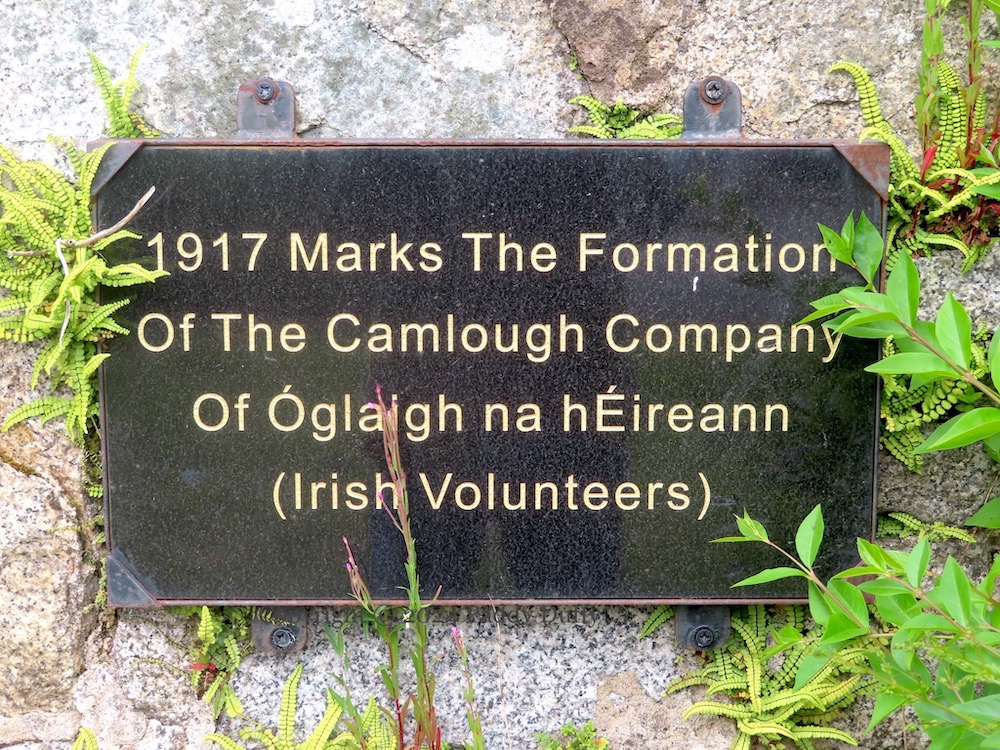
“1917 marks the formation of the Camlough company of Óglaıgh Na hÉıreann (Irish Volunteers).”

“1917-2017 centenary of the Sınn Féın cumann, Camlough.”

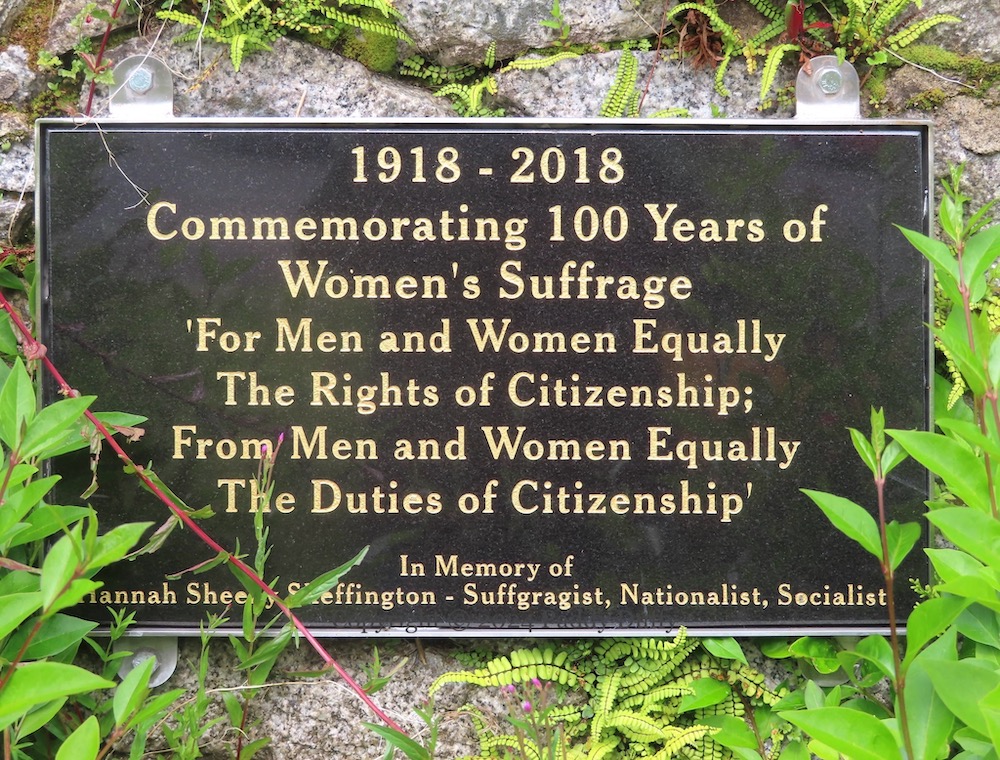
“1918-2018 commemorating 100 years of women’s suffrage ‘For men and women equally the rights of citizenship; from men and women equally the duties of citizenship’. In memory of Hannah Sheehy-Skeffington – suffragist, nationalist, socialist.”

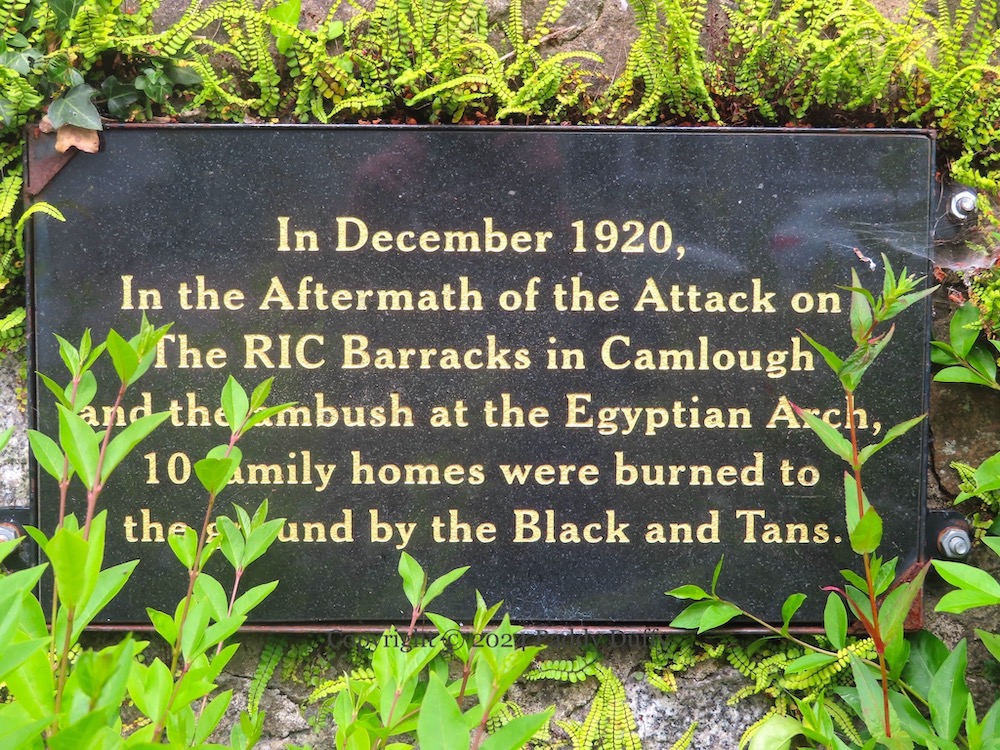
“December 1920, during the Tan War, the RIC barracks in Camlough was attacked by local volunteers of the Irish Republican Army.”

“In December 1920, in the aftermath of the attack on the RIC barracks in Camlough and the ambush at the Egyptian Arch, 10 family homes were burned to the ground by the Black And Tans.”

“In memory of Vol. Sean Doran and his sister Mary Ann Kearney, shot dead by the Black And Tans, 1921.”

Click image to enlarge
Copyright © 2024 Paddy Duffy
T04813 T04814 T04815 T04816 T04817 T04818 T04819 T04820

Gáıre Ár bPáıstí

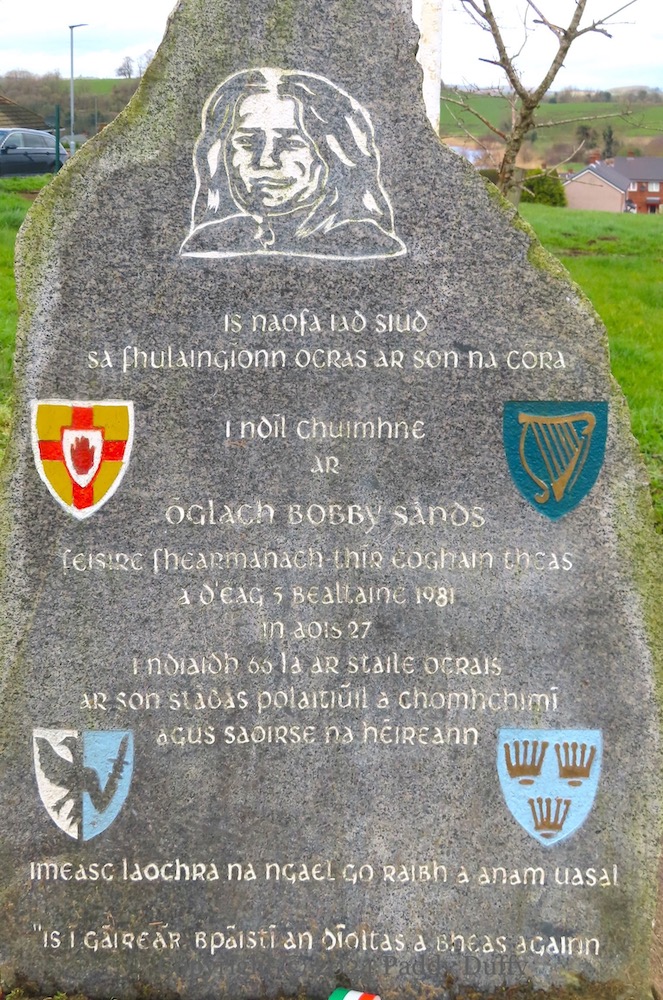
Here are three pieces from the Drumcor Hill area of Enniskillen.

Above, “Enniskillen remembers the hunger strikers” – for the fortieth anniversary of the 1981 strike, against a background of sunburst and starry plough, in Loughview Drive.

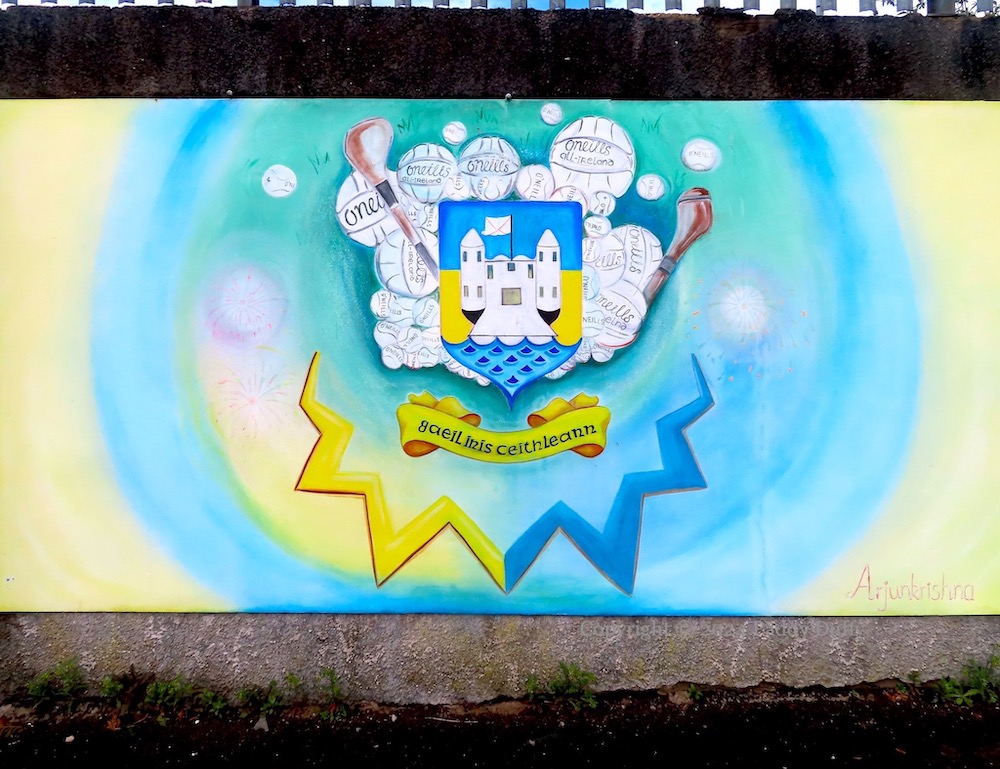
Below, the emblem of Gaeıl Inıs Ceıthleann/Enniskillen Gaels (web) on the wall outside their home field of Brewster Park.

Finally, a memorial stone to Bobby Sands in Erne Drive. The inscription on the stone reads, “‘Is naofa ıad sıud sa fhulaıngíonn ocras ar son na córa.’ [= Holy are those who suffer hunger for the sake of justice/”Blessed are those who hunger for justice”] I ndíl [ndıl] chuımnhe ar Óglach Bobby Sands, feısıre [= M.P.] Fhearmanach-Thír Eoghaın Theas, a d’éag 5 Bealtaıne 1981 ın aoıs 27 ı ndıaıdh 66 lá ar staıle [staılc] ocraıs ar son stádas polaıtıúıl a chomhchımí agus saoırse na hÉıreann. I measc laochra na nGael go raıbh a anam uasal. ‘Is í gáıre ár bpáıstí an díoltas a bheas agaınn'”

For an alternative translation of Sands’s quote “Our revenge will be the laughter of our children”, see The Spirit Of Freedom in the Peter Moloney collection.

Click image to enlarge
Copyright © 2024 Paddy Duffy
T04344 [T04345] T04346 T04347 T04348

1916 Battle Of The Somme

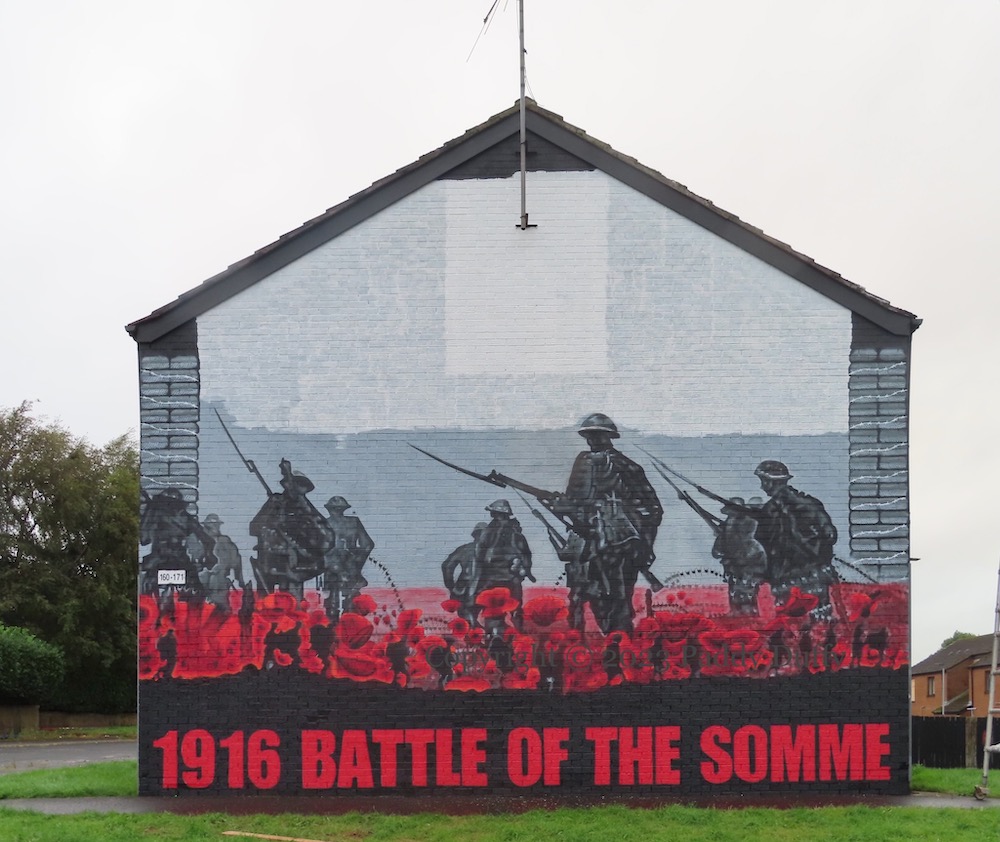
153 men of the 12th Battalion Royal Irish Rifles (which included men from Ballymena and other Central Antrim Volunteers) died on the first day of the Battle Of The Somme, July 1st, 1916, as they and the 9th Royal Irish Fusiliers attempted to take German trenches near Beaucourt railway station (Royal Irish). According to the account of the movements of the 12th Royal Irish Rifles by Des Blackadder on the Great War Forum, “they were cut down like corn before a scythe”. In all, more than 2,000 men from the 36th Division were killed that day (WP).

The new mural in Drumtara, Ballymena, was painted by Craig Gilmore, who also did the recent tribute to Elizabeth II (see The Crown) (Ballymena Guardian article on the mural, also by Blackadder). The cut-outs (in the third image) are on a wall at the bottom of the estate; the machine-gunner is unusual.

Click image to enlarge
Copyright © 2024/2023 Paddy Duffy
T03897 T03349 [T03348] T02490

Remembrance Sunday

Remembrance Day, formerly known as Armistice Day, commemorates and celebrates the end of hostilities in the first World War on November 11th, 1918. Many ceremonies in the UK take place on the second Sunday of the month, regardless of the date. This practice began in 1945, changing the WWII practice of marking the occasion on the preceding Sunday, to ensure that the holiday did not fall on a work-day (WP).

This large tarp (above) is at the Shore Road memorial garden to the 10th, 36th, and 16th divisions, shown below, along with the nearby Fifes & Drums/Fairhill flute band (Fb)/Pride Of The Shore (Fb) tribute to QEII. The tarp was also seen last year: Remembrance Day.

Click image to enlarge
Copyright © 2023 Paddy Duffy
T03664 [T03662] [T03663]
T03476 [T03477] [T08003]
T03475
2025: T08001 T08002

In The Shadows Of Our Community

“It is not for riches, fame or glory that we remain in the shadows of our community , but for its protection.”

These words are echoed on the central stone in the garden of reflection, with adjacent North Down UDA roll of honour: “‘Who shall separate us?’ Right up to the present day, these words have been the inspiration and motivation of numerous men and women to serve, fight and die for the defence of their homeland, its people and its heritage. This selfless action is not for riches, fame or glory, but is freely given out of a love of freedom, commitment to the faith and culture of our nation, and a desire that all future generation in all communities can live in peace.”

Movilla Street and Wallace’s Street, off Upper Movilla Street. “Loyalist Movilla” in Newtownards.

Click image to enlarge
Copyright © 2023 Paddy Duffy
T03423 T03422 T03421 T03420
“This garden of reflection is paying tribute to the men and women who have lost their lives in all wars and conflicts, past and present, here in Northern Ireland and throughout the world, in the hope that one day we can all live together, side by side in peace regardless of religion, colour or creed.
“‘Who shall separate us?’ Right up to the present day, these words have been the inspiration and motivation of numerous men and women to serve, fight and die for the defence of their homeland, its people and its heritage. This selfless action is not for riches, fame or glory, but is freely given out of a love of freedom, commitment to the faith and culture of our nation, and a desire that all future generation in all communities can live in peace. Their sacrifice, commitment and dedication will always be appreciated and will never be forgotten.”
“In our past the soldiers fought, for freedom and for pride, some of them were wounded, many of them died. With poppies we remember the soldiers that have died, with them we now have freedom, because they fought with pride. There they lie in Flanders Fields, where bright red poppies grow. In the war they fought for, and that we’ll always know. Freedom is never free.”