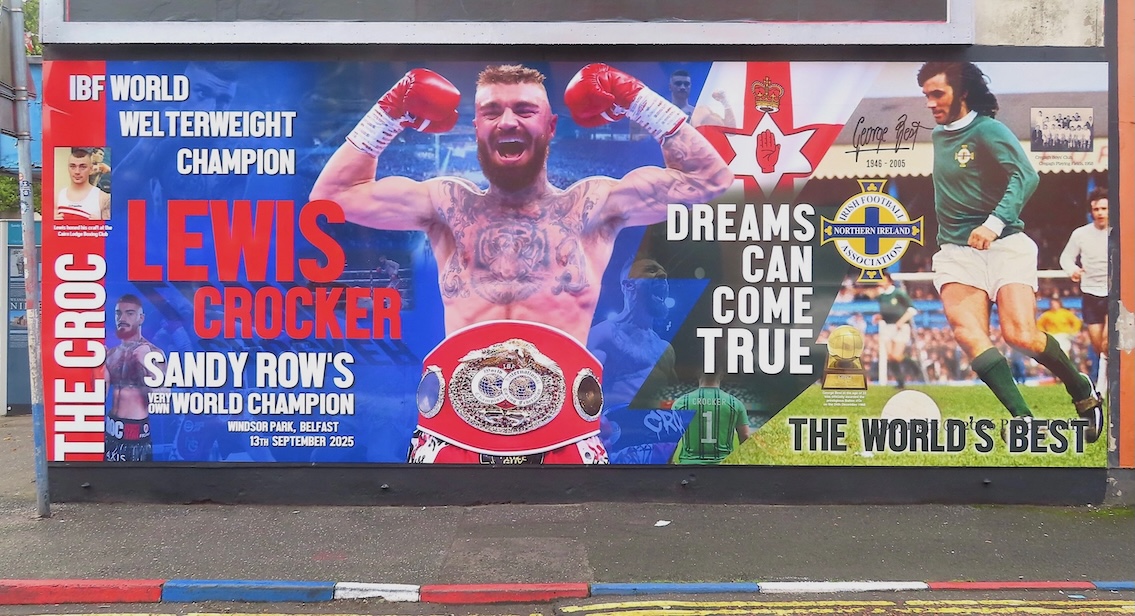
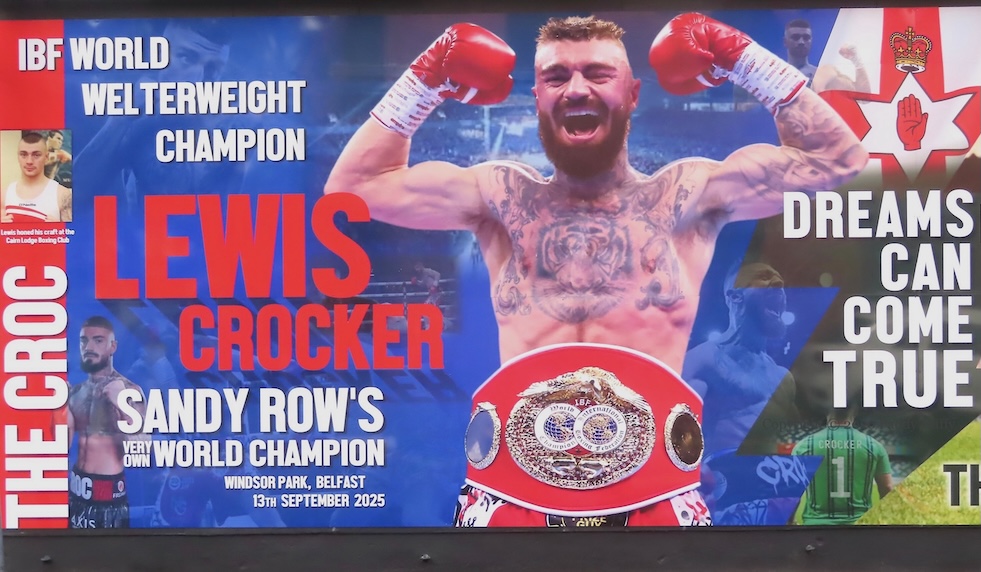
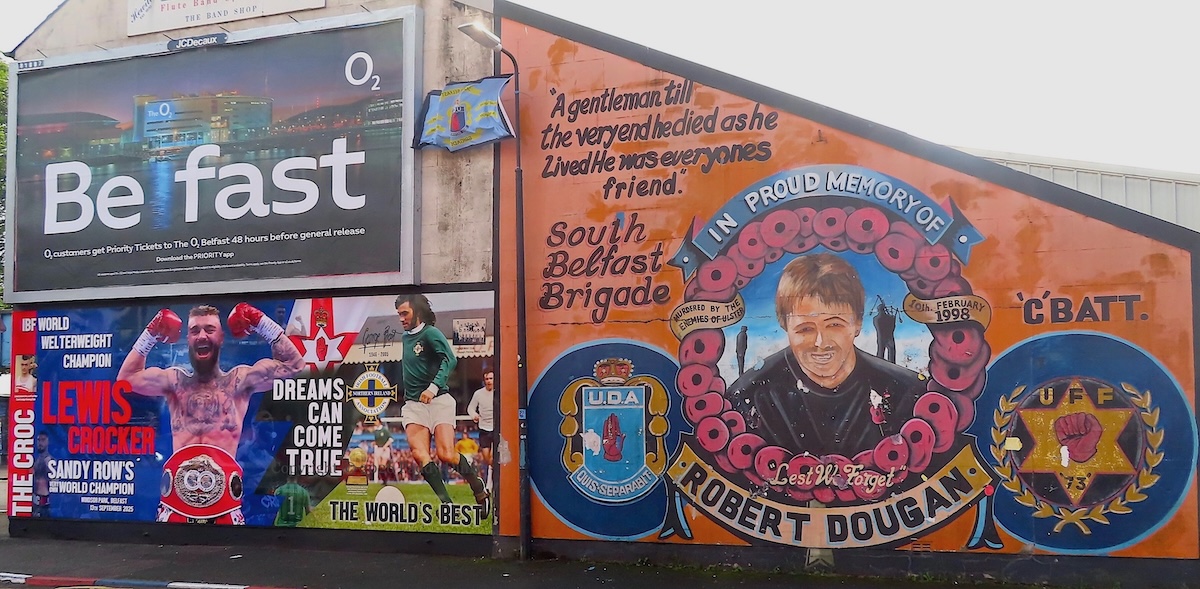
“The world’s best.” A new board has been mounted in Sandy Row to pay tribute to Lewis ‘The Croc’ Crocker, Sandy Row’s very own world champion, who “honed his craft at Cairn Lodge boxing club” on the West Circular and became “IBF world welterweight champion” at “Windsor Park, Belfast, 13th September 2025.” Crocker lost the title in June 2026, to the Australian Liam Paro.
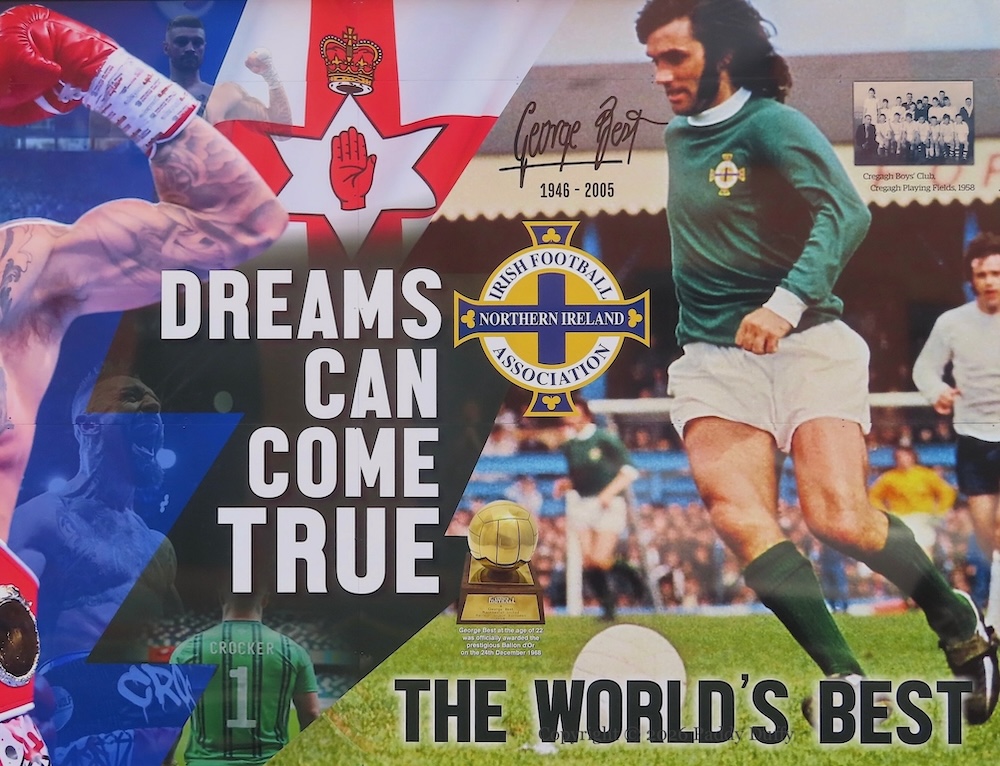
On the right is soccer-player George Best, who grew up in Cregagh and debuted for Manchester United at the age of 17. “George Best at the age of 22 was awarded the prestigious Ballon d’Or on the 24th December 1968.”
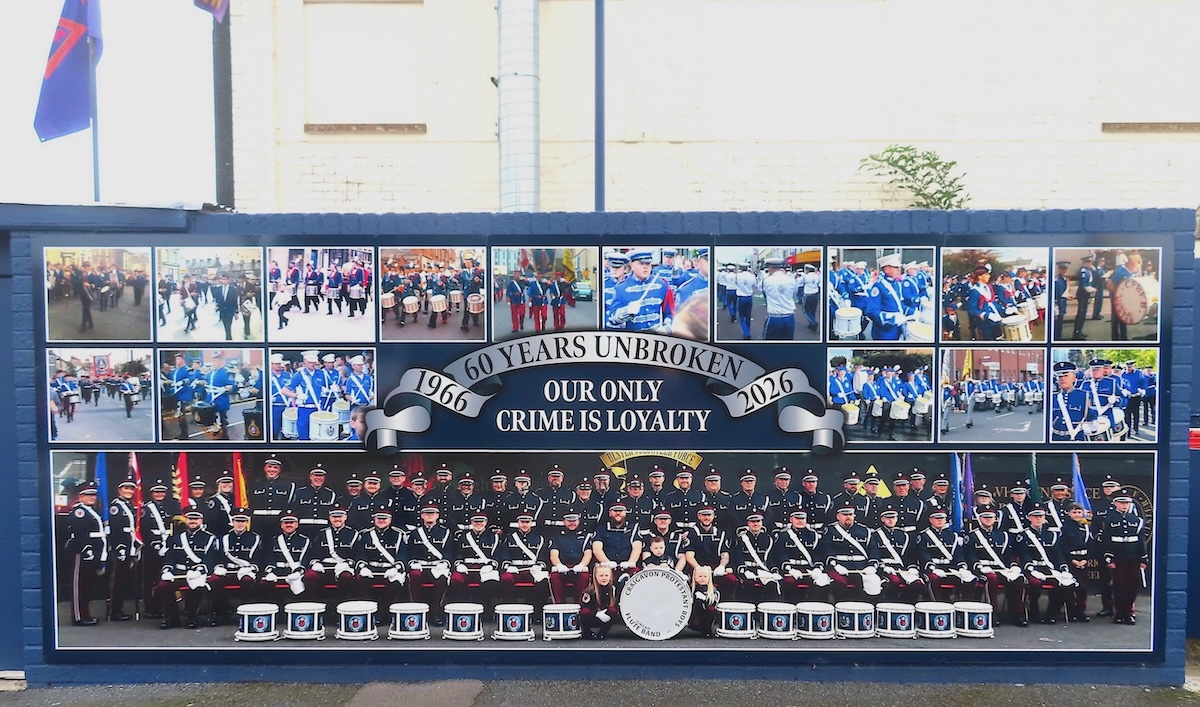
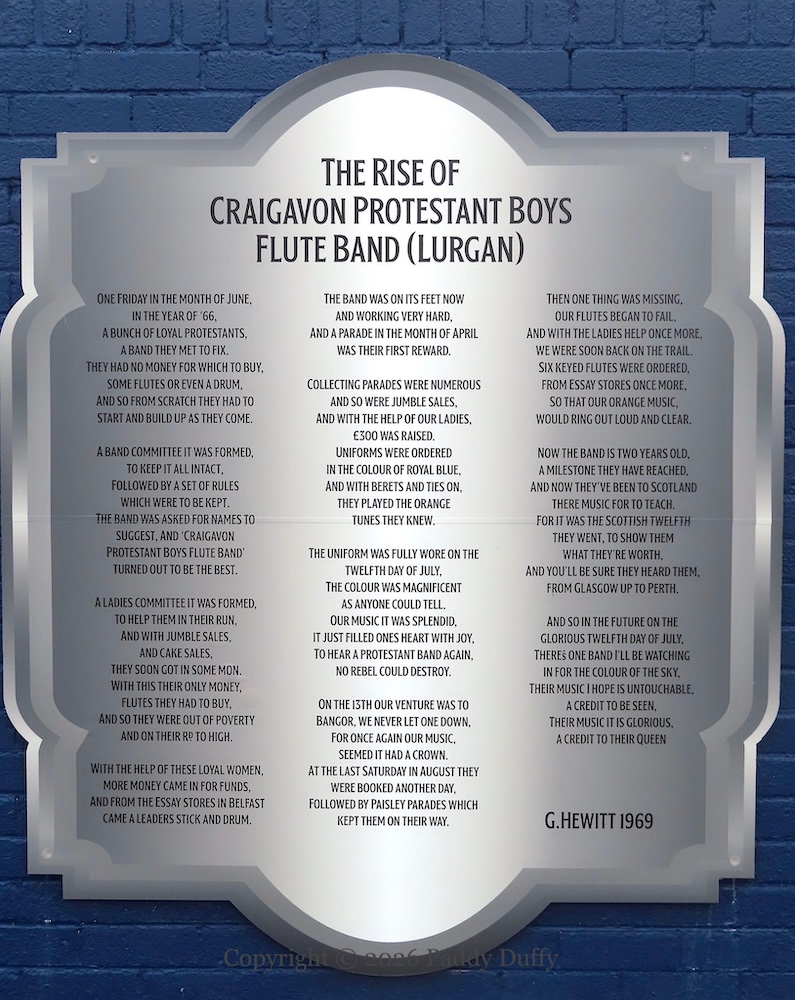
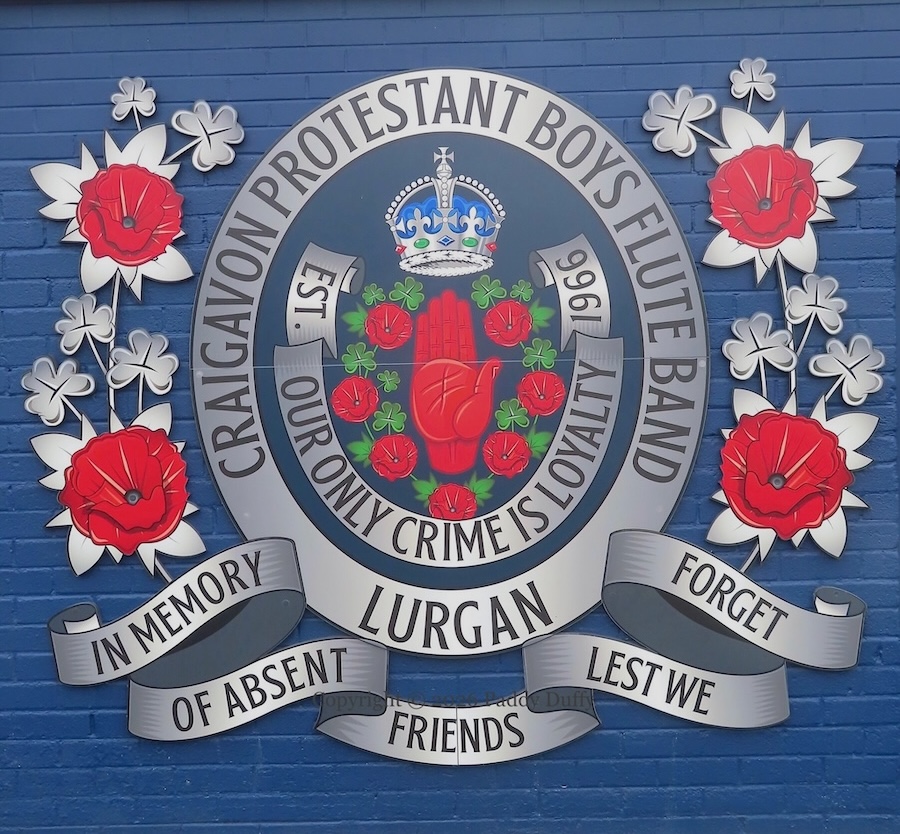
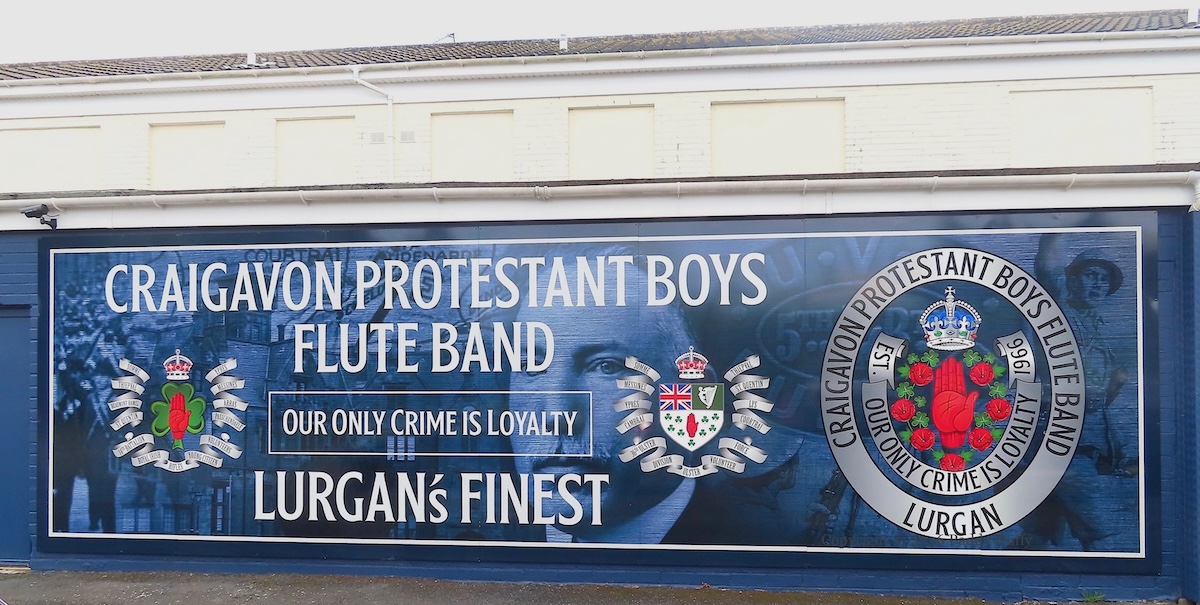
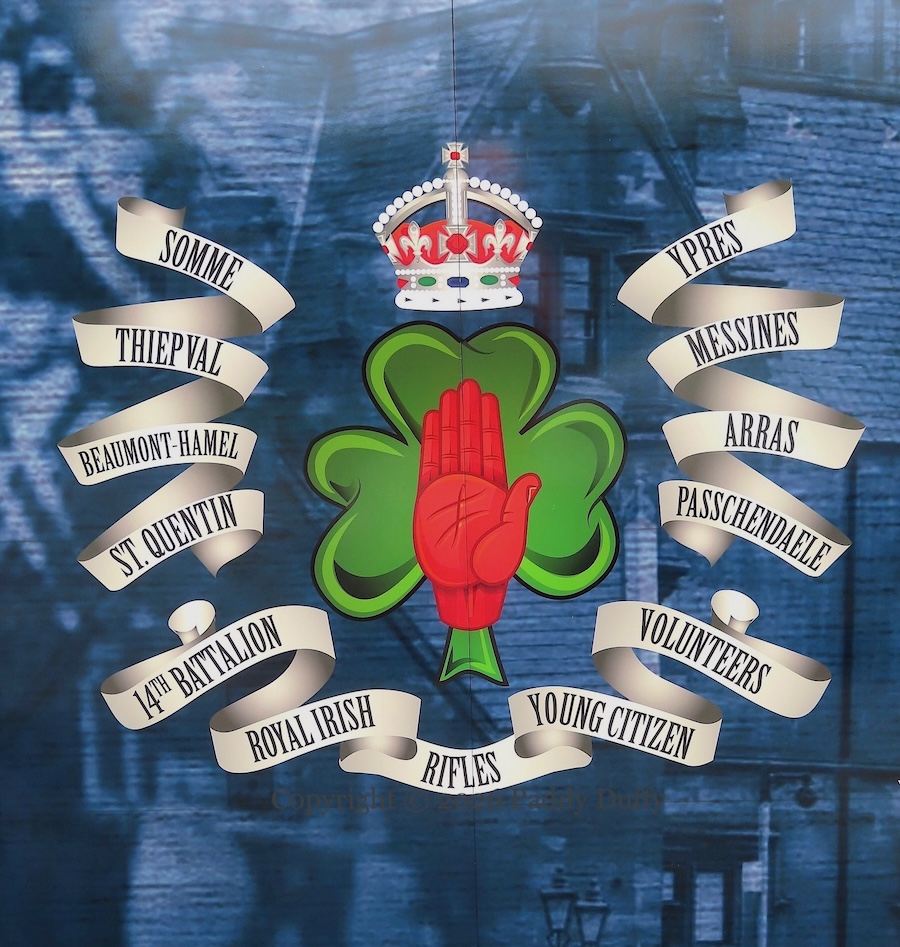
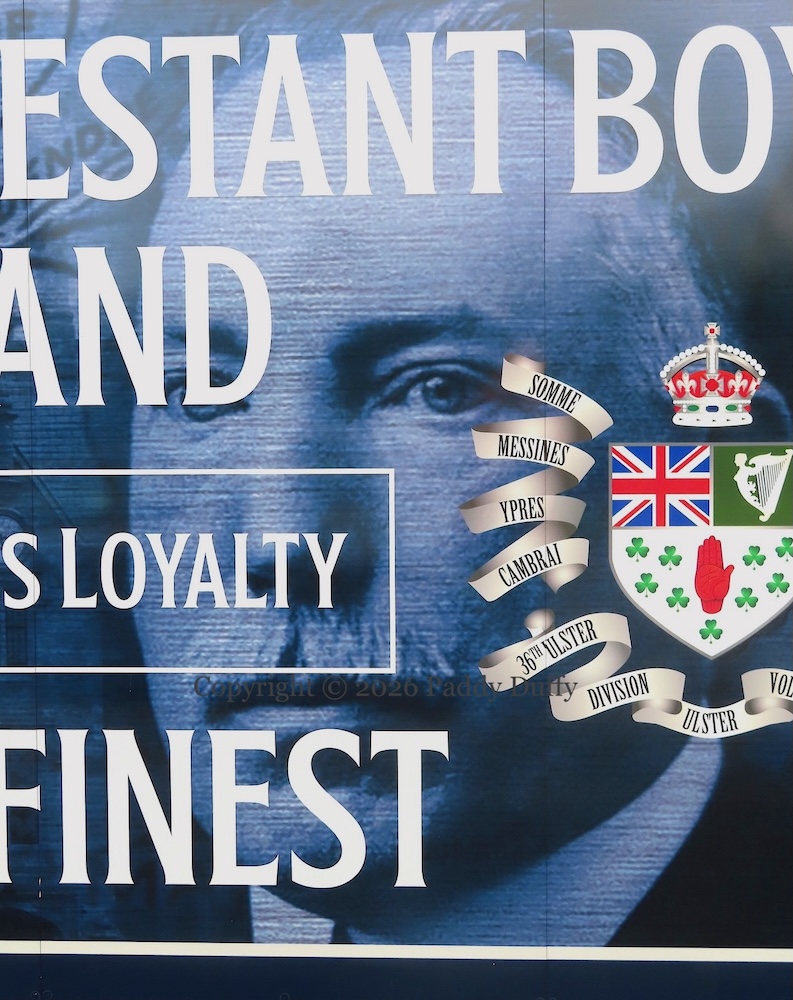
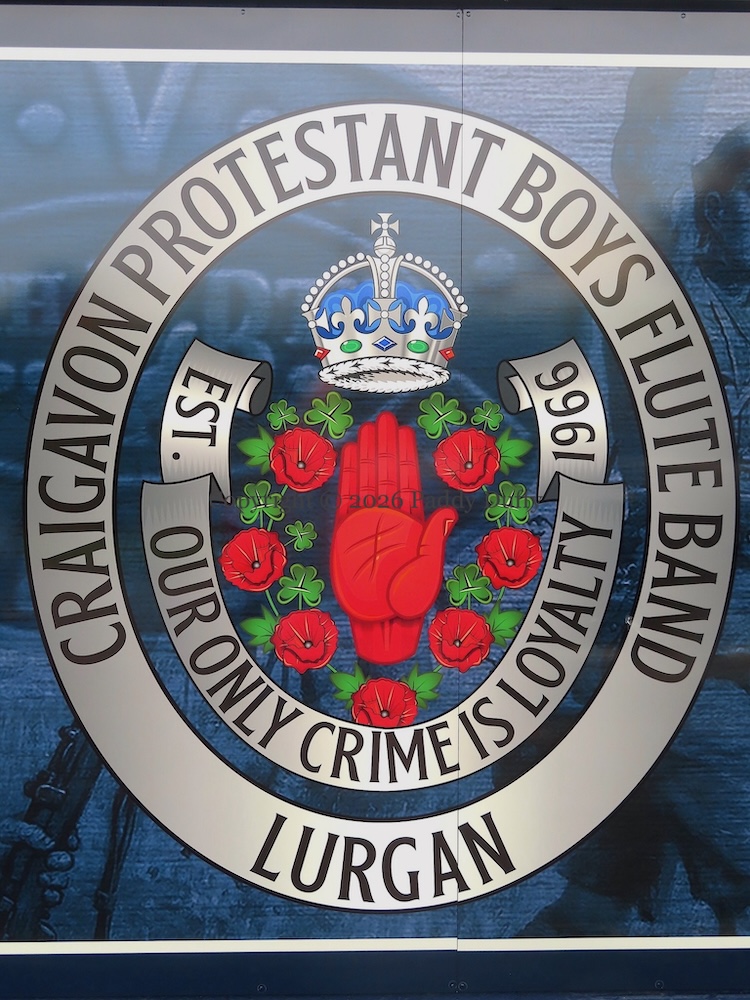
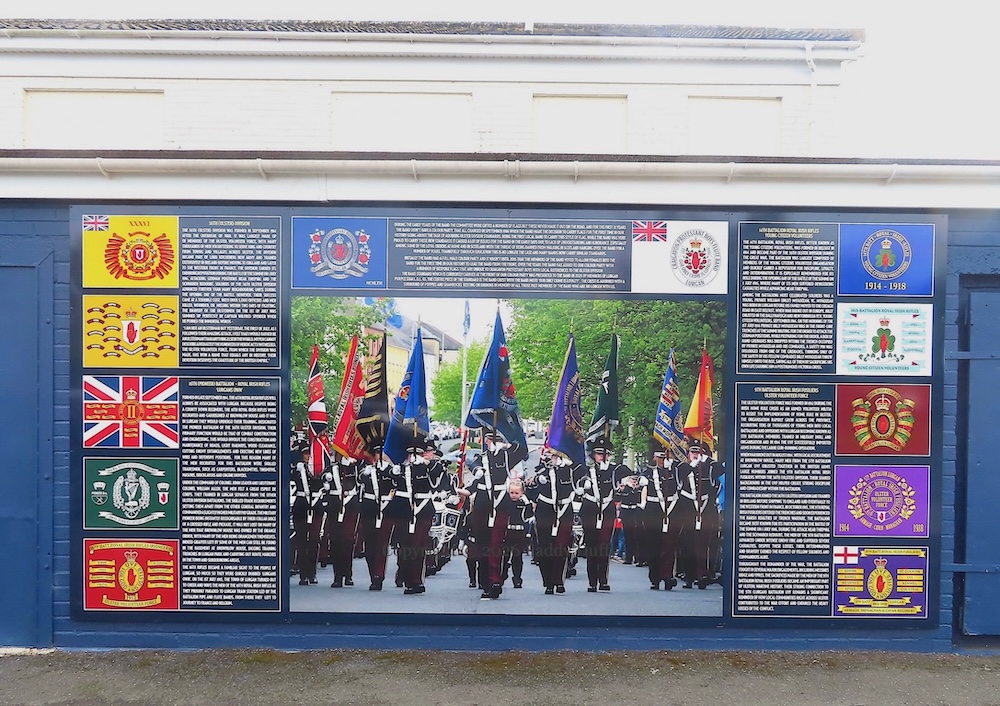
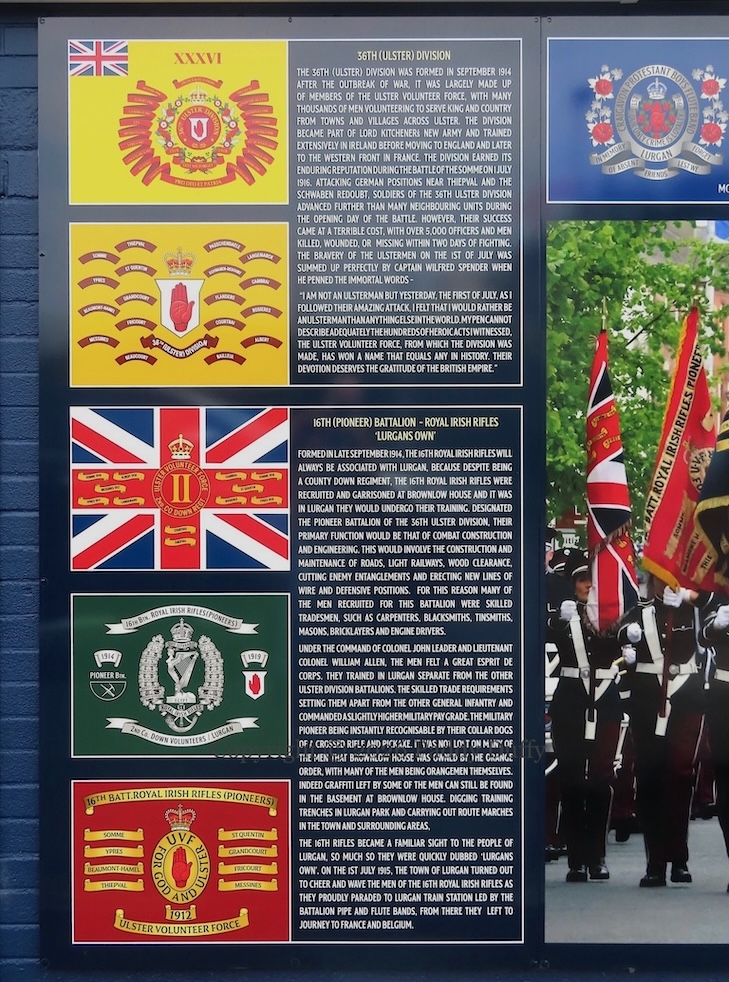
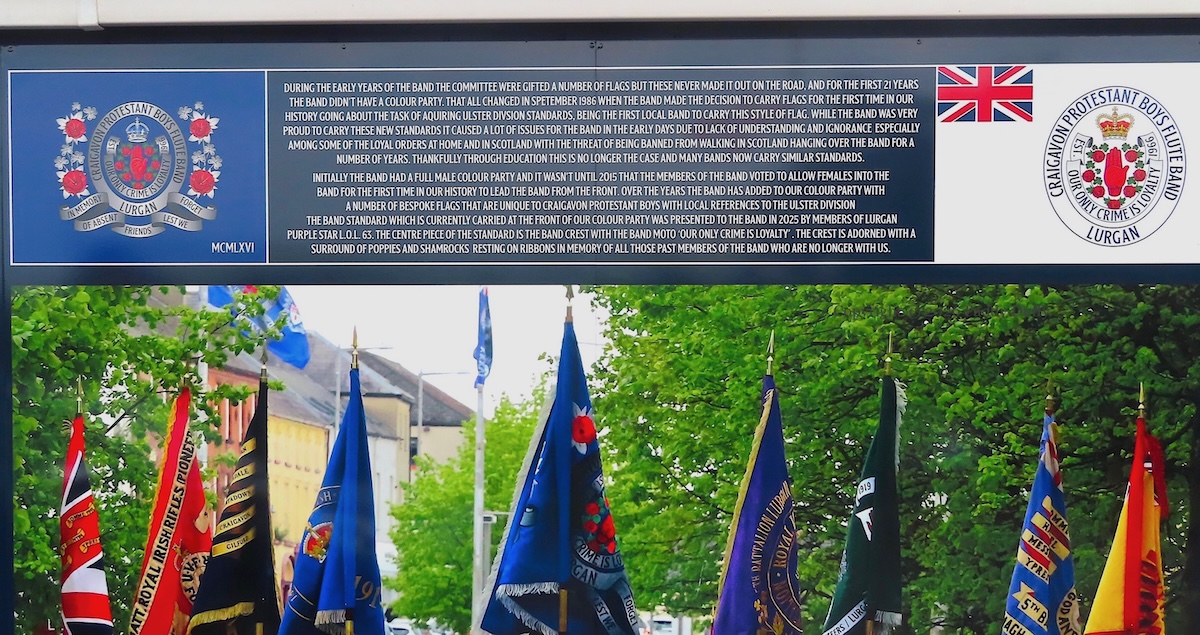
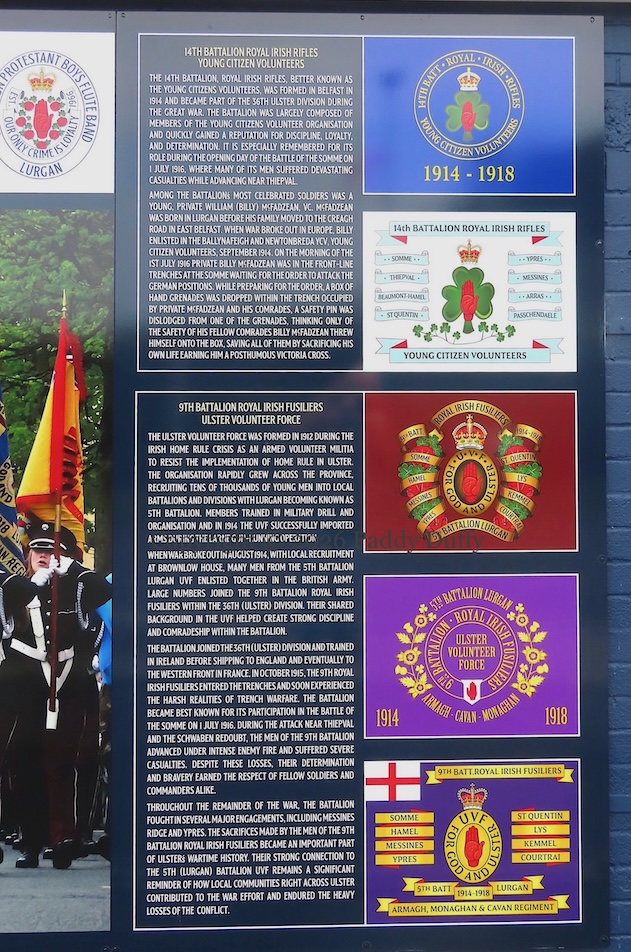
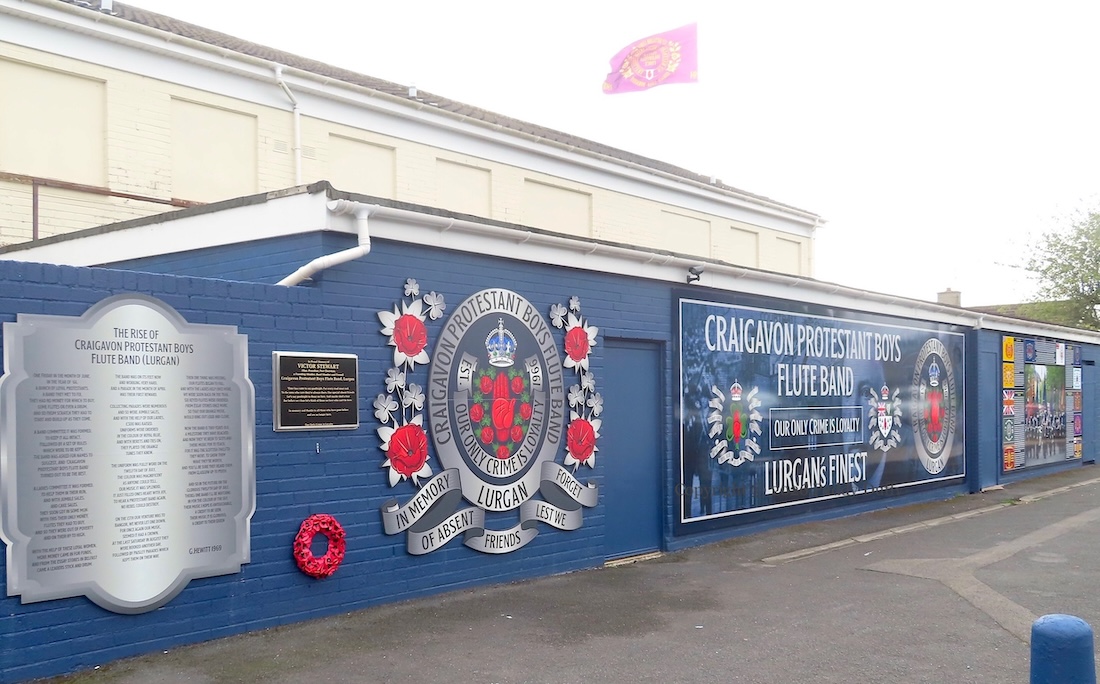
“Craigavon Protestant Boys flute band (Lurgan), 60 years unbroken, 1966-2026. Our only crime is loyalty.” Five new boards have been mounted at Mourne Road/Pollock Drive to celebrated the sixtieth anniversary of the Craigavon Protestant Boys (Fb).
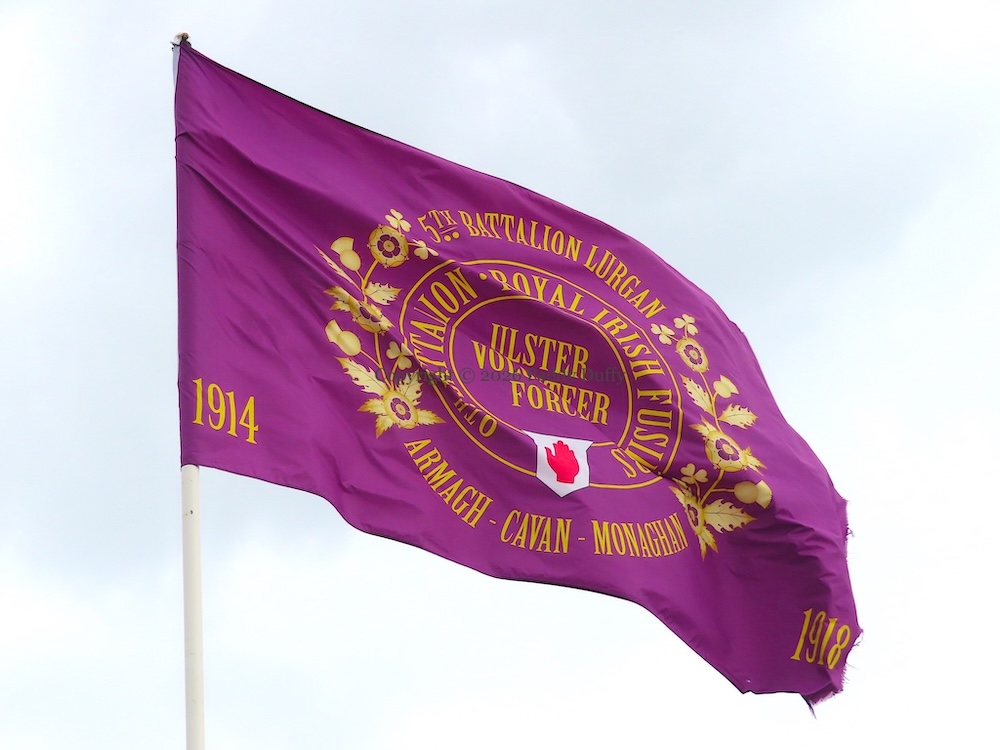
The final/right-most board mostly concerns the transformation of the Ulster Volunteers and Young Citizen Volunteers into the 36th Division of the British Army in WWI but the central text alludes to the dispute in the 1980s between some bands and the Orange Order, over the conflation of the different forms of the “Ulster Volunteer Force” from the beginning and end of the twentieth century. It reads, “During the early years of the band the committee were gifted a number of flags but these never made it out on the road, and for the first 21 years the band didn’t have a colour party. That all changed in Spetember [sic] 1986 when the band made the decision to carry for the first time in our history going about the task of acquiring Ulster Division standards, being the first local band to carry this style of flag. While the band was very proud to carry these new standards it caused a lot of issues for the band in the early days due to lack of understanding and ignorance especially among some of the loyal orders at home and in Scotland with the threat of being banned from walking in Scotland hanging over the band for a number of years. Thankfully through education this is no longer the case and many bands now carry similar standards.”
The Orange Order was not happy that bands that were affiliated with paramilitary groups were carrying the flag and wearing uniforms of the 36th Division. In Scotland, Greengairs Thistle flute band – which is associated with the Shankill Protestant Boys and C Company in the west Belfast UVF (see the Peter Moloney Collection) – was banned in 1988 from marching in Orange parades (CAIN), though it continued to march in Apprentice Boys parades (Fb).
Nowadays, blending the Ulster Volunteers/36th Division with the Troubles-era UVF is standard practise among loyalist groups, even if the authorities disapprove. In Bangor, for example, funds were secured for a WWI memorial to which paramilitary stones were added at the last minute (see Shared Space).
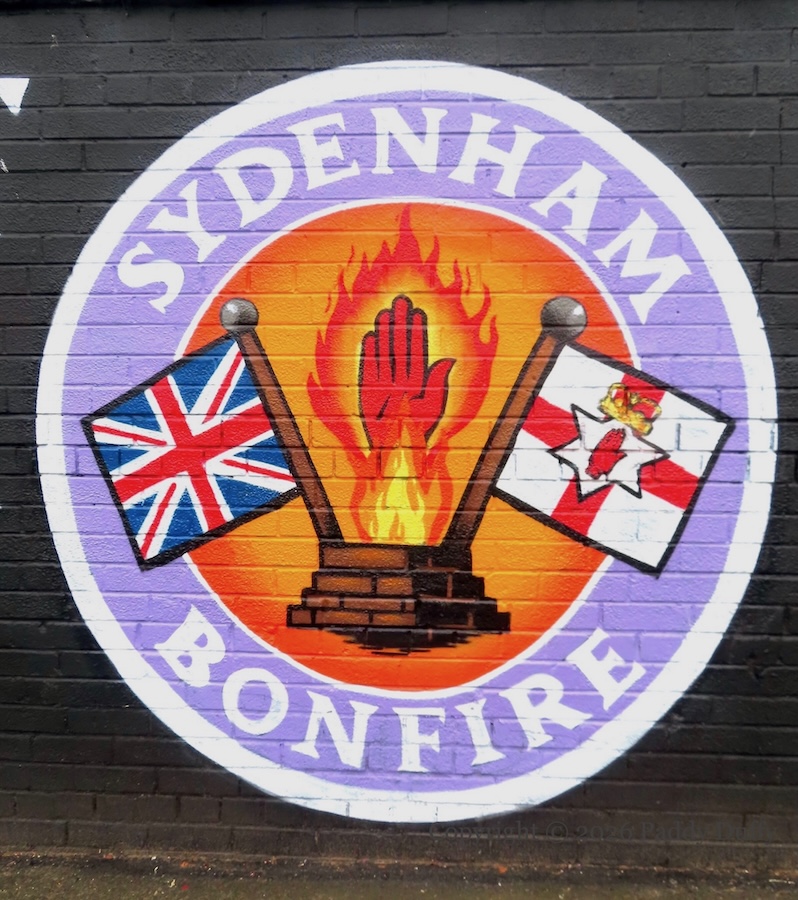
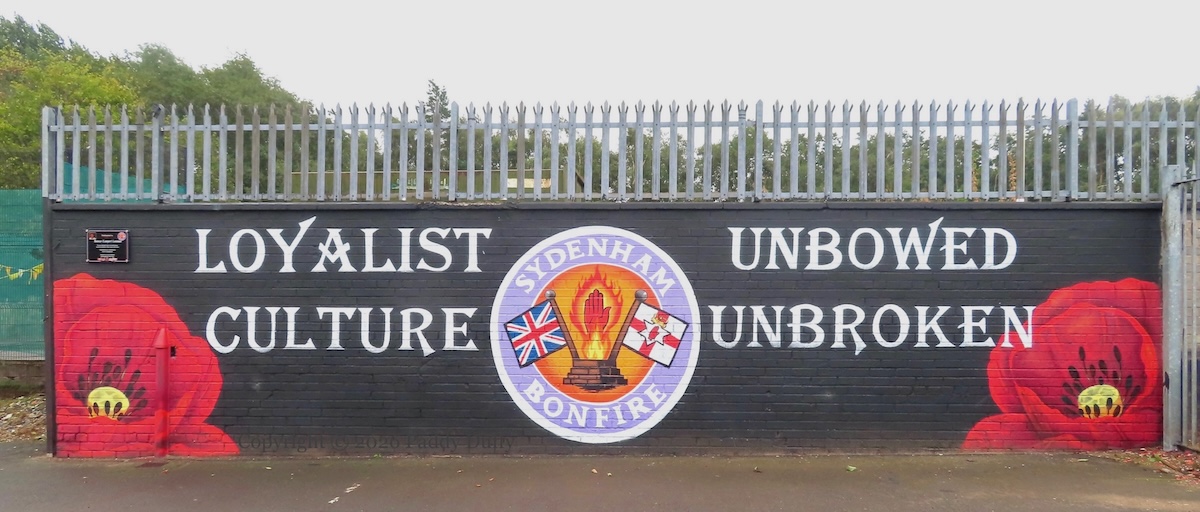
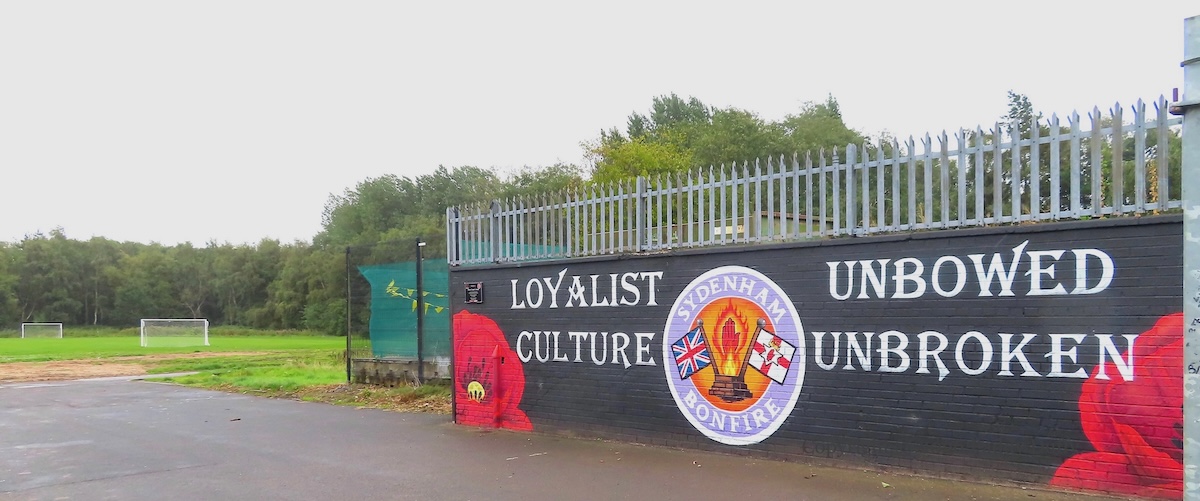
“Loyalist culture – unbowed, unbroken.” The Sydenham Bonfire is constructed annually on the Inverary playing field and there is now a mural announcing the group who build it, to go along with the bonfire’s Facebook page. The phrase “unbowed, unbroken” has been frequently seen in CNR muraling, beginning with a 1996 mural in Lenadoon.
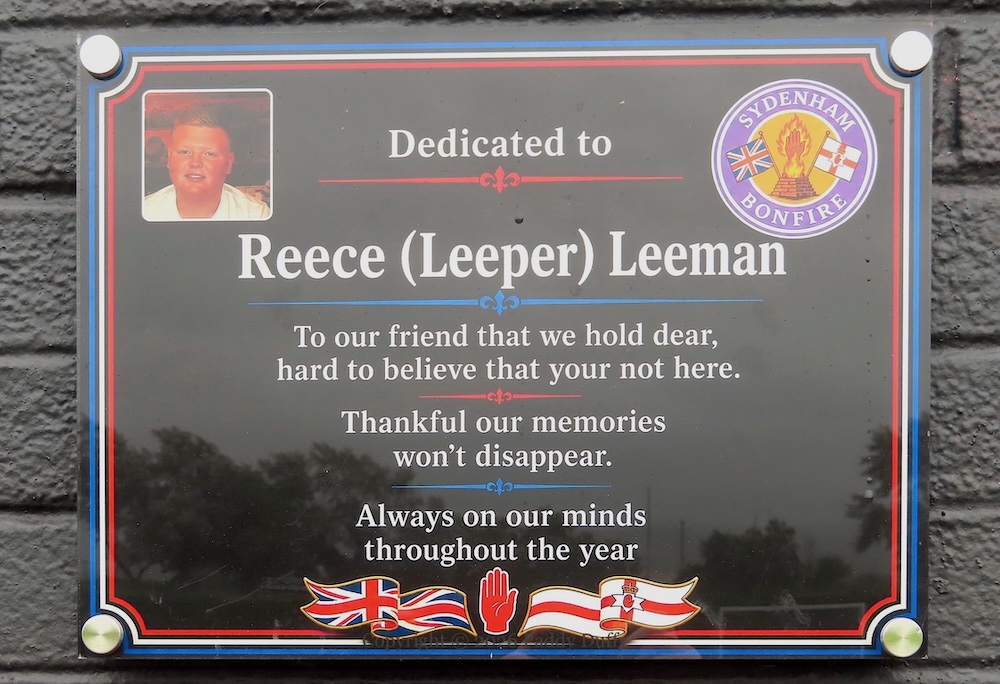
There is a memorial plaque in the top left: “Dedicated to Reece (Leeper) Leeman. To our friend that we hold dear, hard to believe that your [sic] not here. Thankful our memories won’t disappear. Always on our minds throughout the year.” Leeman, aged 21, was stabbed to death in 2019 (BBC) when he and a friend attempted to raid cannabis from the Kyle Street house of an aquaintance (ITv | News Letter).
Inverary pitches and bowling green, Sydenham, east Belfast
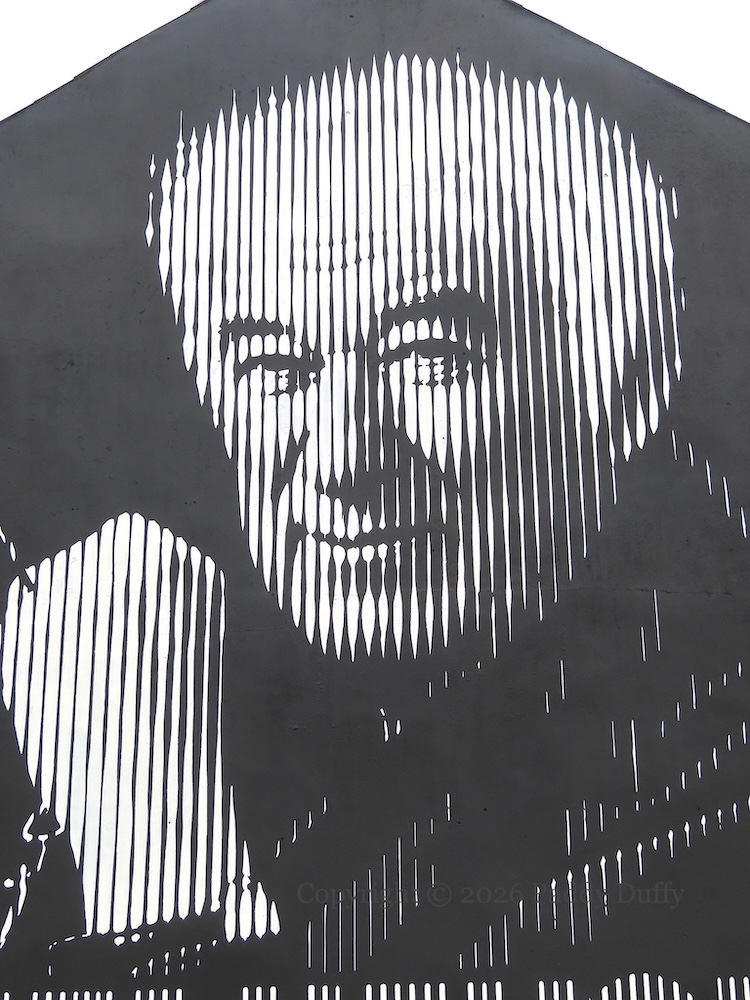
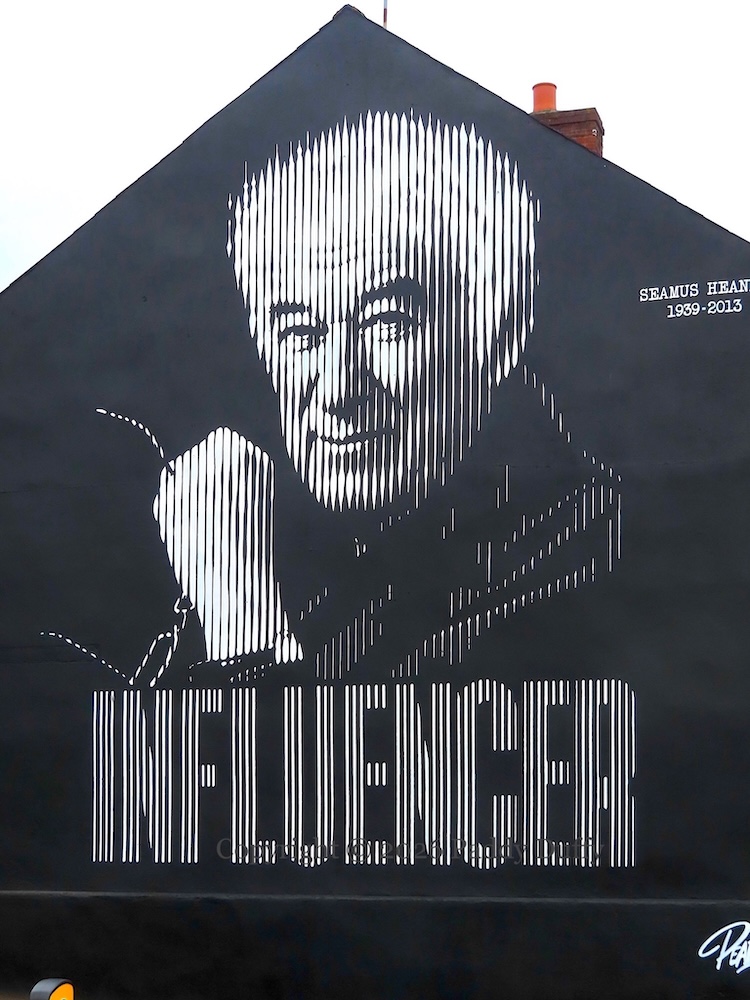
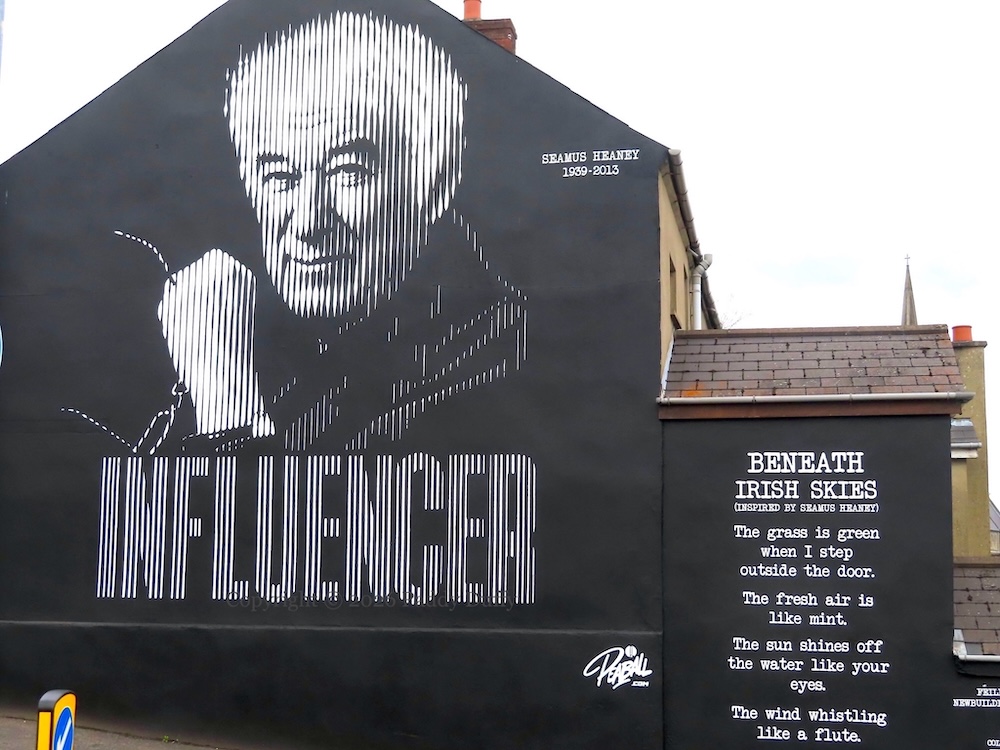
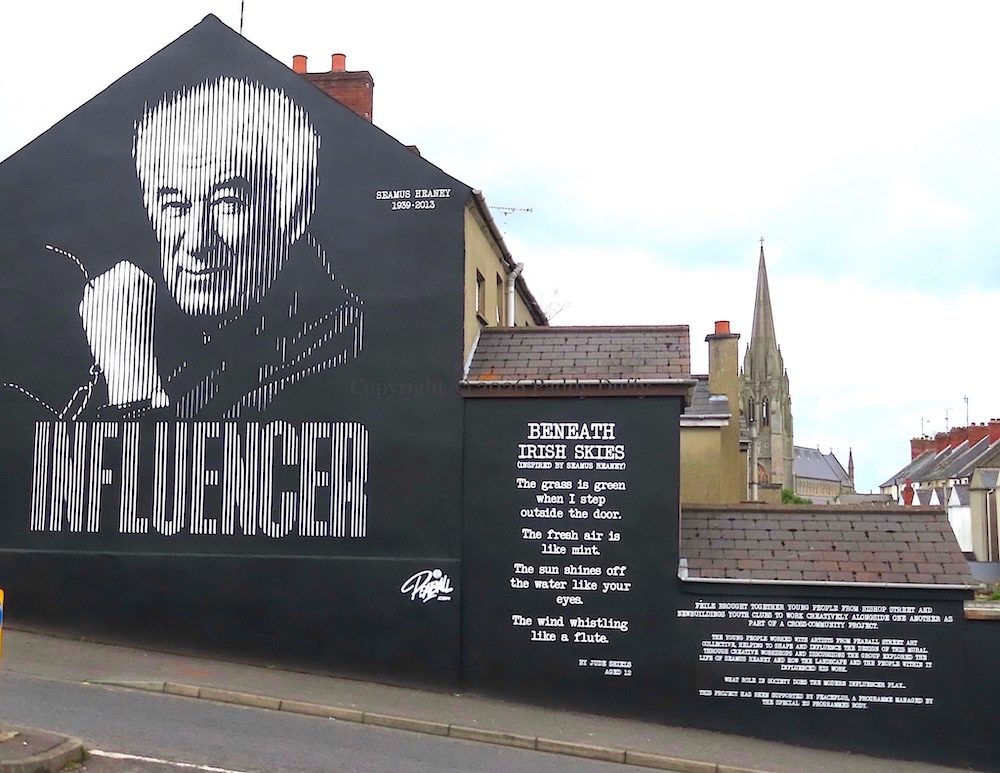
“Seamus Heaney 1929-2013.” Seamus Heaney was raised in Bellaghy and is buried in Bellaghy. Between these bookends, he attended boarding school in Derry and Queen’s in Belfast, and held academic positions in Belfast, California, Dublin, and Massachusetts. His poetry won him the Nobel Prize for Literature in 1995 and made him a household name. Although he largely pre-dates the social-media era, this new mural in Derry suggests that he is – or could be – an influencer.
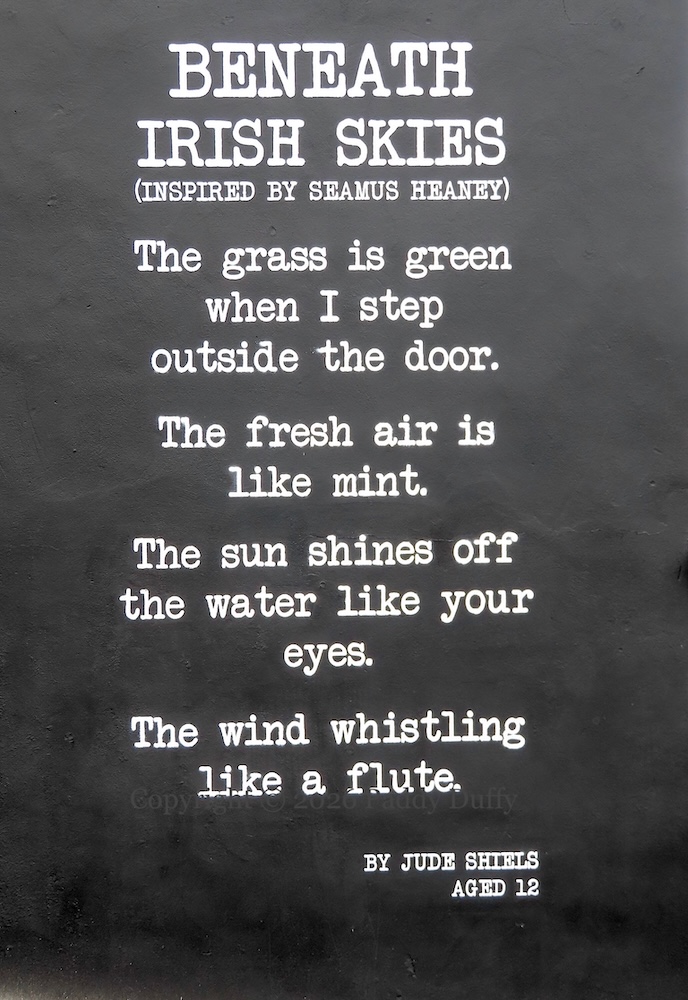
“Beneath Irish Skies (Inspired by Seamus Heaney) The grass is green when I step outside the door. The air is fresh like mint. The sun shines off the water like your eyes. The wind whistling like a flute. – by Jude Shiels, aged 12″
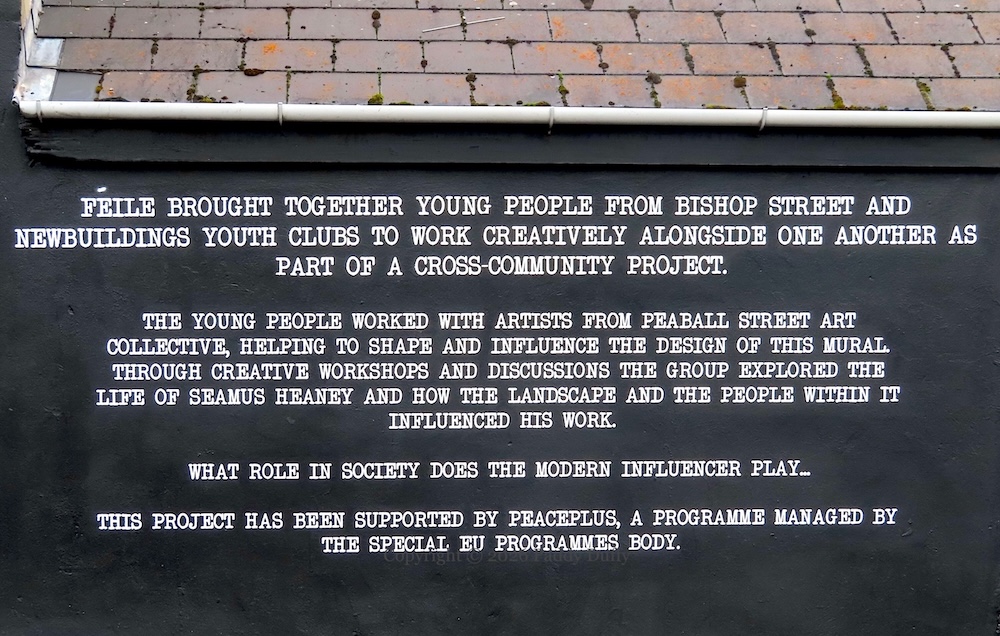
“Féile brought together young people from Bishop Street and Newbuildings youth clubs to work creatively alongside one another as part of a cross-community project. The young people worked with artists from Peaball [web] street art collective, helping to shape and influence the design of this mural. Through creative workshops and discussions the group explored the life of Seamus Heaney and how the landscape and the people within it influenced his work. What role in society does the modern influencer play … This project has been sponsored by PeacePlus, a programme managed by the Special EU Programmes body.”
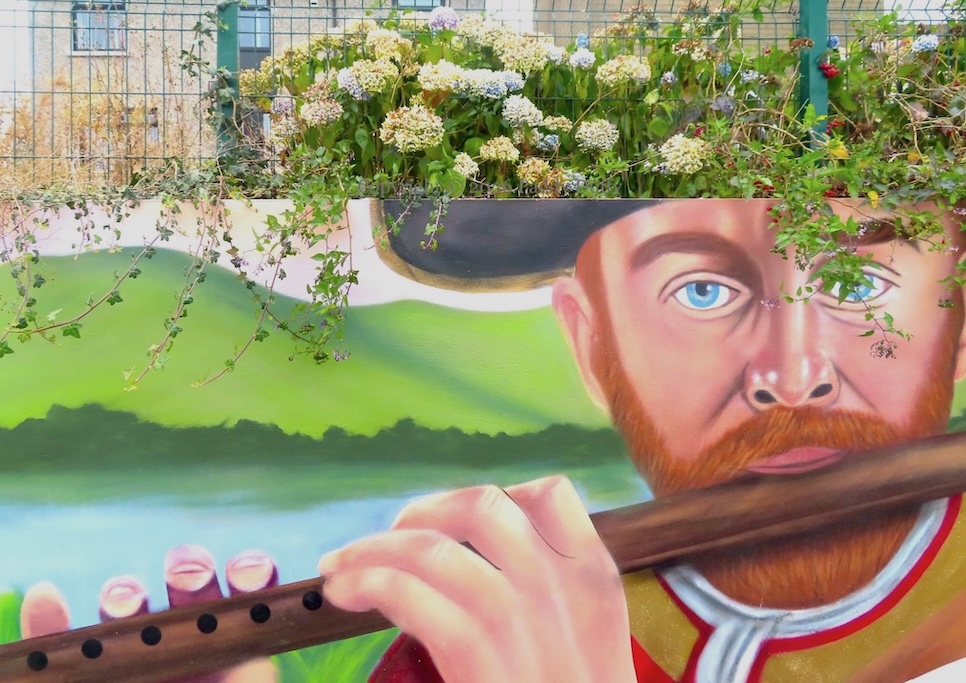
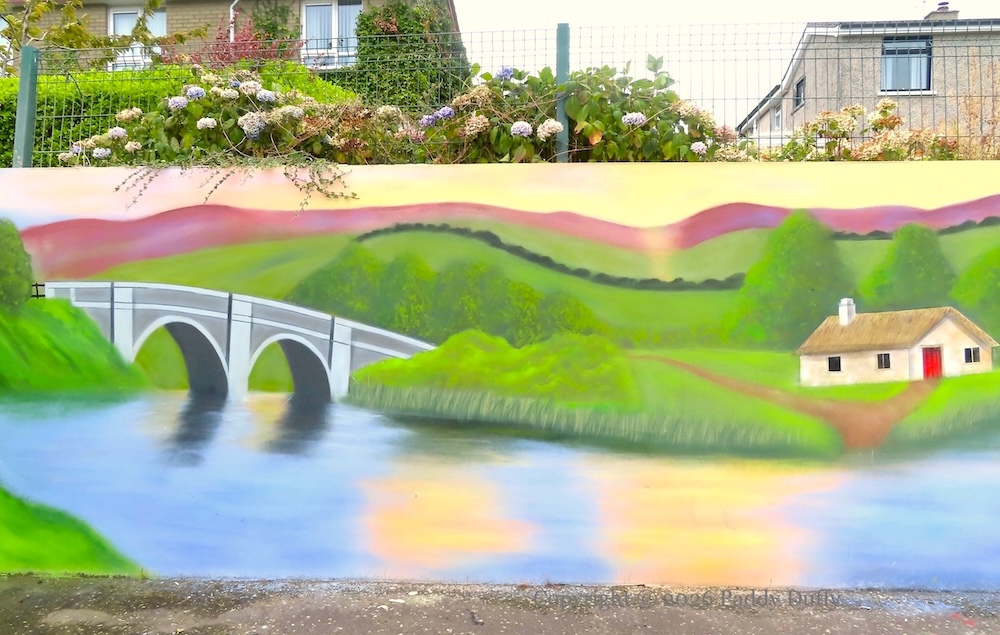
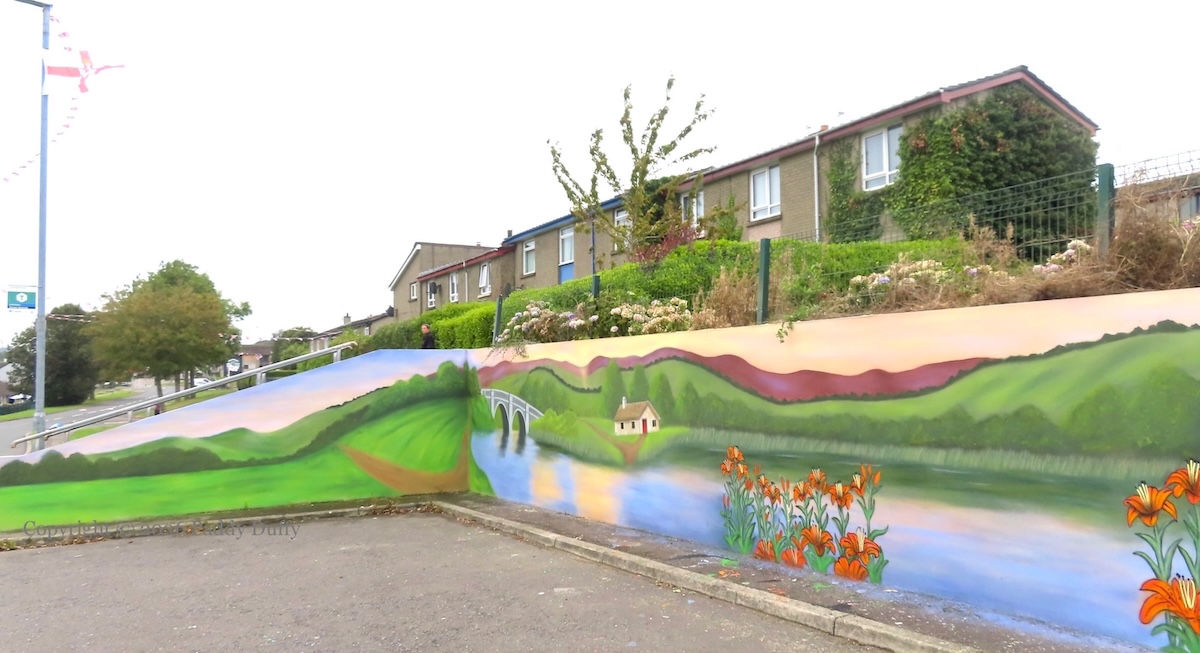
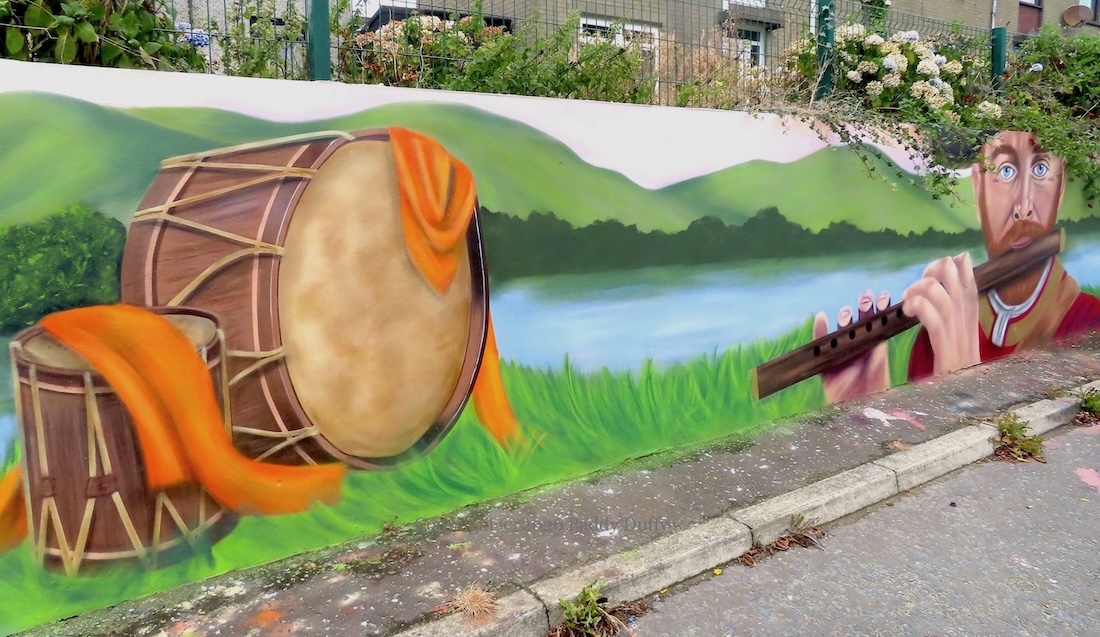
The local flute band in the Kilcooley estate is the North Down Defenders (Fb), which was formed in 2004. This new art, however, suggests that drumming and piping go back to the time of thatched cottages and stone bridges – perhaps, as the orange lilies and blankets might suggest, to the 1795 founding of the Orange Order.
In the lay-by at the top of Owenroe Drive, Kilcooley, Bangor
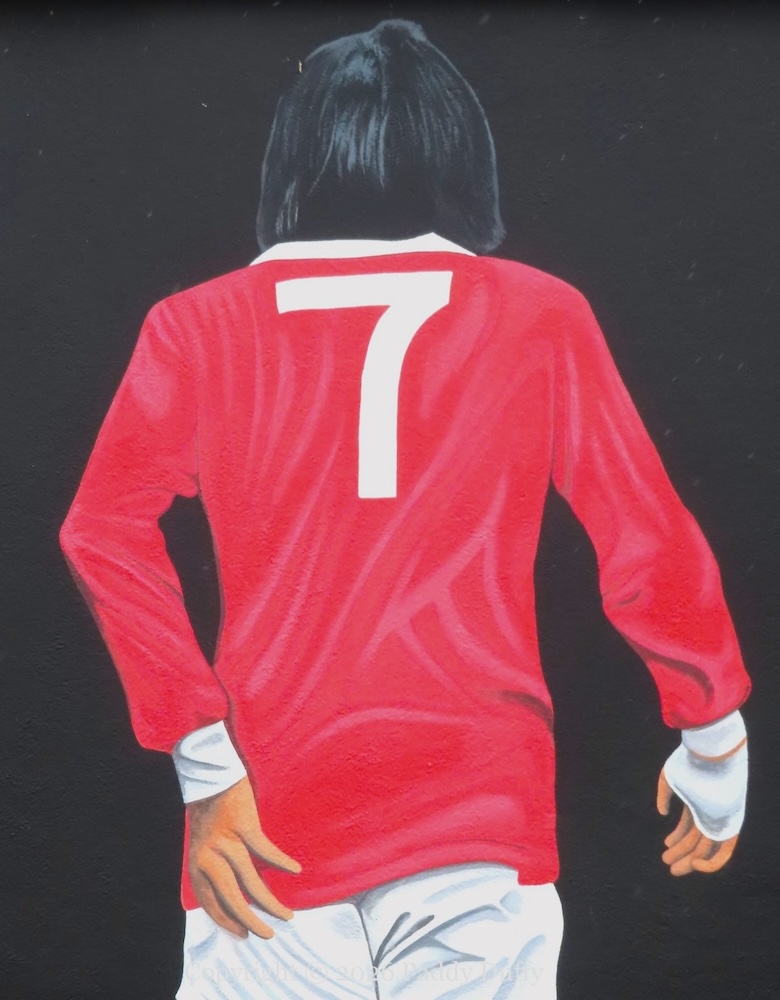
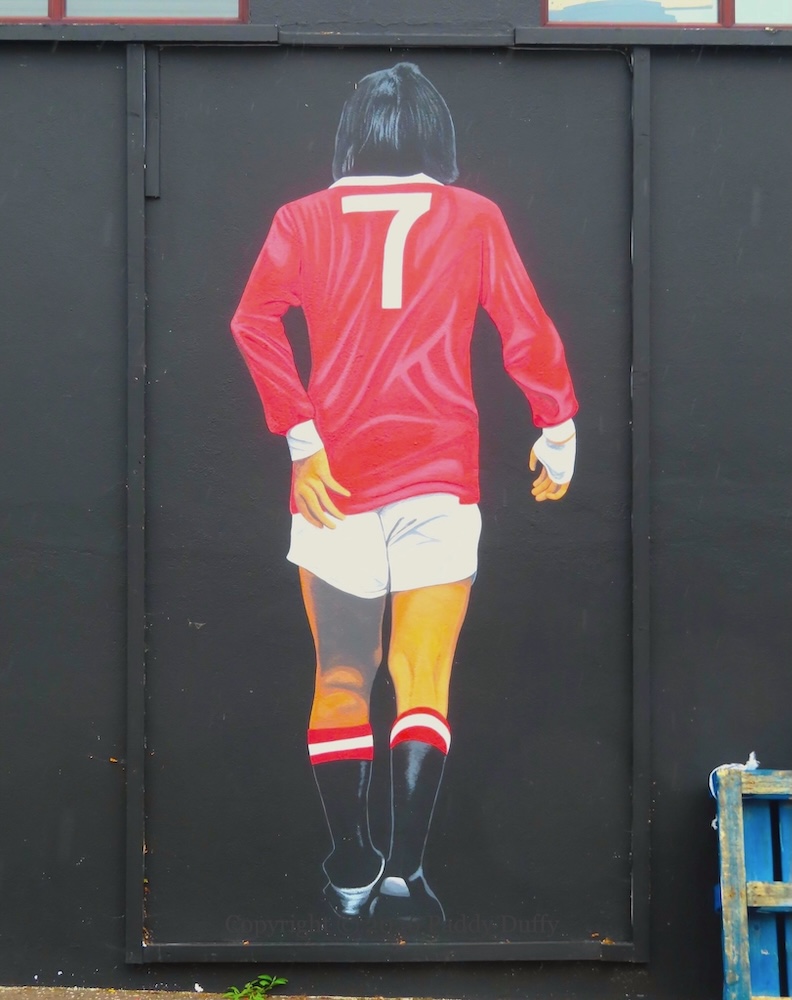
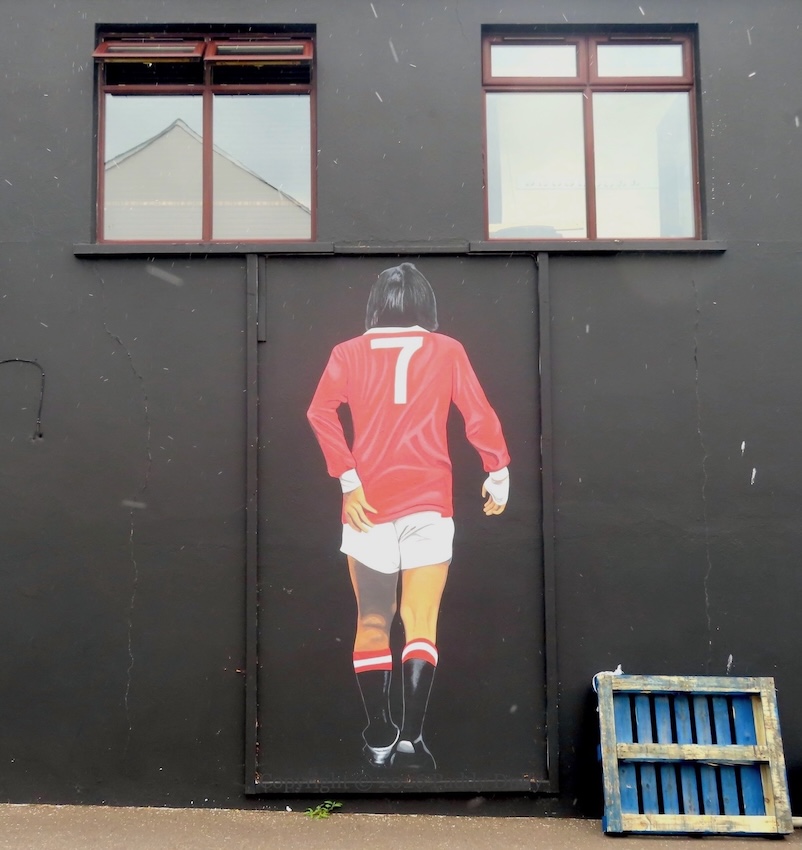
This painting of soccer star George Best was painted by Ian Lowry (web) on Teddy’s restaurant (Spectator). The photograph reproduced is from a 1971 match against West Ham (Alamy). Best scored a hat-trick in a 4-2 victory for United (11v11).
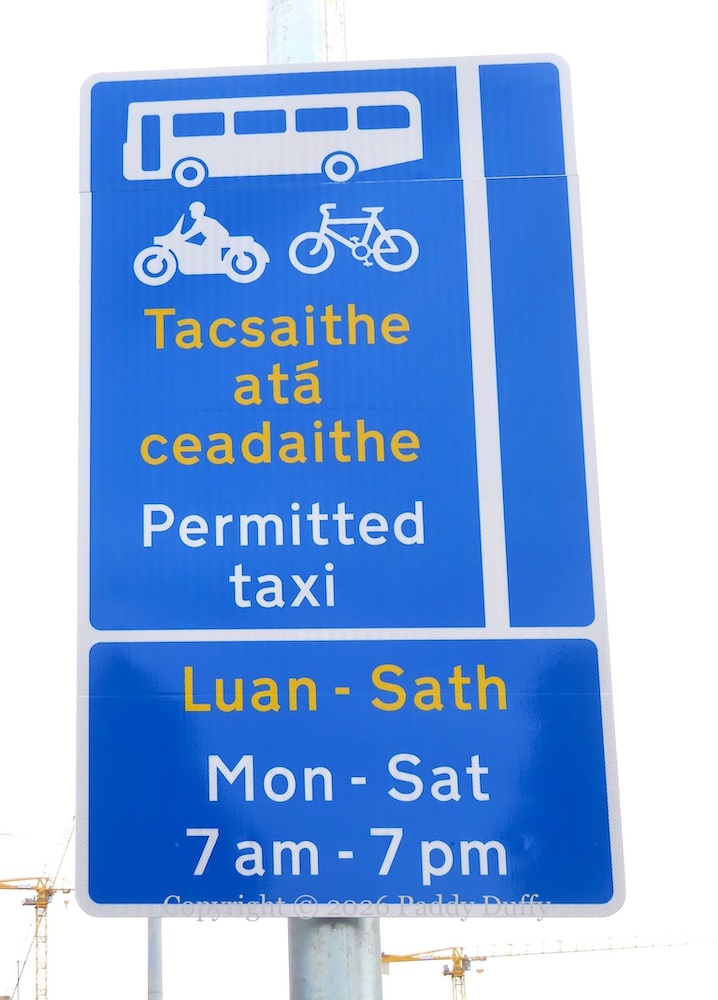
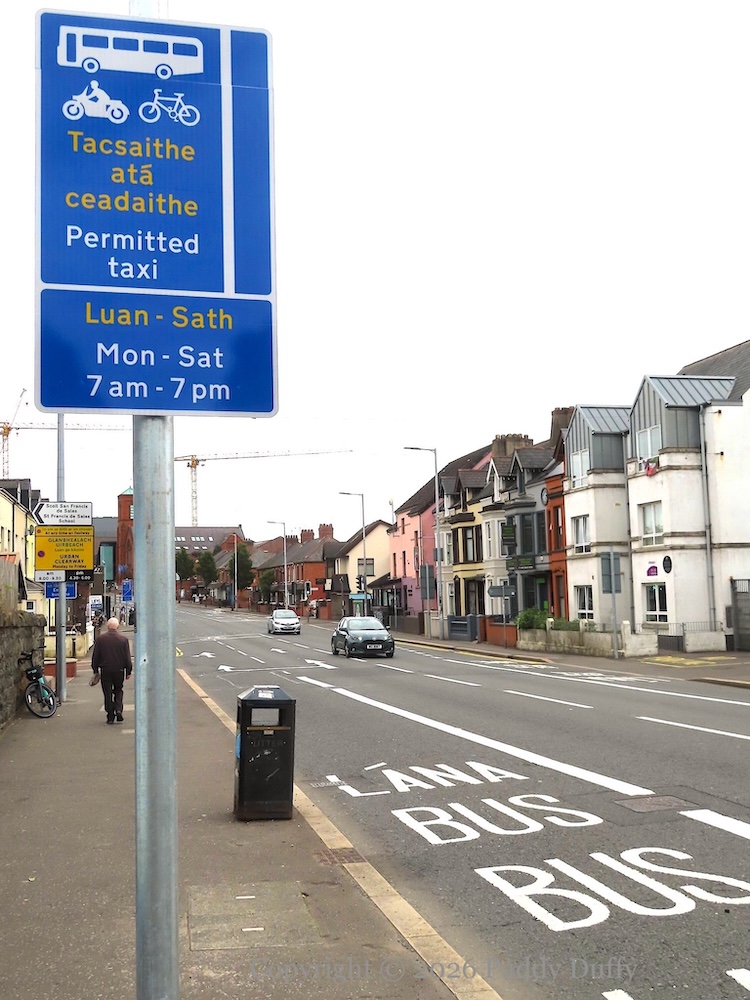
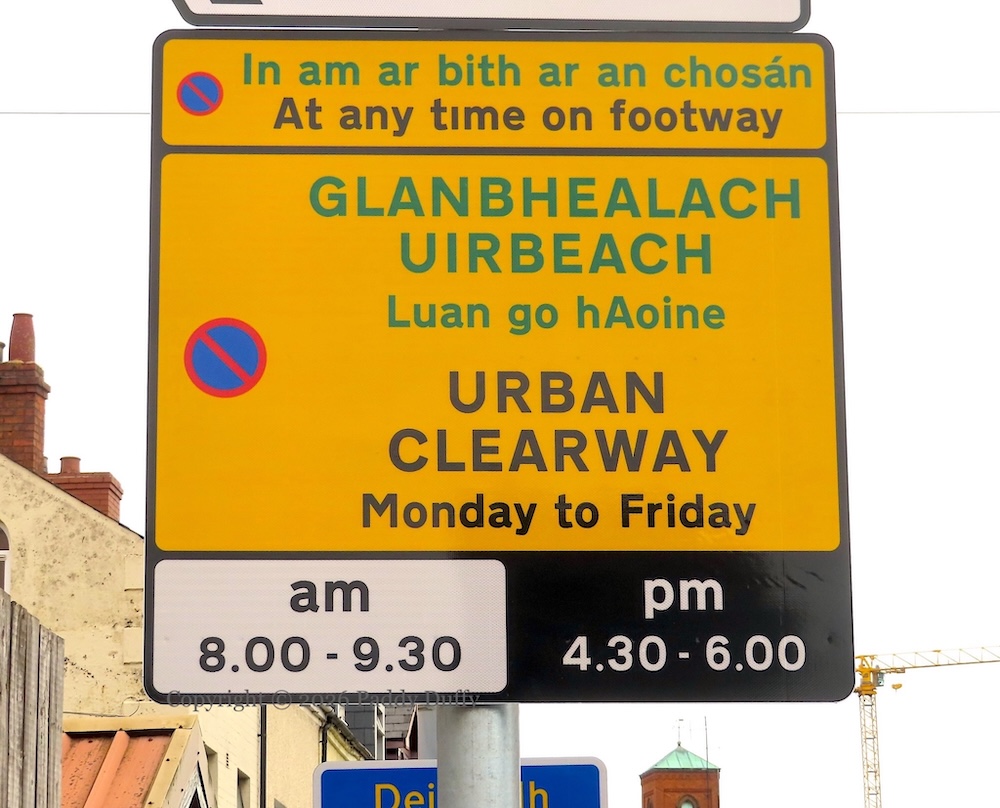
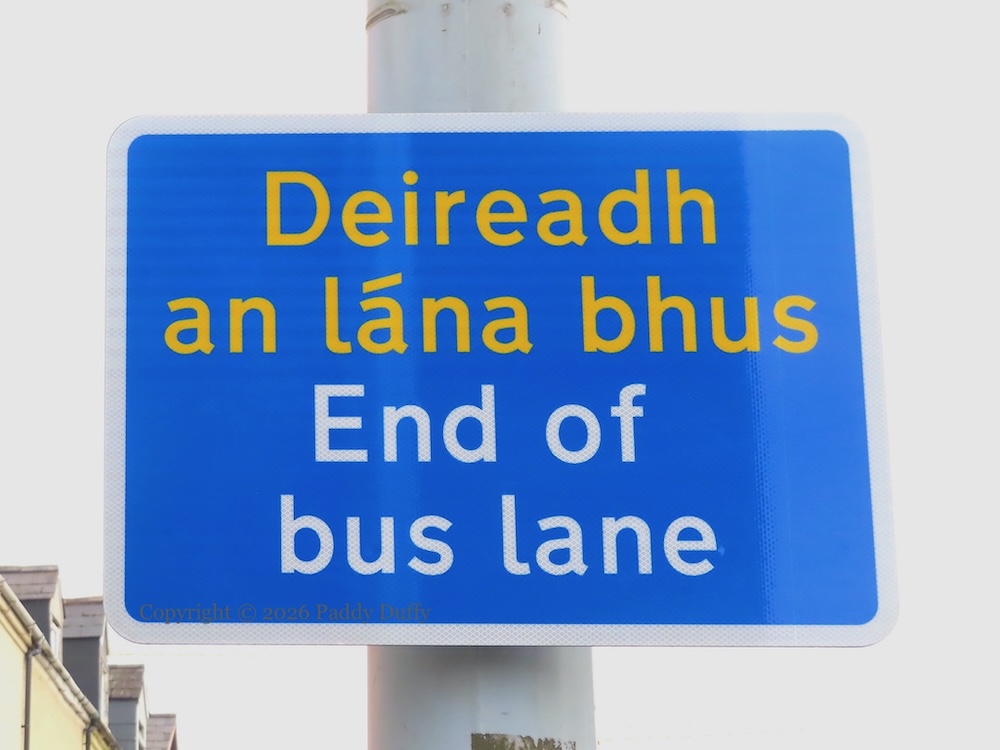
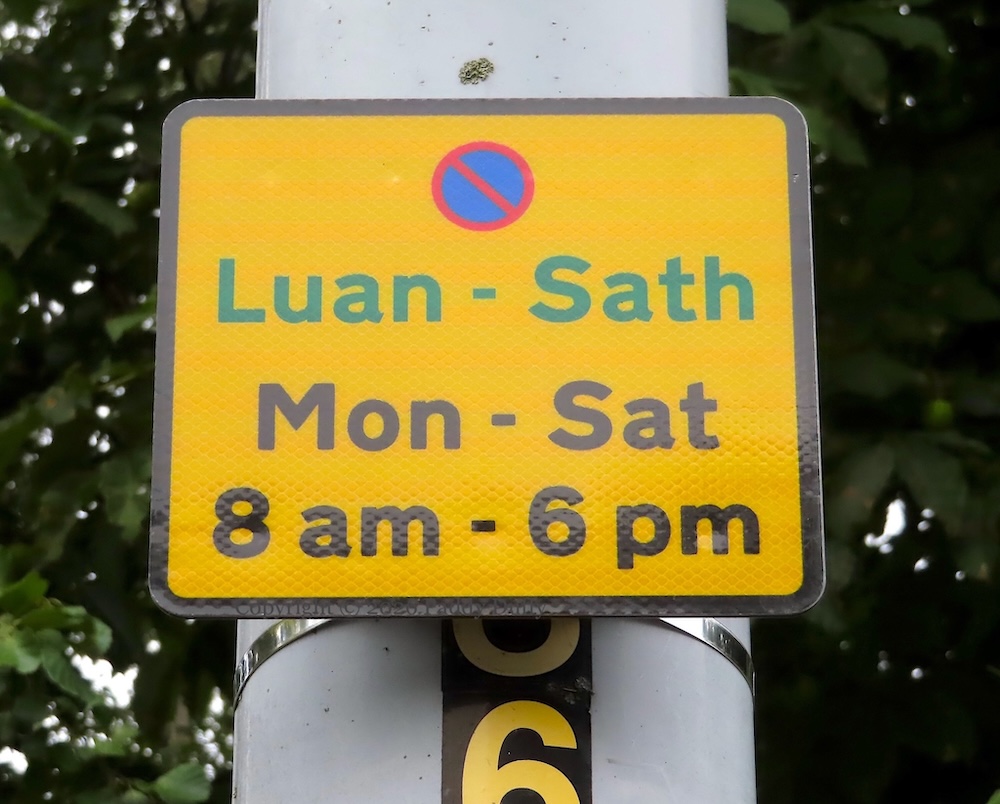
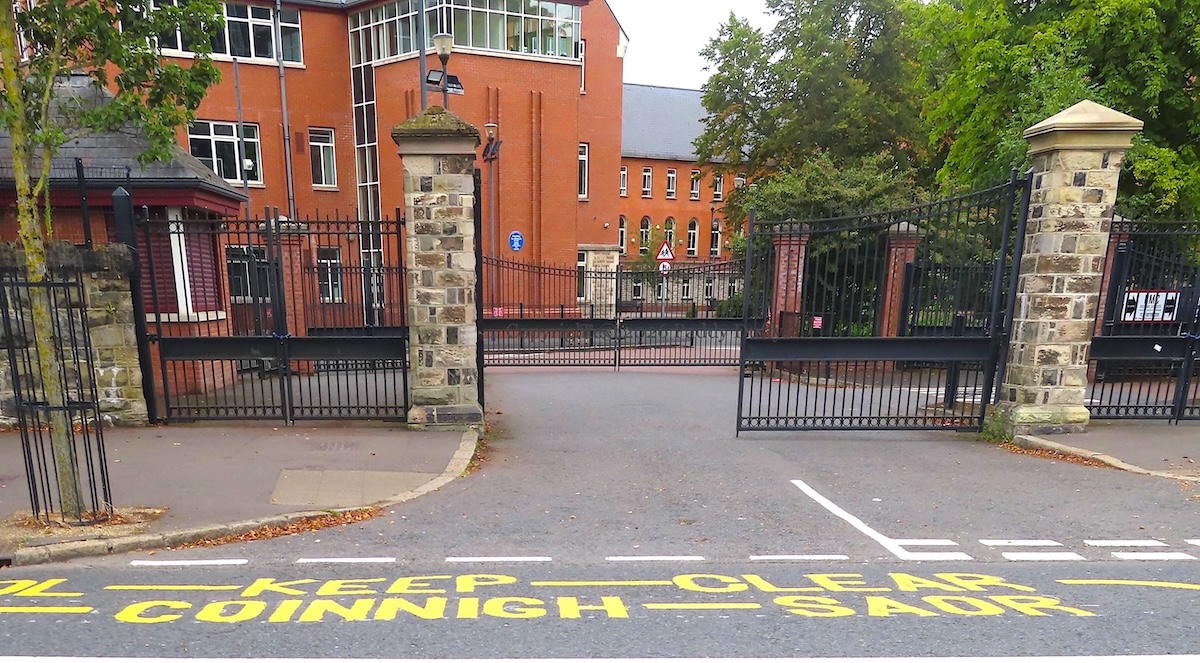
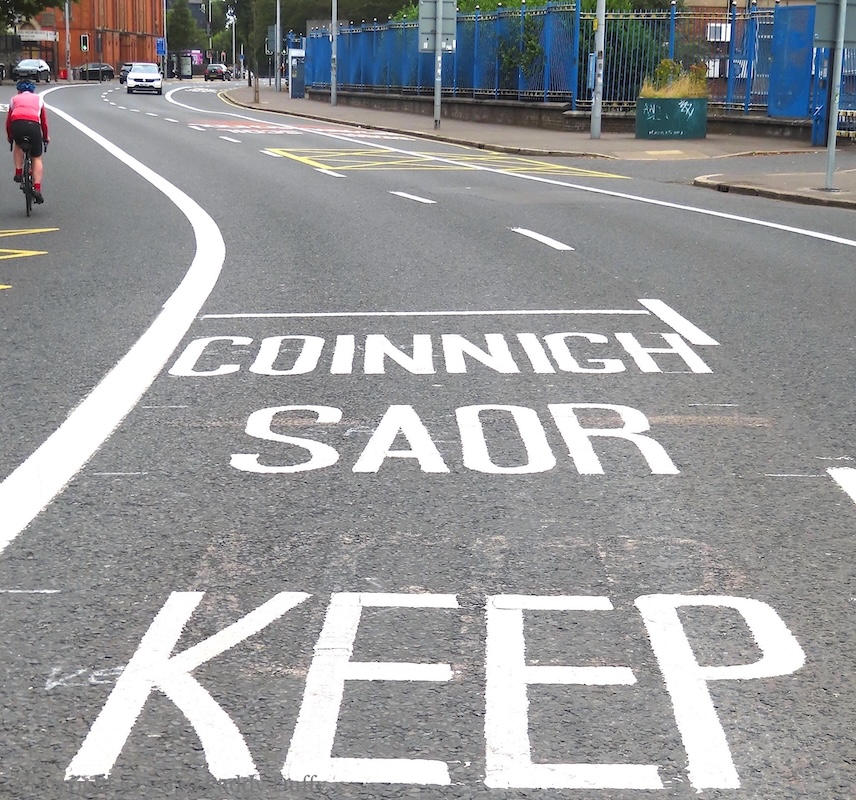
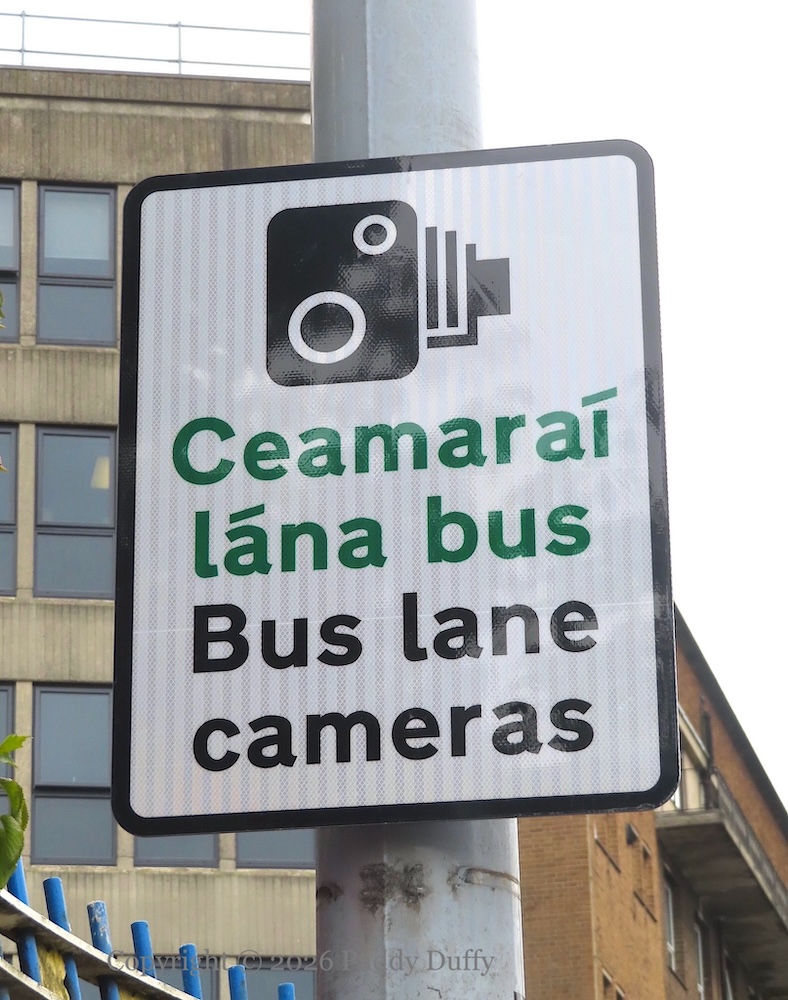
Dual-language (Irish and English) traffic signs and road-markings have been mounted/painted on the Falls Road in the Gaeltacht Quarter (specifically, between Springfield Road and Whiterock Road) by the Department Of Infrastructure/An Roinn Bonneagaır.
Shown in this entry are signs and markings reading, “Tacsaıthe atá ceadaıthe,” “Lána bus”, “Glanbhealach uırbeach, Luan go hAoıne [agus] ın am ar bıth ar an chosán”, “Deıreadh an lána bhus”, “Coınnıgh saor”, “Ceamaraí lána bus”.
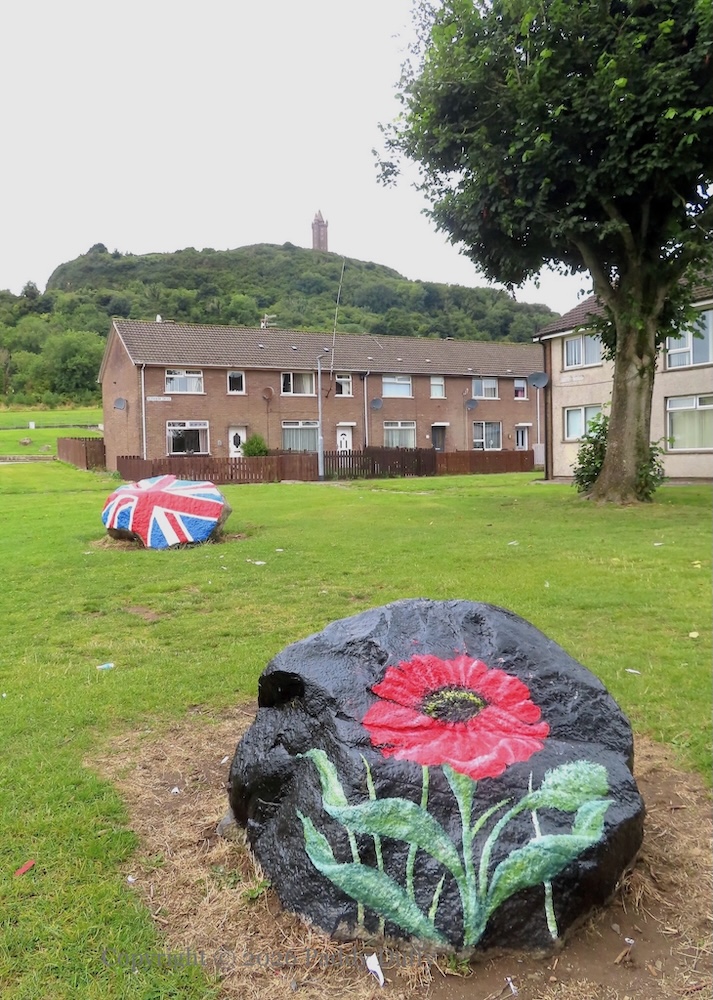
The rocks in Westwinds estate have been repainted. The poppy in the foreground was previously a YCV emblem (as seen in 2018). In the distance, Scrabo Tower overlooks the estate.
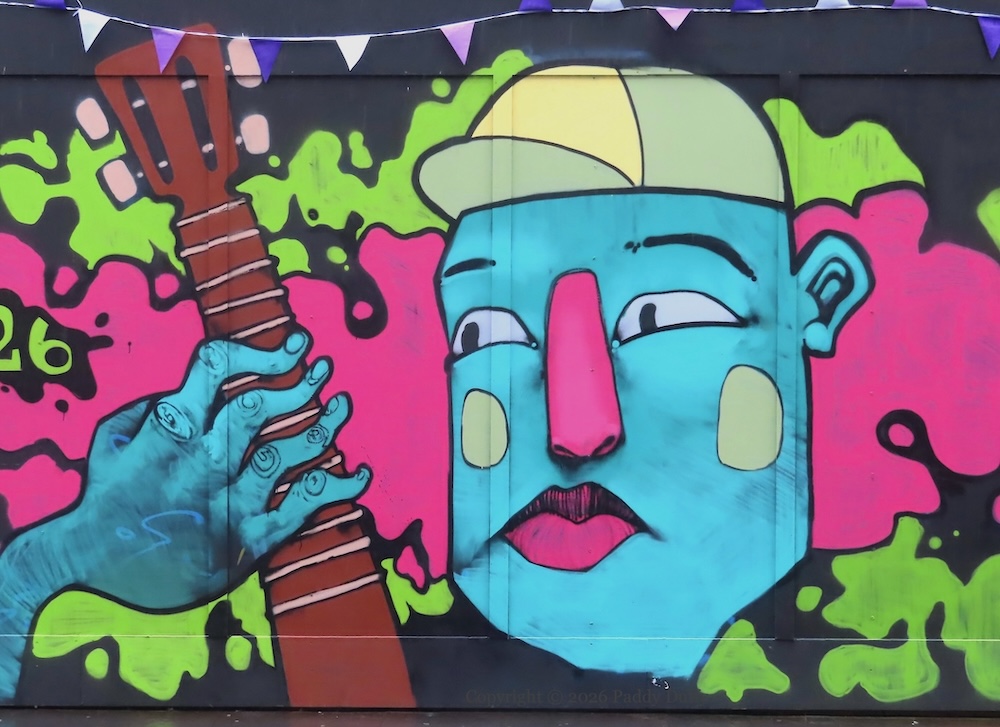
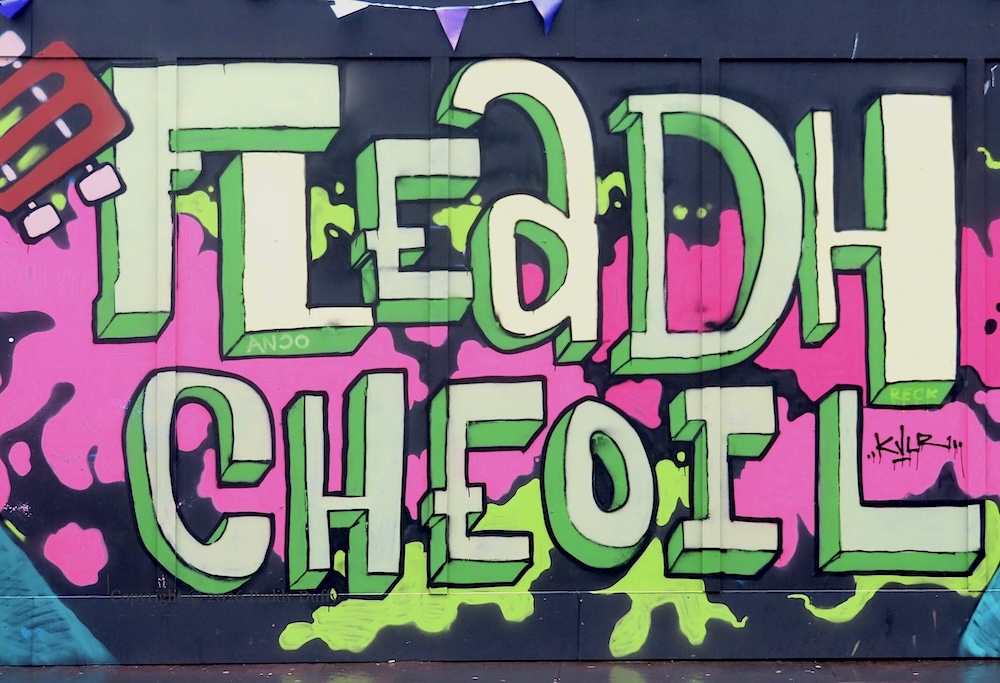
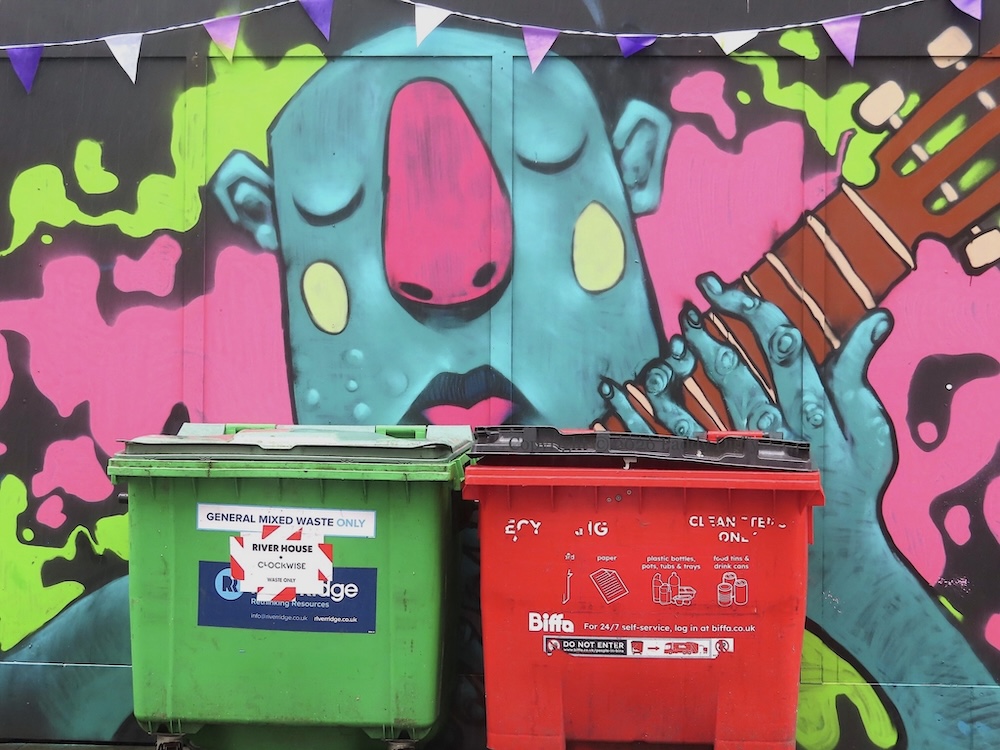
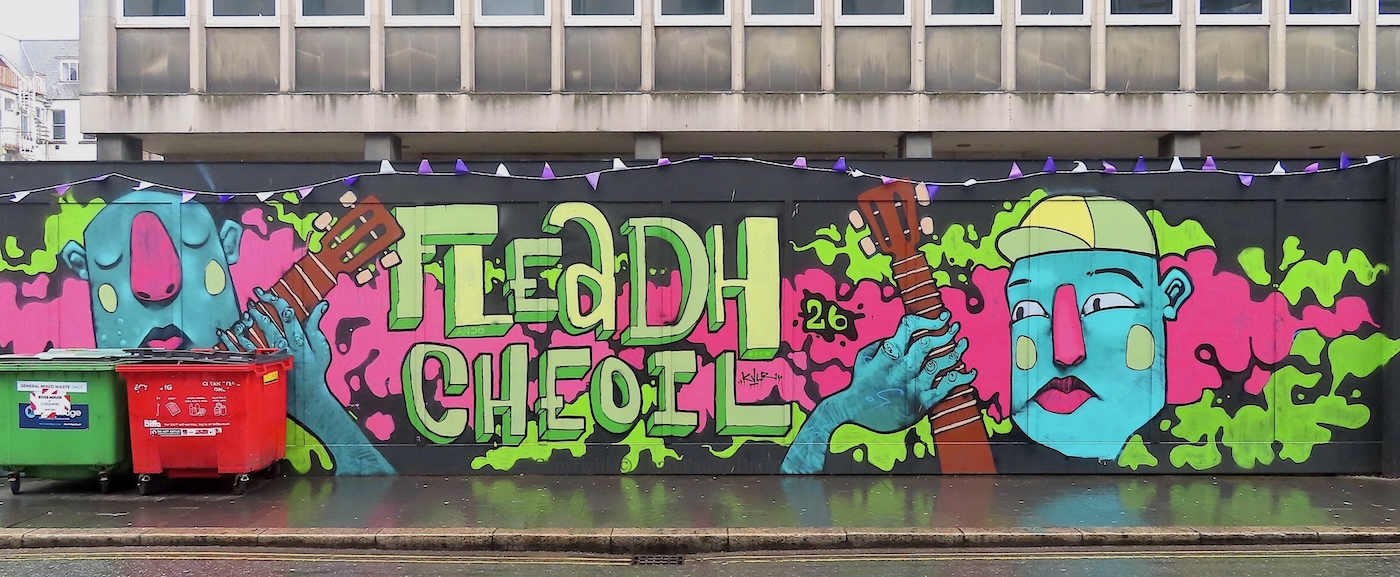
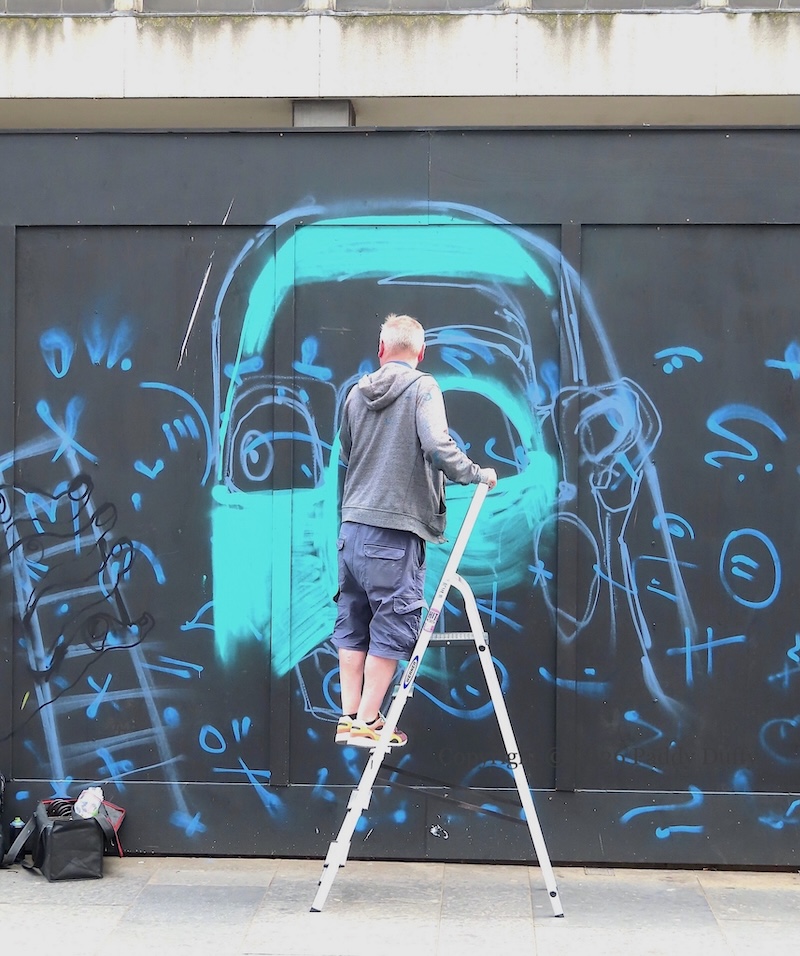
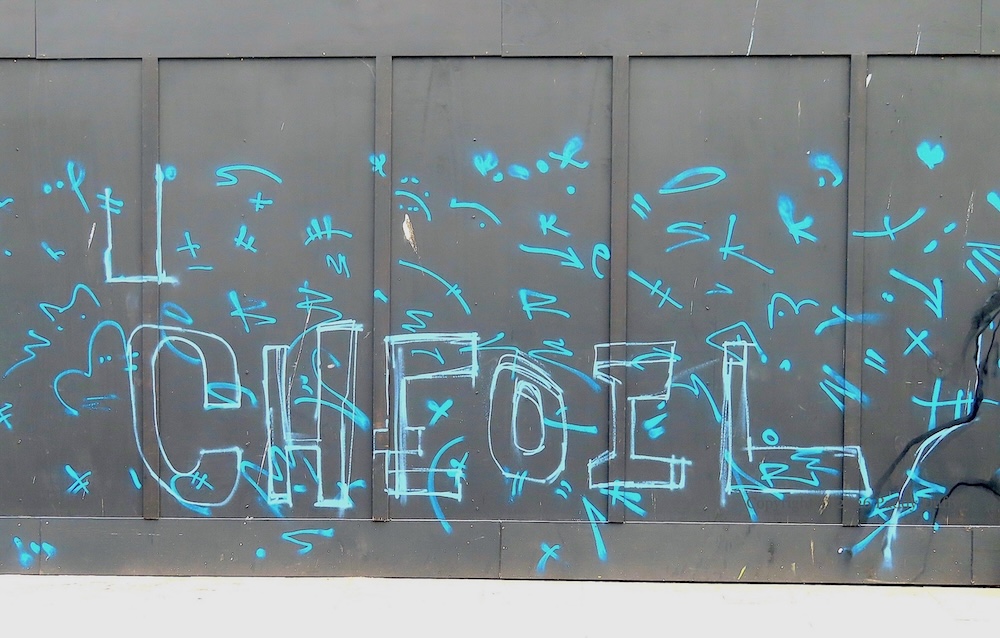
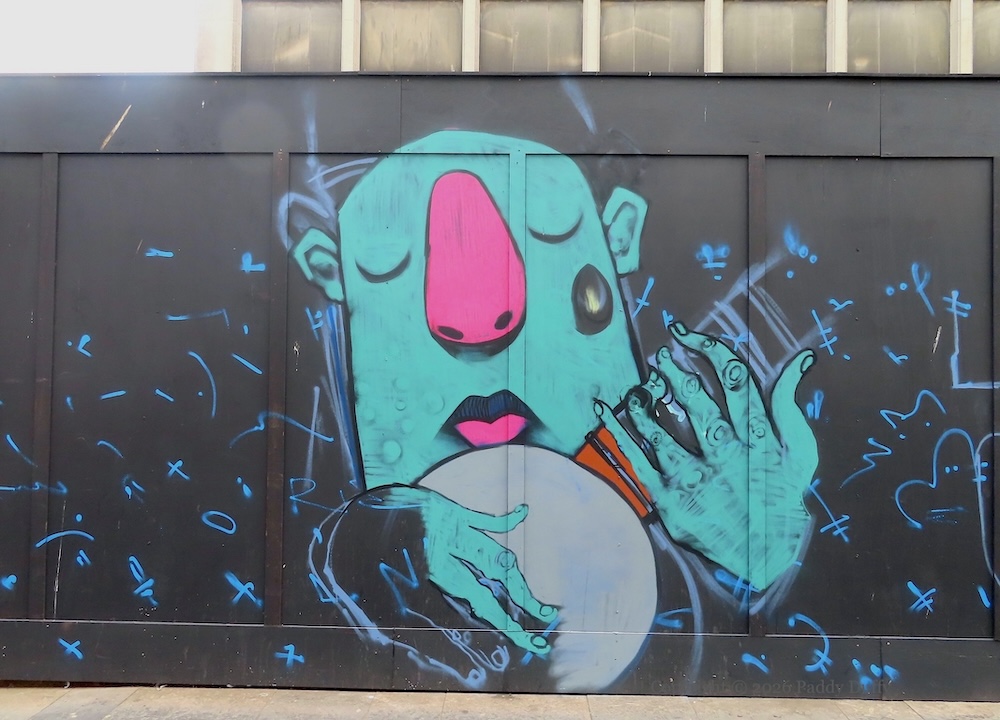
Fleadh Cheoıl ended on Sunday (August 9th) with a third and final day of competition and a finale by the winning céılí band at the Gig Rig (main stage) next to City Hall (BBC | Fleadh). The city centre was pedestrianised and various murals were painted, including this one by KVLR (web) in Waring Street, Belfast city centre. The event has been declared a success; over the course of the eight days, the city saw more than one million visitors (RTÉ).
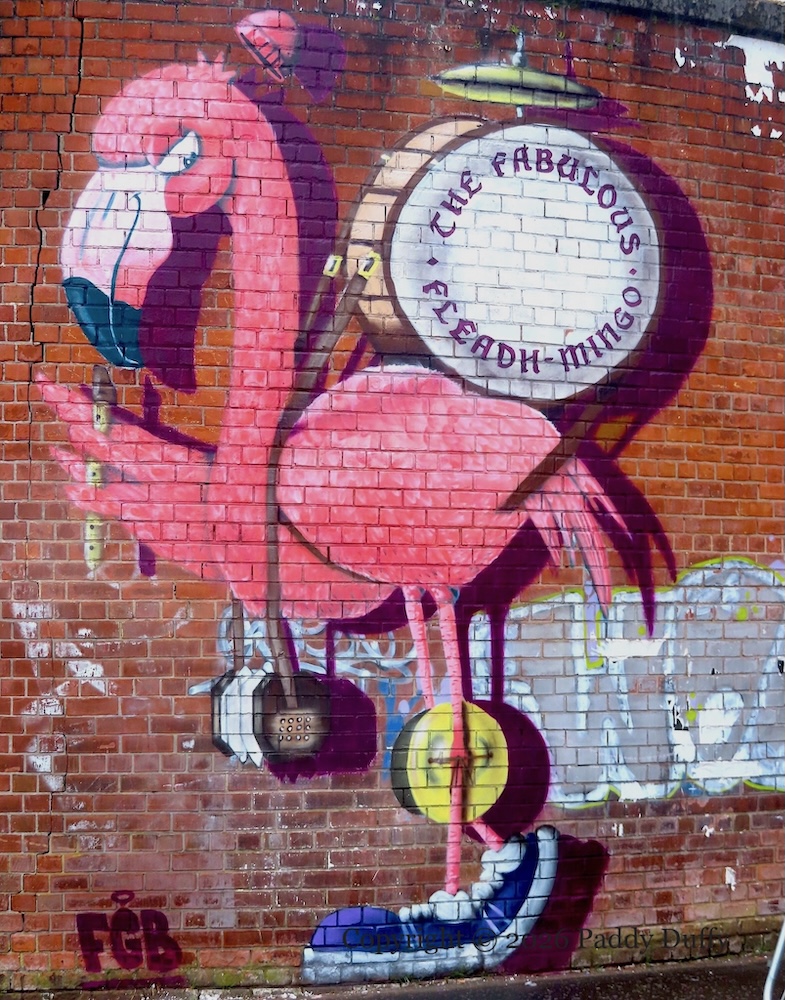
The Fabulous Fleadh-Mingo is a one-bird band, with drum, cymbals, concertina, and tin whistle. It was brought into being by FGB (web) in Dunbar Street, Belfast city centre, for Fleadh Cheoıl Na hÉıreann, alongside works in Commercial Court, the Dark Horse, Royal Avenue, and Writers’ Square.

 Paddy Duffy Collection