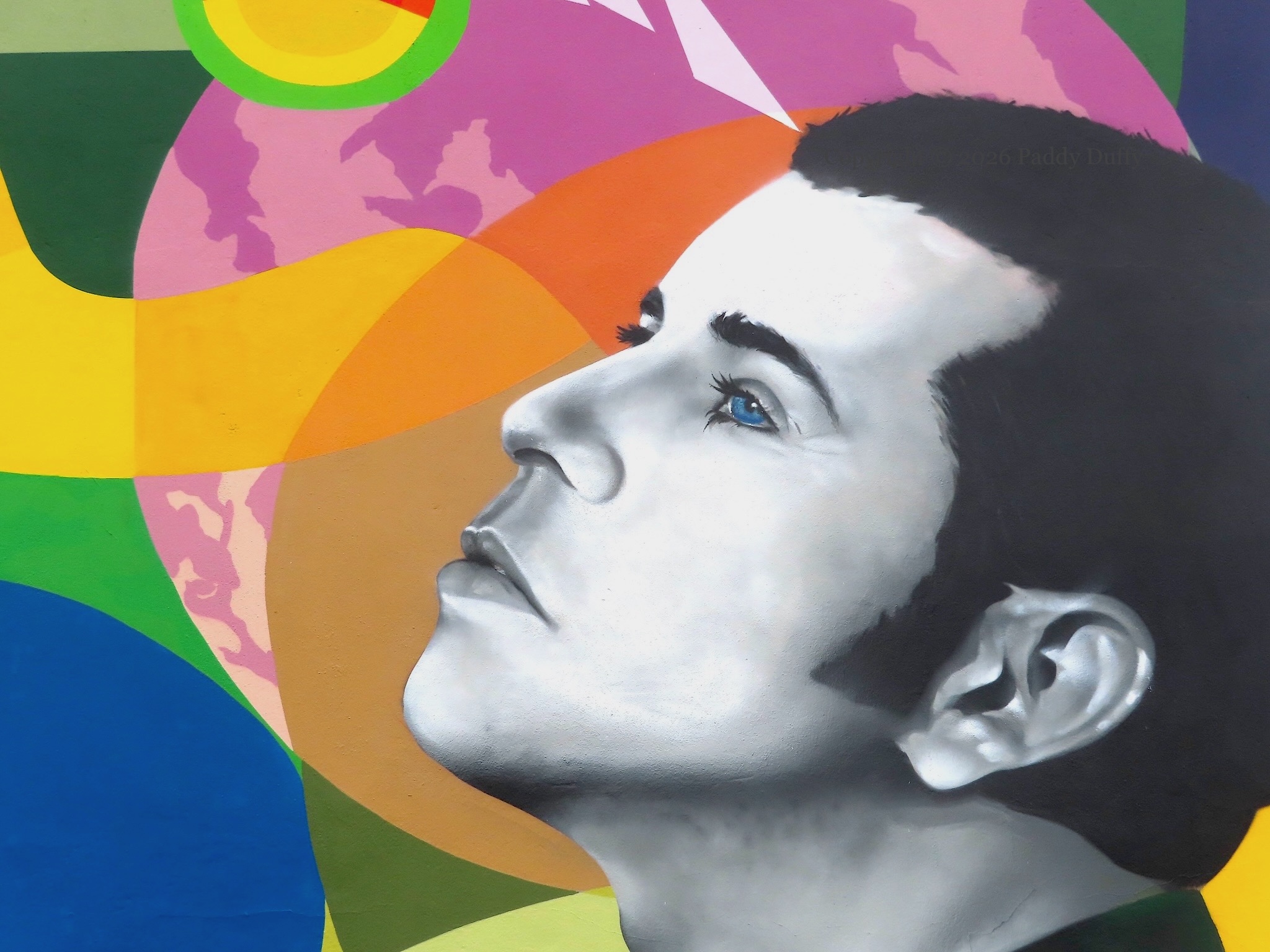
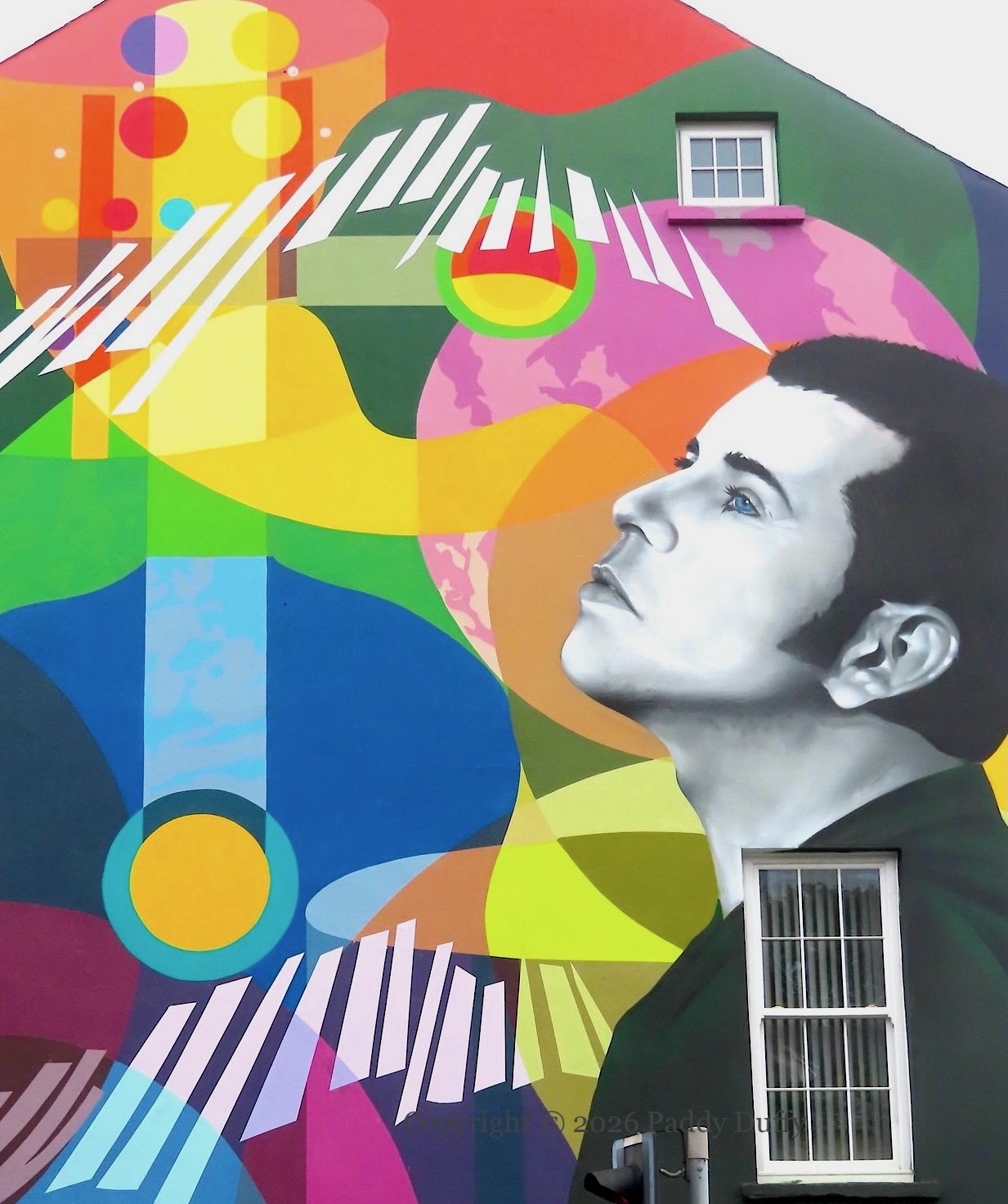
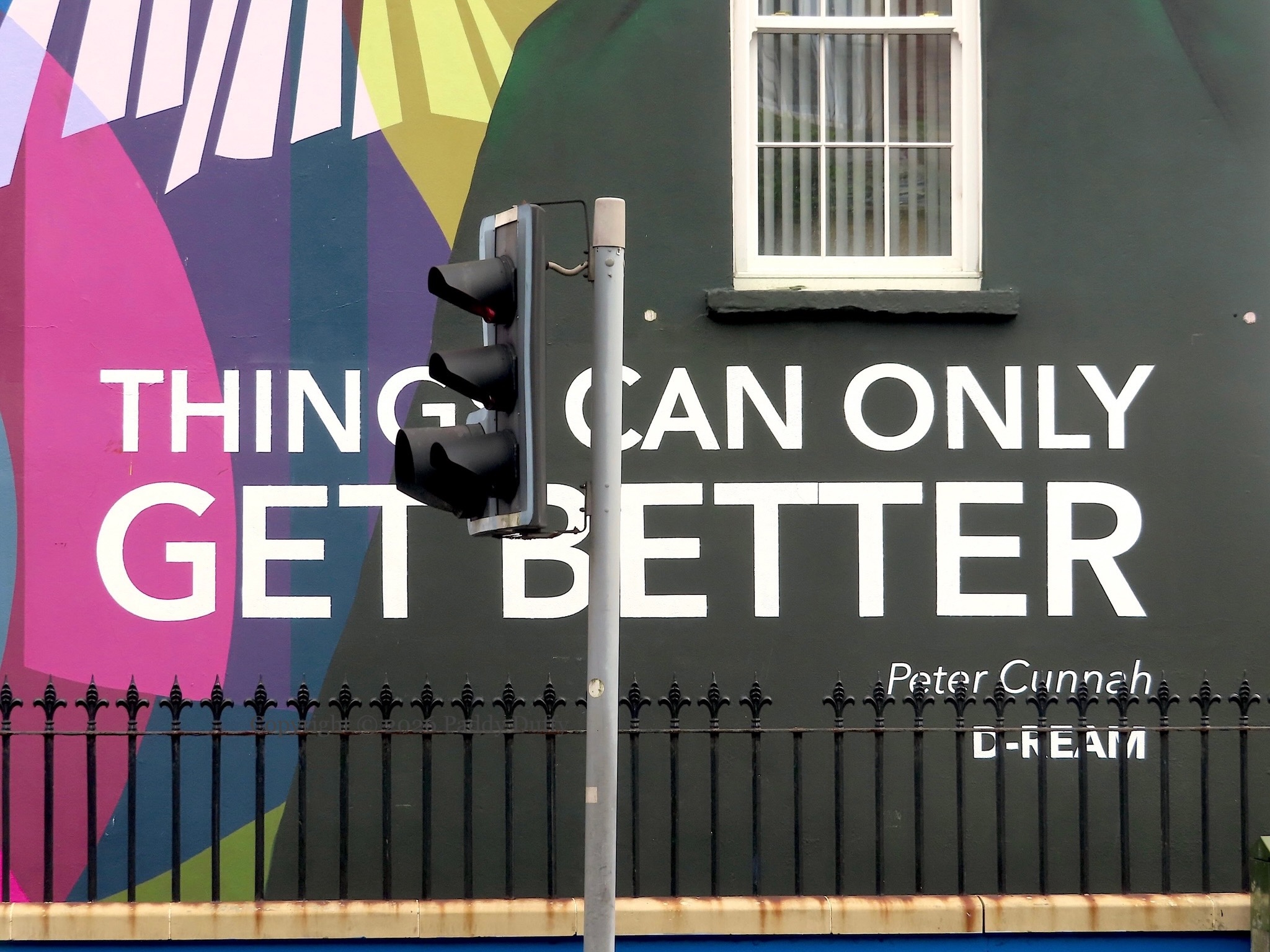
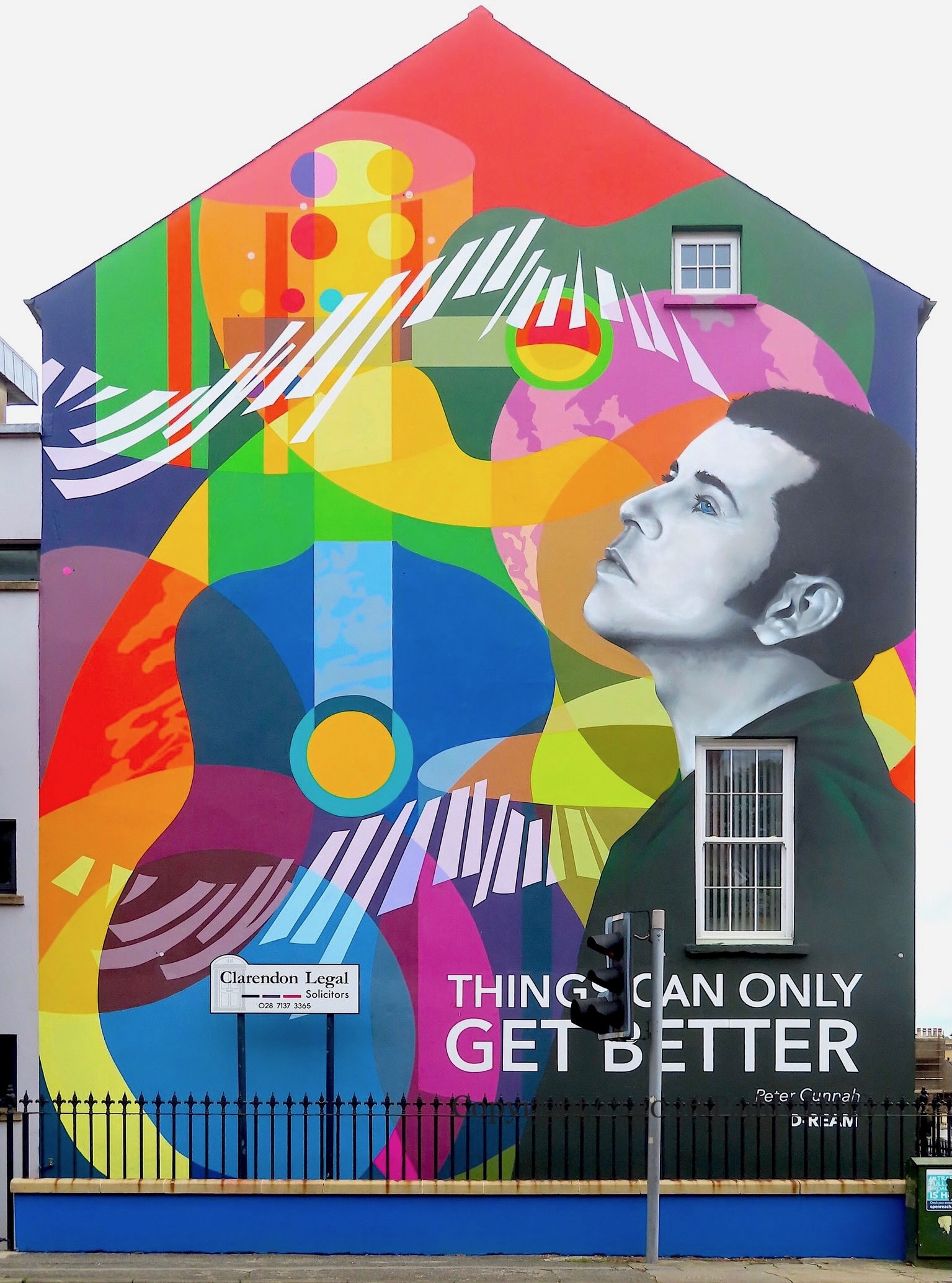
Peter Cunnah was the singer of D:Ream, who had a number-one hit in 1994 with “Things Can Only Get Better” (youtube). He was born in Belfast but adopted by parents in Derry (BBC). This new mural was painted (by Karl Porter of UV Arts (web)) at the junction of Northland and Clarendon streets (in the Clarendon Conservation Area (pdf)), next to Cunnah’s home at 46 Clarendon Street, where he formed his first band, Tie The Boy (Derry Journal).
The galleries below provide a quick way to view the more than 7,800 images added to Paddy’s collection so far. Write-ups with descriptions and background information for many individual images are also available – click on each image in the galleries for individual entries or use the search tools in the side-bar on the right (or simply keep scrolling).
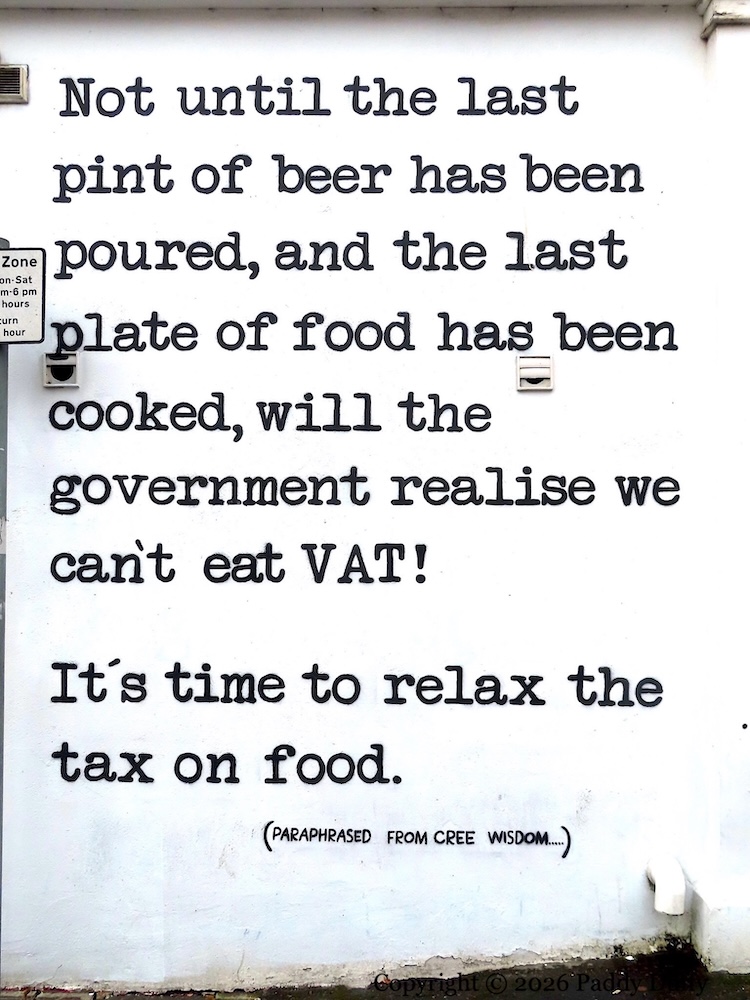
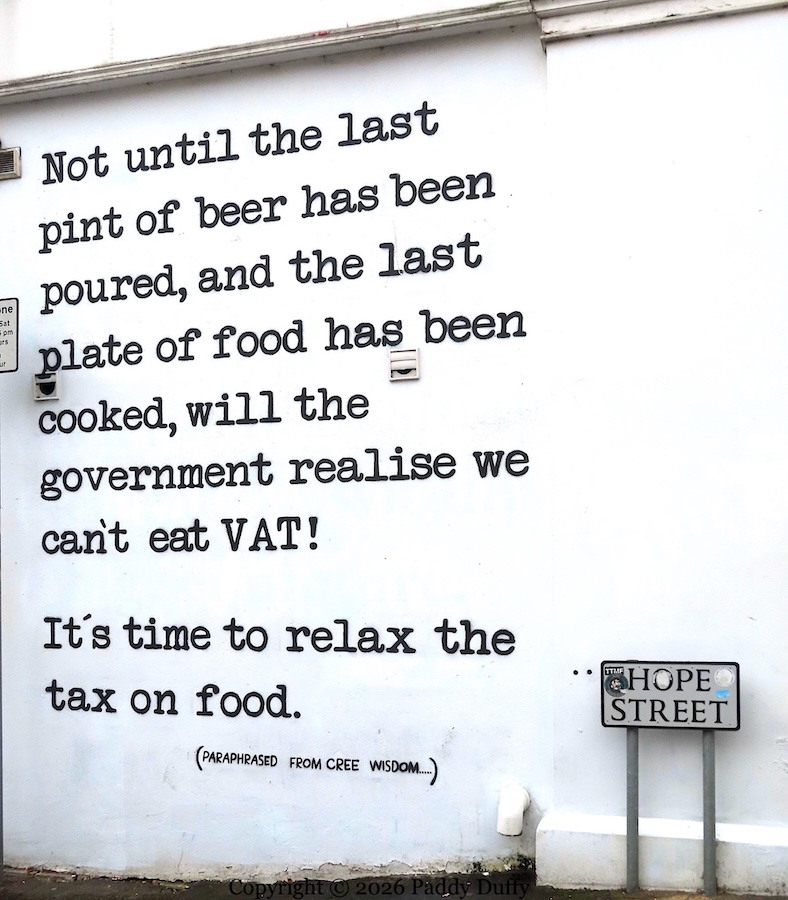
“Not until the last pint of beer has been poured, and the last plate of food has been cooked, will the government realise we can’t eat VAT! It’s time to relax the tax on food. (paraphrased from Cree wisdom …)”
This statement is on the side wall of the Ginger Bistro. VAT on restaurant food was temporarily reduced to 5% during COVID, and this summer the same rate was used for children’s meals, but as of today are now back at the standard rate of 20%. Four famous chefs have called for the tax on restaurant food to be reduced to 10% (BBC | This Is Money).
Hope Street, Belfast, replacing the quote about creativity seen in A Bigger Picture.
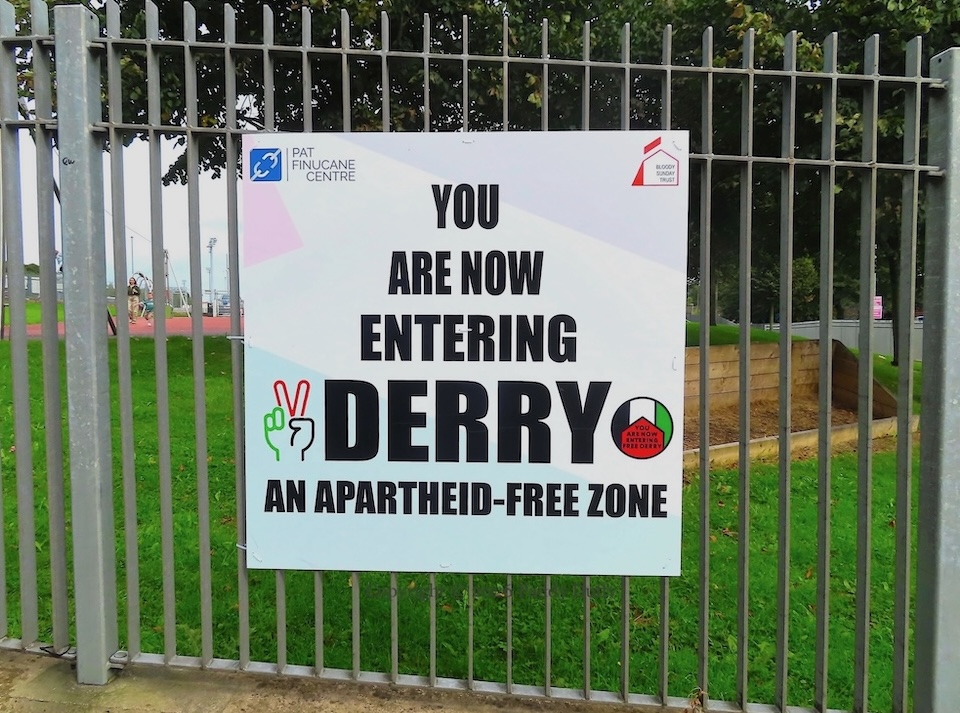
“You are now entering Derry, an apartheid-free zone.”
Placards like this one have been mounted in Derry by the Pat Finucane Centre (web) and the Bloody Sunday Trust (web) – whose emblems are the top corners – in connection with their work with local businesses and organisations in conducting a “BDS audit” to ensure that they are not working with Israeli companies (Bloody Sunday Trust | Fb).
The words are in the triangular shape of Free Derry Corner (Visual History), though the word “free” is missing”.
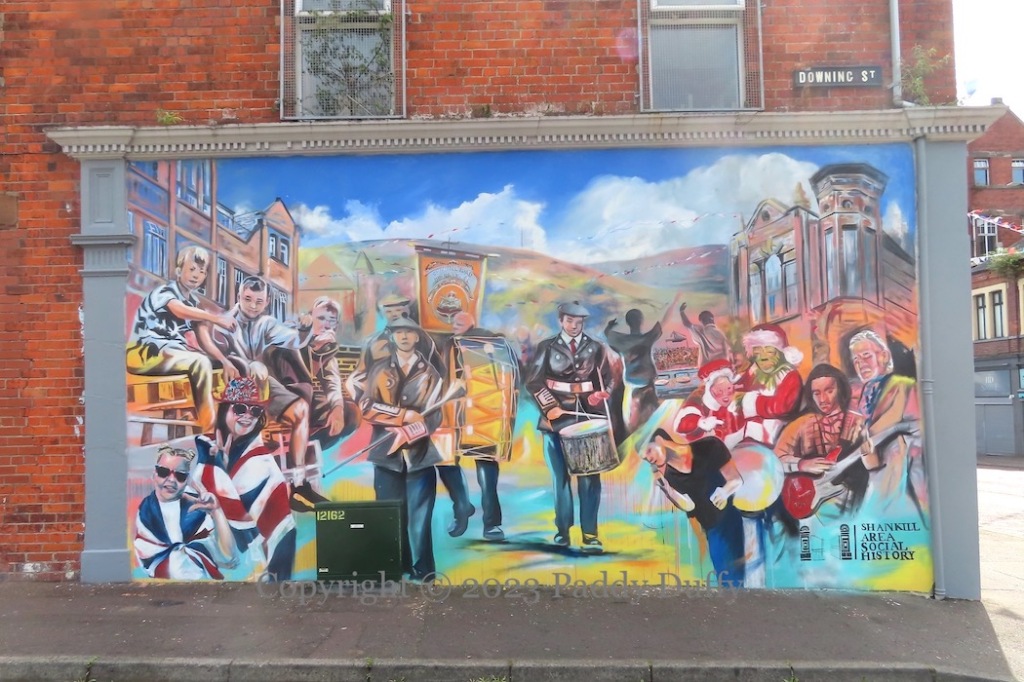
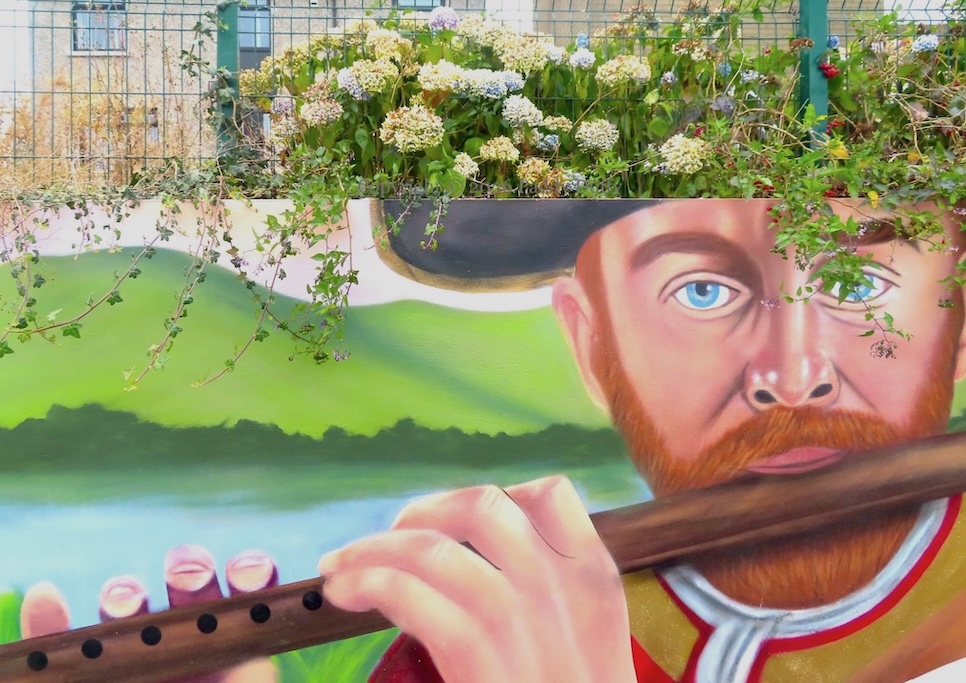
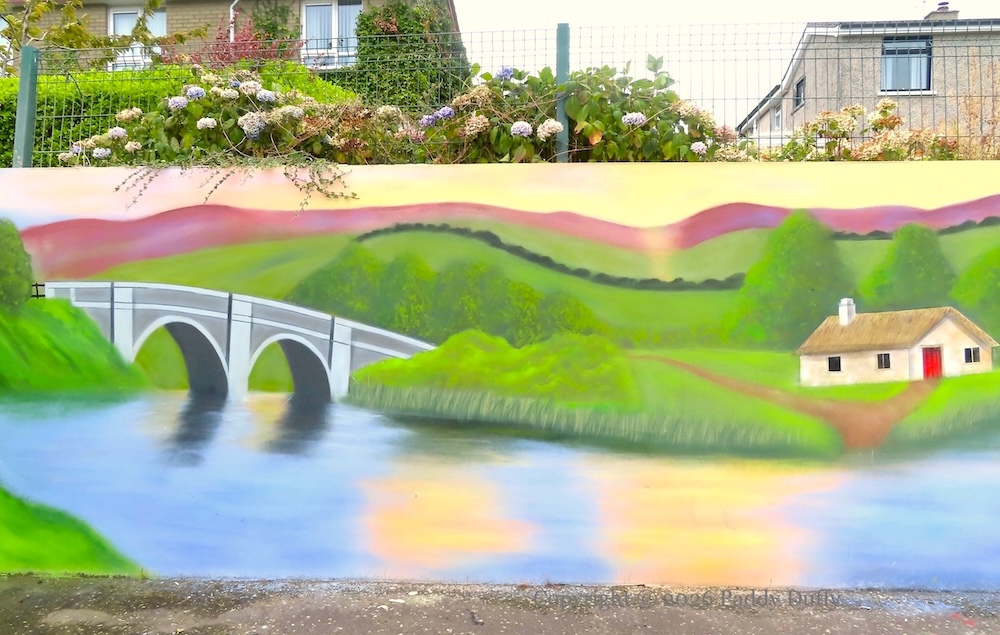
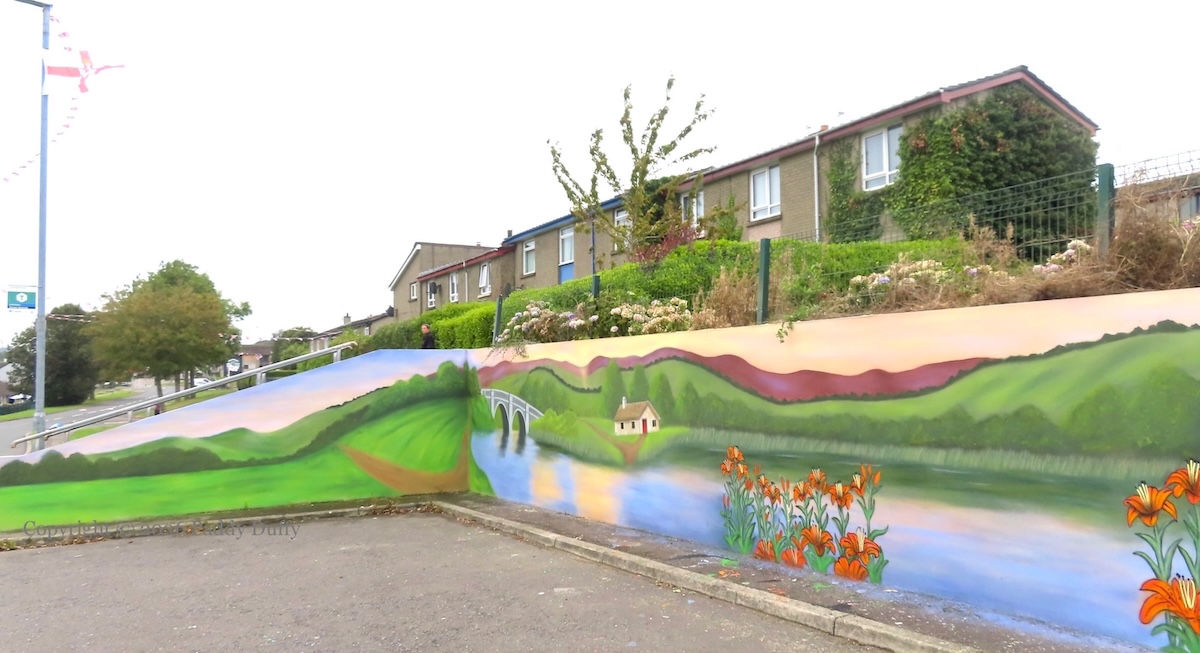
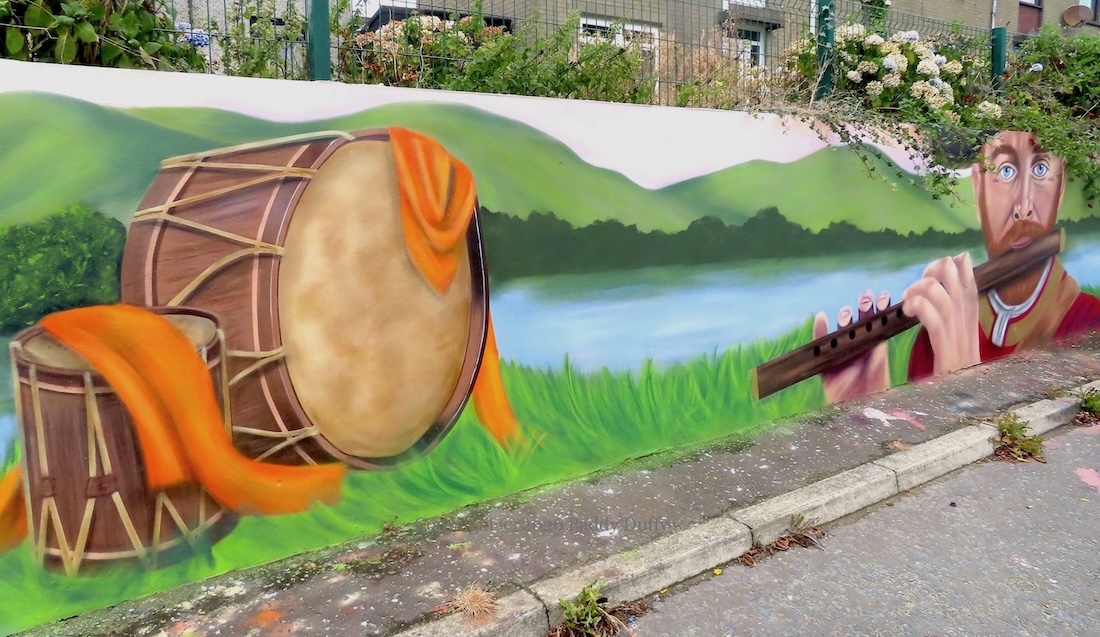
The local flute band in the Kilcooley estate is the North Down Defenders (Fb), which was formed in 2004. This new art, however, suggests that drumming and piping go back to the time of thatched cottages and stone bridges – perhaps, as the orange lilies and blankets might suggest, to the 1795 founding of the Orange Order.
In the lay-by at the top of Owenroe Drive, Kilcooley, Bangor
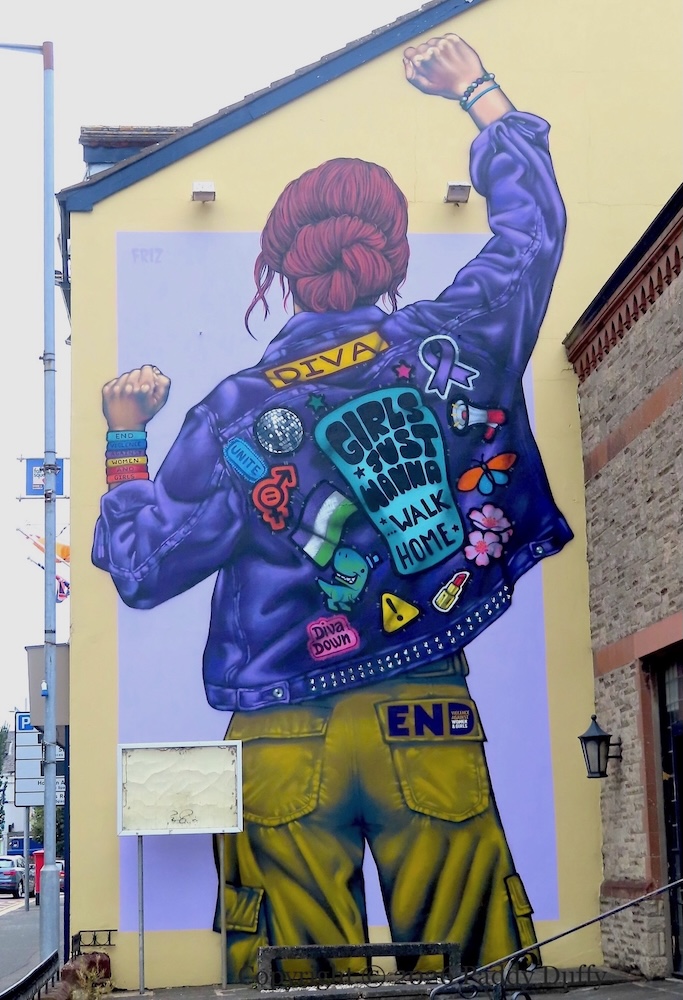
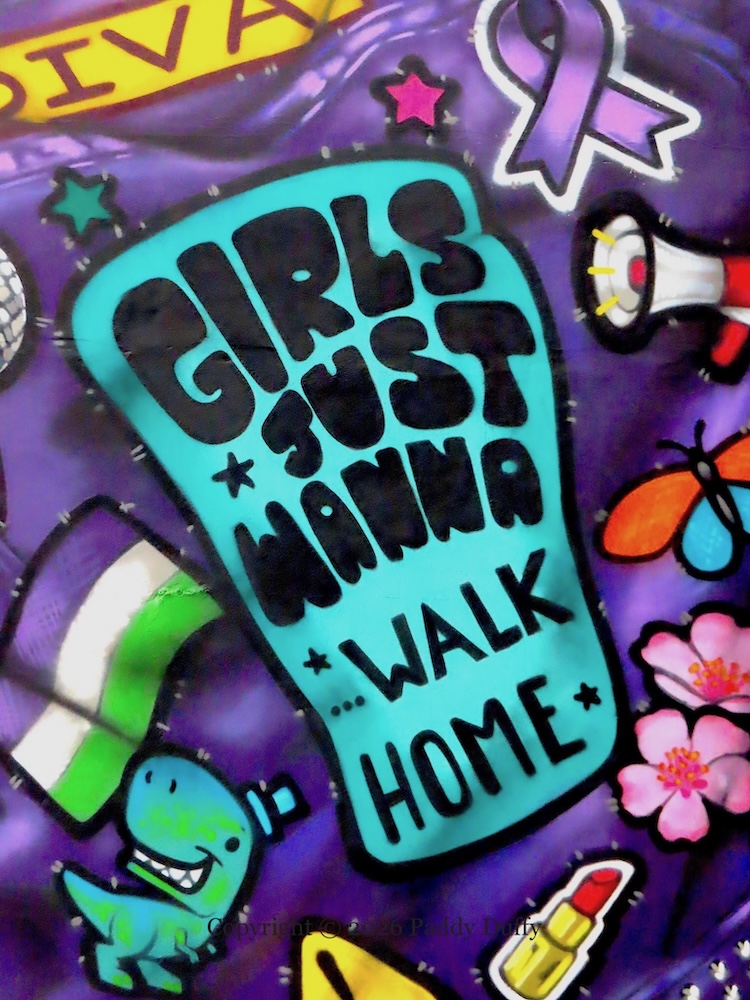
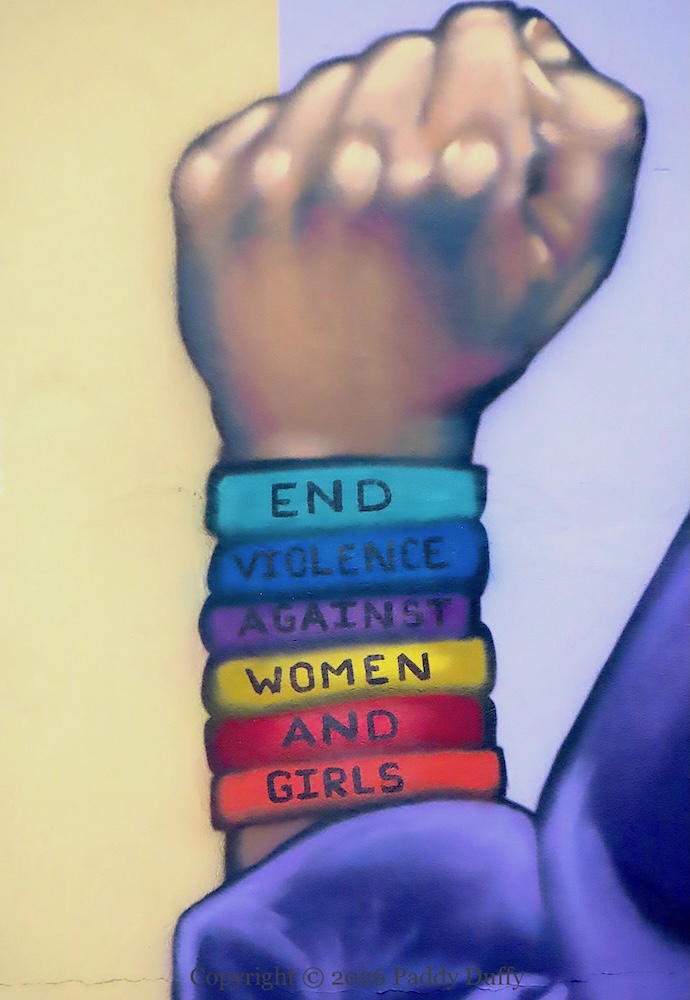
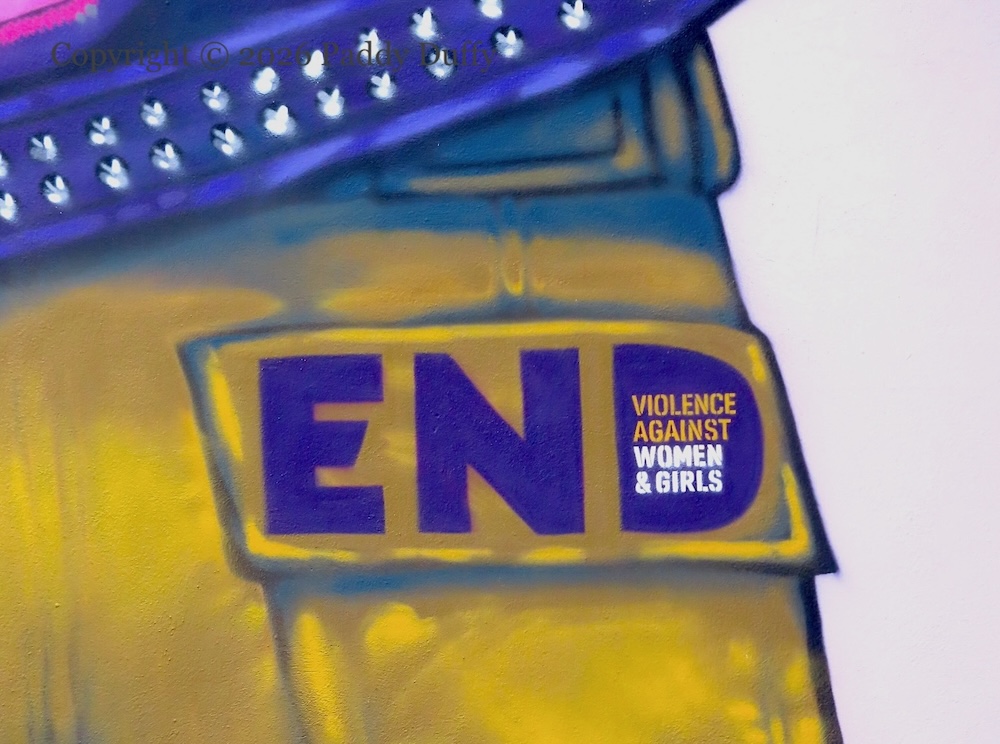
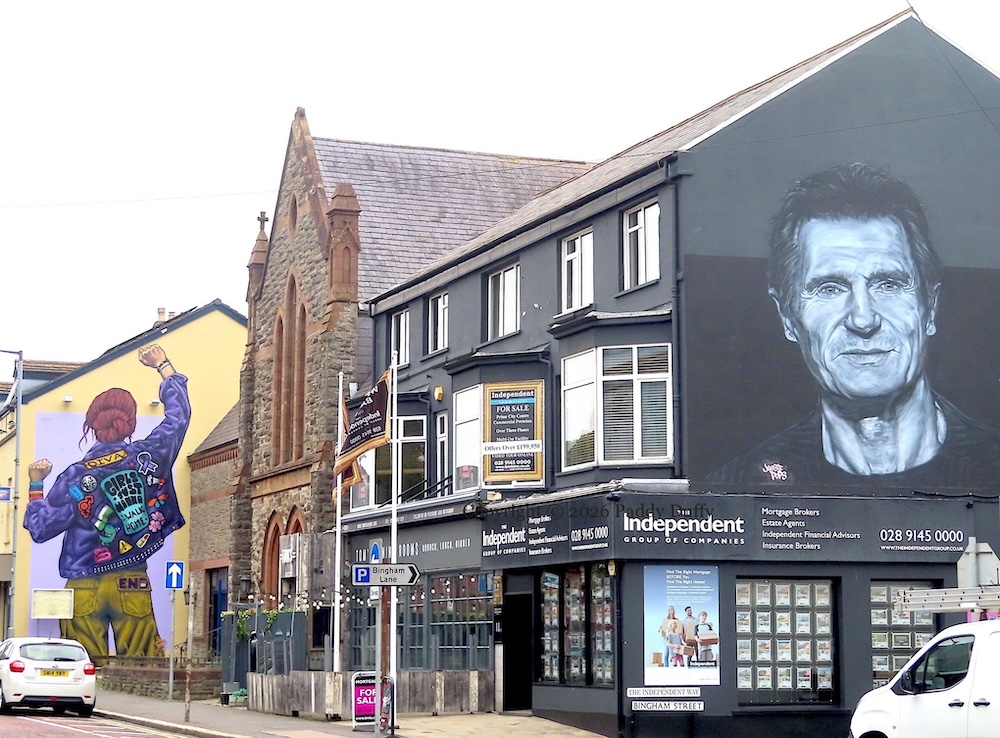
This new wall-painting in Bangor encourages people to “end violence against women and girls”. It was painted by local artist Friz (web) in collaboration with young women from North Down YMCA’s “Flip The Script” programme (Belfast Live) and officially launched on August 25th (Ards & North Down).
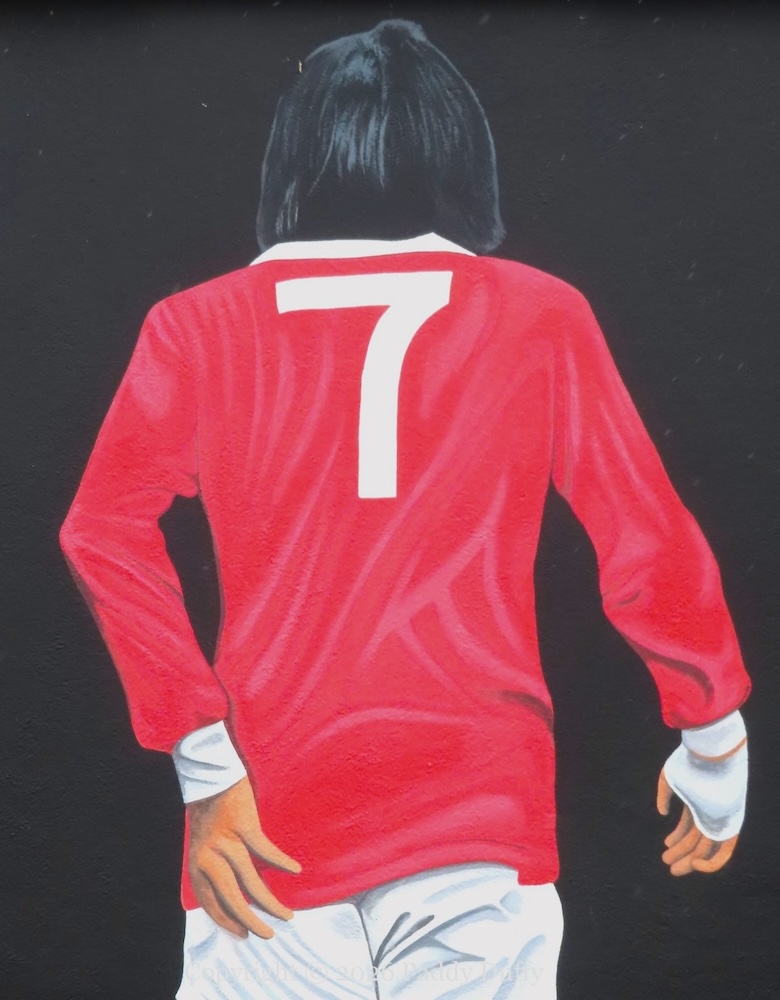
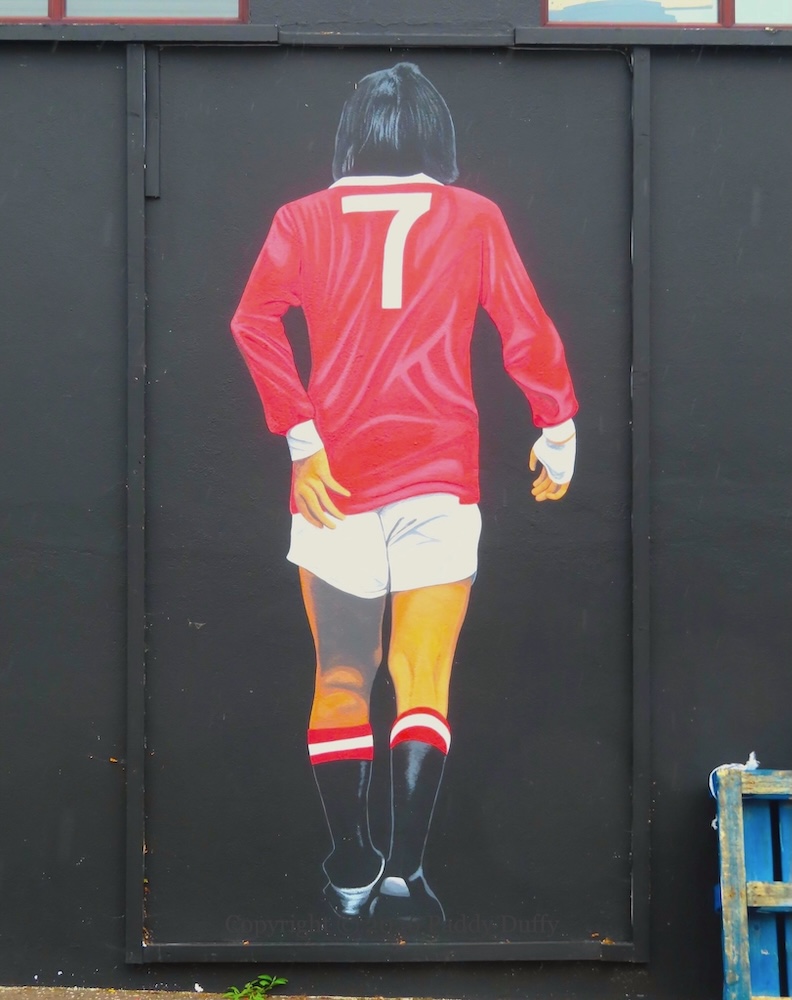
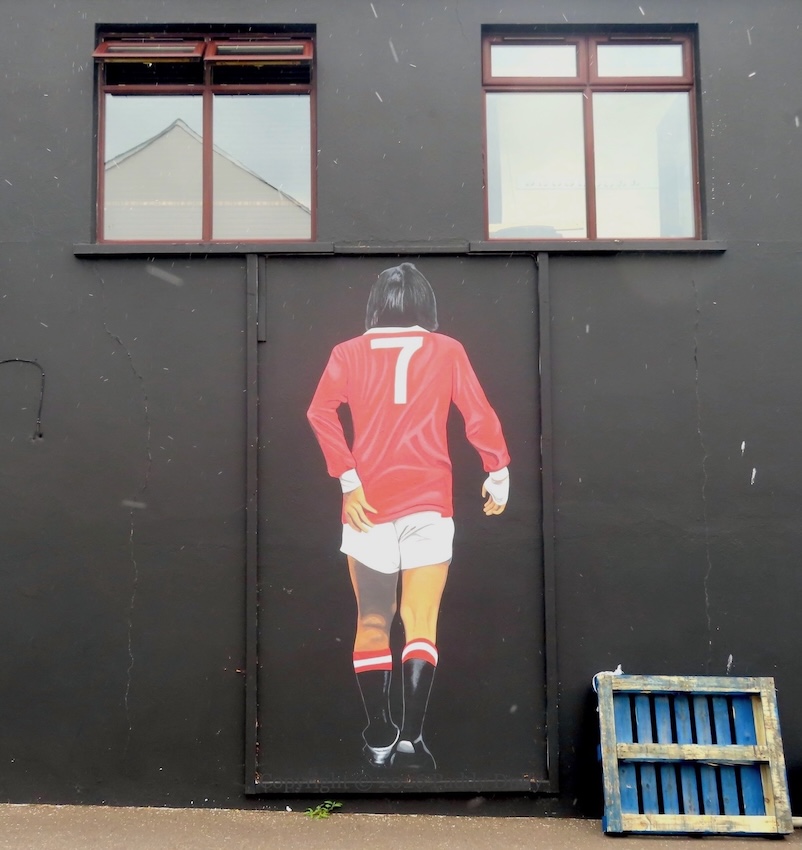
This painting of soccer star George Best was painted by Ian Lowry (web) on Teddy’s restaurant (Spectator). The photograph reproduced is from a 1971 match against West Ham (Alamy). Best scored a hat-trick in a 4-2 victory for United (11v11).
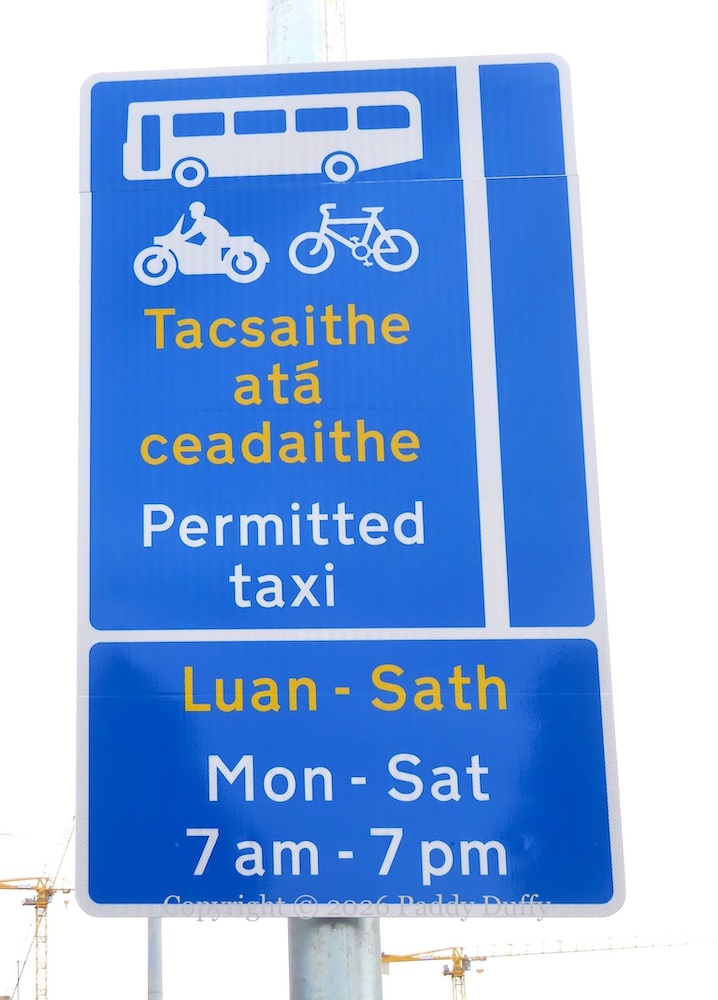
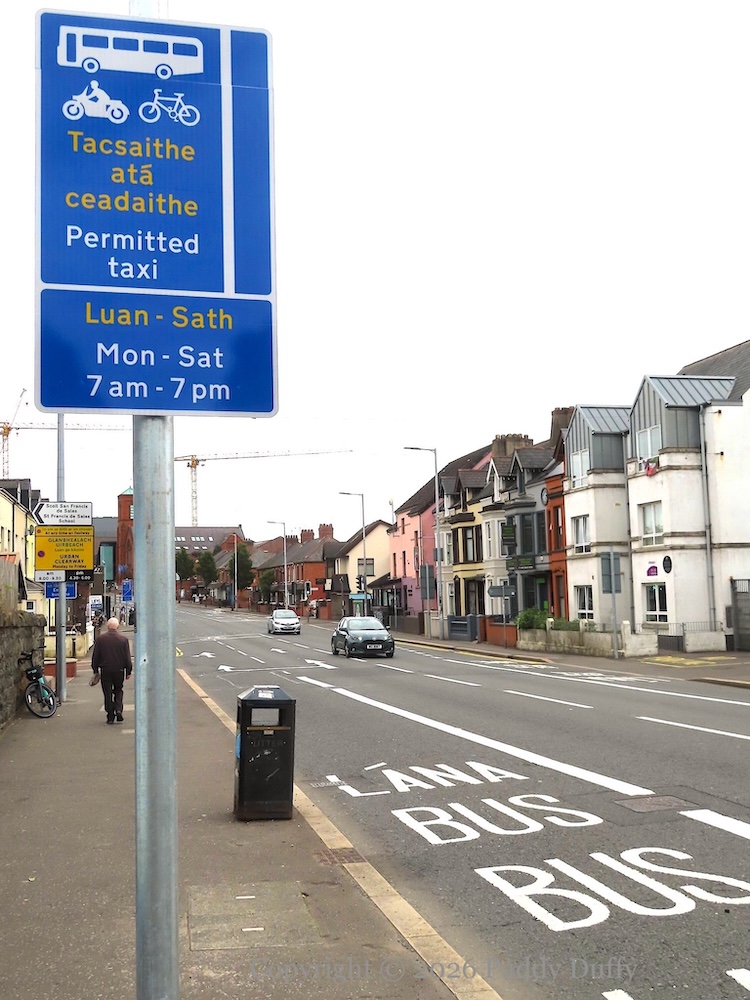
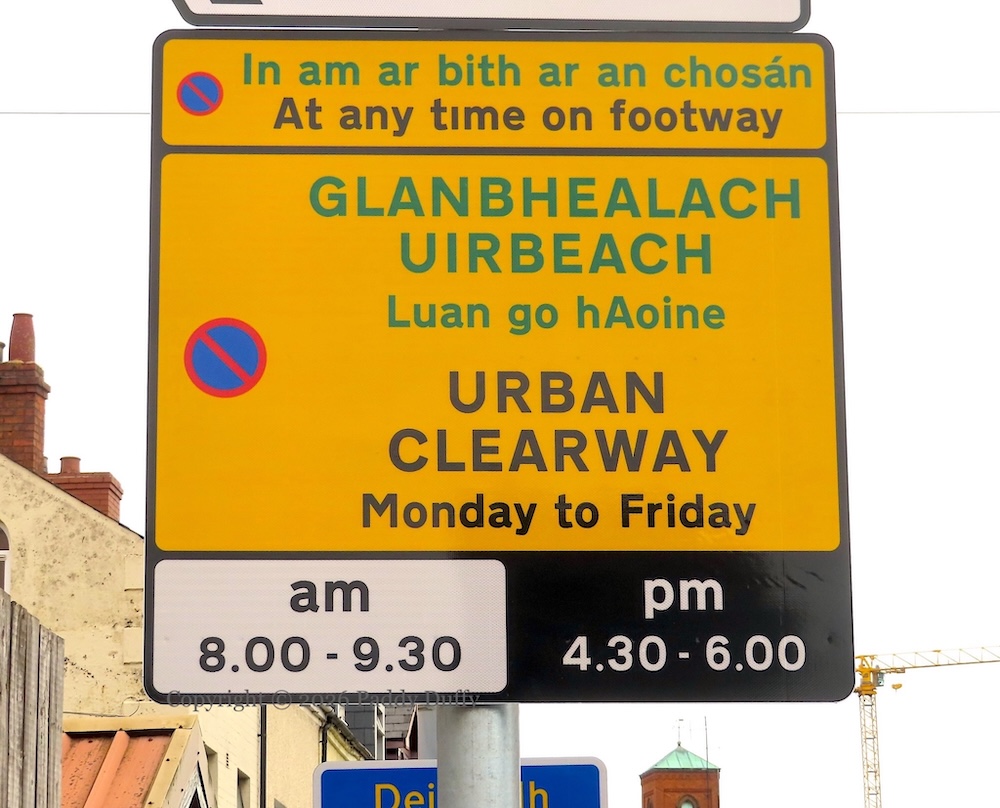
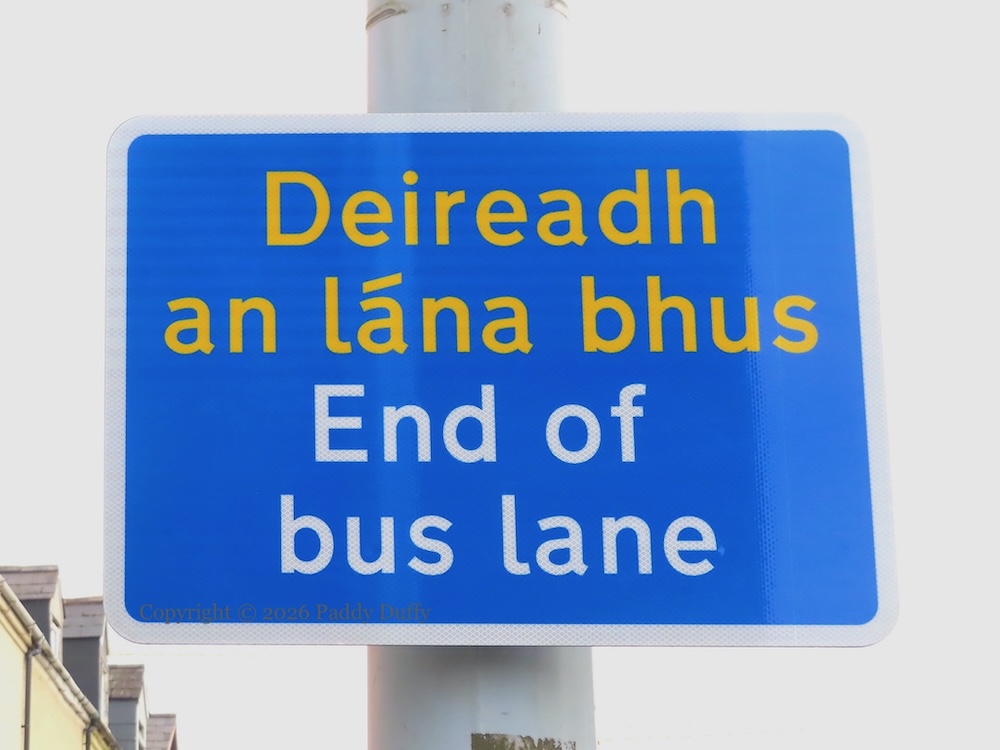
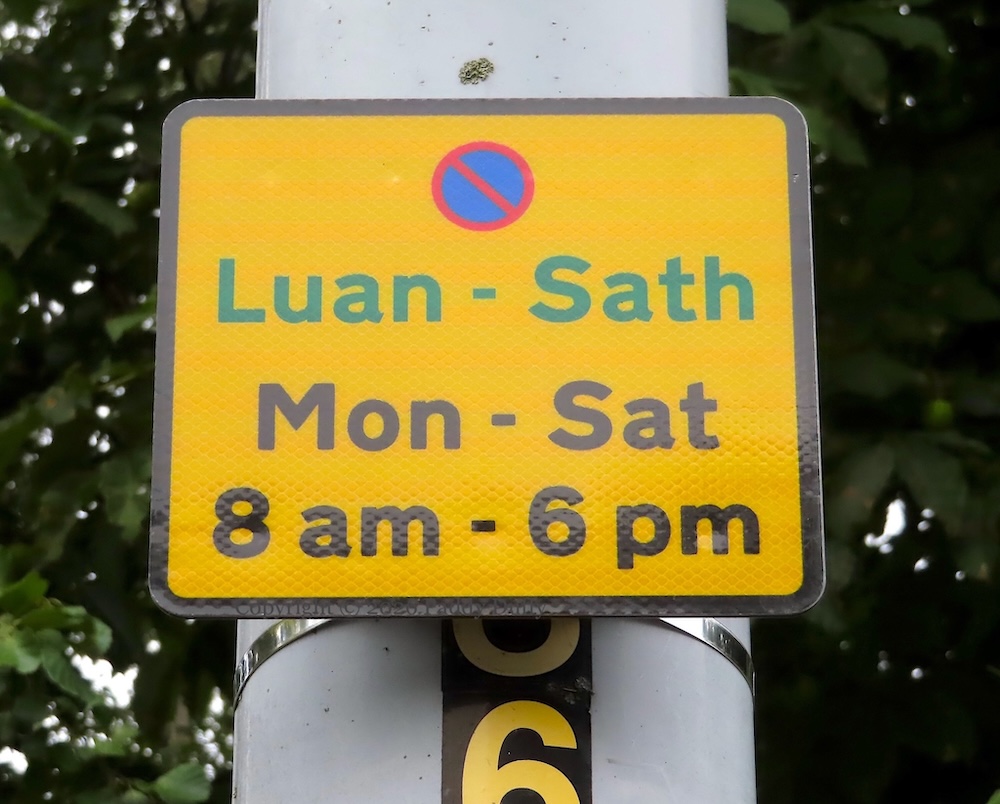
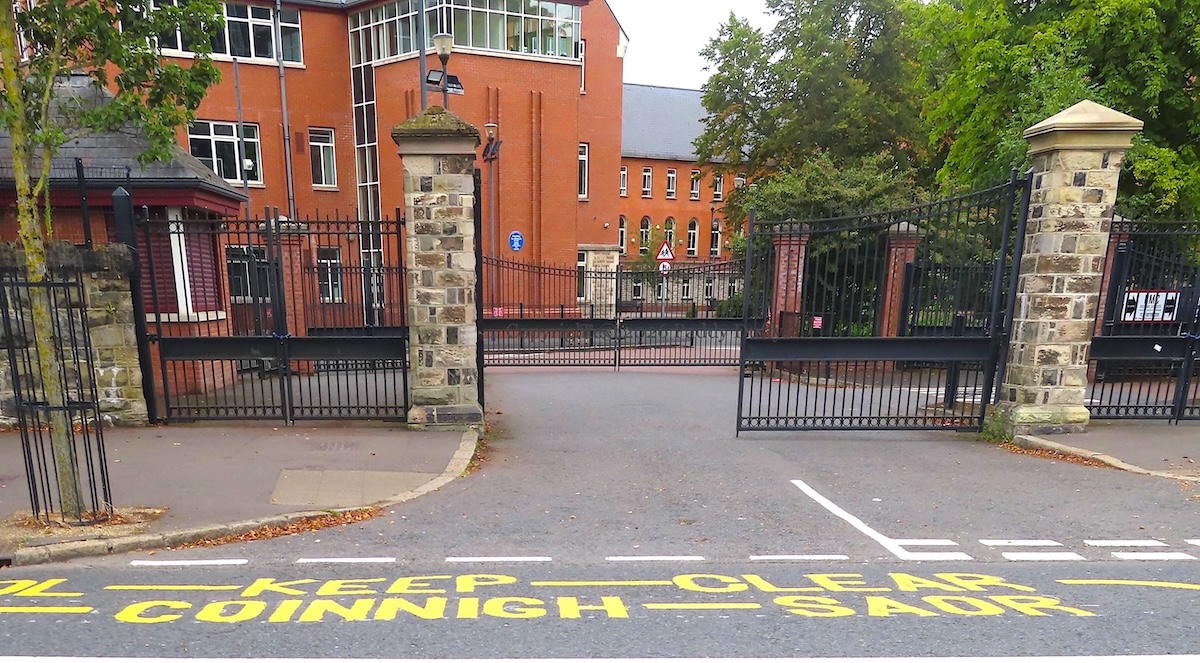
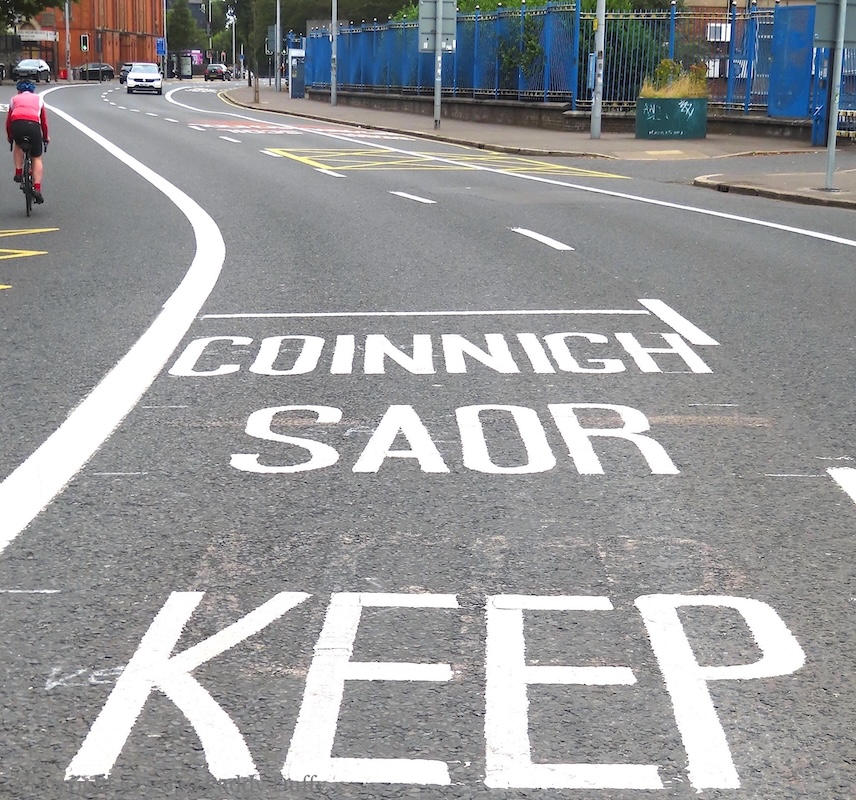
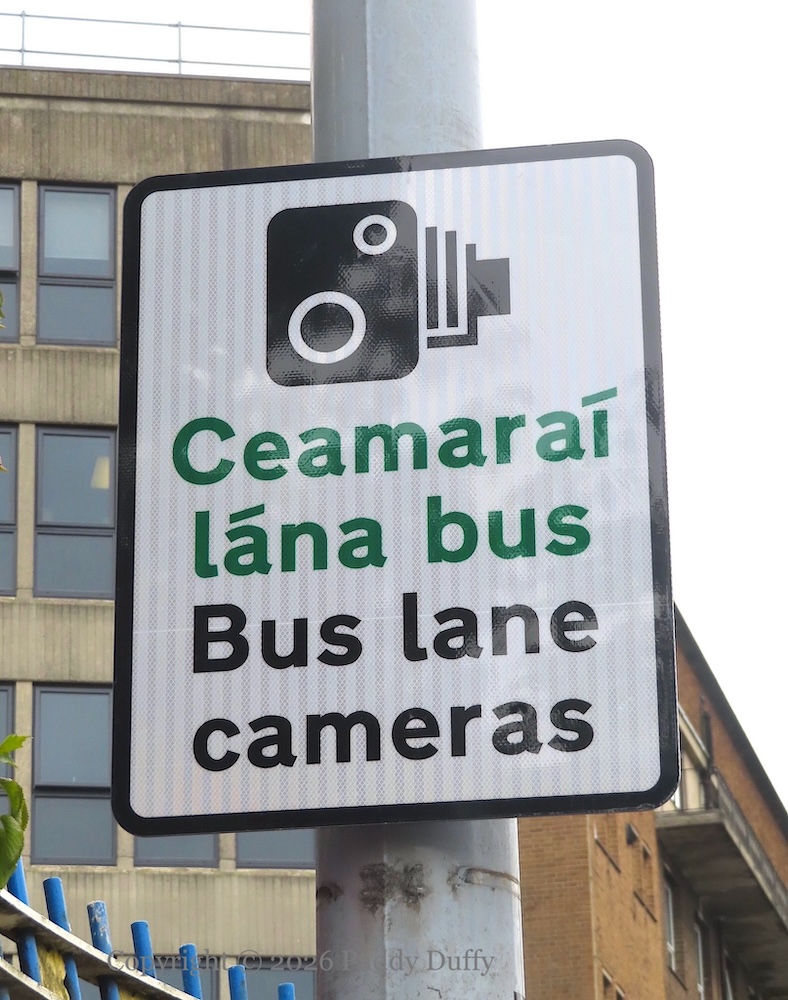
Dual-language (Irish and English) traffic signs and road-markings have been mounted/painted on the Falls Road in the Gaeltacht Quarter (specifically, between Springfield Road and Whiterock Road) by the Department Of Infrastructure/An Roinn Bonneagaır.
Shown in this entry are signs and markings reading, “Tacsaıthe atá ceadaıthe,” “Lána bus”, “Glanbhealach uırbeach, Luan go hAoıne [agus] ın am ar bıth ar an chosán”, “Deıreadh an lána bhus”, “Coınnıgh saor”, “Ceamaraí lána bus”.
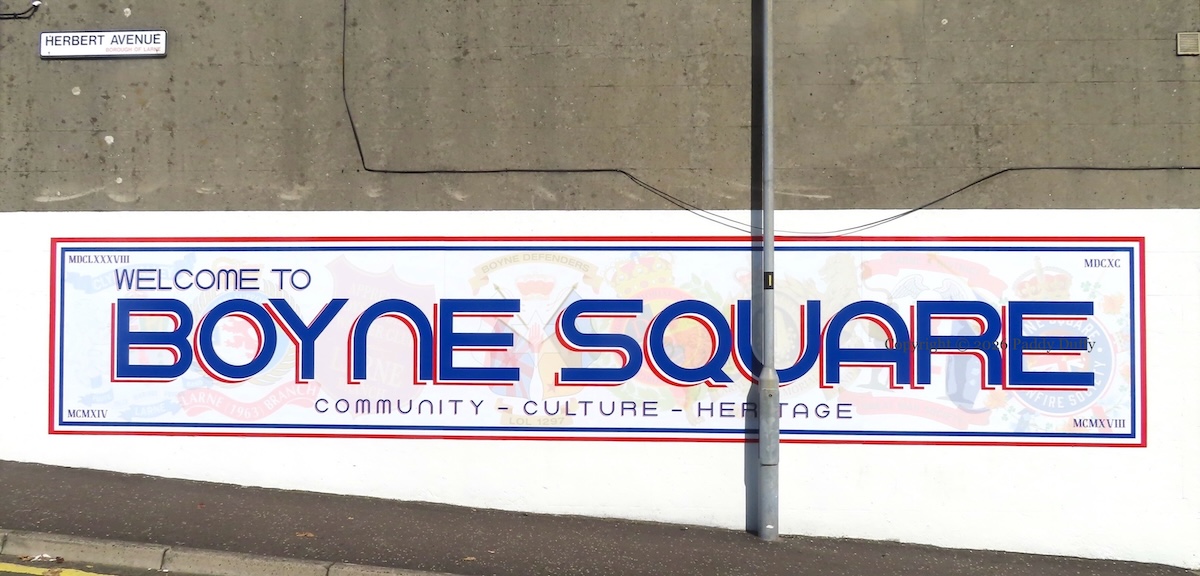
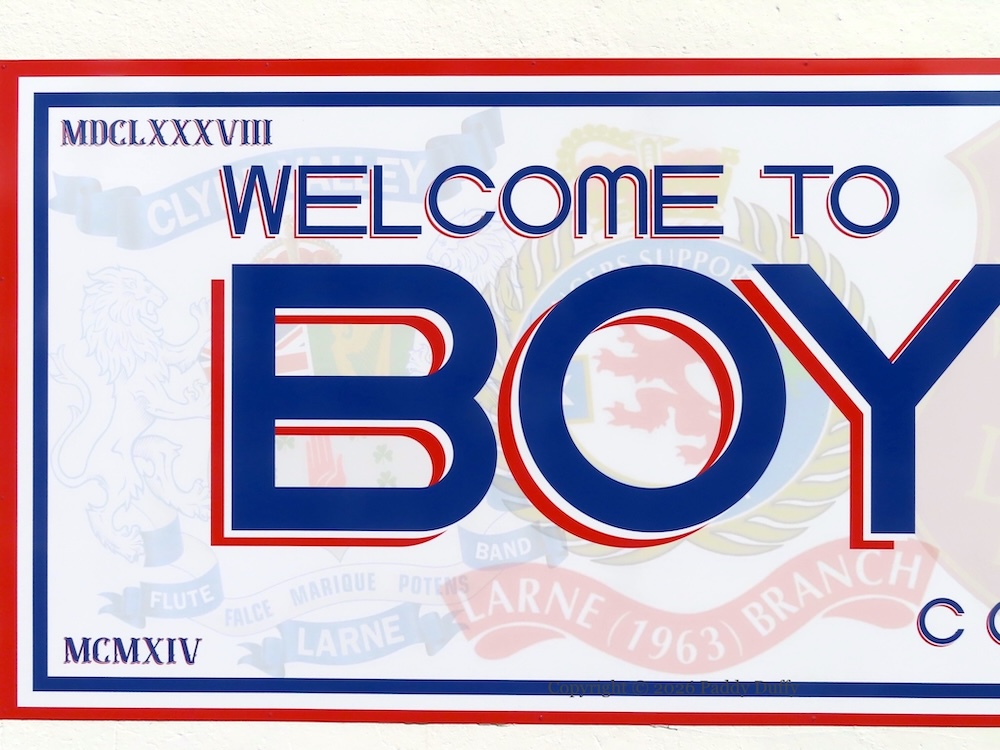
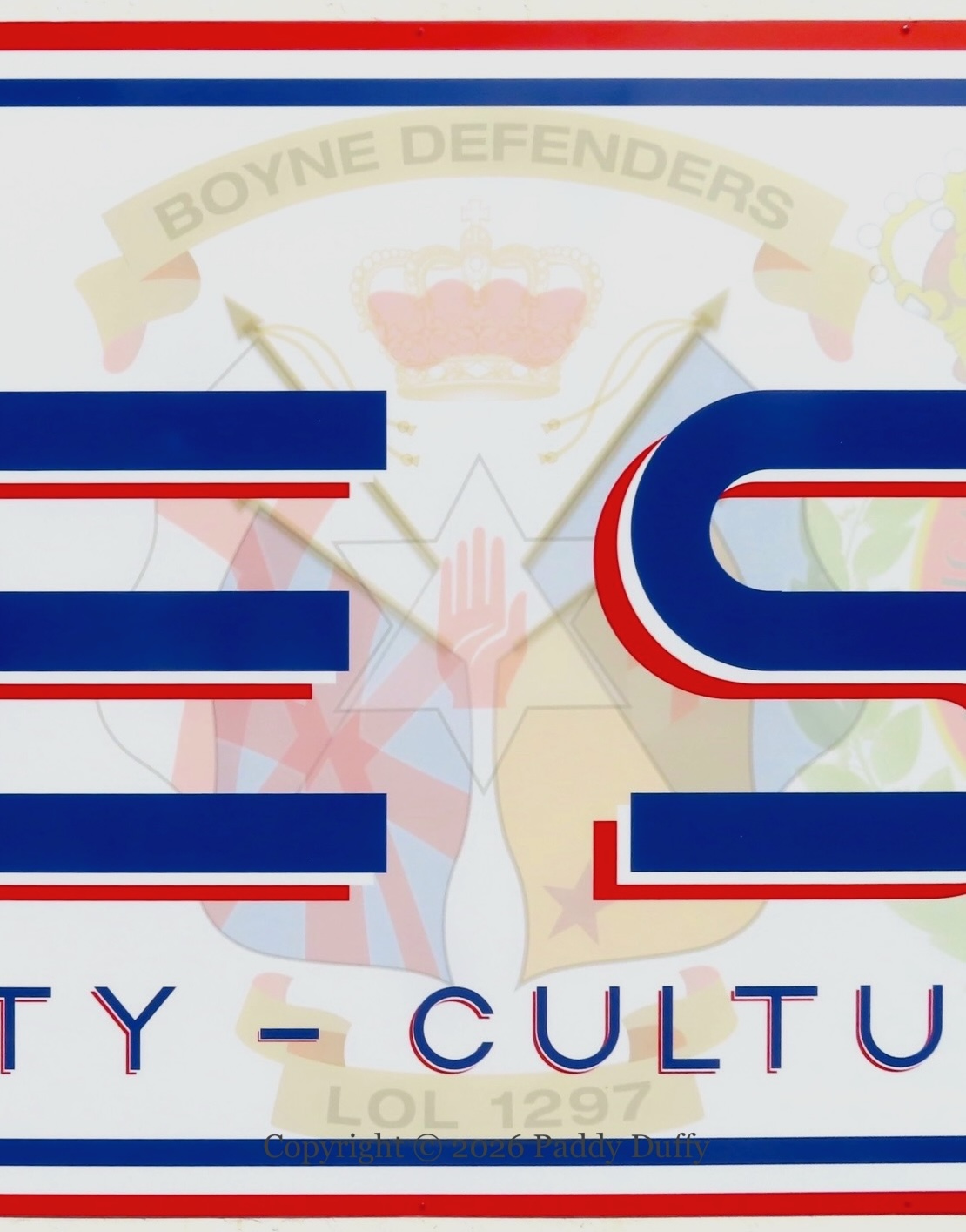
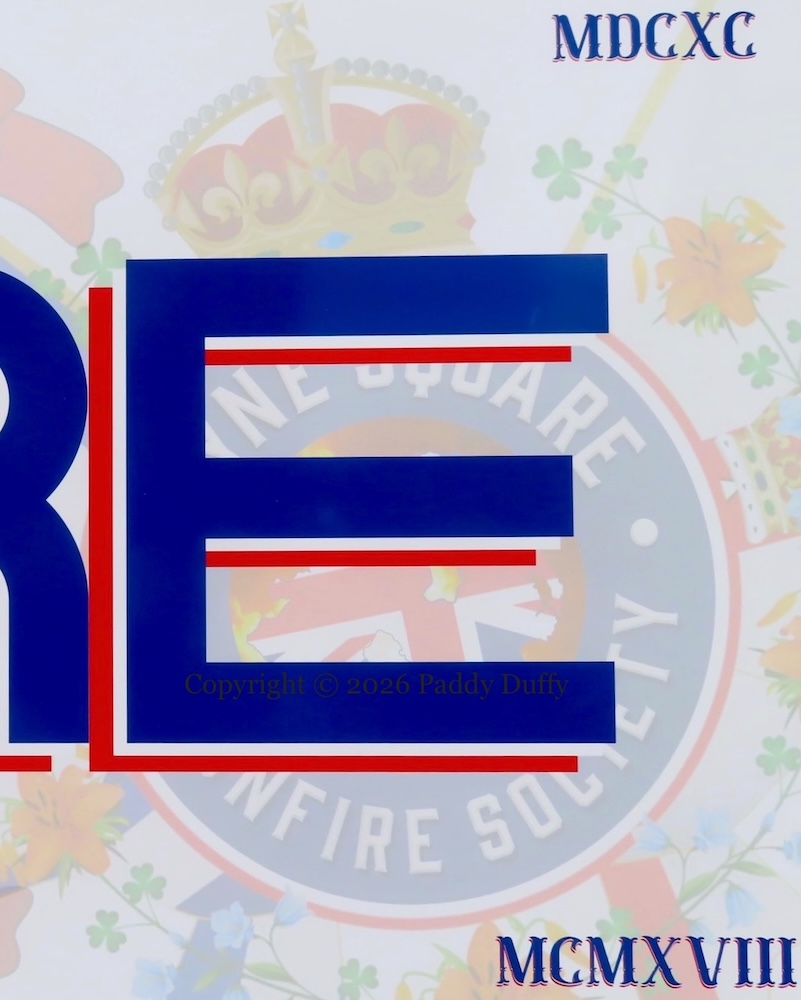
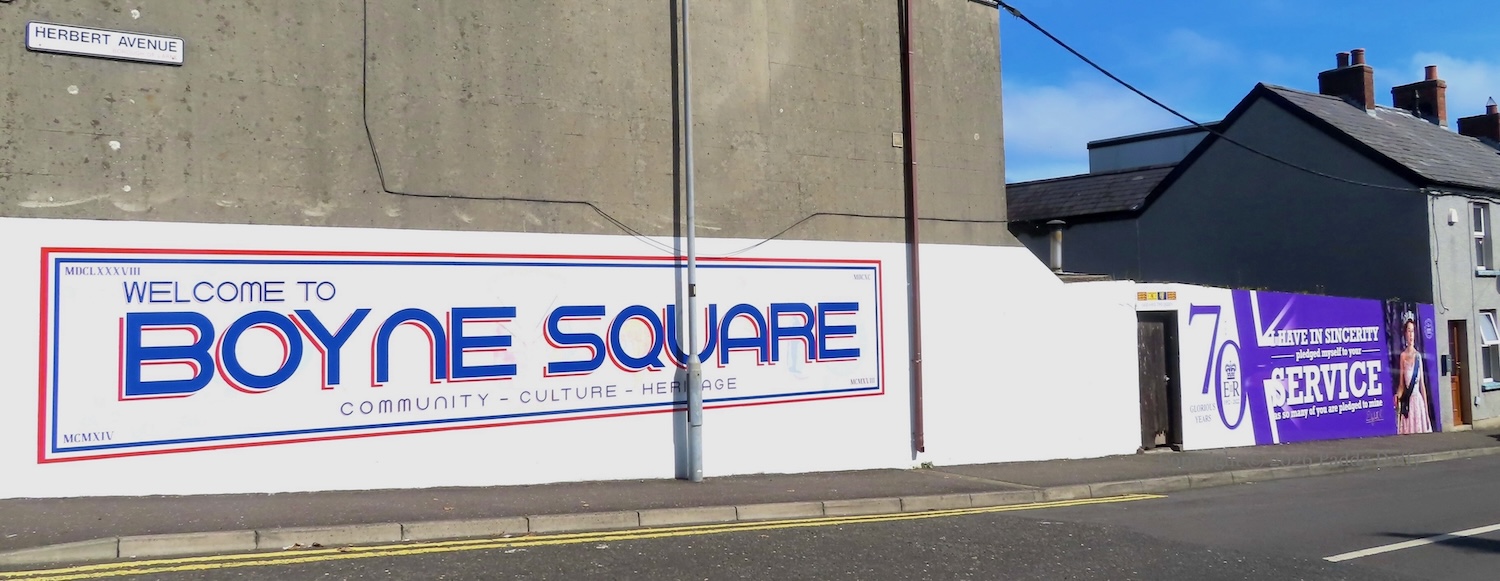
This new “welcome to Boyne Square” sign was mounted in late June in preparation for this year’s Twelfth.
The dates in Roman numerals in the corners are (top) 1688-1690 and (bottom) 1914-1918. The emblems in the background are of (l-r) Clyde Valley flute band (Fb), Rangers Supporters’ Club – Larne (Fb), ABOD Walker Club Larne Branch (Fb), Boyne Defenders LOL 1297 (Fb), George A Dummigan accordion band, Constable Anderson Memorial flute band (Fb), Larne & District Great War Society (Fb), Boyne Square Bonfire Society (Fb).
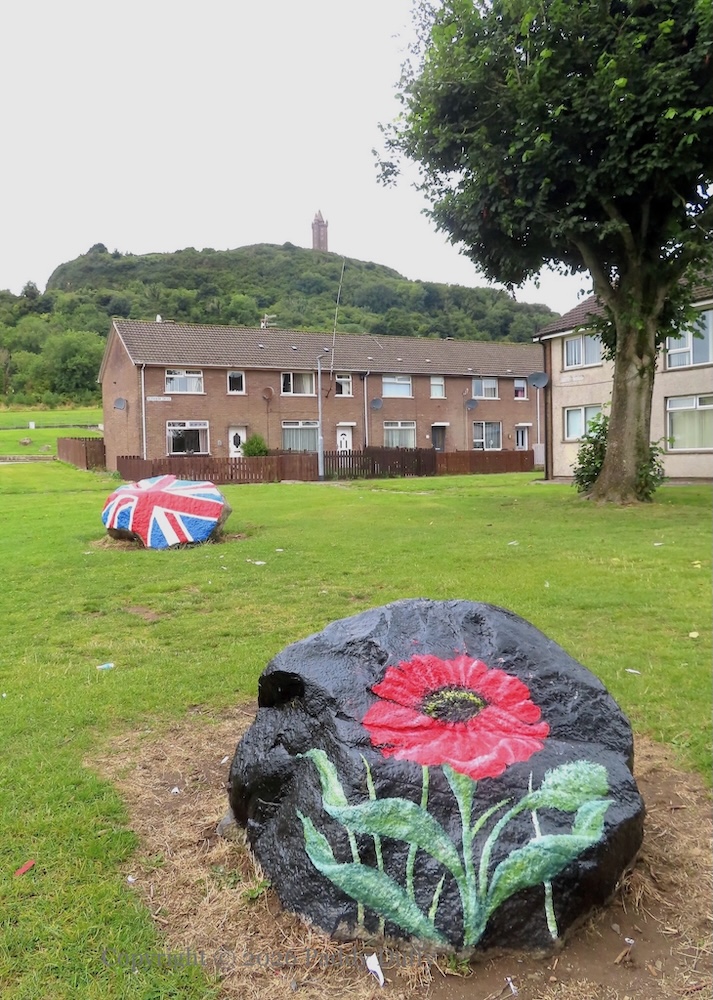
The rocks in Westwinds estate have been repainted. The poppy in the foreground was previously a YCV emblem (as seen in 2018). In the distance, Scrabo Tower overlooks the estate.
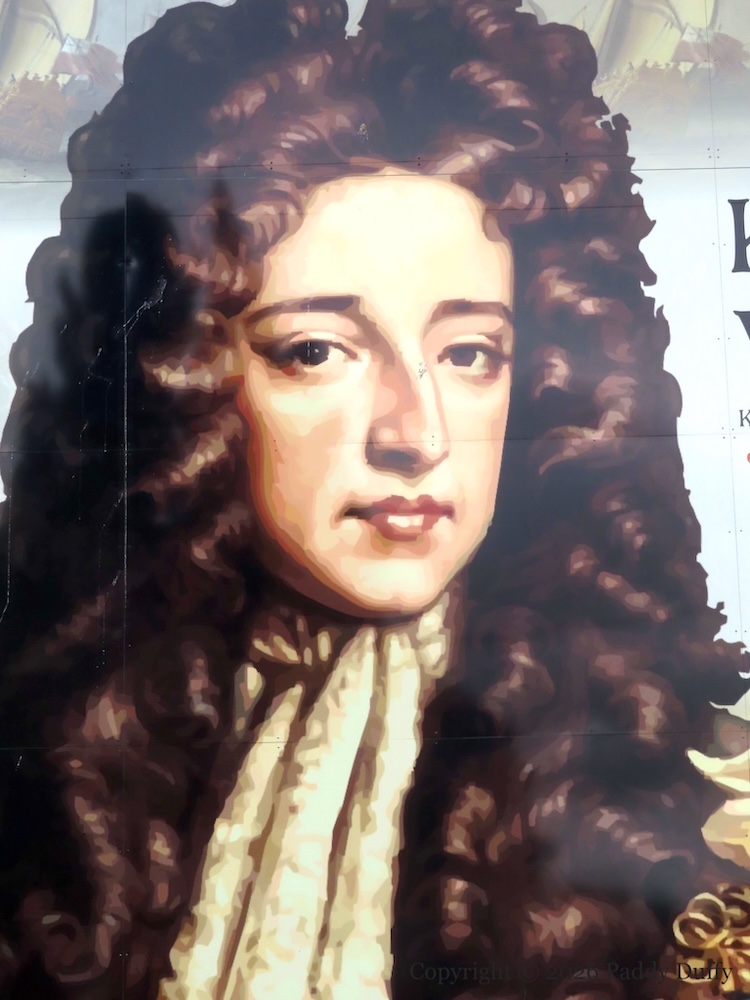
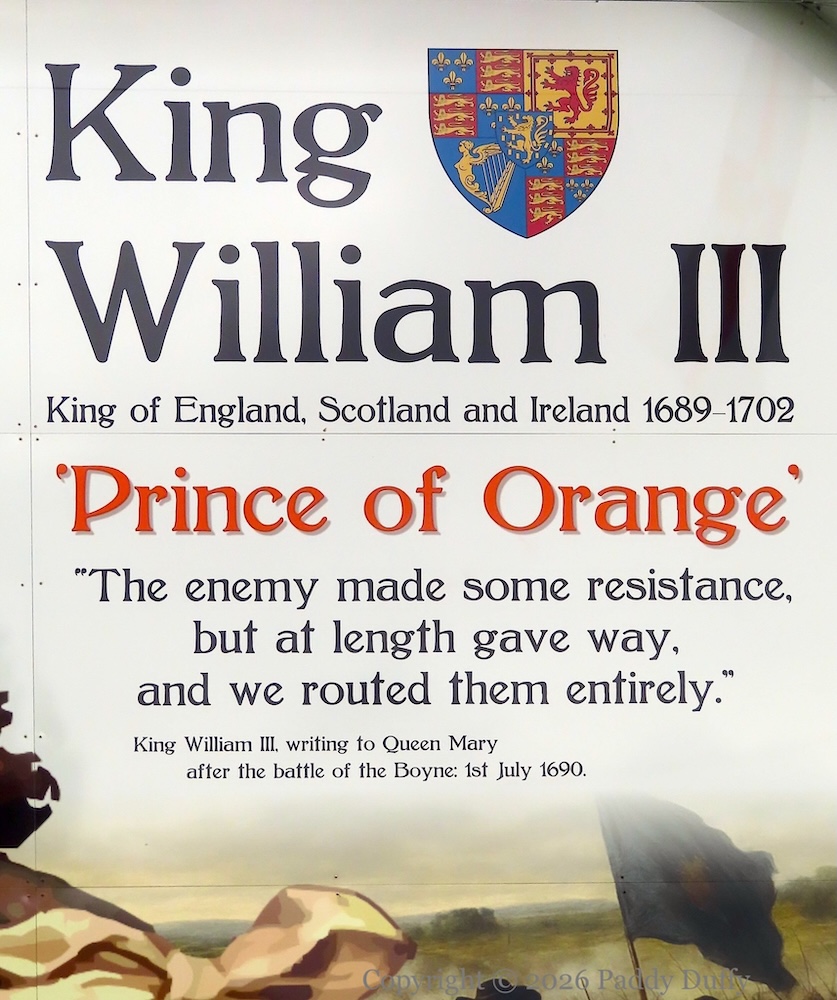
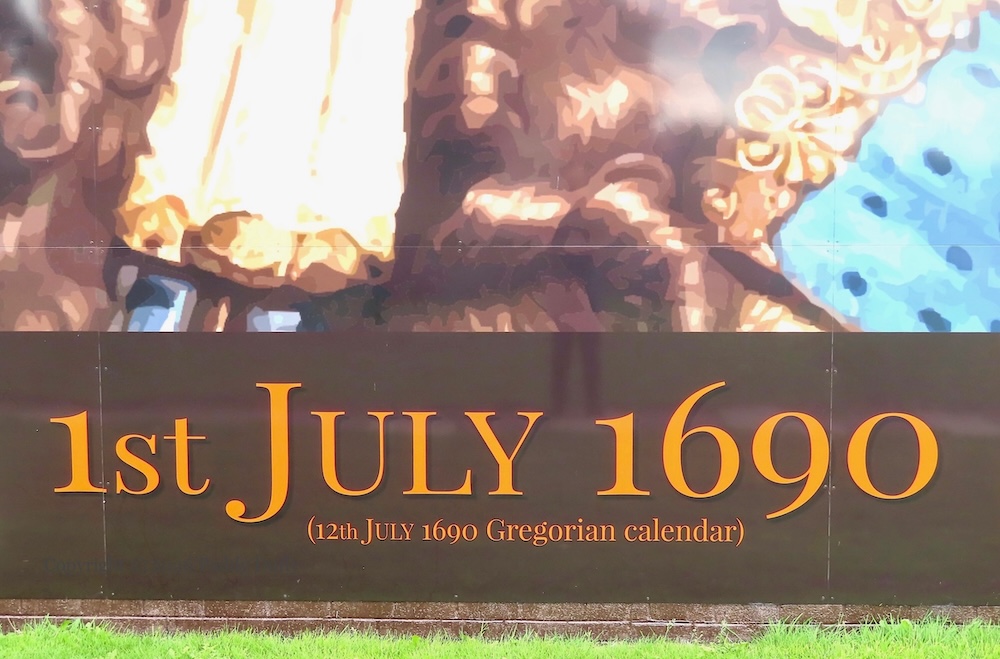
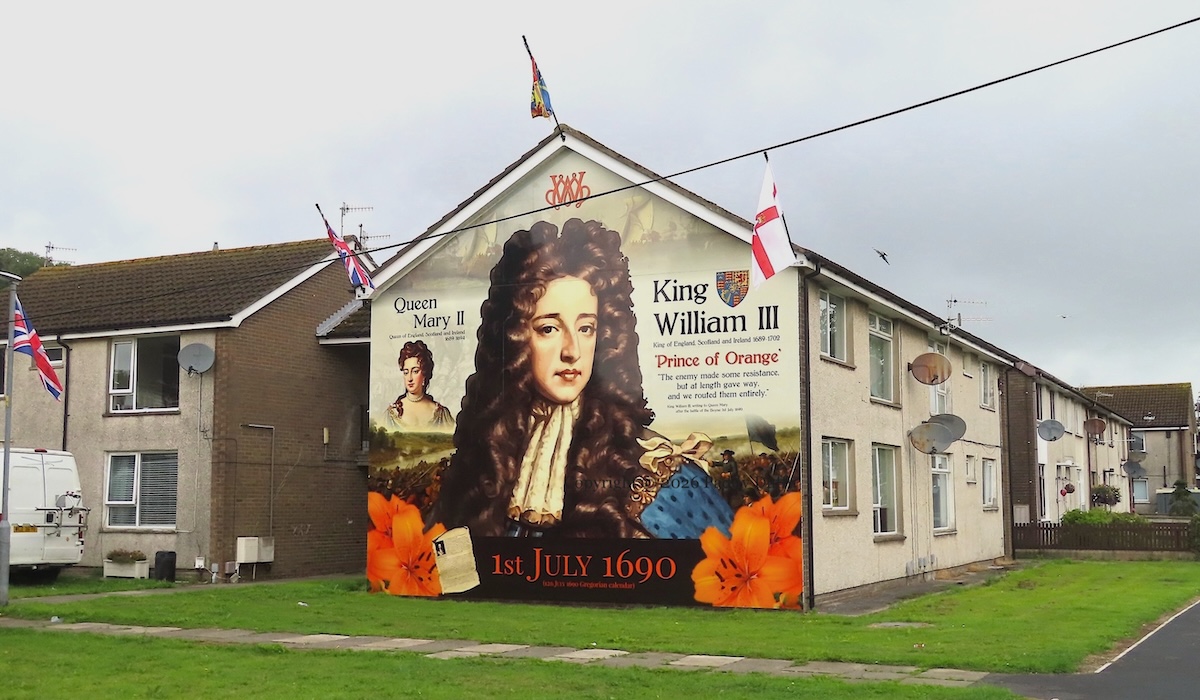
“King William III, King of England, Scotland and Ireland 1689-1702. ‘Prince of Orange’. “The enemy made some resistance but at length gave way, and we routed them entirely.” King William III, writing to Queen Mary after the battle of the Boyne: 1st July 1690″.
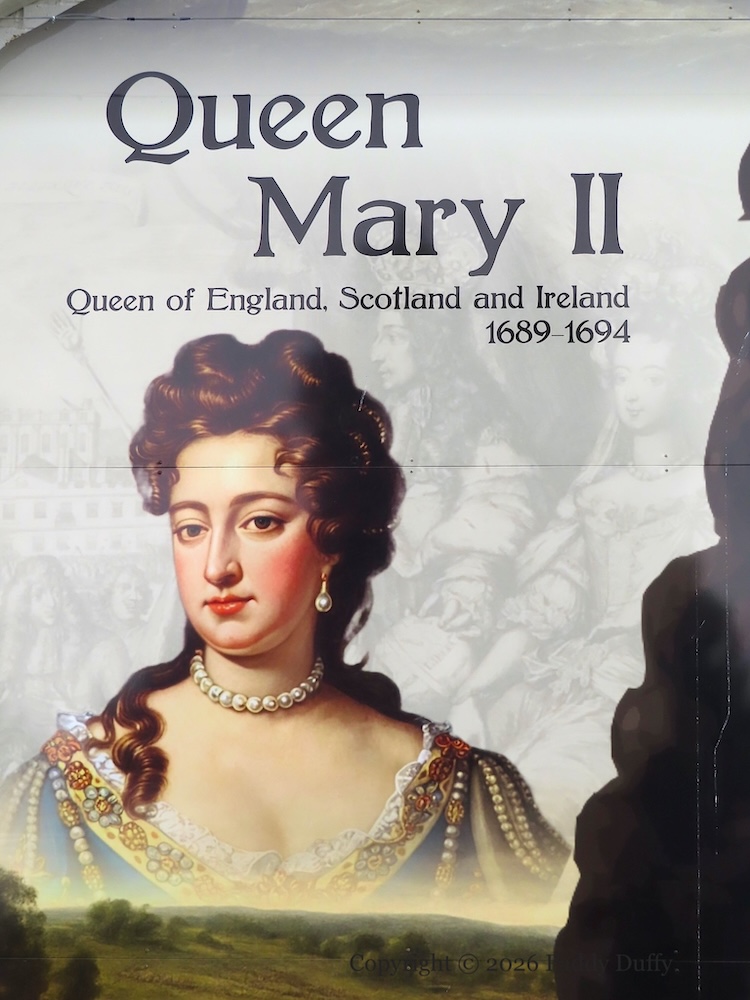
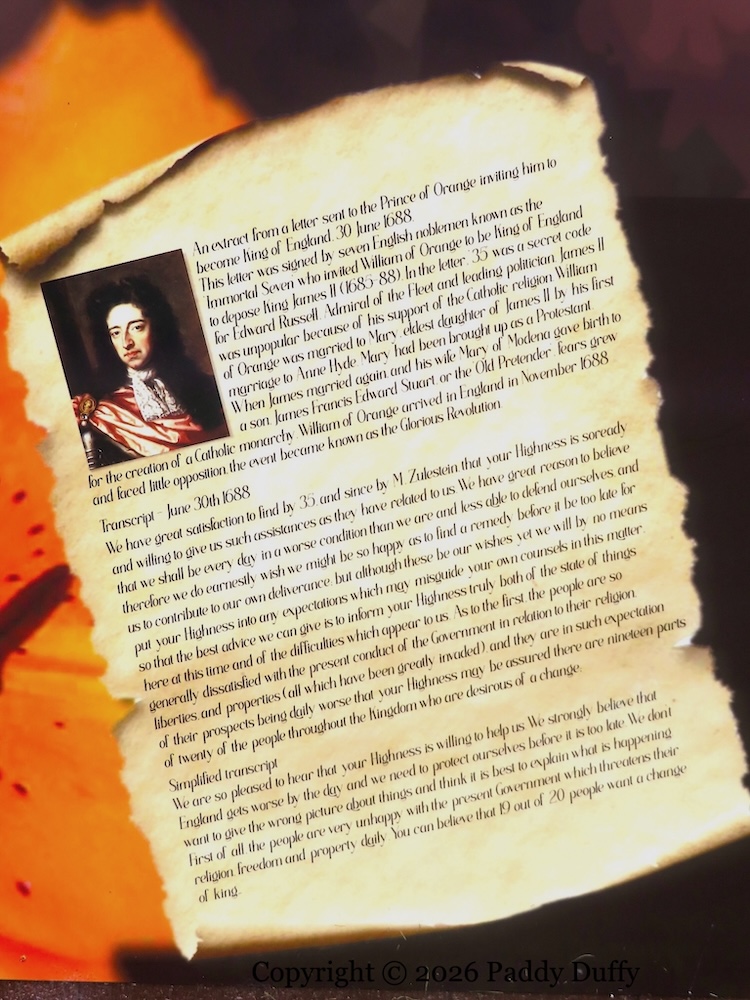
The “parchment” in the lower-left corner describes the crisis in Protestantism caused by James II’s (conversion to Catholicism and) second marriage and birth of a son, thereby threatening to establish a Catholic line of monarchs.
It then includes some of the letter from the Immortal Seven inviting William, who was already married to James’s (Protestant) daughter (and presumptive heir) Mary, to take over. As the dates-of-death on the board make clear, Mary died young, at age 32, of smallpox (WP), leaving William to rule alone for another eight years.












 Paddy Duffy Collection