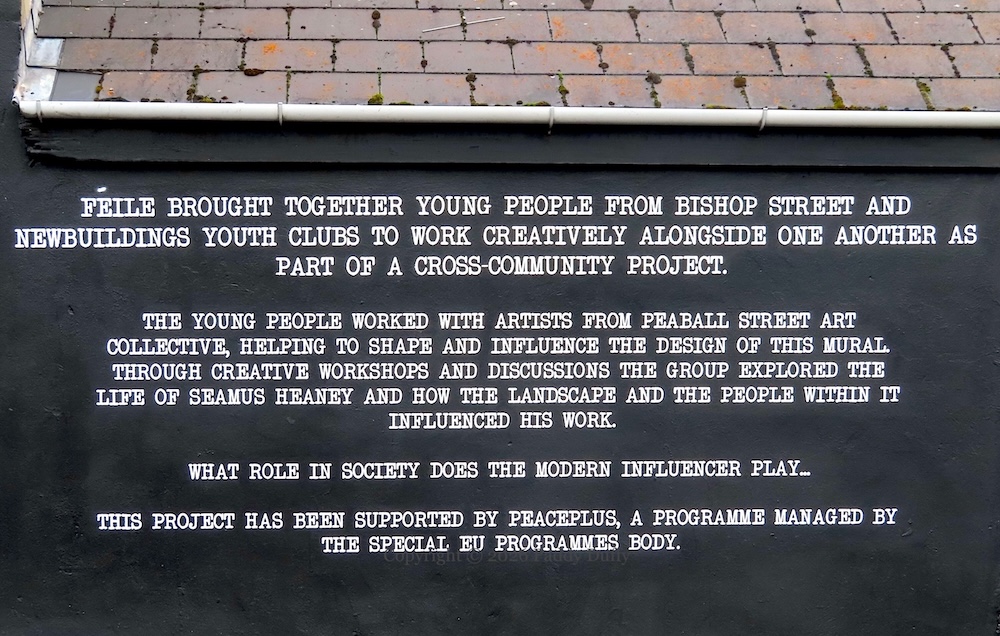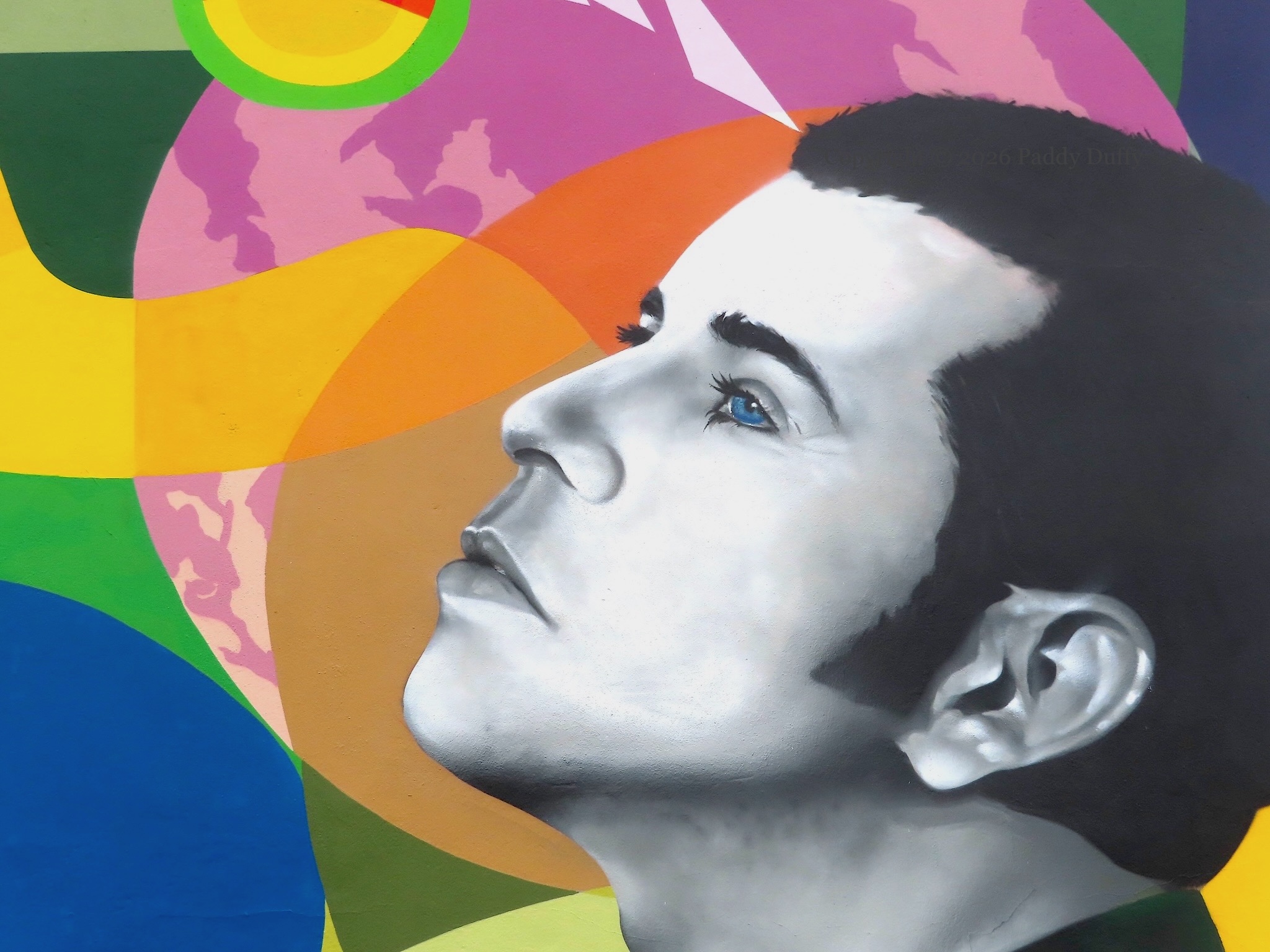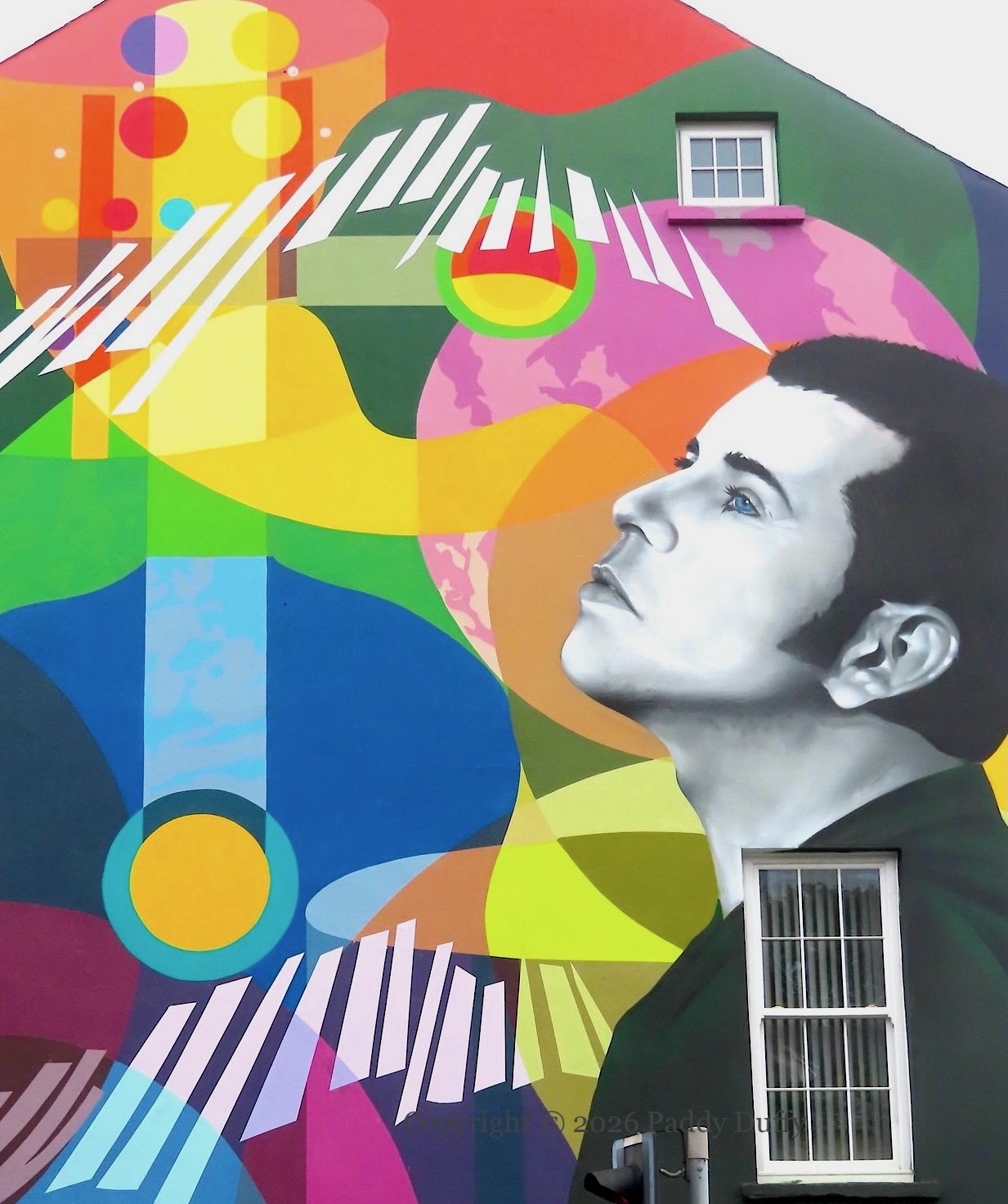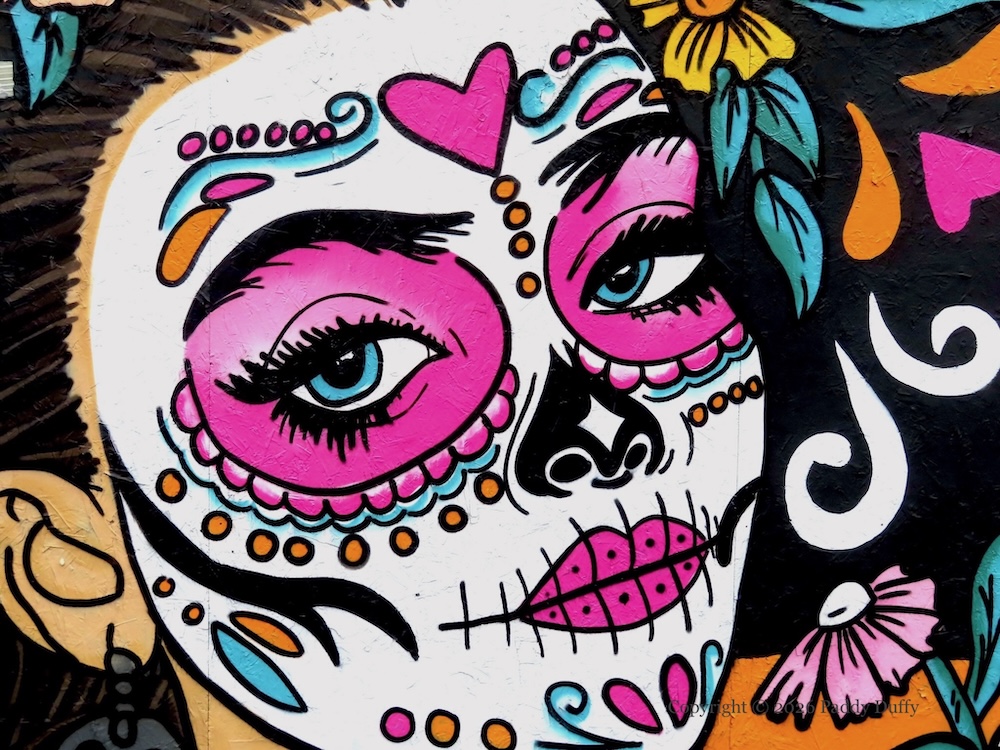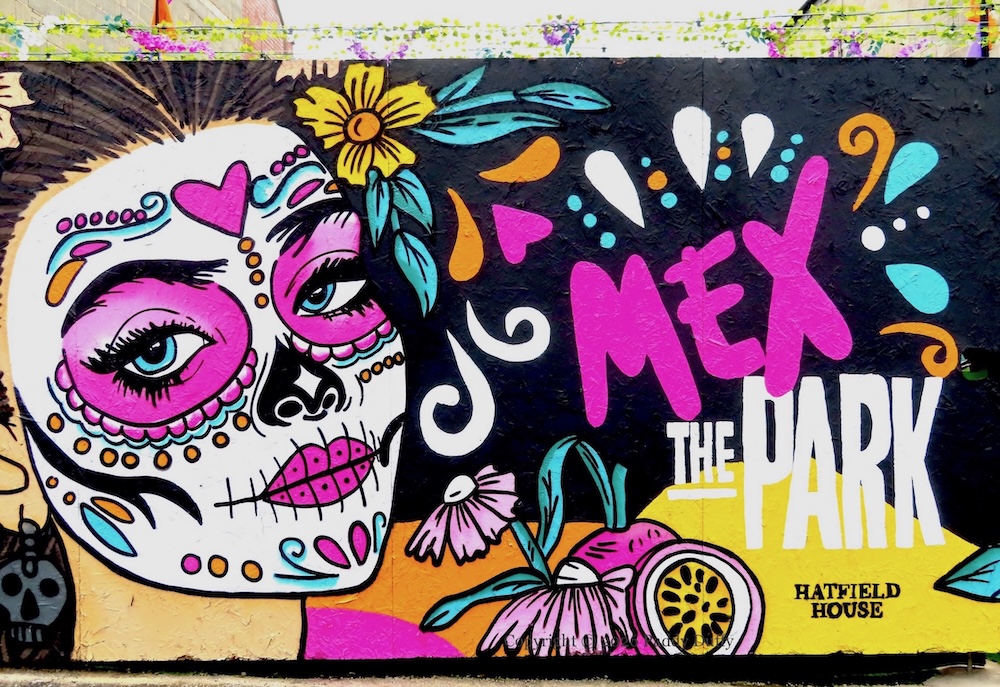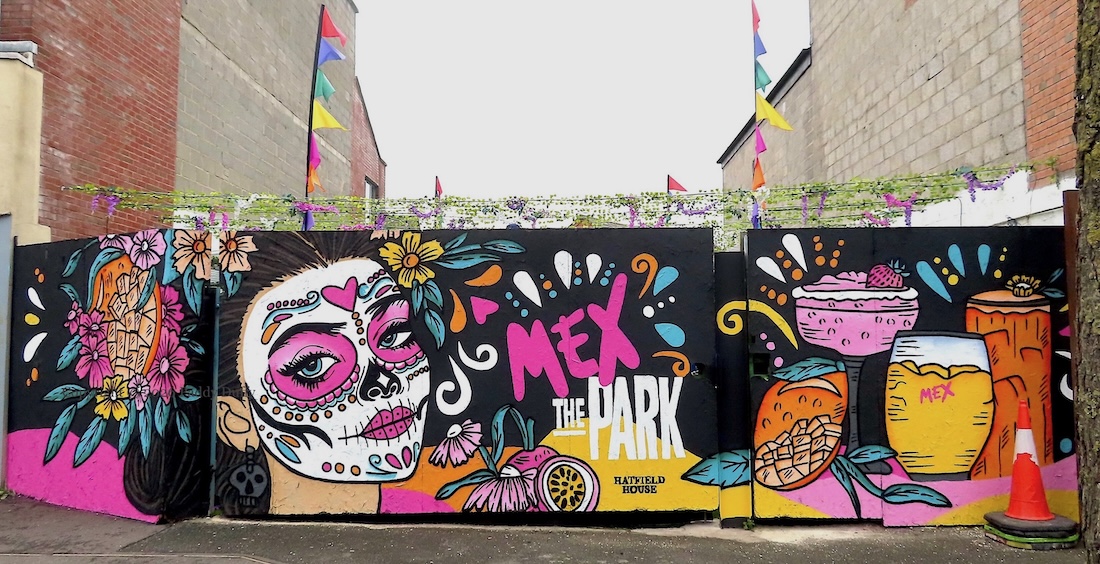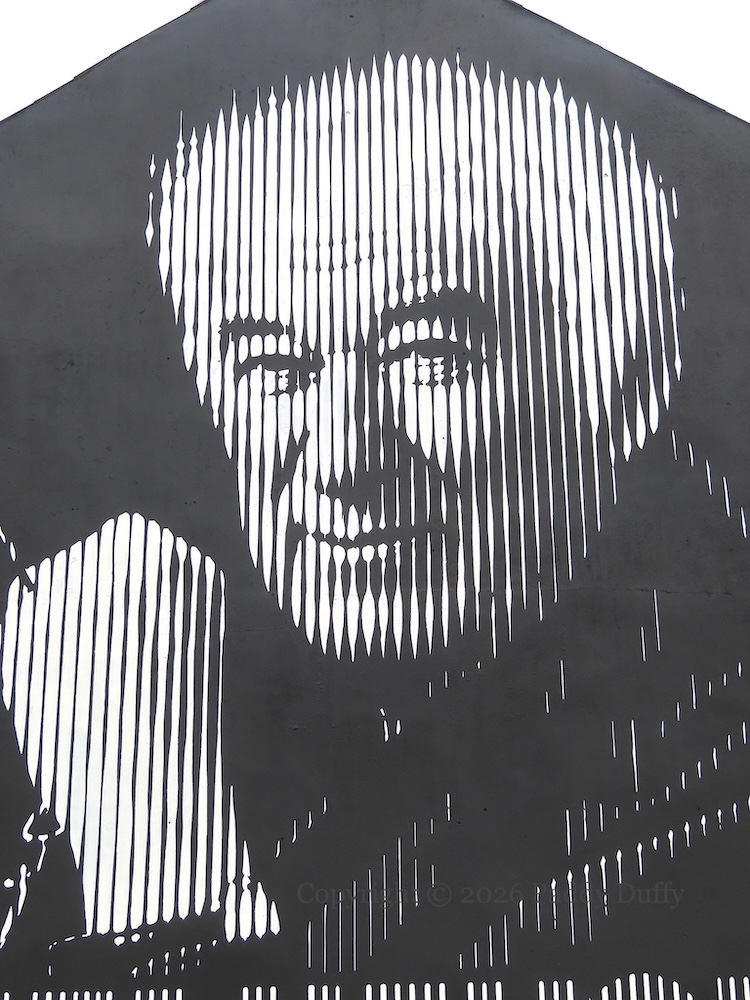
This scene from the story of Clann Lır (the Children Of Lear) appears to be the moment that Aoıfe casts a spell that turns her four step-children into swans on Loch Daırbhreach.
Painted by Loretta Lizzio (web) at the same time (2023-09) as her Dark Dreamer on the Oldpark Road, just below the first Cliftonville roundabout.
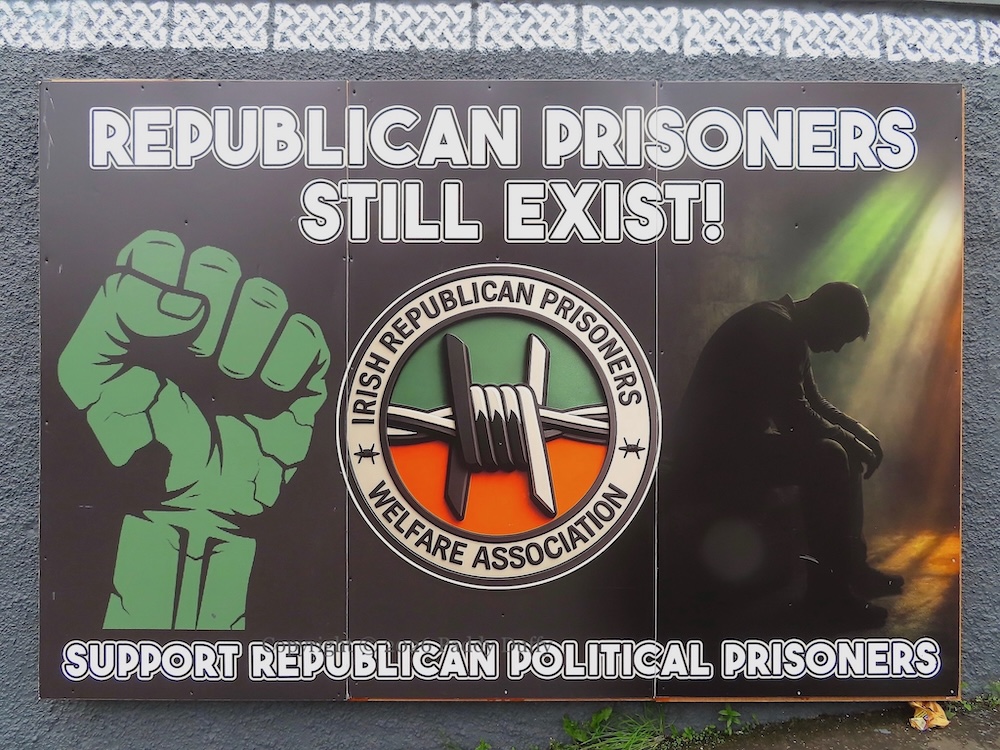
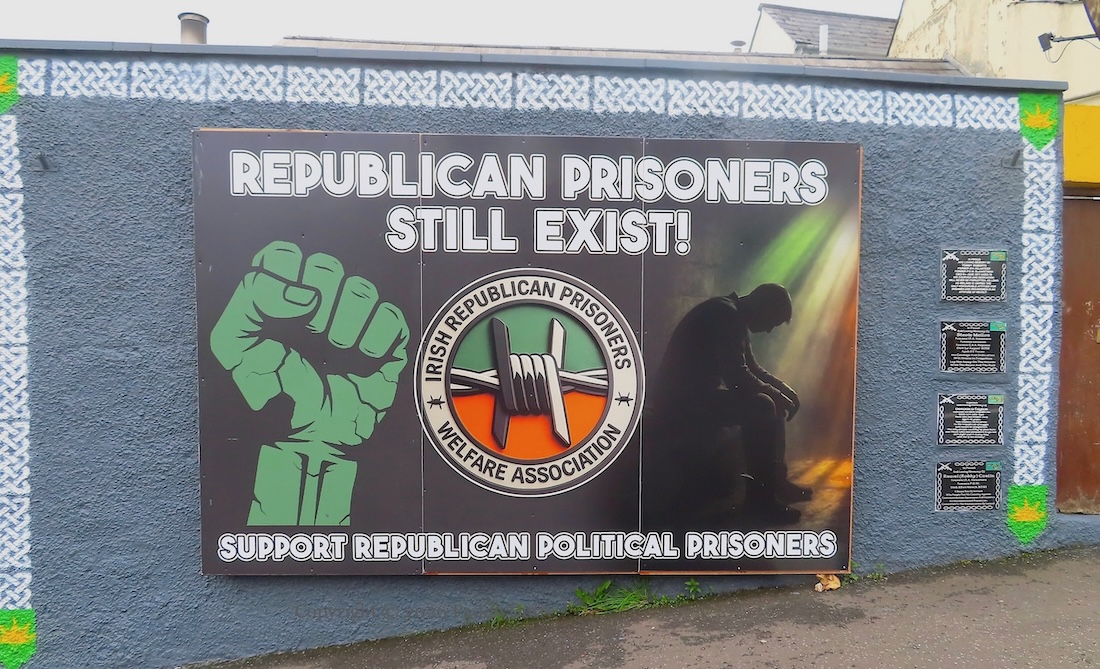
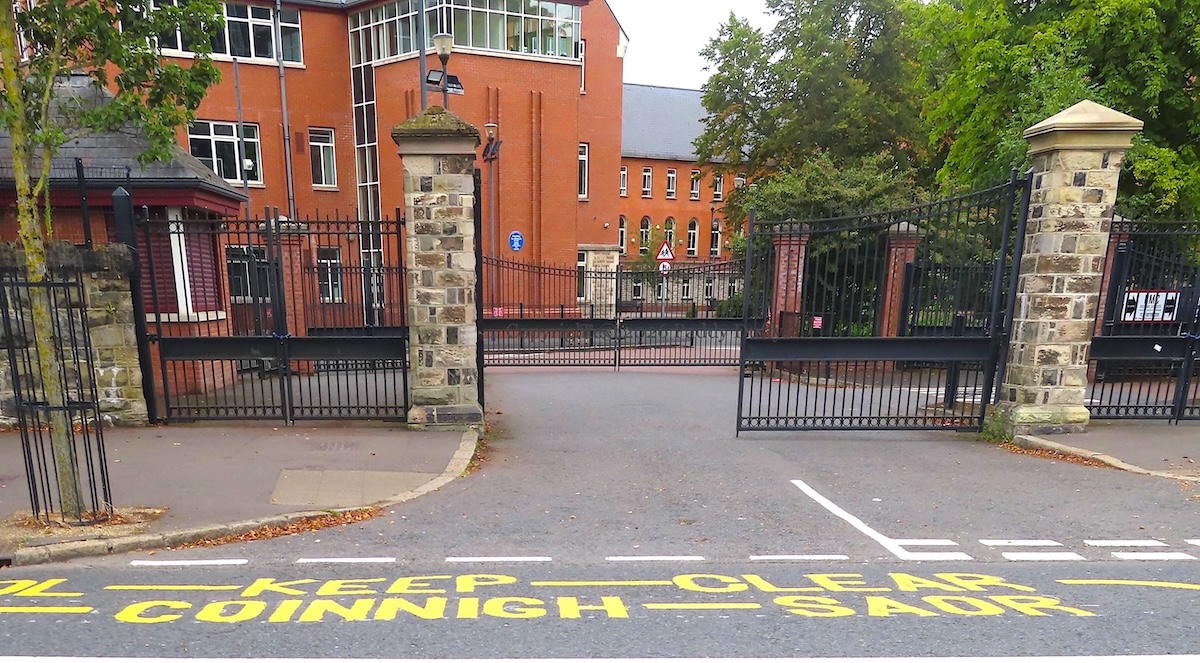
Saoradh describes itself as an all-Ireland, revolutionary, socialist, republican party (web) with the IRPWA (web) as its “prisoners’ welfare” department and Éıstıgí as its youth wing. The “revolutionary” is perhaps in reference to its (alleged) association with the New IRA.
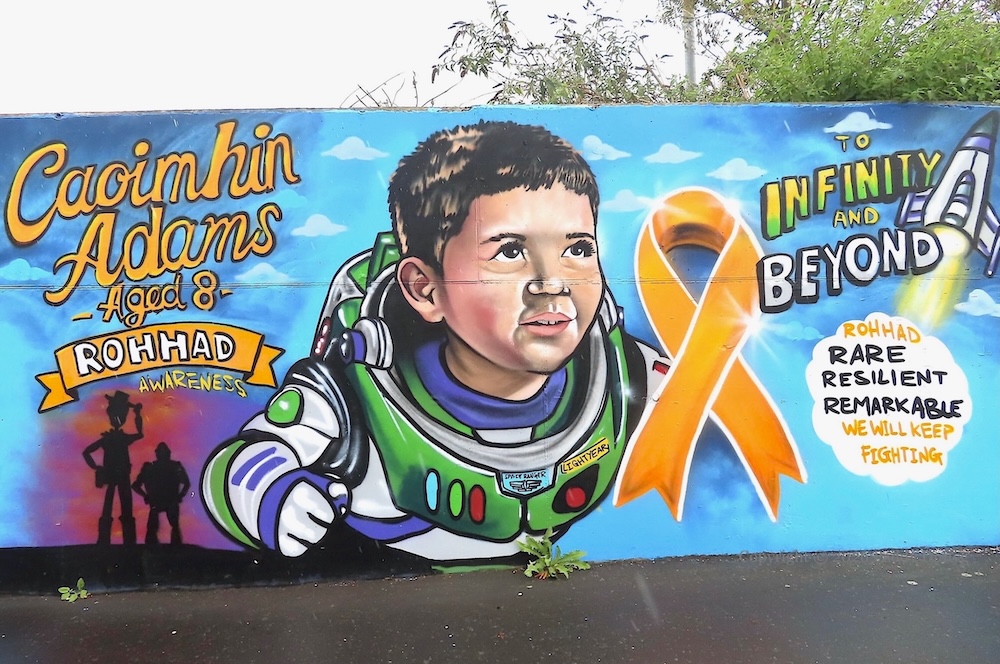
St James’s Swifts (web) are a west Belfast club playing intermediate level soccer with Donegal Celtic Park on the Suffolk Road as a home ground.
The three pieces shown here are in St James’s Crescent, at the Park Centre on Donegall Road, and St James’s Road. The mural in progress (shown last) is in St Katherine’s Road
Here are three banners/posters spotted along the Falls Road during the Easter Rising parade on April 5th:
Above: “Sainsbury’s supports Israel! Don’t shop there. Easter Sat 4th [April, 2026].” For background see the post and reel on the BDS Belfast Fb page.
Below: “U.S. military not welcome in Ireland! Not in Shannon, not in Aldergrove.” For background, see Al-Jazeera | ShannonWatch. April 13th: a person was arrested for taking a hatchet to a C-120 Hercules (Democracy Now).
Last below: “PSNI target Catholics at much higher rate for stop-and-search. Source: PSNI stop-and-search data. Do not join the RUC/PSNI. Same aim, different name. IRSP [web] – the party of Connolly & Costello.” The data in question might be from the 2020-2021 period (PSNI | TheDetail) as the current (2025) data do not appear to report on sectional identification.
“100 years. Lıle na Cásca. Wear your Easter lily with pride. Tabhaır ómós do laochra na hÉıreann. [Pay respect to Ireland’s warriors]”
Shown here are Sınn Féın (web) and Lasaır Dhearg (web) invocations to commemorate the 1916 Easter Rising. The lily as a symbol of the 1916 Easter Rising was introduced by Cumann Na mBan in 1926 as a fund-raising device. For a history and vintage posters from across the century, see An Phoblacht.
This is a new information board below the Ballymurphy Massacre board at the Glenalina Road corner with the Whiterock Road.
The first panel (on the left) reads, “On Monday 9th of August 1971 Internment Without Trial was introduced by the British Government. The policy was directed and implemented by the British Army with the stated aim to “shock and stun the civilian population”. Between 9th and 11th of August 1971 eleven people were killed in the Ballymurphy area of west Belfast. All eleven were murdered by the British Army’s Parachute Regiment. All eleven were unarmed civilians. One of the dead was a parish priest and another the mother of eight children. Fifty-seven children were left without a parent. There was No proper criminal investigation. The Royal military police were assigned as sole investigators. Not one member of the British Army was held to account. It is believed that had justice been administered and those held to account charged, the events of Bloody Sunday would not have happened.”
The remaining panels give a day-by-day account of the eleven deaths, of Father Hugh Mullan, Frank Quinn, Noel Philips, Joan Connolly, Danny Teggart, Joseph Murphy, Eddie Doherty, Joseph Laverty, Joseph Corr, Paddy McCarthy, John McKerr.
The main (Sınn Féın) Easter Rising commemoration in Belfast takes place today (Easter Sunday). A full list of commemorations over the holiday, including those hosted by anti-Agreement groups, can be found at Republican News. See also, for the IRSP/RSYM commemoration, To The People Of Ireland.
“Dé Domhnaıgh, 5ú Aıbreán, Comóradh Na Cásca Bhéal Feırste. Caınteoır: Deirdre Hargey MLA. Cruınnıgh ag Ascaıll [Ard] Na bhFeá 1.00 i.n., ag fágáıl ar bhuılle 1.30i.n. Cuımhnıgh ar Thírghráthóırí Marbha Na hÉıreann. Caıth Lıle Na Casca. Cumman Uaıgheann Na Laochra Gael.”
[Sunday, 5th April, Belfast Easter Commemoration. Speaker: Deirdre Hargey MLA. Assemble at Beech[mount] Avenue 1:00 p.m., departing at 1:30 p.m. precisely. Remember Ireland’s Dead Patriots. Wear an Easter Lily. Gaelic Heroes’ Grave Association (= National Graves Association).]
At the Felons’ Club, Falls Road, Andersonstown, west Belfast
“John Mitchel 1815 – 1875 After twenty years in exile for the sake of Ireland he returned with honour to die among his own people and he rests with his parents in the 1st Presbyterian old meeting house green at Newry.”
Mitchel graduated from Trinity at 19 and became an attorney in Newry and Banbridge before becoming a writer and editor for The Nation (the phrase “England’s difficulty is Ireland’s opportunity” comes from an 1845 article) and then The United Irishman. After 16 editions, he was arrested and convicted of treason and sent to penal colonies in Bermuda and Tasmania. He escaped to the USA, where he was an ardent supporter of slavery. When slavery was abolished, he again took up the cause of Ireland, returned to Ireland, won the Westminster seat for Tipperary but was barred, as a felon, from taking it, and died unexpectedly at age 59 (WP).
John Mitchel Place, Newry, in front of St Colman’s Park.
The middle of the three upper plaques in the image above, as well as the blue plaque above them (in the third image), is dedicated to Thomas Raymond Kelly, a merchant seaman who died as he attempted to rescue a third person from heavy seas in the Bay Of Biscay. He was awarded the George Cross for his efforts (Newry Maritime Association).
The other plaques commemorate the SS Upas (Irish Wrecks); the Quo Vadis fishing boats (Mourne Maritime); SS Orior (Wrecksite); the “merchant seamen from Newry And Mourne who served with courage and valour through both World Wars”; SS Clew Bay, which took part in Operation Dynamo in Dunkirk; SS Dingle; the “Carlingford Lough Disaster” in 1916 – the collision of the SS Connemara and SS Retriever with the loss of 94 lives (BBC).