The Shipyard Church

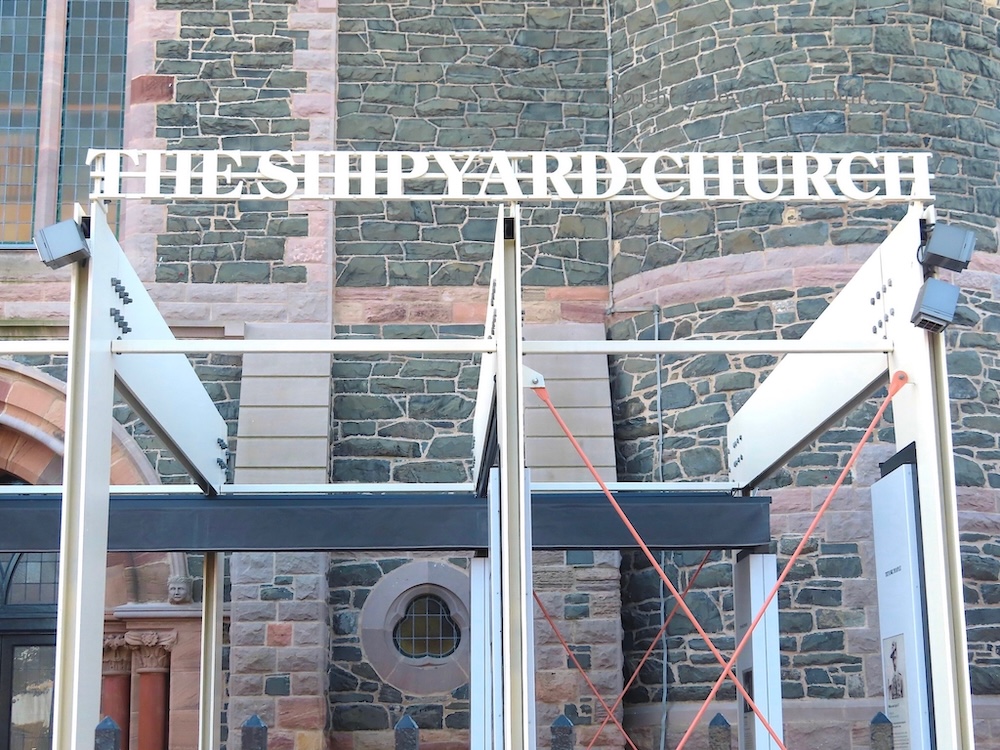
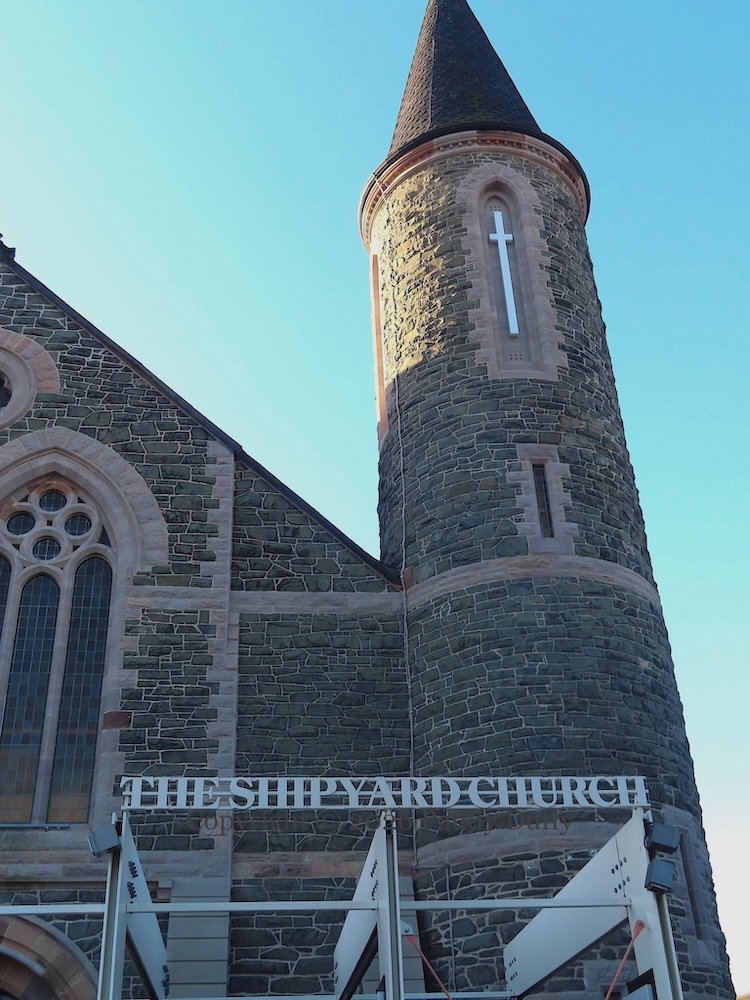
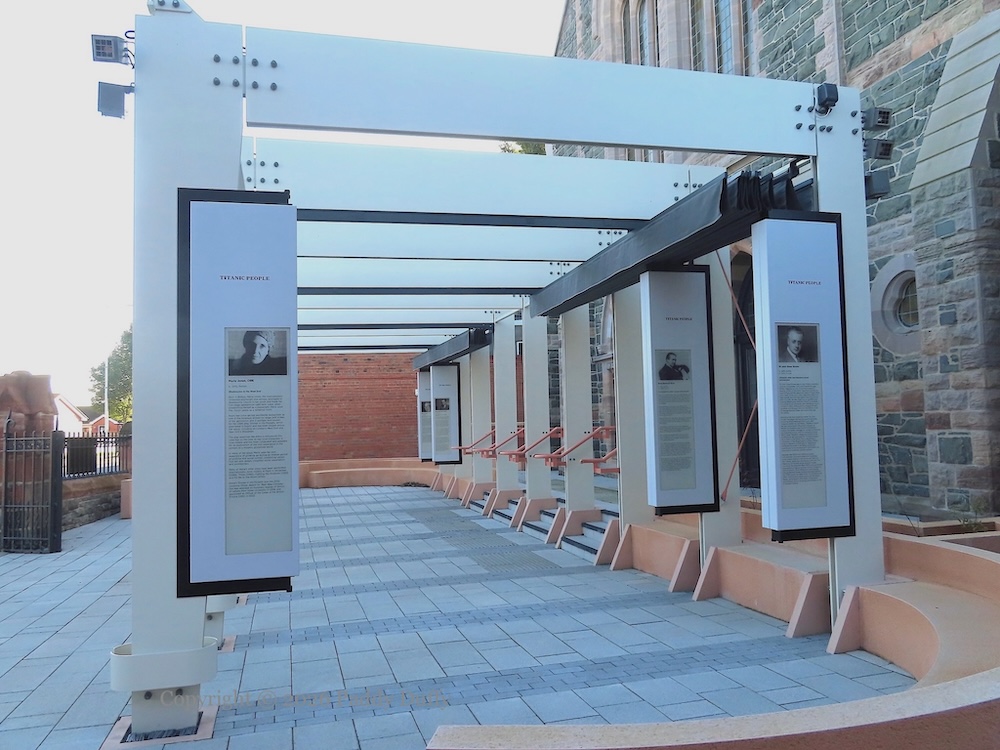
“Welcome to Titanic People, a celebration of the intelligence, creativity and courage of people who define this legendary Belfast neighbourhood. The spot where you’re standing may seem like a rather unremarkable part of Belfast, but it’s the epicentre of some of the city’s most remarkable citizens and their fascinating life stories. Some famous, other relatively unknown, but each born or employed within the sound of the shipyards’ riveters’ hammers and all with compelling personal histories that continue to reverberate locally and internationally. Westbourne Presbyterian Church whose grounds play host to this exhibition, is known locally as the Shipyard Church due to its proximity to Belfast’s famous docks and the home of the world-famous ship builders, Harland & Wolff. Opened in 1880, many of the workers who helped to build RMS Titanic would have brought their families here each week for Sunday Worship. It still serves a local congregation today and the pews inside haven’t changed. When you’ve finished reading about Titanic People, you are more than welcome to come inside and take the same seats occupied by those shipyard workers more than a century ago.”

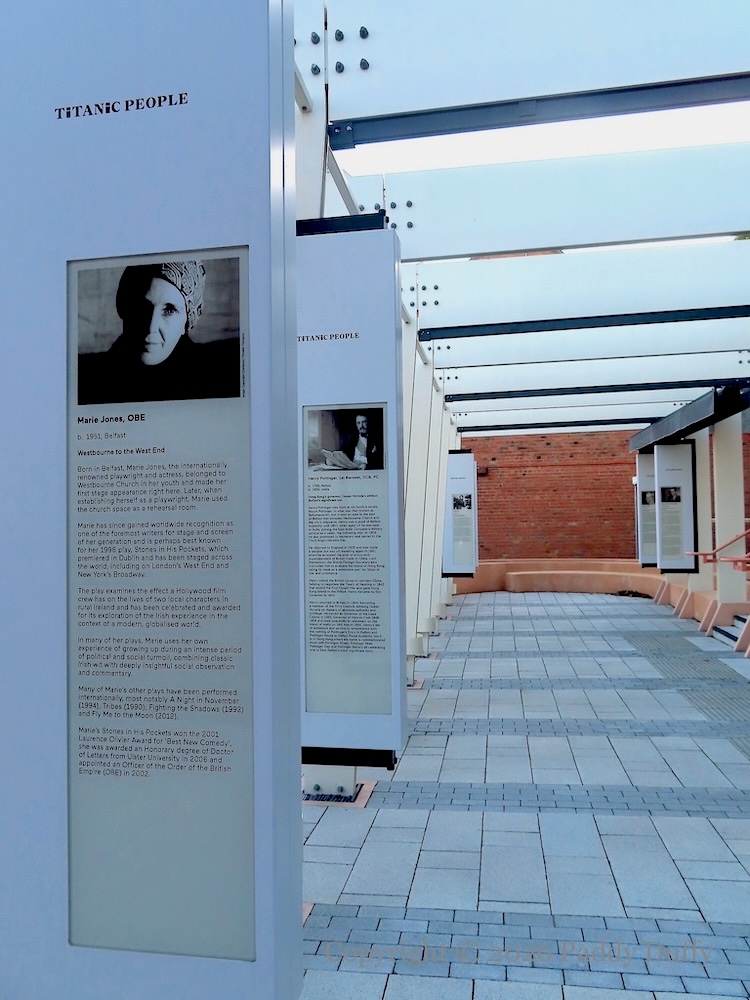
Among those profiled are James Ellis, Marie Jones, Rev. John Redmond, St John Greer Ervine, Brian Desmond Hurst, and Henry Pottinger.

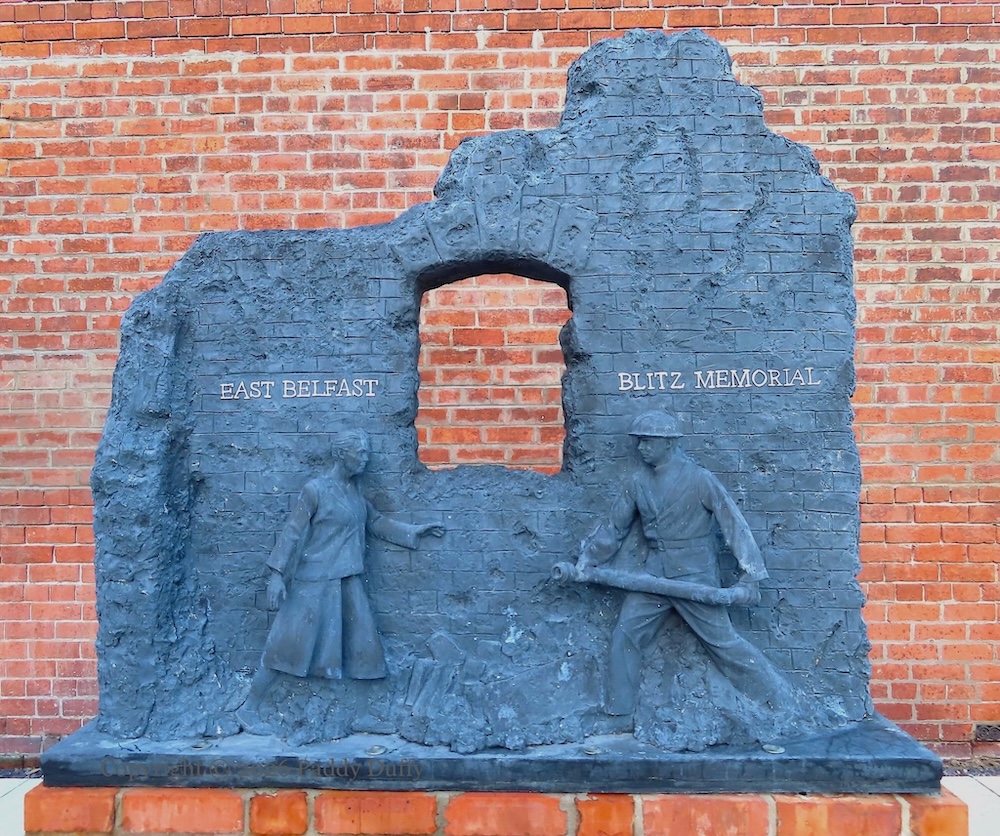
The installation surrounds the front entrance of Westbourne Presbyterian, the “Shipyard Church”, which was built in 1877 (Stone Database). To the right is a new WWII memorial (City Council planning application), shown last below.

The German Luftwaffe blitzed Belfast on four occasions in April and May of 1941, targeting especially the industrial yards of east Belfast, including H&W shipbuilding and Short Brothers. Nearby streets were hit in the attacks (see Belfast Blitz), and some suffered very heavy damage, including Thistle, Tower, and Westbourne streets. Westbourne Presbyterian church was hit during the war, but survived.

Newtownards Road, east Belfast
Click image to enlarge
Copyright © 2026 Paddy Duffy
T09637 T09638 T09639 T09640
T09636
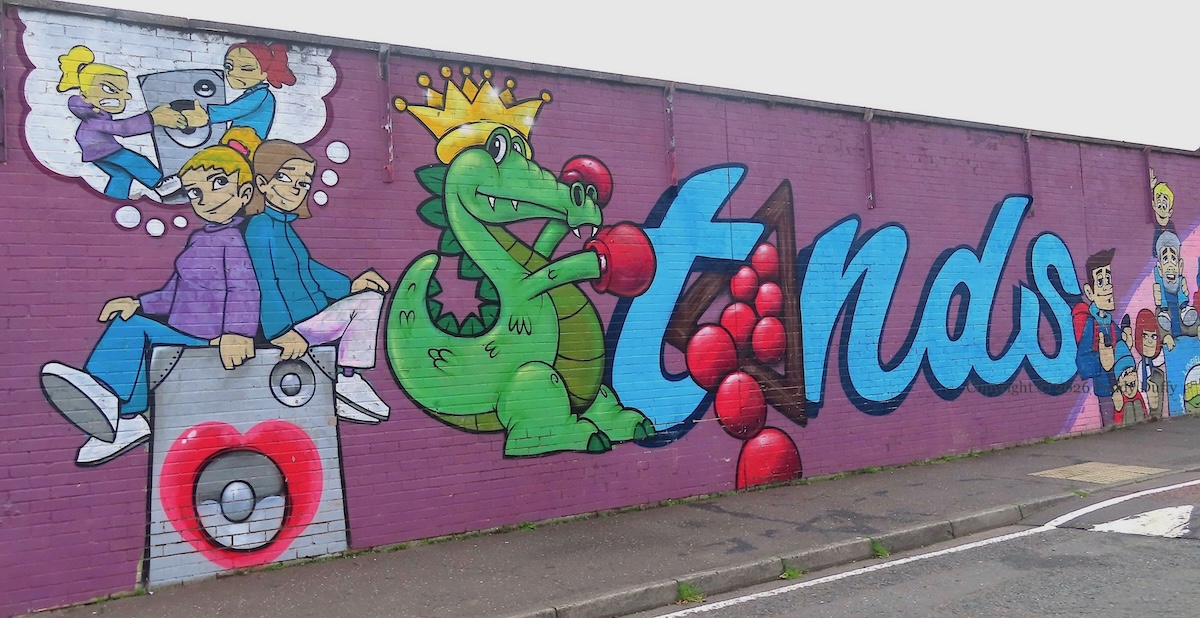
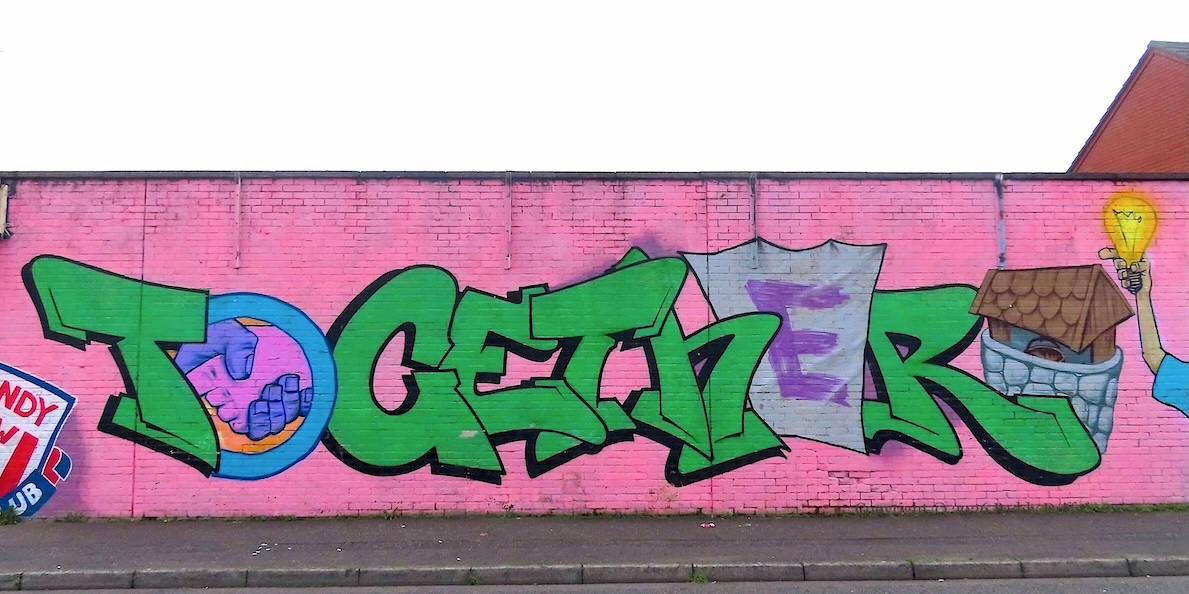
Sandy Row Stands Together

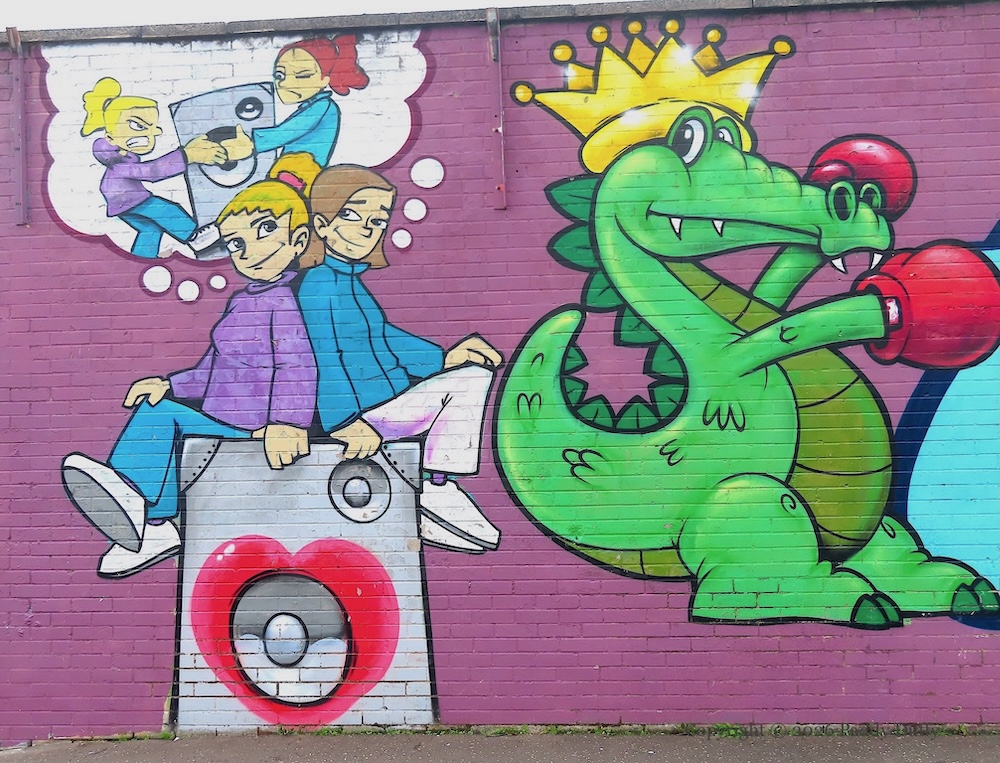
The mural to the left (in the image above) is at the end of a long panel featuring the word “community” in large letters (see 2023’s Cultural Expression) and so it’s possible that it should be taken together with the new panels (shown below) reading “stands” and “together” to give “Community stands together”.

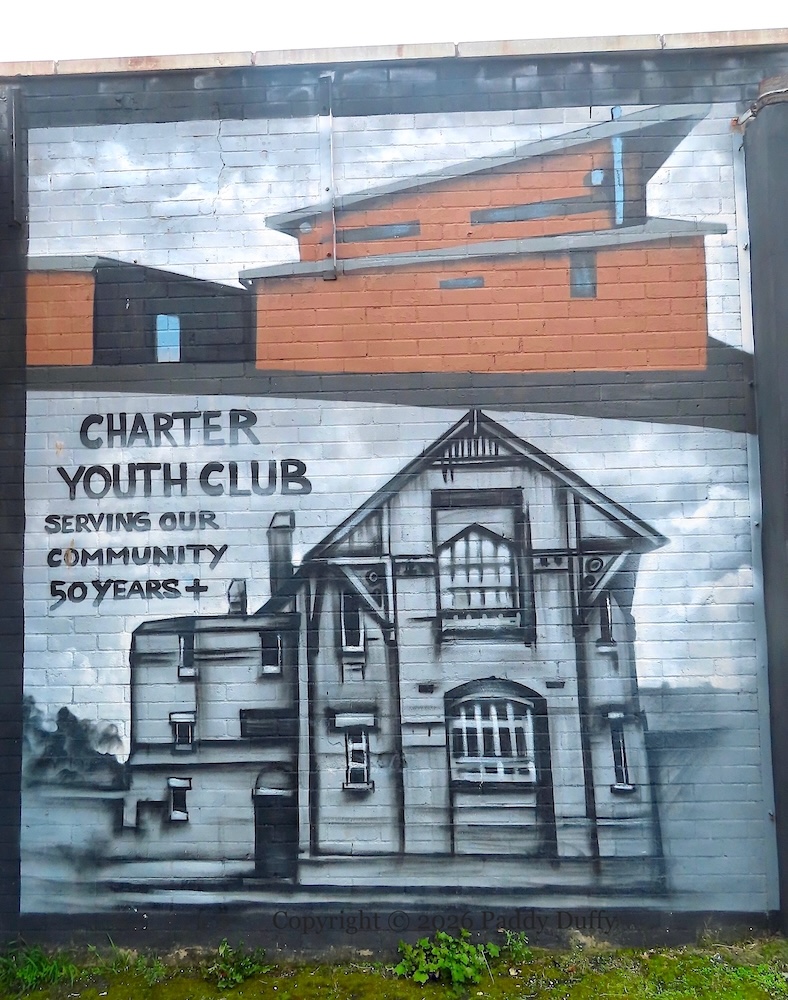
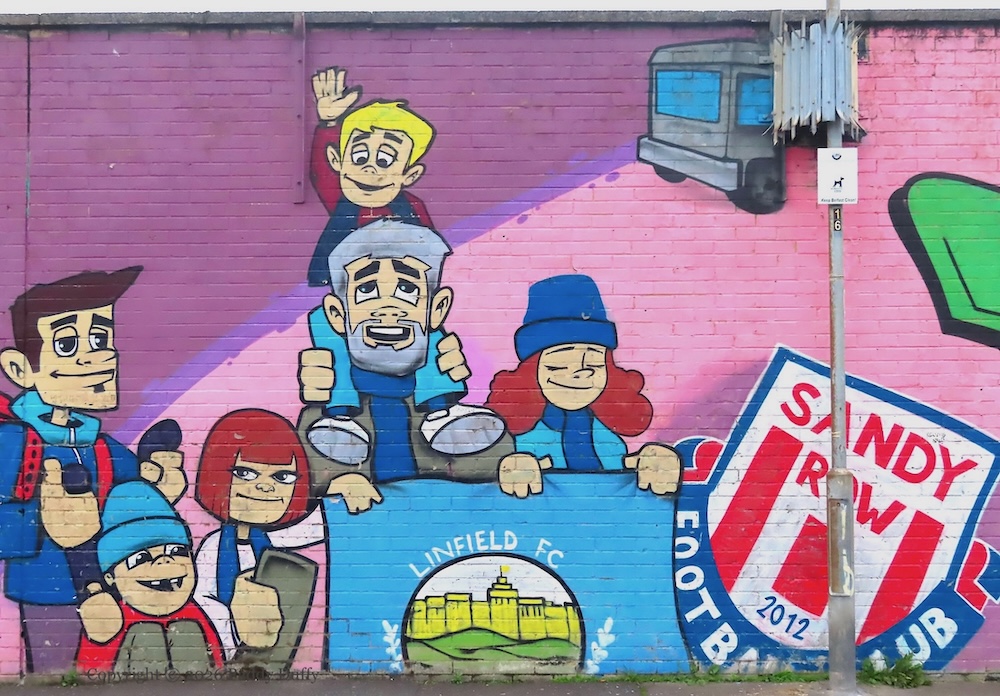
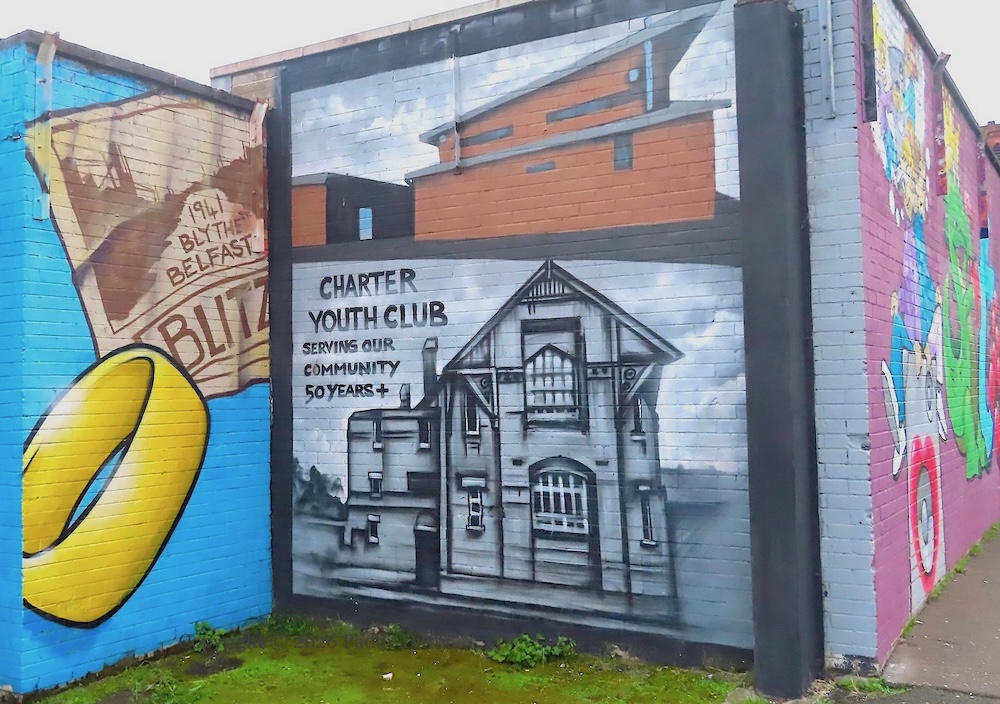
The joining panel (shown above and immediately below) shows new and old buildings of Charter Youth Club (Fb), which has been “serving our community [for] 50 years+”. The building pictured below is the building of the old Linfield Junior Public Elementary (ig) which was later used for the youth club.

Also shown between the words are the emblems of (professional soccer club) Linfield FC (web) and (intermediate club) Sandy Row FC (Fb).

Bly Blaze FX in Blythe Street, Sandy Row, south Belfast

Click image to enlarge
Copyright © 2026 Paddy Duffy
T09903 T09902 T09908 T09904 T09907 T09905 T09906

Portadown District

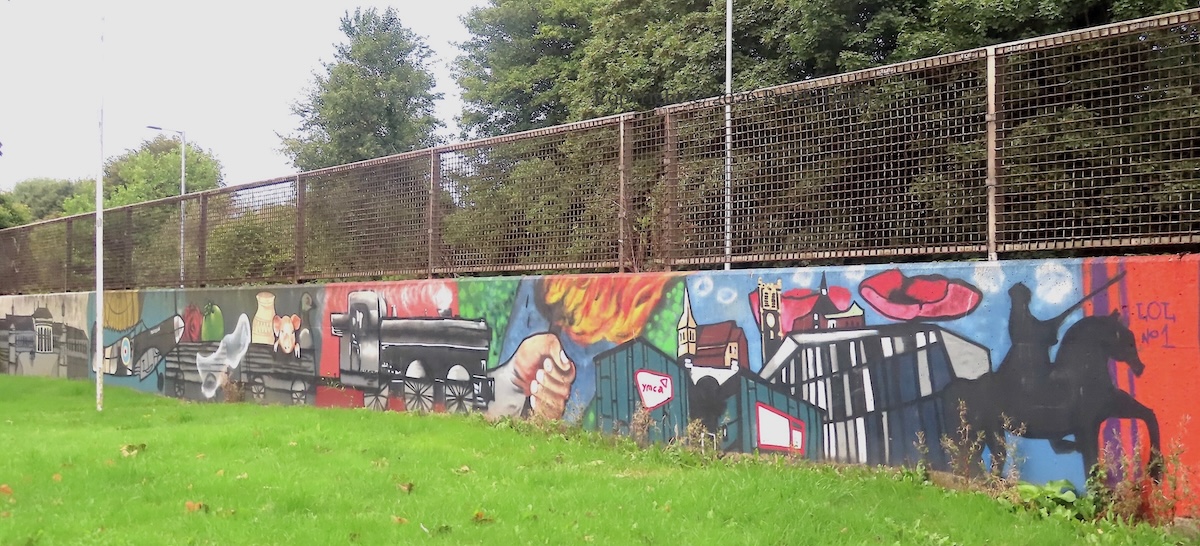
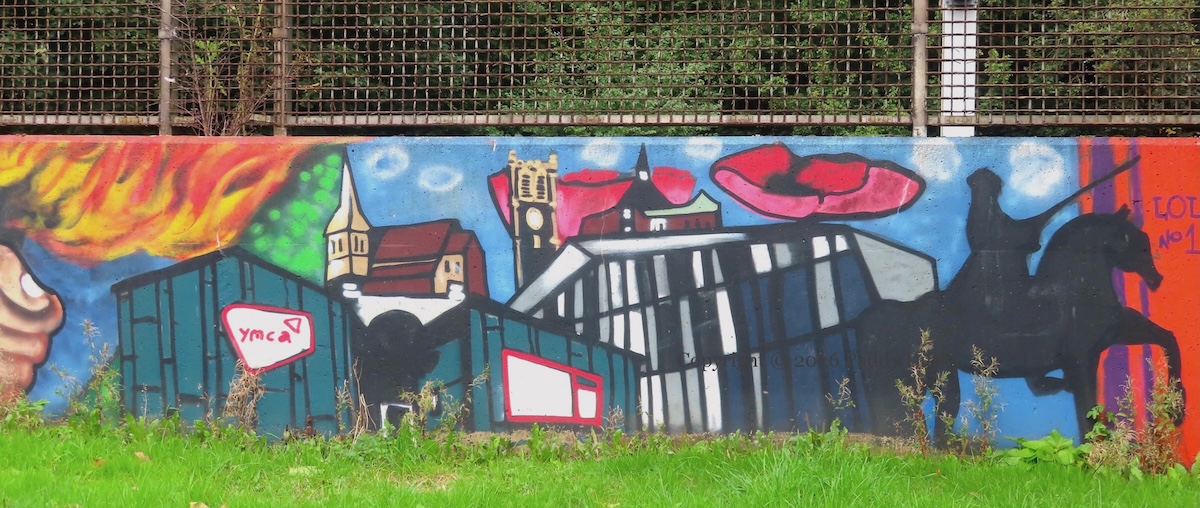
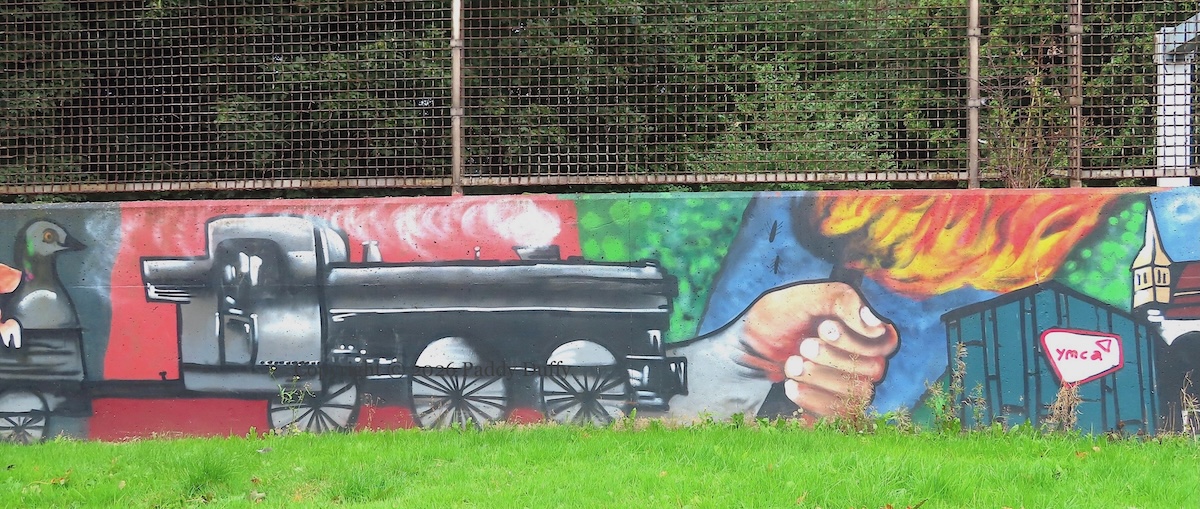
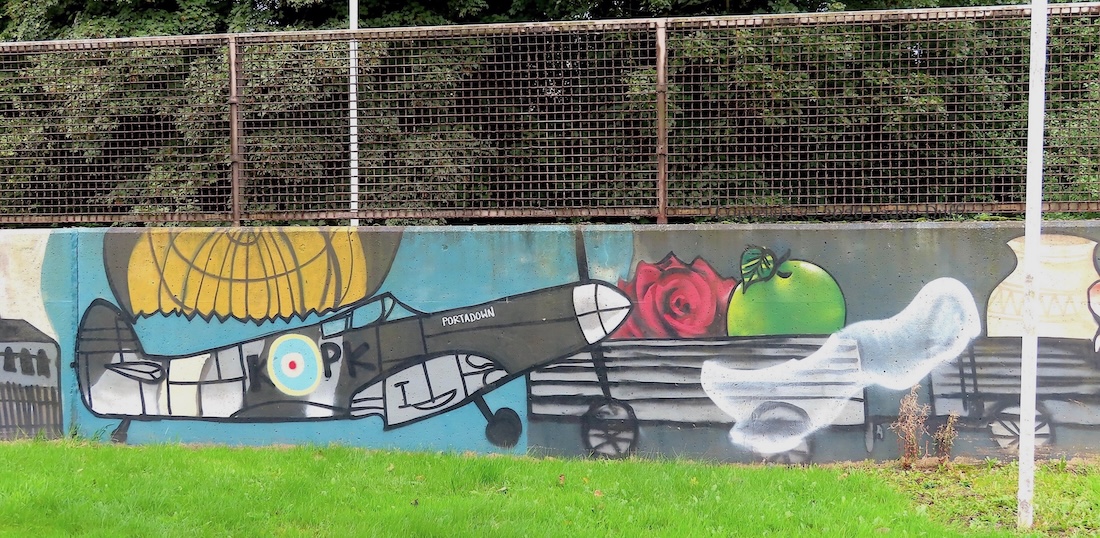
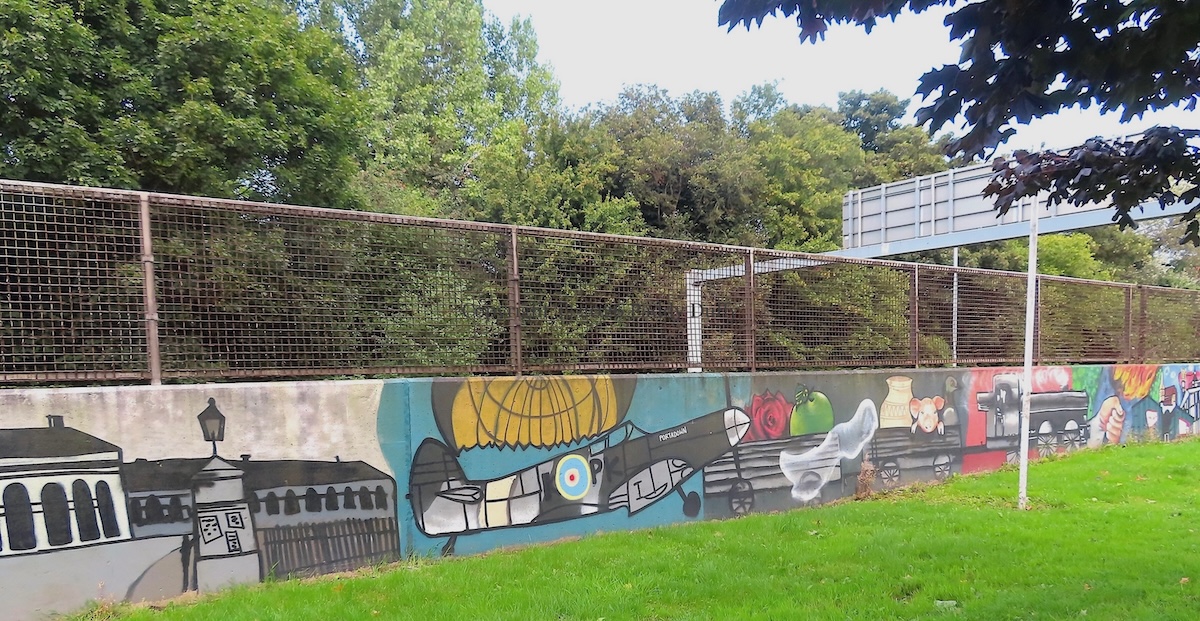
On the near side of this long mural of Portadown landmarks and history is the collarette of “LOL No. 1” and a silhouette of King William III on his horse. The Orange Order’s first district lodge was formed in 1796 in Portadown (LOLNo1), the same year that the first parades took place on the Twelfth, in Portadown, Lurgan, and Warrenpoint. (The first individual lodge was founded in Dyan, Co Tyrone. (Lurgan Ancestry))

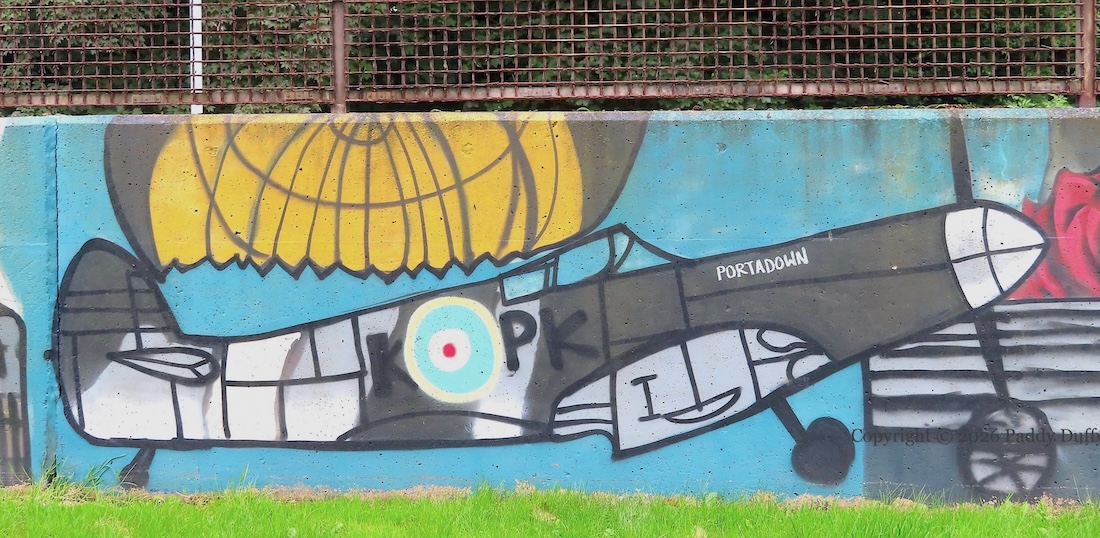
Also included in the mural is the “Portadown” spitfire – one of 17 spitfires purchased by a Belfast Telegraph fund-raising drive. See also the mural of the “Ballymena” spitfire.

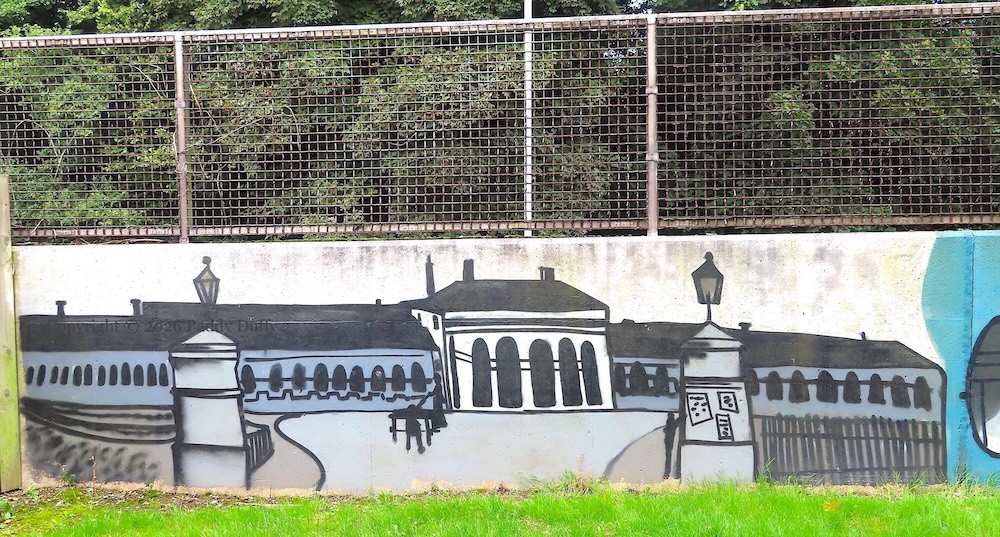
The grand building on the far left is the former Portadown Railway station, in Watson Street – see FamilyPedia for a photograph.

Atkinson Avenue/Ranfurley Road, Brownstown, Portadown, recently joined by three True Blues flute band boards.

Click image to enlarge
Copyright © 2026 Paddy Duffy
T09820 T09821 T09822 T09823 T09824 T09825 T09826

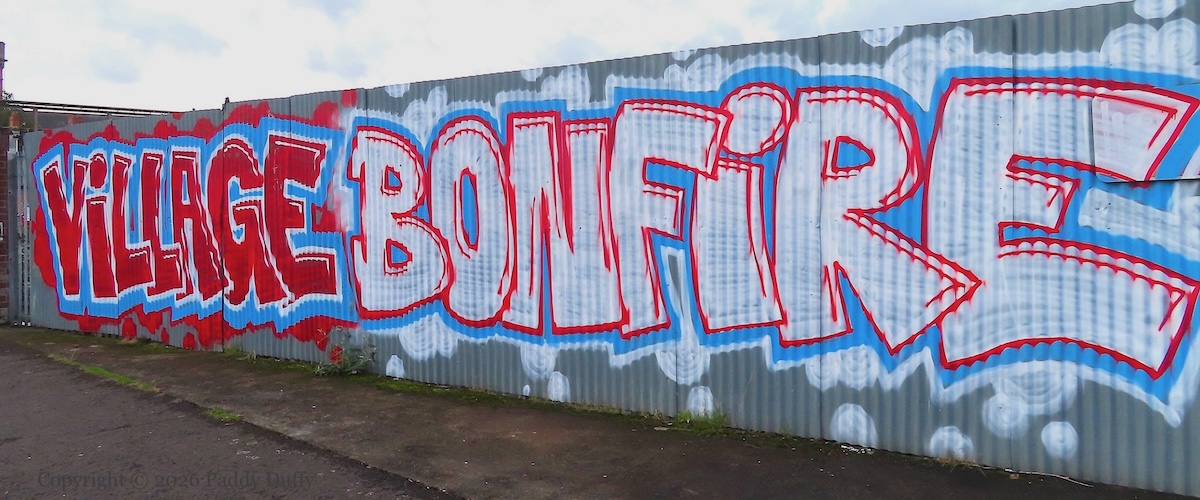
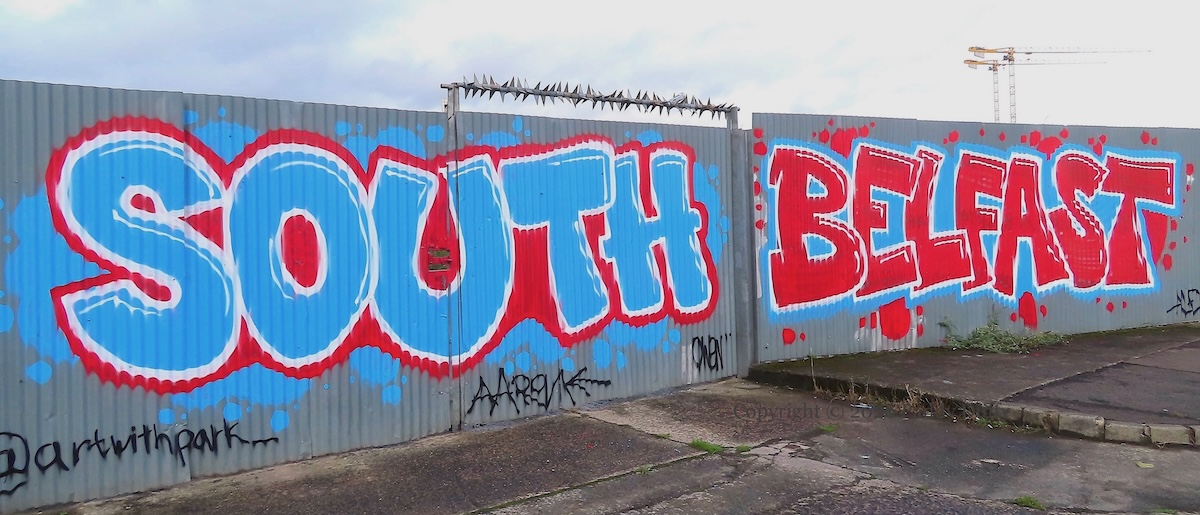
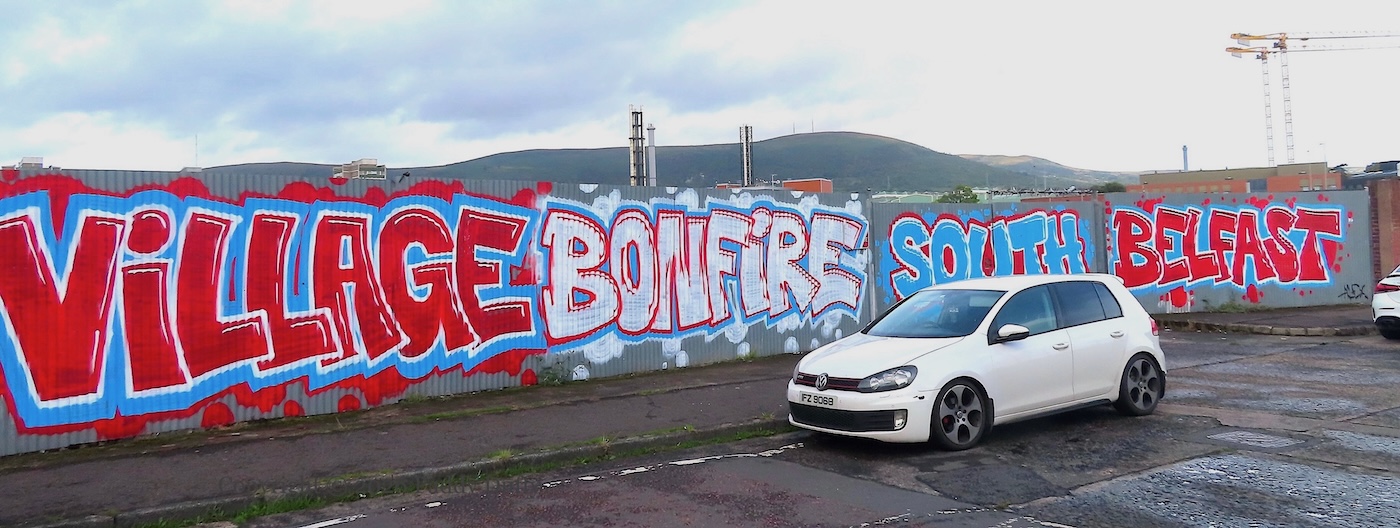
Village Bonfire

The Village Bonfire (Fb) proved controversial last year because of asbestos in an old factory roof lying near the site. The Council recommended that the bonfire be removed but the police refused to intervene; instead, the owners of the land secured the hazardous materials (BBC | BBC). This year, organisers were selling badges showing a person at the bonfire in a haz-mat suit (Reddit | image at Irish News Fb).

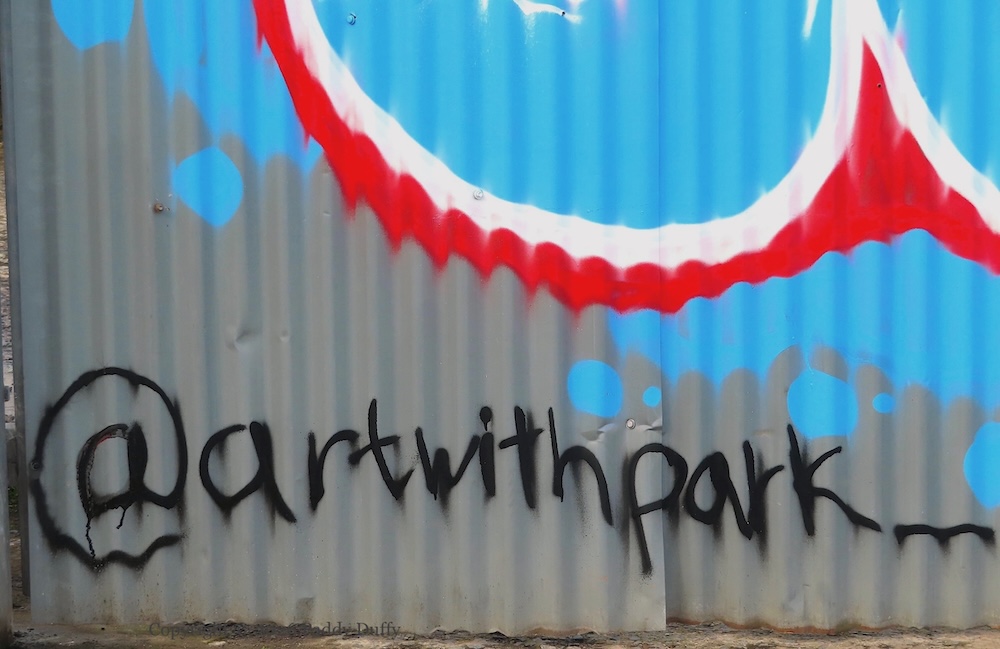
This writing is by Art With Park (ig), Alex Reed (ig), and Owen Watts (ig) in Maldon Street, Village, south Belfast

Click image to enlarge
Copyright © 2026 Paddy Duffy
T09798 T09799 T09800 T09801

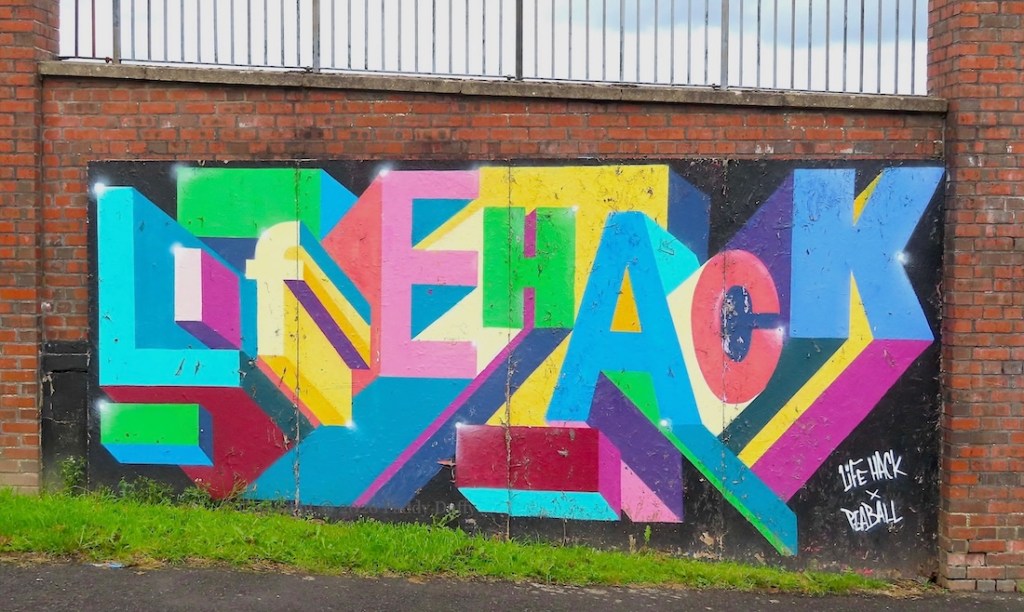
By The Gas Works Wall

The gas-works in Derry moved to the Bogside in 1865 (CAIN) and the site operated for more than a decade, burning coal to generate gas, and producing the smell and pollution that led Ewan McColl to write ‘Dirty Old Town’ (about the Salford gas-works), later covered by The Dubliners and The Pogues (among many others). There are images of the Derry gas-works on community Fb pages: black & white | colour | black & white. The refurbished site is now home to the Gasyard Development Trust (web) (and the Baby Jake mural).

This new street-art was painted by Peaball (web) just a little way further down Lecky Road, at the junction with St Columb’s Walk.

Click image to enlarge
Copyright © 2026 Paddy Duffy
T09751 [T09750]

Things Can Only Get Better

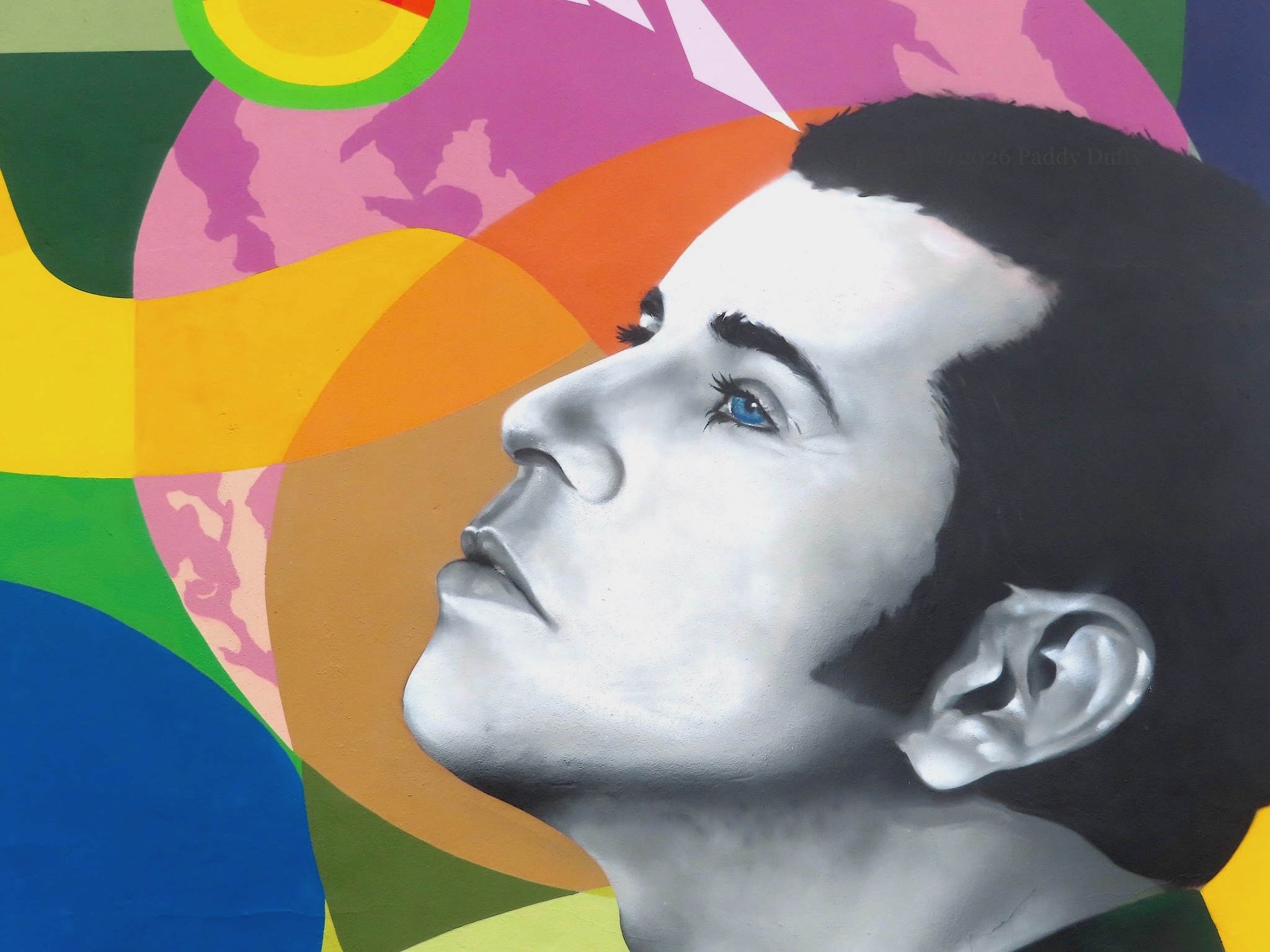
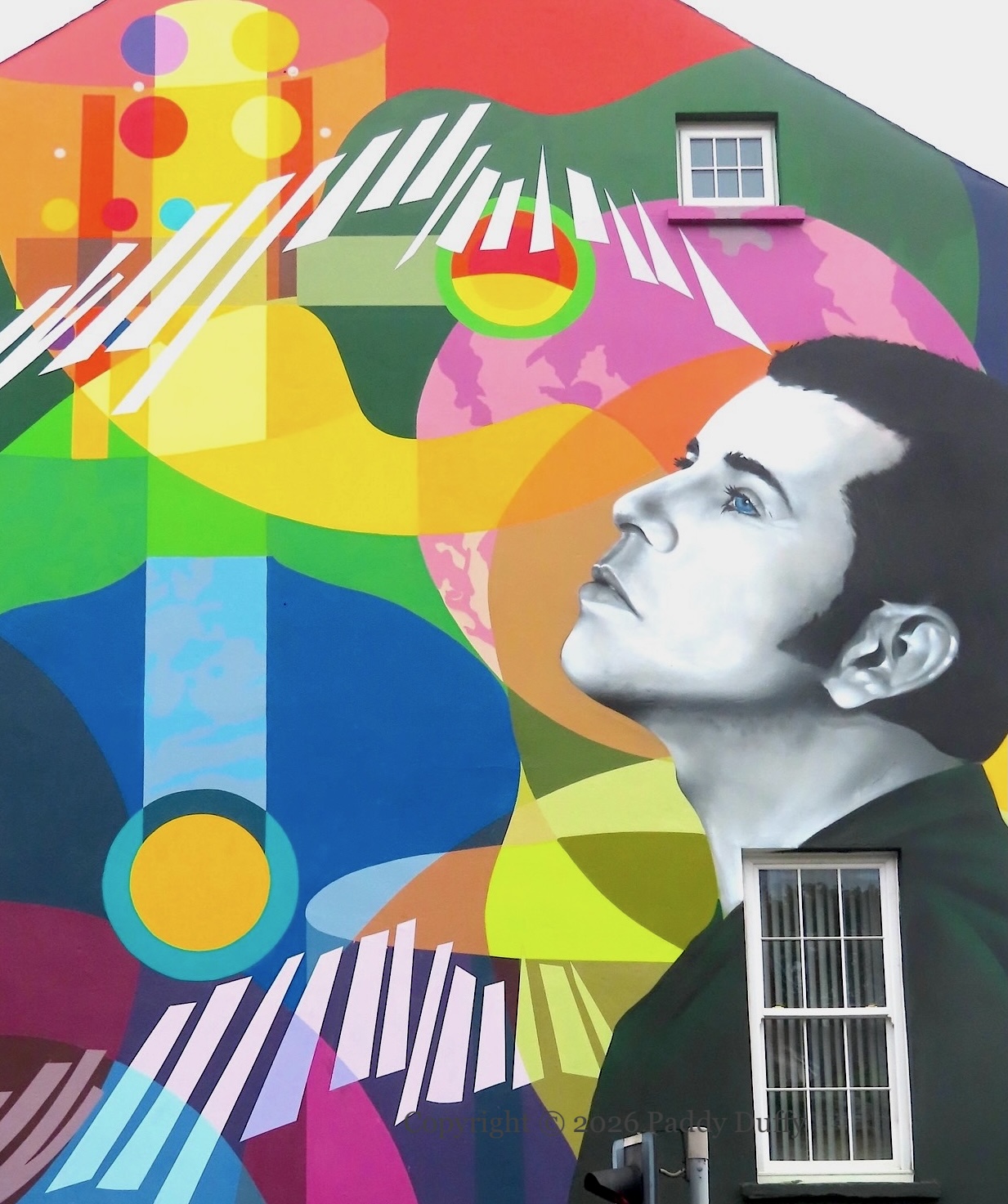
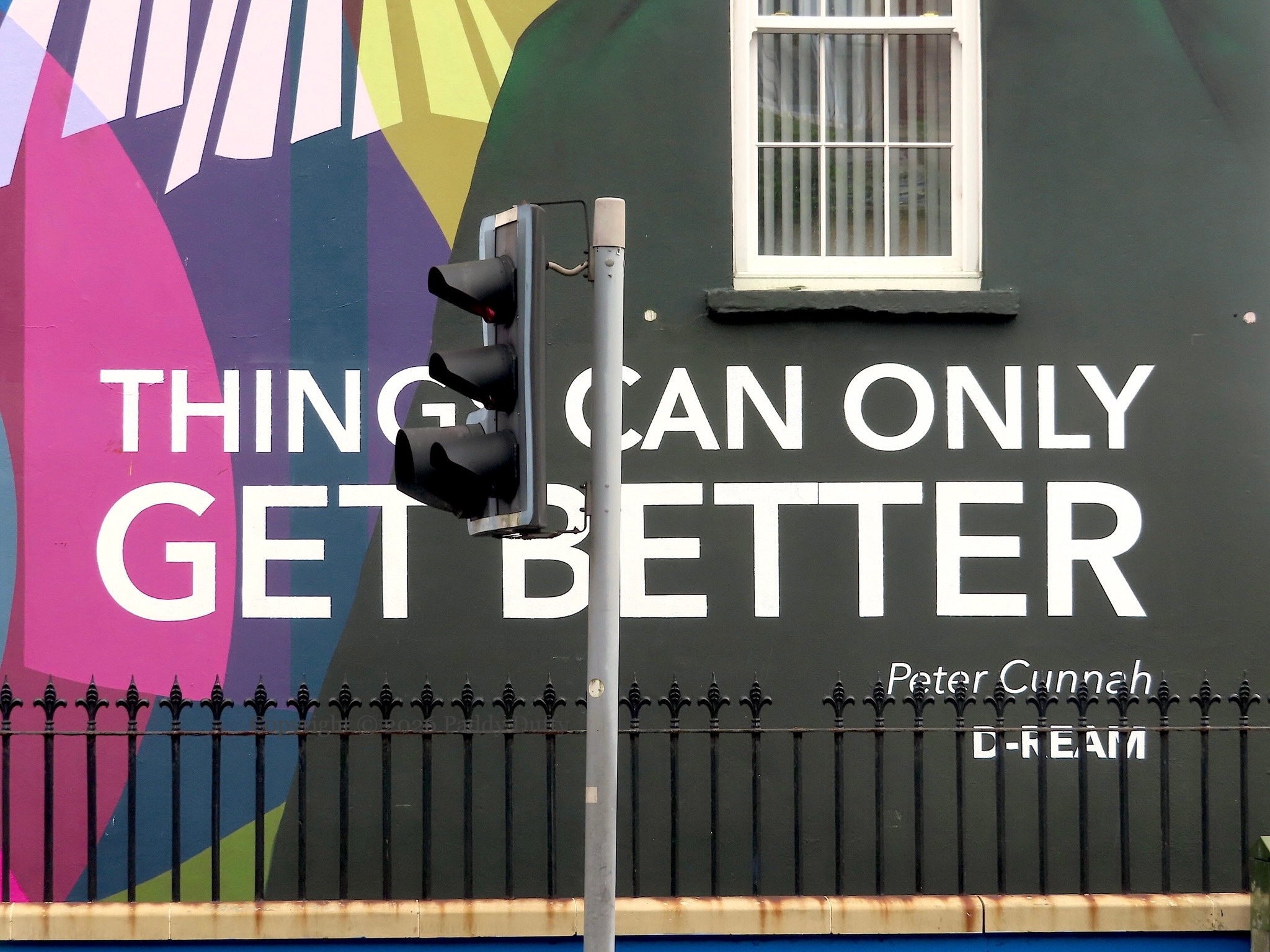
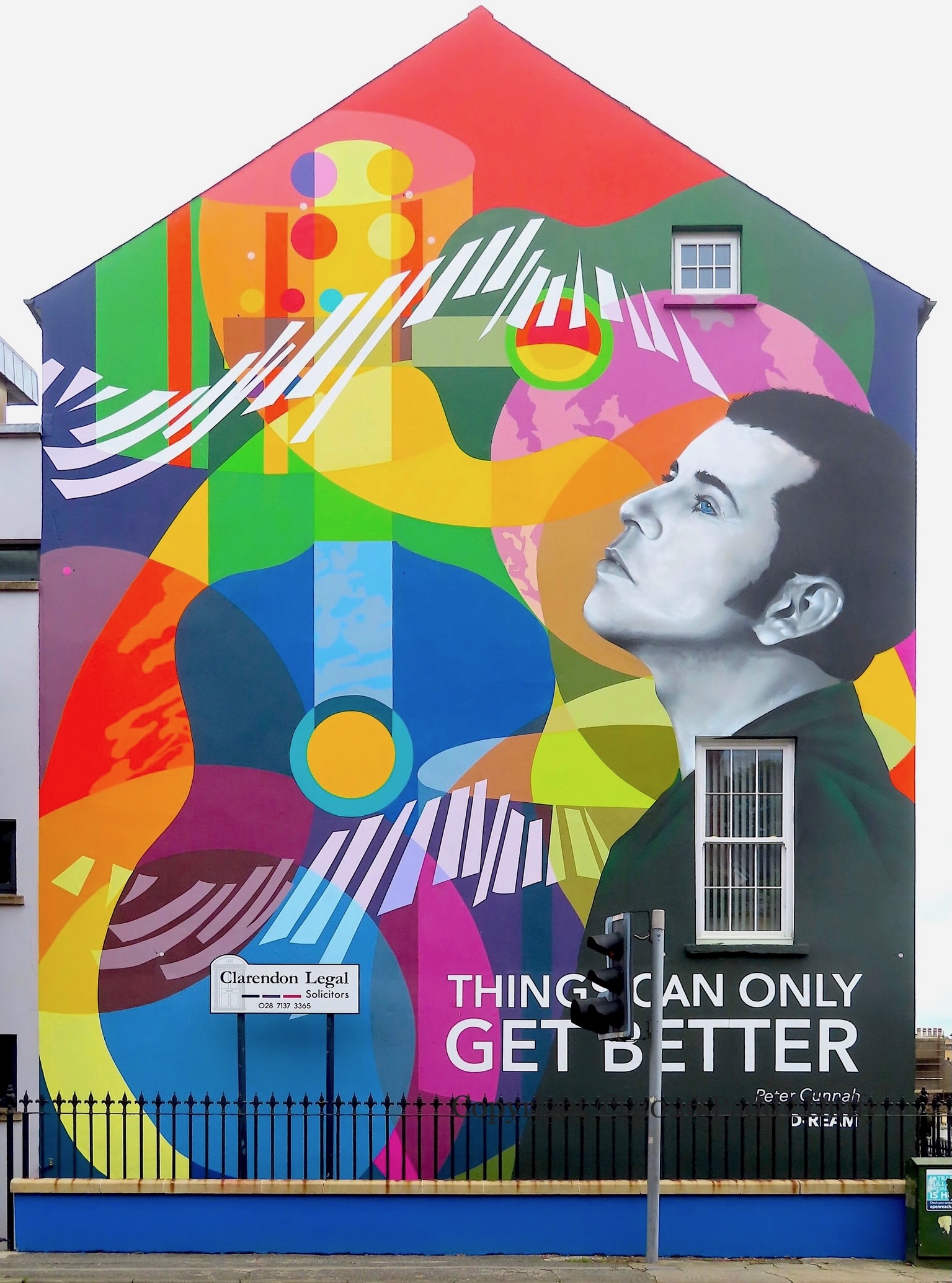
Peter Cunnah was the singer in D:Ream, which had a number-one hit in 1994 with “Things Can Only Get Better” (youtube). Cunnah was born in Belfast but adopted by parents in Derry (BBC).

This new mural was painted (by Karl Porter of UV Arts (web)) at the junction of Northland and Clarendon streets (in the Clarendon Conservation Area (pdf)), next to Cunnah’s home at 46 Clarendon Street, where he formed his first band, Tie The Boy (Derry Journal).

Click image to enlarge
Copyright © 2026 Paddy Duffy
T09770 T09771 T09769 T09768

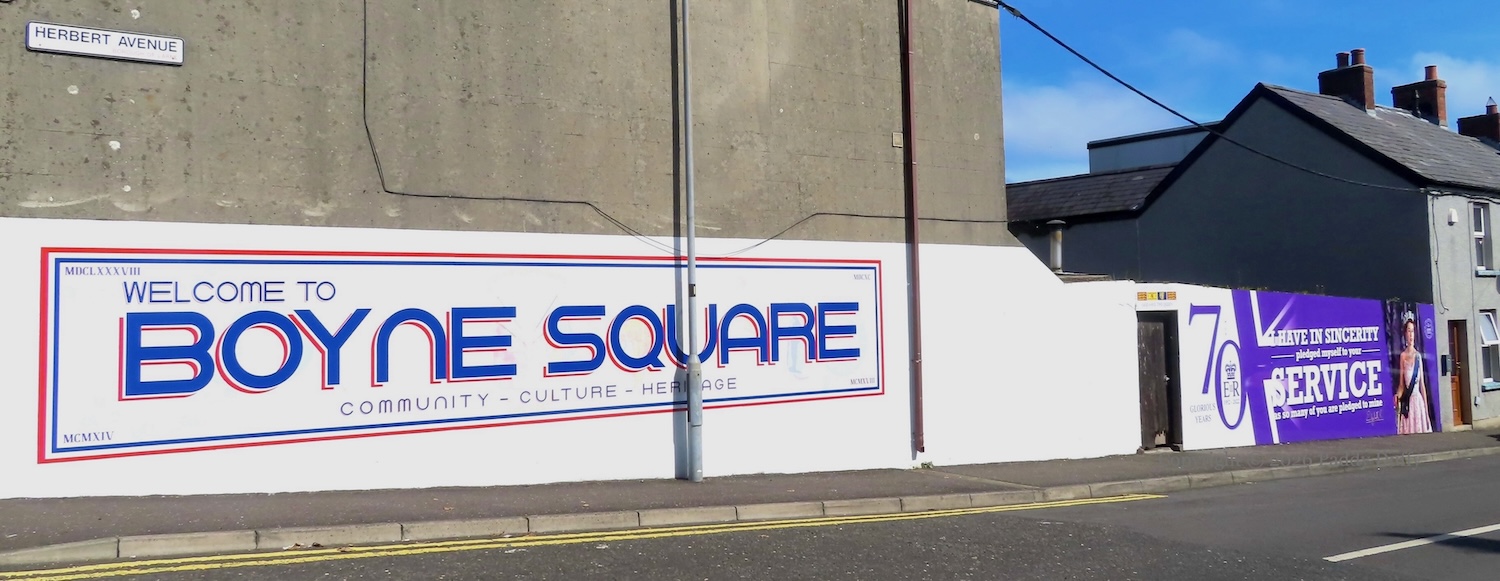
Community, Culture, Heritage

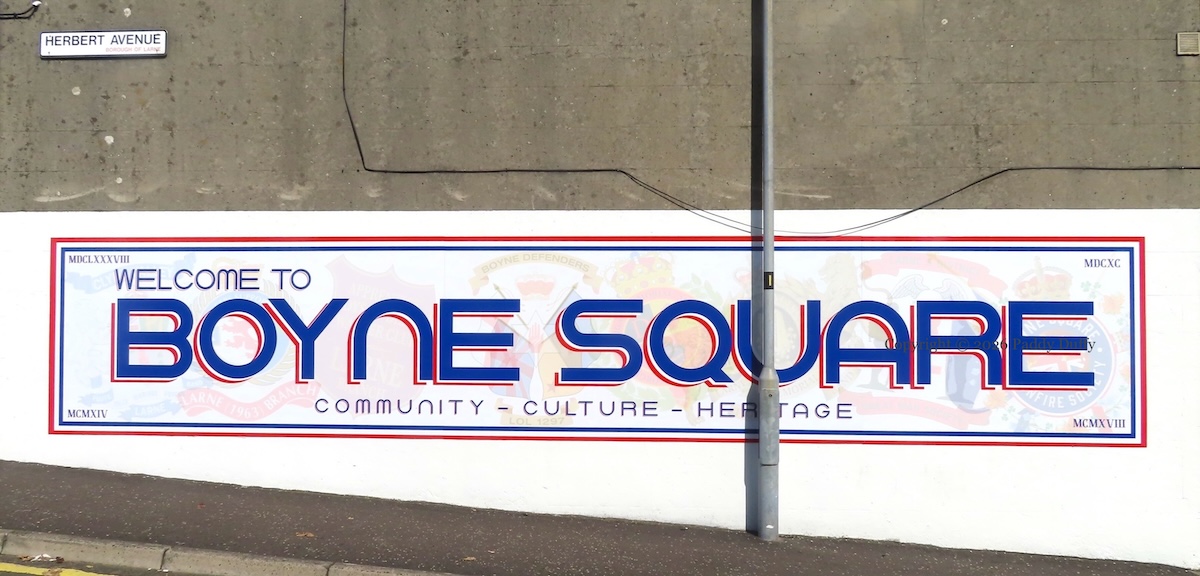
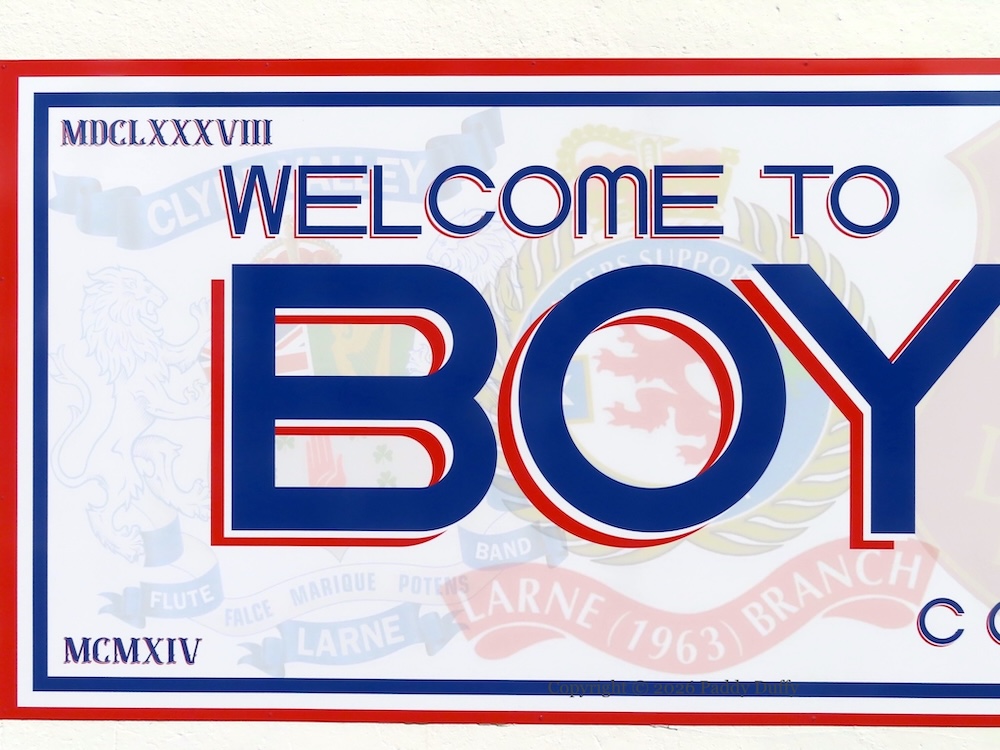
This new “welcome to Boyne Square” sign was mounted in late June in preparation for this year’s Twelfth.

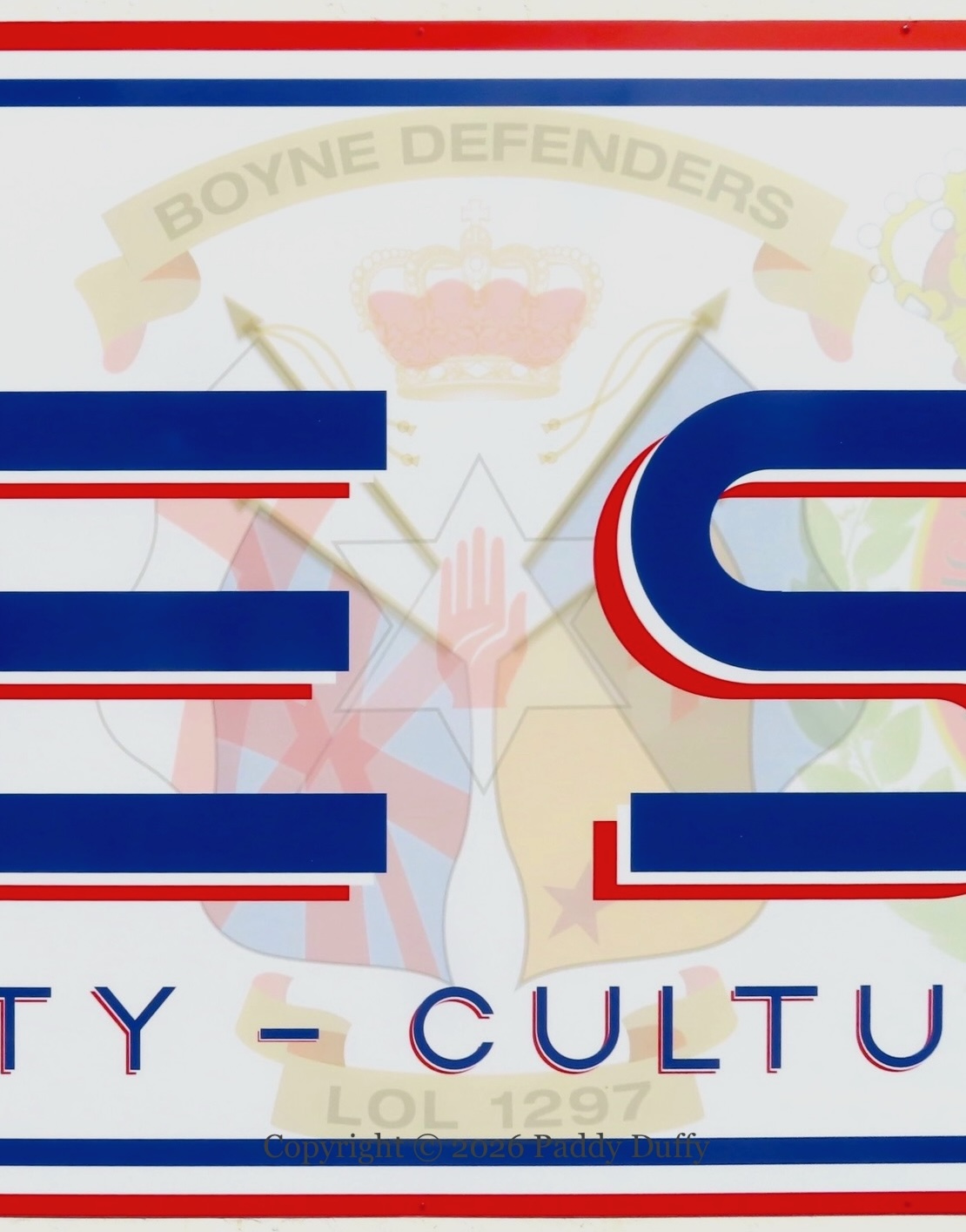
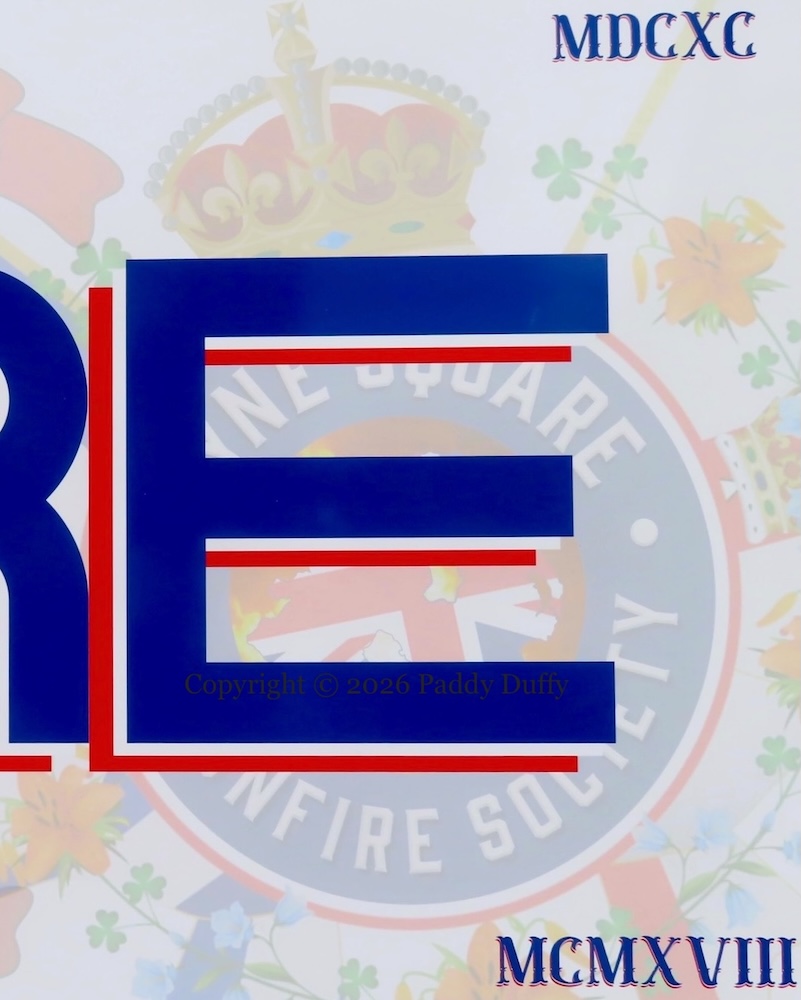
The dates in Roman numerals in the corners are (top) 1688-1690 and (bottom) 1914-1918. The emblems in the background are of (l-r) Clyde Valley flute band (Fb), Rangers Supporters’ Club – Larne (Fb), ABOD Walker Club Larne Branch (Fb), Boyne Defenders LOL 1297 (Fb), George A Dummigan accordion band, Constable Anderson Memorial flute band (Fb), Larne & District Great War Society (Fb), Boyne Square Bonfire Society (Fb).

Herbert Avenue, Boyne Square/Factory, Larne

Click image to enlarge
Copyright © 2026 Paddy Duffy
T09700 T09701 T07902 [T07903] [T07904] T07905
T09707
T09706 [T09709] [T09710]
T09708

A Ride On The Coal Cart

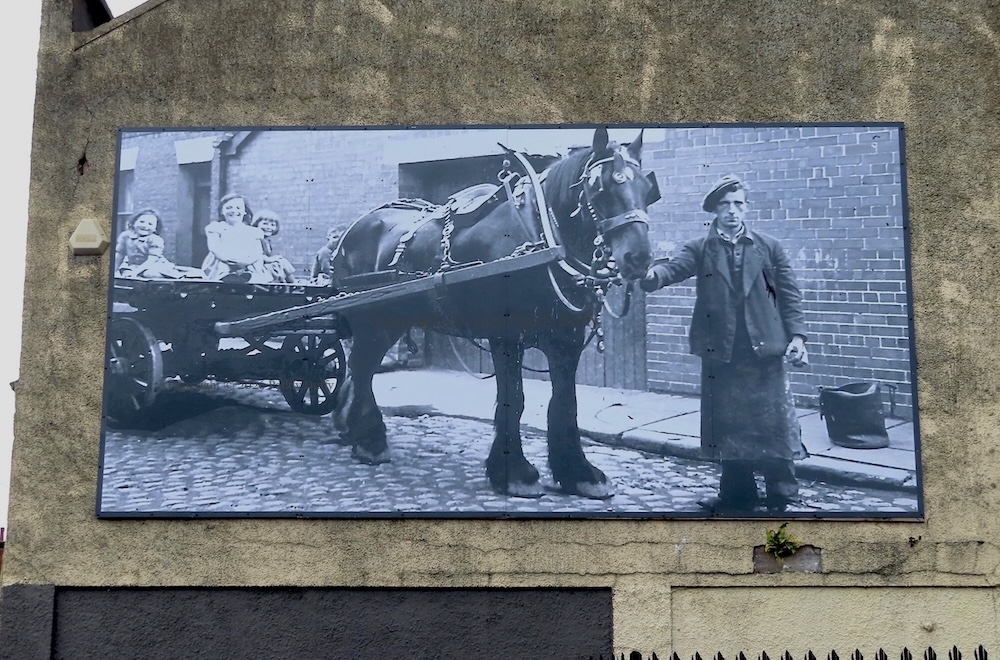
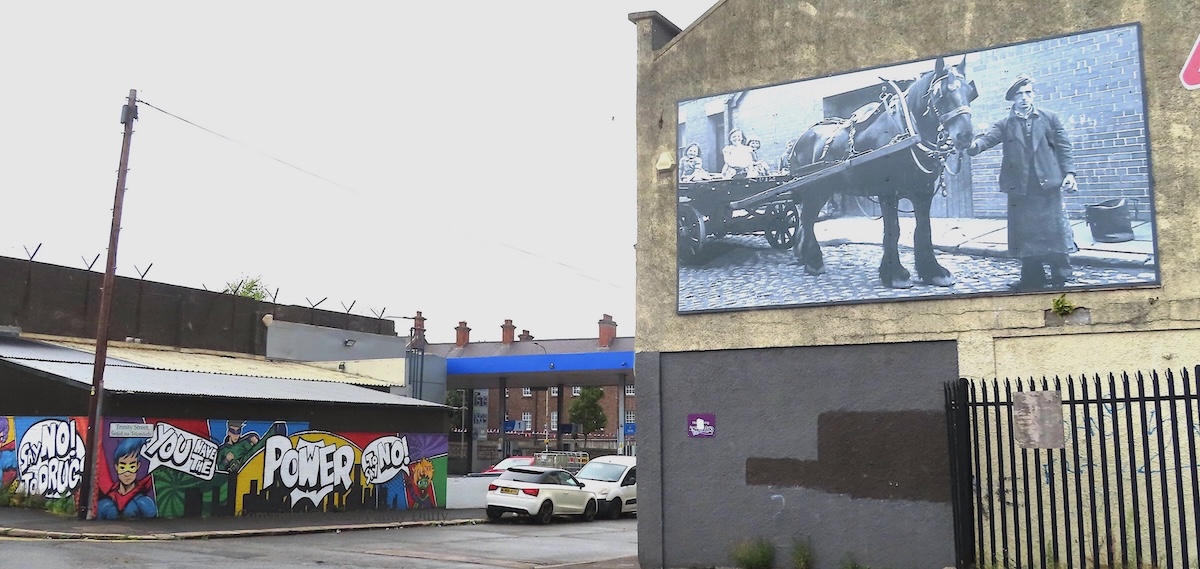
This photo of children taking a ride on a coal cart joins more than a dozen others depicting life during the 20th century in Carrick Hill – see Old Carrick Hill and The Tea Bar. Here is a Belfast Forum thread of people reminiscing about the various items that used to be delivered by horse-drawn cart.

For the anti-drugs art on the left of the wide shot below, see You Have The Power.

(lower) Regent Street, Carrick Hill, west Belfast. A new archive featuring recordings of local people opened earlier this month in the Carrick Hill Community Centre (Belfast City Council).

Click image to enlarge
Copyright © 2026 Paddy Duffy
T09599 T09600

Dead On

Avenue Hall – the building at the junction of Lower Garfield Street and North Street – was built in 1896, with ground-floor shops and upstairs ballrooms. The upstairs rooms were damaged by fire in 1990 and the last occupied unit on the ground floor was the Tivoli barbers, which held on until 2013 before moving to North Street. The shutters of the ground-floor shops, along with much of the derelict (lower) North Street, were covered with graffiti, and in 2012 became the epicentre of ‘Shutter Scape’, the first year of what came to be called Hit The North (see Visual History 11 and the historical map). The blocked-up windows of the upper floor were also painted, in 2014.

Future Belfast lists three potential developments and developers, in 2000, 2012, and 2016, and there were others in 2017 and in 2020. Castlebrooke currently has request for comments on its latest plan for the whole Garfield and Donegall Street area (RSUA | pdf). The current scaffolding was erected in 2018 along with the hoarding around the bottom, which was painted by Danni Simpson (‘Bout Ye, Belfast). Some demolition of the interior took place; the facade is protected by a grade B2 listing in 1991 (Plan Belfast | Future Belfast). Seven years later, the hoarding and the scaffolding still stand, and the hoarding has been repainted with a variety of Belfast sayings – “Aye”, “Dead on”, “Grand”, “Class”, “Awk, hiya” – painted by Alana McDowell (ig). The first part, above, replaces the anti-homelessness art in Life In A Bag.

Click image to enlarge
Copyright © 2026 Paddy Duffy
T09550 [T09551] T09552 T09554 T09555
T09557 T09553 T09556