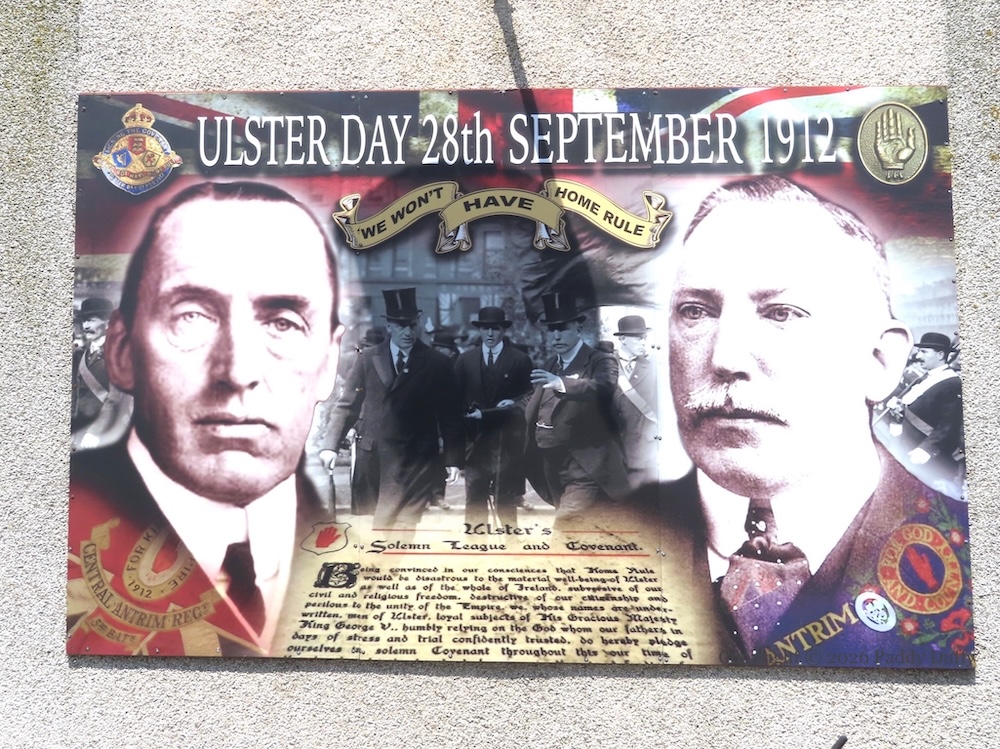
“We won’t have Home Rule.” Here is another view of the “Ulster Day” board seen previously in a gallery of five others. The heroes of the anti-Home Rule movement are Edward Carson (left) and James Craig (right). Carson and Craig were the first and third people to sign Ulster’s Solemn League And Covenant on September 28th, 1912.
For Ballymena during the Home Rule crisis, see History Ireland.
A few months later, in January 1913, the pair would found the Ulster Volunteers. The flags of the third (left) and second (right) battalions of the Central Antrim regiment of the Ulster Volunteers are in the bottom corners – see The Central Antrim Regiment. Ballymena men, however, joined the first battalion.
Painted by Dee Craig and mounted in Queen Street, Harryville, Ballymena.
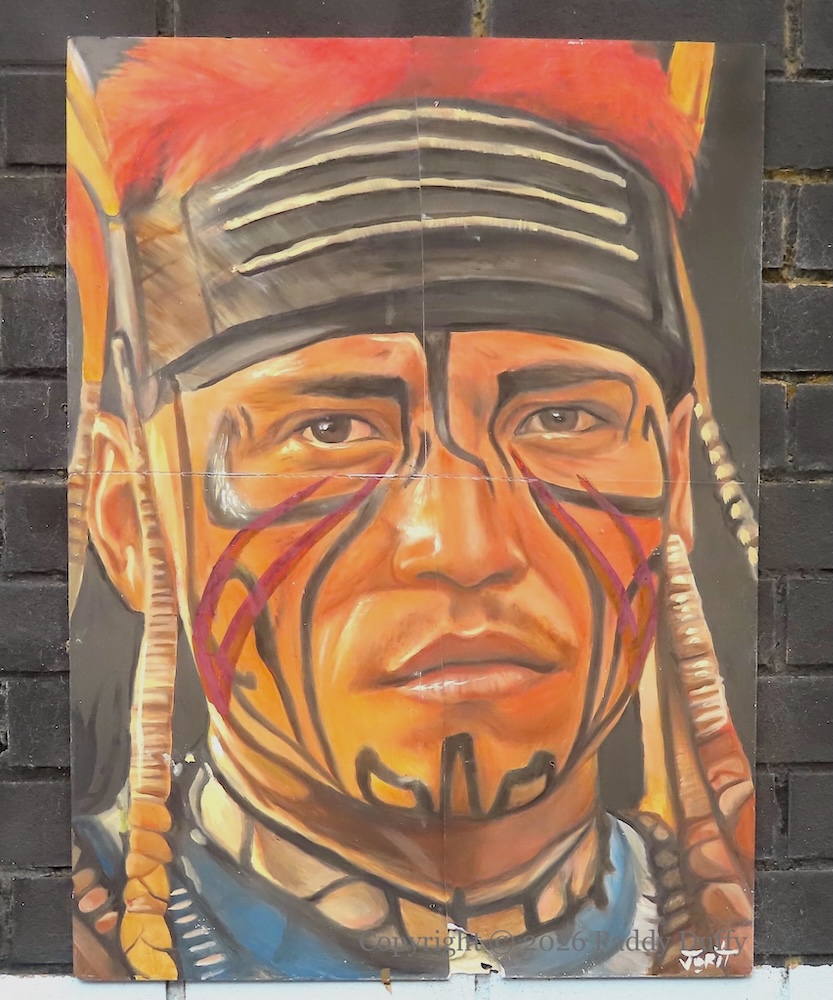
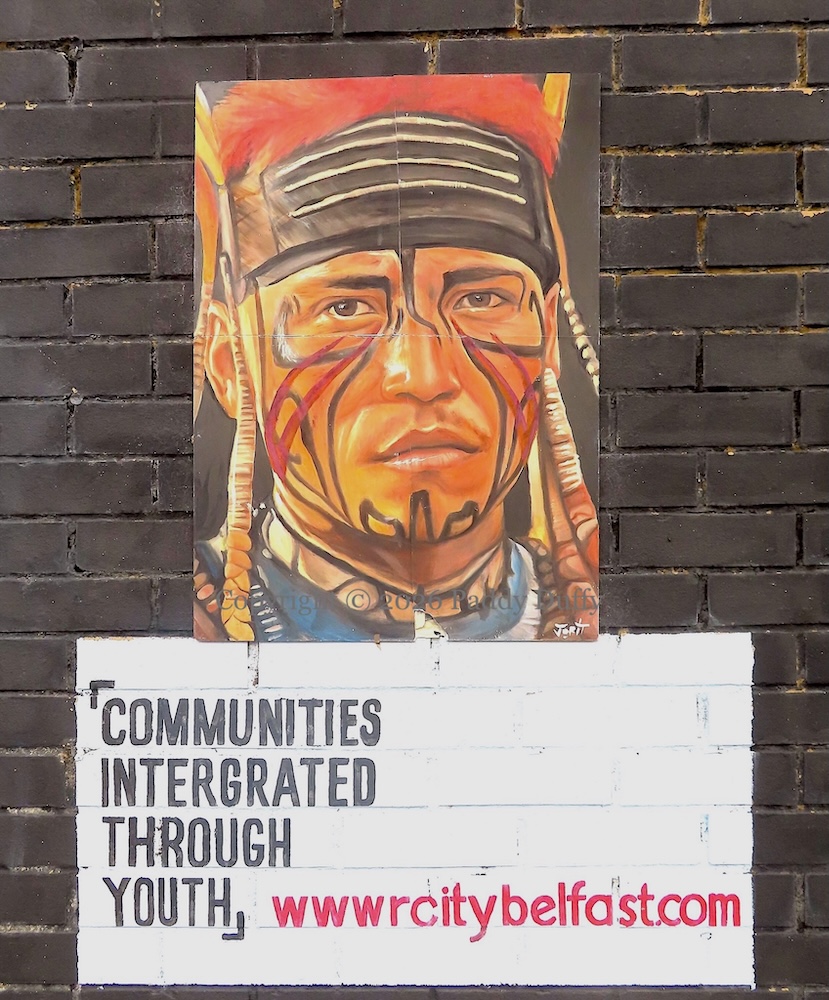
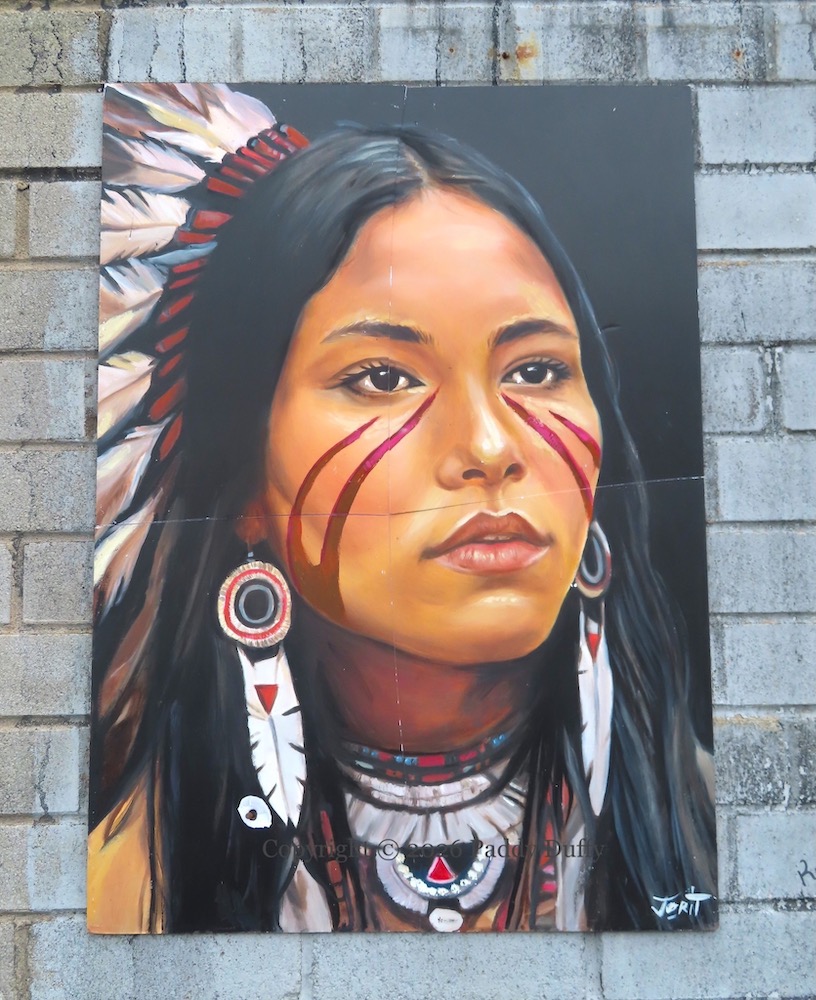
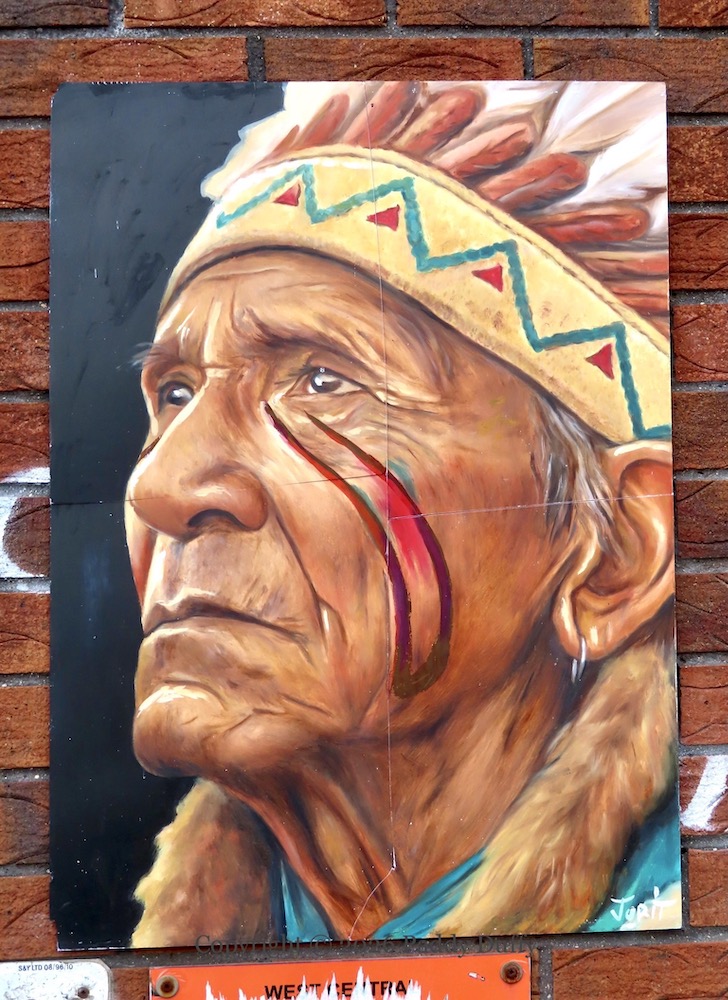
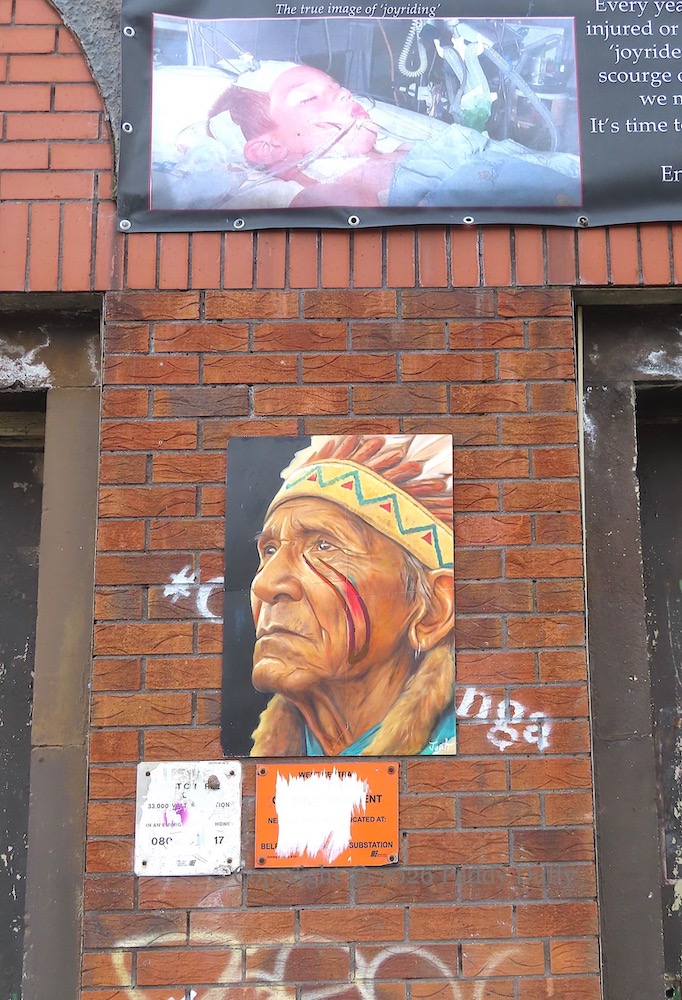
This is a third portrait by Italian artist Jorit (ig) – for two others see Save The Human Tribe. This one is on Lanark Way, inserted above the dash in the R-CITY mural.
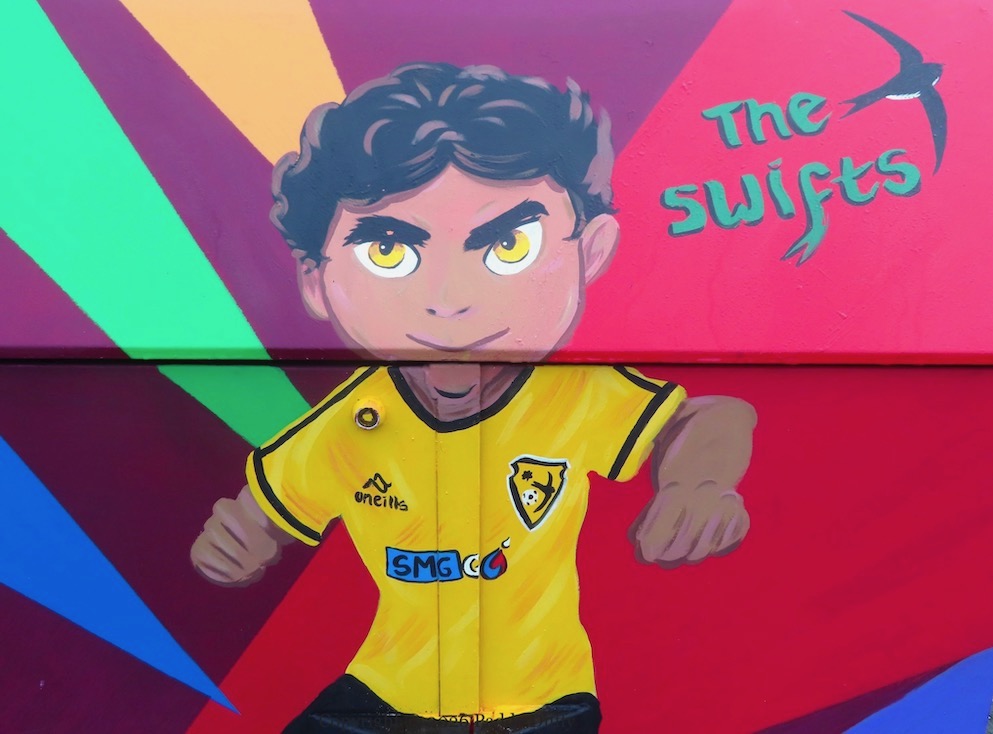
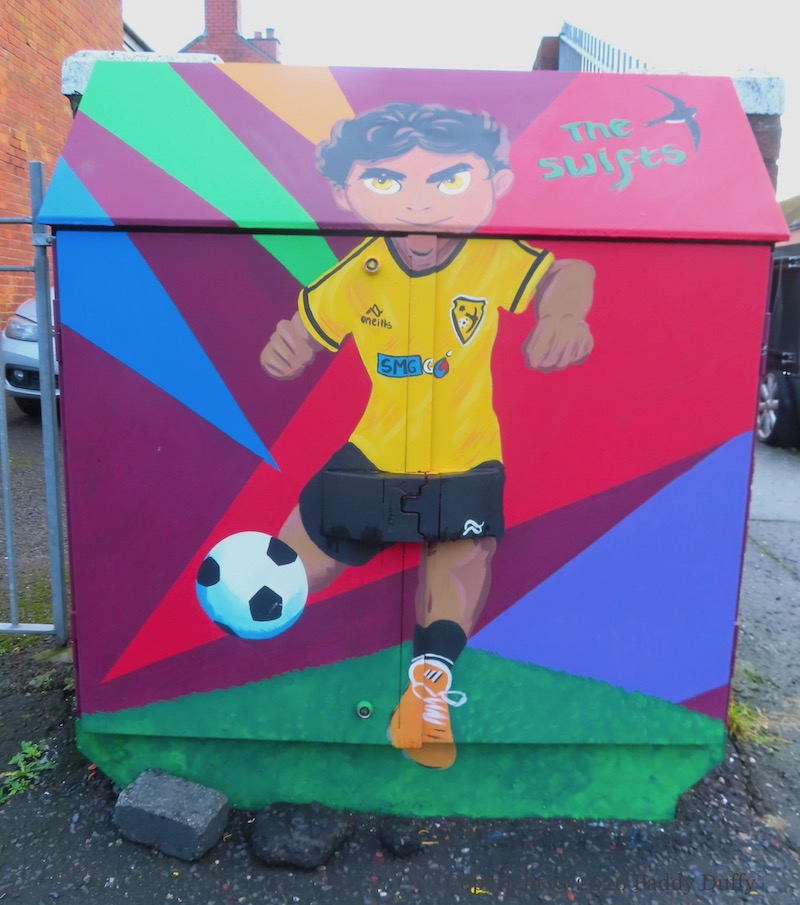
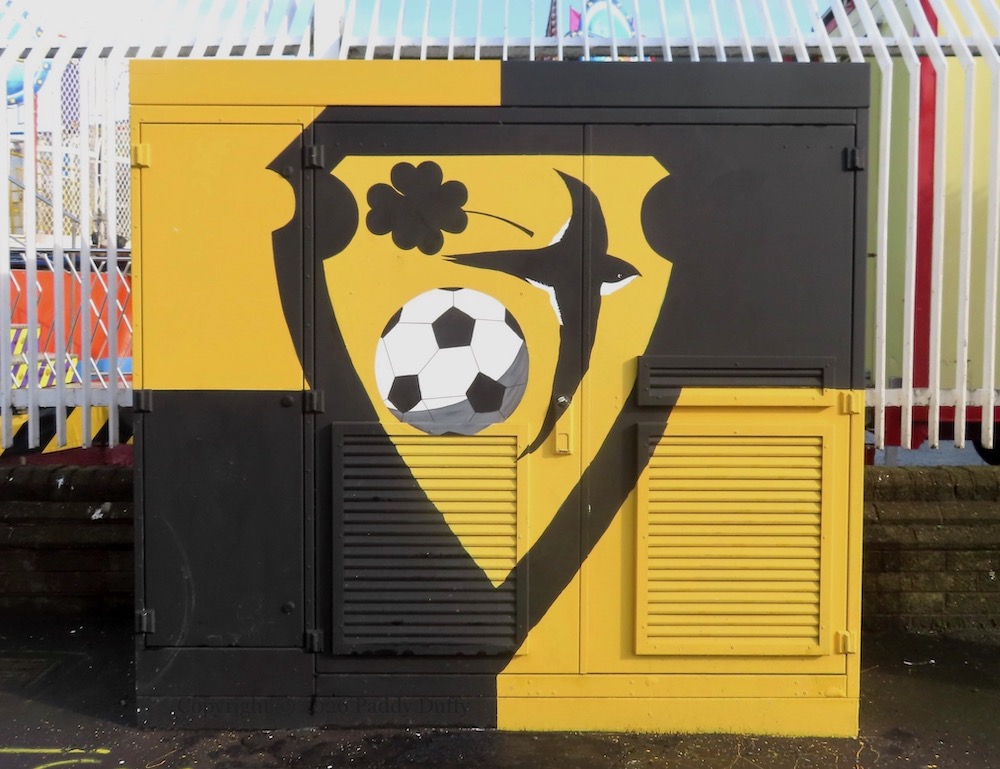
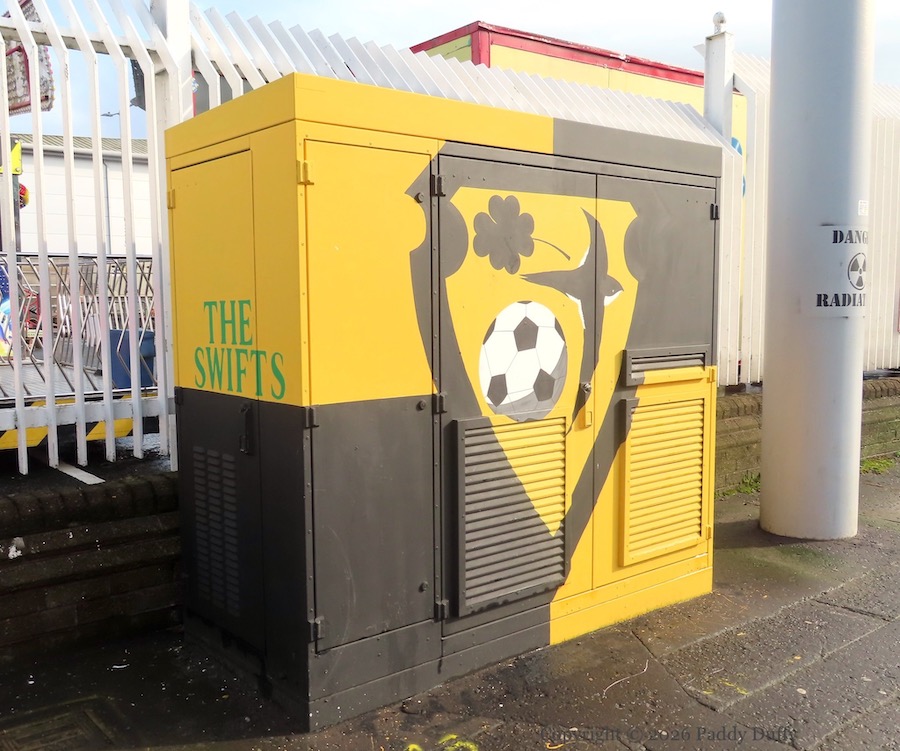
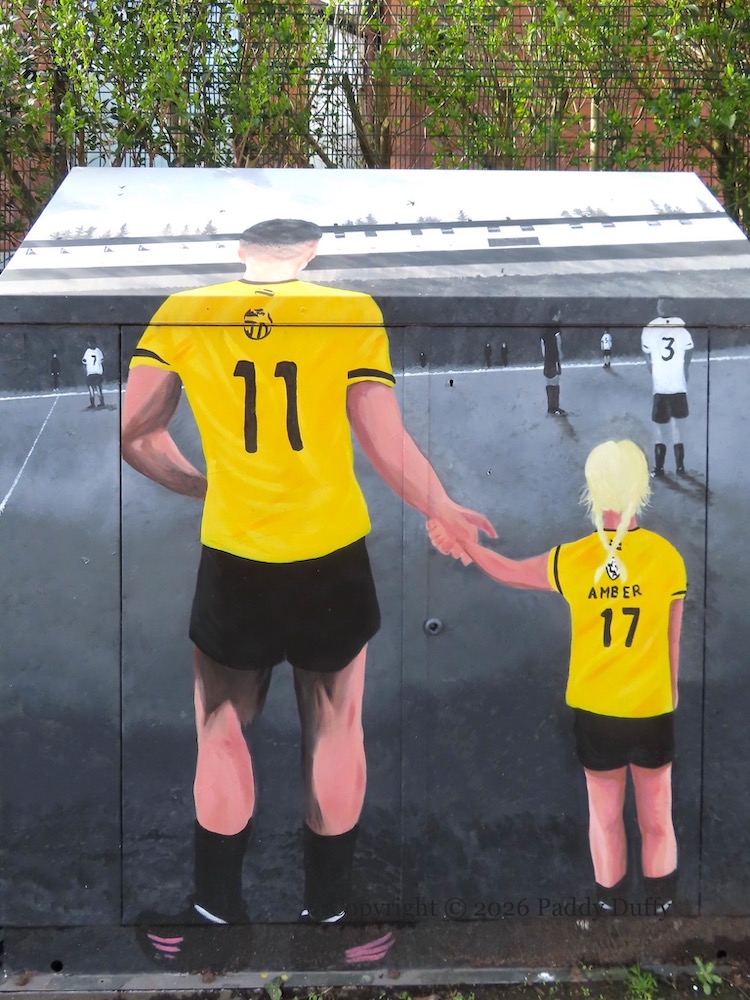
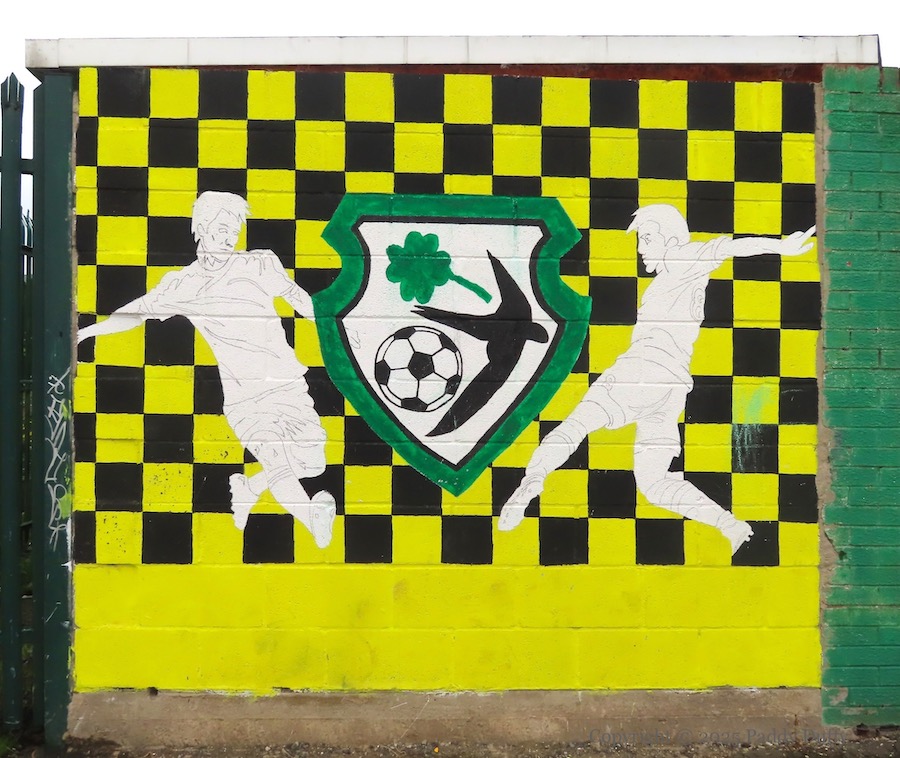
St James’s Swifts (web) are a west Belfast club playing intermediate level soccer with Donegal Celtic Park on the Suffolk Road as a home ground.
The three pieces shown here are in St James’s Crescent, at the Park Centre on Donegall Road, and St James’s Road. The mural in progress (shown last) is in St Katherine’s Road
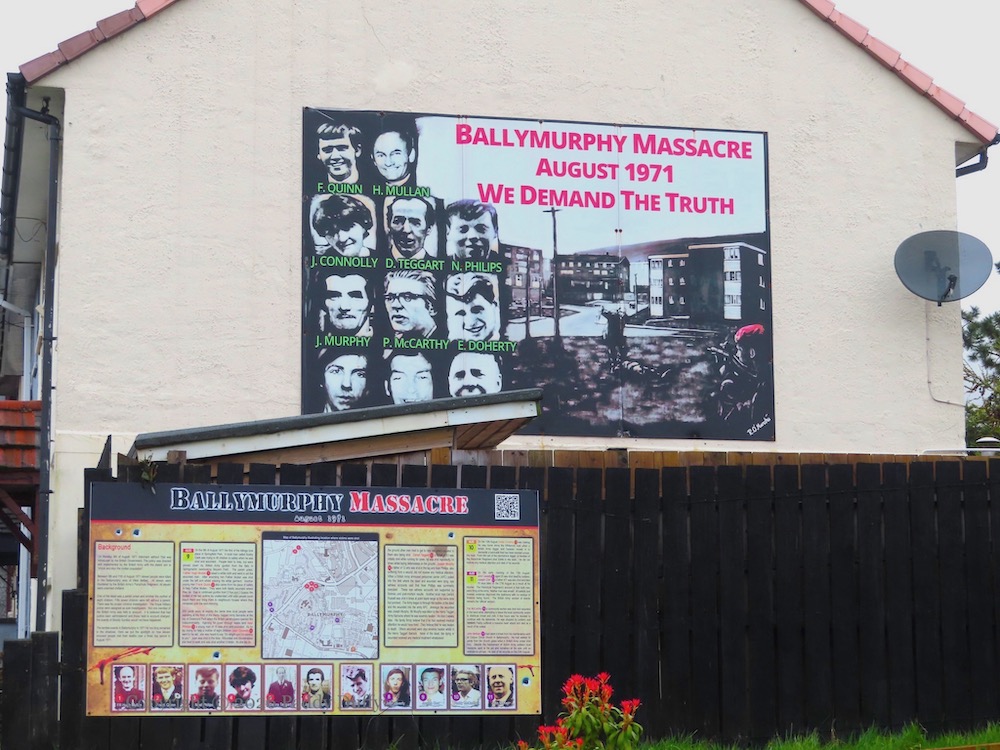
This is a new information board below the Ballymurphy Massacre board at the Glenalina Road corner with the Whiterock Road.
The first panel (on the left) reads, “On Monday 9th of August 1971 Internment Without Trial was introduced by the British Government. The policy was directed and implemented by the British Army with the stated aim to “shock and stun the civilian population”. Between 9th and 11th of August 1971 eleven people were killed in the Ballymurphy area of west Belfast. All eleven were murdered by the British Army’s Parachute Regiment. All eleven were unarmed civilians. One of the dead was a parish priest and another the mother of eight children. Fifty-seven children were left without a parent. There was No proper criminal investigation. The Royal military police were assigned as sole investigators. Not one member of the British Army was held to account. It is believed that had justice been administered and those held to account charged, the events of Bloody Sunday would not have happened.”
The remaining panels give a day-by-day account of the eleven deaths, of Father Hugh Mullan, Frank Quinn, Noel Philips, Joan Connolly, Danny Teggart, Joseph Murphy, Eddie Doherty, Joseph Laverty, Joseph Corr, Paddy McCarthy, John McKerr.
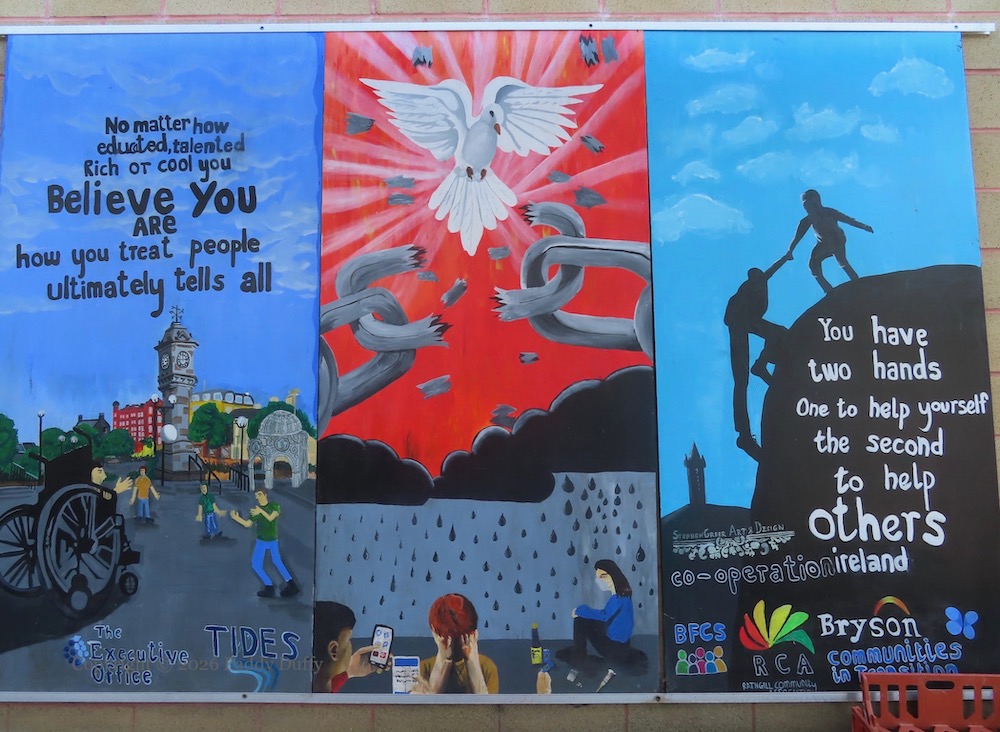
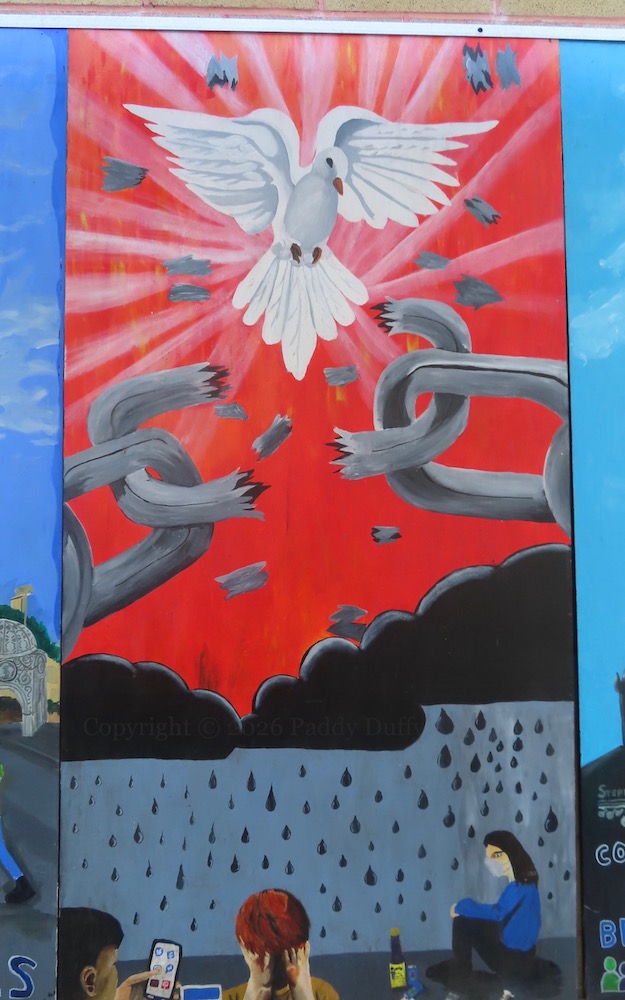
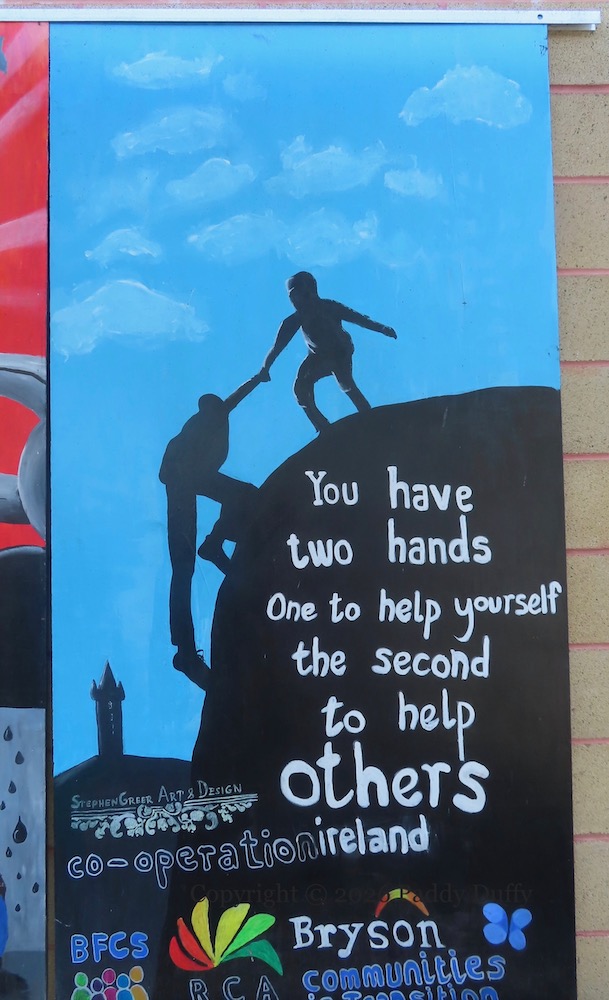
Here is a trio of inspirational and mental-health messages on the wall of Bangor Foodbank & Community Support Resource Centre (web).
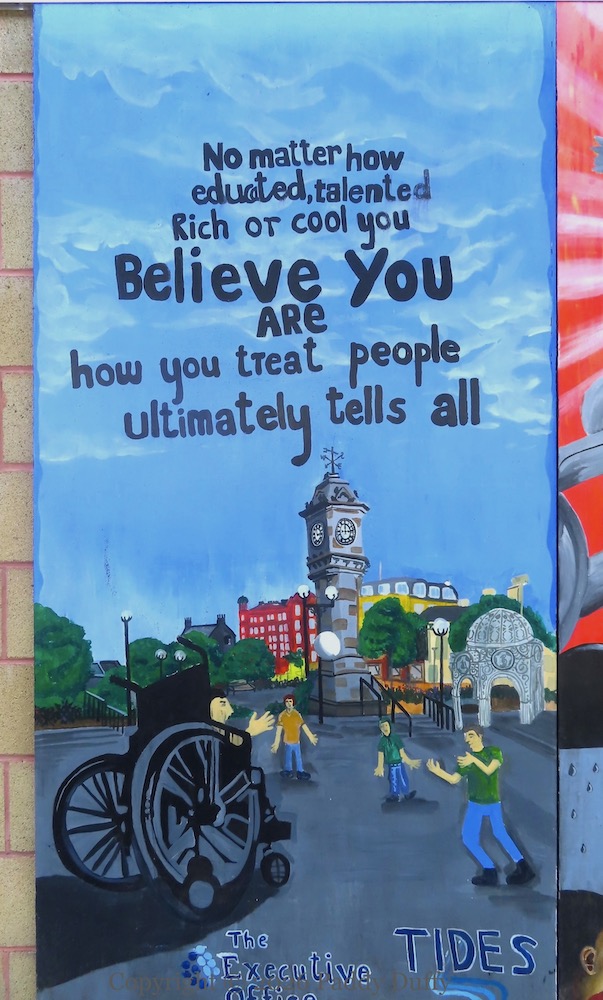
The first panel shows people tossing a ball around in McKee Clock Arena (WP), with the message, “No matter how educated, talented, rich, or cool you believe you are, how you treat people ultimately tells all”.
The second shows children under dark clouds, bound by the chains of social media and alcohol that can be broken by a dove.
The third shows people climbing the hills around Scrabo tower, illustrating the message, “You have two hands, one to help yourself, the second to help others”.
Painted by “Stephen Greer art & design” (web) in Balloo Avenue, Bangor.
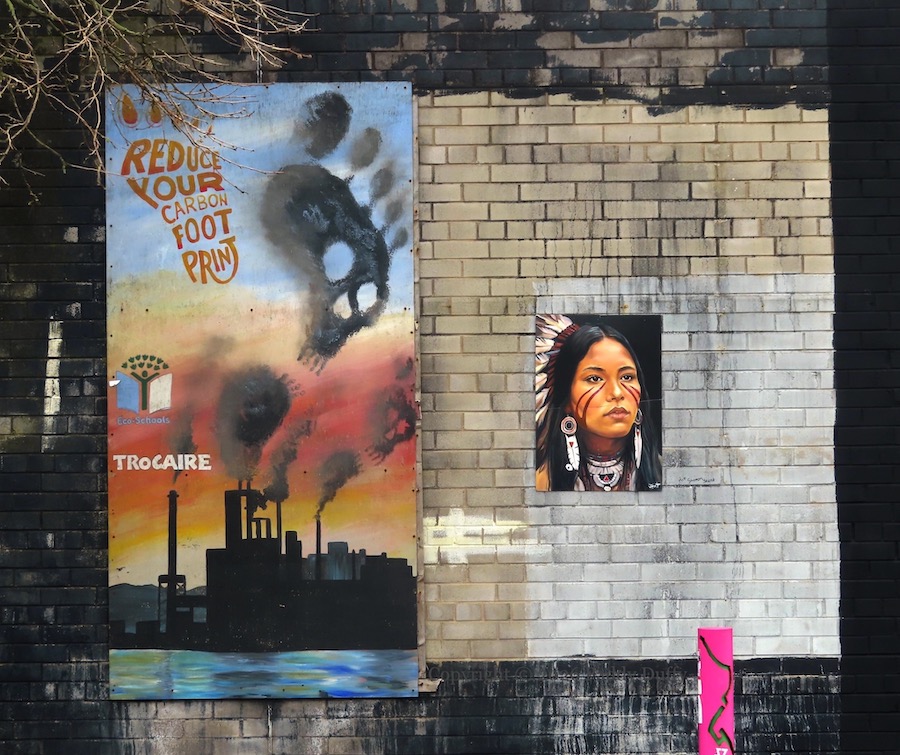
These are small works on boards by Italian artist Jorit (ig) (full name Jorit Ciro Cerullo) who typically paints large walls. The pieces are all of human faces, and they all have in common two pairs of joined streaks, one on each cheek.
The painting above has been mounted on Northumberland Street (Visual History), west Belfast, in a vacant spot left by the left-hand-side of the Climate Change board which dates back to 2012 and which was seen most recently with a Martyrs’ Committee board placed on top (T05821). On the right-hand-side there is now Soldiers Of The Republic.
The painting below is on the substation below Divis Tower. For the anti-joy-riding tarp, see 100 Years Of Partition.
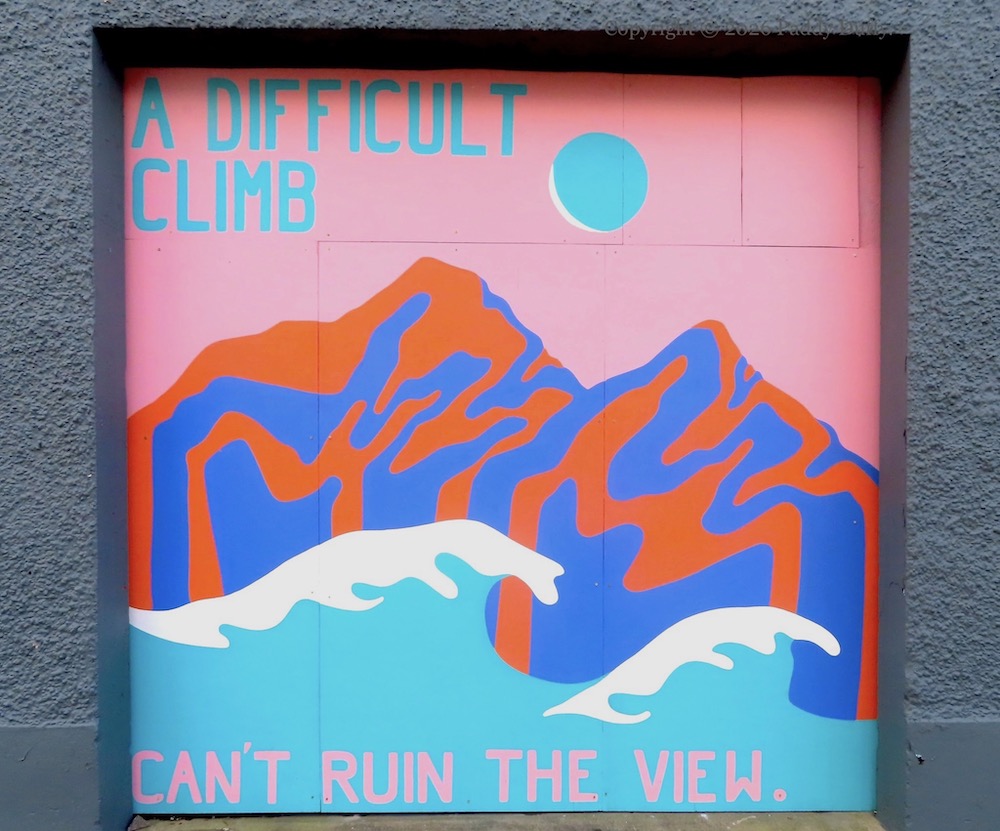
This is one of at least three murals painted by Becky Gilmour (ig) as she skated-boarded the 2,700 kilometres of the Wild Atlantic Way in order to raise mental-health awareness and money for the Samaritans (Donegal Daily).
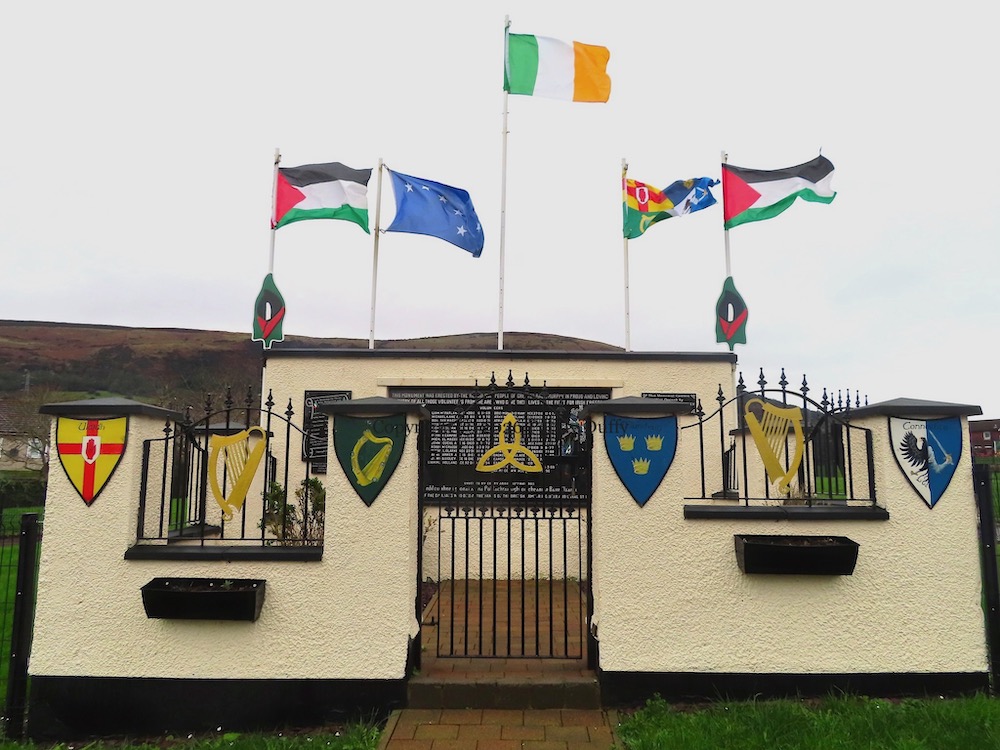
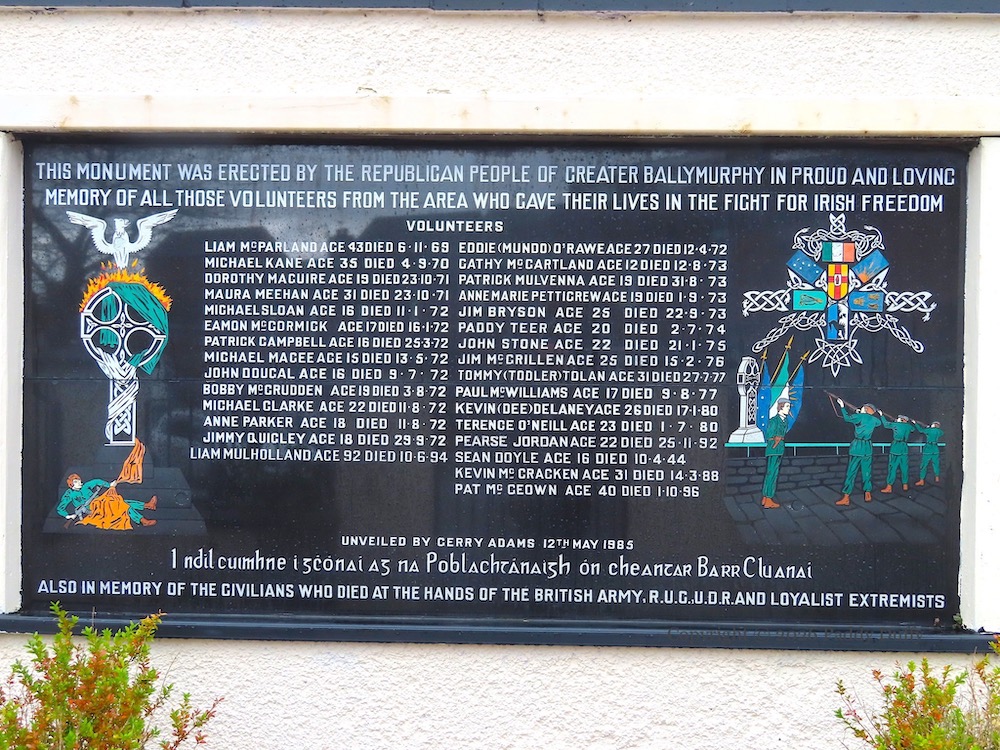
A pair of wooden lilies – symbol of the 1916 Easter Rising – are painted in the colours of the Palestinian flag and are placed below Palestinian flags on the Greater Ballymurphy memorial garden. (For the the names on the plaque, see the Peter Moloney Collection.)
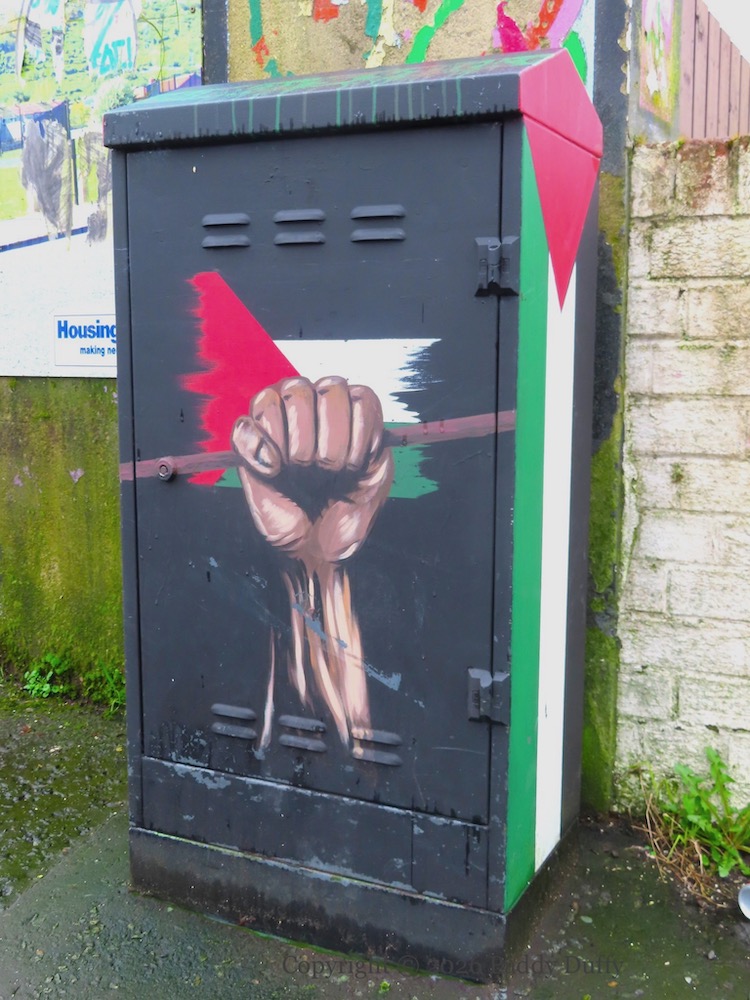
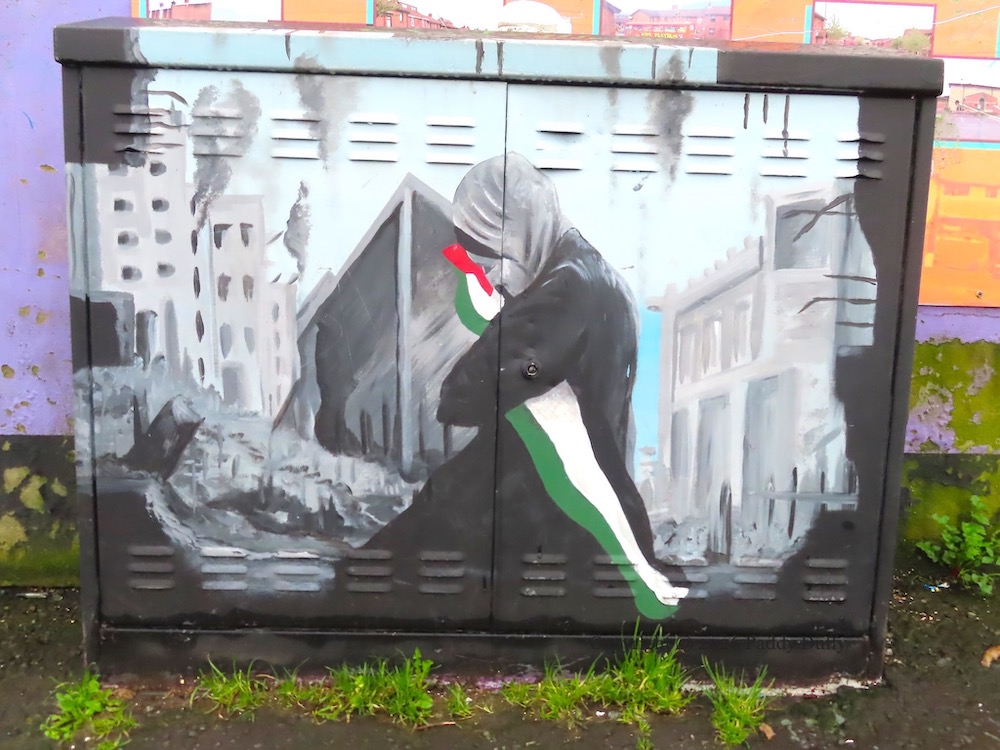
The electrical boxes (below) are from the community mural at the bottom of Springhill. The imagery on the second one is by Emmalene Blake – see Seas Leıs An Phalaıstín.
“NFC – representing our community with pride”. Newington Football Club [Fb], also known as “the swans”, is an NIFL team from north Belfast. The club was “est[ablished] 1979” as Jubilee Olympic FC, and was later Newington Youth Club, before becoming Newington FC c. 2018. A full list of its honours can be found on the club’s WP page.
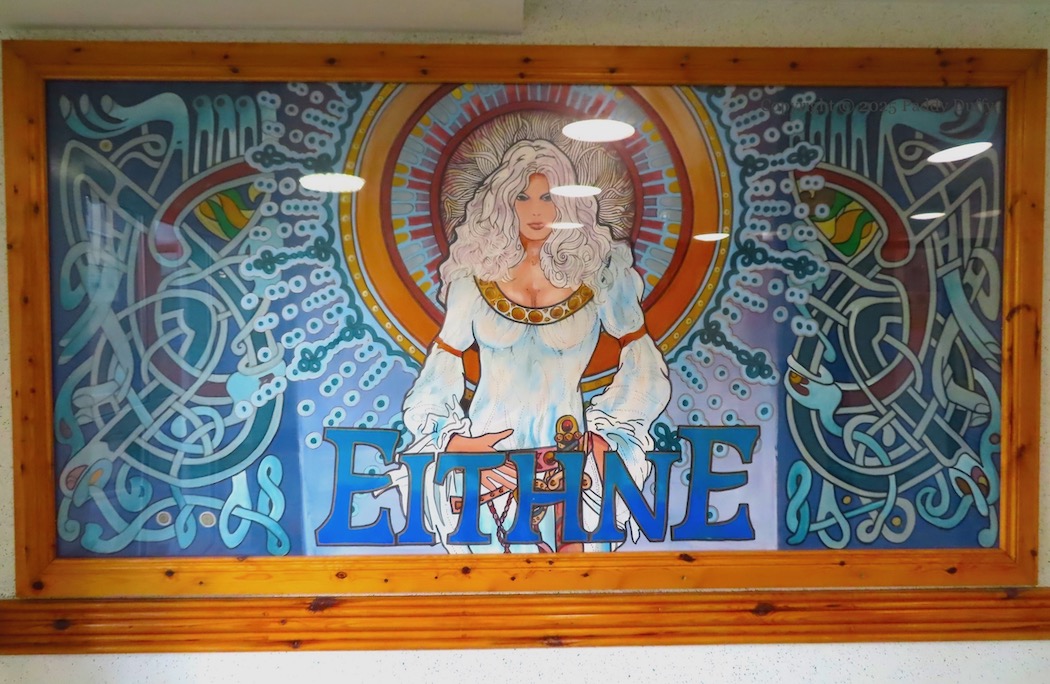
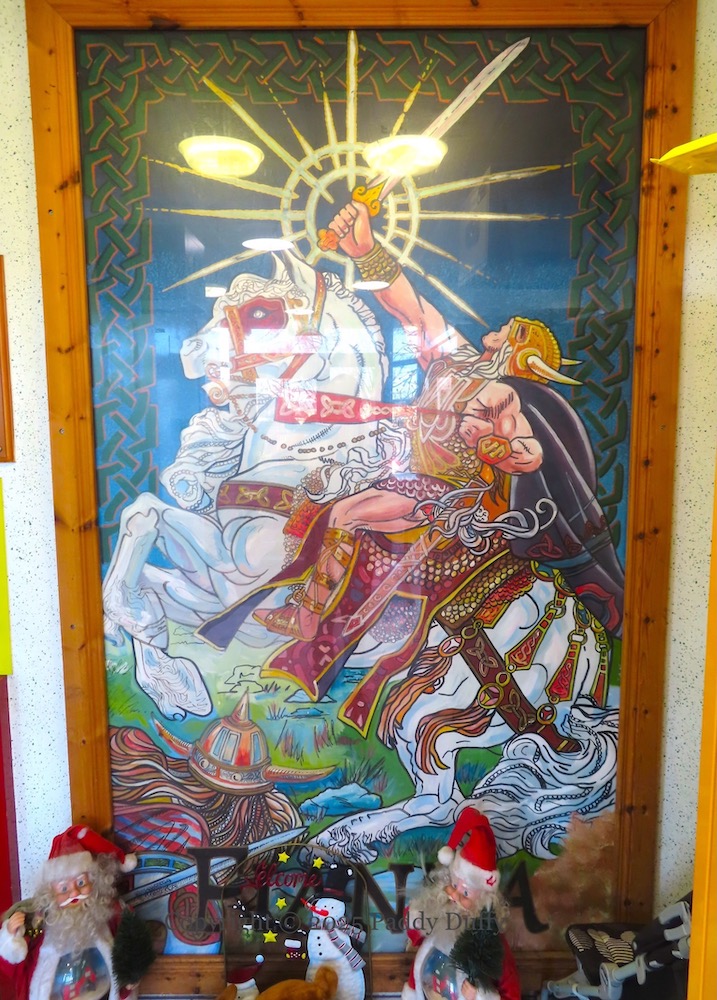
The seven “houses” (tower blocks) in the New Lodge are named after figures from Irish mythology: Méabh, Eıthne, Cú Chulaınn, Fınn, Na Fıanna, Gráınne, and Oısín. In the foyer of each house there is a painting of the eponymous hero, painted by Danny D and Marty L in imitation of Jim Fitzpatrick (as is explicitly acknowledged in the Gráınne painting, below): Eıthne is represented by Fitzpatrick’s Palu The Cat Goddess; Na Fıanna are represented by Lugh; Gráınne is represented by Fann. The bulls are by Finbarr O’Connor; Cú Chulaınn is inspired by the Oliver Sheppard statue in the GPO.
For the old names of the buildings, and the pairs of hunger-strikers painted on the tops of six of the seven towers, see New Lodge Flats.
“Fıonn Mac Cumhaıll gained fable knowledge after sucking his thumb which he burned while cooking the magical Salmon of Knowledge. He followed in his father Cumhall’s footsteps becoming captain of the Fıanna. His death at the Battle of Gabhra marked the beginning of the decline in the might of the Fıanna.”
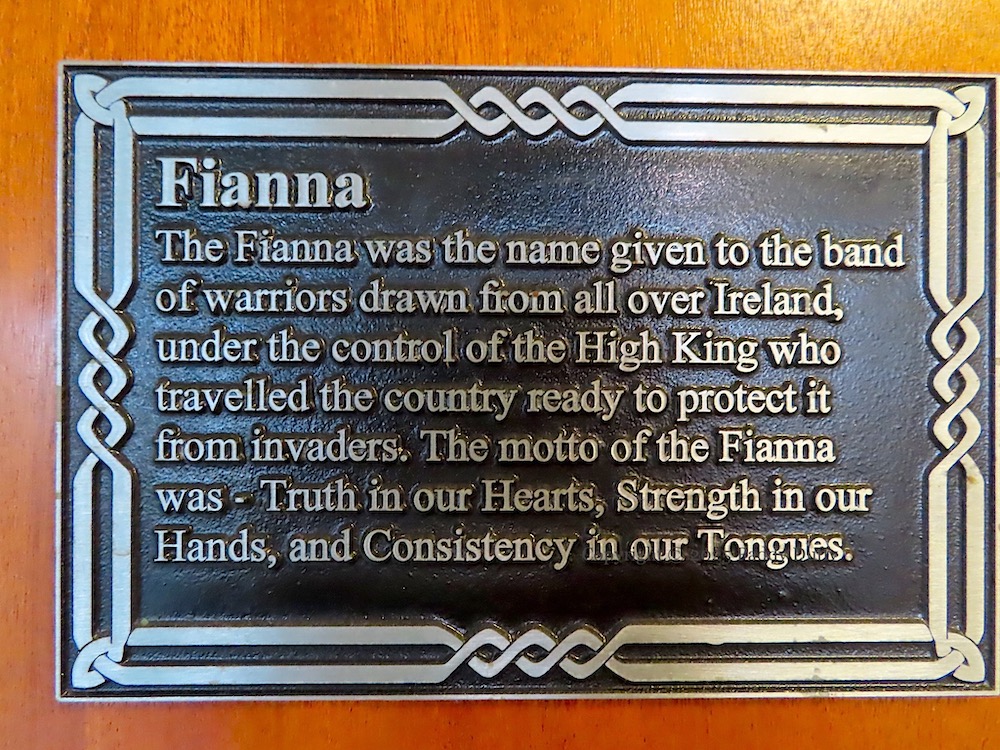
“The Fıanna was the name given to the band of warriors drawn from all over Ireland, under the control of the High King who travelled the country ready to protect it from invaders. The motto of the Fıanna was – Truth in our Hearts, Strength in our Hands, and Consistency in our Tongues.”
“Gráınne, daughter of Cormac Mac Art, High King of Ireland, betrothed to a grey-haired Fıonn Mac Cumhaıll but ran away with the handsome young Dıarmuıd before the marriage took place. She returned to marry Fıonn after Dıarmuıd’s death.”
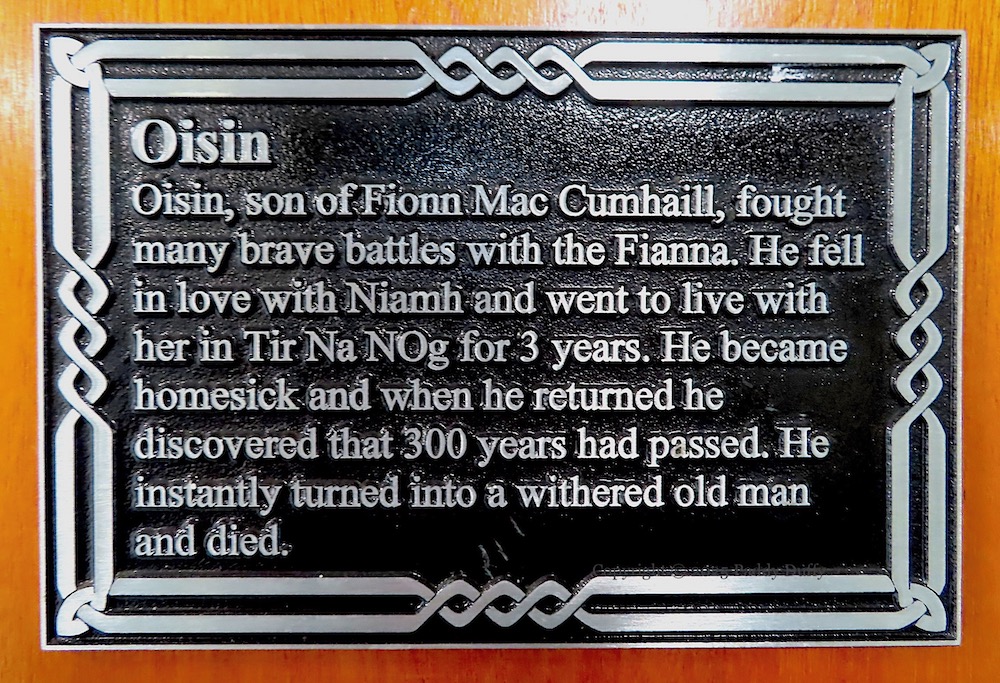
“Oısín, son of Fıonn Mac Cumhaıll, fought many brave battles with the Fianna. He fell in love with Nıamh and went to live with her in Tír Na nÓg for 3 years. He became homesick and when he returned he discovered that 300 years had passed. He instantly turned in a withered old man and died.”







 Paddy Duffy Collection