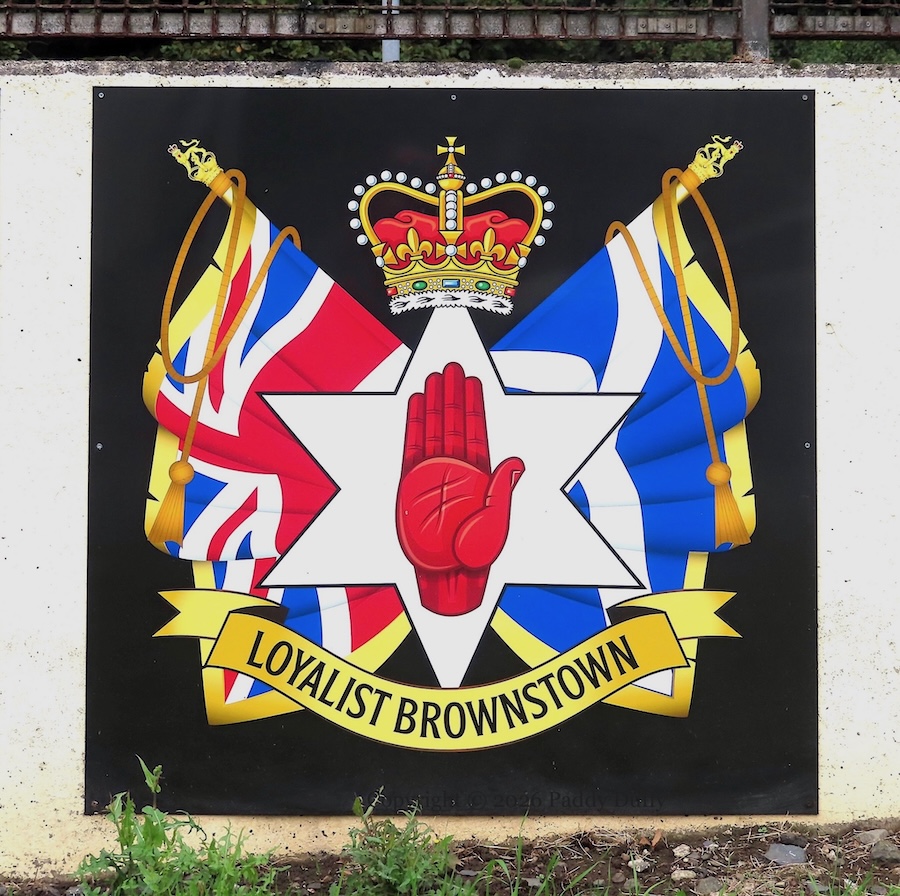
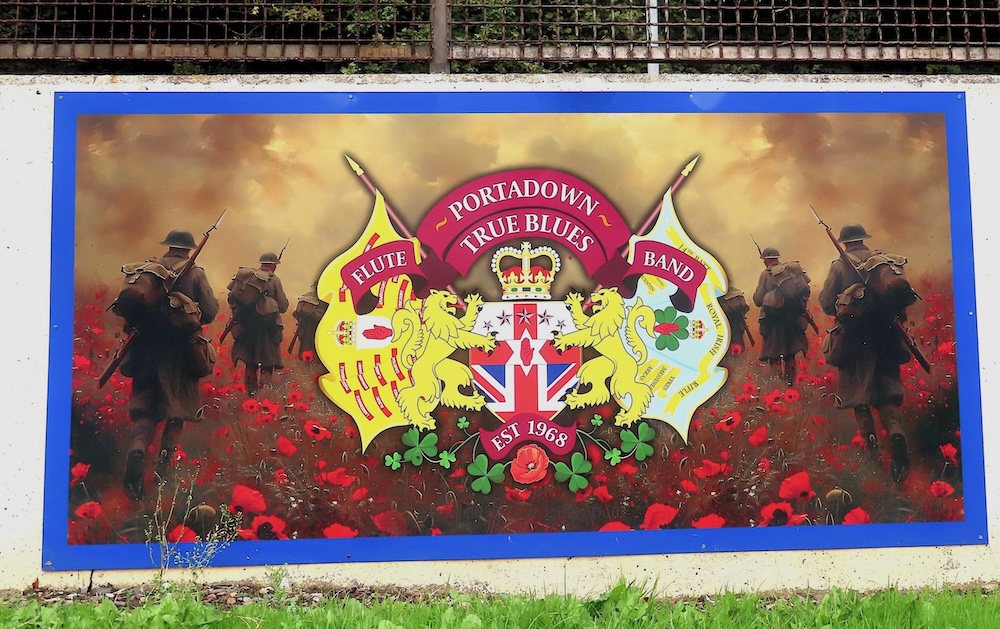
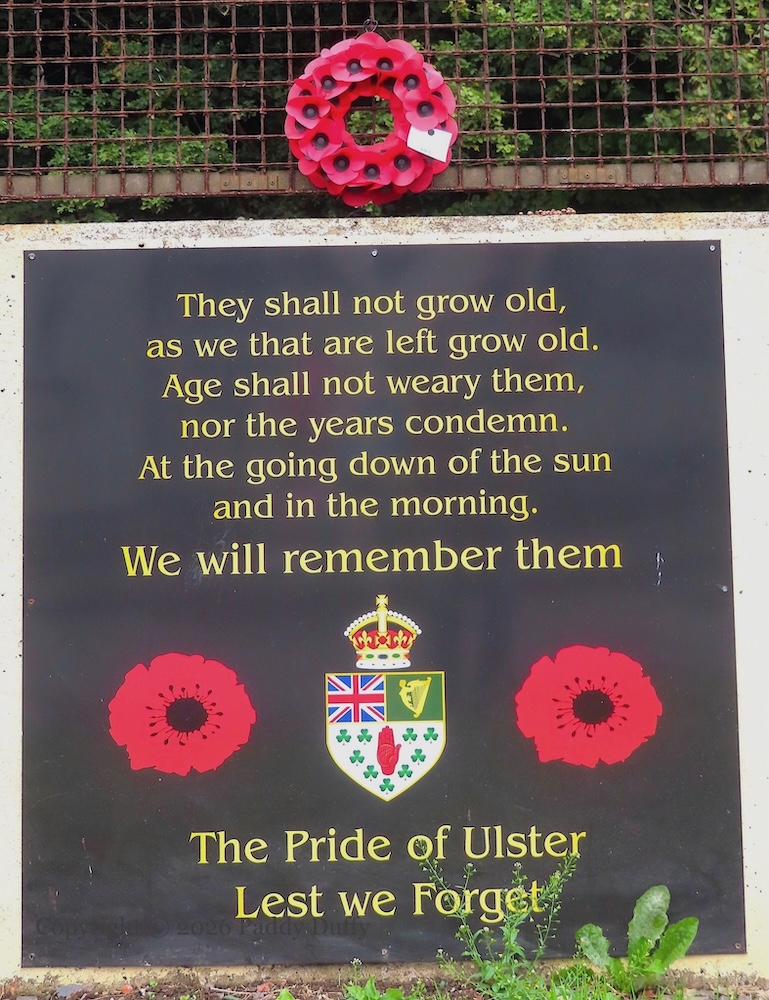
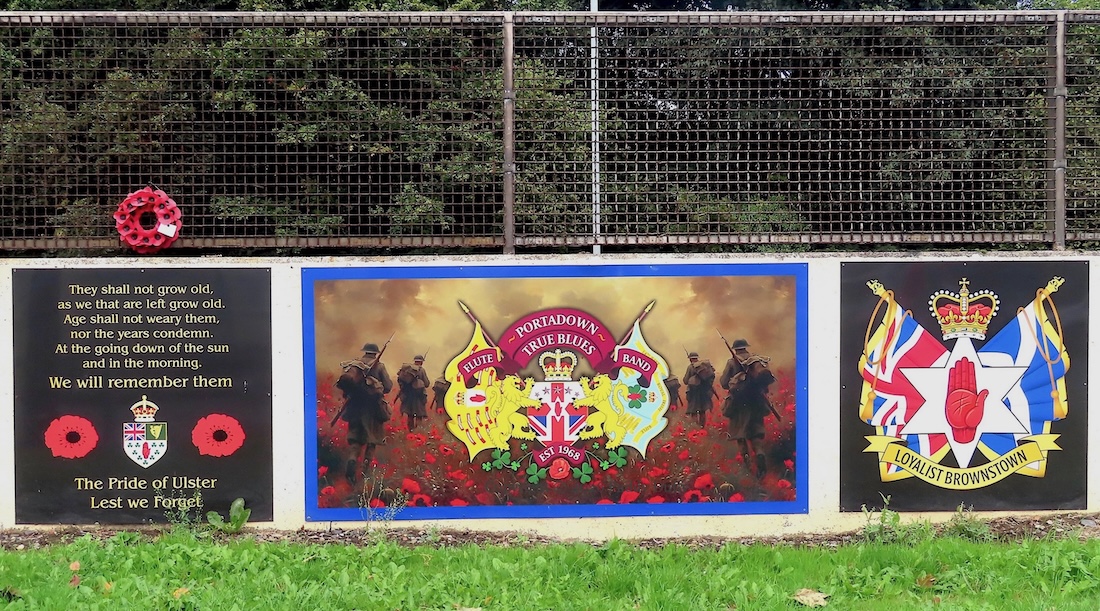
“Portadown True Blues flute band, est. 1968 [Fb].” This is a trio of boards at the top of the Brownstown estate, on the fence overlooking the “Northway” that separates Brownstown from Edgarstown. The flute band draws from both estates and has murals in both.
Both the main panel (immediately below) and the one to the left features WWI soldiers and the 36th Division – the band is associated with the Mid-Ulster brigade UVF (see the old Edgarstown mural in the Peter Moloney Collection).
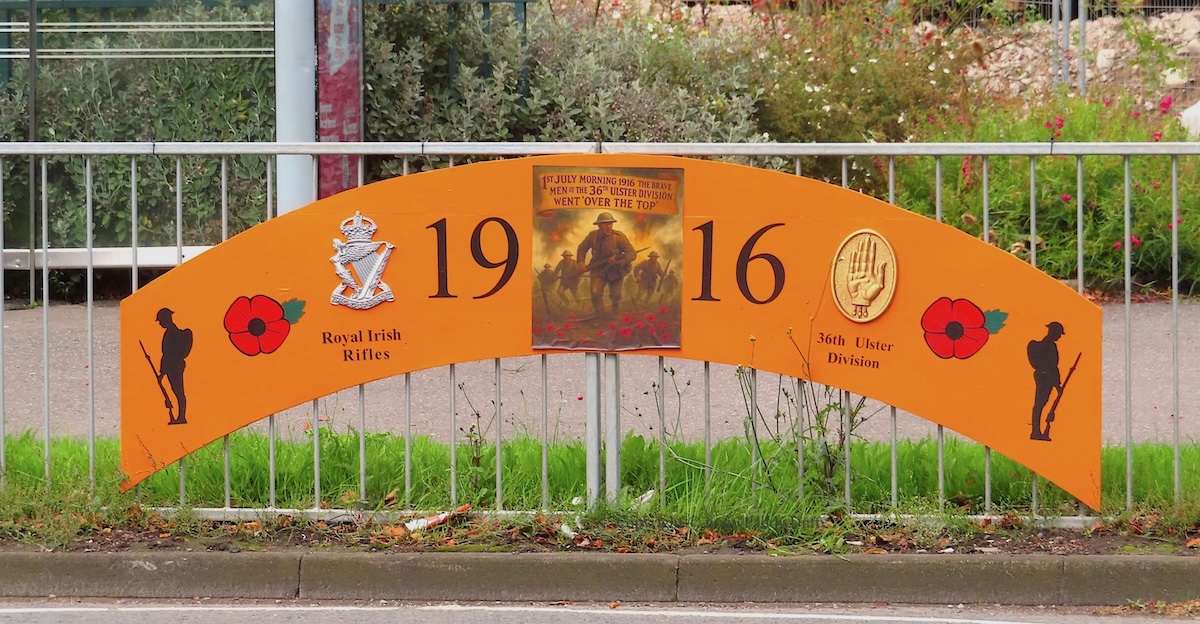
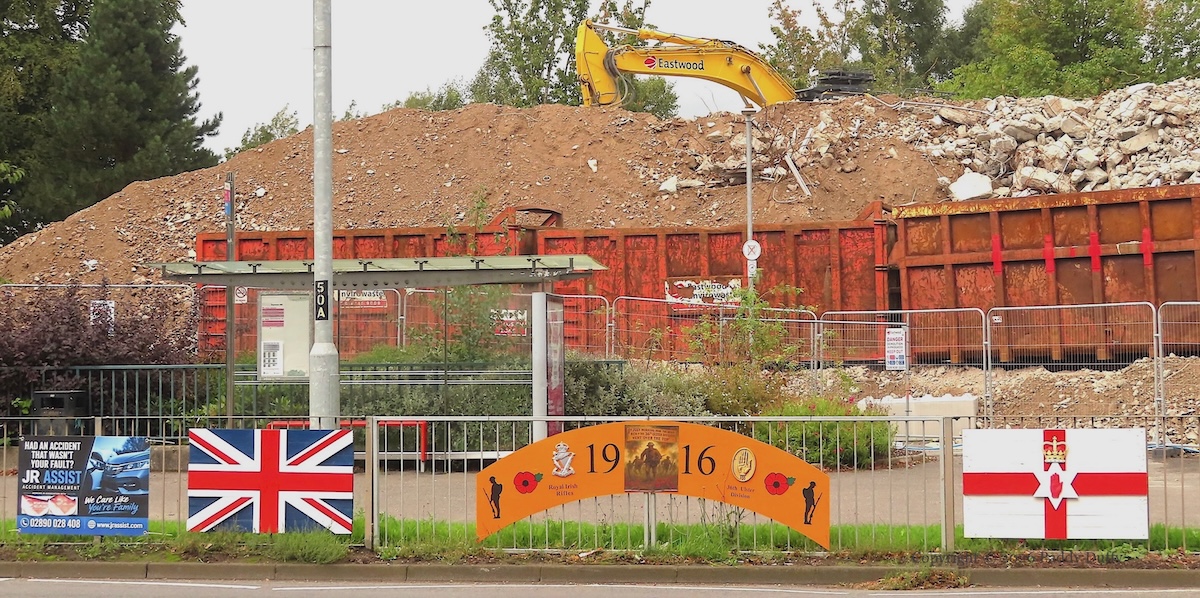
Demolition of Rathmoyne House and Coolmoyne House – the tower blocks at Seymour Hill – began in July (NIWorld | Belfast Media). Their rubble can be seen in the background of a new trio of boards on the railings, with freshly repainted Union Flag and Ulster Banner, and a new arched memorial to the dead of the Battle Of Albert on the first day of the Somme. The central poster reads, “1st July morning 1916 the brave men of the 36th (Ulster) division went over the top.” and the Maid Of Erin emblem of the Royal Irish Rifles appears on the left and the Red (right) Hand of the 36th (Ulster) Division on the right.
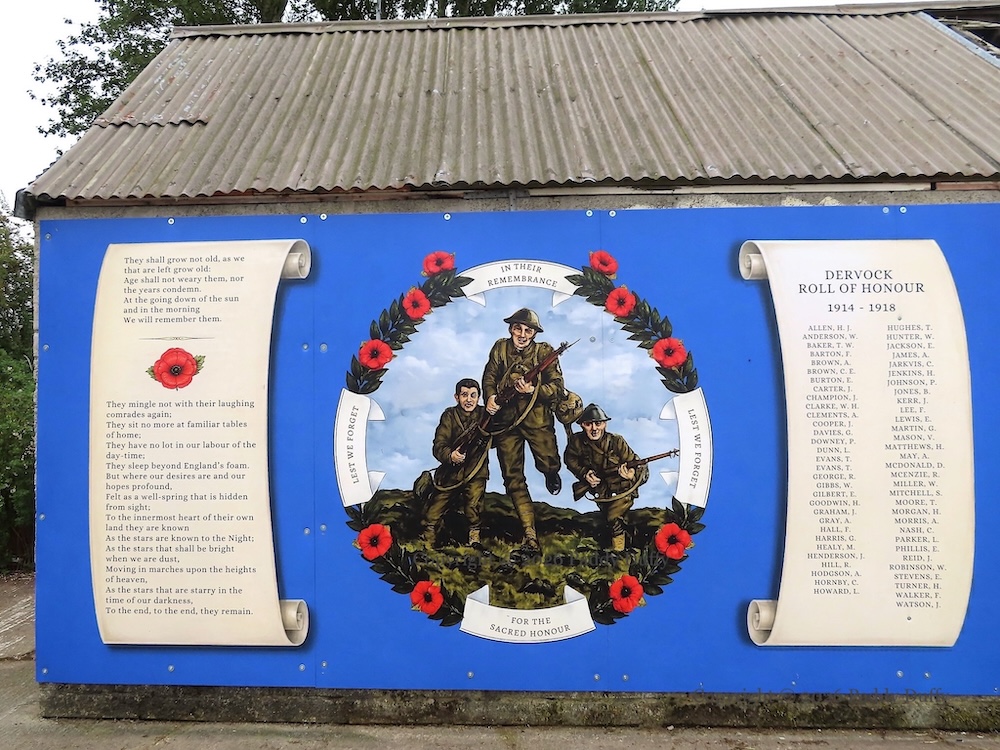
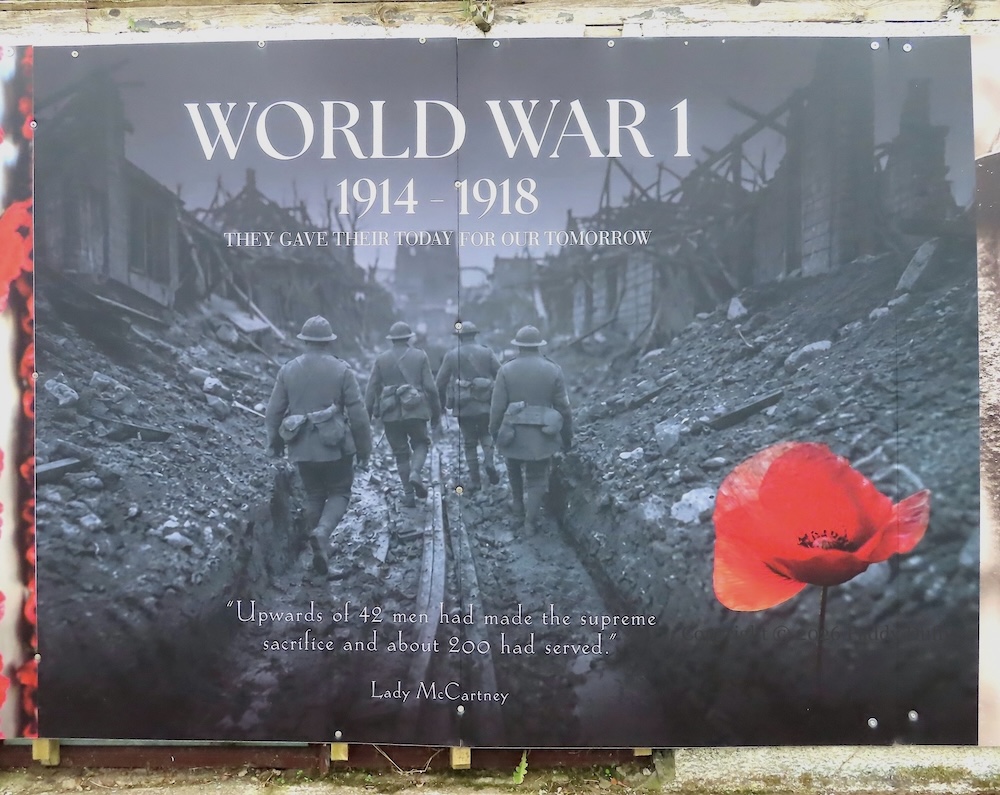
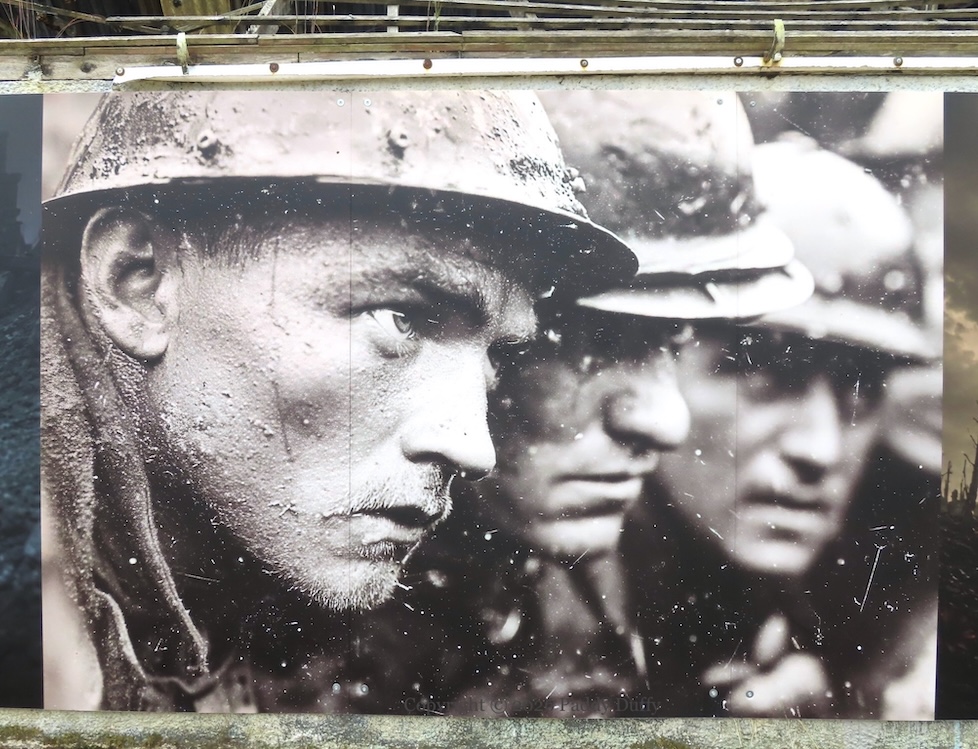
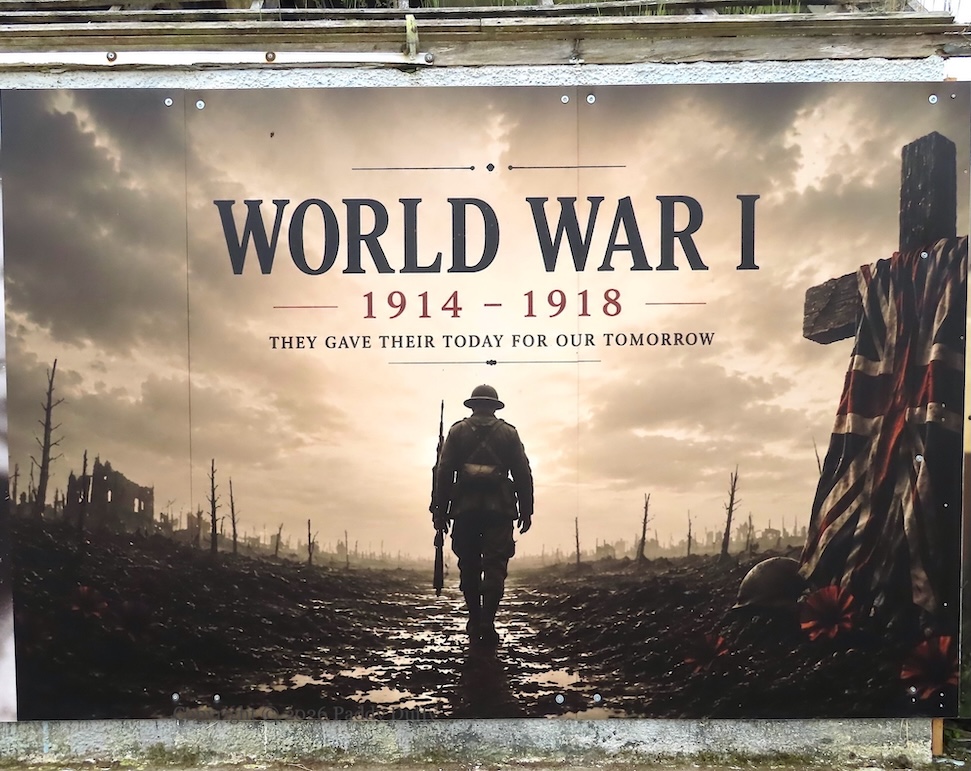
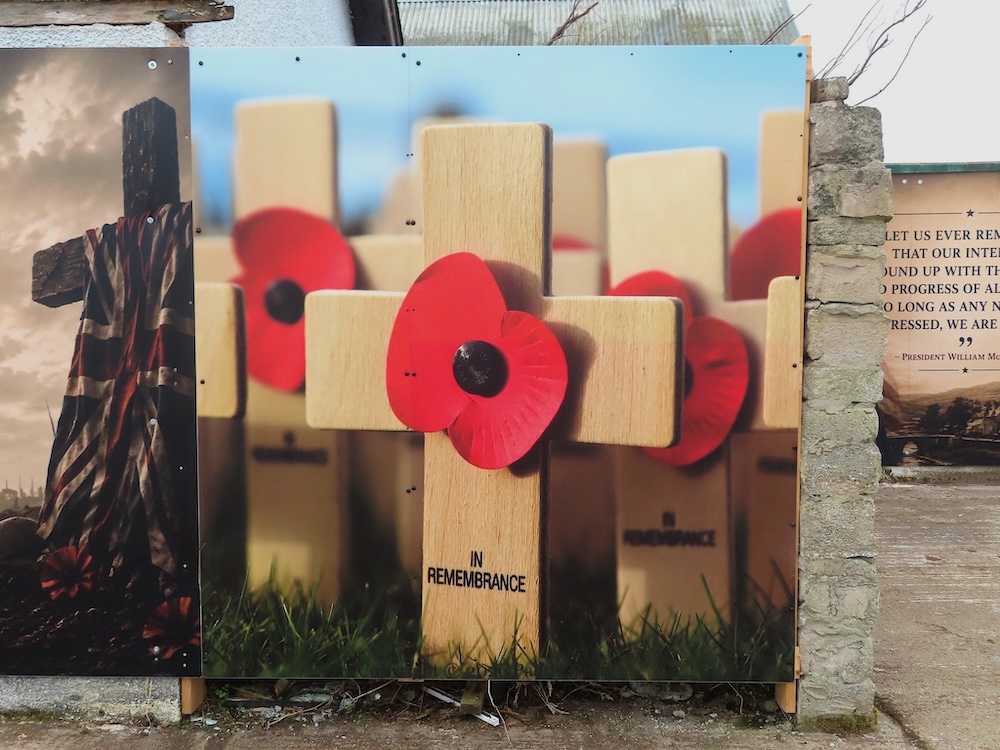
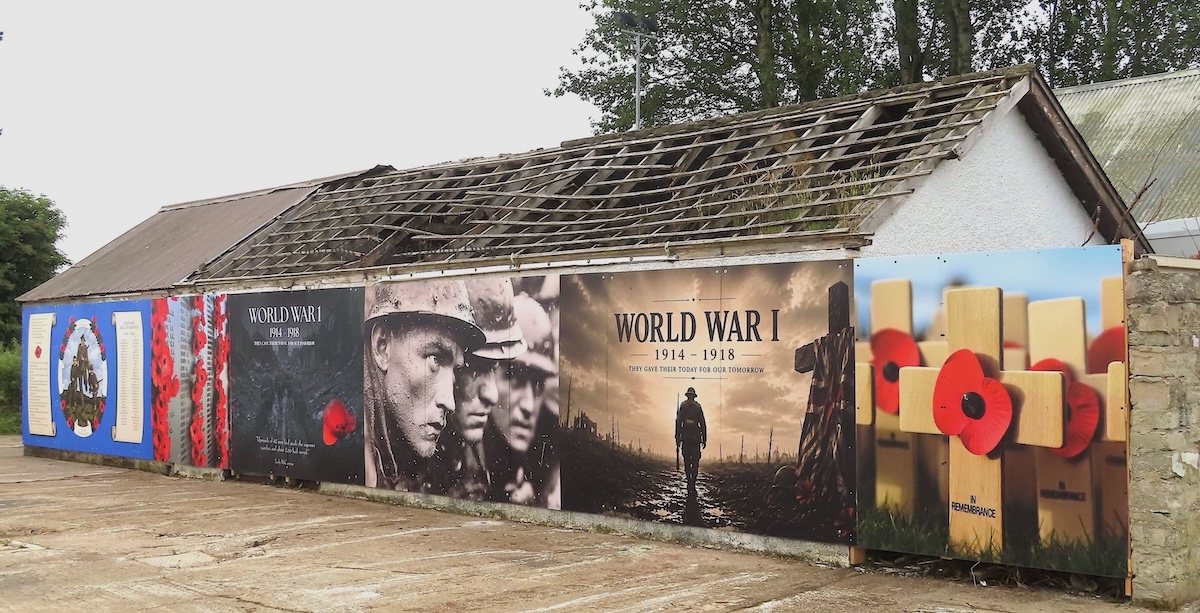
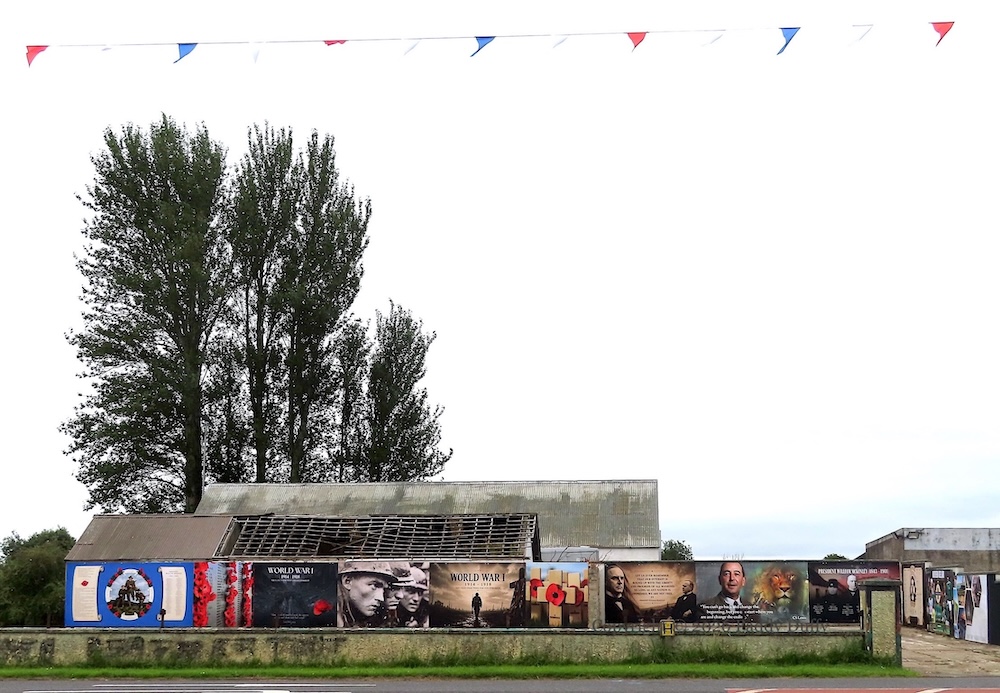
The left-hand part of this large installation in Dervock is given over to six boards commemorating the First World War and the locals who served and died in it. Sixty-two names are listed on the “roll of honour”, including the “Upwards of 42 men [who] had made the supreme sacrifice” from the roughly 200 who served – as noted by “Lady McCartney” (perhaps at the opening of the Dervock War Memorial Institute – Larne Times & Weekly Telegraph, 25th December 1922). (For the Institute, see Ulster War Memorials, which also gives a (very different) list of Dervock dead.) The central image was long ago a mural in the centre of the village – it can be seen in the plates to Bill Rolston’s Politics And Painting and as image 24 in volume one of Drawing Support.
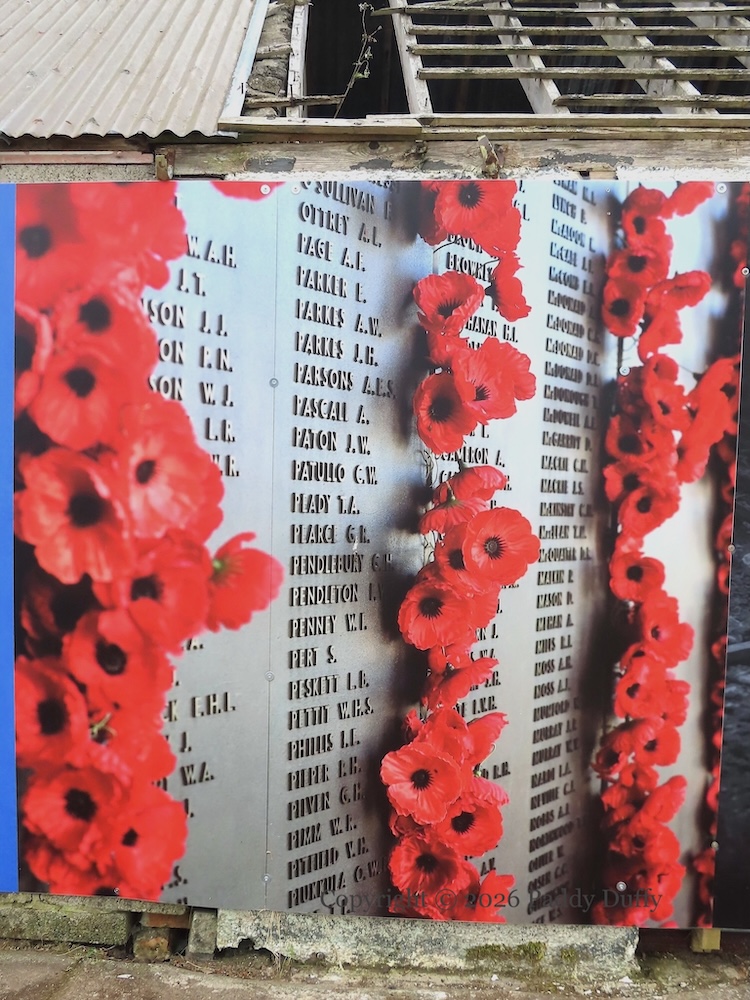
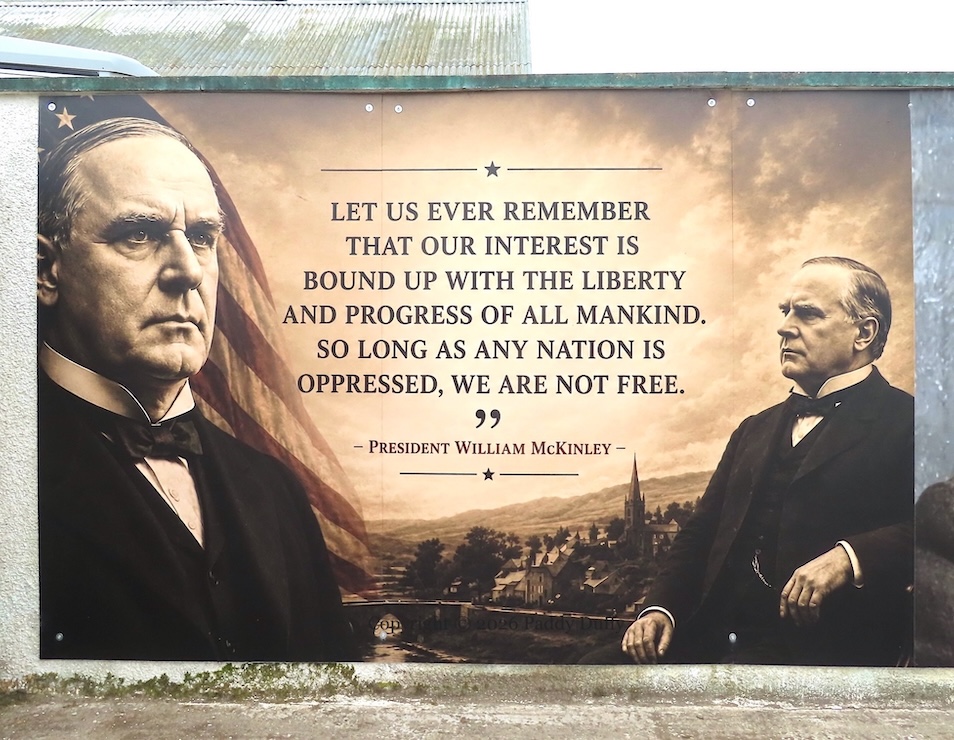
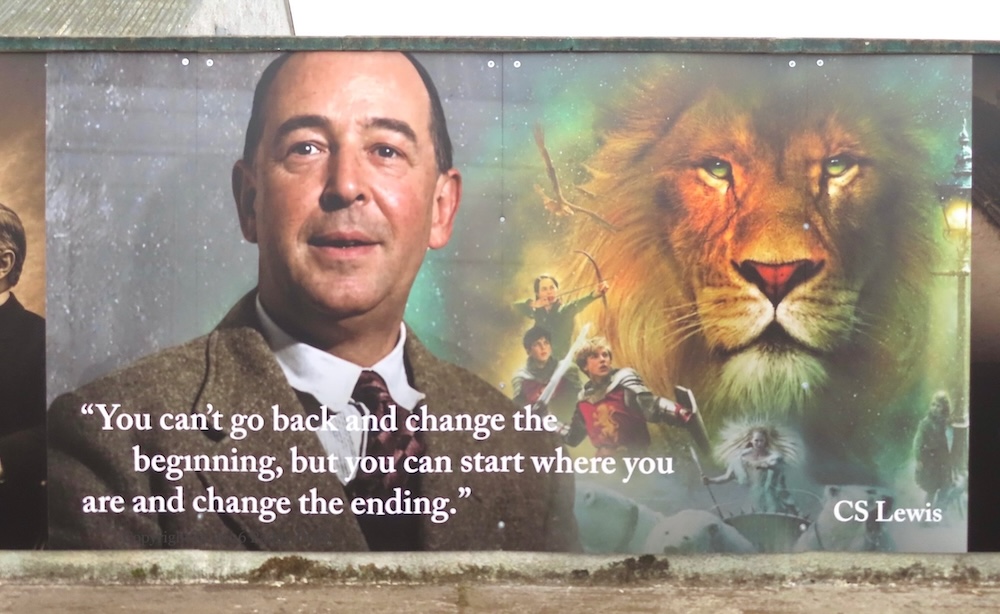
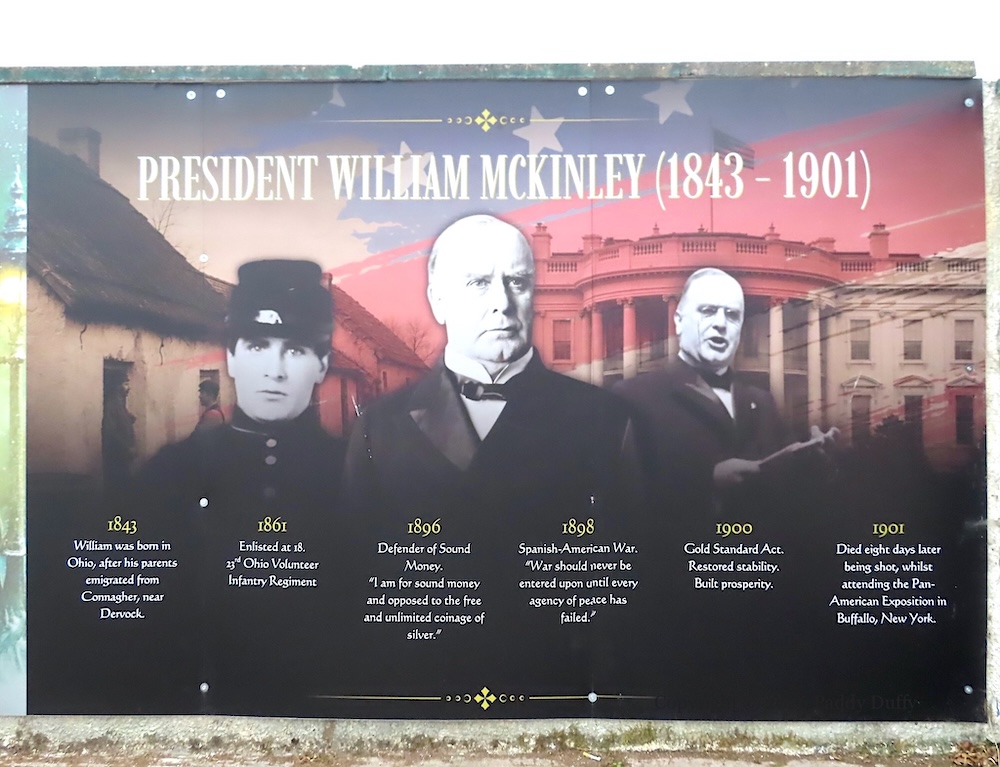
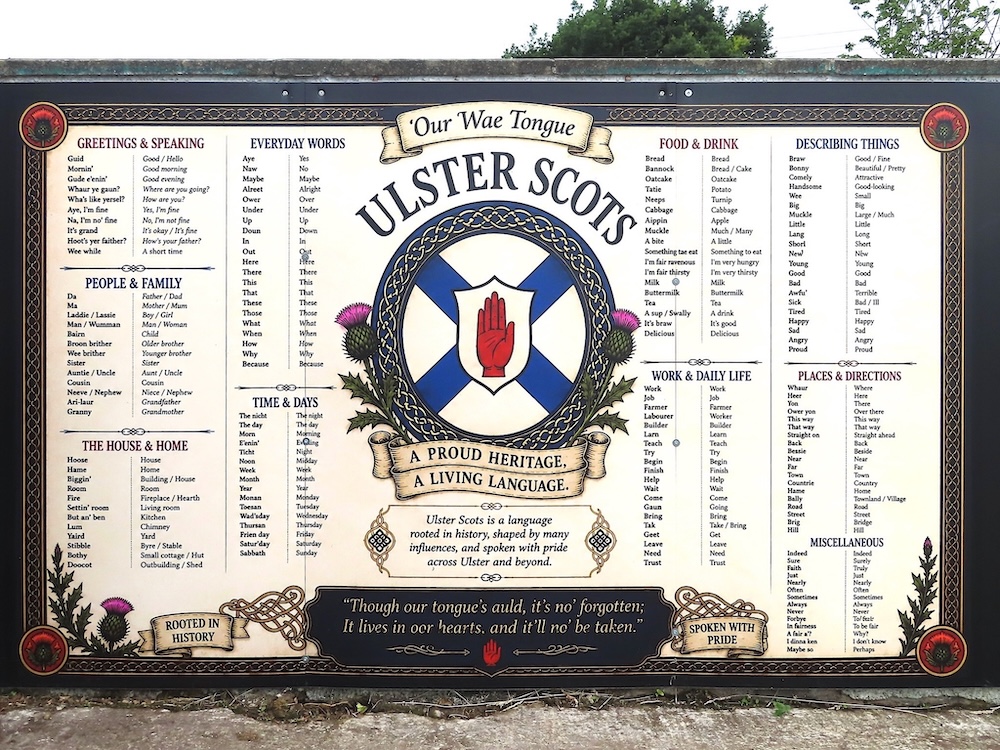
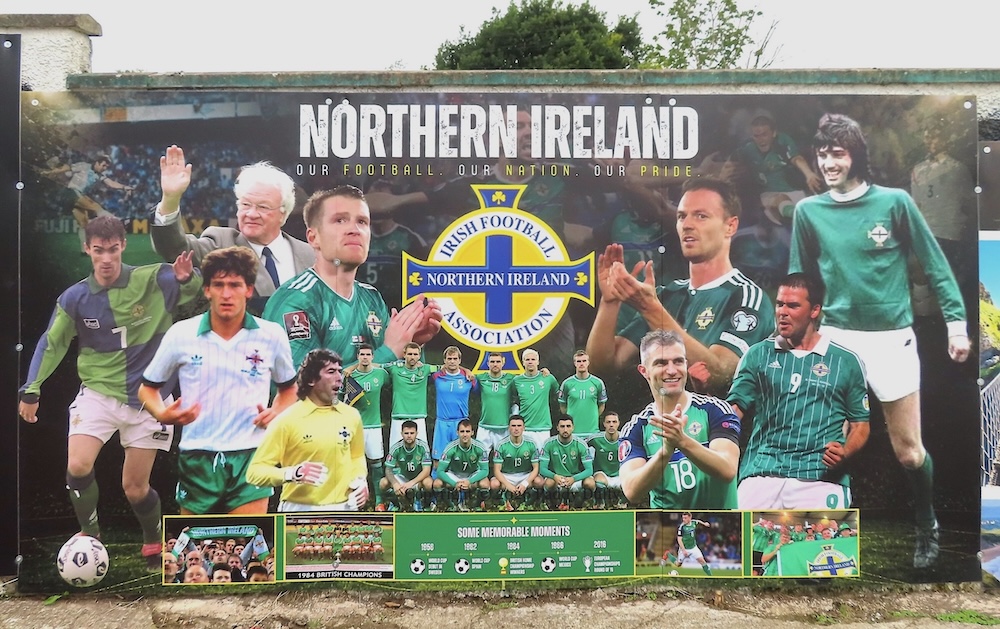
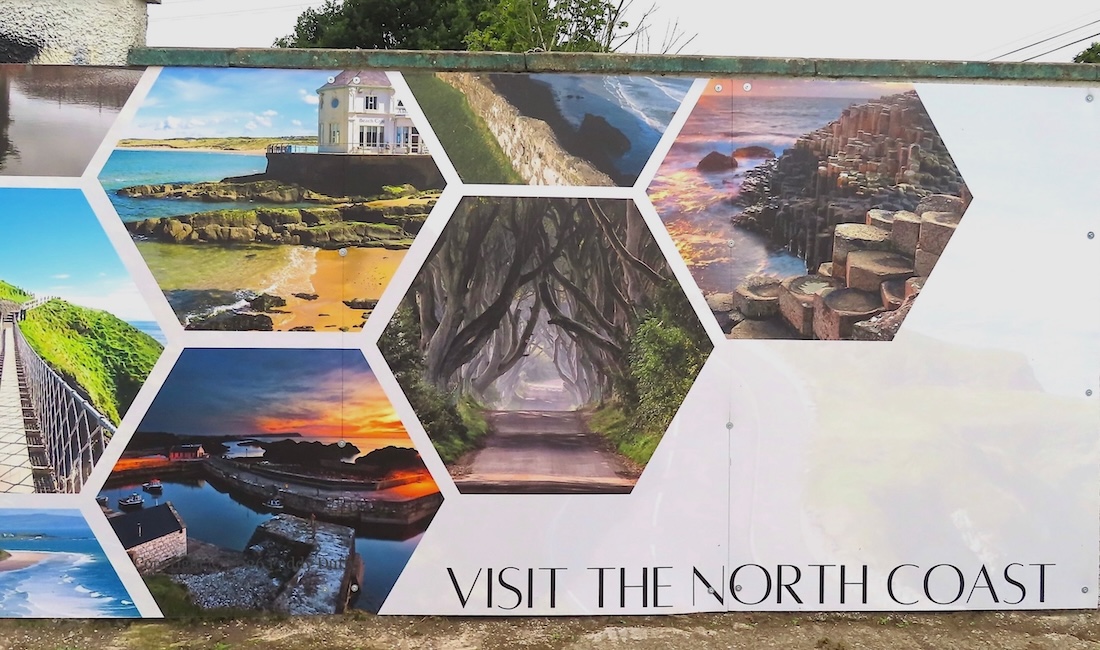
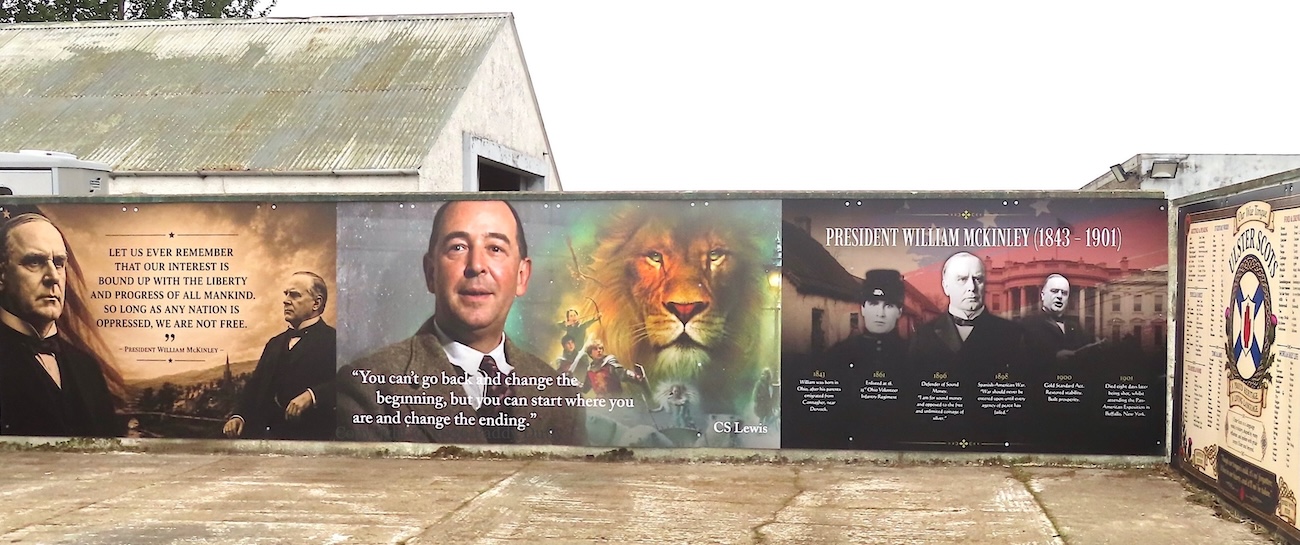
The right-hand part contains two boards about William McKinley, one to CS Lewis, one providing a small dictionary of Ulstèr-Scots words (“Our wae tongue – a proud heritage, a living language.”), one listing “memorable moments” of the Northern Ireland soccer team (“Our football. Our nation. Our pride.”), and one inviting people to “visit the north coast”.
There is no record (on-line, at least) of McKinley saying or writing, “Let us ever remember that our interest is bound up with the liberty and progress of all mankind. So long as any nation is oppressed, we are not free.” And only one of the quotations in the bio can be verified:
“President William McKinley (1843 – 1901). 1843: William was born in Ohio, after his parents [perhaps his great-great-grandfather] emigrated from Connagher [Conagher], near Dervock. 1861: Enlisted at 18. 23rd Ohio Volunteer Infantry Regiment. [The American Civil War] 1896: Defender of Sound Money [i.e. the Gold Standard]. “I am for sound money and opposed to the free and unlimited coinage of silver.” [“sound money” was a campaign slogan; the remainder can be found in the Republican policy platform of 1900] 1898: Spanish-American War. “War should never be entered upon until every agency of peace has failed.” [From the first inaugural, 1897, and so not in response to the Spanish-American War; Congress declared war despite McKinley’s reticence] 1900: Gold Standard Act. Restored stability. Built prosperity. 1901: Died eight days later [sic, “after”] being shot, whilst attending the Pan-American Exposition in Buffallo [sic] New York.”
See also: the Visual History page on Ulster-Scots murals.
CS Lewis did not say or write, “You can’t go back and change the beginning, but you can start where you are and change the ending.” (CS Lewis)
Knock Road, Dervock, with support from Causeway Policing And Community Safety Partnership (Causeway PCSP) and the Causeway Coast & Glens borough council’s Good Relations team. Unveiled July 2nd, 2026.
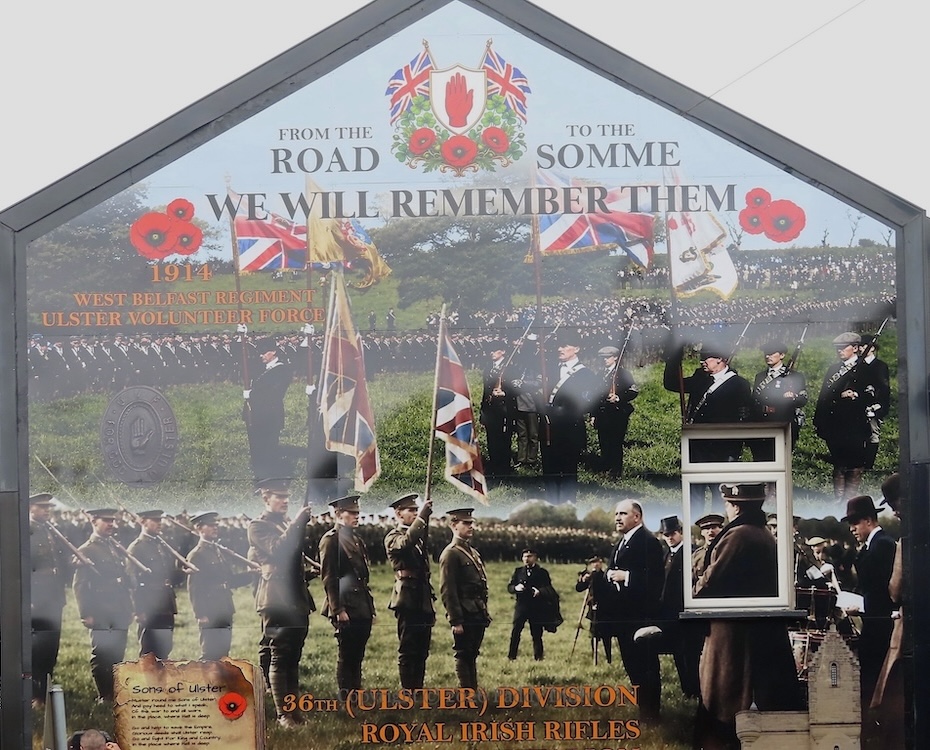
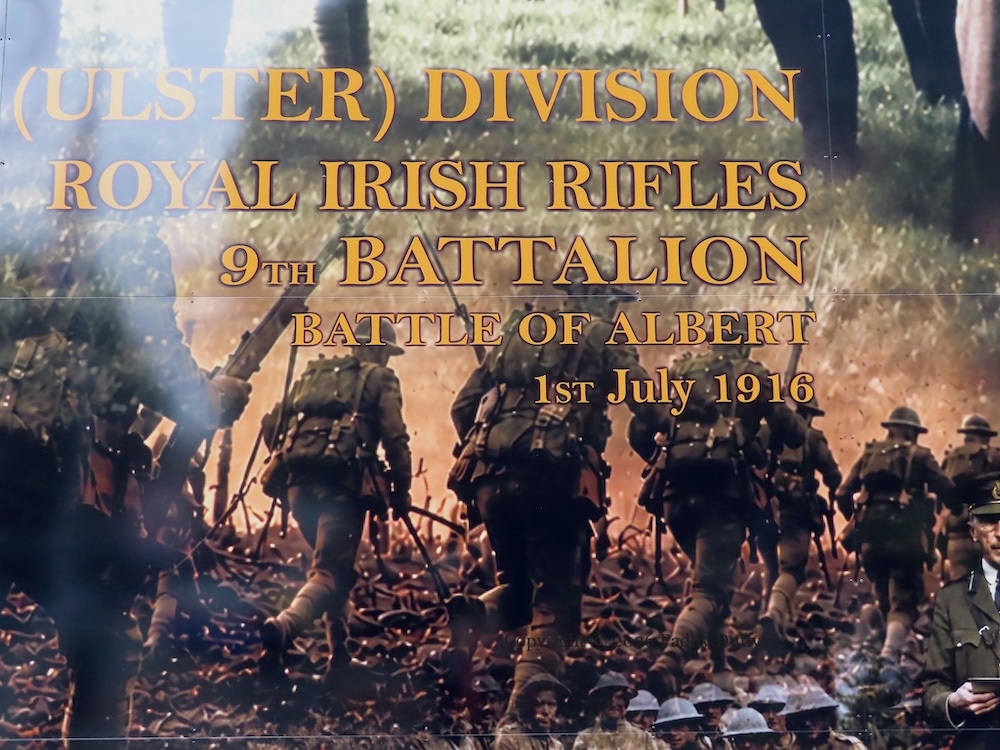
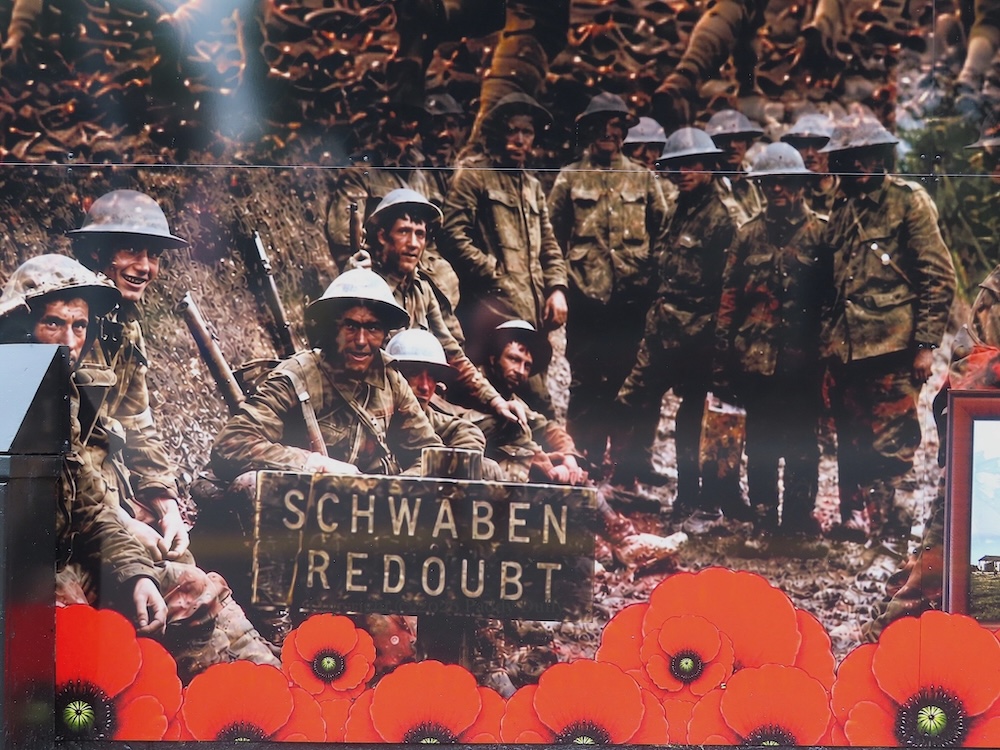
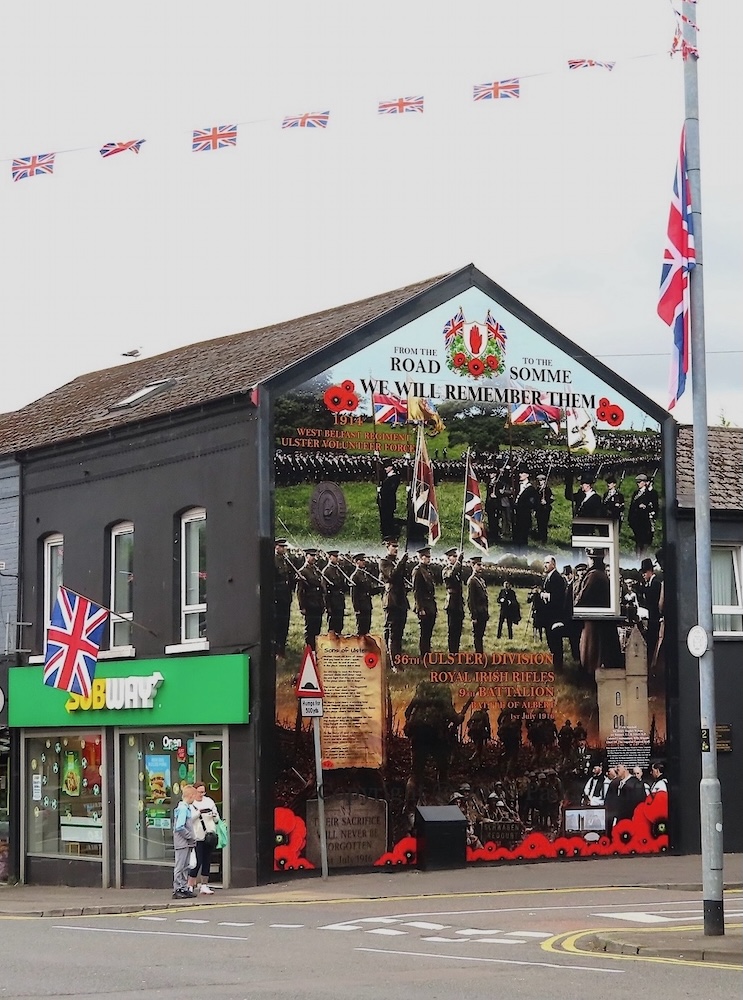
“1914 West Belfast regiment, Ulster Volunteer Force – 36th (Ulster) division, Royal Irish Rifles.” Men from the West Belfast Ulster Volunteers – which included the Shankill and Woodvale areas – joined the 9th battalion of the Royal Irish Rifles, which became part of the 107th brigade of the 36th division.
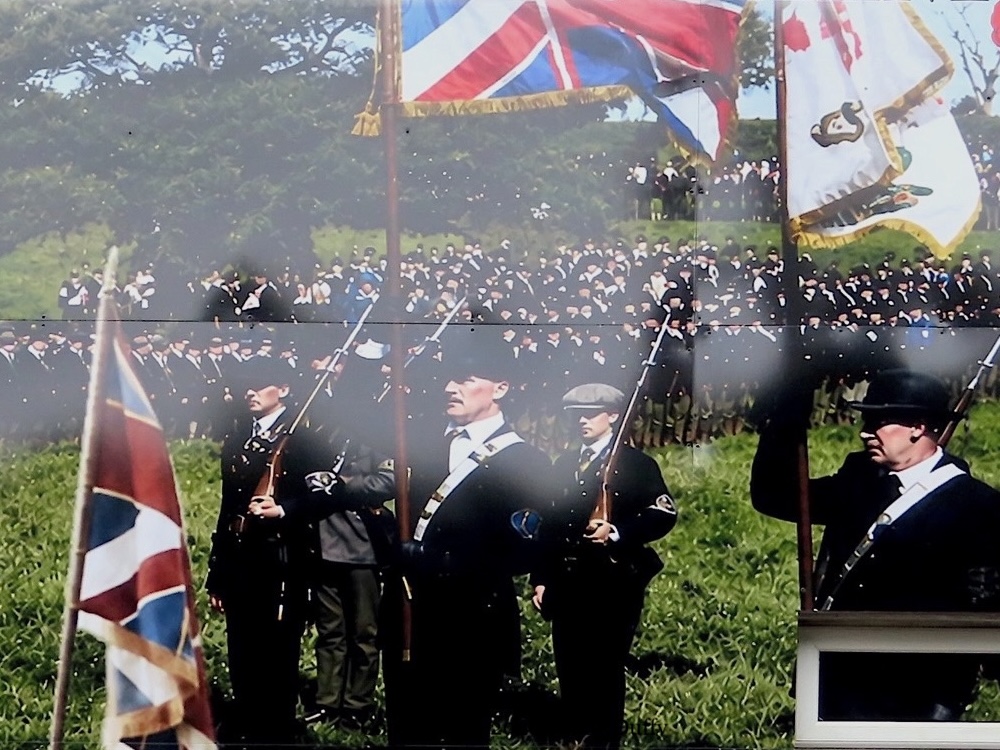
The main part of this new gable-sized board places two colourised photographs on top of each other. The first (upper) photo shows shows the first and second battalions of the West Down regiment being presented with their colours in May, 1914 (CyberProd). The second (lower) photo shows the first and second battalions of the West Belfast regiment receiving the Kings colours in May, 1914 (CyberProd).
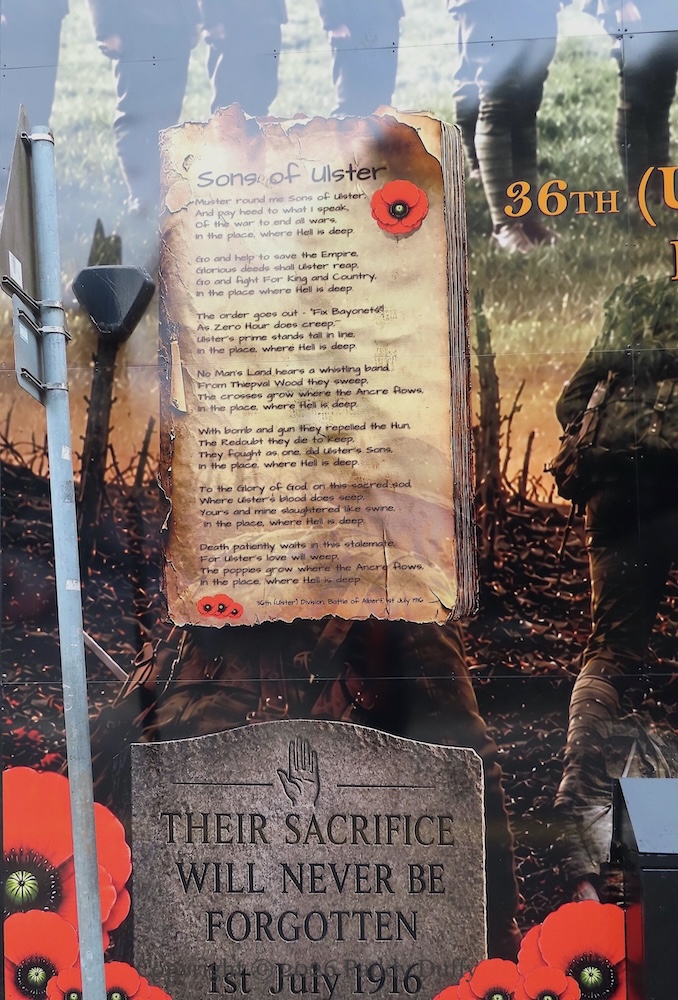
In the bottom left corner is a poem called “Sons of Ulster” written on a scroll: “Muster round me Sons of Ulster,/And pay heed to what I speak,/Of the war to end all wars,/In the place where hell is deep.//Go and help to save the Empire,/Glorious deeds shall Ulster reap./Go and fight for King and Country,/In the place where hell is deep.//The order goes out – “Fix Bayonets!”/As Zero Hour does creep,/Ulster’s prime stands tall in line,/In the place where hell is deep.//No-Man’s Land hears a whistling band,/From Thiepval Wood they sweep./The crosses grow where the Ancre flows,/In the place where hell is deep.//With bomb and gun they repelled the Hun,/The Redoubt they die to keep./They fought as one did Ulster’s Sons,/In the place where hell is deep.//To the Glory of God on this sacred sod,/Where Ulster’s Blood does seep,/Yours and mine slaughtered like swine,/In the place where hell is deep.//Death patiently waits in this stalemate,/For Ulster’s love will weep,/The poppies grow where the Ancre flows,/In the place where hell is deep.”
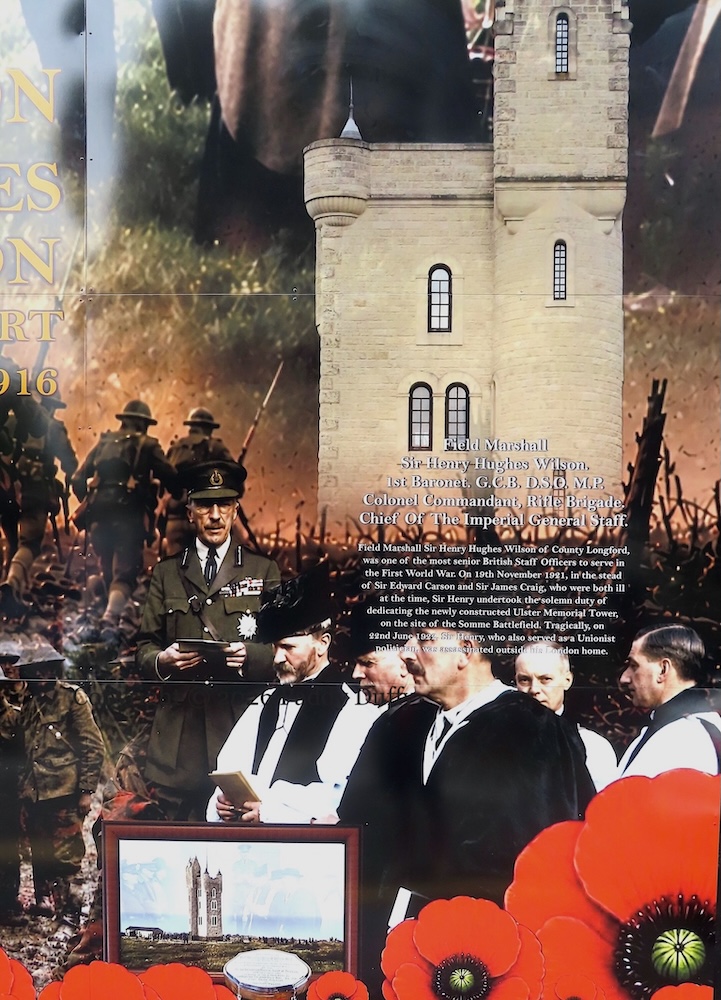
In the bottom right, the Ulster Tower is dedicated: “‘Field Marshall Sir Henry Hughes Wilson, 1st Baronet, GCB, DSO, MP, Colonel Commandant, Rifle Brigade, Chief Of The Imperial General Staff. Field Marshall Sir Henry Hughes Wilson of County Longford, was one of the most senior British Staff Officers to serve int he First World War. On 18th November 1921, in the stead of Sir Edward Carson and Sir James Craig, who were both ill at the time, Sir Henry undertook the solemn duty of dedicating the newly constructed Ulster Memorial Tower, on the site of the Somme battlefield. Tragically, on 22nd June 1922, Sir Henry, who also served as a Unionist politician, was assassinated outside his London home.”
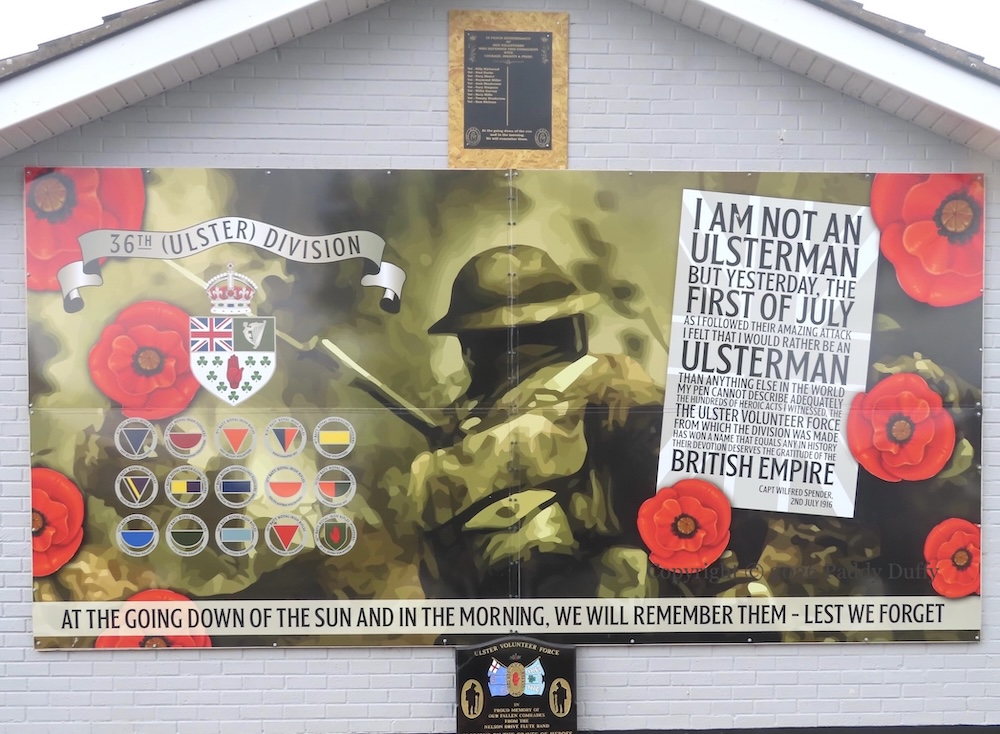
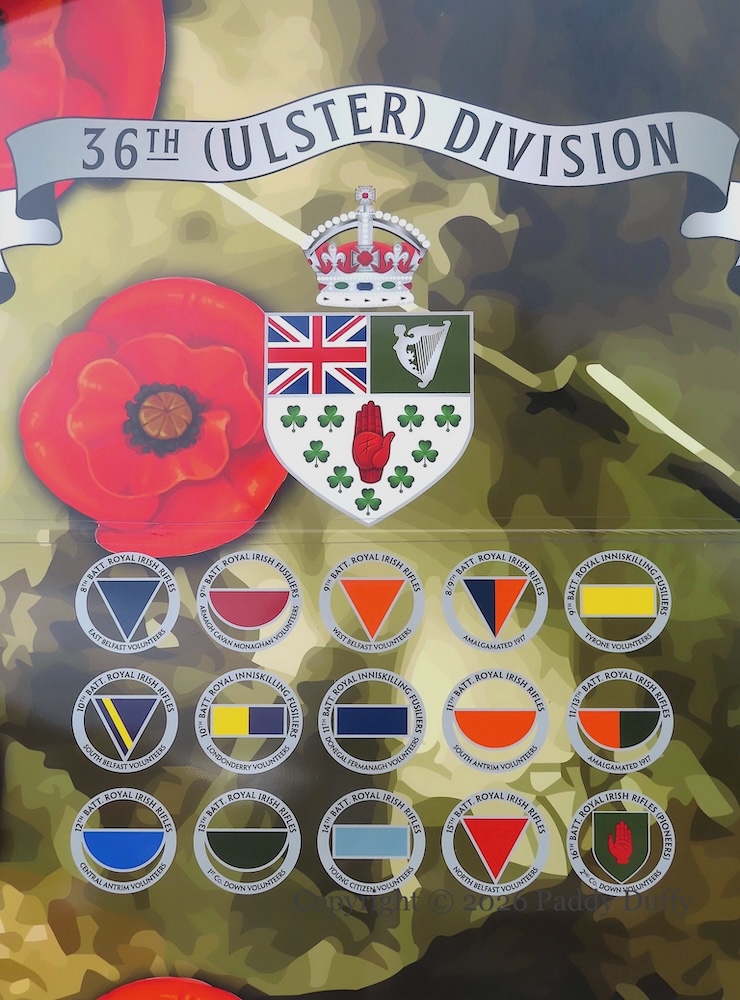
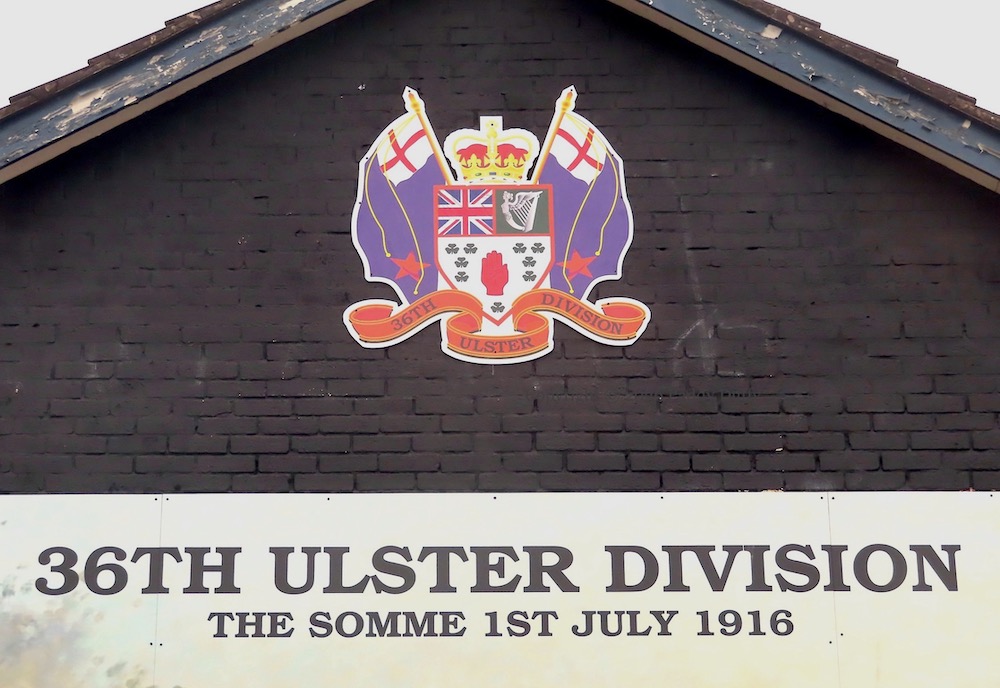
Conway Street, Shankill, west Belfast, replacing Ulster Tower.
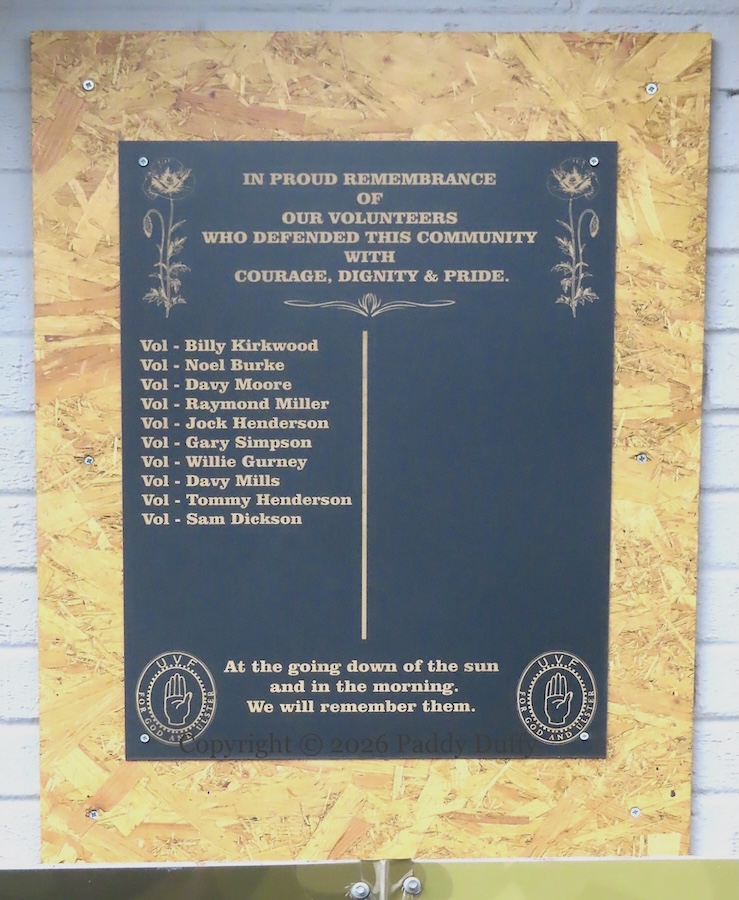
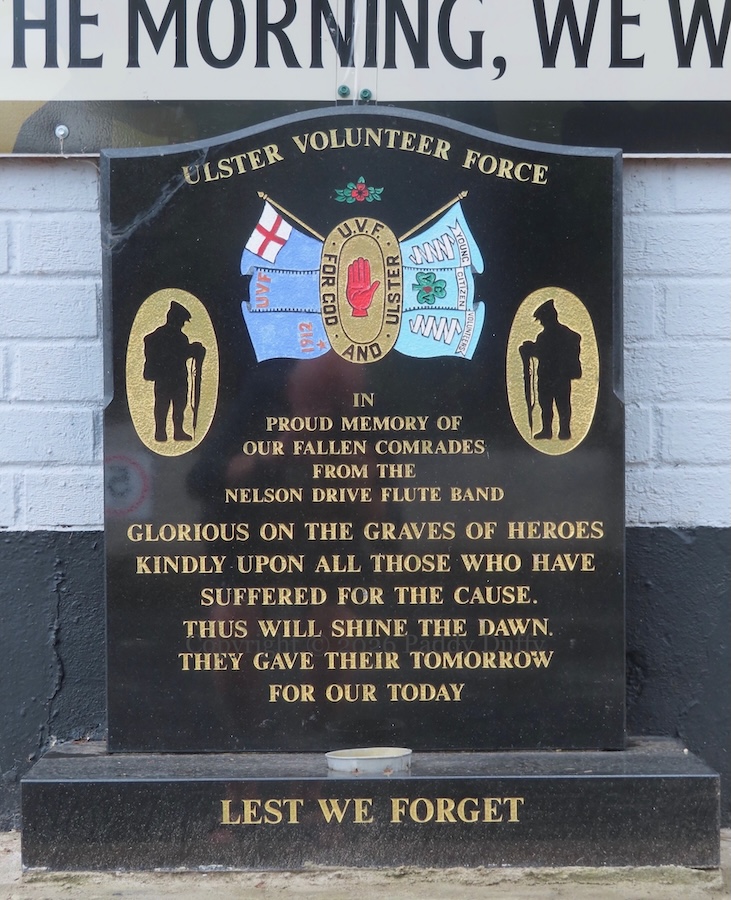
A UVF roll of honour has been added in the apex above the small memorial garden (now reduced to a single stone) in the Caw, Londonderry: “In proud remembrance of our volunteers who defended this community with courage, dignity & pride: Billy Kirkwood, Noel Burke, Davy Moore, Raymond Miller, Jock Henderson, Gary Simpson, Willie Gurney, Davy Mills, Tommy Henderson, Sam Dickson”. None of these appear to have died during the Troubles itself. There was previously a plaque to four volunteers who died in 1975.
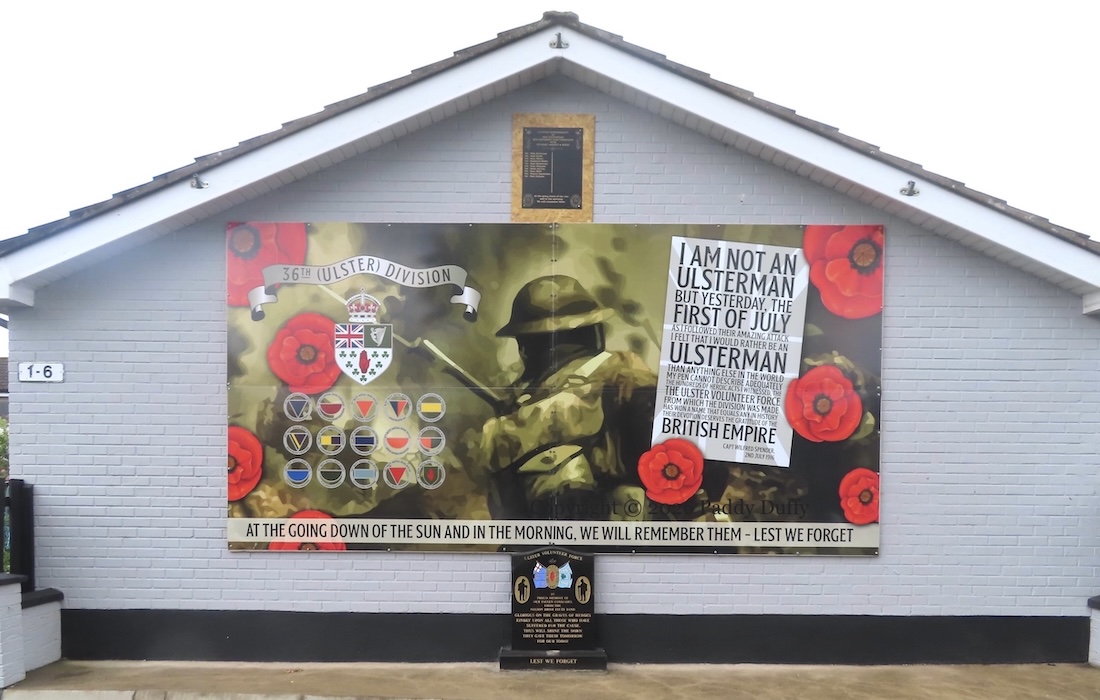
And Wilfrid Spender’s report on the 36th Division on the first day of the battle at the Somme (July 1st, 1916) is on the right – for the text, see Their Amazing Attack.
Sperrin Park, Caw, Londonderry, replacing Undefeated.
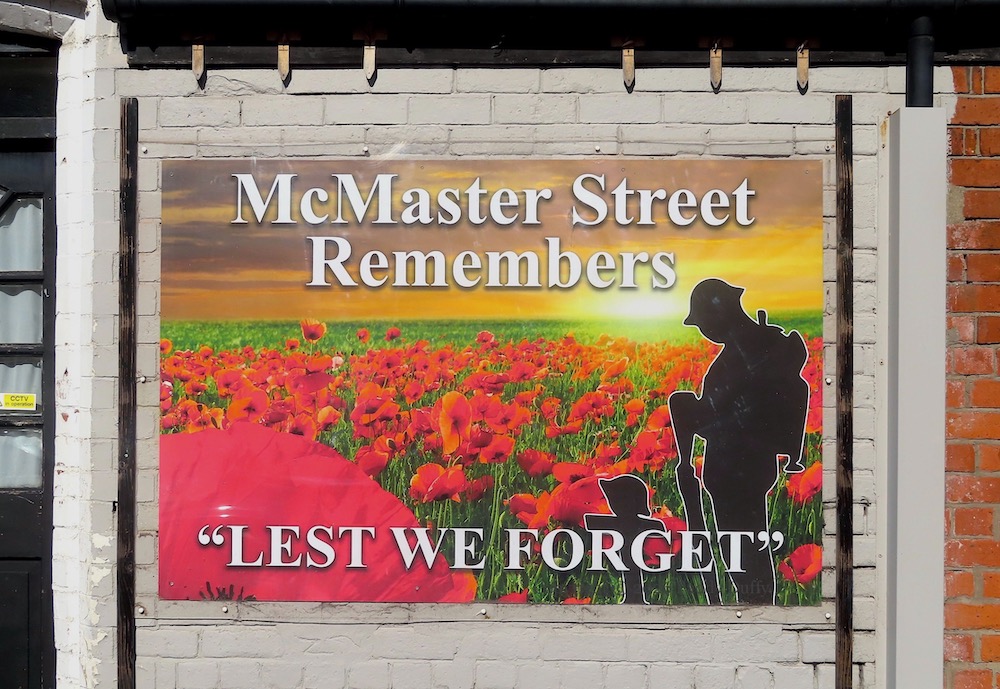
McMaster and Lendrick streets – part of a conservation site of Victorian terraced houses (Dept For Communities) – were the epicentre of last week’s anti-immigration riots, with cars and houses in the street set ablaze and families evacuated to safety by the security forces (BBC video).
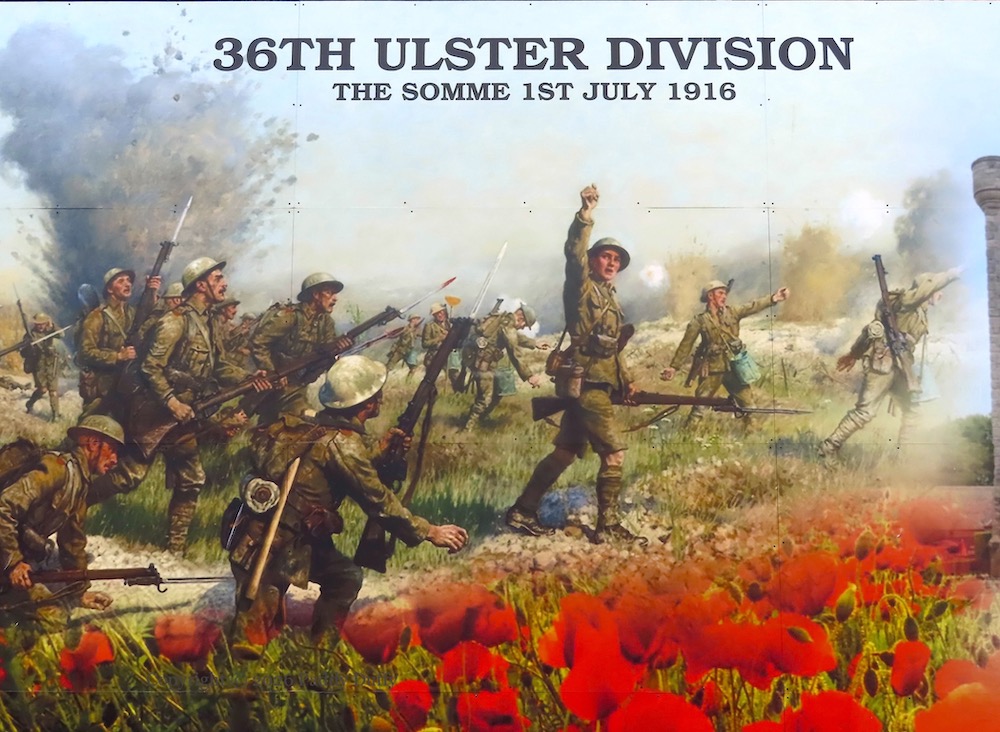
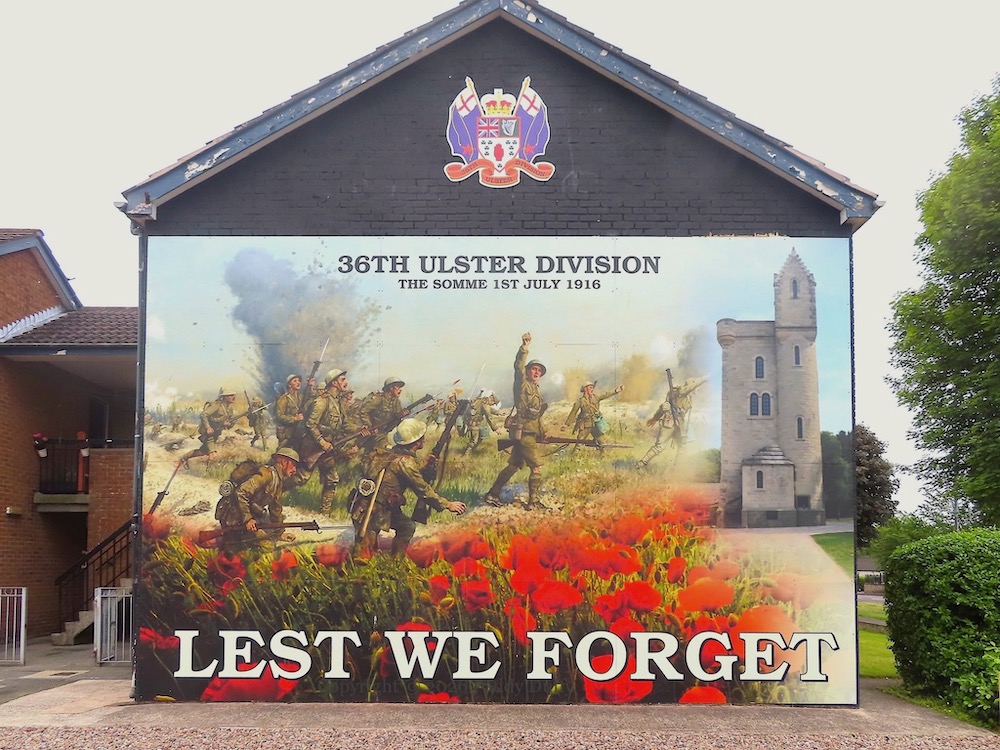
“Lest we forget.” JP Beadle’s painting “Battle Of The Somme: Attack Of The Ulster Division” shows soldiers of the 36th Division bravely going to their death on July 1st, 1916. The original painting hangs in Belfast City Hall (militaryprints.com). In the board shown here, a foreground of poppies has been added, along with the Ulster Tower in Thiepval, France, on the right.
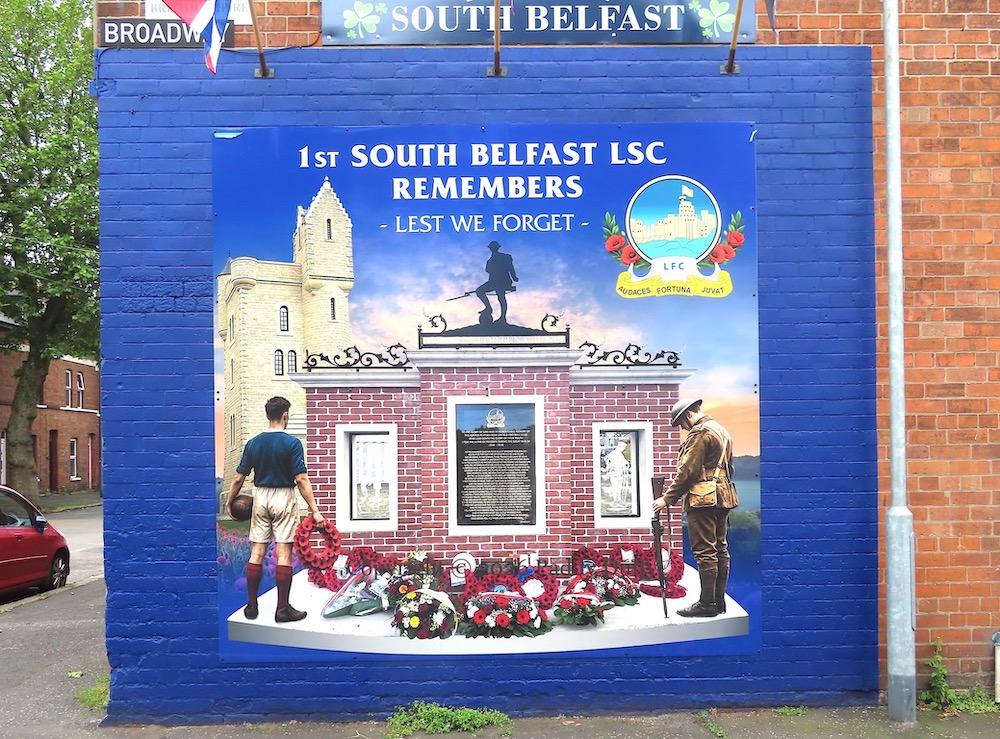
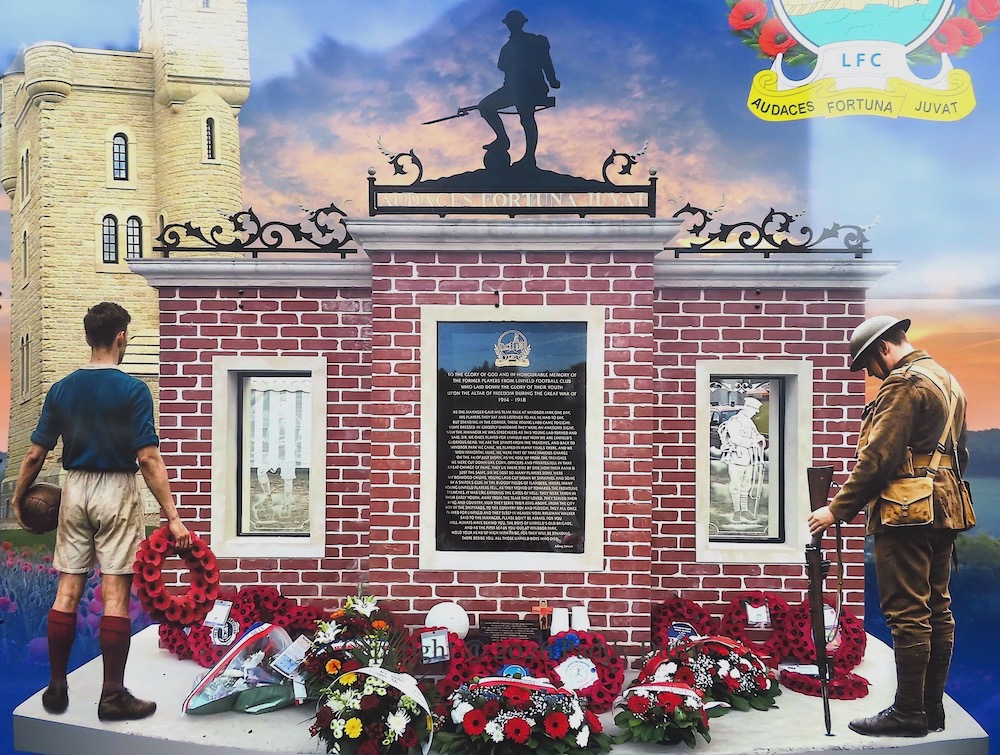
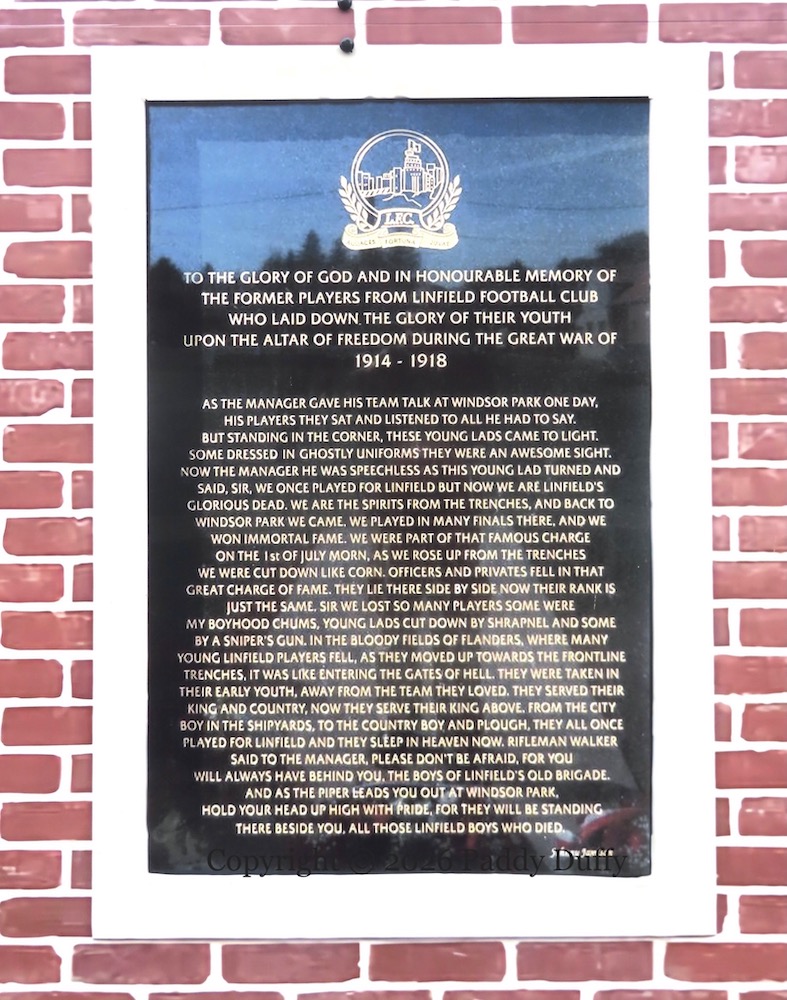
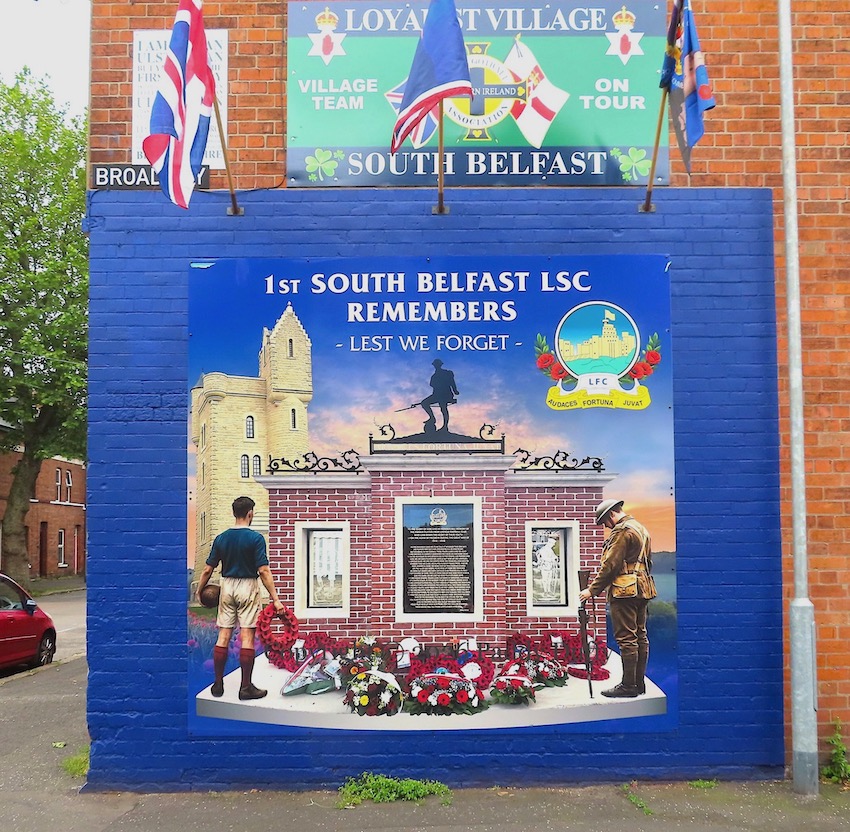
“1st south Belfast LSC [Fb] remembers. Lest we forget.” “To the glory of God and in honourable memory of the former players from Linfield Football Club who laid down the glory of their youth upon the altar of freedom during the Great War of 1914 – 1918.
The main part of this new board in the Village shows the Linfield memorial at Bertrancourt, France. The memorial was unveiled in 2022 (BBC). The BBC article explains the reference to “Rifleman Walker” in the poem by Johnny Jamison at the centre of the memorial: Walker had been a Linfield player before joining the Royal Irish Rifles and dying on May 6th, 1916. Jamison recites his poem in this Fb video. In the background is the familiar Ulster Tower.
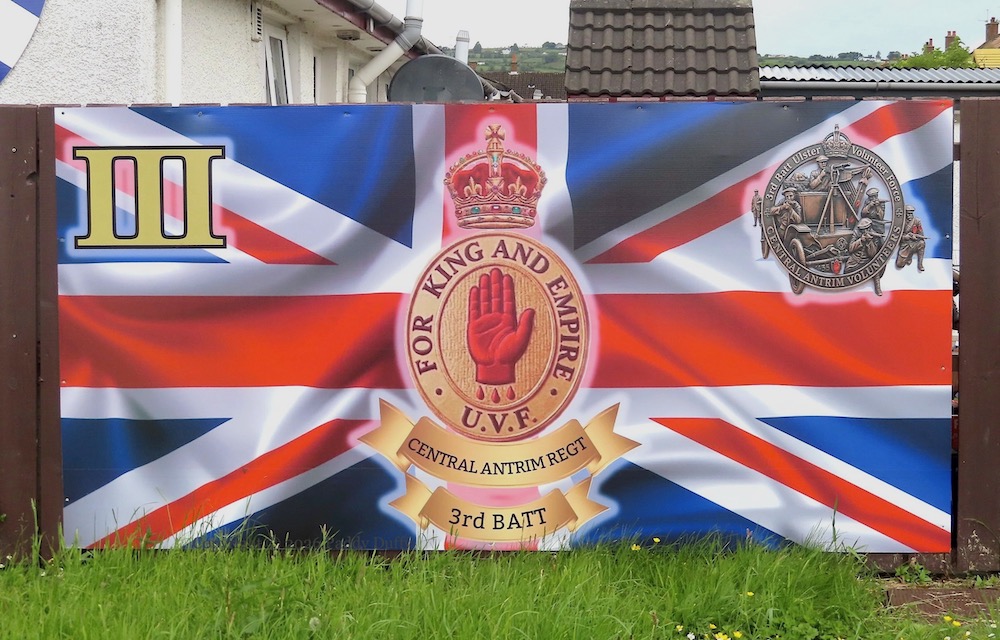
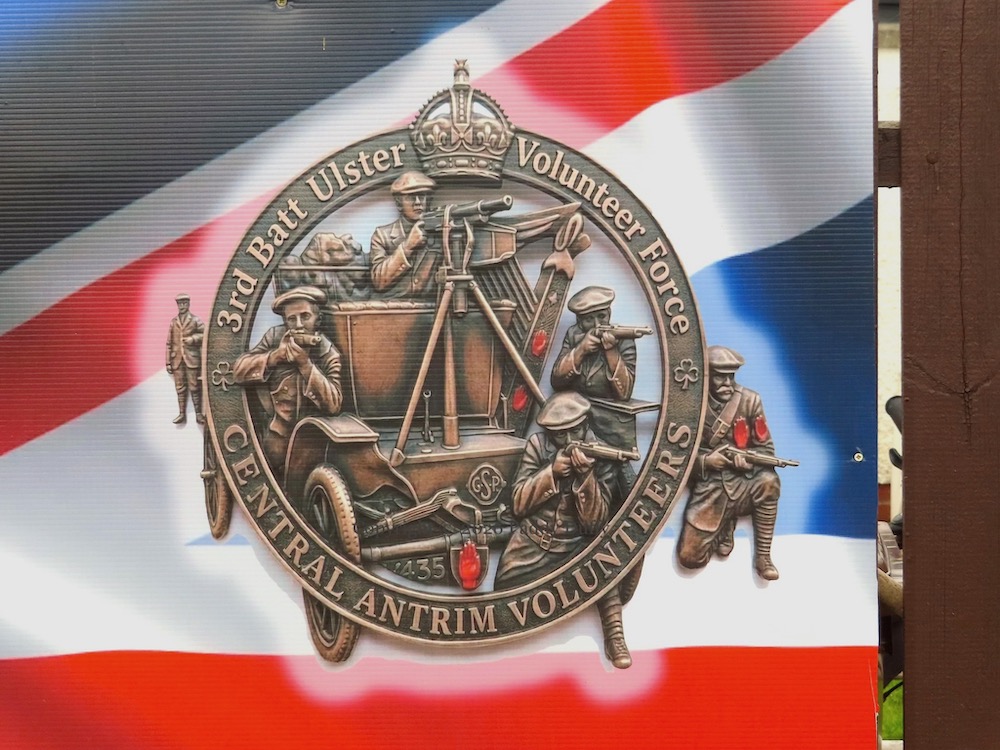
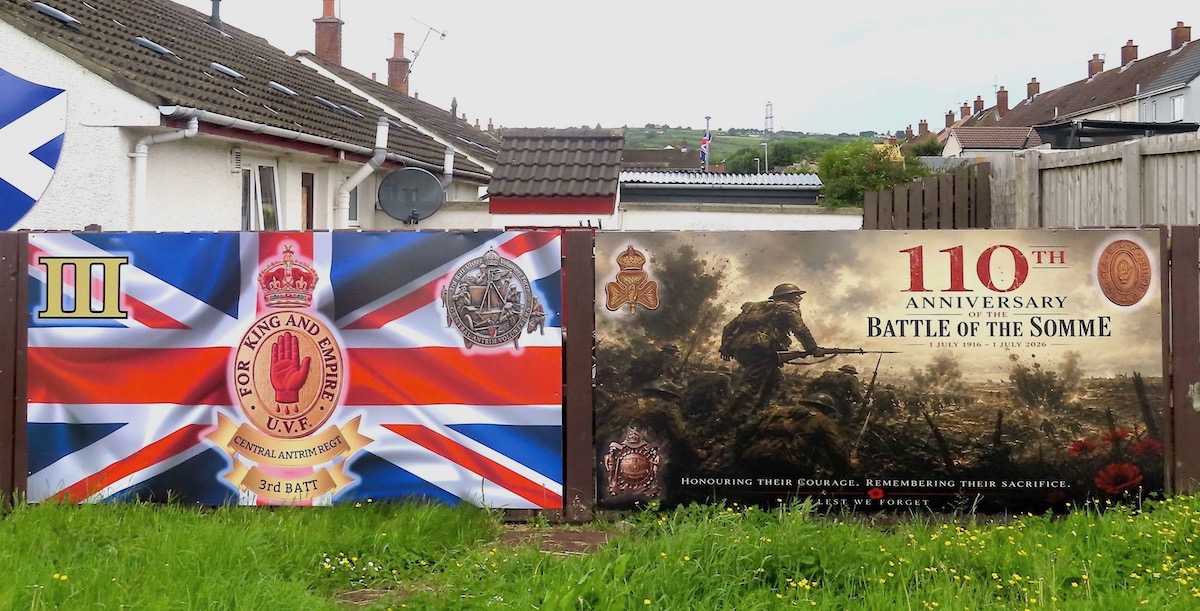
The colours of the third (Carrickfergus) battalion of the Central Antrim regiment of the Ulster Volunteers can be seen at Sam’s Flags. They are very similar to the piece shown above, except for the addition of the emblem in the top right corner (close-up immediately below) which shows the Ulster Volunteers drilling with a machine-gun mounted in a car, preparing to resist Home Rule – see this 1988 mural and the photograph in this History Ireland article. (See also UVF Motor Car Corps.) In the Royal Irish Rifles of WWI, however, Central Antrim became the 12th battalion (War Time Memories Project).
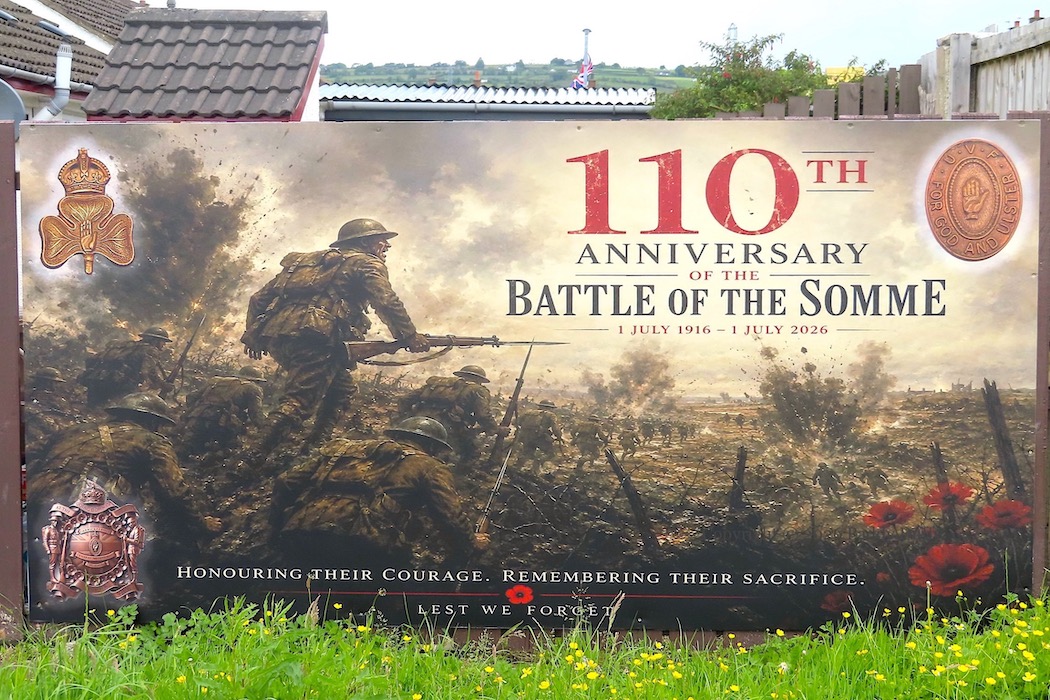
Next to the Central Antrim flag is a board marking the “110th anniversary of the Battle Of The Somme 1 July 1916 – 1 July 2026. Honouring their courage, remembering their sacrifice. Lest we forget.”
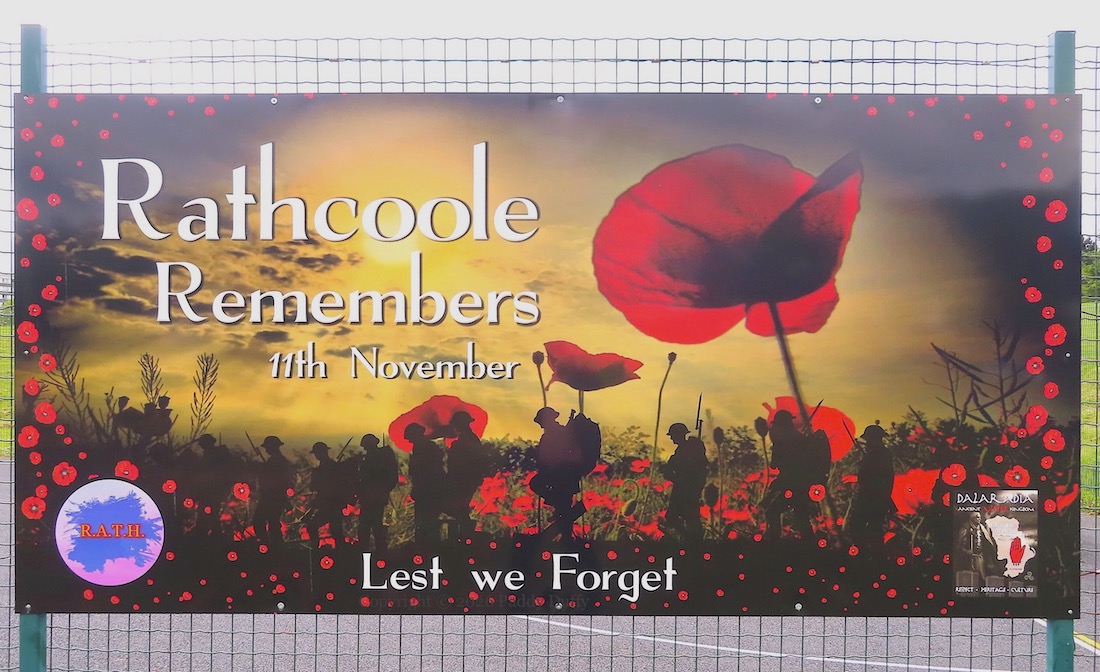
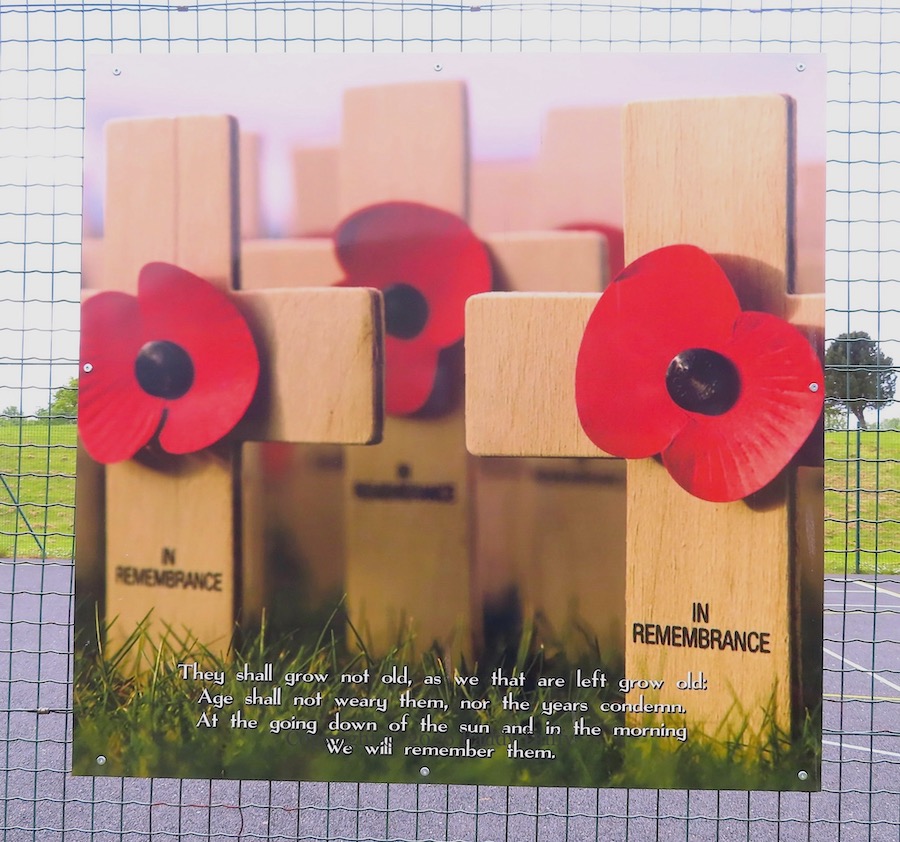
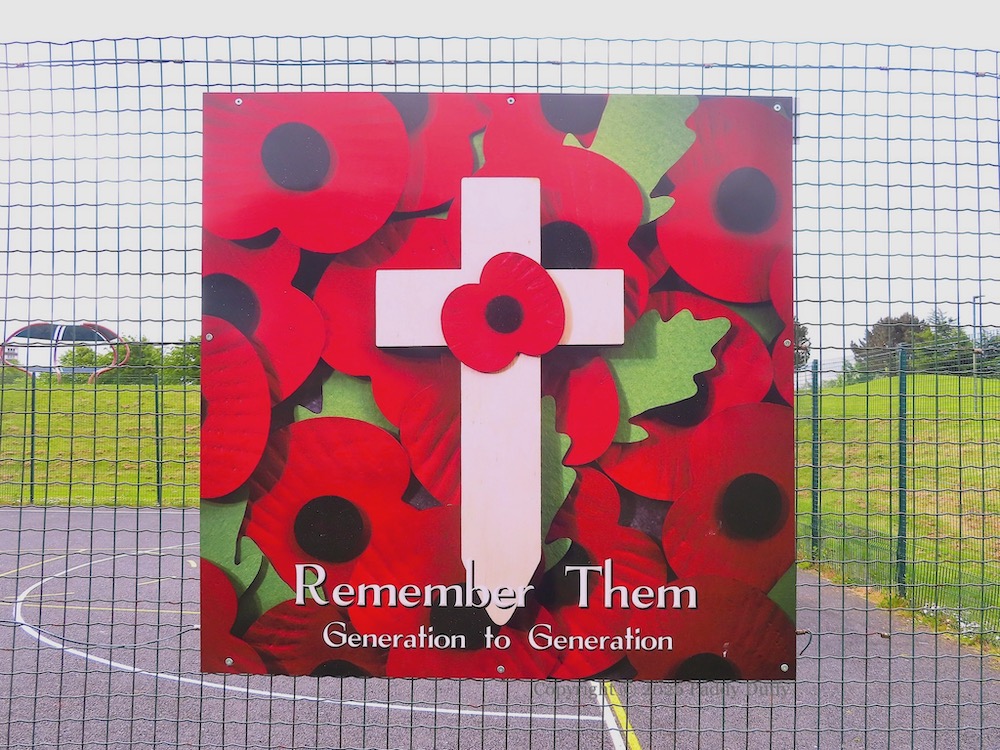
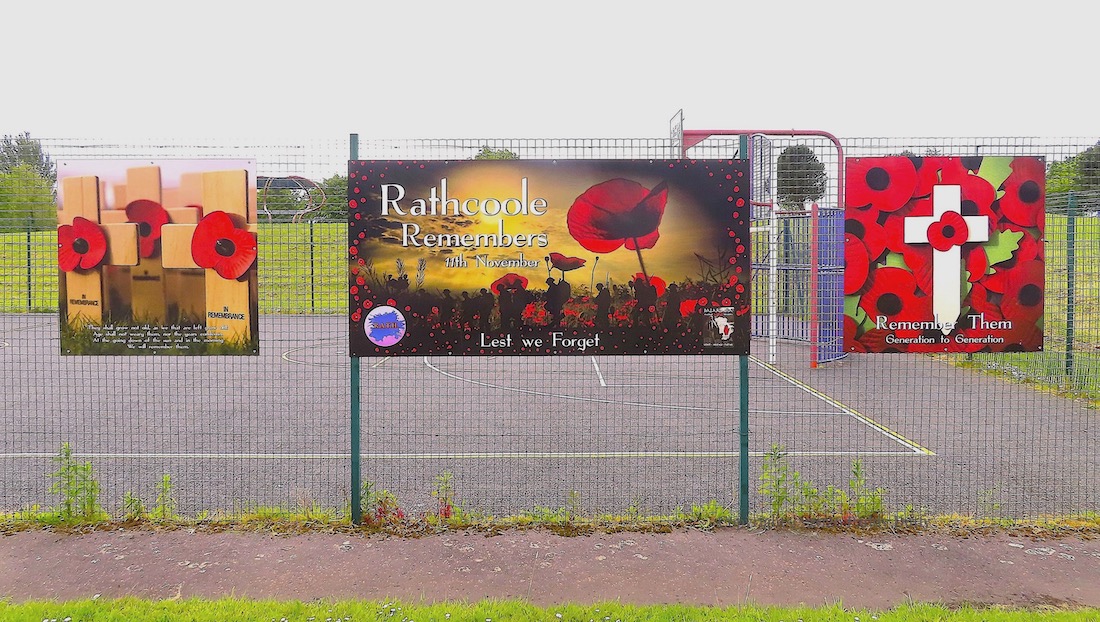
“Rathcoole remembers 11th November. Lest we forget”, “In remembrance” with some lines from For The Fallen, and “Remember them, generation to generation”.
This trio of WWI memorial boards is on the fence of the basketball court along Derrycoole Way, Rathcoole, Newtownabbey, next to an installation of gravestones and sandbags – Row On Row.
The sponsors in the corners of the board shown above are RATH Community Group (Fb) and Dalaradia (web); they previously jointly supported a QEII mural “On The Occasion Of Her Platinum Jubilee“. RATH holds a commemorative service annually in November.
 Paddy Duffy Collection