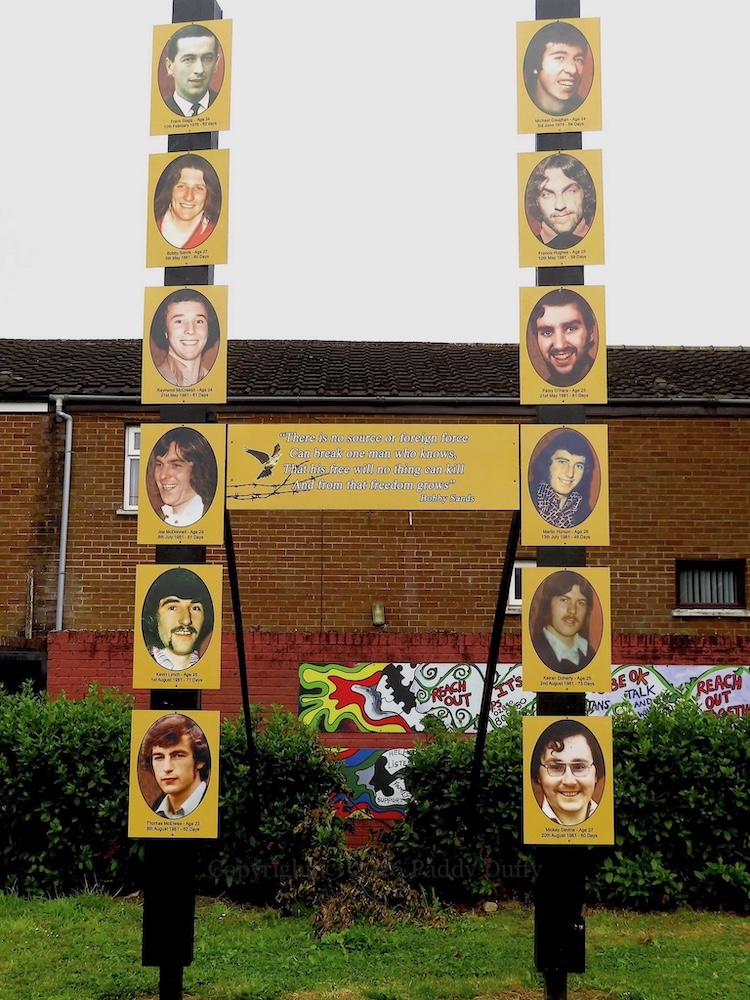
New portraits of the twelve dead Troubles-era hunger strikers (including Frank Stagg and Michael Gaughan) have been mounted next to the Falls Road Memorial Garden, with a quote from Bobby Sands’s ‘H-Block Trilogy’ on the cross-bar: “There is no source or foreign force/Can break one man who knows,/That his free will no thing can kill/And from that freedom grows.”
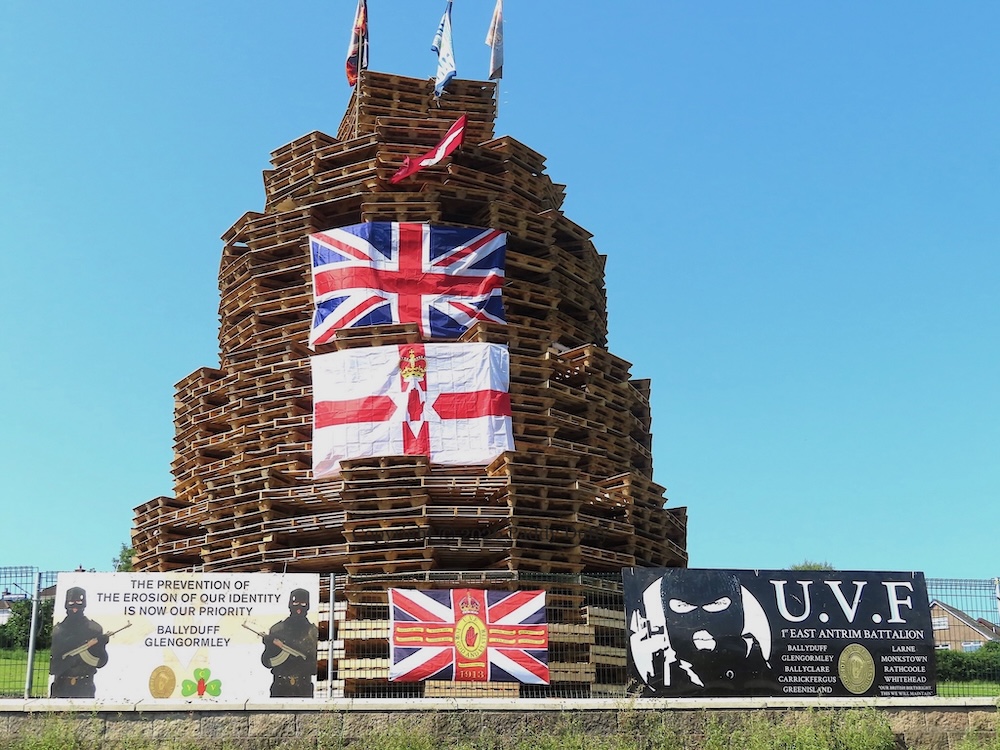
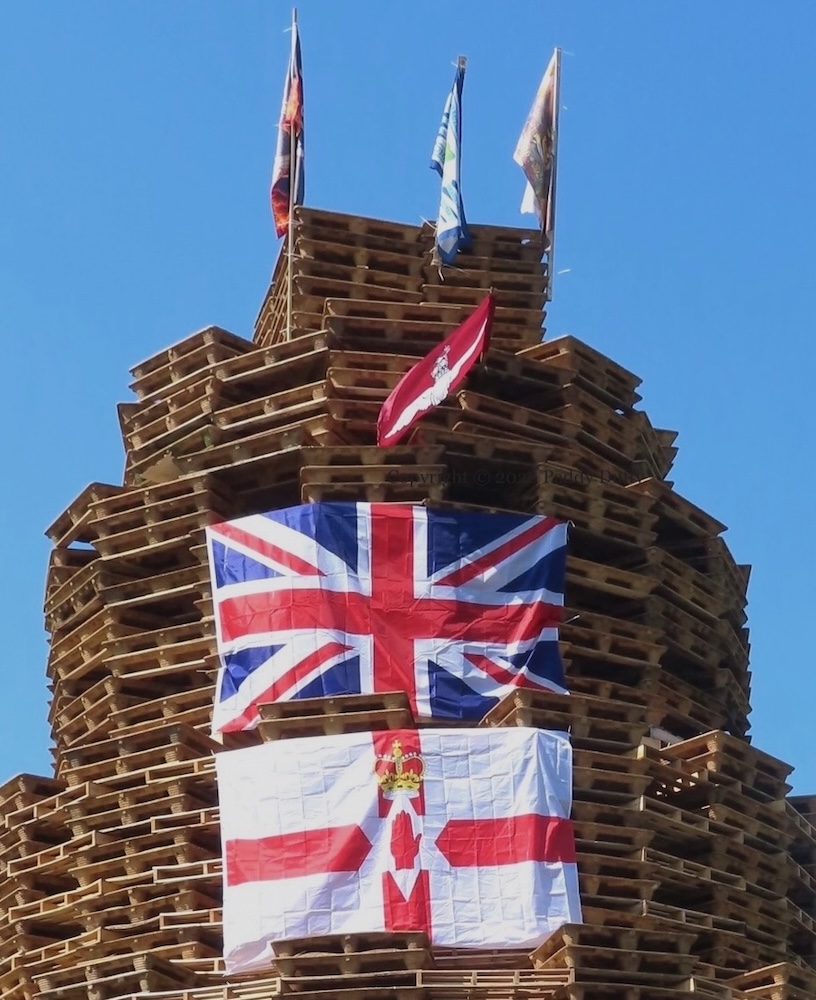
Various flags are flying or hanging on the Ballyduff bonfire prior to their removal and its incineration, including the flag of the Paratroop regiment. On the fencing in front are two UVF hooded gunmen boards and an Ulster Volunteers (1913) flag.
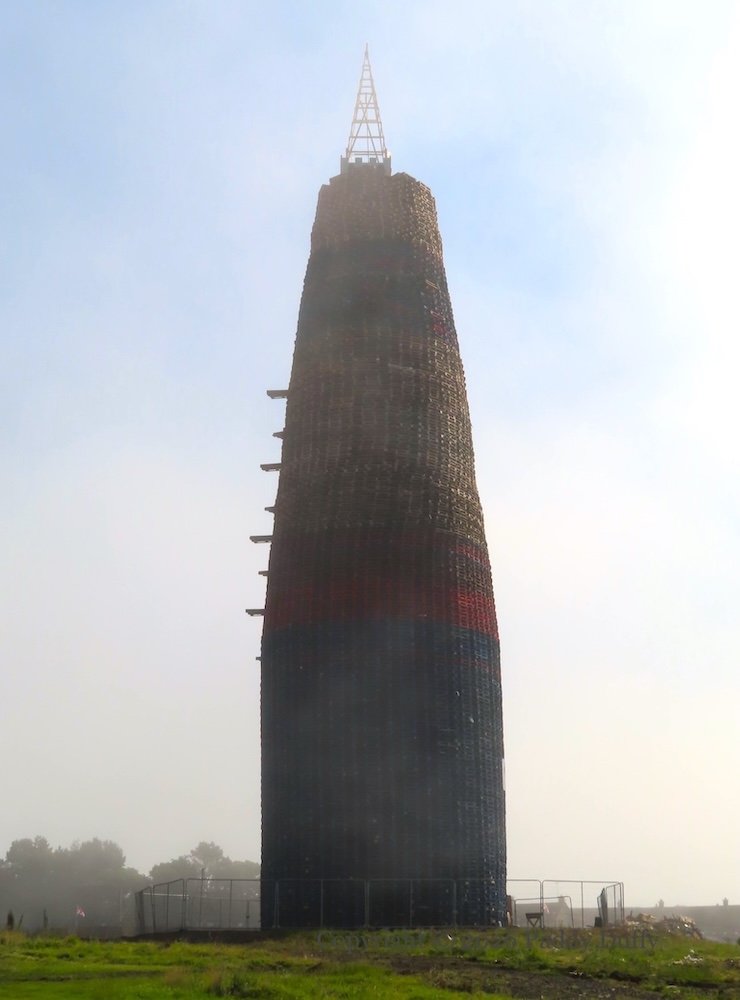
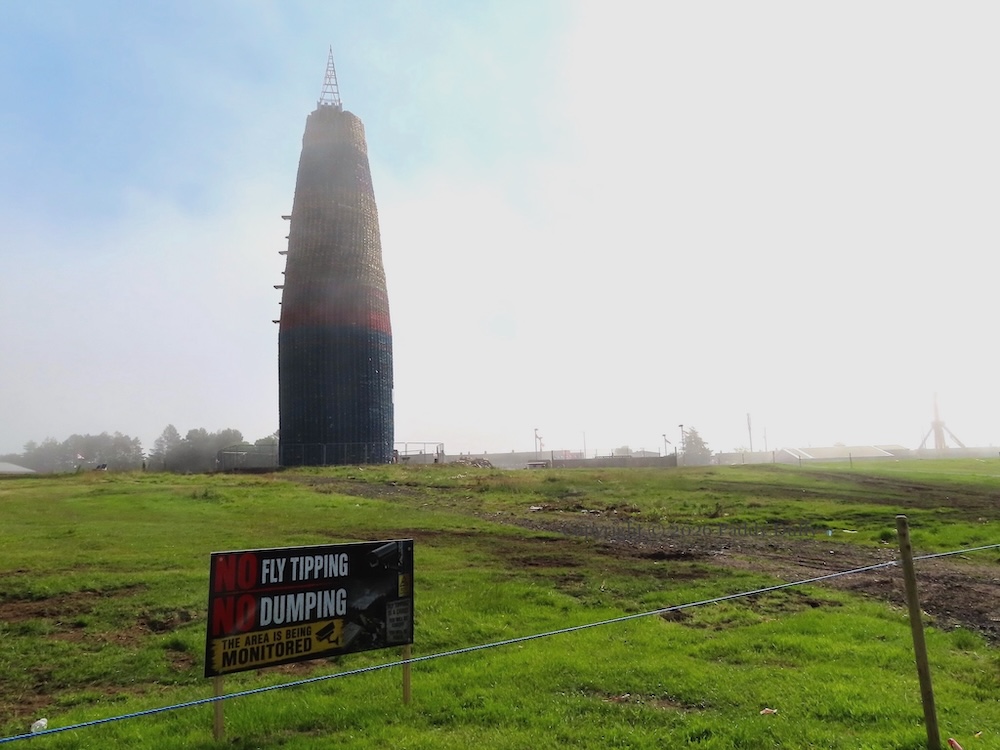
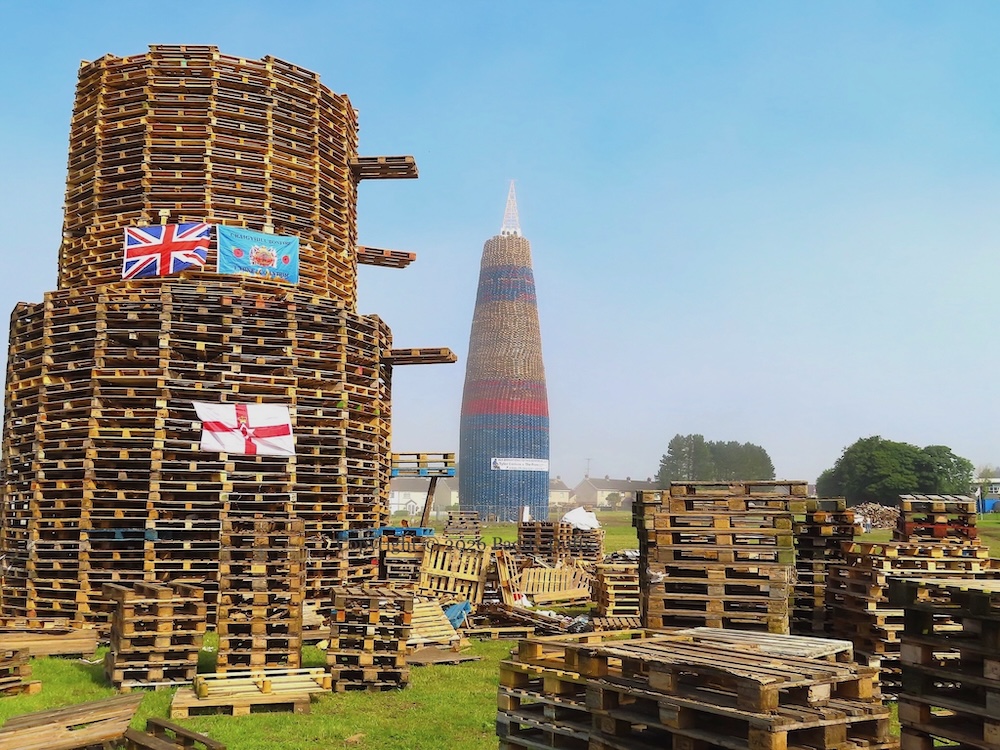
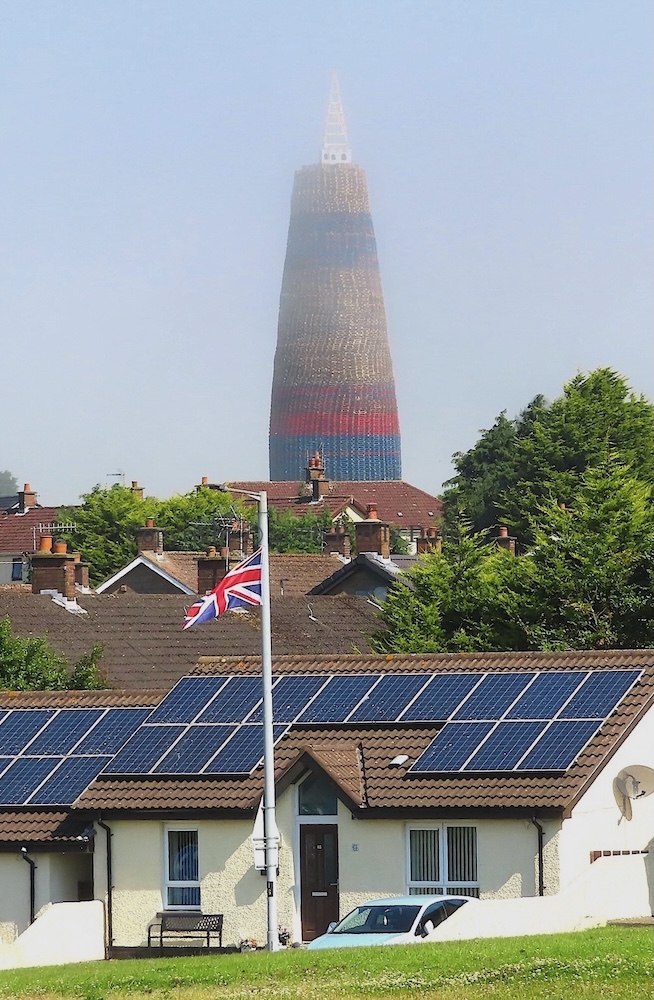
Here are images of this year’s (2026) Craigyhill bonfire, shrouded in sea-fog. The bonfire was finished on July 5th, a week in advance of its lighting, which will be at midnight on Sunday, amid two days of entertainment by DJs, dancers, and flute bands. The kids’ bonfire (in the fifth image) will be lit on the 11th at 10 p.m. (Fb)
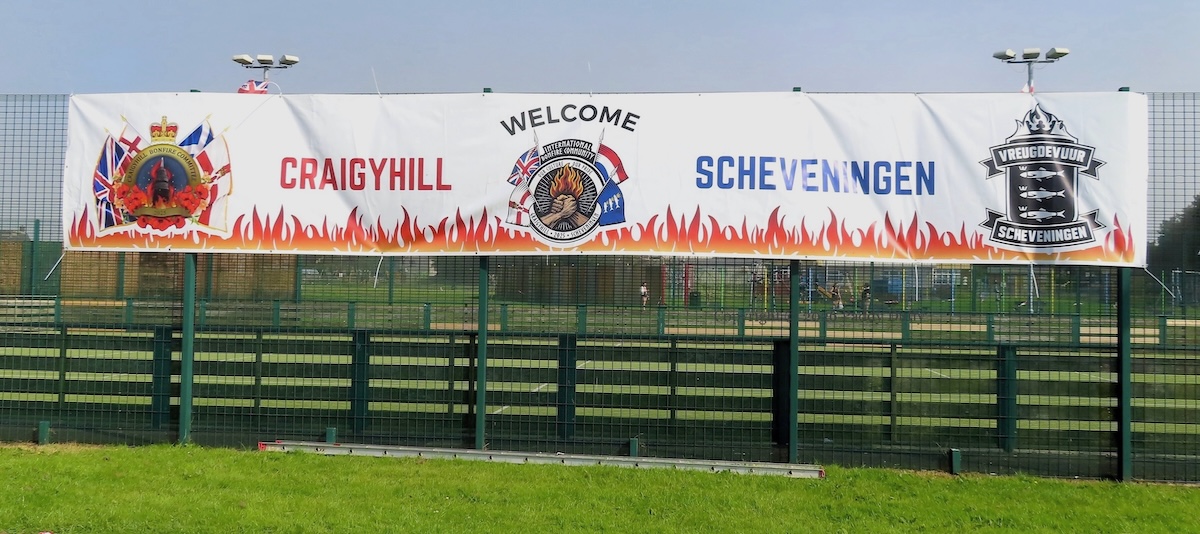
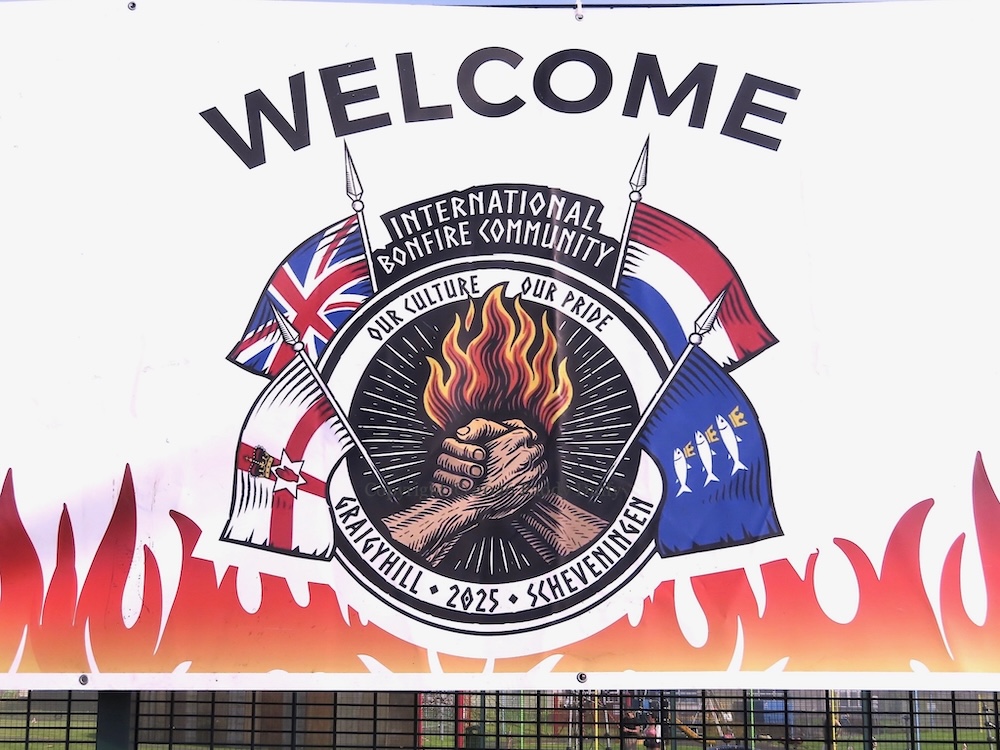
The banner on the fence celebrates an “International bonfire community” between Craigyhill and Scheveningen, in the Netherlands, which holds the official record for the world’s largest bonfire by volume (Guinness). The largest bonfire by height – officially recorded – was in Lustenau, Austria; for Criagyhill’s claim to the title, see the entry on the 2024 bonfire.
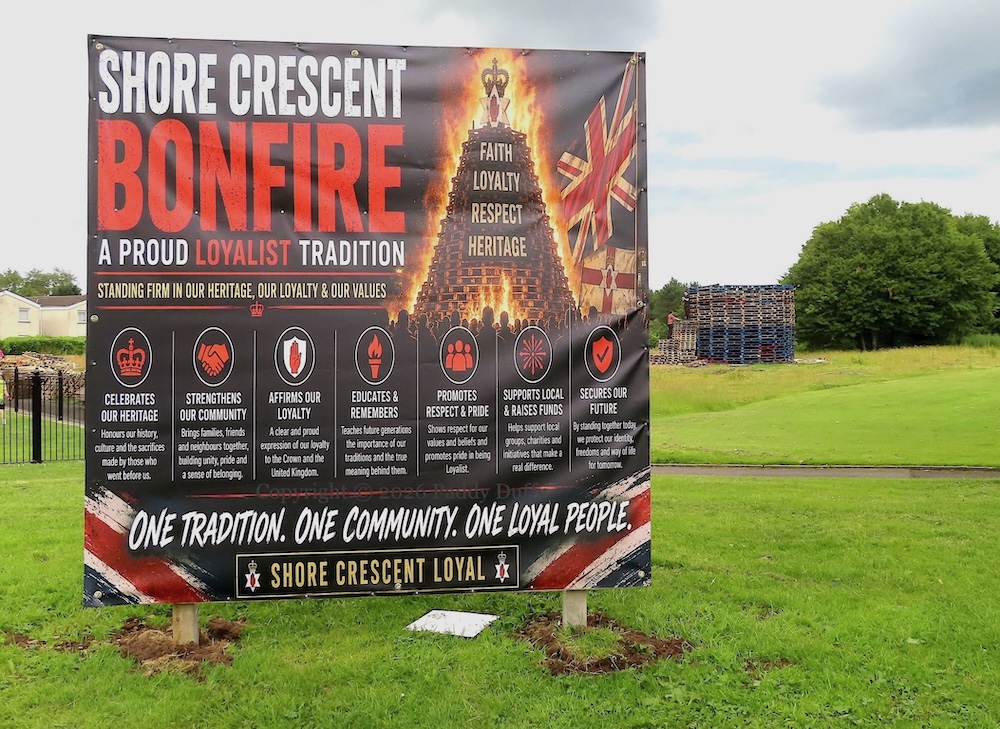
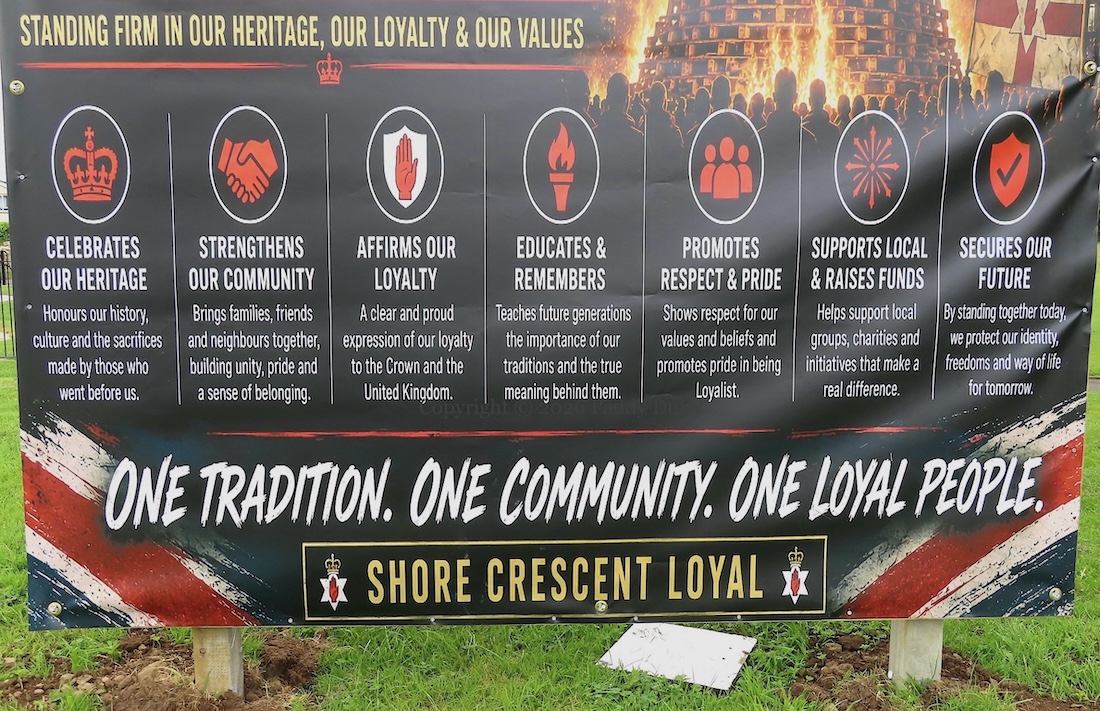
Shore Crescent prepares for Eleventh Night with a bonfire and a large sign explaining the positive impact of the tradition:
“Shore Crescent bonfire – a proud loyalist tradition. Standing firm in our heritage, our loyalty & our values. Faith – loyalty – respect – heritage. [The bonfire …] Celebrates our heritage – honours our history, culture and the sacrifices made by those who went before us; strengthens our community – brings families, friends and neighbours together, building unity, pride and a sense of belonging; affirms our loyalty – a clear and proud expression of our loyalty to the Crown and the United Kingdom; educates & remembers – teaches future generations the importance of our traditions and the true meaning behind them; promotes respect & pride – shows respect for our values and beliefs and promotes pride in being Loyalist; supports local [groups] & raises funds – helps support local groups, charities and initiatives that make a real difference; secures our future – by standing together today, we protect our identity, freedom and way of life for tomorrow. One tradition. One community. One loyal people. Shore Crescent loyal.”
Next to Loughside Playground, Shore Road, north Belfast
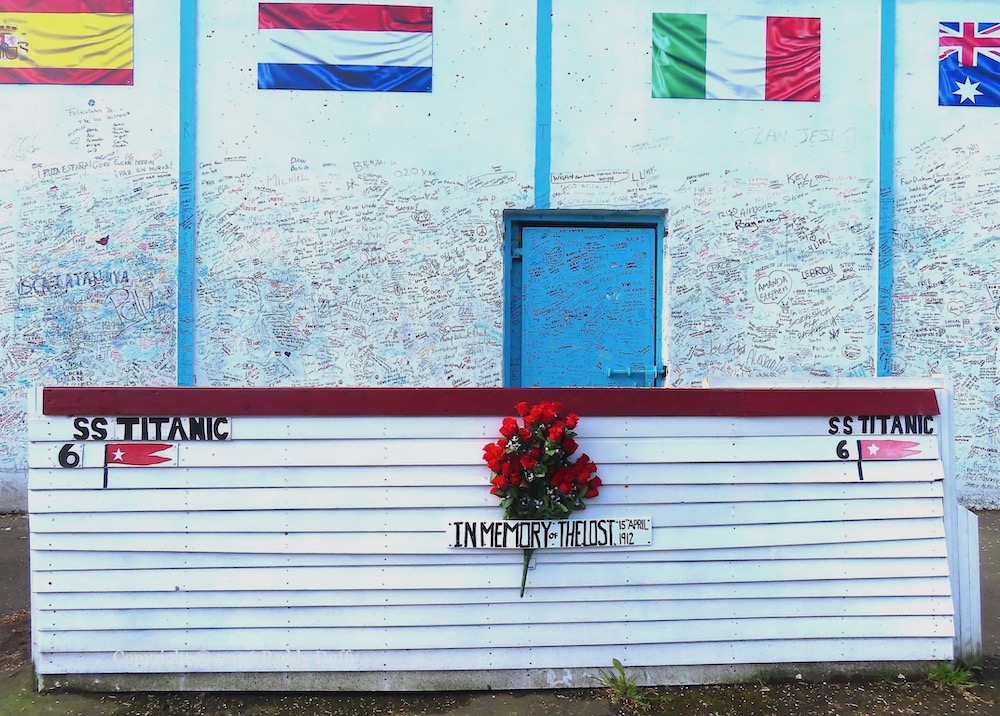
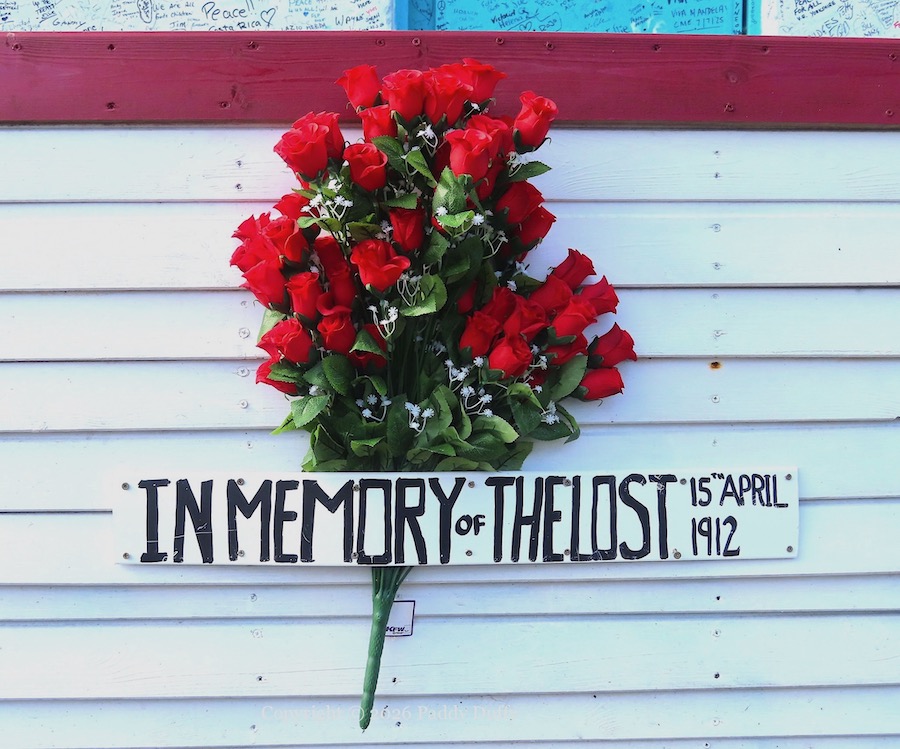
“In memory of the lost, 15 April, 1912.” The majority lifeboats on the RMS (not “SS”) Titanic were made of wood, constructed at Harland & Wolff at the same time that Titanic was built. Of the 2,209 people on board the ship at the time of her collision with an iceberg late in the evening of April 14th, 706 people survived in lifeboats that could have carried 1,178 people. (WP)
This tribute to those who died in on a short section of pedestrian railings on the Cupar Way “peace” line (Visual History). In the background are the specially designated spots for tourists to sign the wall (see Collecting Signatures).
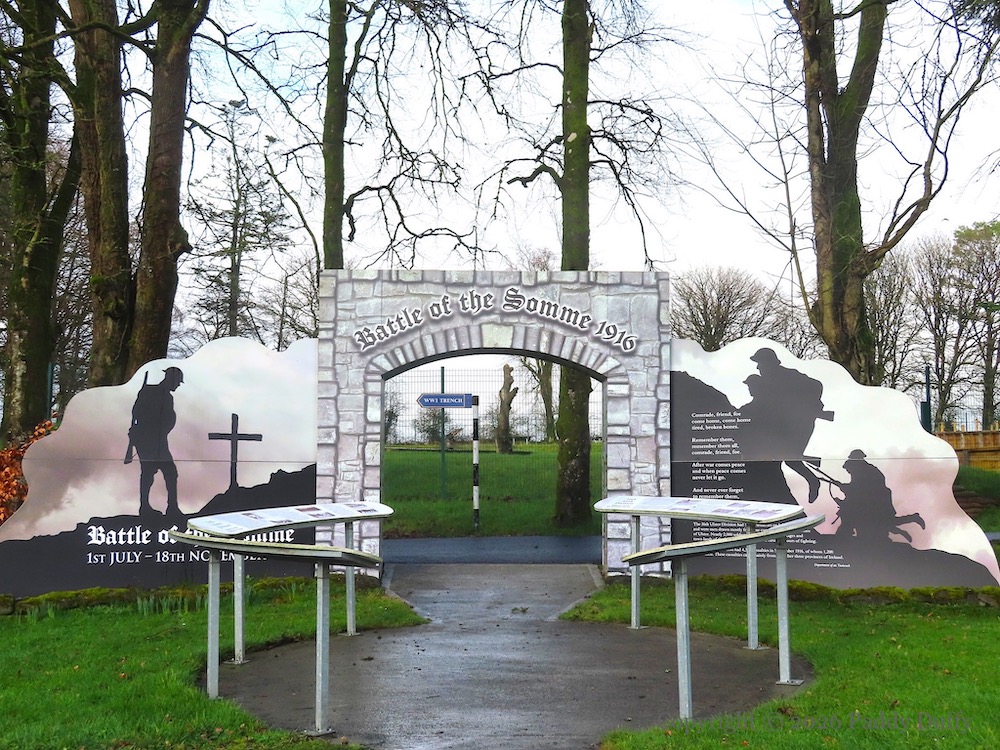
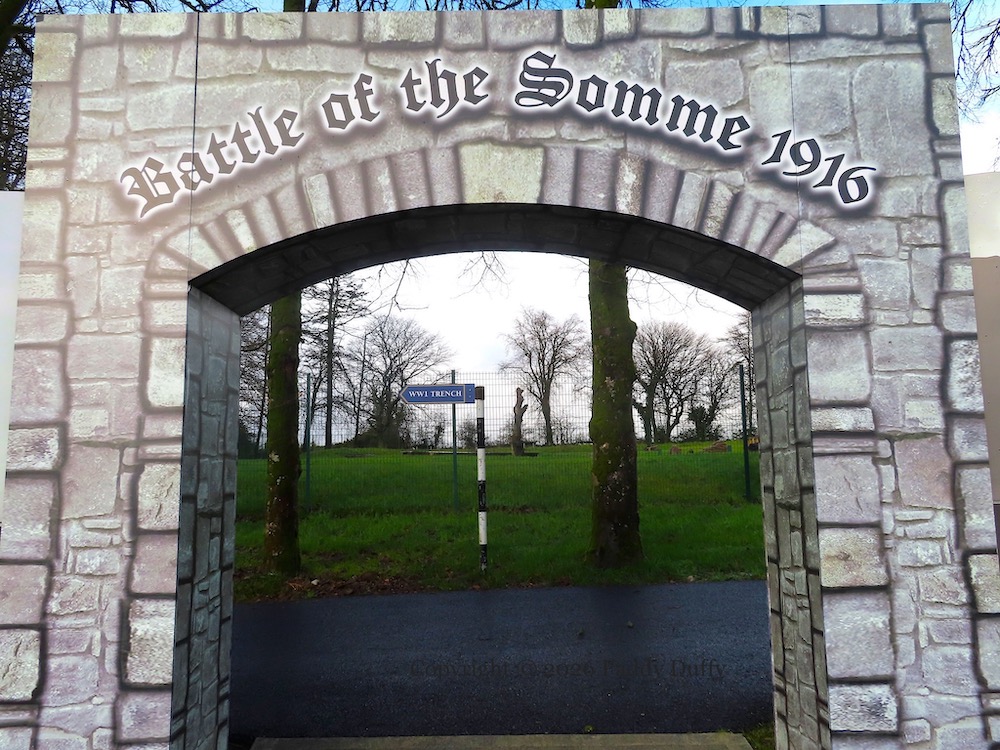
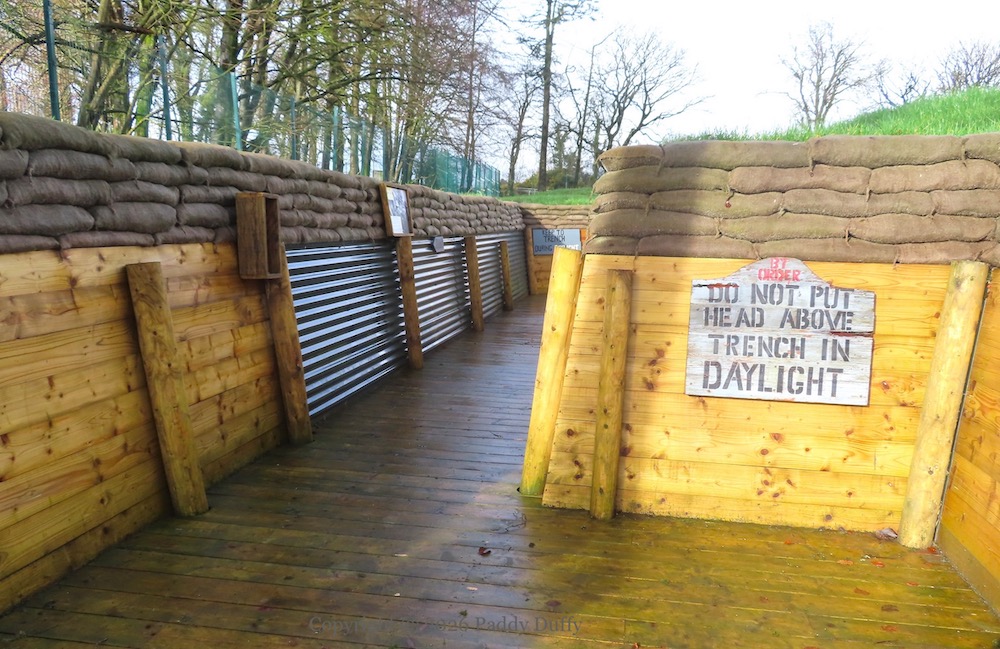
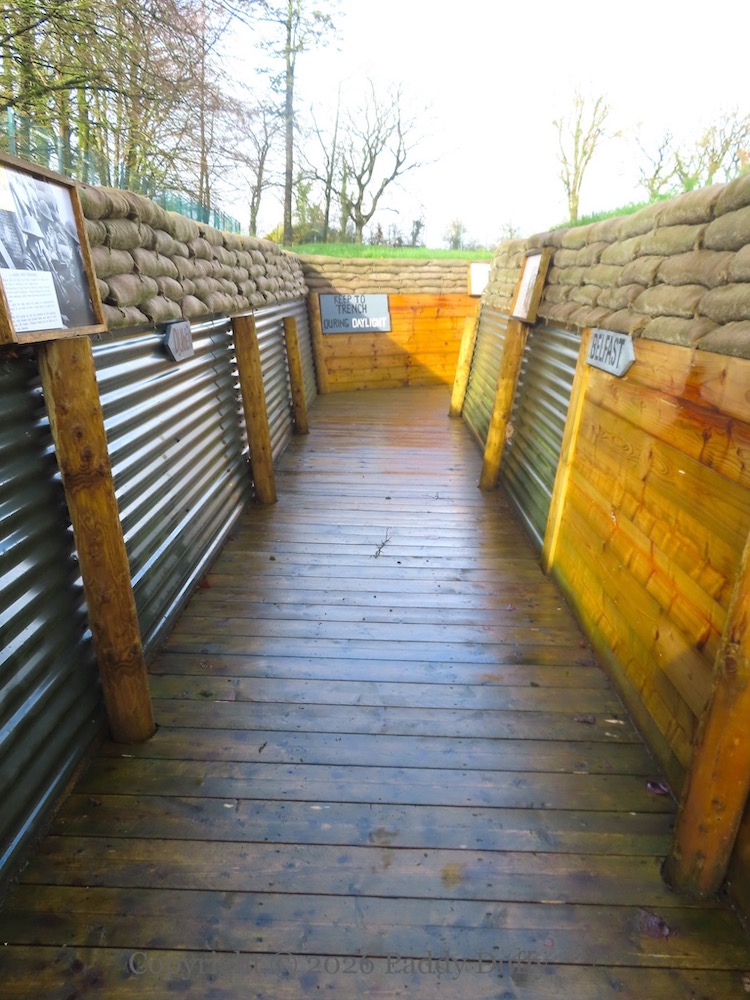
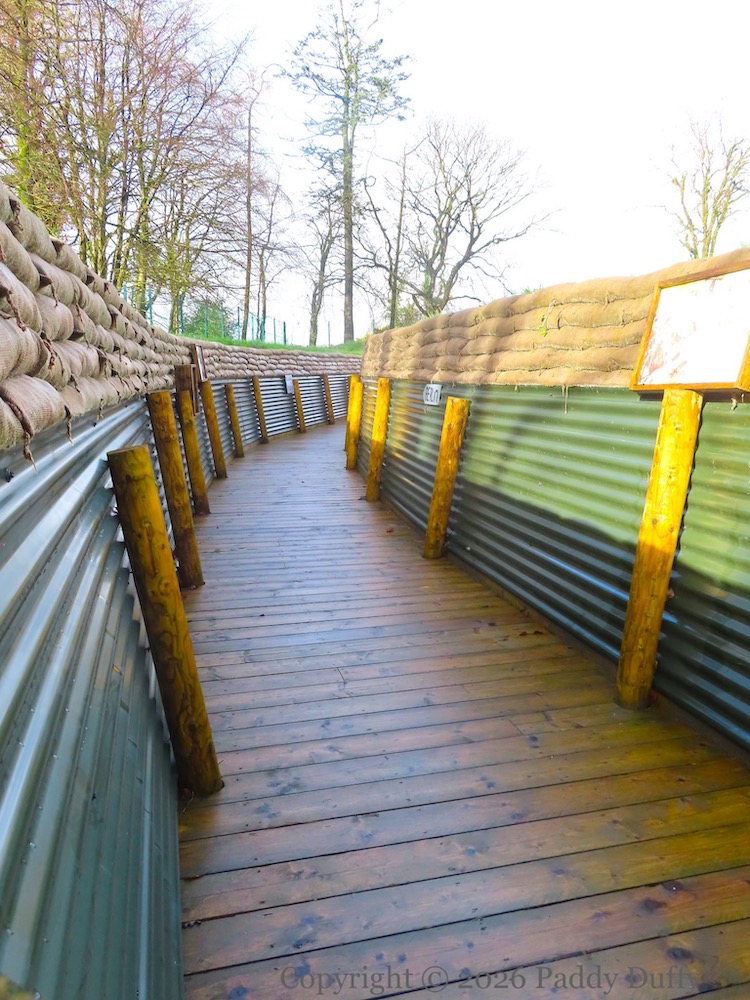
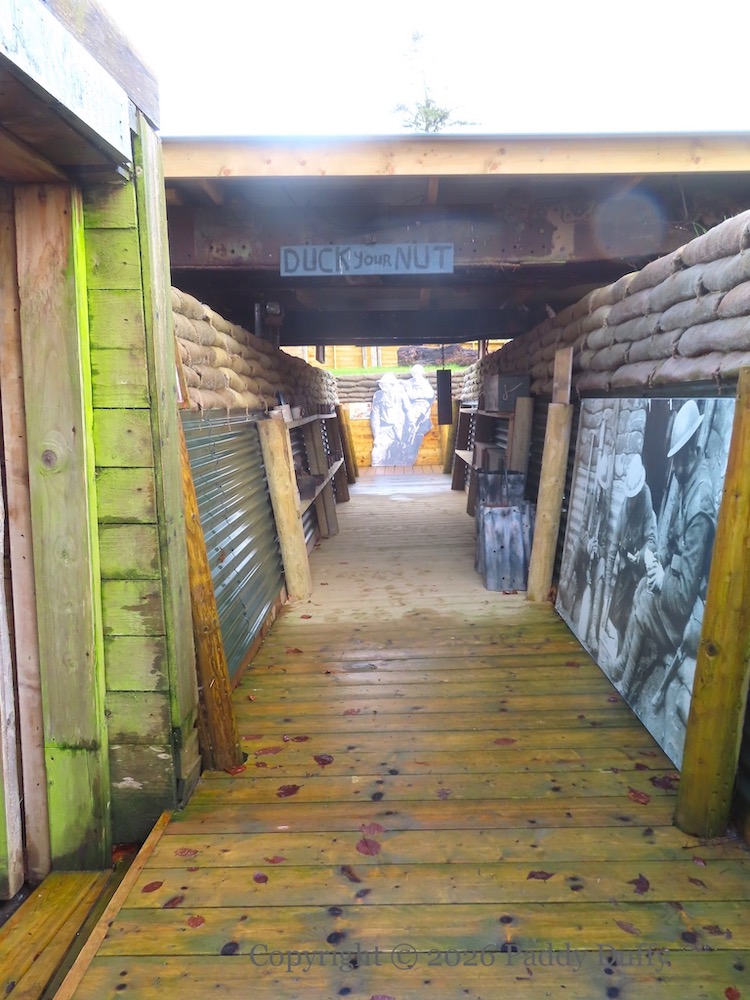
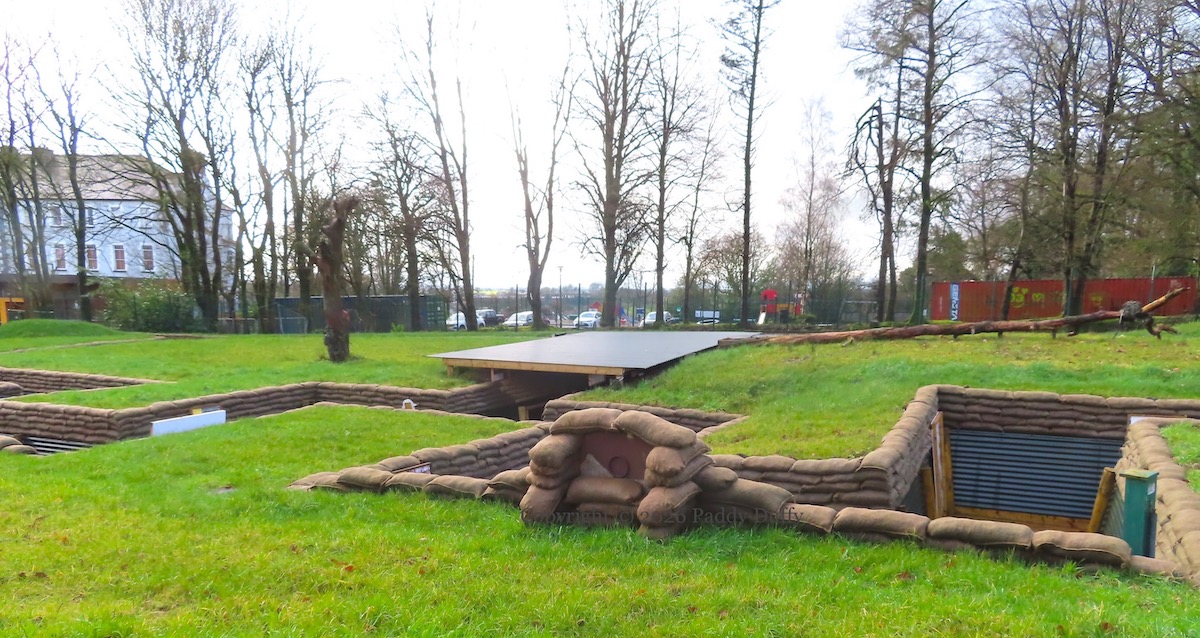
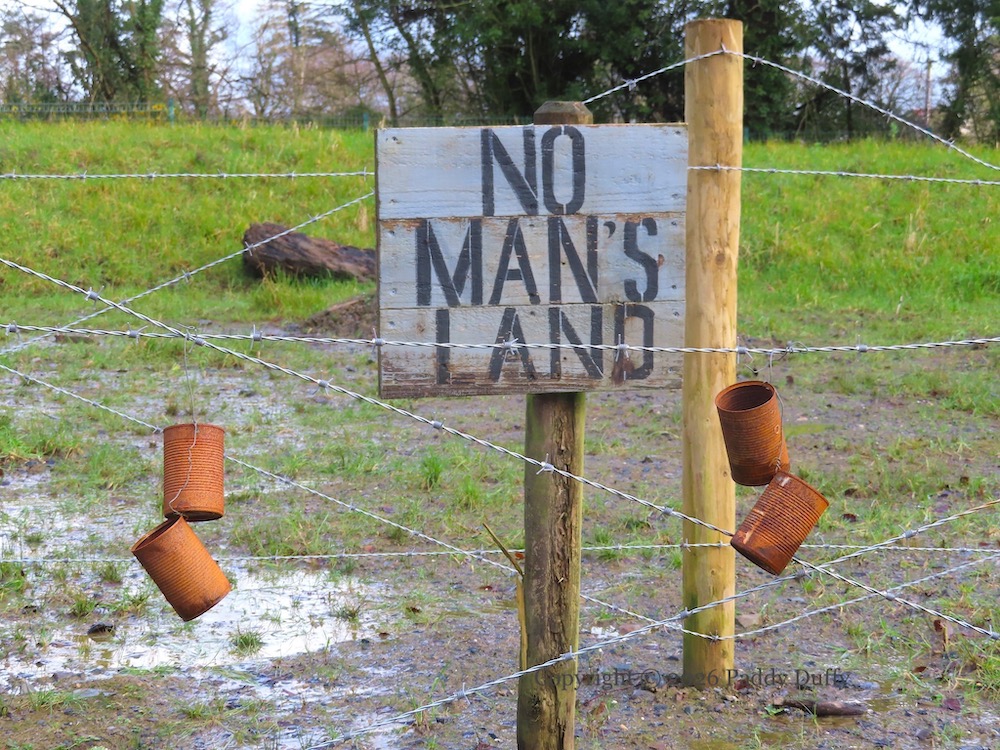
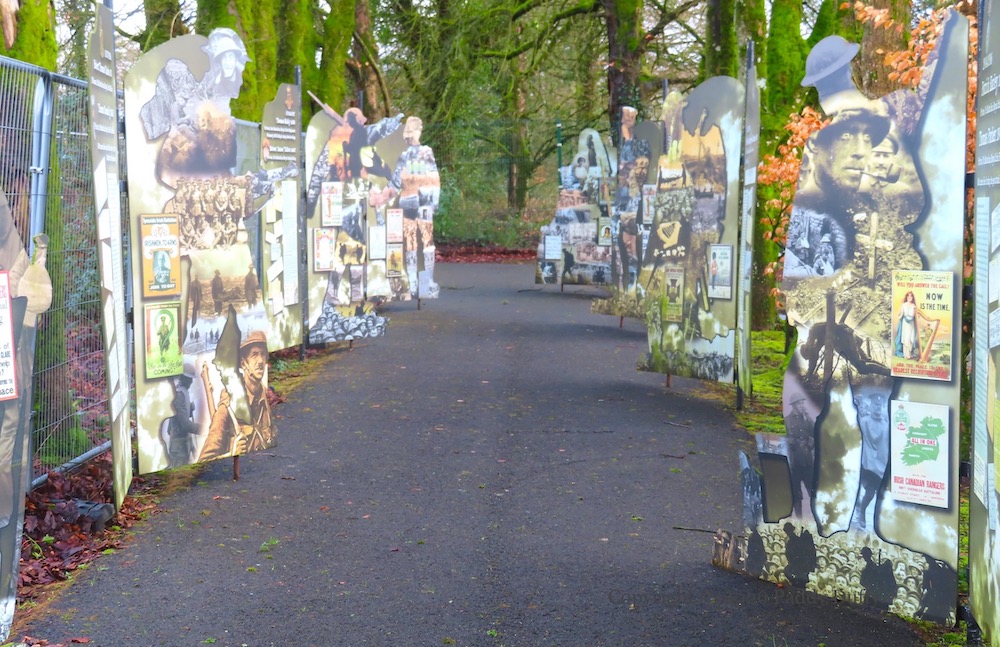
The Cavan County Museum (web) in Ballyjamesduff includes a “WWI trench experience”, with 350 metres of trench and more than 6,000 sand-bags. The Cavan volunteers joined the 9th battalion of the Royal Irish Fusiliers (108th brigade of the 36th). The officer commanding of the Division, Oliver Stewart Wood Nugent, was from Cavan (History Ireland).
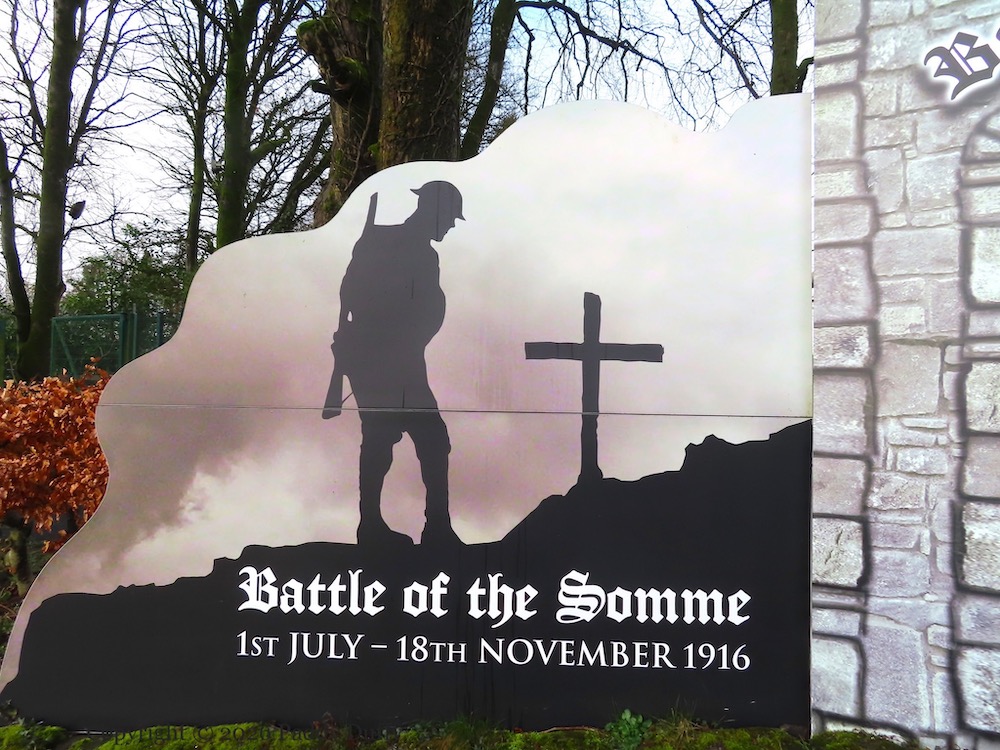
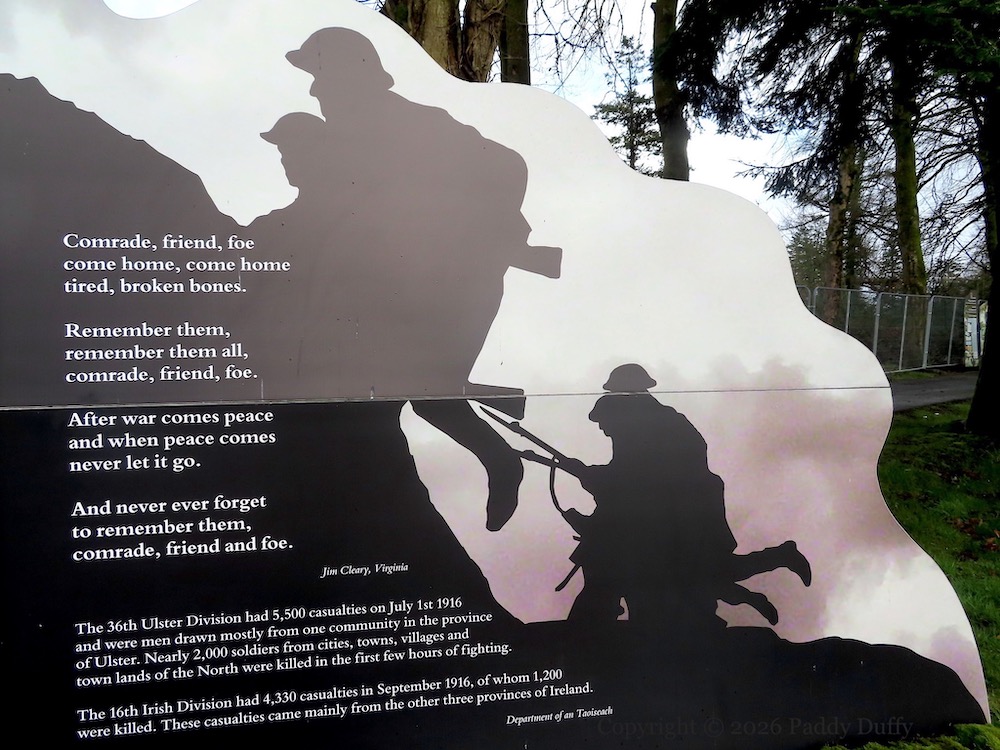
“Battle Of The Somme 1st July – 18th November 1916”, “”Comrade, friend, foe/come home, come home/tired, broken bones.//Remember them,/remember them all,/comrade, friend, foe.//After war comes peace/and when peace comes/never let it go.//And never ever forget/to remember them,/comrade, friend and foe.” – Jim Cleary, Virginia.”
“”The 36th (Ulster) Division had 5,500 casualties on July 1st 1916 and were men drawn mostly from one community in the province of Ulster. Nearly 2,000 soldiers from cities, towns, villages and town lands of the North were killed in the first few hours of fighting. The 16th (Irish) Division had 4,330 casualties in September 1916, of whom 1,200 were killed. These casualties came mainly from the other three provinces of Ireland.” – Department Of An Taoıseach”
Michael Gaughan and Frank Stagg are presented along with the ten deceased 1981 hunger strikers on the cross-beam of a large wooden “H” at the top of Turf Lodge.
IRA volunteer Michael Gaughan died in Parkhurst prison in 1974 after 64 days on hunger strike. Gaughan’s coffin was draped with the Tricolour used to bury Terence McSwiney in 1920. He was force-fed seventeen times during the strike and his family alleged that he died from food stuck in a punctured lung. The practice was ended after Gaughan’s death.
Frank Stagg was on the Parkhurst hunger strike with Gaughan, and another in Long Lartin prison, and a third in Wakefield in December 1975. He died after 62 days on February 12th, 1976.
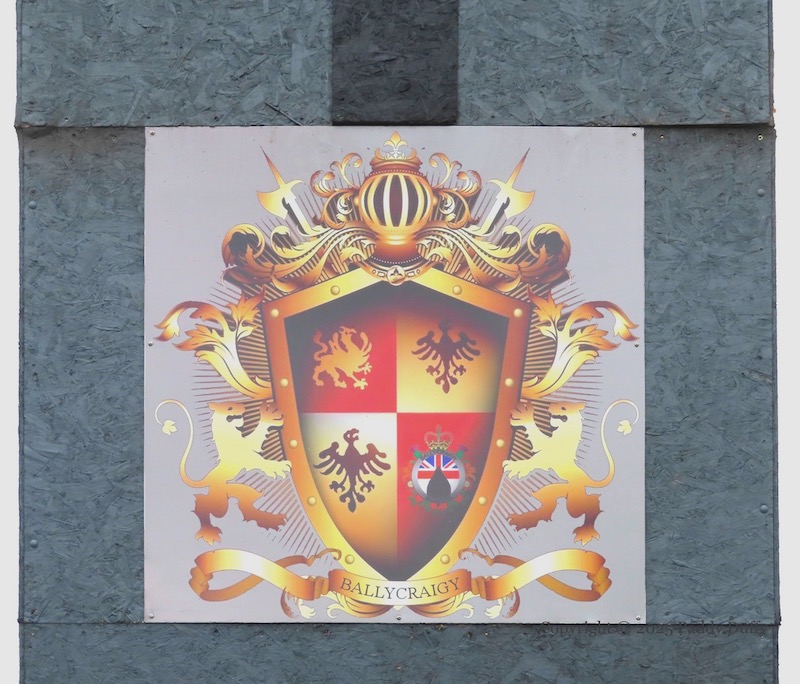
Preparations for Eleventh Night bonfires are underway in many estates, including Ballycraigy in Antrim which is getting help from an AI-generated Popeye. Ballycraigy used to boast the biggest Bonfire (see Lead The Way); you can keep track of this year’s build on the bonfire’s Facebook page.
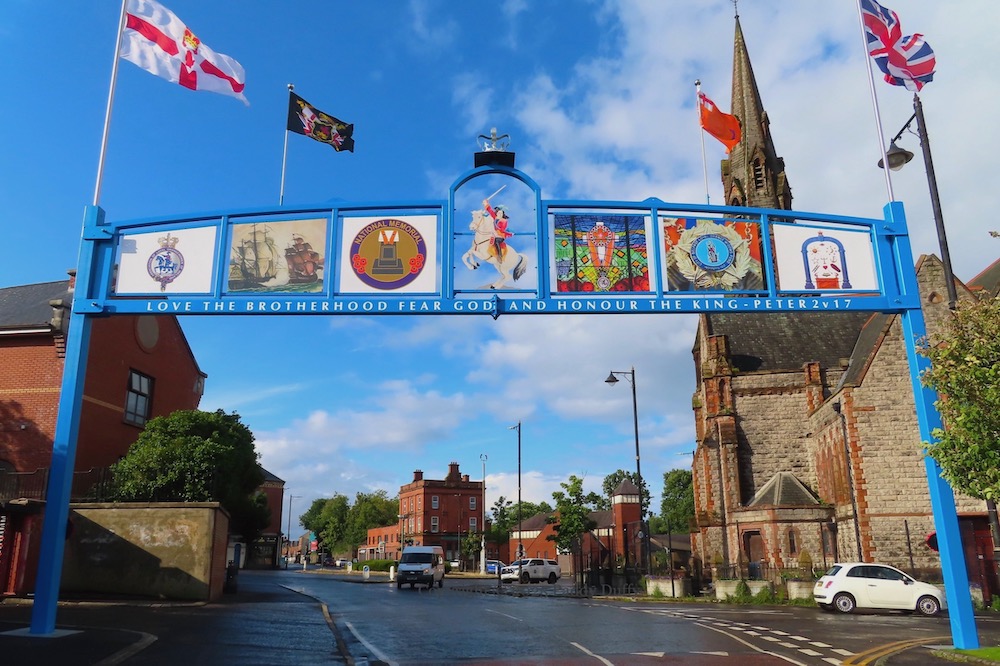
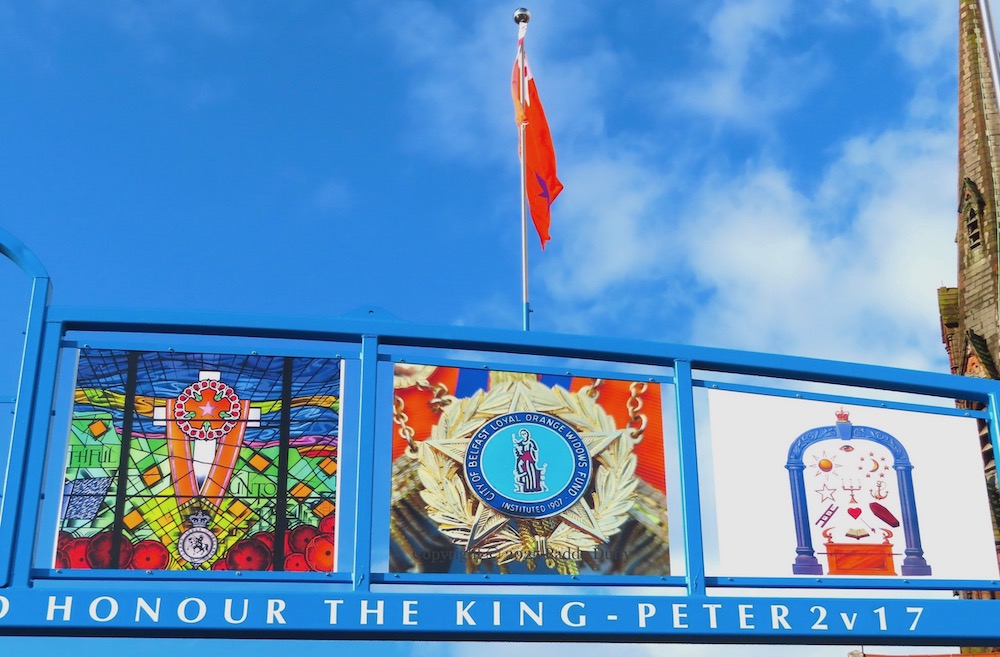
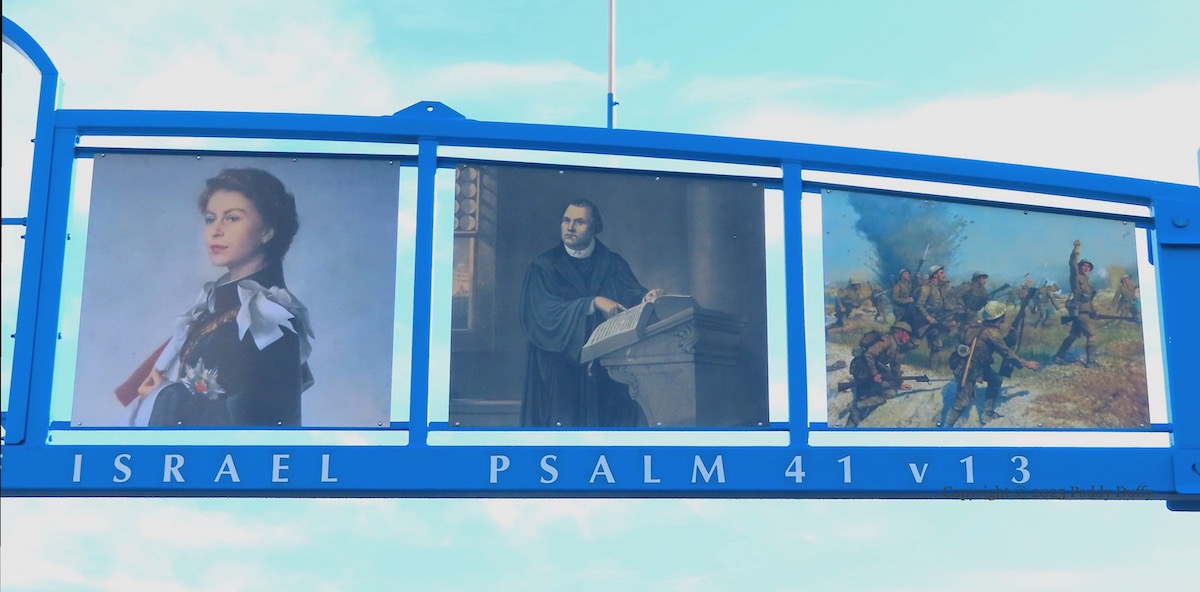
The Denmark Street arch (at the top of the lower Shankill estate and next to the Clifton Street Orange Hall) returns for the 2025 marching season.
For each of the 12 panels, see Upward. Each side of the arch features a quote from scripture: on the outside, “Blessed be the Lord God of Israel – Psalm 41 v. 13”, and on the estate side “Love the brotherhood, fear God, and honour the King – [1st] Peter 2 v. 17”
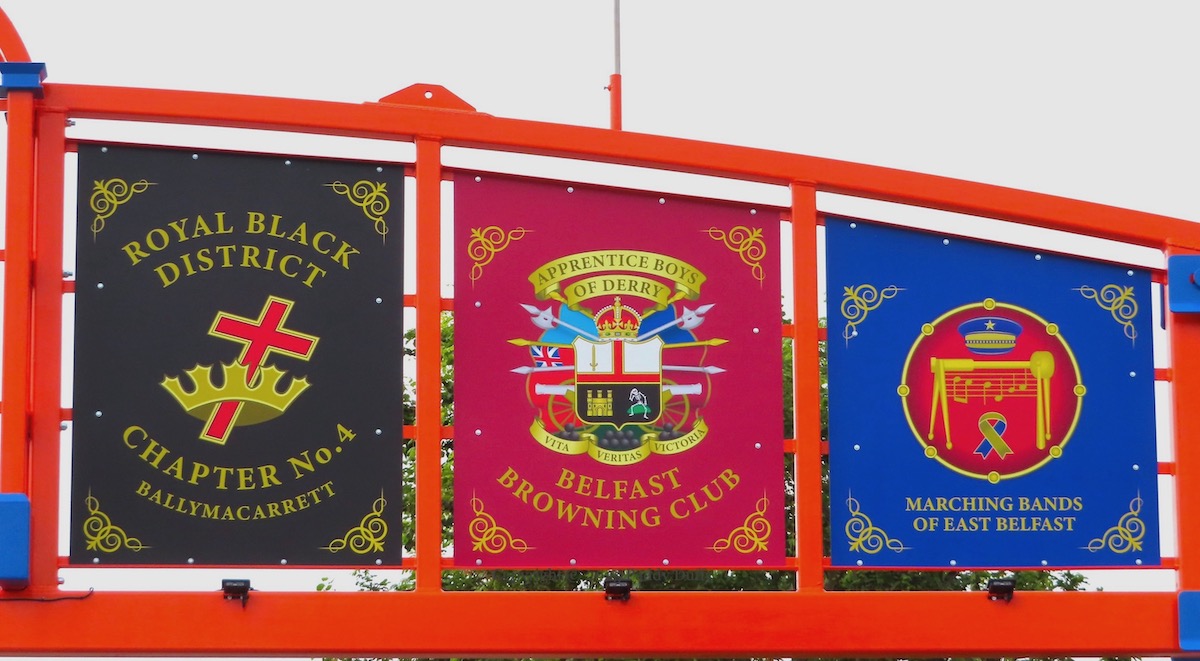
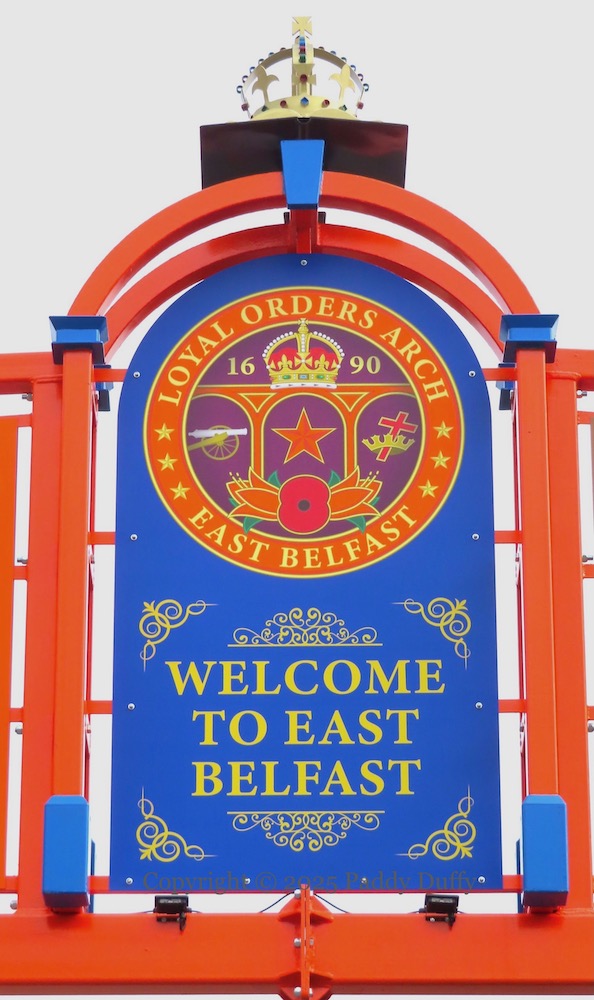
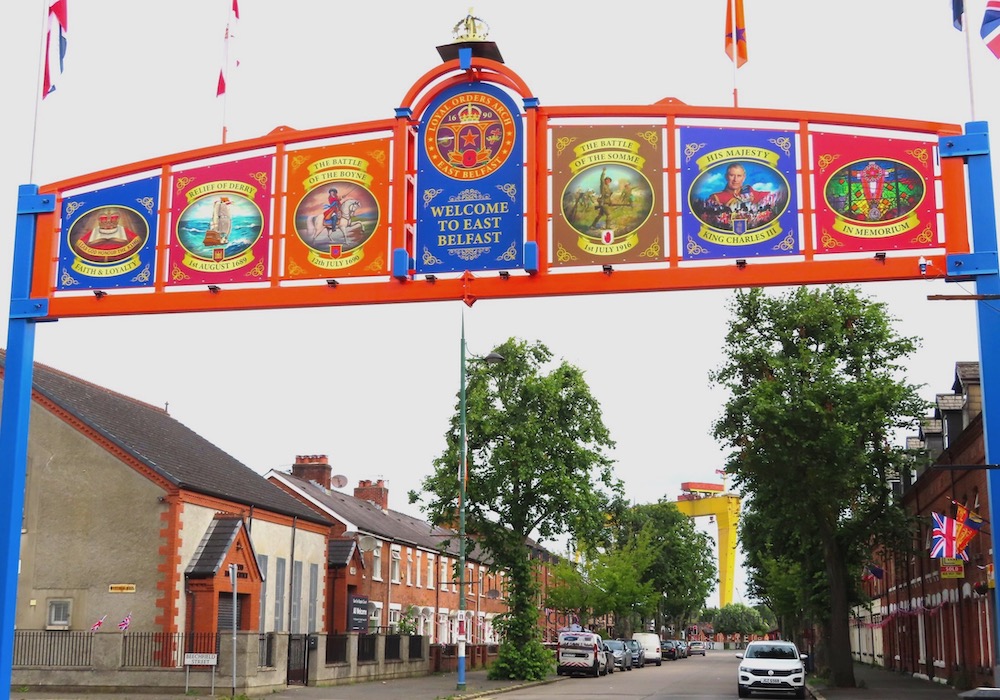
The News Letter reports that the new arch at the junction of Templemore Avenue and Beechfield Street is the first new arch in east Belfast for fifty years (News Letter). There was long ago an arch in Dee Street (Fb).
On the northern side are the emblems of local lodges – Ballymacarrett Junior District LOL No. 3, Royal Arch Purple District Chapter No. 6, Ballymacarrett District No. 2 Women’s LOL, Ballymacarrett District LOL No. 6, Royal Black District Chapter No. 4 Ballymacarrett, Apprentice Boys Of Derry Belfast Browning Club – as well as “Marching Bands of east Belfast”.
On the southern side, we see (l-r) “Faith & Loyalty”, the Relief Of Derry, the Battle Of The Boyne, JP Beadle’s painting of the 36th Division going over the top at the Battle Of The Somme, King Charles III, the stained-glass window in Schomberg House in memoriam (not: “in memorium”) murdered OO members.
The arch was officially dedicated on June 30th. Ballymacarrett Orange Hall is a bit further down Templemore Avenue, on Albertbridge Road.









 Paddy Duffy Collection