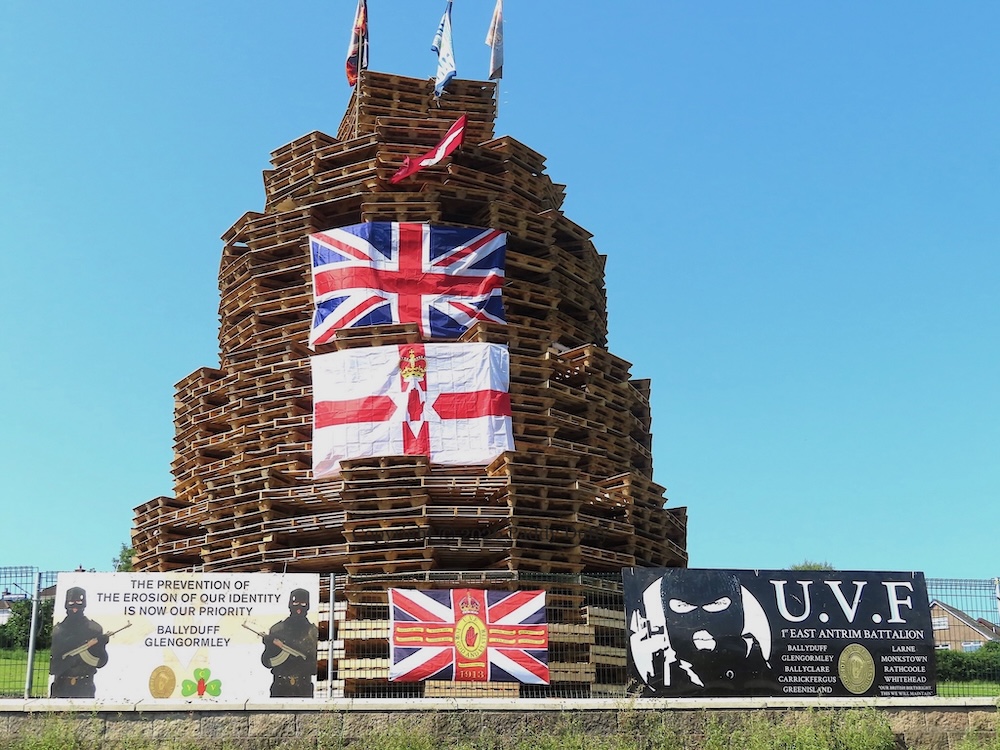
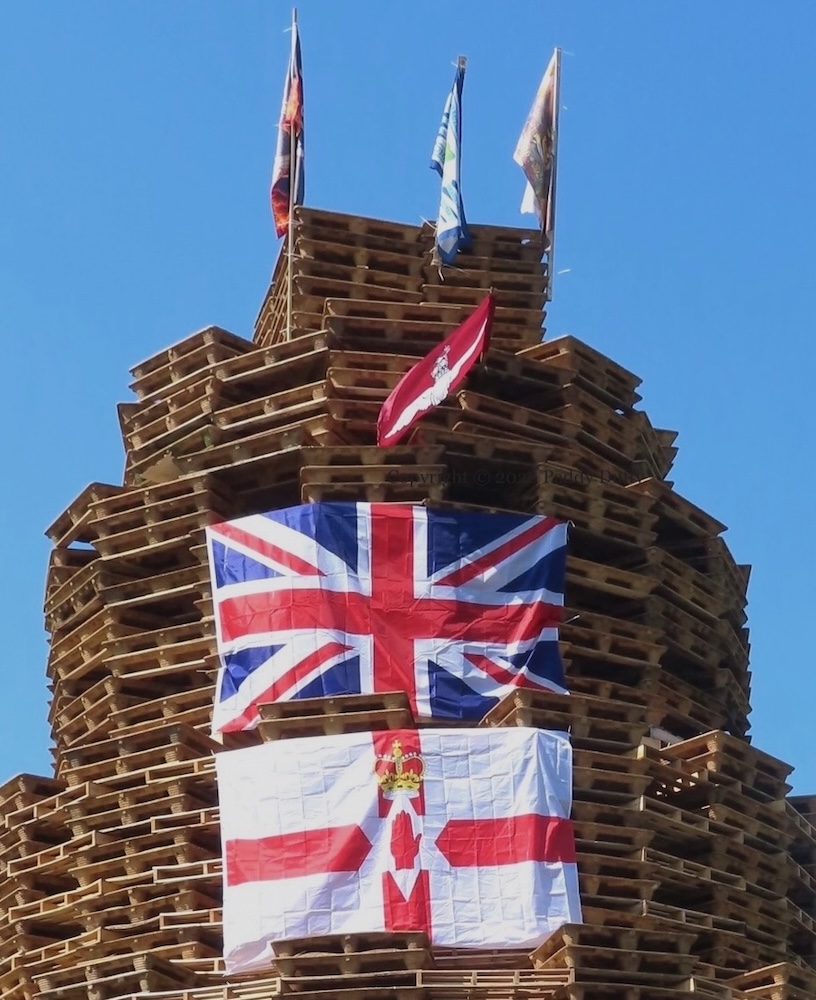
Various flags are flying or hanging on the Ballyduff bonfire prior to their removal and its incineration, including the flag of the Paratroop regiment. On the fencing in front are two UVF hooded gunmen boards and an Ulster Volunteers (1913) flag.
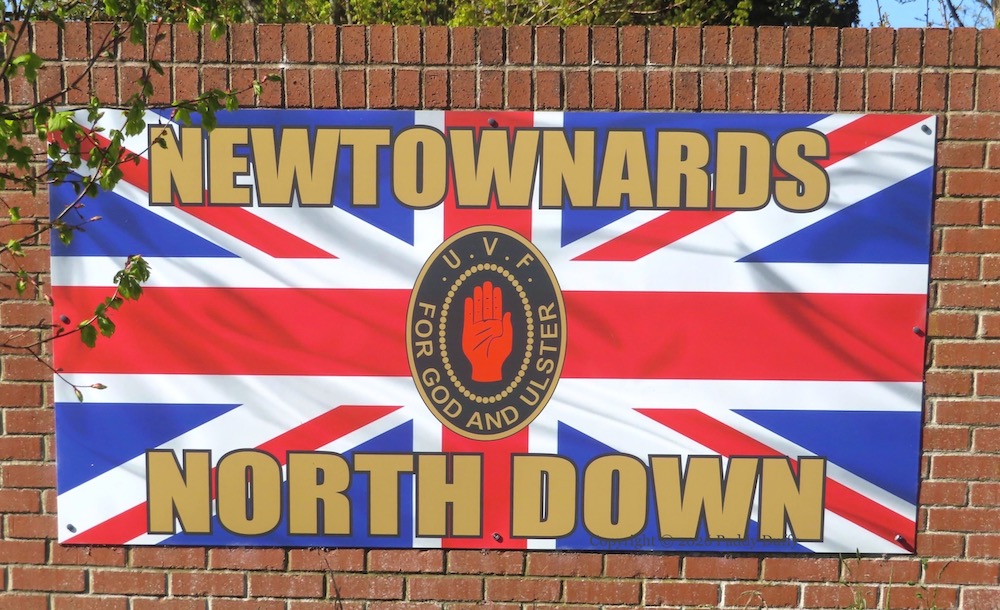
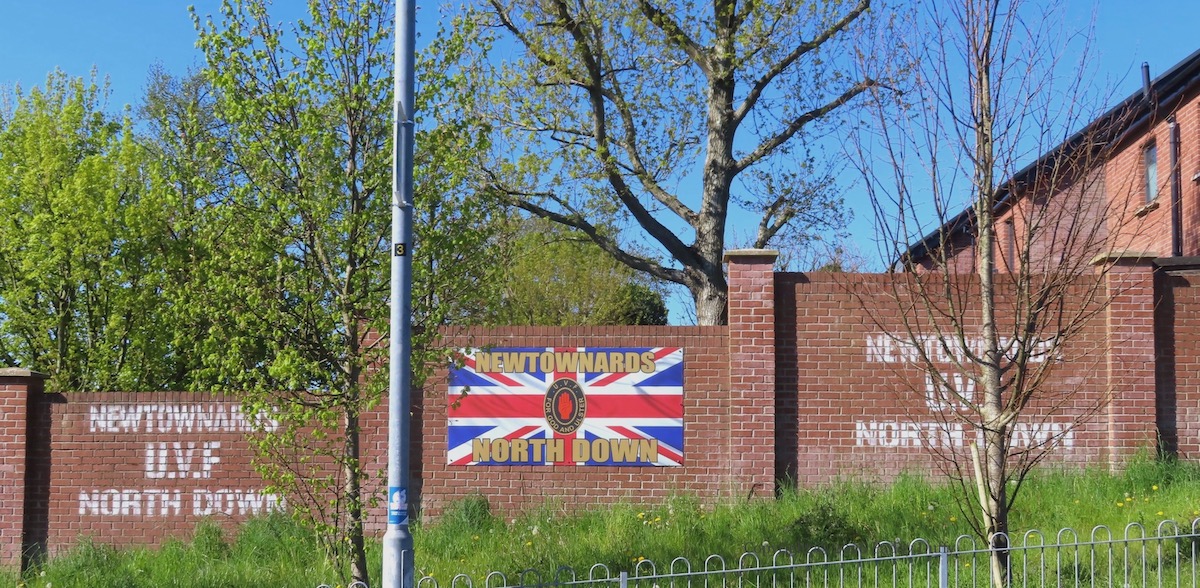
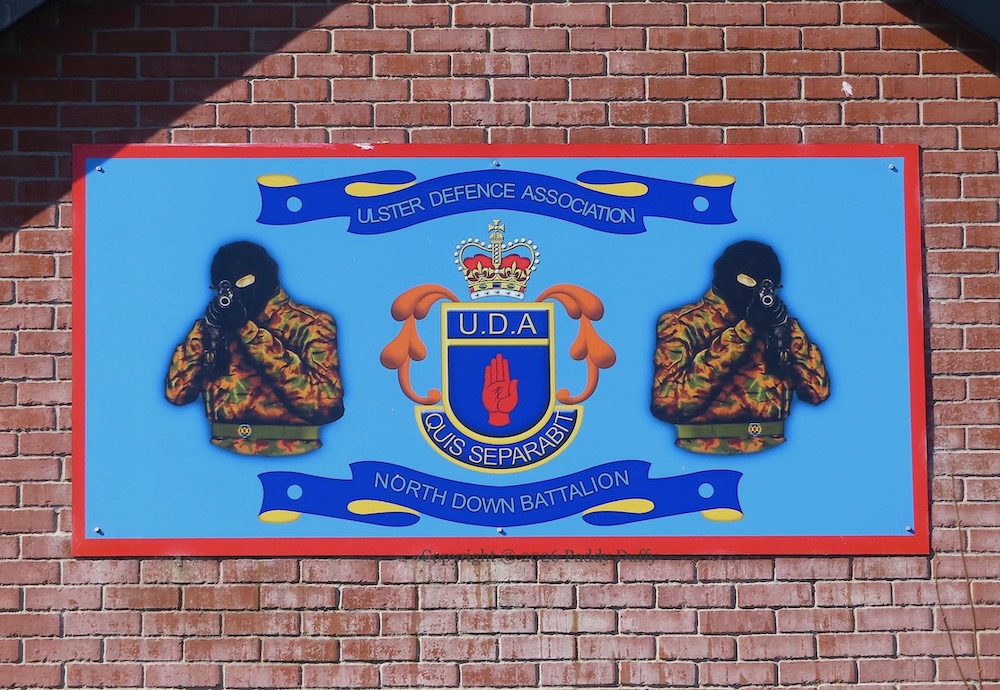
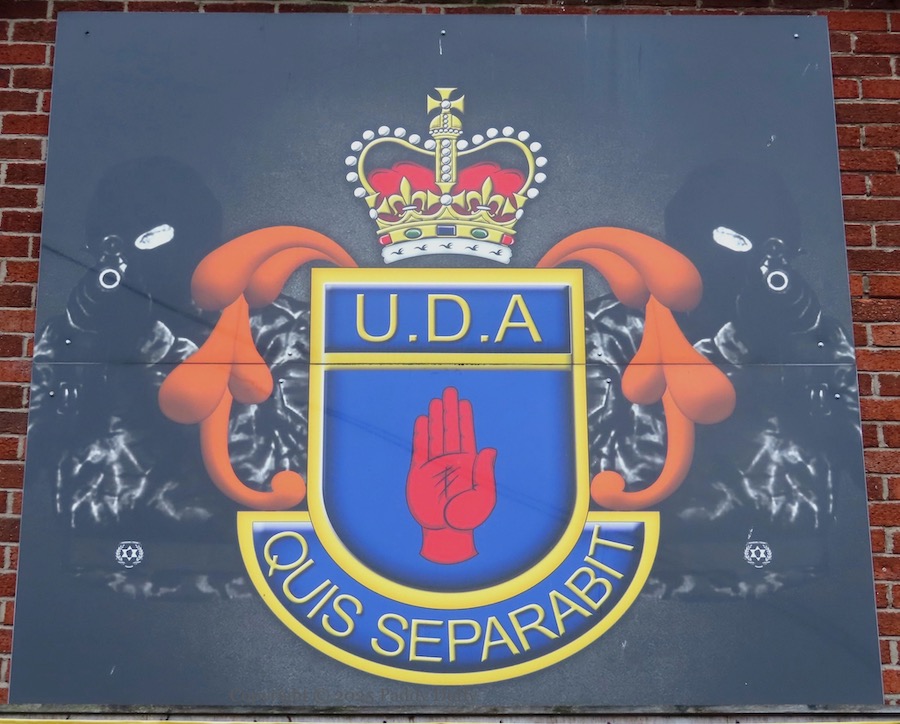
These UVF and UDA board are on adjacent walls at the entrance to the Glen estate, Newtownards; above and directly below, a North Down UVF and graffiti, while directly above it (final image) two UDA hooded gunmen take aim at the viewer on the pavement.
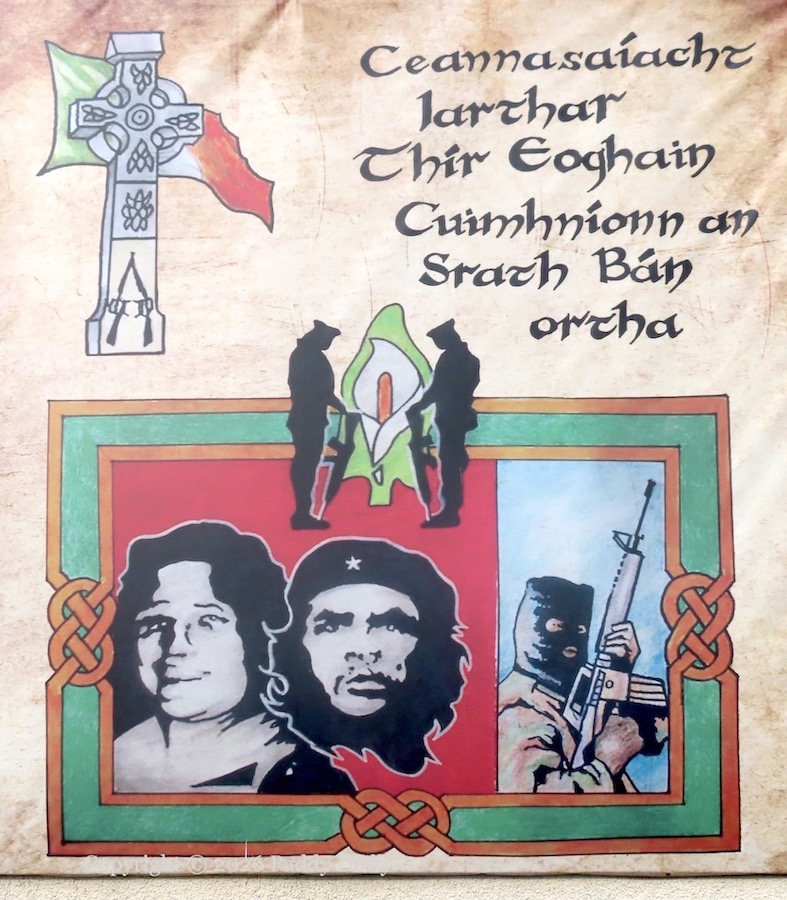
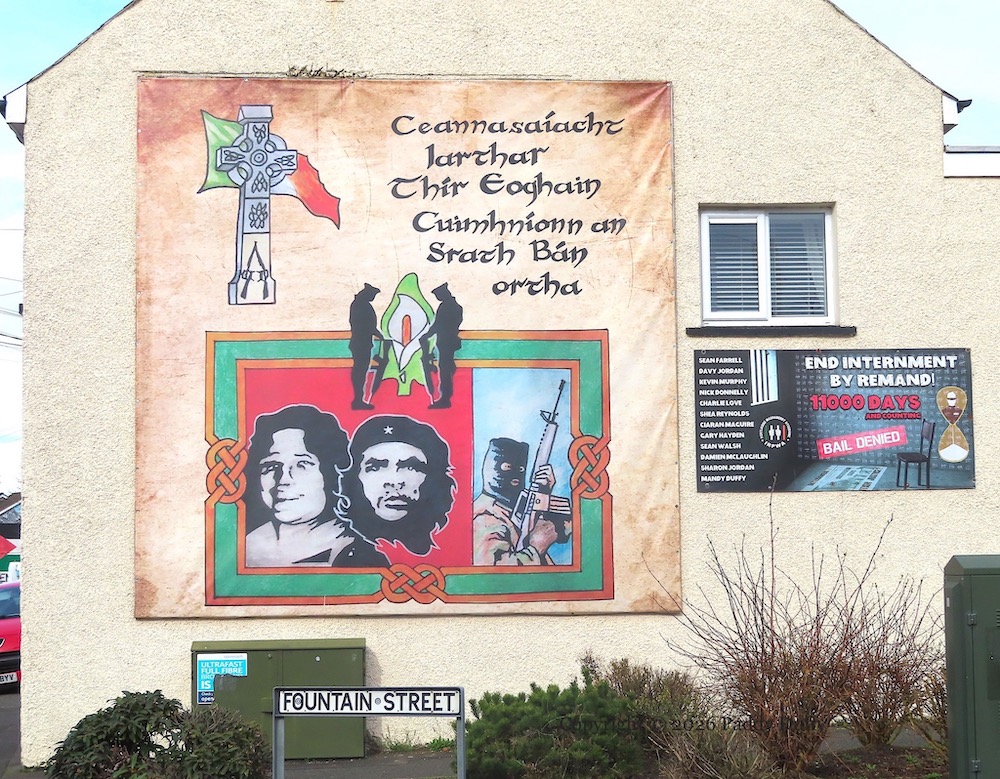
Ceannasaíacht [sic Ceannasaíocht] Iarthar Thír Eoghaın – Cuımhníonn an Srath Bán ortha [sic orthu]. [West Tyrone leadership – Strabane remembers them]”. This large tarp replaces another one that used similar language – Cuımhníonn An Srath Bán Orthu Go Deo – but where that tarp remembered the dead of 1916, this one commemorates Sands and Guevara (who are also painted together just to the viewer’s right on a yard wall – see Revolutionaries) and the hooded gunmen of the Troubles-era armed struggle.
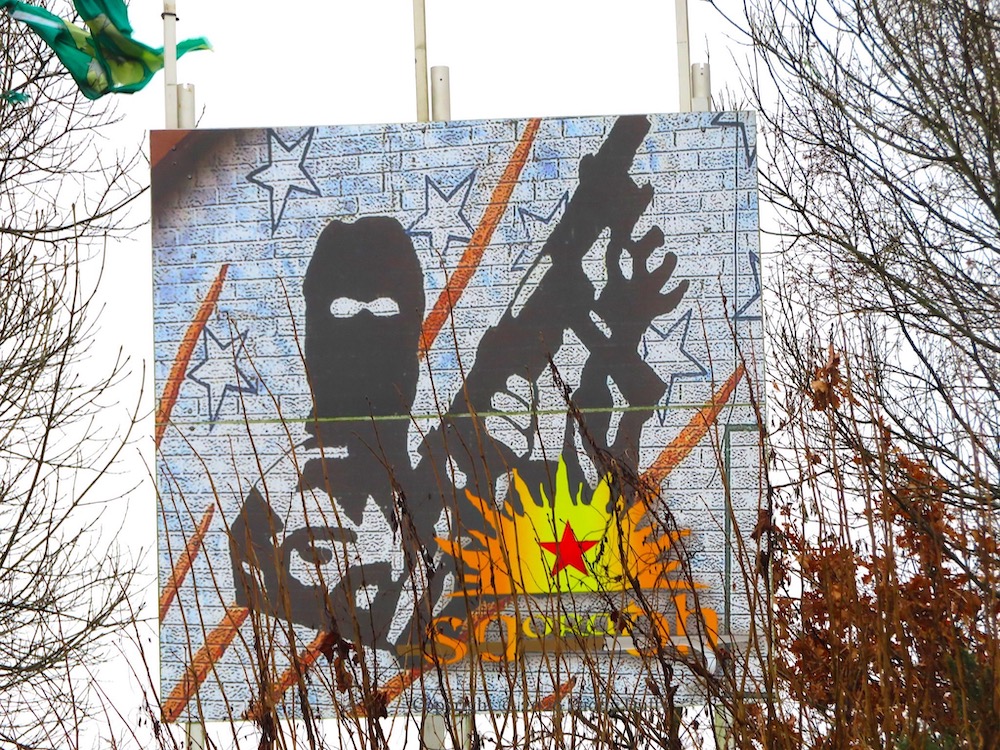
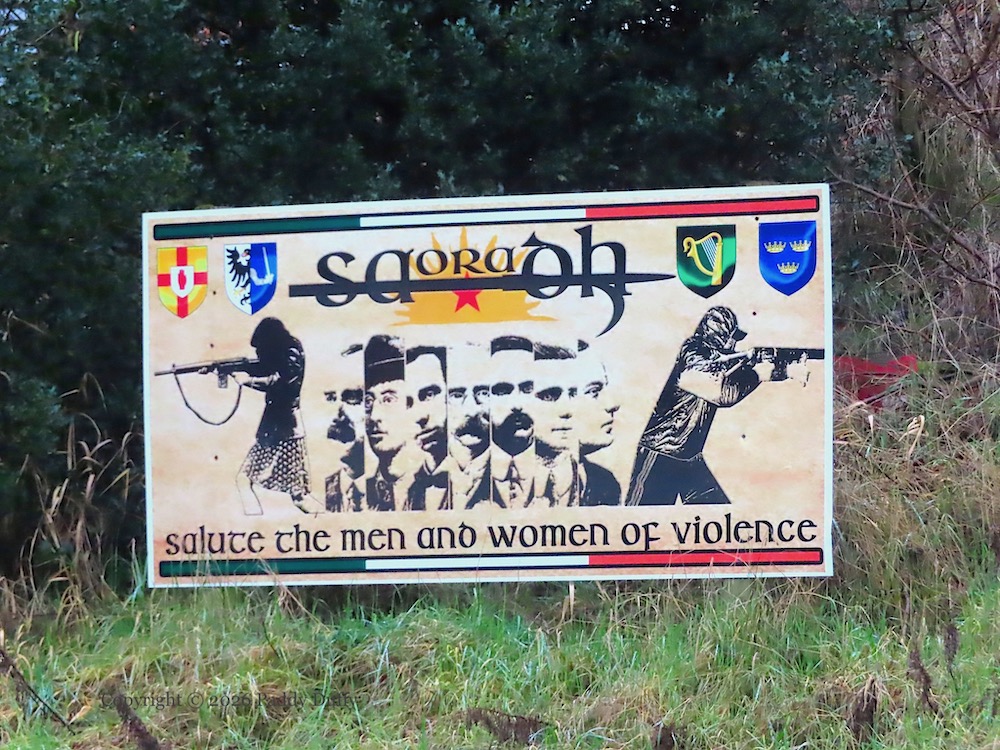
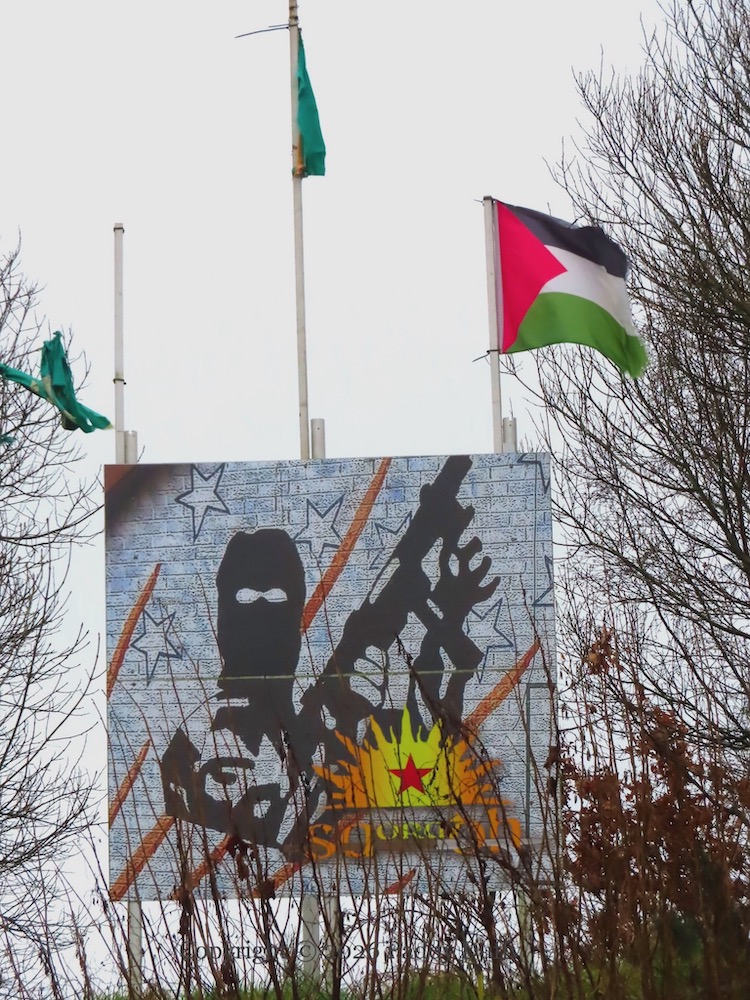
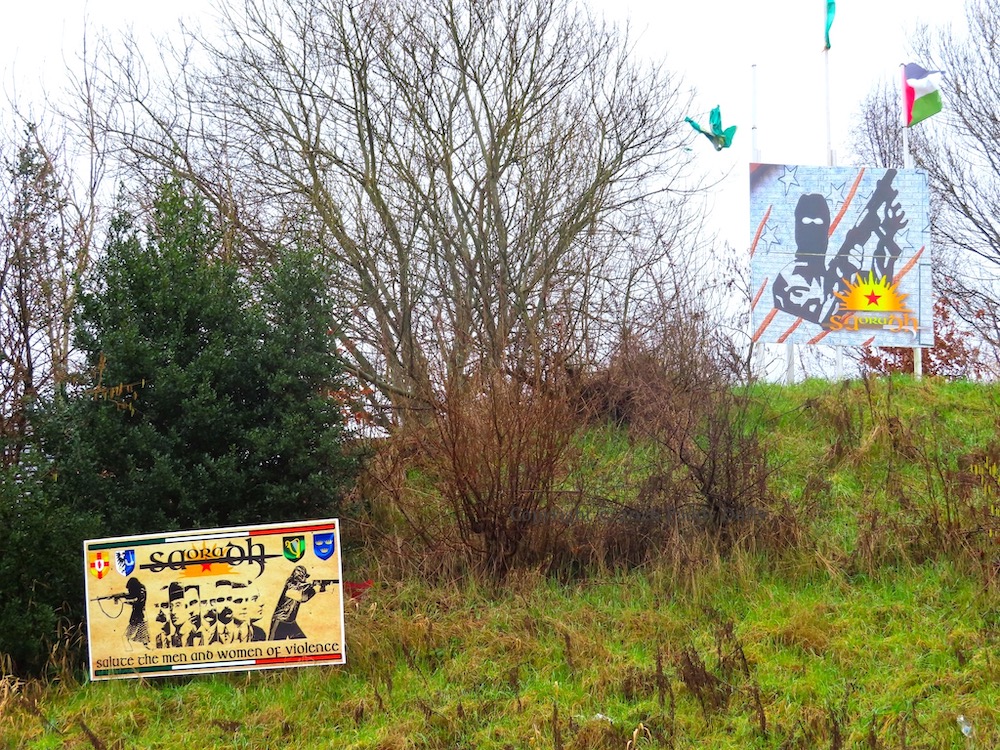
These two Saoradh (web) boards are at the roundabout on Camlough Road, Newry. The one above shows a vintage mural from nearby Carnagat Road that goes back to (at least) 1994 – the version painted in 2000 can be seen in the Peter Moloney Collection.
The other board reads “Salute the men and women of violence”, among whom are the seven signatories to the 1916 Proclamation, the IRA of the Troubles era – illustrated by Colman Doyle’s famous ?1973? (staged) photograph of a female IRA volunteer with AR-18 – and the post-Agreement groups (such as the New IRA) – illustrated by a home-made RPG (shown in Resistance).
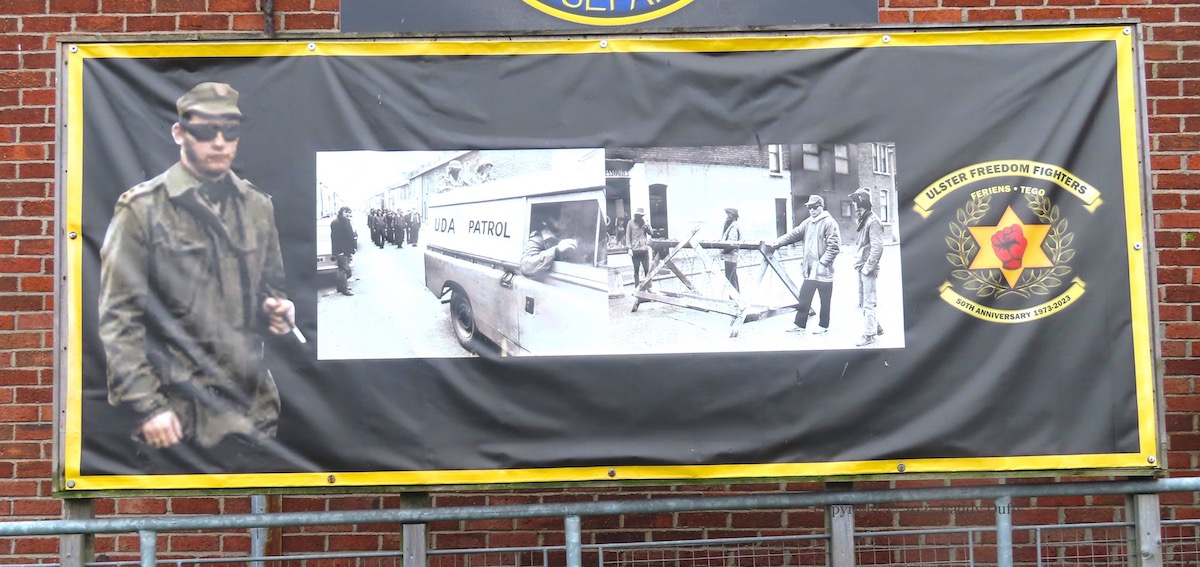
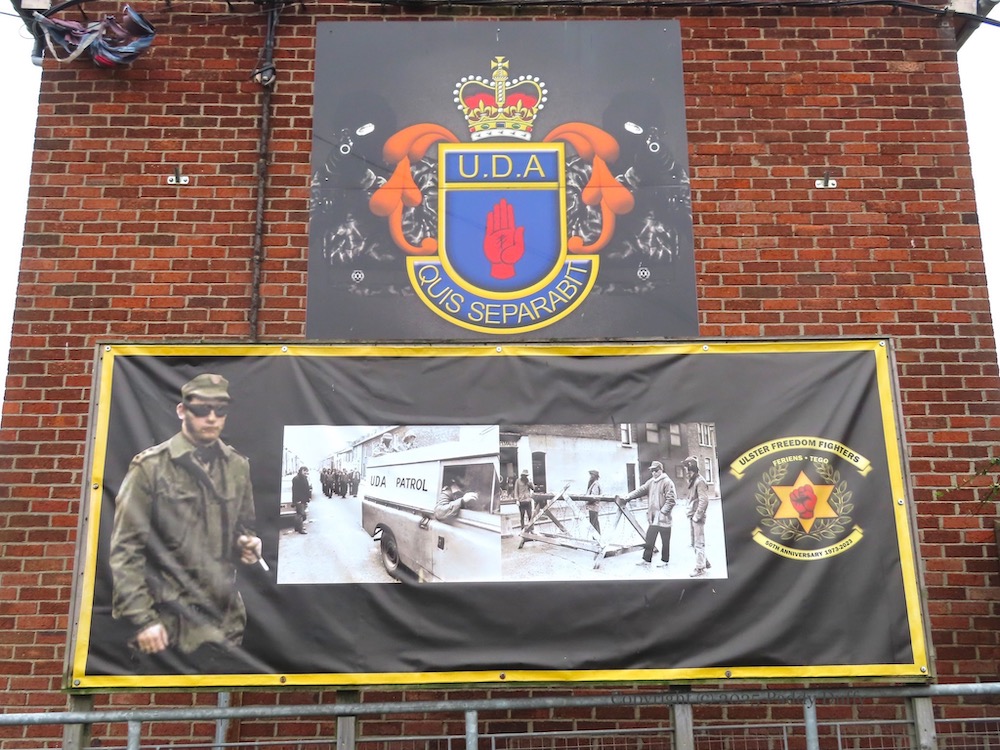
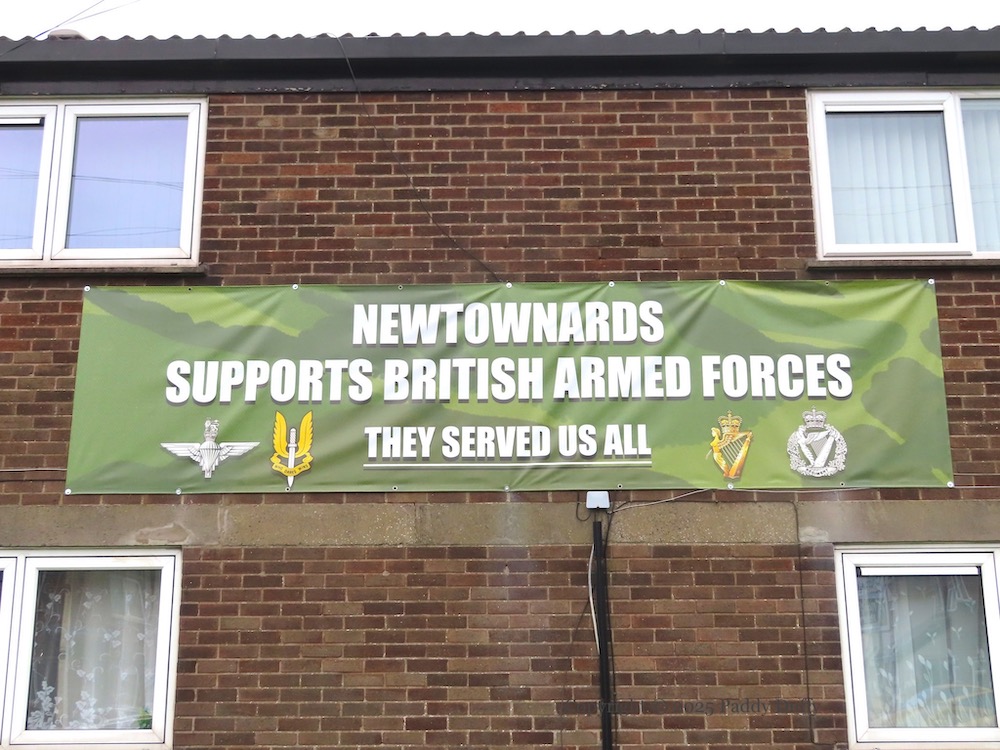
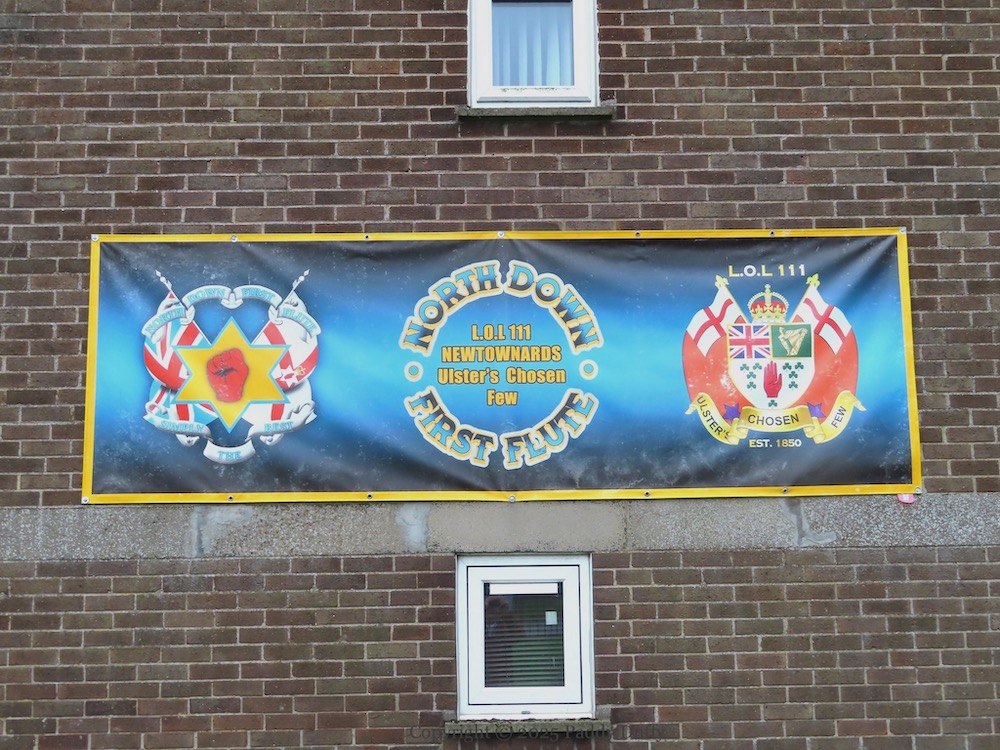
This entry updates the images seen at the end of 2022 (in Loyalist Movilla). The UDA board with hooded gunmen (above) remains as before but the tarp below it is new (though perhaps relocated from the Glen estate). The other two tarps are also new: “Newtownards supports British Armed Forces – They served us all” with the emblems of the Paratroop Regiment, the SAS, the RIR and the UDR, and, “North Down First Flute [Fb], LOL 111 Newtownards – Ulster’s chosen few”.
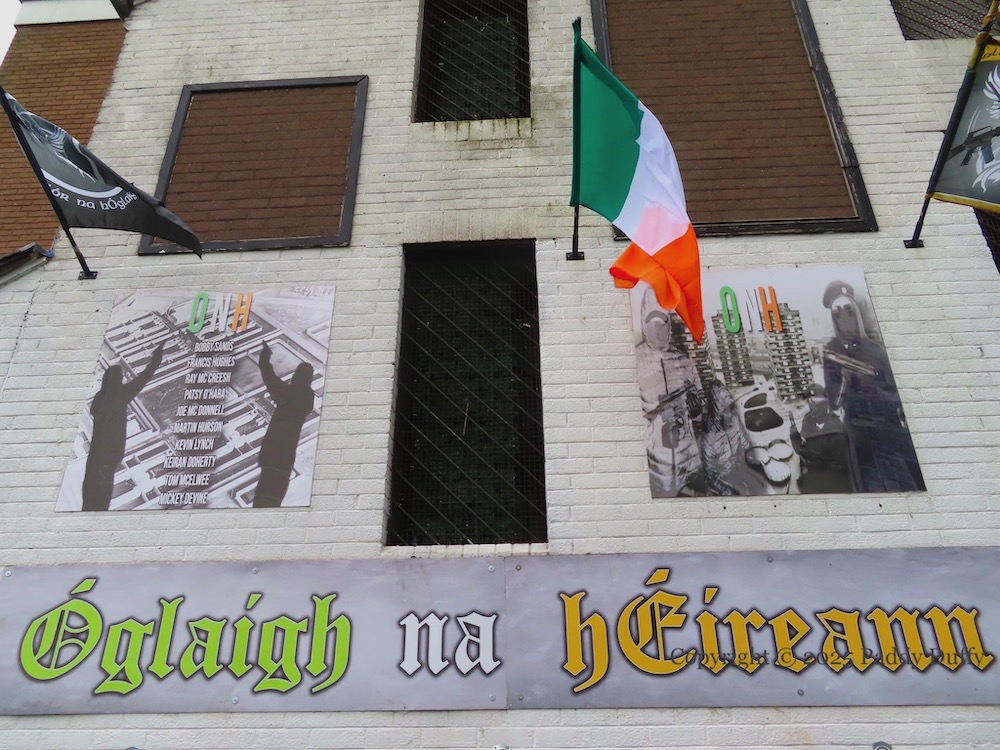
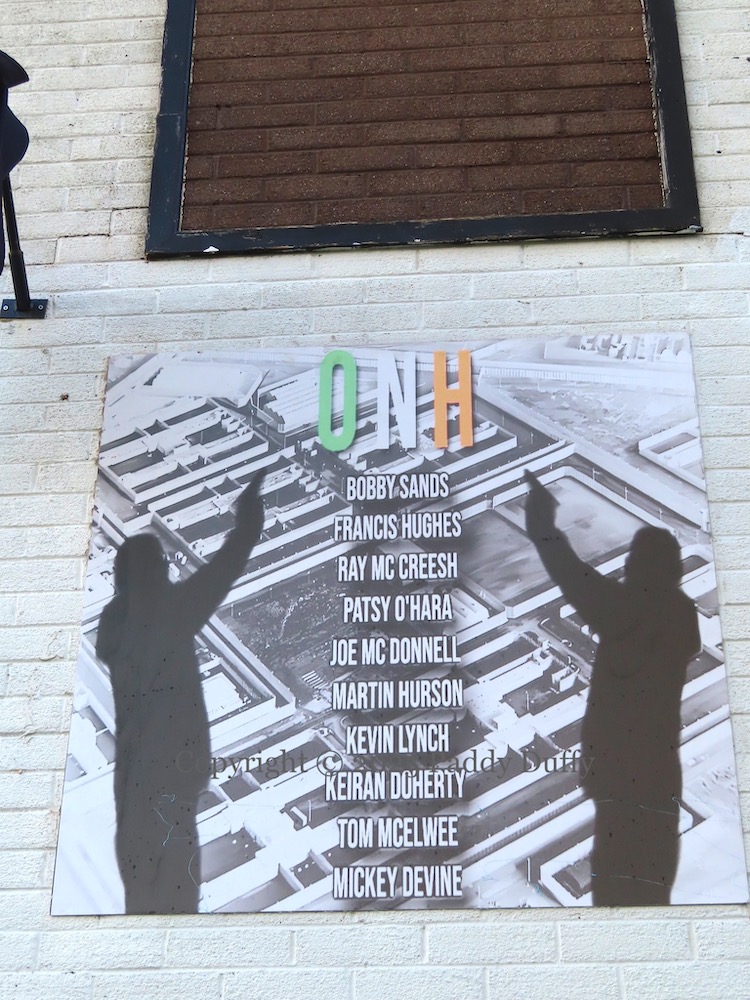
Anti-Agreement armed group Óglaıgh Na hÉıreann split in 2024 (BelTel) with the larger faction following Tony McDonnell (BelTel). Death threats against seven members from the smaller faction (under Sean O’Reilly) were issued and attacks were made in February (BBC), March (Irish News/reddit), and July (Irish News).
The signage seen here is in the New Lodge in north Belfast. On the left are the names of the ten deceased 1981 hunger-strikers, on the right, armed and masked volunteers pose against a background of a vintage picture of the flats (from Getty Images – BBC).
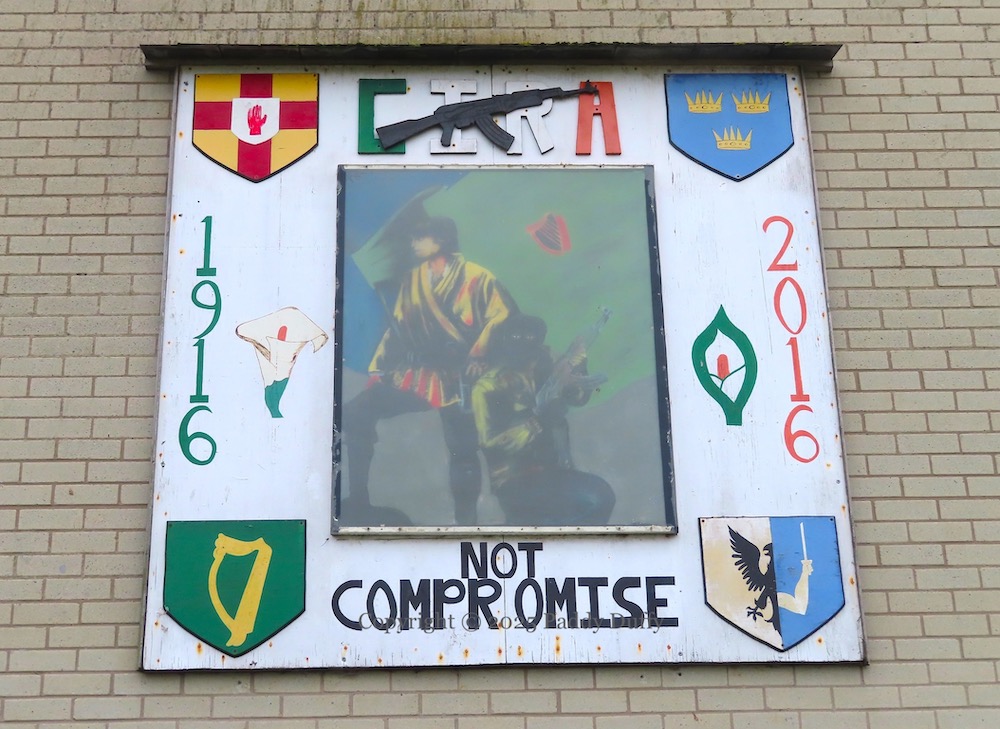
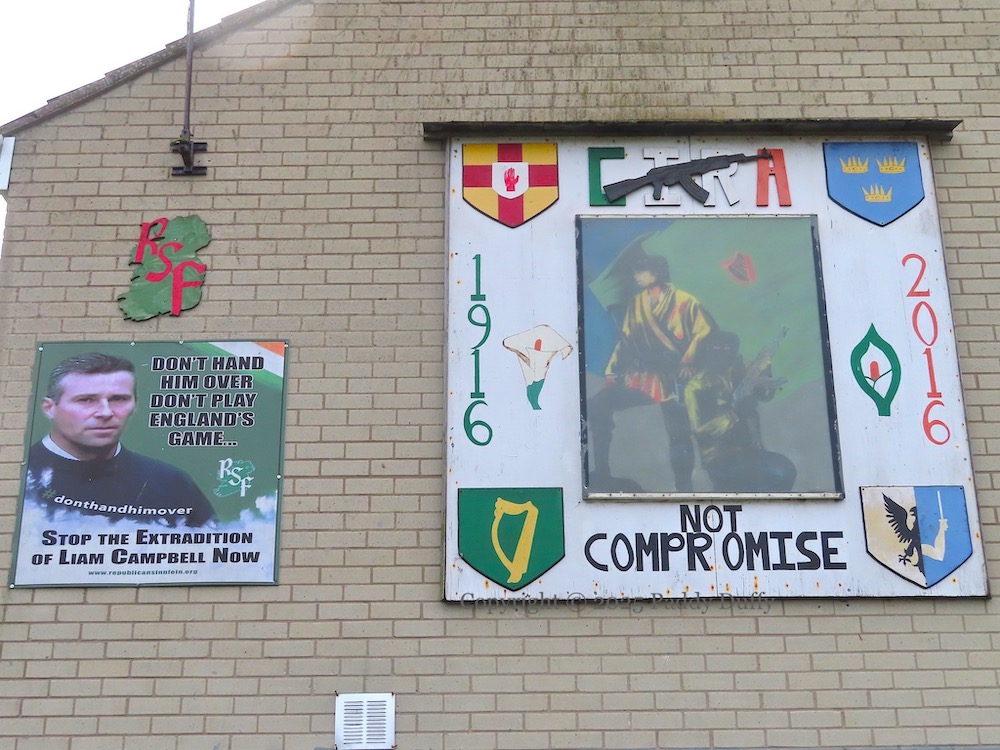
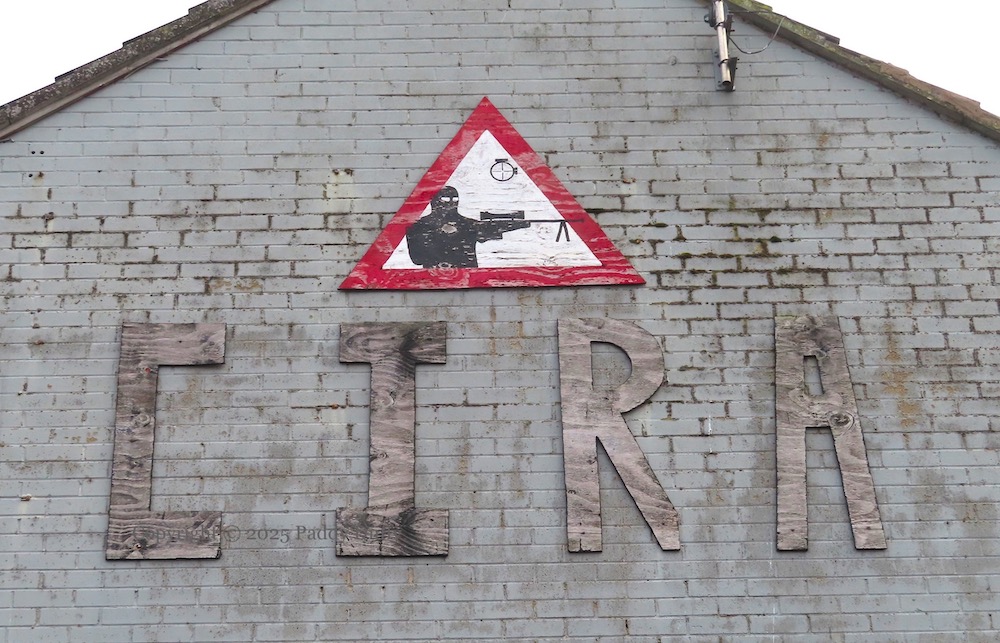
The CIRA (Continuity IRA) is the military wing of Republican Sınn Féın (RSF web), which split from Provisional Sınn Féın in 1986, though the military campaign did not begin until the Provisional IRA ceasefire in 1994. Like all of the various IRAs, the CIRA claims to be continuing the fight for (all-island) Irish freedom begun with the 1916 Easter Rising – the board (above) commemorates the centenary of the Rising.
To the left is a slightly newer RSF board: “Stop the extradition of Liam Campbell now – don’t hand him over, don’t play England’s game”. Campbell was extradited from the Republic to Lithuania in 2022 (BBC) but was returned to Ireland later the same year when a court ruled the statute of limitations has expired (RN).
The CIRA’s armed campaign is represented by the hooded gunman in the ‘warning sign’ below.
Also included (last below) is a small IRSP (web) stencil.
The pieces are in the adjacent Meadowbrook and Drumbeg areas of Lurgan.
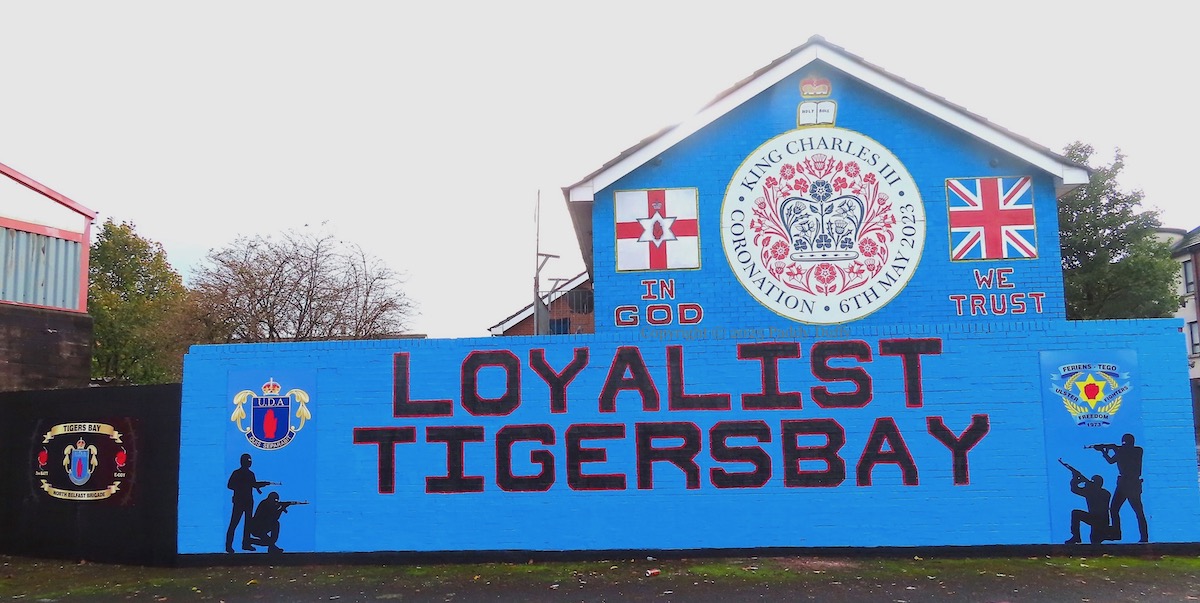
Stop The Boats has been painted out below the large “Loyalist Tiger’s Bay” and the entire wall painted in solid blue and book-ended by UDA and UFF boards showing silhouetted gunmen in active poses.
The side-wall, home to painted Orange Order symbols since 2017, has been painted black and a board (above) added to E company from Tiger’s Bay. (It’s possible “North Belfast brigade” and “3rd battalion” are the same thing.)
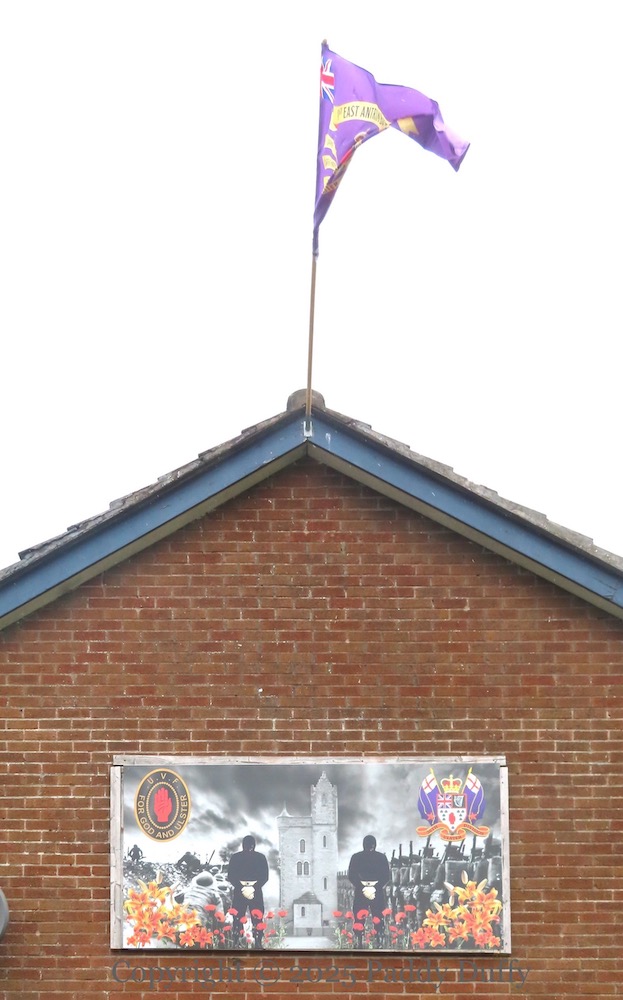
Modern UVF volunteers in balaclavas stand with heads bowed on either side of the Ulster Tower in Thiepval, standing among orange lilies and red poppies.
On the left the 10th Scottish Rifles (AWM) commence a raid, below the emblem of the Ulster Volunteer Force, and on the right, the Royal Fusiliers appear to march off to war in a press photograph (Flickr), below the emblem of the 36th (Ulster) Division.
In Grange Drive, Ballyclare, on the same as wall, and using part of the frame from, a previous UDA board: Young Guns.
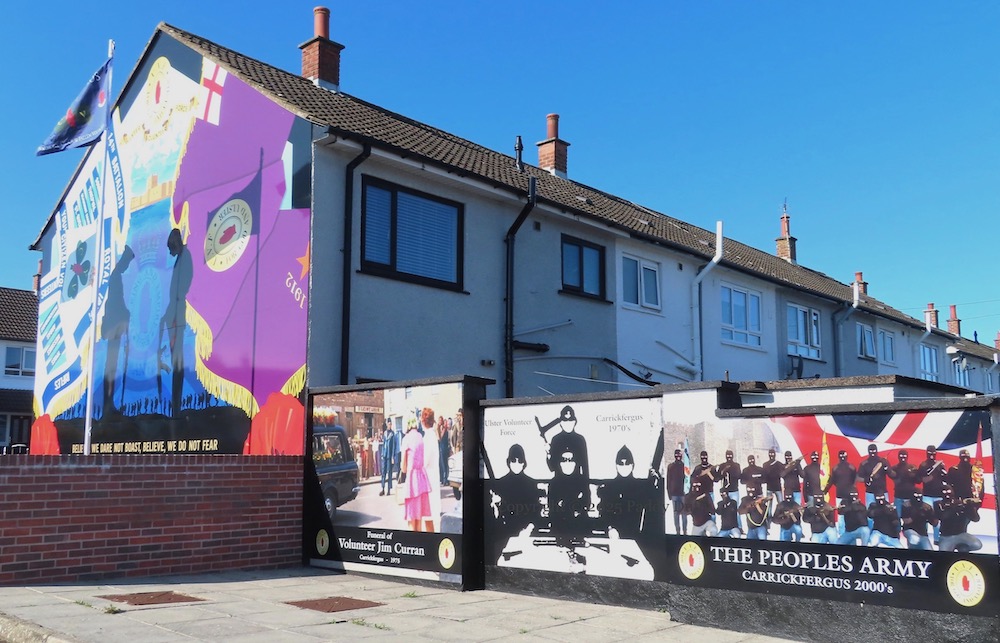
Rudyard Kipling’s 1912 poem ‘Ulster’ (Kipling Society) predicts destruction for Protestants under Home Rule and calls for violent resistance, even if it means sacrificing one’s own life: “Believe, we dare not boast/Believe, we do not fear/We stand to pay the cost/In all that men hold dear”.
As is well known, the Ulster Volunteers were founded and smuggled in weapons, but before they could be used, the Great War began and the Volunteers signed up for Kitchener’s Army – the flag on the left includes the battles in which the Central Antrim Regiment of the Royal Irish Rifles (as part of the 36th Division) participated, fighting “For King and Empire”.
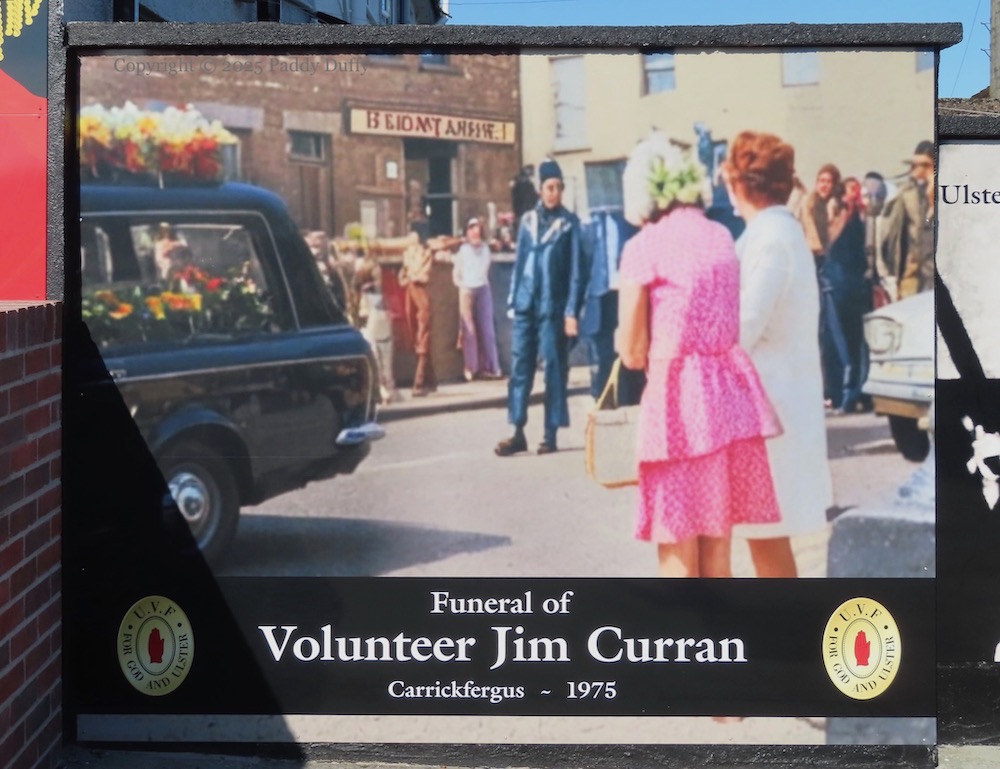
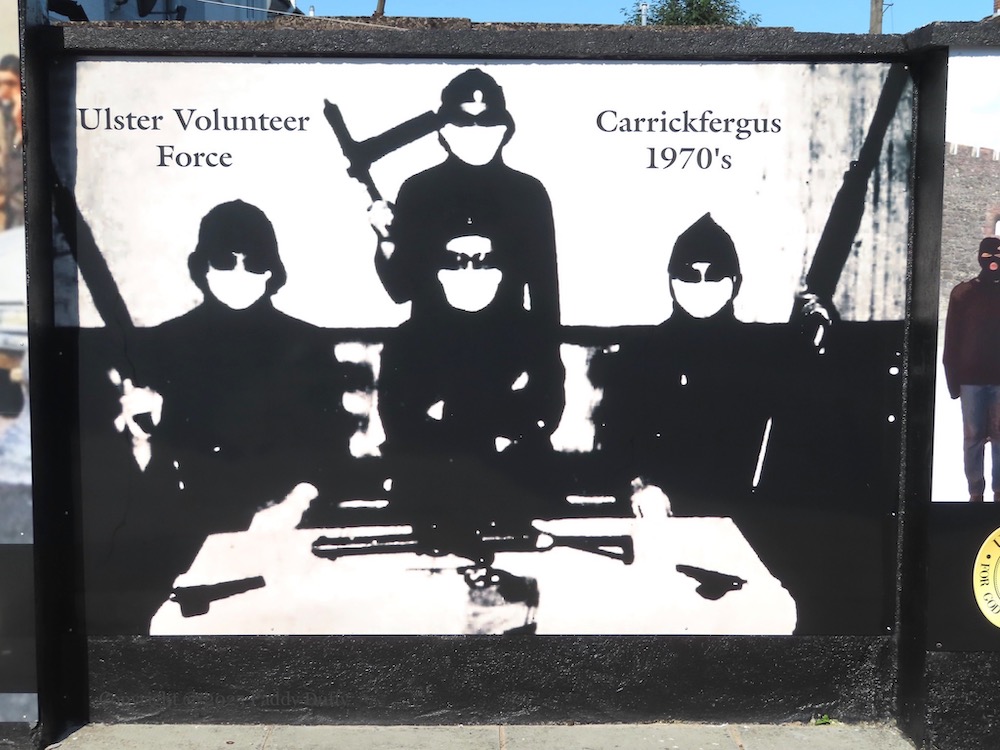
The graveside mourner on the right, the 1st East Antrim Battalion UVF, and all of the smaller panels on the right, belong to the Troubles era. There is no information about Jim Curran in 1975; the image of Curran’s funeral appears to be AI-generated.








 Paddy Duffy Collection