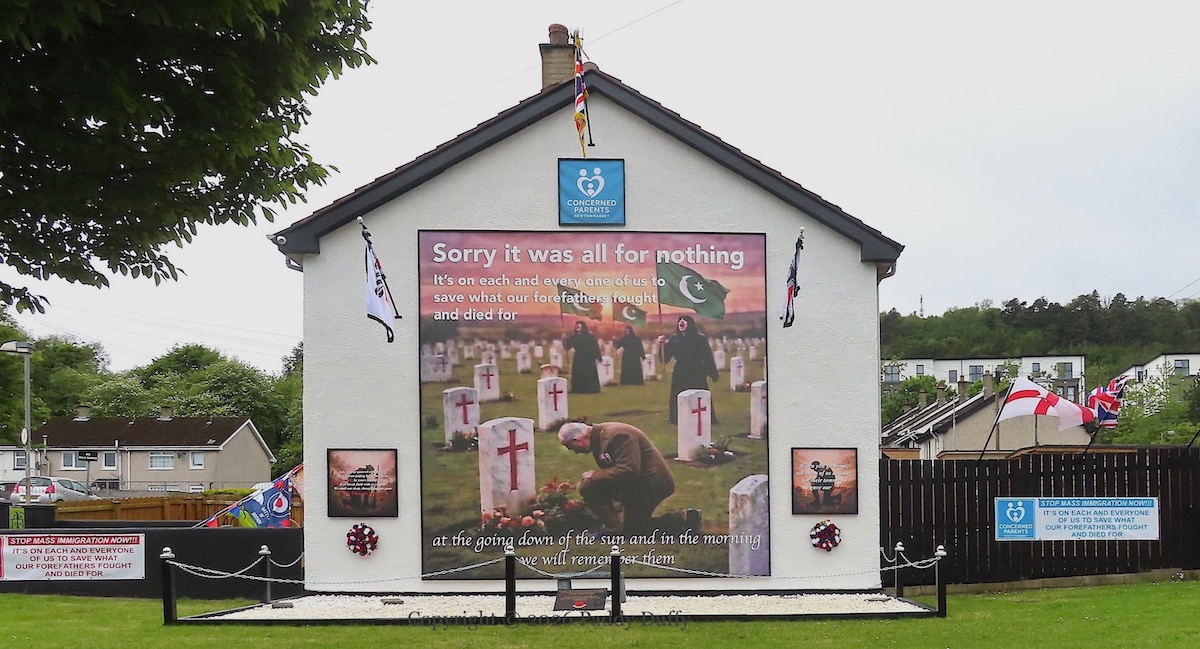
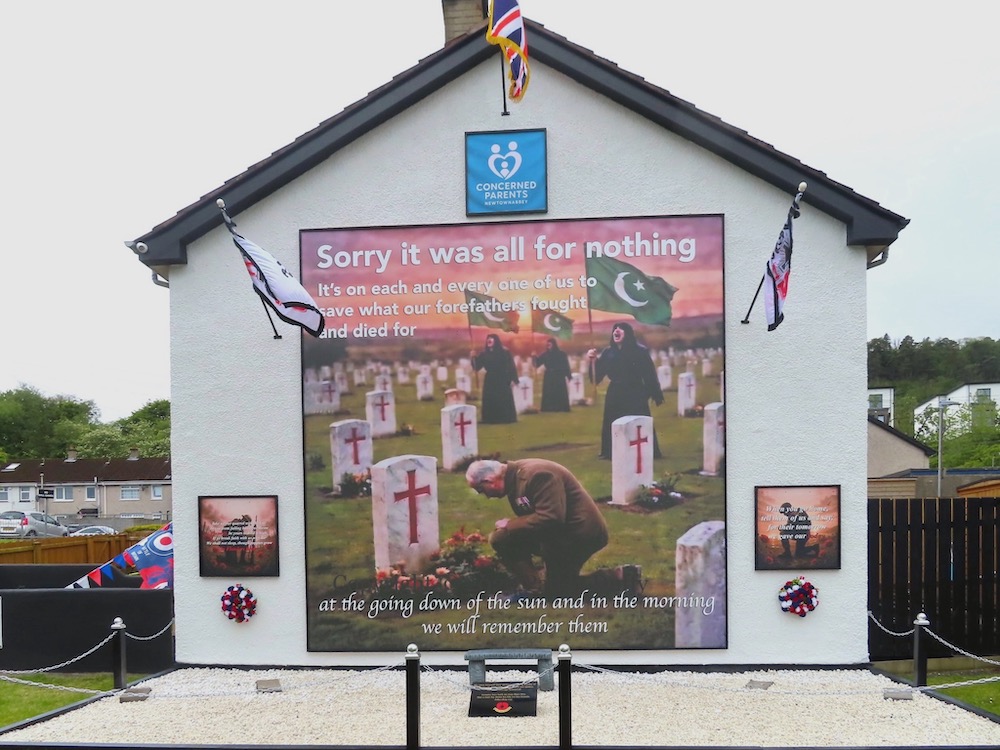
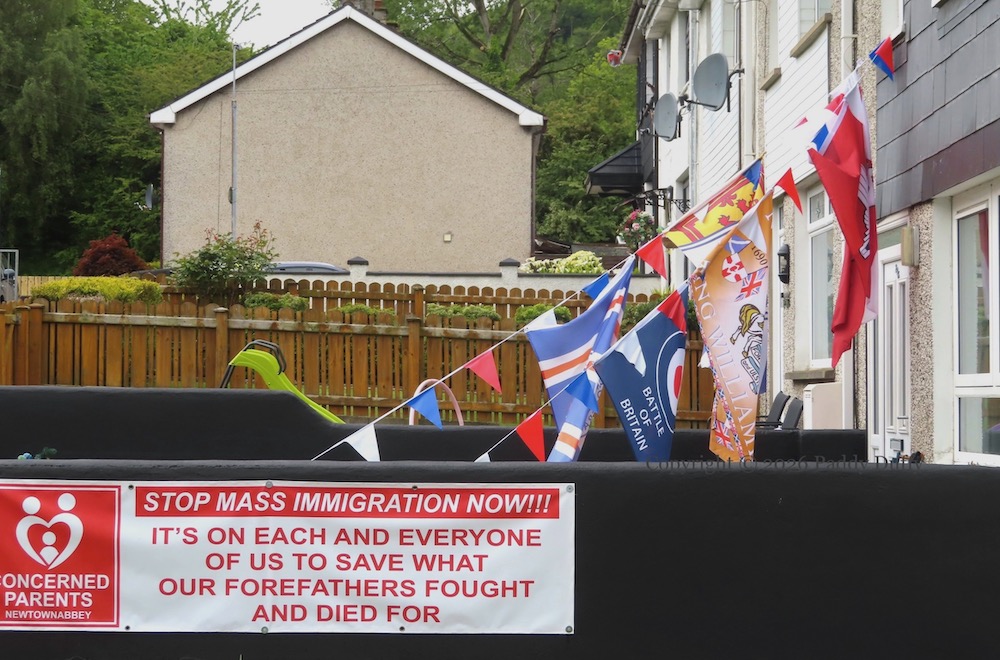
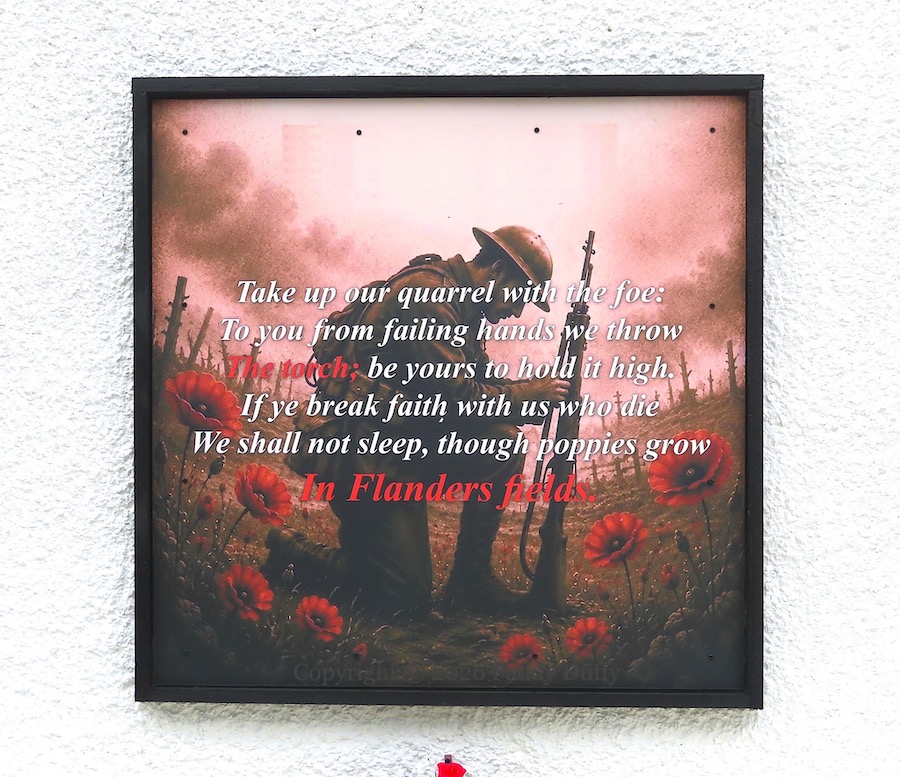
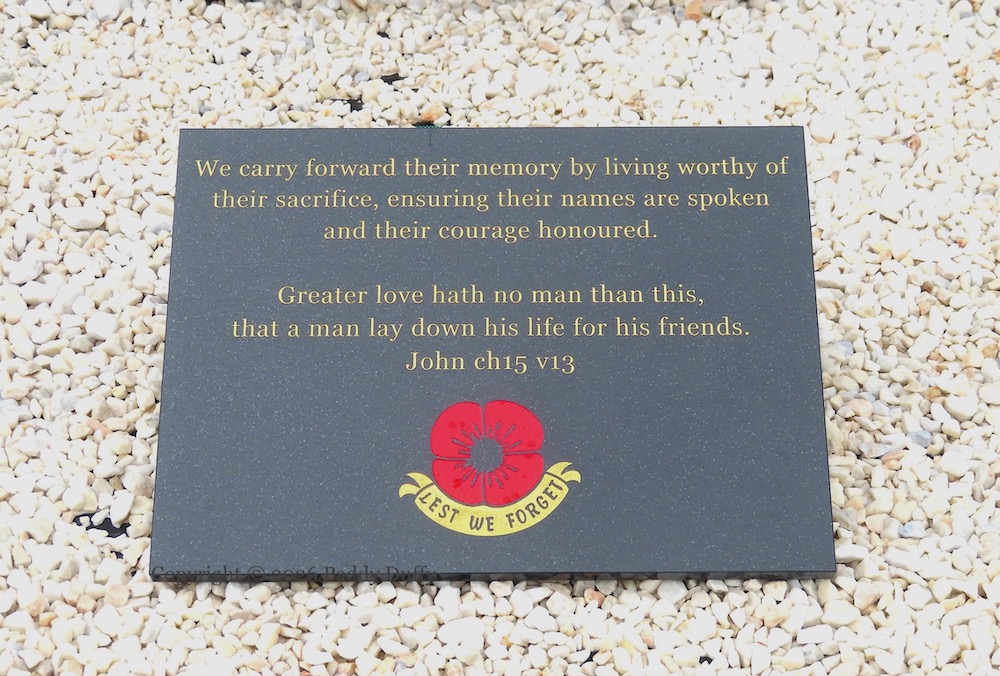
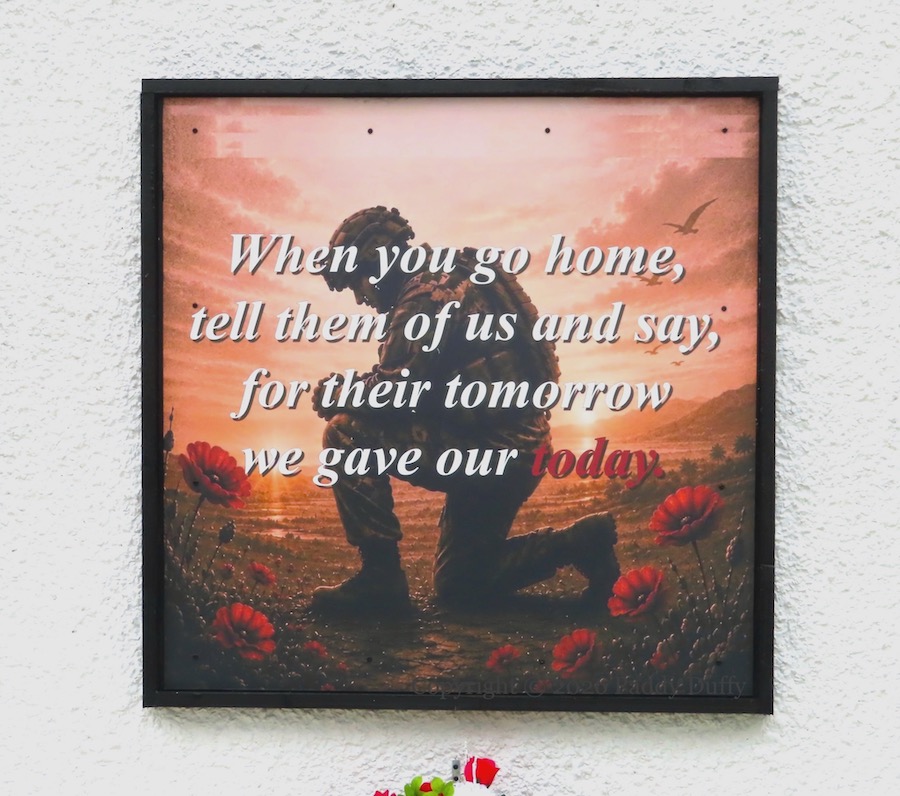
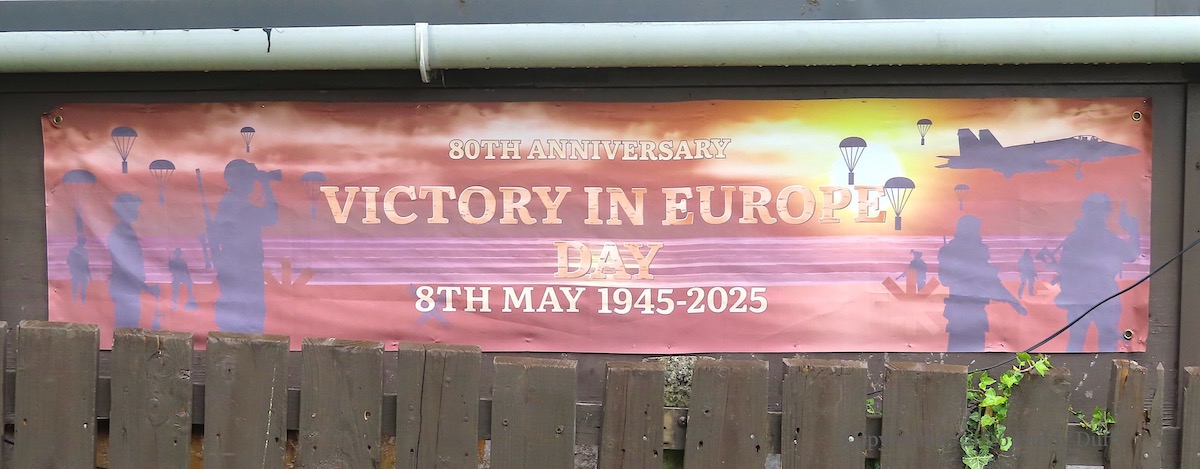
This entry updates the images in Sorry It Was All For Nothing, which showed the central board a few days before its official launch, on May 8th. In the few days before the launch, the “garden” area was added, the pebble-dashed wall was repainted, and the small boards of kneeling soldiers – both WWI and modern British forces – were added on either side.
Doagh Road, Cloughfern, Newtownabbey
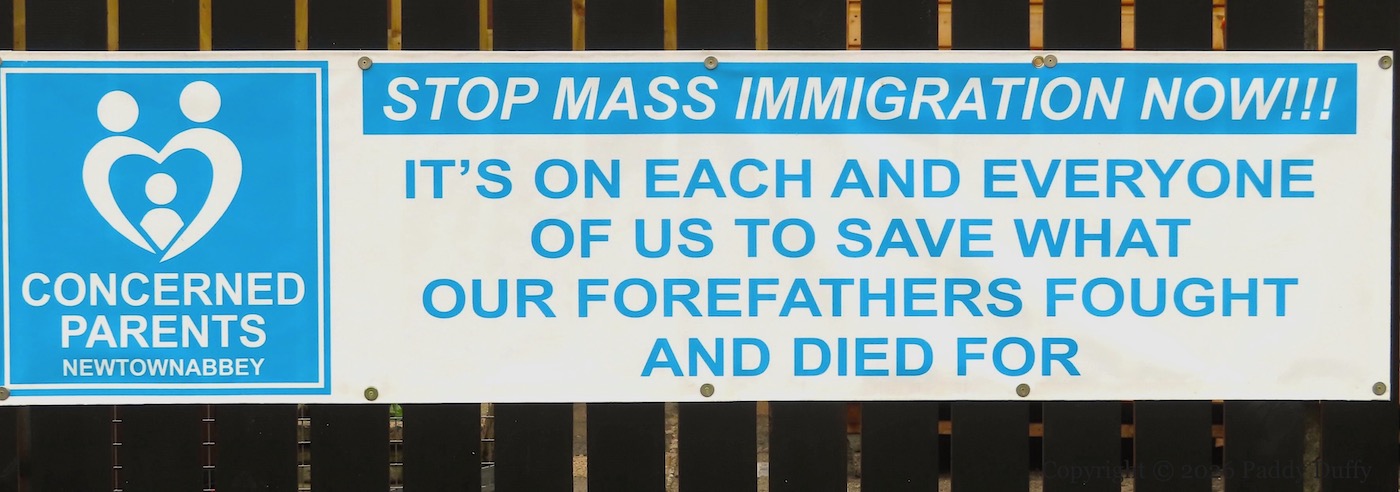
Update: the board was paint-bombed; Concerned Parents accused three immigrants in a silver Fiat (Fb) of attacking the “war memorial” but Lasaır Dhearg claimed responsibility (ig).
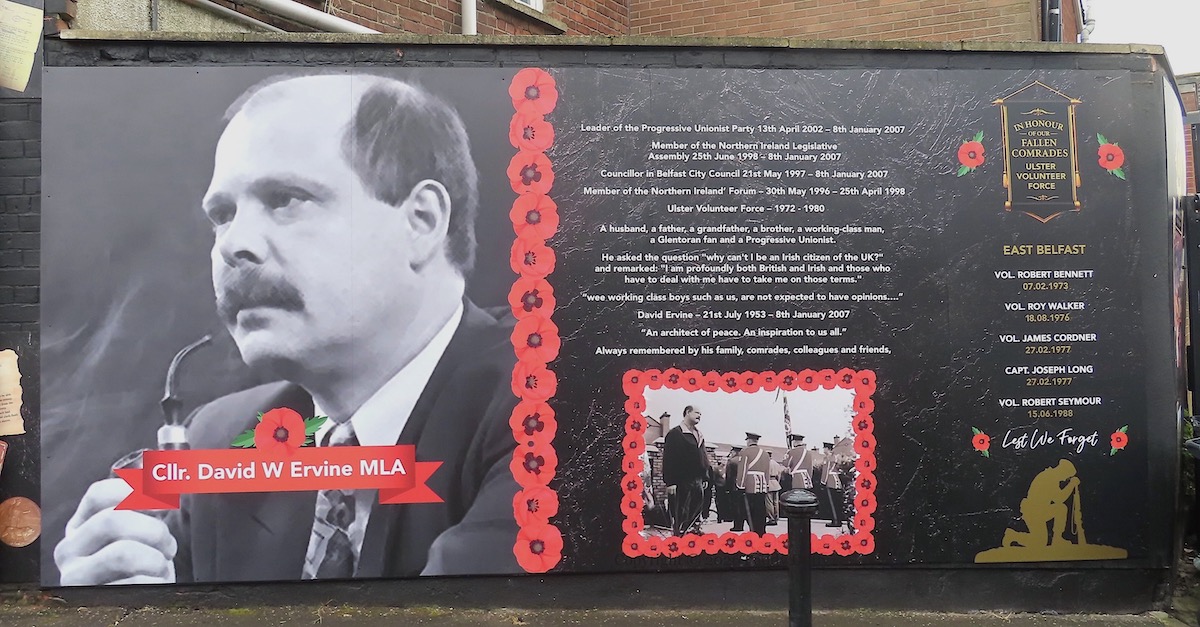
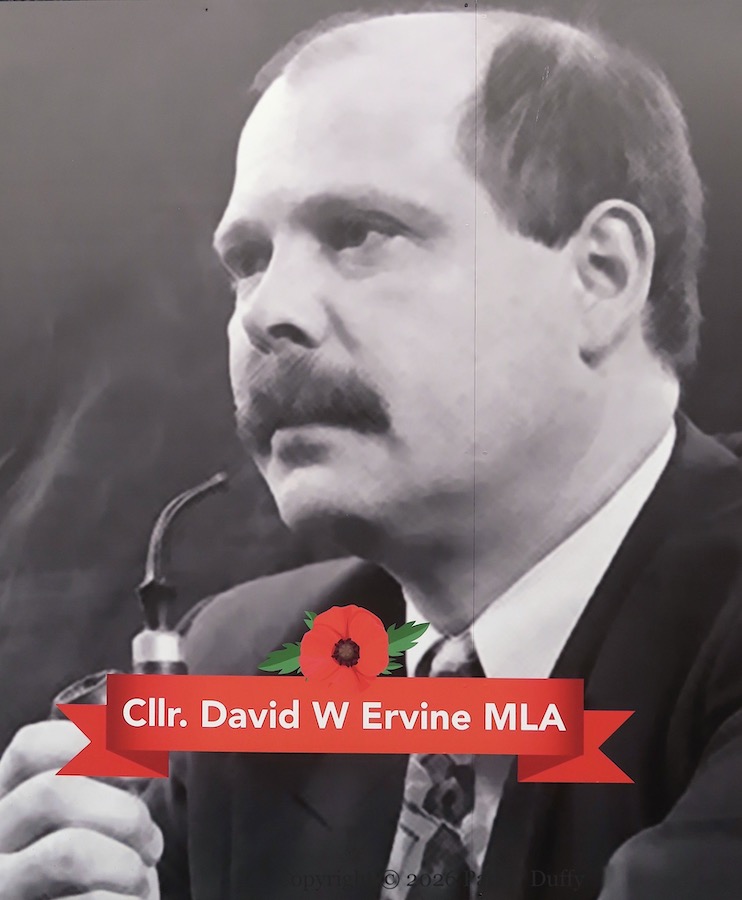
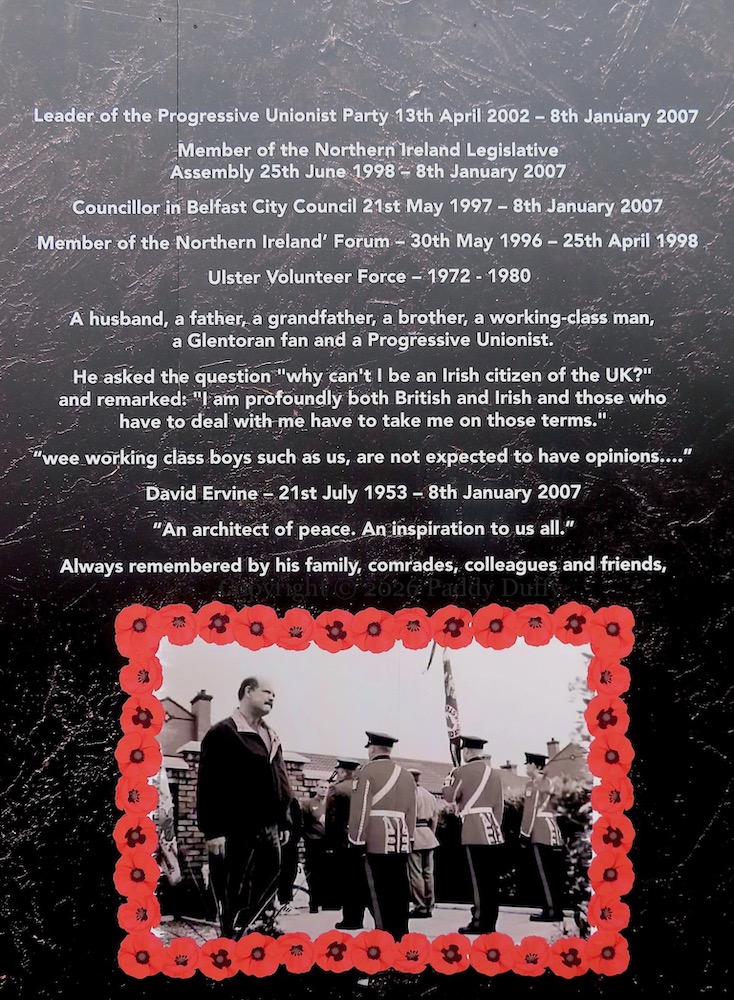
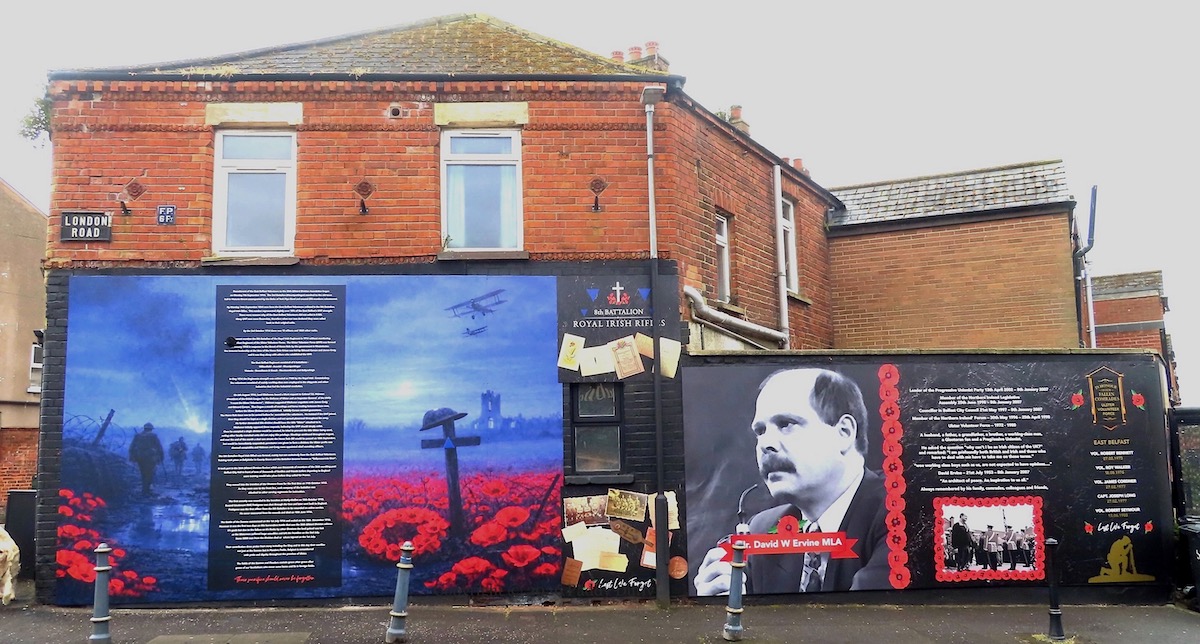
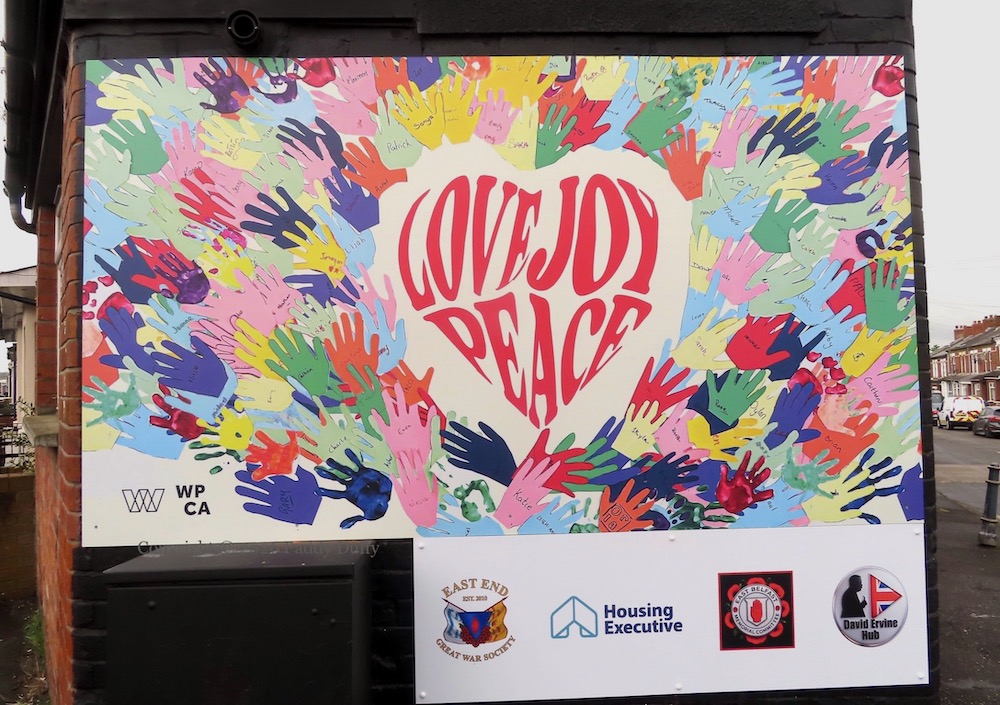
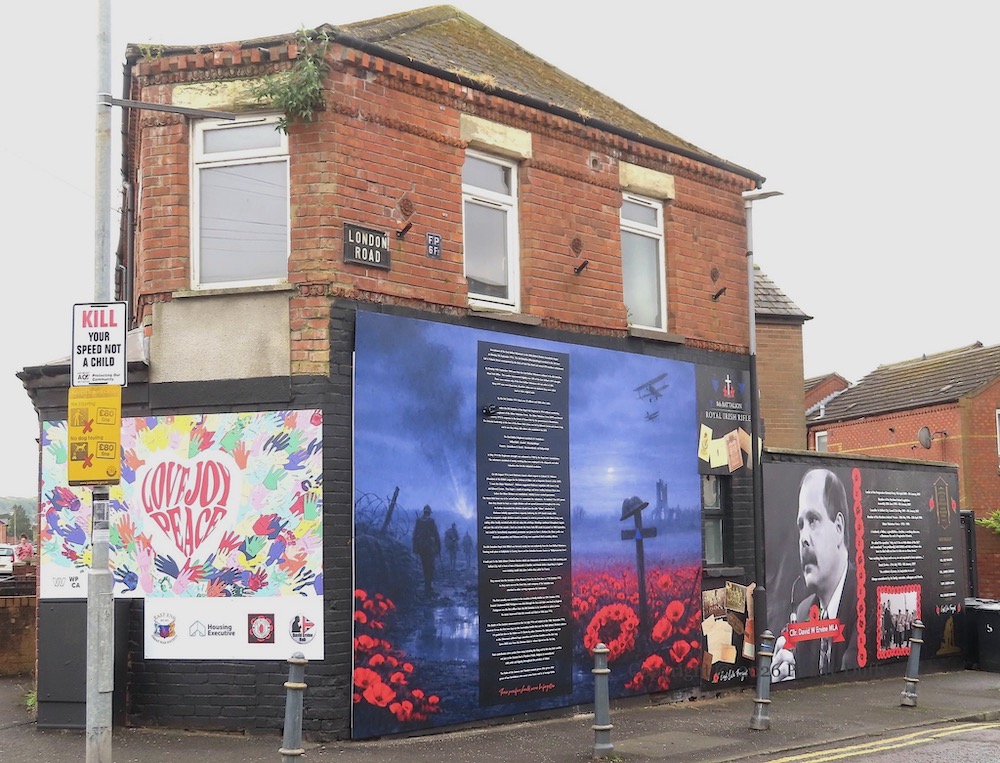
The UVF boards at the junction of London and My Lady’s roads in east Belfast have been completely replaced (compared to 2022). The hooded gunmen on the short side have been replaced by “Joy, peace, love” while a tribute to David Ervine now replaces the lettering reading “East Belfast Ulster Volunteer Force”. Ervine was a UVF member from 1972 to 1980 before turning to a career in politics. “He asked the question “why can’t I be an Irish citizen of the UK?” … “An architect of peace. An inspiration to us all.” Always remembered by his family, comrades, colleagues and friends.”
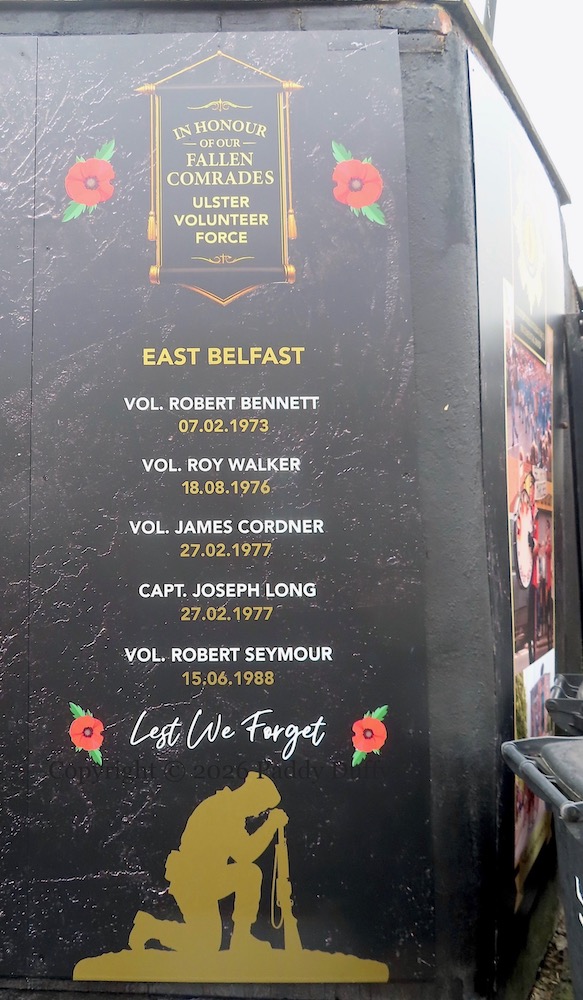
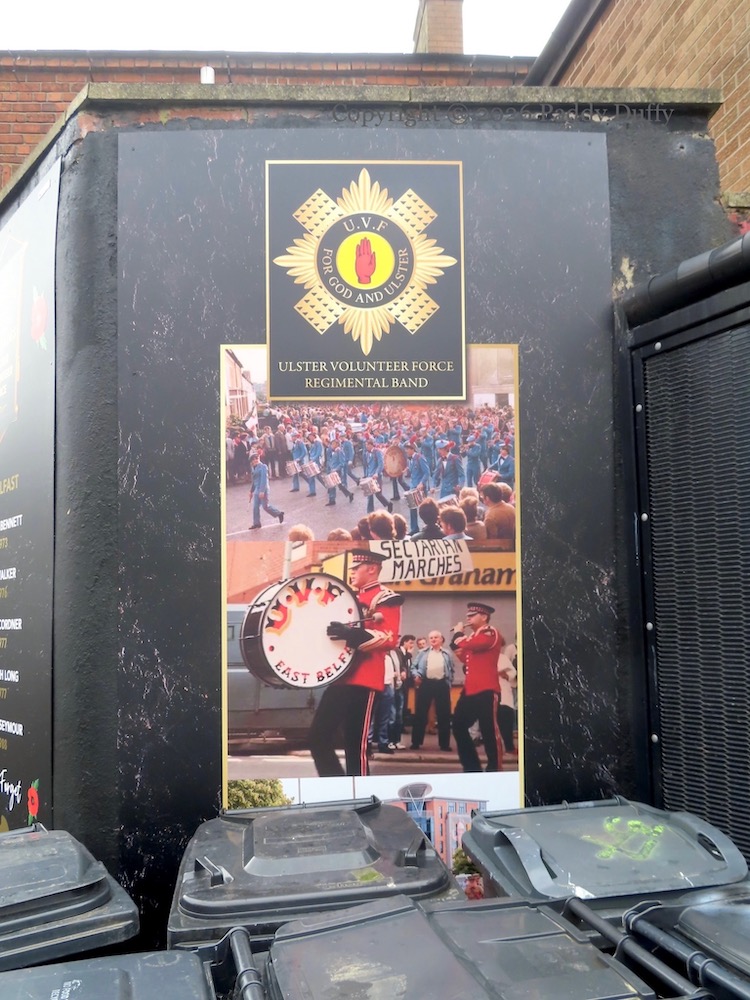
Next to Ervine is a UVF roll of honour in which Roy Walker joins Robert Bennett, James Cordner, Joseph Long, and Robert Seymour, who were previously portrayed (Ulster’s Brave). Walker was killed in a feud with the UDA in 1976. And around the corner the UVF emblem has been replaced by a board to the Ulster Volunteer Force Regimental Band, containing a controversial photograph of the band marching past the site of the 1992 Sean Graham bookies massacre (Crime World). Update: the photograph has been replaced – see the parallel entry in the Seosamh Mac Coılle Collection.
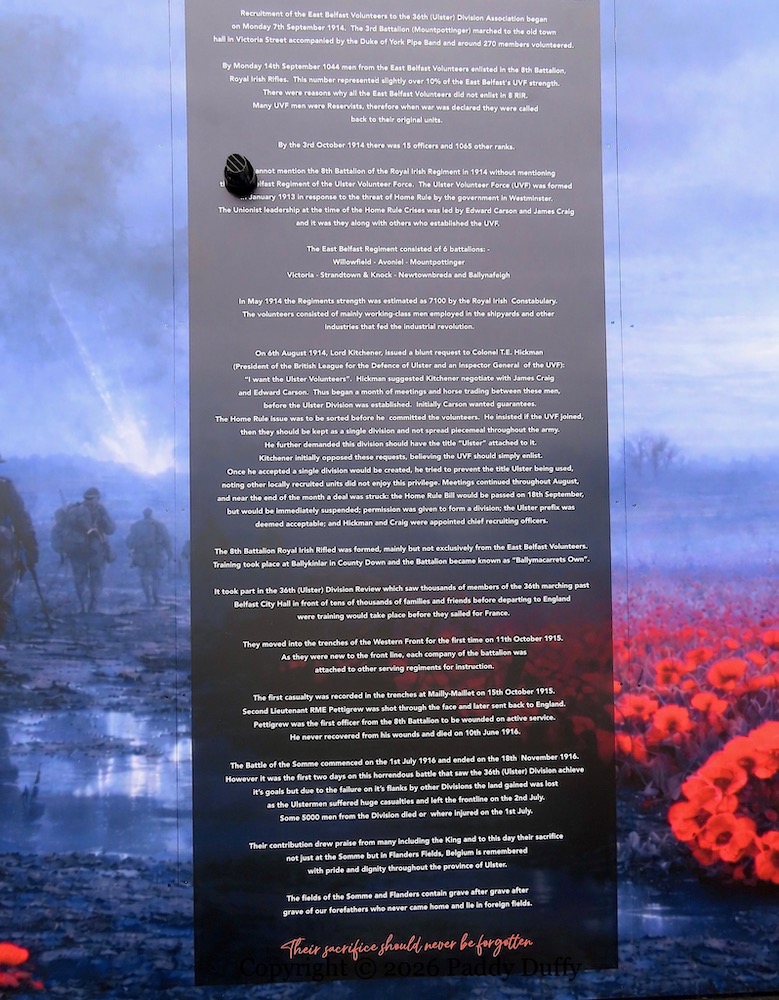
The largest panel remains a tribute to the dead of WWI, for which see again the parallel entry in the Seosamh Mac Coılle Collection.
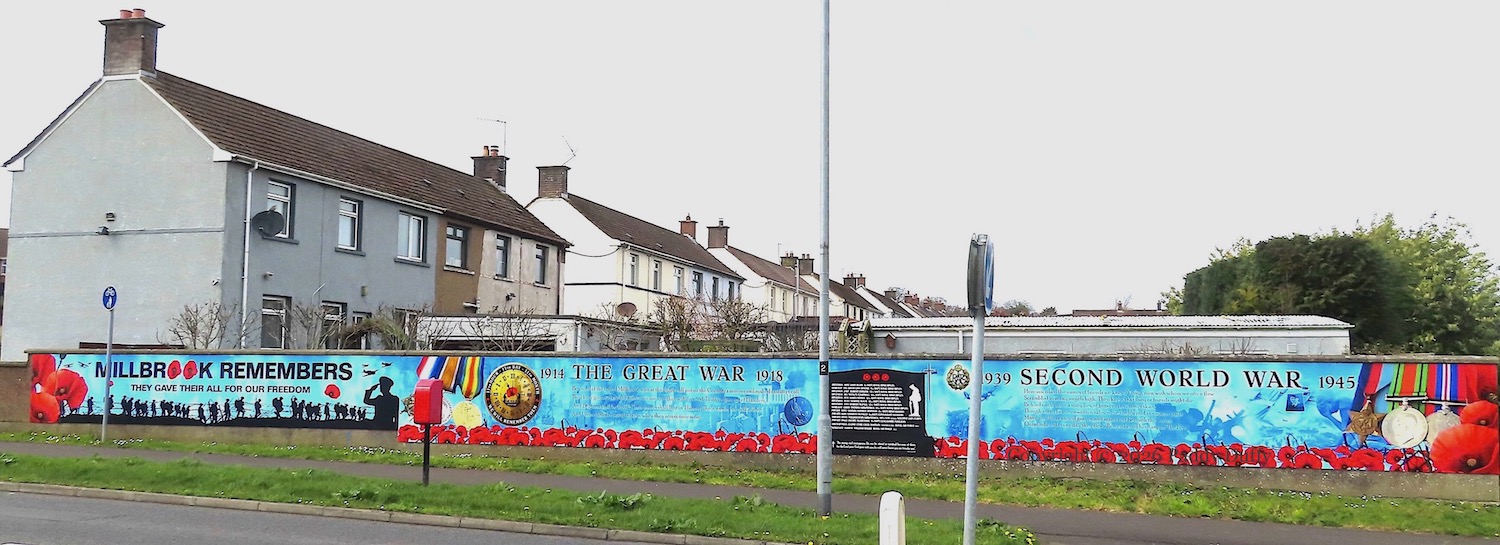
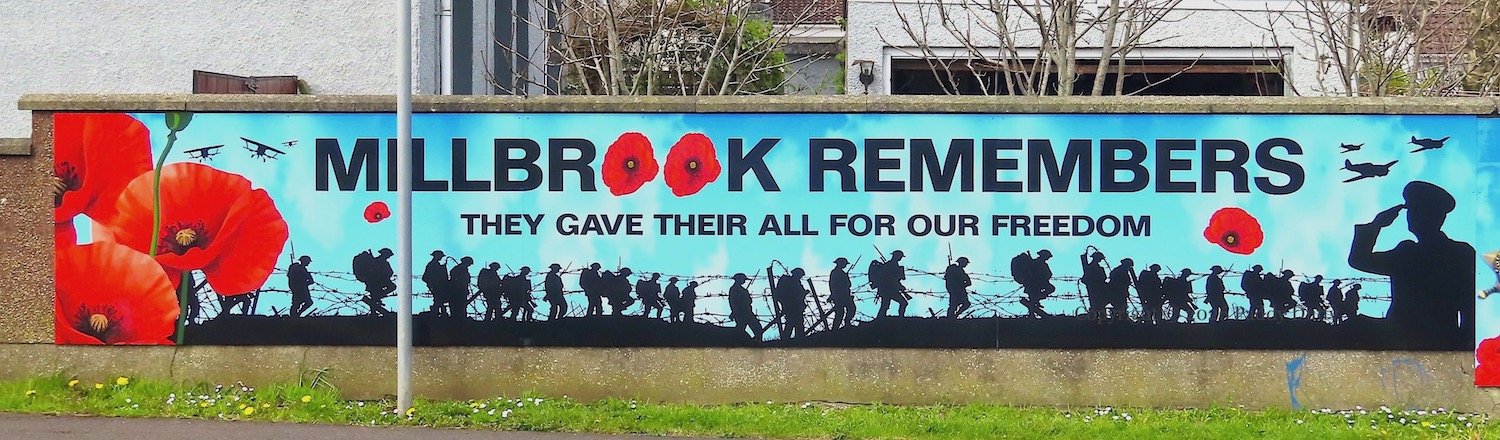
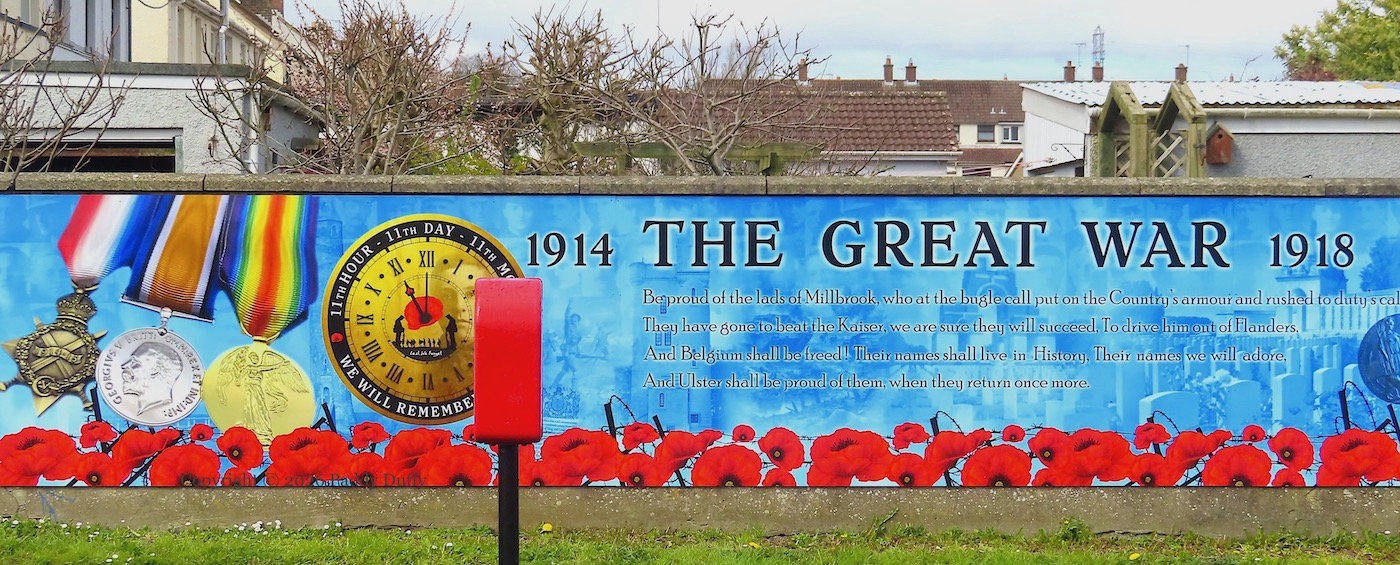
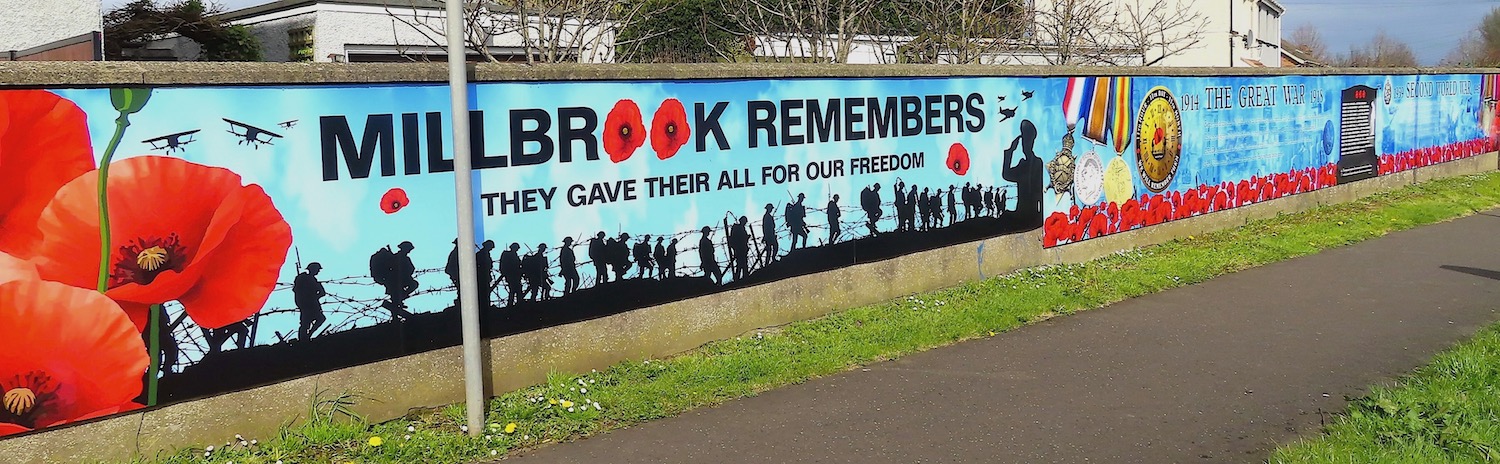
“Millbrook remembers – they gave their all for our freedom.” Here is a new installation in the Millbrook area of/just outside Larne, celebrating and commemorating the sacrifice of locals who lost their lives while serving the British forces during the World Wars.
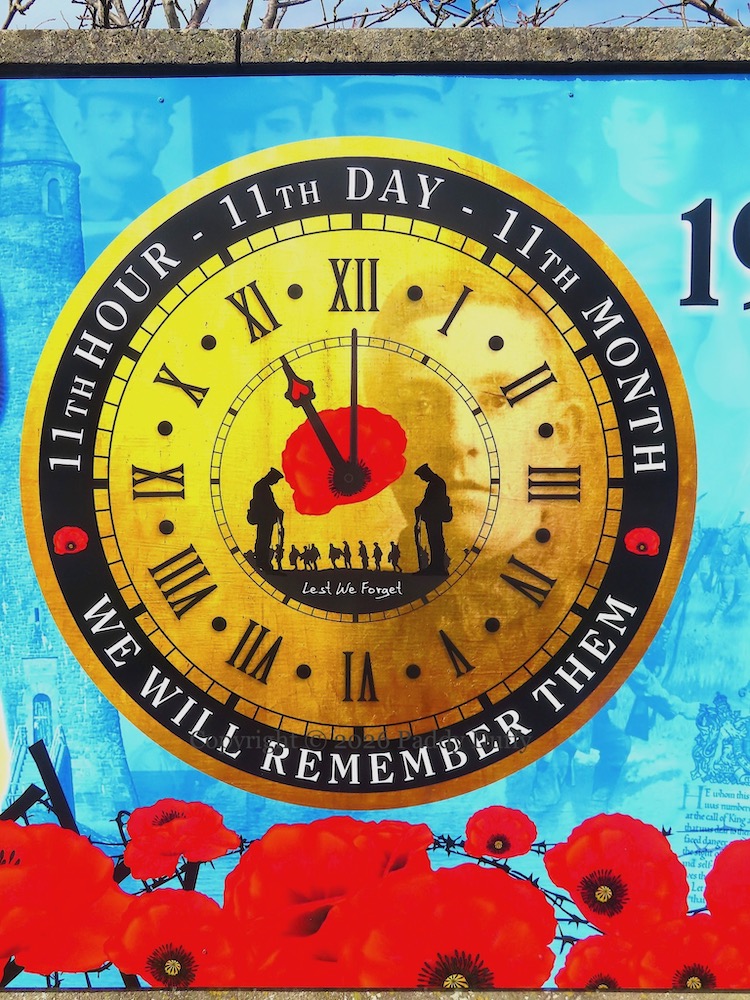
The Great War 1914-1918: “Be proud of the lads of Millbrook, who at the bugle call/put on the Country’s armour and rushed to duty’s call They have gone to beat the Kaiser, we are sure they will succeed,/To drive him out of Flanders, And Belgium shall be freed! Their names shall live in history, Their names we will adore,/And Ulster shall be proud of them, when they return once more.”
On the left are three medals: Pip, Squeak, and Wilfred (that is, the 1914 Star, for service in France or Belgium, the War (service) medal, and the Inter Allied Victory medal) (Identify Medals), with the ‘Dead Man’s Penny’ on the right.
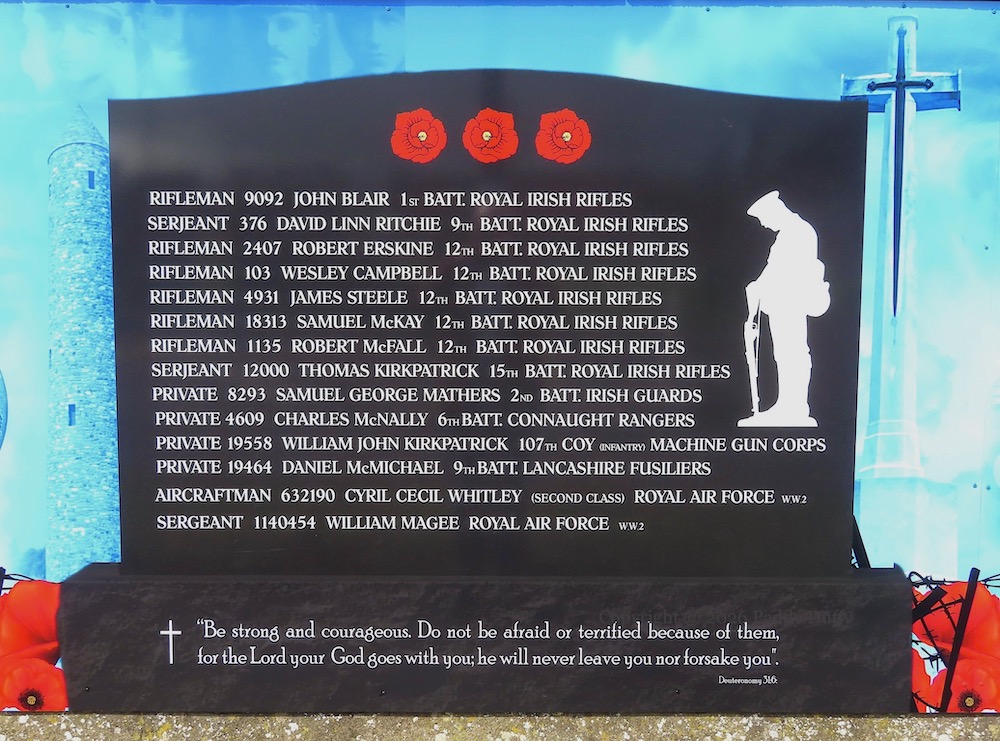
The names on the headstone between the two World War panels are [from WWI] John Blair, David Linn Ritchie, Robert Erskine, Wesley Campbell, James Steele, Samuel McKay, Robert McFall, Thomas Kirkpatrick, Samuel George Mathers, Charles McNally, William John Kirkpatrick, Daniel McMichael, [from WWII] Cyril Cecil Whitley, William Magee. “Be strong and courageous. Do not be afraid or terrified because of them, for the Lord your God goes with you; he will never leave you nor forsake you – Deuteronomy 31:6”
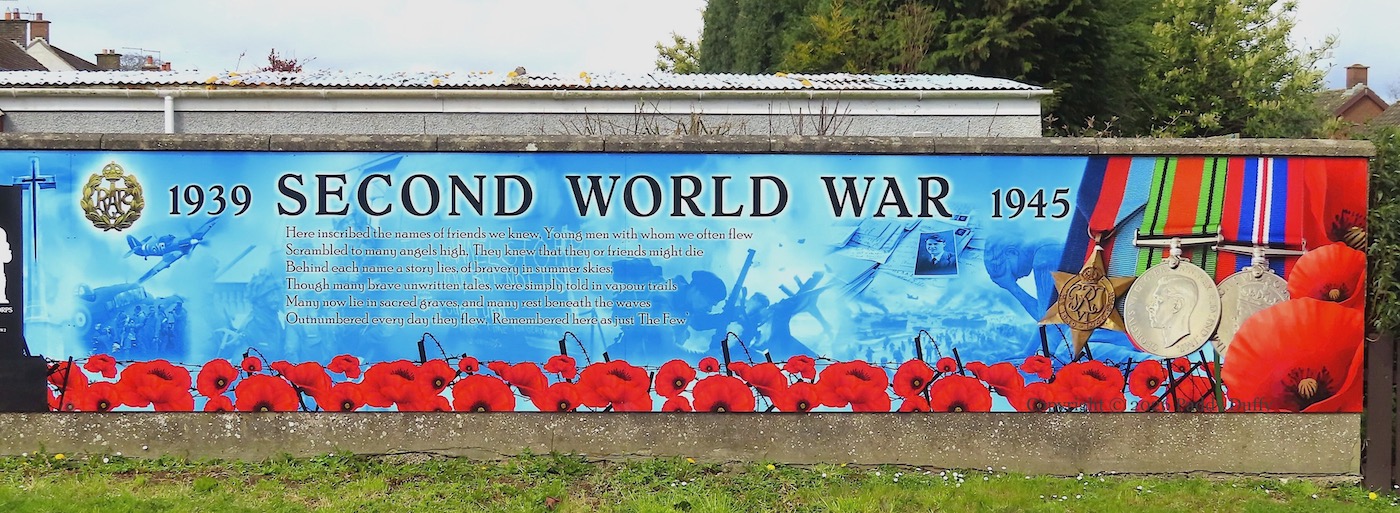
Second World War 1939-1945: “Here inscribed the names of friends we knew, Young men with whom we often flew Scrambled to many angels high, They knew that they or friends might die Behind each name a story lies, of bravery in summer skies; Though many brave unwritten tales, were simply told in vapour trails Many now lie in sacred graves, and many rest beneath the waves Outnumbered every day they flew, Remembered here as just ‘The Few'”
The medals on the right are the Burma Star, Defence Medal, and the War Medal, with the RAF brass cap badge on the left.
Along the main road in Drumahoe Gardens, Millbrook, Larne.
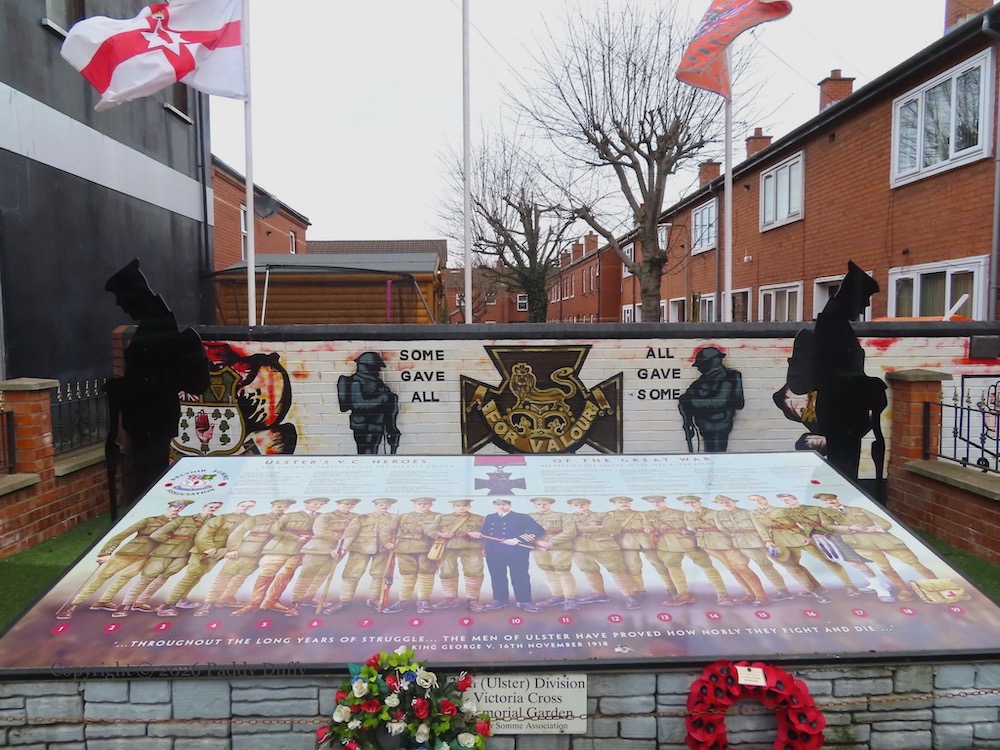
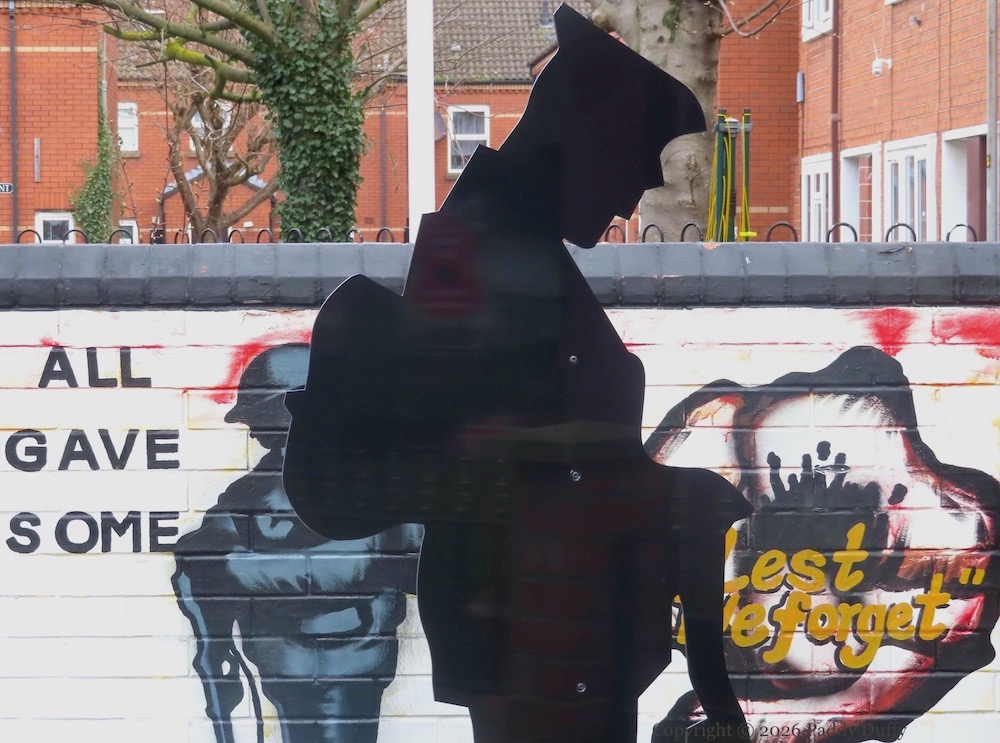
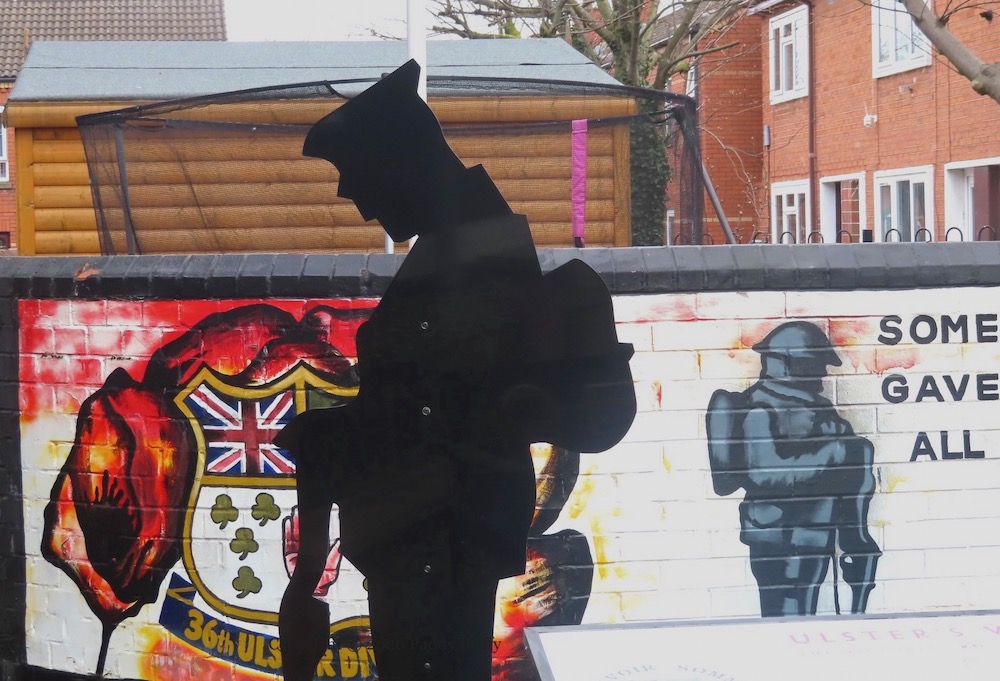
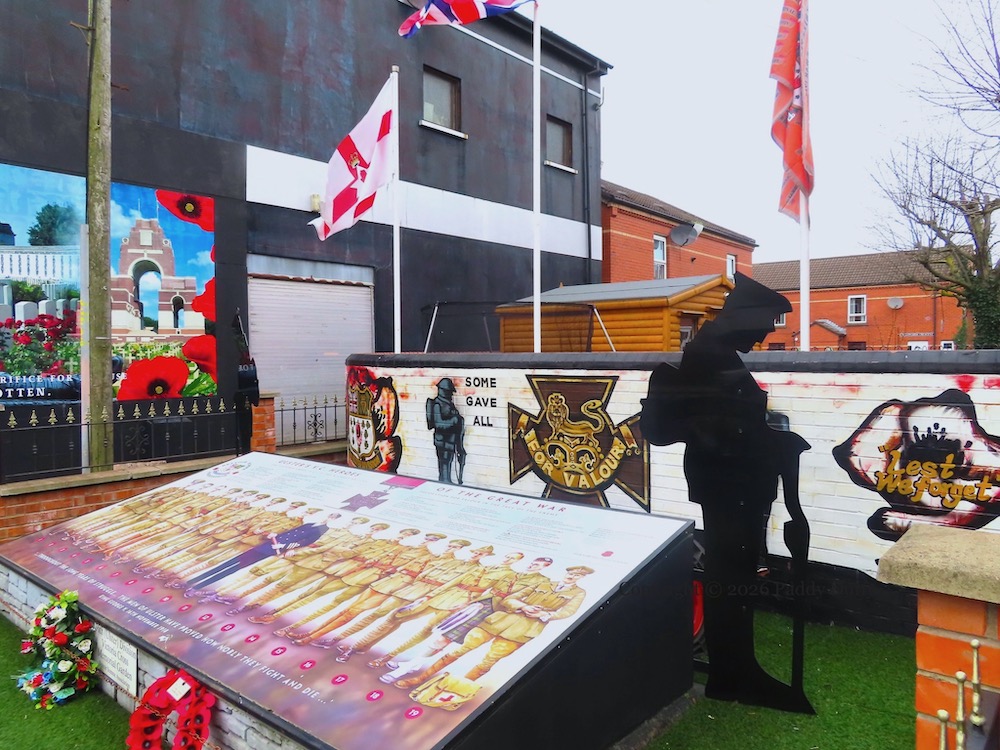
This entry updates a similar entry from 2022 with images and close-ups of the now-faded red and orange paint in the mural on the back wall of the “36th (Ulster) Division Victoria Cross Memorial Garden”.
For close-ups of the board picturing the WWI VC winners, see The Dead We Honour Here. “‘Throughout the long years of struggle … the men of Ulster have proved how nobly they fight and die’ – King George V, 16th November, 1918”
St Leonard’s Crescent/old Newcastle Street, east Belfast
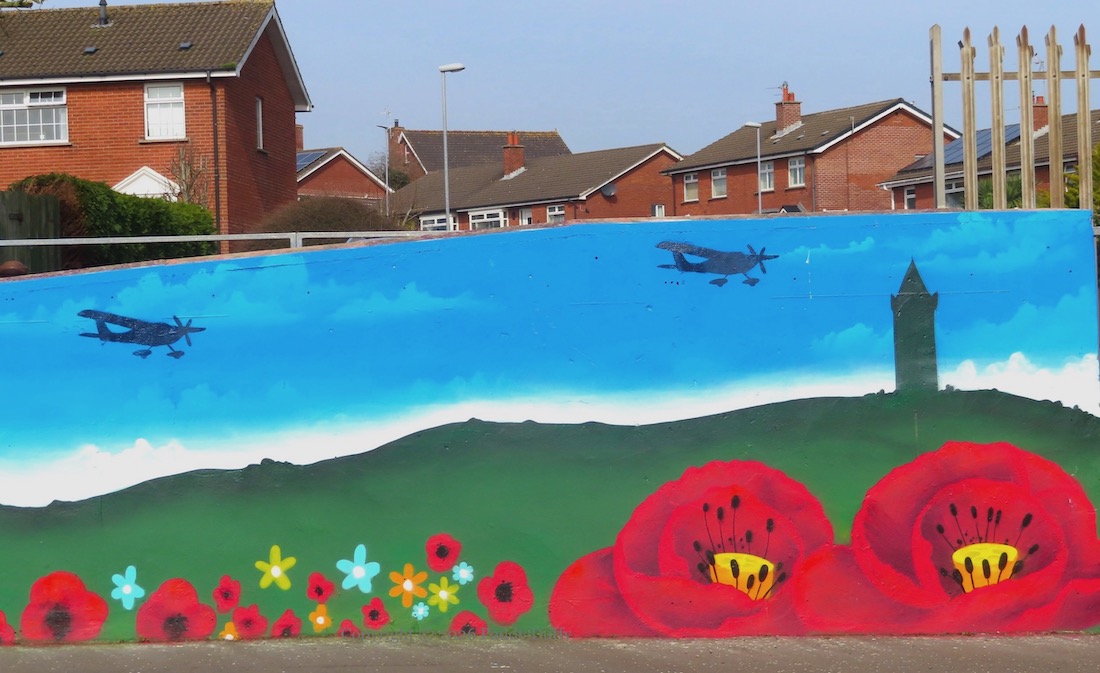
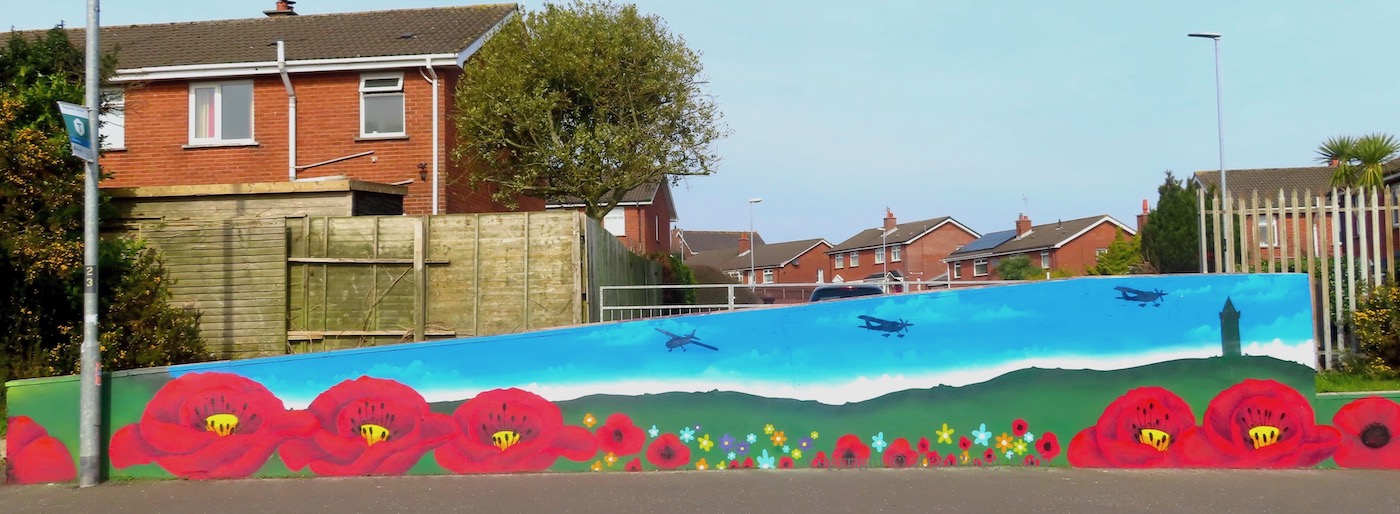
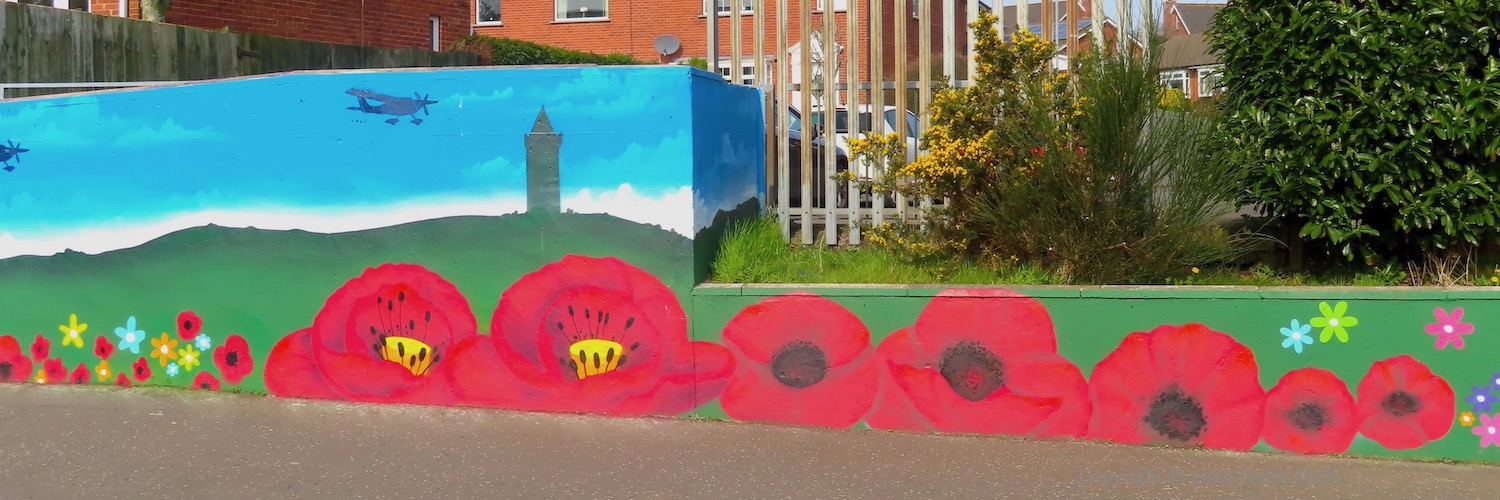
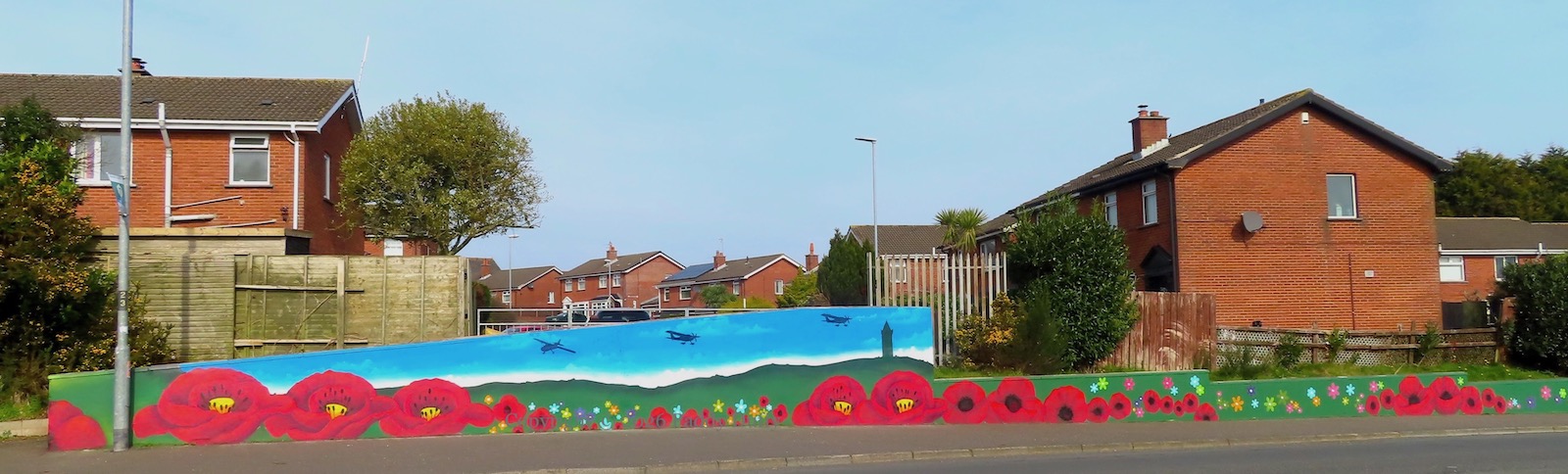
The poppies in this new mural suggest WWI, but the “pants” over the wheels of the planes shown here as they pass Scrabo tower suggest a post-war plane (or a modern light aircraft).
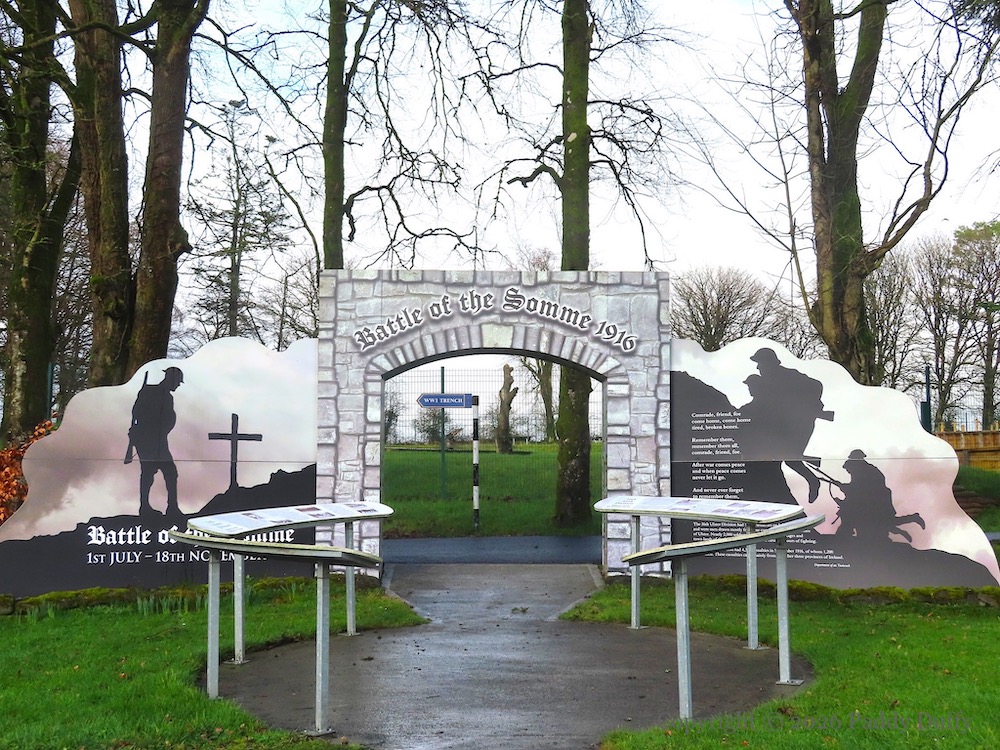
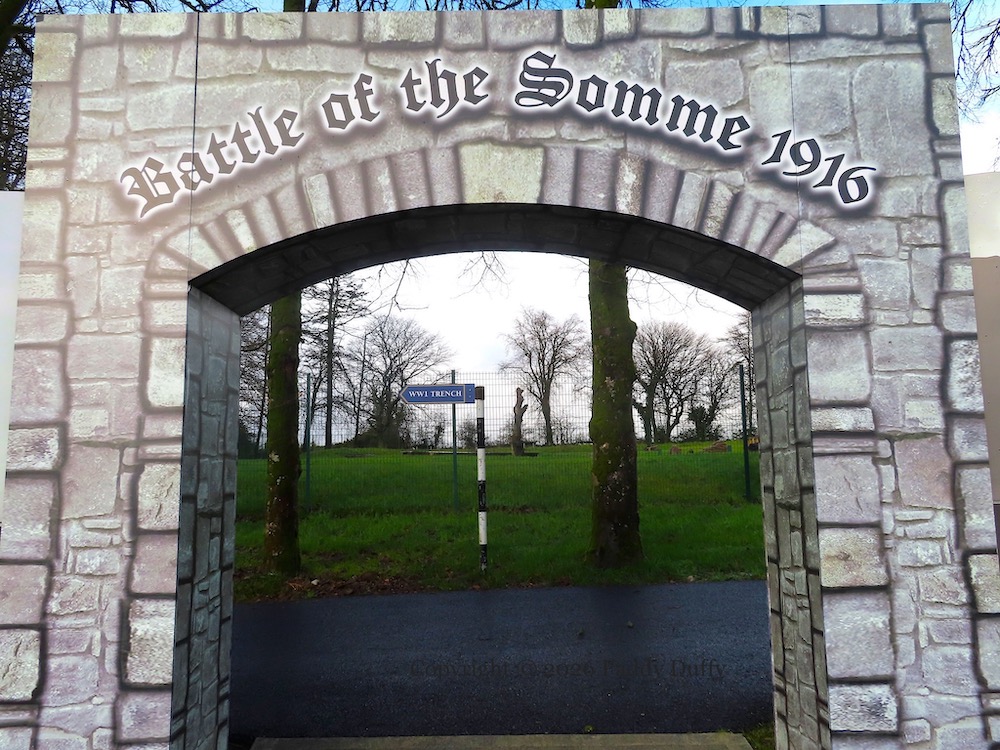
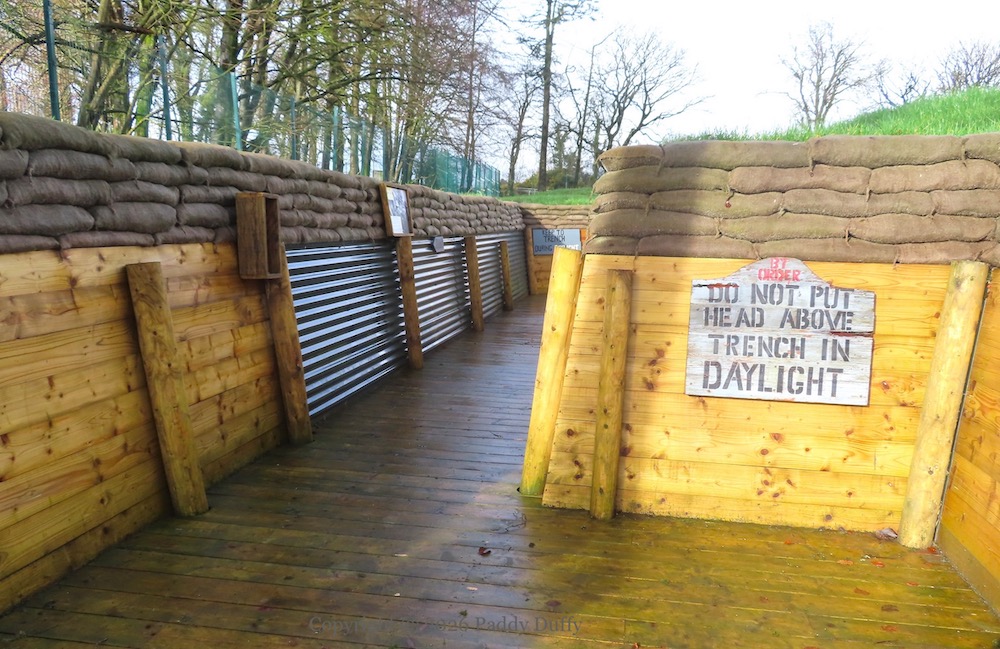
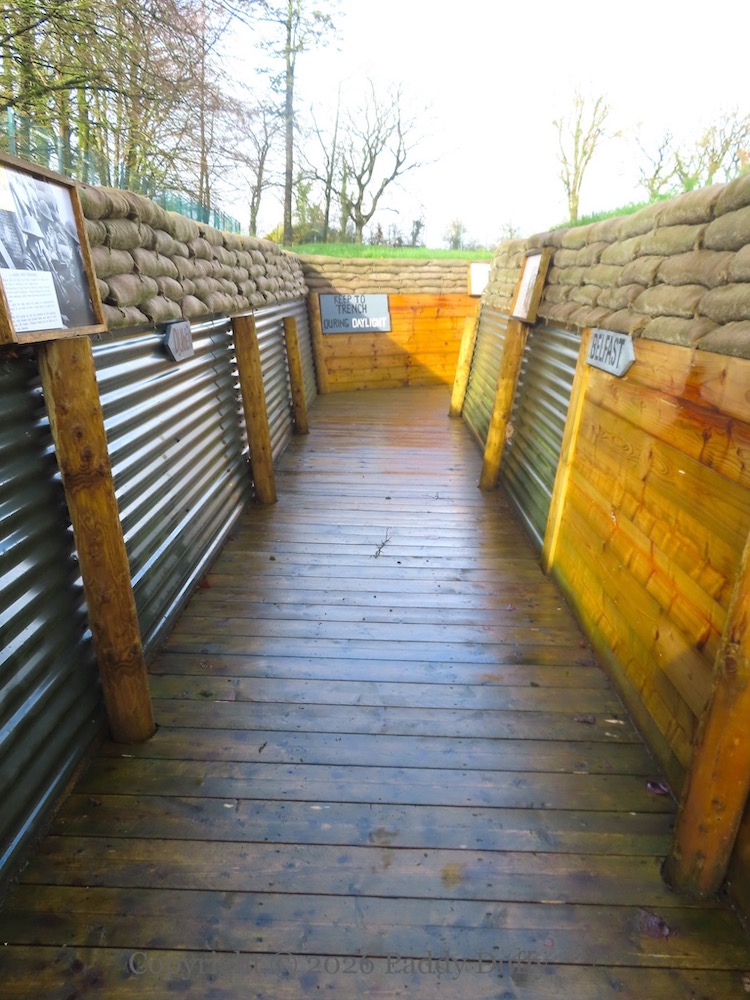
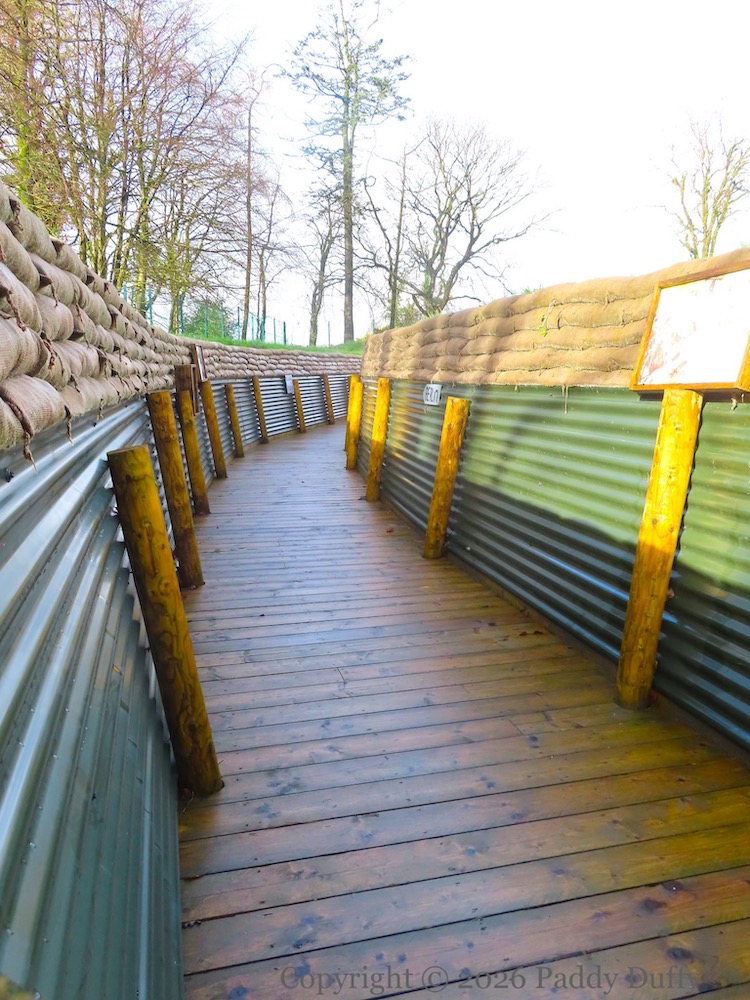
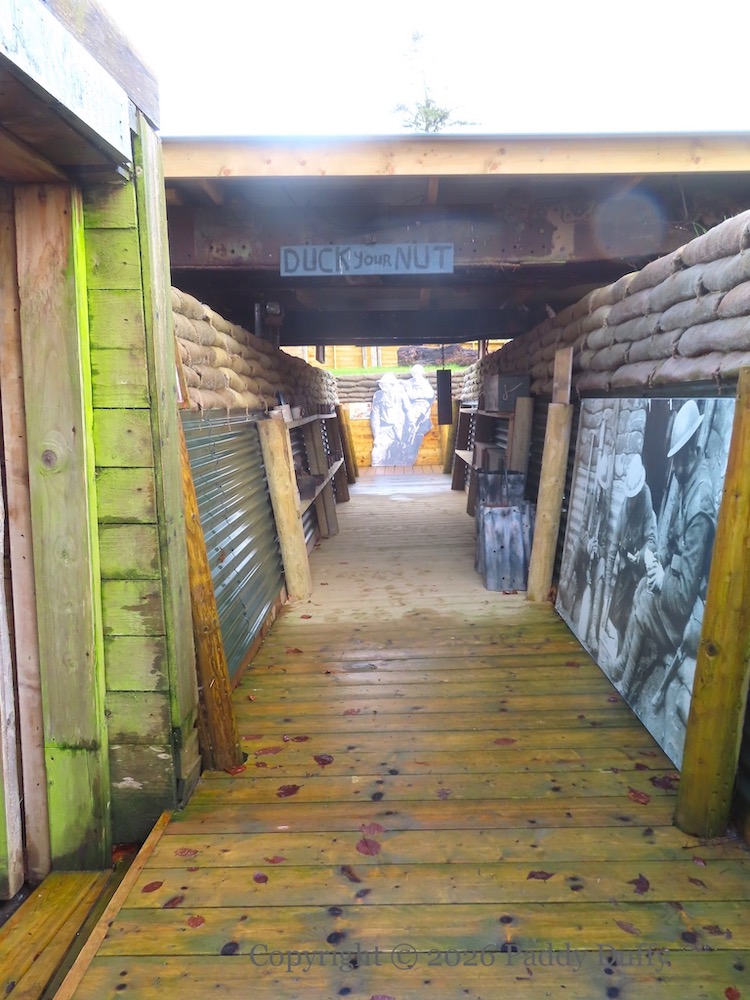
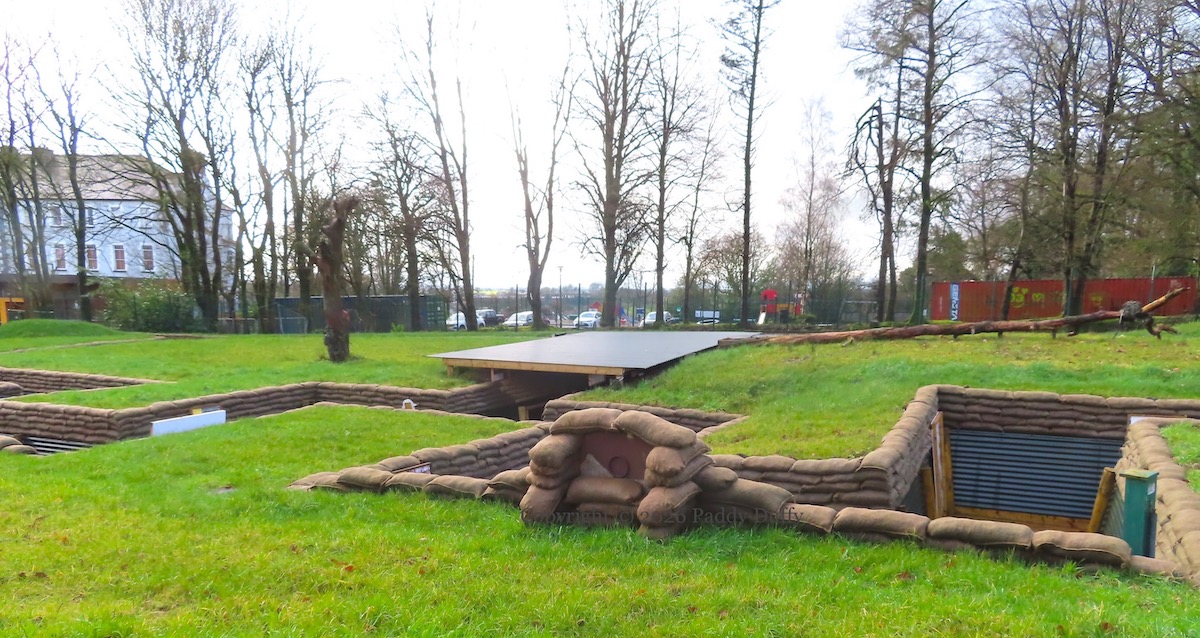
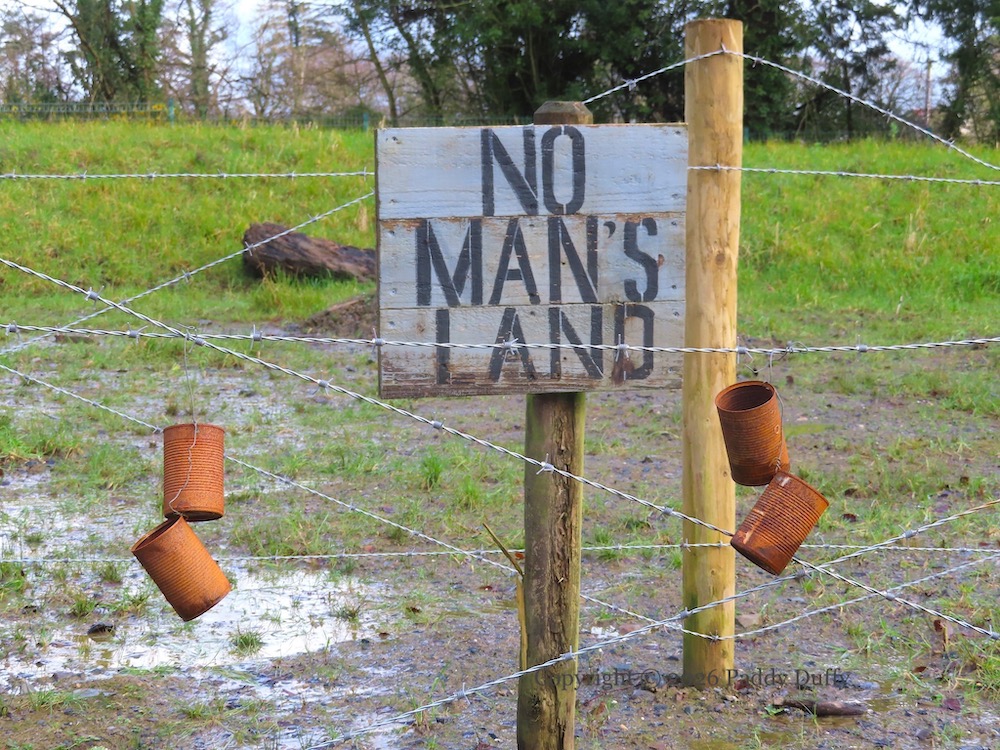
The Cavan County Museum (web) in Ballyjamesduff includes a “WWI trench experience”, with 350 metres of trench and more than 6,000 sand-bags. The Cavan volunteers joined the 9th battalion of the Royal Irish Fusiliers (108th brigade of the 36th). The officer commanding of the Division, Oliver Stewart Wood Nugent, was from Cavan (History Ireland).
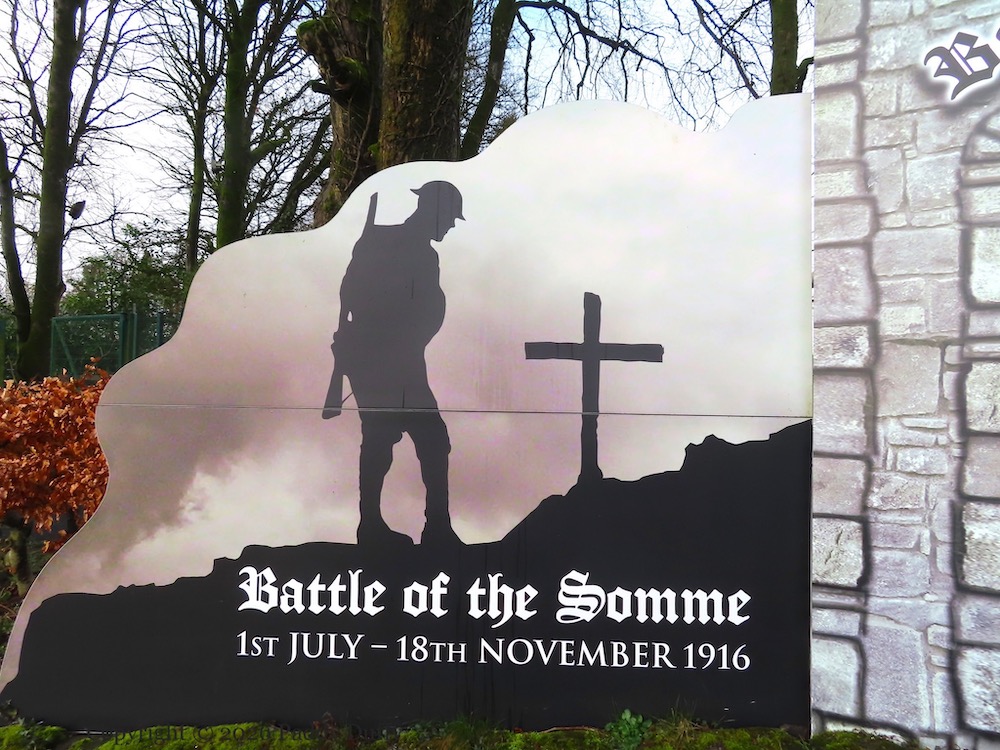
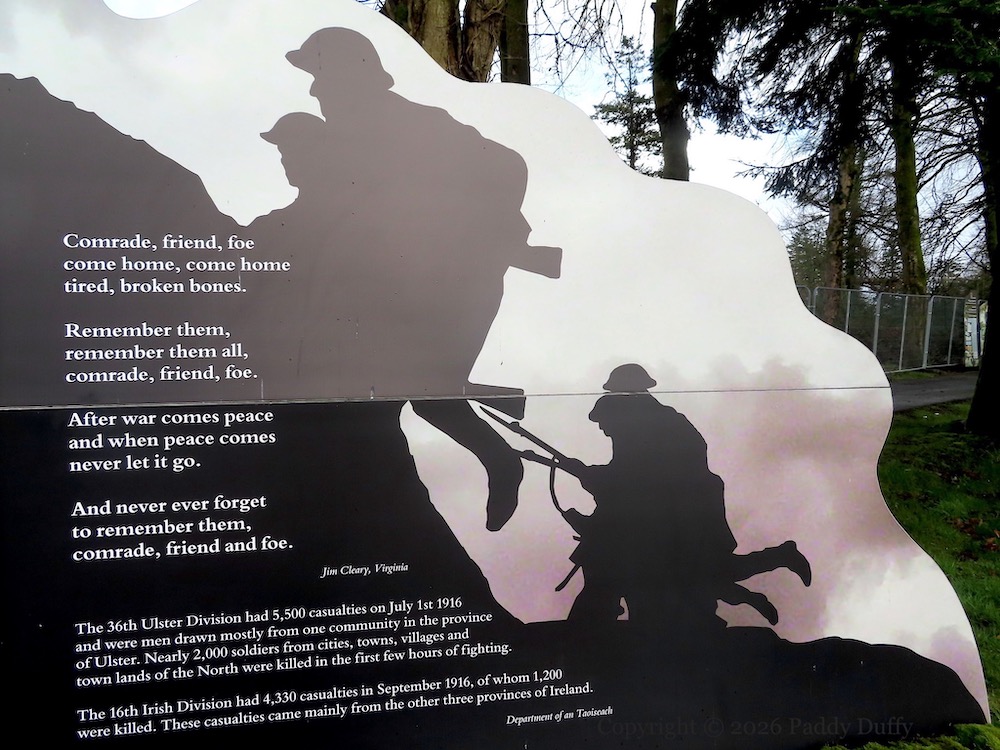
“Battle Of The Somme 1st July – 18th November 1916”, “”Comrade, friend, foe/come home, come home/tired, broken bones.//Remember them,/remember them all,/comrade, friend, foe.//After war comes peace/and when peace comes/never let it go.//And never ever forget/to remember them,/comrade, friend and foe.” – Jim Cleary, Virginia.”
“”The 36th (Ulster) Division had 5,500 casualties on July 1st 1916 and were men drawn mostly from one community in the province of Ulster. Nearly 2,000 soldiers from cities, towns, villages and town lands of the North were killed in the first few hours of fighting. The 16th (Irish) Division had 4,330 casualties in September 1916, of whom 1,200 were killed. These casualties came mainly from the other three provinces of Ireland.” – Department Of An Taoıseach”
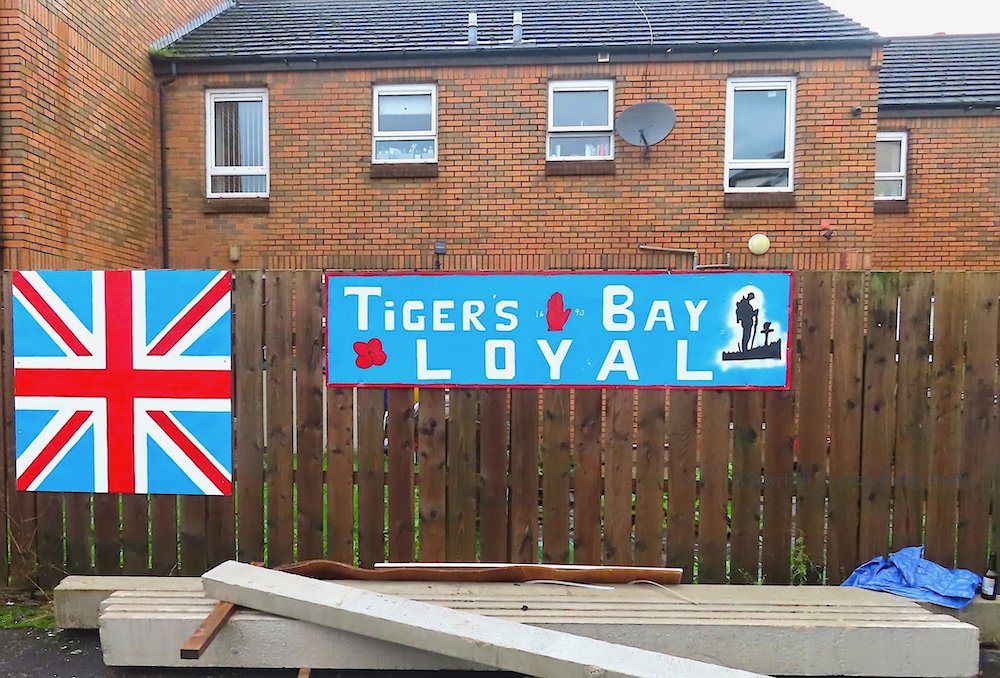
This pair of hand-painted (and stencilled) boards is next to the Mount Inn on North Queen Street. Tiger’s Bay is loyal to the memory of “1690” and the service of the 36th Division in WWI in 1916.
Greenmount Street, Tiger’s Bay, north Belfast
On the other side of the Mount, at the bottom of the old Lewis Street, are two more hand-painted boards from 2024 – see Friends Of The Somme.
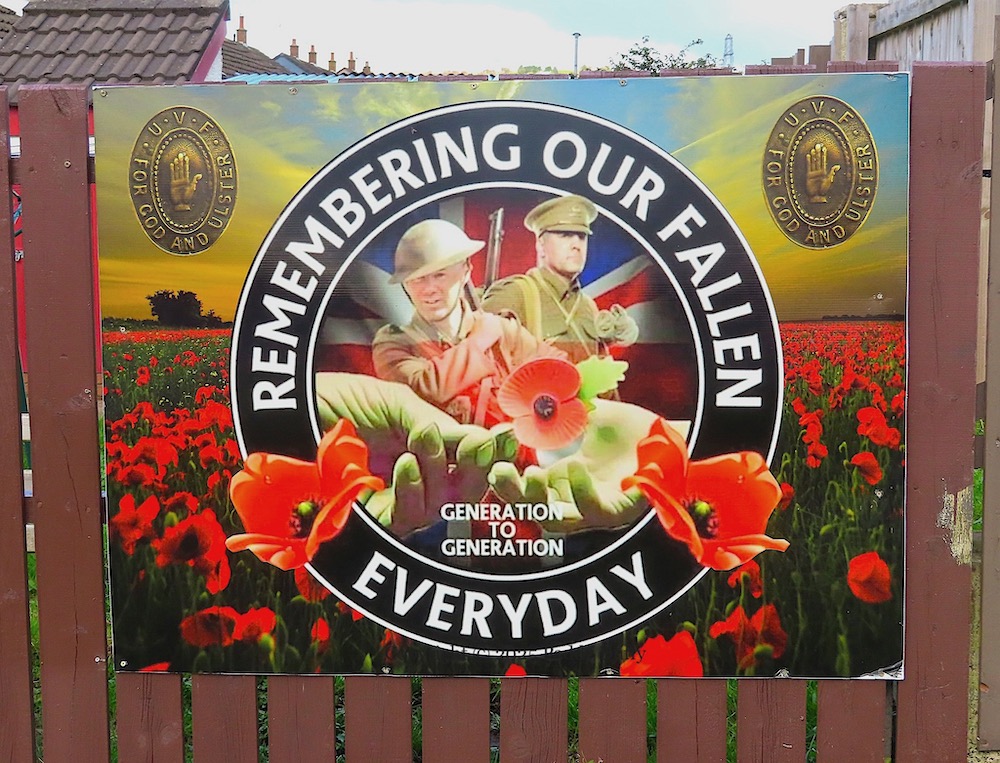
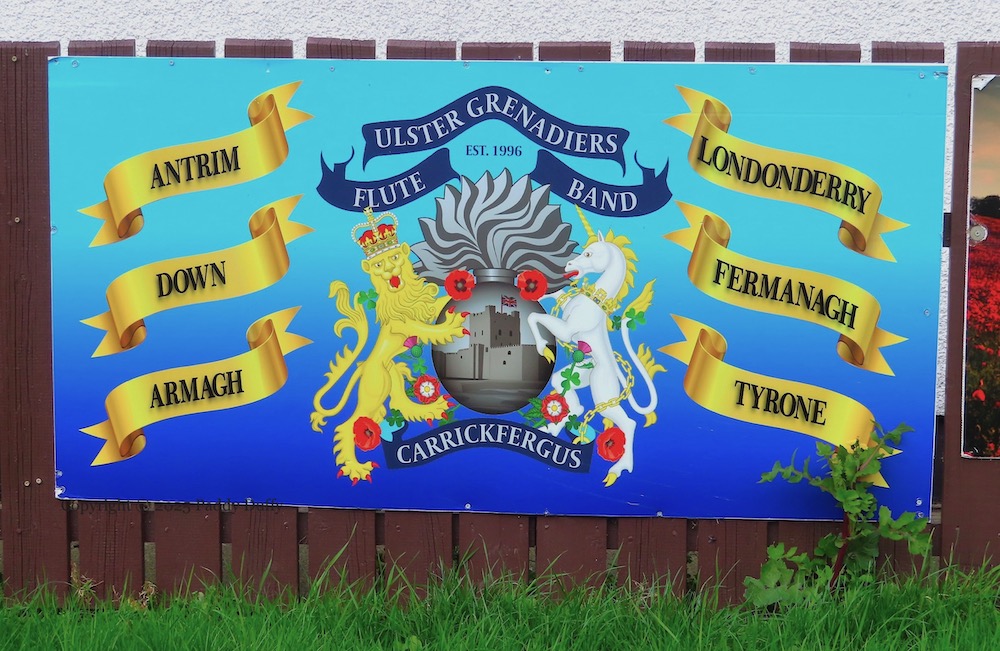
Here are two new small boards on the fence where Hawthorn Avenue and Sandes Court meet between Woodburn and Sunnylands. Above, “Remembering our fallen everyday [sic]” with images of soldiers from the World Wars and UVF emblems in the corners. Below, an Ulster Grenadiers flute band (Fb) board, similar to the large board mounted last year (2024) in St Bride’s Street – see Never Forget, Always Remember.
The main board, on the gable beyond – “Loyalist Woodburn celebrates 100th anniversary Northern Ireland” – and Captain Sir Tom Moore remain as in 2022’s entry – see Maintain The Union.
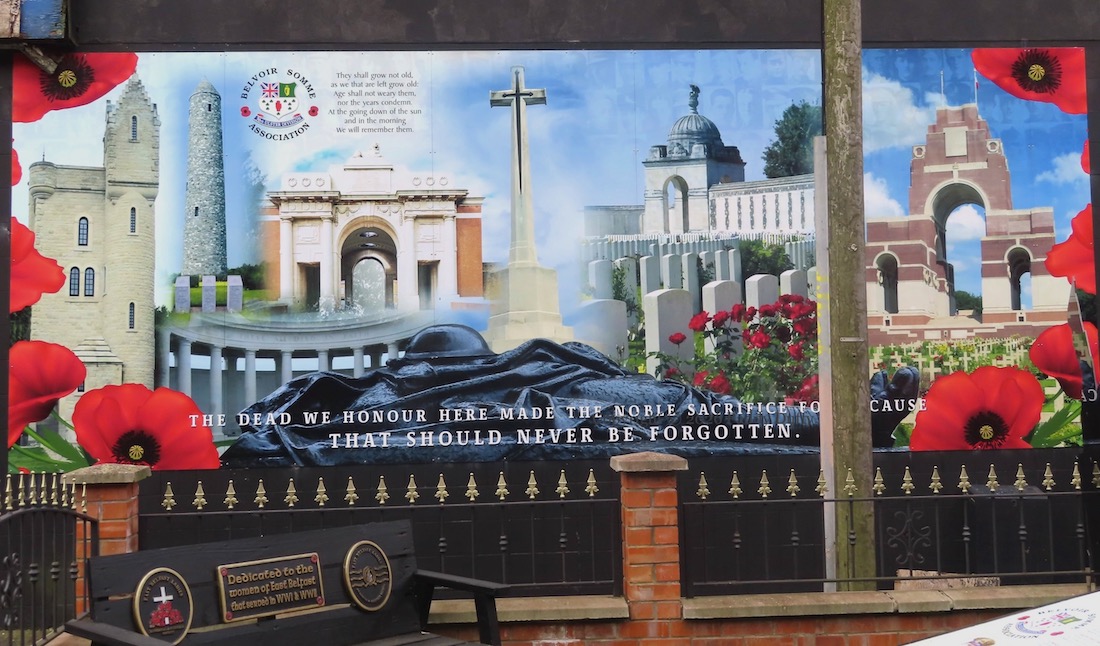
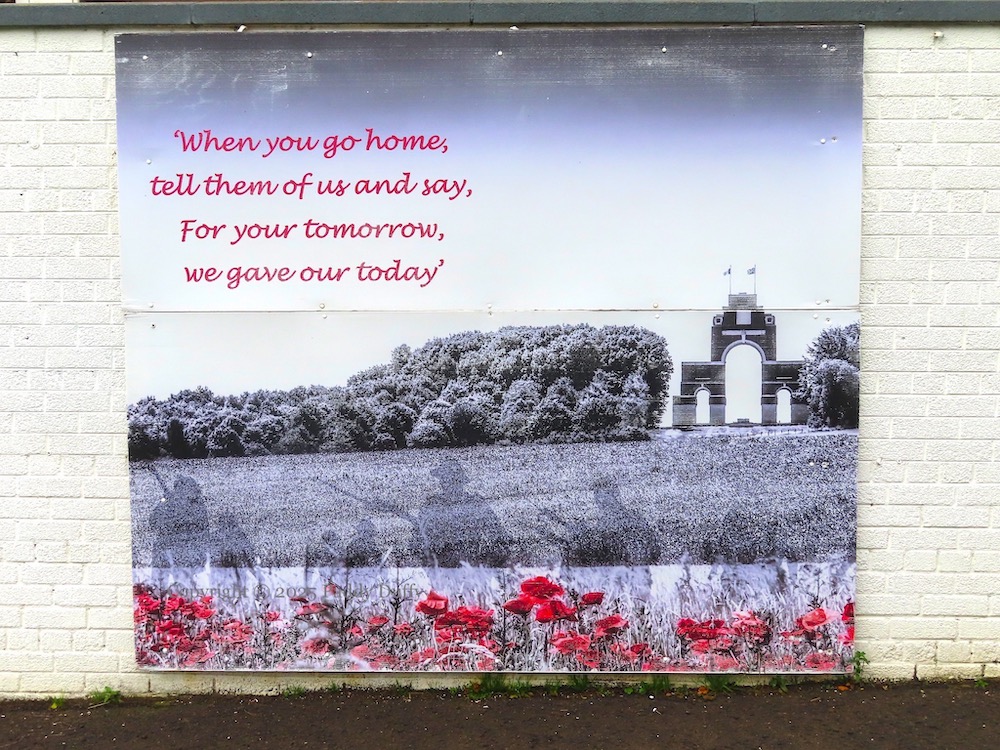
“When you go home tell them of us and say, ‘For your tomorrow we gave our today’.” The Thiepval Memorial commemorates British and South African soldiers who died in the Somme valley and have no known grave. The Battle Of the Somme took place from July 1st to November 18th, 1916, but soldiers were in the area from July 1915 until the end of the war; the Germans attacked in the Somme in the spring of 1918 (Operation Michael) and a second Battle Of The Somme took place in late August, 1918, as part of the Allies’ Hundred Days Offensive.
The words are from an epitaph by John Maxwell Edwards in the Kohima War Cemetery, Nagaland, India.
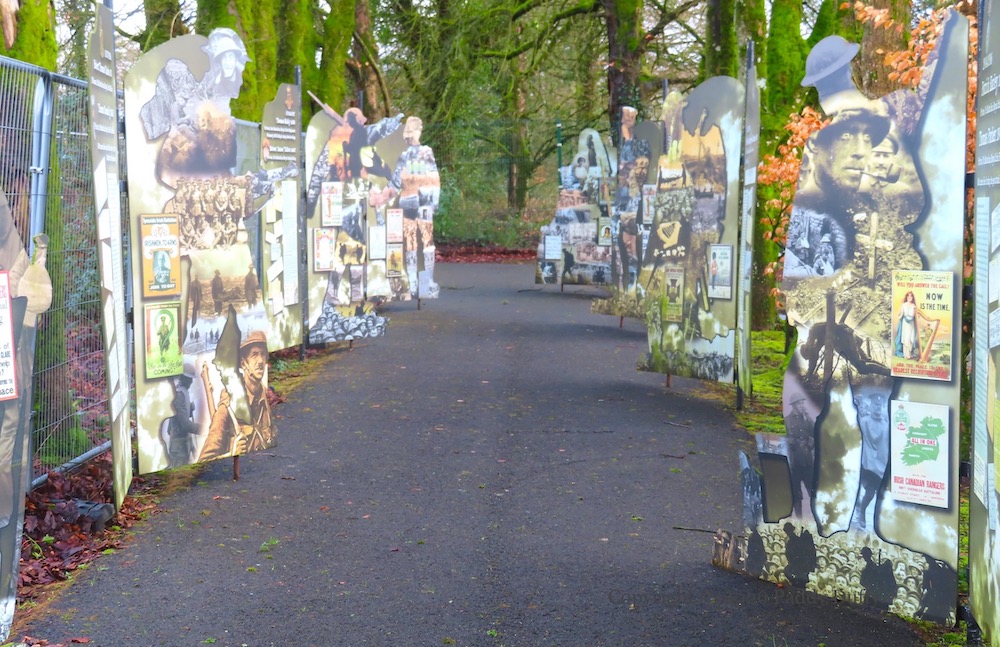
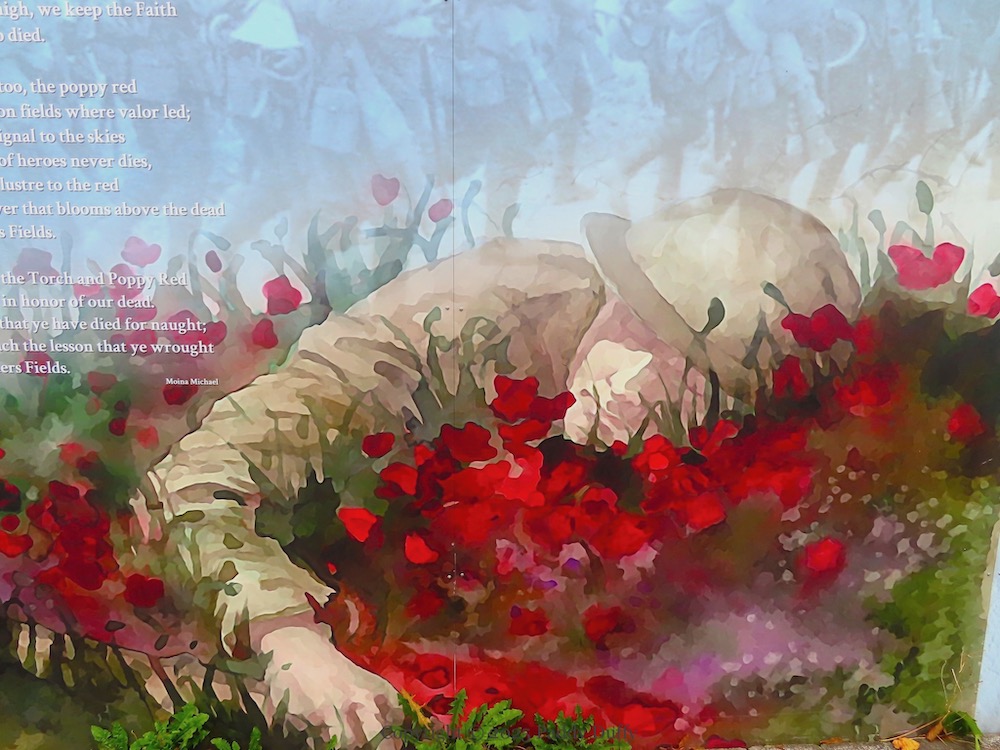
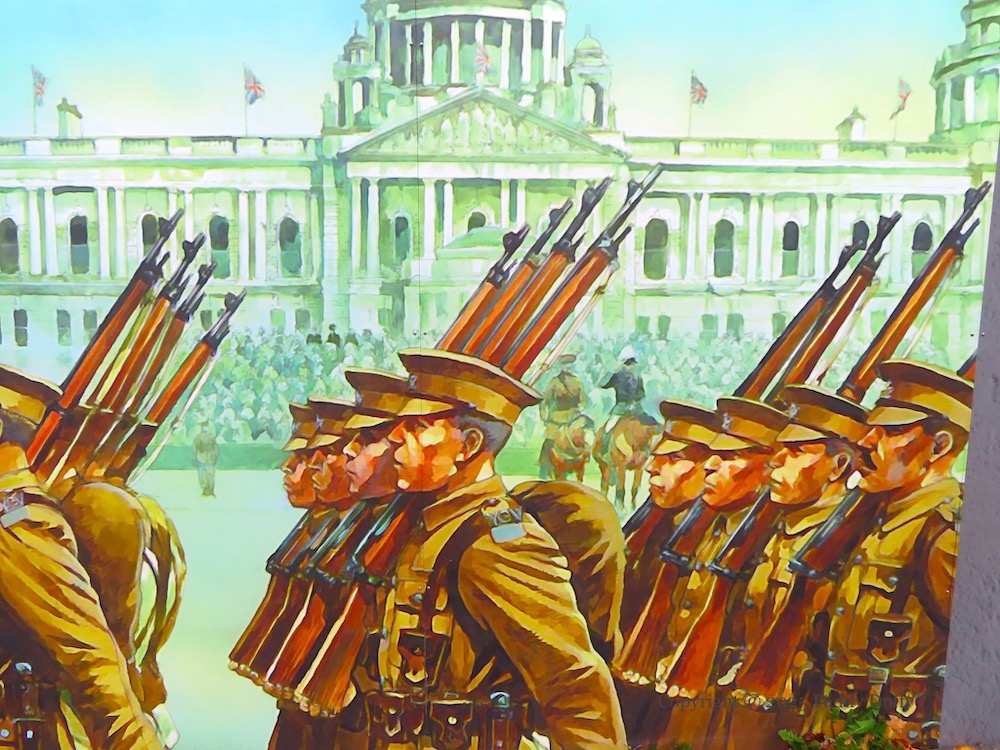
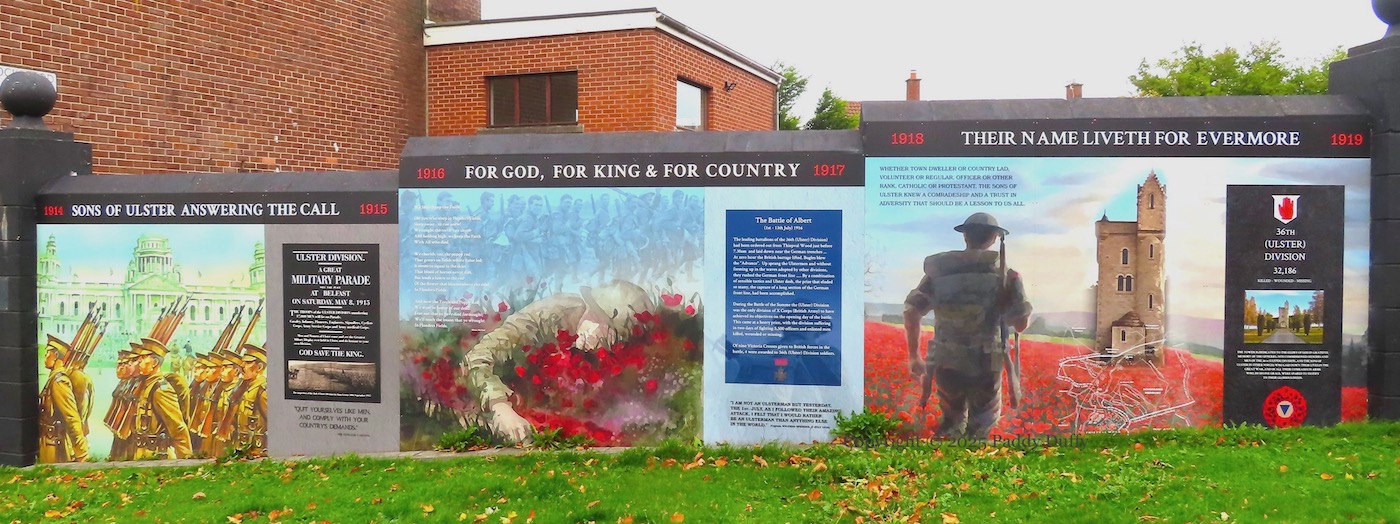
This entry provides close-ups of the WWI memorial display in Clarawood, east Belfast, and complements the images and text presented in 2023’s Spared To Testify To Their Glorious Deeds.
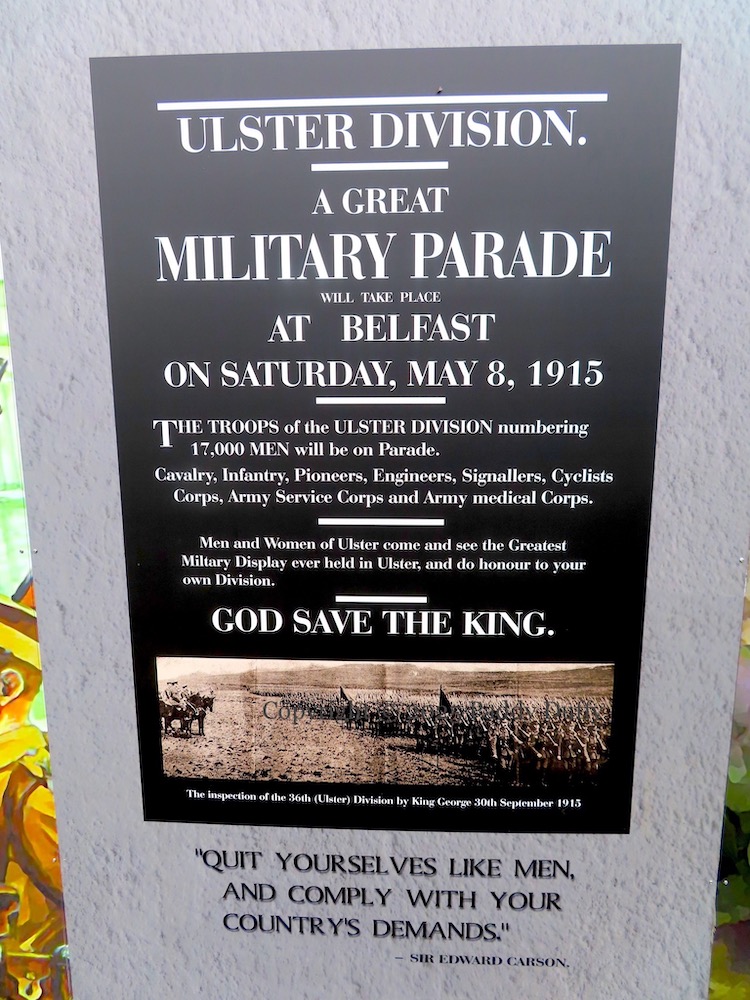
The three vertical panels with text read as follows:
“Ulster Division – a great military parade will take place on Saturday, May 8, 1915. The troops of the Ulster Division numbering 17,000 men will be on Parade. Cavalry, Infantry, Pioneers, Engineers, Signallers, Cyclists Cors, Army Service Corps and Army medical Corps. Men and Women of Ulster come and see the Greatest Military Display ever held in Ulster, and do honour to your own Division. God save the King.” (There is video of the May parade on Facebook and NI Screen. The photograph of George V inspecting the troops in Aldershot on September 30th, 1915, can be seen here.)
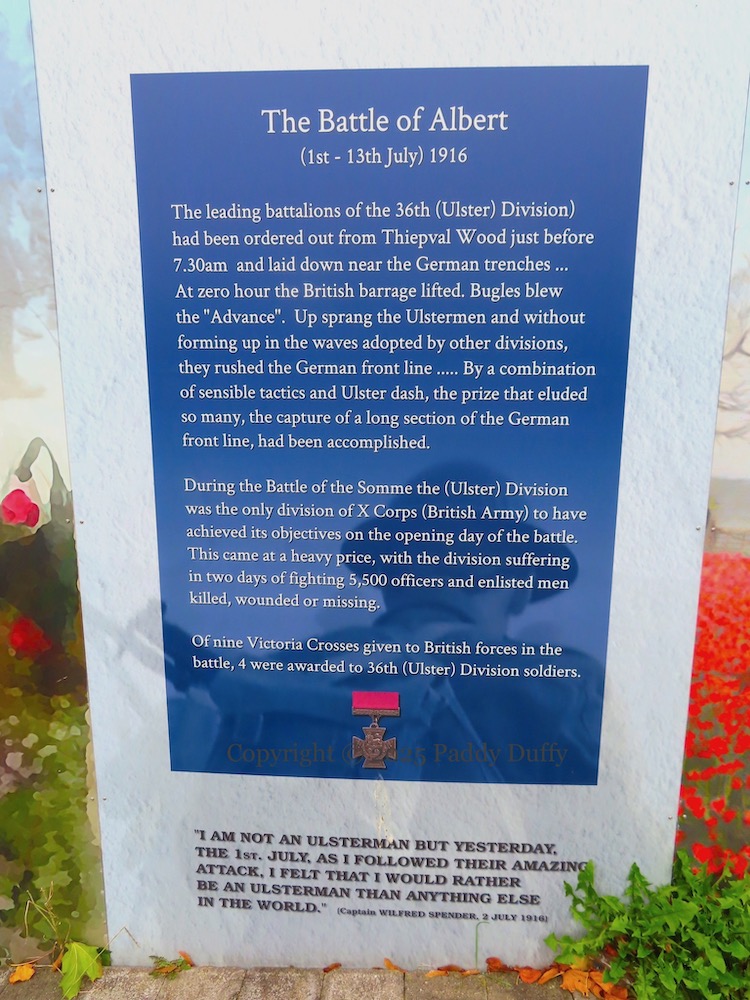
“The Battle Of Albert (1st – 13th July) 1916. The leading battalions of the 36th (Ulster) Division) [sic] had been ordered out from Thiepval Wood just before 7.30am and laid down near the German trenches … At zero hour the British barrage lifted. Bugles blew the “Advance”. Up sprang the Ulstermen and without forming up in the waves adopted by other divisions, they rushed the German front line … By a combination of sensible tactics and Ulster dash, the prize that eluded so many, the capture of a long section of the German front line, had been accomplished. During the Battle Of The Somme the (Ulster) [sic] Division was the only division of X Corps (British Army) to have achieved its objectives on the opening day of the battle. This came at a heavy price, with the division suffering in two days of fighting 5,500 officers and enlisted men killed, wounded or missing. Of nine Victoria Crosses given to British forces in the battle, 4 were awarded to 36th (Ulster) Division soldiers. ‘I am not an Ulsterman but yesterday, the 1st July, as I followed their amazing attack, I felt that I would rather be an Ulsterman than anything else in the world.’ – Captain Wilfred [sic Wilfrid] Spender, 2 July 1916.”
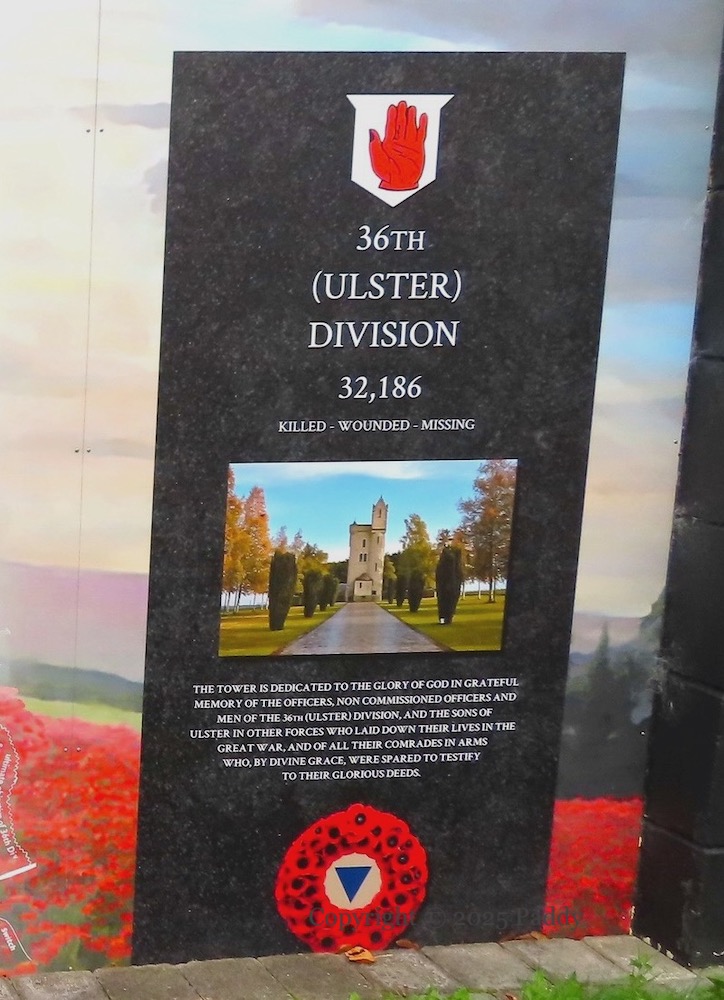
“36th (Ulster) Division 32,186 killed, wounded, missing. The tower is dedicated to the glory of God in grateful memory of the officers, non-commissioned officers and men of the 36th (Ulster) Division, and the sons of Ulster in other forces who laid down their lives in the Great War, and of all their comrades in arms who, by divine grace, were spared to testify to their glorious deeds.”



 Paddy Duffy Collection