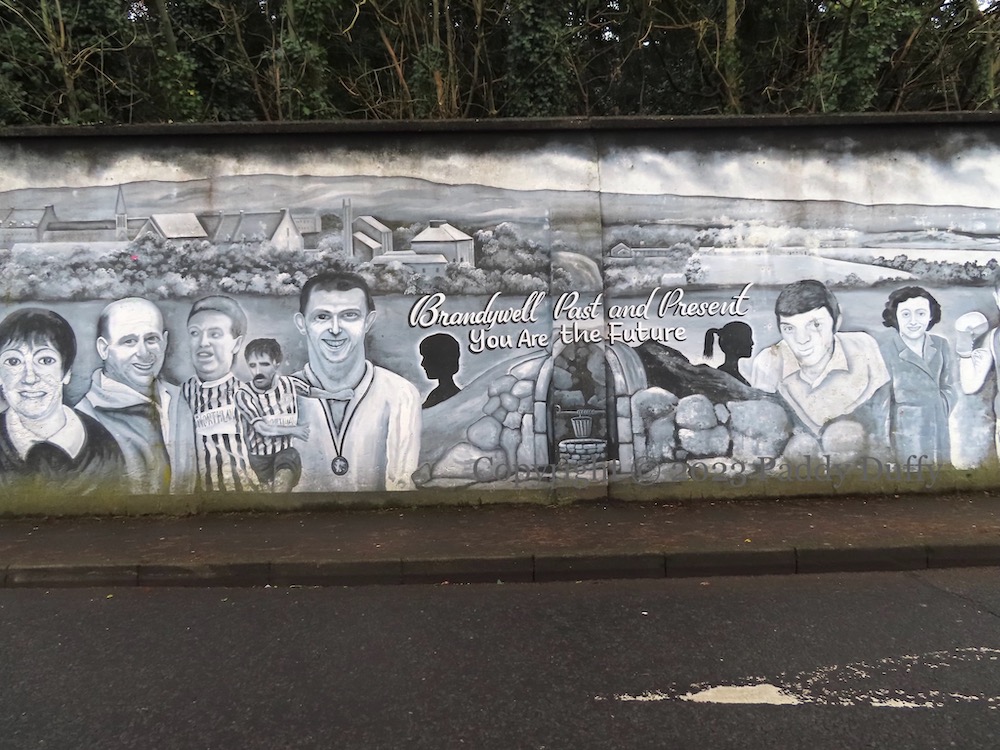
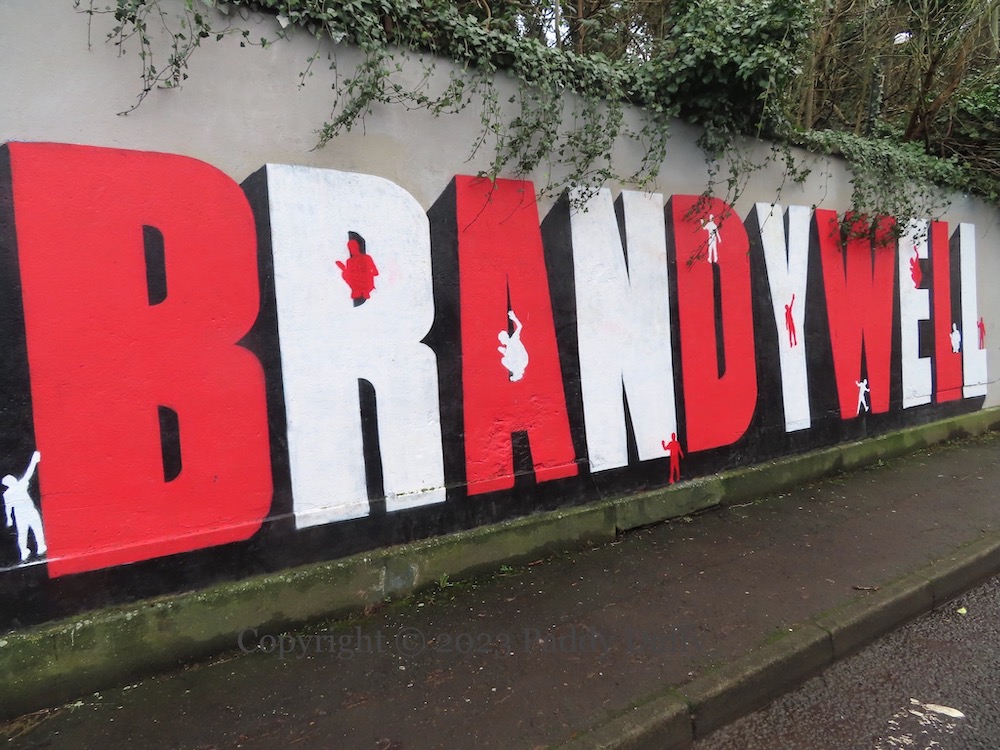
“You are the future” is the message from Long Tower Youth & Community Centre (Fb) to young people in the Brandywell. Sporting heroes of the past, especially boxing and soccer (for a mural of local clubs, see I Don’t Like Mondays) are featured in black and white.
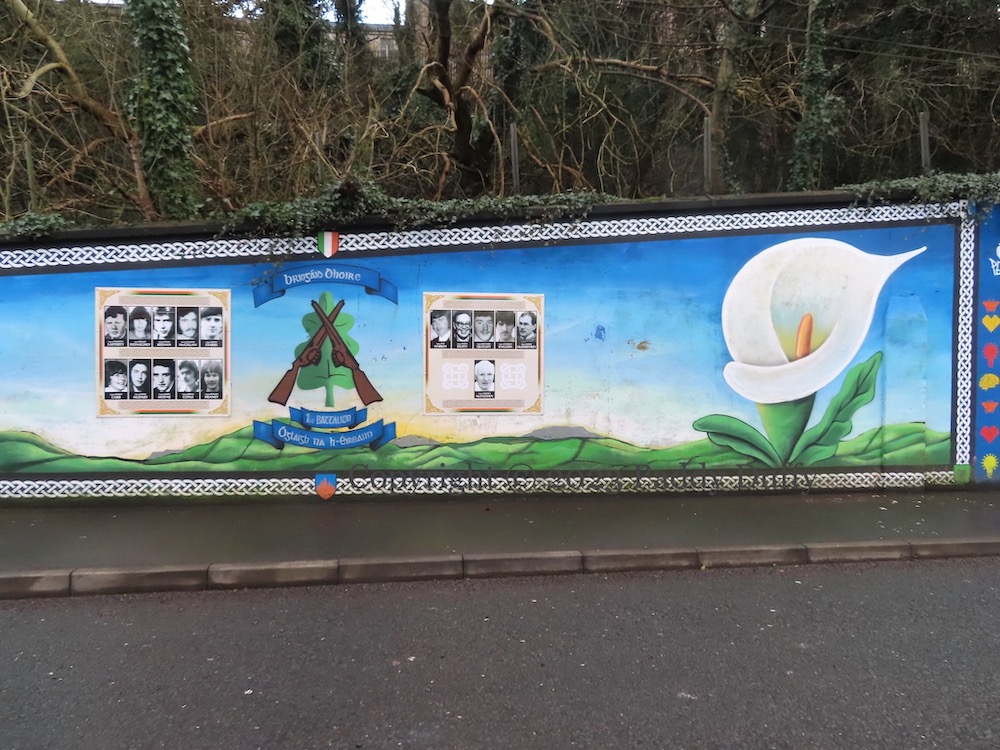
The Provisional IRA emerged from a split in the IRA in the wake of sectarian unrest in 1969. The Derry battalion became the Derry Brigade (An Brıogáıd Dhoıre) in 1972 when the number of people wishing to become volunteers swelled in the aftermath of Bloody Sunday. It is estimated that 1,000 Derry Catholics (2% of the population) were imprisoned for IRA activities in the 70s and 80s. (WP)
The image above shows a mural with Cú Chulaınn (Visual History), an oak leaf with crossed rifles, and a lily. Two boards commemorate volunteers from the 1st battalion. The sixteen portraits are of Lafferty, Donaghey, Keenan, McGillan, Starrs, / Carr, McDaid, Moyne, Coyle, Heaney, // Harkin, Duffy, Quigley, English, McSheffrey, / McFadden.
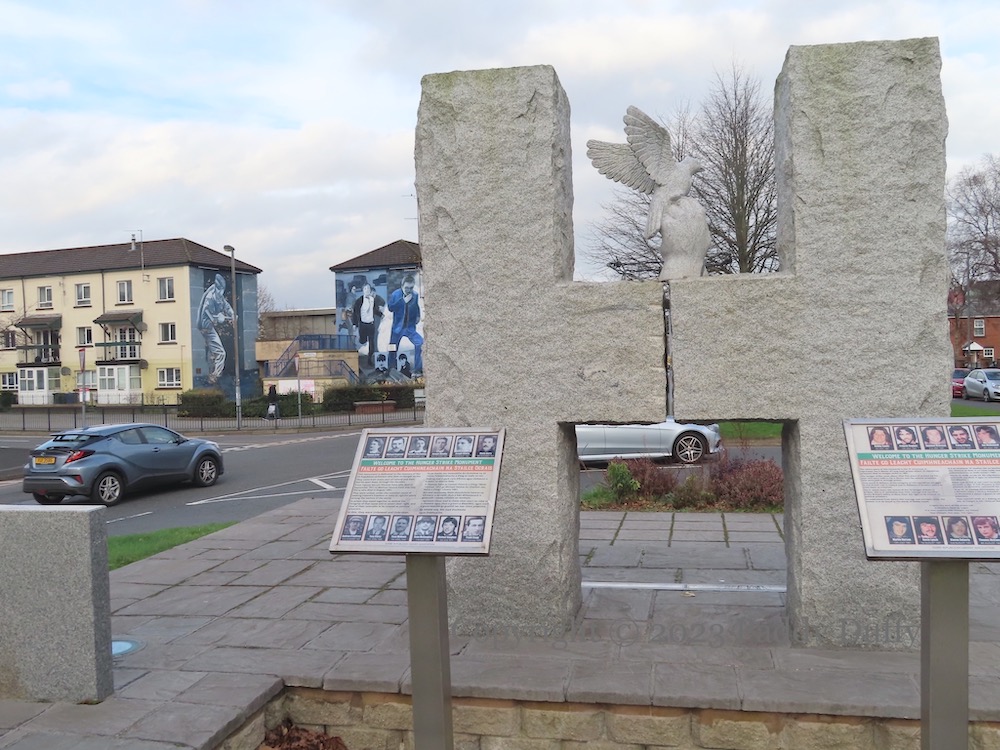
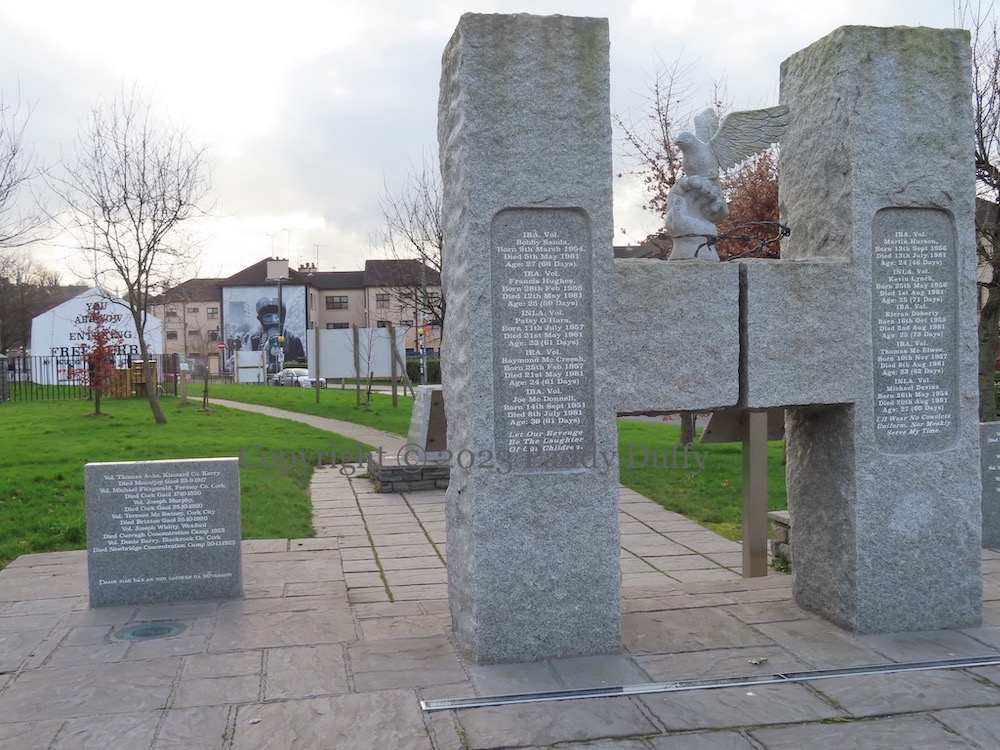
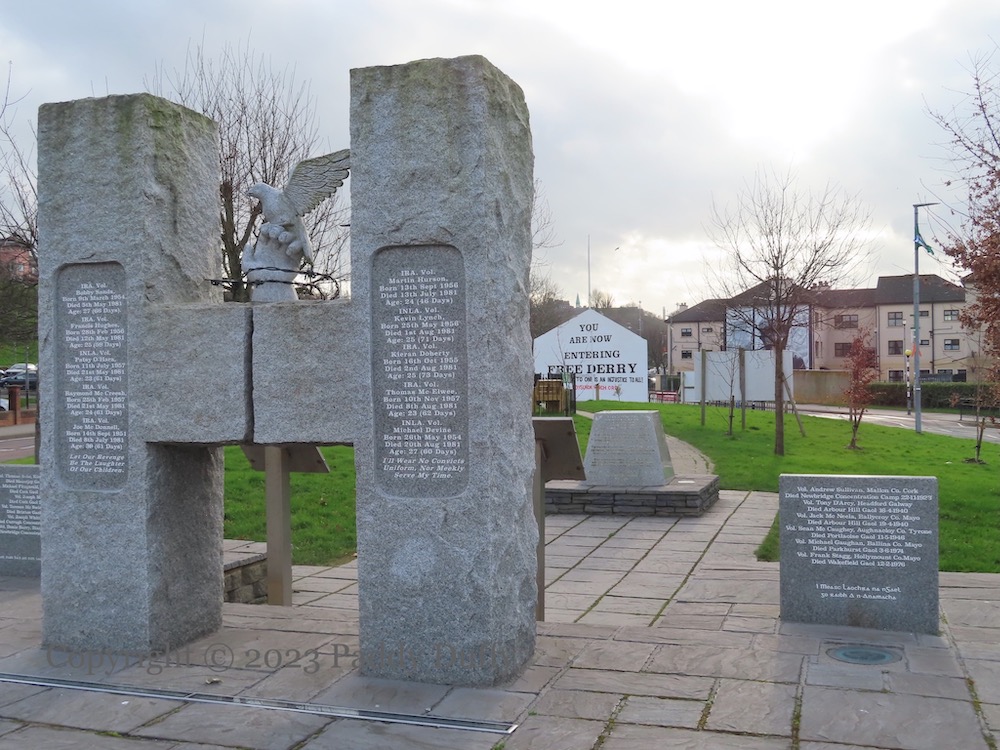
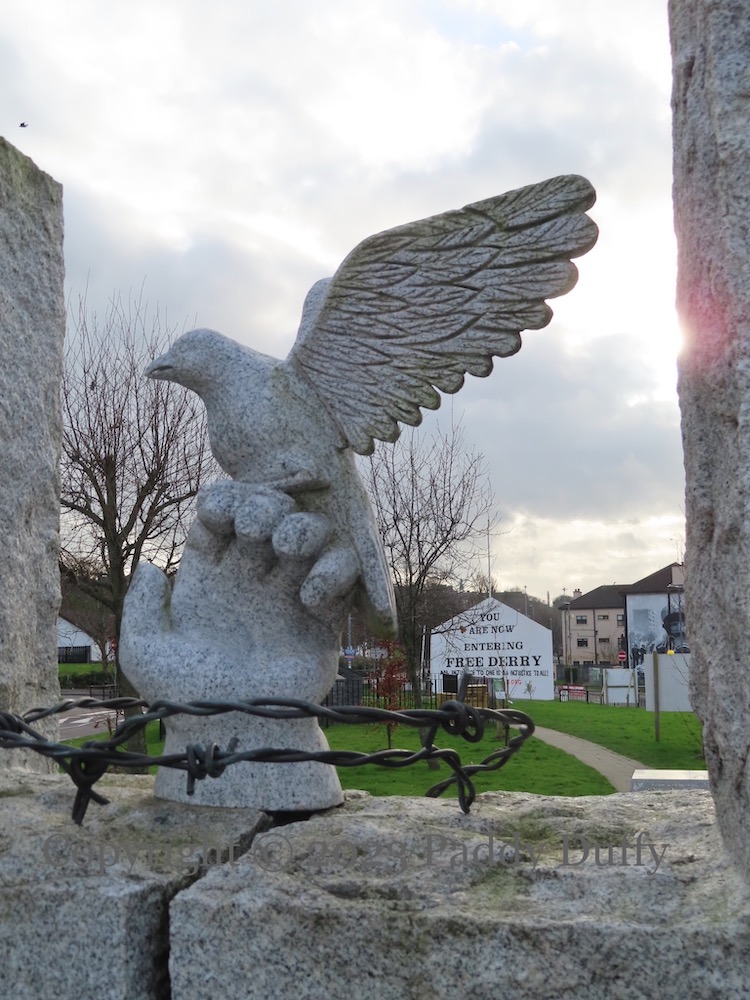
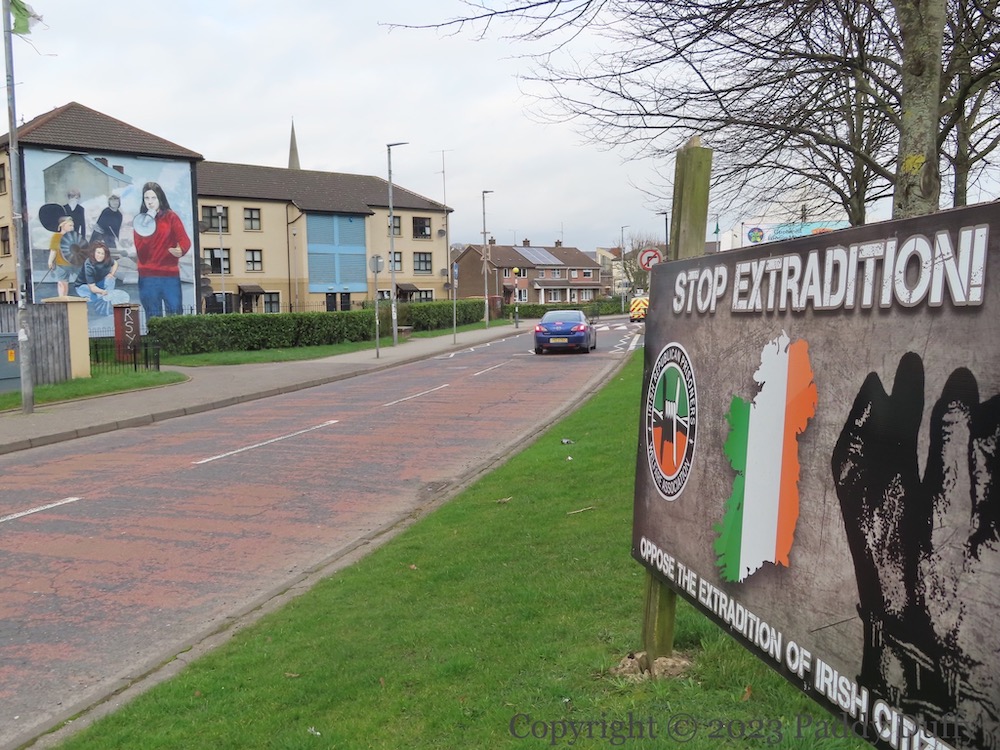
Here is a small gallery of the boards from anti-Agreement groups on the green-spaces around Free Derry Corner (Visual History) and the hunger strikers memorial in the Bogside, Derry.
“Stop extradition! Oppose the extradition of Irish citizens”, “Justice for the Craigavon 2 – innocent!”, “Sovereignty not Stormont”, “Stop the extradition of Liam Campbell, victim of MI5 entrapment & condemned by five judges in Lithuania”.
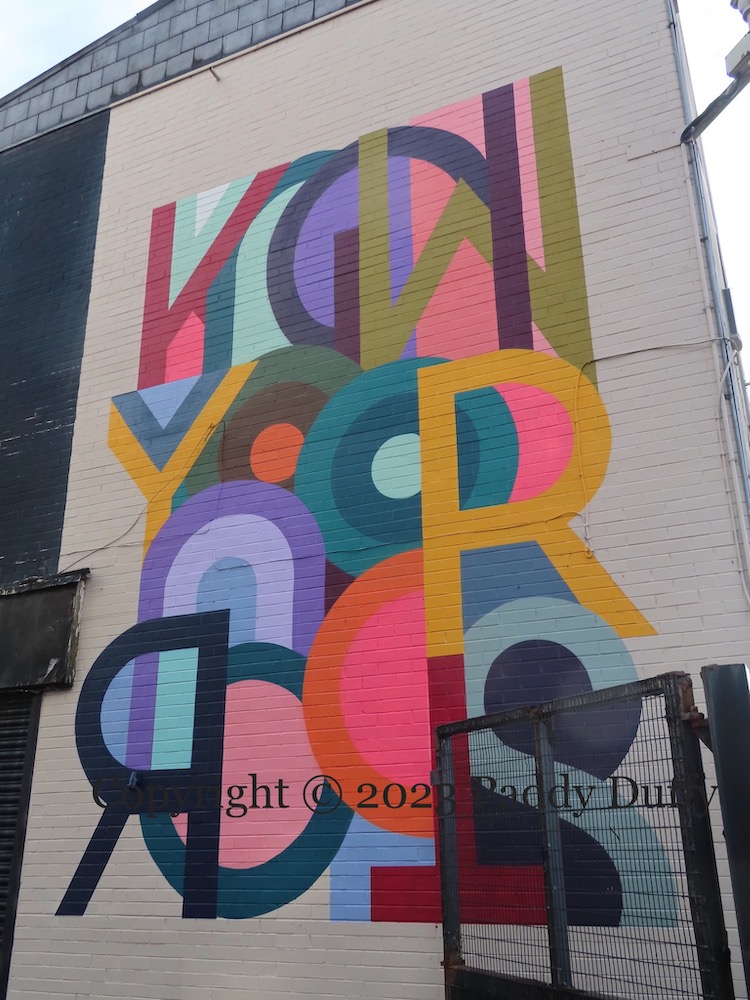
For the Derry 2021 street art festival – rebranded as Roots Street Art – seven pieces were scheduled, one for each of Derry’s gates and celebrating Irish roots around the globe (Derry Journal) but the on-going pandemic made things difficult. Among the artists who did take part were Inkie (Mighty Oaks From Little Acorns Grow), Sufek (Eat Like A Bird), Mr Cenz (Femelle Fatale), the Glöbel Bros (Conzo Throb and Ciaran Glöbel, who painted The Donegal Bus), and Sean Atmos (ig) who painted the piece above. Atmos is from Dublin but has roots in Dungiven.
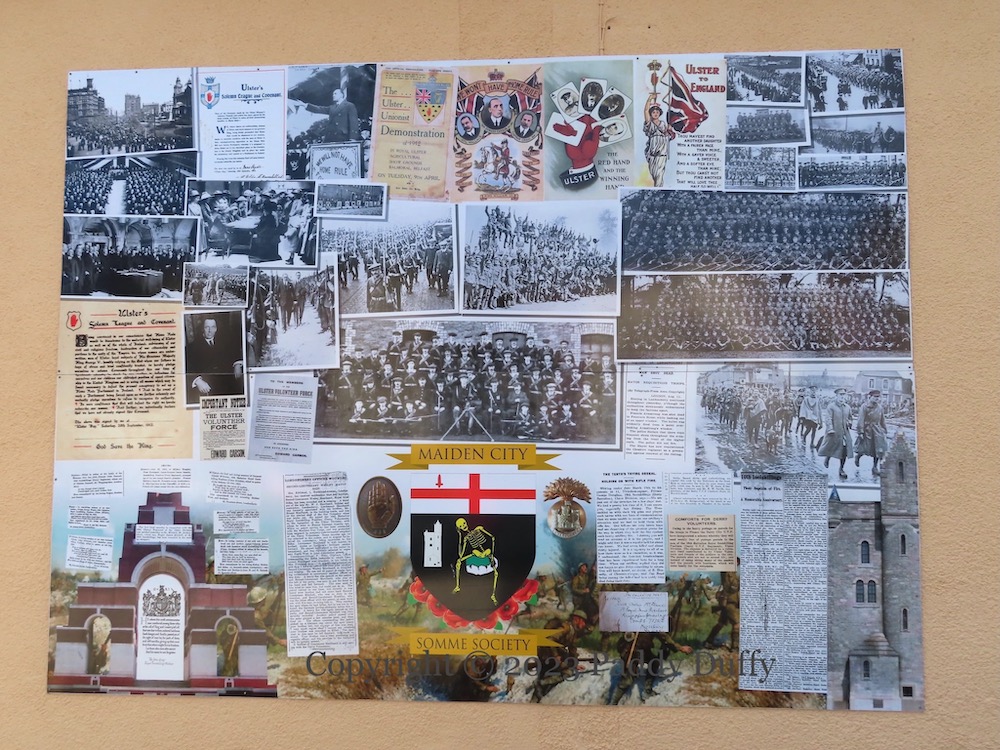
This board from the Maiden City Somme Society (Fb) traces the history of 1912-1918, from the protests against Home Rule and the signing of the Ulster Covenant (both the men’s (middle left) and women’s (top row, second from left) versions of the declaration are shown; also in the top row are postcards seen previously in The Red Hand And The Winning Hand and Ulster Girl), to the formation and training of the Ulster Volunteers (specifically the City of Derry regiment – emblem left of the city crest), to the Ulster Division’s service in WWI (specifically the 10th Battalion Royal Inniskilling Fusiliers or ‘Derry Volunteers’ – emblem right of the city crest) shown in the bottom row by JP Beadle’s painting (see Over The Top) flanked by the Thiepval and Ulster Tower memorials.
The board was launched in August 2016 in the Fountain, Londonderry.
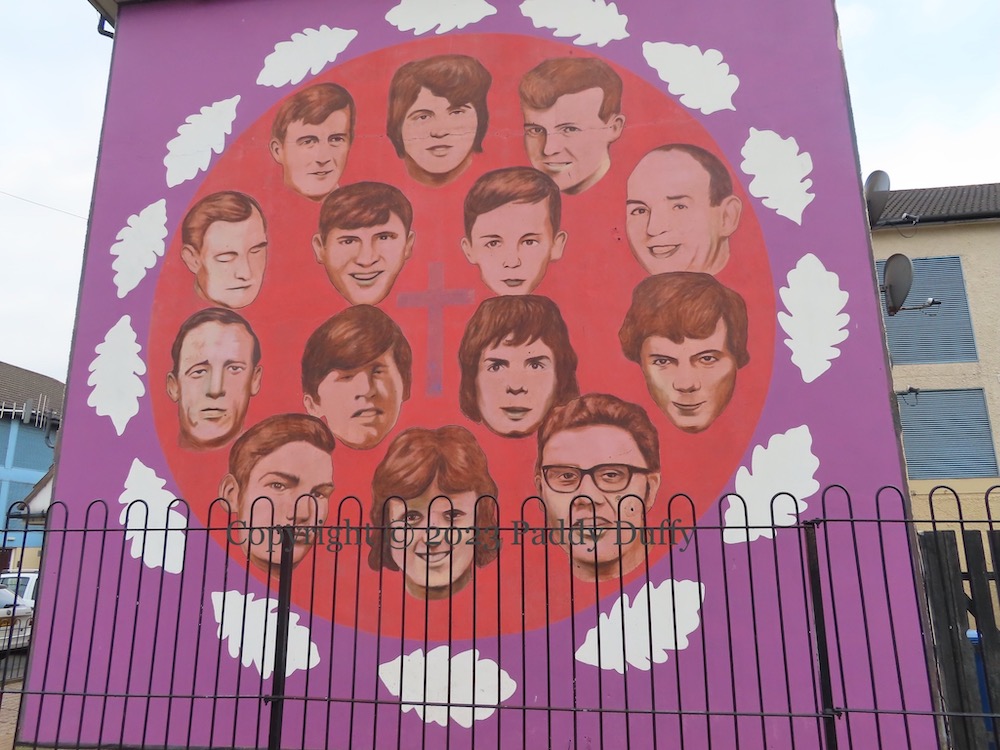
This is a repainted version of the mural in the Bogside to the victims of Bloody, now with a purple background and white oak leaves. The Christian cross in the centre was absent from the original version of the mural, and added to the version painted in 2005.
The mural is part of the Bogside Gallery (Visual History), painted by the Bogside Artists.
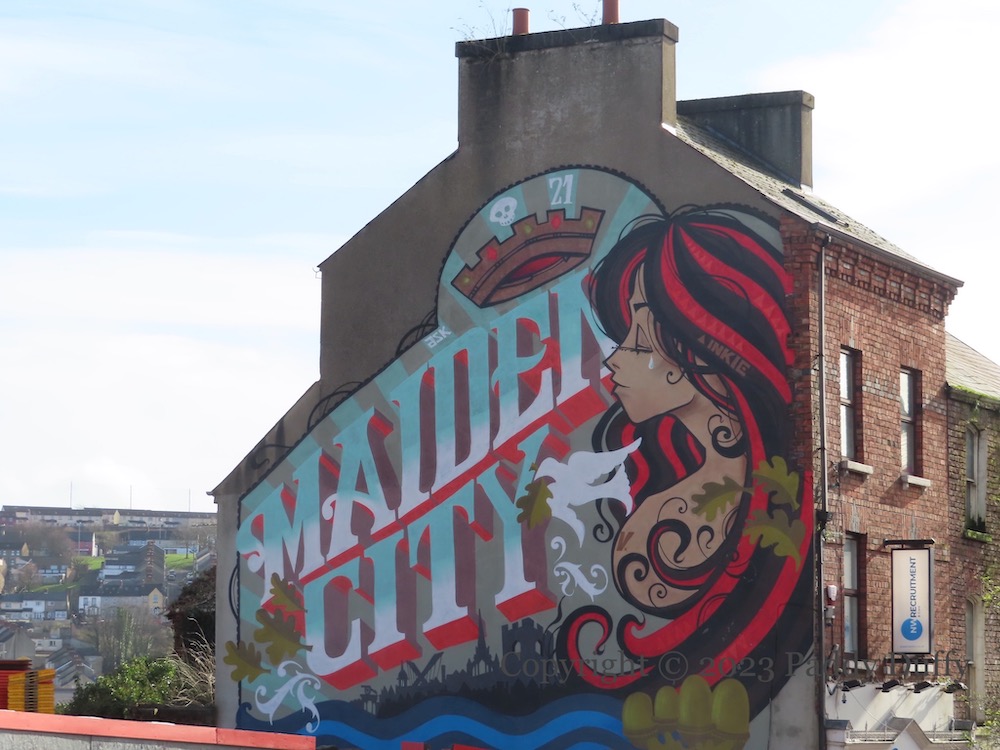
The city of (London)Derry takes its named from the Irish word “doire” meaning “oak wood” (and generically a “grove”) and the oak leaf is often used as a symbol of the city (here are 11 murals with oak leaves from the Peter Moloney Collection – Murals). In the mural above, in addition to the three leaves on the right-hand side, we also have some acorns.
The moniker “maiden city” is derived from the city’s resistance to sieges throughout its history, most famously in 1689 (again – a variety of images from Peter Moloney). The walls of the old city are shown above the river Foyle, with landmark buildings such as the Peace Bridge (see Waterside, Cityside, Quayside) behind them.
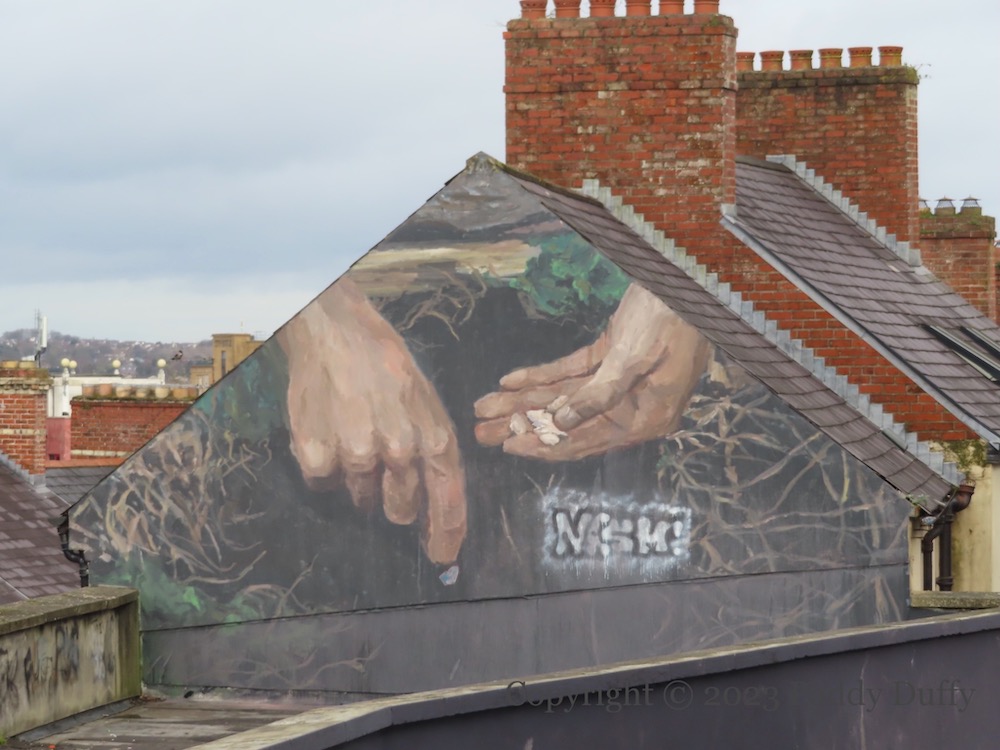
Graffiti-art by Inkie (ig) in Carlisle Road, Derry. The second piece, which shows two hands planting seeds in the ground (artist unknown) is at Butcher Gate.
“Don’t let drugs destroy your community.” “Community initiative supported by Resolution North West.”
This board is on the spot of the former UWC mural in Lincoln Court, Londonderry, re-imaged by Resolution North West, alongside work to reduce remove flags from bonfires (Community Foundation).
With support from the International Fund For Ireland (pdf).
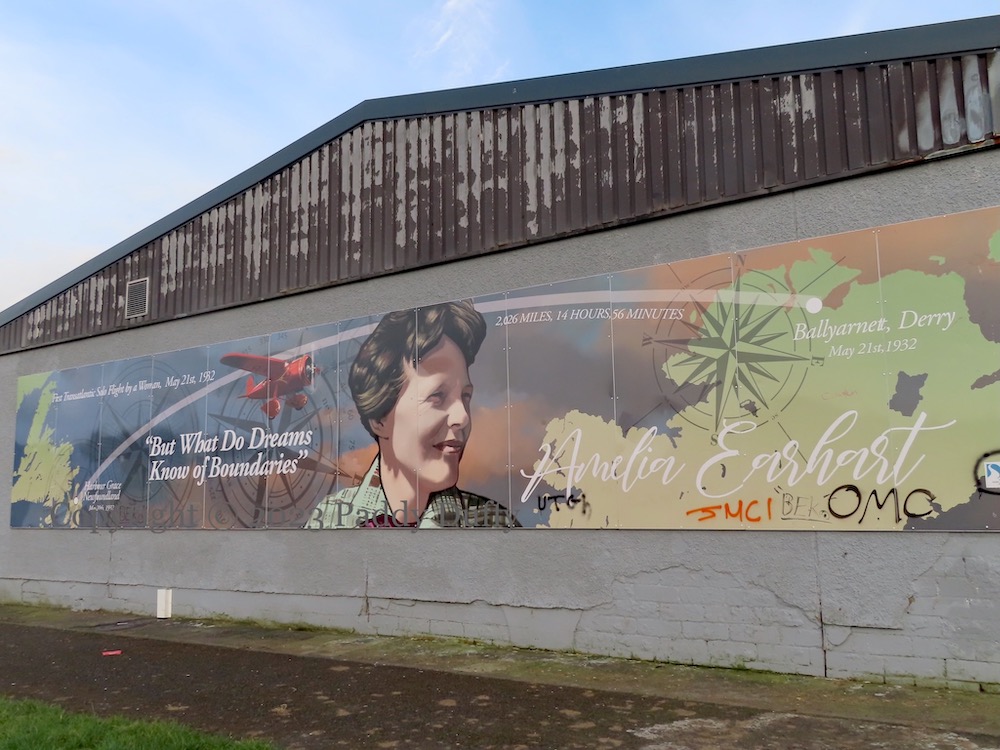
“Everyone has oceans to fly, if they have the heart to do it. Is it reckless? Maybe. But what do dreams know of boundaries?” When she left Harbour Grace, Newfoundland, on the evening of May 20th, 1932, Amelia Earhart’s intended destination for the first solo trans-Atlantic flight by a woman was Paris, France, but after various mechanical difficulties she landed instead in Ballyarnett, just outside Derry. For the 90th anniversary of her history-making flight, the artwork above was created by Joe Campbell (web), commissioned “by Community Restorative Justice in partnership with Derry & Strabane Distict Council’s Good Relations Programme and with the assistance of Greater Shantallow Community Arts.”
For the mosaic already mounted in 2010, see Flying Solo.







 Paddy Duffy Collection