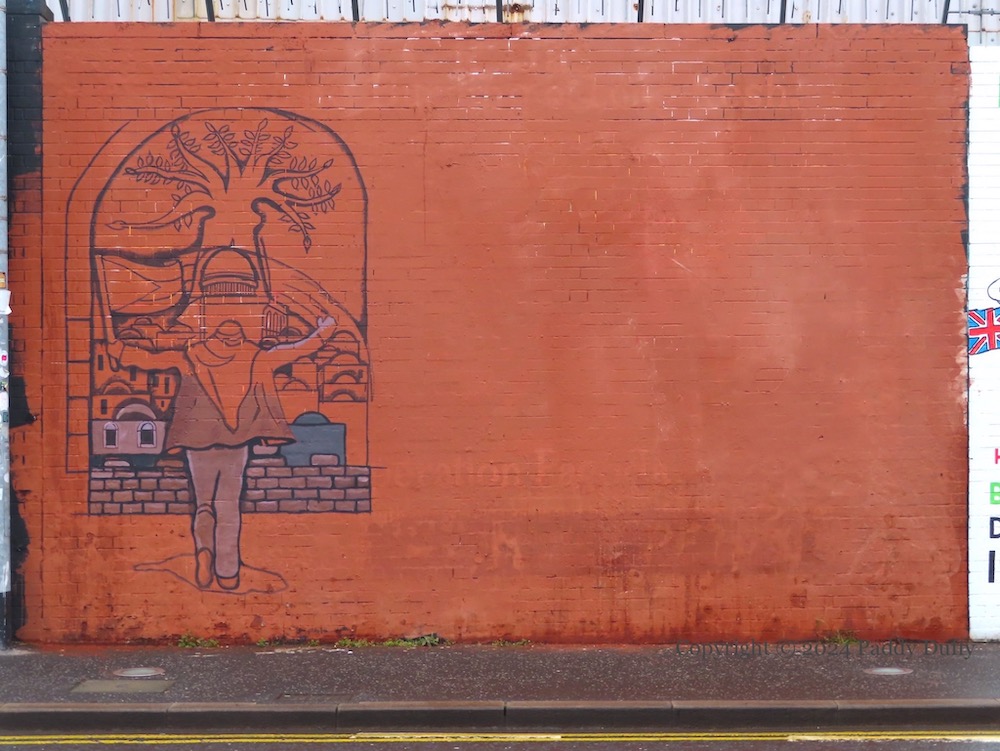
In January 2024, in response to the prolonged Israeli attack on Gaza, many murals on the “International Wall” on Divis Street were painted out and work began on reproductions of artworks by artists from Palestine and elsewhere in the region. The project was called Painting For Palestine and a Facebook page and GoFundMe page were launched.
According to Bill Rolston (Fb) (who can be seen in the second image, below), there was a plan last Autumn that Palestinian artists would create their own “international wall” and include murals designed by CNR artists. The Hamas attack on October 7 and the subsequent Israeli invasion on Gaza – now ongoing for 108 days – put paid to that project, and instead art by Palestinian painters is being painted in Belfast in support of Palestine. (Here is an NVTv segment on the project.)
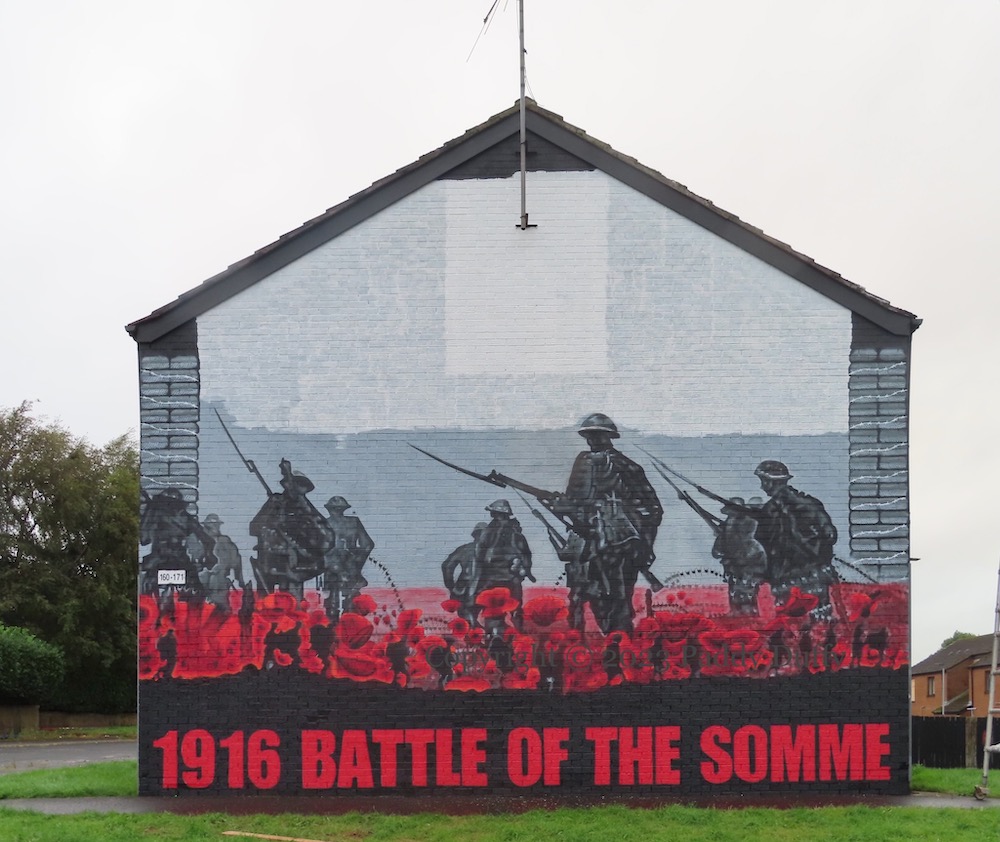
All of the following were painted out: Operation Pagoda, #Unblock Cuba, Jim McCabe, Black Taxi CIC, Springhill-Westrock Massacre, Falls Commemoration Committee, Lenár Lınn, Hunger Strikers (1916). The Nugent-Hughes-McKee, the museum bookmark, Stop The Slaughter In Gaza, and the two anti-Agreement panels (Khader Adnan and Republican Prisoners Still Exist!) remain.
This entry shows images of whitewashed panels and early progress on the first seven of the new murals, taken on January 14, 15, 17, and 20.
Here are links to the originals:
The Land Is Ours – Mohammed Alhaj, Abdullah Al Najar, Rami Al Safadi, Abdel Hamid Fares
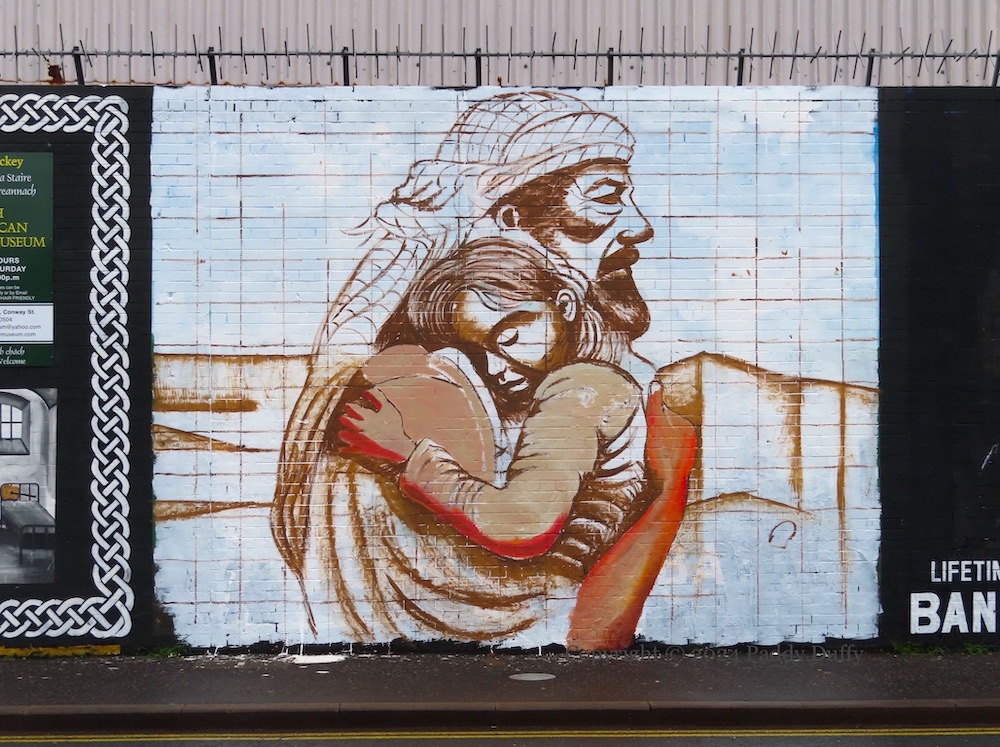
(man holding child) – Saïd Hassan
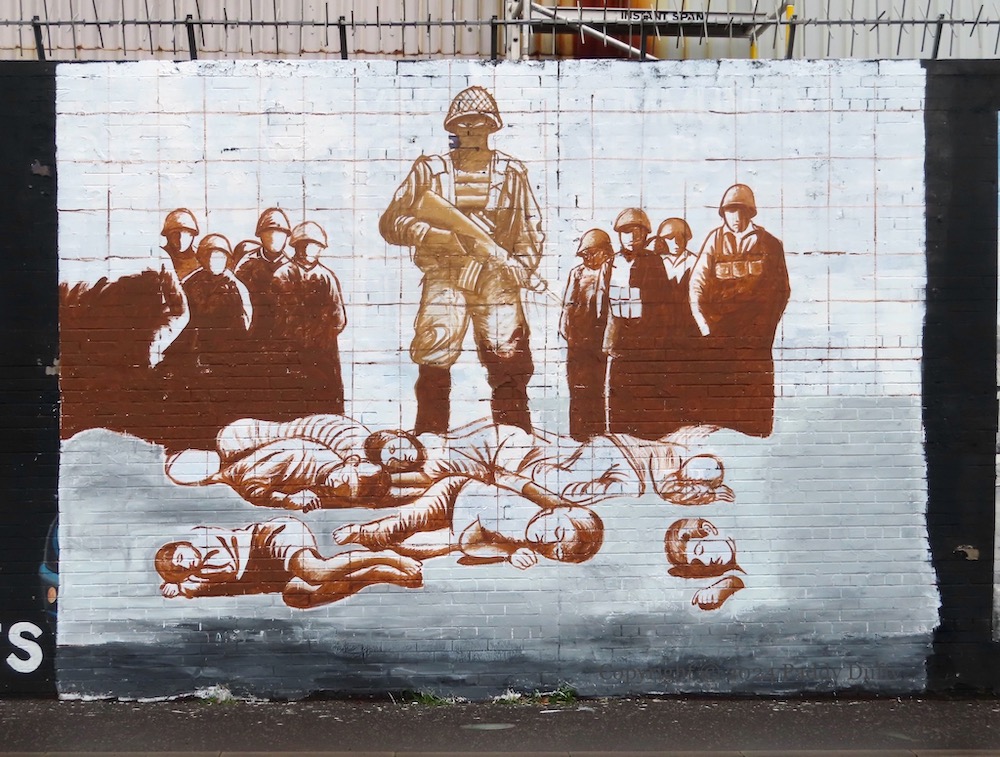
(soldiers standing over children) – Saïd Hassan
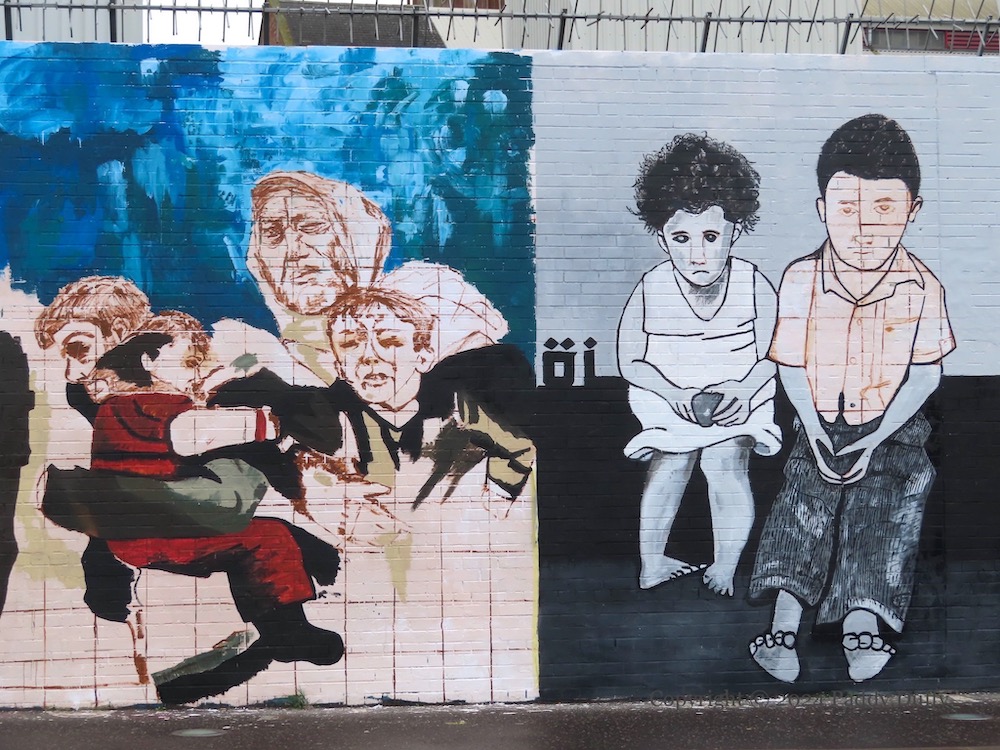
(family group) – Ahmad Shaweesh
(Soso and Omar Ashour) – Raed Qatanani
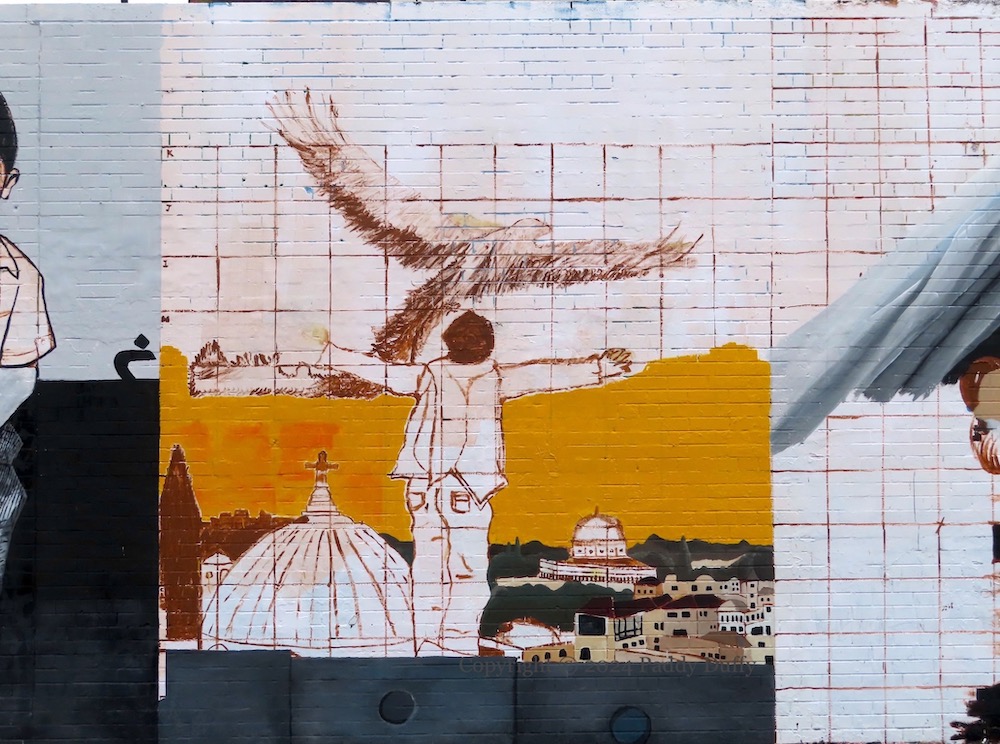
(child and phoenix) – ?
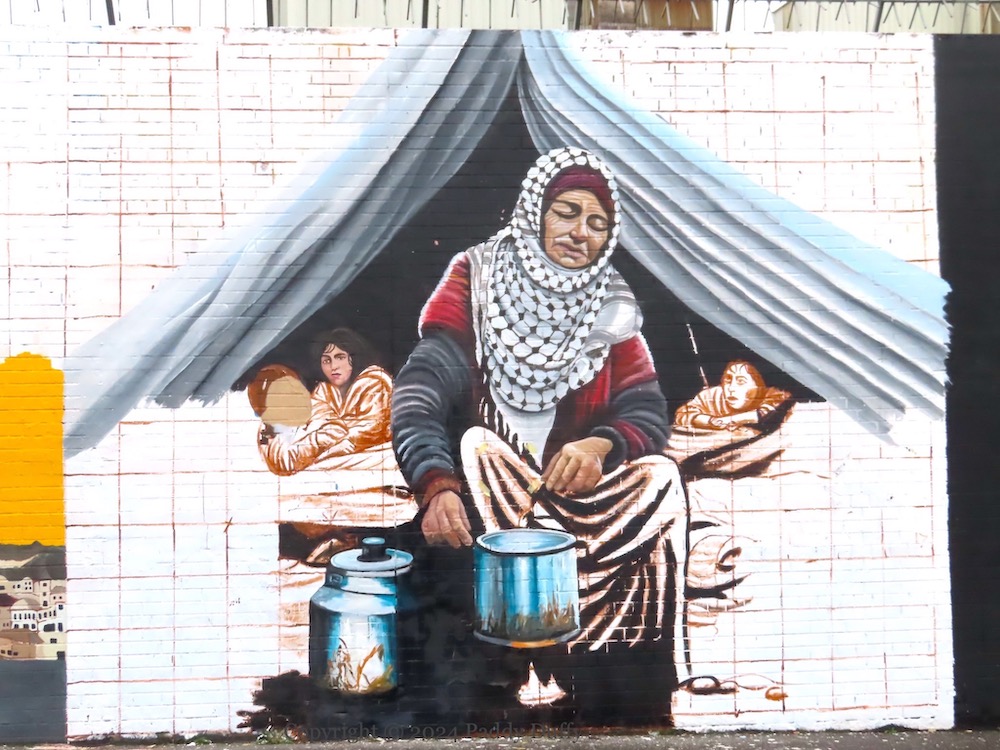
(cooking in front of tent) – Saïd Hassan
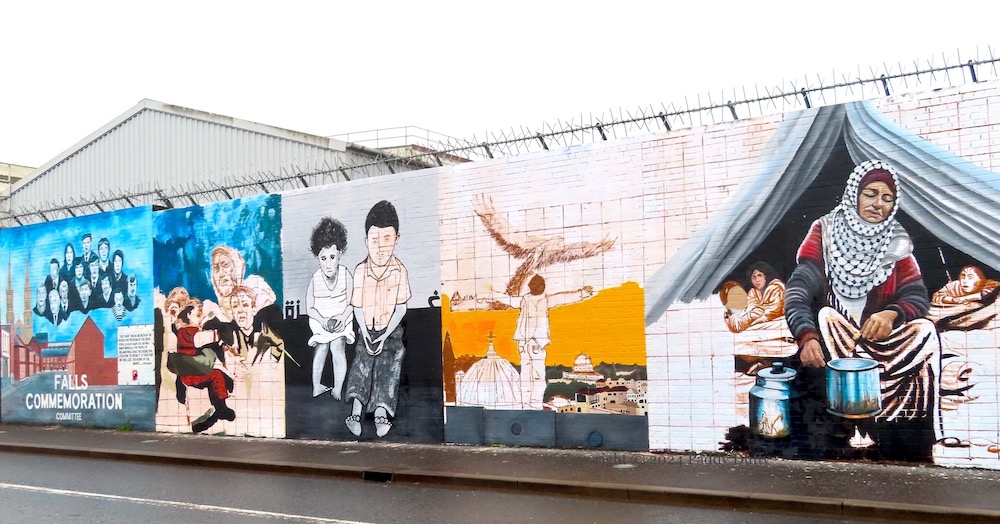
The first (left-most) panel will reproduce a mural called ‘The Land Is Ours’ by Mohammed Alhaj, Abdullah Al Najar, Rami Al Safadi, and Abdel Hamid Fares that once stood in a Gaza school; the second, next to the first, is currently blank (see the image above).
The grid and cartoon for a mural from digital artist Saïd Hassan (web):
Another image by digital artist Saïd Hassan, showing soldiers standing over dead children:
Four murals are being painted over what were previously Lenár Linn and Hunger Strikers (1916). The originals for these were designed by Ahmad Shaweesh (ig), Raed Qatanani (ig), ? [please get in touch], and Saïd Hassan (web).
Shaweesh’s piece is a deliberately unfinished image of a group of people, perhaps a family, in distress. Qatanani’s image is a portrait of Soso and Omar Ashour as they sat in a Gaza hospital during the first week of the Israeli invasion.
The original artist of this figure with a phoenix is unknown.
The last of these four murals is by Hassan and shows a woman cooking over an open fire in front of a tent in a refugee camp.
Click image to enlarge
Copyright © 2024 Paddy Duffy
T03927 [T03928] T03929 T03930 T03931 [T03932] [T03933] T03934 T03935 T03936








 Paddy Duffy Collection