Here is a survey of PUL boards (from left to right) at the shops in the centre of the village of Moygashel, just south of Dungannon.
First is a British Army soldier in a firing position. Compare this board to Now Is The Time To Kneel in Clonduff, Castlereagh, which suggested that the time for soldiers to kneel was in mourning for Queen Elizabeth.
The subject of the second image is obscure. Vanguard as a political and activist group dissolved in 1977 (WP) and the name and emblem have been taken up by the Vanguard Bears, a Rangers supporters’ club (see e.g. Defending Our Traditions).
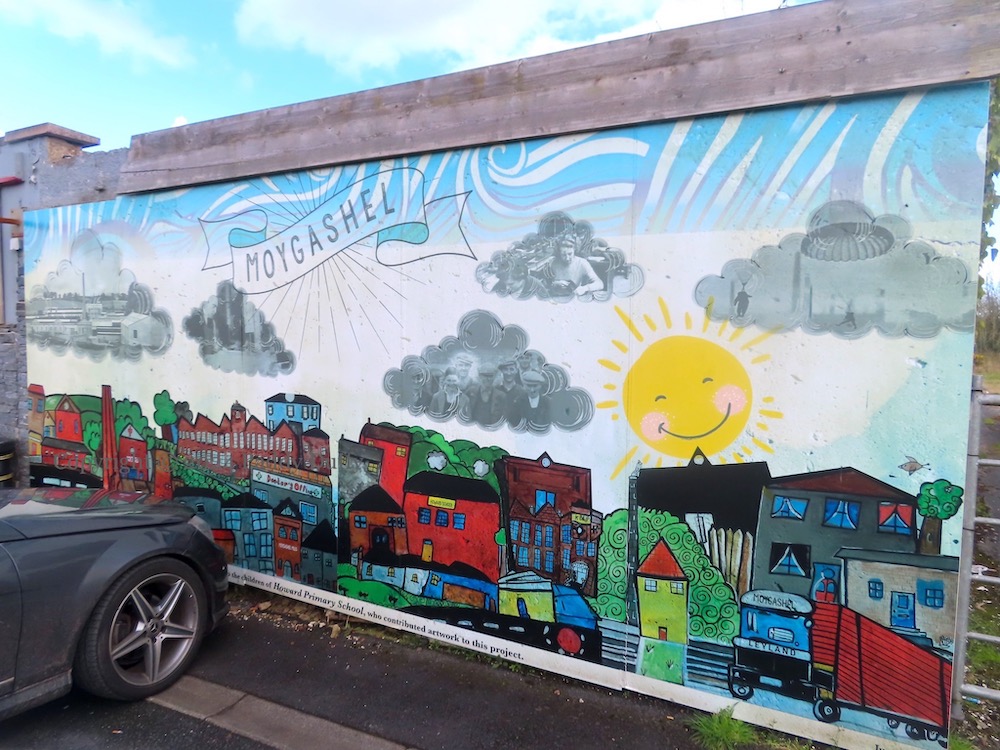
Third is a children’s mural, produced (in part) by children from Howard primary school.
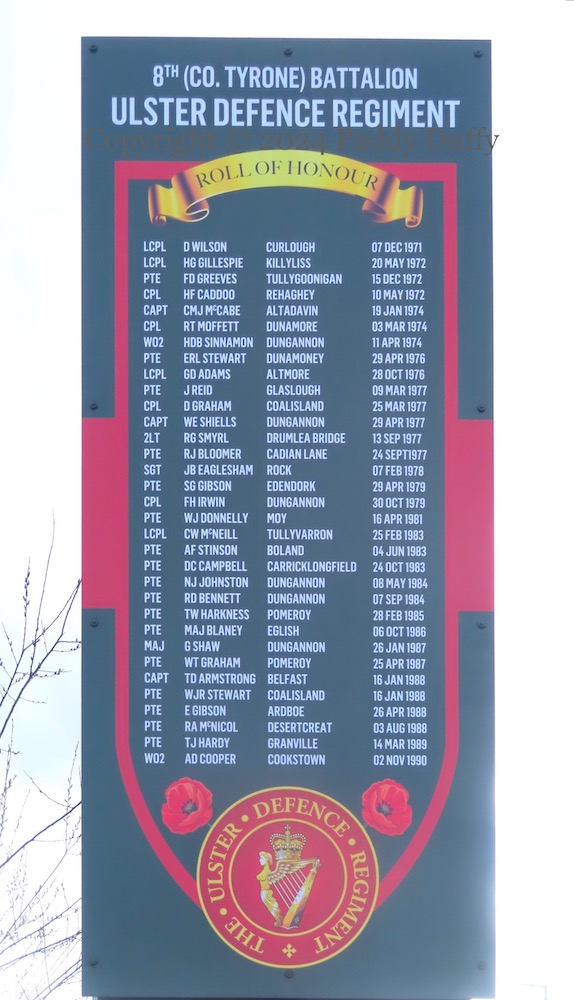
The ‘Time To Decide’ and UDR 8th (Co. Tyrone) battalion roll of honour were seen previously, alongside two others which are now absent, in Belfast Agreement Null & Void.
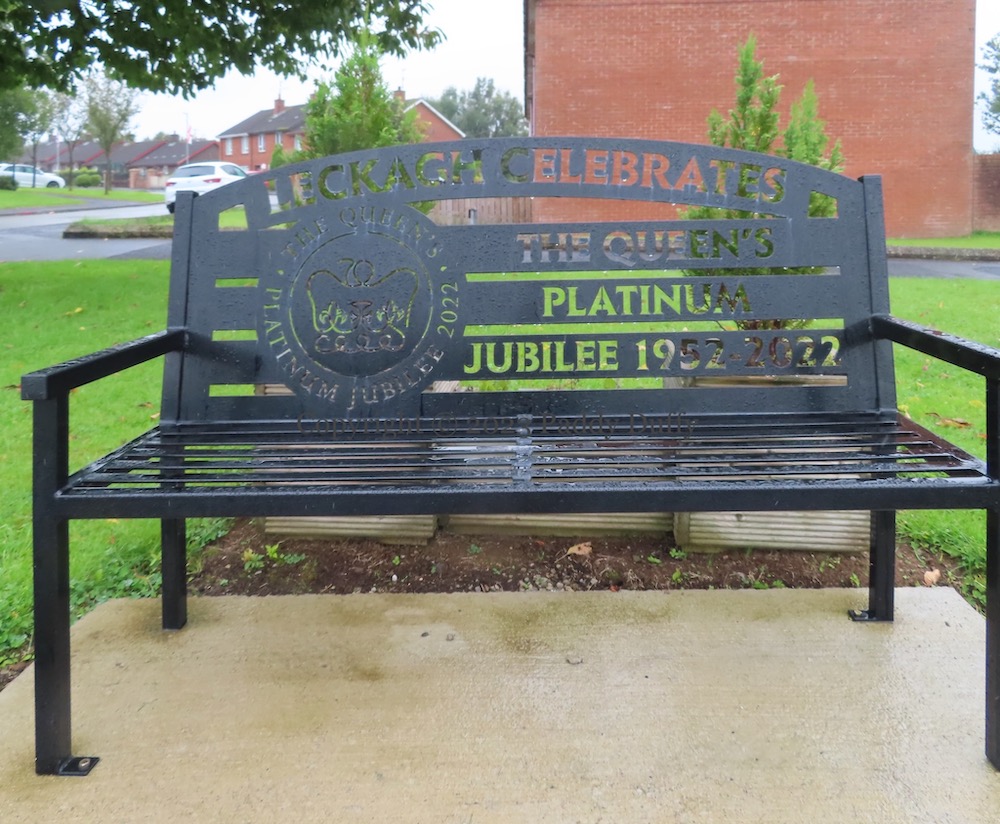
Beyond those is a tarp celebrating Queen Elizabeth II’s platinum jubilee, in 2022.
Finally, a Moygashel Youth Club (Fb) mural in disrepair.
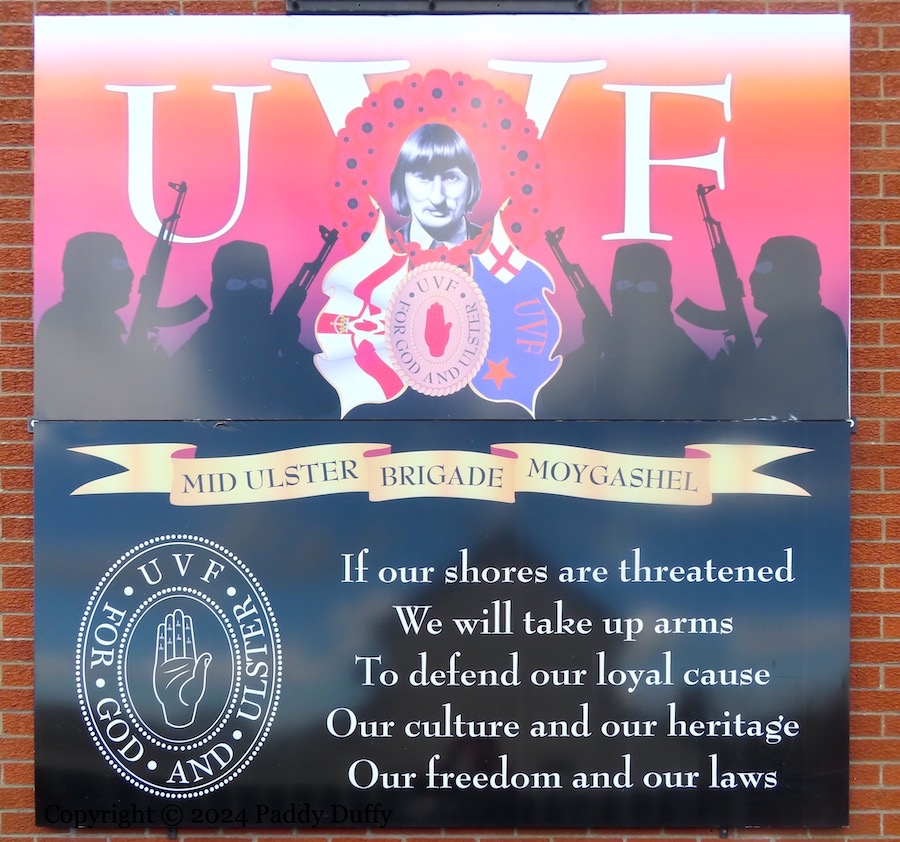
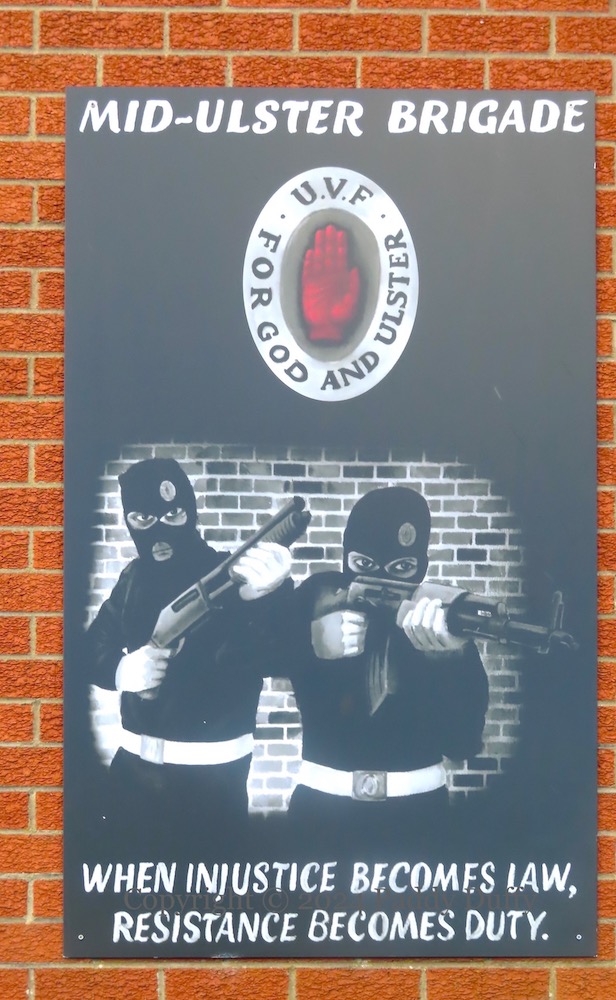
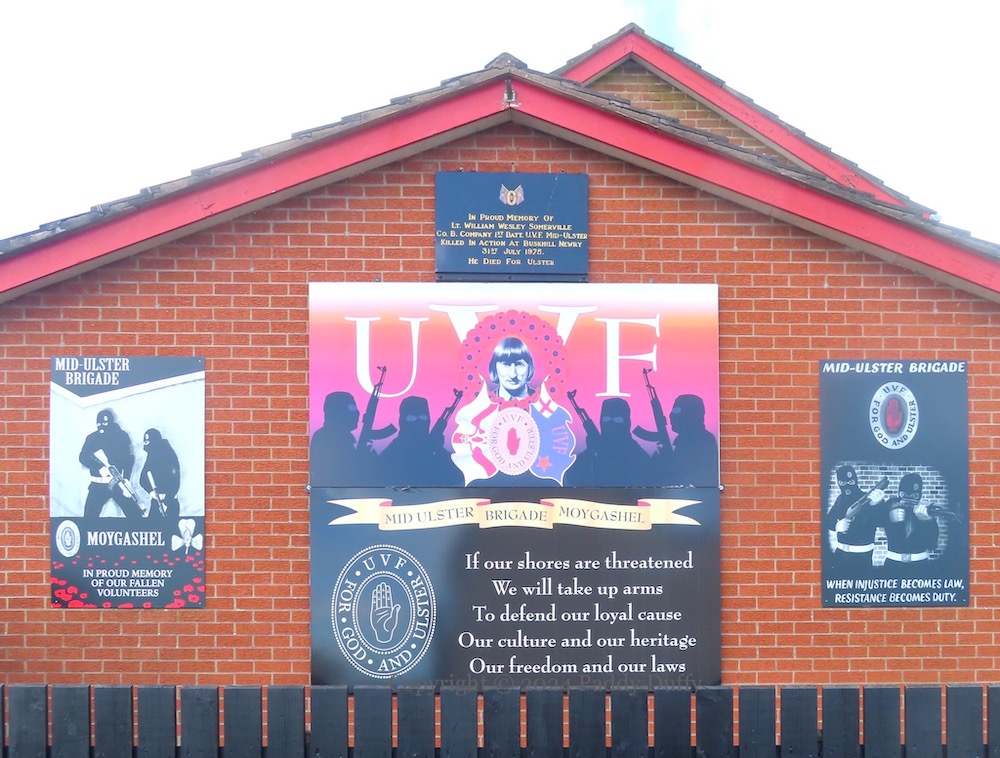
“If our shores are threatened/We will take up arms/To defend our loyal cause/Our culture and our heritage/Our freedoms and our laws.” Moygashel’s own (William) Wesley Somerville, a member of both the UVF and UDR, was killed by a bomb prematurely exploding as he placed it on the minibus of the Miami Showband in July of 1975. Three members of the band died, one of them Protestant, along with volunteers Somerville and Harris Boyle from Portadown (WP). “He died for Ulster” (on the plaque).
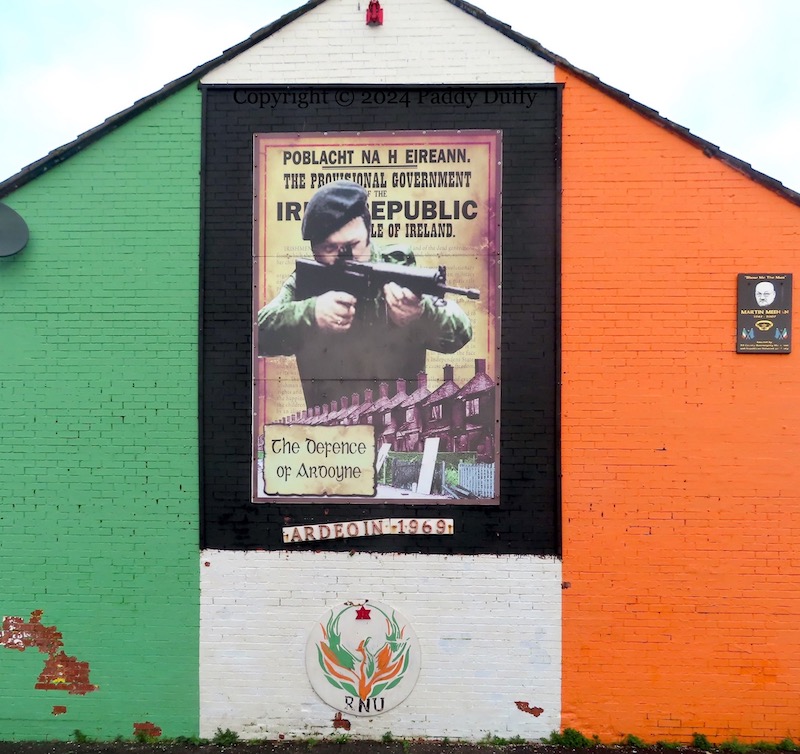
Martin Meehan joined the IRA in 1966 and was one of a few IRA volunteers defending Catholics in Ardoyne (Ard Eoın) in August 1969. Rioting did not cease there until the 16th, when British troops were finally deployed to the Crumlin Road to block mobs coming from the Woodvale and Shankill. Meehan resigned after the failure of the IRA to defend Ardoyne, Clonard, and Divis. This Magill article from the time summarises the IRA’s actions as “late, amateur and uncertain”. (Meehan would later rejoin the IRA and PIRA.)
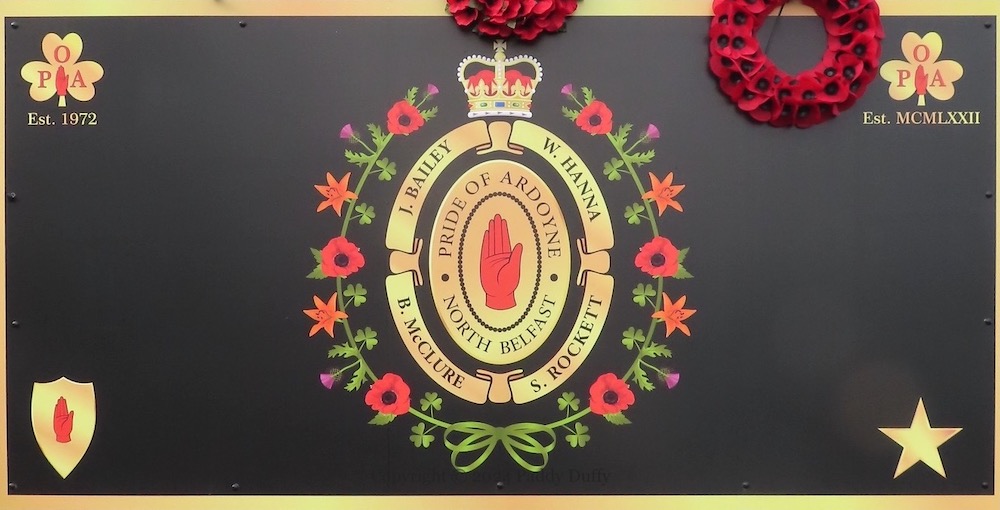
The Pride Of Ardoyne flute band memorial site was overhauled in November. The silhouetted bandsmen (seen in Pride Of Ardoyne) are gone and the cross and wooden plaque at the top (see Billy Hanna) have been joined by two large boards, naming “J. Bailey, W. Hanna, S. Rockett, B. McClure” and, (on the drum) “Charlie Dunn (1957-2021)”, along with 20 small plaques of these five plus 15 more who are an “absent member”, “absent friend”, and “loyal supporter”.
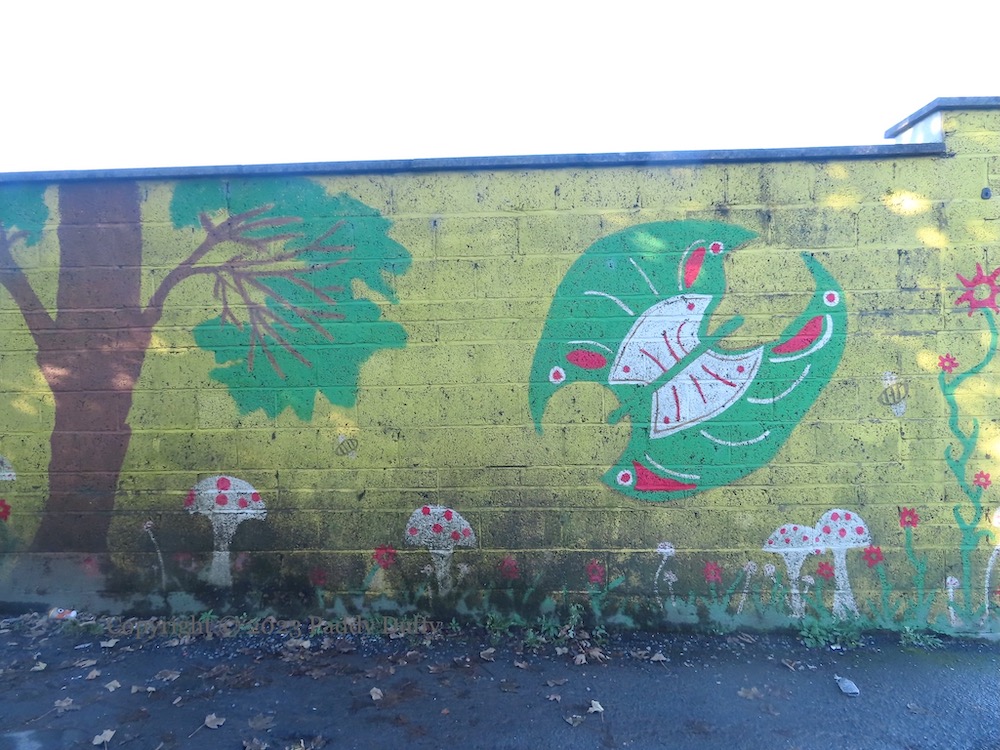
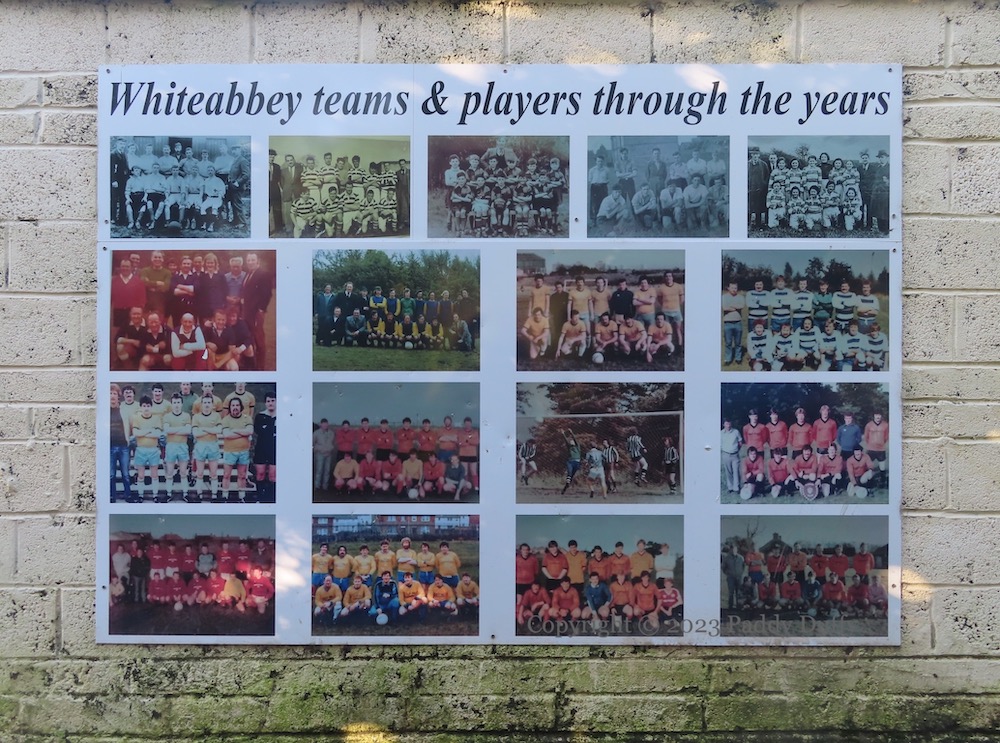
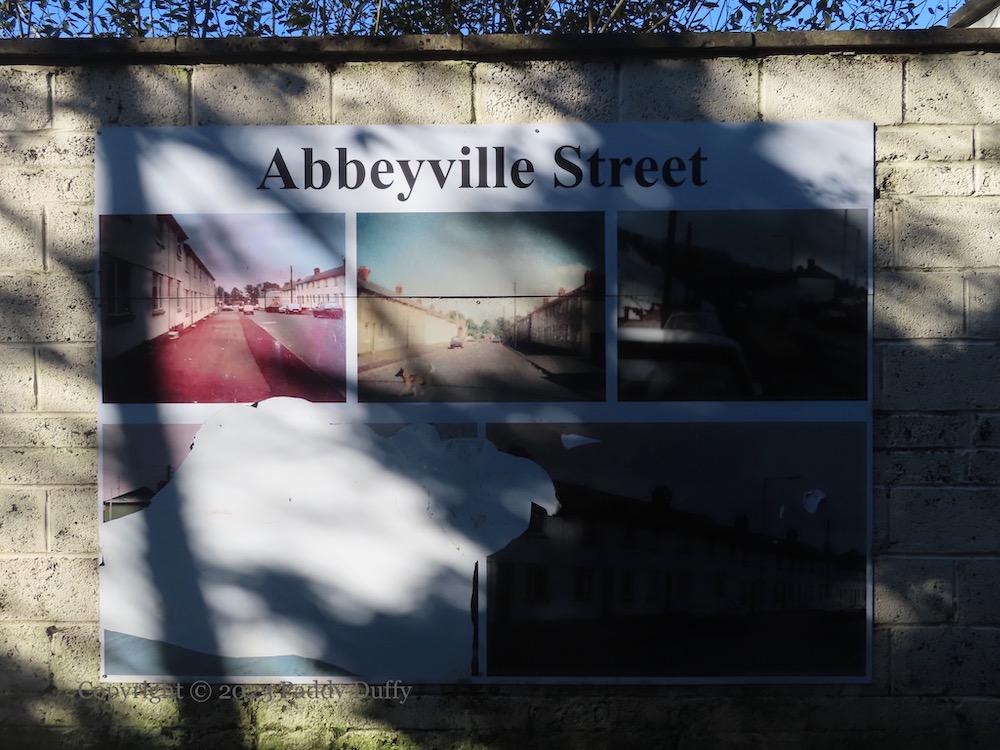
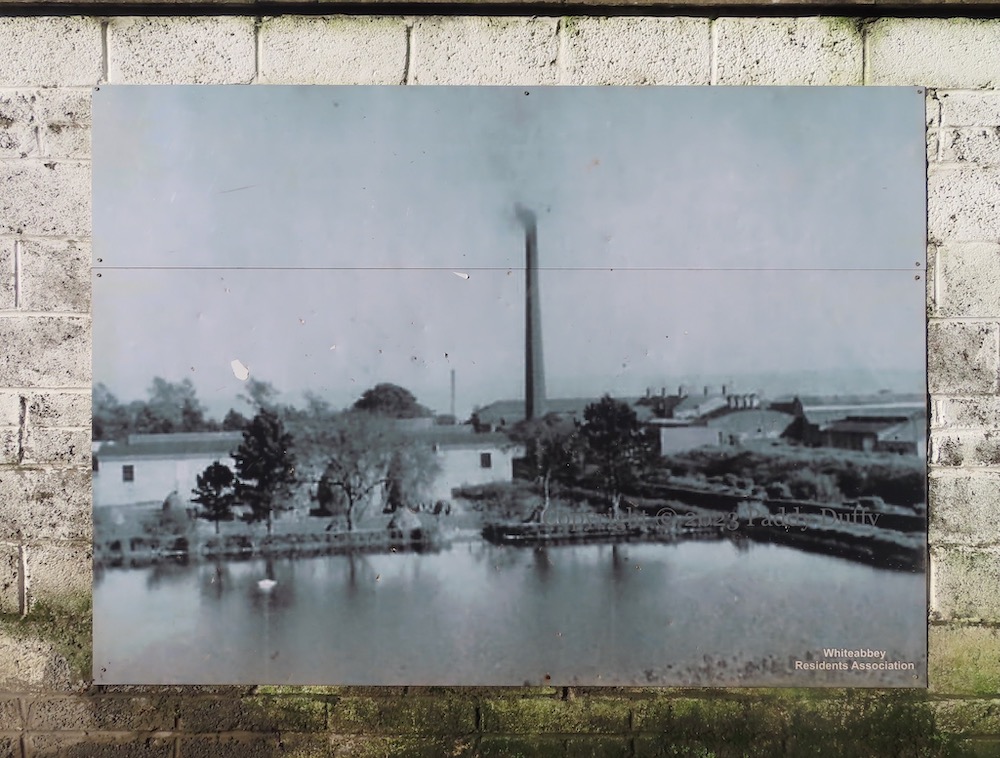
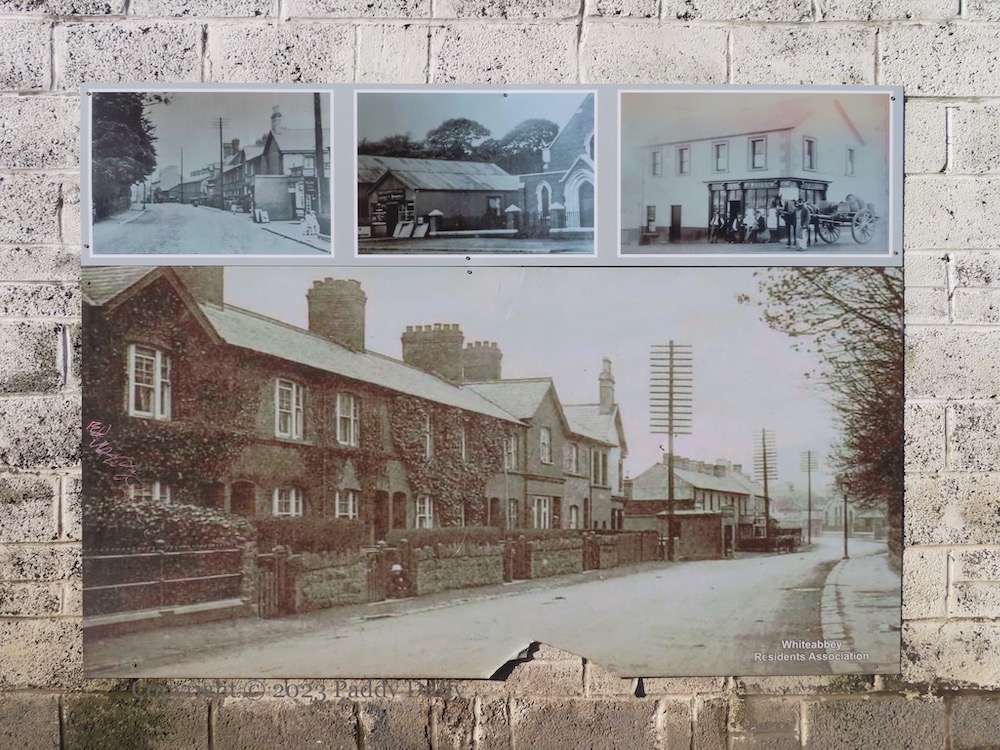
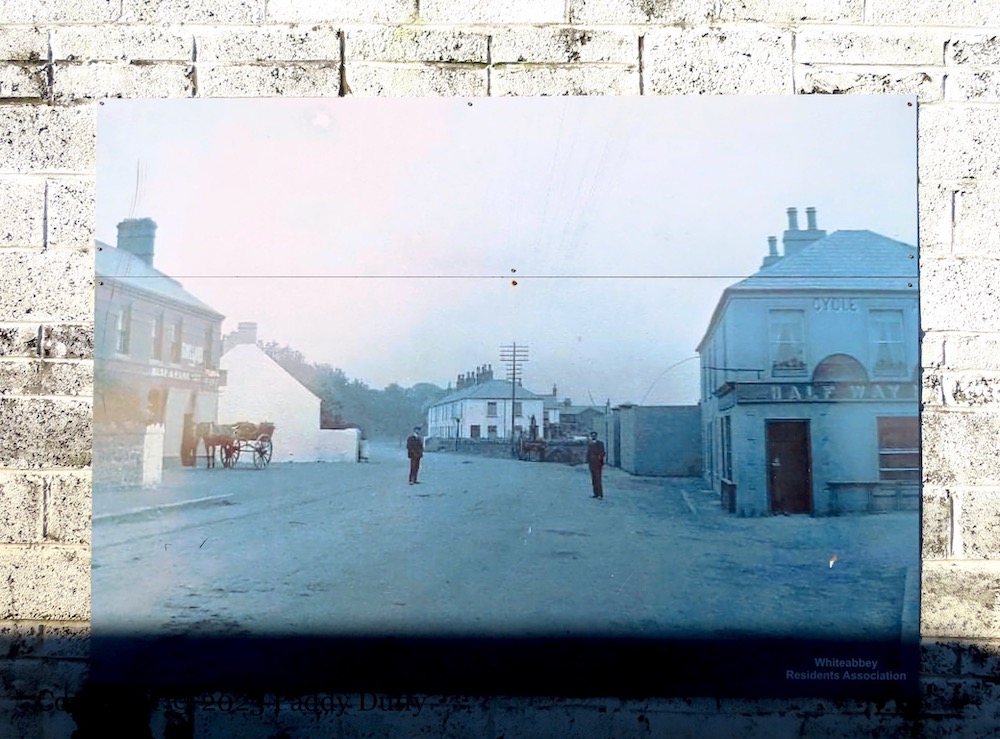
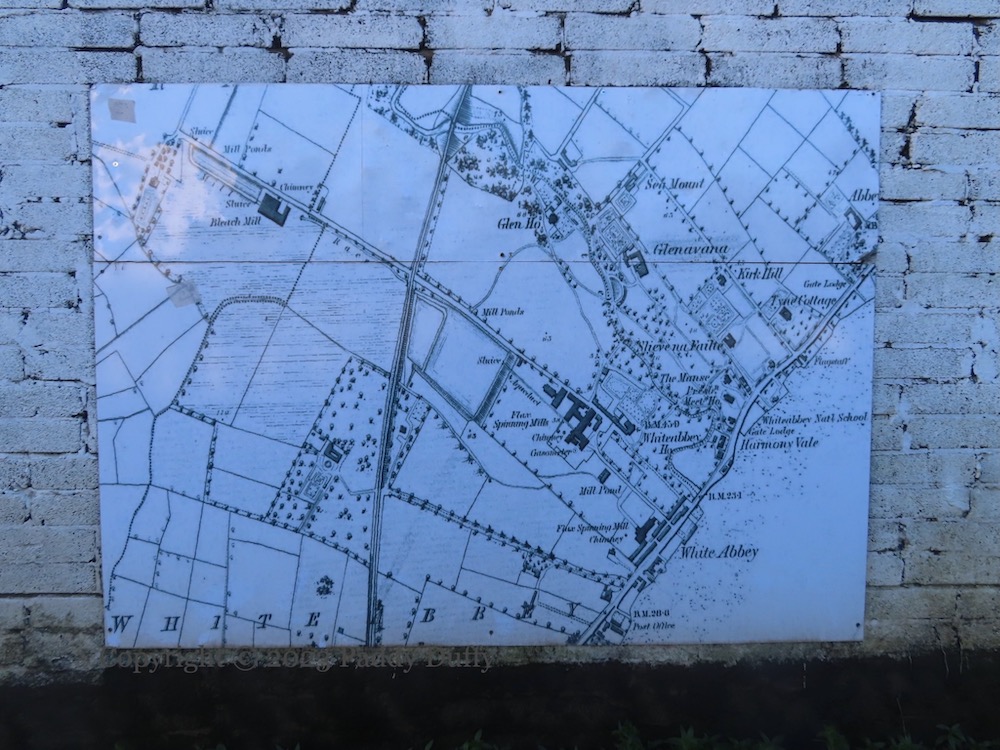
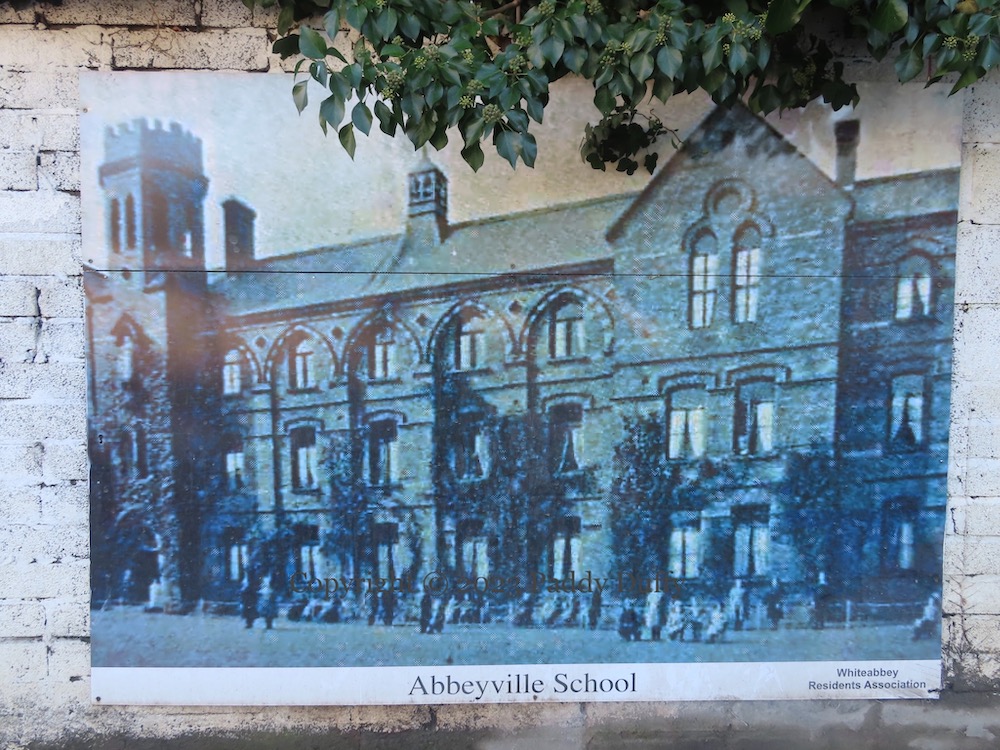
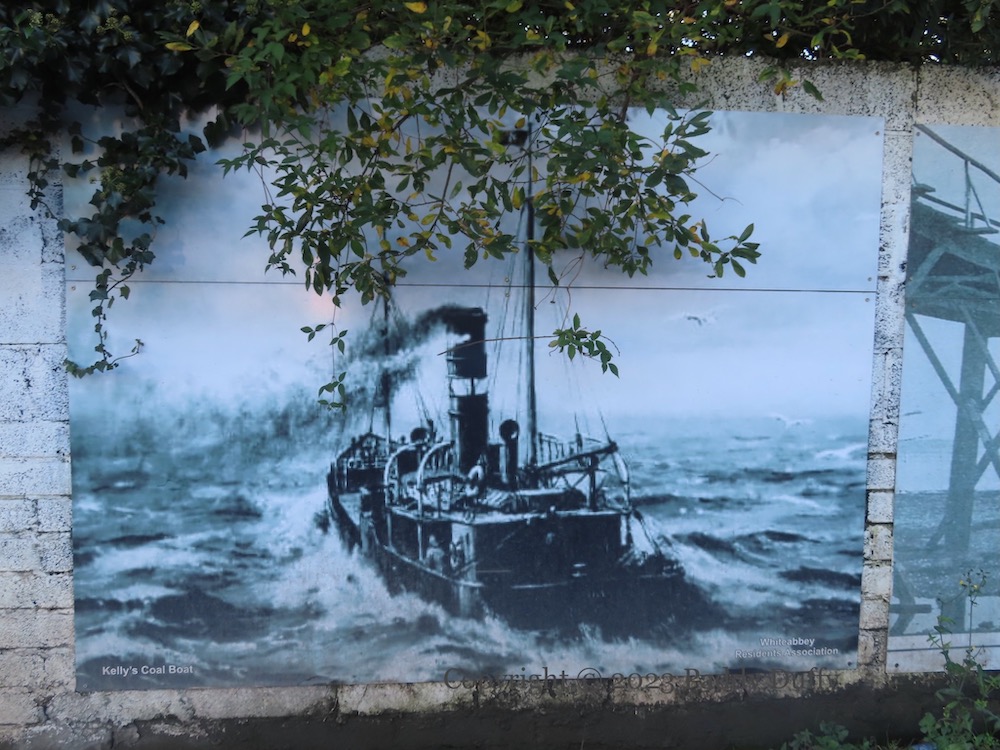
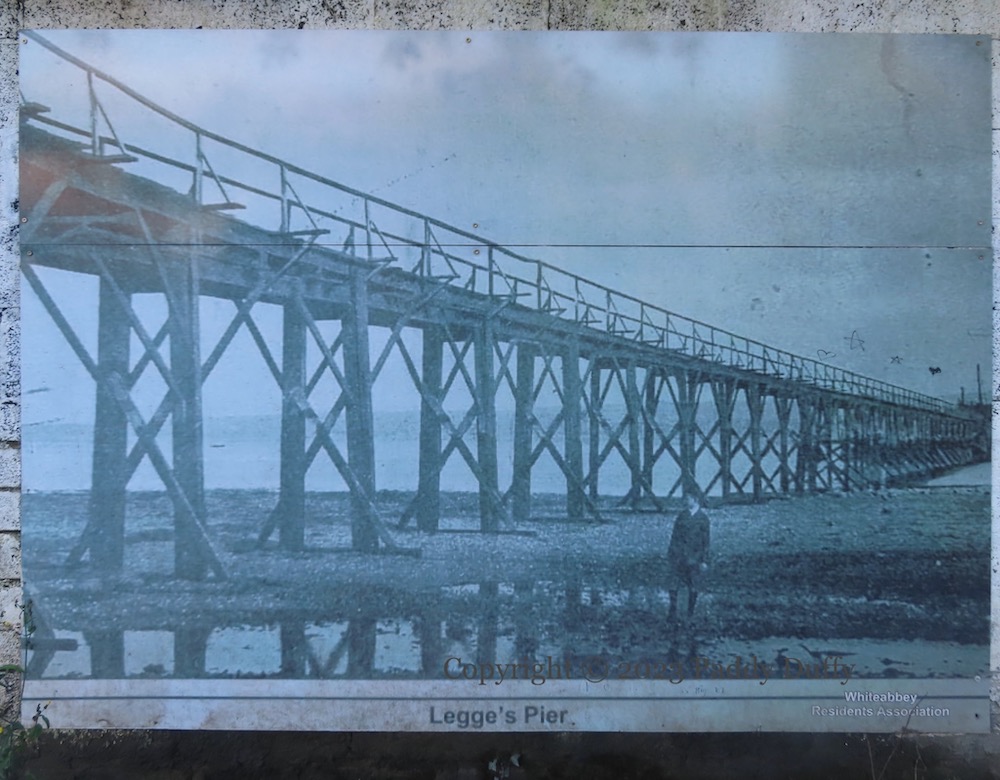
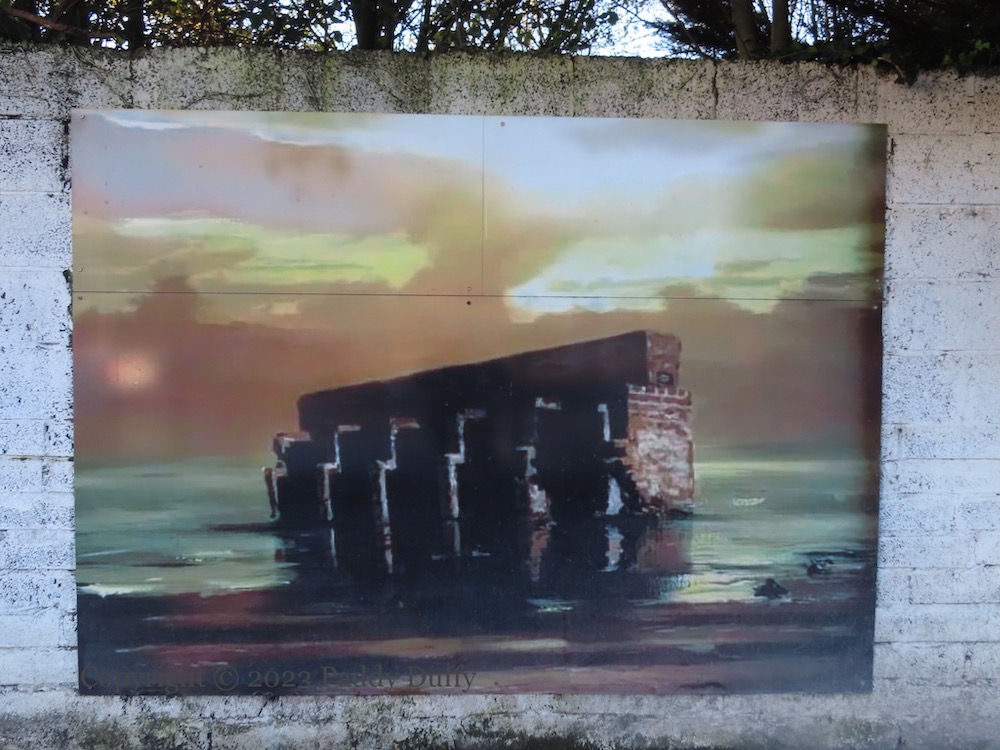
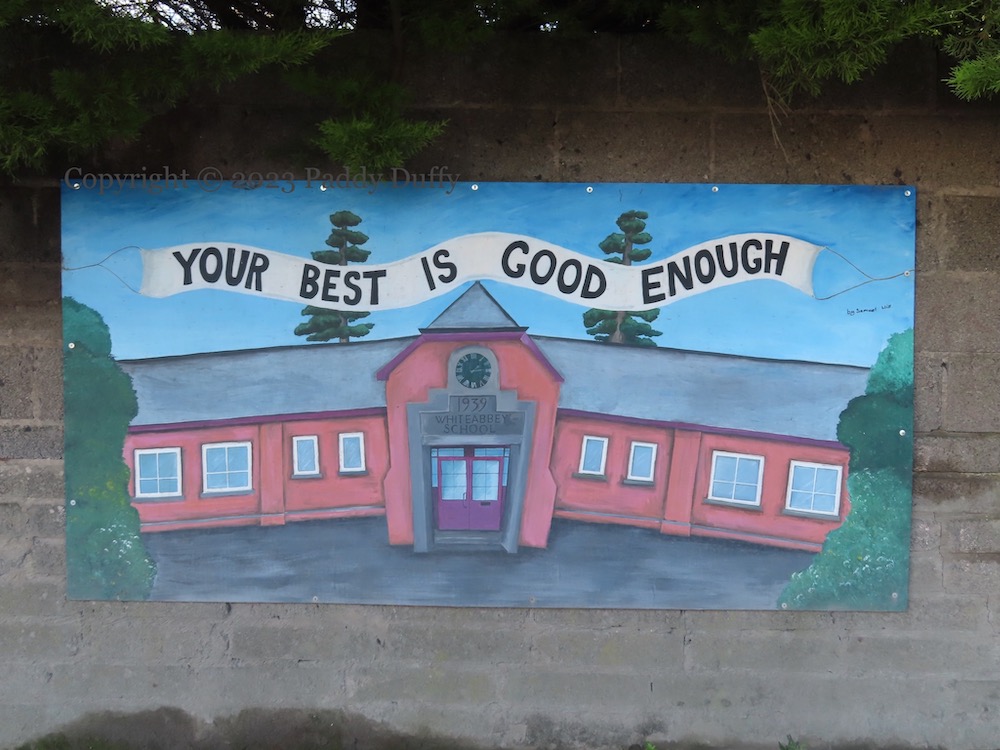
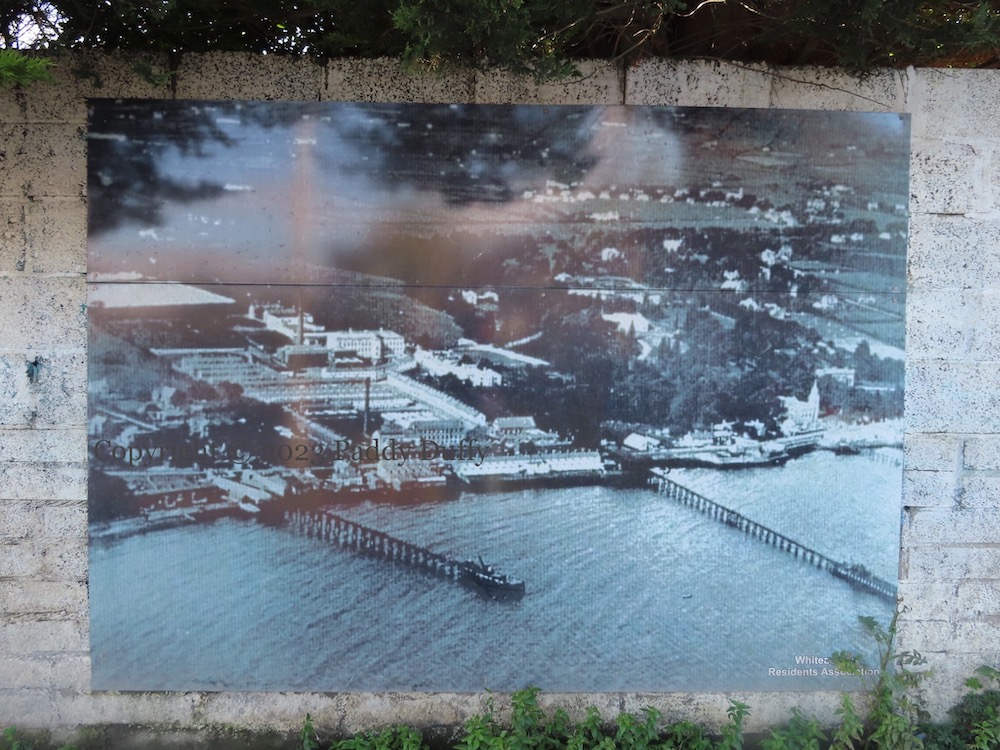
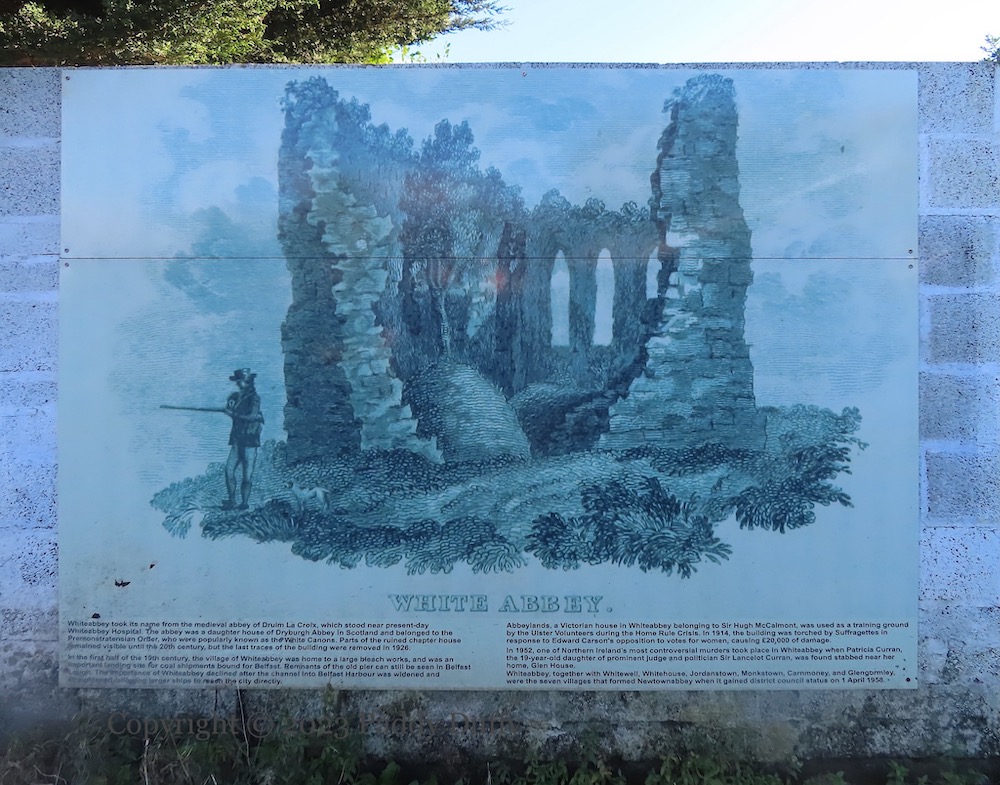
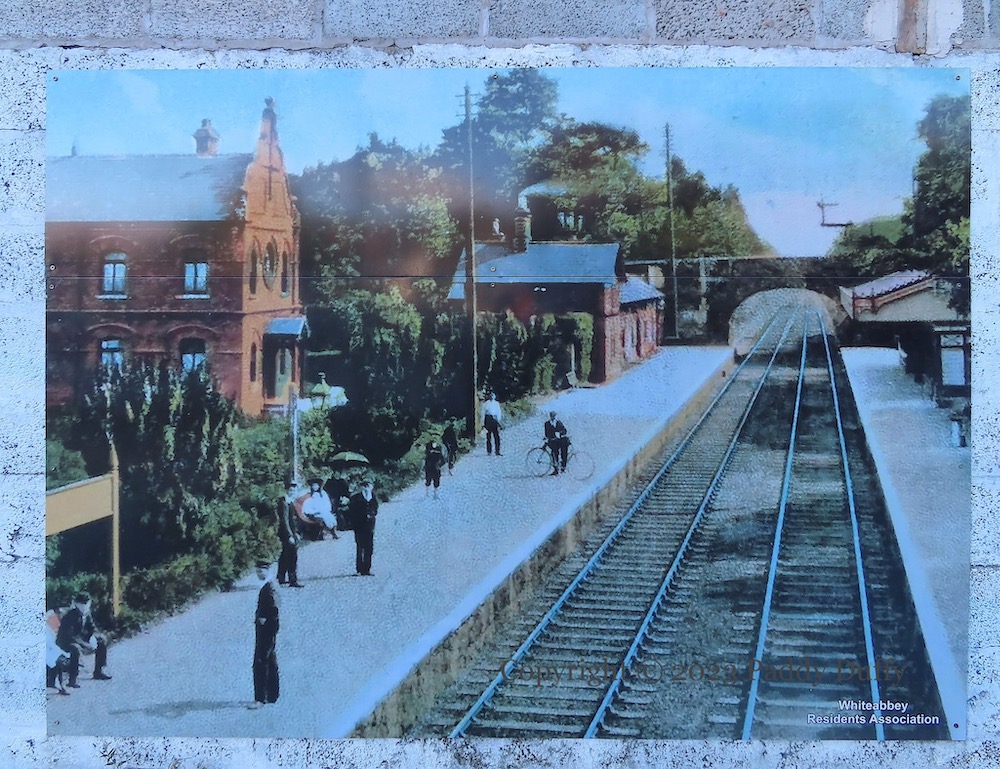
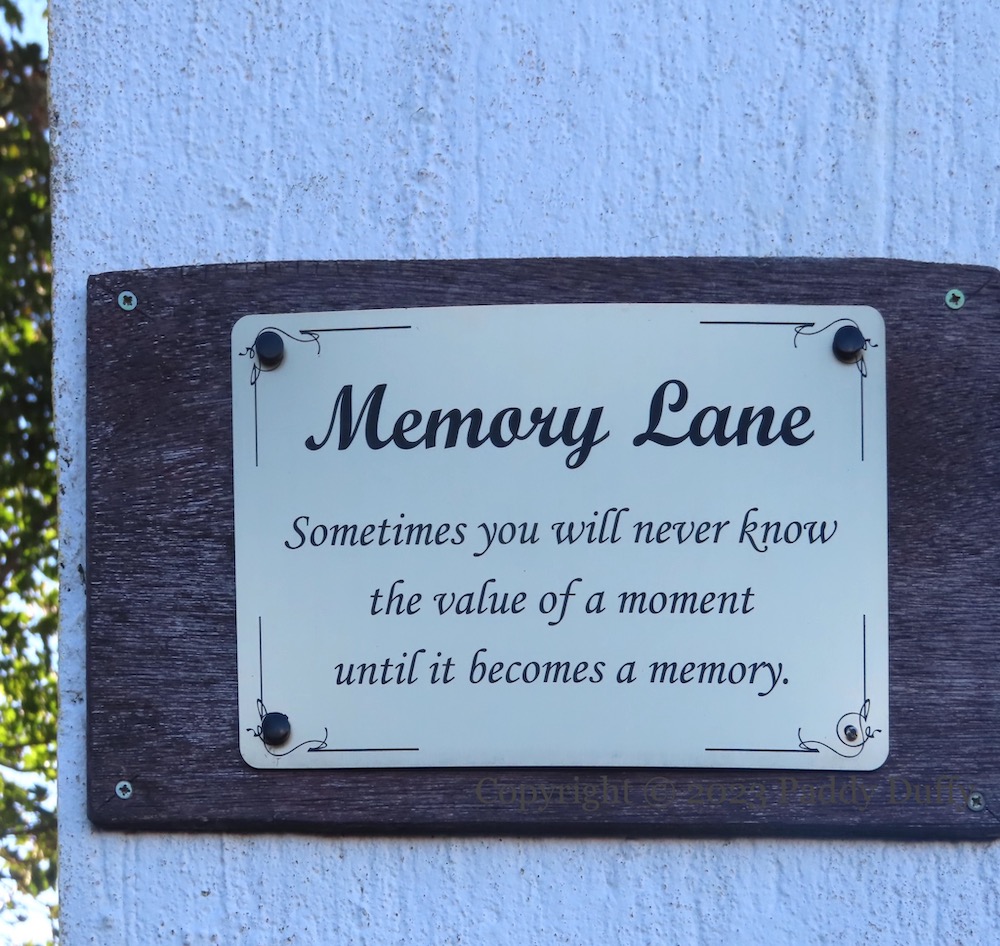
“Sometimes you will never know the value of a moment until it becomes a memory.” Work to clean up and beautify Devlin’s Lane in Whiteabbey began in 2020, with the large butterfly mural shown above (Belfast Live); 15 (16?) boards showing local history were put in place in August 2021 (NIWorld | Belfast Live). The text on the ‘White Abbey’ panel comes directly from WP.
The project was organised by Whiteabbey Residents’ Association, with funding from Translink – the alley (official name, Abbeyville Place) runs to Whiteabbey train station.
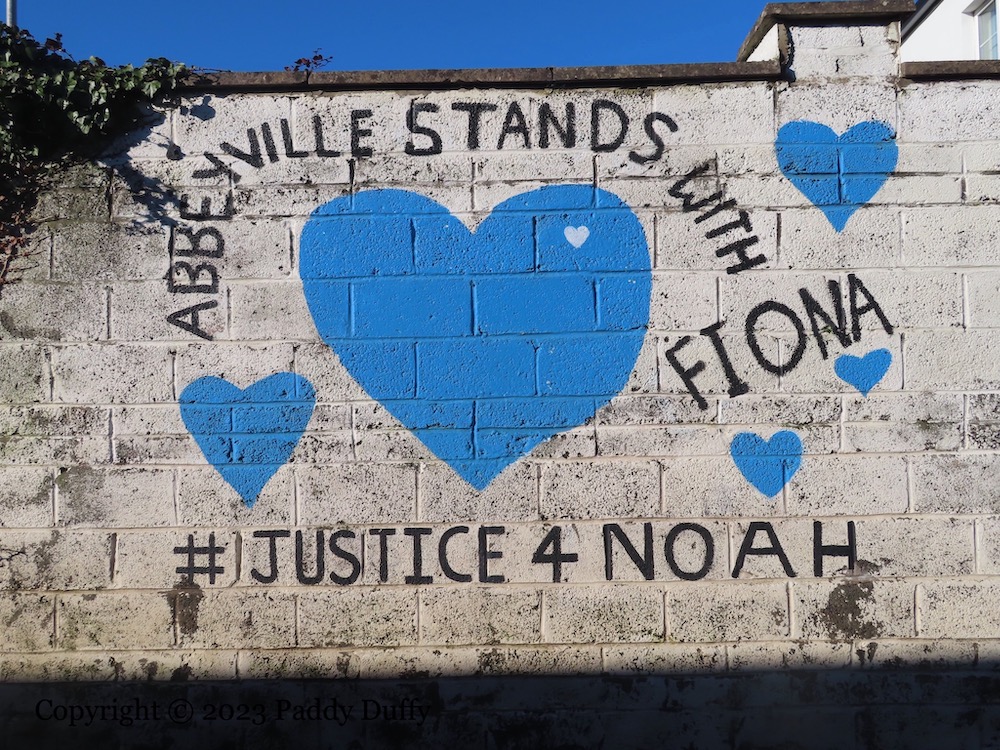
The ‘Justice4Noah’ and ‘Your best is good enough’ panels seem to have a different origin.
The panels are presented here from north to south, beginning with the western side:
The wall then switches to the eastern side of the alley:
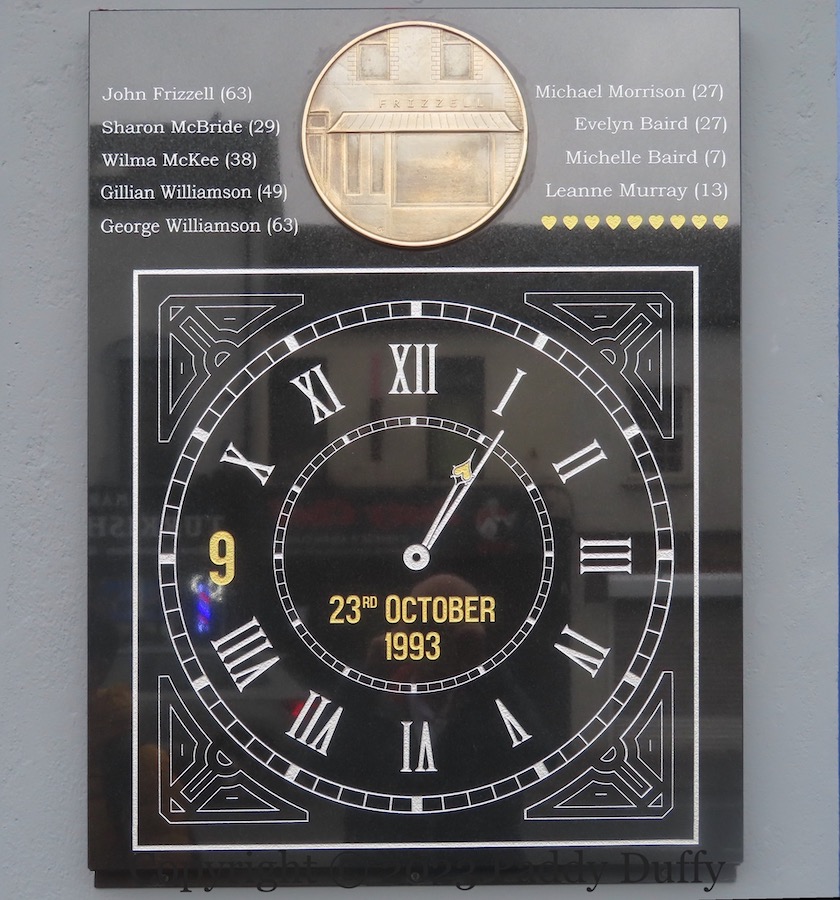
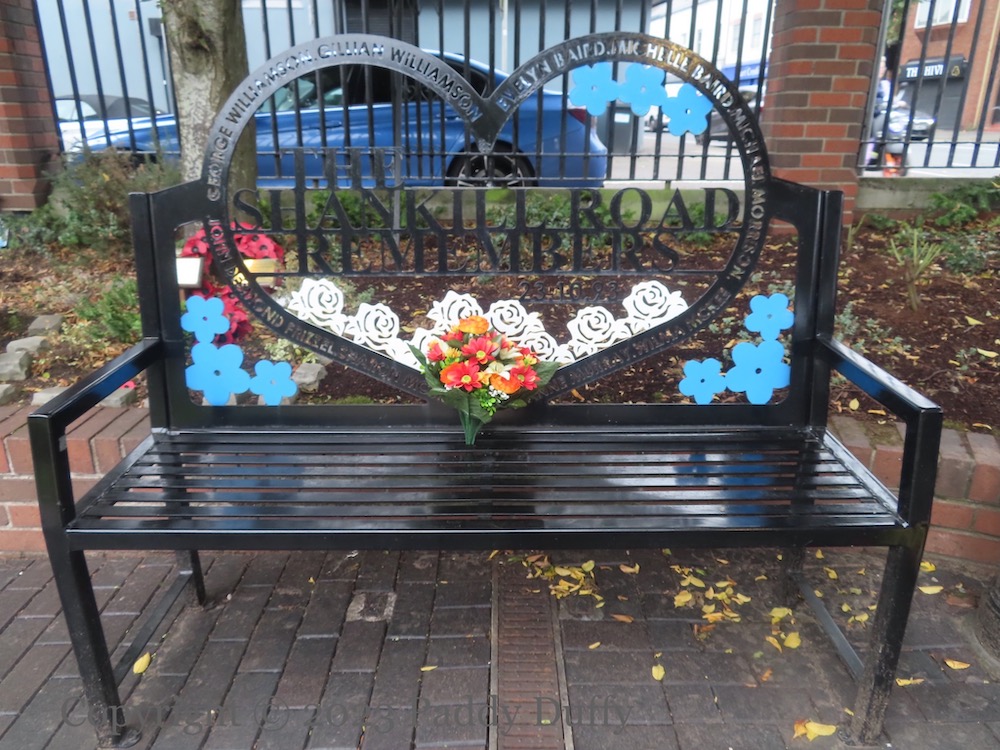
A service was held yesterday in West Kirk Presbyterian to mark the thirtieth anniversary of the bombing of Frizzell’s fish shop on the Shankill Road. As part of the ceremony, wreaths were laid at the new memorial marking the spot on the Shankill where the bomb exploded, killing nine locals — hence the Arabic “9” among the Roman numerals on the clock face — and one of the bombers (ITv footage). The clock shows the date and time that the bomb went off: 1:06 pm on Saturday October 23rd, 1993.
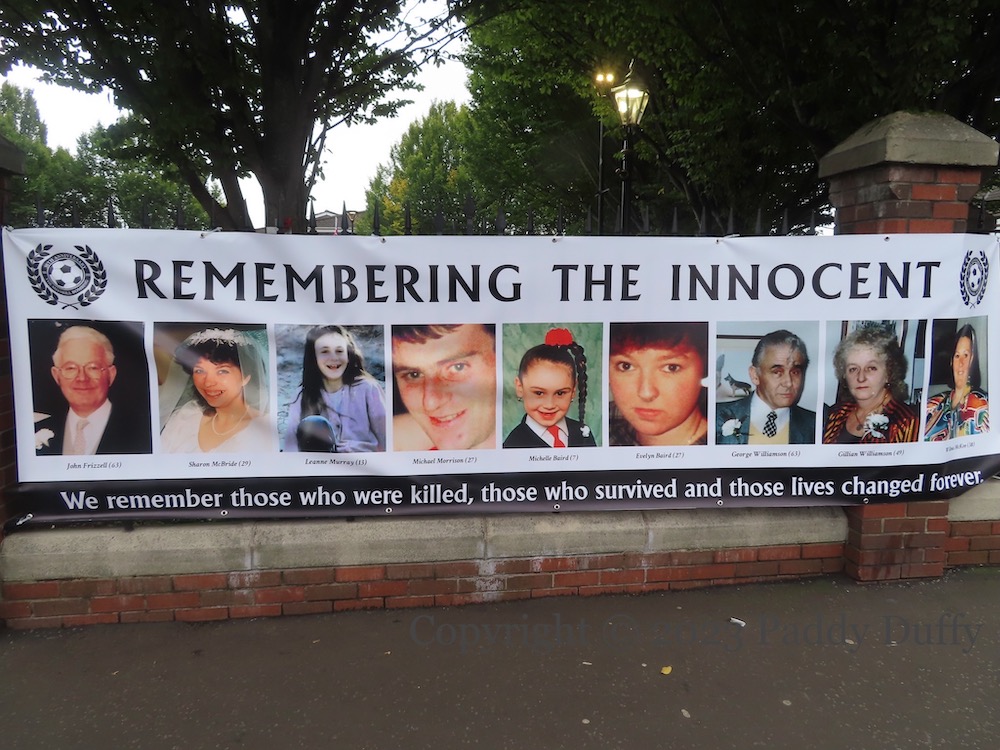
The new ‘clock’ memorial replaces the three plaques seen in Frizzell’s (though the circular plaque might have been incorporated into this new memorial); the board of portraits served as the cover for the memorial in the days prior to unveiling and was placed over the credit union’s ATM.
West Kirk also contains a stone and bench to the victims of the Shankill bombing. Nine trees were also planted in their memory: John Frizzell, Sharon McBride Leanne Murray, Michael Morrison, Evelyn Baird, Michelle Baird, George Williamson, Gillian Williamson, Wilma McKee.
“We remember those who were killed, those who survived and those lives changed forever.”
“‘And God shall wipe away all tears from their eyes; and there shall be no more death, neither sorrow, nor crying, neither shall there be any more pain; for the former things are passed away’ Revelations 21 v4”
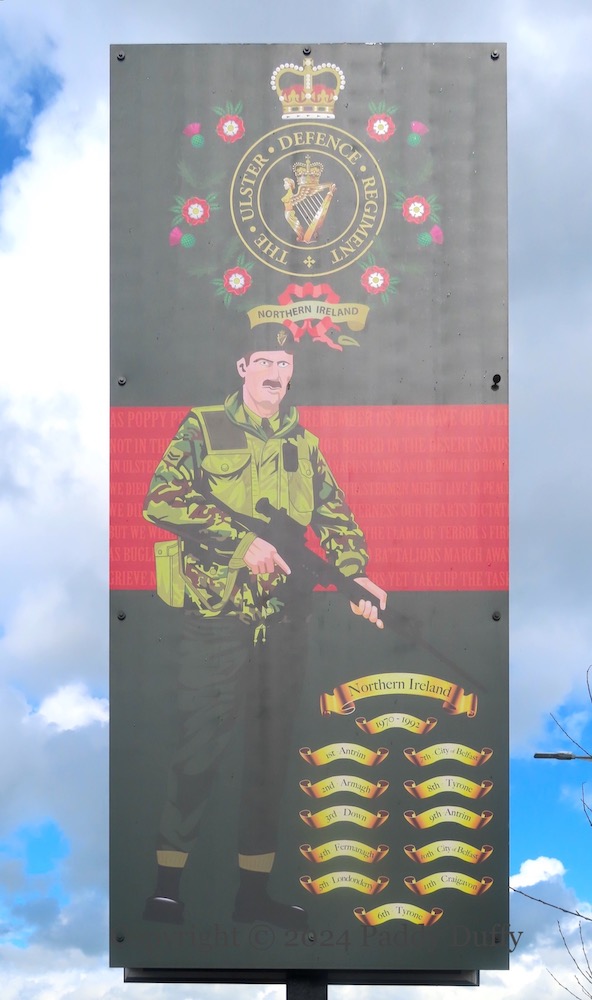
“All gave some; some gave all.” During its twenty-two years of operation, 197 UDR soldiers were killed. The scroll on the left gives the dates of the regiment’s operation: 1970 (April 1) was the year it replaced the Special Constabulary, and 1992 (May 31) was the year seven of the nine battalions were amalgamated with the Royal Irish Rangers’ two battalions to form the (modern) Royal Irish Regiment (WP) – the piper in the top right is carrying a flag of the Royal Irish Regiment.
The inscription on the plaque reads: “Ulster Defence Regiment mural, dedicated on the 19th March 2016 by Chairman Roy Burton, Carrickfergus Glasgow Rangers Supporters Club [and] Chairman Stephen Weir, Carrickfergus Ulster Defence Regiment Association CGC. Lest we forget.”
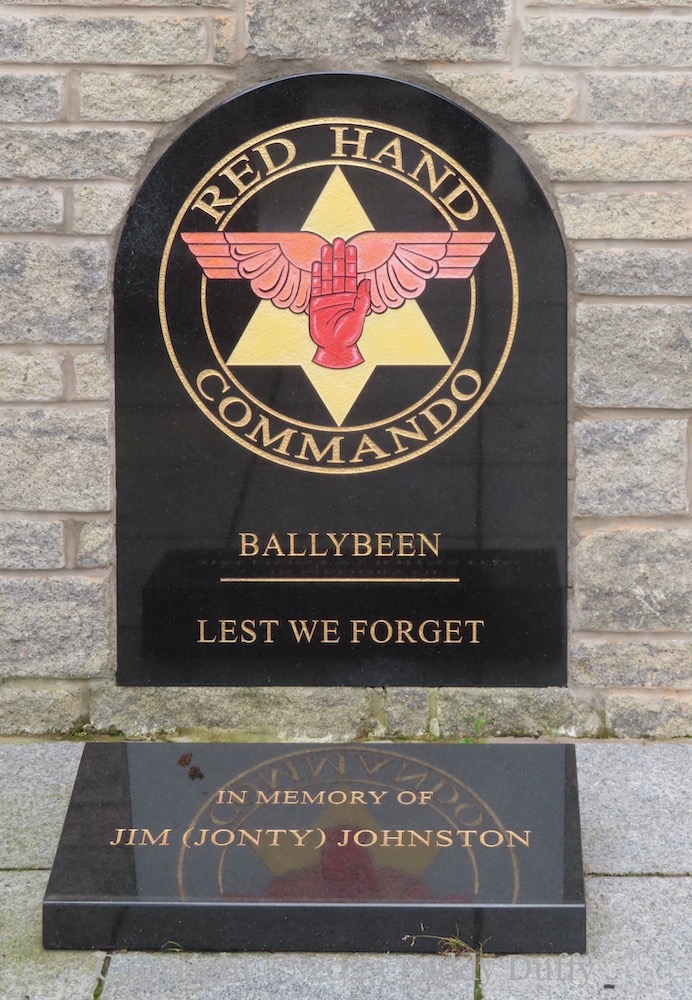
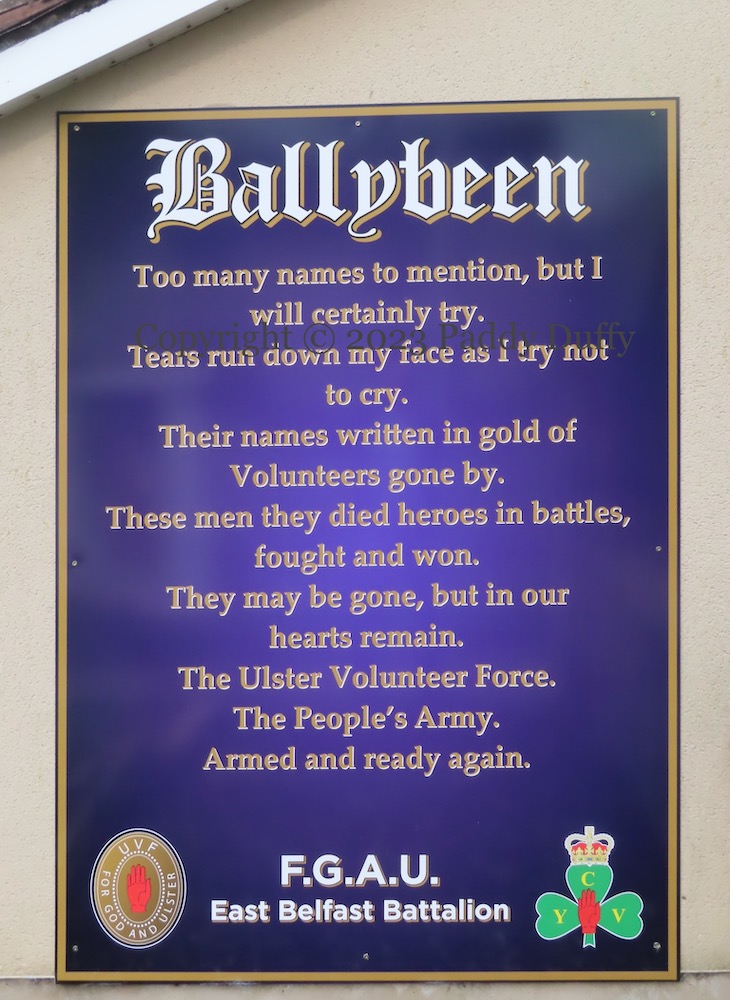
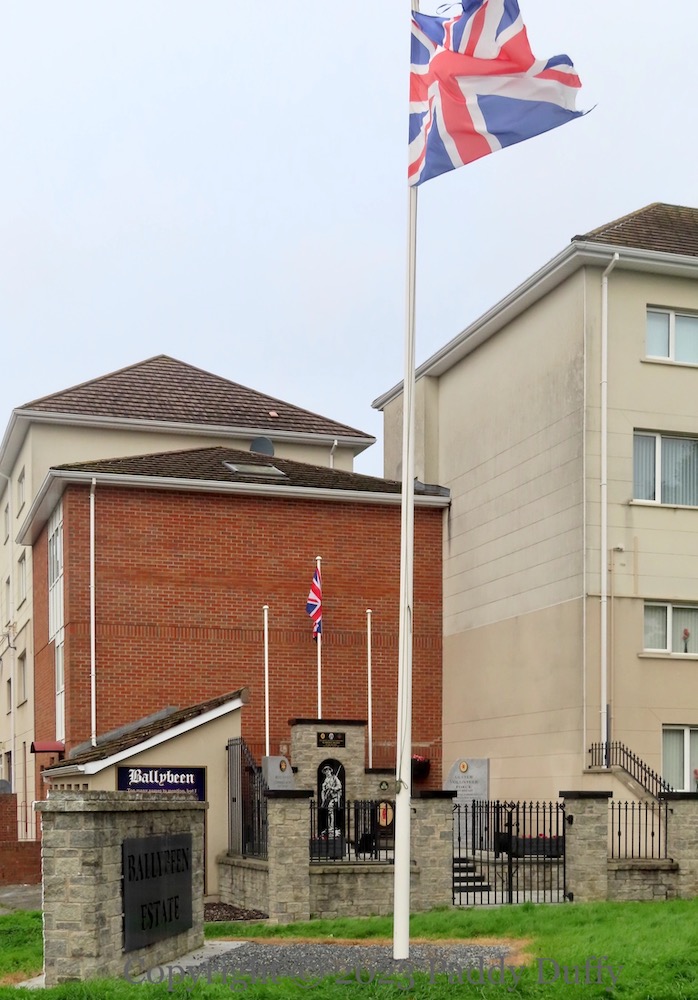
This is the UVF/RHC memorial garden in Ballybeen, with individual plaques to “East Belfast battalion commander” RJ ‘Mickey’ Wilson (died 2022), Jim ‘Jonty’ Johnston (killed in 2003 BelTel), M. Walker, G. McCartney, David Brown. While most of the plaques and stones are to the modern UVF, there are three pieces to the 36th (Ulster) Division.
“Too many names to mention, but I will certainly try./Tears run down my face as I try not to cry./Their names written in gold of Volunteers gone by./These men they died heroes in battles, fought and won./They may be gone, but in our hearts remain./The Ulster Volunteer Force. The People’s Army./Armed and ready again.”
“Always remembered by the officers and volunteers of South Londonderry/Randalstown Ulster Volunteer Force.” This memorial mural and plaque in Magherafelt names Charlie Wright, Jonathan Wallace, Ken Wilkinson, and Ian McArthur.
Of these, Wilkinson seems the most well-known, as he served as a PUP representative for the area. He commented on sectarian tensions in Randalstown in 1999 (An Phoblacht) and in Coleraine in 2009 (Irish Examiner), and spoke against sueprgrass trials in 2011 as a member of FAST (Irish Times | see previously FAST and FASTing For Human Rights And Justice); he was accused of intimidation of Catholics in Antrim in 2003 (An Phoblacht). He stood for a number of elected positions (e.g. 2013) but was unsuccessful.
Ostensibly for his stand against drug-sellers, in 2010 a pipe-bomb (BBC), and in 2011 a make-shift car-bomb (BelTel), were placed against his home and he received death threats in 2013 (politics.ie). He died in 2021 (BelTel | News Letter | Irish News).
The plaque in the memorial garden (shown below) reads, “This plaque is dedicated in memory of all of the loyalist people of Ulster who have suffered at the hands of the enemies of our land. Lest we forget.”
This is the new Sam Rockett mural in the Woodvale, replacing the mural seen in Murdered By Cowards. The old mural just featured Rockett, who died in August, 2000, in the feud between the UVF and lower Shankill UDA. This new mural also features the “ethnic cleansing” of Torrens in 2004.
Torrens sits between Cliftonville, Ardoyne, and the lower Oldpark, and was one of the many historically mixed areas in north Belfast that, with the Troubles, became increasingly segregated and separated from neighbouring areas by “peace” lines. Jarman (1996) provides eye-witness testimony of the dispute in Torrens in 1996 which saw Catholic families leave the area. Its proximity to Ardoyne (and Cliftonville), however, meant that over the next few years the houses were gradually abandoned by Protestants, culminating in 2004 when ten of the remaining Protestant families moved out of the area, alleging persistent intimidation and employing the term term “ethnic cleansing” – a term the poem to the right of the mural uses three times.
The area was eventually redeveloped from 2008-2012, with the Wyndham Street “peace” line coming down and Elmgrove Street being opened to the Oldpark Road.
The line in the poem “the resistance formed a steady band” is unclear – it might refer to loyalists being bussed into Torrens in 1996 (see the testimonies in Jarman); if it refers to B Company it would make a connection to Rockett. As it is, the connection between the two elements of the mural (if any is intended) seems to be that Rockett was from the lower Oldpark, near Torrens.
“In the name of Ireland’s cruel game/Oh, land that once sang freedom’s song/Now marred by ethnic cleansing’s wrong.//Echoes of anguish haunt the Protestants of Torrens,/Ethnically cleansed, a sinister goal,/Their weapon honed, to exact a toll.//Families robbed of essence and space,/fuelled by hated, to erase their trace.//Against the darkness, spirits sincere,/Hand in hand across the land,/the resistance formed a steady band.//Ethnic cleansing’s horrors unveiled at last,/Hearts of courage, unbreakable souls,/Truths unfurled, their power untold,/A captured scene of the evil deeds done.”
The in-progress images are from August 17th and 18th. The mural was completed for the anniversary of Rockett’s death on August 23rd. The source for the central image (of furniture being loaded into a lorry) is unknown.





















 Paddy Duffy Collection