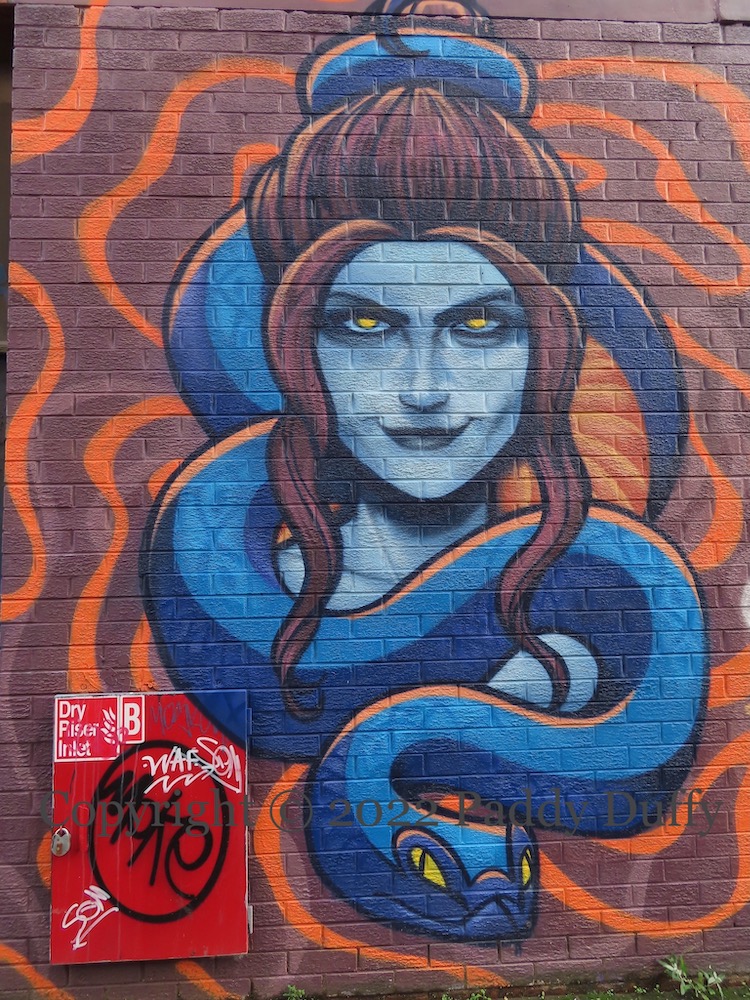
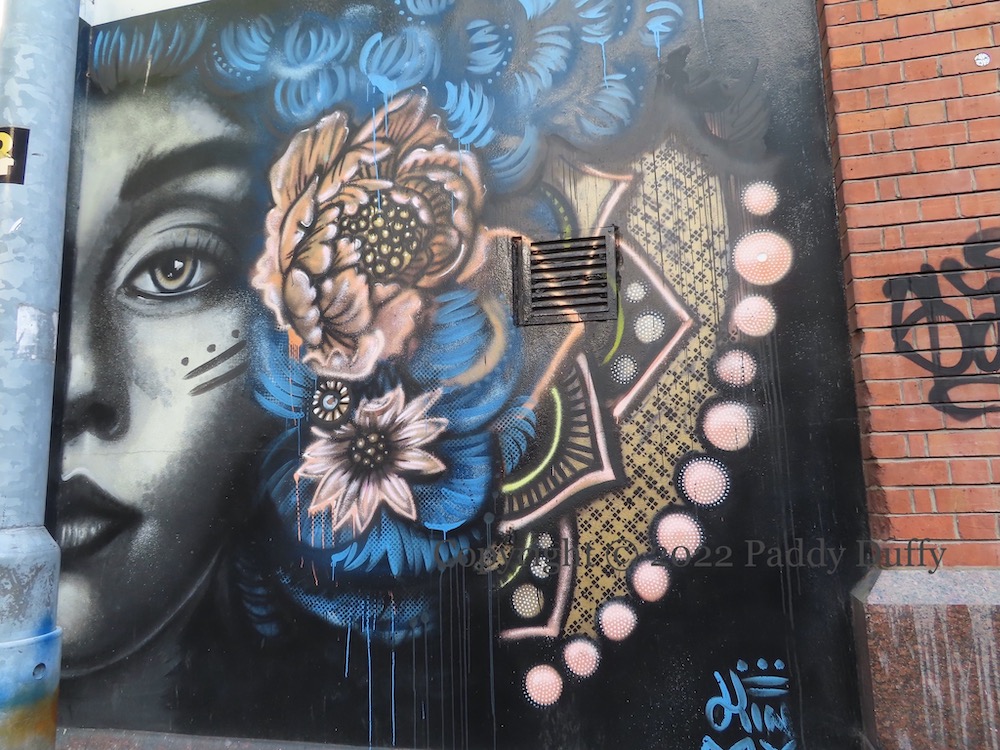
North Street Arcade was burned down in April 2004 – see Who Burnt Us Out?. Since 2012, there has been street art at both its North Street and Donegall Street ends, the latest (from September, 2021) being this piece by Danni Simpson (ig) in Donegall St.
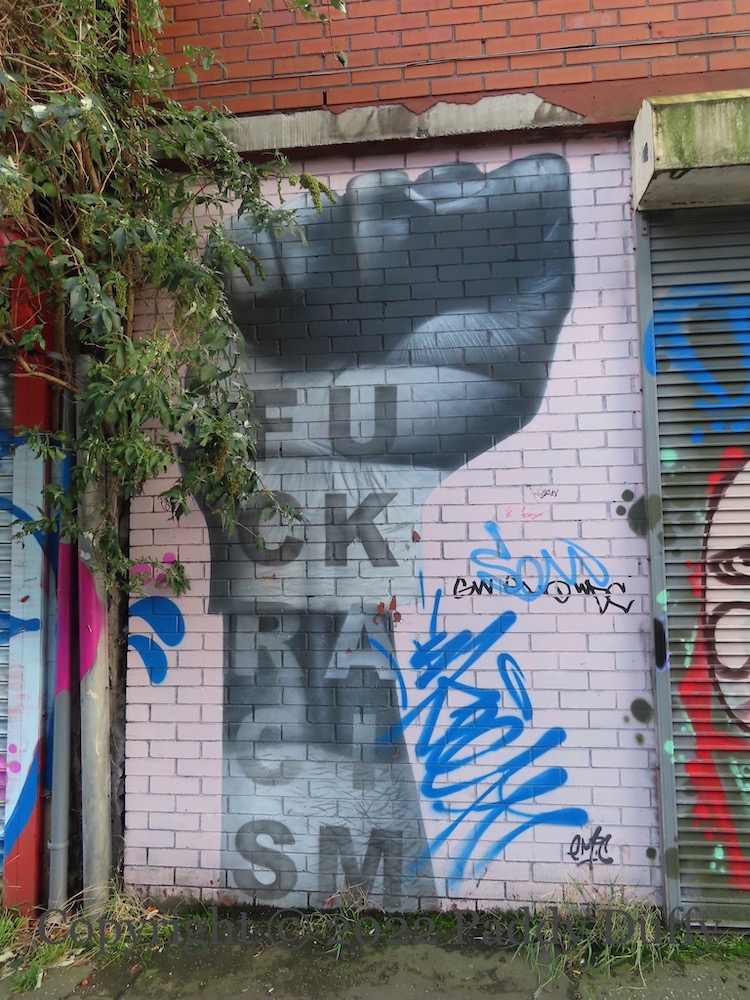
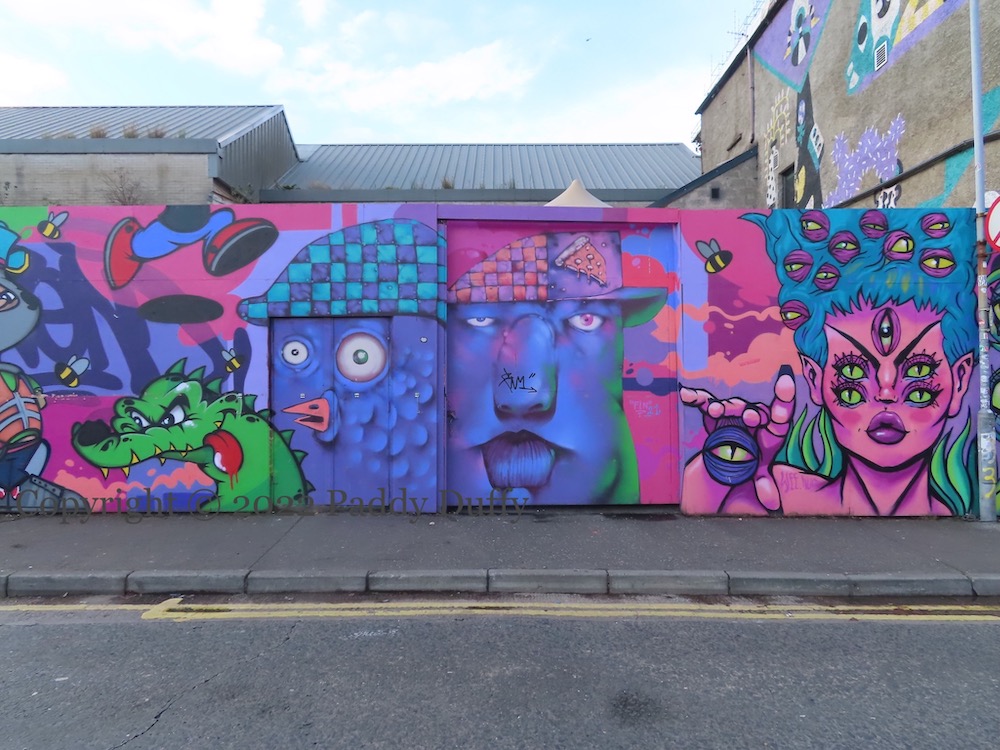
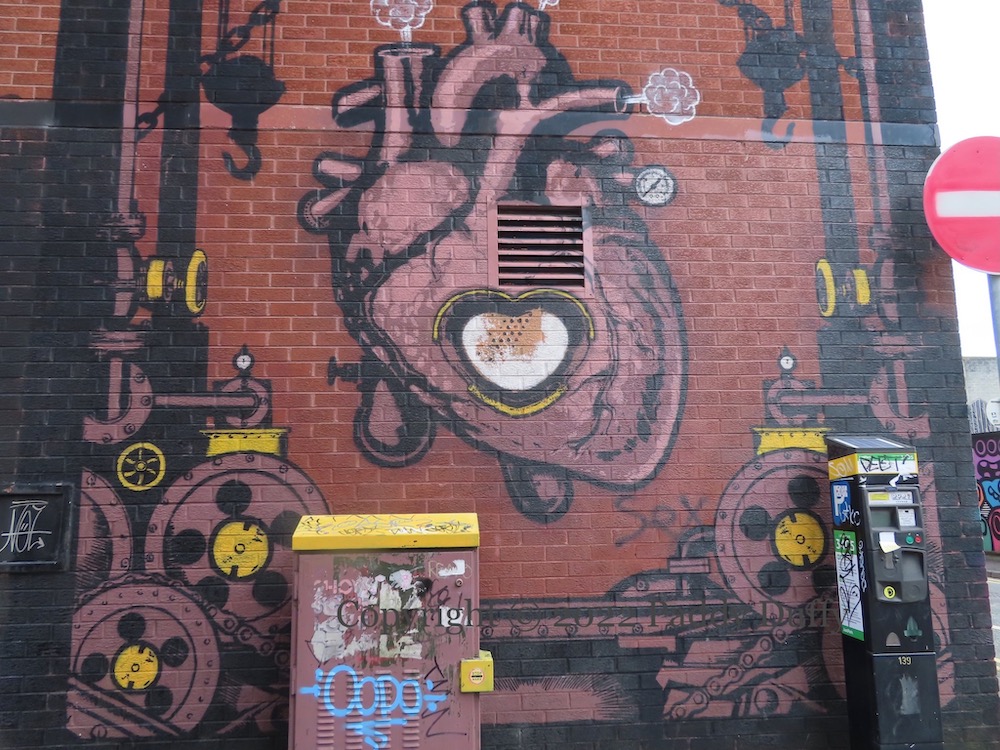
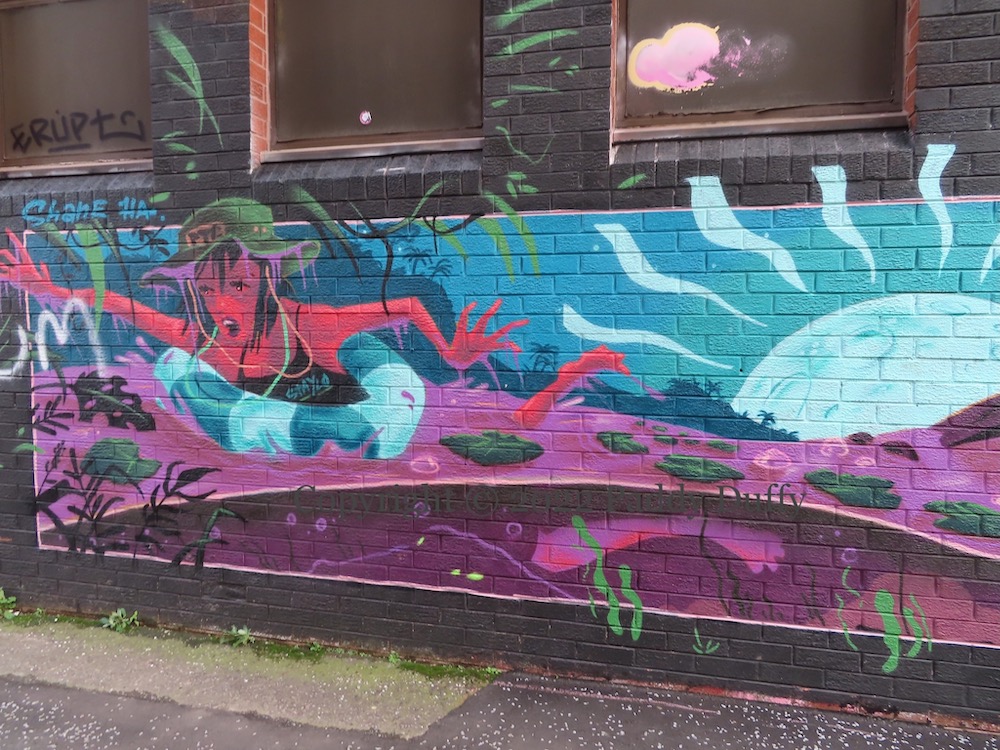
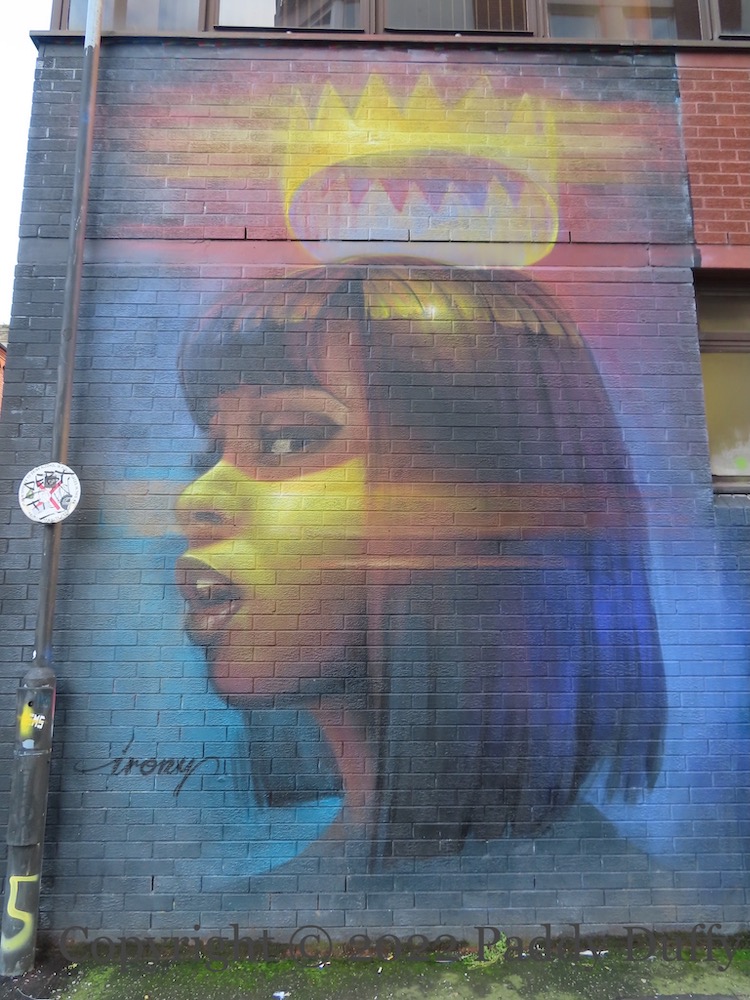
Here is a gallery of the street art in Union Street, starting, above, with emic’s 2020 piece “Fuck Racism”. In order, below, we have work by … Wee Nuls + Ten Hundred + KVLR (2019) ADW (2016) Ink Fun (2022) Shane Ha (2022) Friz (2022) Lobster Robin (2022) irony (2022) RAZER (2022) ESTR + Lanni Powder (in Little Donegall Street, 2017) KinMx (in Library Street, 2017)
London street artist Dan Kitchener’s (web | ig) piece “Hope” features a Tokyo landscapes behind a geisha. “The wall is dedicated to Sandra – サンドラ. Sandra McCurry worked and owned Mikala’s Kitchen on The Shankill Road, Sandra worked tirelessly for the local community and sadly passed away” (Belfast Walking Tours Fb).
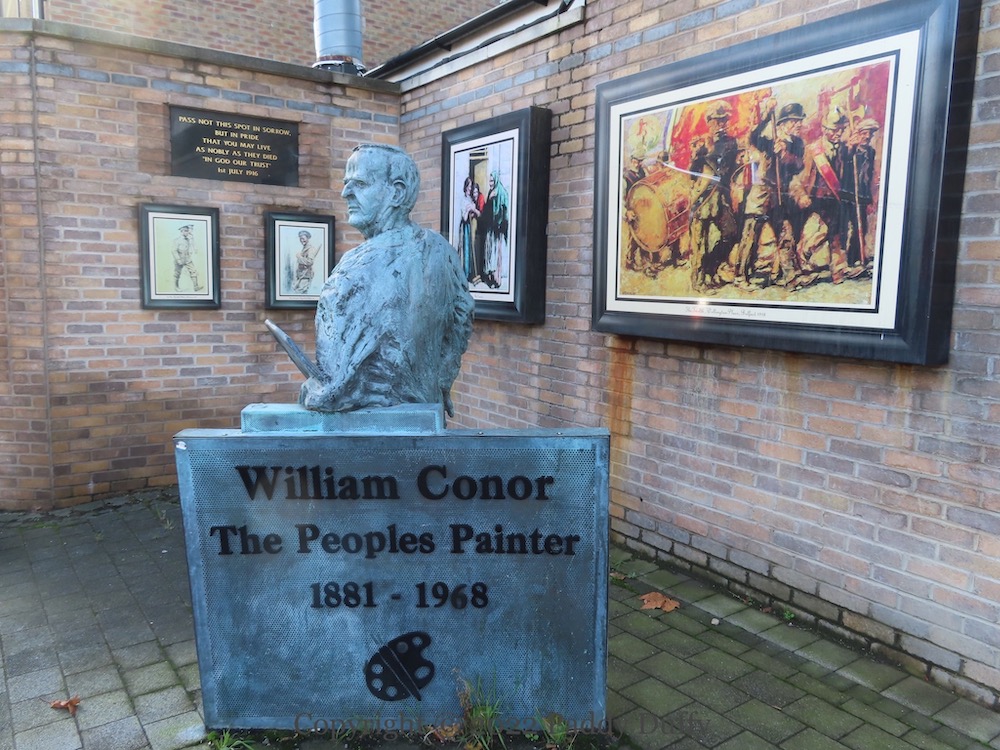
The geisha has (bizarrely) been situated above “Conor’s Corner”, where William Conor has been rendered in bronze by sculptor Holger Lönze and placed among a number of Conor’s paintings. (For images of the sculpture in progress, see Lönze’s site and the project’s Facebook page.) Connor (later Conor) was born in the Old Lodge area of Belfast (in 1881) close to the location of the new bronze statue shown in these images, which is at the corner of Northumberland Street and Shankill Road, replacing the UVF/Shankill Protestant Boys mural (see M02457).
The info board describes his methods in capturing the Belfast street scenes for which he is most famous: “Conor was developing a spontaneous drawing technique by recording quick impressions, and it soon became a habit for him to go out into the streets with a newspaper, which contained loose leaves from his sketchbook. When he saw anything of interest he leant against a lap post or wall, took out his newspaper as though he were simply reading the sports results and sketched away.”
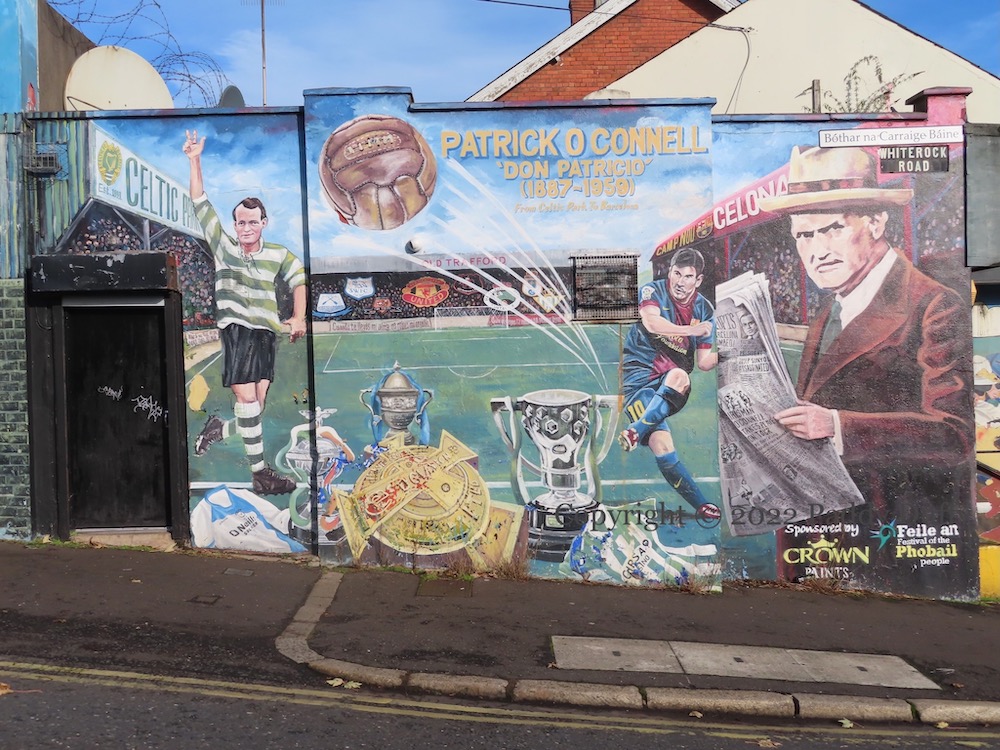
As a player, the Dublin-born Patrick O’Connell started with Belfast Celtic before moving on to various English and Scottish clubs, including a period at Manchester United at the time of WWI. He then went on to manage a string of Spanish clubs. As manager (“Don Patricio”) of Barcelona during the Spanish civil war, he accompanied the club on their tour of Mexico and the United States. The money from the tour saved the club from bankruptcy but 12 of the 16 players went into exile in Mexico and France. (WP) Barcelona returns to the US this month (2015-07) for games against the LA Galaxy, Manchester United, and Chelsea. (FCBarcelona)
The newspaper in the mural above crams all of this news onto one page: “Civil war erupts in Spain – Barcelona bombed”, “Football suspended – President [of FC Barcelona] Josep Sunyol assassinated” [by Franco’s troops] (WP); “Irishman O’Connell takes players on tour – FC Barcelona saved from extinction”; “Funds lodged in Switzerland”. In the bottom left-hand corner of the newspaper is Robert Capa’s famous photograph of ‘The Falling Soldier’, purporting to show a Republican soldier at the very moment he is struck by a bullet and dies. The image is now thought to have been staged (WP).
The player on the right is Lionel Messi. The Argentinian forward is shown in front of the Spanish League cup, which Barcelona won in the year the mural was painted (2014-2015) with a goal from “La Pulga” (“the flea”) – Messi is 5’7″ but four-time world player of the year.
The stands of three football stadiums are shown in the background: Belfast Celtic’s Celtic Park (“Paradise”), Manchester United’s Old Trafford, and Barcelona’s Camp Nou. The Old Trafford stands bear the emblems of the teams Patrick O’Connell played for and managed: Liffey Wanderers (whose shirt is also featured, on the left), Sheffield Wednesday, Hull City (The Tigers), Manchester United, Dumbarton, Real Racing Club de Santander, Real Oviedo, and Real Betis Balompié (also shirt on the right).
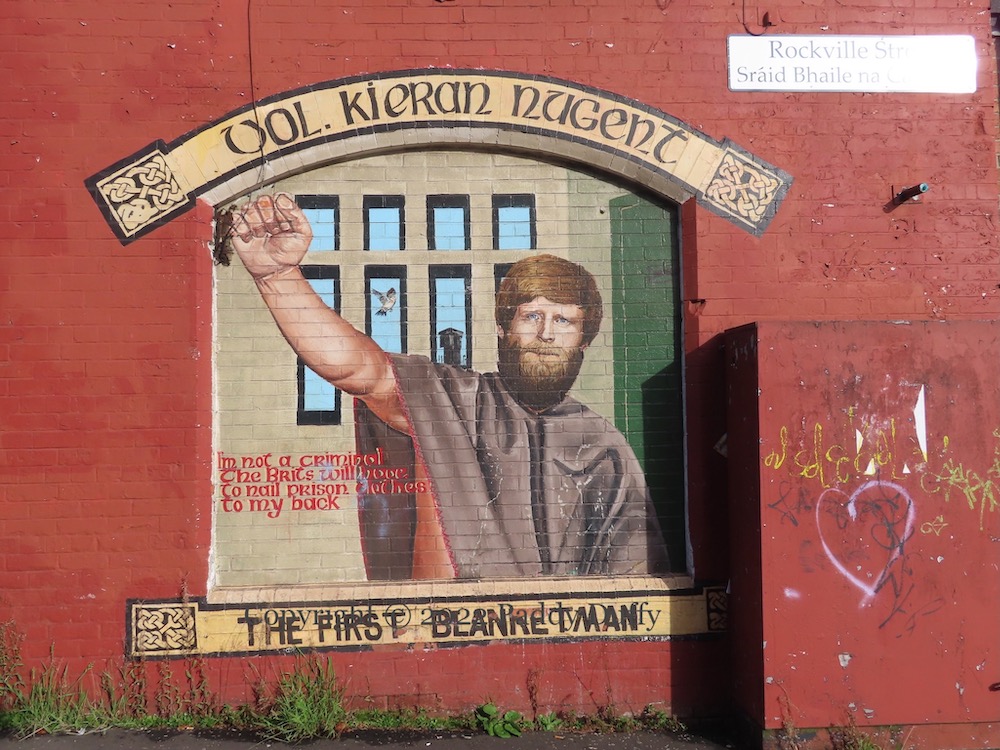
“The first blanketman”. IRA prisoner Kieran Nugent is reputed to have said – upon being imprisoned after the removal of Special Category status in 1976 – “I’m not a criminal – the Brits will have to nail prison clothes to my back.”
Érıu/Éıre of the Tuatha Dé Danann, queen of Ireland, (as depicted by Richard J King) is at the centre of various representations of republican women. Along the top are Ann Devlin, Betsy Gray, Mary Ann McCracken, Countess Markievicz, Nora Connolly?, and Winifred Carney. Suffragettes, the modern IRA, and Cumman Na mBan are depicted, as are Máıre Drumm at the Falls Curfew, Tom McElwee’s sisters carrying his coffin, and Molly Childers and Mary Spring Rice running guns on the Asgard. There is also an unusual ‘four provinces’ in the corners.
The wide shot (below) shows the James Connolly mural below and the 1916 centenary board above – also seen in South Link: Ag fíorú na poblachta/“Realising the republic”.
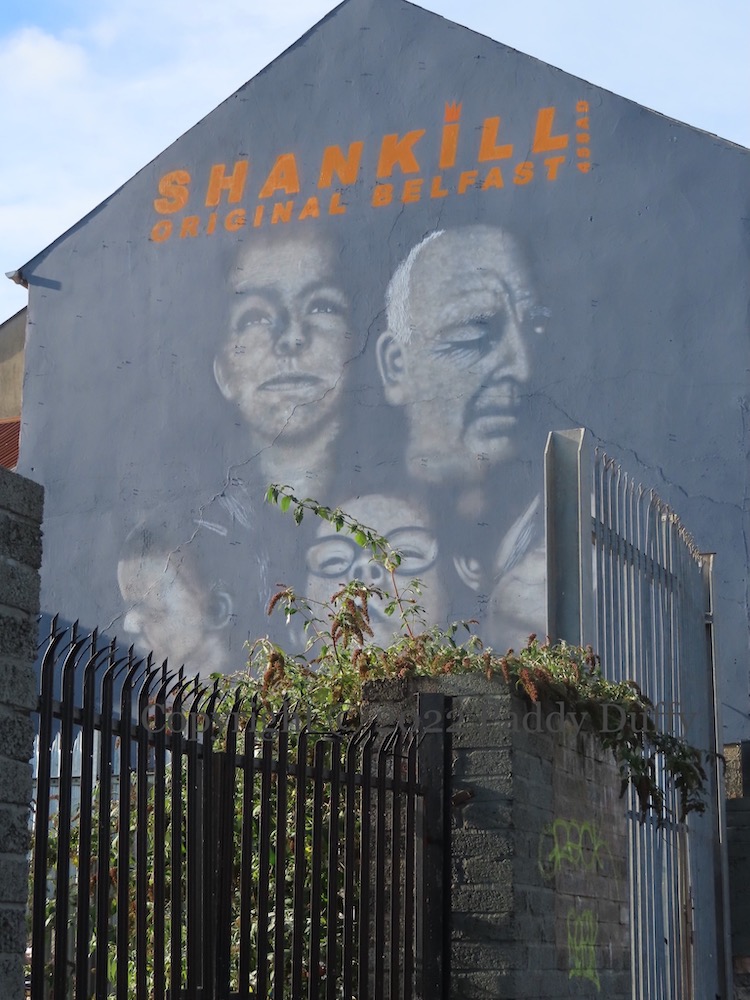
The second version of the “Original Belfast” mural “celebrates the contribution of people across the Greater Shankill who work with children and young people” including Sam Drake from the lower Shankill community centre (GSWF). For the previous version, see The Original Belfast.
Ulster’s defenders, past and present, from Cuchulainn “Ancient defender of Ulster from Gael attacks”, via the 1893 UDU and WWI soldiers memorialised in the towers at Messines and Thiepval, to the modern UDA/UFF: “In memory of the officers and volunteers of A. Coy. UDA/UFF West Belfast Brigade who unselfishly dedicated their lives in defence of their country.”
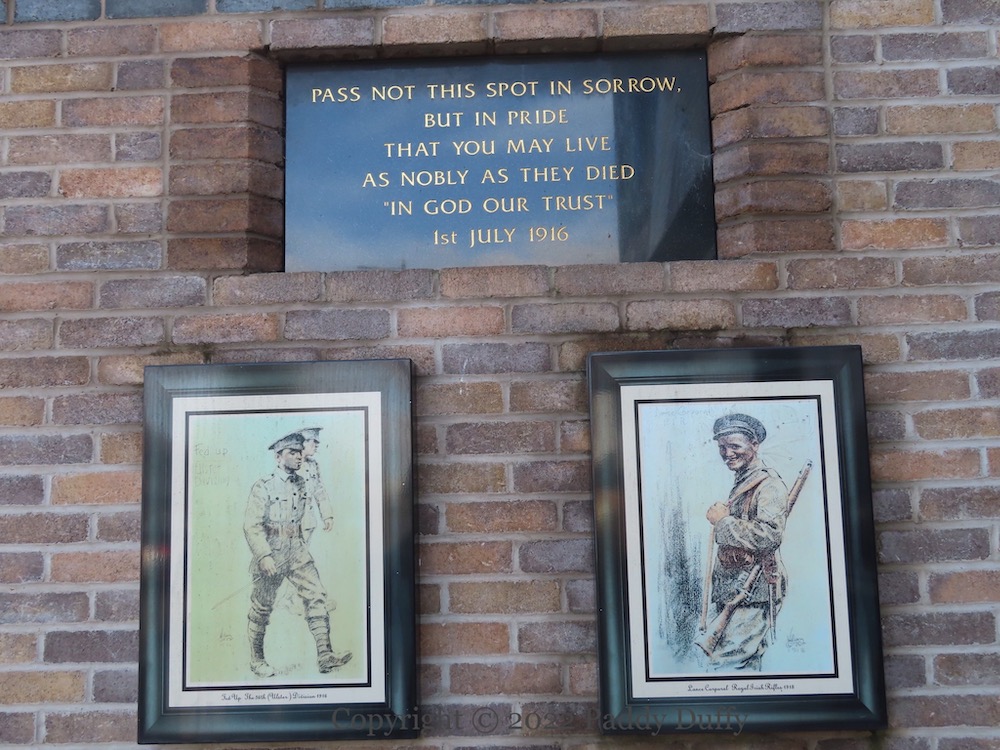
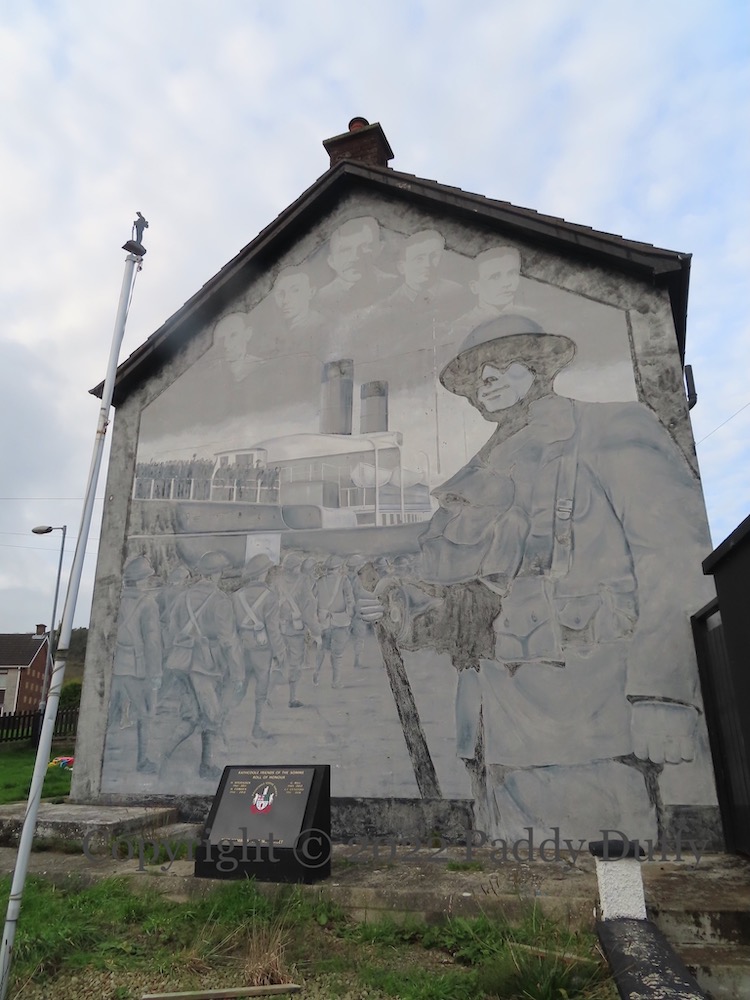
A memorial stone has been added to the fading mural of soldiers of the 15th battalion heading to France in 1915, beginning a list of former members of the Rathcoole Friends Of The Somme (Fb). For the names of the five portraits, and the mural in better condition, see Many Did Not Return.
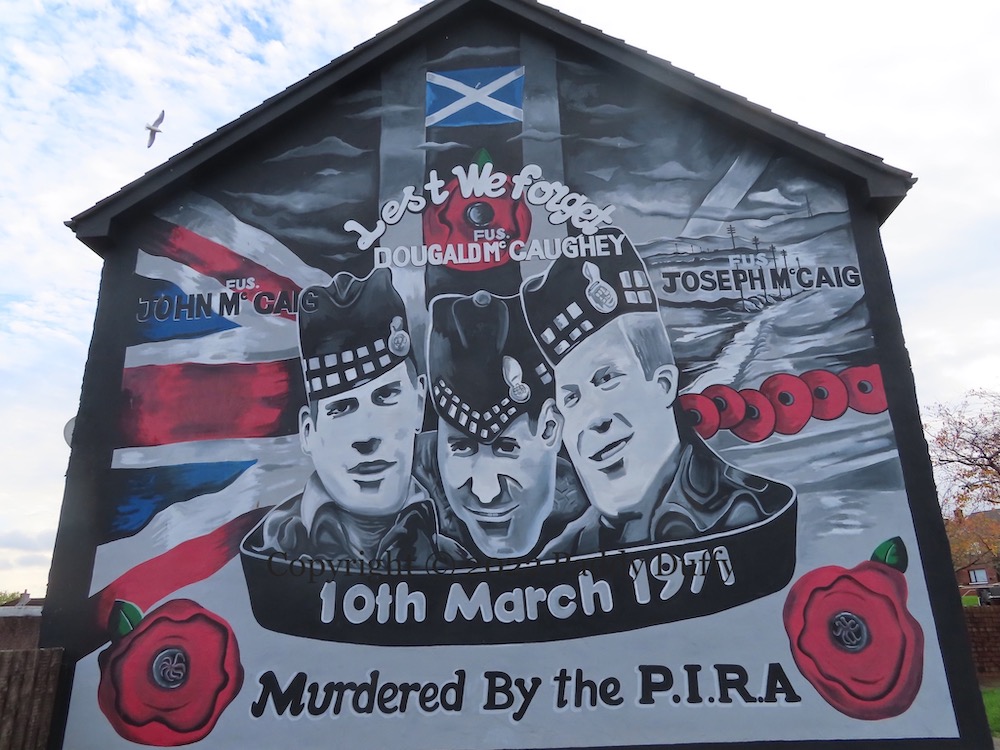
Highland Fusiliers Joseph McCaig (18), (his brother) John McCaig (17), and Dougald McCaughey (23) were lured by members of the (P)IRA from a city-centre pub to their deaths in the fields above Ligoniel in 1971 (WP). Their deaths contributed to the resignation of Chichester-Clark and the introduction of internment in August. There are monuments to the three men in Ballysillan and at the site of their deaths on White Brae depicted on the right of the mural – for images of the monuments see The Highland. This new Rathcoole mural to their memory replaces one to Queen Elizabeth II.