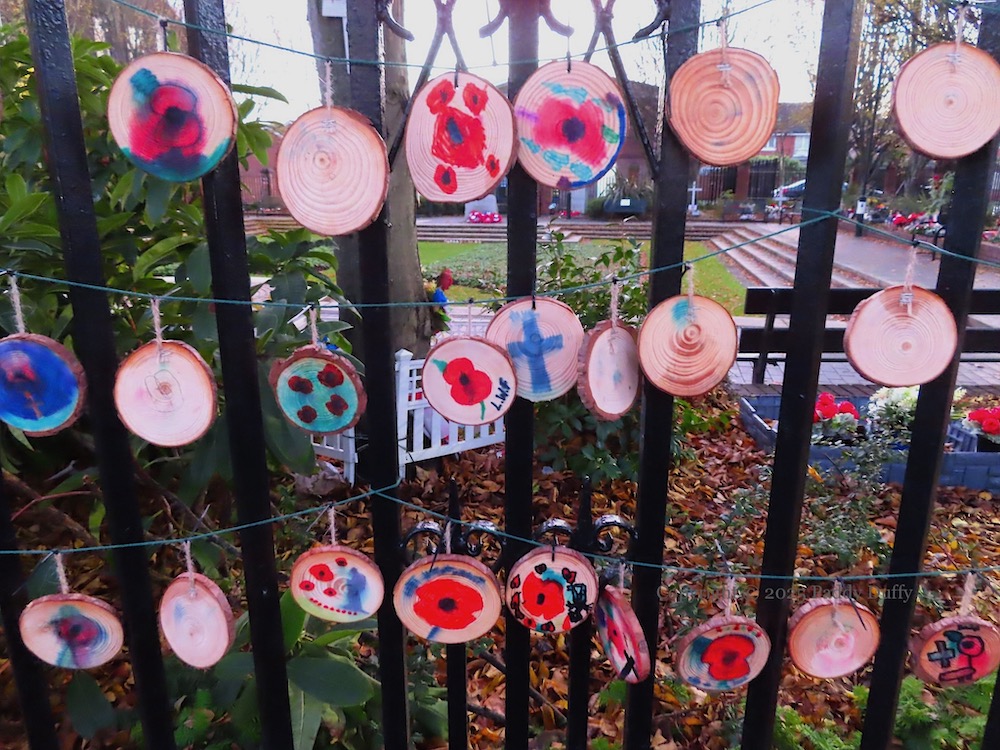
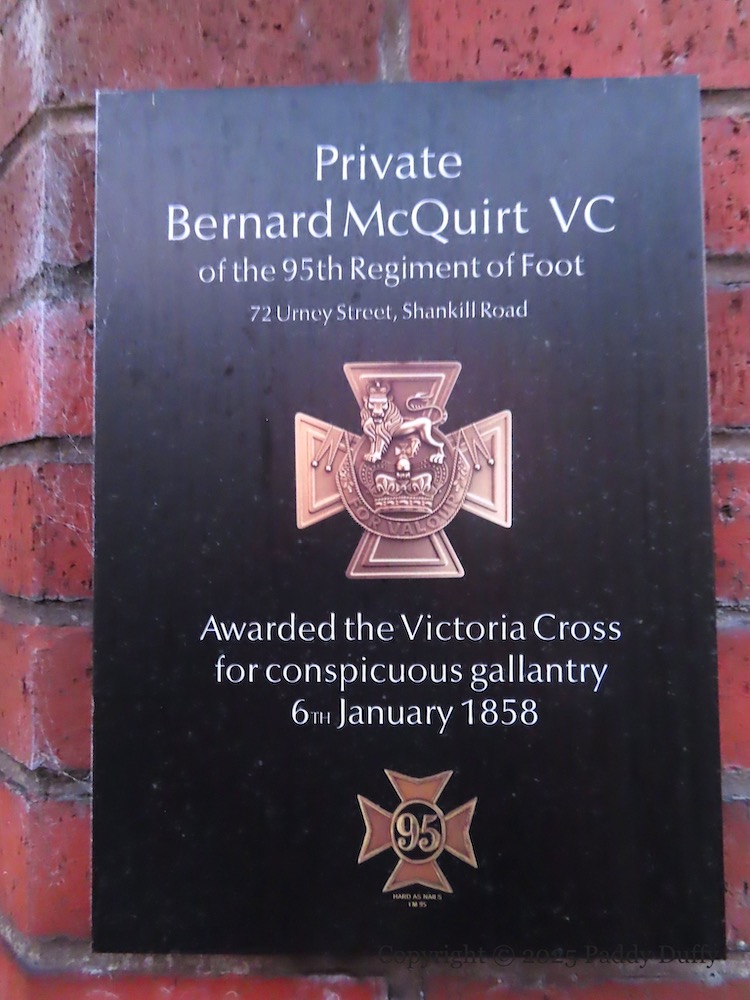
For Remembrance Sunday, rows of hand-painted wooden medallions were attached to the railings at West Kirk Presbyterian to pay homage to the dead of the British armed forces, including Bernard McQuirt, whose plaque is shown below. McQuirt was a VC winner for actions taken during the Indian Rebellion in 1858. Originally from Donaghcloney, he survived his injuries and died in 1888 at 72 Urney Street (HistoryHub | News Letter | WP) – Urney Street used to be where the plaque and the memorial garden now are, along the side of the West Kirk.
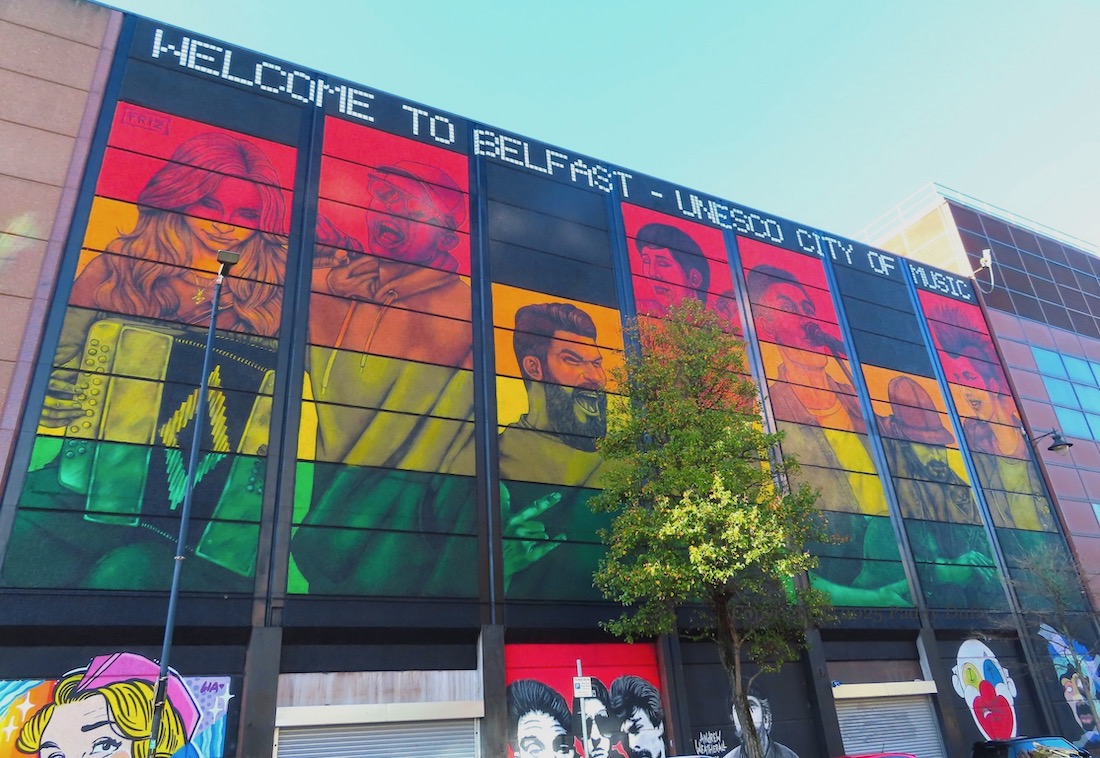
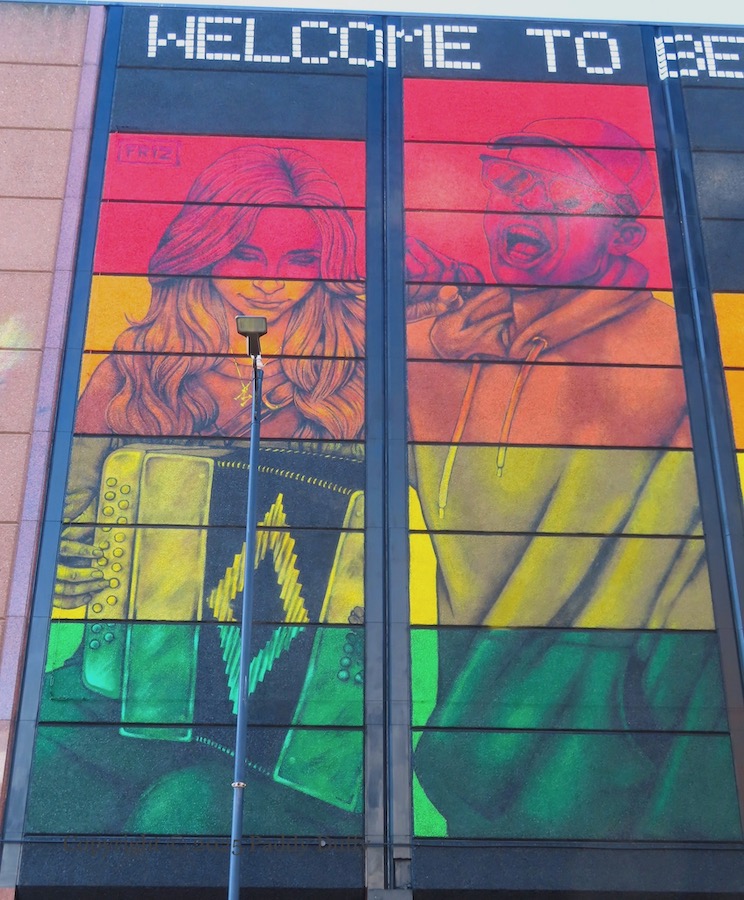
Belfast was designated a UNESCO “city of music” four years ago, in November, 2021. To mark the anniversary, Friz (web) and NRMN (ig) have painted this large piece of street-art in the guise of a VU indicator (with seven segments, nine levels, four colours). The city’s efforts to encourage music are outlined in the ‘Music Matters’ plan.
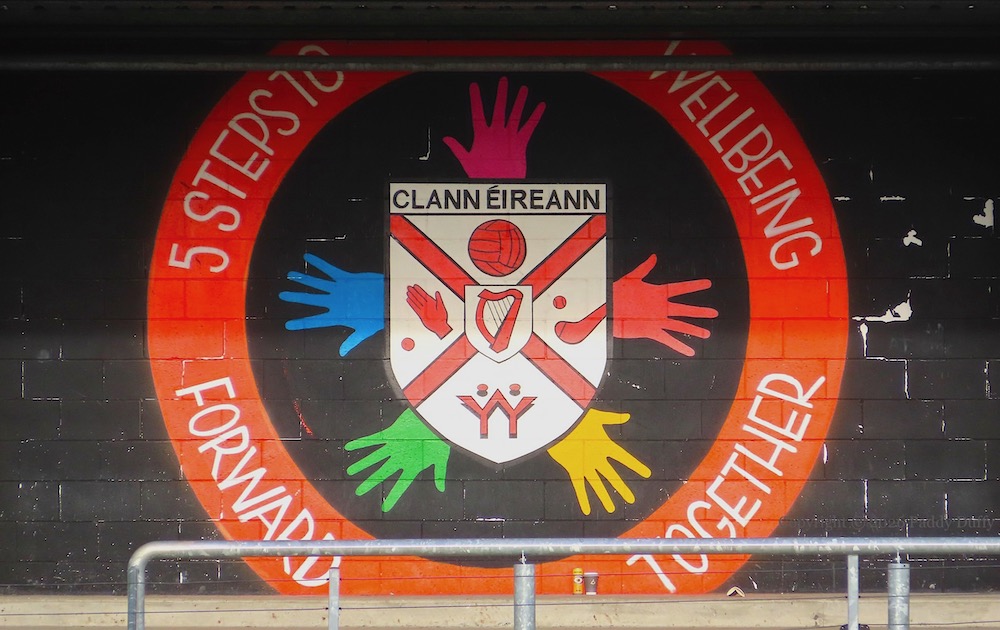
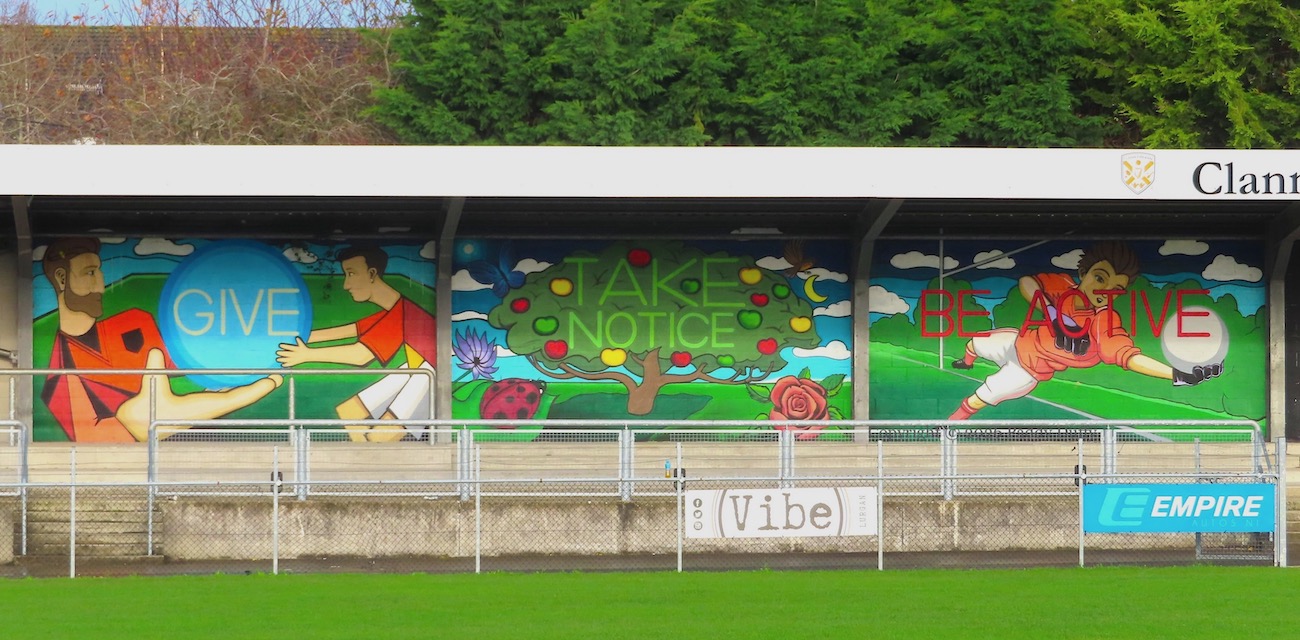
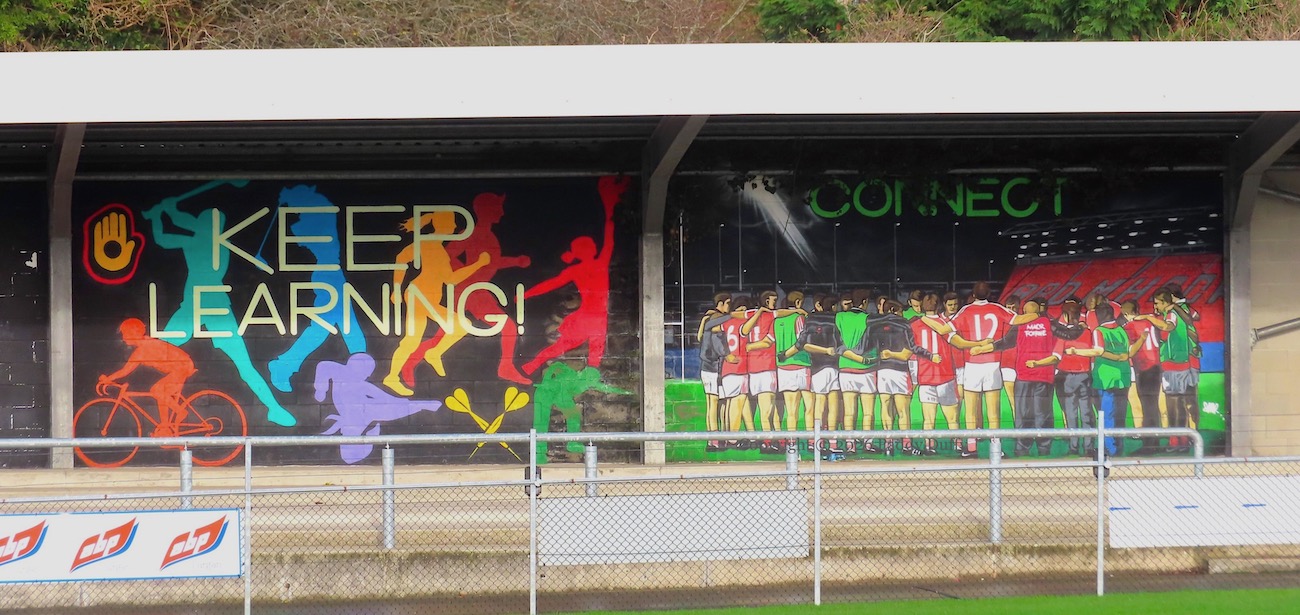
“Forward together. 5 steps to wellbeing: Give, take notice, be active, keep learning, connect.” These murals are in the northern stands at Clann Éıreann CLG (web) in Kilwilkie, Lurgan. The club also has handball facilities, a youth club, and a social club on Lake Street.
The 1st Ranger Battalion was formed in 1942 as the United States Army’s equivalent to the British Army’s Commandos and – after training at a camp in Carrickfergus – it saw action in France (at Dieppe (SOF History), resulting in the first US casualties of the war – WP), Algeria, Tunisia, and Italy. (There are four information panels at the Sunnylands shops about the formation and training of the unit.)
The insignia shown – which is here placed on top of the beret patch – is the insignia of the modern (75th Regiment) Rangers, with the lightning-bolt indicating the unit’s quick-strike abilities (SOF History); these are also alluded to by the motto “sua sponte”, meaning “of its/their own accord”.
This new art is by Dan Kitchener (web) in Victoria Parade, Carrickfergus, just outside the train station, produced in co-operation with Wonder Arts, the Communities In Transition programme from the Executive Office (web) and Carrickfergus Alternatives’ Peace Impact Programme (Fb).
It has been criticized by street-artist Wee Nuls (web) as glorifying conflict (ig), a charge the artist rejects, saying that it was produced in co-operation with locals and has been well received by them (MSN). (See also the reactions on the Let’s Talk Loyalism Fb page.)
The tank might be the M4 Sherman “Fury”. The tank appeared in the 2014 film of the same name (Bovington Tank Museum) used by the 66th Armor Regiment under the command of Brad Pitt; the film is perhaps the inspiration for the image (e.g. the scene in which the town of Kirchohsen is captured – youtube).
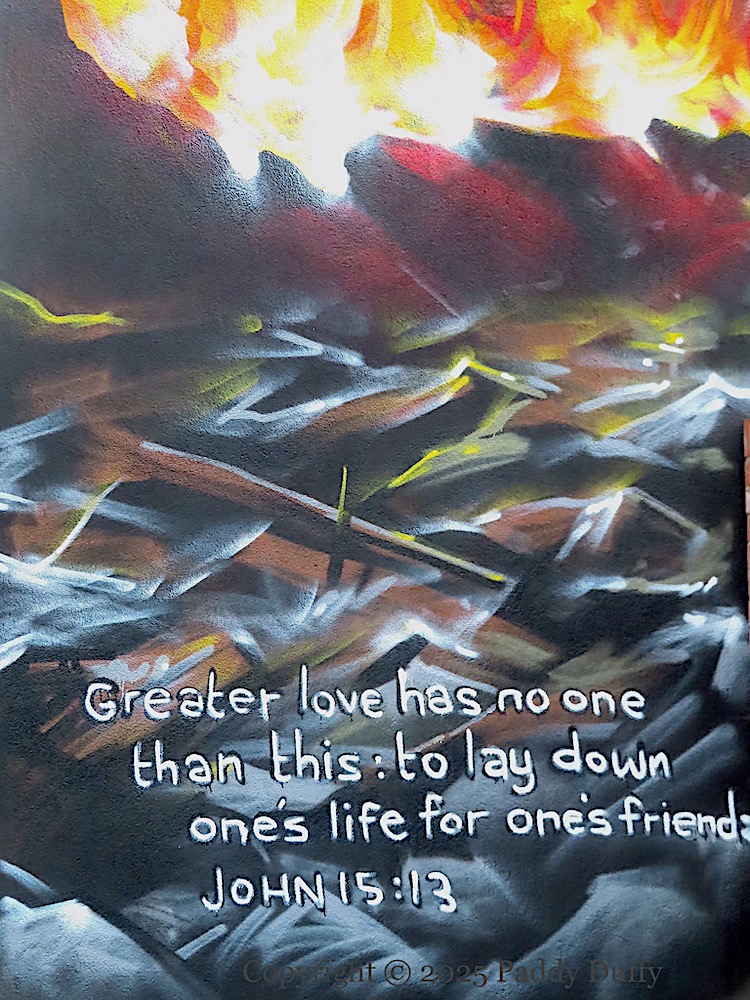
“Great love hath no man than this: to lay down his life for his friends – John 15:13”
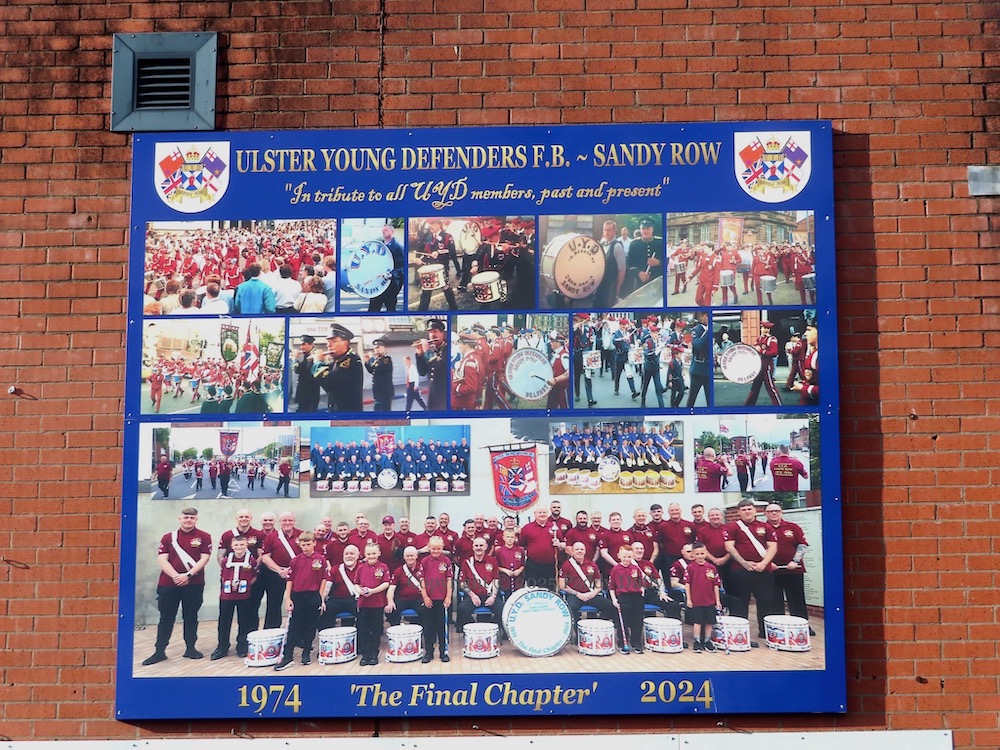
This is a fiftieth anniversary (1974-2024) board celebrating the “Ulster Young Defenders F[lute] B[and], Sandy Row.” It is on the side of the Sandy Row Rangers Supporters’ Club, above a composite board of six old Sandy Row bars including the Shaftesbury Arms, the Albion, the Royal, the Sandhurst, and the Klondyke.
“In tribute to all UYD members, past and present.” ‘The Final Chapter'”
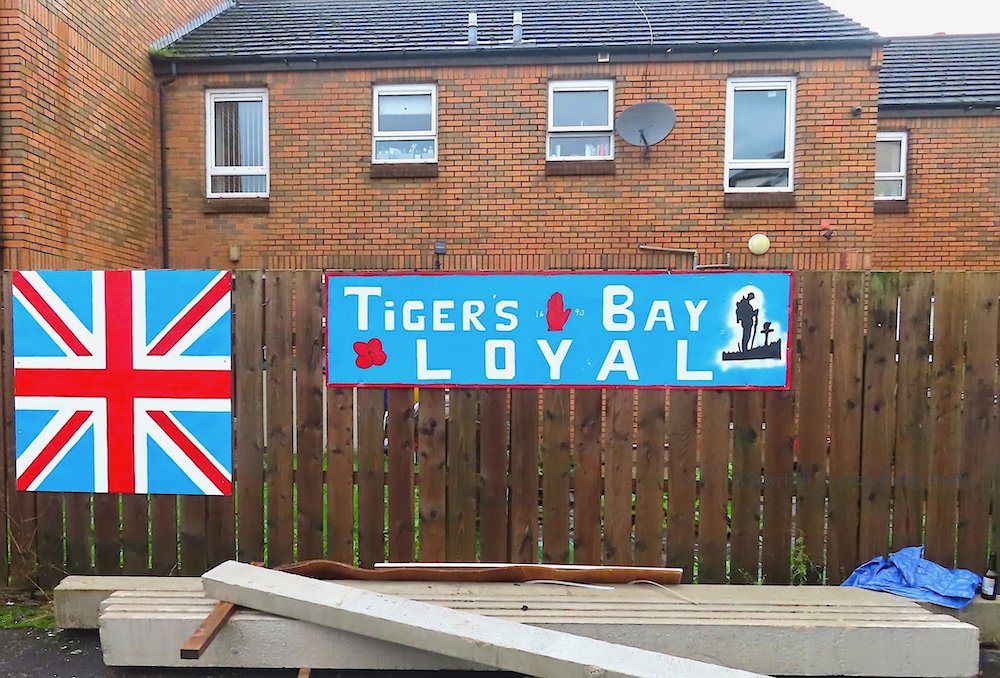
This pair of hand-painted (and stencilled) boards is next to the Mount Inn on North Queen Street. Tiger’s Bay is loyal to the memory of “1690” and the service of the 36th Division in WWI in 1916.
Greenmount Street, Tiger’s Bay, north Belfast
On the other side of the Mount, at the bottom of the old Lewis Street, are two more hand-painted boards from 2024 – see Friends Of The Somme.
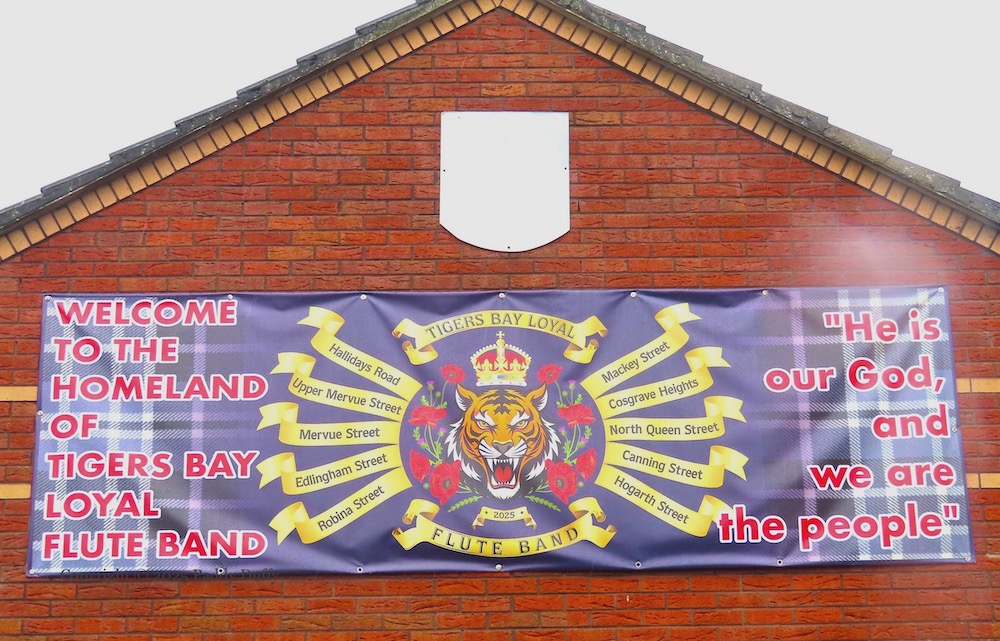
“Welcome to the homeland of Tiger’s Bay Loyal flute band. “He is our God, and we are the people.”” Tiger’s Bay Loyal [Fb] is a new flute band, formed in 2025.
Ten local streets are named around the central tiger: Robina Street, Edlingham Street, Mervue Street, Upper Mervue Street, Hallidays Road, Mackey Street, Cosgrave Heights, North Queen Street, Canning Street, Hogarth Street.
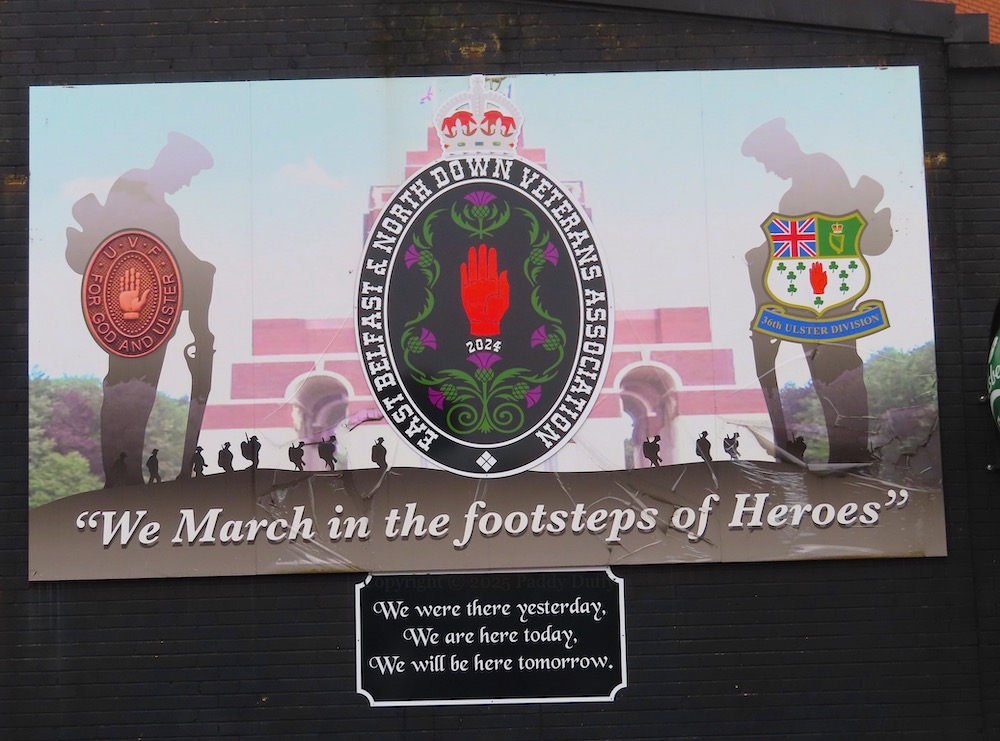
This is a new version of the board seen in 2022, in which the central emblem was of the 8th battalion of the Royal Irish Rifles, whereas it is now of the “East Belfast & North Down Veterans’ Association”.
Below, a small plaque reading “We were there yesterday, We are here today, We will be here tomorrow” has been added
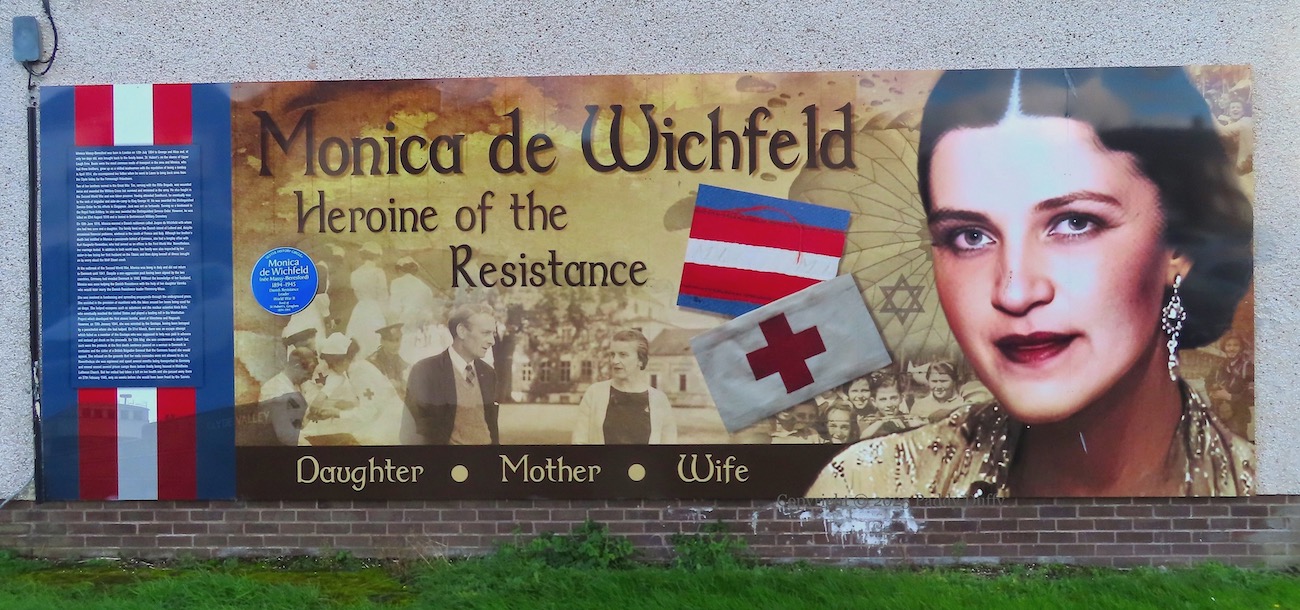
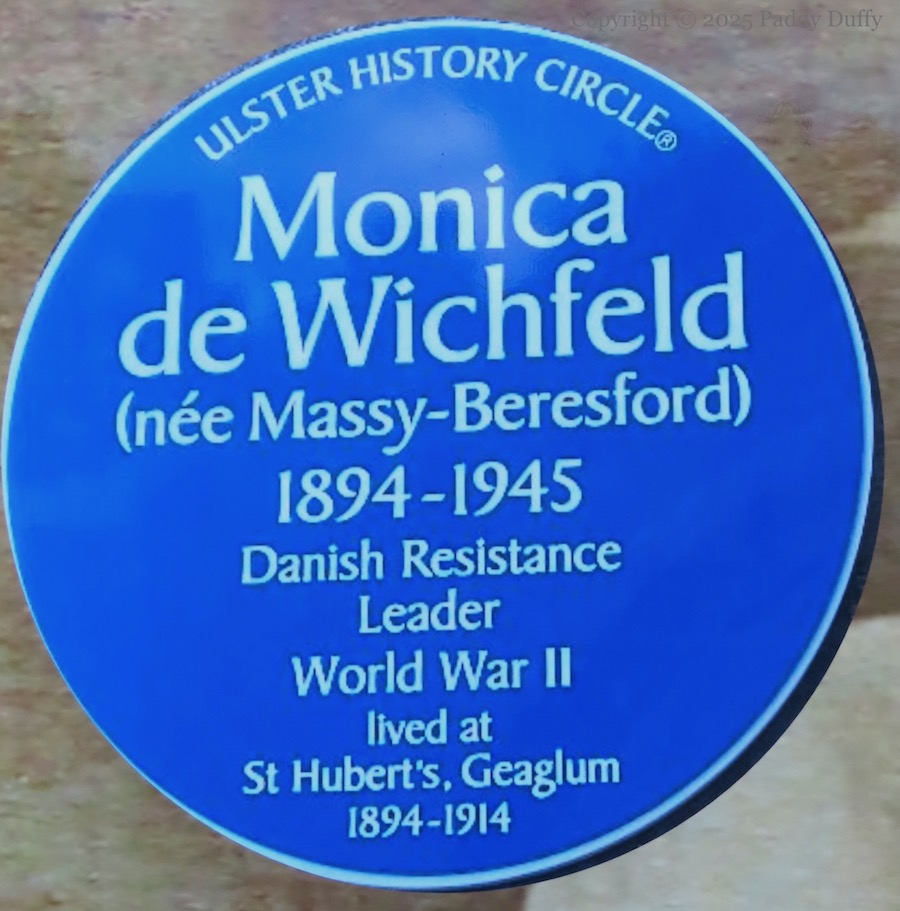
“Monica de Wichfeld, heroine of the resistance, daughter, mother, wife”. The blue plaque to Monica Massy-Beresford is at the Kinawley Holy Trinity church in Derrylin, Fermanagh, (Street View), near where she grew up. She moved to Denmark upon her marriage and had a long and varied career in the Danish resistance to the German occupation in WWII, raising money for the Communists, using her estate to shelter fleeing families and receive arms and train volunteers, and eventually heading the regional group on Lolland (WP).
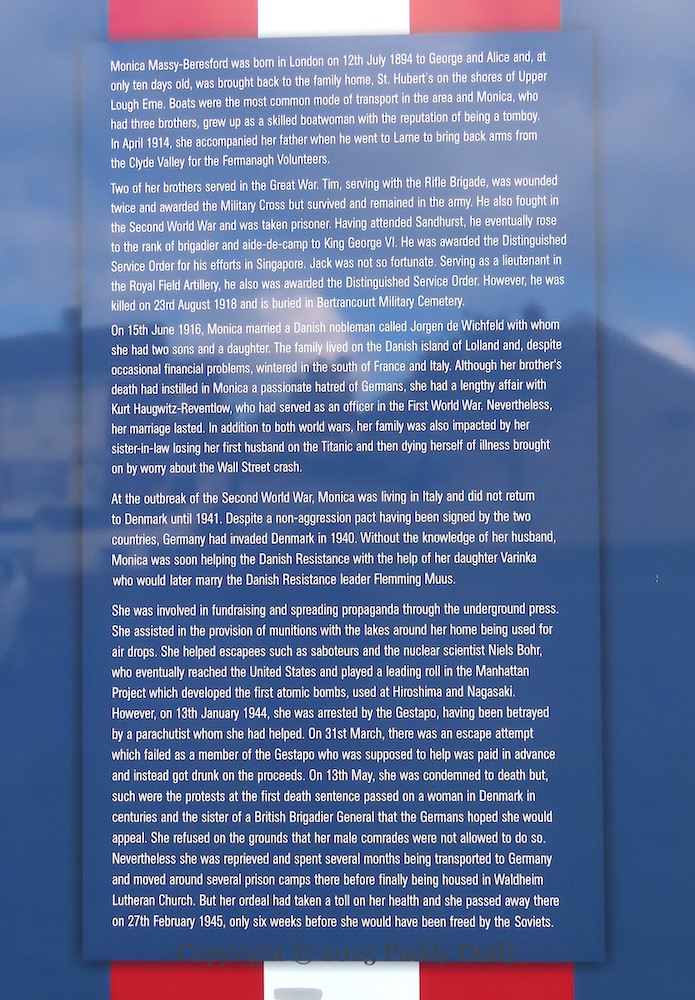
“Monica Massy-Beresford was born in London on 12th July 1894 to George and Alice and, at only ten years old, was brought back to the family home, St Hubert’s on the shores of Upper Lough Erne. Boats were the most common mode of transport in the area and Monica, who had three brothers, grew up as a skilled boatwoman with the reputation of being a tomboy. In April 1914, she accompanied her father when he went to Larne to bring back arms from the Clyde Valley for the Fermanagh Volunteers. … On 15th June 1916, Monica married a Danish nobleman called Jorgen de Wichfeld with whom she had two sons and a daughter. The family lived on the Danish island of Lolland and, despite occasional financial problems, wintered in the south of France and Italy. Although her brother’s death had instilled in Monica a passionate hatred of Germans, she had a lengthy affair with Kurt Huagwitz-Reventlow, who had served as an officer in the First World War. Nevertheless, her marriage lasted. … At the outbreak of the Second World War, Monica was living in Italy and did not return to Denmark until 1941. Despite a non-aggression pact having been signed by the two countries, Germany had invaded Denmark in 1940. Without the knowledge of her husband, Monica was soon helping the Danish Resistance with the help of her daughter Varinka who would later marry the Danish Resistance leader Flemming Muus. She was involved in fundraising and spreading propaganda through the underground press. She assisted in the provision of munitions with the lakes around her home being used for air drops. She helped escapees such as saboteurs and the nuclear physicist Niels Bohr, who eventually reached the United States and played a leading roll [role] in the Manhattan Project which developed the first atomic bombs, used at Hiroshima and Nagasaki. However, on 13th January 1944, she was arrested by the Gestapo, having been betrayed by a parachutist whom she had helped. On 31st March, these was an escape attempt which failed as a member of the Gestapo who was supposed to help was paid in advance and instead got drunk on the proceeds. On 13th May, she was condemned to death but, such were the protests at the first death sentence passed on a woman in Denmark in centuries and the sister of a British Brigadier General that the Germans hoped she would appeal. She refused on the grounds that her male comrades were not allowed to do so. Nevertheless she was reprieved and spent several months being transported to Germany and moved around several prison camps there before finally being housed in Waldheim Lutheran Church. But her ordeal had taken a toll on her health and she passed away there on 27th February 1945, only six weeks before she would have been freed by the Soviets.










 Paddy Duffy Collection