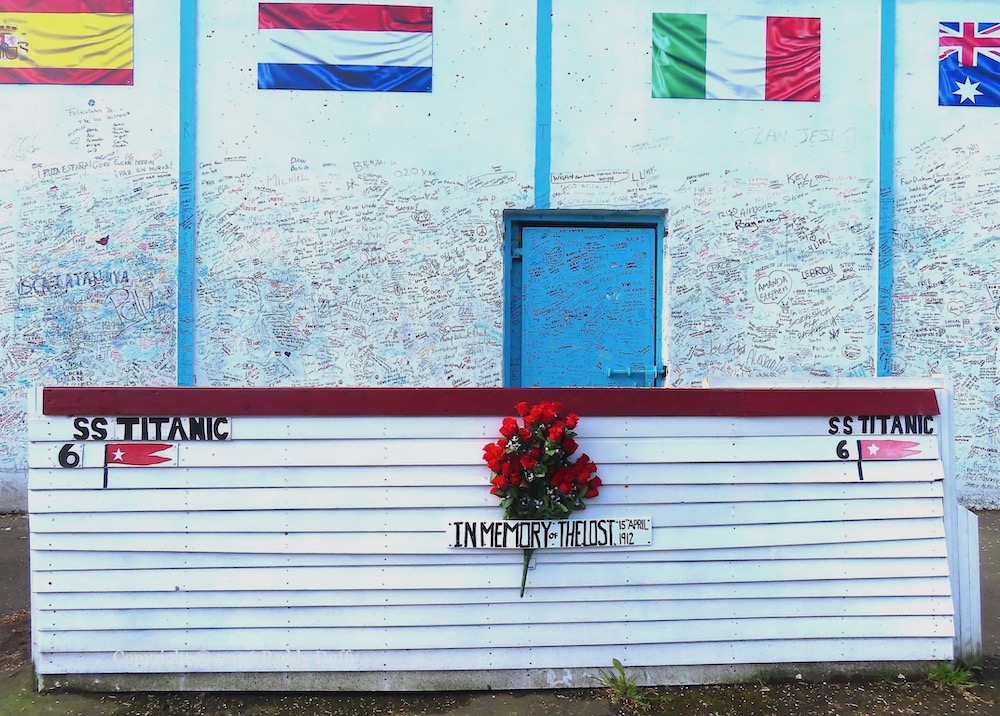
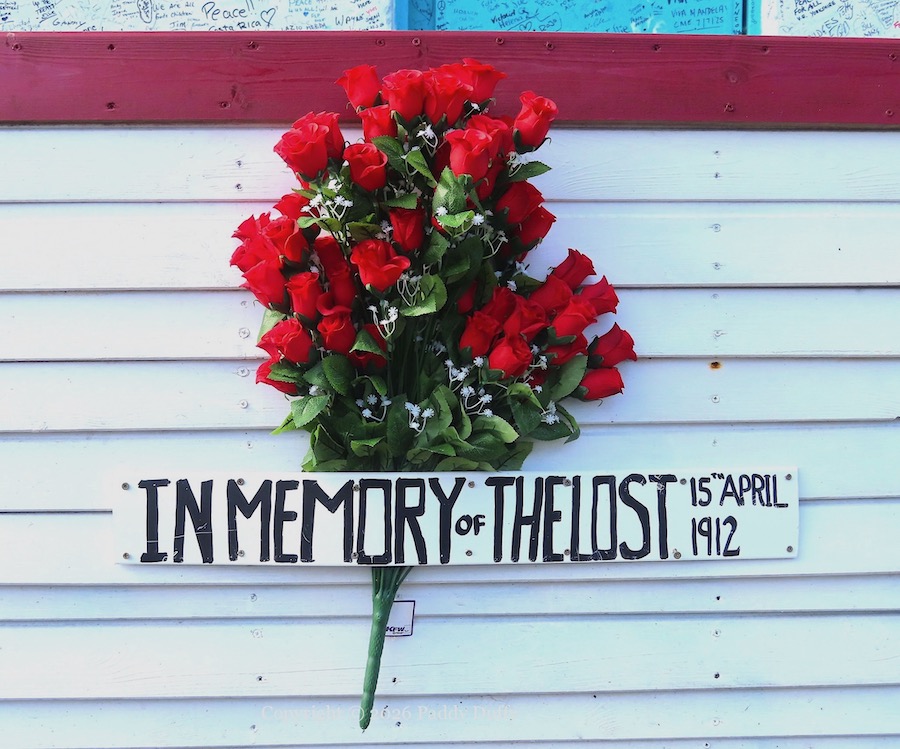
“In memory of the lost, 15 April, 1912.” The majority lifeboats on the RMS (not “SS”) Titanic were made of wood, constructed at Harland & Wolff at the same time that Titanic was built. Of the 2,209 people on board the ship at the time of her collision with an iceberg late in the evening of April 14th, 706 people survived in lifeboats that could have carried 1,178 people. (WP)
This tribute to those who died in on a short section of pedestrian railings on the Cupar Way “peace” line (Visual History). In the background are the specially designated spots for tourists to sign the wall (see Collecting Signatures).
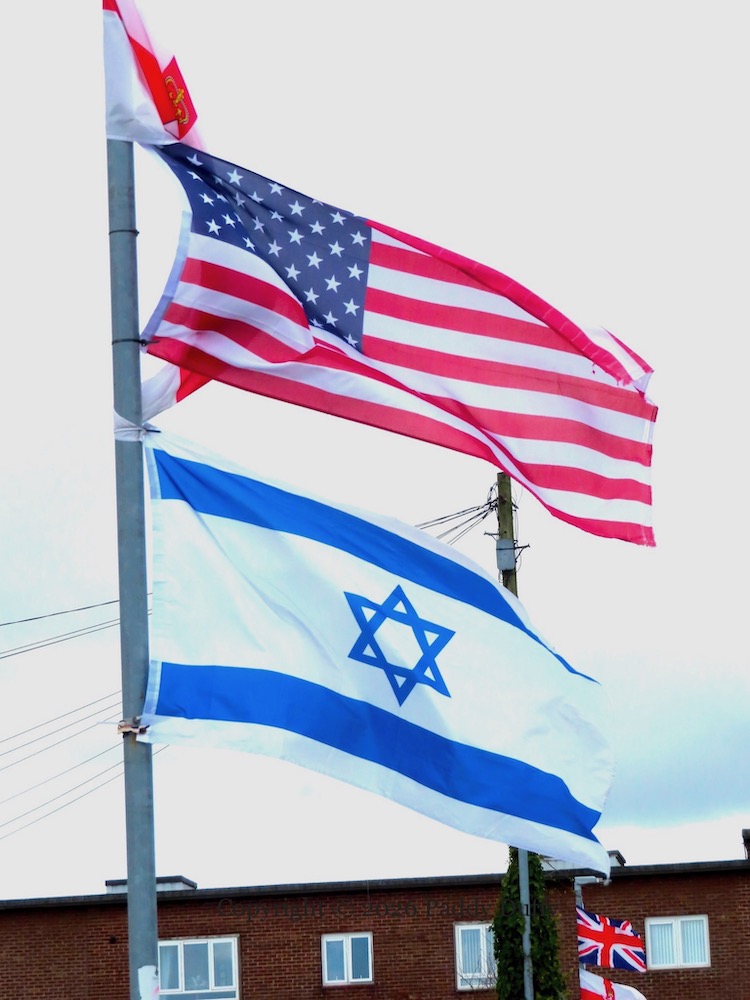
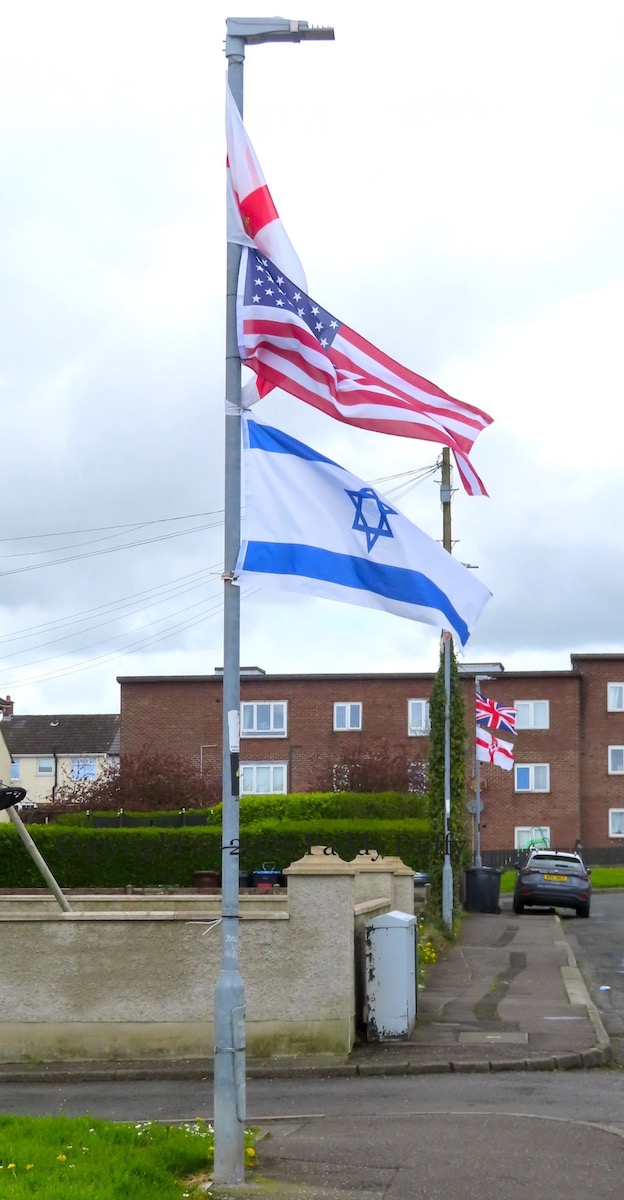
Until now, whenever the United States has been placed along side the Union Flag or the Flag Of Zion, is has been in the form of some sort of Confederate Flag (2014 | 2016 | 2025). This has indicated that the contemporary USA as a whole has not been perceived as a supporter of (Northern Irish) loyalism or in a similar position to loyalists, but that the spirit of the Confederate South is akin to that of loyalism: a once-dominant ethnos, which held its position by institutionalised violence, besieged by the forces of expanded suffrage and mediocrity (as they would see it).
Donald Trump’s rhetoric and agenda found favour with Northern Irish loyalists, and a few Trump flags and graffiti were seen previously – see Take America Back for an example and further references.
Trump’s victory in November, 2024, gave him a second term as President of the United States Of America. Freeing himself from anyone associated with the conservative/neoliberal Republican party that restrained him in his first term and instead installing (Trump) loyalists in the cabinet and other key positions, Trump has been able to erode the USA’s character as a liberal democracy and move it instead towards authoritarianism (Guardian).
Although Trump’s current term is only fifteen months old, the shift has been sufficiently profound that the USA is now seen as simpatico with (NI) loyalism, and the Flag Of The United States – not a Trump flag or a Confederate flag – now flies alongside the flags of the United Kingdom and Israel.
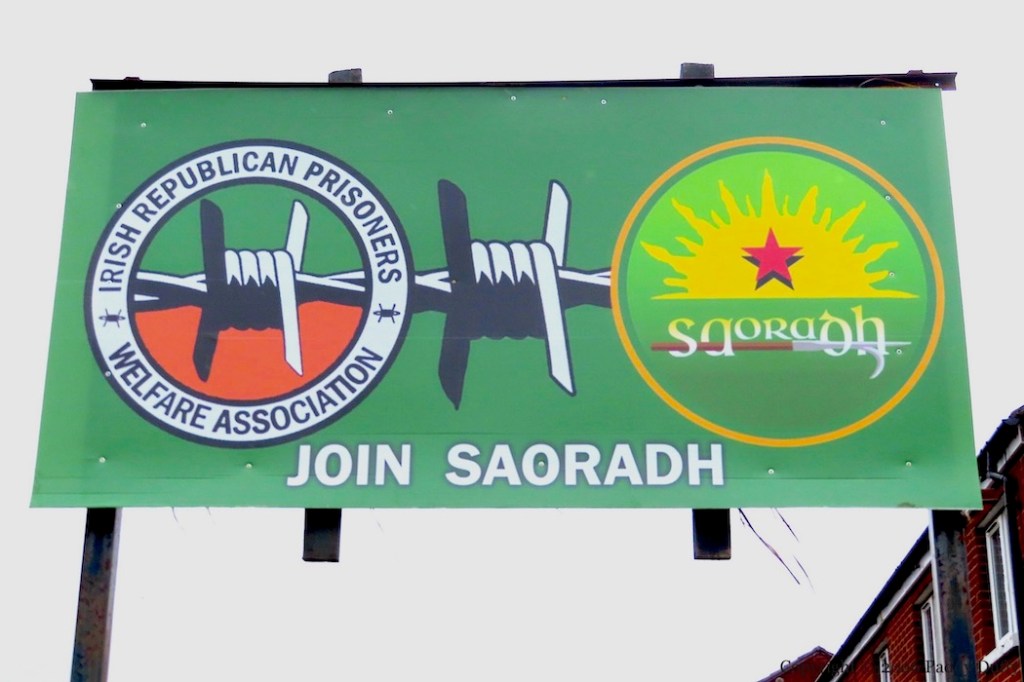
Saoradh describes itself as an all-Ireland, revolutionary, socialist, republican party (web) with the IRPWA (web) as its “prisoners’ welfare” department and Éıstıgí as its youth wing. The “revolutionary” is perhaps in reference to its (alleged) association with the New IRA.
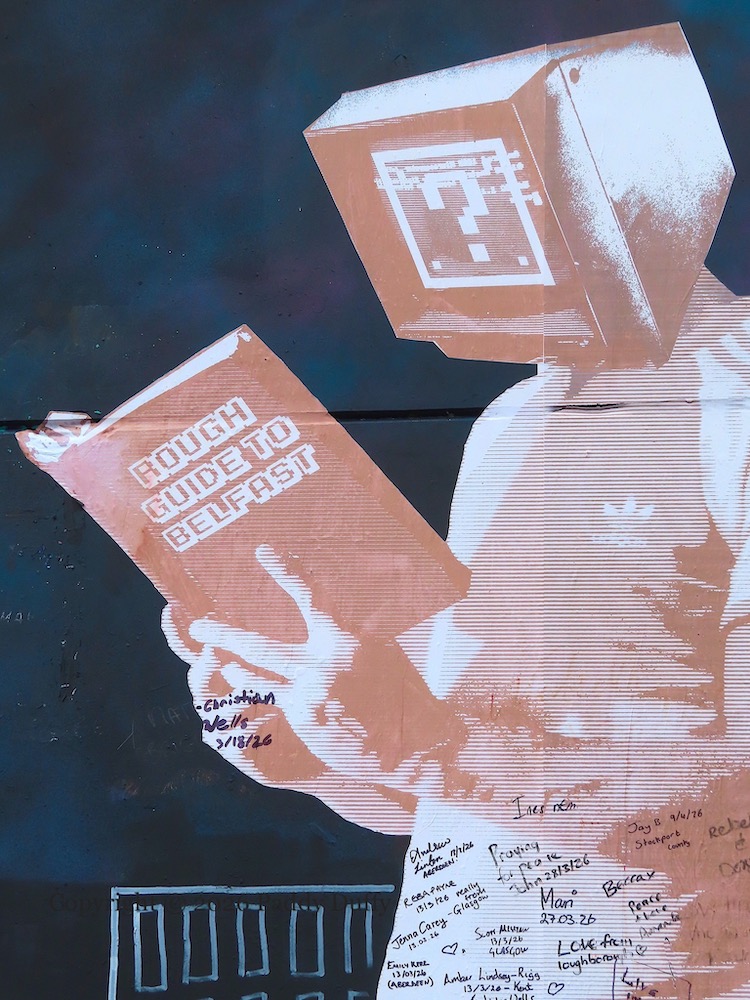
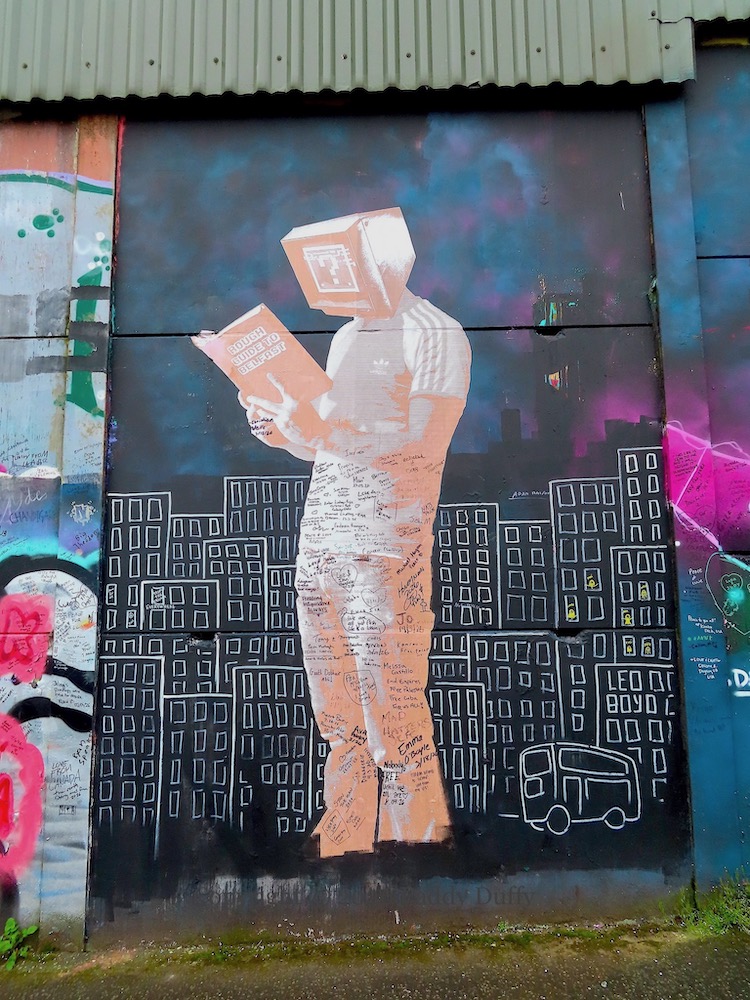
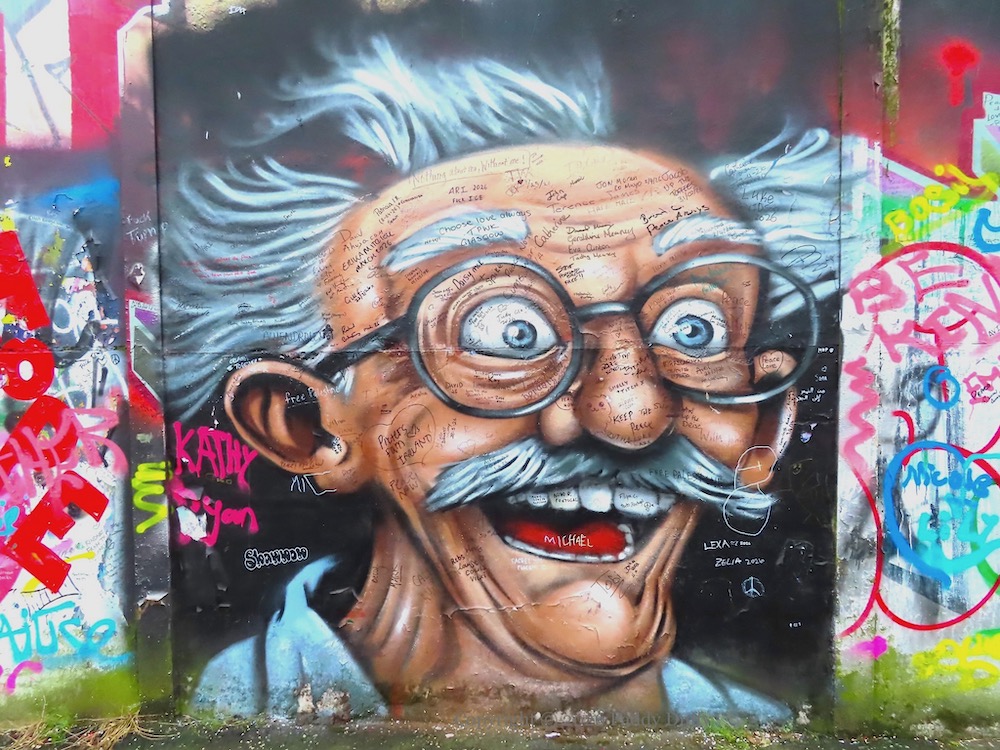
The wall is notable for the wild-style writing and other art painted on the Shankill side – including this paste-up by Leo Boyd (web) – but the wall itself, at 30+ feet tall, is the main draw, and tourists sign their names (and patronising slogans) on top of the art.
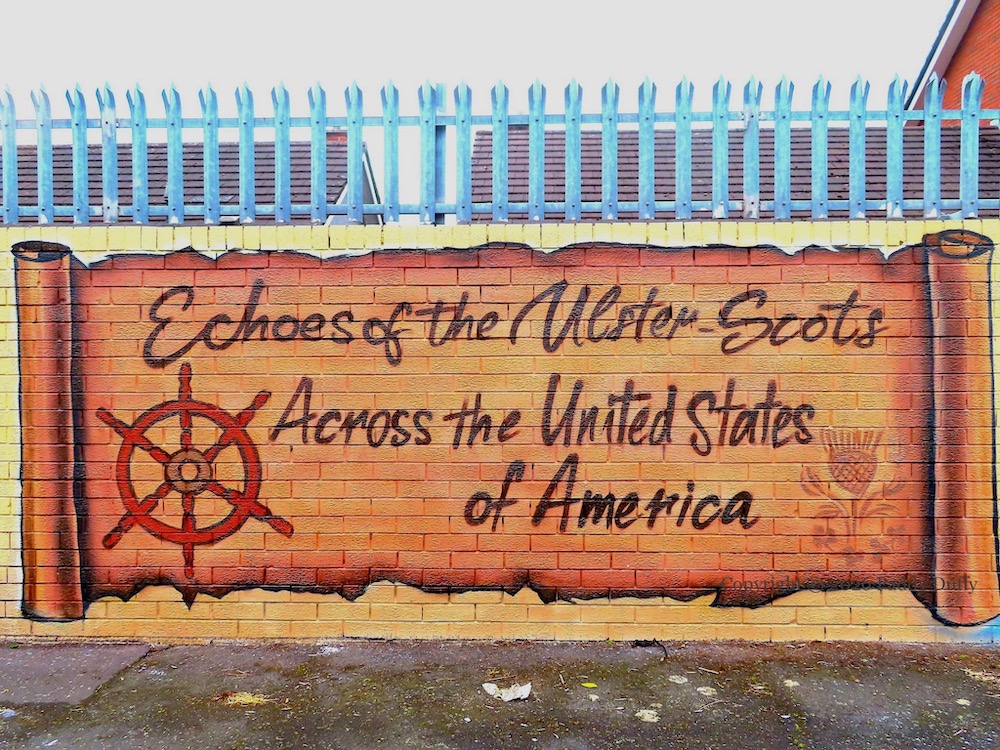
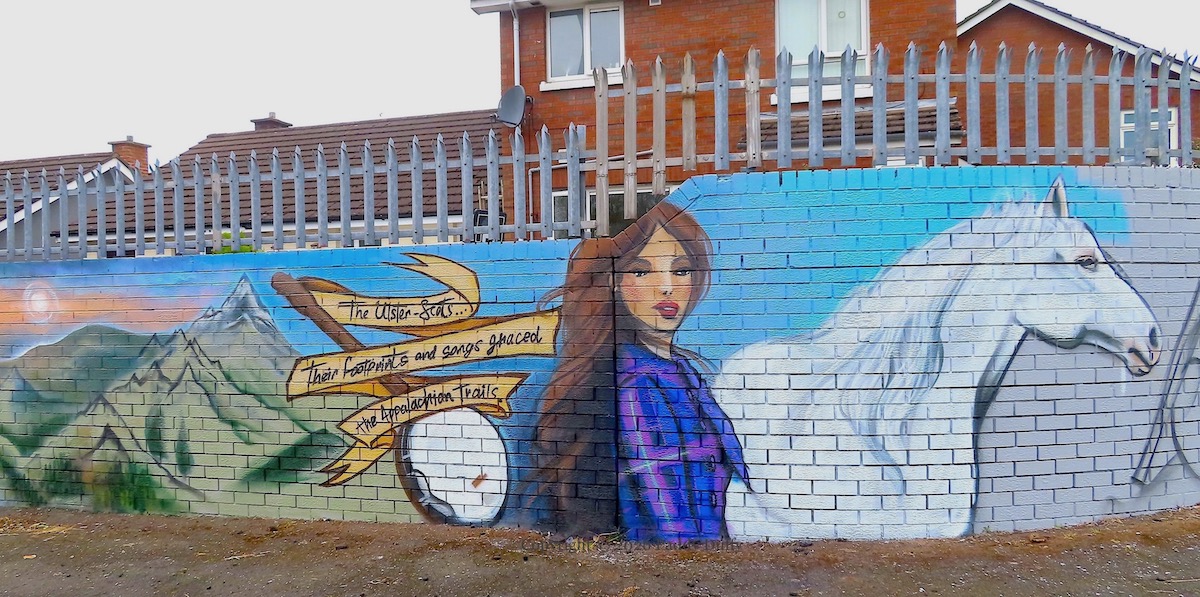
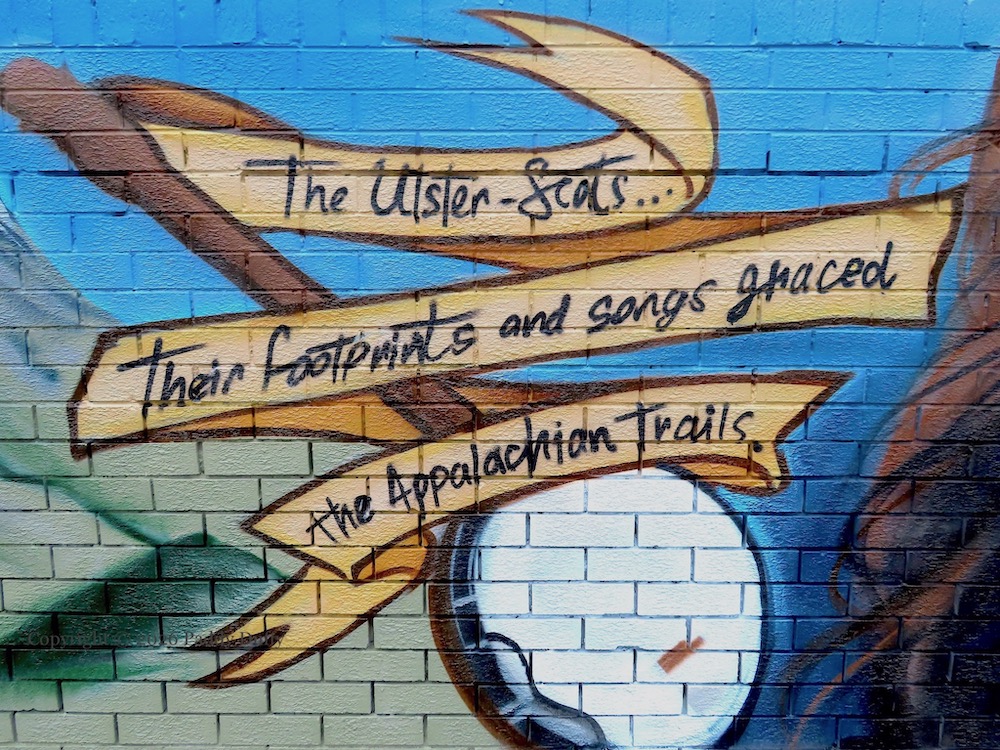
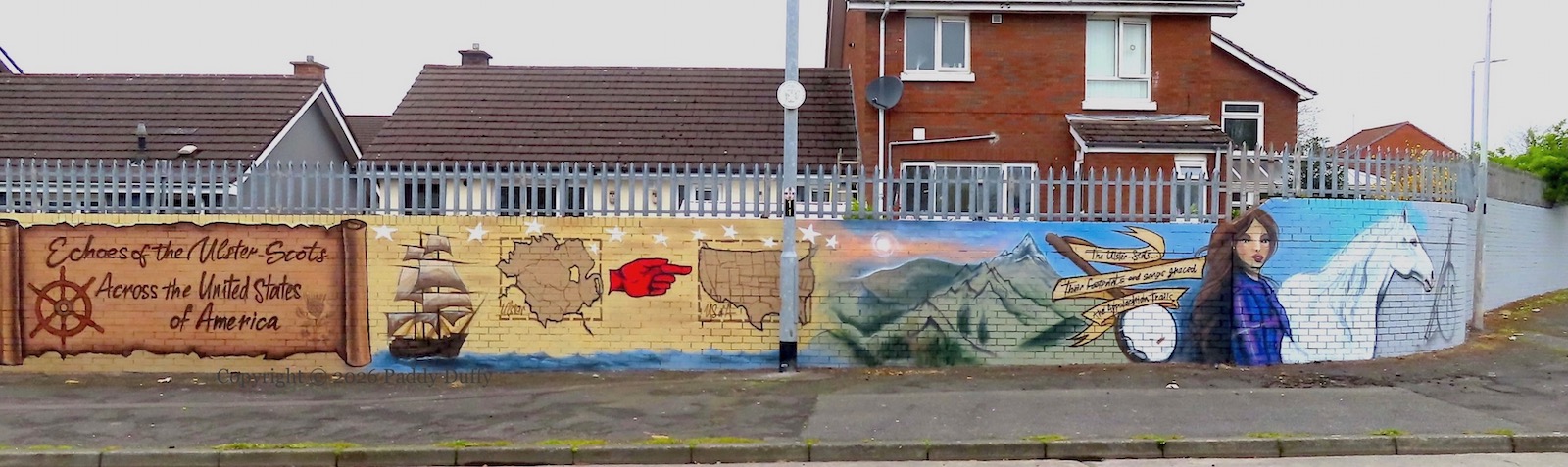
“Echoes of the Ulster-Scots across the United States Of America”, “The Ulster-Scots … their footprints and songs graced the Appalachian Trails.”
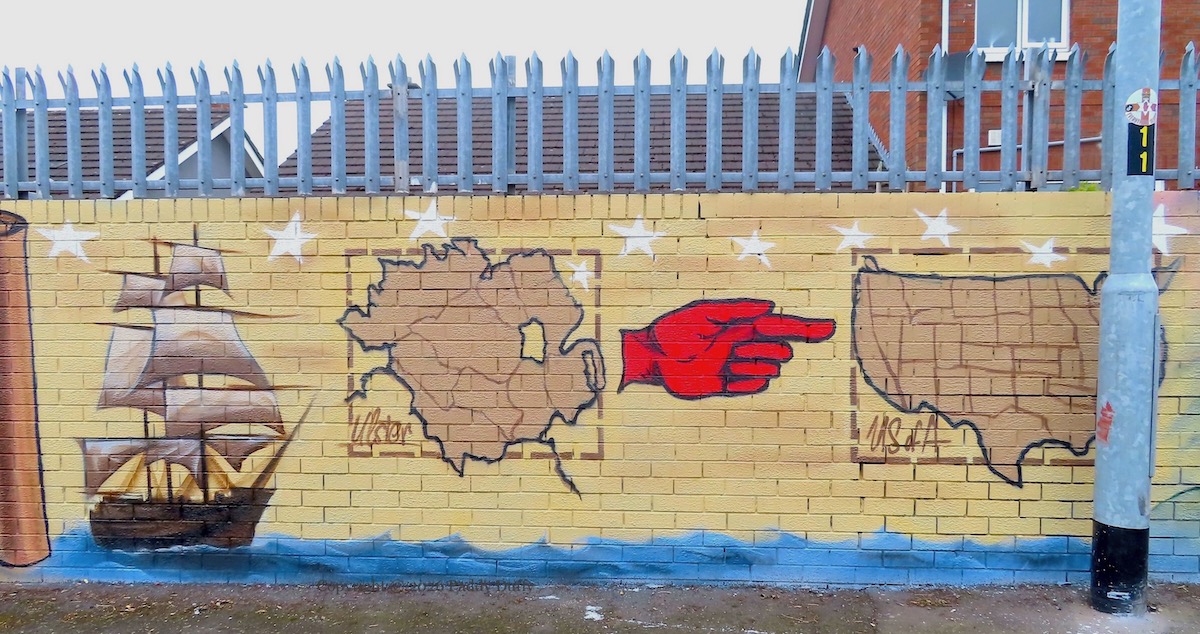
These four panels are the first stage of a longer “pioneers to presidents”-style mural (Visual History) on Ulster-Scots (or, Scotch-Irish) emigration in the 1700s to the British colonies that in time became the United States.
Upon arrival at eastern sea-ports, many of the Scotch-Irish headed west across the Allegheny mountains and down into the Appalachians. By 1790, it is estimated, 6% of the population (or almost 200,000 people) of the recently-created United States Of America were (ultimately) from (nine-county) Ulster, a combination of Scotch-Irish, Celtic-Irish, and English-Irish (American Historical Association).
These four panels are in North Howard Street, west Belfast. As can be seen from the wide shot below, the mural will soon be extended around the corner into Fifth Street. (Update: see We Lead Across Time And Space.)
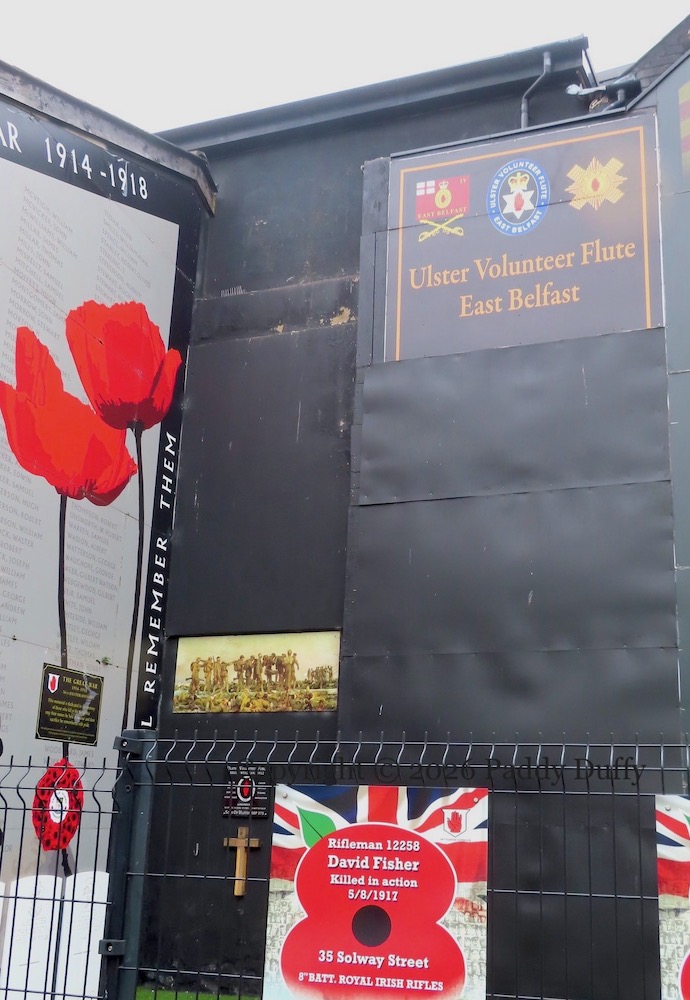
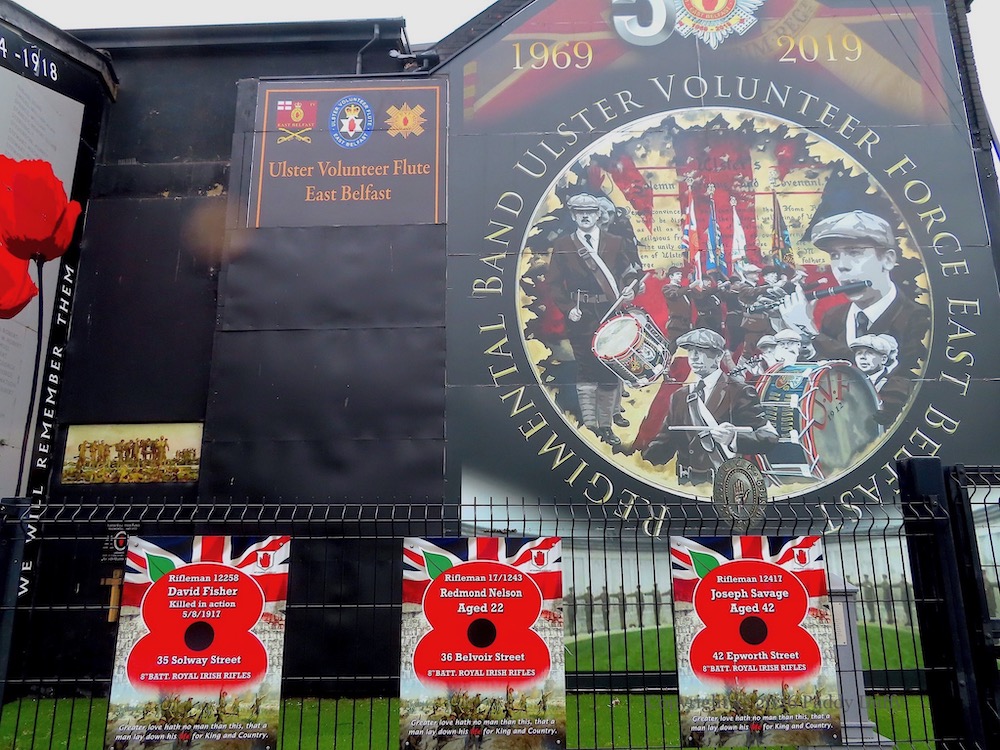
This entry updates 2022’s They Said We’d Never Last, showing the space where previously there were four panels of historical photographs from the Ulster Volunteer Force flute band.
For the John Singer Sargent painting in the bottom-left corner of the wall, see Observe The Sons Of Ulster.
St Leonard’s Crescent/(old) Newcastle Street, east Belfast
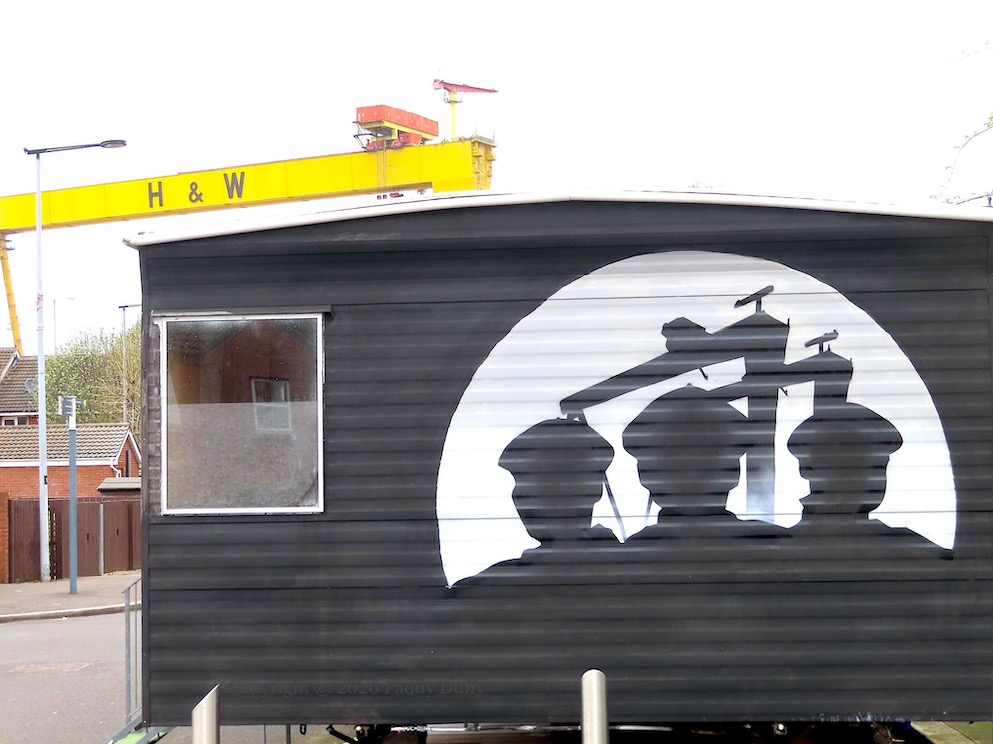
At its peak, the Harland & Wolff shipyard employed 35,000 people (IndustriAll) and the flat-capped worker became a symbol of east Belfast, along – much later – with Samson and Goliath, the two gantry cranes at the shipyard that were raised in 1974 and 1969 (WP) and which have become the symbol of Belfast.
The silhouetted workers and cranes are on a mobile office in Fraser Pass, Newtownards Road, Belfast, at the end of the Pitt Stop next to the Belfast Bikes racks.
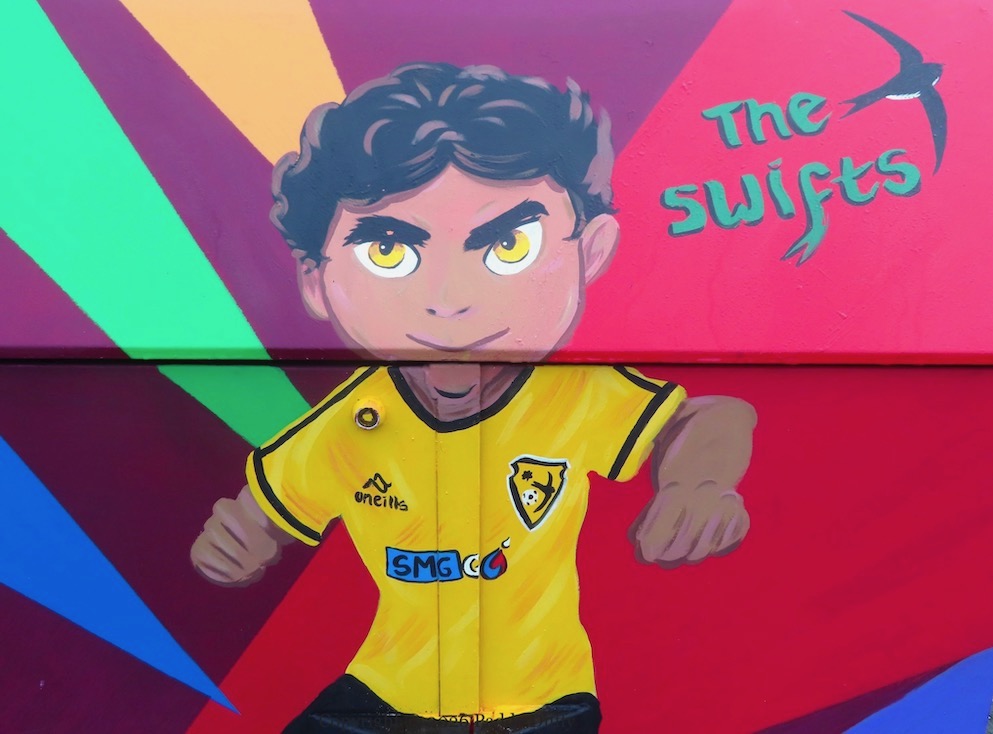
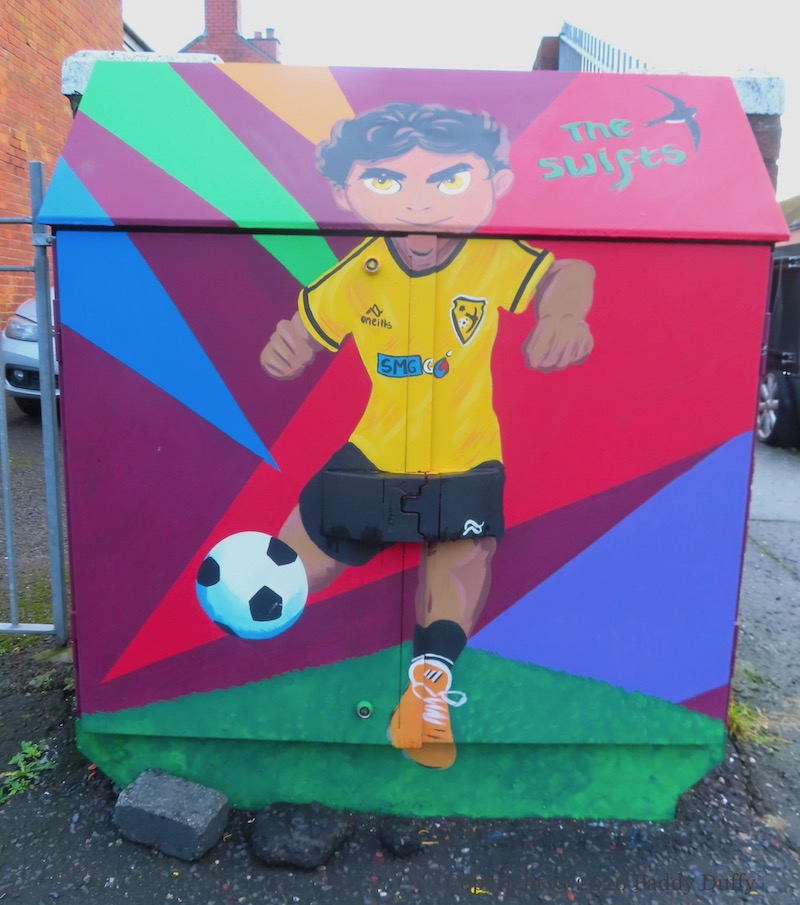
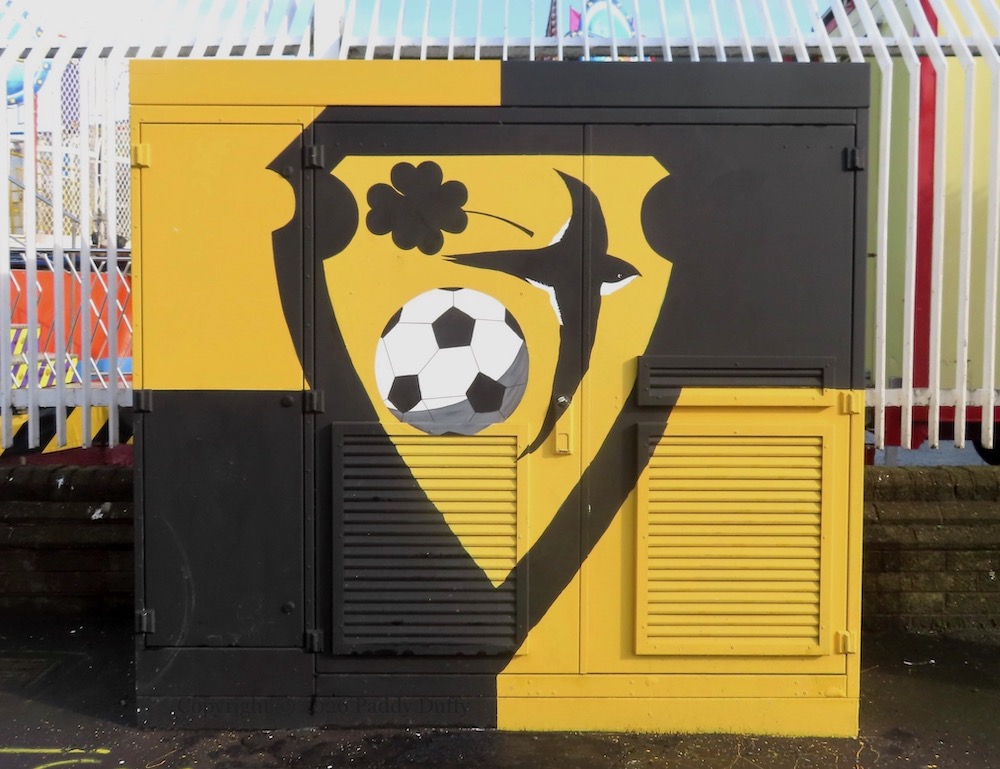
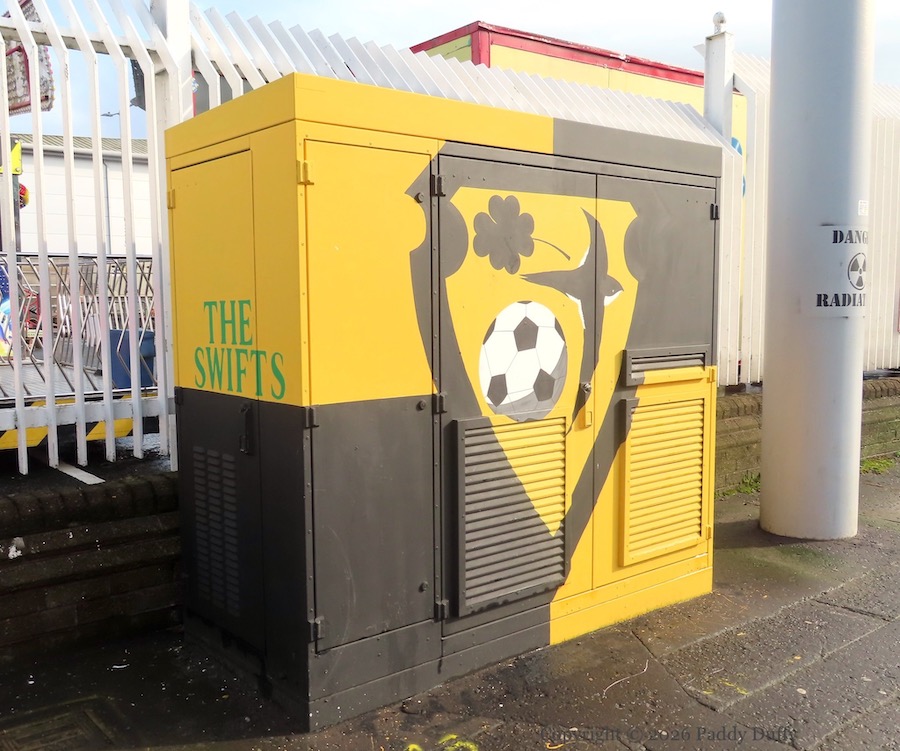
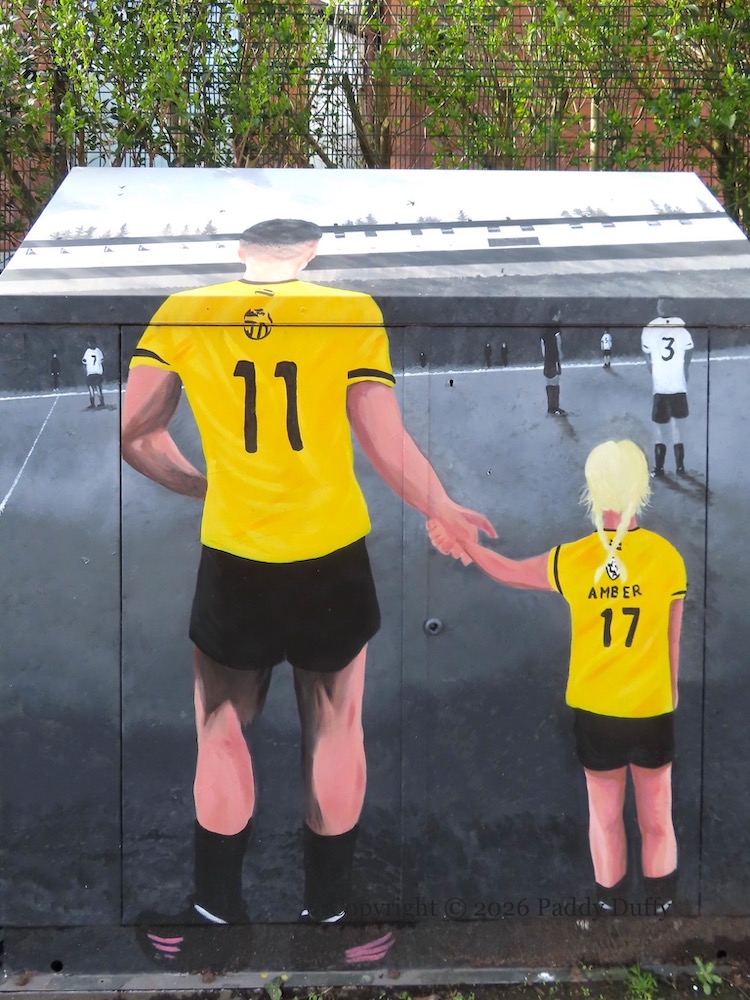
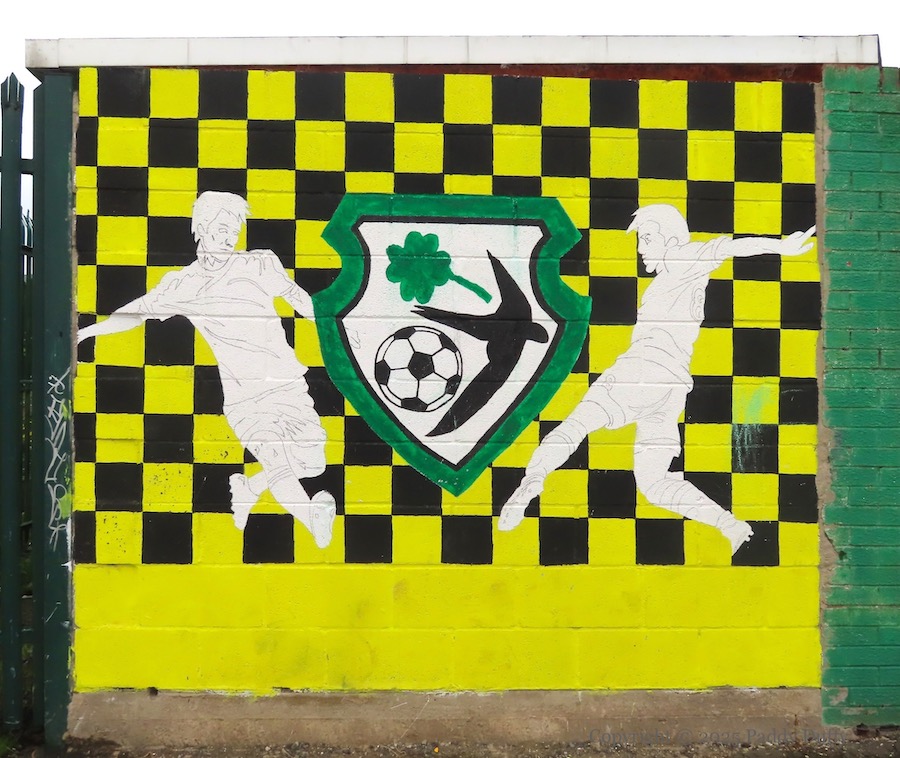
St James’s Swifts (web) are a west Belfast club playing intermediate level soccer with Donegal Celtic Park on the Suffolk Road as a home ground.
The three pieces shown here are in St James’s Crescent, at the Park Centre on Donegall Road, and St James’s Road. The mural in progress (shown last) is in St Katherine’s Road
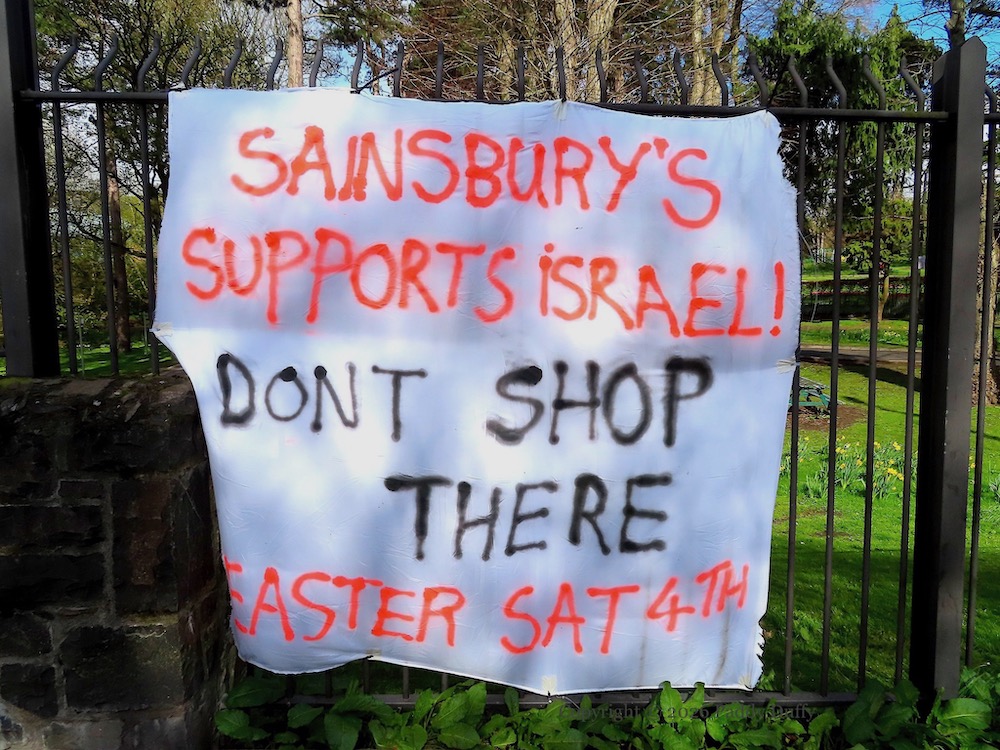
Here are three banners/posters spotted along the Falls Road during the Easter Rising parade on April 5th:
Above: “Sainsbury’s supports Israel! Don’t shop there. Easter Sat 4th [April, 2026].” For background see the post and reel on the BDS Belfast Fb page.
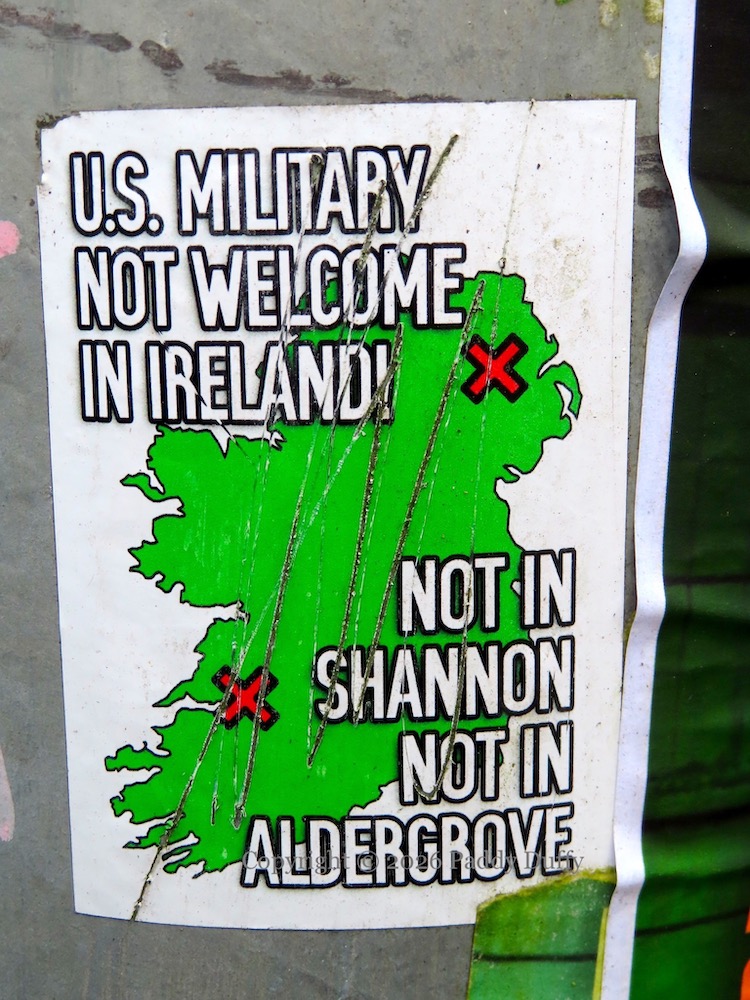
Below: “U.S. military not welcome in Ireland! Not in Shannon, not in Aldergrove.” For background, see Al-Jazeera | ShannonWatch. April 13th: a person was arrested for taking a hatchet to a C-120 Hercules (Democracy Now).
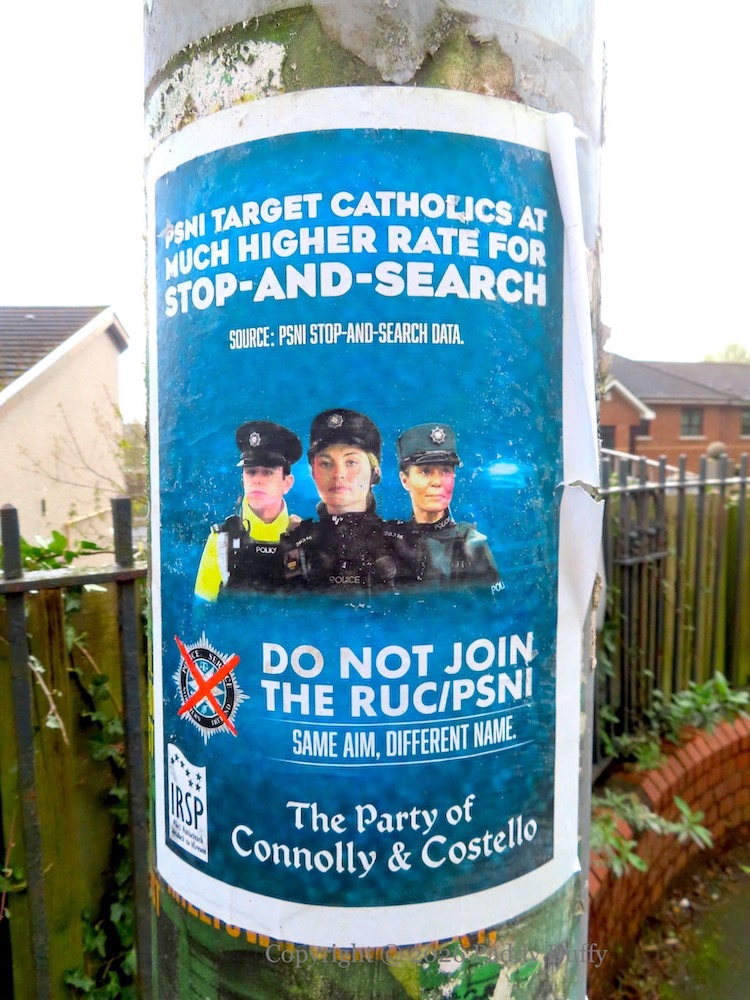
Last below: “PSNI target Catholics at much higher rate for stop-and-search. Source: PSNI stop-and-search data. Do not join the RUC/PSNI. Same aim, different name. IRSP [web] – the party of Connolly & Costello.” The data in question might be from the 2020-2021 period (PSNI | TheDetail) as the current (2025) data do not appear to report on sectional identification.
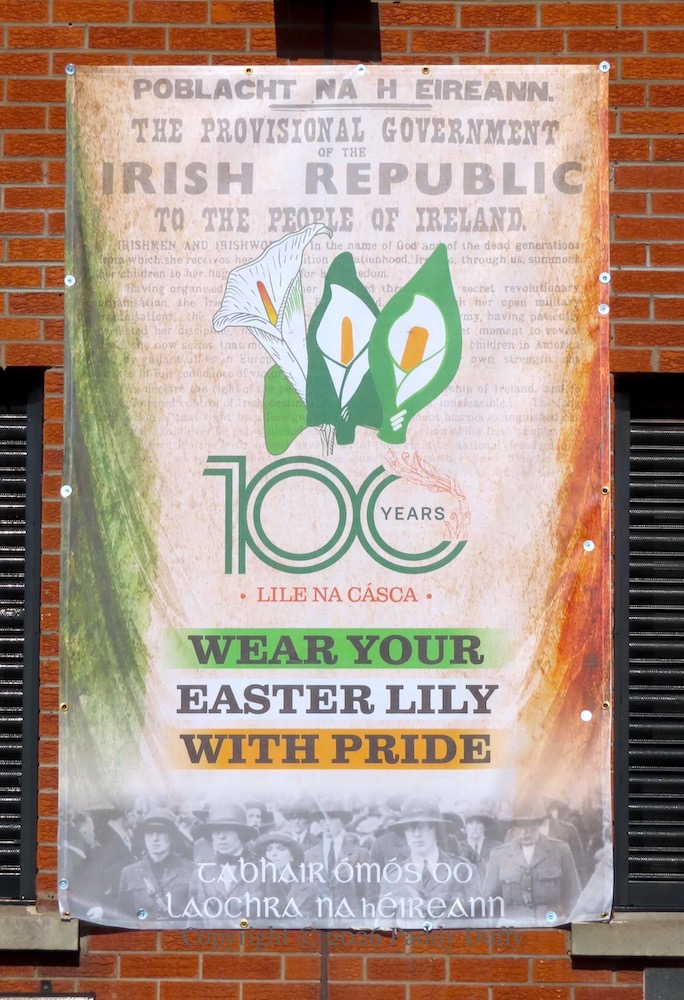
“100 years. Lıle na Cásca. Wear your Easter lily with pride. Tabhaır ómós do laochra na hÉıreann. [Pay respect to Ireland’s warriors]”
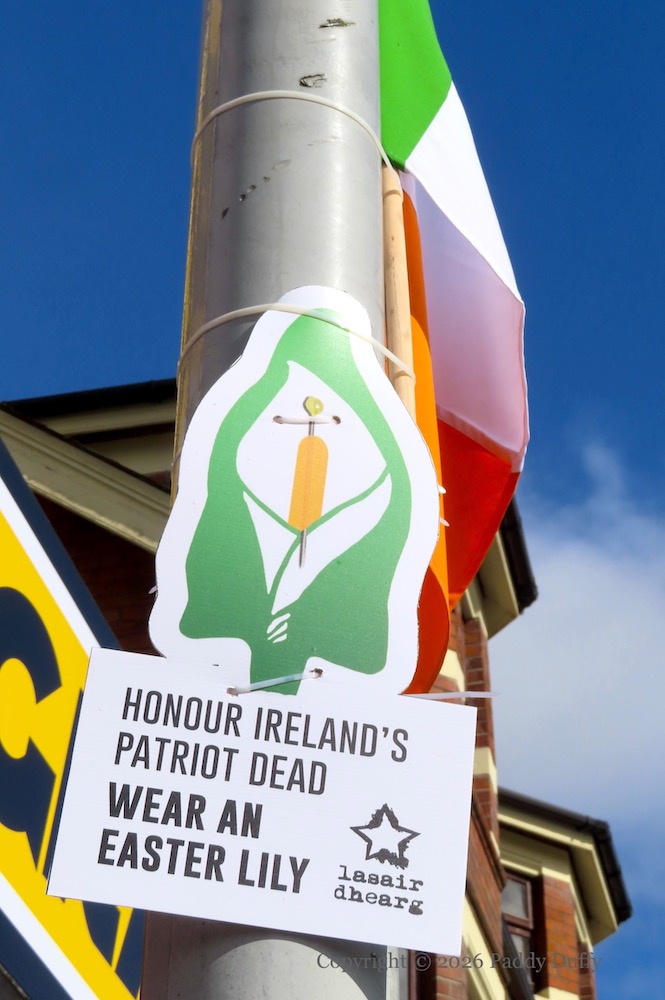
Shown here are Sınn Féın (web) and Lasaır Dhearg (web) invocations to commemorate the 1916 Easter Rising. The lily as a symbol of the 1916 Easter Rising was introduced by Cumann Na mBan in 1926 as a fund-raising device. For a history and vintage posters from across the century, see An Phoblacht.
 Paddy Duffy Collection