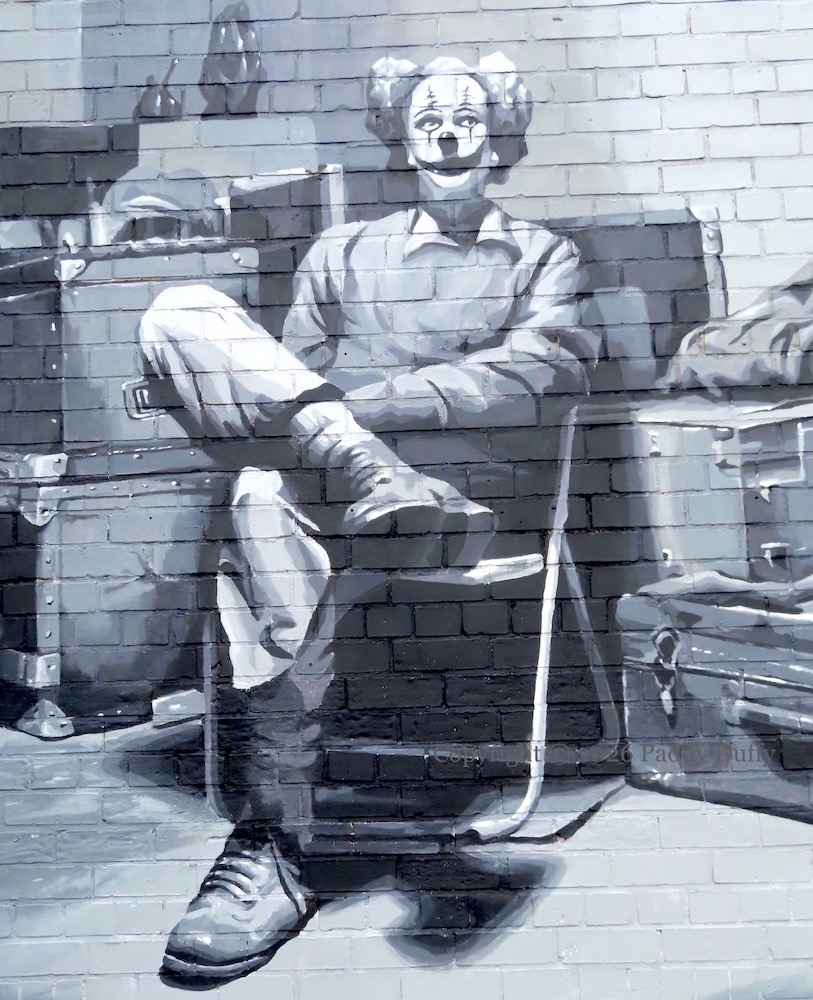
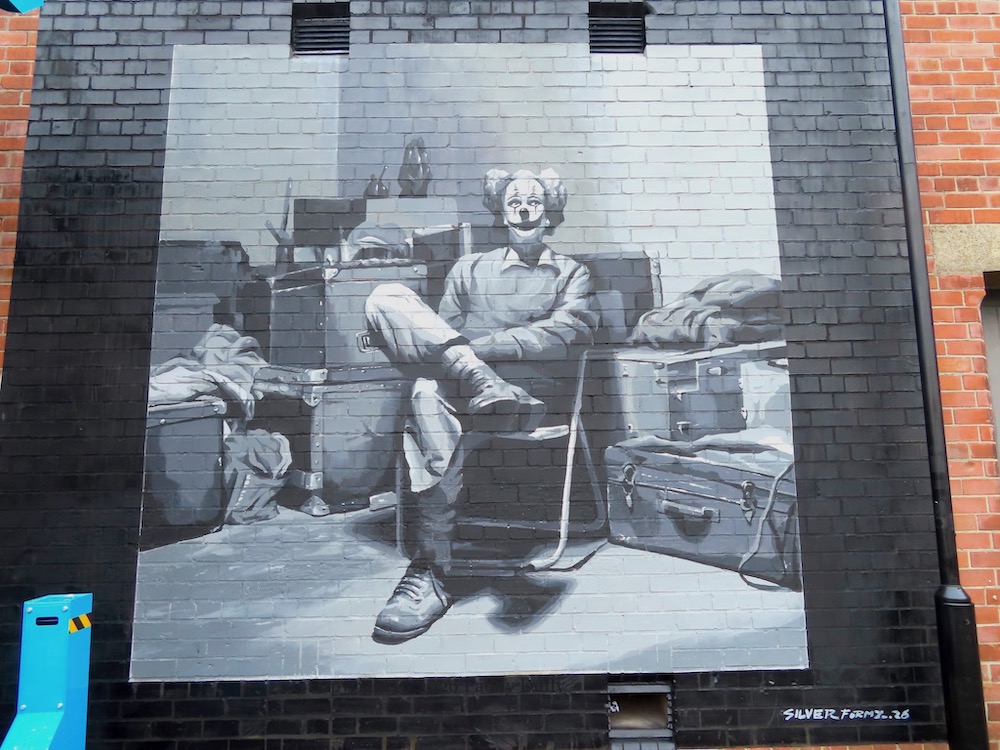
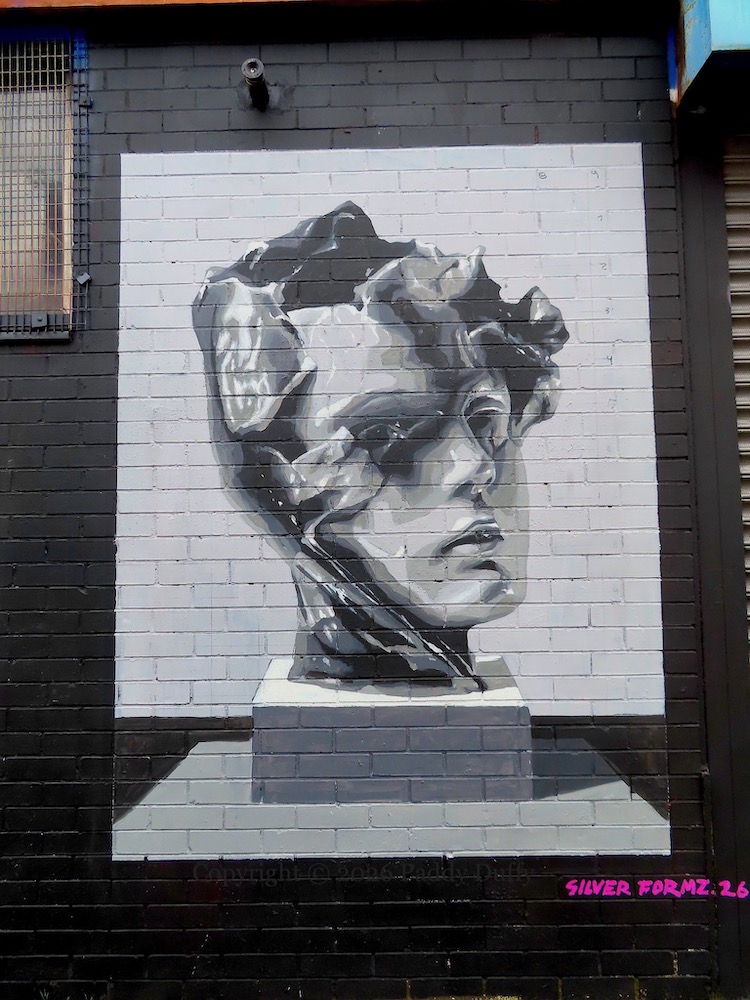
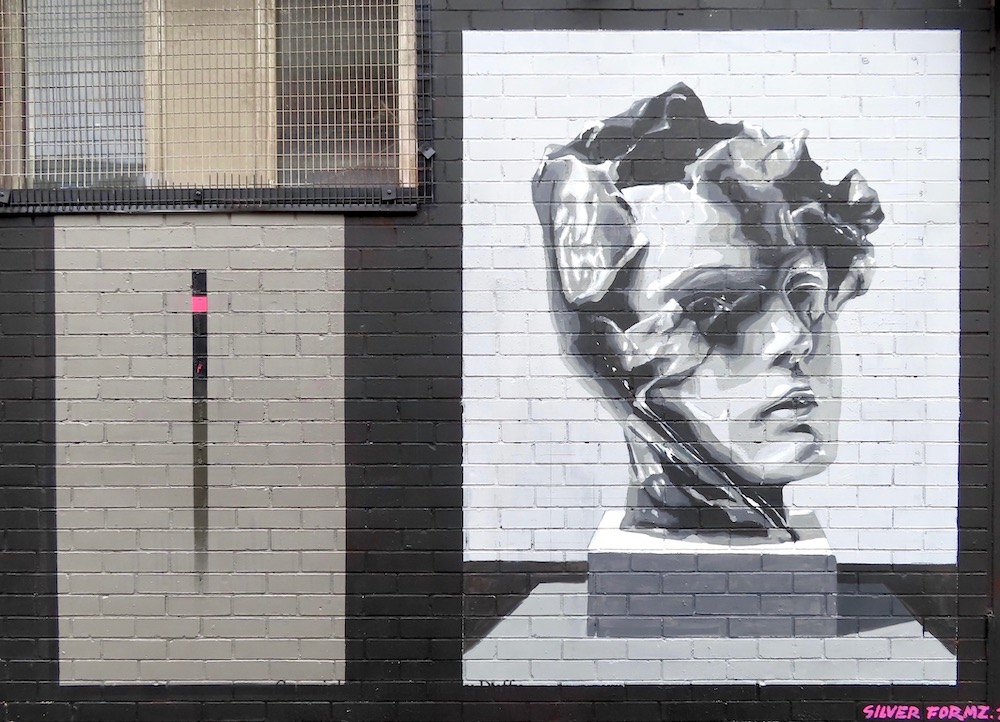
Here are two pieces by artist Silver Formz (ig) painted for this year’s (2026) Hit The North. The clown above and immediately below is in Dunbar Street; the distorted bust is in Union Street.
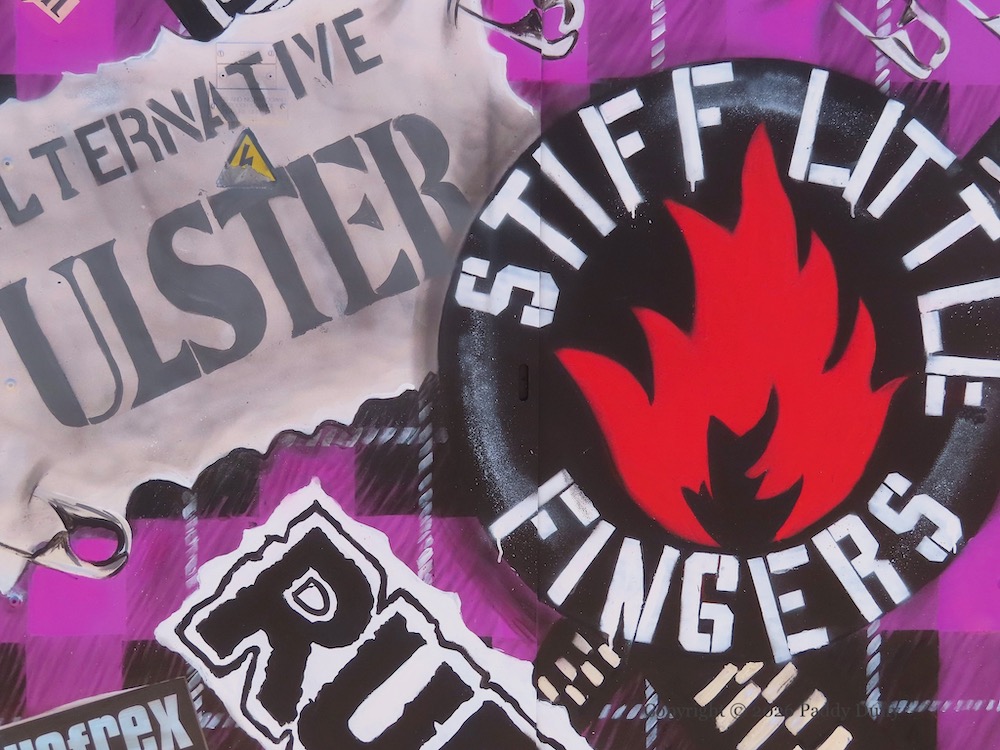
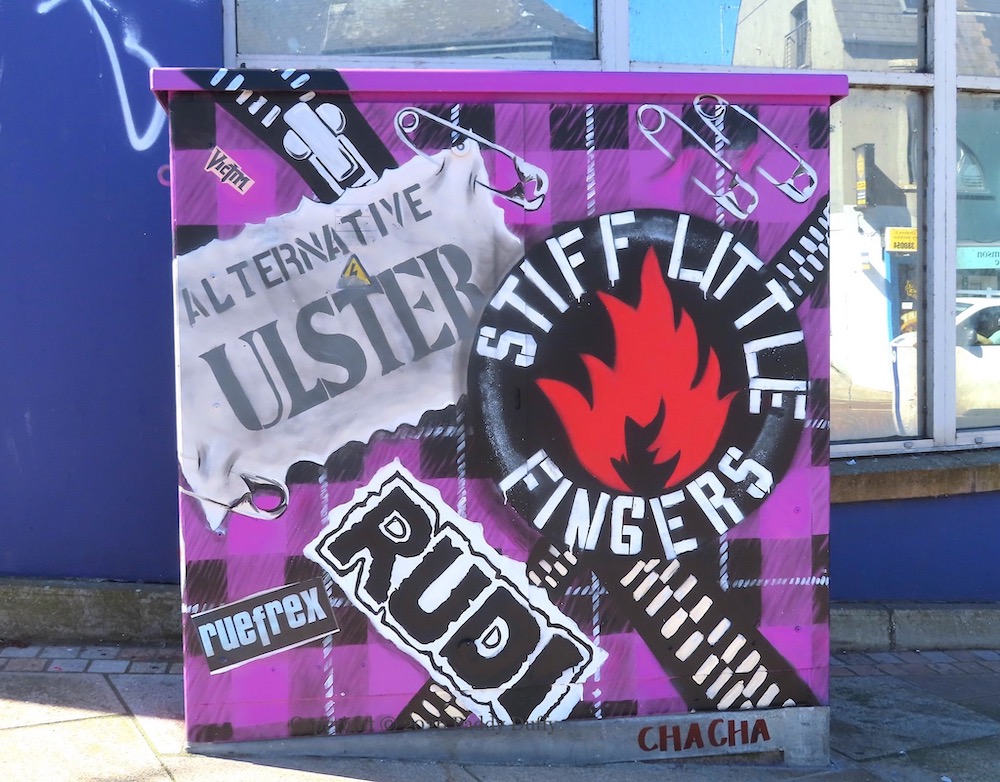
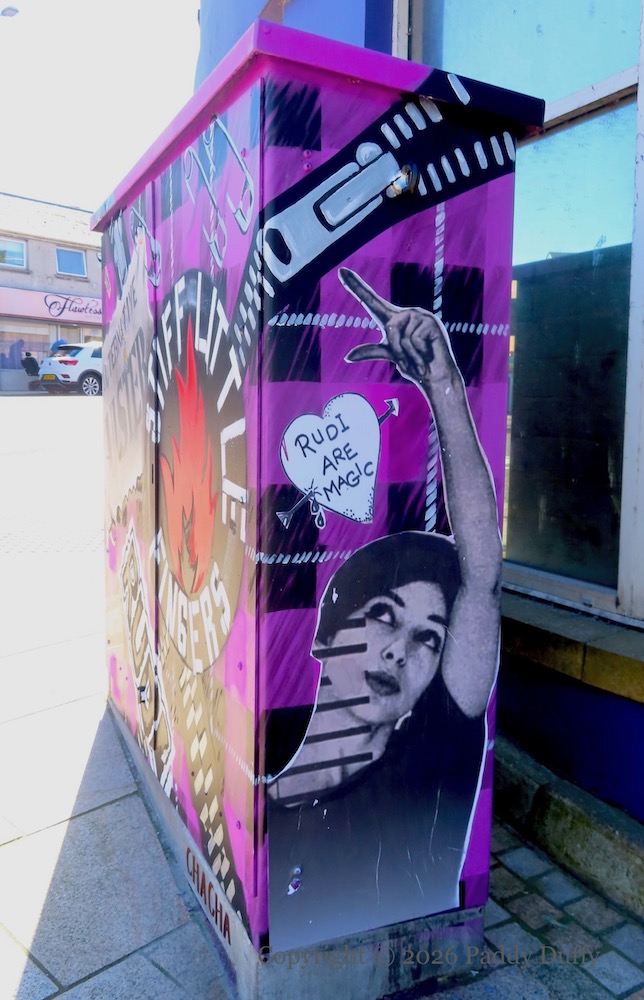
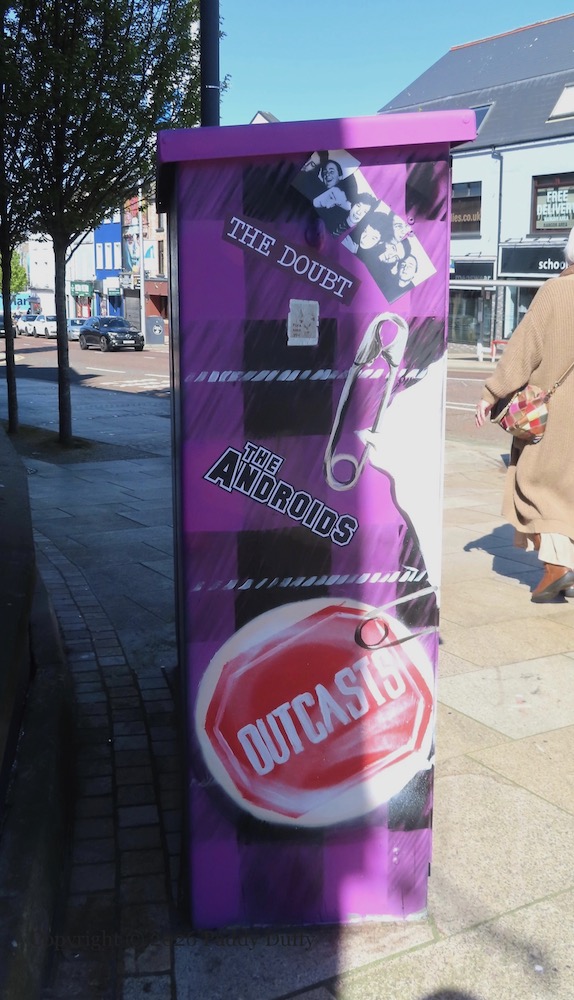
There is a ‘blue plaque’ outside the Trident bar in Bangor’s High Street, to commemorate its role in the punk movement of the late 1970s (BBC | Guardian). The bands listed on this painted electrical box are Ruefrex (web), Stiff Little Fingers (web), Rudi (Something Hard), The Doubt (Irish Rock), The Androids (Spit), The Outcasts (Faster & Louder).
The bar is referenced in the SLF song “Alternative Ulster” (lyrics). Despite the claim that “there’s nothing for us in Belfast”, there is a plaque remembering the punk scene outside the Harp Bar – see Belfast Has The Reason.
By Cha Cha (ig), one building up from the Trident (Wolsey’s), High Street, Bangor
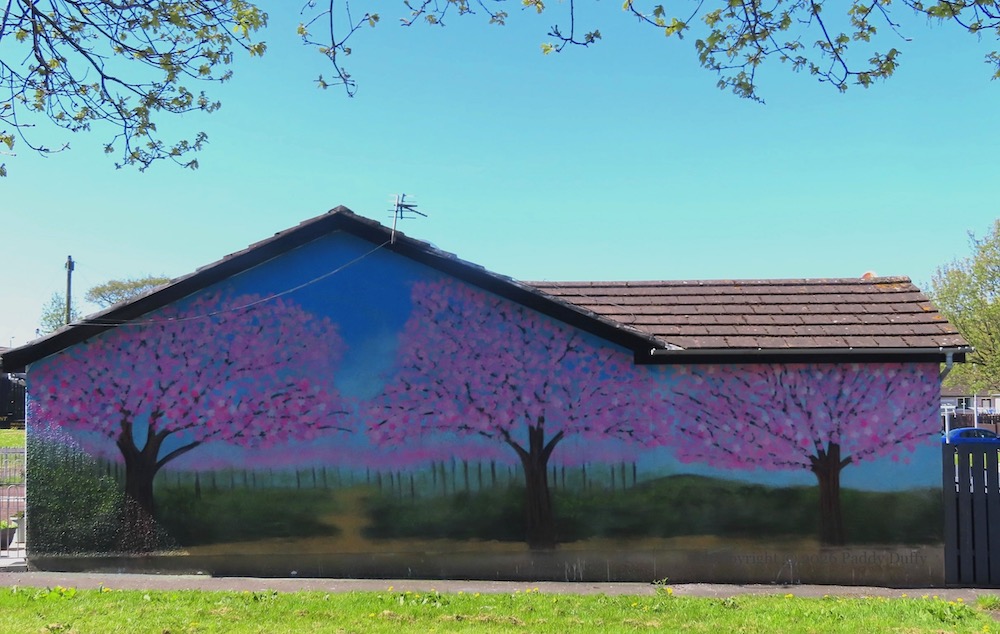
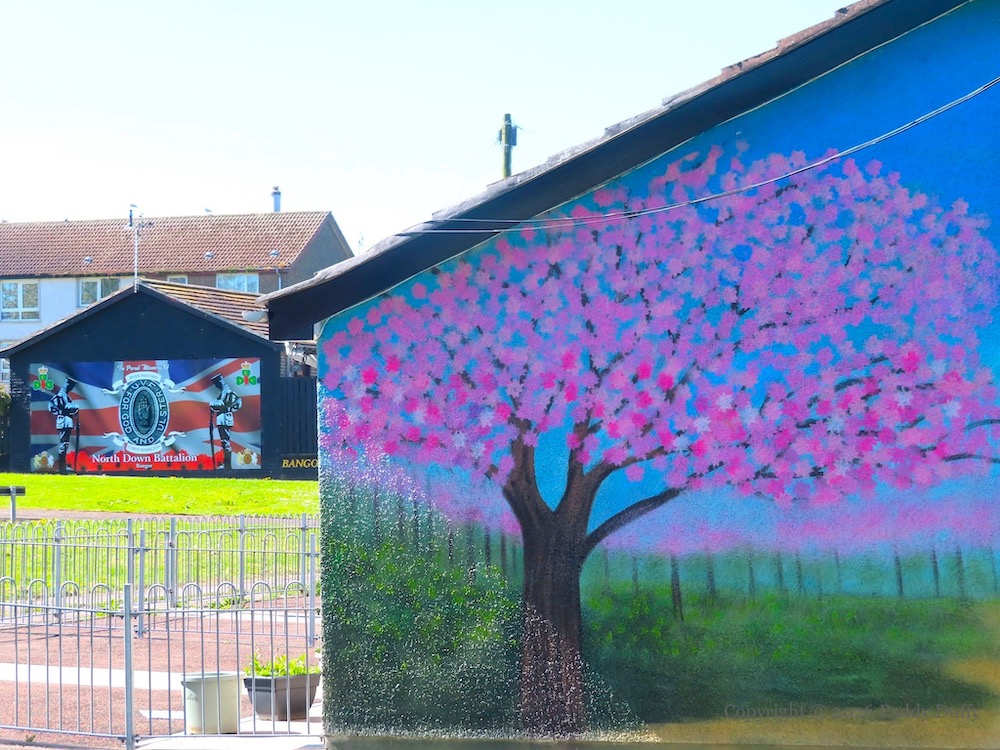
Cherry blossoms along Drumhirk Drive, Kilcooley, Bangor. For the UVF board to McCosh And Hamilton to the left of the wide shot, see The Pride O Oor Land Lie Cauld In The Clay.
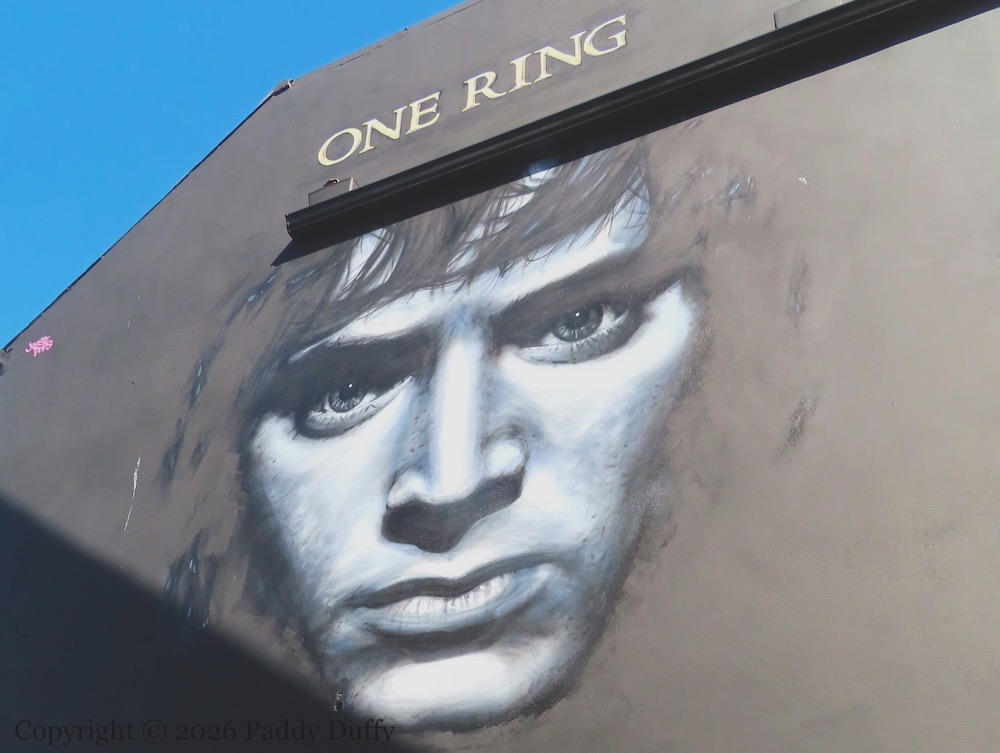
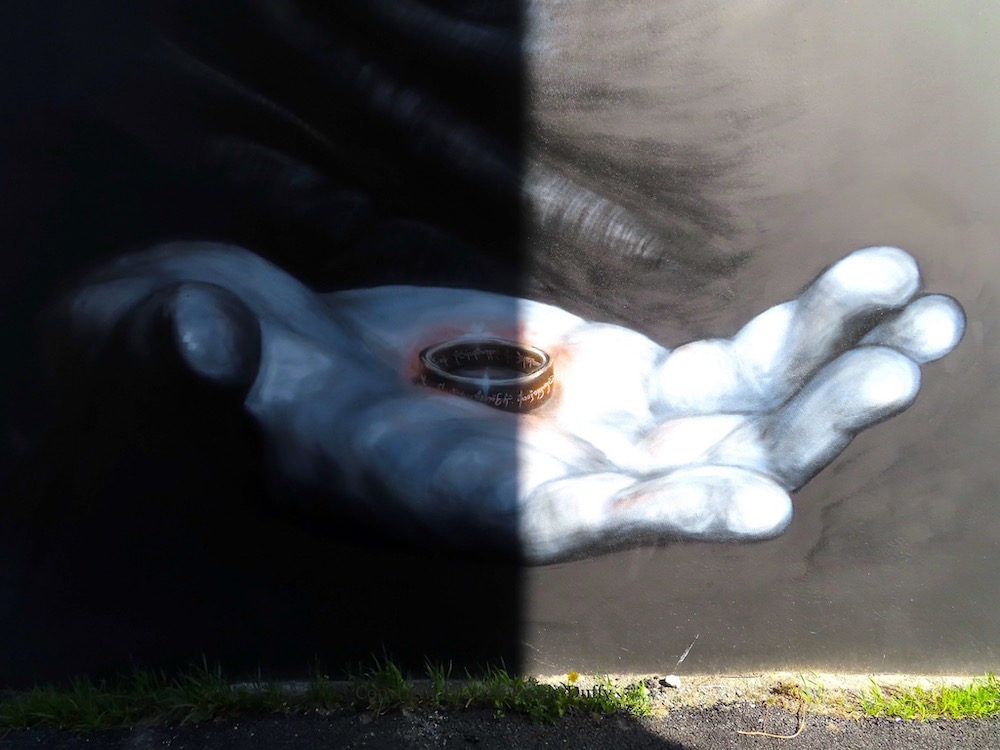
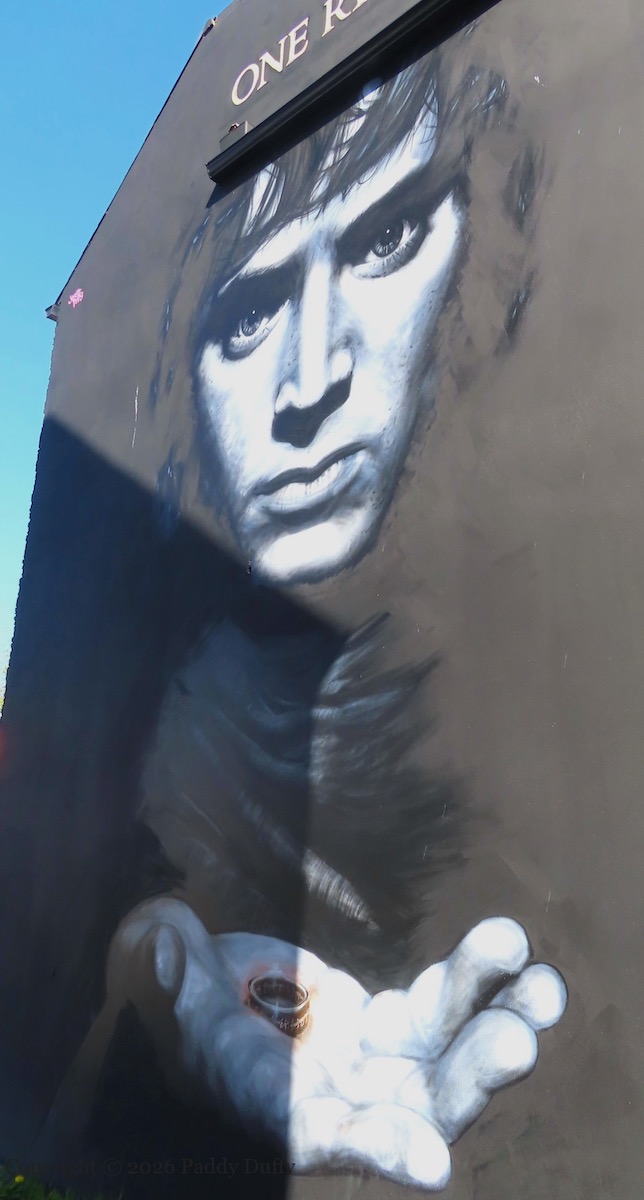
Frodo holds “the one ring to rule them all” in a piece of Lords Of The Rings-inspired art by Jossie Pops (web) on the wall of Robinson’s Goldsmiths (web) in Prospect Road, Bangor.
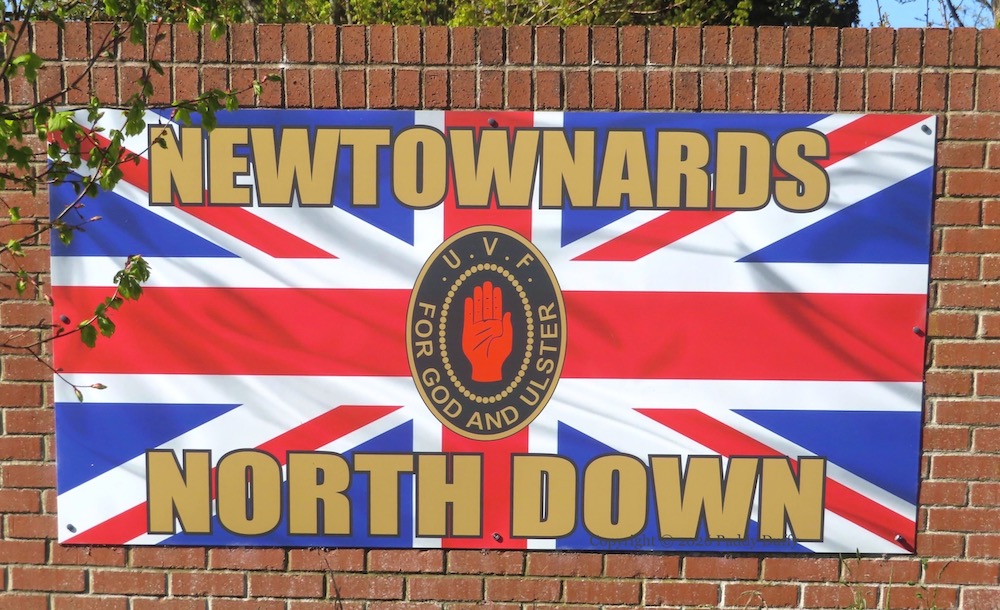
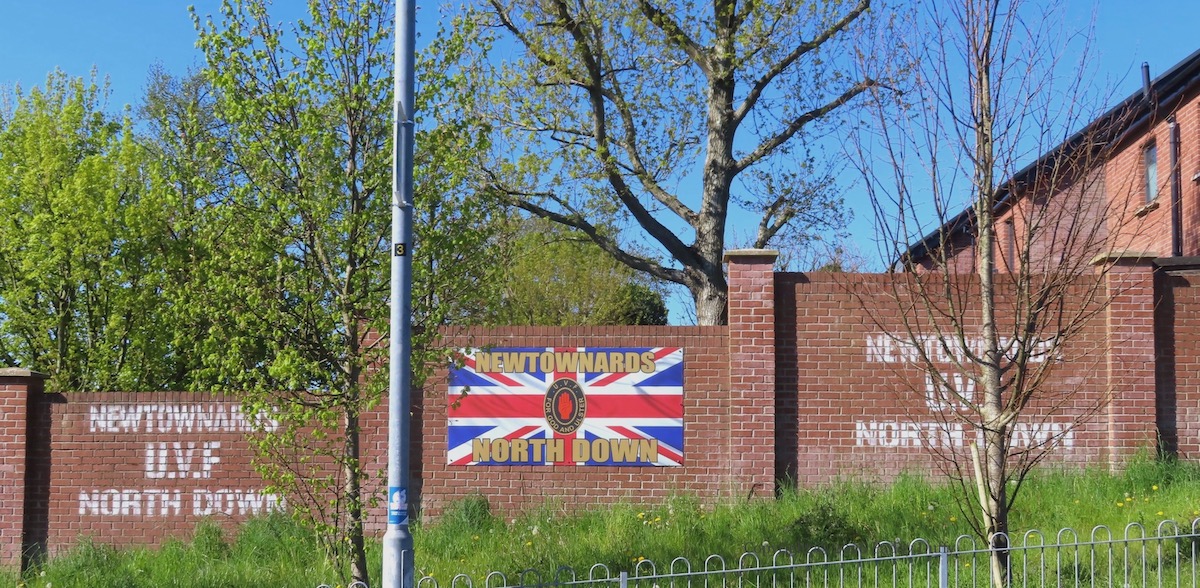
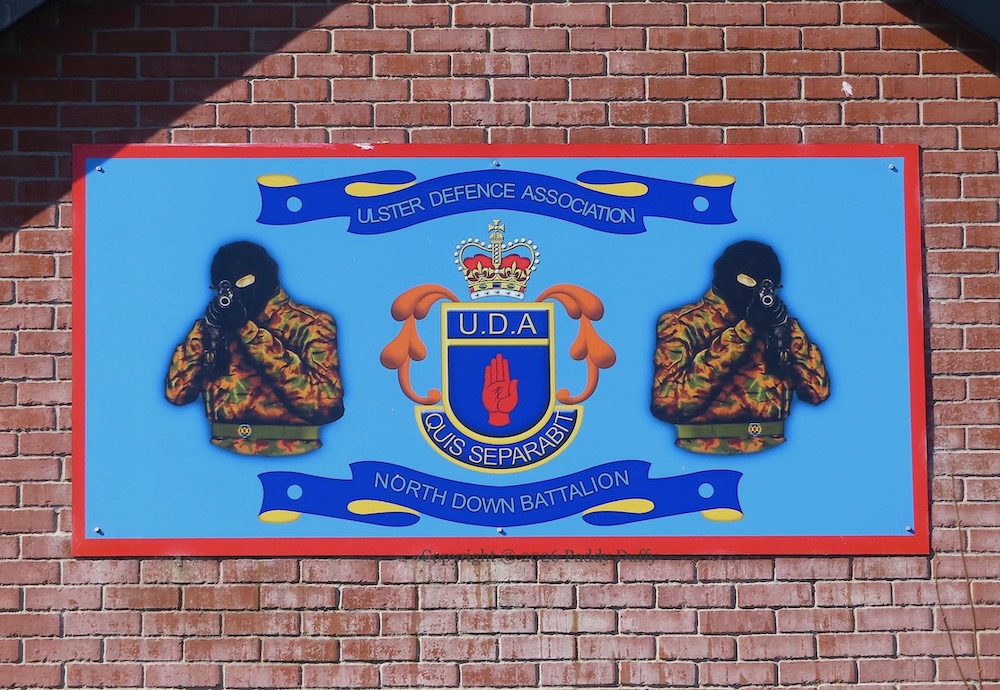
These UVF and UDA board are on adjacent walls at the entrance to the Glen estate, Newtownards; above and directly below, a North Down UVF and graffiti, while directly above it (final image) two UDA hooded gunmen take aim at the viewer on the pavement.
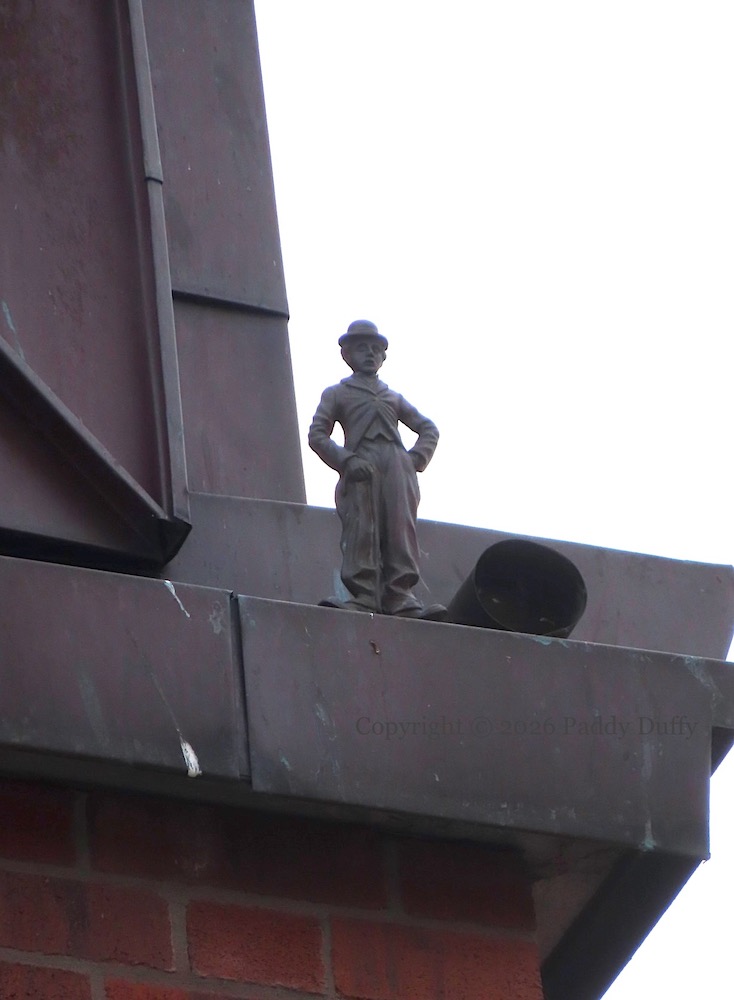
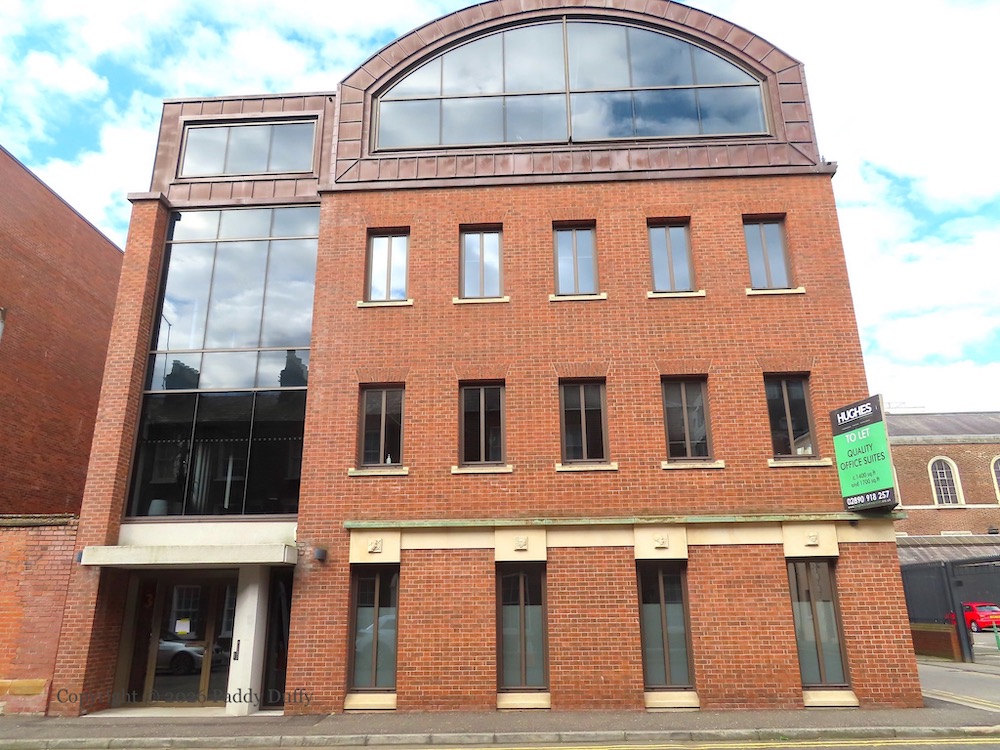
Hamilton House in Joy Street, Belfast, (former) home of Hamilton Architects, has a small statue of Charlie Chaplin on its fourth floor parapet to commemorate the fact that he briefly lived in Joy Street while he appeared at the Palace Of Varieties (the Grand Opera House) in 1908.
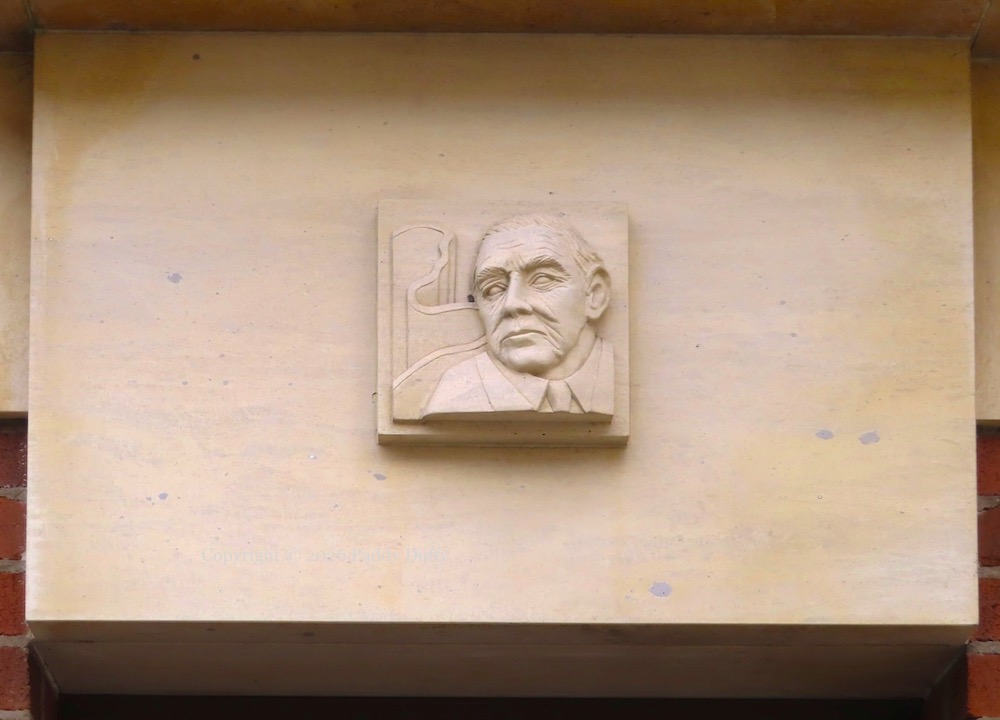
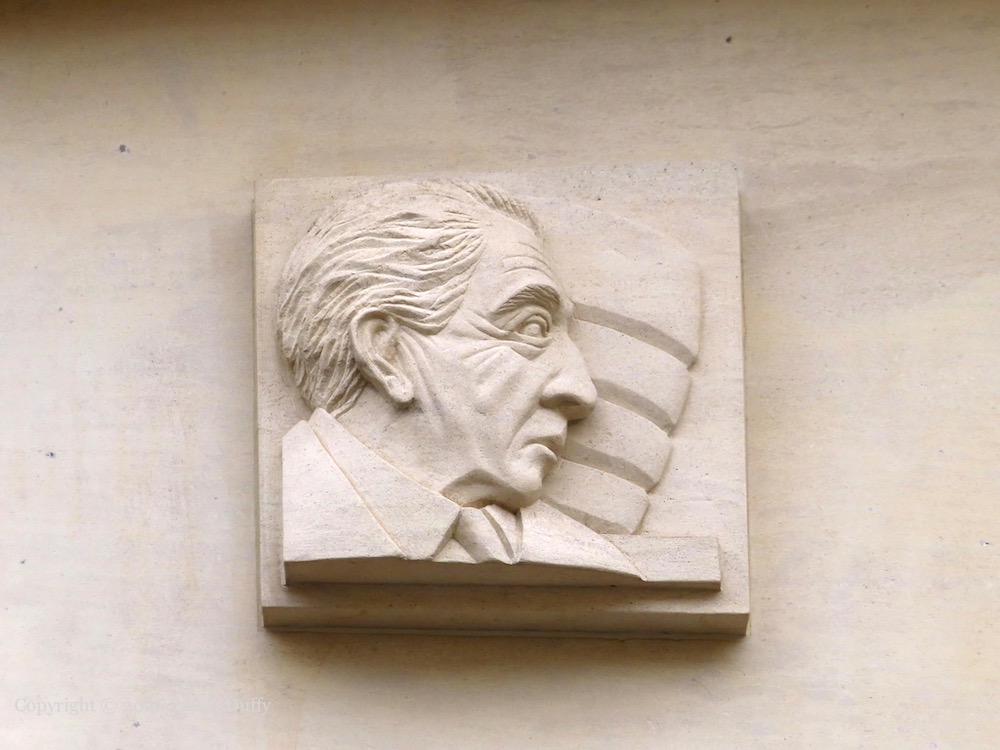
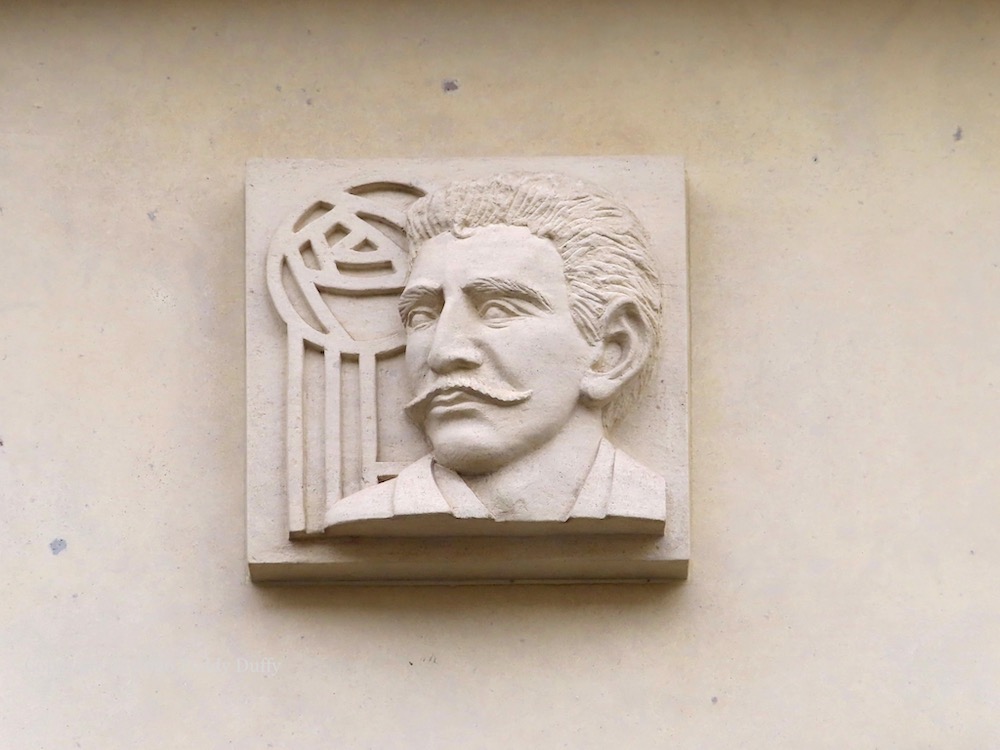
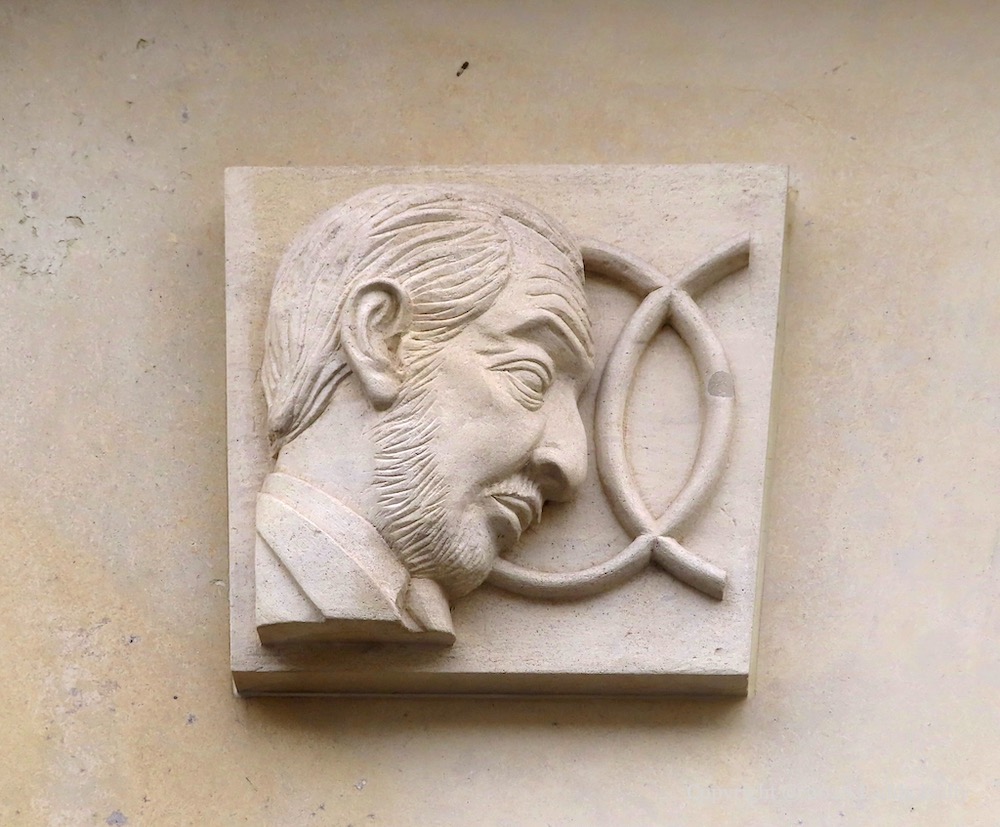
There are also reliefs of four famous architects above the first-floor windows. The four are Alvar Aalto (perhaps shown with a folding screen), Frank Lloyd Wright (Guggenheim Museum), Charles Rennie Mackintosh (Glasgow Rose), and Carlo Scarpa (Brion Tomb). The four were created by Claire Sampson (web).
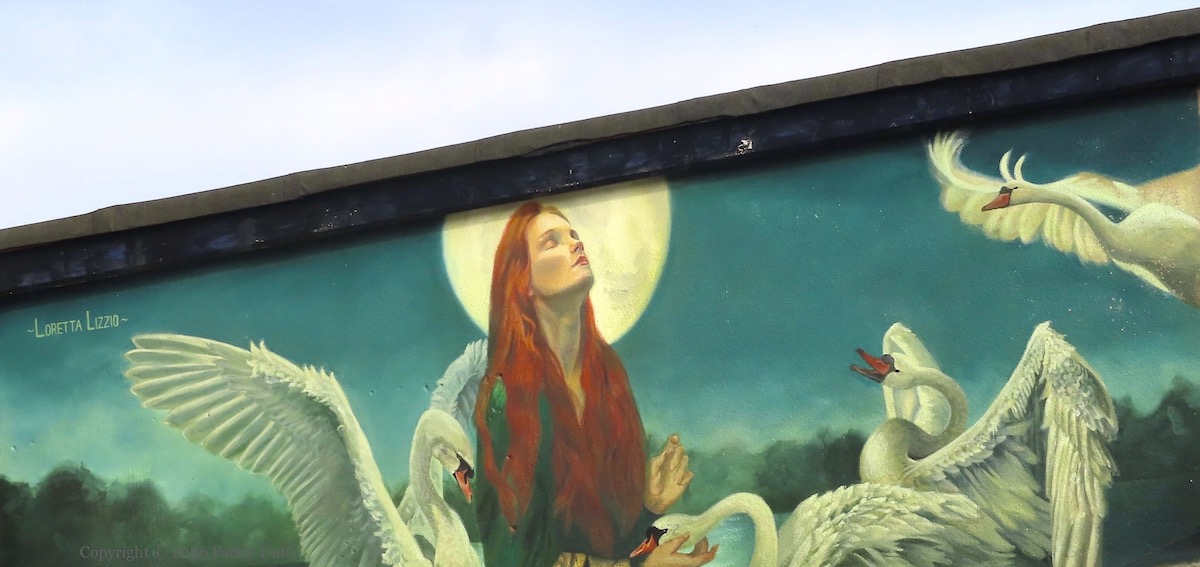
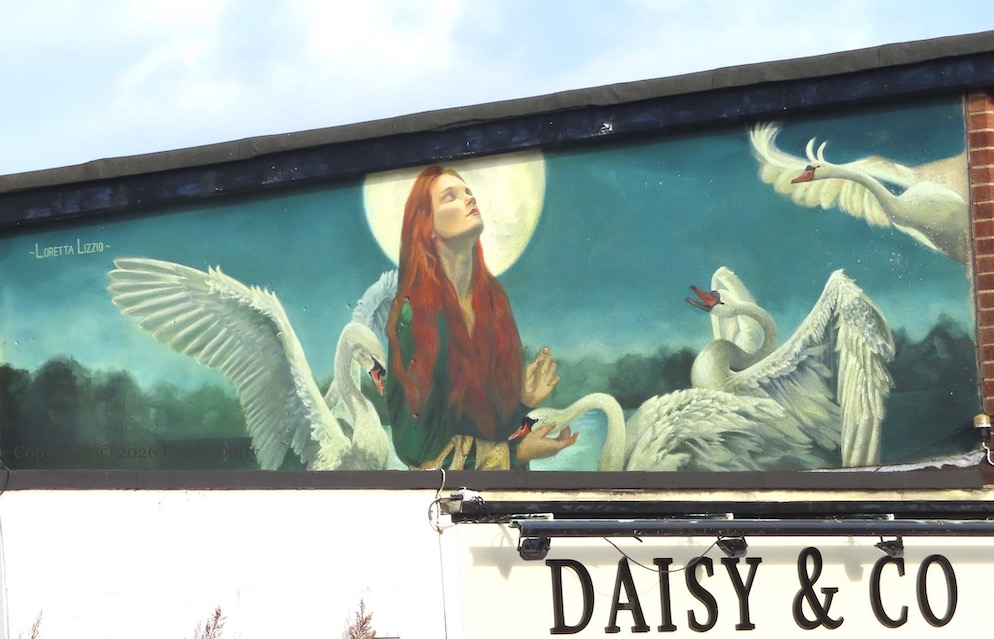
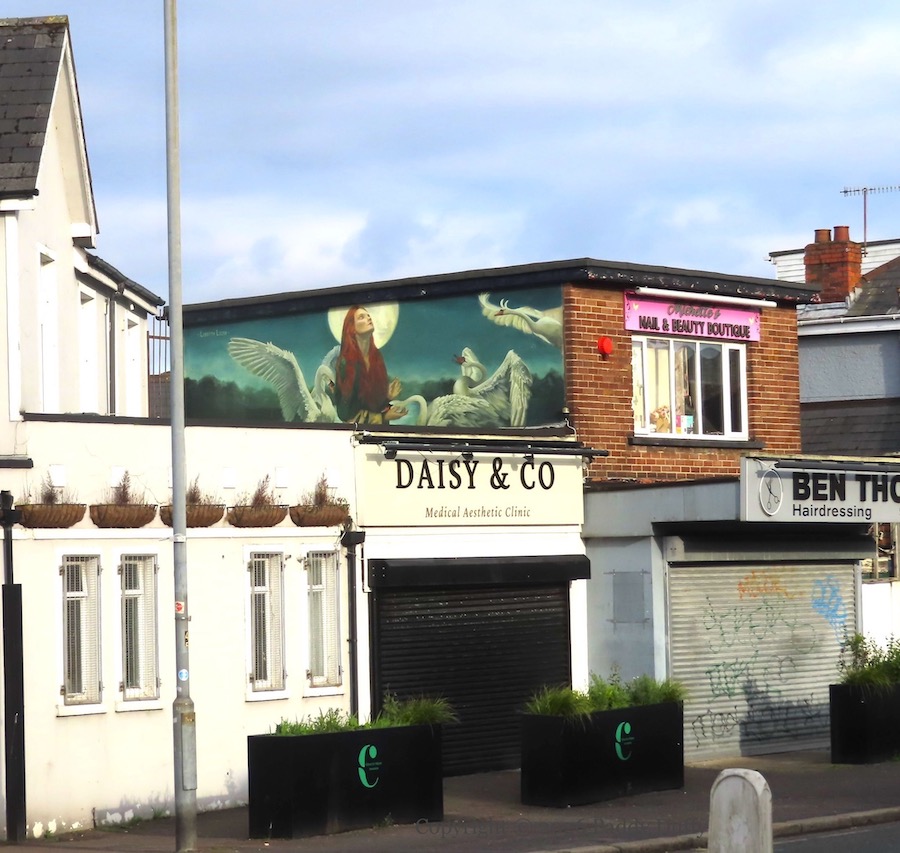
This scene from the story of Clann Lır (the Children Of Lear) appears to be the moment that Aoıfe casts a spell that turns her four step-children into swans on Loch Daırbhreach.
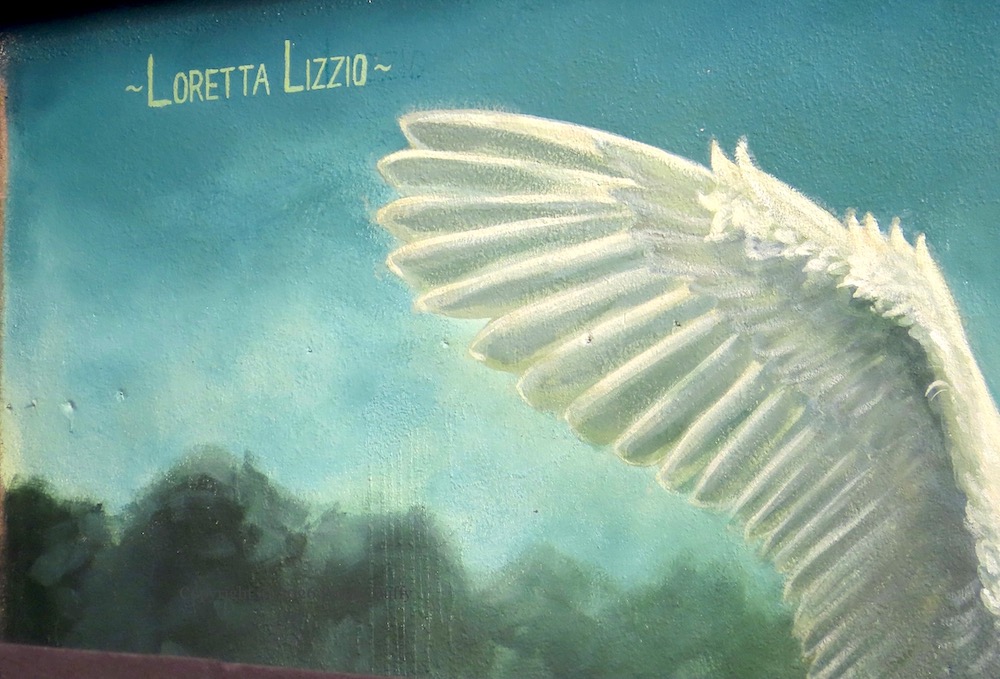
Painted by Loretta Lizzio (web) at the same time (2023-09) as her Dark Dreamer on the Oldpark Road, just below the first Cliftonville roundabout.
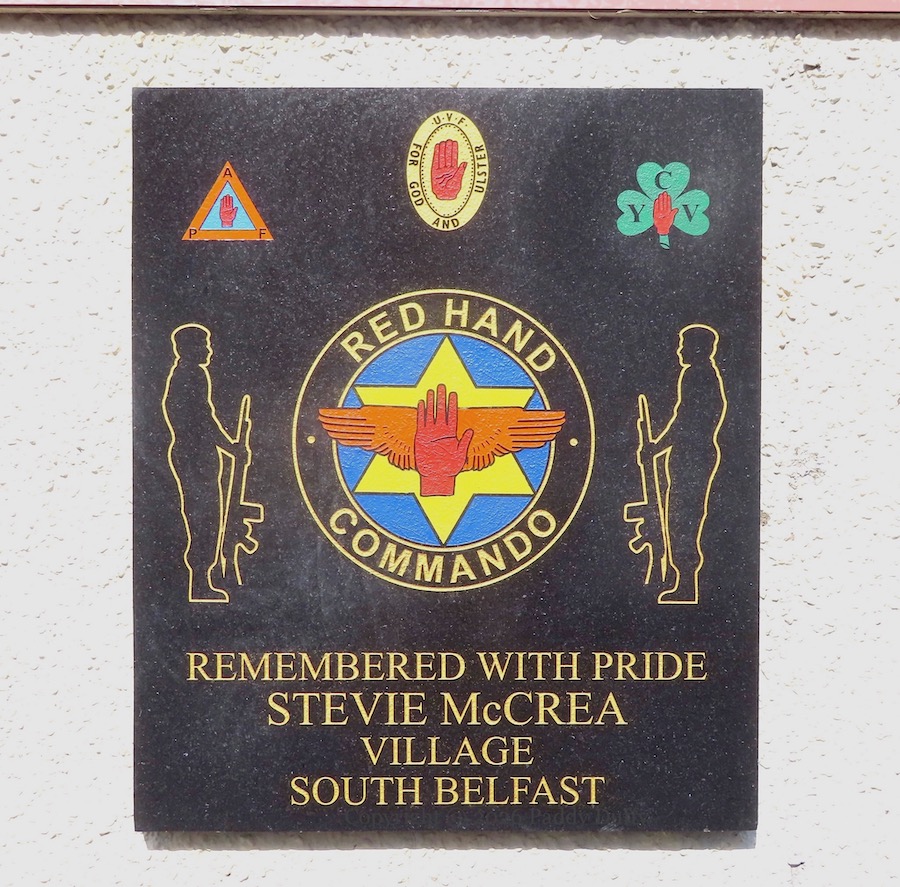
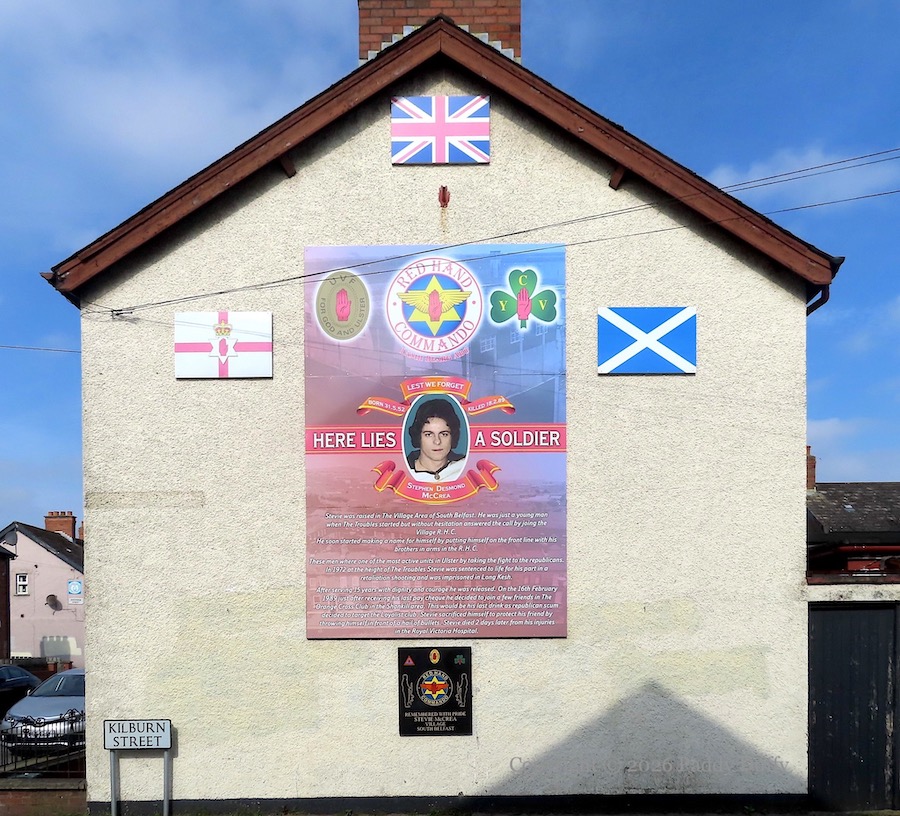
“Remembered with pride – Stevie McCrea, Village, south Belfast”. A plaque has been added below the large board describing Stevie McCrea’s life in Kilburn Street (seen in 2022’s Here Lies A Soldier, which includes the text on the board).
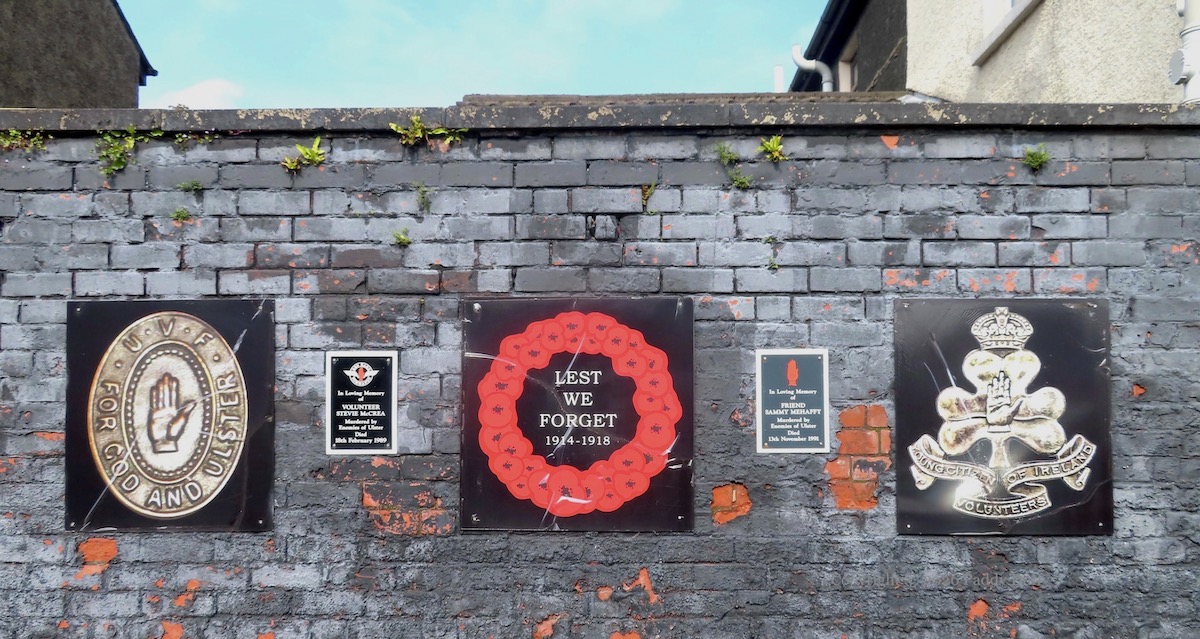
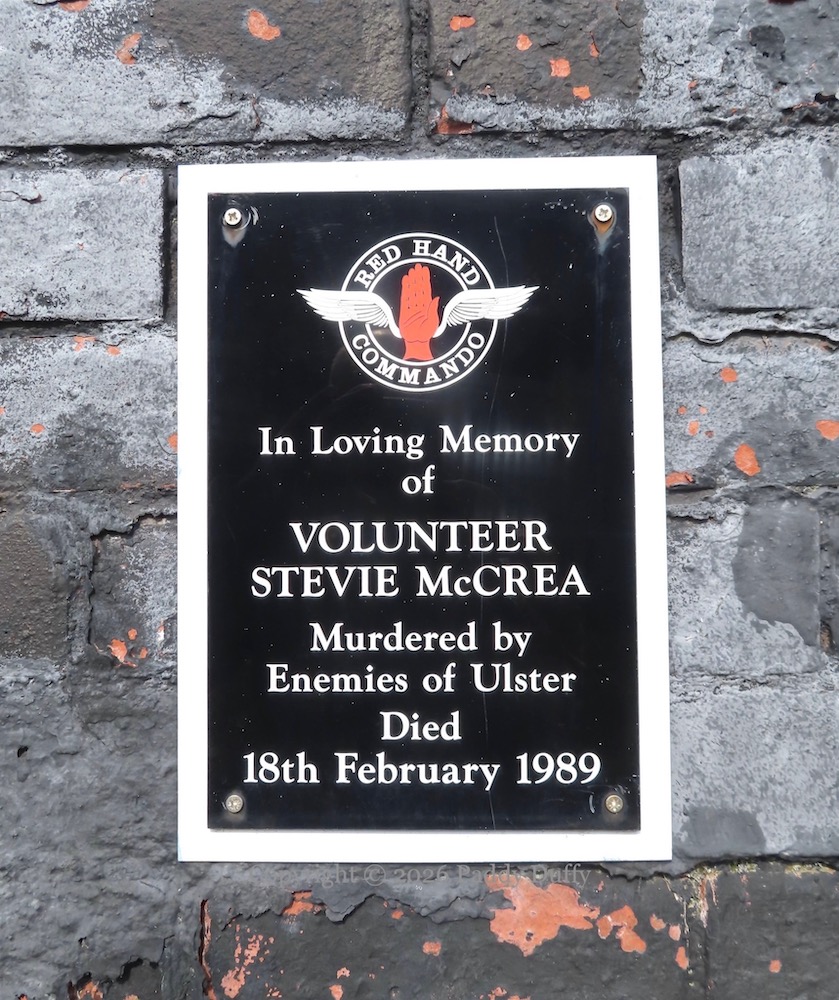
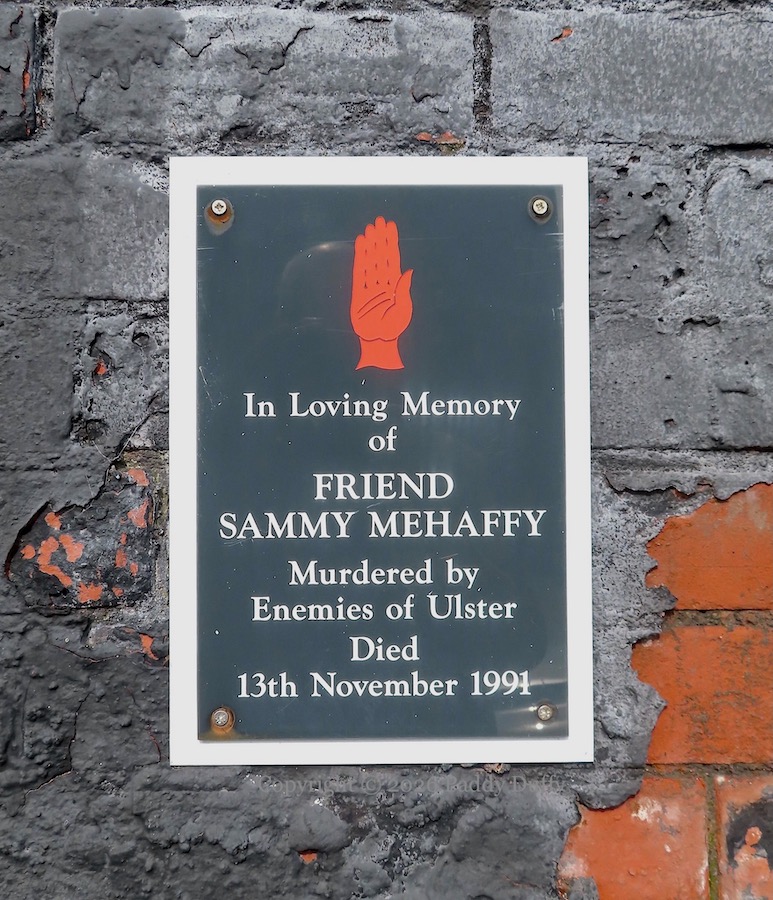
Also included below are close-ups of the plaques to McCrea and Sammy Mehaffy in Tavanagh Street, (seen together in Village UVF).
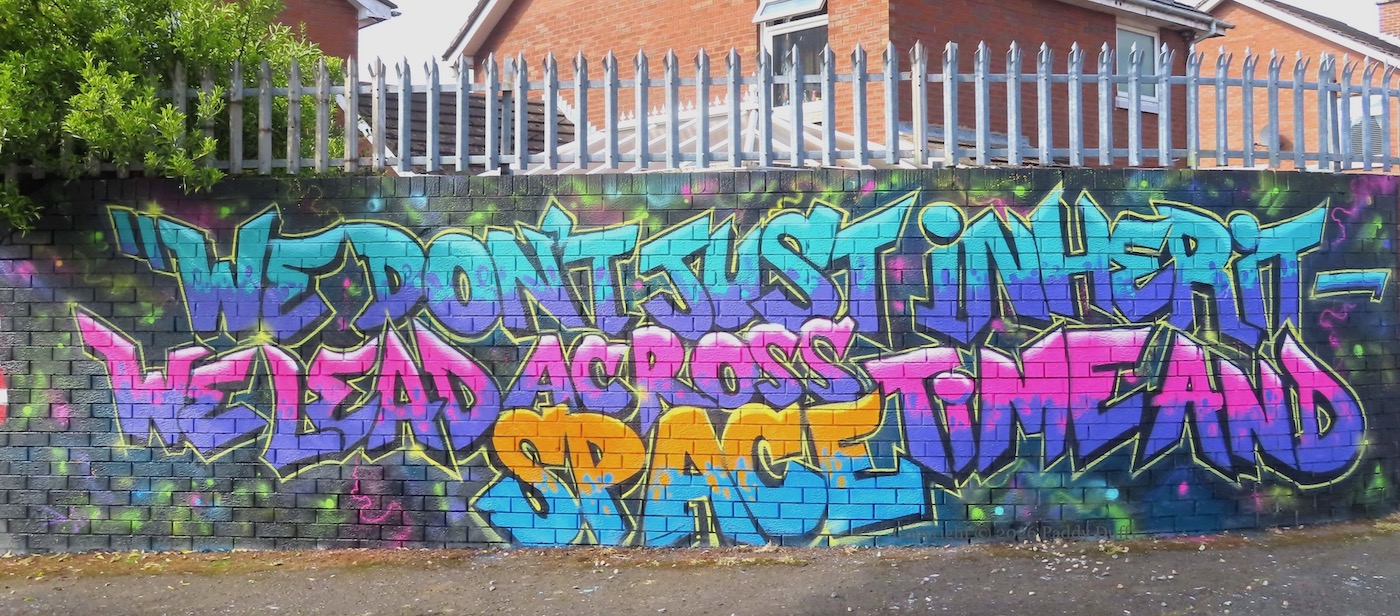
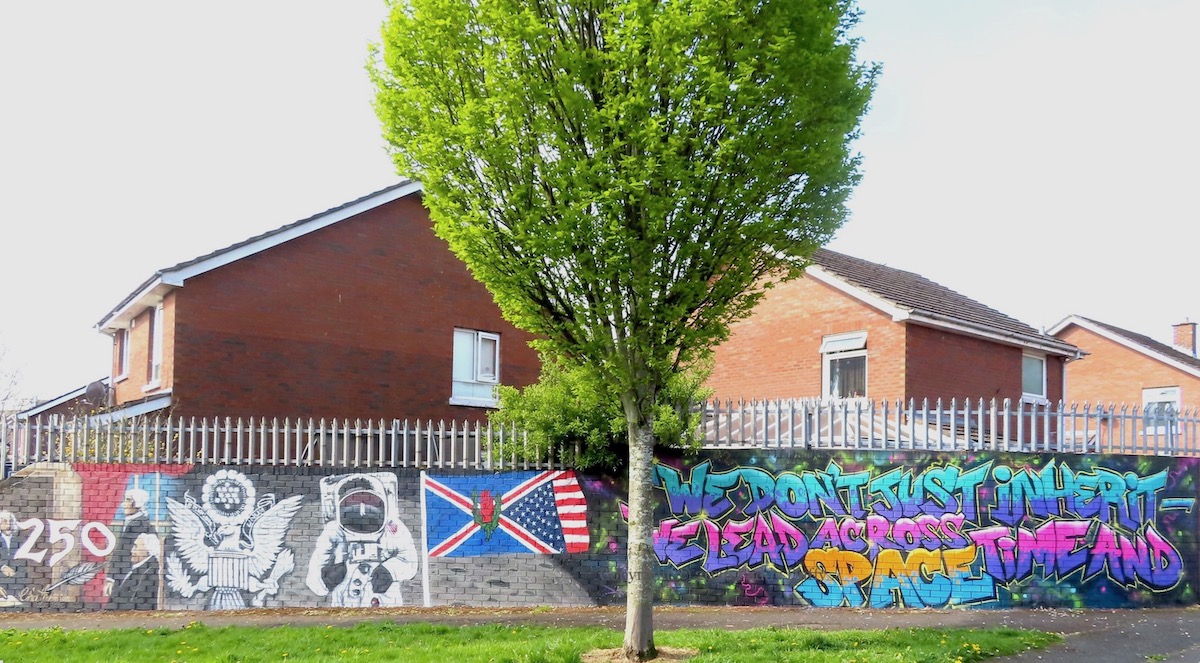
“We don’t just inherit, we lead across time and space.”
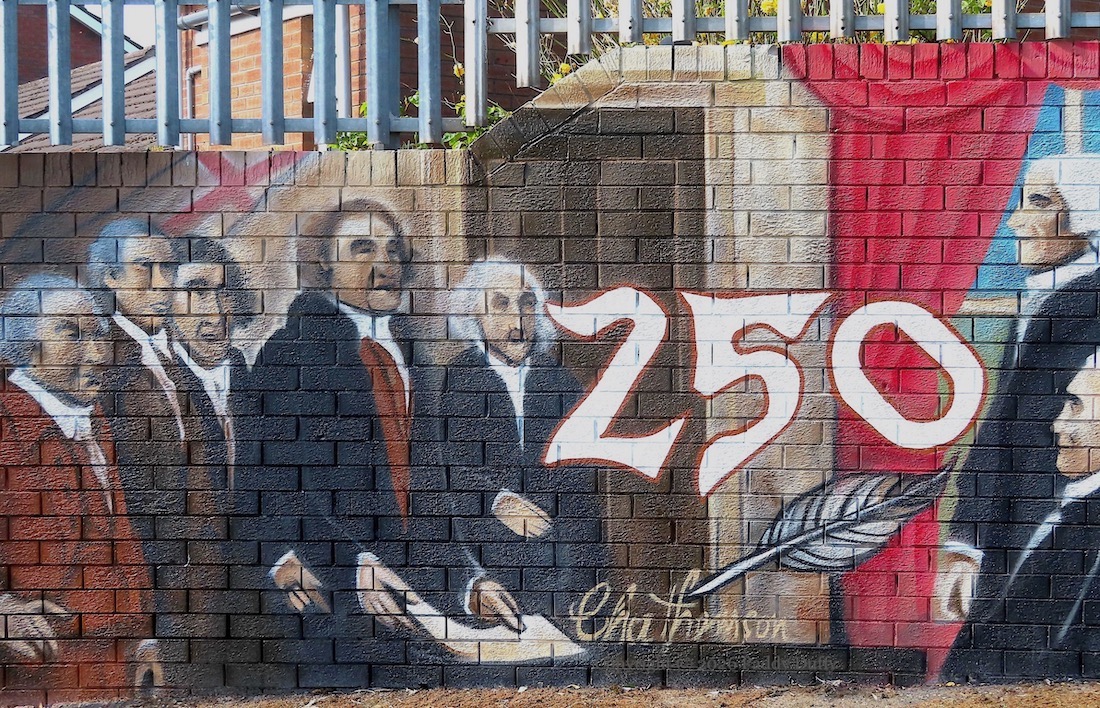
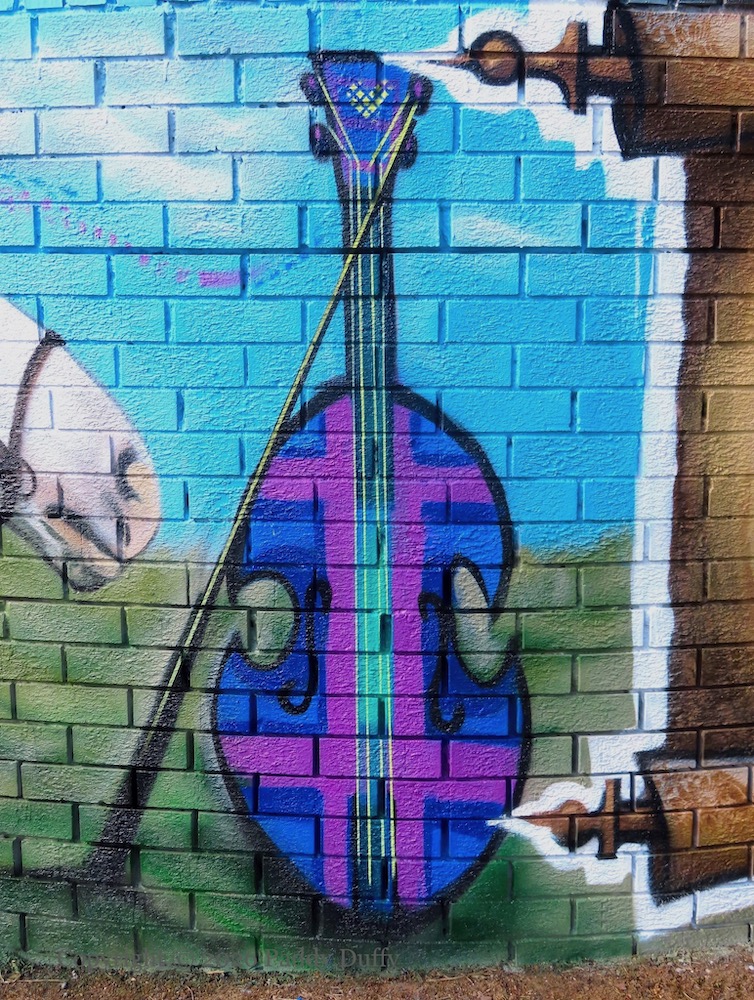
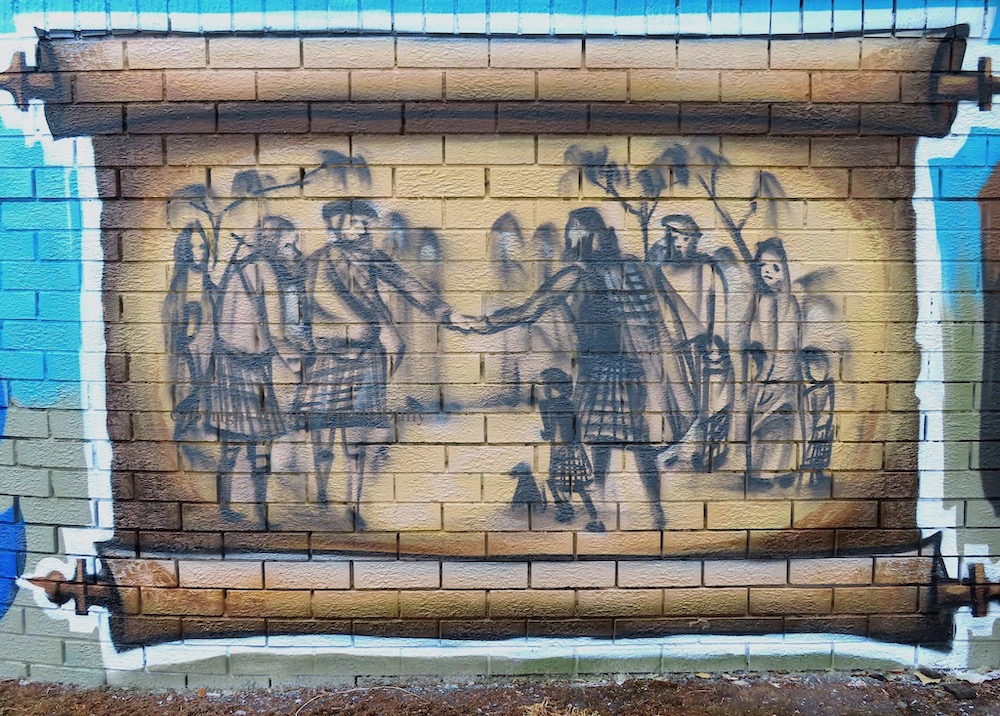
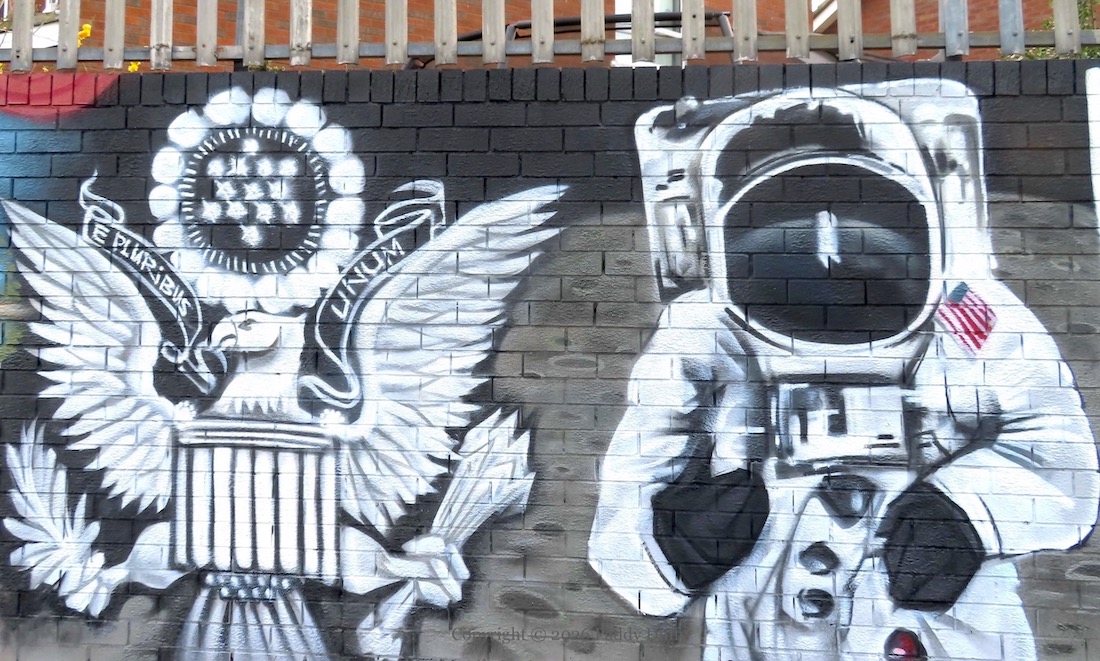
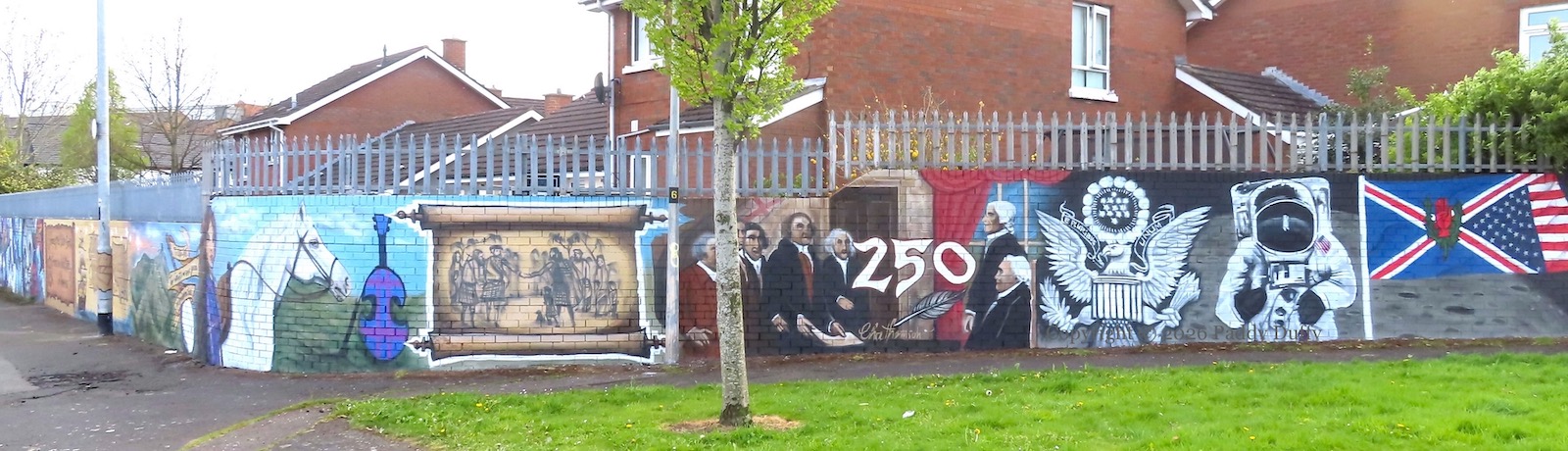
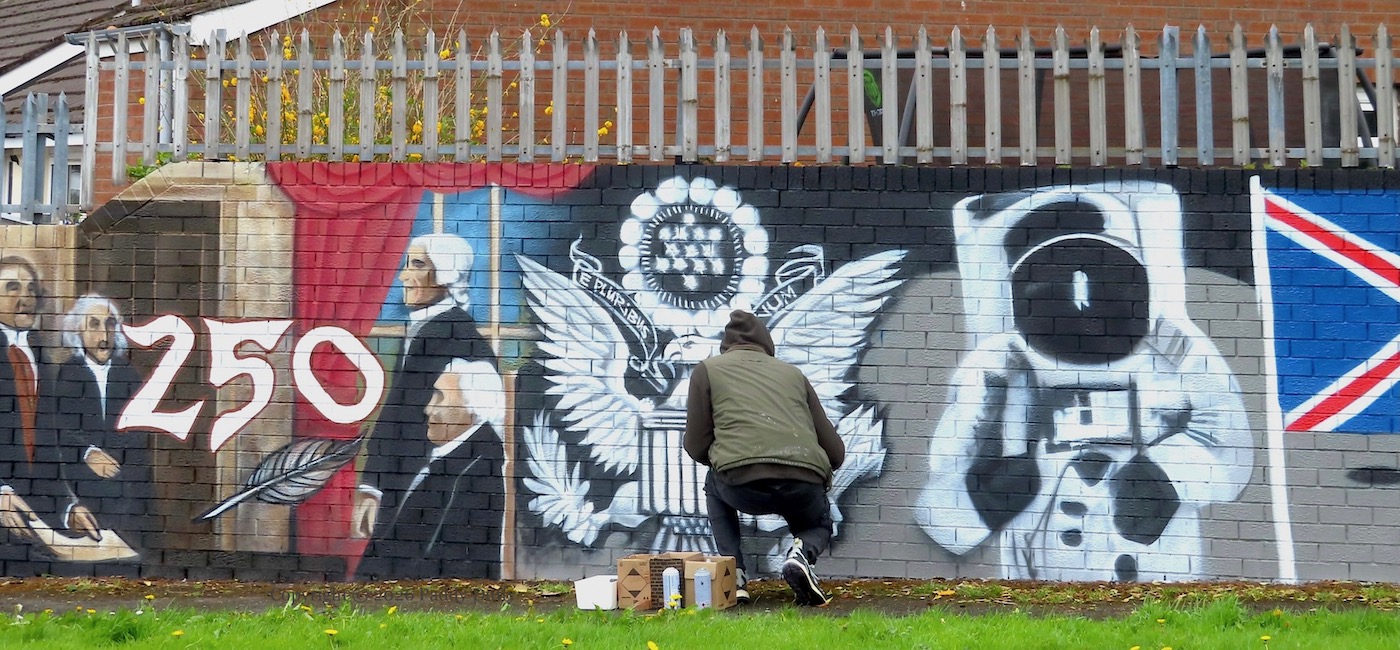
Here is the second half of the Ulster-Scots (Visual History) mural painted in North Howard Street and Fifth Street, continuing the work seen in Echoes Of The Ulster Scots, which took the Scotch-Irish from Ulster to the Appalachians.
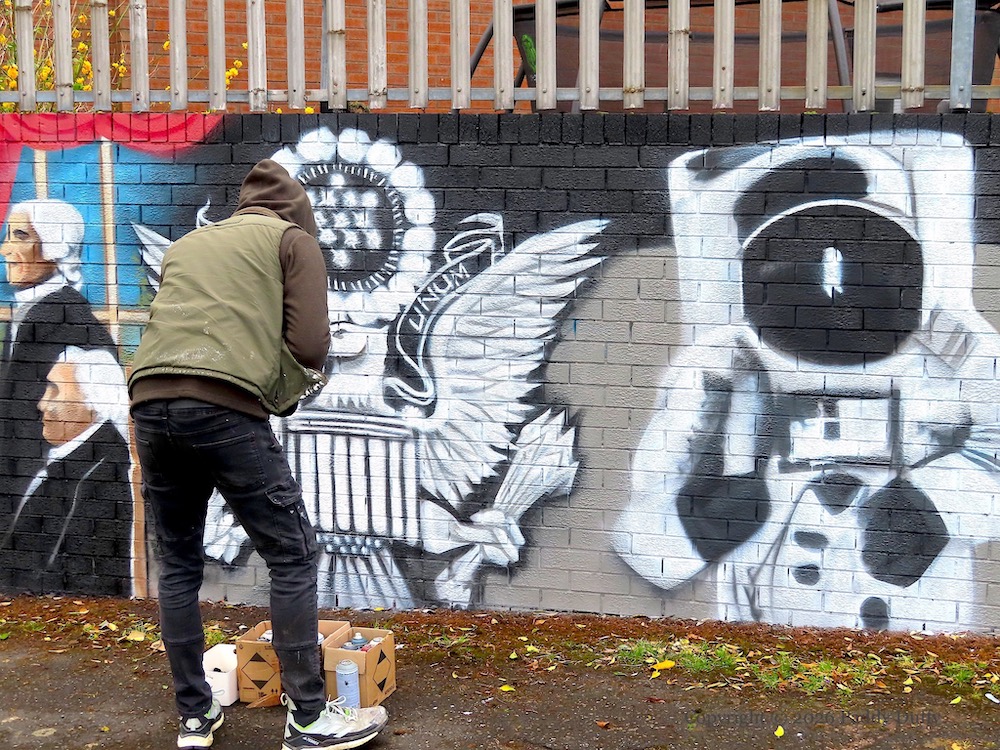
The new panels bring us from the founding of the United States in 1776 to the space age. The panel above is a rendition of John Trumbull’s painting ‘Declaration Of Independence’ (image at WP) along with (below the “250”) the signature of “Cha[rles] Thomson”, who was born in Maghera, served as Secretary of the Continental Congress, designed the Great Seal Of The United States (which appears next to the right), and signed the Declaration (Ulster Scots Agency pdf).
The person third from the left is Robert R. Livingston, one of the Committee Of Five that prepared the Declaration; he also negotiated the Louisiana Purchase in 1803 (Discover Ulster Scots).
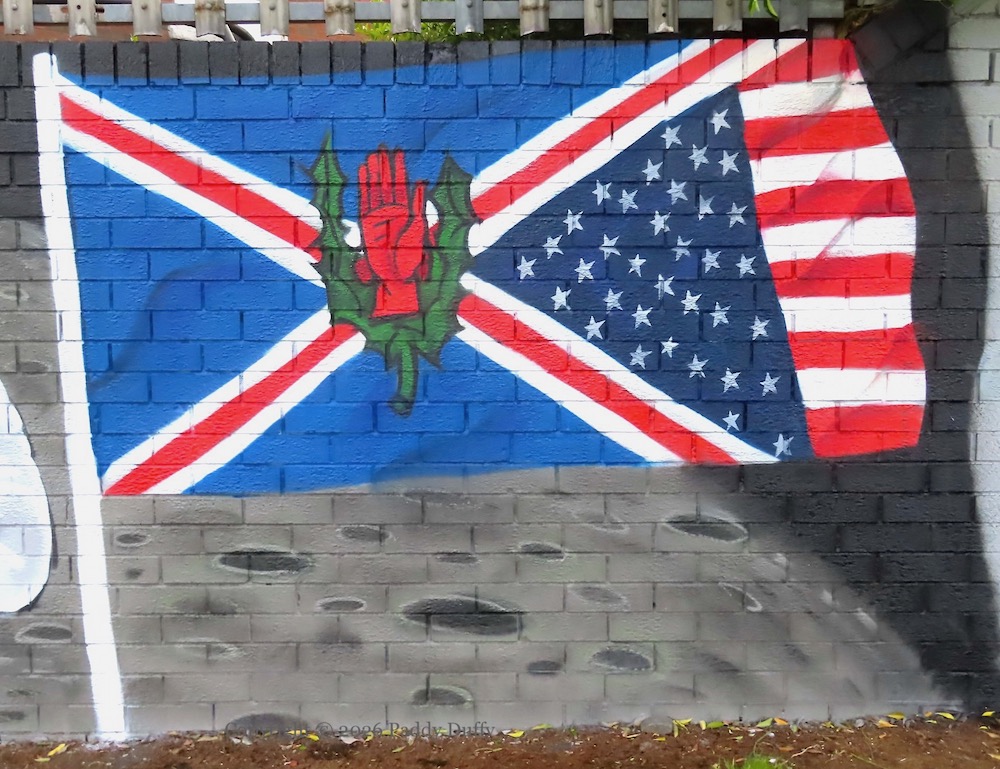
The flag is a combination of a proposed Ulster Scots flag and the Stars And Stripes of the United States.
North Howard Street/Fifth Street, west Belfast
April 19th: Artist DMC at work on the second half of the mural.
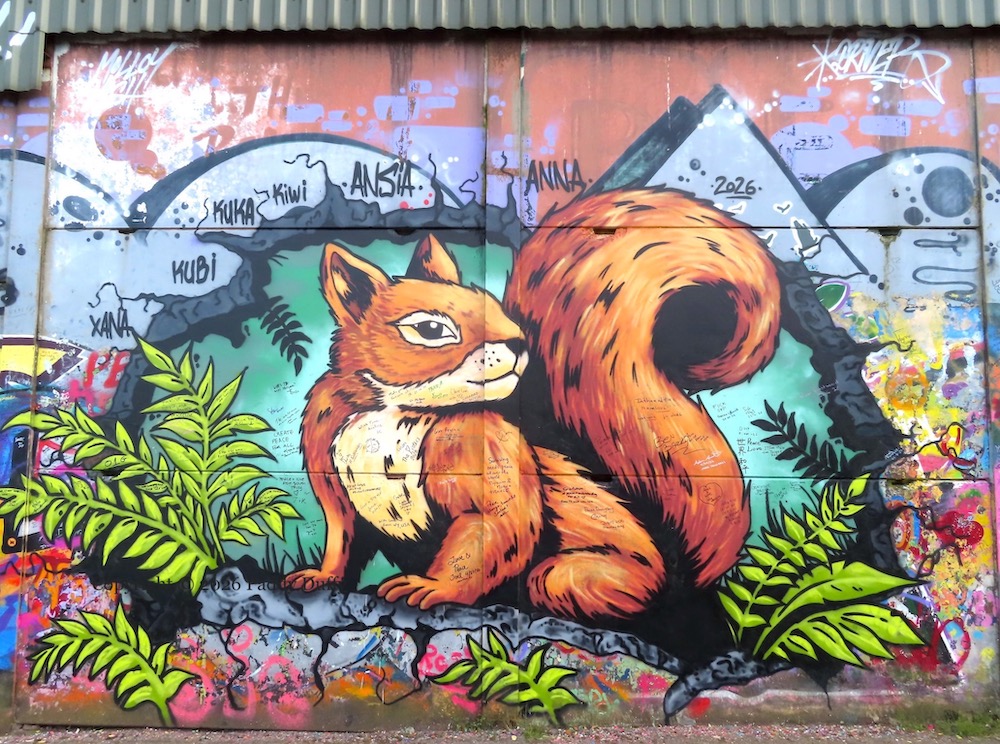
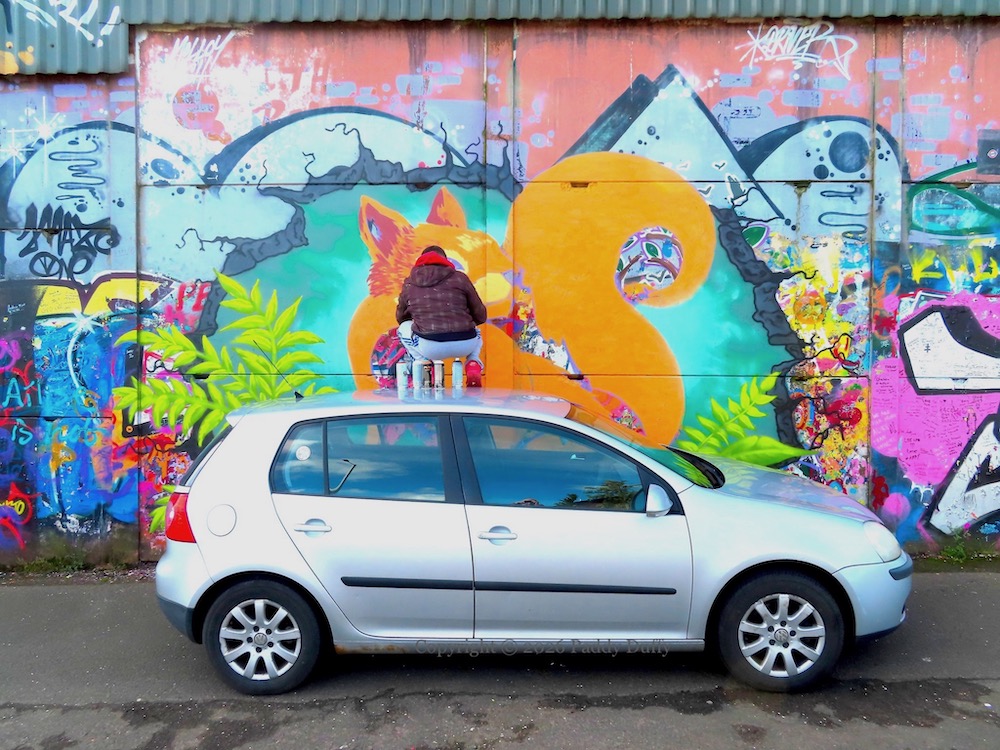
The red squirrel is in a battle for survival on the island with the grey squirrel, which out-breeds it and is unaffected by the pox which kills red squirrels (DAERA). This red squirrel has broken through the pyramids and stone-work painted by previous artists and has metaphorically burst through the west Belfast “peace” line, though in fact on the other side is the CNR area of Clonard.
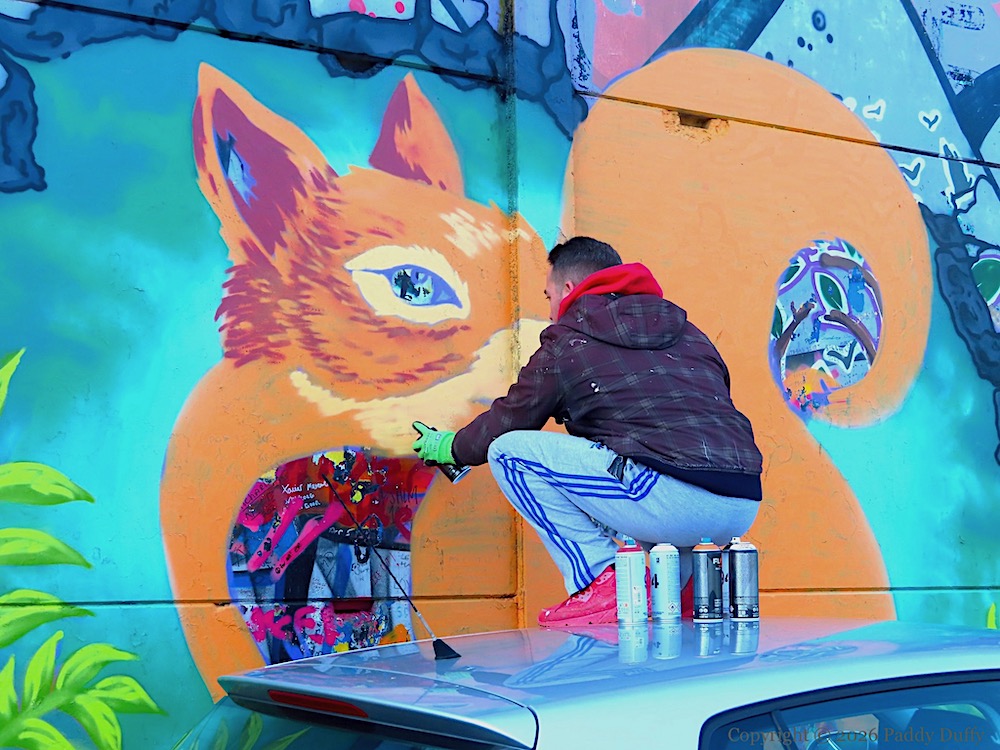
Below are two in-progress shots, of the artist flying low under the radar by painting early on a Sunday morning and using the transportation as a ladder.
Cupar Way section of the west Belfast “peace” line (Visual History)
 Paddy Duffy Collection