The Blots On The Page Are So Black

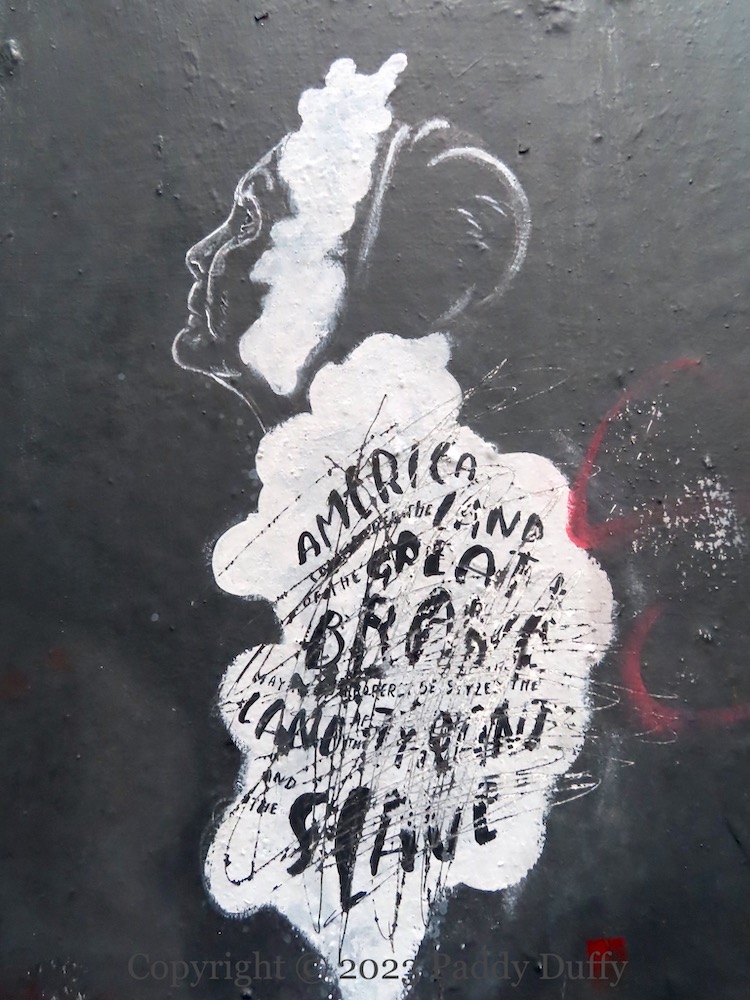
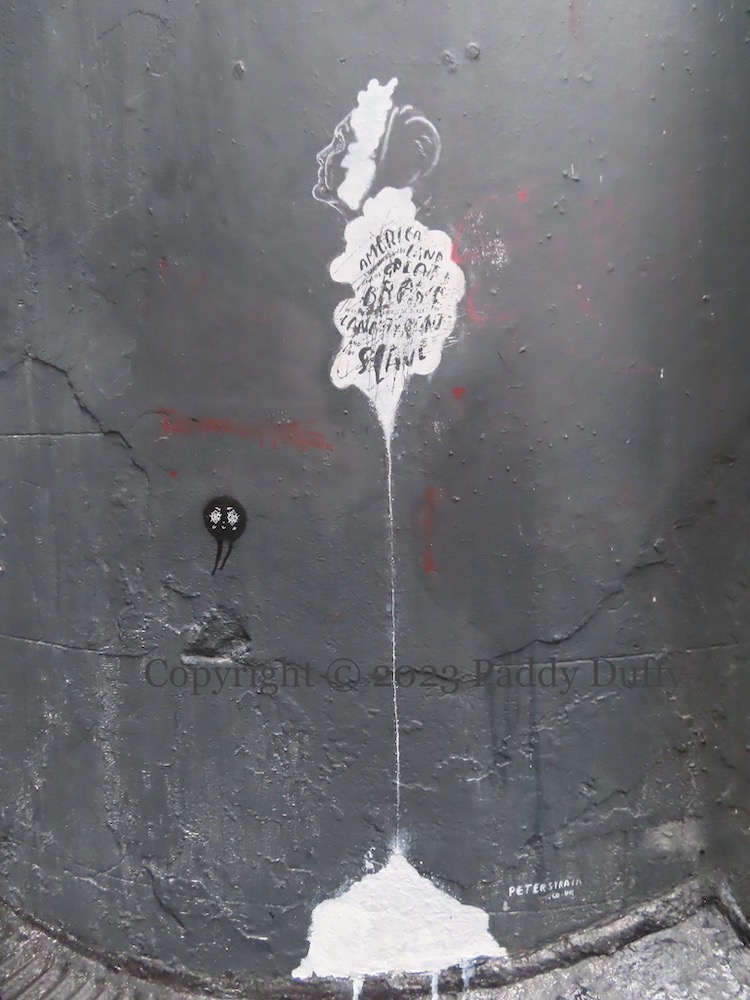
In a letter in 1859 to Dr Richard Madden, a fellow abolitionist (and historian of the United Irishmen), Mary Ann McCracken wrote, “America, considered the land of the great, the brave, may more properly be styled the land of the tyrant and the Slave.” (McNeill)

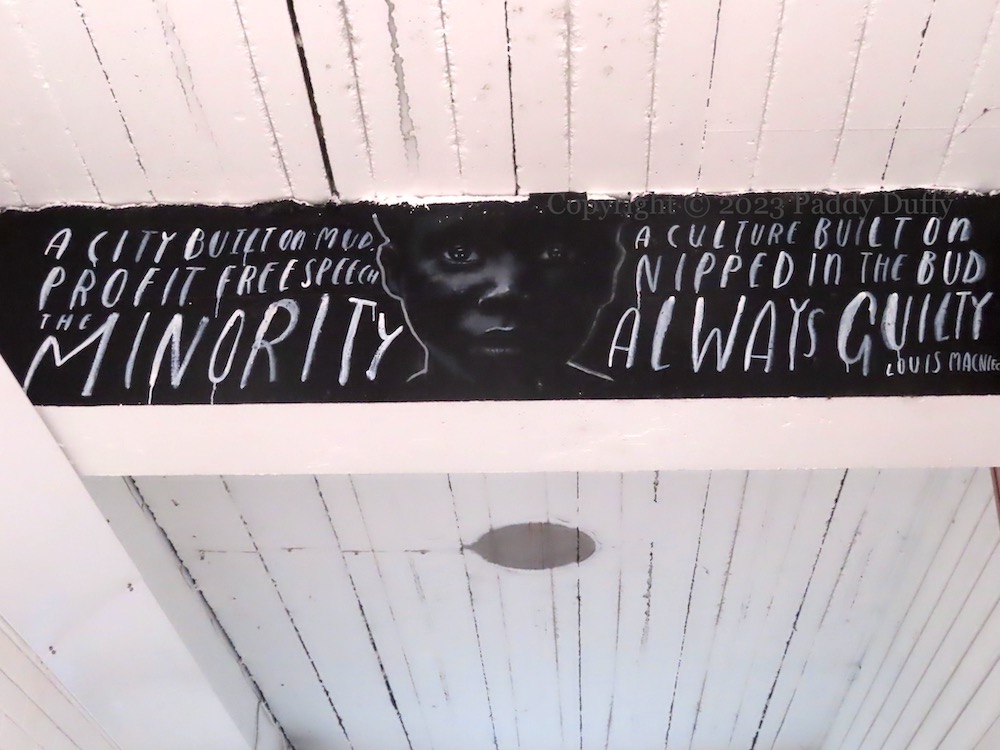
Also given an abolitionist bent are some lines from section 16 of Louis MacNeice’s Autumn Journal, describing Belfast as “A city built on mud; / A culture built upon profit; / Free speech nipped in the bud, / The minority always guilty. [Why should I want to go back / To you, Ireland, my Ireland? / The blots on the page are so black / They cannot be covered with shamrock. / I hate your grandiose airs / Your sob-stuff, your laugh and your swagger, / Your assumption that everyone cares / Who is the king of your castle. / Castles are out of date, / The tide flows round the children’s sandy-fancy; / Put up what flag you like, it’s too late / To save your soul with bunting.]

The illustrations are by Peter Strain (web) in Joy’s Entry and Wilson’s Court. See also by Strain Handsome, Easy-Going, And Utterly Untrustworthy and Trust Women.

On McCracken, see The World Affords No Enjoyment Equal To That Of Promoting The Happiness Of Others.

On abolitionism in Belfast, see Olaudah Equiano and If There Is No Struggle, There Is No Progress.

See also the Visual History page on The Belfast Entries.
Click image to enlarge
Copyright © 2023 Paddy Duffy
T01711 T01710 T01838
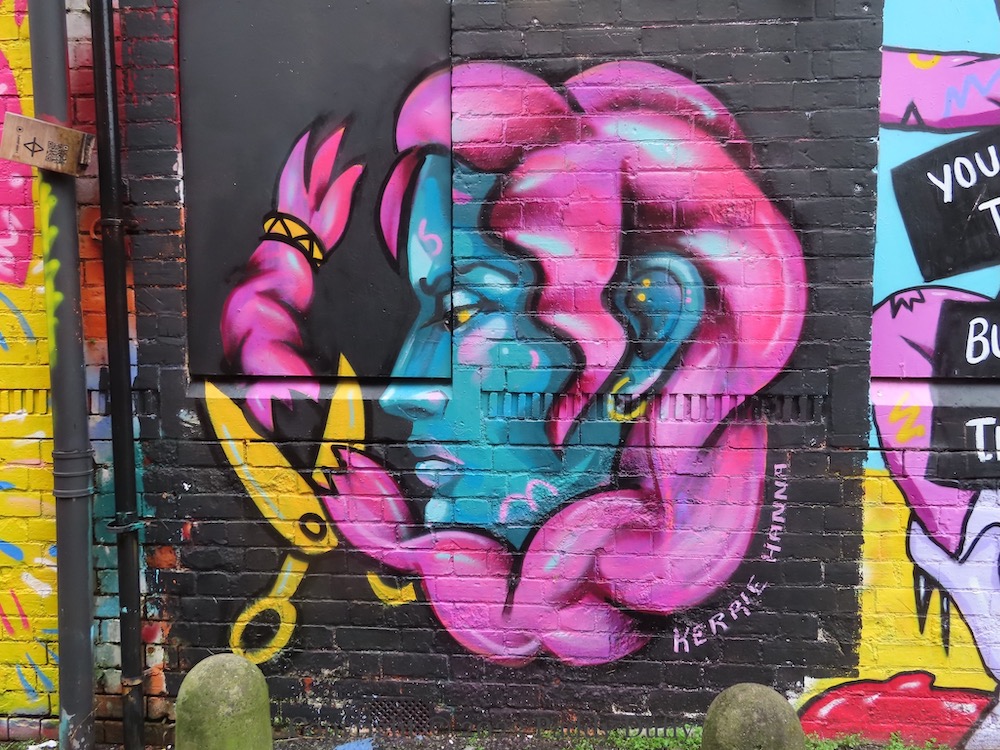
The Veil Wears Thin

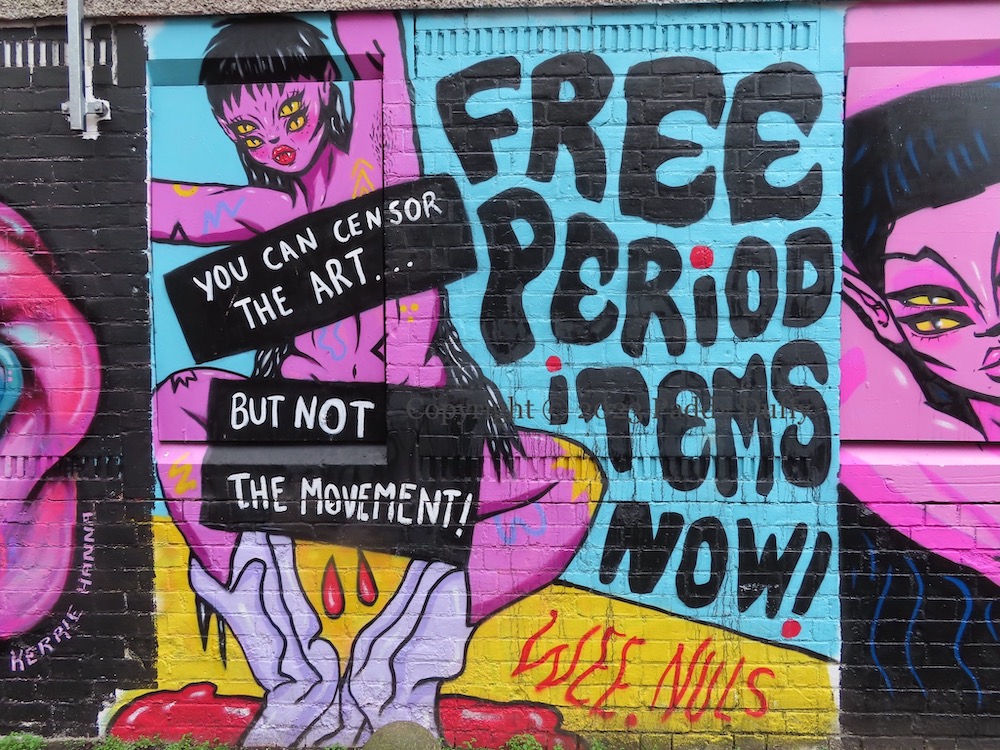
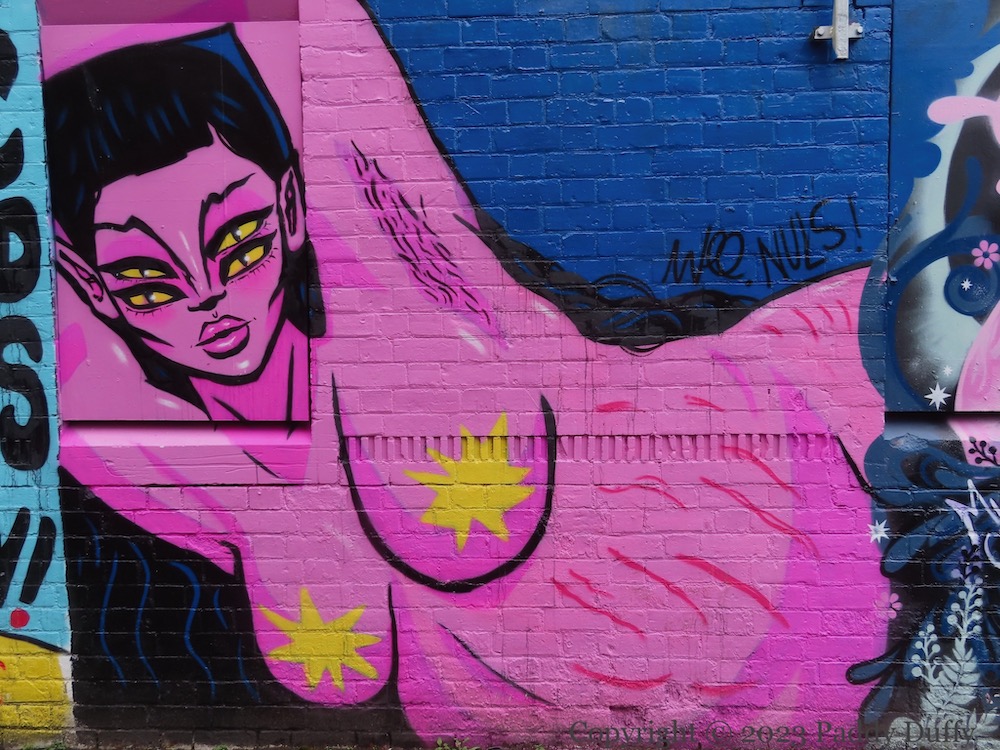
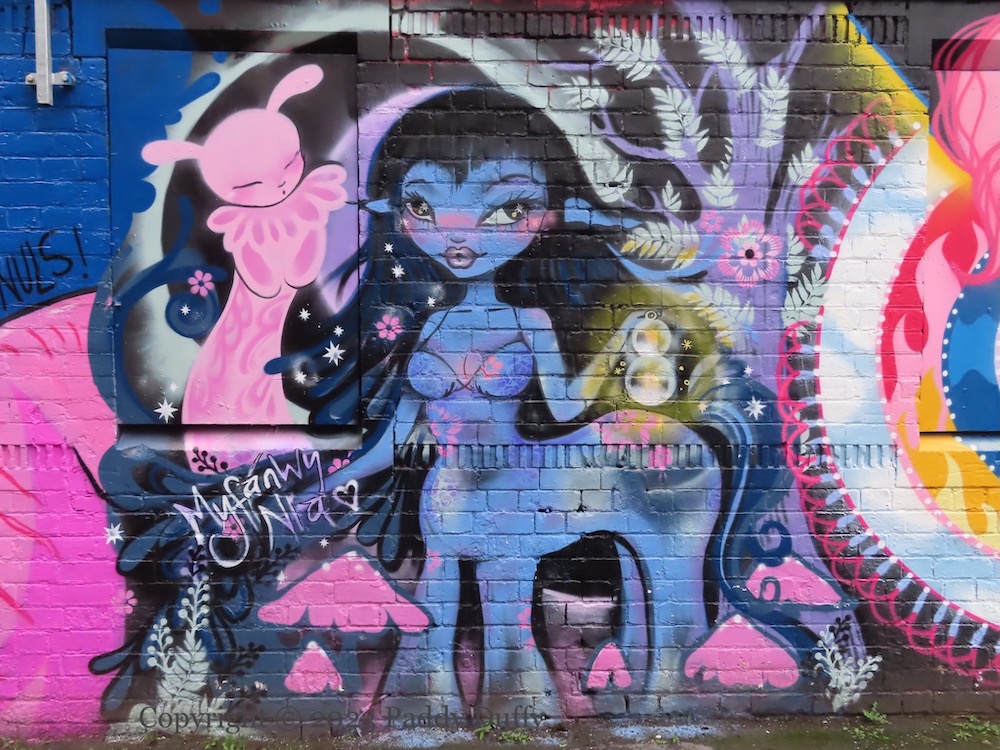
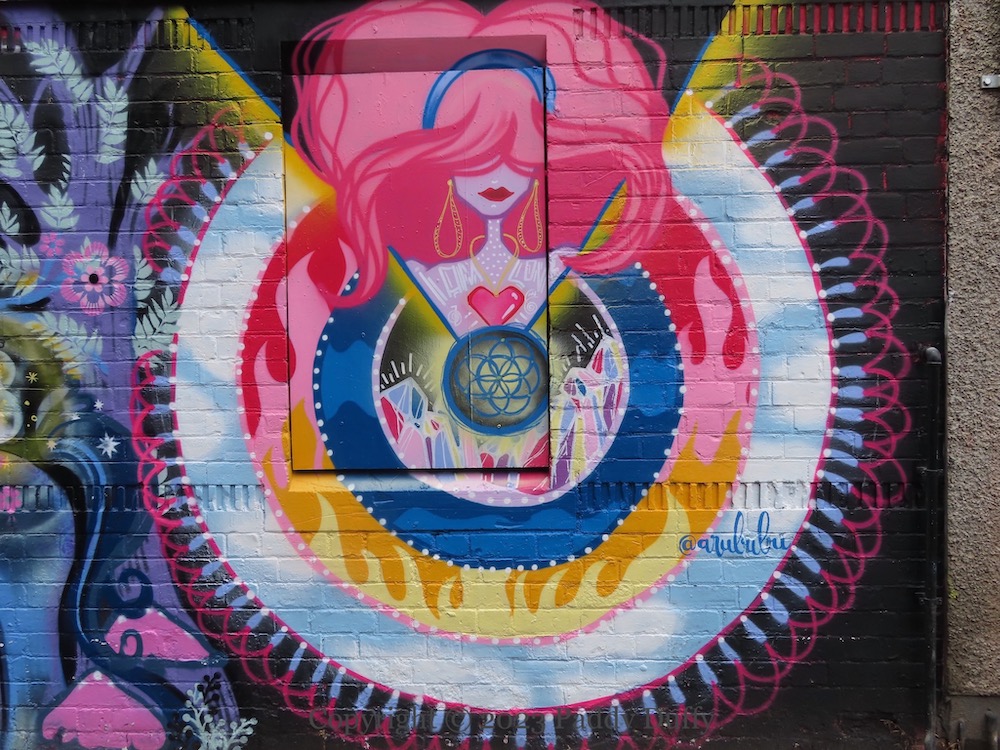
The theme of the all-women jam at ArtCetera (formerly the Red Barn Gallery) (@artceterastudio43) was ‘the veil wears thin’, suggestive of liminal states and places that samhaın brings to mind (HMC). Kerrie Hanna’s (@kerriehanna) interpretation of the theme was to support the women (in Iran and elsewhere) who were cutting their hair as a form of protest at the death of Mahsa Amini while in the custordy of the “Guidance Patrol” or “Morality Police”, allegedly for wearing her hijab improperly (CNN | EuroNews | WP).

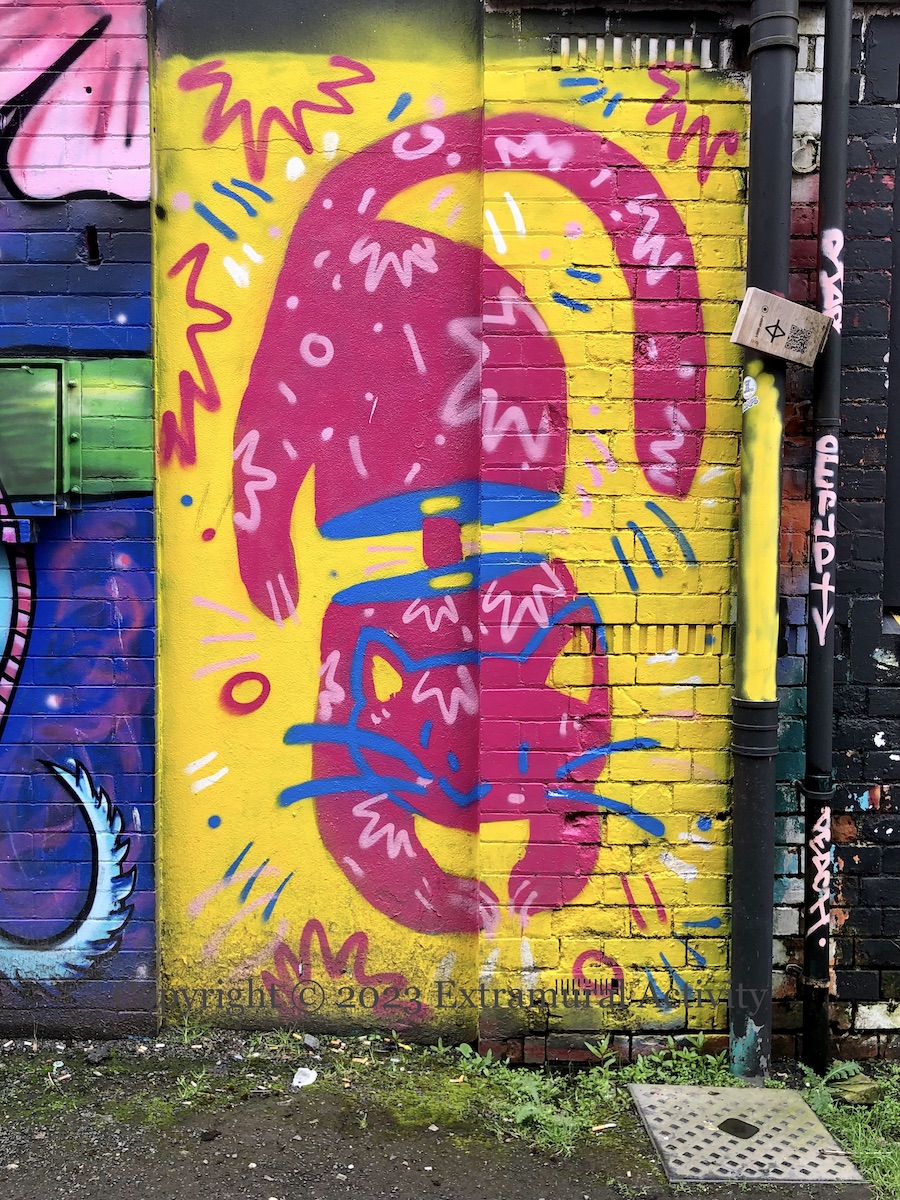
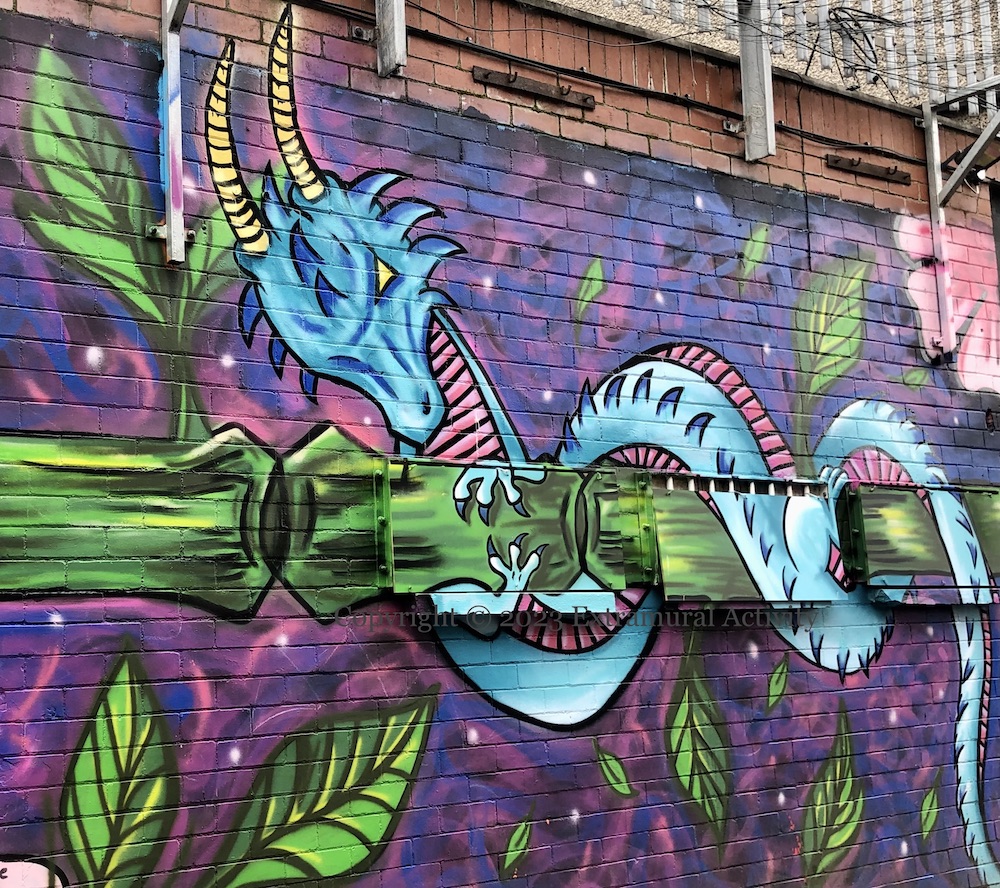
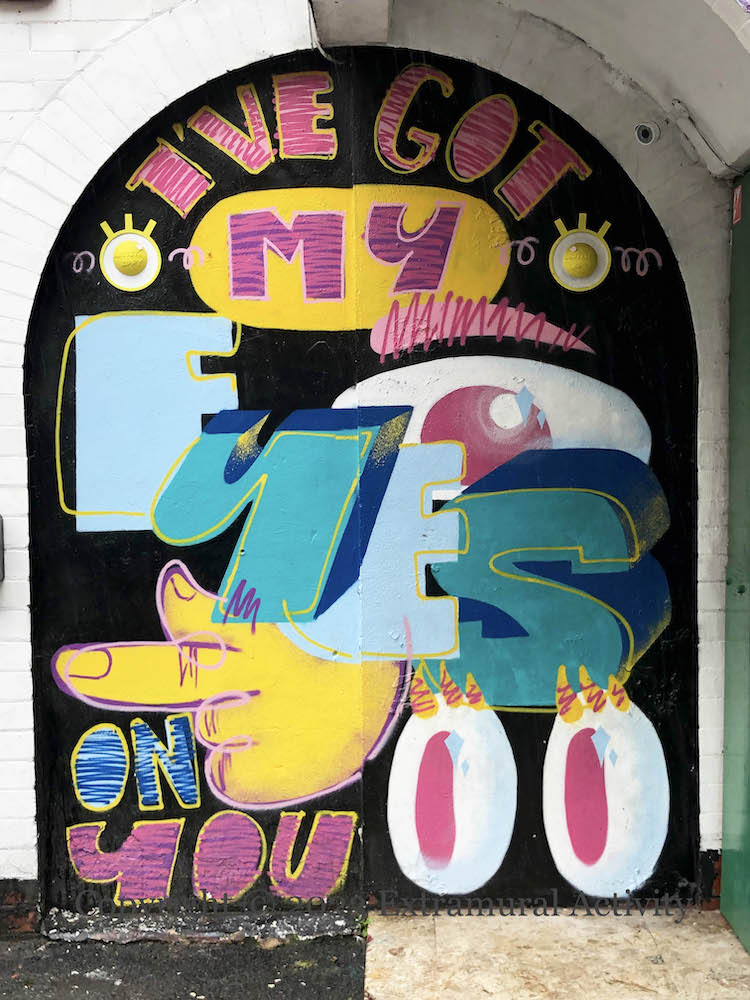
Also shown in today’s post are the works by Wee Nuls (web) – Free Period Items and one of her trademark “gremlins” inspired by being 28 weeks pregnant, Harriet Myfanwy (@myfanwynia) – a centaur, Arú Roncada (@arububu) – a representation of the five elements, Ariana Lupascu (@contemplatingthestars) – a pink car, HMC (web) – a ?dragon? on a ?bamboo stalk? and Zippy’s (web) I’ve Got My Eyes On You.

The ‘free period items’ piece – and the controversy surrounding its original location – was described previously in About Bloody Time.

See also: the Women’s Work jam for International Women’s Day 2023, in College Court: Women’s Work | We Built This.

Rosemary Street, Belfast. With support from @Outlines Art Supplies.

Click image to enlarge
Copyright © 2023 Paddy Duffy
T01723 T01722 [T01721] T01724 T01725 T01726
X12239 X12240 X12978 courtesy of Seosamh Mac Coılle

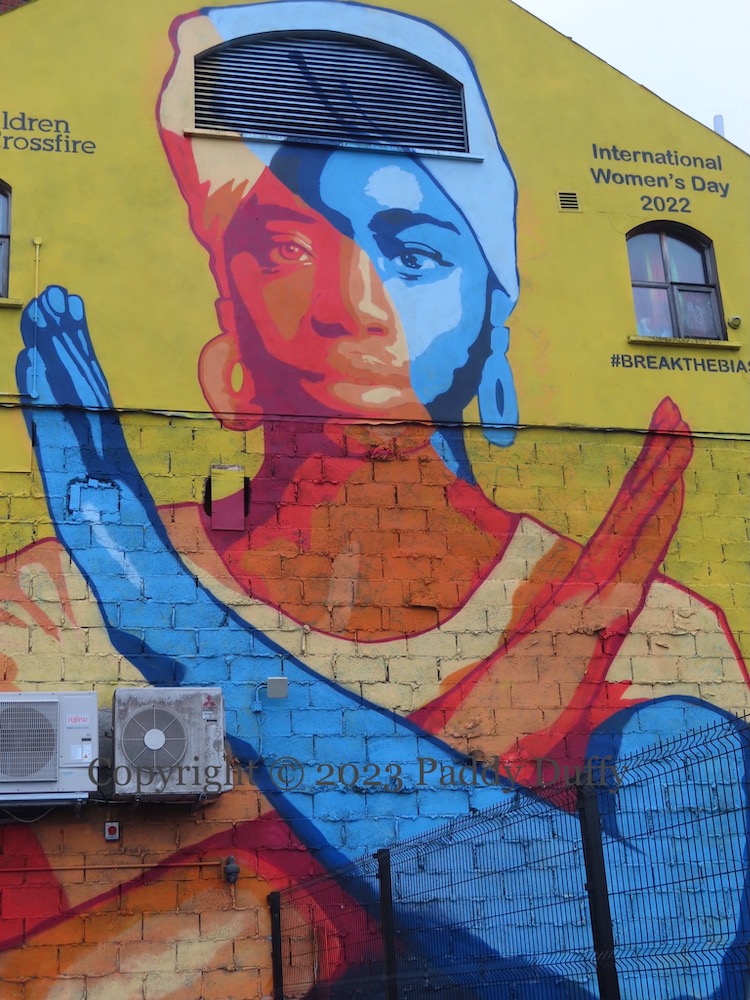
#BreakTheBias

Crossed arms are the symbol of the #BreakTheBias campaign, which is the theme of this year’s International Women’s day (IWD) and people all around the world are striking the pose on social media to show their support (e.g. tw) including this large mural in Belfast, which has been painted off Corporation Street.

By Visual Waste (web | ig), with support from Children In Crossfire (web).

Tomb Street, Belfast

Click image to enlarge
Copyright © 2023 Paddy Duffy
T01748 [T01749]

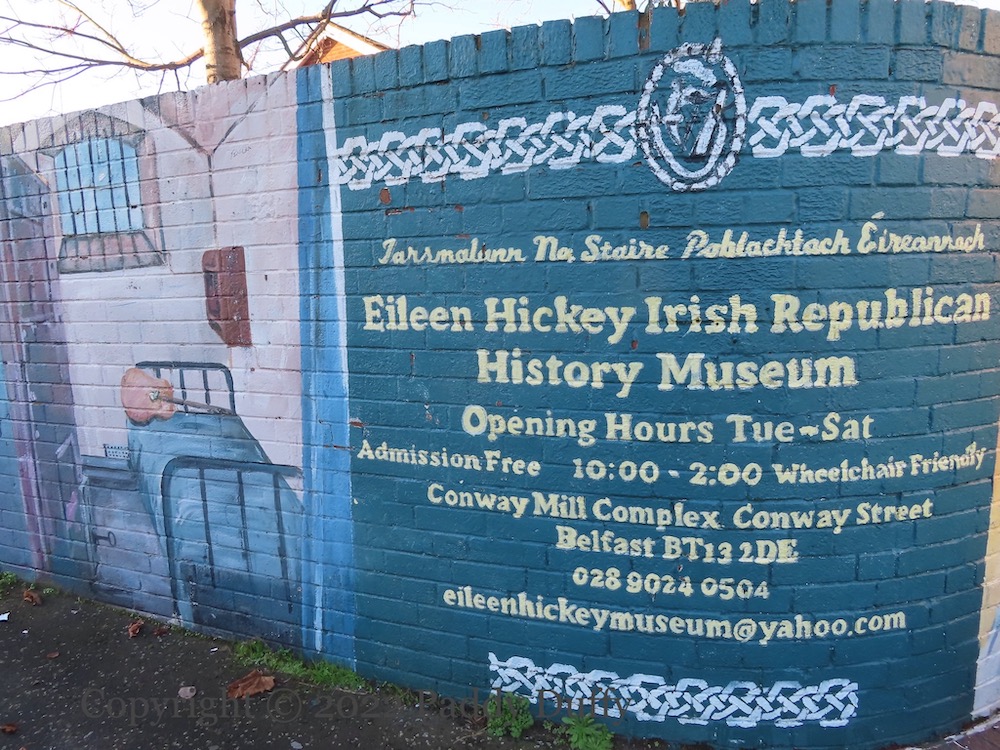
The Eileen Hickey Republican Museum

The ‘Eileen Hickey Irish Republican History Museum‘ — which is across the street from this mural and behind the Conway Mill — is named for Eileen Hickey, a Provisional IRA member who served time in Armagh prison; she died in 2006, one year before the opening of the museum (obituary at An Phoblacht).

Next to the opening hours is an image of a prison cell in the Armagh women’s prison. The museum itself contains a cell door and a bed from the prison.

Conway Street, west Belfast

Click image to enlarge
Copyright © 2022 Paddy Duffy
T01618 T01619

The Corrs

Nell (l) and Elizabeth (r) Corr from 107 Ormeau Road joined Cumann Na mBan in 1915 and travelled to Dublin in 1916 (with Nora Connolly, Ina Connolly, Bridie Farrell, Lizie Allen, Kathleen Murphy, and another girl called O’Neill (Treason Felony)) to serve as messengers in the preparations for April’s Easter Rising. They were in Liberty Hall (shown in the detail above) on the morning of the rising before heading north. Brother George, on the other hand, died at the Somme as a soldier in the Australian infantry, while another brother, Charles, fought in WWI with the Canadian Expeditionary Force. They are pictured on the left-hand side of the mural. (BBC | BBC video)

Elizabeth’s account of Easter Sunday and Monday is available at the Bureau Of Military History.

Essex Grove, south Belfast.

Click image to enlarge
Copyright © 2022 Paddy Duffy
T01495 [T01494]

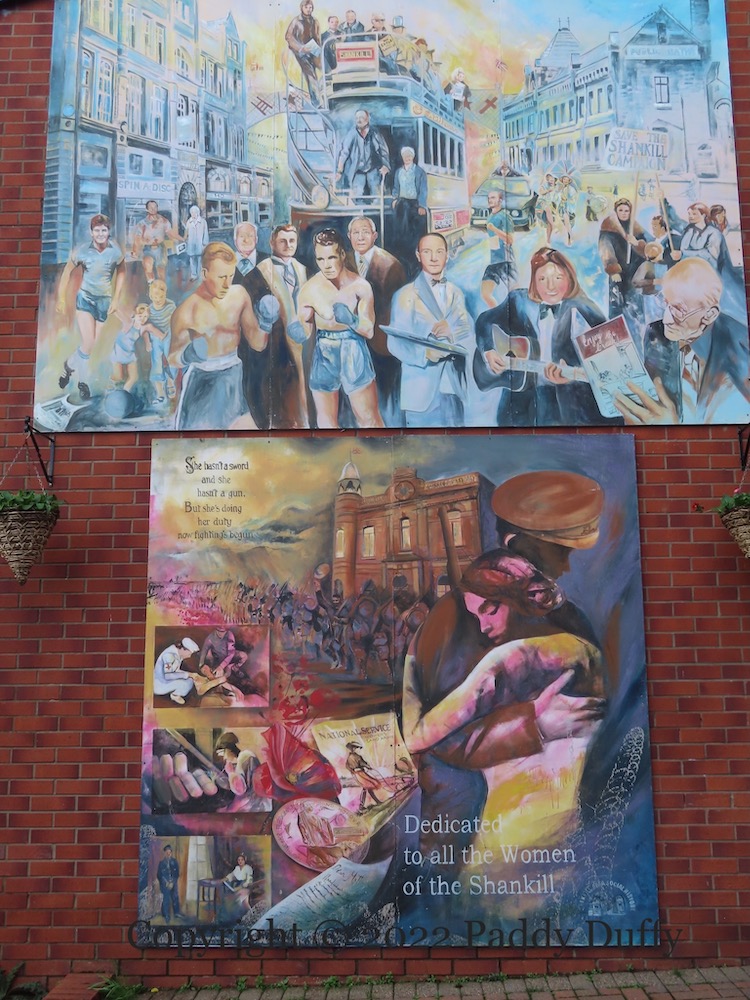
Save The Shankill

Here are two boards outside the Ulster Rangers Supporters Club (Fb) on the Shankill Road.

The upper one features a tram going under an Orange arch between the public baths on one side an Spin-A-Disc records on the other, surrounded by notable figures from the Shankill area.

Many thanks to Johnny Dougan of Shankill Area Social History (Fb) for the information below! Please e-mail or add a comment with additions or corrections.

Front, from left to right: Manchester United and Northern Ireland Soccer player Norman Whiteside (WP) and behind him boxer Davy Larmour and community worker Saidie Patterson (see WRDA), boxer Sammy (Cisco) Cosgrove, Senator Charlie McCullough (WP), Tommy Henderson, boxer Jimmy Warnock (original photograph here), Hugh Smyth (see previously Third Class Citizens), artist William Conor (see previously Conor’s Corner, Jack Henning (running), musician Belter Bell, writer Albert Haslett (Northern Visions interview).

Atop the tram: on the left is Jackie Redpath of the Save the Shankill Campaign (note other members of the group with placard on right; Northern Visions has a documentary about the Save The Shankill campaign) and Jack Higgins holding his book The Eagle Has Landed (WP). Up there too is Miss Sands, the music teacher in the Girls Model School, and historian Bobby Foster (Northern Visions interview). On the stairs are May Blood MBE and above her D.I. Nixon.

The lower board highlights the roles played by women during WWI as nurses and welders and in the Land Army. “She hasn’t a sword and she hasn’t a gun. But she’s doing her duty now fighting’s begun.” The forces are shown gathered outside the West Belfast Orange Hall, on the Shankill at Brookmount Street.

Click image to enlarge
Copyright © 2022 Paddy Duffy
T01441 [T01440]

Mothers, Sisters, Daughters

Érıu/Éıre of the Tuatha Dé Danann, queen of Ireland, (as depicted by Richard J King) is at the centre of various representations of republican women. Along the top are Ann Devlin, Betsy Gray, Mary Ann McCracken, Countess Markievicz, Nora Connolly?, and Winifred Carney. Suffragettes, the modern IRA, and Cumman Na mBan are depicted, as are Máıre Drumm at the Falls Curfew, Tom McElwee’s sisters carrying his coffin, and Molly Childers and Mary Spring Rice running guns on the Asgard. There is also an unusual ‘four provinces’ in the corners.

The wide shot (below) shows the James Connolly mural below and the 1916 centenary board above – also seen in South Link: Ag fíorú na poblachta/“Realising the republic”.

Rockmount Street, west Belfast.

Click image to enlarge
Copyright © 2022 Paddy Duffy
T01336 T01337 [T01335]

Cumann Na mBan

This mural is at the bottom of Teach Na bhFıann/Fianna House (formerly Dill House) in the New Lodge. “Cumann Na mban” in Irish is “the women’s organization/council/society” in English. The organization in question is the republican paramilitary group which was founded on April 2, 1914 and celebrates its 100th anniversary this year.

Click image to enlarge
Copyright © 2022 Paddy Duffy
T01038

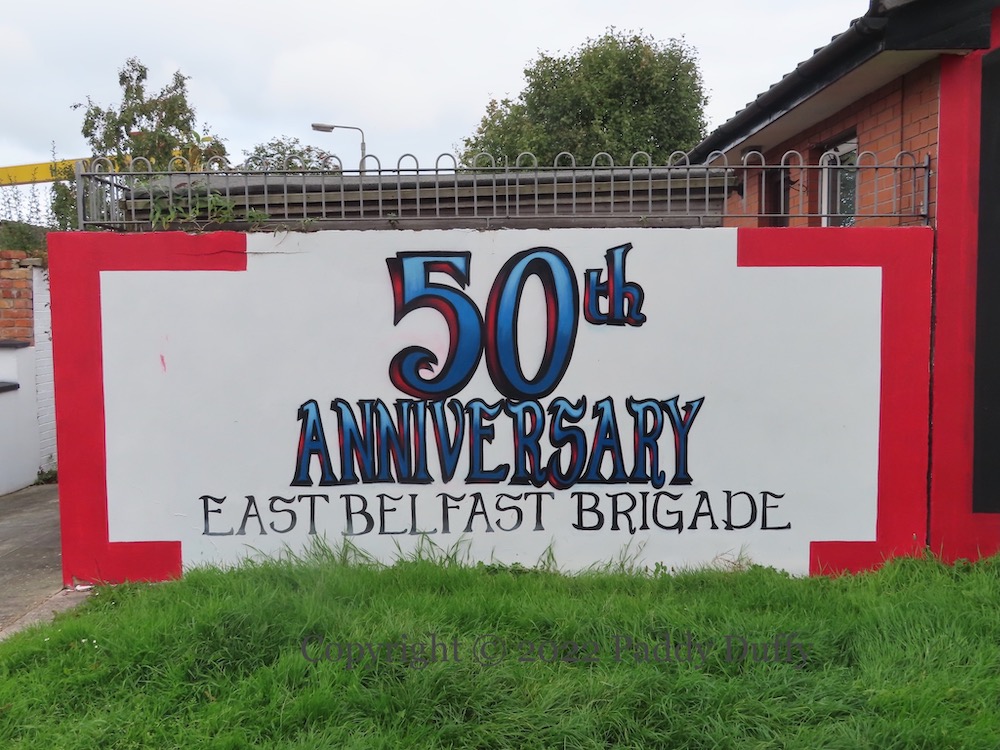
50th Anniversary

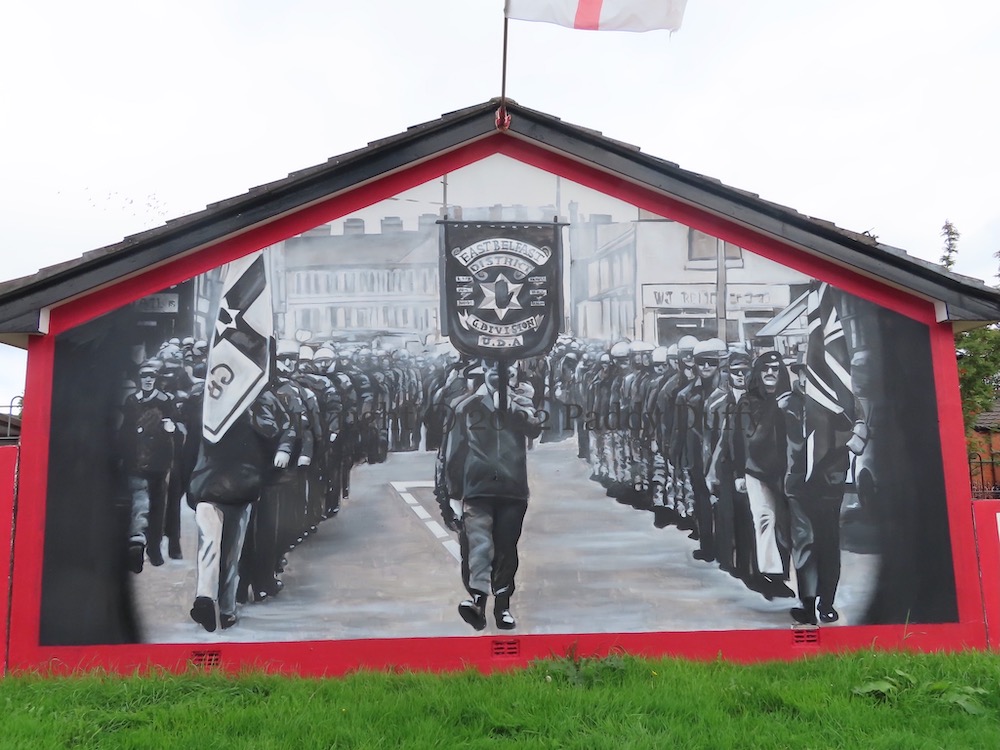
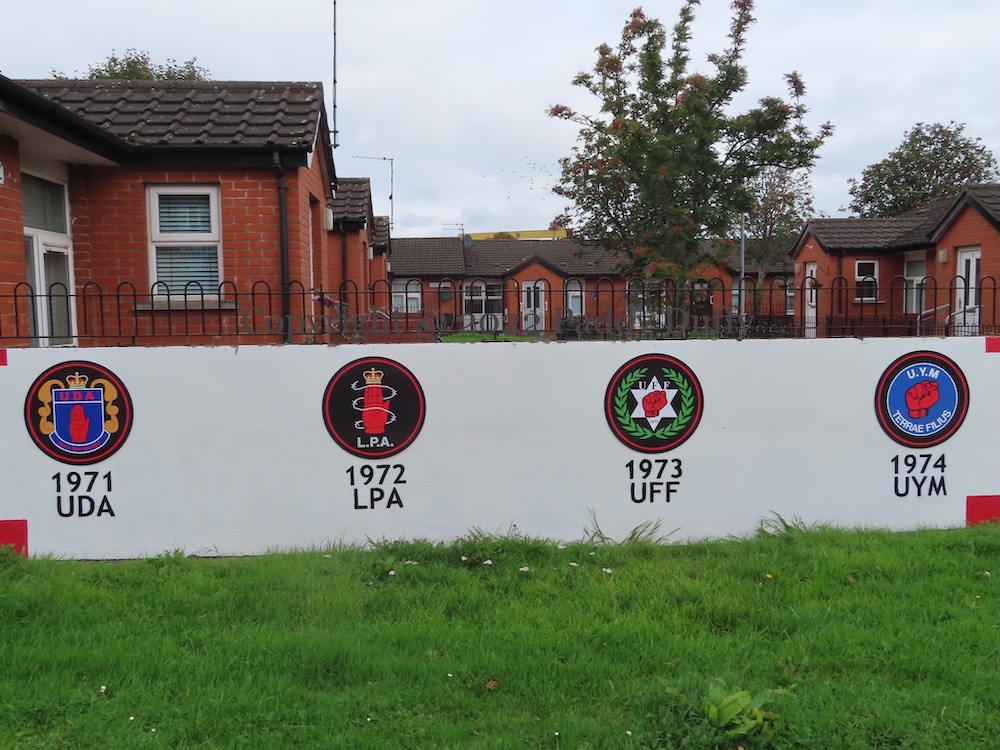
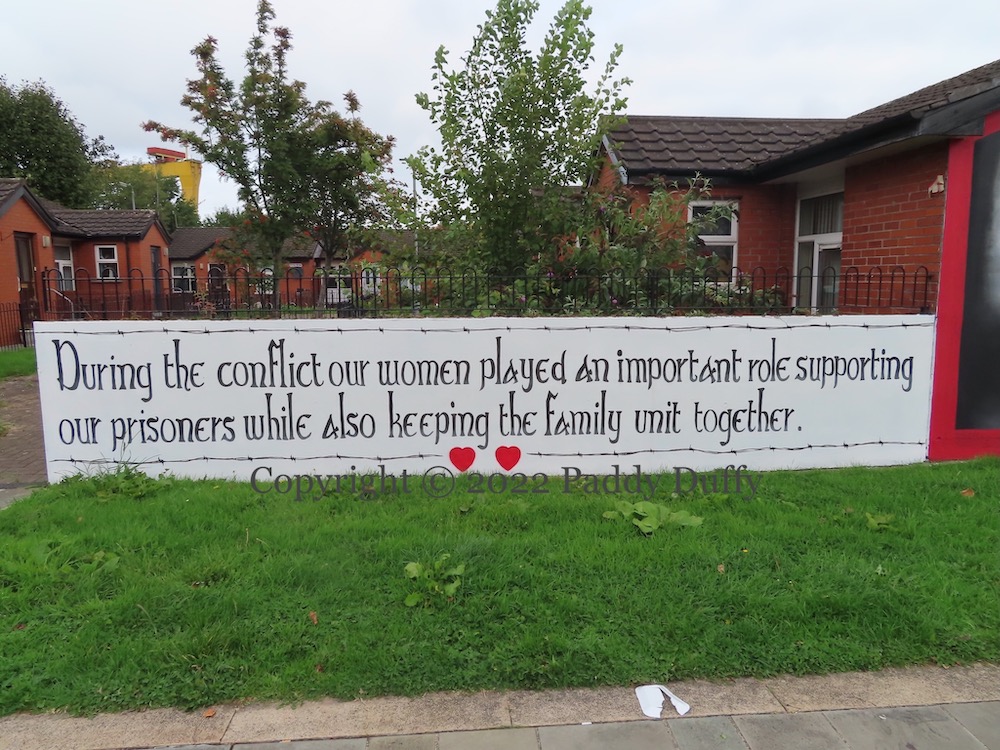
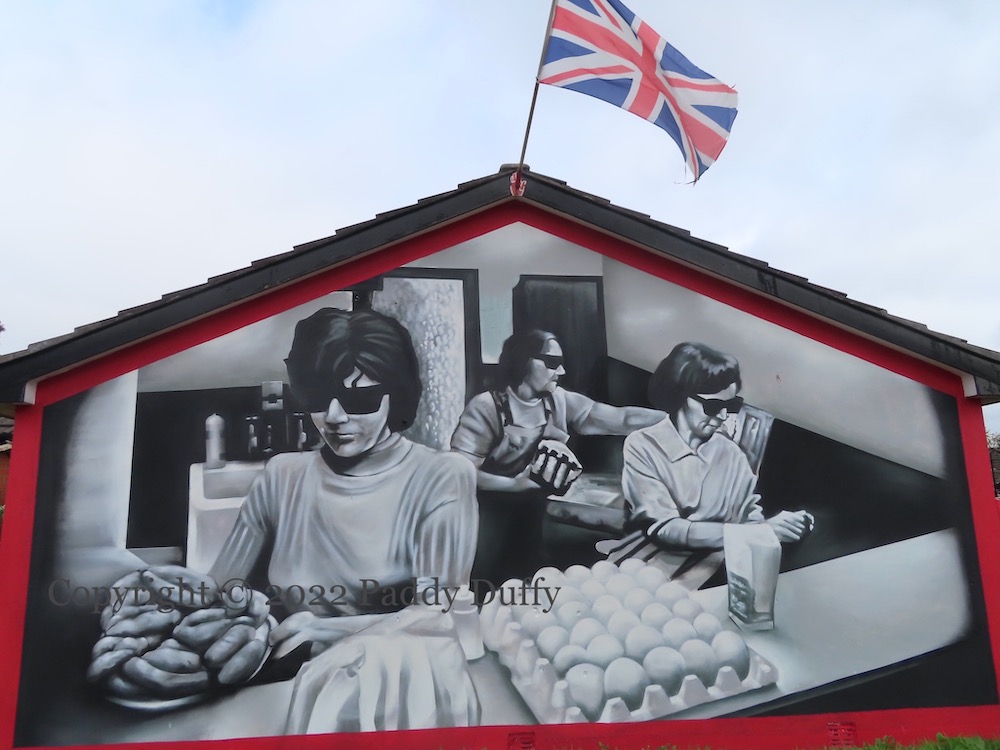
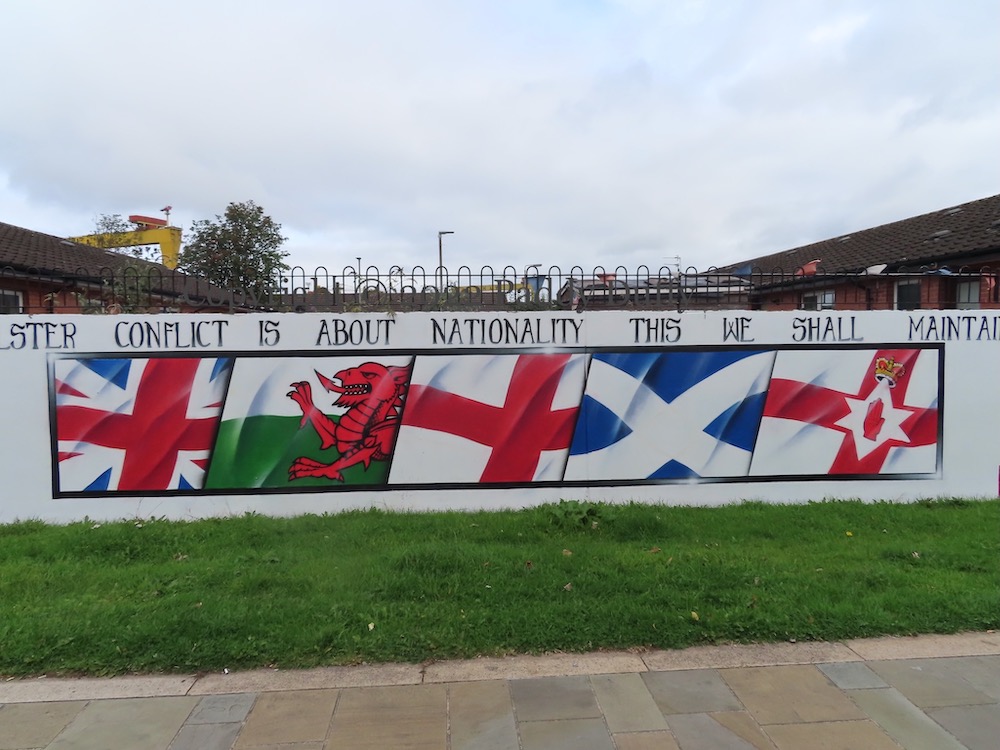
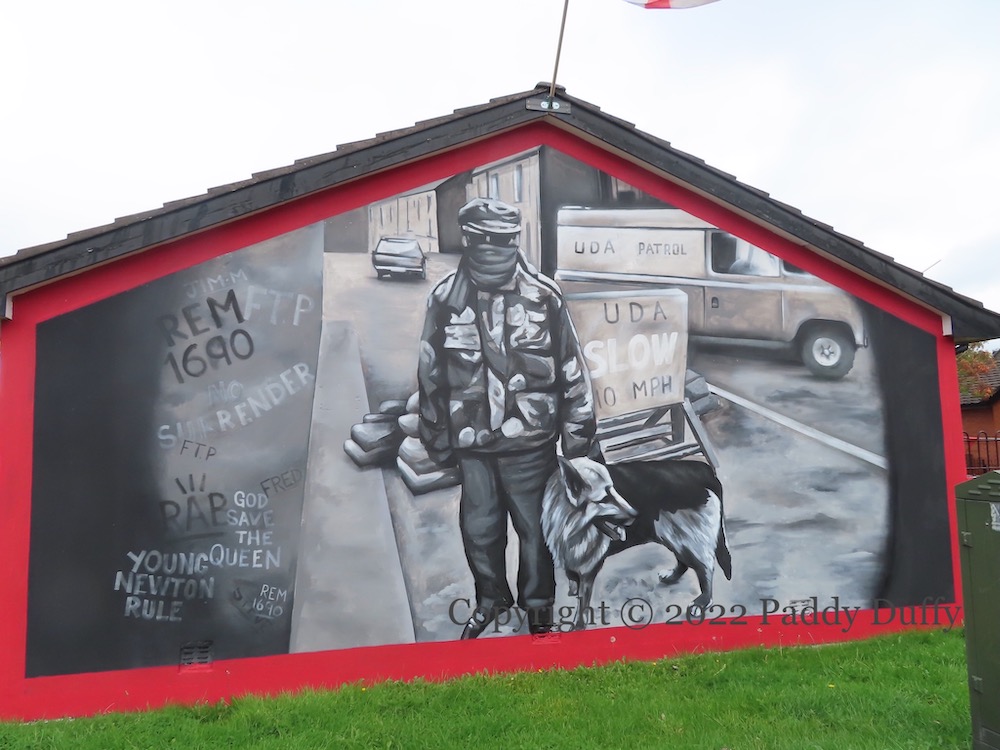
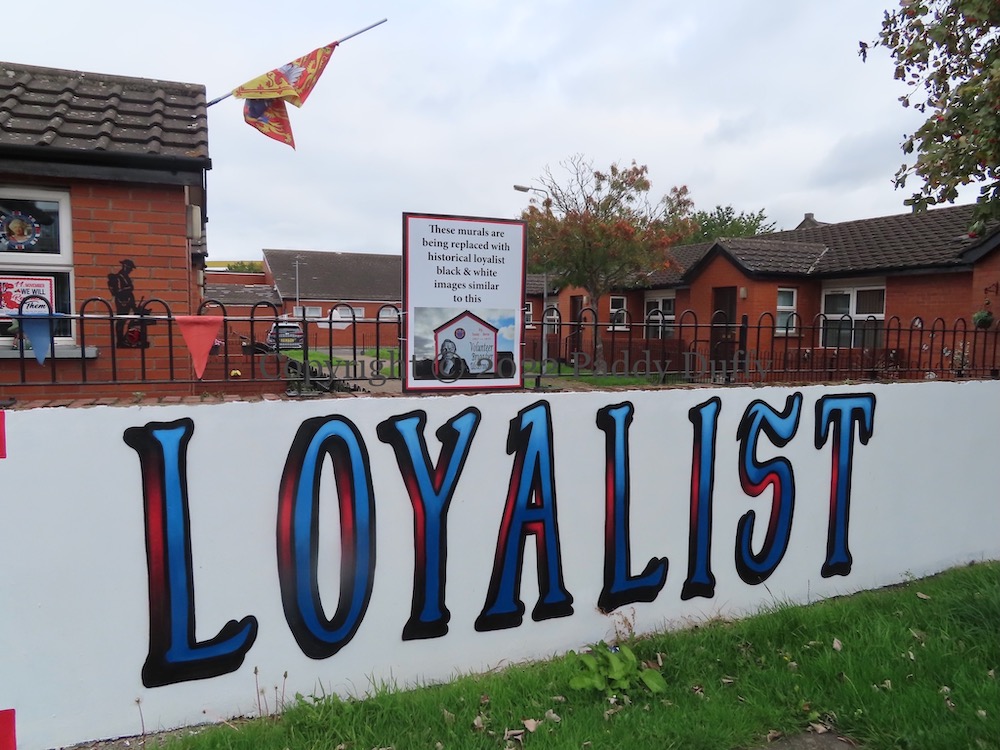
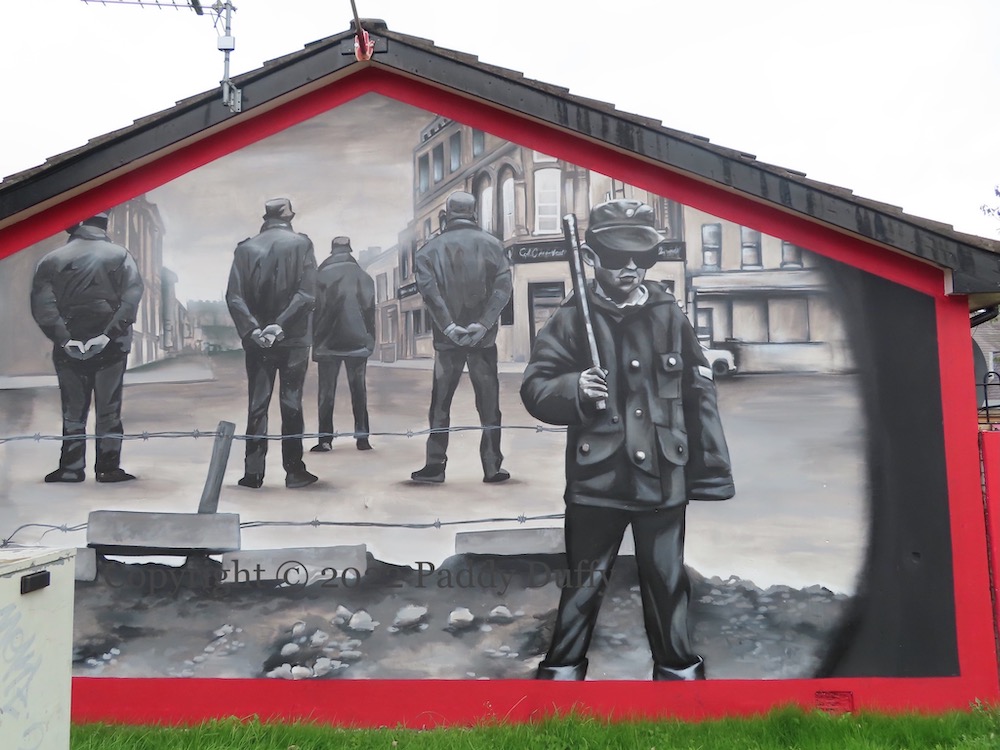
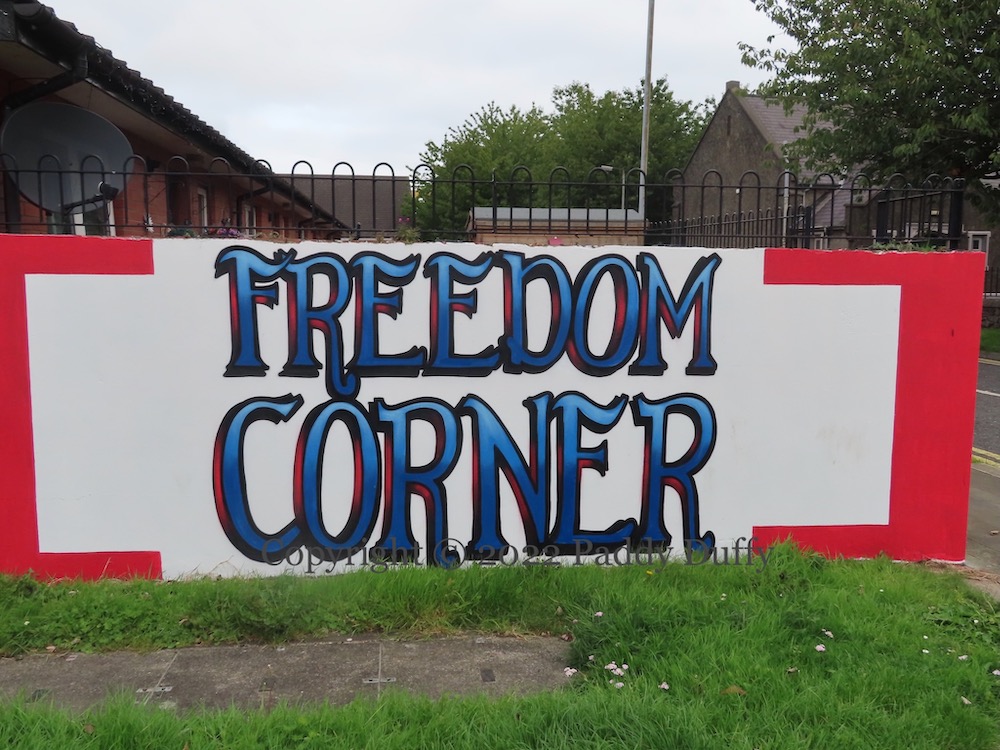
Three months after it was initially whitewashed (mid June, 2022), the repaint of so-called “Freedom Corner” was completed, with a new mural on each of the 11 panels that make it up. Here is a gallery of fifteen images from the wall. The main gables reproduce photographs of the UDA (and more specifically the East Belfast brigade) during the 1970s. The side walls celebrate the formation of the UDA/LPA/UFF/UYM in 1971-1974 and the role of women in supporting prisoners.

By Blaze FX (Fb | ig) on the Newtownards Road. Here is a small gallery of in-progress images: Waiting For The Wall.

Newtownards Road, east Belfast

Click image to enlarge
Copyright © 2022 Paddy Duffy
T00956 T00957 T00957 T00957 T00960 T00961 T00962 T00963 T00964 T00965

Peace With Justice

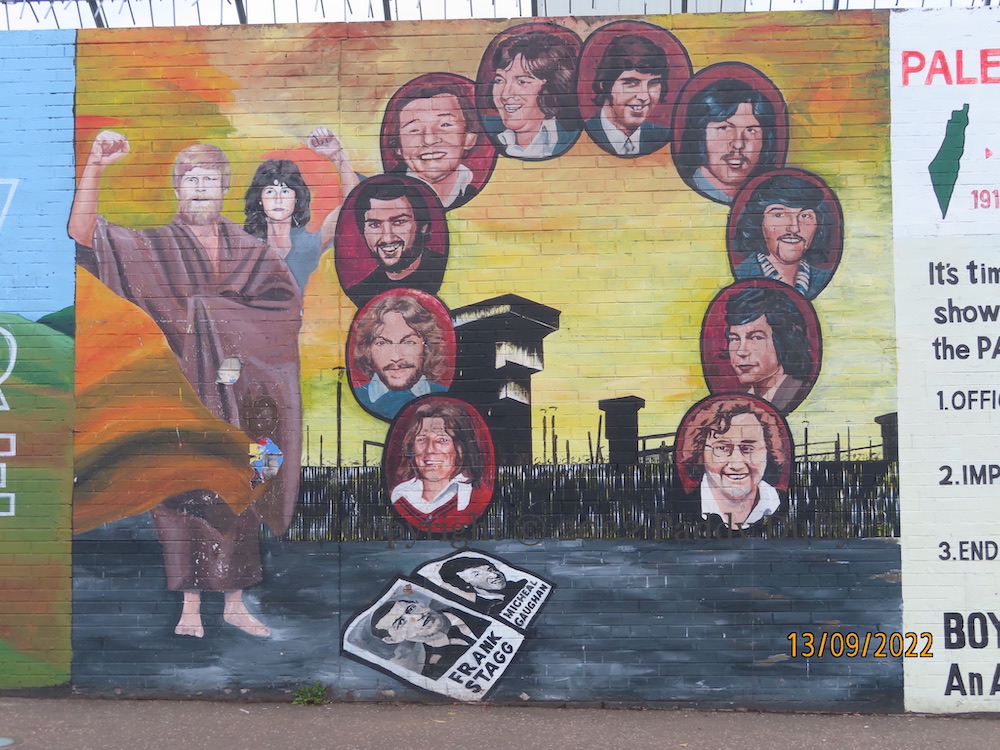
In 2014, after the Nugent/Hughes mural at the corner of Divis and Northumberland Streets (see Belfast’s Infamous Prison) was painted out to make way for a pro-Catalonia vote mural (see Votes About Votes), Kieran Nugent was added to the hunger-strikers mural further down the international wall, along with Mairéad Farrell, who was the second person, after Nugent, to refuse to wear a prison uniform. In 2016, that mural was revised for the Easter Rising centenary, by painting Kilmainham jail in the background. This background was later changed (c. 2019) to the watch-towers of Long Kesh, as shown above.

Click image to enlarge
Copyright © 2022 Paddy Duffy
T00863