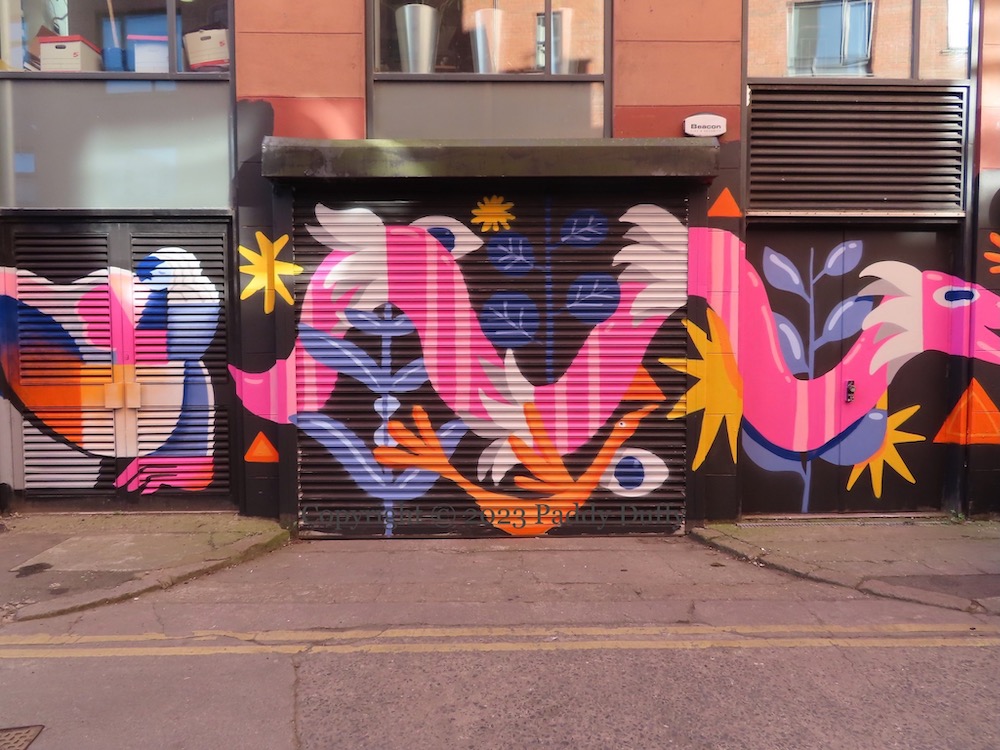
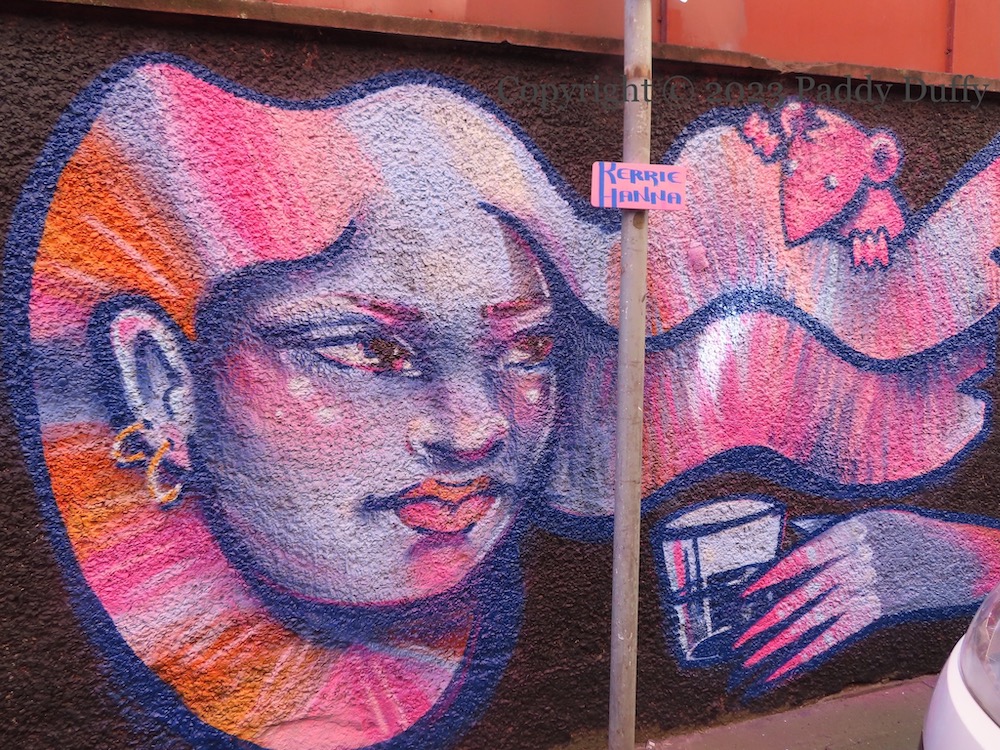
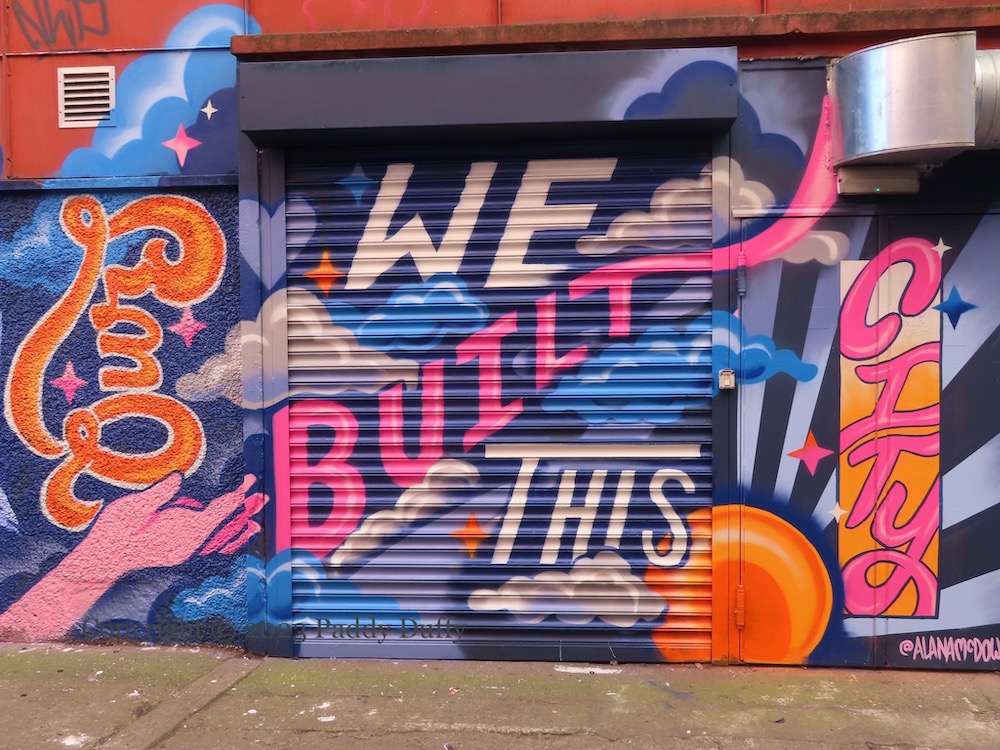
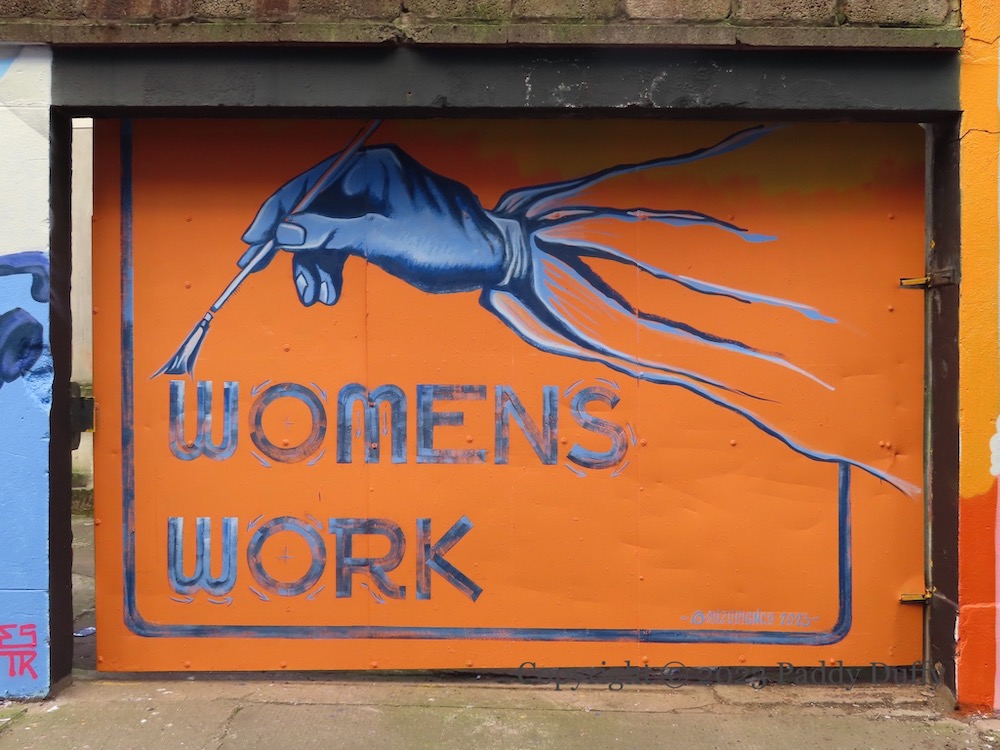
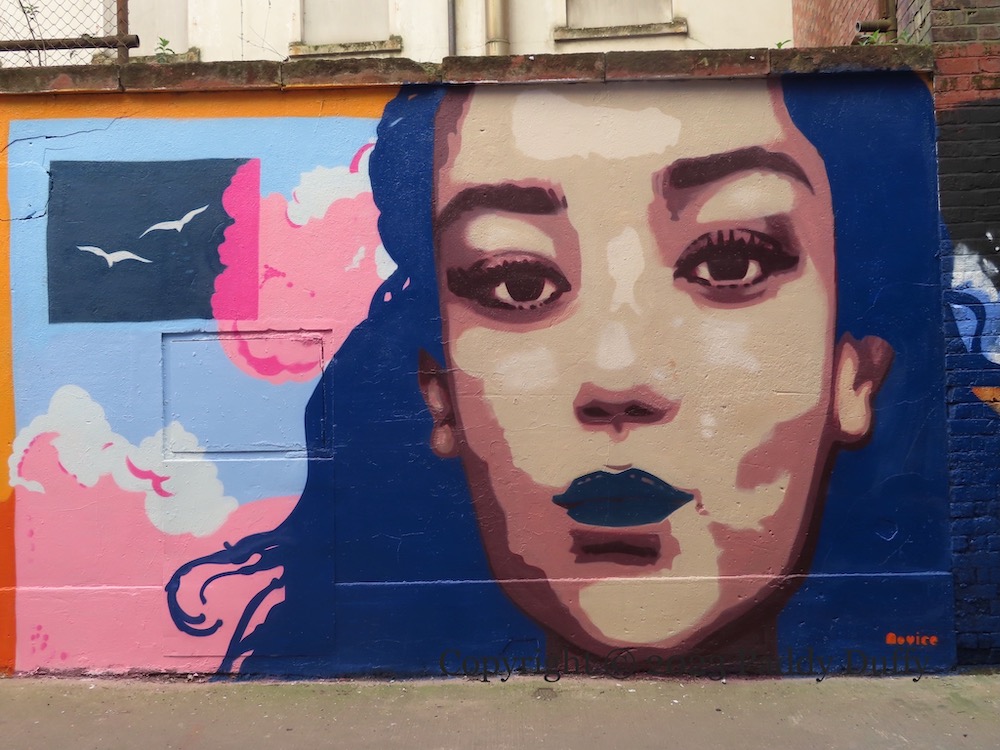
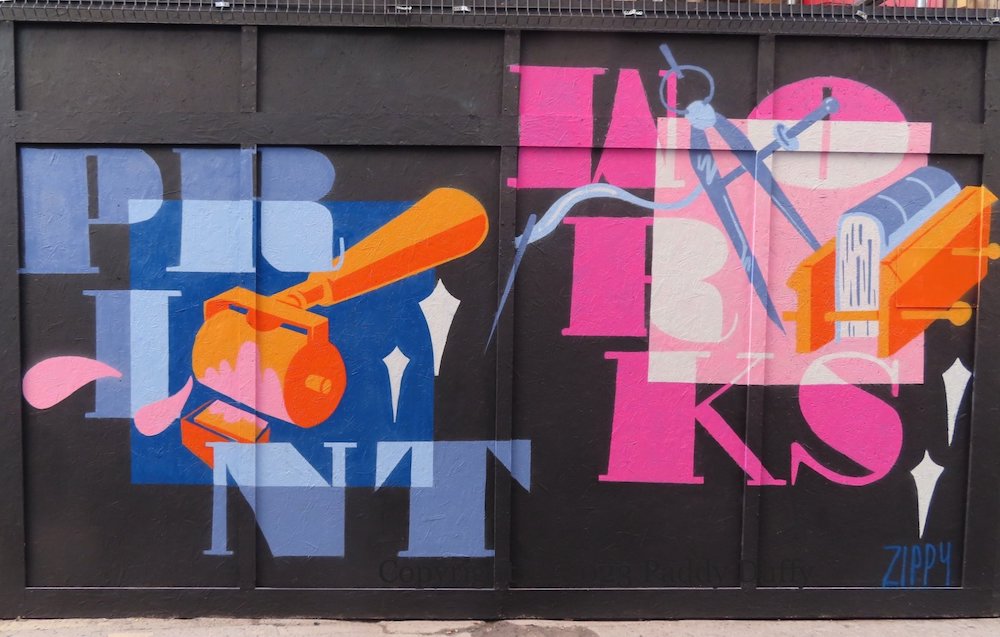
Here is a gallery of completed pieces produced for International Women’s Day 2023 in College Court. The new street art is part of a larger revitalisation project (Belfast City Council).
The works shown are (from Castle Street to College Street) by Claire Prouvost, Holly Pereira, Katriona, Kerri Hanna, Danni Simpson, Alana McDowell, ESTR; Laura Nelson, Novice Jess, Friz, (guest artist Hicks who was in town to repair and extend his piece in College Street Mews (see Cool) – it was damaged by a dumpster fire) and, on the other side of the street, HM Constance.
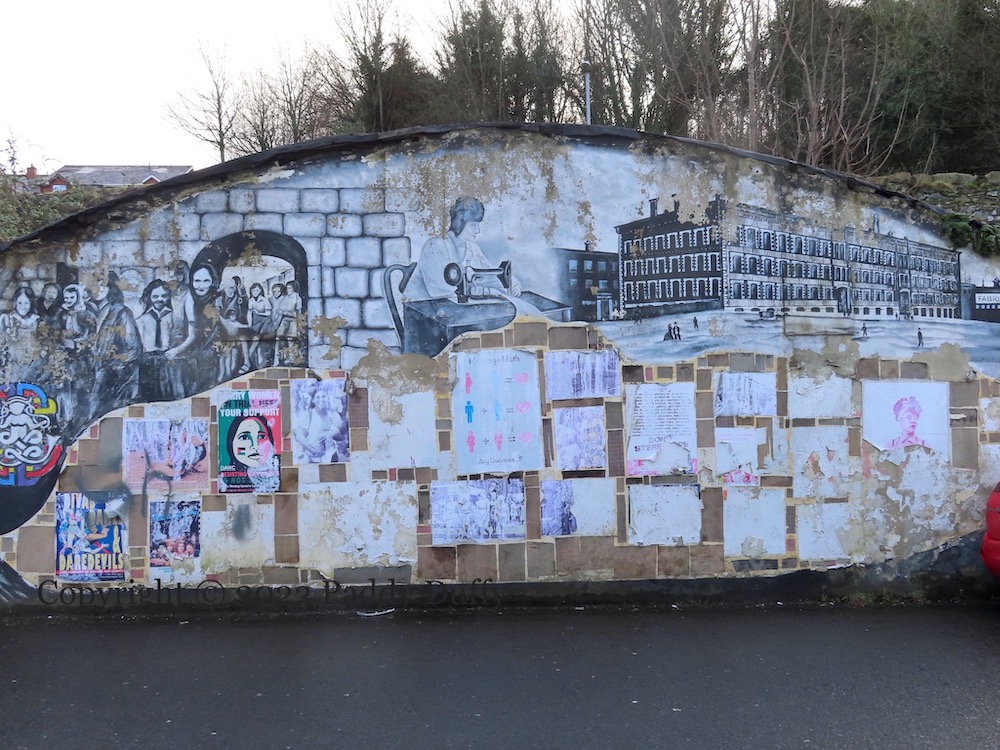
This piece was originally launched in 2014 and is now much the worse for wear. It celebrates the role of women in the cultural and economic life of Derry.
Ulster Tower in Thiepval, France, provides a background for 13 jigsaw pieces with partial images relating to the Great War, including a uniform with a Victoria Cross and badge of the 36th (Ulster) Division, the 10th (Irish) Division, the 16th (Irish) Division, and the Royal Irish Fusiliers (and a fourteenth piece for information).
Kilgreel Road, Antrim. The mural is more than a decade old and is bleached from the sun (the pinks were formerly brown); on the former site of The People’s Army (a UVF board).
“This artwork, commemorating the sacrifices made during the Great War and subsequent conflicts, was produced by the young people of Parkhall Youth & Community Club and was completed in 2010. It is part of a larger Re-imaging project undertaken by Parkhall Cultural Awareness Association & Parkhall Community Association. 14 jigsaw pieces are representated as that was the age of the youngest soldier to die on the Somme. The Royal Irish Fusiliers, who recruited in the Antrim area, served with the 10th Irish Division and 36th Ulster Division during World War I. The cap badge is surrounded with poppies. The poppy is an international symbol commemorating the sacrifices of members of the armed forces and of civilians specifically since the Great War. Birds were used extensively during World War I delivering important logistic message from the front line. HMS Antrim served in the Great War and survived. After the war she became the first ship to be fitted with an experimental sonar system in 1920. Her bell can presently be viewed in Antrim Civic Centre. The grounds of Shane’s Castle in Antrim were used as a training ground and a campsite for the 36th Ulster Division prior to their deployment to France. Of all bell tents and parachutes during the Great War 90% were made from Irish Linen. During the Great War a service man’s basic wage was one shilling a day (5 pence). The sound of the bugle was heard throughout each day in the trenches, starting with Reveille to rouse you from slumber. ‘Flowers of the Forest’, a powerful Scottish lament, is often played by a lone piper at services of Remembrance. “I am not an Ulsterman but yesterday, the 1st July, as I followed their amazing attack, I felt that I would rather be an Ulsterman than anything else in the world.” Extract from the speech by Captain Wilfred [Wilfrid] Spencer 2st July 1916. Men from the 36th Ulster Division received 9 Victoria Crosses. Women played a vital role in field hospitals during the Great War caring for the injured, from the front line. The flags of the 16th and 10th Irish Divisions. 36th Ulster division. The Ulster Tower is a memorial to the men of the 36th Ulster Division. It is situated near the entrance to Thiepval Wood, France.
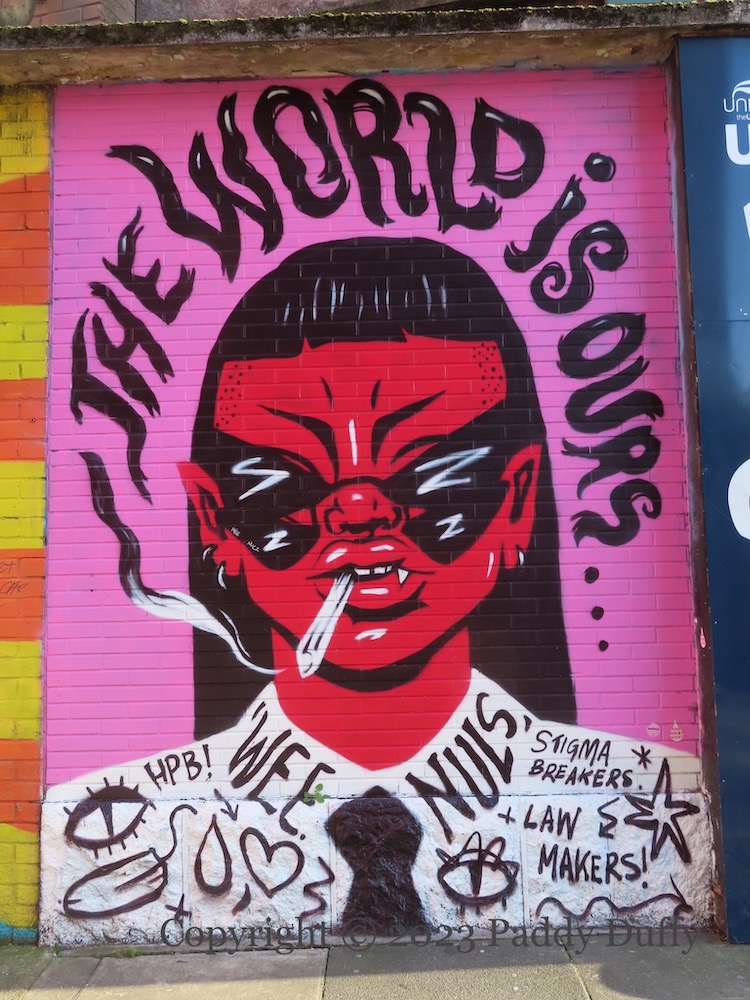
This is Wee Nuls’s (web | ig) street art celebrating the success of the ‘menstruation matters’ (ig) campaign for free period products and the passage of the Period Products Bill.
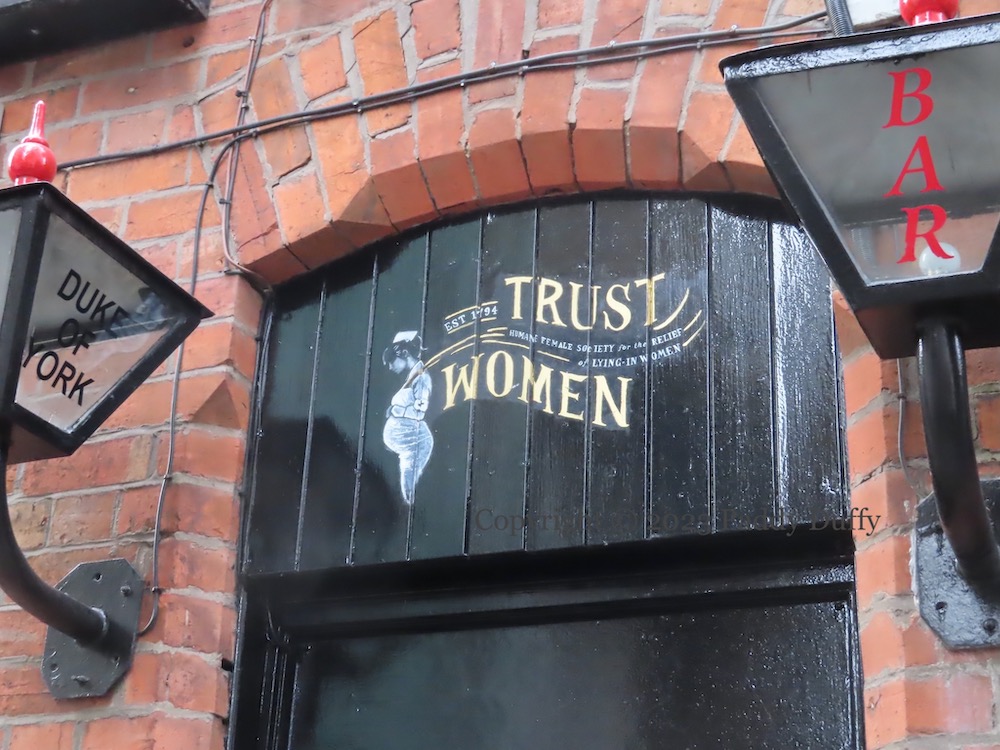
Belfast’s first maternity hospital – the Humane Female Society For The Relief Of Lying-In Women – was in Donegall Street, perhaps in the building that sat over the Exchange Place entry, from 1794 to 1830, when it moved to Clifton Street (Mcafee). It was run entirely by women (info board in I Was Sick And Ye Visited Me).
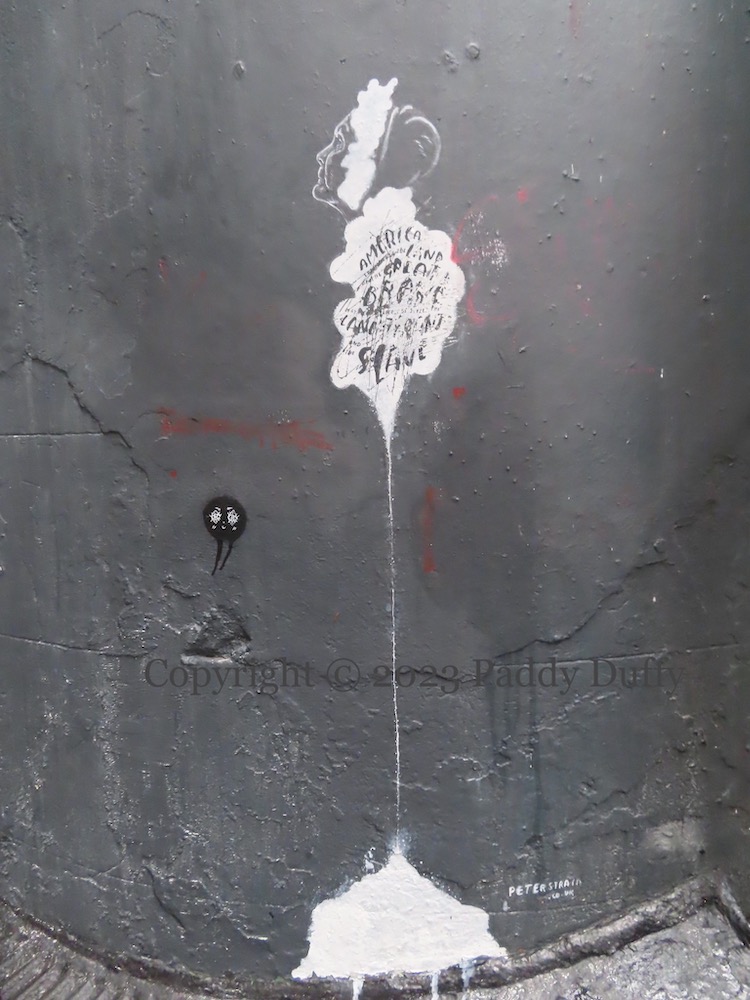
The illustration is by Peter Strain (web) in Exchange Place.
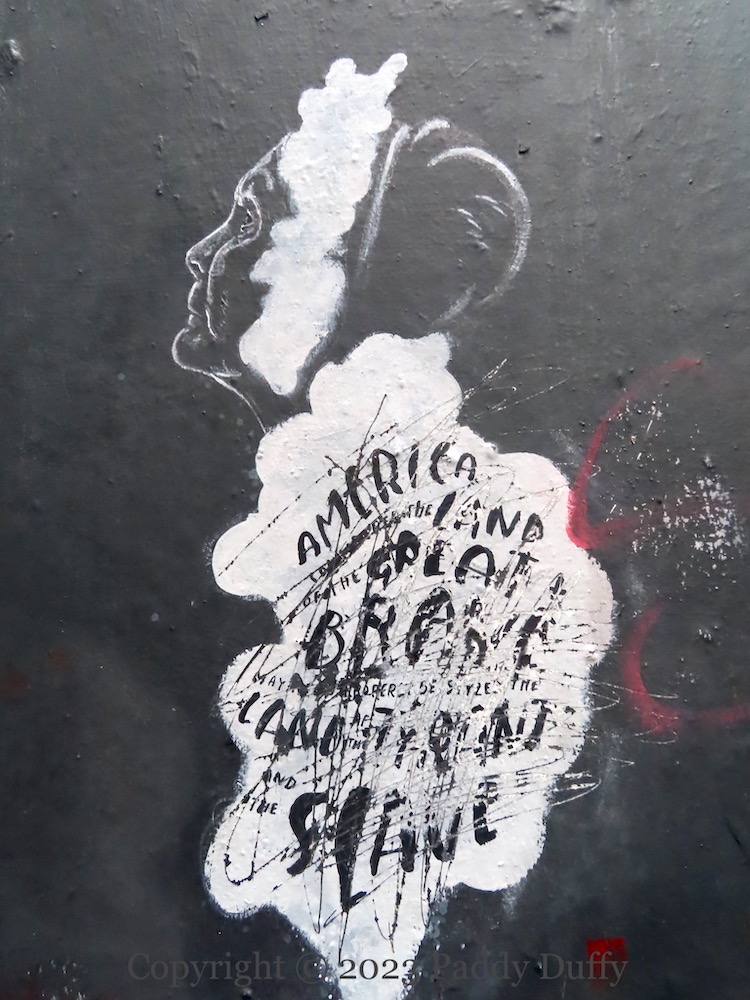
In a letter in 1859 to Dr Richard Madden, a fellow abolitionist (and historian of the United Irishmen), Mary Ann McCracken wrote, “America, considered the land of the great, the brave, may more properly be styled the land of the tyrant and the Slave.” (McNeill)
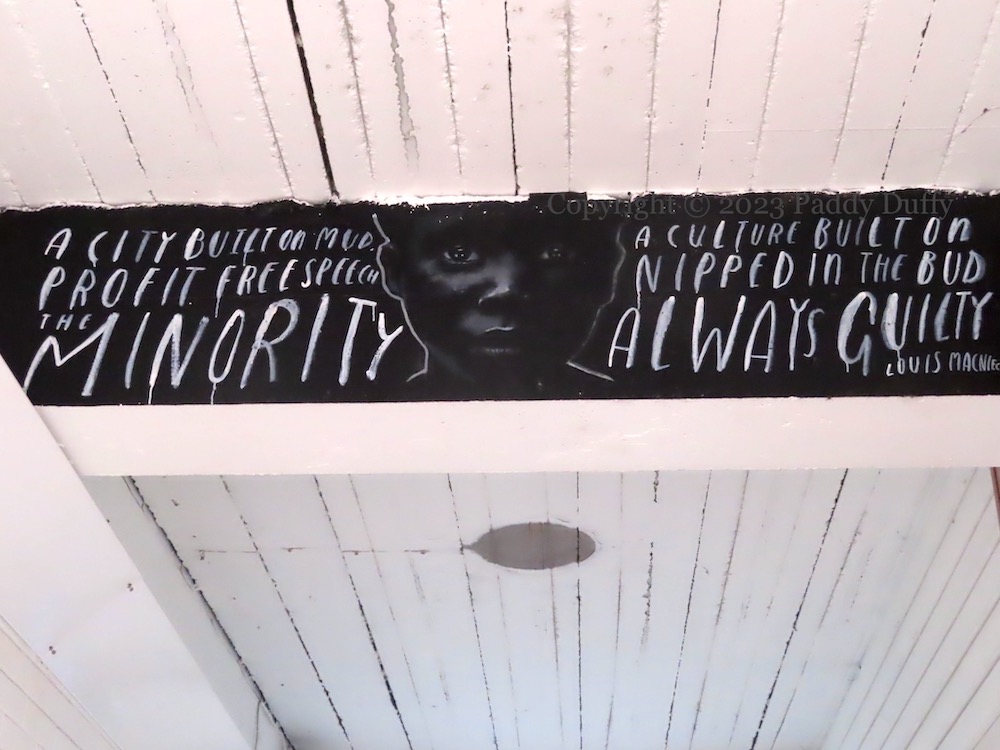
Also given an abolitionist bent are some lines from section 16 of Louis MacNeice’s Autumn Journal, describing Belfast as “A city built on mud; / A culture built upon profit; / Free speech nipped in the bud, / The minority always guilty. [Why should I want to go back / To you, Ireland, my Ireland? / The blots on the page are so black / They cannot be covered with shamrock. / I hate your grandiose airs / Your sob-stuff, your laugh and your swagger, / Your assumption that everyone cares / Who is the king of your castle. / Castles are out of date, / The tide flows round the children’s sandy-fancy; / Put up what flag you like, it’s too late / To save your soul with bunting.]
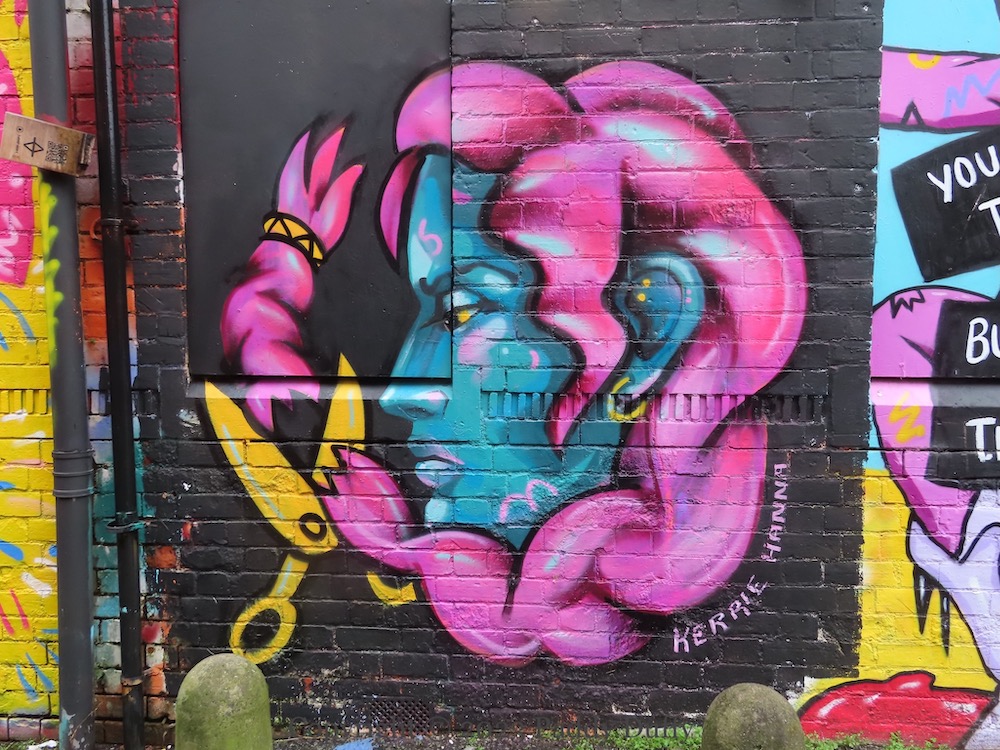
The theme of the all-women jam at ArtCetera (formerly the Red Barn Gallery) (@artceterastudio43) was ‘the veil wears thin’, suggestive of liminal states and places that samhaın brings to mind (HMC). Kerrie Hanna’s (@kerriehanna) interpretation of the theme was to support the women (in Iran and elsewhere) who were cutting their hair as a form of protest at the death of Mahsa Amini while in the custordy of the “Guidance Patrol” or “Morality Police”, allegedly for wearing her hijab improperly (CNN | EuroNews | WP).
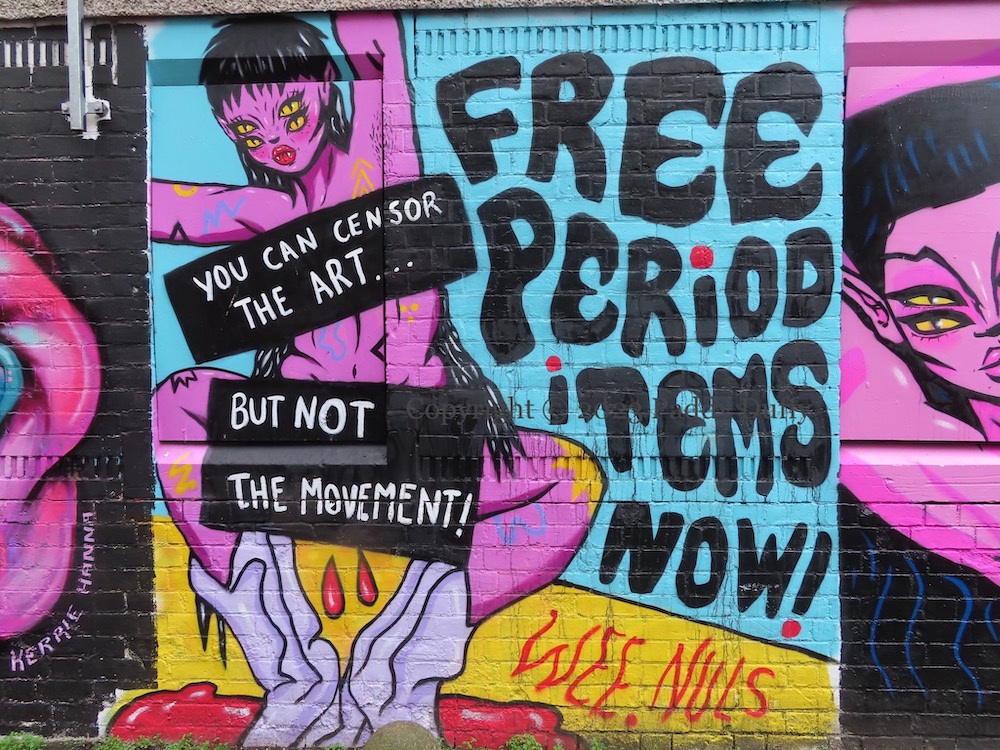
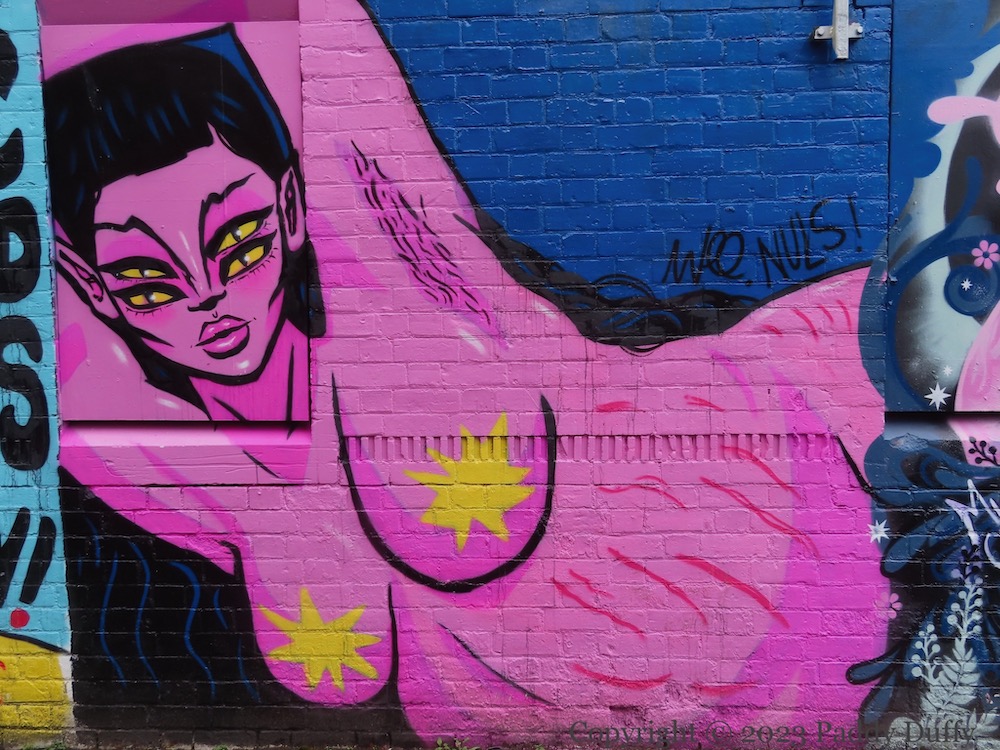
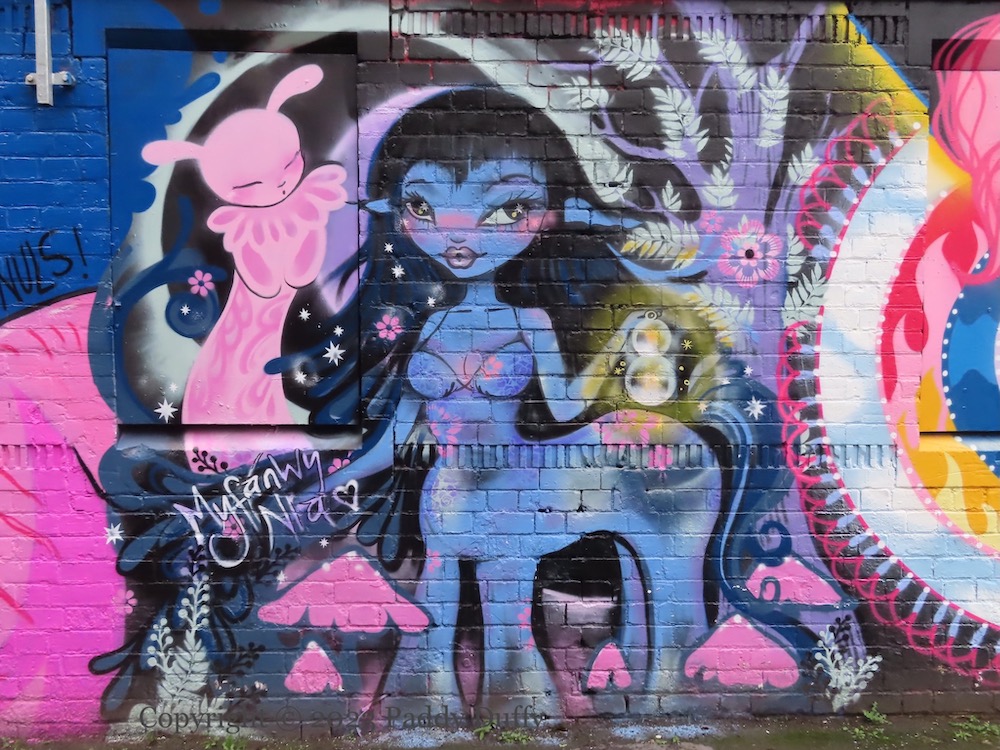
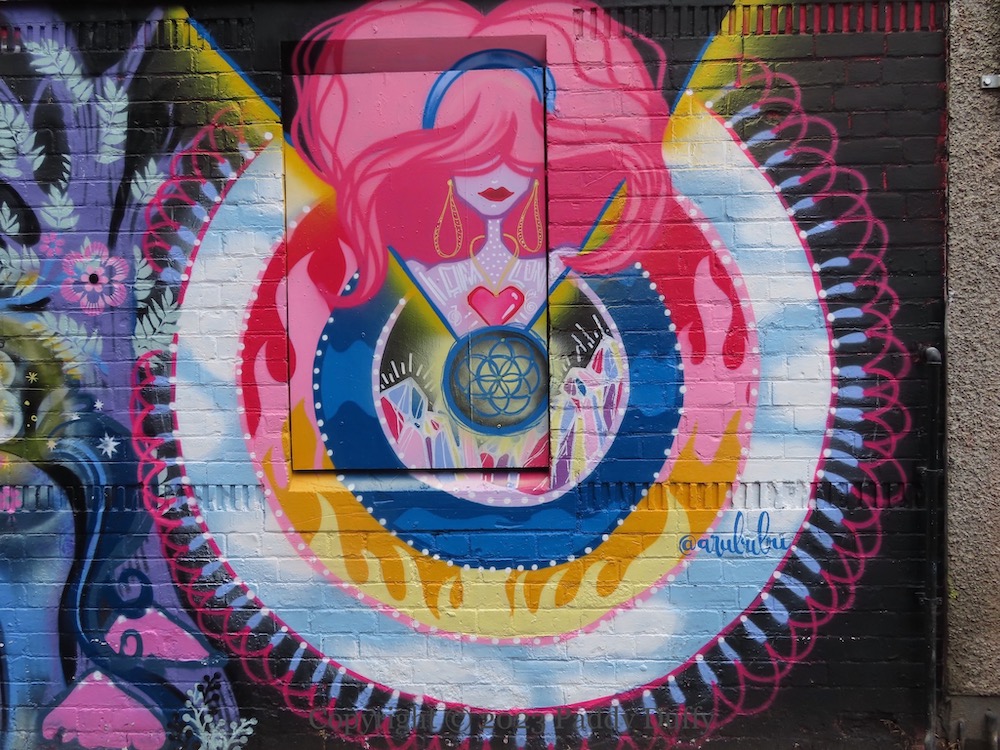
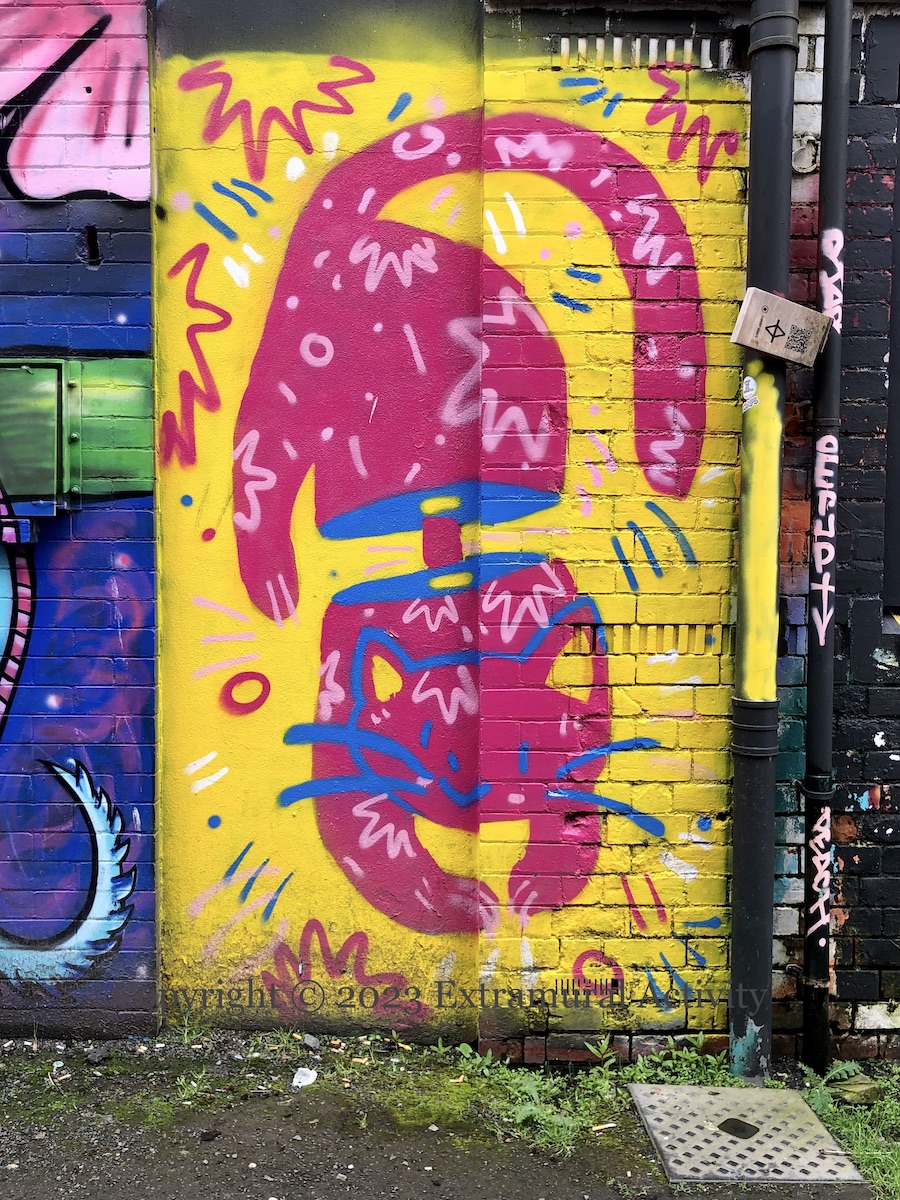
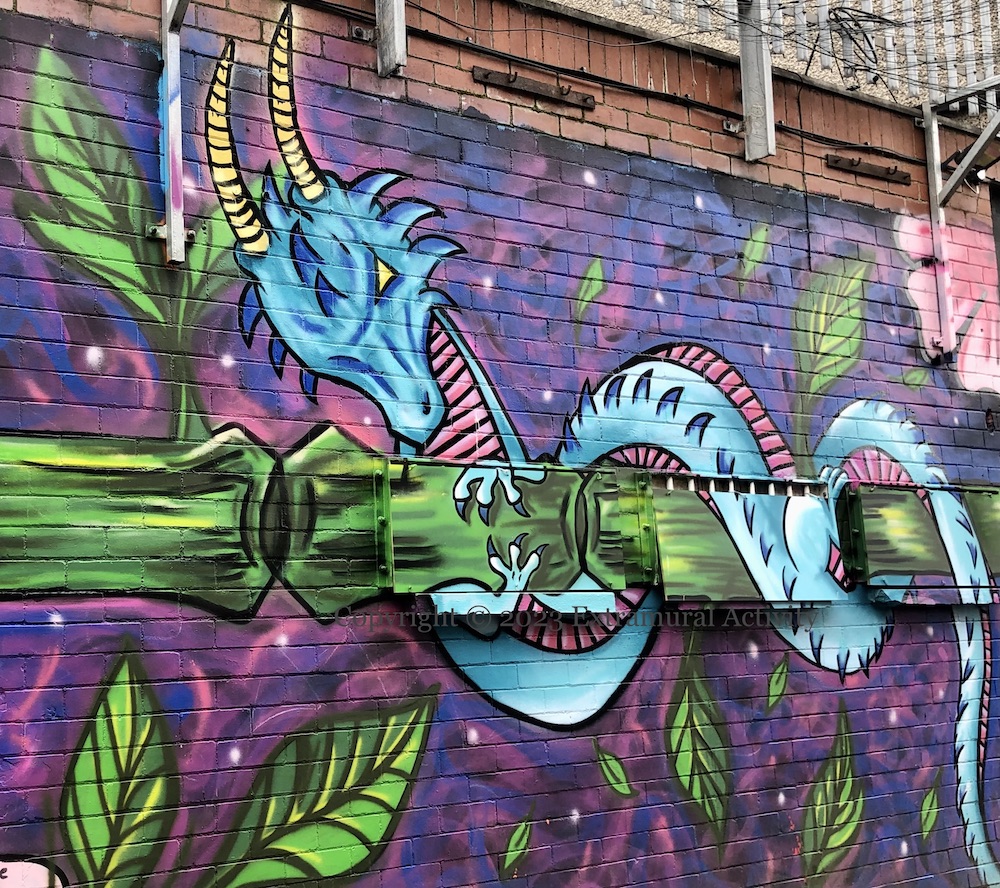
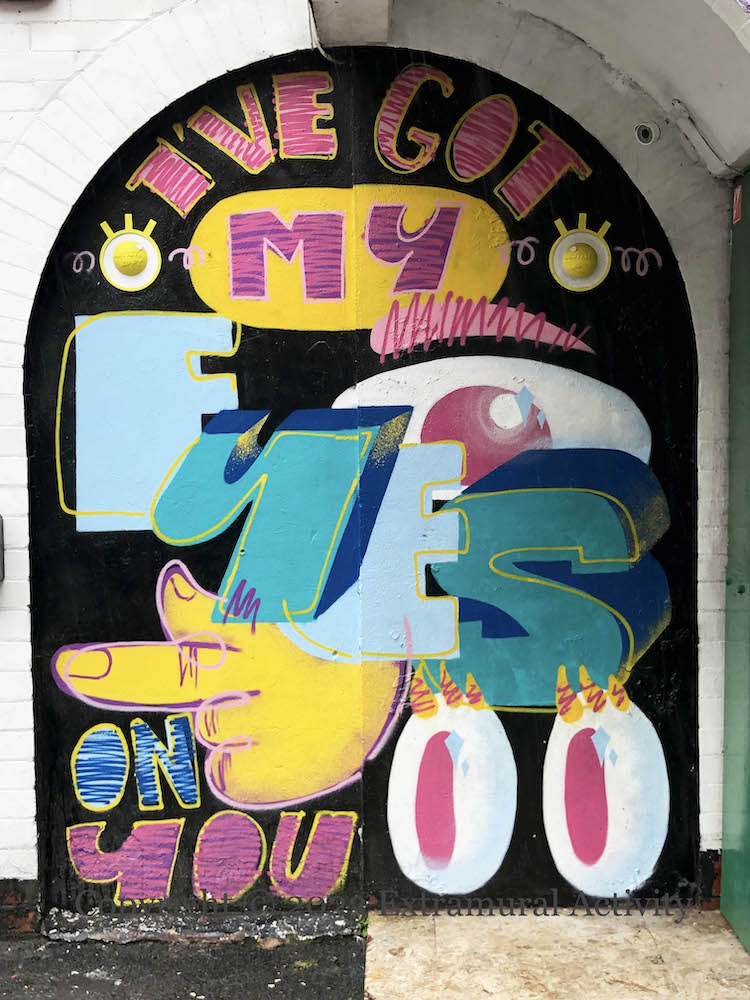
Also shown in today’s post are the works by Wee Nuls (web) – Free Period Items and one of her trademark “gremlins” inspired by being 28 weeks pregnant, Harriet Myfanwy (@myfanwynia) – a centaur, Arú Roncada (@arububu) – a representation of the five elements, Ariana Lupascu (@contemplatingthestars) – a pink car, HMC (web) – a ?dragon? on a ?bamboo stalk? and Zippy’s (web) I’ve Got My Eyes On You.
The ‘free period items’ piece – and the controversy surrounding its original location – was described previously in About Bloody Time.
See also: the Women’s Work jam for International Women’s Day 2023, in College Court: Women’s Work | We Built This.
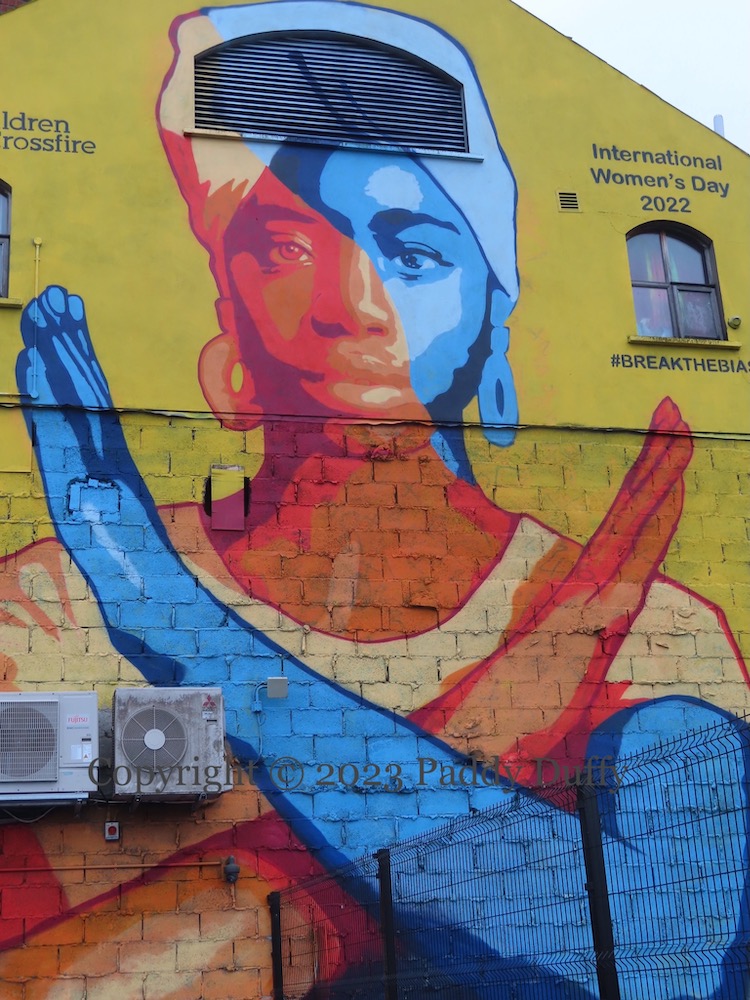
Crossed arms are the symbol of the #BreakTheBias campaign, which is the theme of this year’s International Women’s day (IWD) and people all around the world are striking the pose on social media to show their support (e.g. tw) including this large mural in Belfast, which has been painted off Corporation Street.
By Visual Waste (web | ig), with support from Children In Crossfire (web).
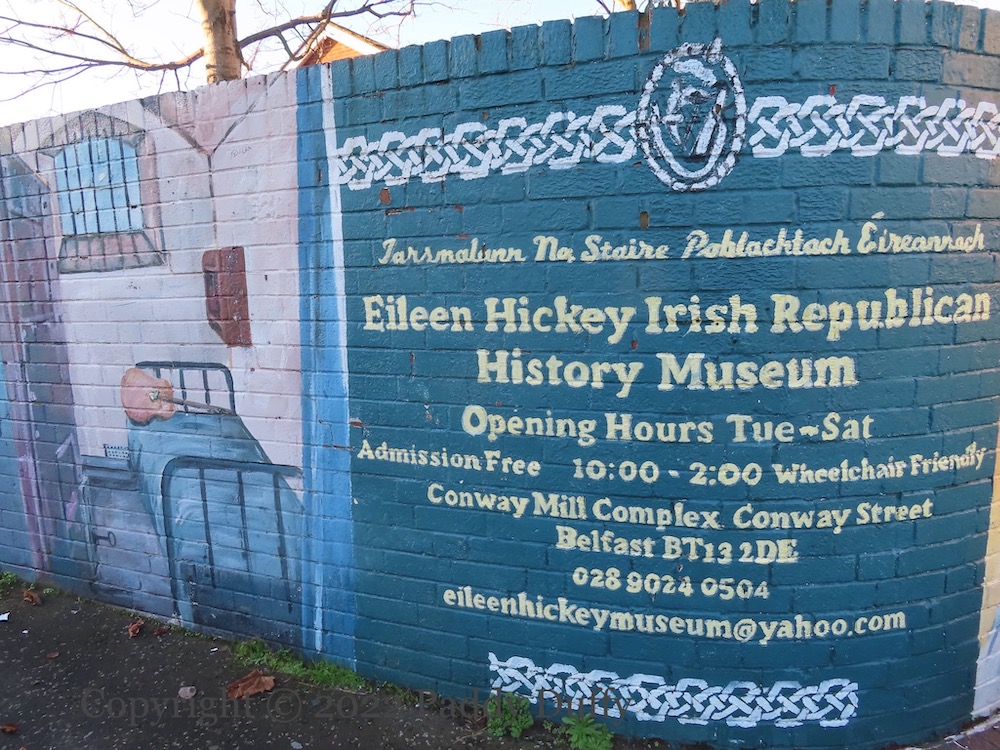
The ‘Eileen Hickey Irish Republican History Museum‘ — which is across the street from this mural and behind the Conway Mill — is named for Eileen Hickey, a Provisional IRA member who served time in Armagh prison; she died in 2006, one year before the opening of the museum (obituary at An Phoblacht).
Next to the opening hours is an image of a prison cell in the Armagh women’s prison. The museum itself contains a cell door and a bed from the prison.
Nell (l) and Elizabeth (r) Corr from 107 Ormeau Road joined Cumann Na mBan in 1915 and travelled to Dublin in 1916 (with Nora Connolly, Ina Connolly, Bridie Farrell, Lizie Allen, Kathleen Murphy, and another girl called O’Neill (Treason Felony)) to serve as messengers in the preparations for April’s Easter Rising. They were in Liberty Hall (shown in the detail above) on the morning of the rising before heading north. Brother George, on the other hand, died at the Somme as a soldier in the Australian infantry, while another brother, Charles, fought in WWI with the Canadian Expeditionary Force. They are pictured on the left-hand side of the mural. (BBC | BBC video)









 Paddy Duffy Collection