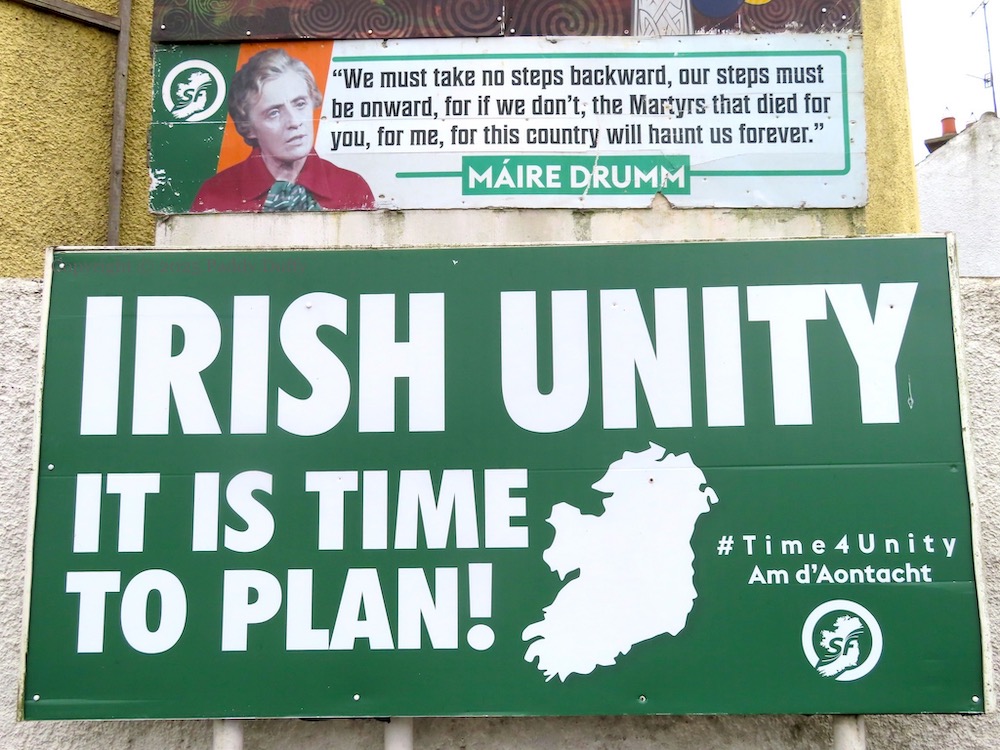
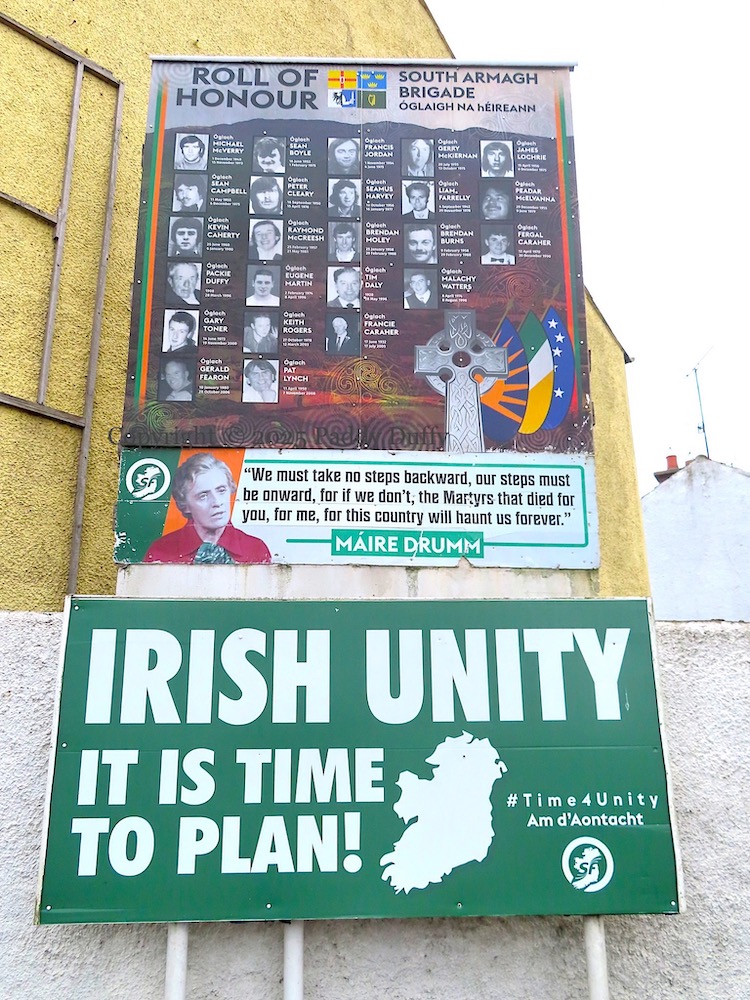
“We must take no steps backward, our steps must [or: will] be onward, for if we don’t, the [ghosts of the] martyrs that died for you, for me, for this country will haunt us forever [or: for eternity].” The words of Máıre Drumm (from an anti-internment rally in Dunville Park on 10th August, 1975 – RN p. 4) appear below a roll of honour for the IRA’s South Armagh Brigade. The list of volunteers is included below; in 1976 Drumm herself was shot dead in her bed by the RHC in the Mater hospital where she was a patient (WP) – she was Vice President of Sınn Féın at the time.
Michael McVerry, Sean Boyle, Francis Jordan, Gerry McKiernan, James Lochrie, Sean Campbell, Peter Cleary, Seamus Harvey, Liam Farrelly, Peadar McElvanna, Kevin Caherty, Raymond McCrees, Brendan Moley, Brendan Burns, Fergal Caraher, Packie Duffy, Eugene Martin, Tim Daly, Malachy Watters, Gary Toner, Keith Rogers, Francie Caraher, Gerald Fearon, Pat Lynch
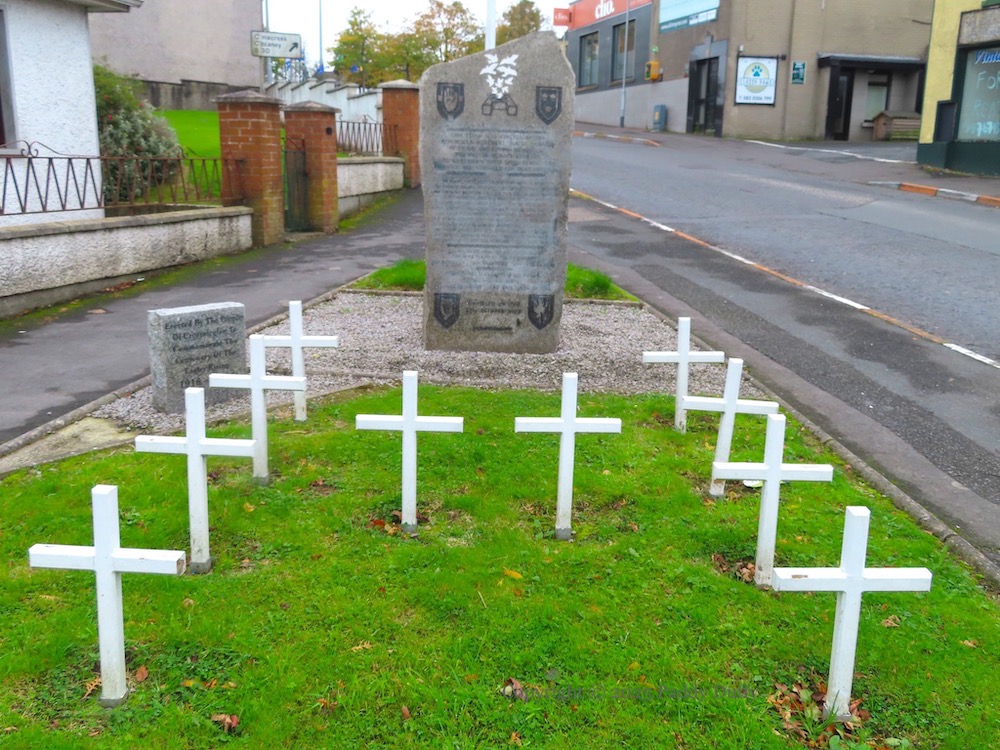
Twelve more of the martyrs – the Troubles-era hunger-strikes – are on the stone across the street (for a close-up, see the Peter Moloney Collection).
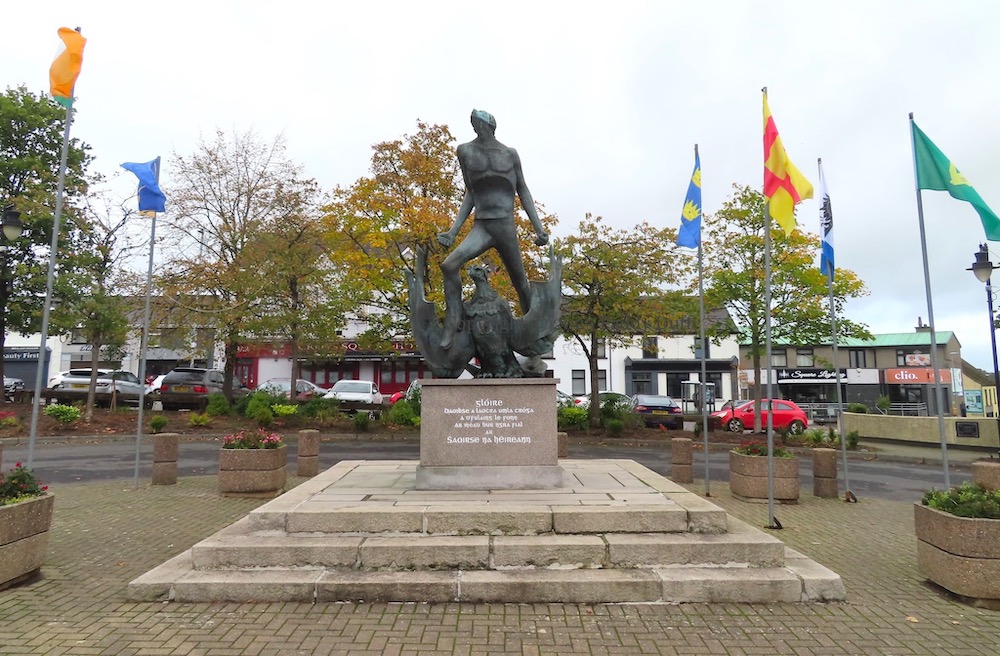
This is the republican memorial in the centre of Crossmaglen (in Cearnóg An Chaırdıneıl Ó Fıaıch). The monument was produced by Yann Goulet (1979), the same sculptor who did the memorial at Ballyseedy (1959), and like that work, this one depicts a young man striding forward in anger and anguish, though in this case he arises from a phoenix.
“Glóıre daoıḃse a laoċra uṁla cróga a d’ḟulaıng le fonn ar ṁéad ḃur ngrá fıal ar Ṡaoırse na hÉıreann.” “Glory to you all praised and humble heroes who have willingly suffered for your unselfish and passionate love of Irish freedom.”
To the right of the statue (in the corner of the car-park) is a plaque marking “the spot where the rosary was said each night during the 1981 hunger strike”, “unveiled by formed hunger striker Paddy Quinn on 6th May 2006”.
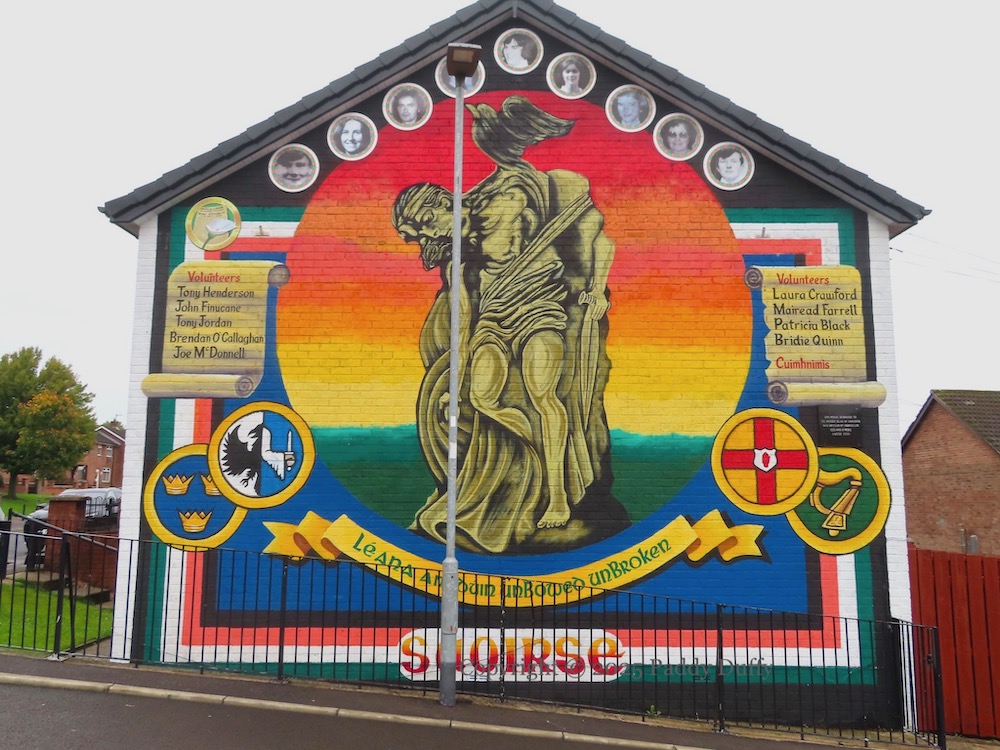
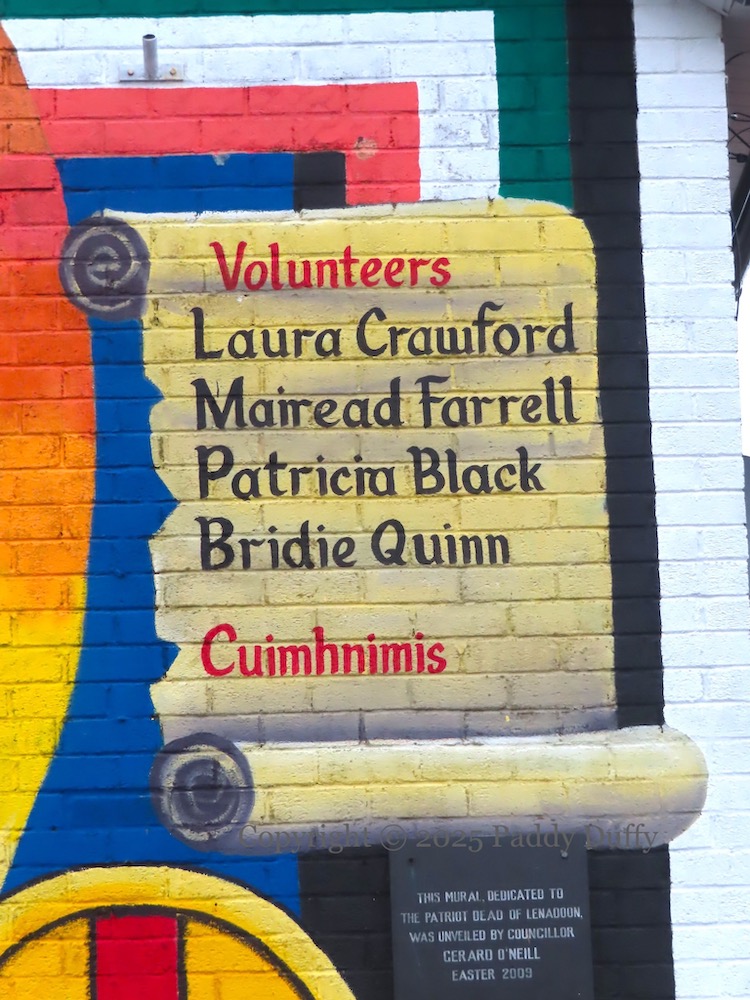
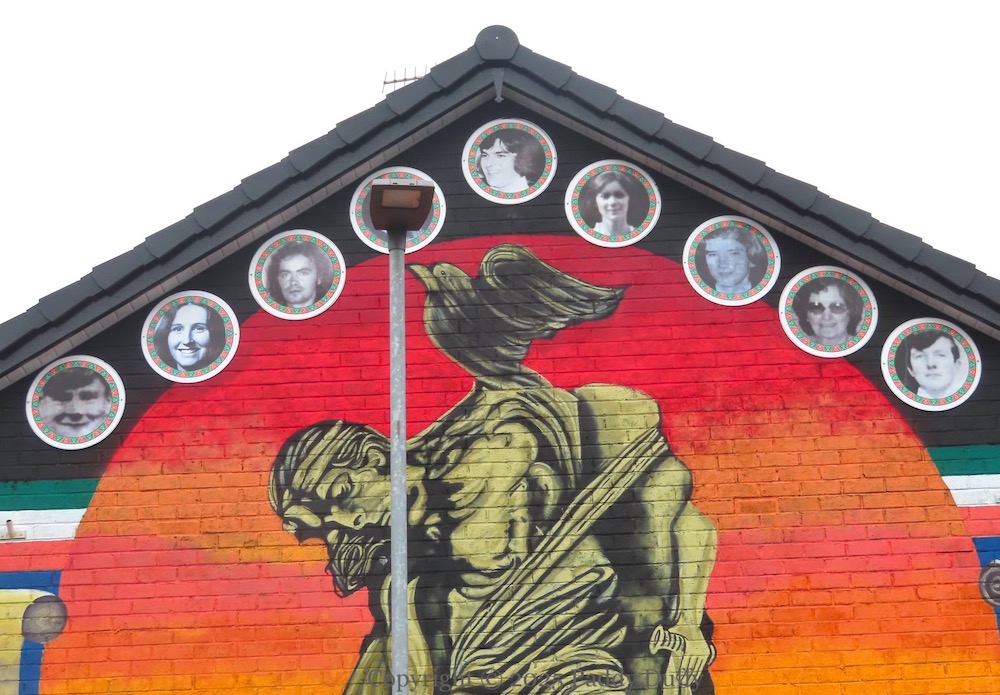
Oliver Sheppard’s statue of Cú Chulaınn dying – see the Cú Chulaınn Visual History page – memorialises nine IRA volunteers from the Lenadoon area, whose names are listed on the scrolls to each side and whose portraits appear in the apex: Tony Henderson, John Finucane, Brendan O’Callaghan, Joe McDonnell, Laura Crawford, Maıréad Farrell, Patricia Black, Bridie Quinn. Below the statue are the shields of the four provinces and the words “Léana An Dúın – unbowed, unbroken” and “saoırse” [freedom].
The mural dates back to 1996 (see T00160) and was repainted in 2009 (see M05134) and c. 2014 (see M11028, which includes a close-up of the plaque added in 2009.) In this version, nothing has changed in the composition of the mural and the photographic portraits and the Easter Rising centenary board have been retained.
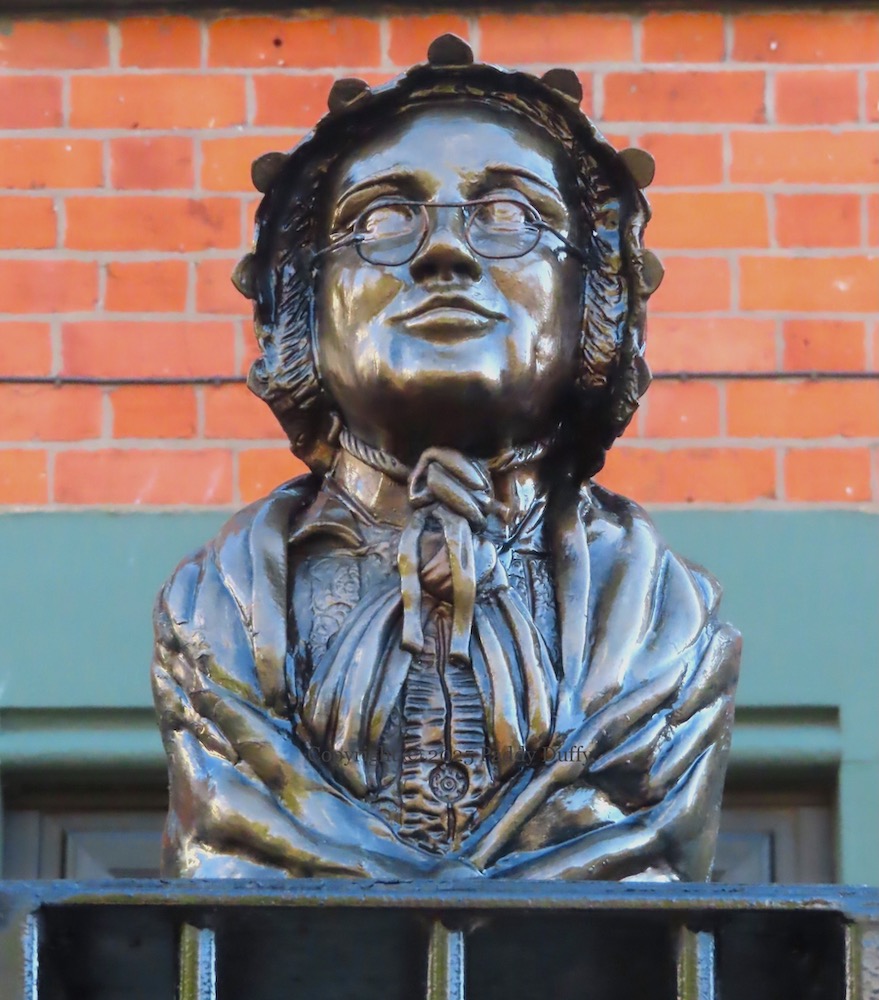
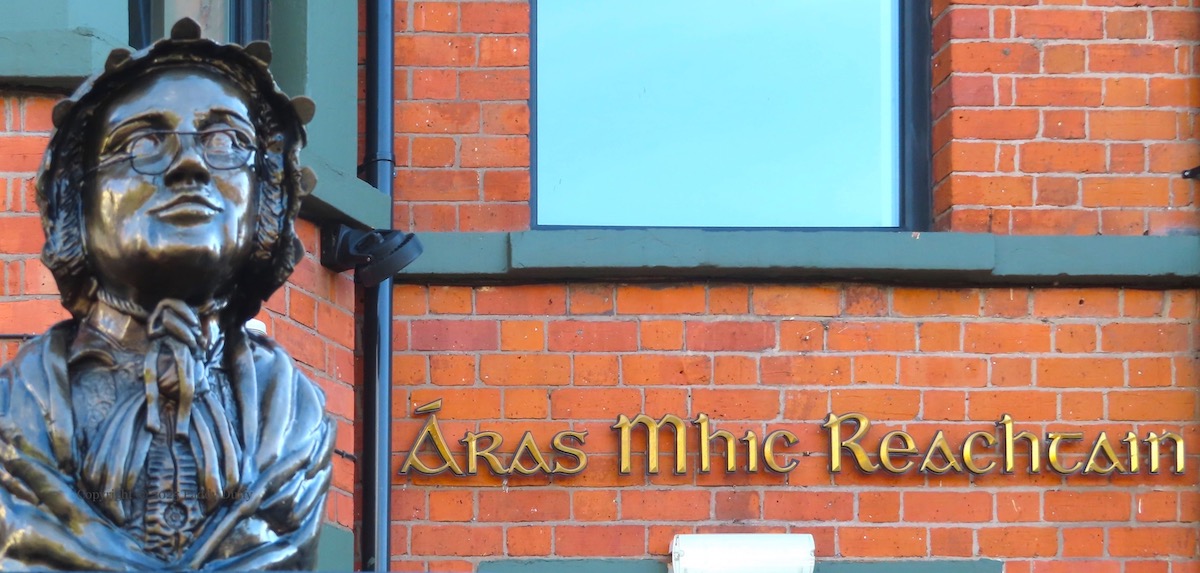
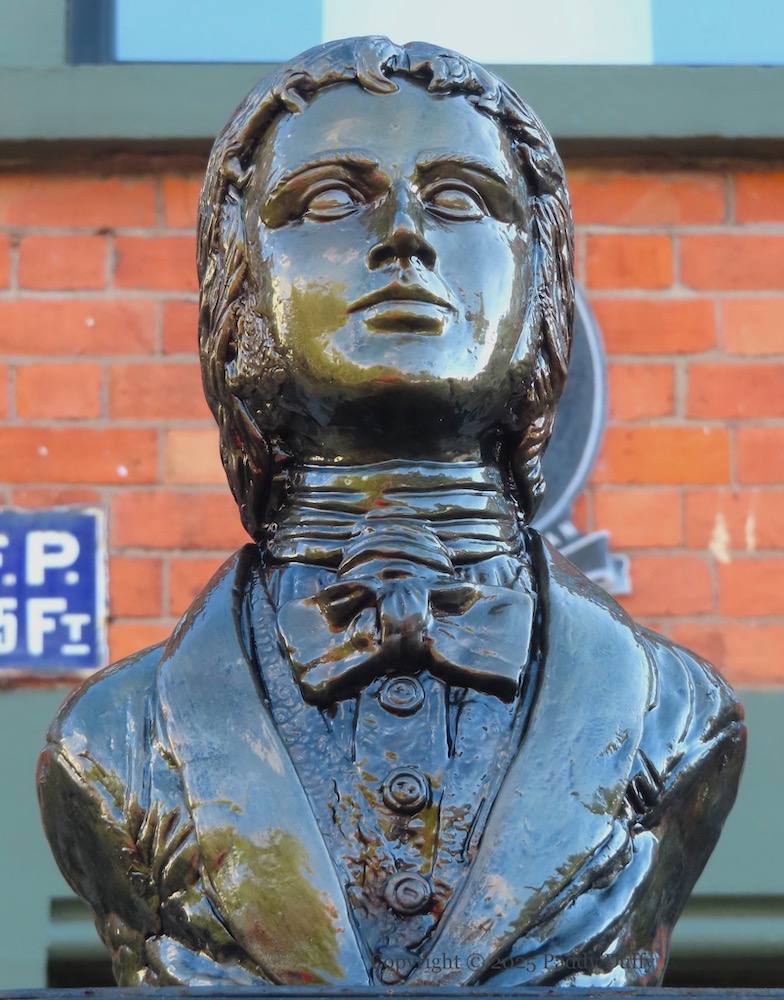
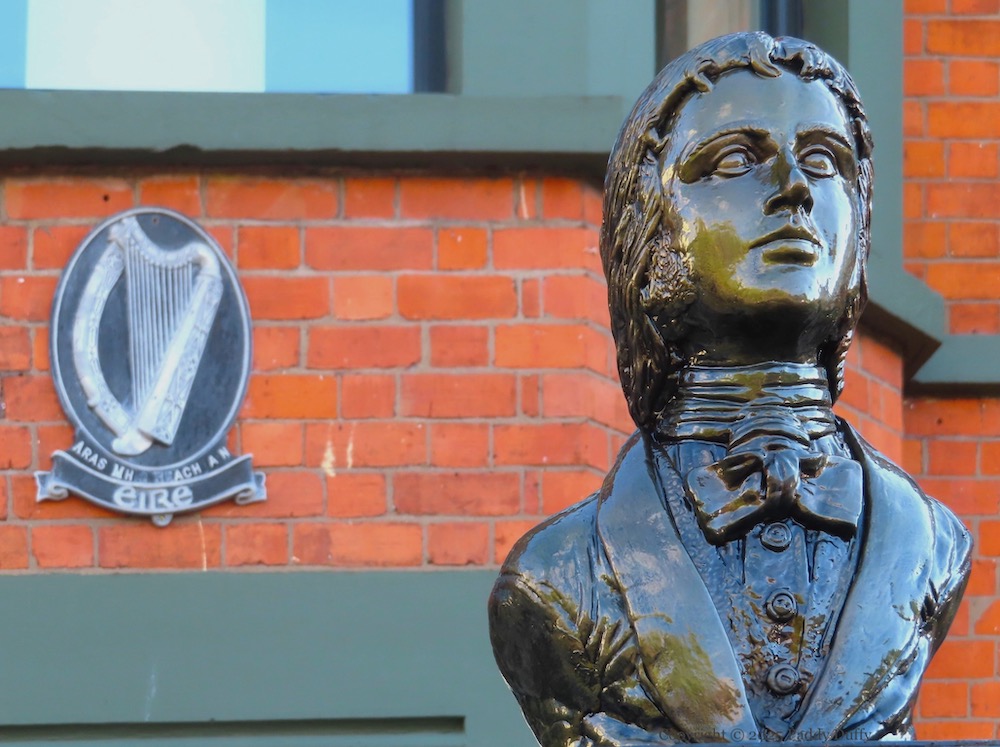
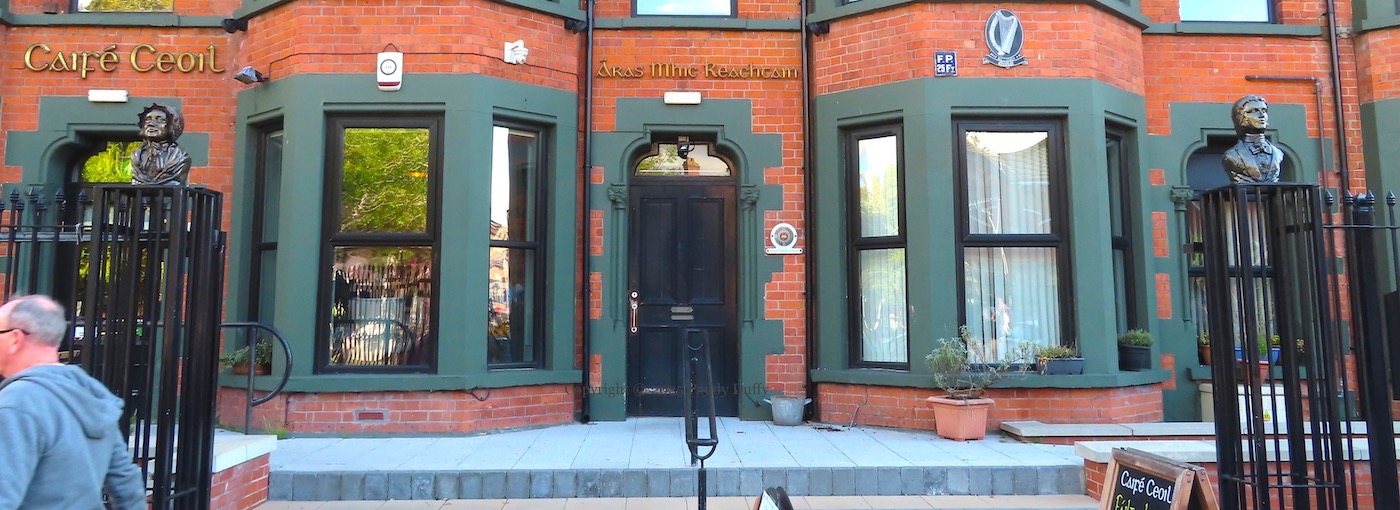
Bronze busts of Máıre Áıne Mhıc Reachtaın/Mary Ann McCracken and Anraí Seoıgh Mhıc Reachtaın/Henry Joy McCracken have been unveiled outside Áras Mhıc Reachtaın, the Irish-language centre on the Antrim Road and home of Cumann Cultúrtha Mhıc Reachtaın (web).
The pair – brother and sister – were Presbyterians and republicans; their mother was Ann Joy, daughter of Francis Joy, linen manufacturer and founder of the Belfast Newsletter. Henry led the Antrim uprising of the United Irishmen in 1798 and was hanged for it in Corn Market at age 30. (WP)
This entry updates 2023’s Harryville Says No with images of two additional boards/plaques erected by the 12th Battalion Royal Irish Rifles Memorial Association (Fb), “in honour of the men from Harryville [Ballymena] who made the ultimate sacrifice during the Battle Of The Somme from 1st July to 18th November 1916”.
“Remembering 57386 Sergeant John McNabney, formerly of No 9 Larne Street, 36th Divisional signal company, awarded the distinguished conduct medal, military medal with bar, and mentioned in despatches.” McNabney’s career and many decorations are described in Ballymena Guardian | Your Lurgan.
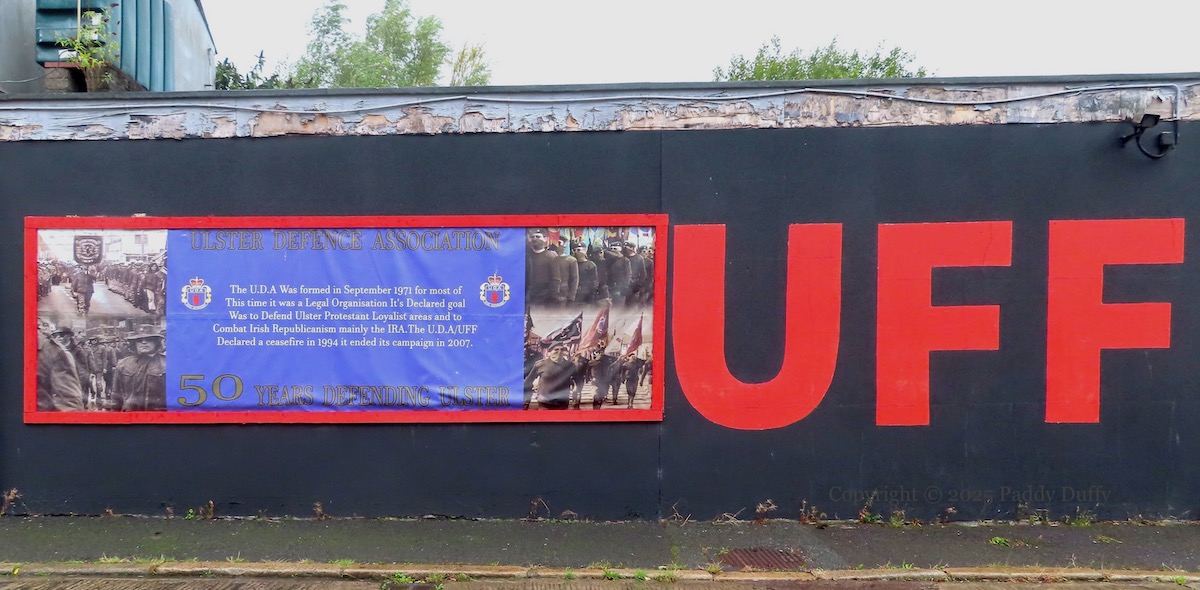
“Ulster Defence Association – 50 years defending Ulster. The UDA was formed in September 1971 for most This time it was a Legal Organisation It’s Declared goal Was to Defend Ulster Protestant Loyalist areas and Combat Irish Republicanism mainly the IRA. The UDA/UFF Declared a ceasefire in 1994 it ended its campaign in 2007.”
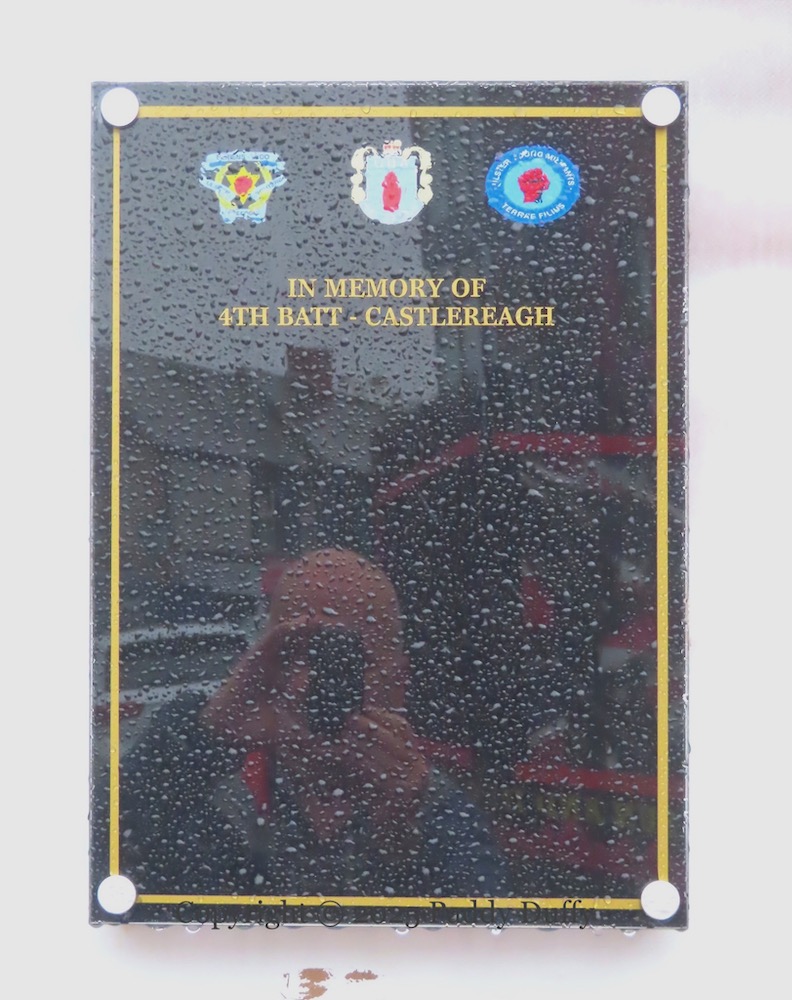
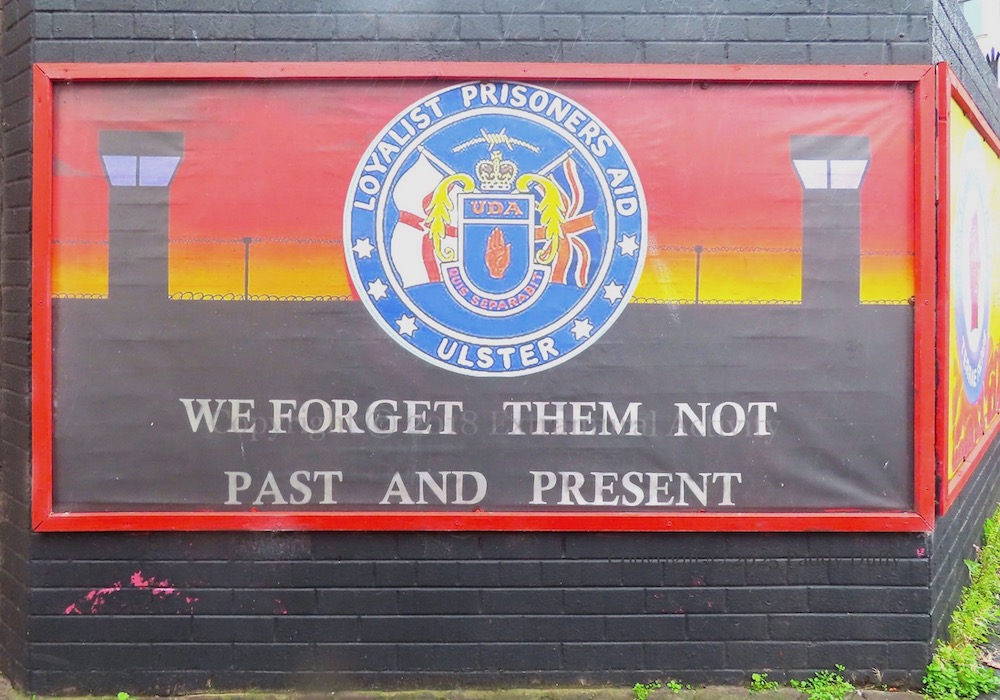
This entry updates 2022’s If You Want Peace, Prepare For War, which shows two hooded gunman next to the large “UFF” (as in the image immediately below) rather than a(nother) tarp giving a potted history of the UDA. Two black plaques have also been added in the memorial garden “In memory of 4th Batt – Castlereagh”. The one on the left lists “John (Jackie) McMaster, George Neil, Alex McAllister, Raymond (Bug) Stewart, John Kirker.”
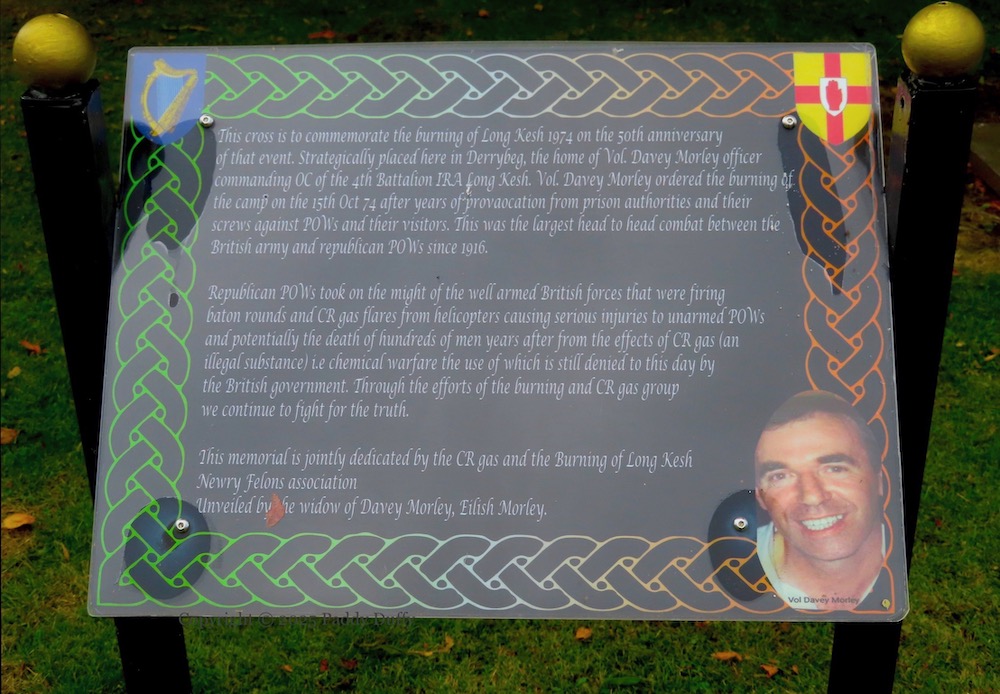
This is one of four Celtic crosses raised to commemorate the fiftieth anniversary of the Burning Of Long Kesh in 1974 and, in this specific instance, to pay tribute to local Derrybeg volunteer Davey Morley, camp OC of the Provisionals, who gave the order for the camp to be burned (Pensive Quill).
Morley died in 1987, at age 46, possibly suffering the aftereffects of CR gas (The Blanket | Only Our Rivers).
Images of the December 2024 launch can be seen on Newry.LN’s Fb page.
“There are special people in our lives who never leave us even after they are gone. In loving memory of all the men that have passed away since the burning of Long Kesh 15th & 16th October 1974. Rest in peace. Also remembering the blanket men and women, all republicans who have lost their lives in our fight for freedom. Rest in peace.”
“This cross is to commemorate the burning of Long Kesh 1974 on the 50th anniversary of that event. Strategically placed here in Derrybeg, the home of Vol. Davey Morley officer commanding (OC) of the 4th battalion IRA Long Kesh. Vol. Davey Morley ordered the burning of the camp on the 15th Oct 74 after years of provaocation [sic] from prison authorities and their screws against POWs and their visitors. This was the largest head-to-head combat between the British Army and republican POWs since 1916. Republican POWs took on the might of the well-armed British forces that were firing baton rounds and CR gas flares from helicopters causing serious injuries to unarmed POWs and potentially the death of hundreds of men years after from the effects of CR gas (an illegal substance) i.e. chemical warfare the use of which is still denied to this day by the British government. Through the efforts of the burning and CR gas group we continue to fight for the truth. This memorial is jointly dedicated by the CR gas and the Burning of Long Kesh Newry Felons association. Unveiled by the widow of Davey Morley, Eilish Morley.”
A poem on the back of the cross reads:
“Oh mother of mine, I committed no crime So please do not weep when they bury me deep Because here in this ground with my comrades I sleep The spirit of freedom they can never defeat.
No defeat in the battle, no defeat in the war No defeat as in death, just our hearts you have tore
Continuing tears our people do shed For this country of ours and its patriot dead But one day we will be free, my comrades and me
So dear mother don’t weep, I am only asleep Put a kiss on my head and a flower at my feet And remember together we can never be beat!”
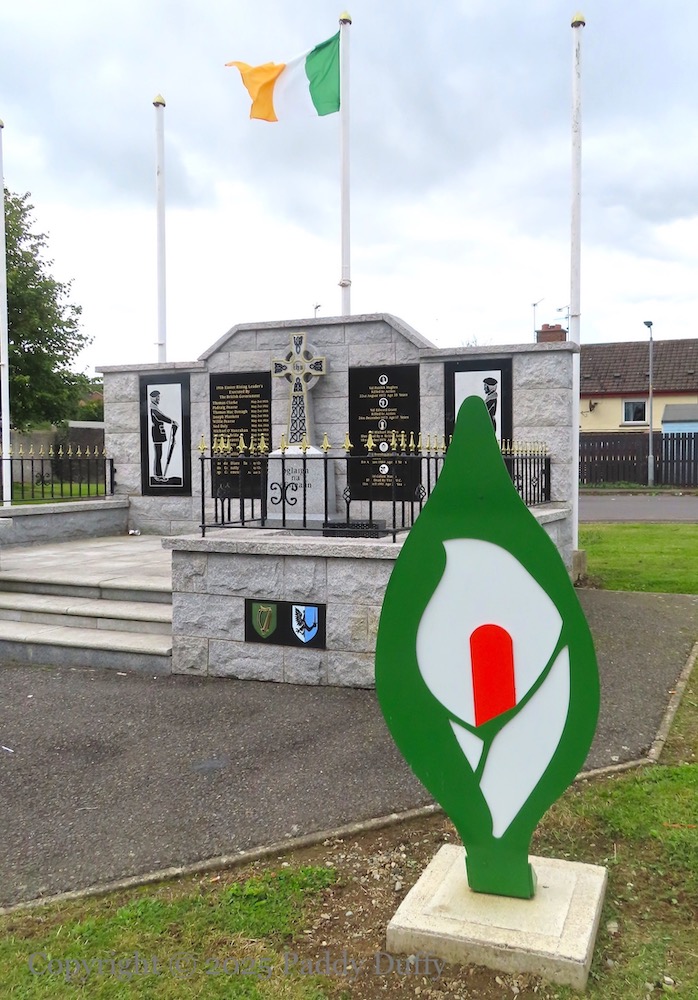
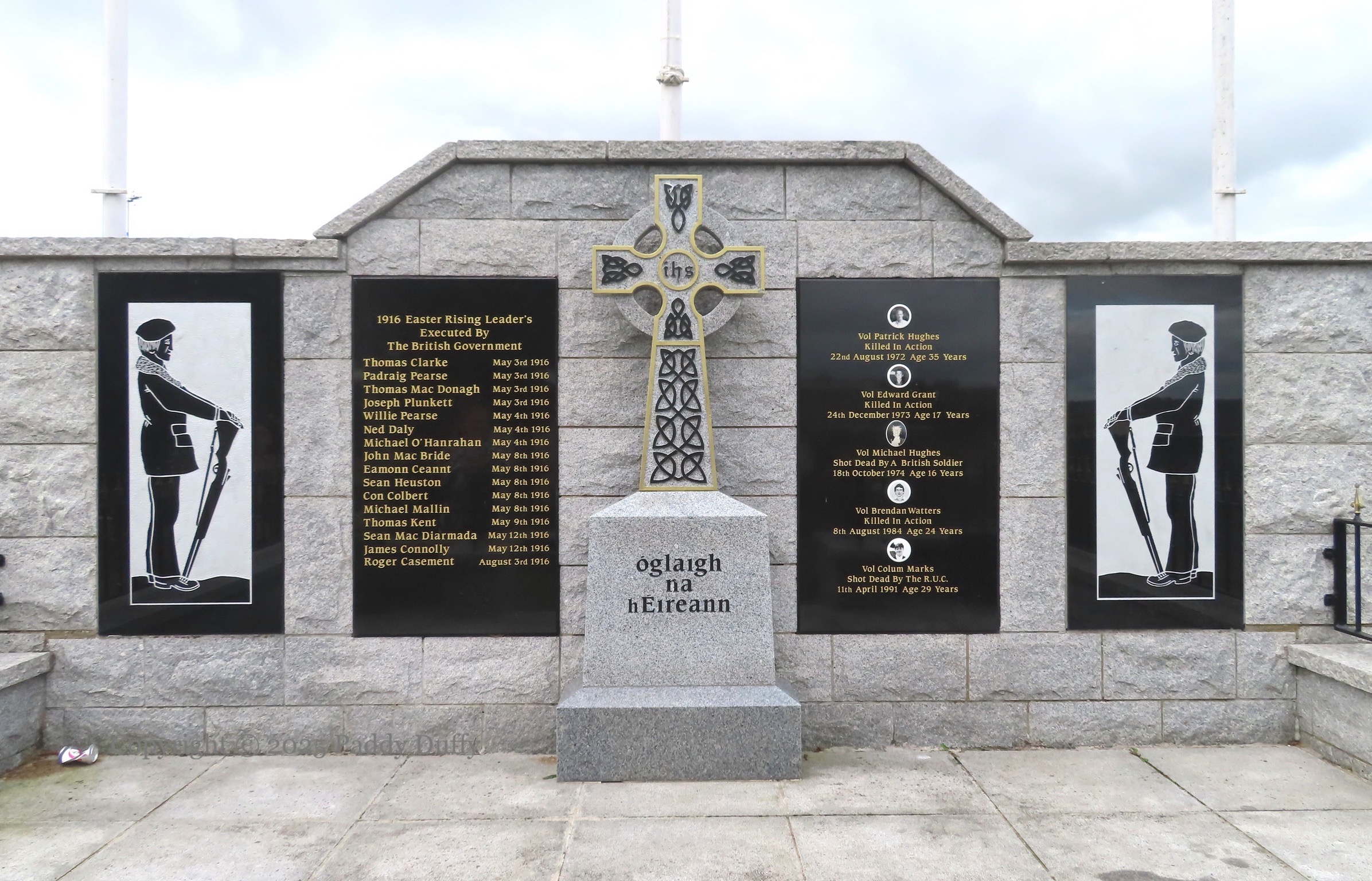
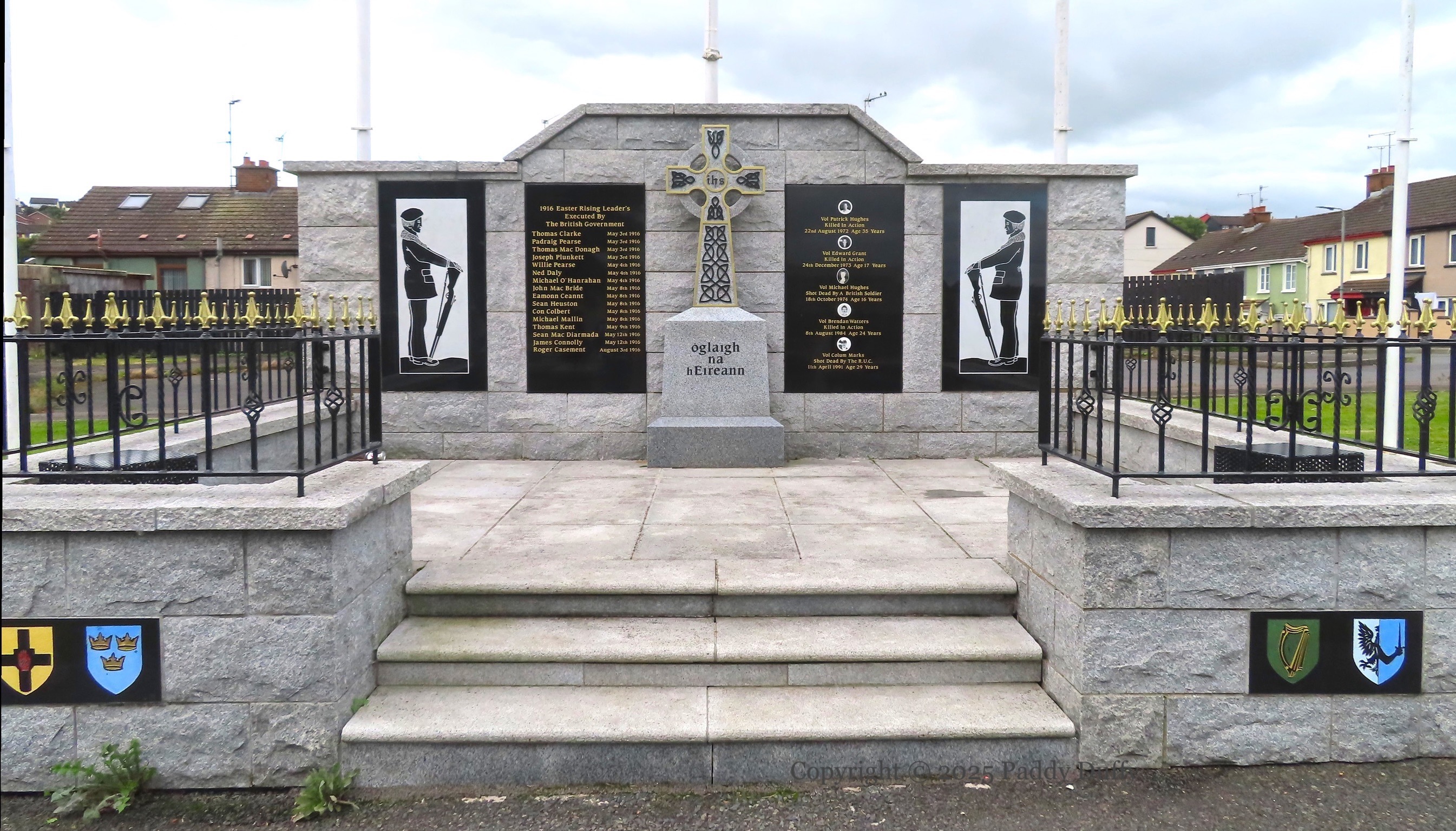
On the left of this Newry memorial is a list of the “1916 Easter Rising Leaders executed by the British government: Thomas Clarke, Padraig Pearse, Thomas Mac Donagh, Joseph Plunkett, Willie Pearse, Ned Daly, Michael O’Hanrahan John Mac Bride, Eamonn Ceannt, Sean Heuston, Con Colbert, Michael Mallin, Thomas Kent, Sean Mac Diarmada, James Connolly, Roger Casement.”
On the right are five members of the local Óglaıgh na hÉıreann: Patrick Hughes, Edward Grant, Michael Hughes, Brendan Watters, Colum Marks.” Michael Hughes/Mıcheál Ó hAodha is commemorated at the western entrance to the estate and the plaque also mentions the death of his father, Patsy, and the death by premature explosion of his friend Eddie Grant in 1973. Brendan Watters likewise died by premature explosion (UPI). There is a memorial stone in Downpatrick at the spot where Colum Marks was killed.
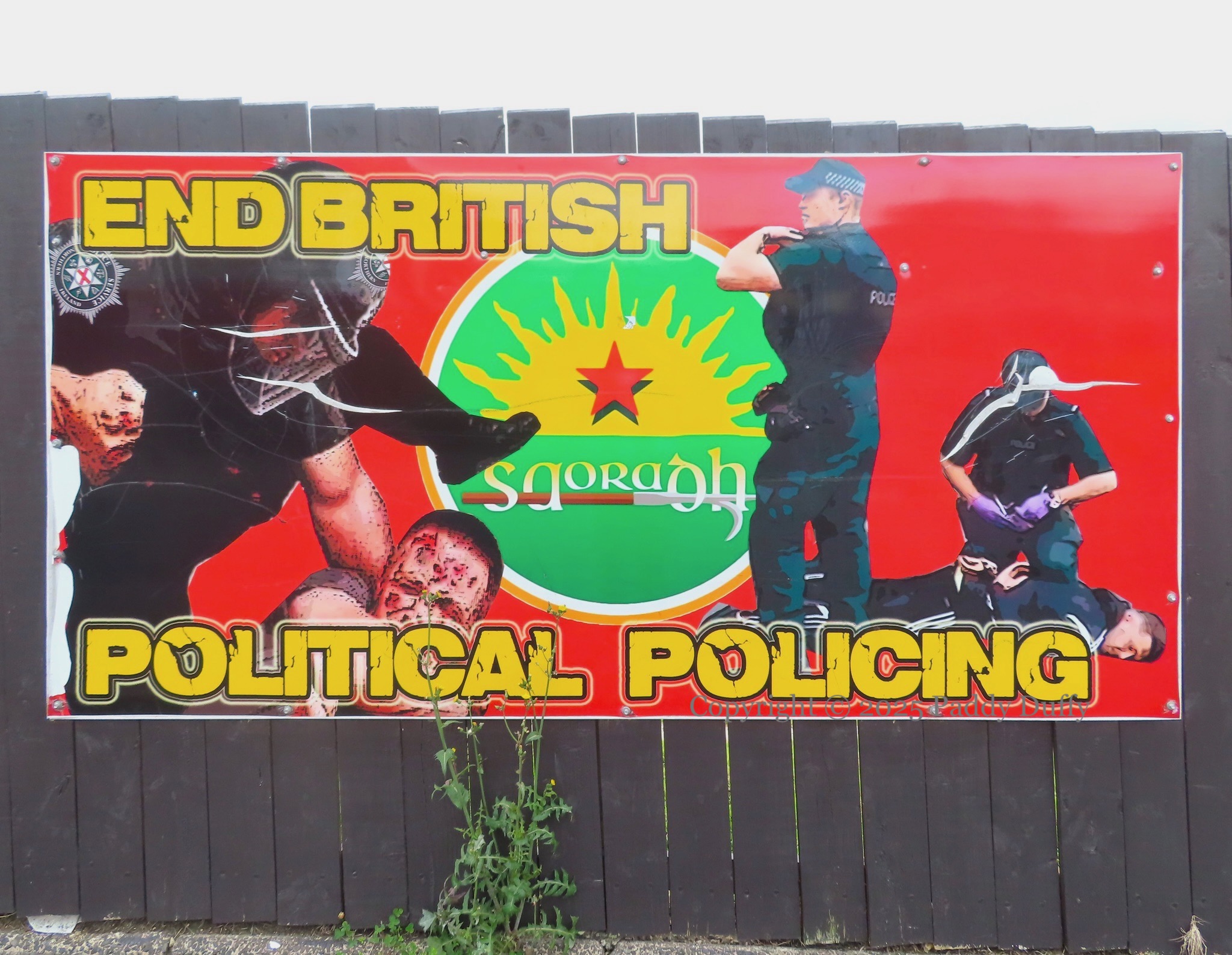
Included last below is a Saoradh (web) board: “End British political policing”.
James “Jim” Doherty was six years old when he was shot while playing in the front garden of his Turf Lodge home in 1972. Relatives For Justice and the family launched the board shown above at the entrance to the estate ten years ago – in October 2015 – in order to push for an inquiry into the death due to the insufficiency of the original investigation and the disappearance of the bullet taken from the body. (Belfast Media Group)
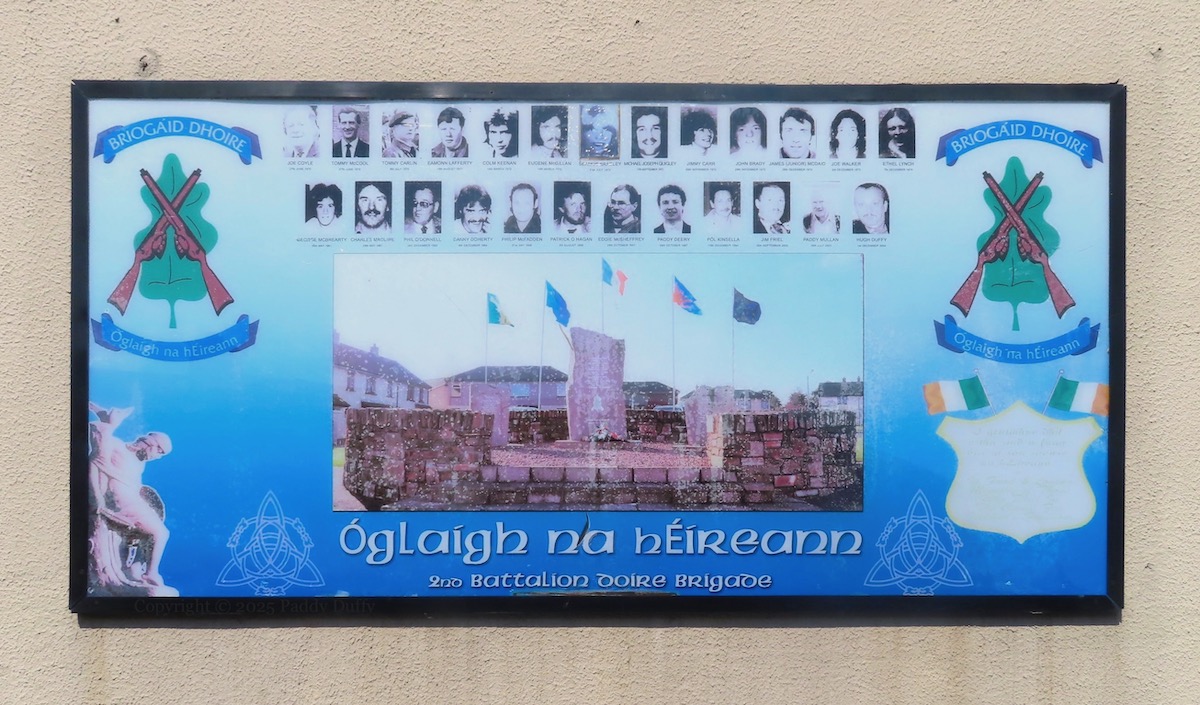
The Linsfort Drive (Creggan) memorial garden (see M02663 and M02775) is featured in the centre of this board of IRA volunteers from the 2nd battalion of the Derry Brigade. There are two similarly designed boards to the 1st battalion in Westland Street and in Lecky Road.














 Paddy Duffy Collection