This is a freshly-repainted sign for “South Belfast Ulster Volunteer Force, 2nd battalion, A company Donegall Pass” on the back wall of the Hideout bar. The previous version was painted c. 2005.
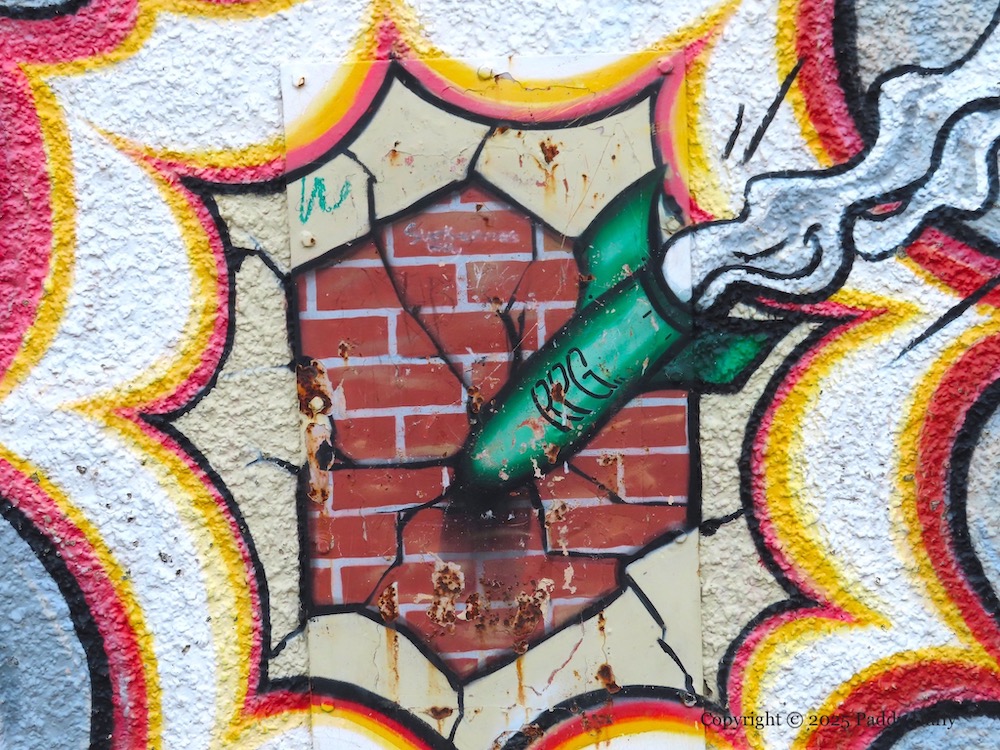
“Ka-boom” from an RPG slamming into the side of the post office in Kilwilkie, Lurgan. The piece was seen in 2015 (Peter Moloney Collection) but it showing minimal signs of aging.
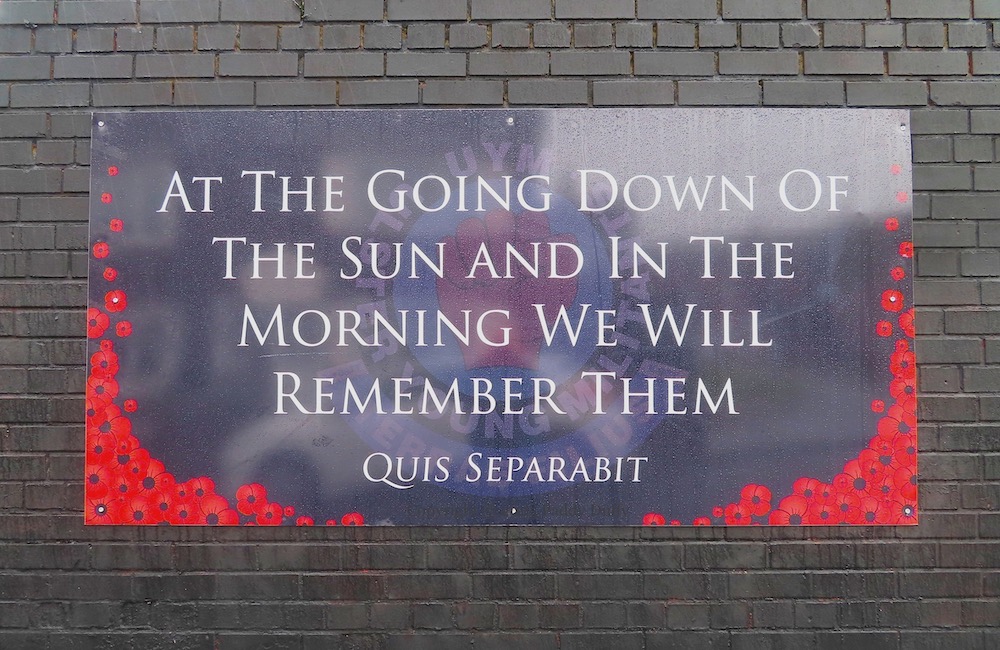
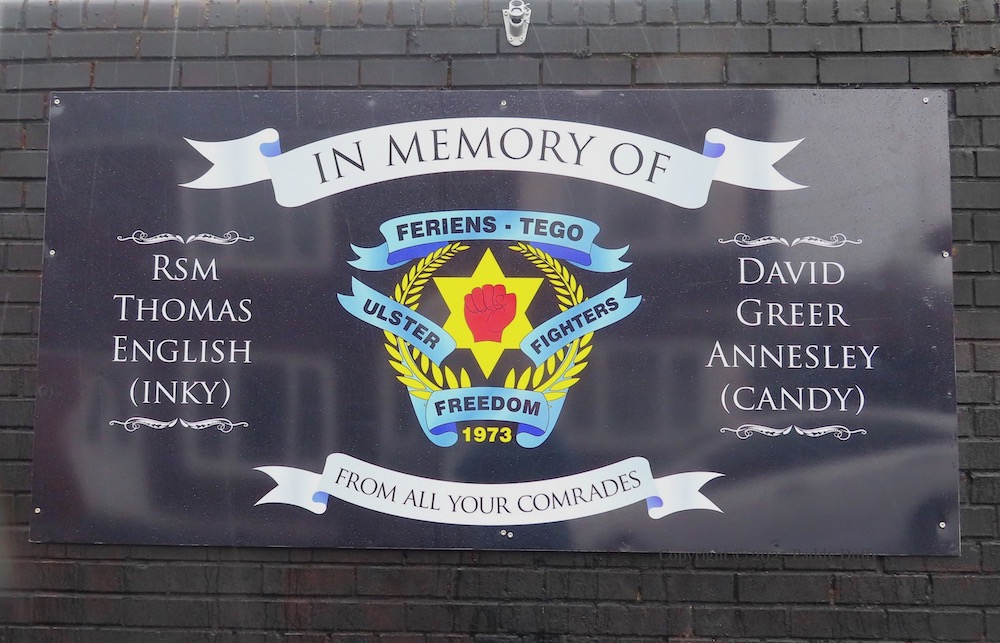
“25 years from home. In proud and loving memory of Inky & Candy. Gone but not forgotten.”
October 2000 was a violent month in Tiger’s Bay, north Belfast, as the UDA and UVF feuded. David “Candy” Annesley (commonly known as David Greer – BelTel) was shot in Mountcollyer Street on October 28th by the UVF. On the 31st, Bertie Rice, veteran UVF member and canvasser for the PUP, was killed by the UDA at his Canning Street house. Later the same day, Tommy “Inky” English – UDA commander in north Belfast who had previously lived in Tiger’s Bay – was shot death by the UVF at his Ballyduff home. Mark Quail of the UVF was shot in Rathcoole on November 1st. (BBC | BBC | WP) There were fears that the feud would end (An Phoblacht) but it was formally ended on December 15th, with a joint statement by both groups (RTÉ).
This twenty-fifth anniversary tarp is on the multi-use pitch on North Queen Street at Upper Canning Street.
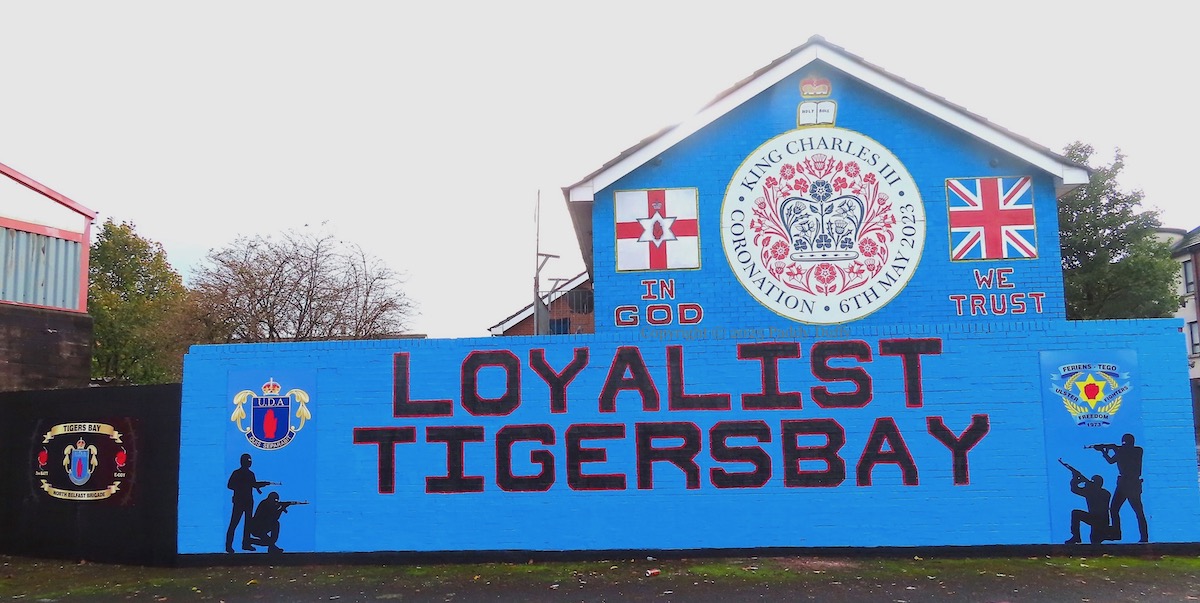
Stop The Boats has been painted out below the large “Loyalist Tiger’s Bay” and the entire wall painted in solid blue and book-ended by UDA and UFF boards showing silhouetted gunmen in active poses.
The side-wall, home to painted Orange Order symbols since 2017, has been painted black and a board (above) added to E company from Tiger’s Bay. (It’s possible “North Belfast brigade” and “3rd battalion” are the same thing.)
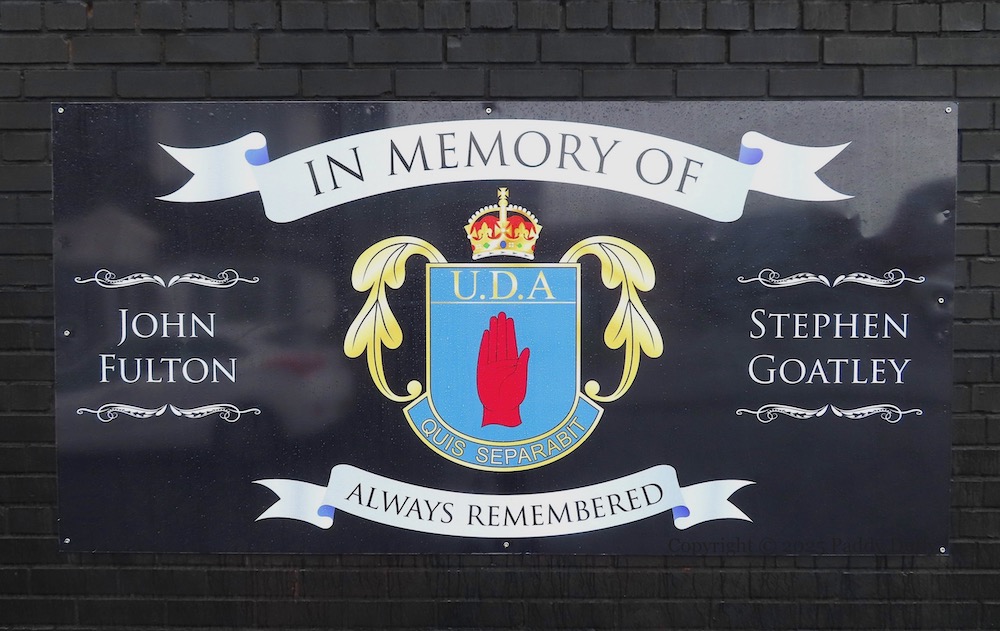
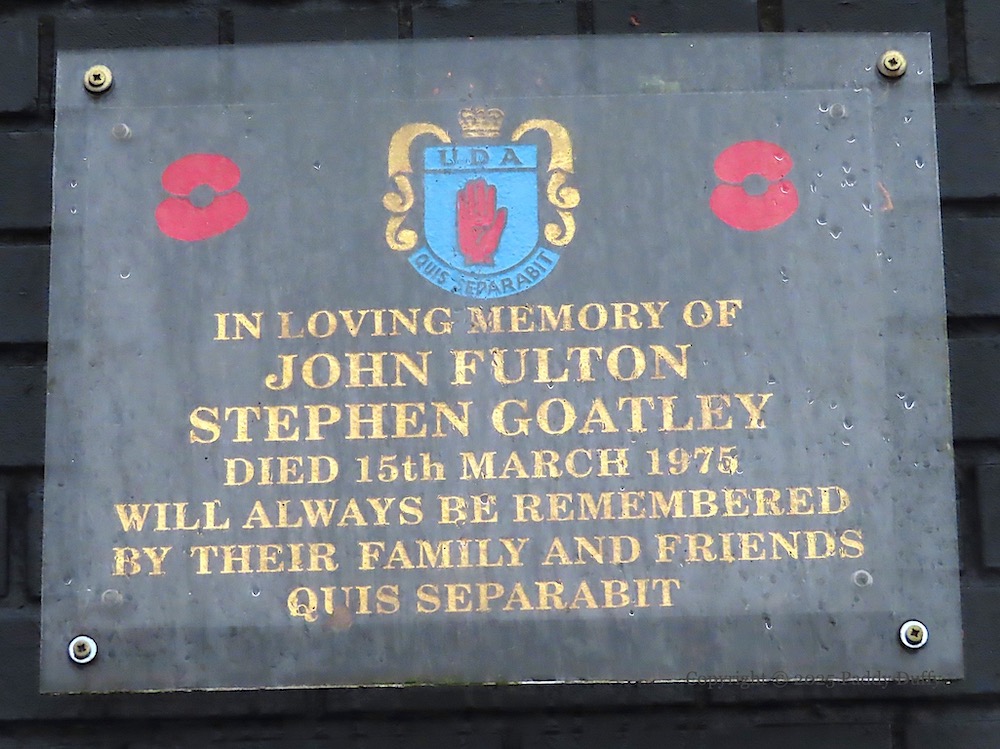
“In loving memory of John Fulton [and] Stephen Goatley, died 15th March 1975. Will always be remembered by their family and friends. Quis separabit.” UDA members John Fulton and were Stephen Goatley were killed together in the Alexandra Bar on York Road (close to the Mervue Street location of this memorial) in revenge for the stabbing of the UVF’s Joe Shaw in the North Star Bar, by the UVF as part of the UDA-UVF feud in 1975.
The two men named on the other board were also killed in a feud between the UDA and UVF, in 2000 – see Inky & Candy. “In loving memory Thomas (Inky) English & David (Candy) Greer Annesley. Together in the same old way/would be our dearest wish today./Silent memories true and tender/just to show we still remember.”
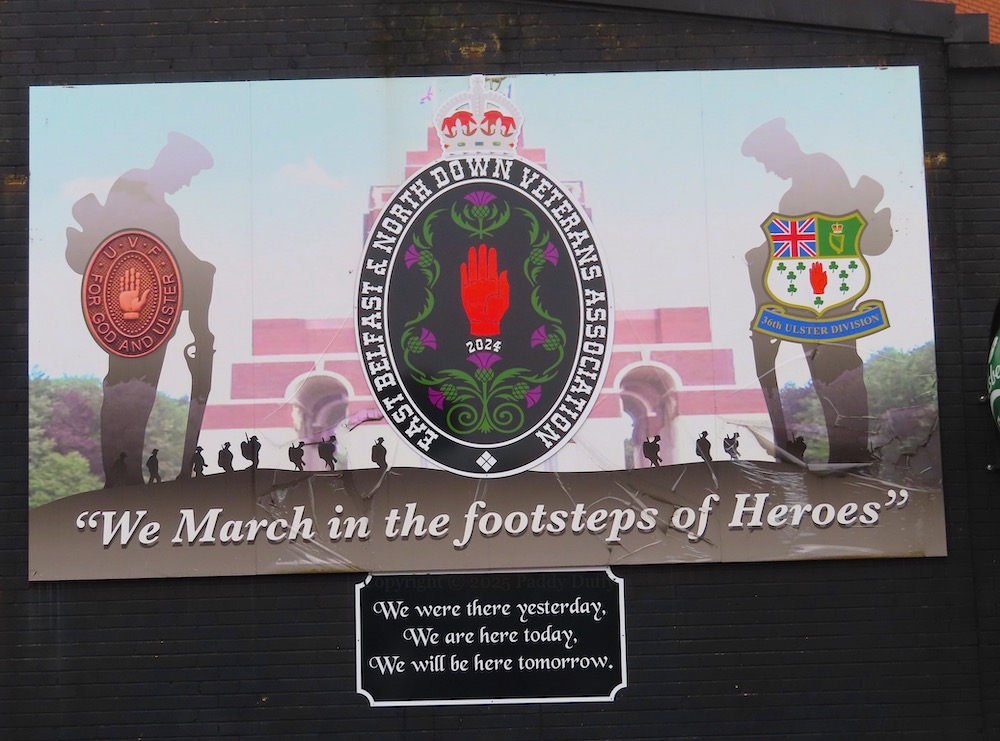
This is a new version of the board seen in 2022, in which the central emblem was of the 8th battalion of the Royal Irish Rifles, whereas it is now of the “East Belfast & North Down Veterans’ Association”.
Below, a small plaque reading “We were there yesterday, We are here today, We will be here tomorrow” has been added
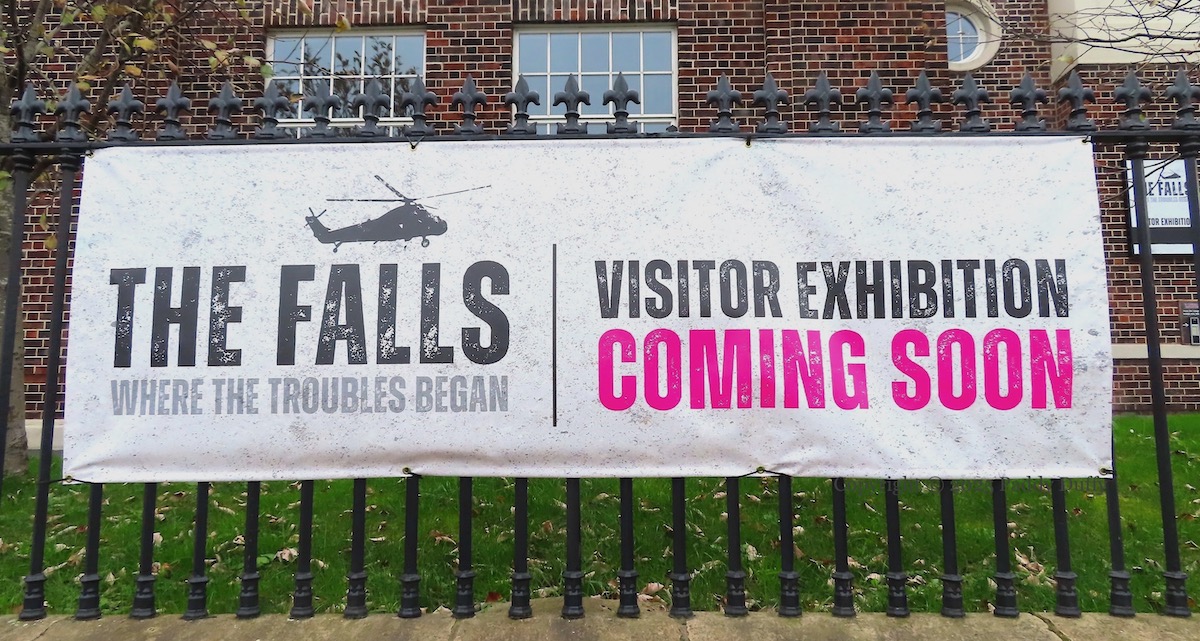
A new visitor exhibition will open on Thursday November 6th at Ionad Eileen Howell with images, video, and audio recordings covering the period from the start of the Troubles in 1969 to the Falls Curfew in 1970 (Belfast Media). The new exhibition is hosted by the Falls Community Council (Fb); tickets via Visit Belfast.
The Troubles are generally said to have started in August, 1969, rather than (e.g.) October, 1968, because the Battle Of The Bogside in Derry (beginning on August 12th) and the rioting in Belfast (beginning on the 13th) led to the deployment of British troops (on August 14th and 15th).
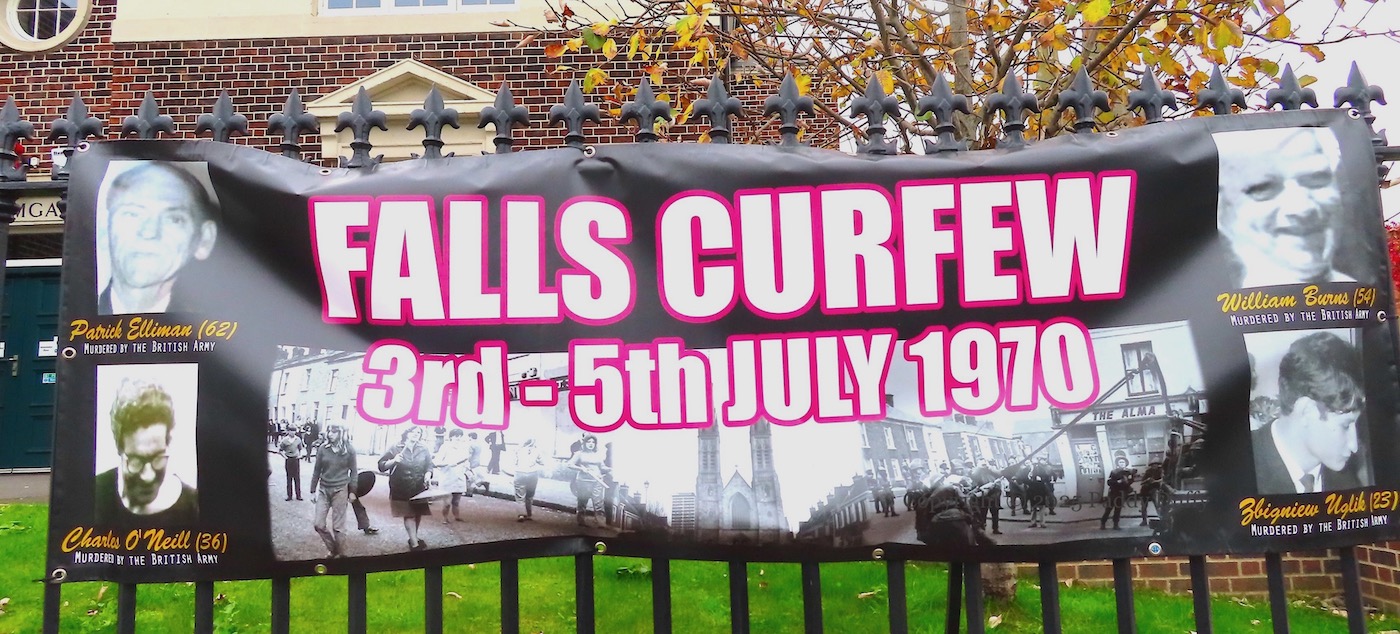
The Falls Curfew, in July 1970, was a pivotal event in the souring of relations between the CNR population and the British Army. About 3,000 homes were cordoned off, the area was saturated with CS gas, and thousands of bullets were fired by the Officials and Army soldiers, the latter killing Charles O’Neill, William Burns, Zbigniew Uglik, and Patrick Elliman; there is a plaque commemorating the four a little further up the road – see The Falls Curfew.
“Vol. Brendan Burns, Vol. Brendan Moley, 29 February 1988.” Burns and Moley died “on active service”, meaning the premature explosion of a bomb they were loading into a van (RTÉ video | Sutton | RN). There is a plaque at the spot at which the pair was killed, on the nearby Donaldson’s Road – see M08795. Burns was wanted in connection with the Narrow Water ambush of 1979 (UPI).
“You were being oppressed by the political and military might of the foreign invader. We tried to protect you, we gave you the best that we could, but our time ran out, before the battle was won. Now it’s time for you to give the best you can. Stand together with your comrades we sadly left behind. Be proud to carry on the struggle for the freedom of our land.”











 Paddy Duffy Collection