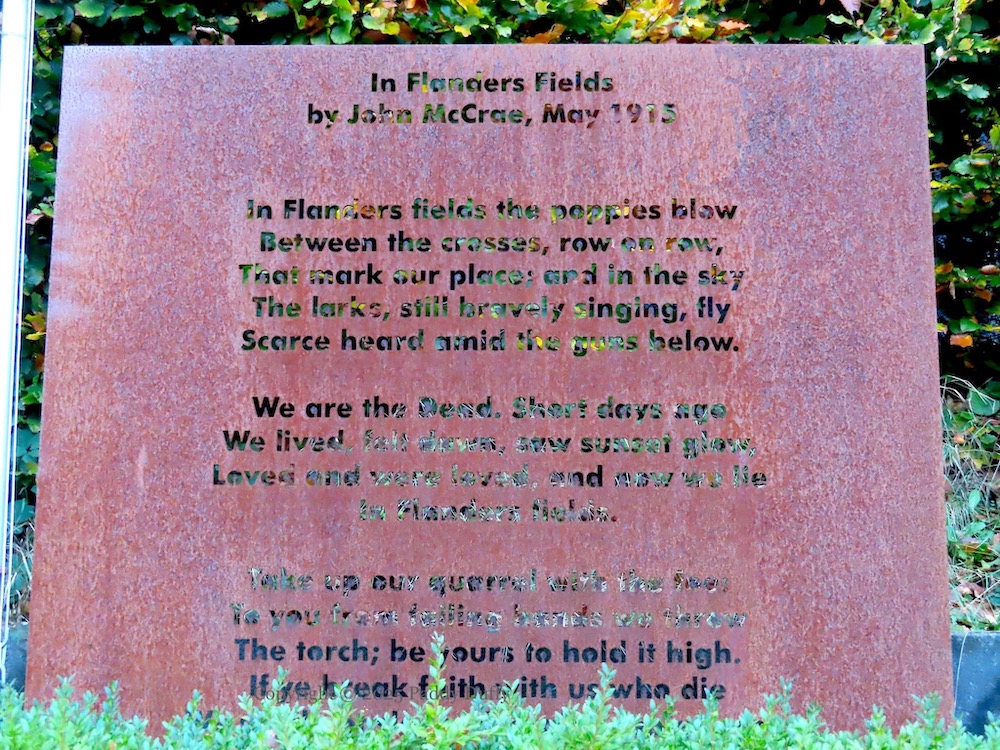
Remembrance Day, formerly known as Armistice Day, commemorates and celebrates the end of hostilities in the first World War on November 11th, 1918. Many ceremonies in the UK take place on the second Sunday of the month, regardless of the date. This practice began in 1945, changing the WWII practice of marking the occasion on the preceding Sunday, to ensure that the holiday did not fall on a work-day (WP).
This large tarp (above) is at the Shore Road memorial garden to the 10th, 36th, and 16th divisions, shown below, along with the nearby Fifes & Drums/Fairhill flute band (Fb)/Pride Of The Shore (Fb) tribute to QEII. The tarp was also seen last year: Remembrance Day.
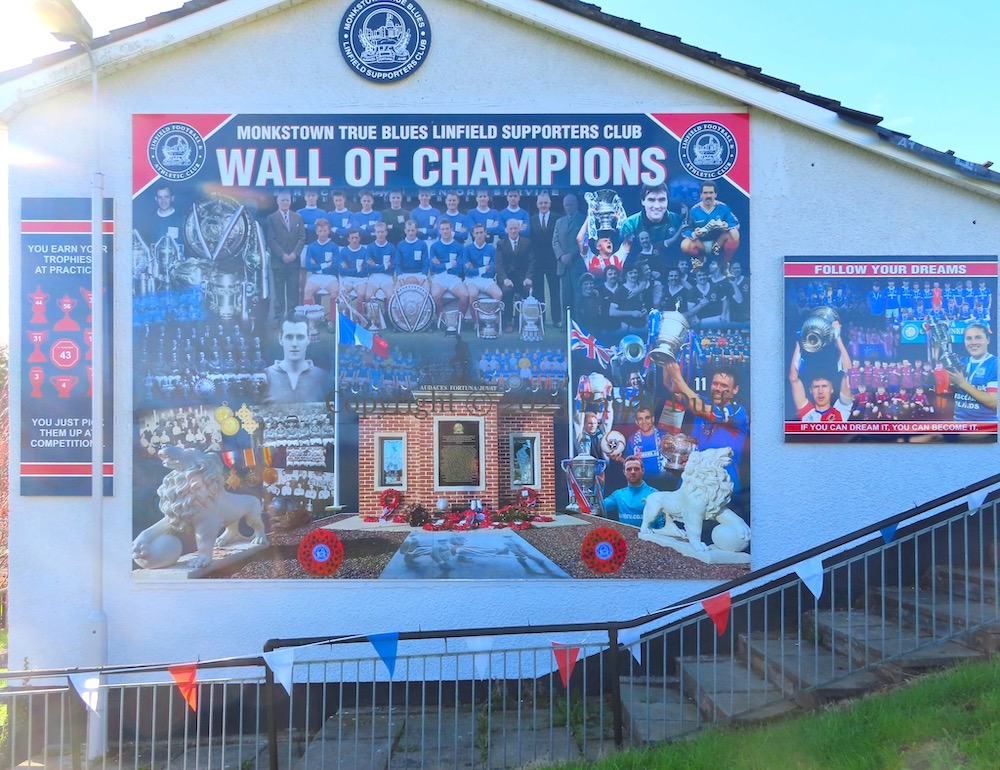
“You earn your trophies at practice – you just pick them up at competitions.” The largest number among the honours on the left is 56, for the number of times Linfield has won the league.
“Monkstown true blues Linfield supporters club,” (Fb) “Follow your dreams – if you can dream it, you can become it.”
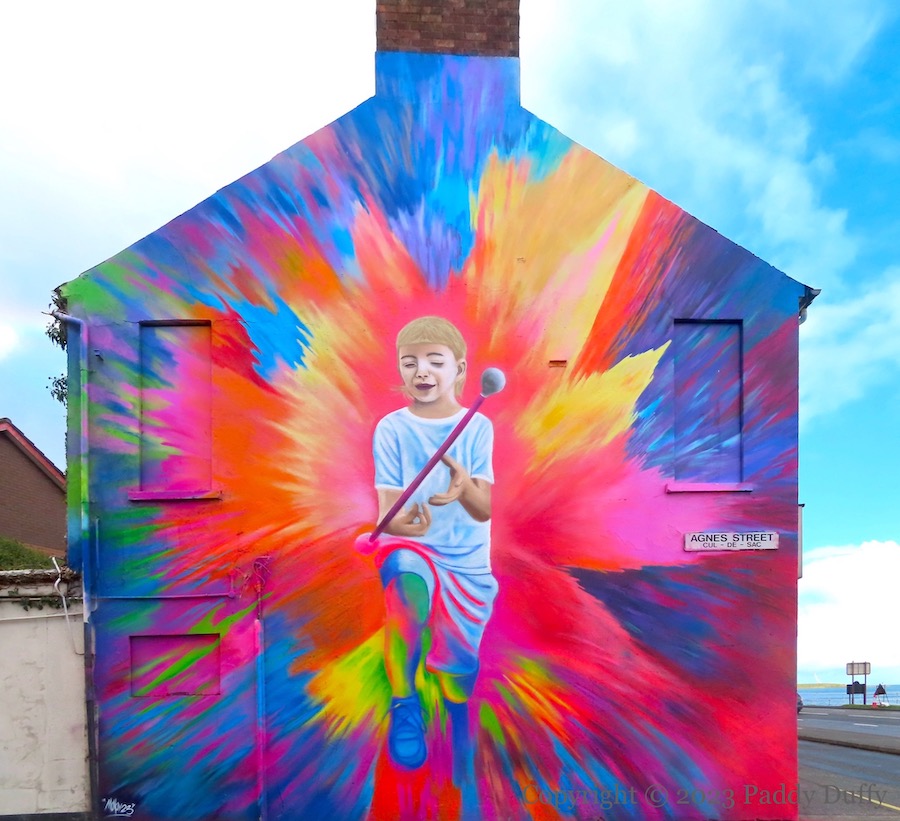
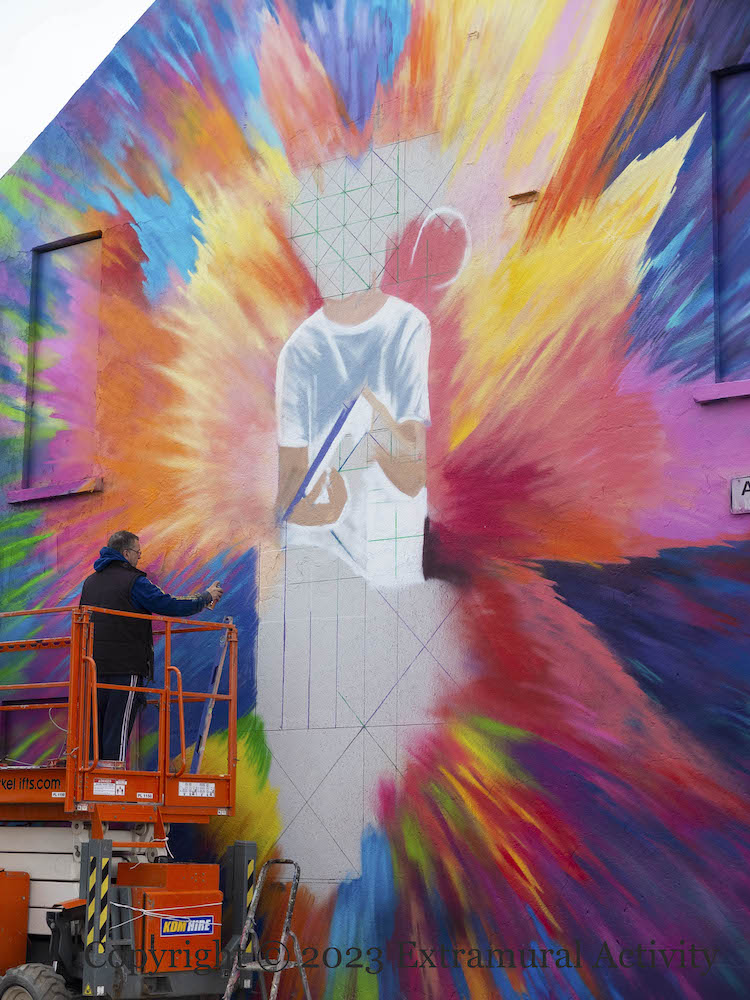
This is the new Glen Molloy mural in Carrickfergus, showing a boy practicing his baton-twirling and marching. It’s in the same style as the Little Drummer Boy in the Shankill.
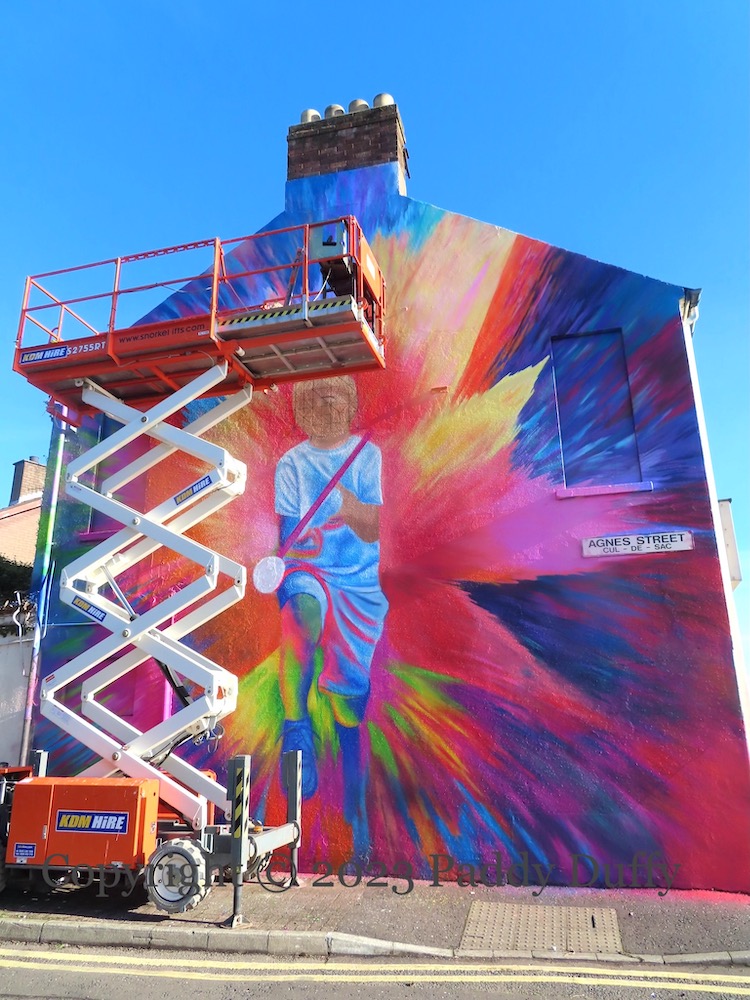
The mural is in Agnes Street, at the far end of Marine Highway, heading towards Eden. The in-progress images below show Glen at work and the mural at different stages of development.
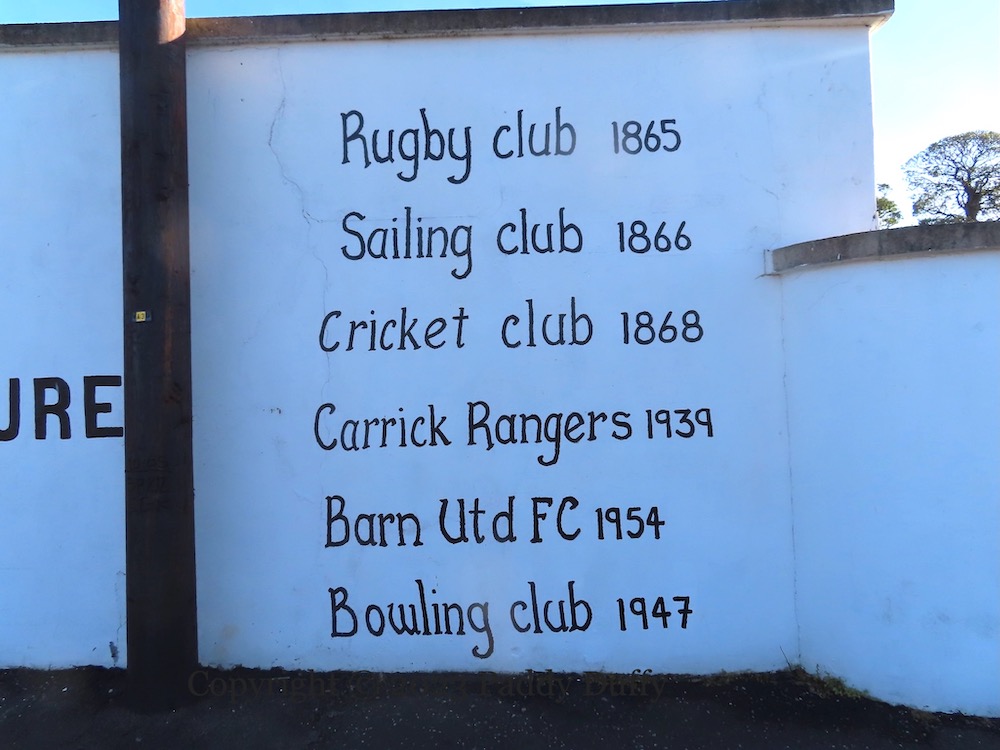
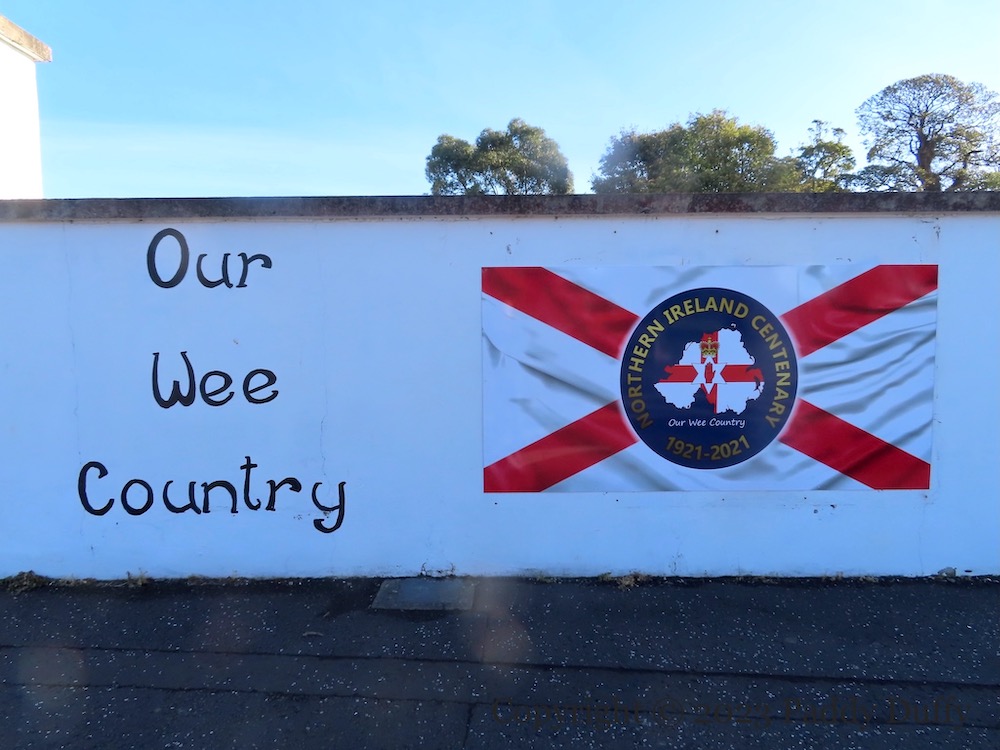
This is the second (at least) iteration of an installation along Taylor’s Avenue, Carrickfergus, showcasing the Ulster-Scots heritage of Carrickfergus and its later contributions to the United Kingdom.
The wall is 60 metres/200 feet in length and can be divided into about ten distinct panels – notes on the different panels are given below, following the order of presentation of images, which show the entire wall moving from left to right.
The original, as seen on Street View, included boards showing the Pretani Isles/British Isles, QEII, and Tom Moore. As seen here, there are now boards to King Charles III, a vintage postage stamp, ‘The Siege Of Carrickfergus’ in 1689, and ‘The Barn Mills Fallen’ of WWI.
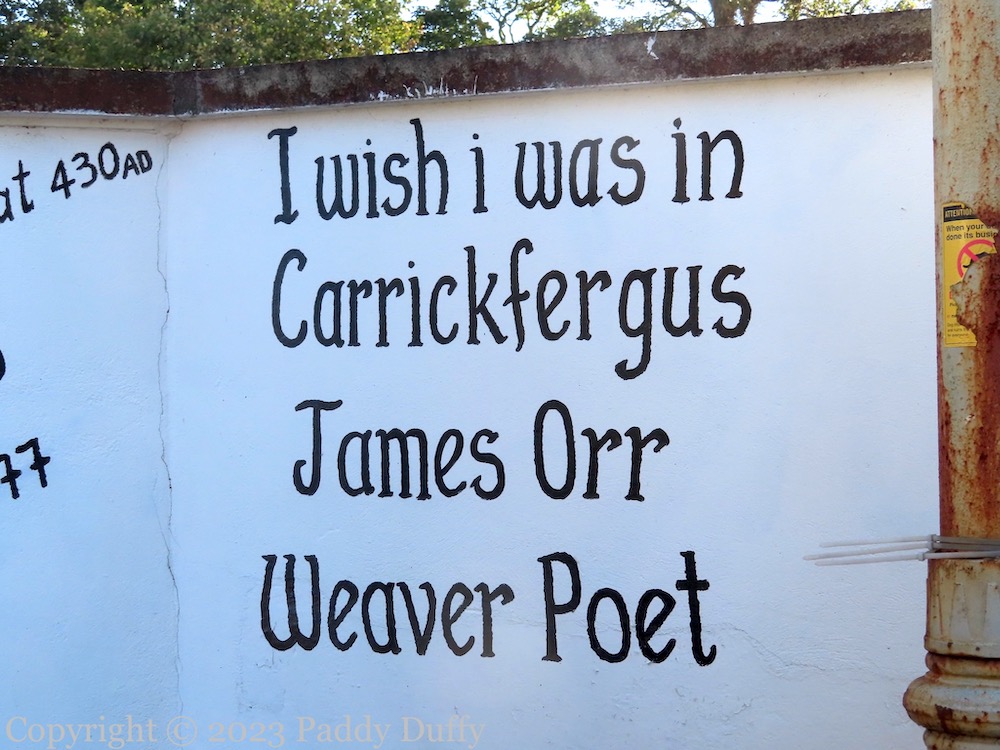
James Orr, the ‘Bard Of Ballycarry’, was a contemporary of Robert Burns and a United Irishman. It does not appear that he wrote a poem with the line “I wish I was in Carrickfergus”.
Daniel Cambridge won his VC for service in the Crimean War (WP) and James Crichton for service in WWI (WP).
CarrickfergusHistory includes “the oldest know map of Carrickfergus” from 1560, employing the spelling “Kragfargus”.
The 2/6 postage stamp featuring Carrickfergus Castle was one of four in a “Castle series” in 1955 (WP).
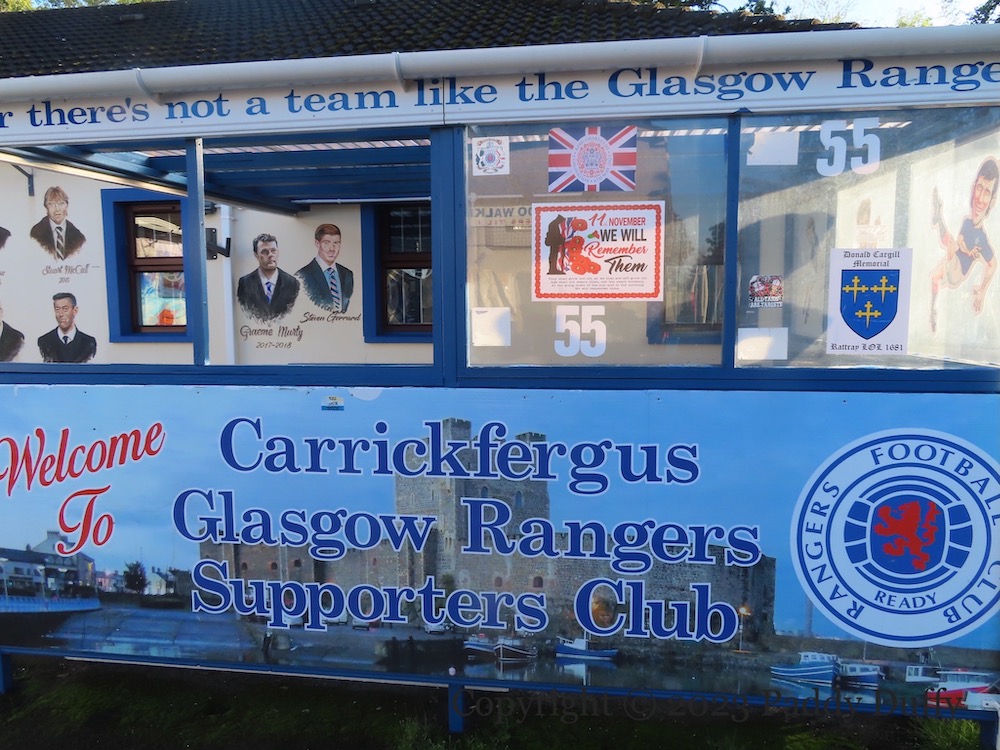
“Let others come after us – we welcome the chase.” The exterior wall of the Carrickfergus Rangers Supporters Club presents a gallery of the club’s managers from 1899 to 2018. In order they are William Wilton, Bill Struth, Scot Symon, David White, William Waddell, Jock Wallace, John Greig, Graeme Souness, Walter Smith, Dick Advocaat, Alex McLeish, Paul Le Guen, Ally McCoist, Stuart McCall, Mark Warburton, Pedro Caixinha, Graeme Murty, Steve Gerrard (and since then, there have been Giovanni van Bronckhorst, Michael Beale, and (currently) Philippe Clement).
“In memory to all who fought and gave their lives.” This is the tribute to the Ulster Division at the Carrickfergus Rangers Supporters’ Club, citing the words of Wilfrid Spender “I am not an Ulsterman but yesterday, the First of July [1916], as I followed their amazing attack, I felt that I would rather be an Ulsterman than anything else in the world.” (For more of Spender’s tribute to the 36th Division, see I Am Not An Ulsterman.)
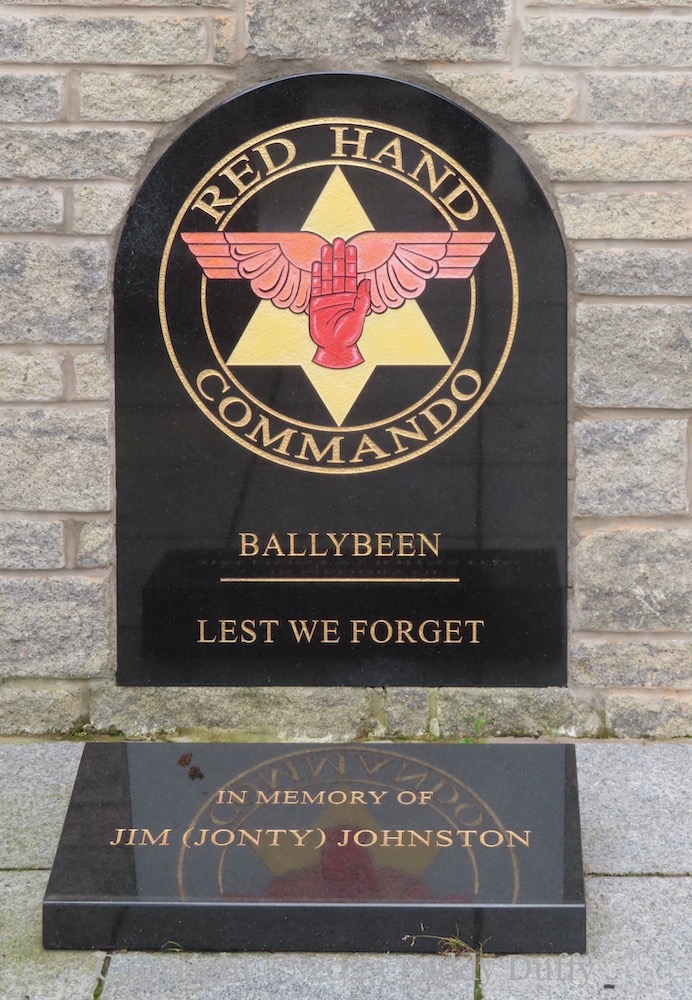
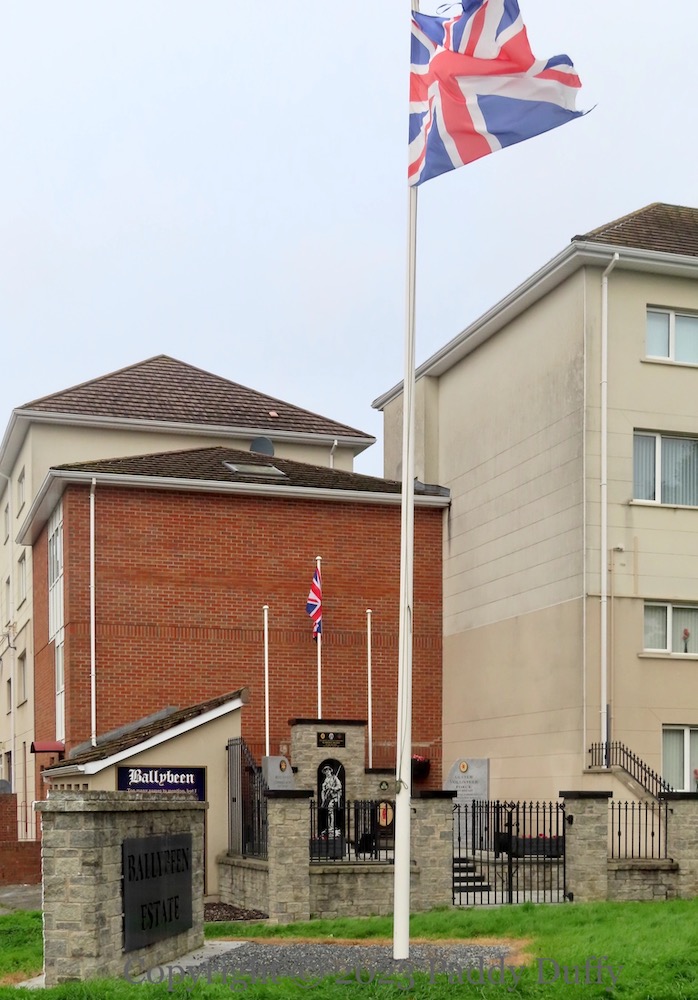
This is the UVF/RHC memorial garden in Ballybeen, with individual plaques to “East Belfast battalion commander” RJ ‘Mickey’ Wilson (died 2022), Jim ‘Jonty’ Johnston (killed in 2003 BelTel), M. Walker, G. McCartney, David Brown. While most of the plaques and stones are to the modern UVF, there are three pieces to the 36th (Ulster) Division.
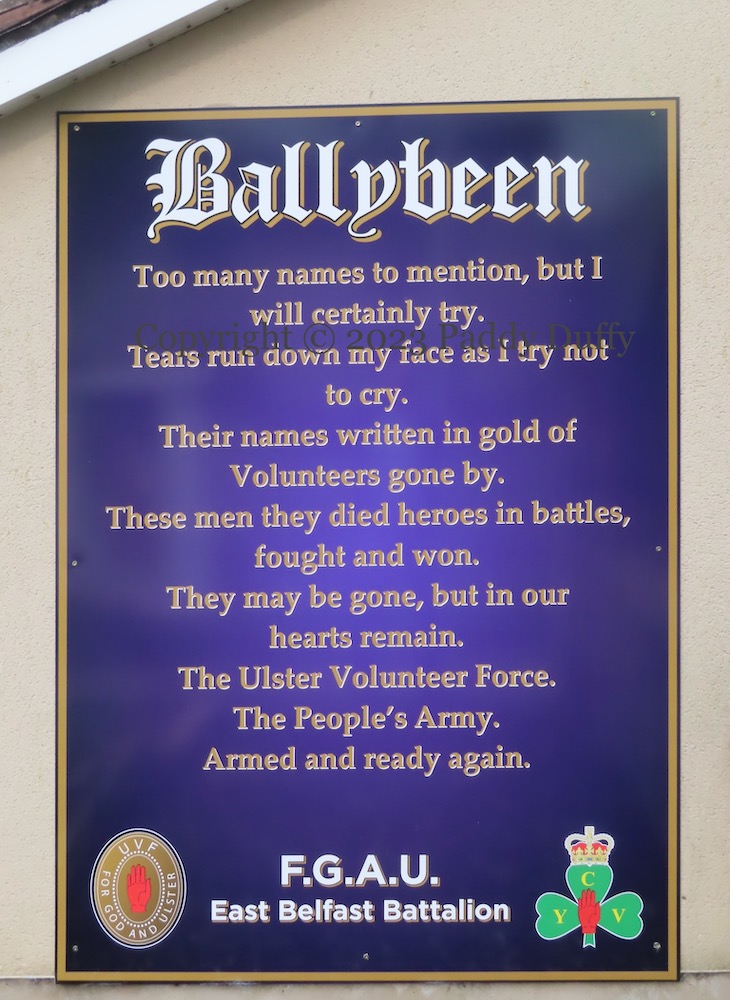
“Too many names to mention, but I will certainly try./Tears run down my face as I try not to cry./Their names written in gold of Volunteers gone by./These men they died heroes in battles, fought and won./They may be gone, but in our hearts remain./The Ulster Volunteer Force. The People’s Army./Armed and ready again.”
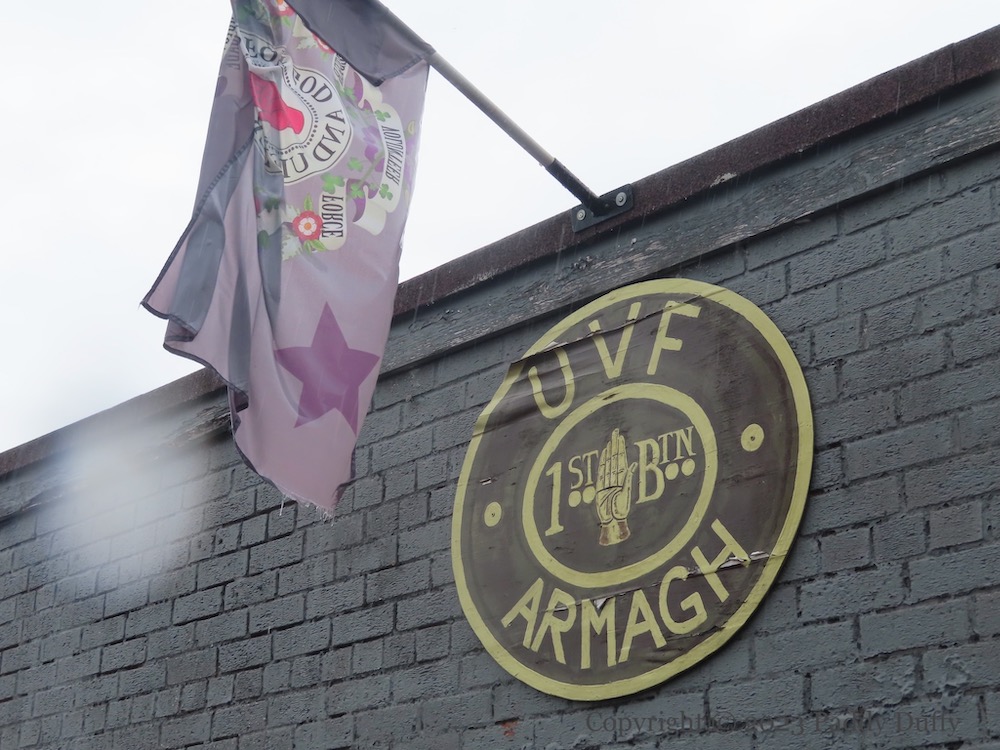
These two boards from the Armagh True Blues flute band (Fb) in Barrack Hill commemorate the Ulster Volunteers of 1912 who went on to join the 9th (County Armagh) battalion of the Royal Irish Fusiliers (Wartime Memories).
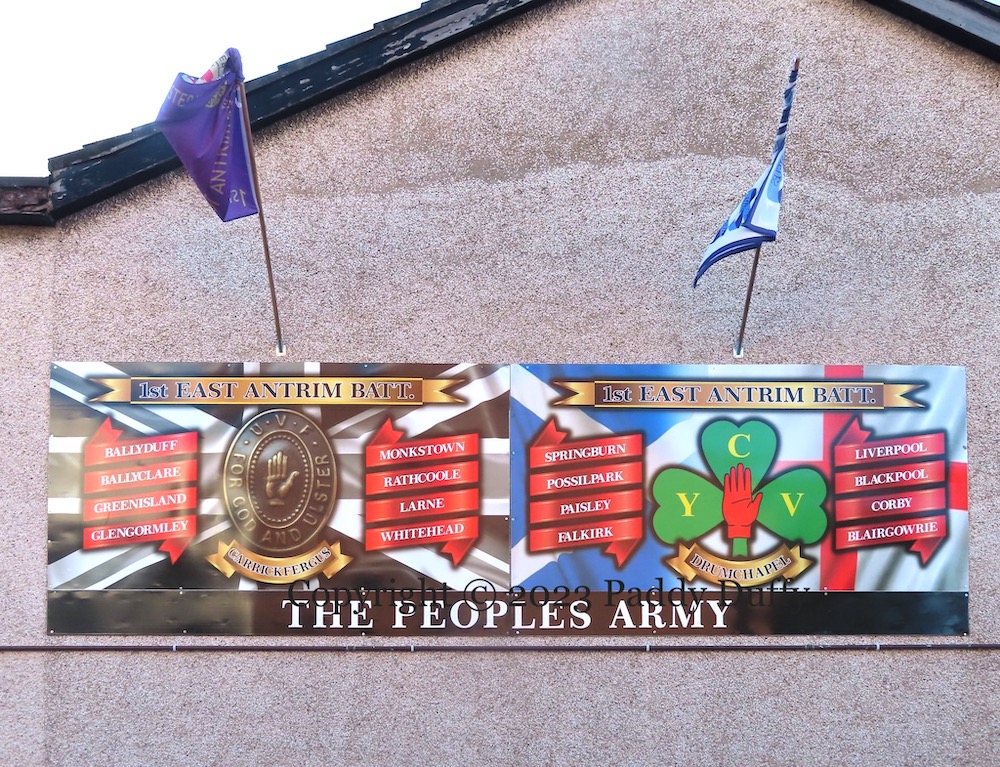
The “1st batt” emblem (in the third image) applies to both the Ulster Volunteers of the Home-Rule era and the Troubles-era Mid-Ulster UVF.
This mural to Armagh GAA and its Orchard Academy/Acadamh An Úlloırd (web) was painted by local (Laurelvale) artist Visual Waste (ig) at the Callanbridge practice facility.


















 Paddy Duffy Collection