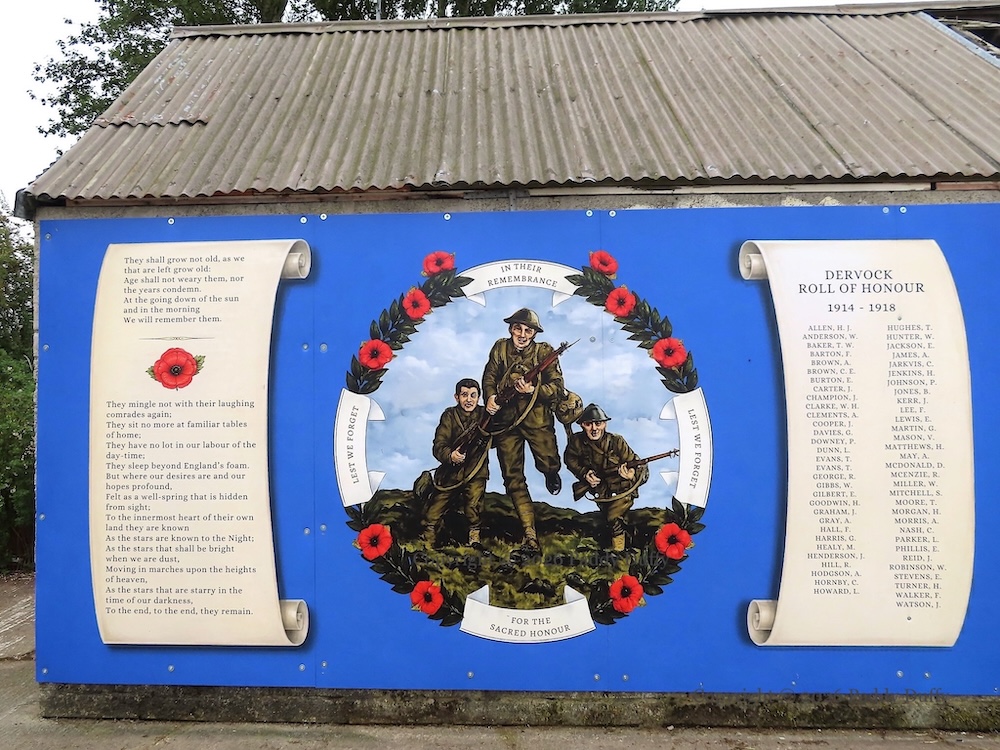
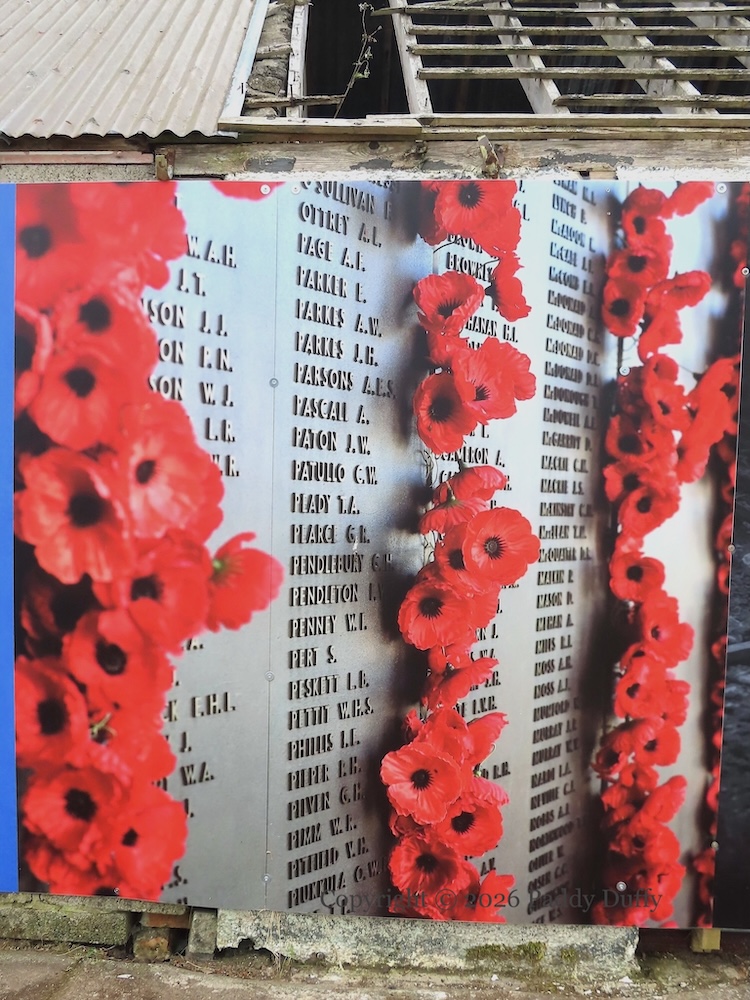
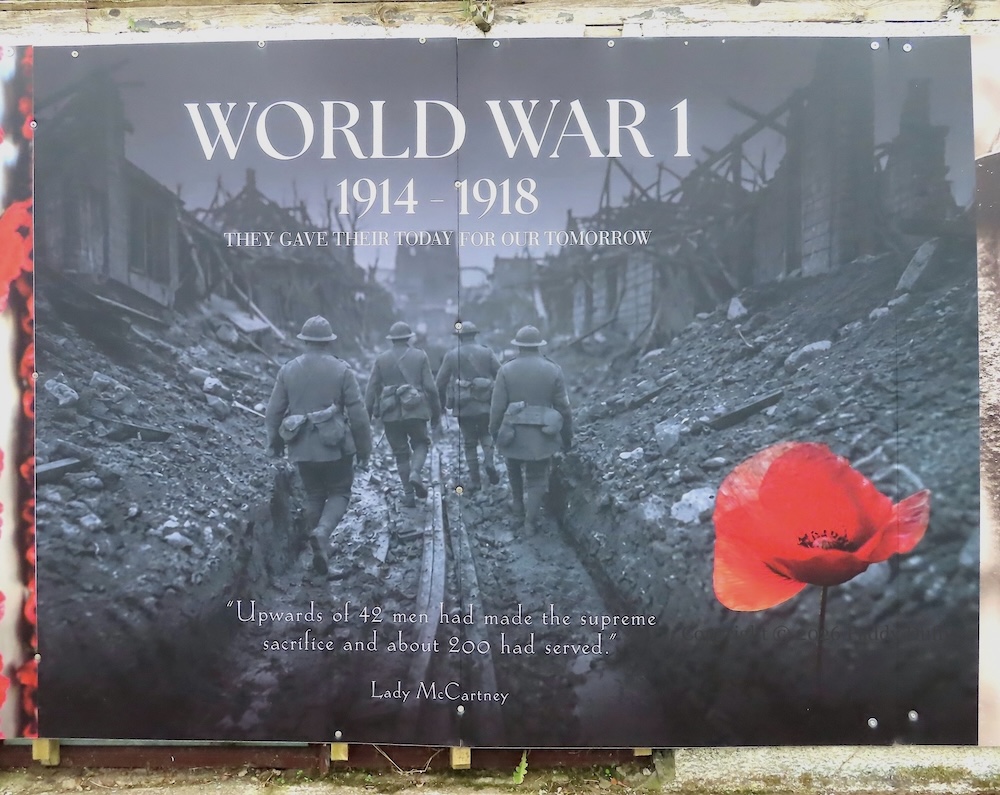
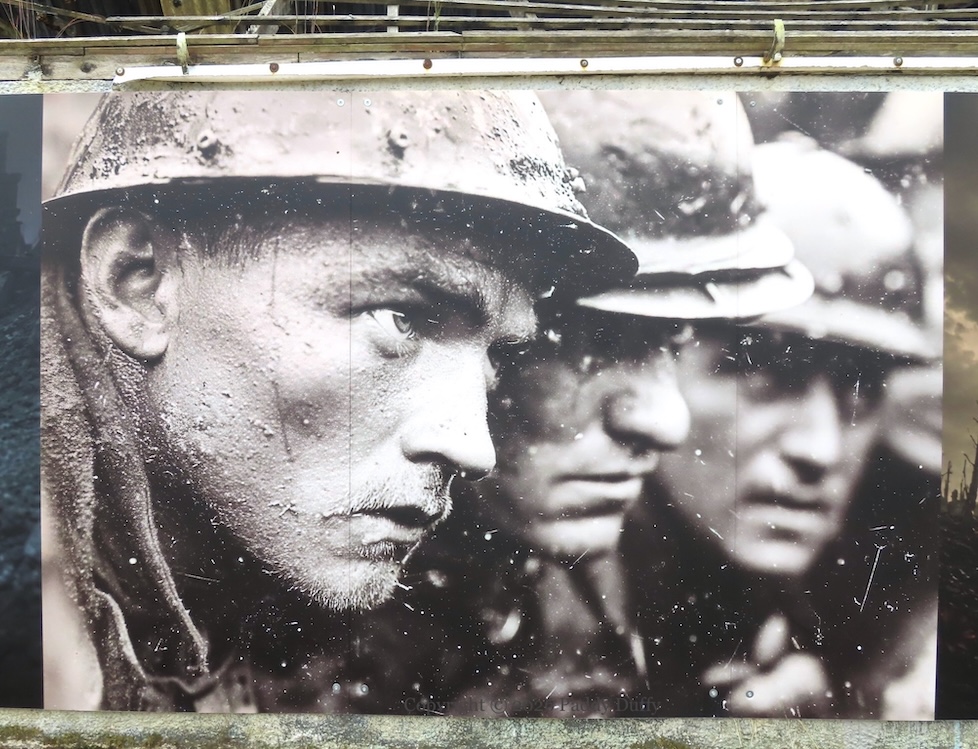
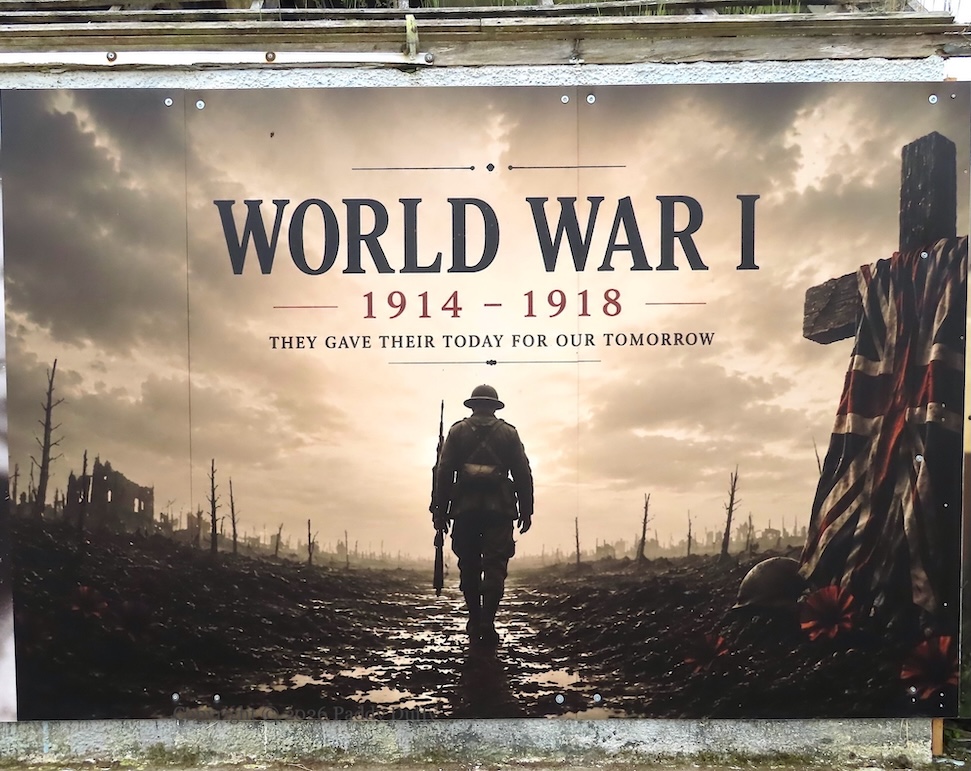
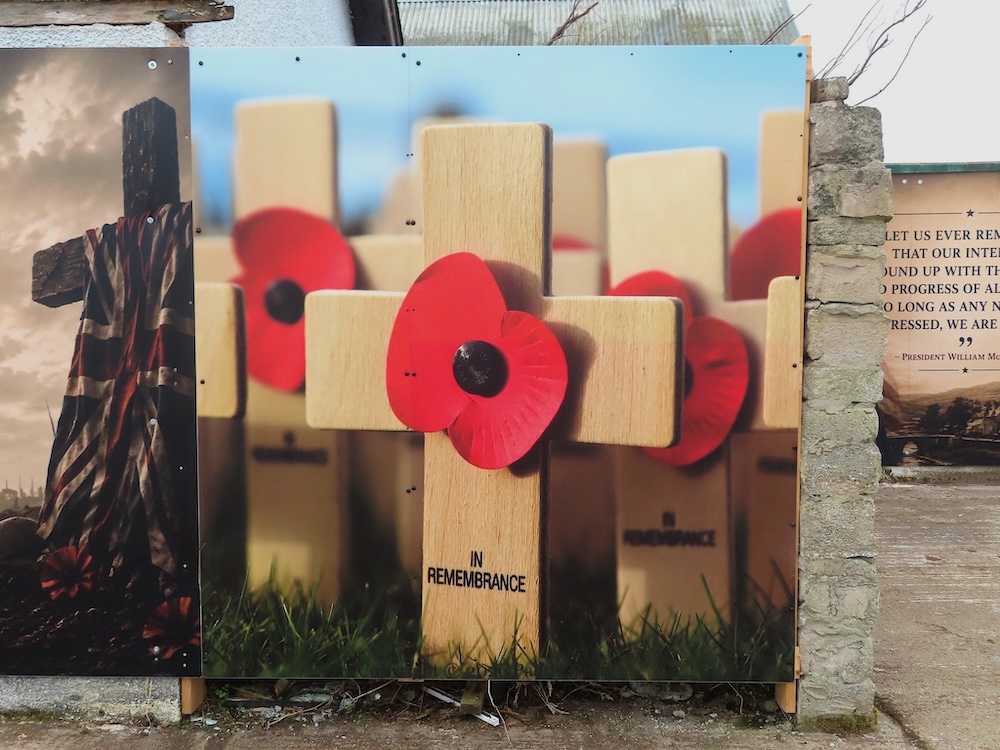
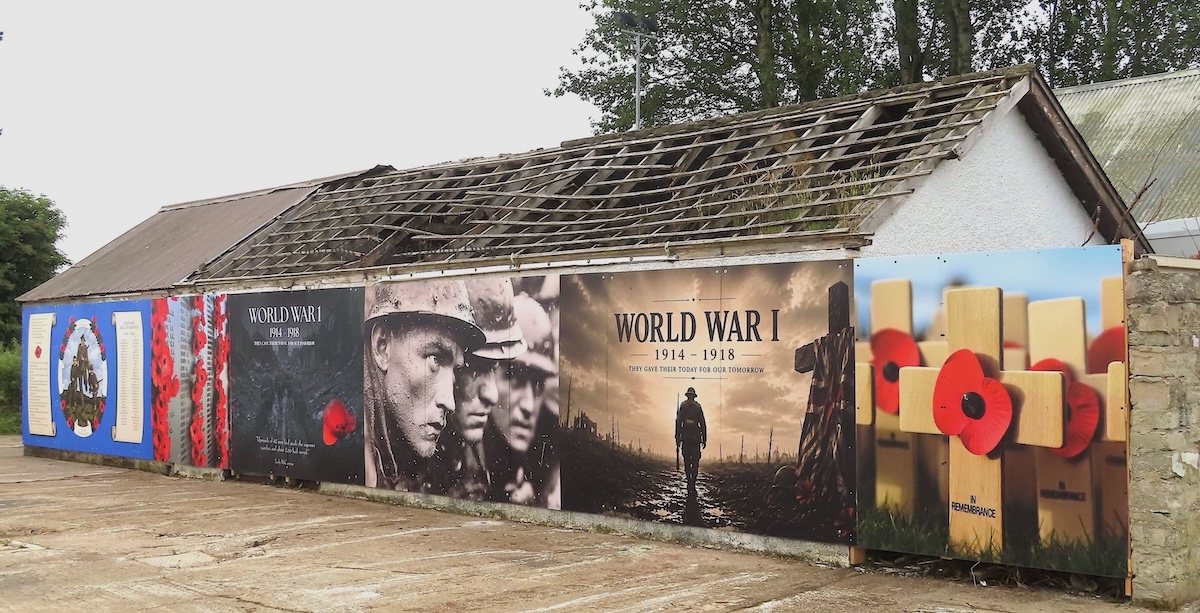
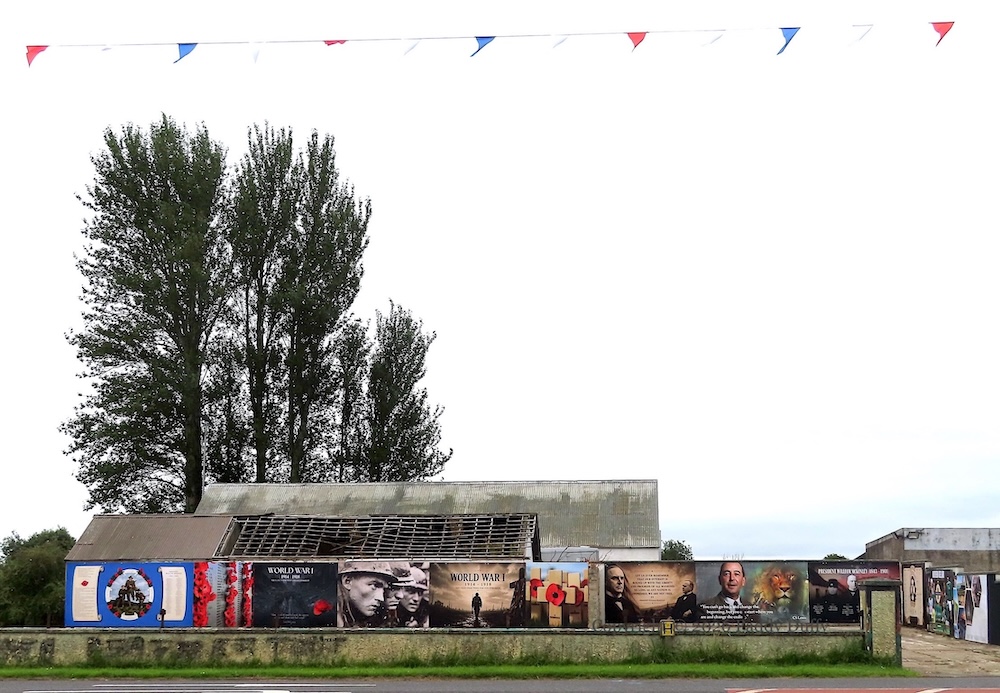
The left-hand part of this large installation in Dervock is given over to six boards commemorating the First World War and the locals who served and died in it. Sixty-two names are listed on the “roll of honour”, including the “Upwards of 42 men [who] had made the supreme sacrifice” from the roughly 200 who served – as noted by “Lady McCartney” (perhaps at the opening of the Dervock War Memorial Institute – Larne Times & Weekly Telegraph, 25th December 1922). (For the Institute, see Ulster War Memorials, which also gives a (very different) list of Dervock dead.) The central image was long ago a mural in the centre of the village – it can be seen in the plates to Bill Rolston’s Politics And Painting and as image 24 in volume one of Drawing Support.
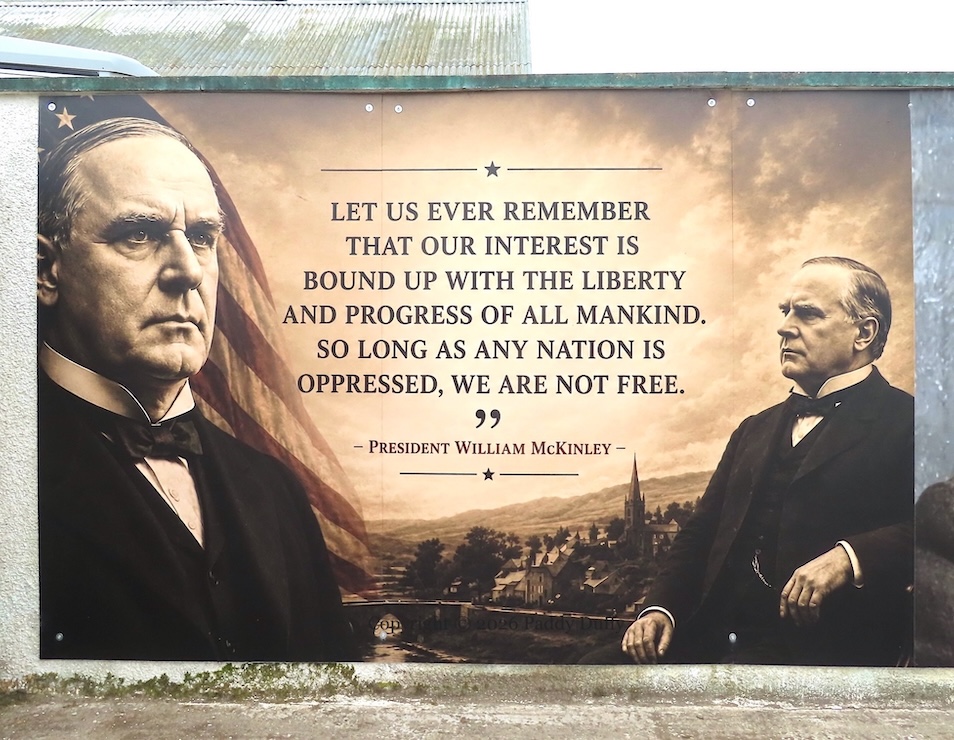
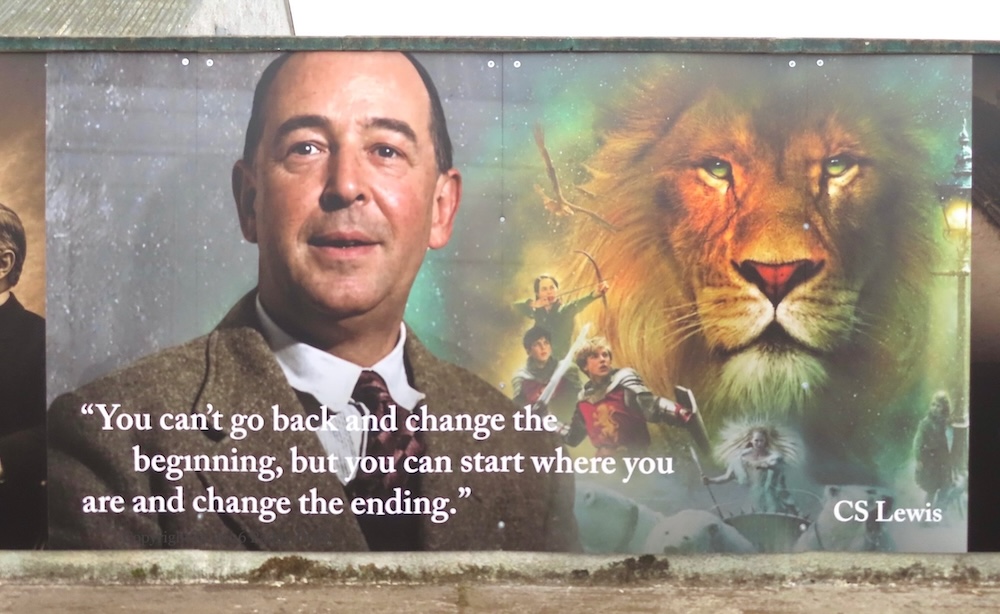
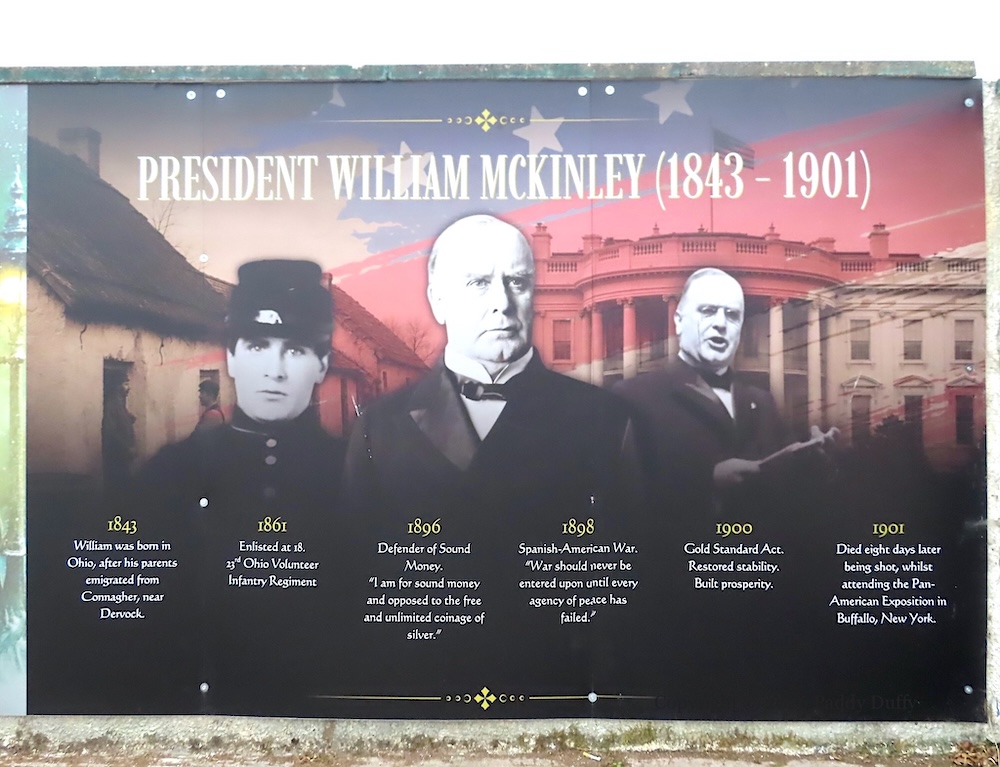
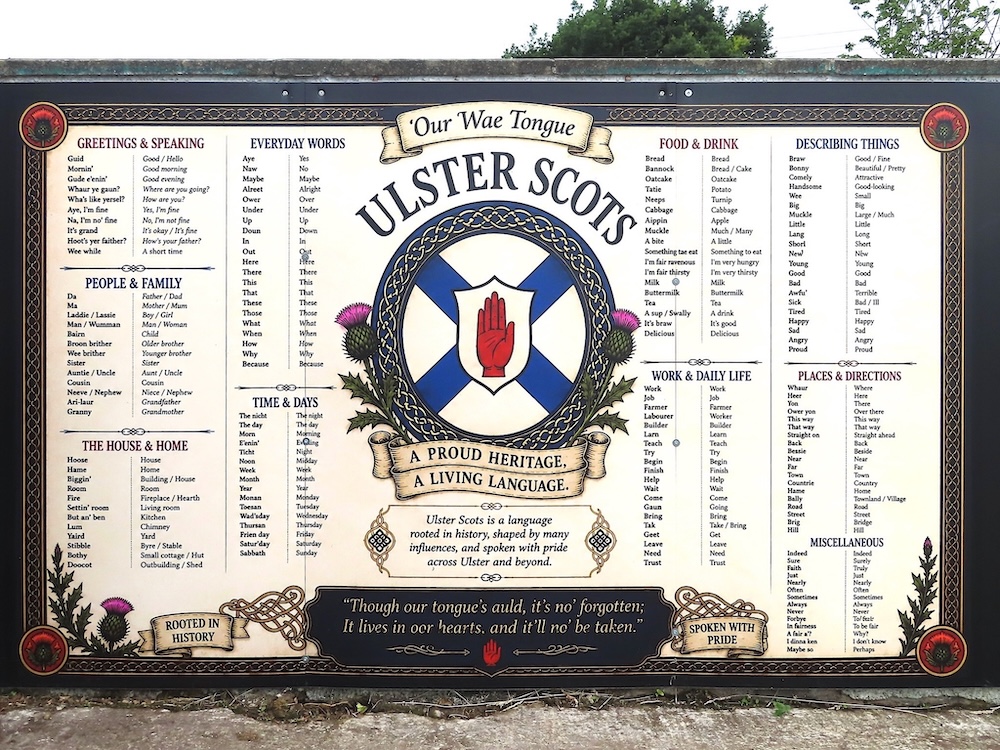
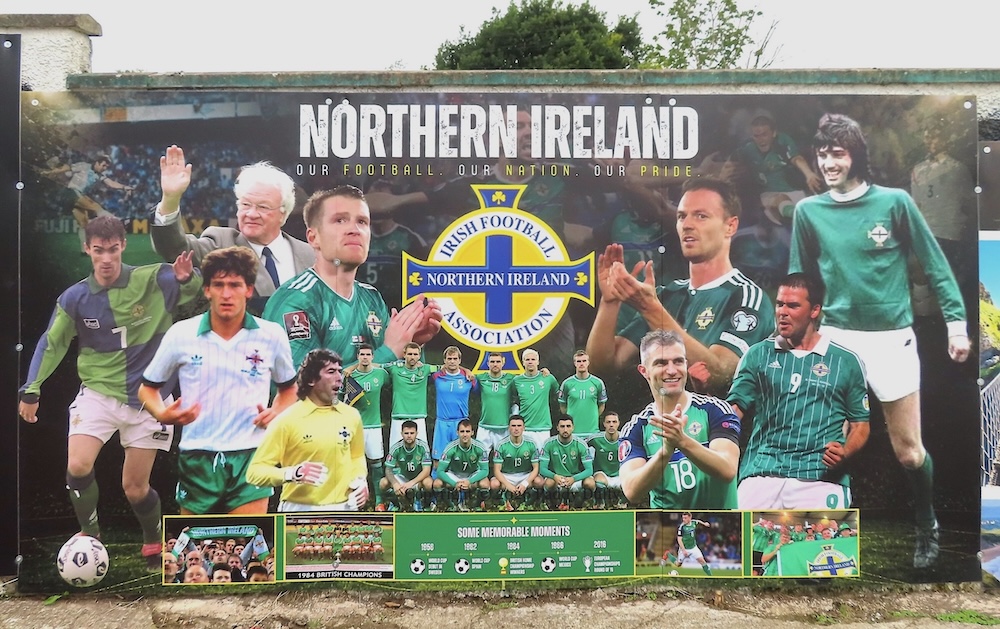
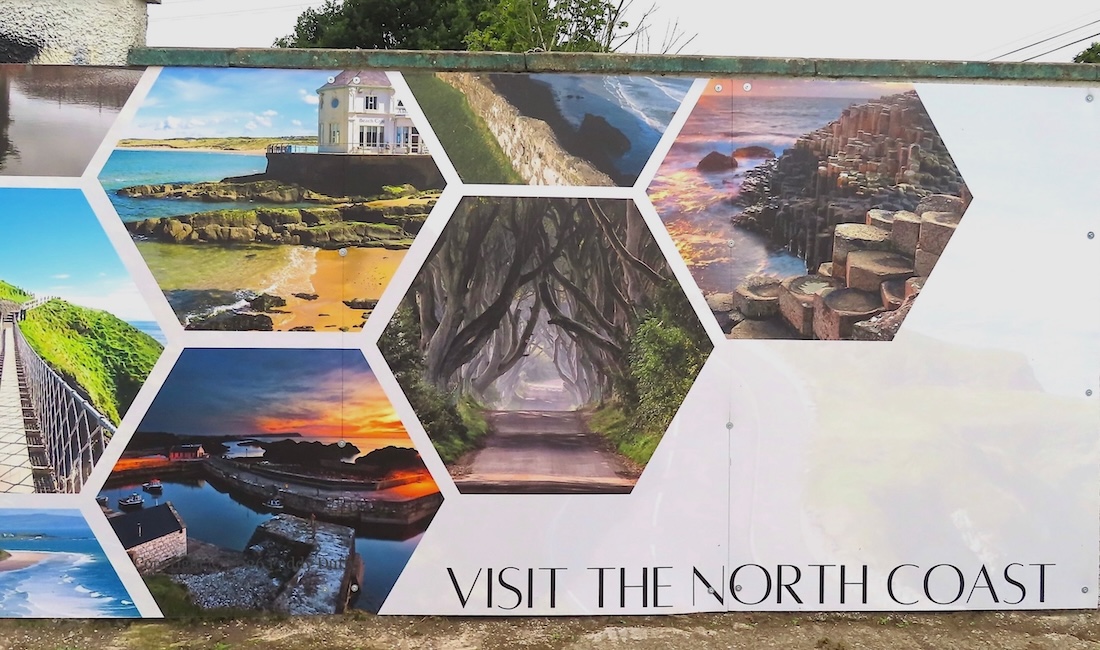
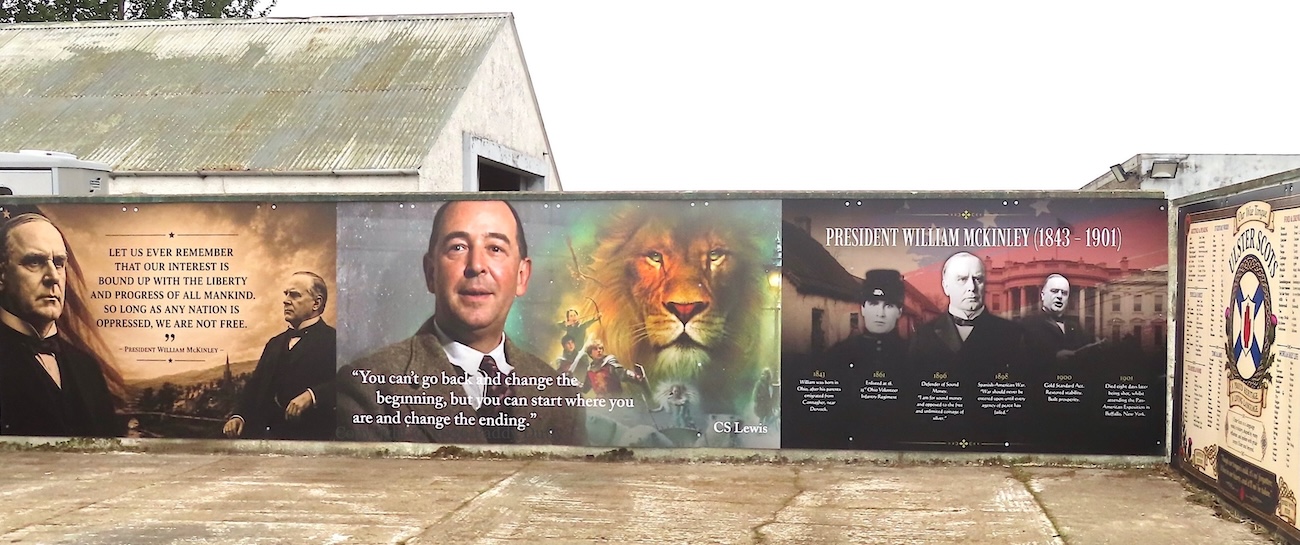
The right-hand part contains two boards about William McKinley, one to CS Lewis, one providing a small dictionary of Ulstèr-Scots words (“Our wae tongue – a proud heritage, a living language.”), one listing “memorable moments” of the Northern Ireland soccer team (“Our football. Our nation. Our pride.”), and one inviting people to “visit the north coast”.
There is no record (on-line, at least) of McKinley saying or writing, “Let us ever remember that our interest is bound up with the liberty and progress of all mankind. So long as any nation is oppressed, we are not free.” And only one of the quotations in the bio can be verified:
“President William McKinley (1843 – 1901).
1843: William was born in Ohio, after his parents [perhaps his great-great-grandfather] emigrated from Connagher [Conagher], near Dervock.
1861: Enlisted at 18. 23rd Ohio Volunteer Infantry Regiment. [The American Civil War]
1896: Defender of Sound Money [i.e. the Gold Standard]. “I am for sound money and opposed to the free and unlimited coinage of silver.” [“sound money” was a campaign slogan; the remainder can be found in the Republican policy platform of 1900]
1898: Spanish-American War. “War should never be entered upon until every agency of peace has failed.” [From the first inaugural, 1897, and so not in response to the Spanish-American War; Congress declared war despite McKinley’s reticence]
1900: Gold Standard Act. Restored stability. Built prosperity.
1901: Died eight days later [sic, “after”] being shot, whilst attending the Pan-American Exposition in Buffallo [sic] New York.”
See also: the Visual History page on Ulster-Scots murals.
CS Lewis did not say or write, “You can’t go back and change the beginning, but you can start where you are and change the ending.” (CS Lewis)
Knock Road, Dervock, with support from Causeway Policing And Community Safety Partnership (Causeway PCSP) and the Causeway Coast & Glens borough council’s Good Relations team. Unveiled July 2nd, 2026.
Click image to enlarge
Copyright © 2026 Paddy Duffy
T09504 [T09505] [T09506] [T09507] T09508 T09509 T09510 T09511 T09512
T09513 T09514 T09515 T09516 [T09517] T09518 T09519
T09521 T09520 T09503






 Paddy Duffy Collection