Gateway To West Belfast

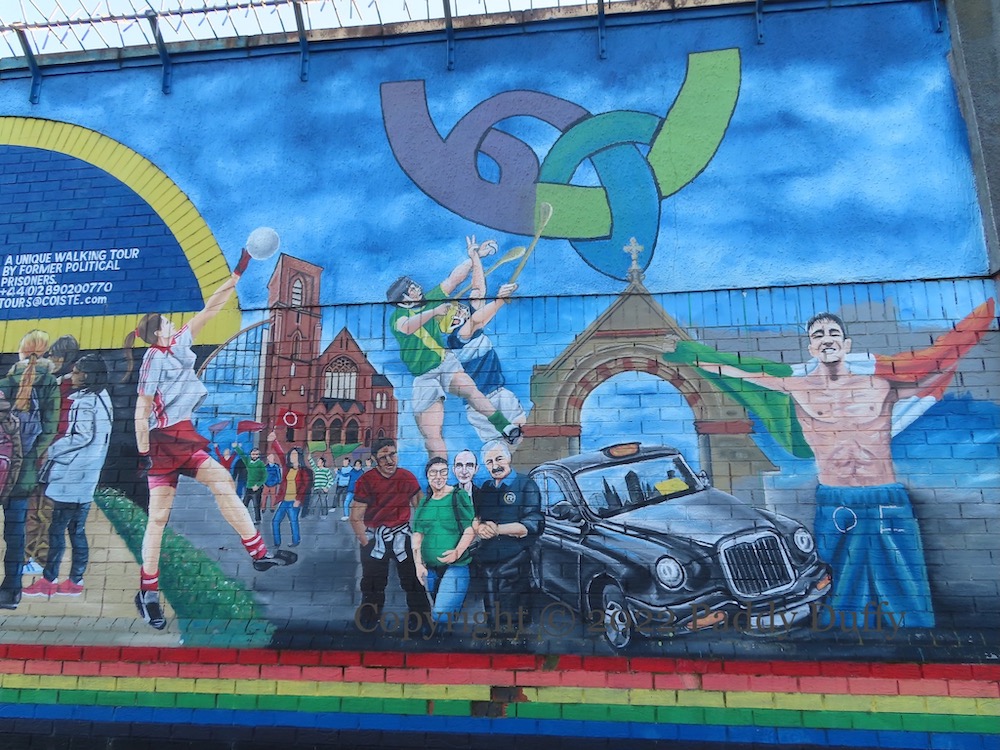
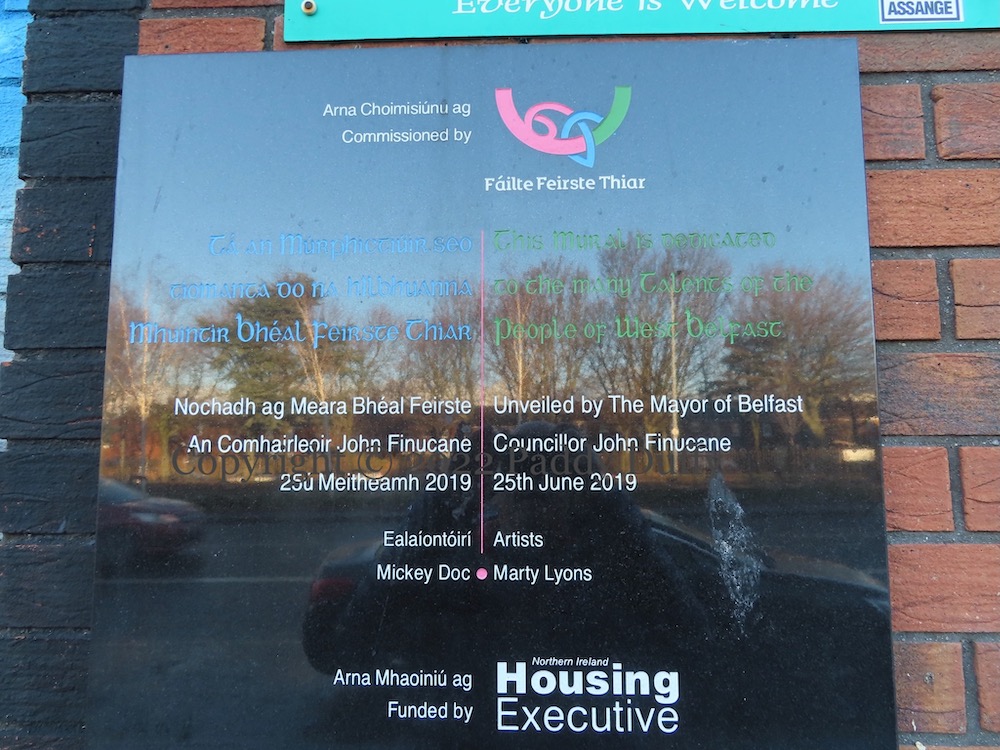
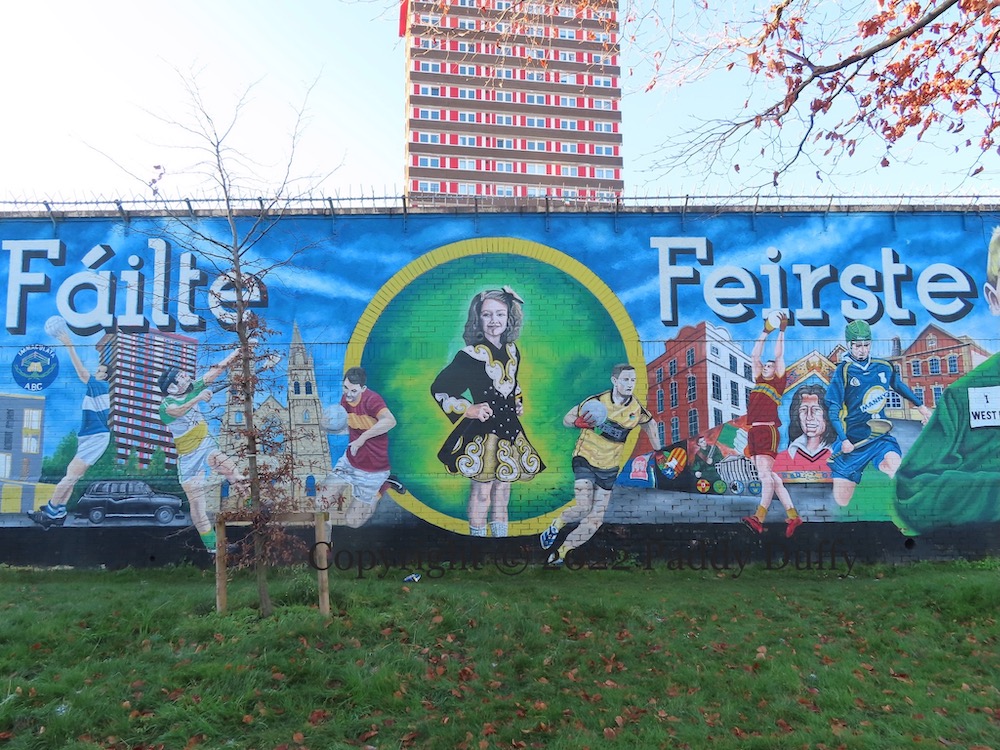
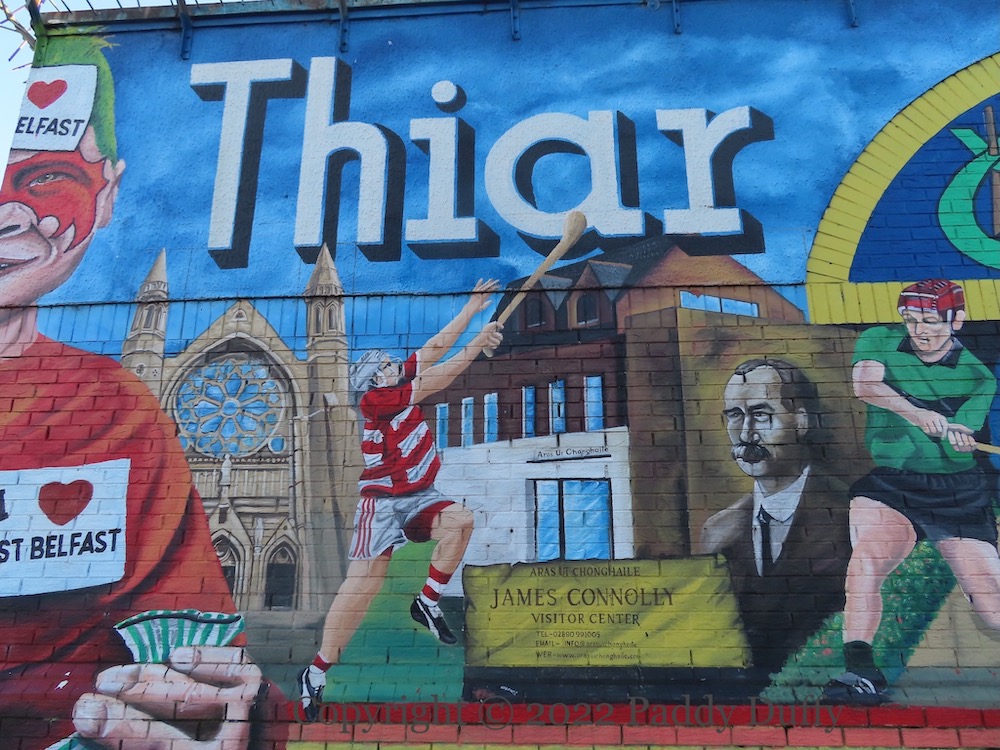
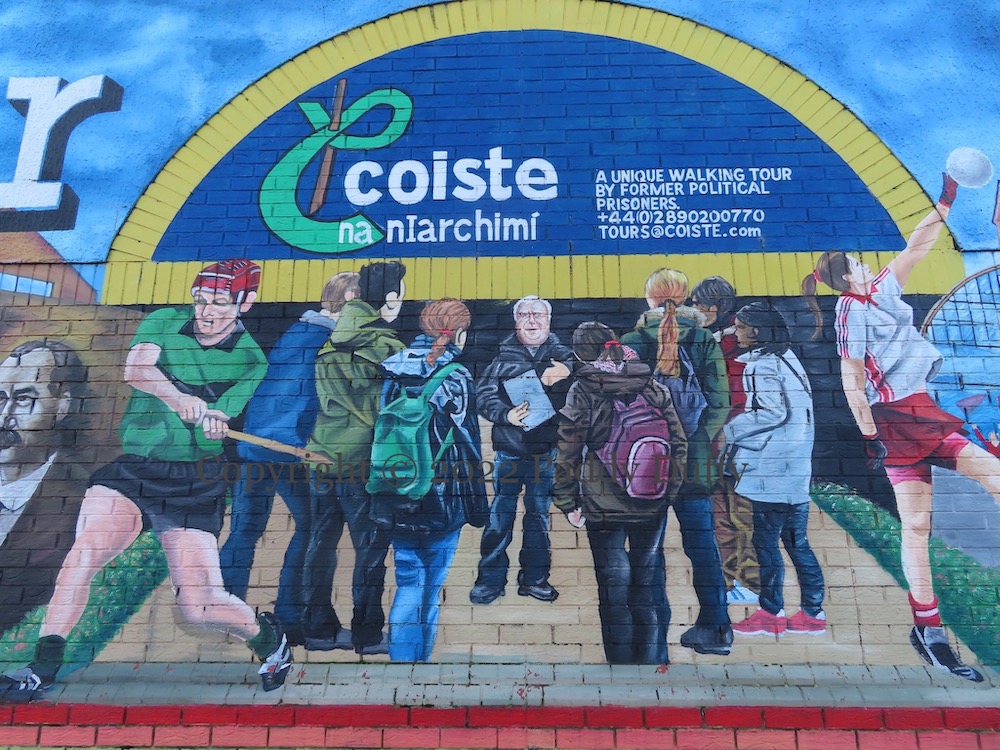
Fáılte Feırste Thıar‘s second mural (the first is outside its offices in the middle Falls – see Fáılte Feırste Thıar) reinforces the claim that (republican) west Belfast begins as soon as you cross the motorway, five minutes’ walk from the city centre. Coıste’s tour of republican murals begins at Divis Tower and the new mural already seems to be drawing tourists – see the final image, below. The previous Coıste mural (M04900) has been deleted and incorporated into the mural, promising tourists “a unique walking tour by former political prisoners”.

The mural is a mix of landmarks – the new Raıdıó Fáılte building (which is located just below the mural), Divis tower, St Peter’s, Conway Mill, the “international wall” of murals, the Bobby Sands mural, the Falls library, the new James Connolly centre, Cultúrlann, and Milltown cemetery – cultural images (Irish dancing and Féıle An Phobaıl) – and sporting images (clubs include Immaculata ABC, Gort Na Móna GAC, St Paul’s GAC). A gay pride ‘rainbow’ stripe runs below the Divis Street portion. Before the previous mural was painted (M07533), there was a Gateway To Belfast board at this spot.
Click image to enlarge
Copyright © 2022 Paddy Duffy
T01603 T01608 T01607 T01609 T01610
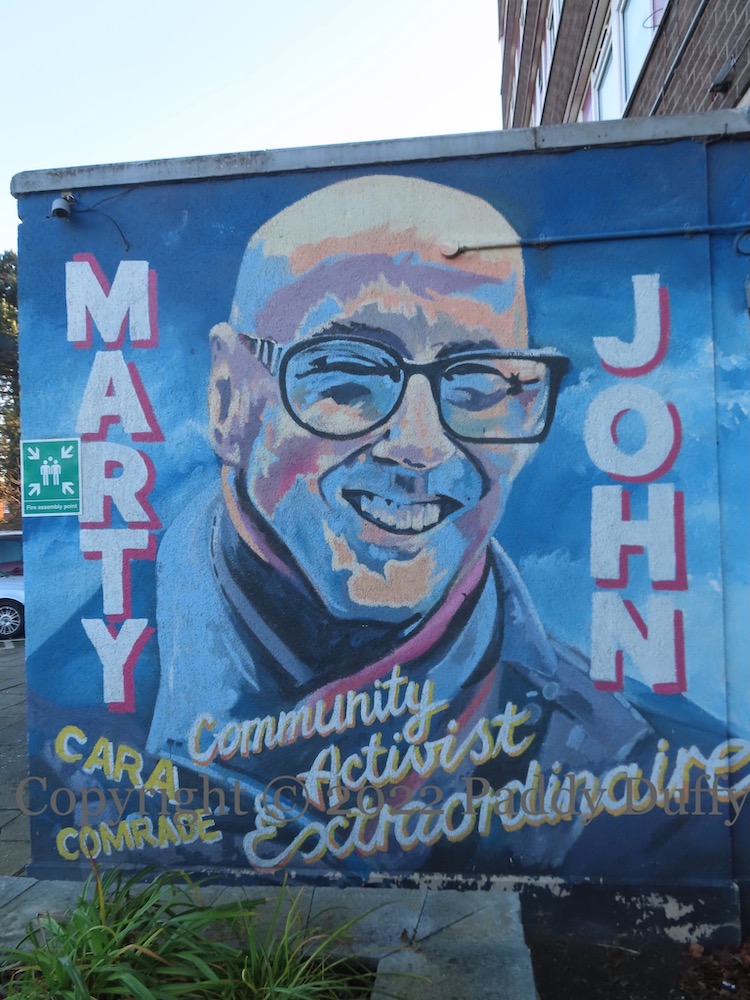
Community Activist Extraordinaire

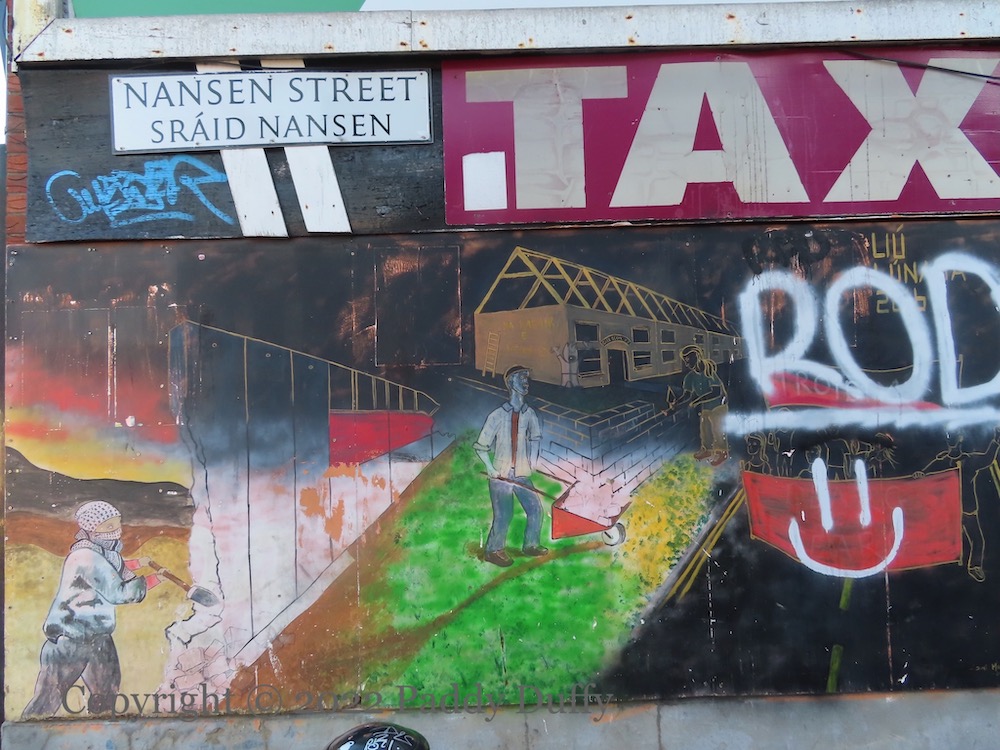
John Leathem, chairman of the Divis Tower Falls Residents’ Association, died in his flat on the 19th floor of Divis Tower in August last year (2017), after returning to the Tower four years previously when he was diagnosed with cancer (Irish News | Tele). He was described by Sınn Féın MLA Fra McCann as “a champion for the people of no property” (An Phoblacht). This mural is outside his former office on the first floor.

Click image to enlarge
Copyright © 2022 Paddy Duffy
T01597

Neill And Scullion

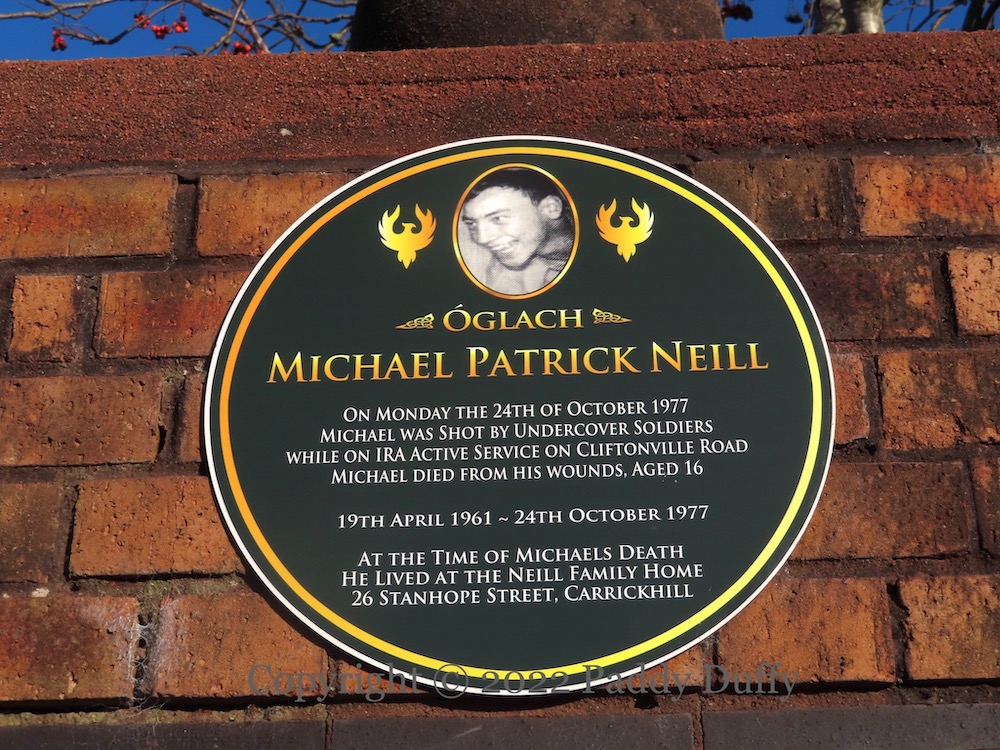
These two plaques are on the “gateposts” at the entrance to Alton Street in Carrick Hill. Neill (above) is on the right; Scullion (below) is on the left.

Neill: “Óglach Michael Patrick Neill. On Monday the 24th of October 1977 Michael was shot by undercover soldiers while on IRA active service on Cliftonville Road. Michael died from his wounds, aged 16. At the time of Michael’s death he lived at the Neill family home 26 Stanhope Street, Carrickhill.”

Scullion: “Óglach Louis Scullion. At 1:45 a.m. on the 14th of July 1972 Louis was shot four times by the British Army as he walked to his home in Unity flats. Louis was unarmed and died as a result of his injuries. 5th June 1945 – 14th July 1972. Louis lived at 51H Unity Walk.”

Click image to enlarge
Copyright © 2022 Paddy Duffy
T01592 T01593

Unlock Your Lockdown

Domestic abuse reports to PSNI in the second quarter of 2020 (during the first Covid lockdown) increased 4% to 8,302 (BelTel). Women’s Aid NI (web | tw) provides refuge and support to victims of domestic violence. The stencil by Laura Nelson & Leo Boyd from VaultNI is on Carrick Hill. The title of today’s post comes from Women’s Aid CEO Sarah Mason (tw).

Click image to enlarge
Copyright © 2022 Paddy Duffy
T01594

Old Carrick Hill

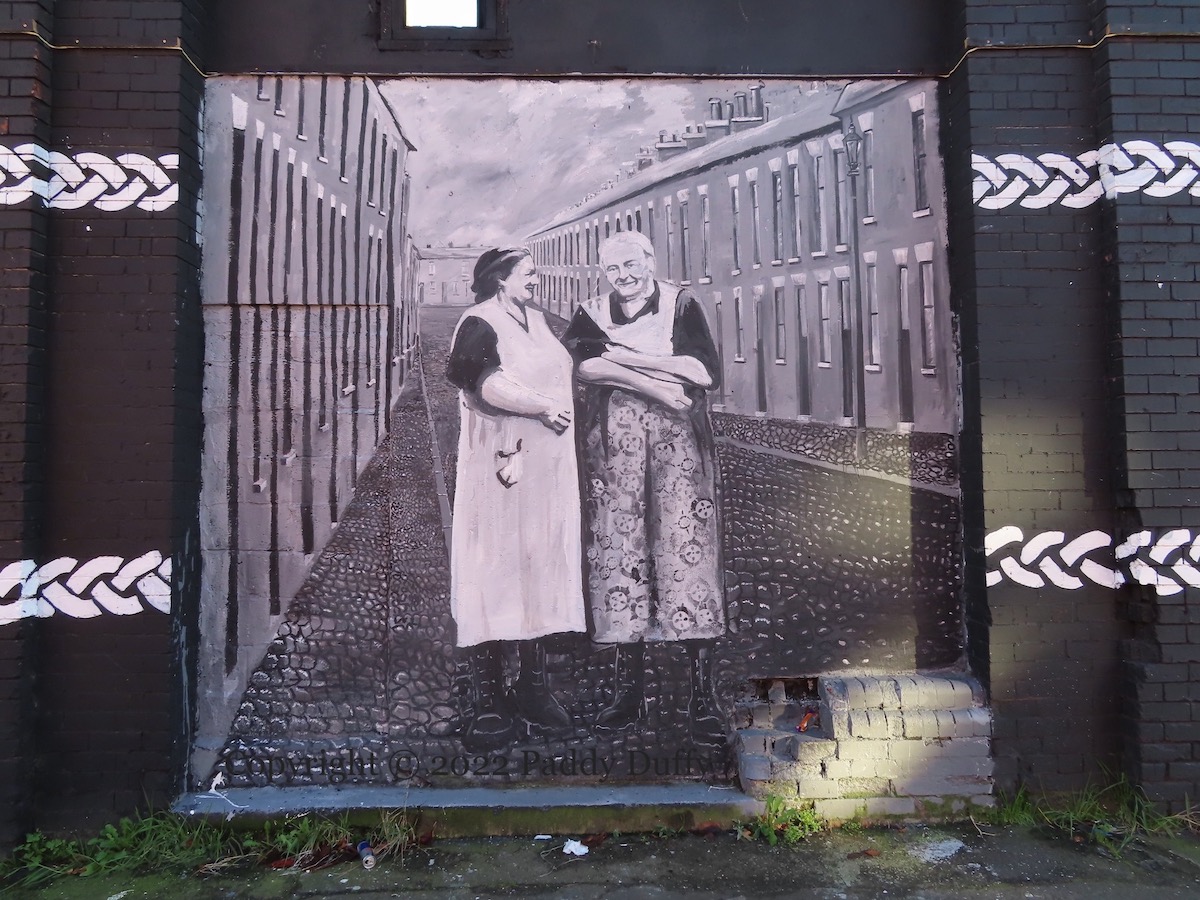
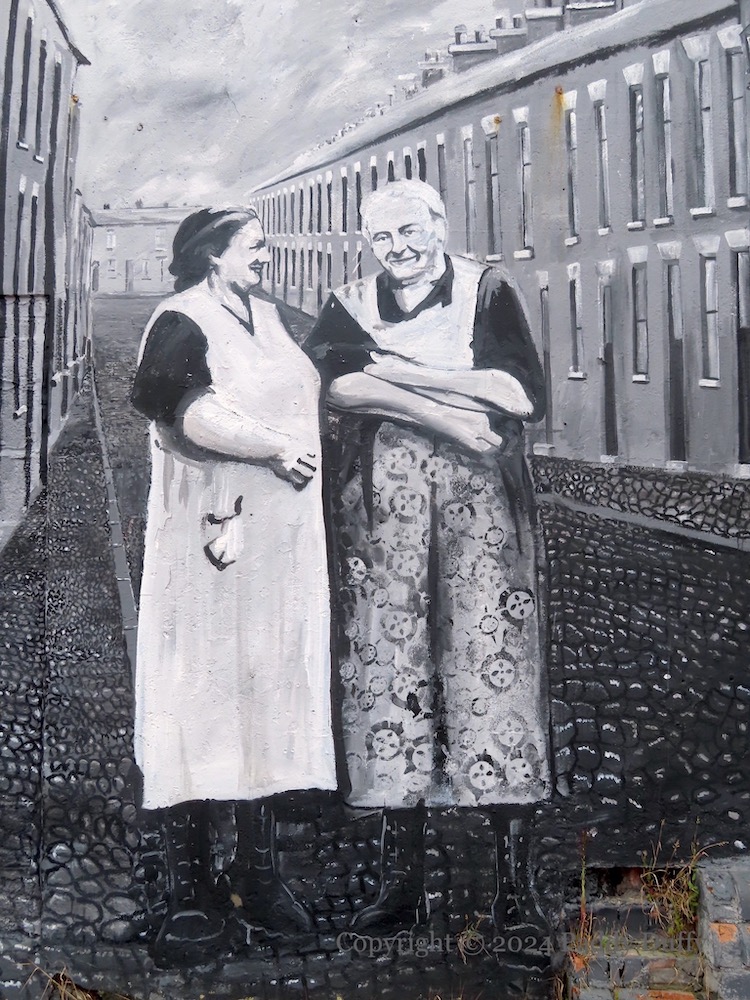
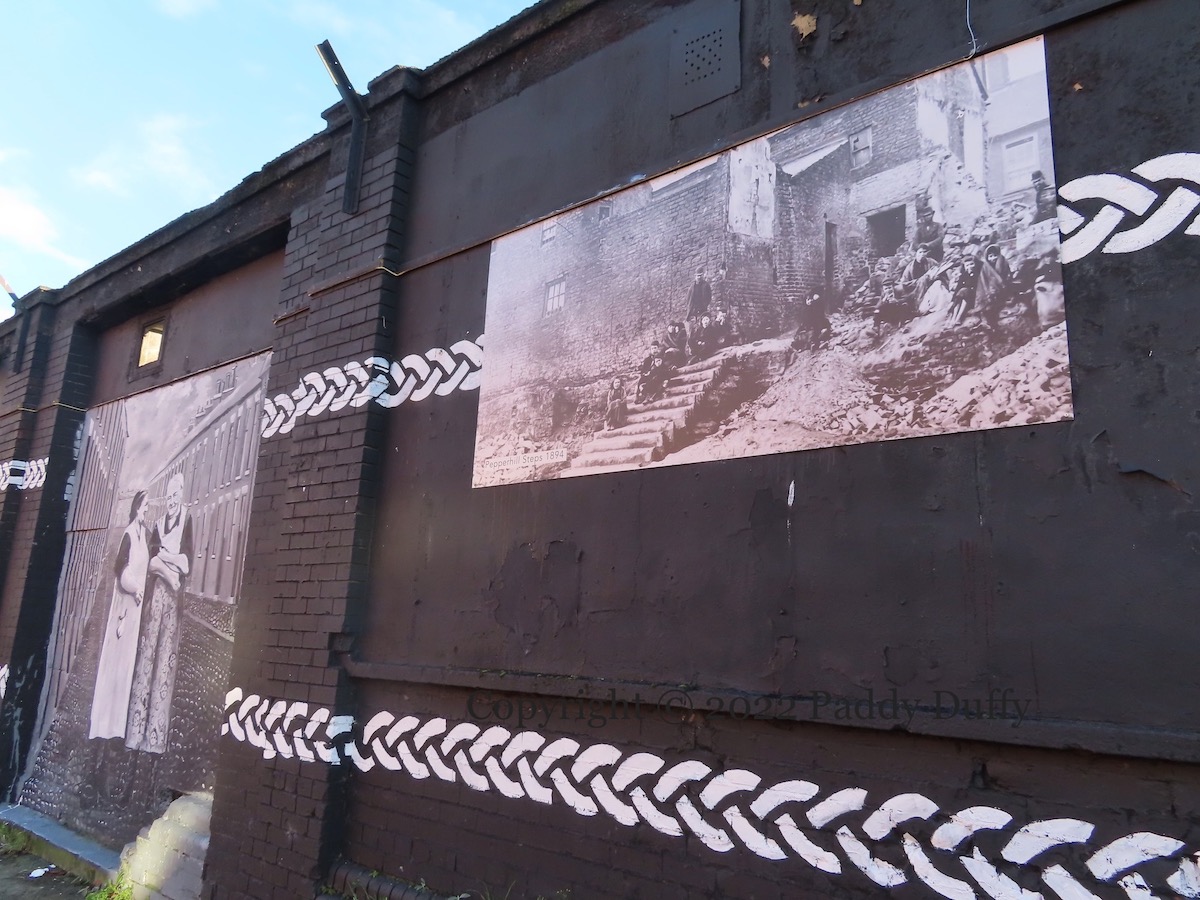
The collection of images showing “Carrick Hill in the old days” now includes a mural, of two women talking in the street.

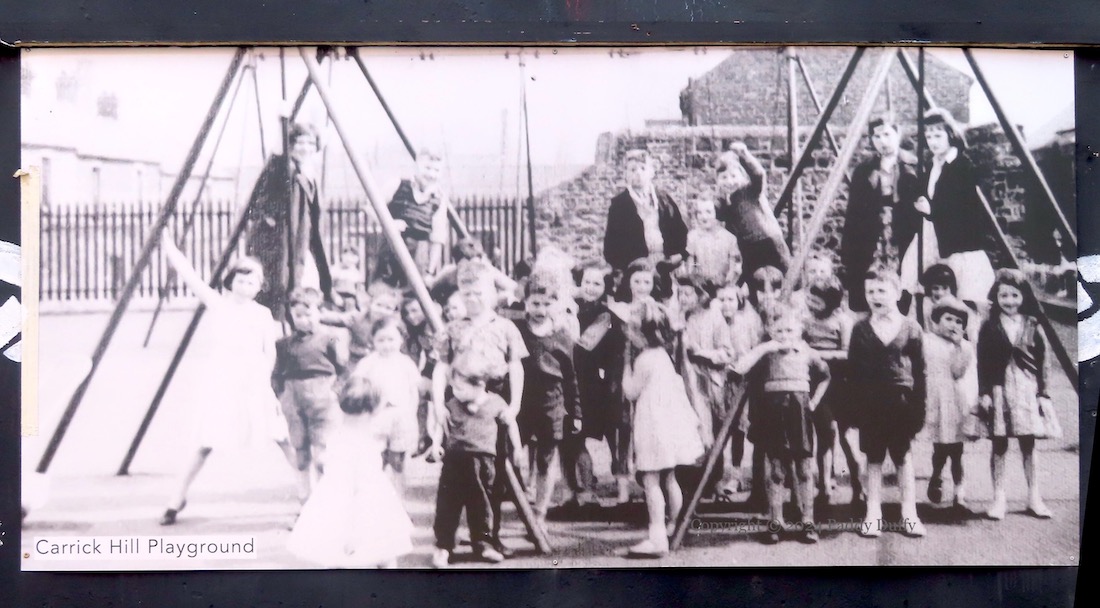
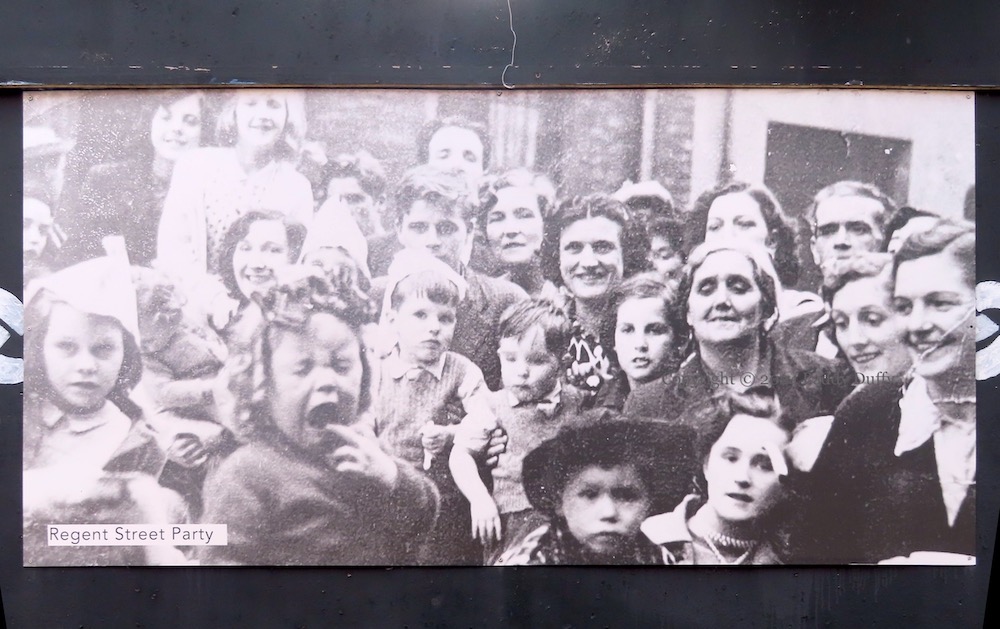
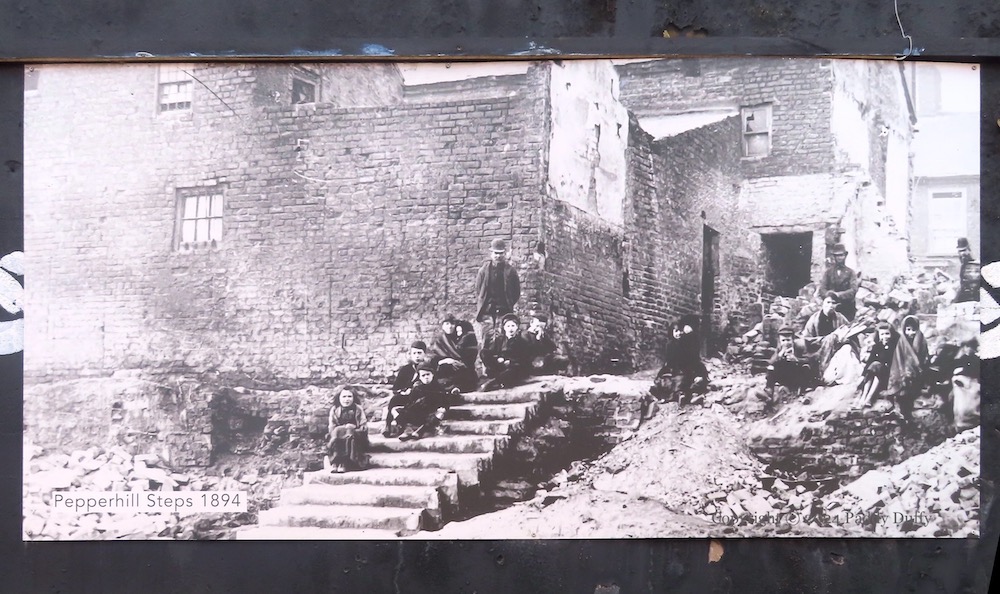
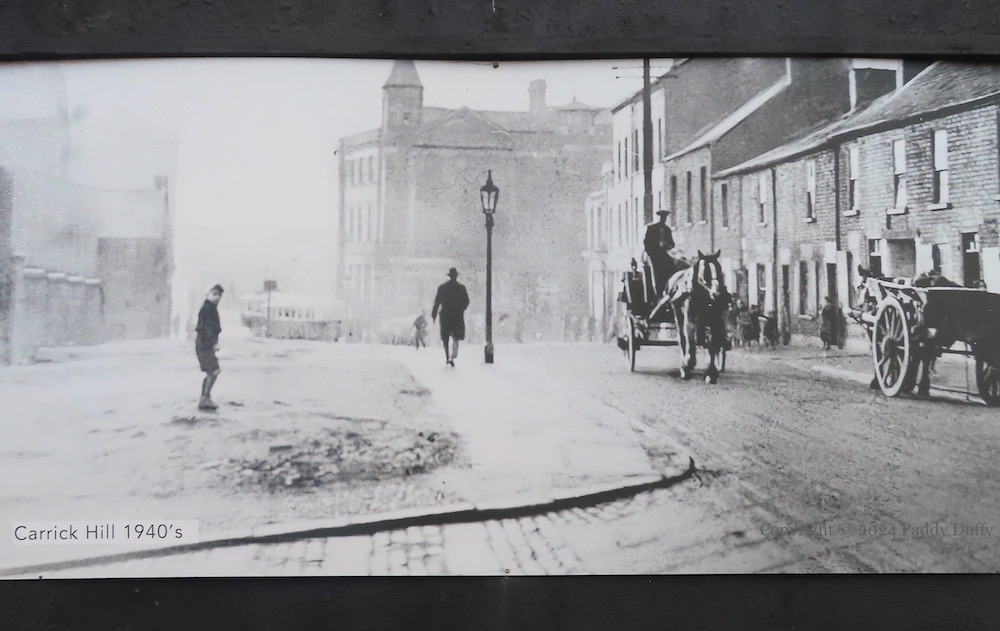
In addition to the mural, there are four boards, two on either side: Carrick Hill playground; Regent Street party; Pepper Hill steps, 1894; Carrick Hill 1940s.

There are eleven more boards in Regent Street. (Later increased to fifteen with the addition of 1976 Mandiville dart team; Mary McCusker & Kitty Spotwoods; Maggie Jane Largey & Mary Ann Largey; Richard & Alan Crean – see The Tea Bar for all fifteen.)

The board in the image below (from Stanhope Street) shows Pepper Hill Steps before the turn of the twentieth century. The steps used to lead from Mustard Street (which was what Library Street used to be) towards Upper Library Street (now Carrick Hill, the street).

Stanhope Street, Belfast

Click image to enlarge
Copyright © 2022/2024 Paddy Duffy
T01588 T05285 T05284 T05283 T05282 T01589 [T01590] [T01591] T05281 T05286

In The Footsteps Of Heroes

In this board the Rising Sons Flute Band (“RSFB”) portrays itself as following in the footsteps of the Ulster Volunteers who joined the British Army and specifically the 8th battalion of the Royal Irish Rifles in the 36th (Ulster) Division, which was drawn from east Belfast’s Ulster Volunteers in 1914.

The insignia for the battalion is usually shown as dark blue rather than the black shown here – see the mural of 36th Division insignia in Canada Street. There is a similar board outside the band’s practice hall in Castlereagh Street.

Albertbridge Road, east Belfast

Click image to enlarge
Copyright © 2022 Paddy Duffy
T01550

Our British Identity

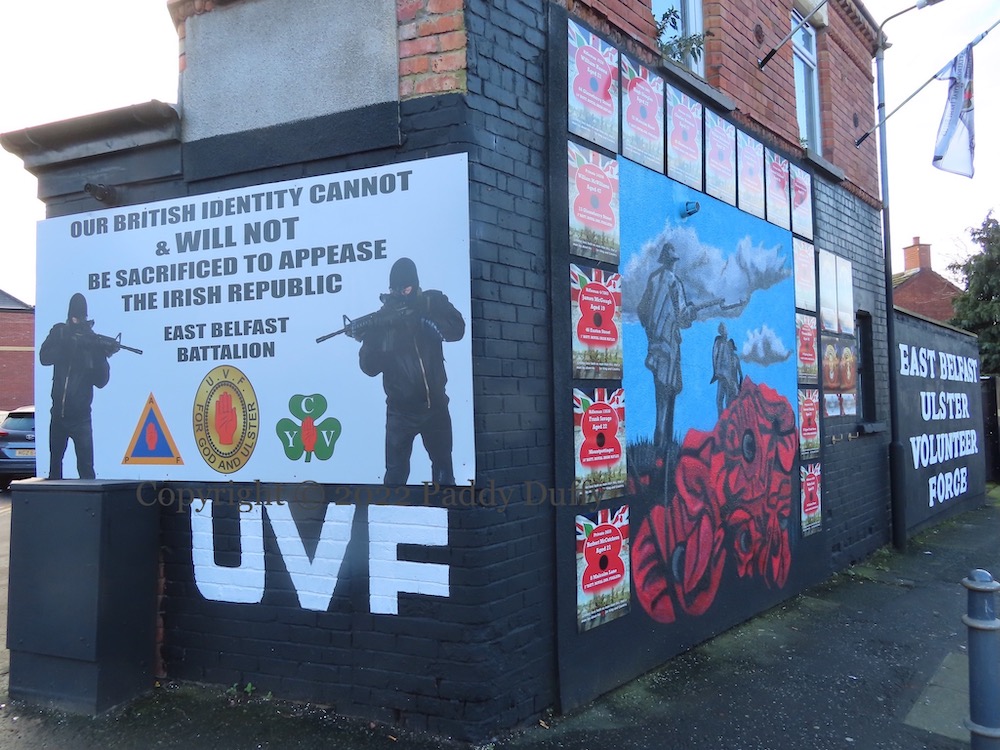
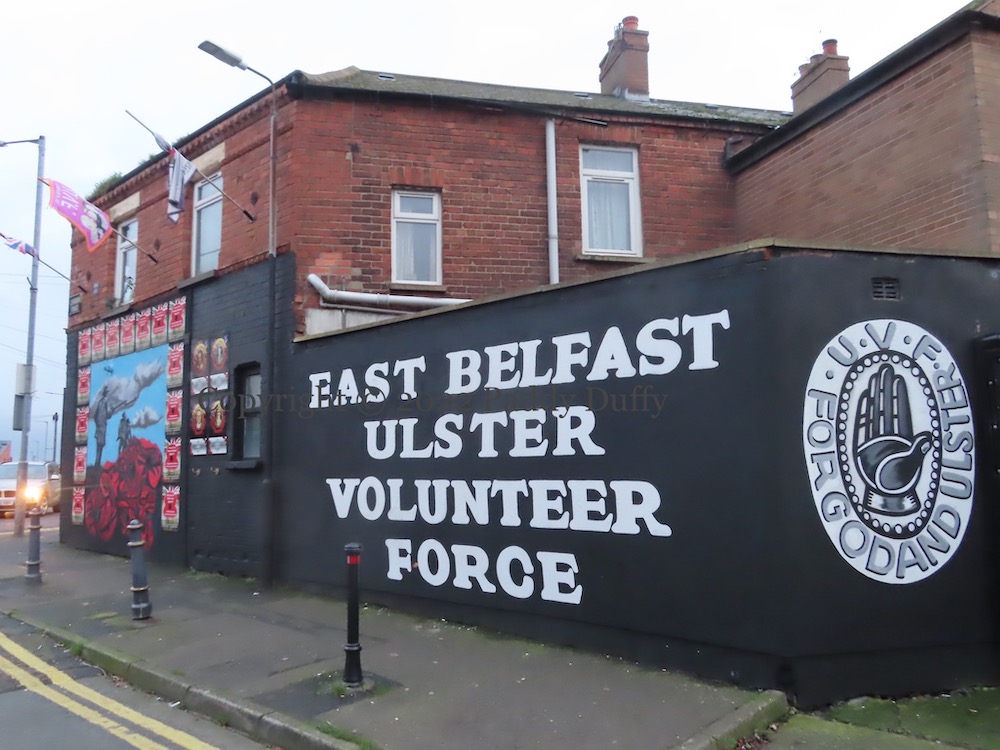
Various changes and additions have been made to the Ulster Volunteers/UVF mural in London Road, east Belfast, compared to the version that replaced a religious mural (Jesus Strong Man) in 2017. The ‘hooded gunman’ board seen in the image above previously replaced a Union Flag in London Road (see East Belfast Ulster Volunteers) but has now been moved to the main Our Lady’s Road: “Our British identity cannot & will not be sacrificed to appease the Irish Republic – East Belfast Battalion [UVF]”.

The side-wall has been modified, to include a UVF emblem and larger lettering for “East Belfast Ulster Volunteer Force”.

For close-ups of the WWI portion, painted by Mark Ervine, see Between The Crosses; for a close-up of the four portraits of volunteers Seymour, Long, Cordner, and Bennett, see Ulster’s Brave.

Click image to enlarge
Copyright © 2022 Paddy Duffy
T01548 T01546

East Belfast Volunteers

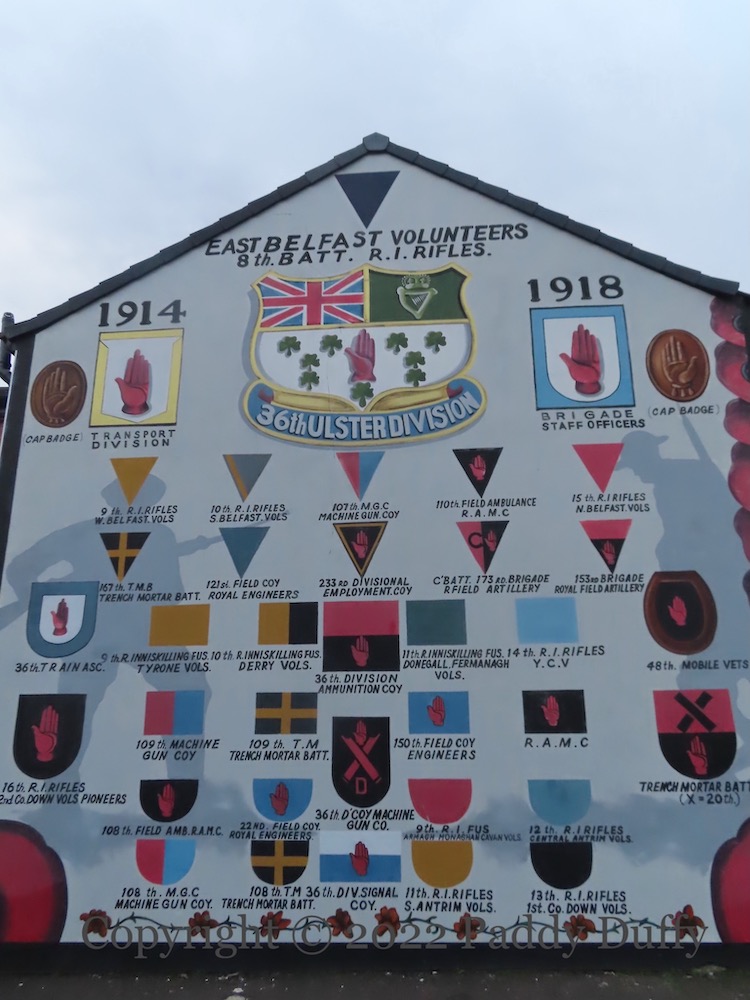
This mural and its accompanying plaques, at the mouth of Canada Street, commemorate WWI and celebrate the Victoria Crosses won by members of the 36th (Ulster) Division “For valour”: Cather, McFadzean, Bell, Quigg, Emerson, De Wind, Seaman, Knox, and Harvey. The main mural features insignia of more than thirty units of types ranging from machine gunners to vets.

Canada Street; repainted version of East Belfast Volunteers.

Click image to enlarge
Copyright © 2022 Paddy Duffy
T01543 T01542

The Untold Story

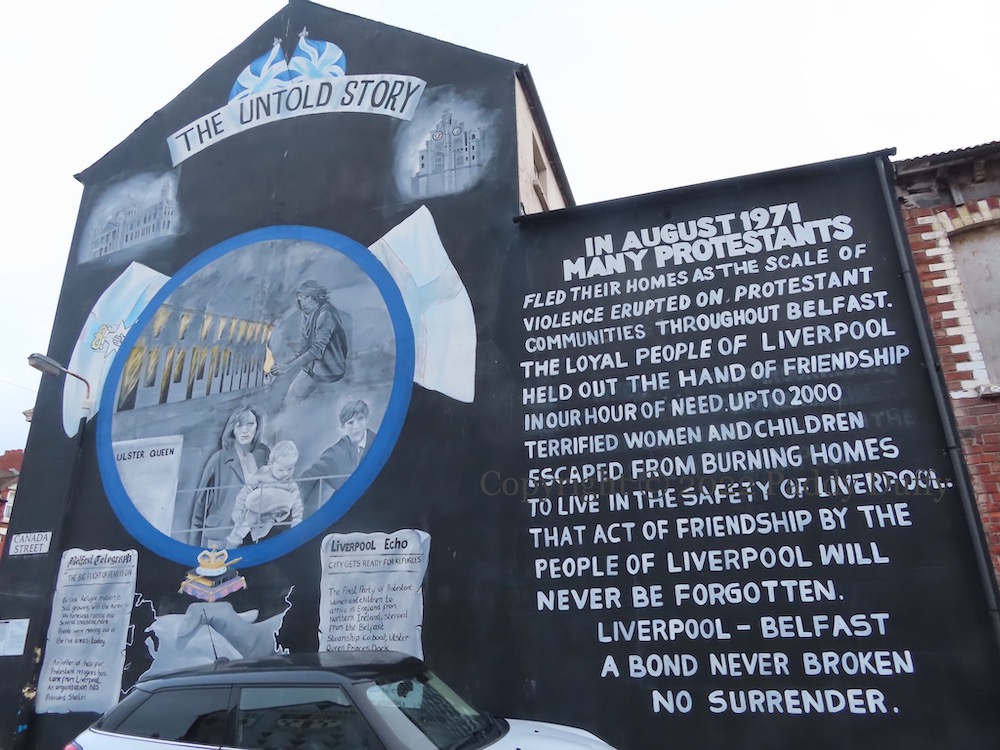
This mural depicts Protestant women and children on-board a steamer, the Ulster Queen, leaving Belfast because of rioting, and headed for Liverpool, where they were to be hosted by local Orange families. On the far left is a laminated letter of thanks to Elsie (Allen) Doyle, one of the organisers in Liverpool.

A very similar mural was in this spot several years ago (though not immediately prior to this one – the wall was blank), featuring three youngsters on the boat, rather than a mother and children. The panel to the right began “In August 1971 many Protestants fled their homes as the IRA launched a bitter sectarian attack on Protestant communities throughout Belfast.” (See M04069.)

Canada Street, east Belfast

Click image to enlarge
Copyright © 2022 Paddy Duffy
T01541 [T01540]