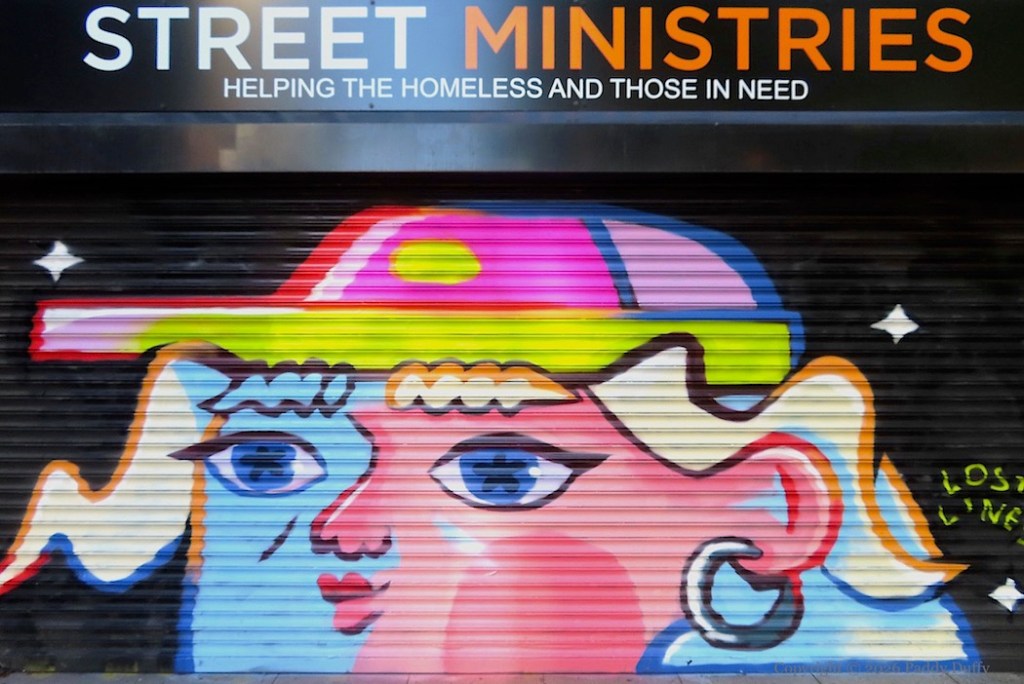
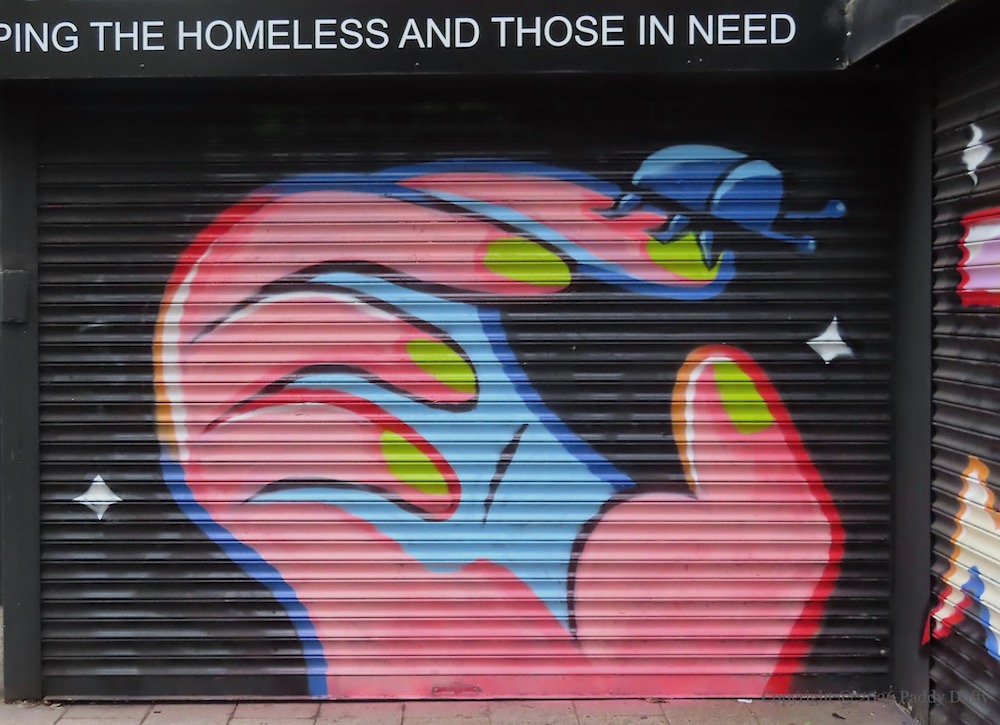
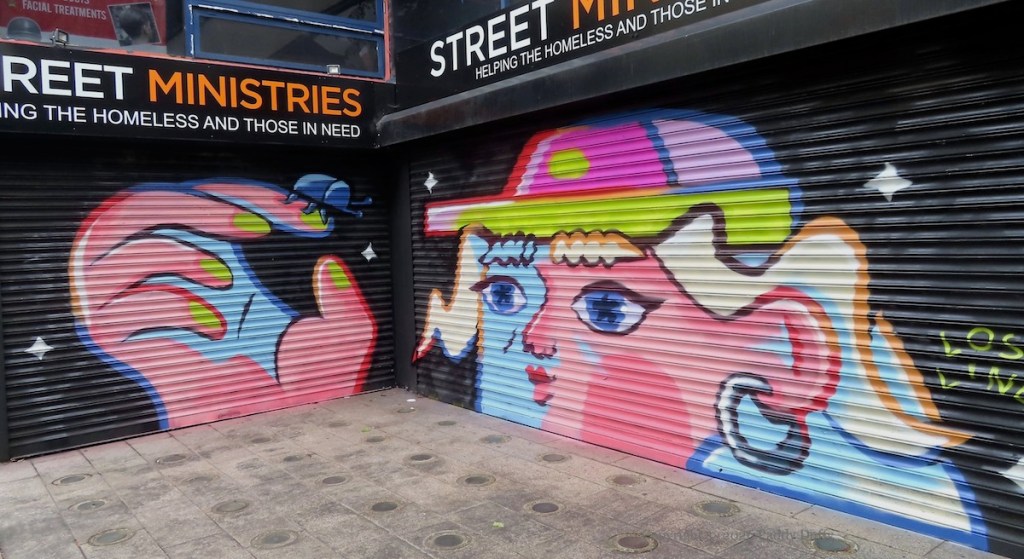
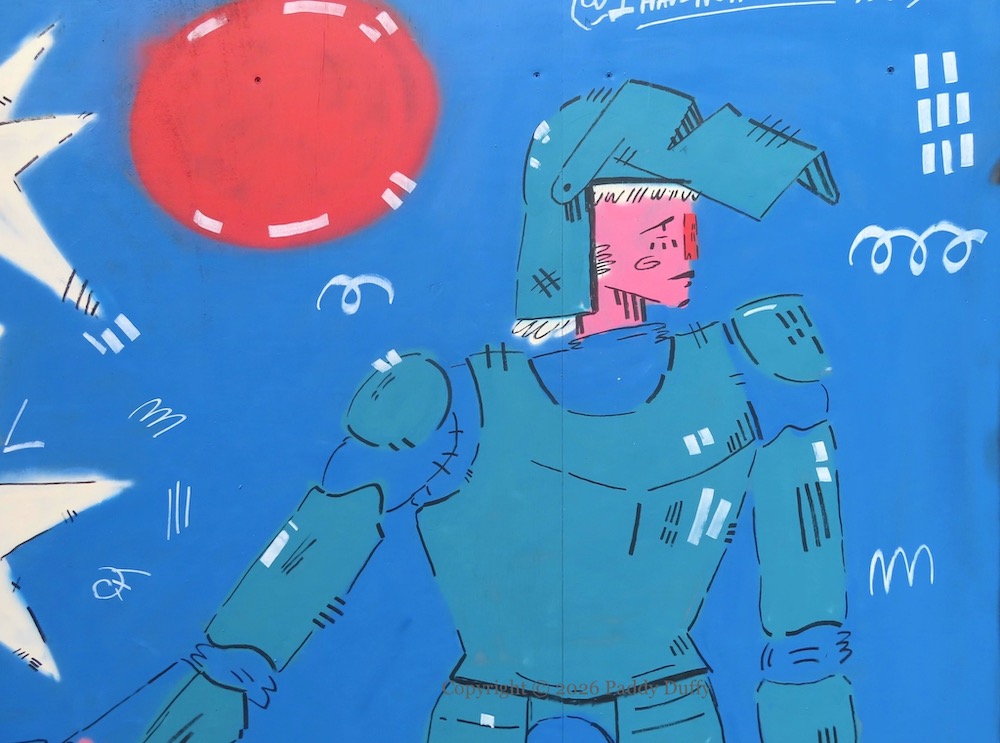
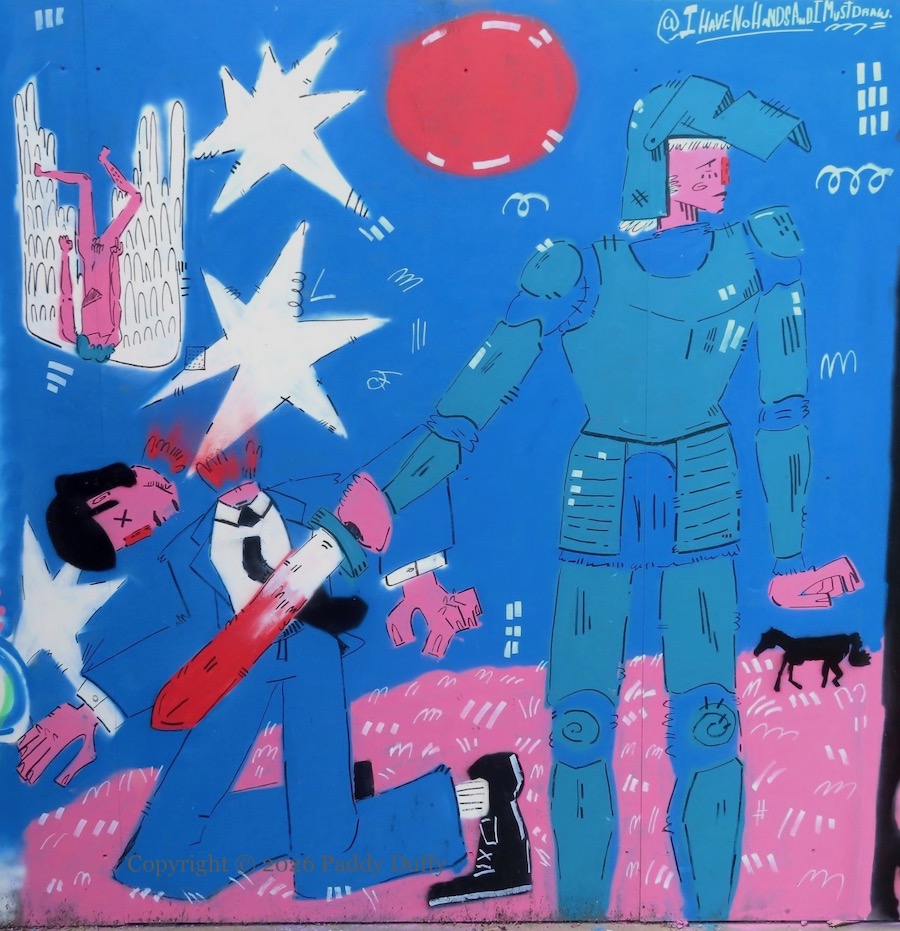
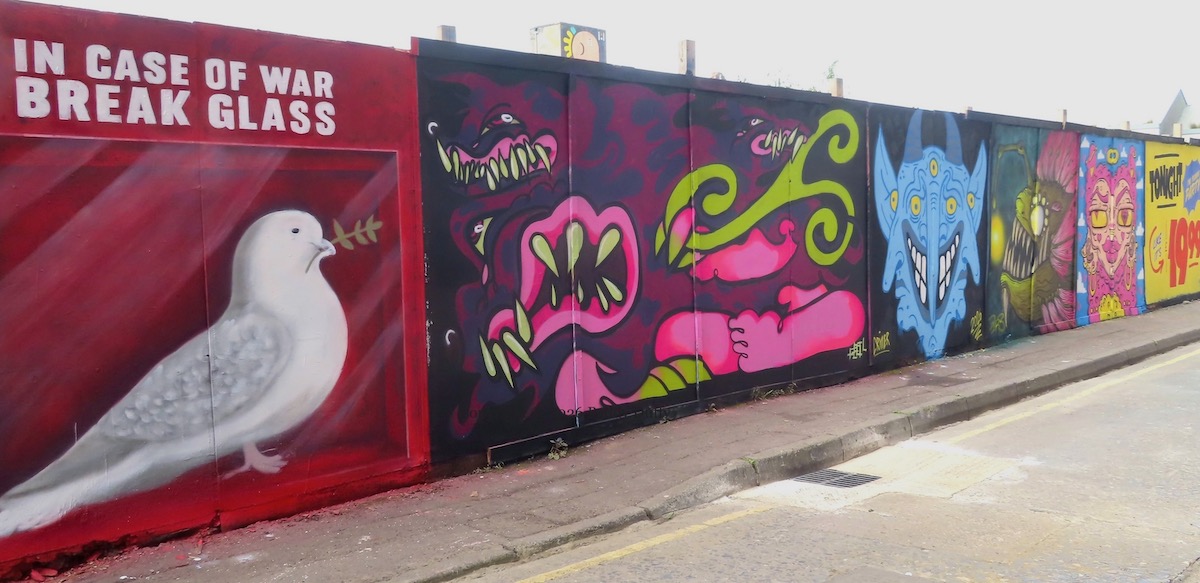
This is street art by Lost Lines (ig) for Hit The North 2026, on the shutters of Street Ministries (Fb).
Dublin Road, next to the Teal Monkey.
Click image to enlarge
Copyright © 2026 Paddy Duffy
T09014 [T09015] T09057 T09058
This is street art by Lost Lines (ig) for Hit The North 2026, on the shutters of Street Ministries (Fb).
Dublin Road, next to the Teal Monkey.
Click image to enlarge
Copyright © 2026 Paddy Duffy
T09014 [T09015] T09057 T09058
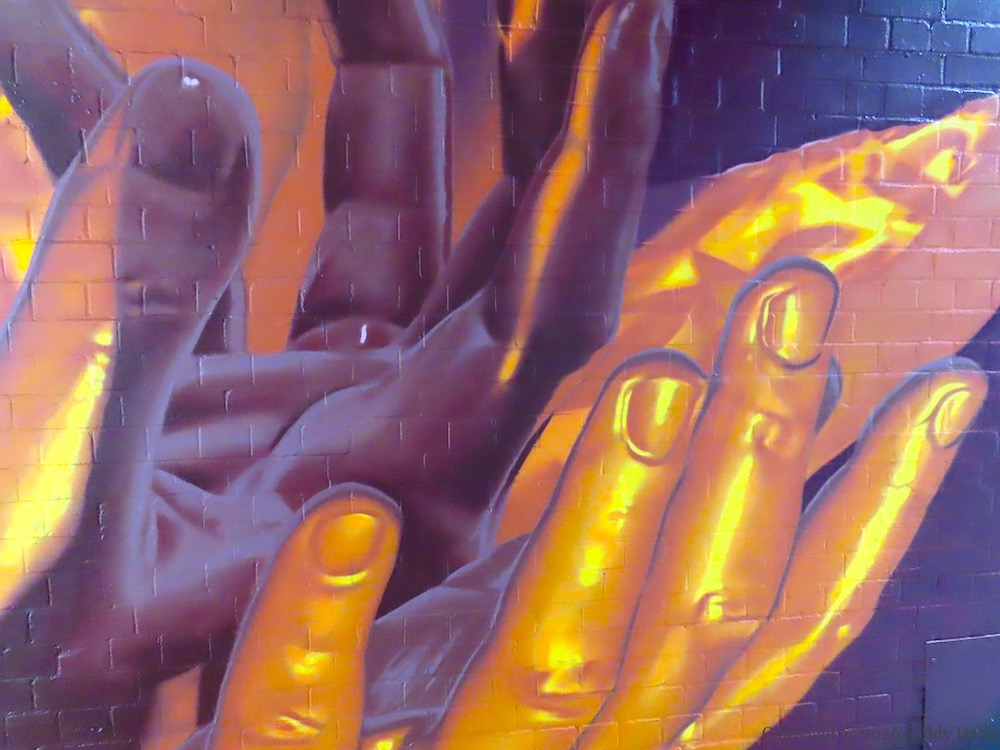
This opening flower of hands is by London artist Doppel (ig) in Crown Entry, Belfast.
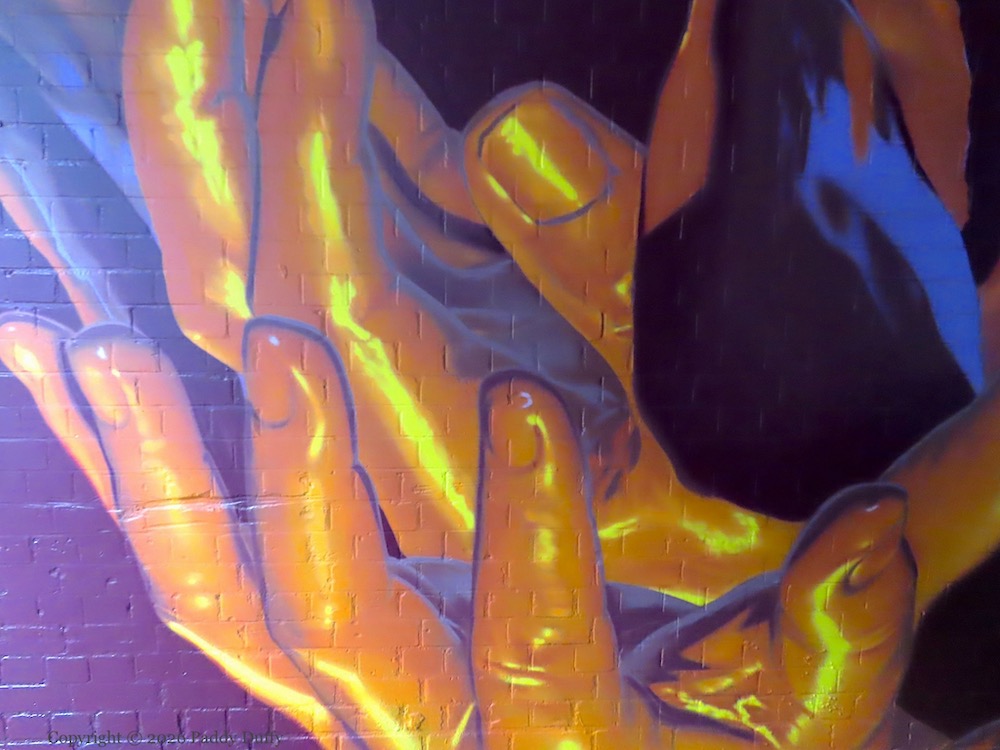
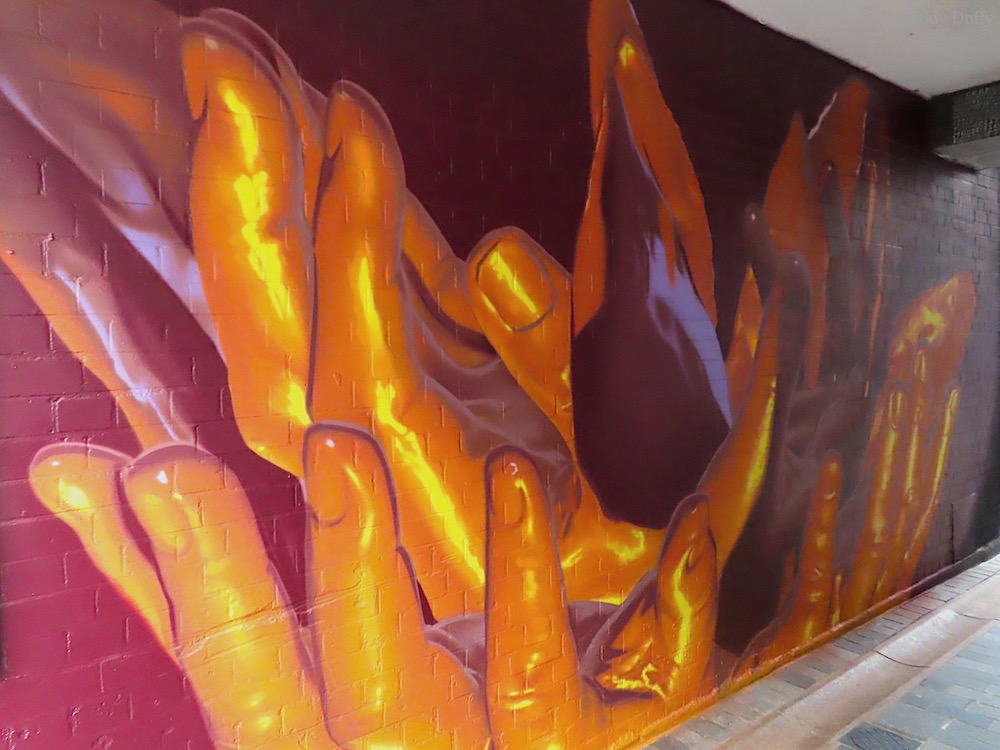
Click image to enlarge
Copyright © 2026 Paddy Duffy
T09066 T09065 [T09067] T09068
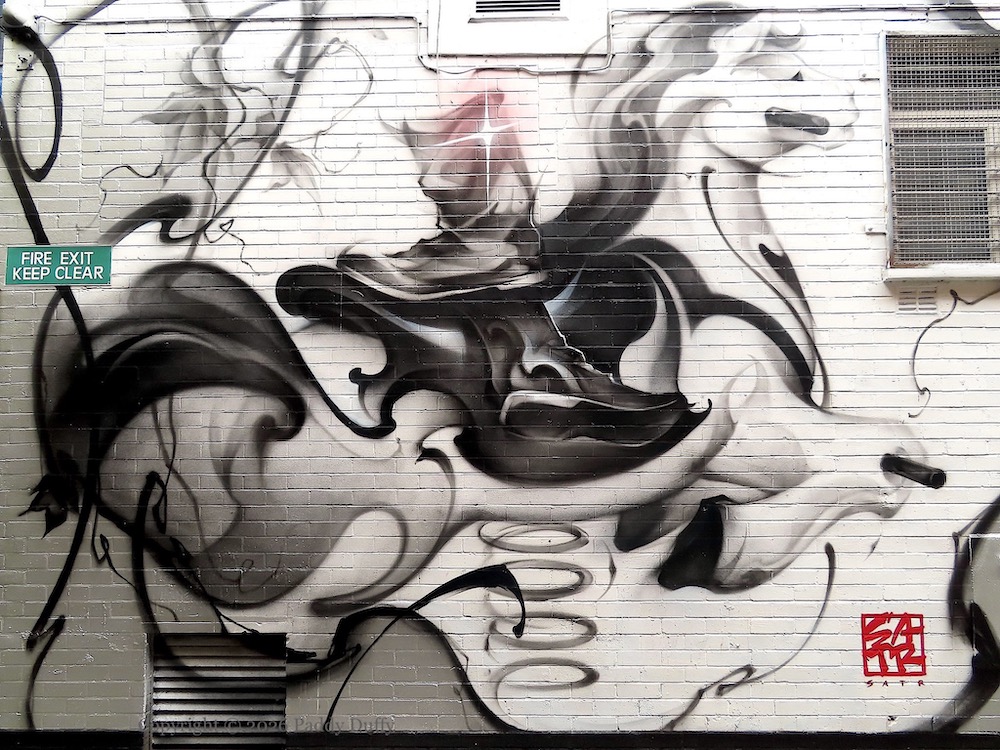
The hobby/carousel horse on a spring carries only a pair of boots. This is work by London-based artist SATR (ig) in Crown Entry, Belfast, for Hit The North 2026.
Click image to enlarge
Copyright © 2026 Paddy Duffy
T09069
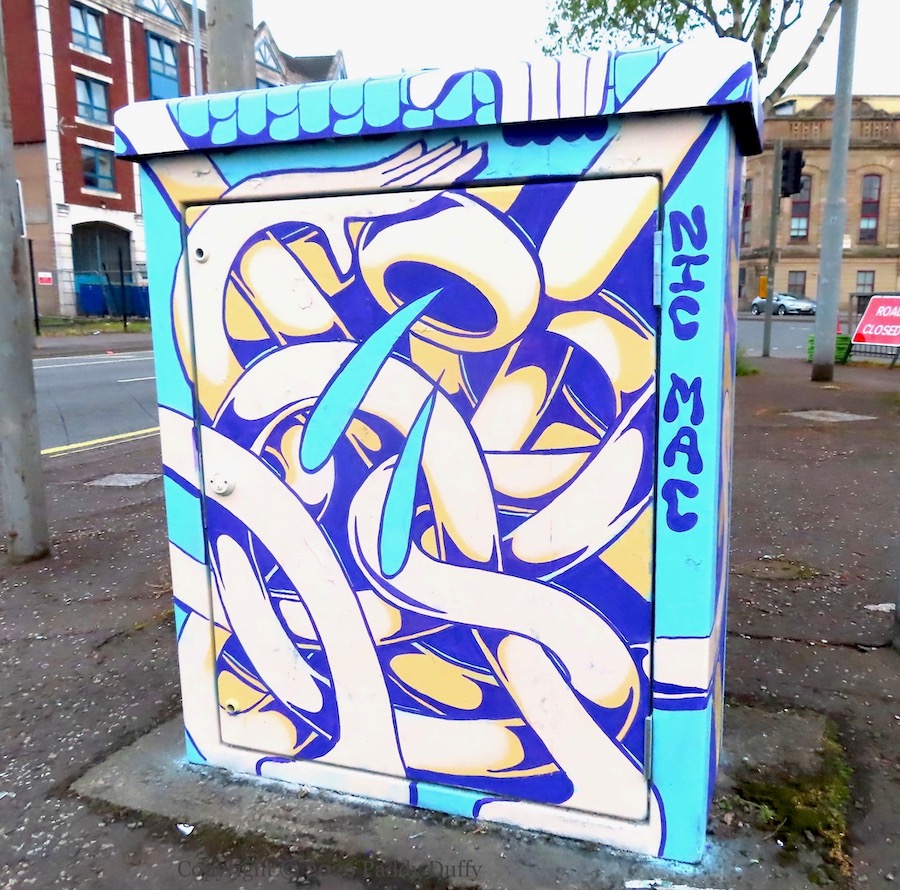
Here are two junction boxes painted for Hit The North 2026:
Above and immediately below: Nic Mac (ig) in Corporation Street. Nic Mac also painted a larger piece in Kent Street.
Below: Jayde Perkin (ig) on the Dublin Road.
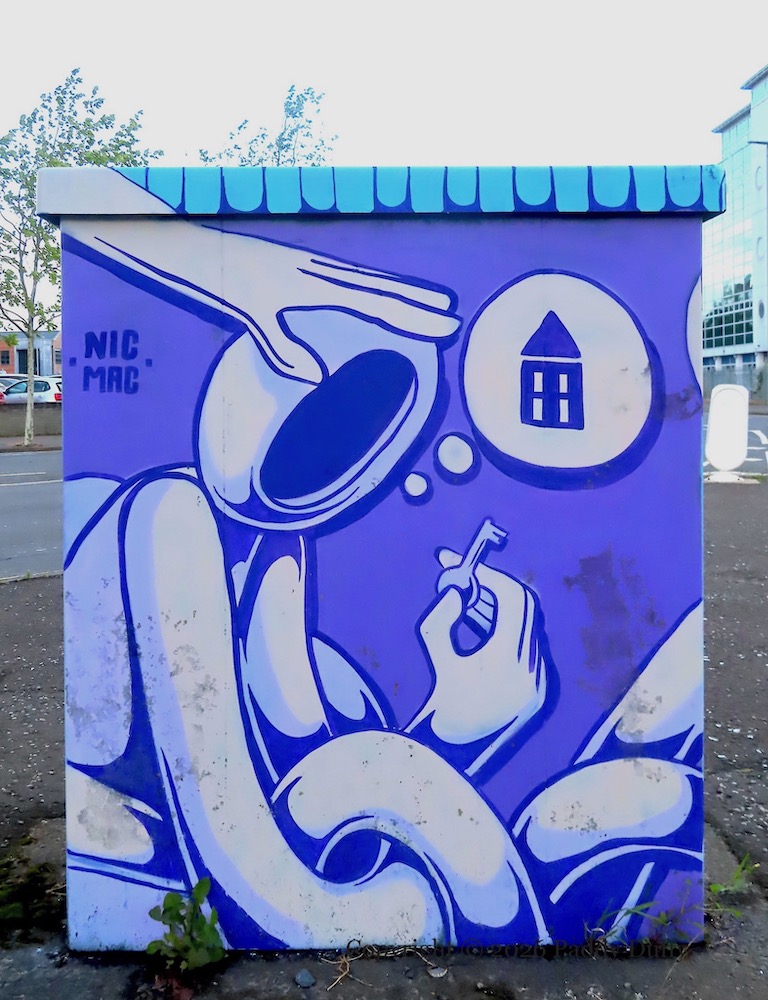
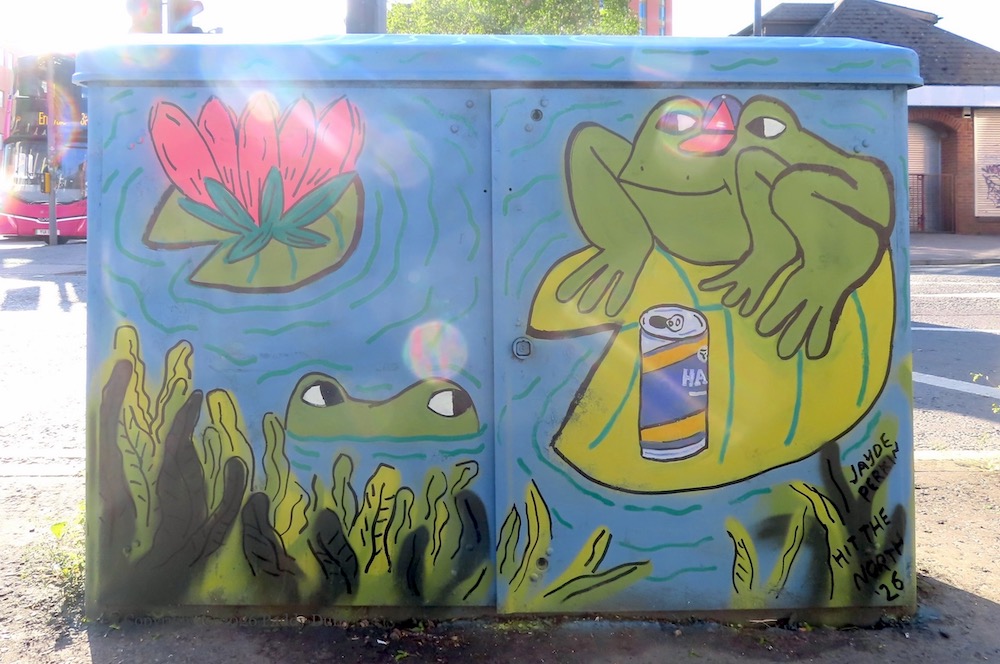
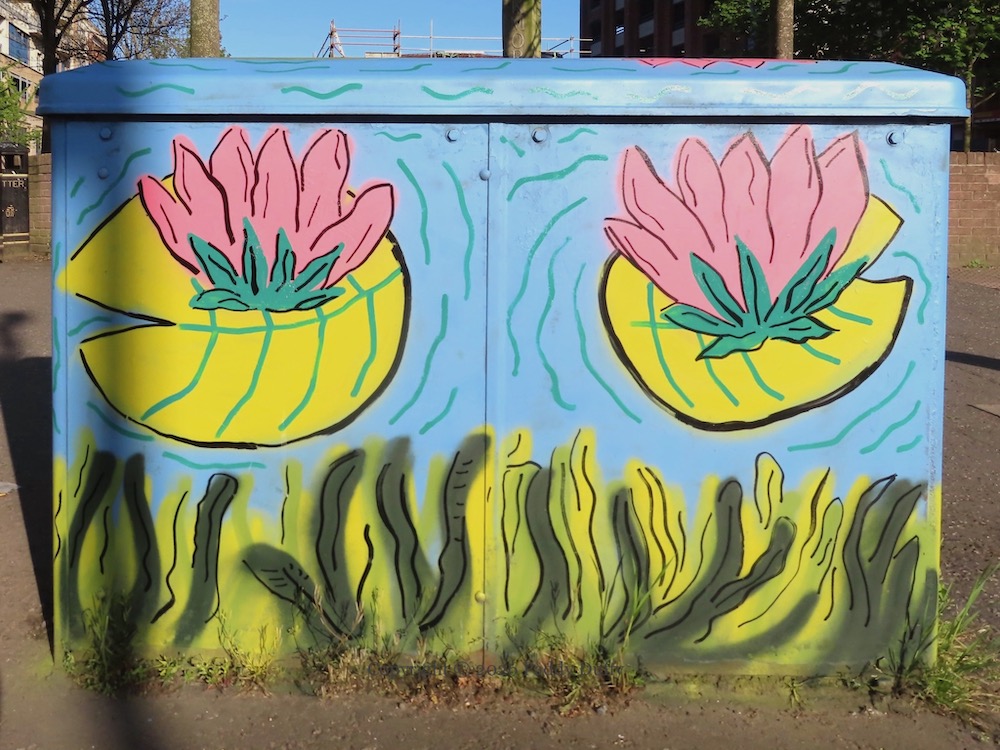
Click image to enlarge
Copyright © 2026 Paddy Duffy
T08932 [T08931] T09016 T09017
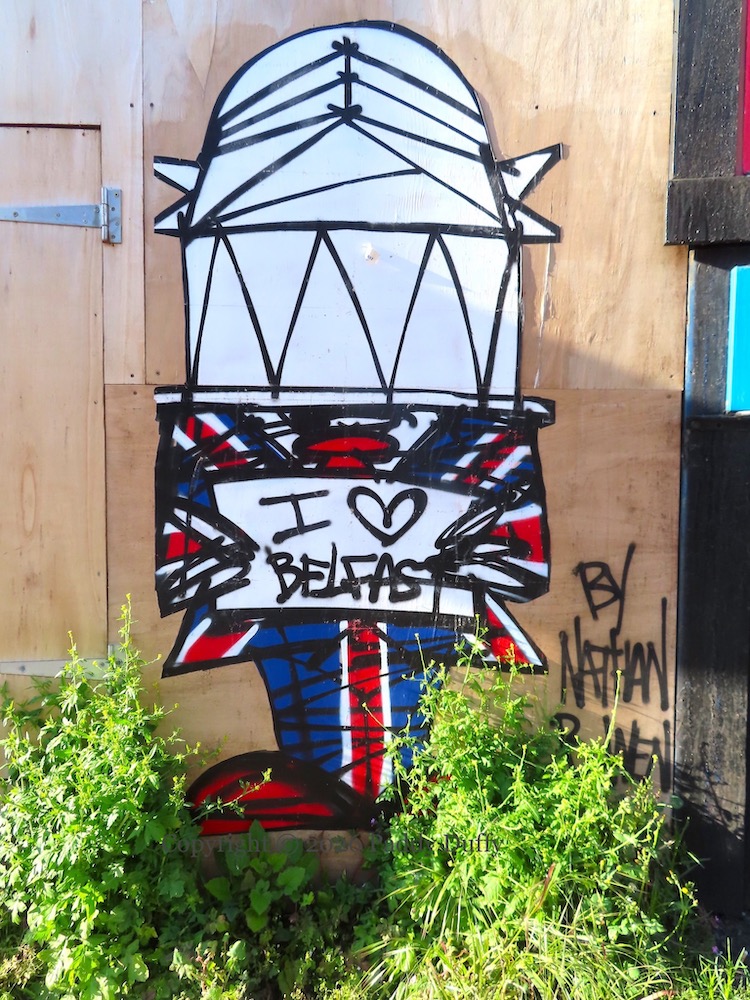
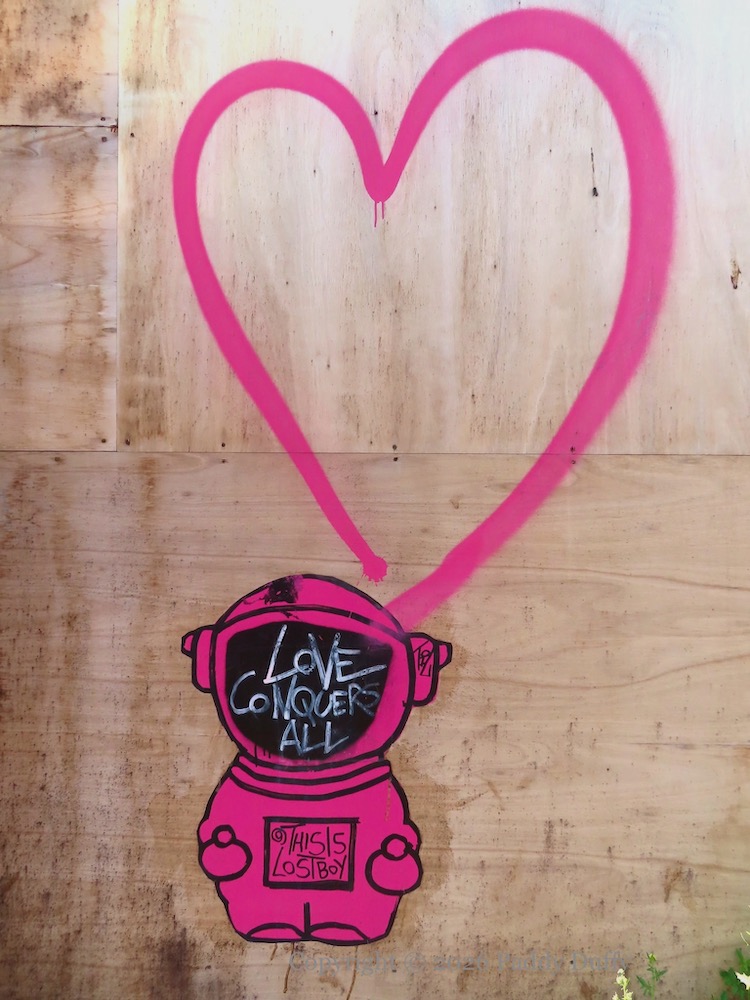
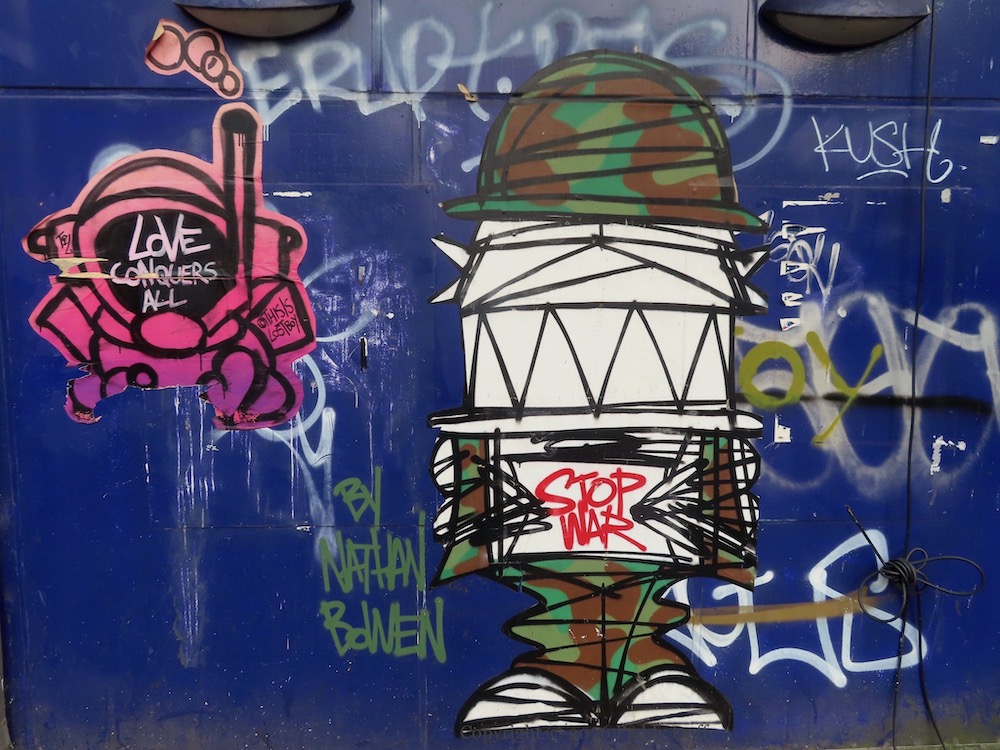
“I ❤️ Belfast”, “Love conquers all”, “Stop war”. These are works by London pair Nathan Bowen (ig | web store) and ThisIsLostBoy (ig), in Bruce Street and High Street.
See previously in Castle Street: Pledge For Positivity which contains links to more Bowen pieces.
Click image to enlarge
Copyright © 2026 Paddy Duffy
T09020 T09021 T09064
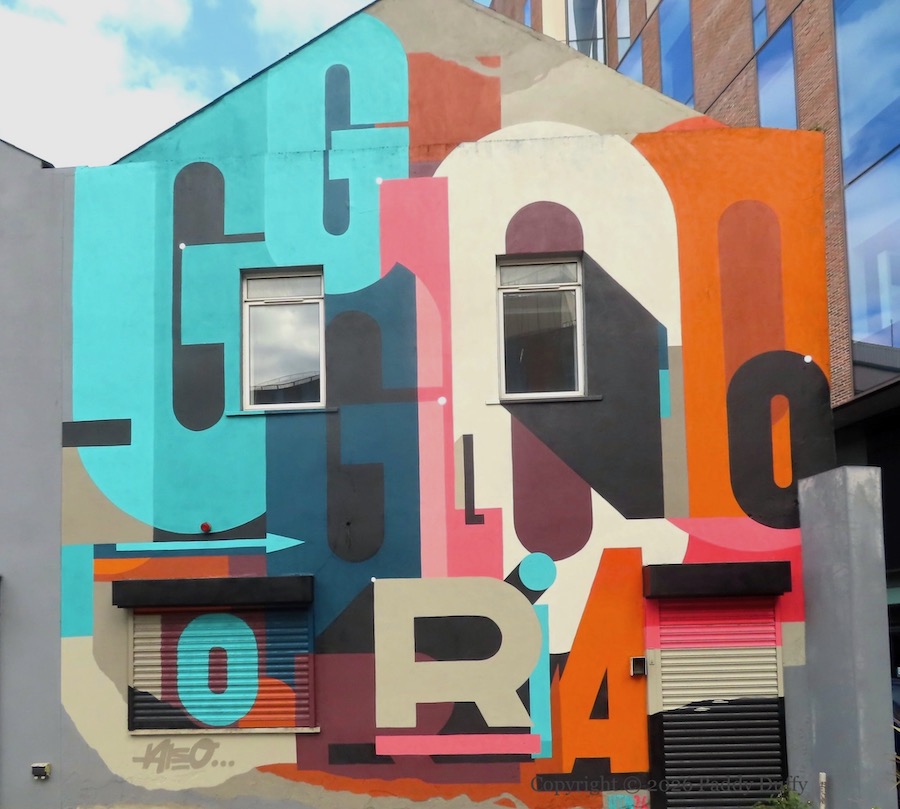
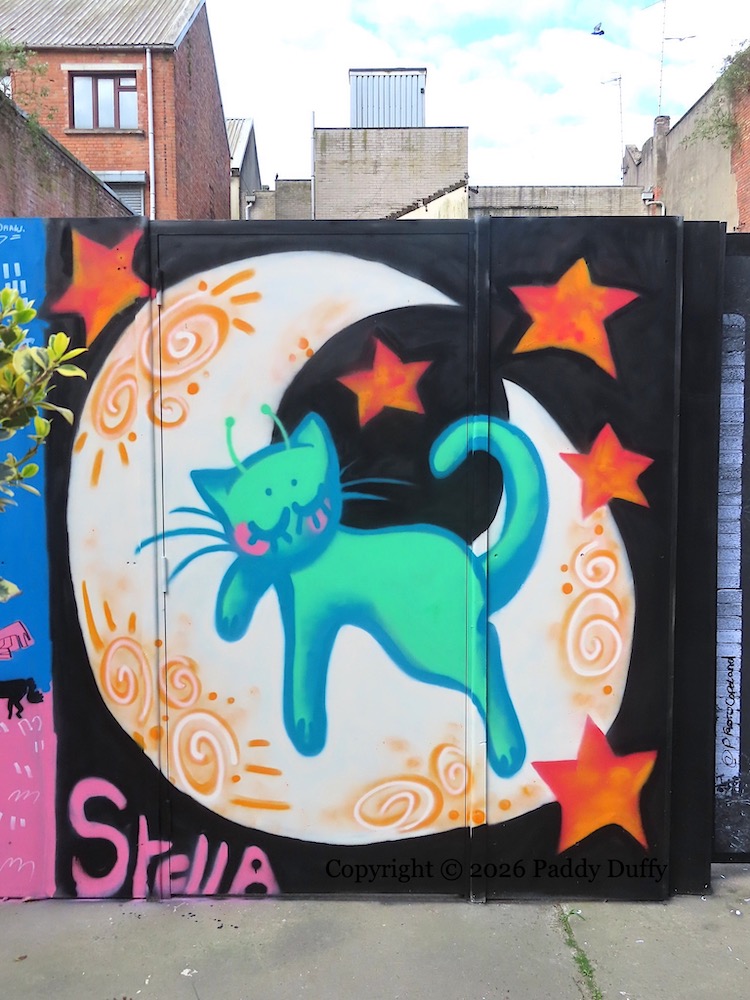
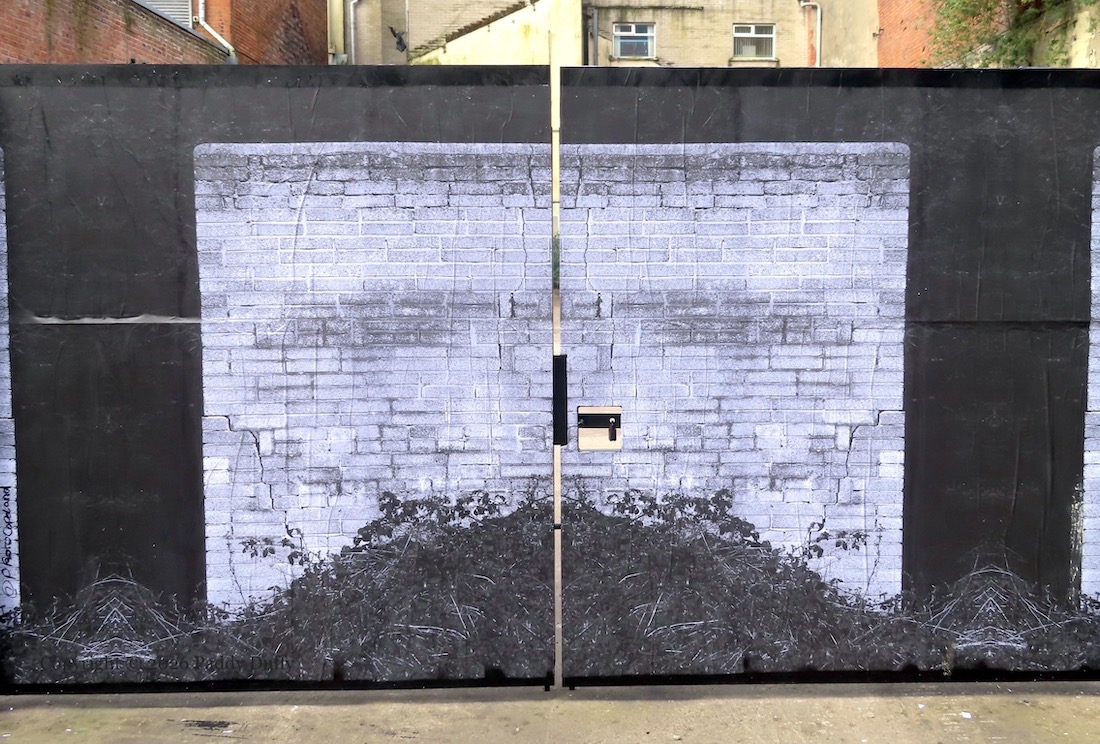
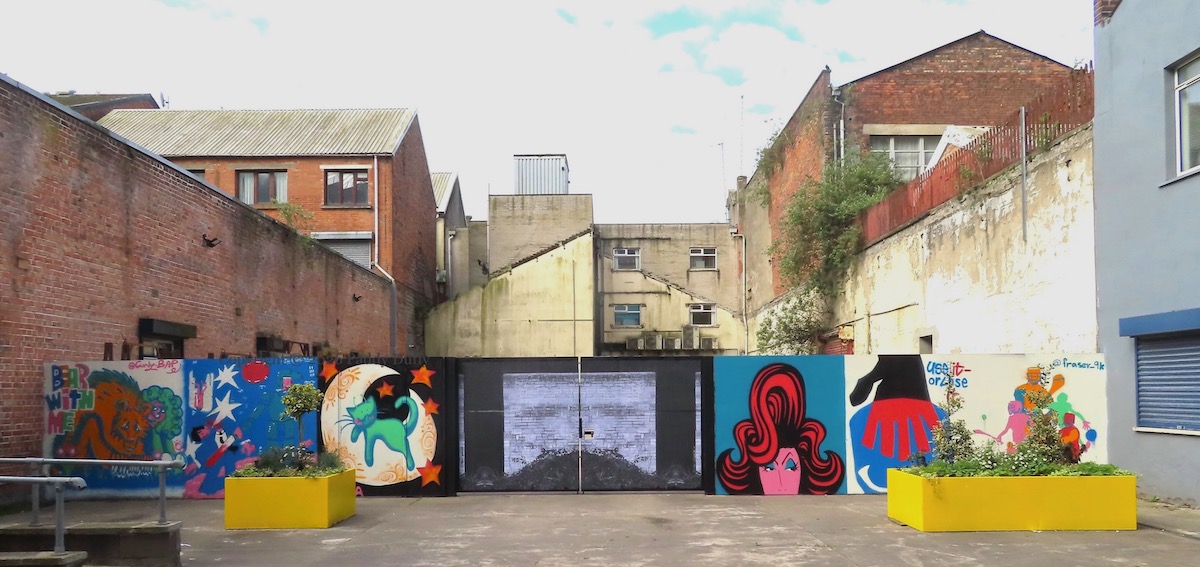
In addition to the main festival location centred on the Sunflower bar, a small jam took place in a recently renovated courtyard next to the UU building in York Lane (compare with 2025’s Medusa).
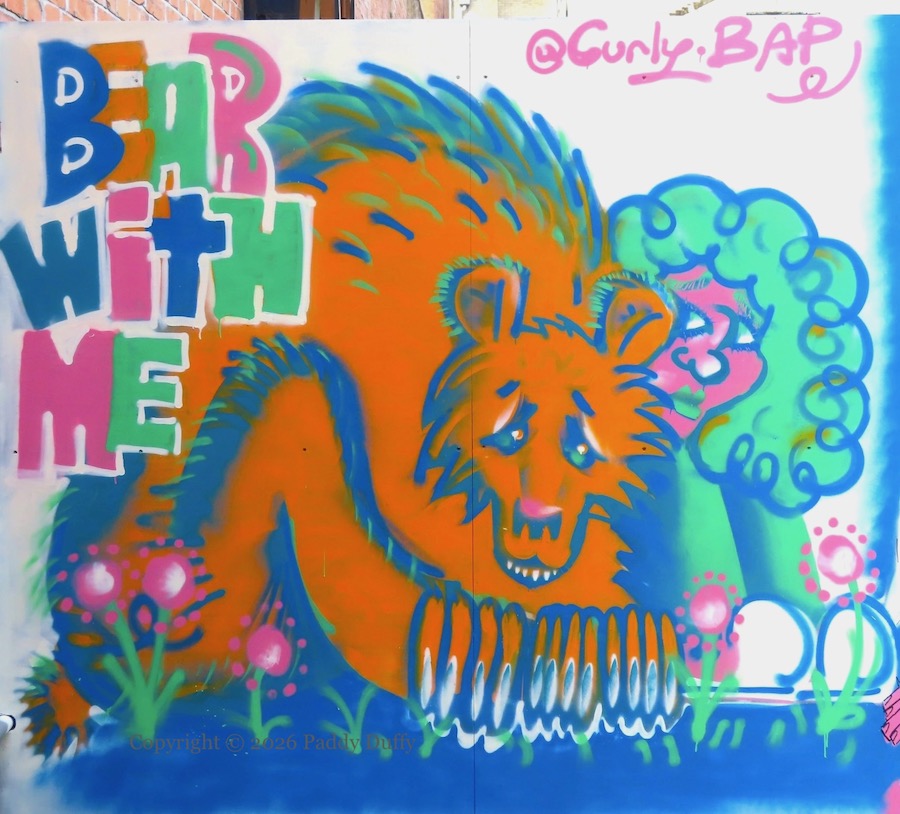
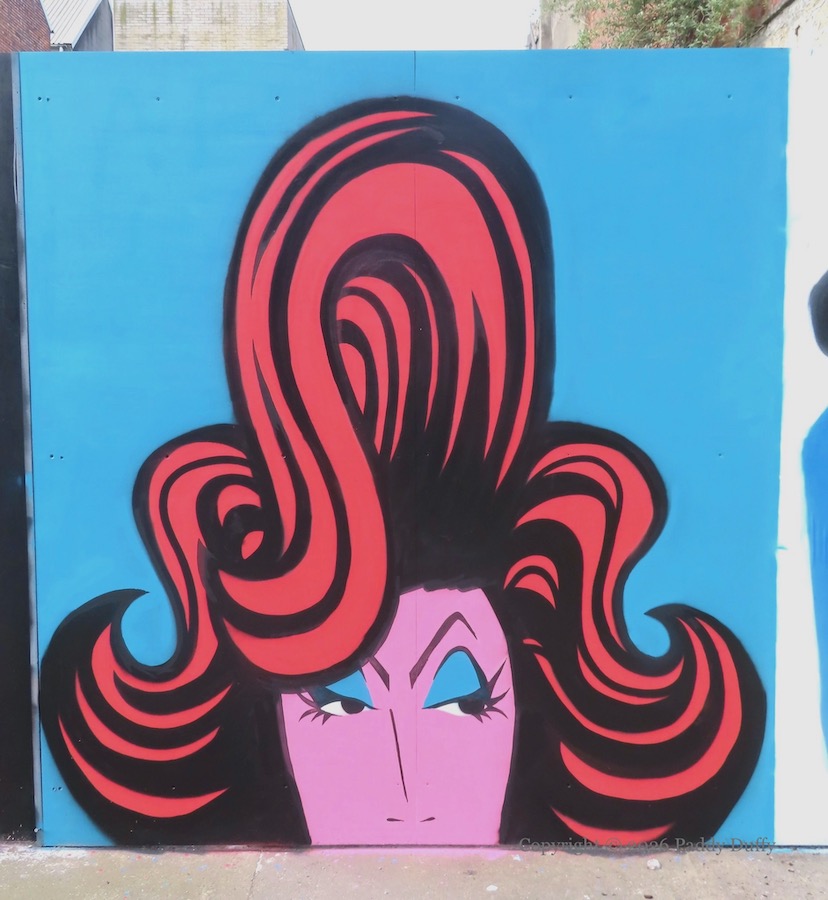
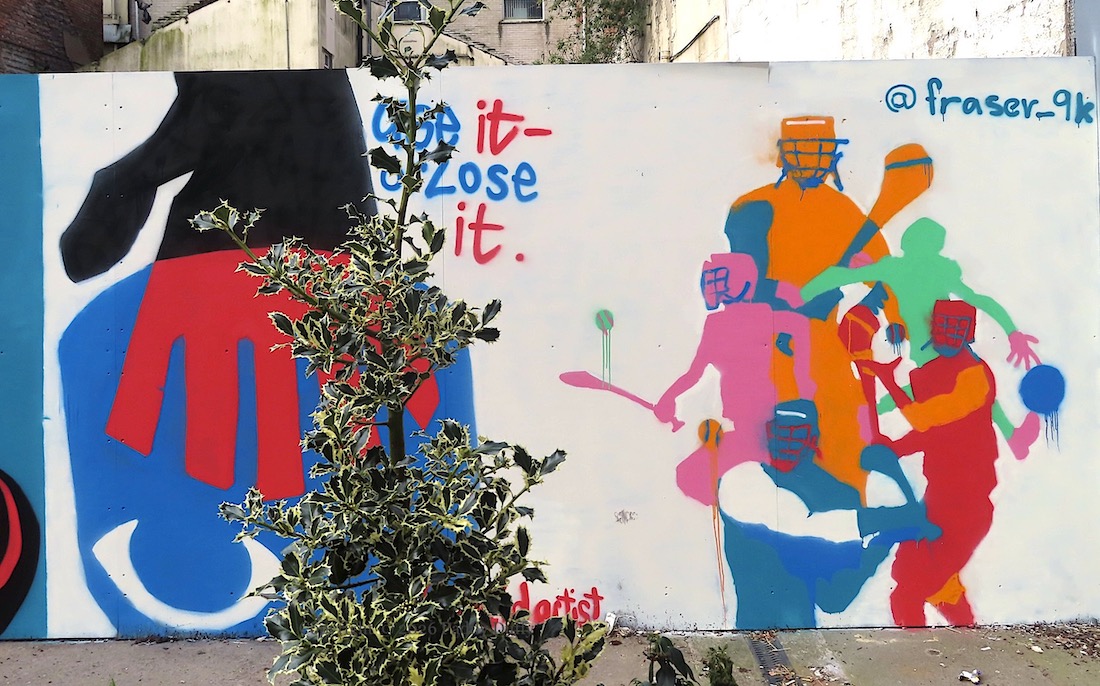
The large piece (above) is by Ricky Also (ig) while the seven on the courtyard wall are “Bear With Me” by Curly Bap (ig), “Judith Beheading Holofernes” by JoJo (ig), a cat on the moon by Stella (ig), a wall by David Copeland (ig), big hair by Rachel Patterson (ig), an “Use It Or Lose It” by DEID (web), and Gaelic games by Fraser_9K (ig)
Click image to enlarge
Copyright © 2026 Paddy Duffy
T08966
T08974 T08973 T08972 T08971 T08970 T08969 T08968
T08975
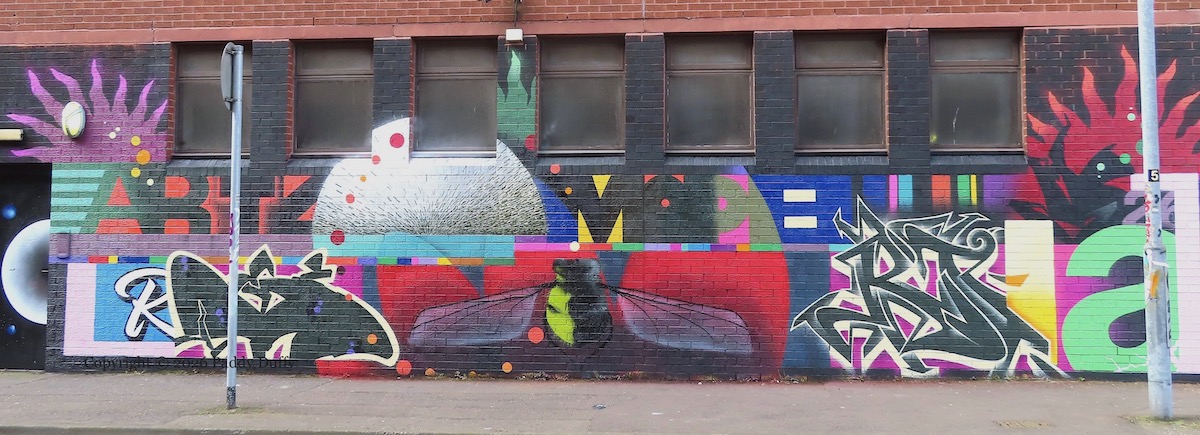
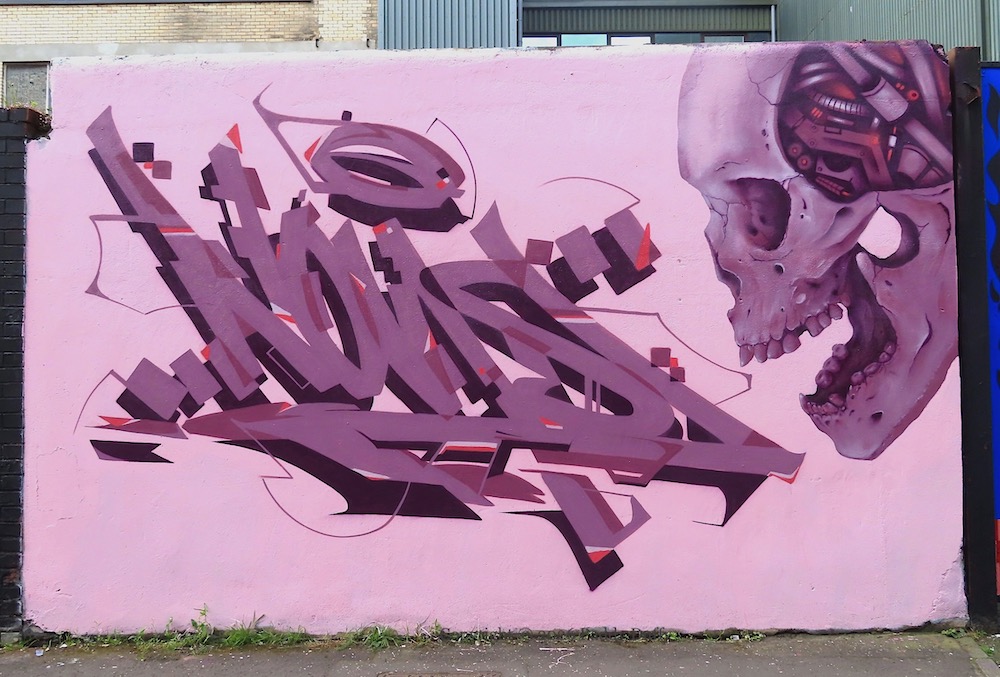
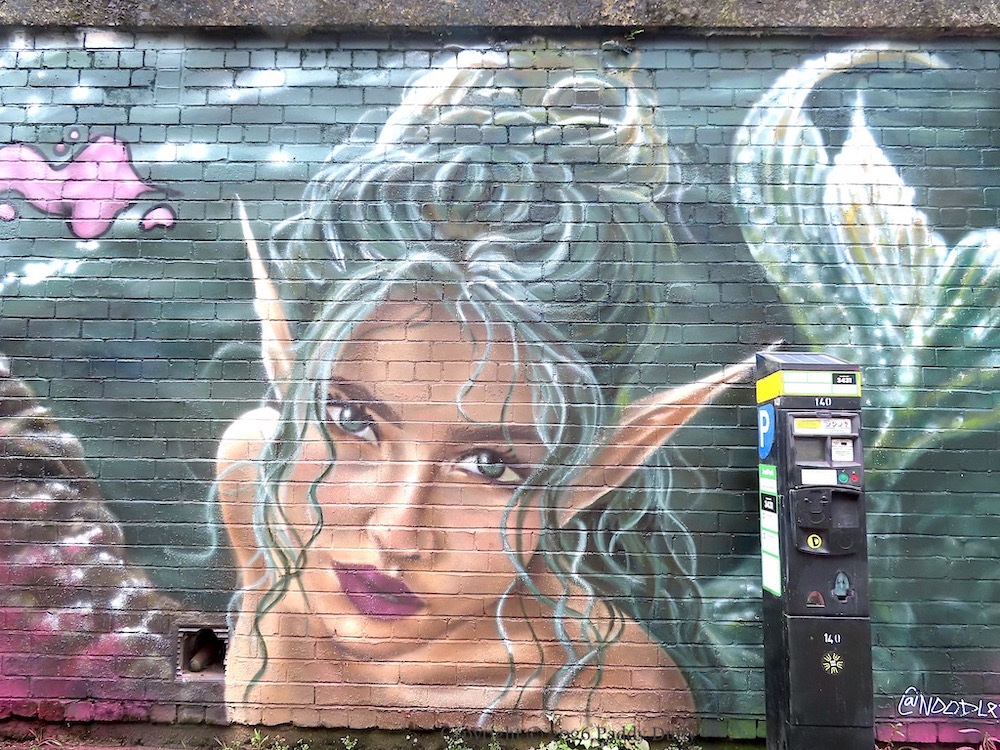
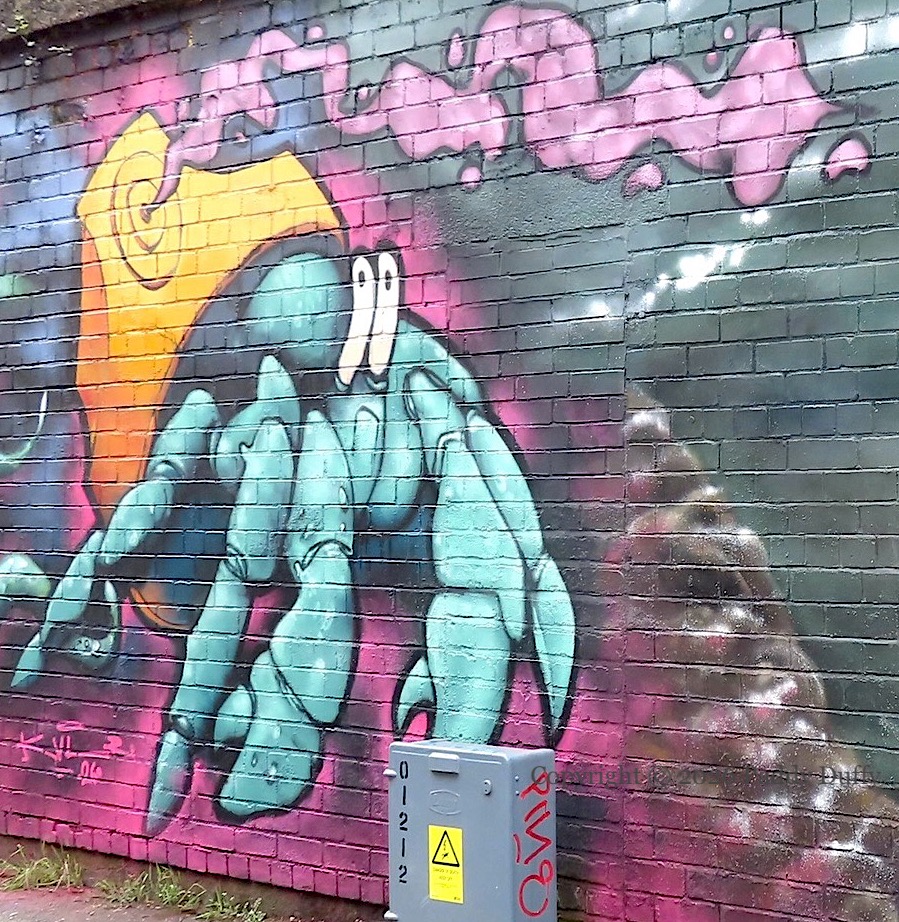
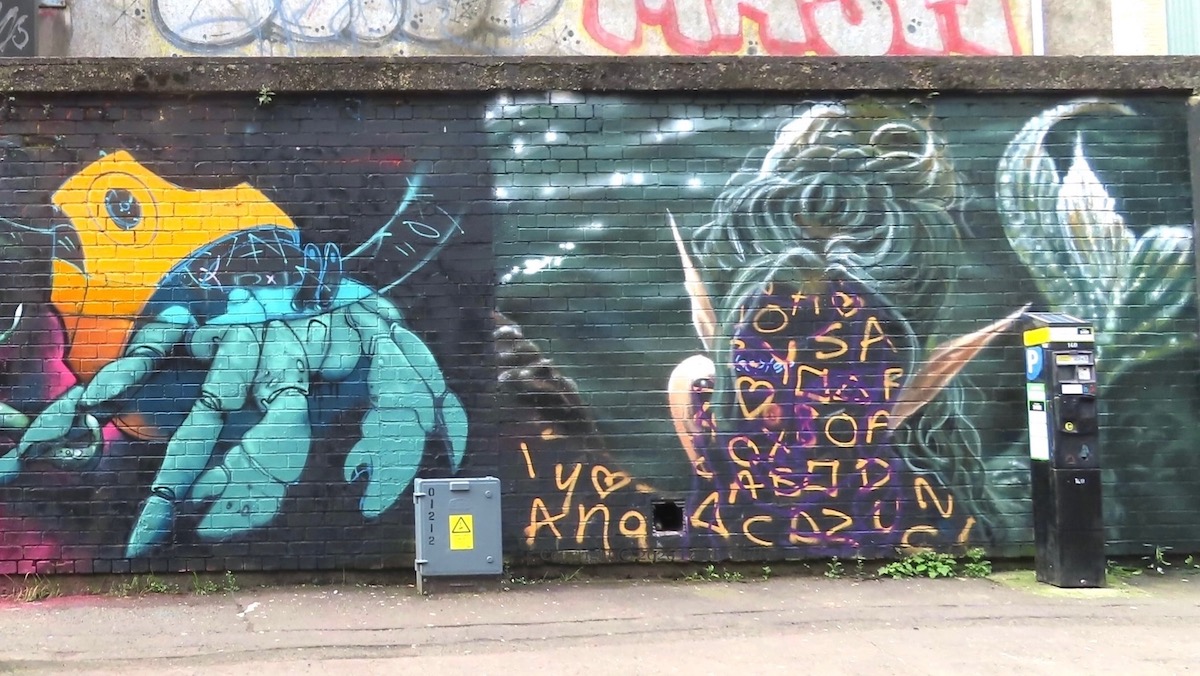
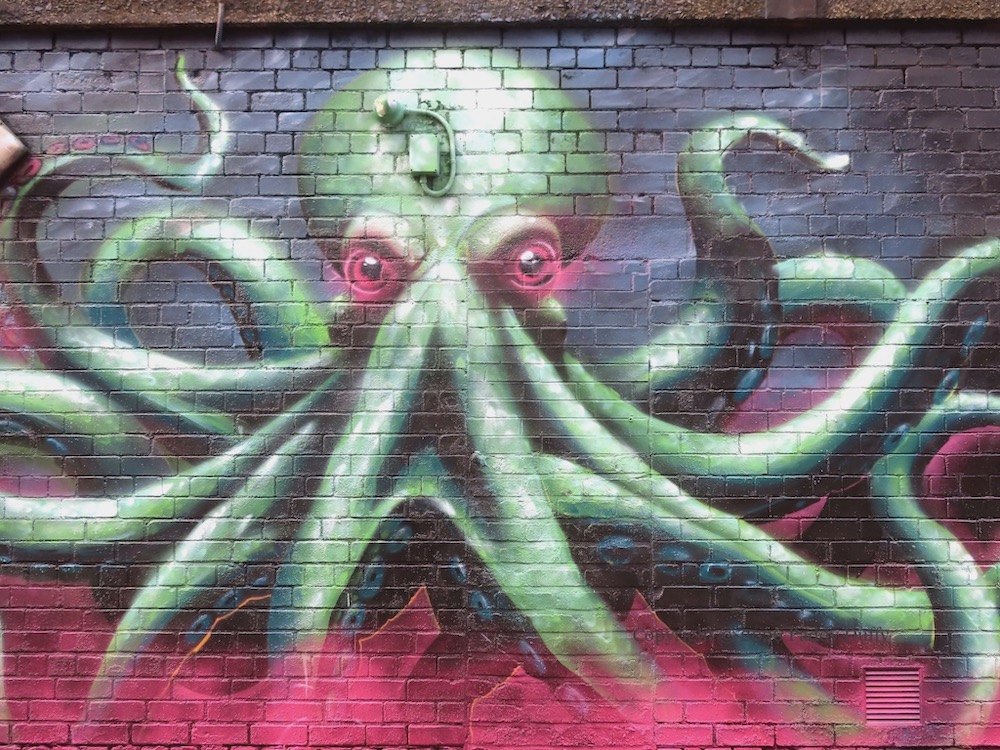
From top to bottom (west to east, on the street), the pieces are by Artz (ig) + EPOM (ig), Rob Hilken (web), Erin Bradley Scott (Glasgow) (ig), NOYS (ig), Noodle (ig), KVLR (web), JAM (ig).
The images are from May 4th except where noted.
May 2nd:
May 6th:
May 6th:
May 4th:
May 4th:
Click image to enlarge
Copyright © 2026 Paddy Duffy
T08961 T08919
T08962 [T08920]
T09029 [T08921]
T08963 [T09030] [T08922]
T09031 [T08923]
T09032c [T08924] T08965
T08964 [T08925]
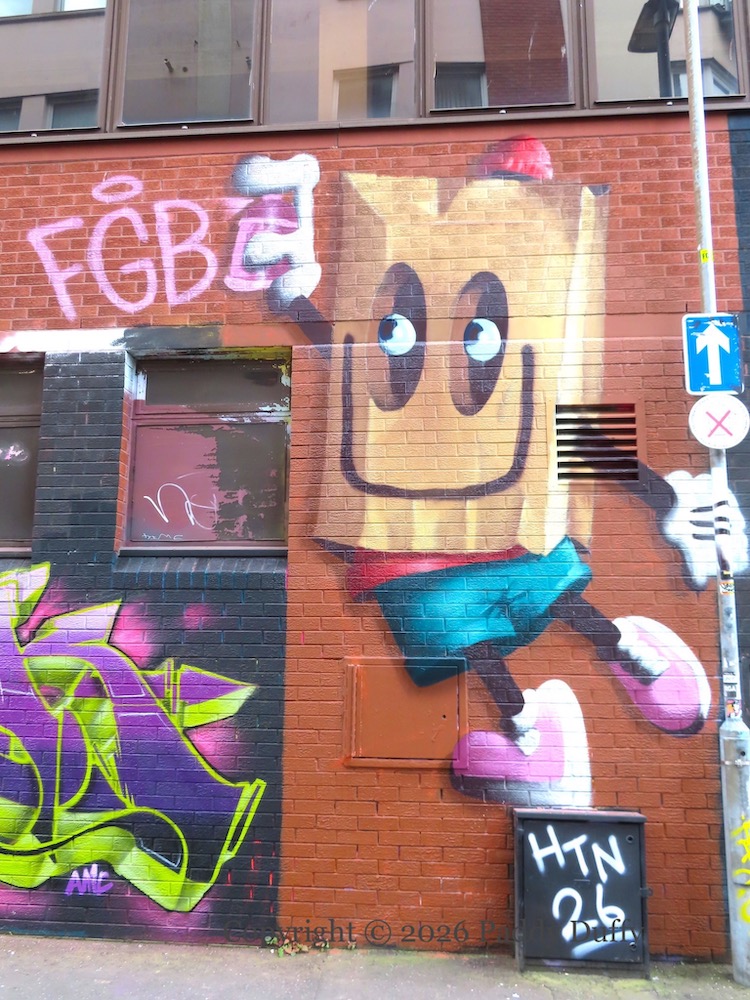
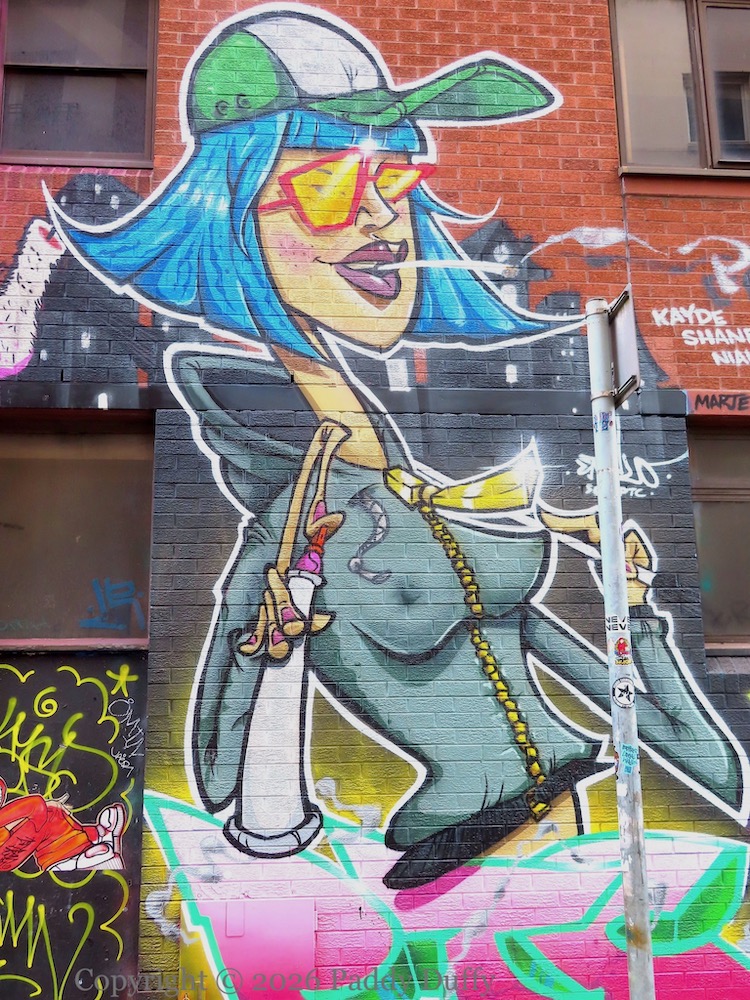
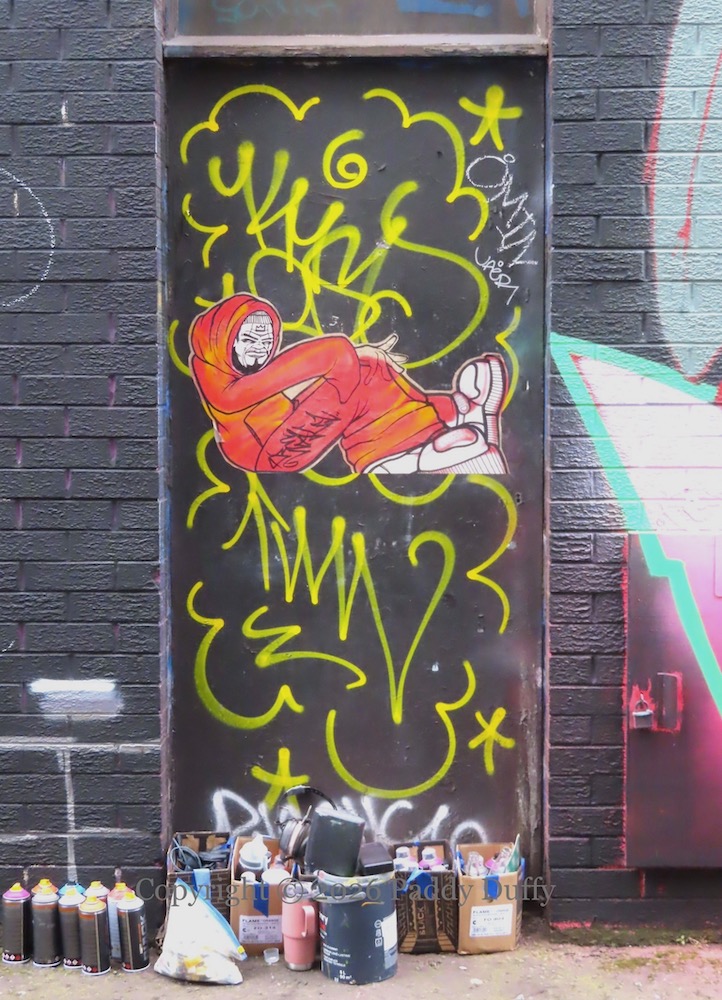
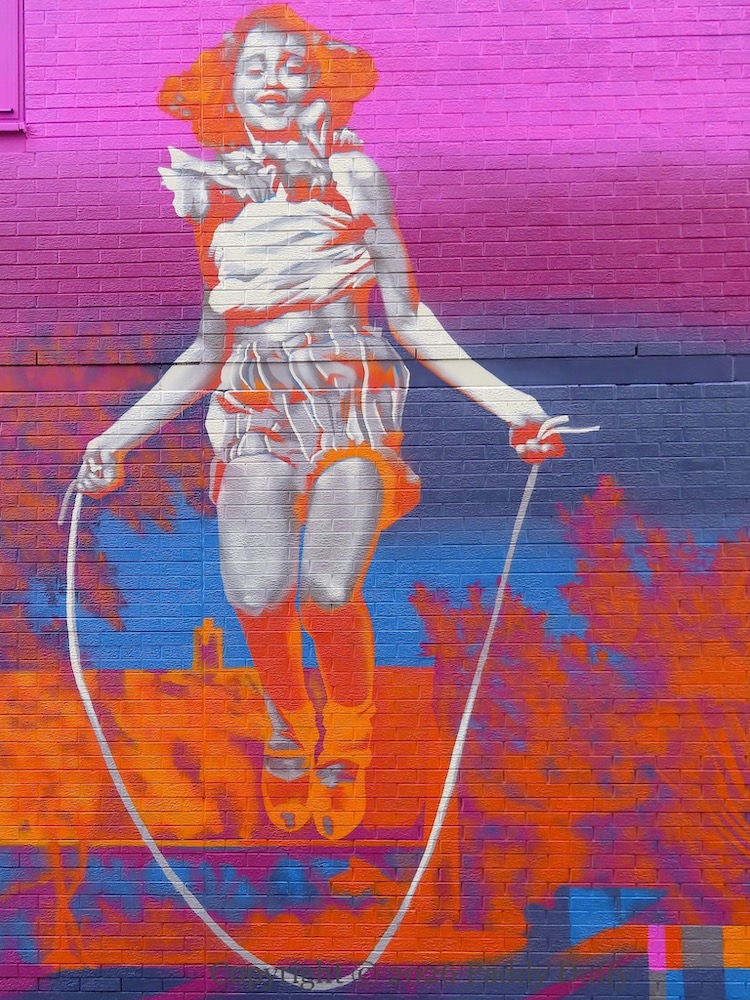
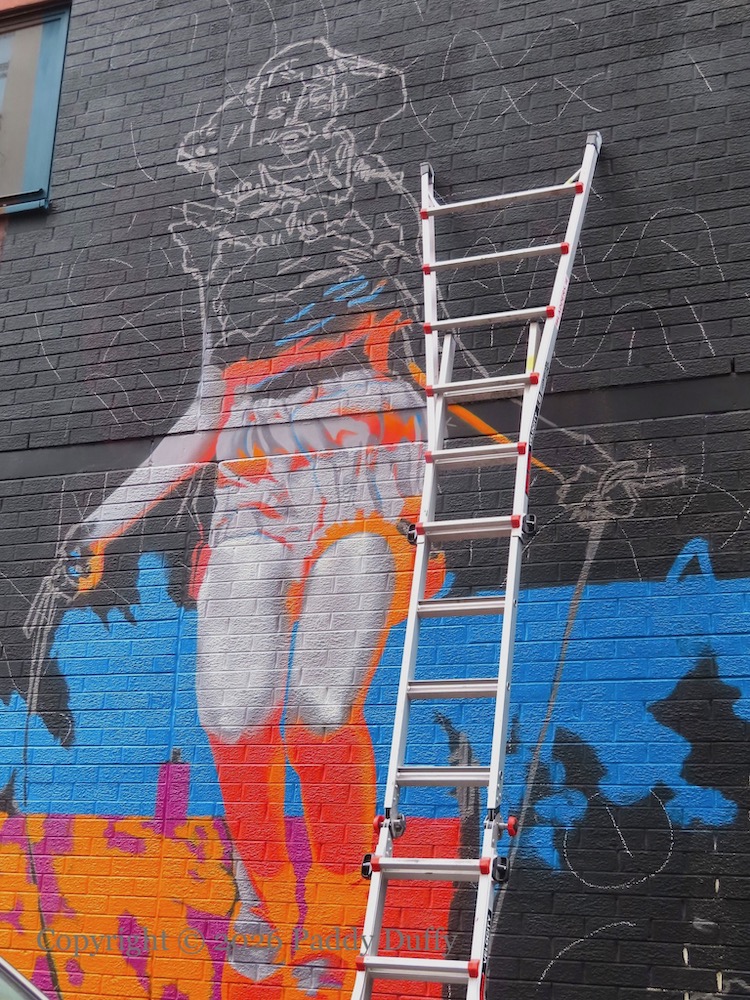
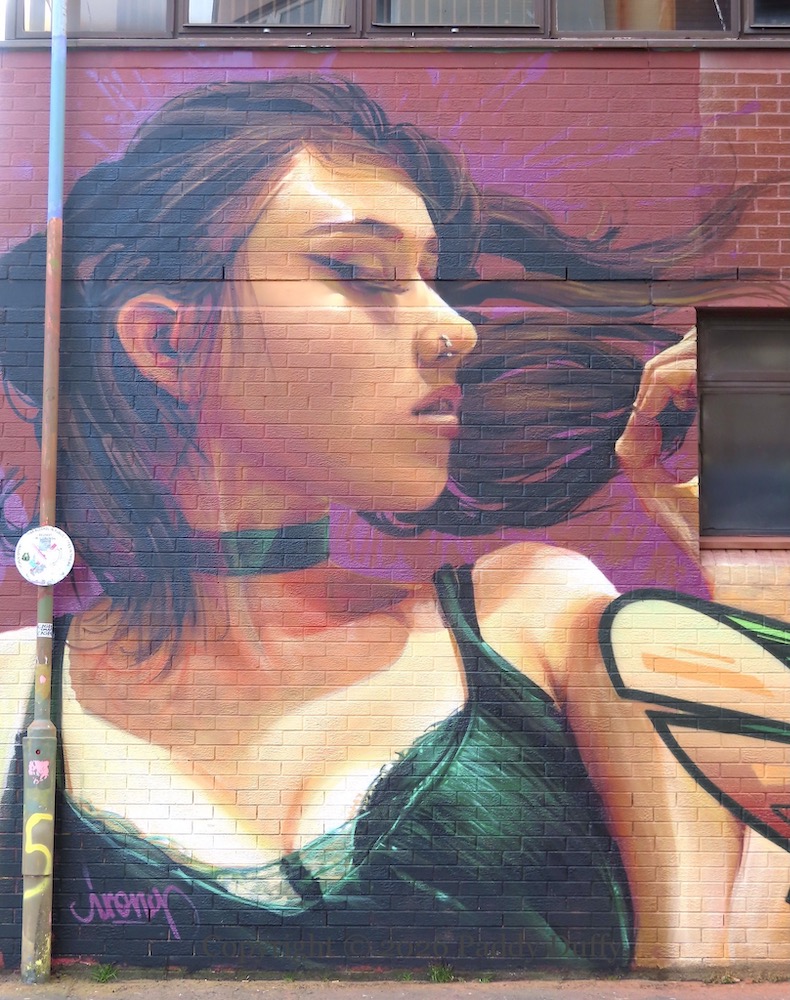
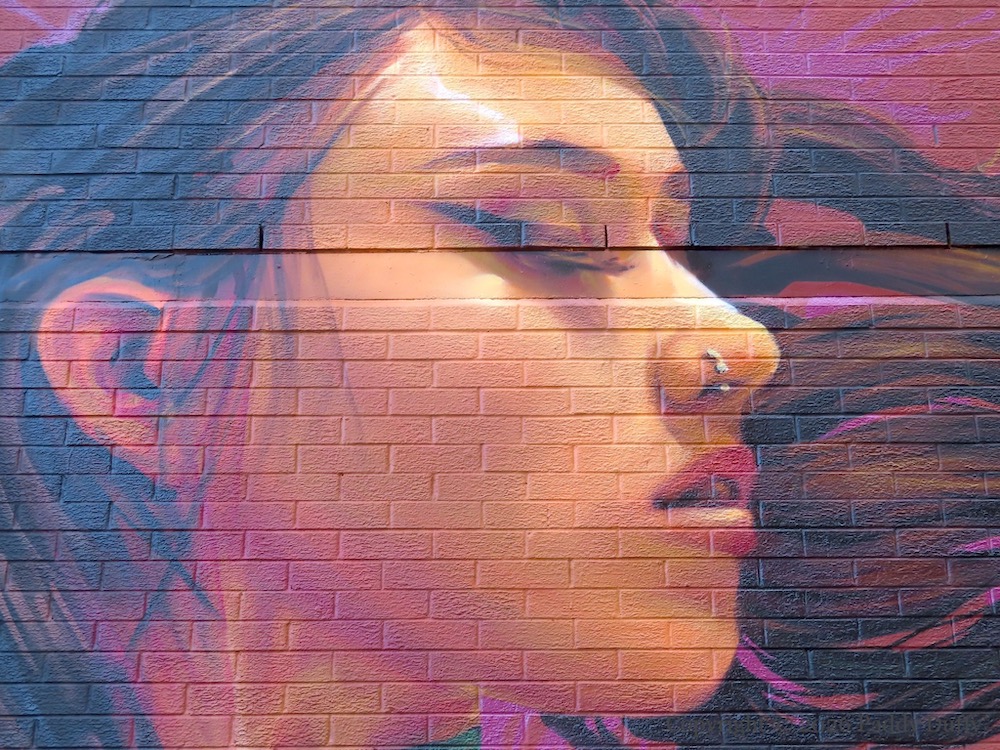
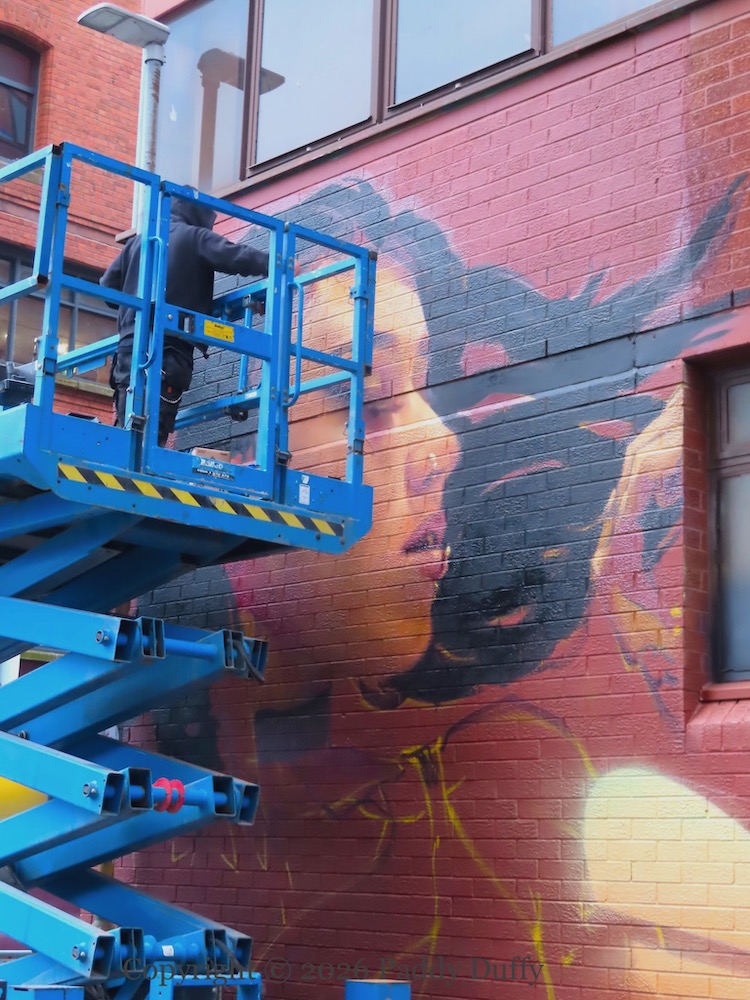
Here is a gallery of the pieces produced for Hit The North 2026 by FGB (web), SNAK (ig), STAYLO (ig), Omin (web), VENTS (ig), and Irony (ig) in Union Street, between Kent Street and Library Street.
Images of the writing by SNAK and VENTS will be added. The in-progress images are from May 2nd.
[SNAK]
[VENTS]
Click image to enlarge
Copyright © 2026 Paddy Duffy
T08955 [T08913]
T08956 [T08915]
T08914
T08957 [T08955] T08916
[T08917]
T08959 T08960 [T08958] T08918
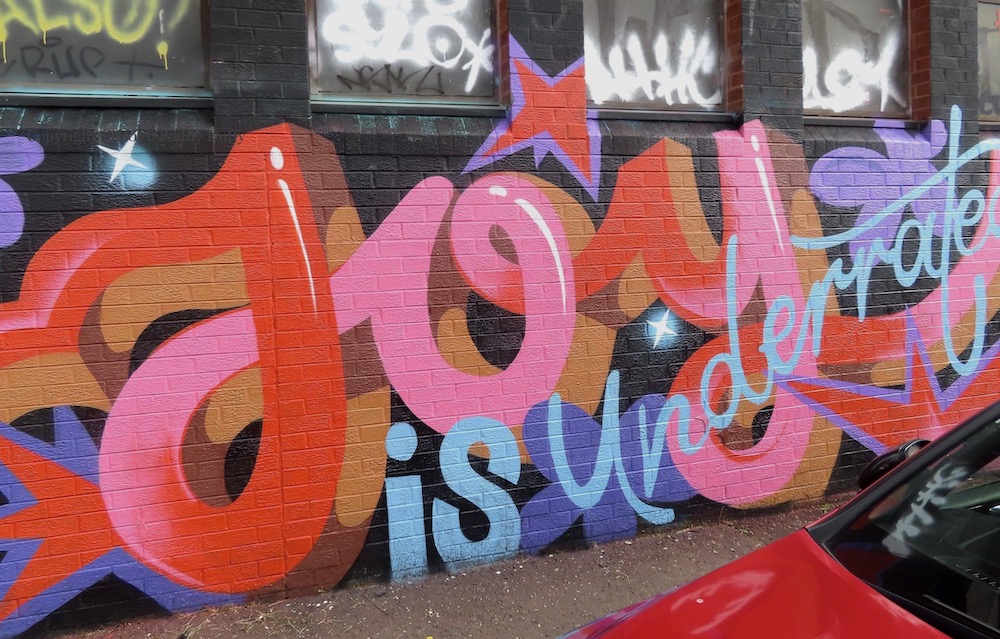
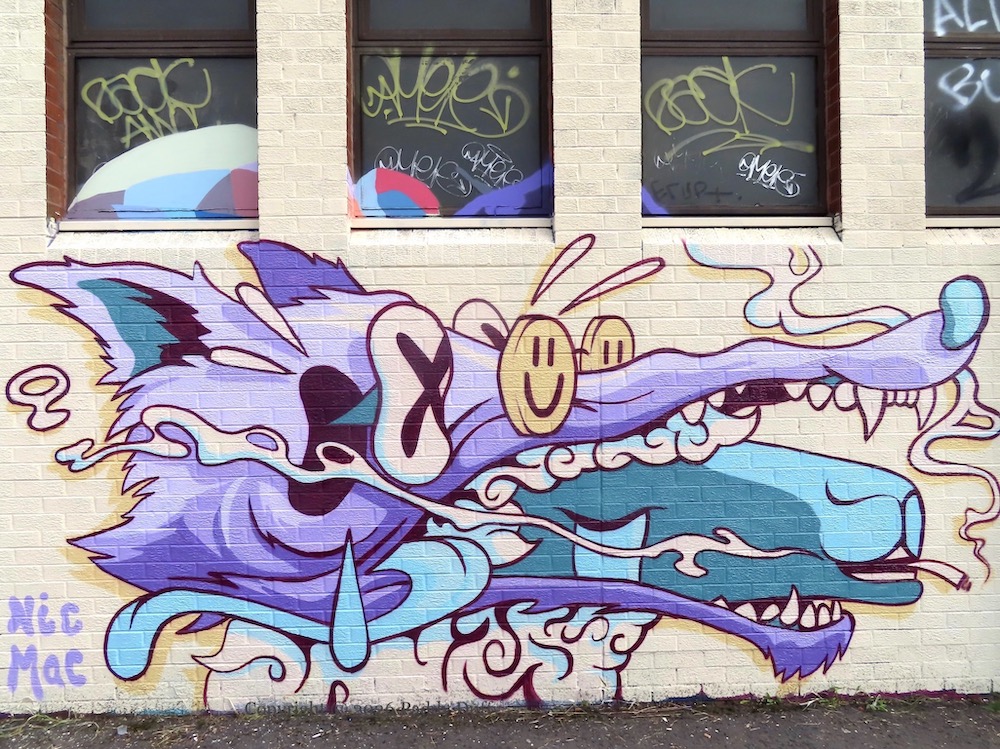
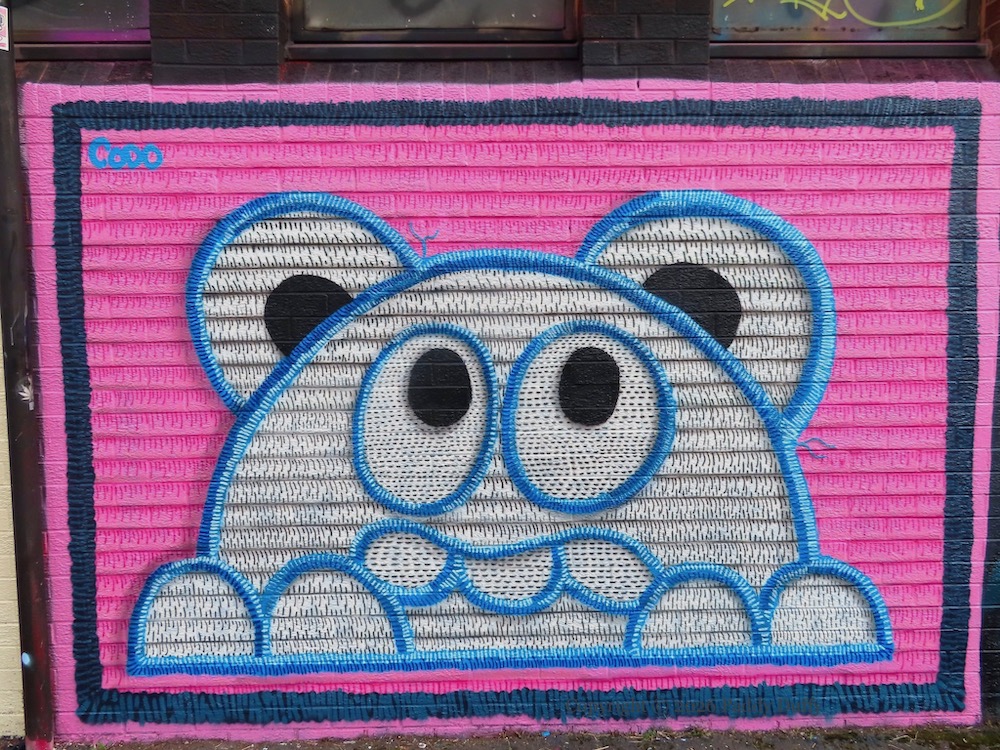
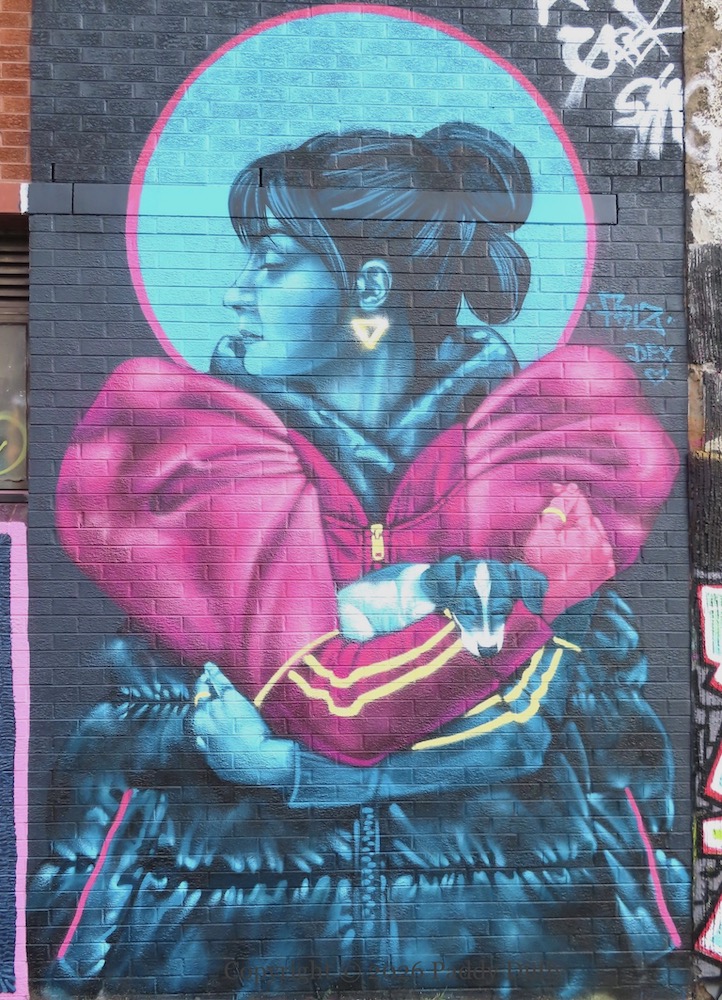
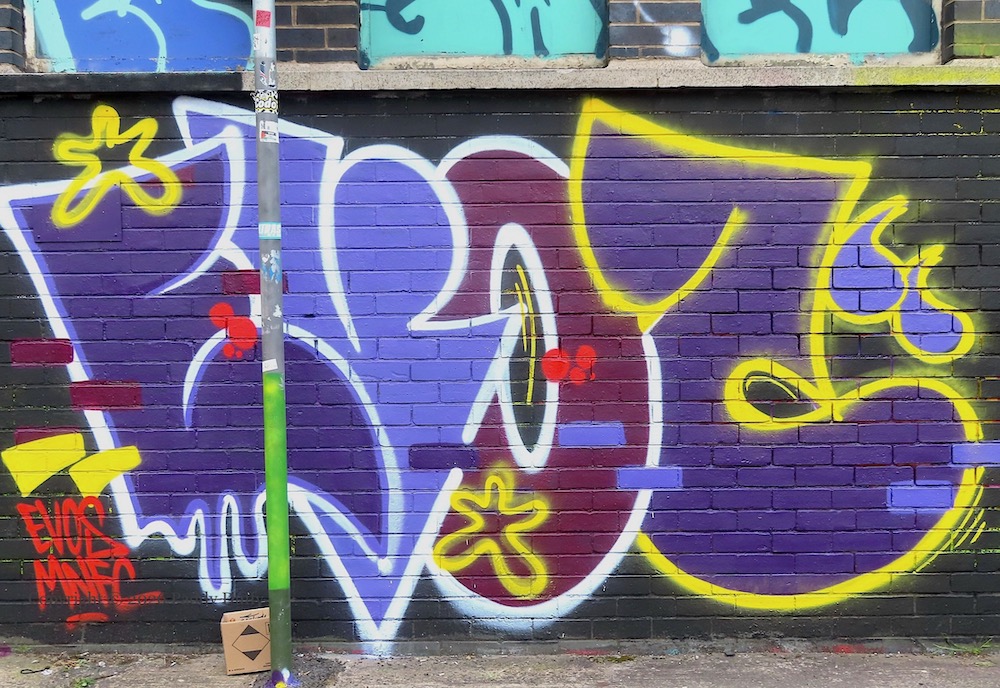
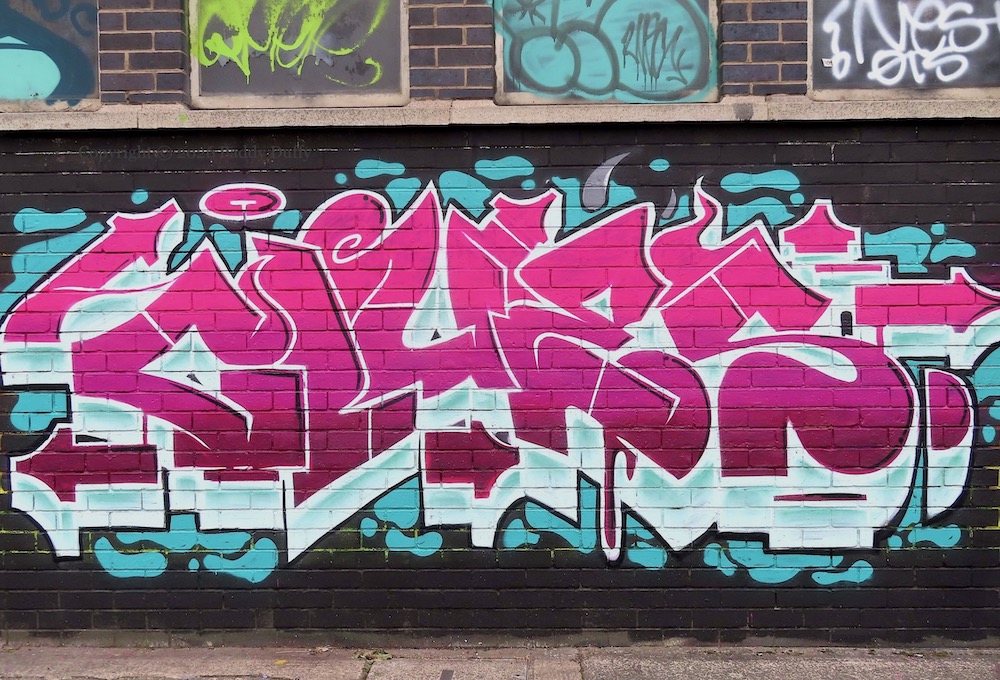
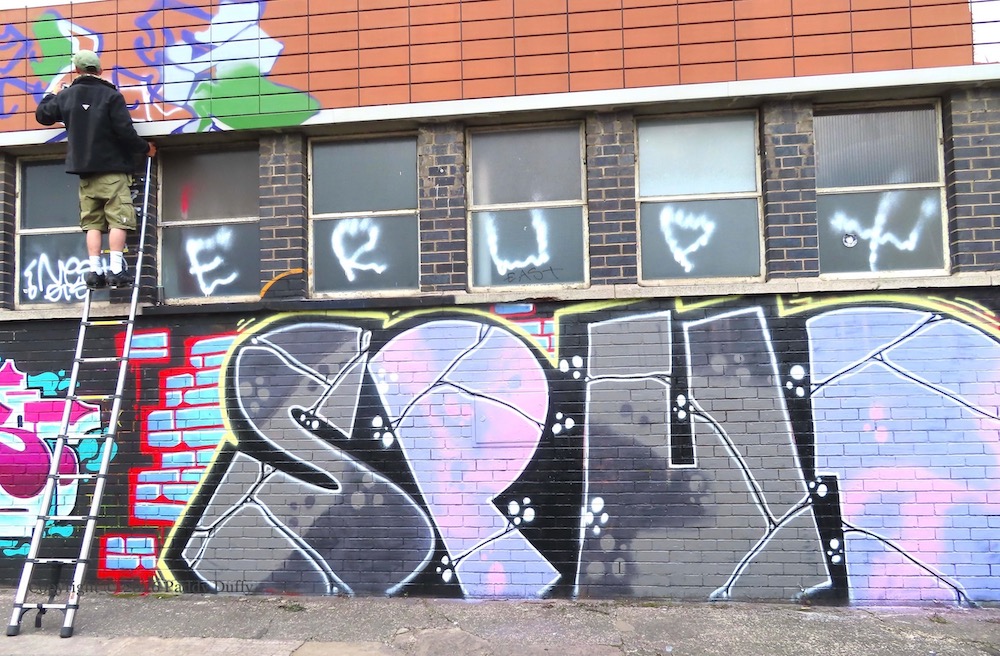
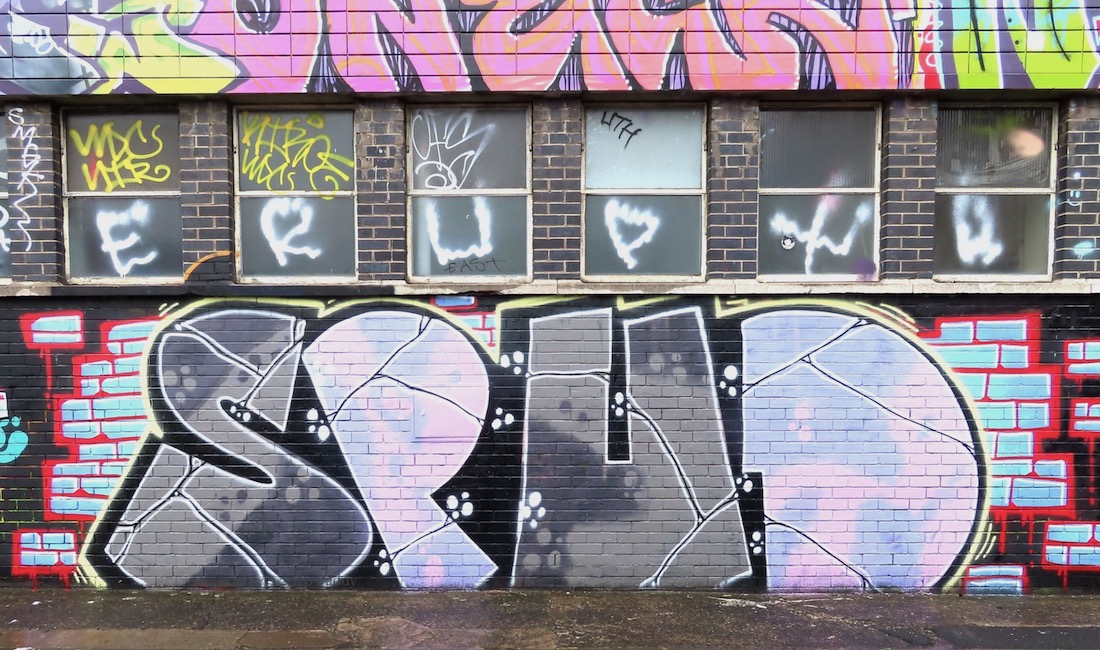
Here is a gallery of the street art and writing produced for Hit The North 2026 on the northern side of Kent Street, below Union Street.
From top to bottom (Union Street towards Royal Avenue) the pieces are by Alana McDowell (ig), Nic Mac (London) (ig), Codo (ig), Friz (web), MASH + ?SPUD?, BEASER, EVOS (ig), CLUES (ig), SPUD, and RAYO (ig).
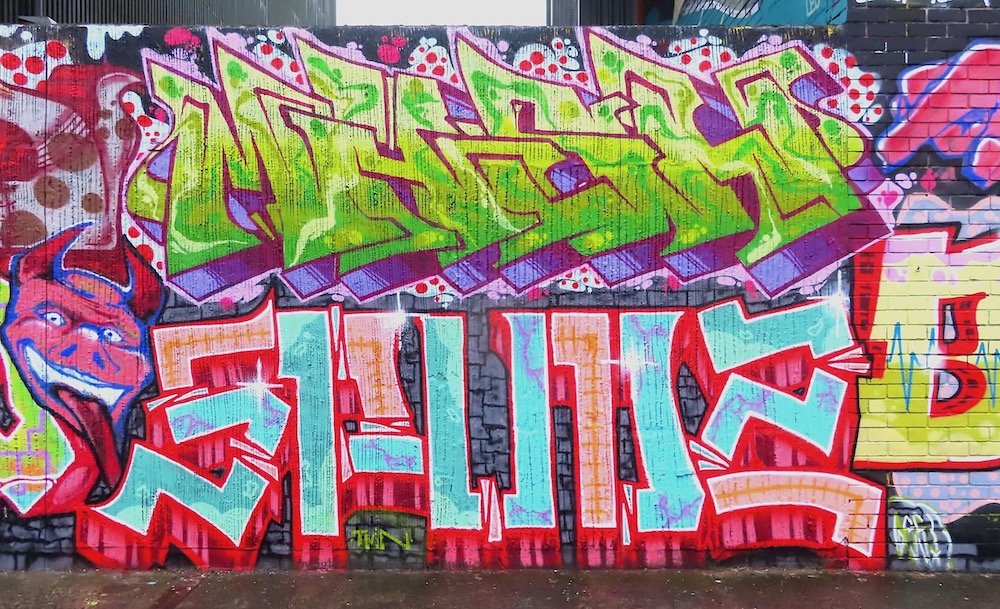
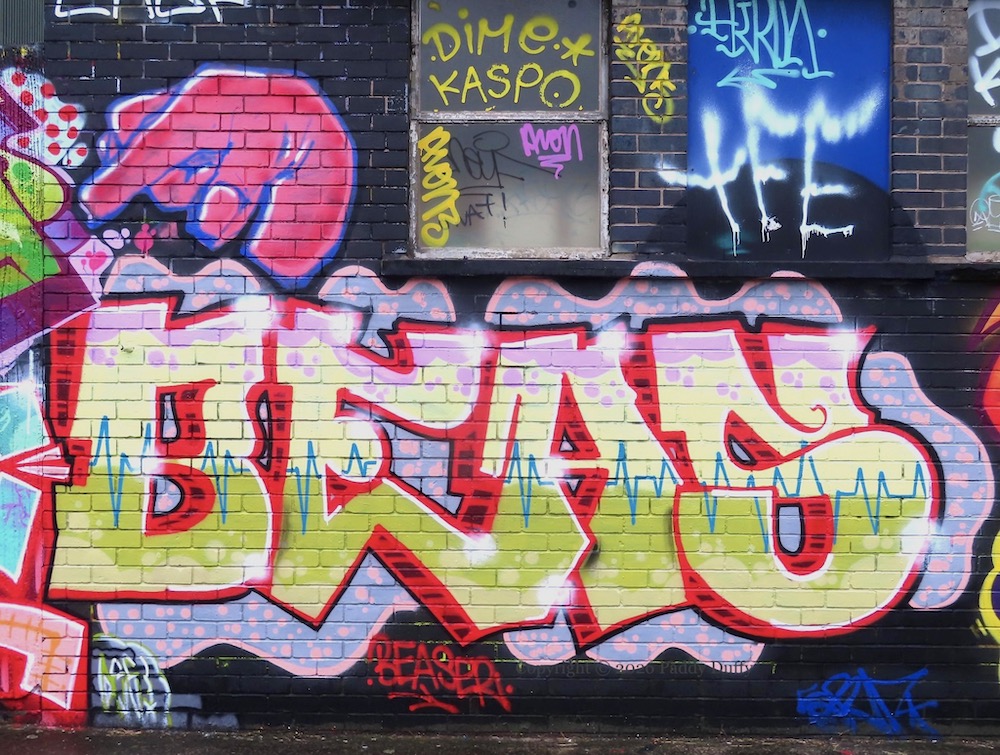
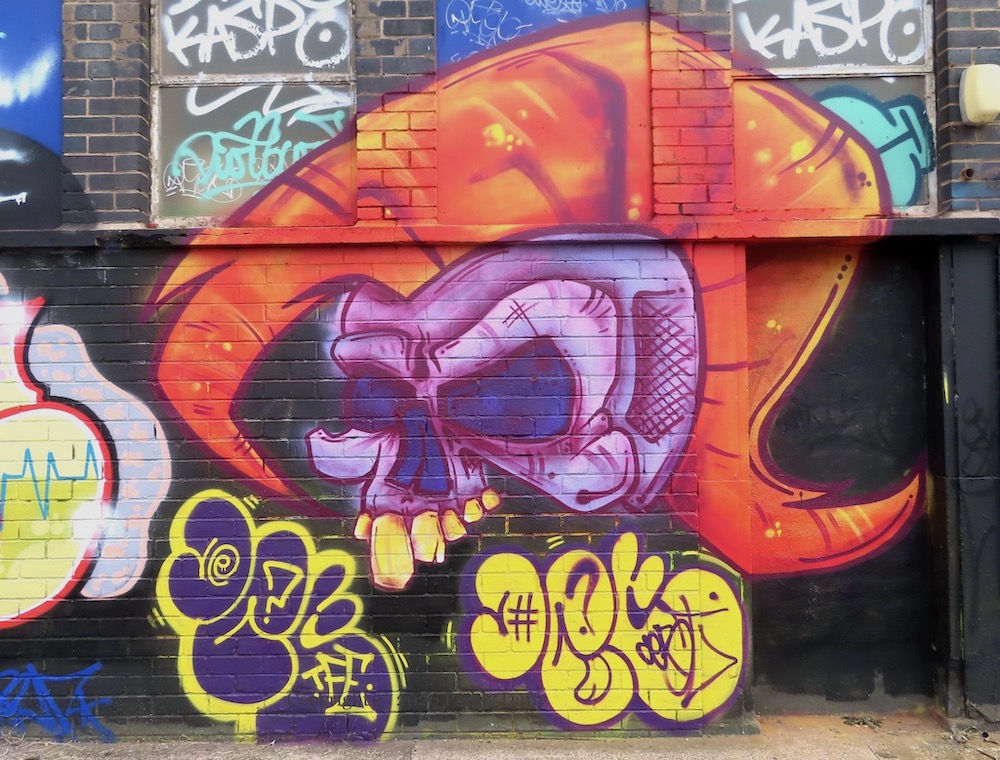
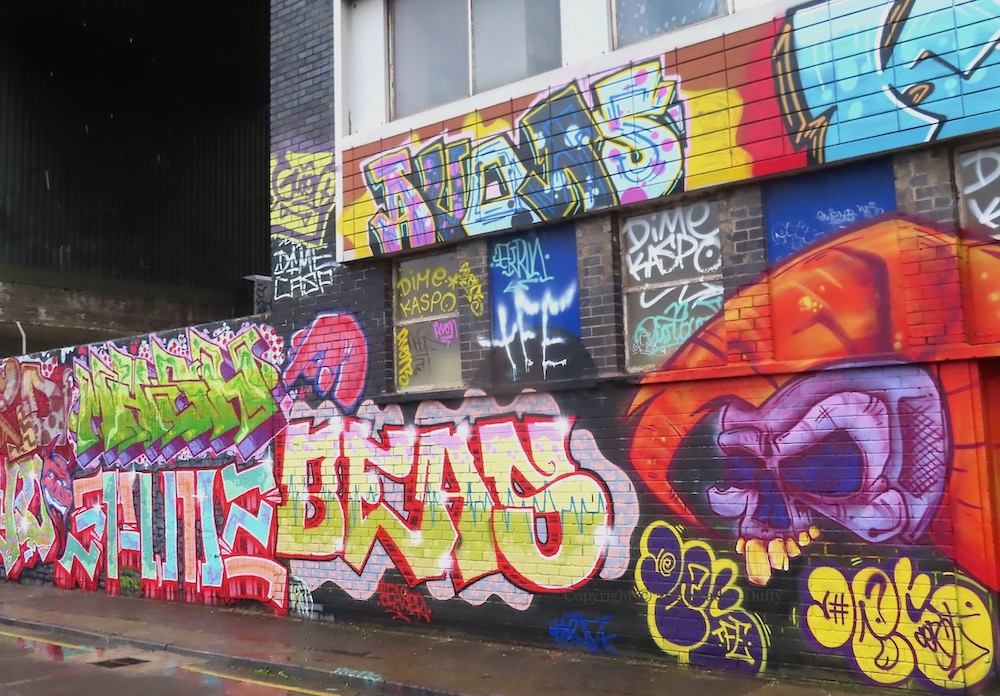
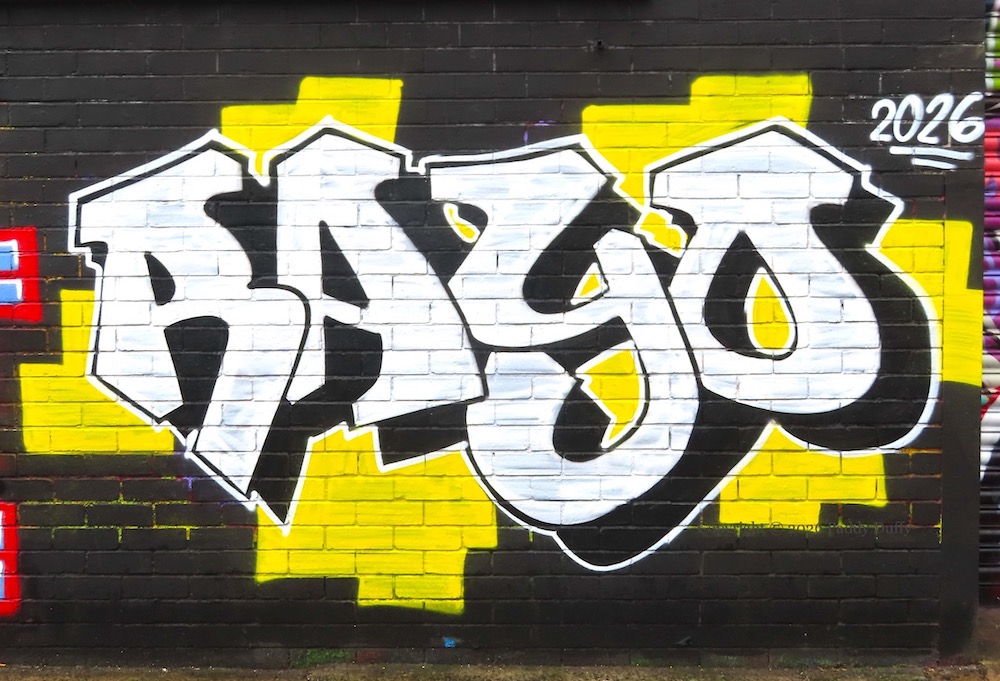
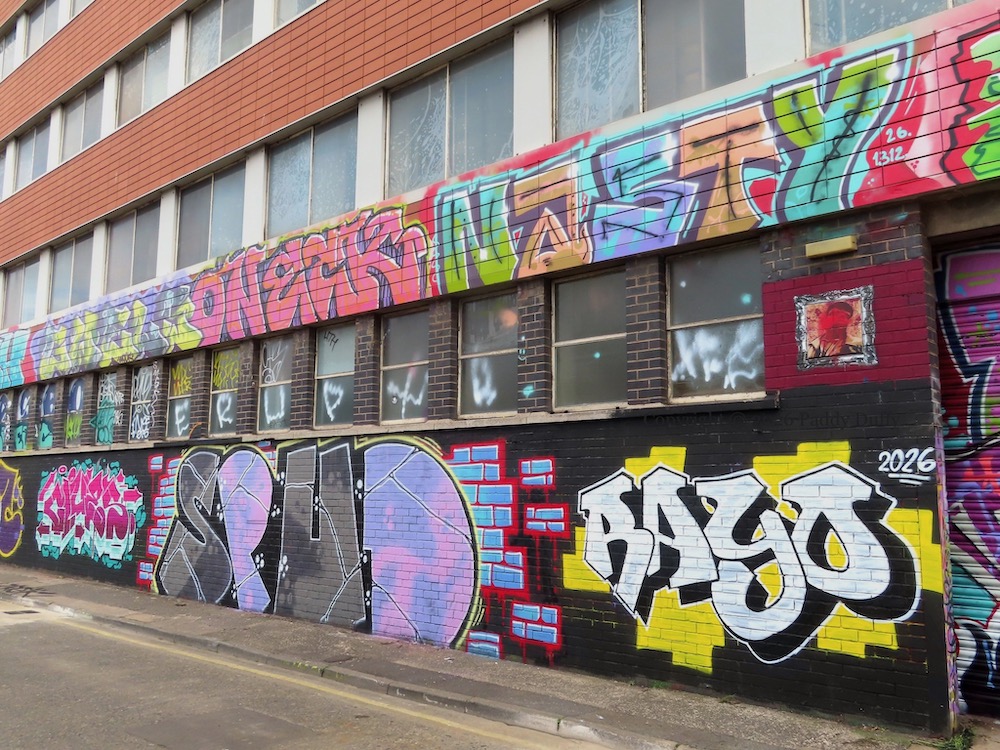
Click image to enlarge
Copyright © 2026 Paddy Duffy
T09004
T09003 [T08897]
T09002 [T08896]
T09001 [T08898]
T09108
T09109
T09000 T09110
T08907 [T09104]
T08906 [T09105]
T08905 T09106
T09107 T08999
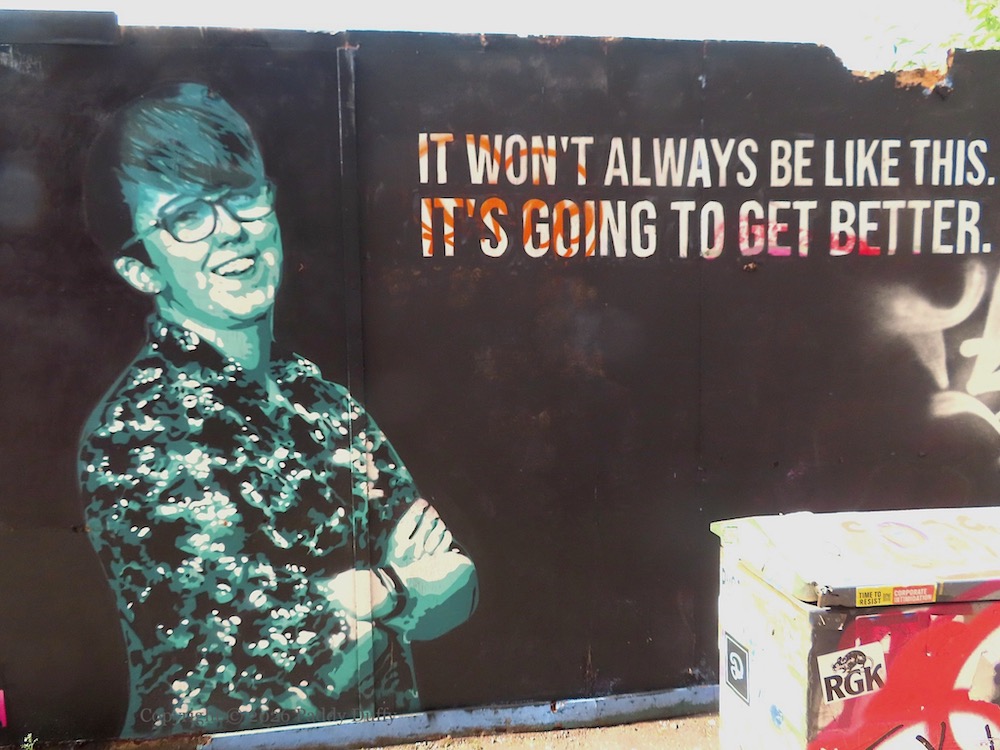
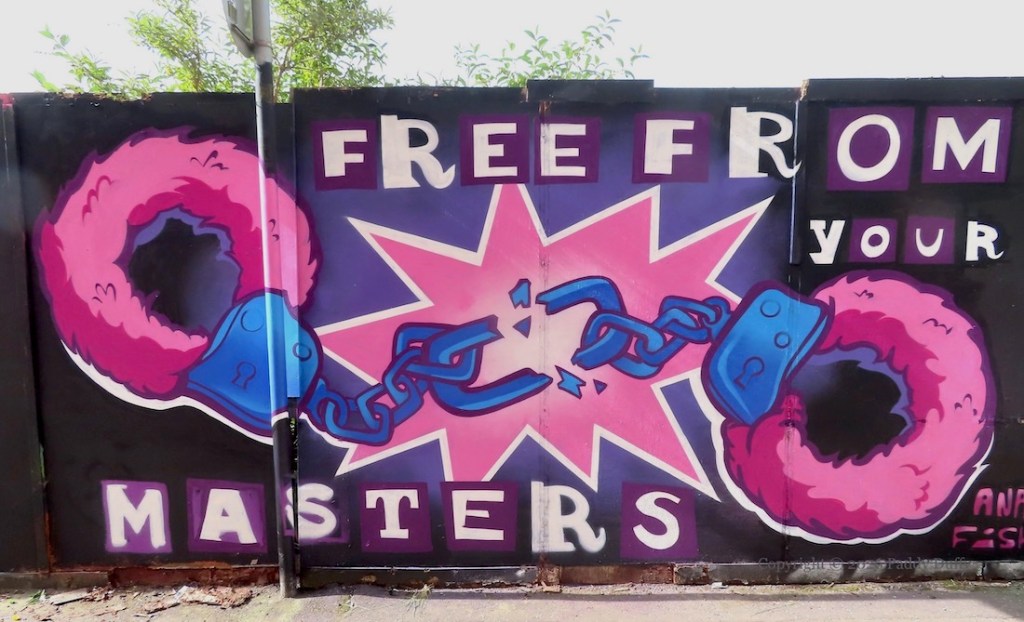
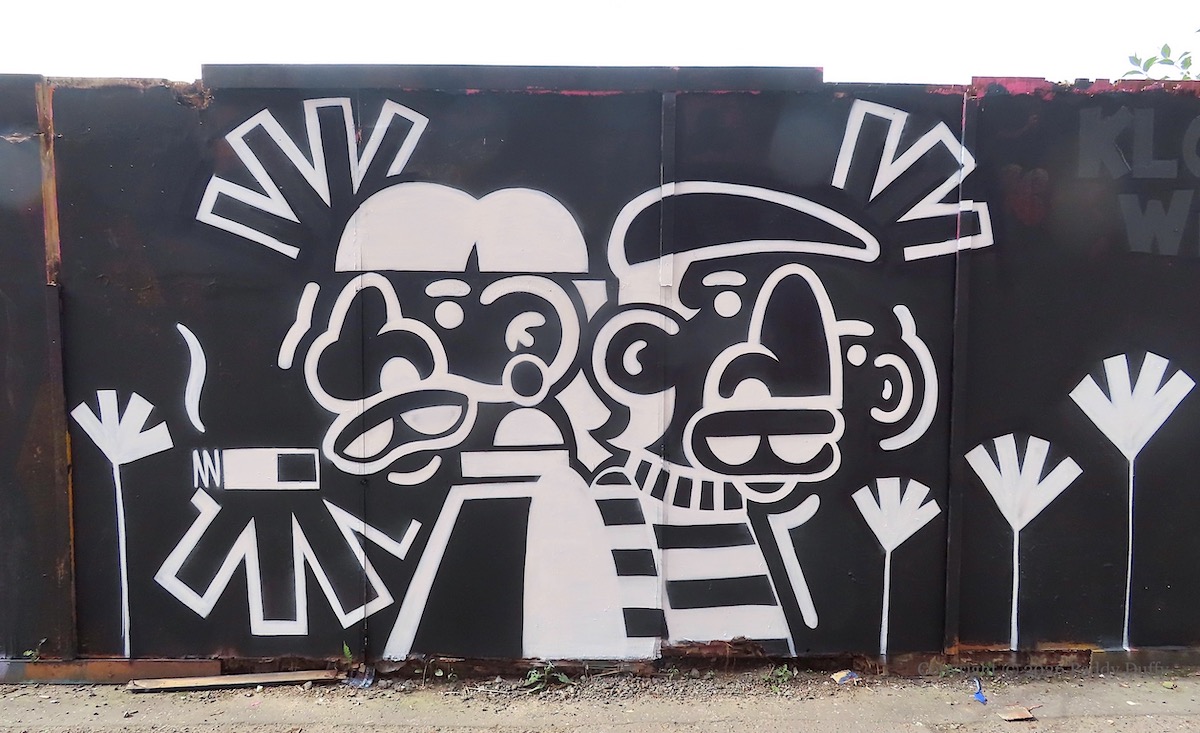
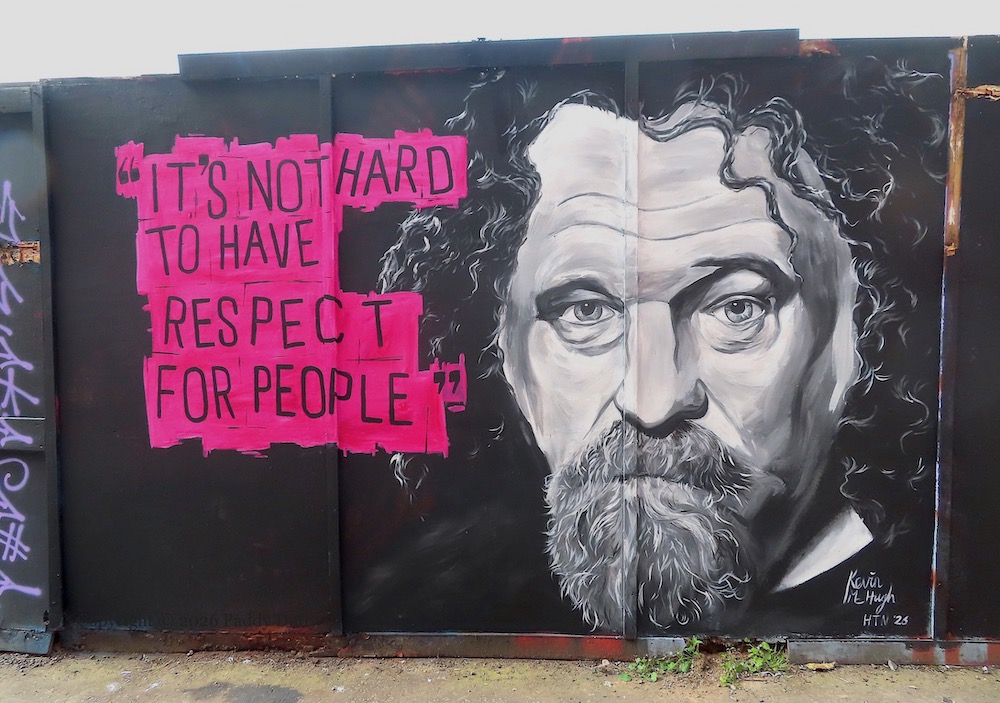
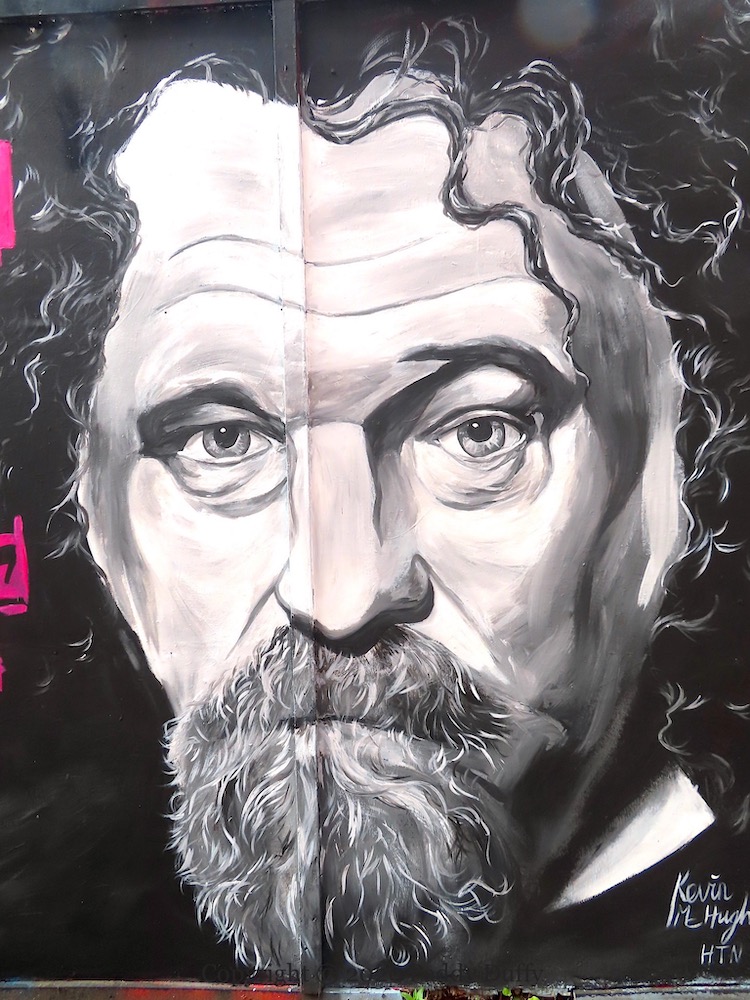
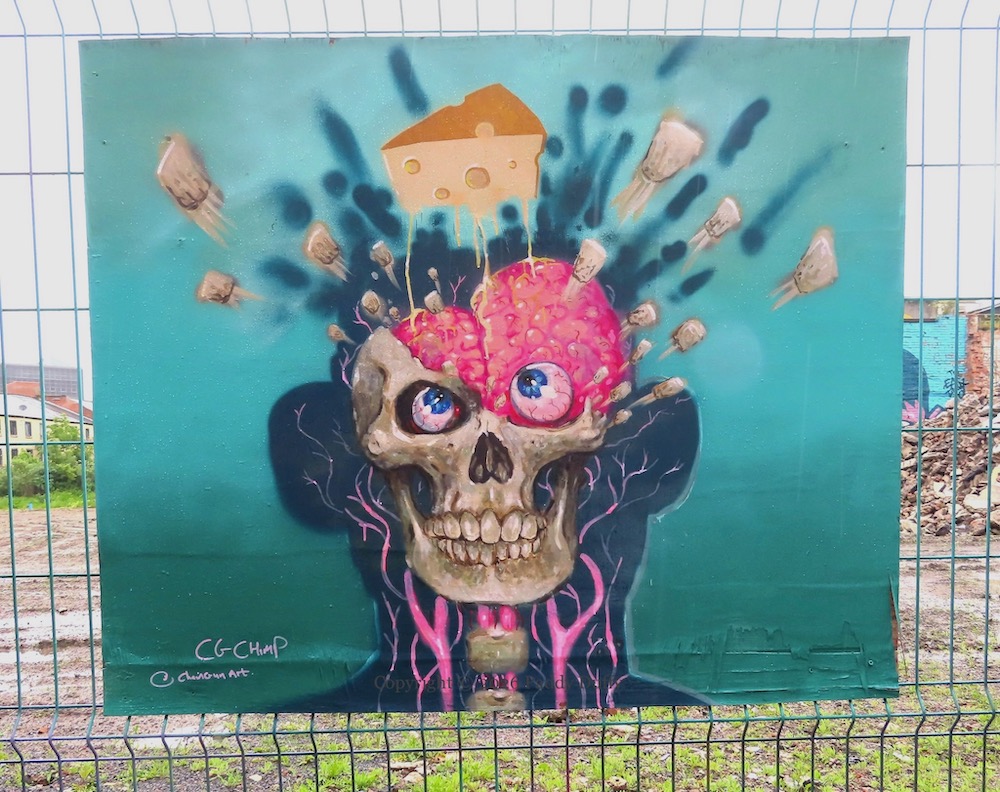
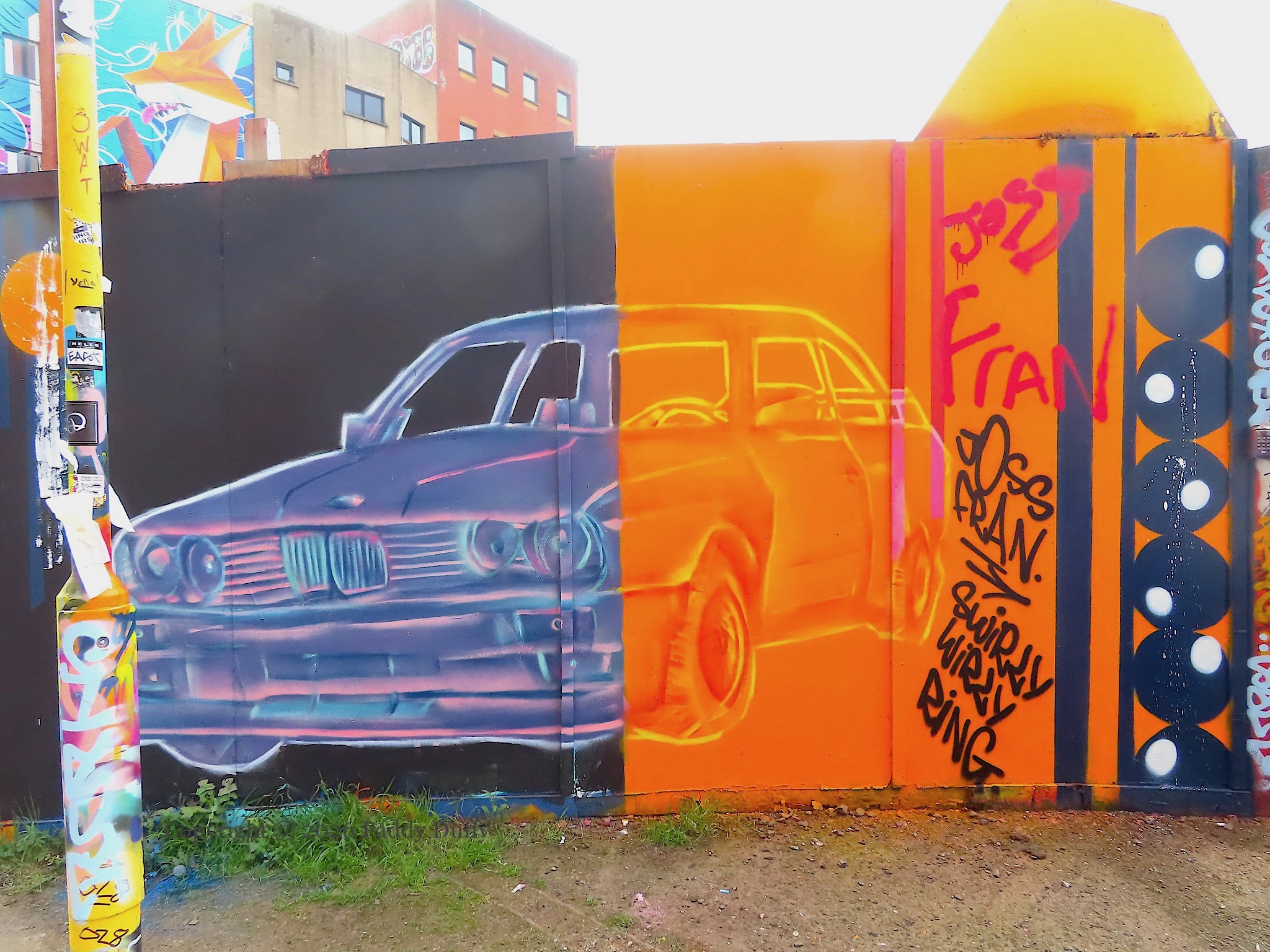
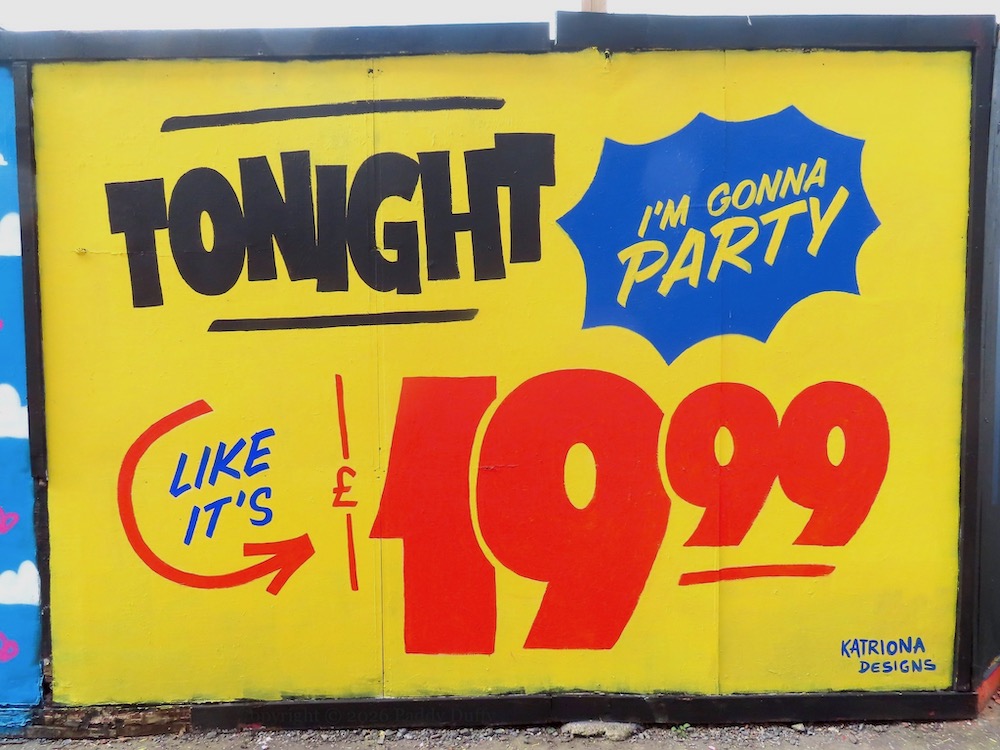
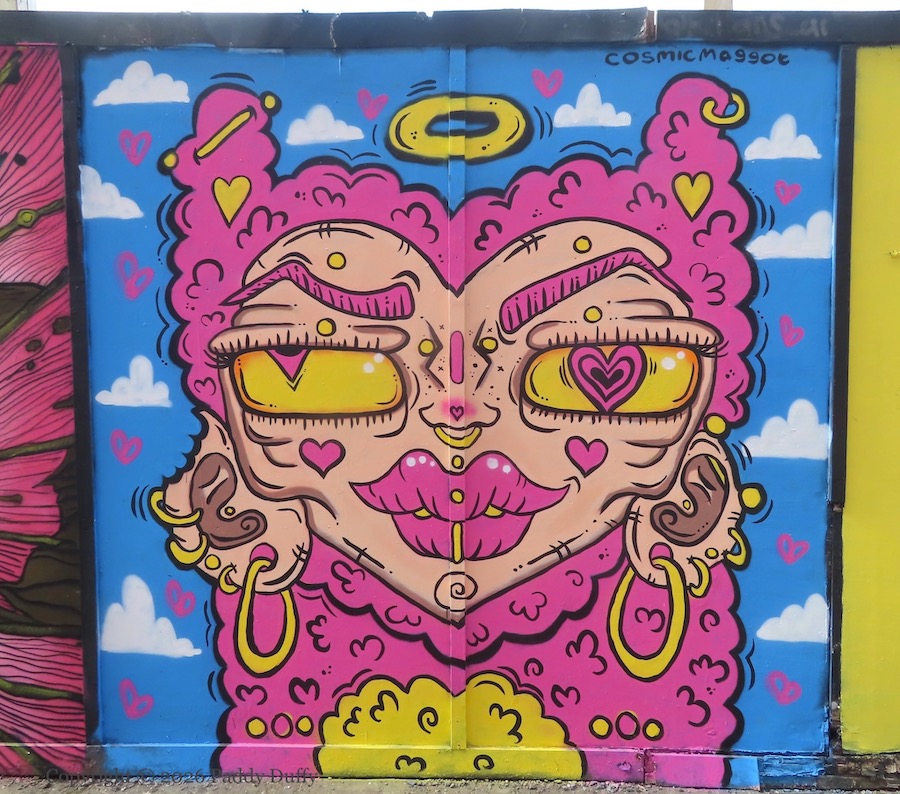
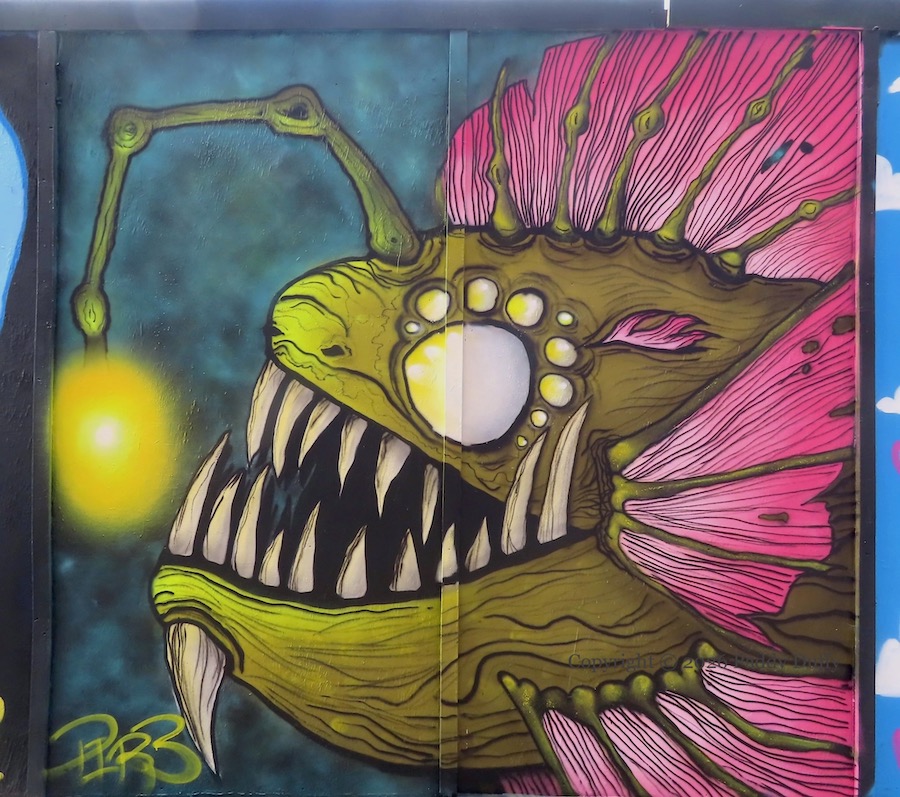
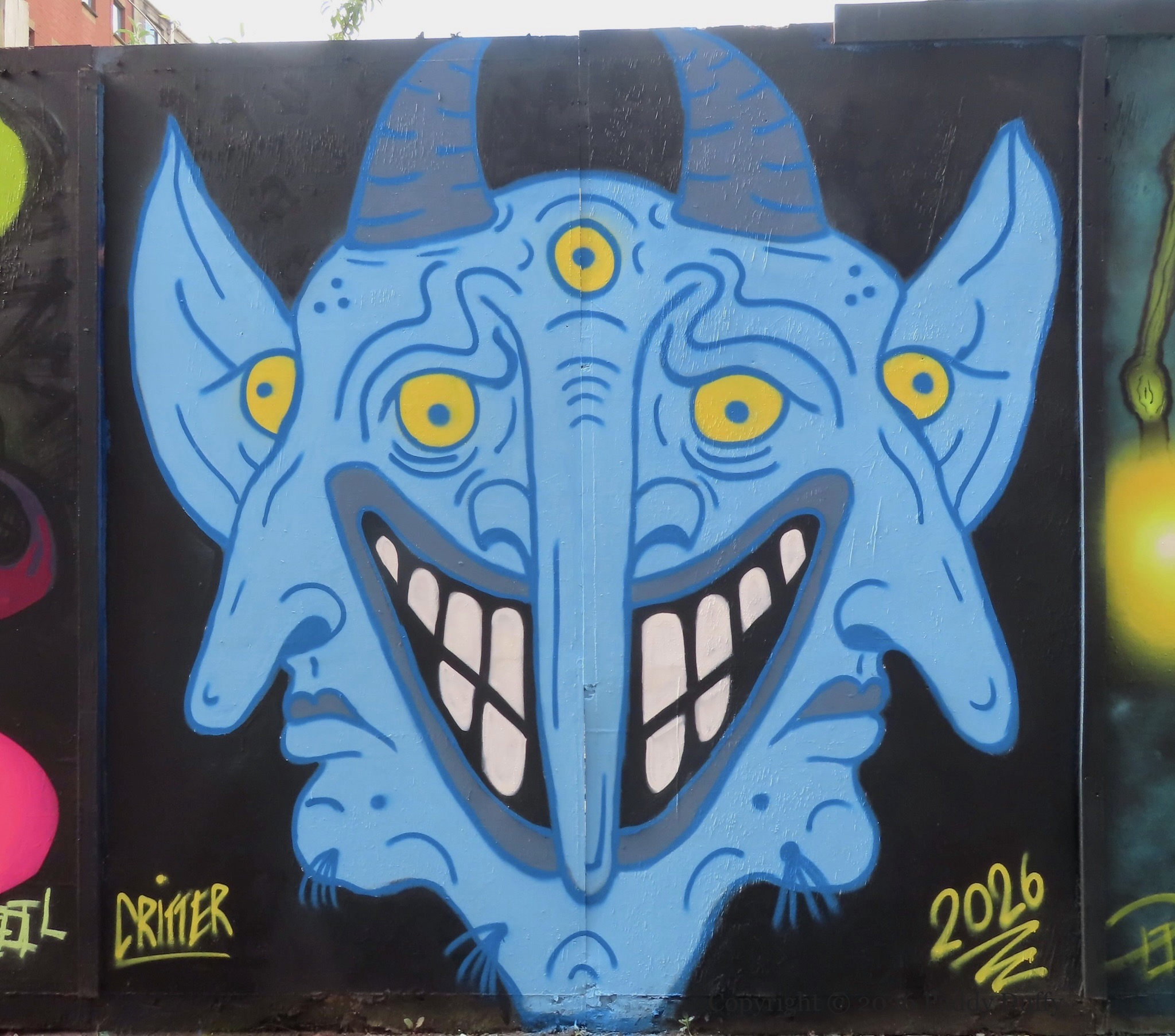
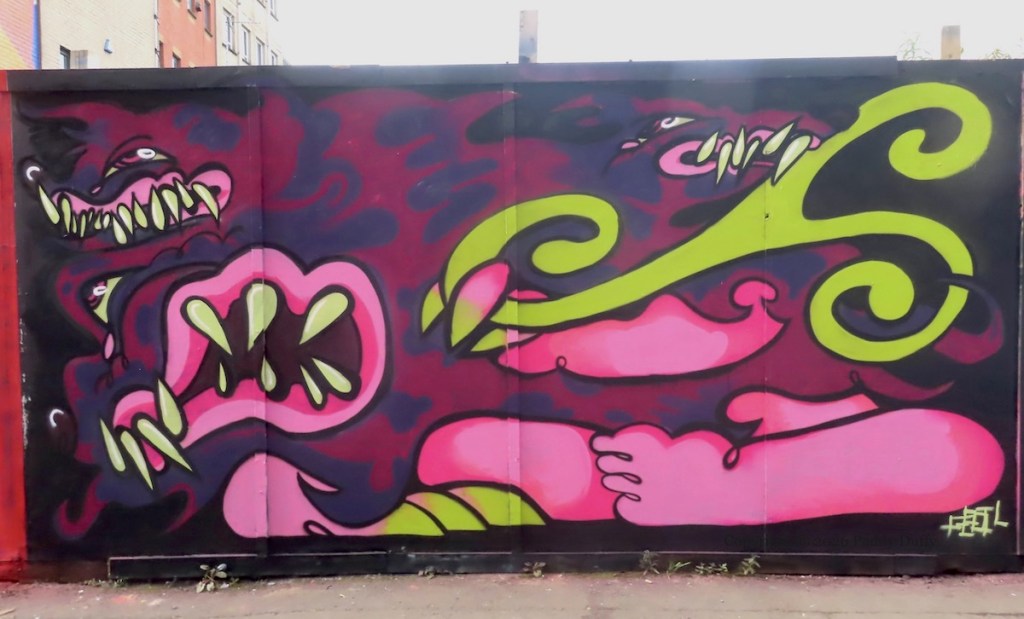
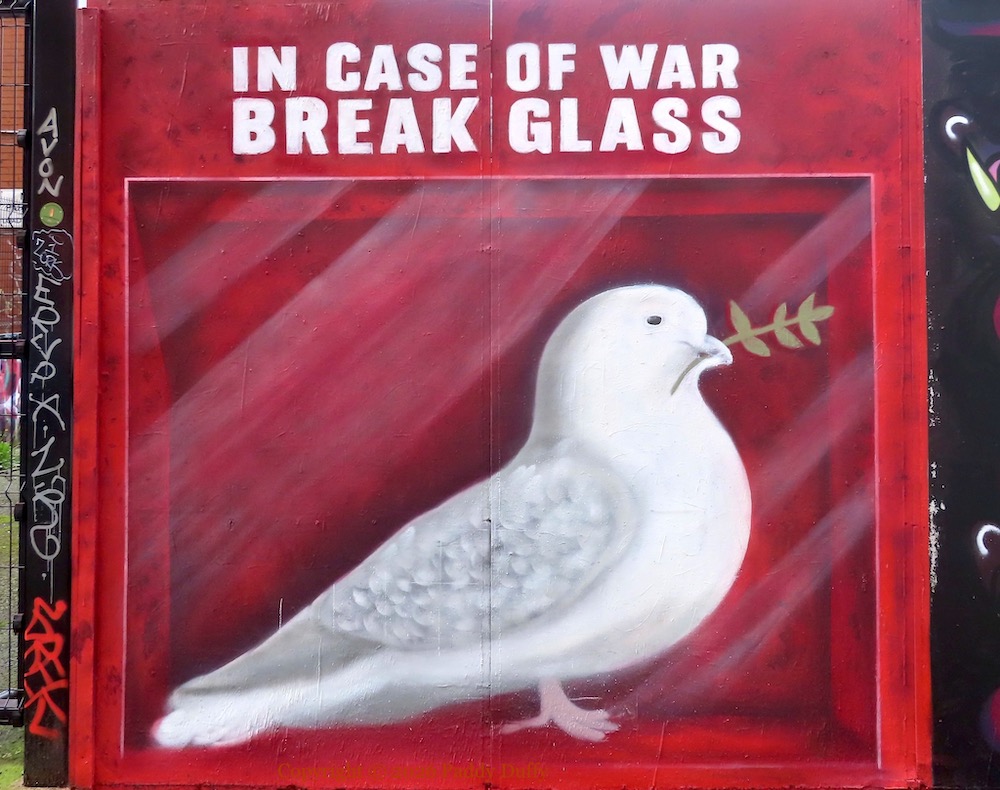
Here is a gallery of the street art painted for Hit The North 2026 on the west (hoarding) side of Kent Street, south of Union Street. (There is also a brick wall on street art and writing on the east side of the street.)
The tribute to Lyra McKee, which was originally painted in 2019 and repainted with a blue background in 2025 (both by ESTR), has been repaired with a solid black .
The other pieces are by Ana Fish (web), Klo Wi (ig), Kevin McHugh (web) (the face is Petesy Burns), ChainGun (ig) (on the fence), Laidback (ig), Katriona Sweeney (web), Cosmic Maggot (ig), DIRE (ig), Critter (ig), Féoıl (ig), and Glen Molloy (ig).
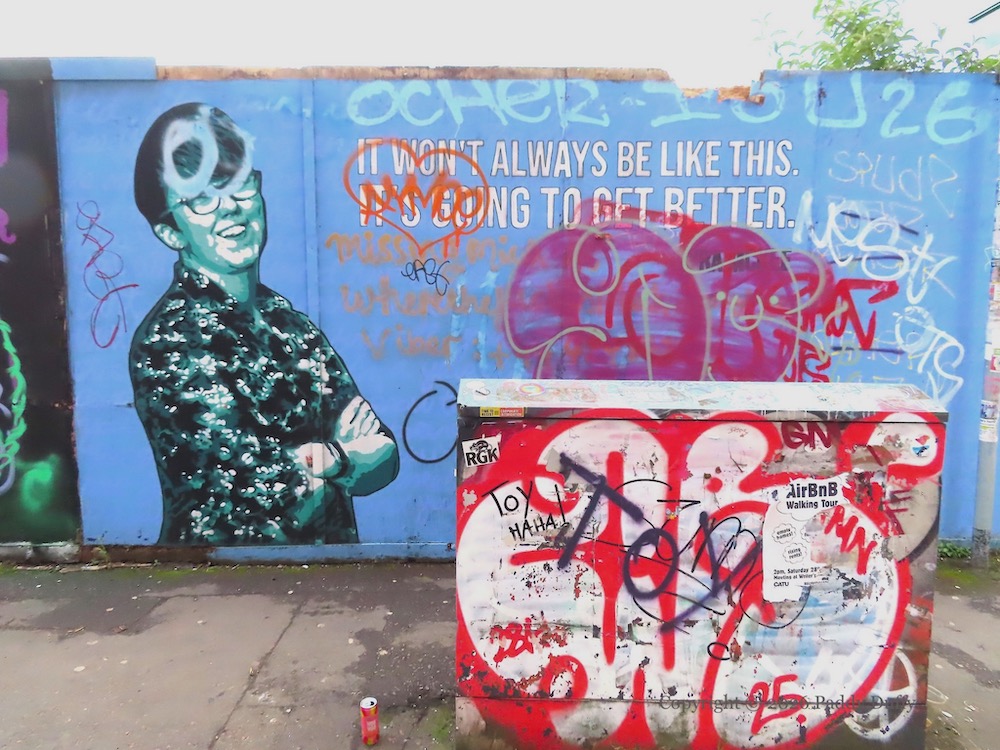
Click image to enlarge
Copyright © 2026 Paddy Duffy
T08986 T08892
T08987 [T08893]
T08988 [T08894]
T09102 [T09103]
T08991 [T08899]
T08992 [T08900]
T08994 [T08902]
T08995
T08996 [T08903]
T08997 [T08904]
T08998
 Paddy Duffy Collection