The first printing press in Belfast belonged to James Blow and his brother-in-law Patrick Neil in 1694 (DIB | Dublin Penny Journal gives 1696 | Mary Lowry Story Of Belfast gives 1690); a run of 8,000 Bibles is said to have been printed in 1751, one of which is part of the Linen Hall Library’s collection on Early Ulster Printing (RASCAL).
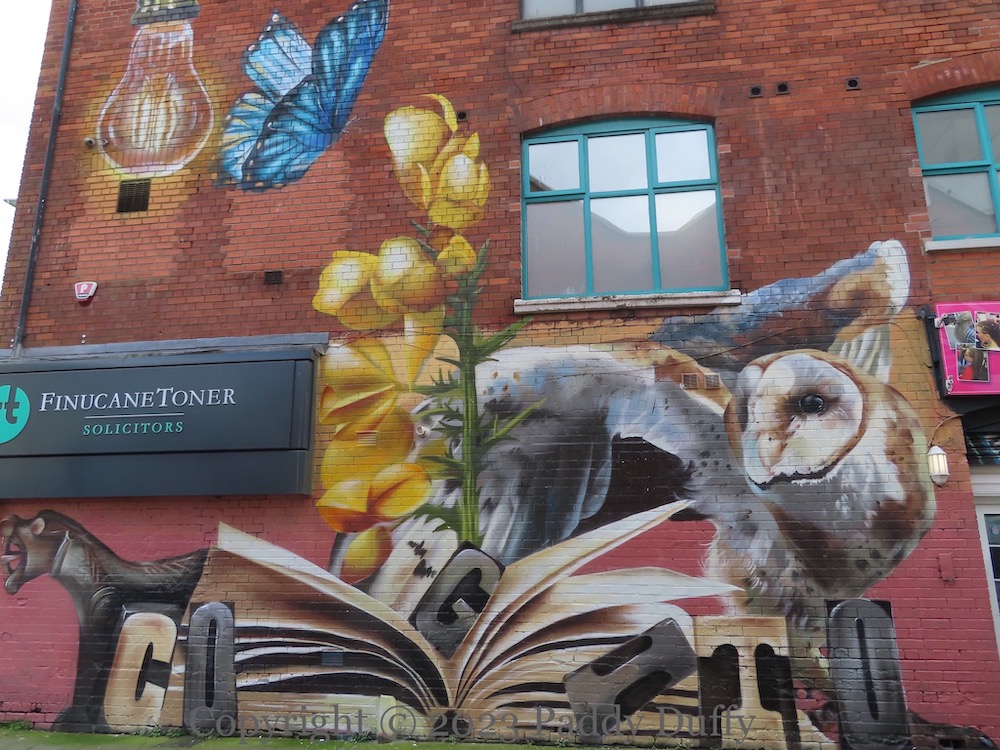
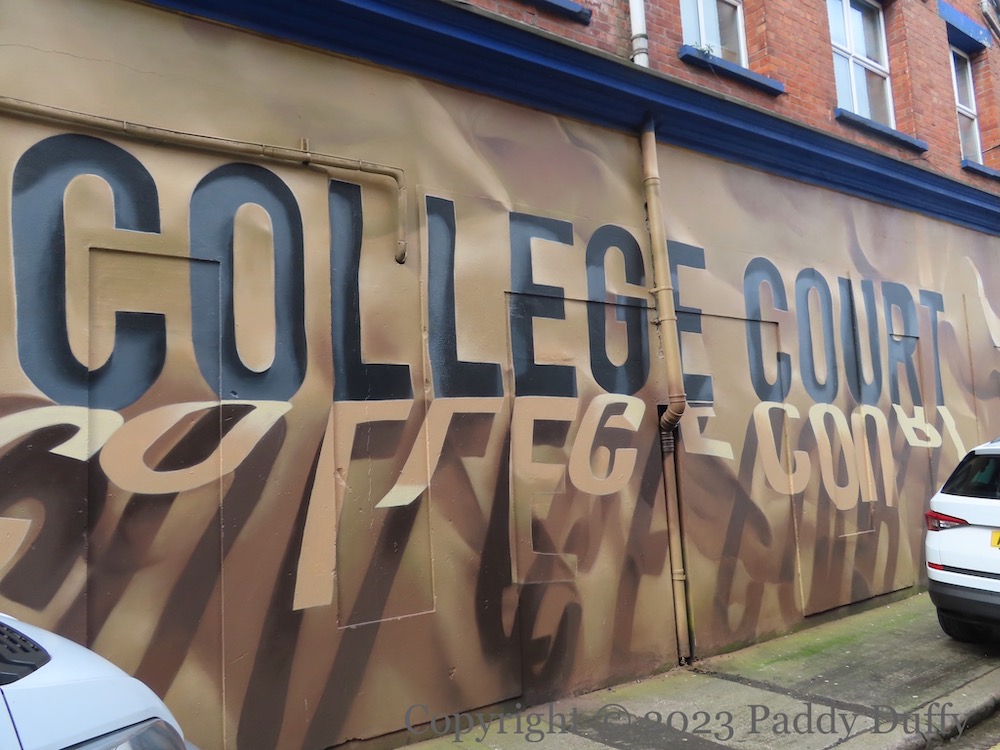
In 1895, Carswell & Sons opened a print-works and book-binders in a warehouse running with frontage in Queen Street and a rear in College Court (the building is now a bingo hall – see Kelly’s Eyes) which is currently being renovated as an office block (Bel Tel) – some of the scaffolding in College Cour can be seen in the later images in We Built This, the street art festival for International Women’s Day, 2023.
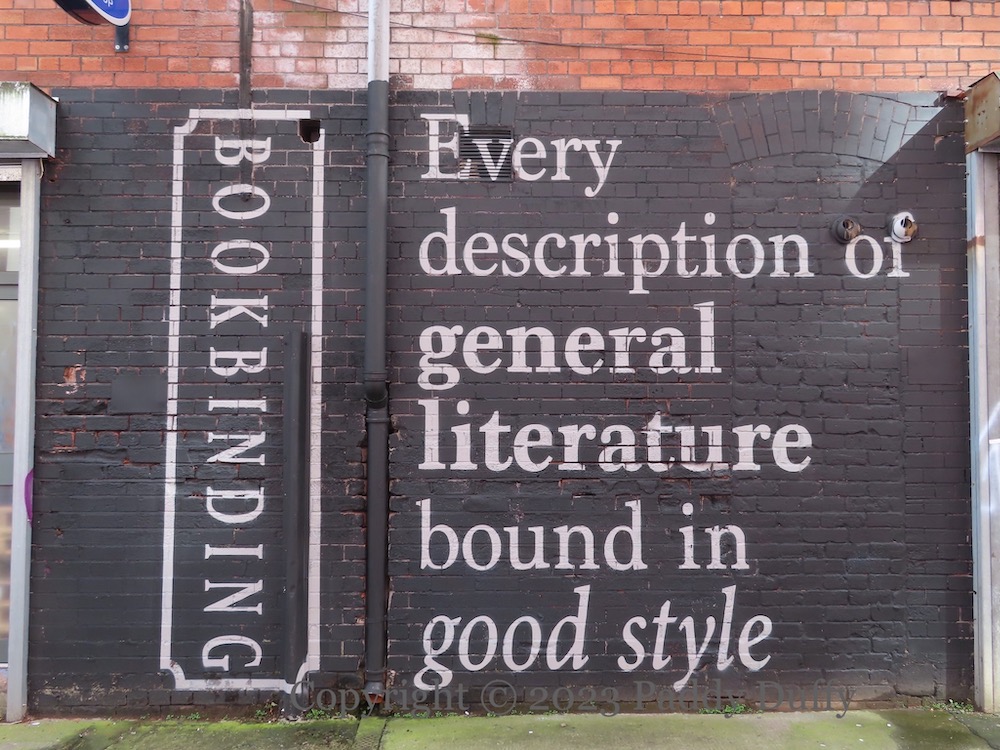
To complement those festival pieces, the mouth of College Court has been given a make-over, with work by Peachzz (ig) (above) and lettering by Woskerski (ig) that both draw on the street’s association with printing. If you know who did the “bookbinding” piece, please get in touch.
Previously on either side of College Court there were two pieces by Friz: Fox and Hare.
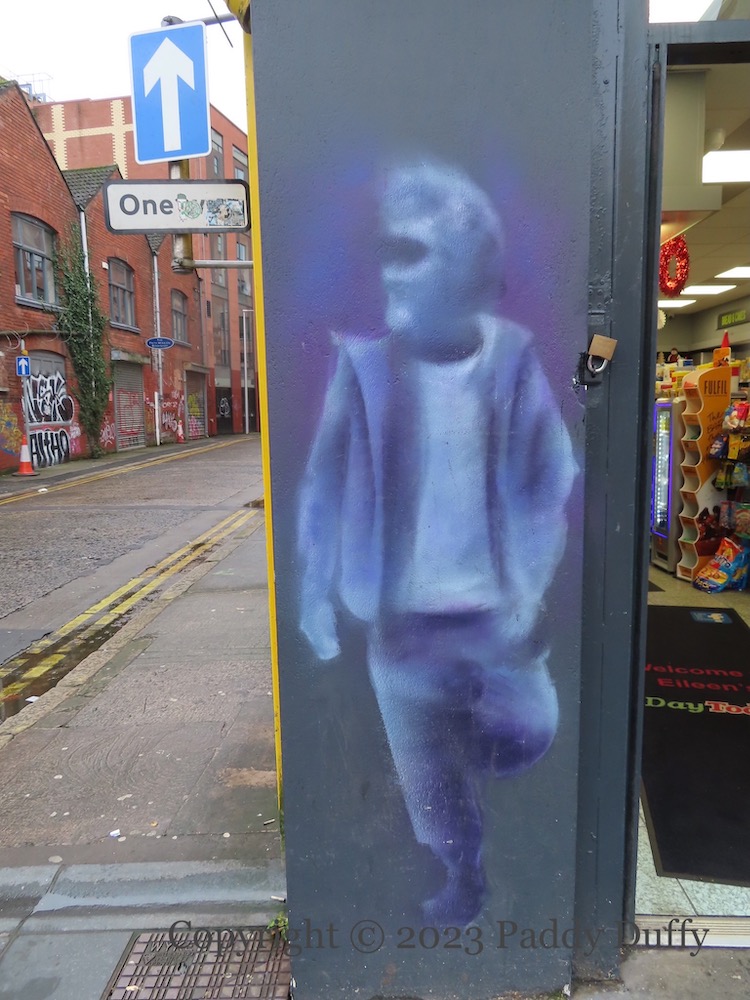
The bonus image, of a man leaning against the newsagent’s wall, is on the corner with Castle Street.
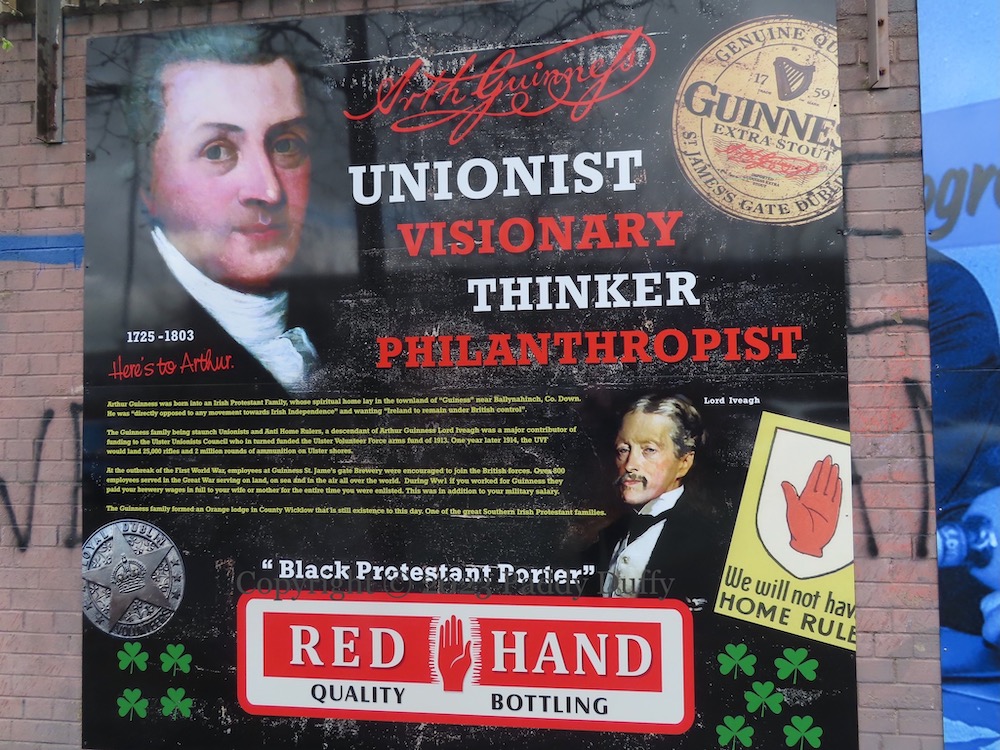
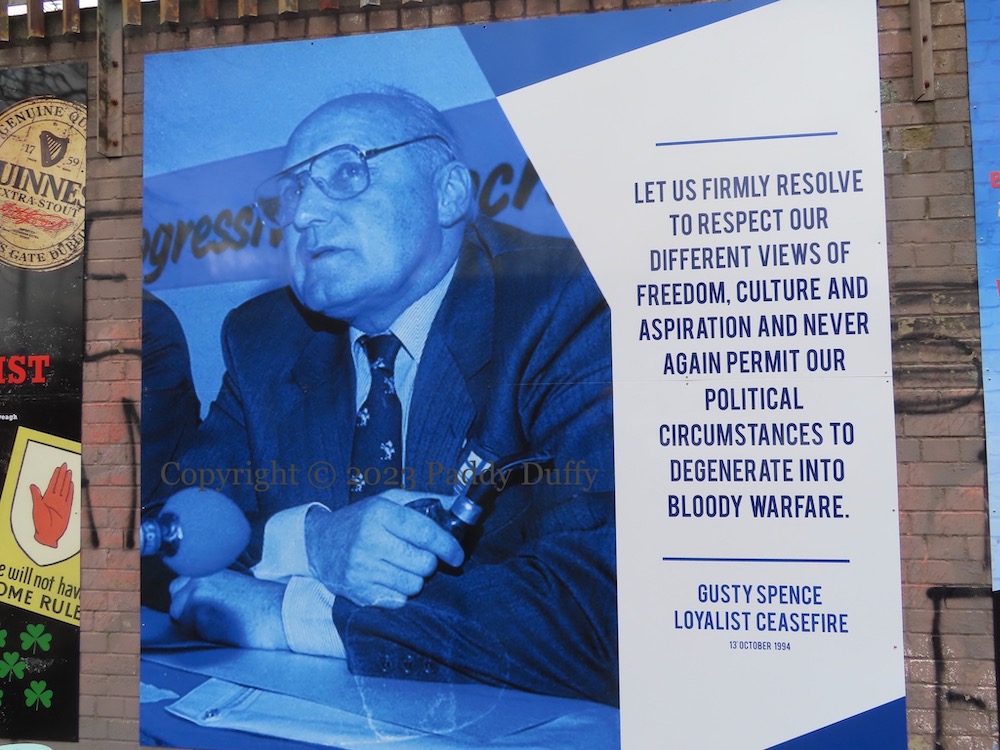
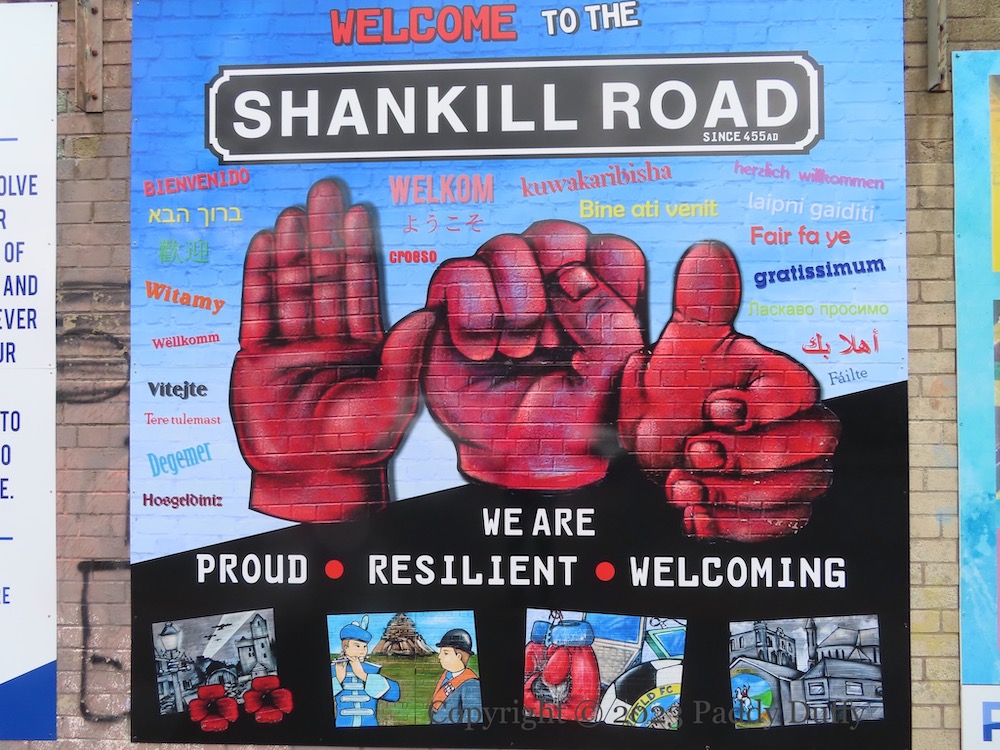
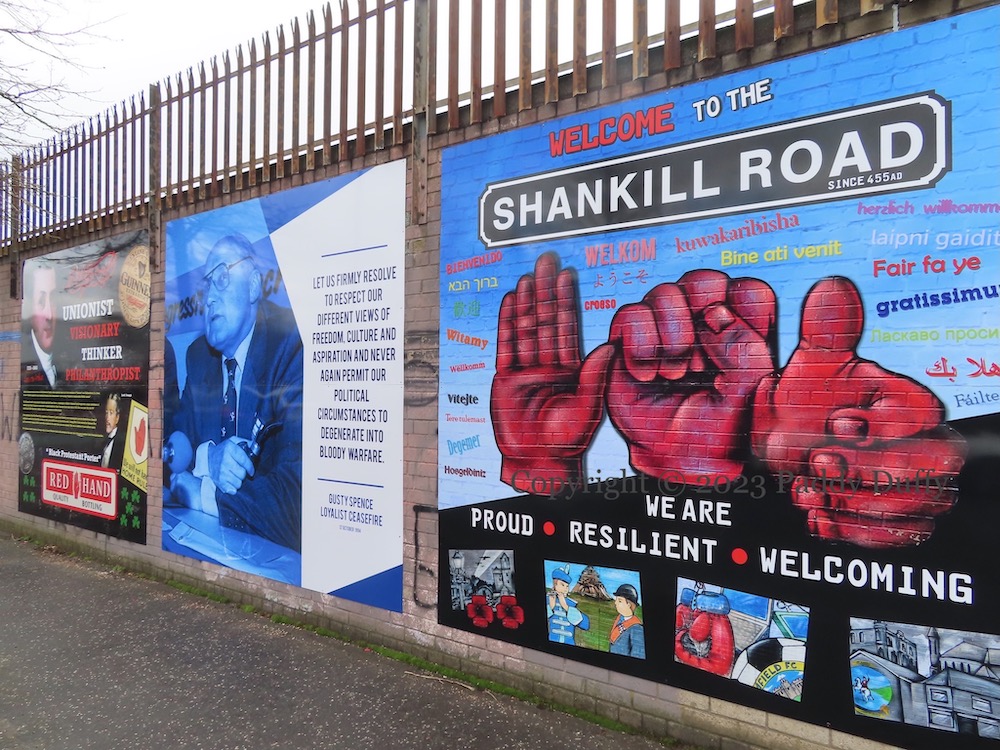
Here are three new pieces above the security gates on Northumberland Street, coving over the “Deserted! Well, We Can Stand Alone” graffiti in the last remaining spot on the wall without a mural. From left to right:
Arthur Guinness: “Black Protestant Porter” as a description of Guinness stems from Arthur Guinness’s opposition to the 1798 rebellion (Indo). The Union Star (newspaper in Belfast – A Planet Of Light And Heat) called Guinness a spy and advised that “United Irishmen will be cautious of dealing with any publican who sells his drink.” (An Phoblacht).
Gusty Spence, a former commander of the UVF, read out the ceasefire statement of the “Combined Loyalist Military Command” (UVF, RHC, and UDA): “Let us firmly resolve to respect our different views of freedom, culture and aspiration and never again permit our political circumstances to degenerate into bloody warfare – Gusty Spence, loyalist ceasefire [statement in full], 13 October, 1994.”
“Welcome To The Shankill Road – we are proud, resilient, welcoming”: The original ‘three hands’ was on Northumberland Street, just above this spot – see Proud, Defiant, Welcoming – which was then reproduced in reduced form in Gardiner Street – see Welcome To The Shankill Road.
This is the most conciliatory statement ever made by loyalism and the decision to put it on Northumberland Street, especially in the context of the internationally famous and associated-with-Ireland Guinness and the “welcome” mural, suggests that the trio is directed at tourists rather than locals.
Memorial boards to Queen Elizabeth have been added to the ‘our community transformation’ board and community garden in Old Warren.
An image of the old “You are now entering loyalist Old Warren” display that is shown in the ‘before’ side of the board above is included below. On the ‘after’ side are the youth centre, the new houses at the top of Drumbeg Drive, and the Lagan View enterprise centre. For a brief history of the area, see Through Your Eyes.
The previous board on this wall – a UDA B Company board – can be seen in C02674 and its predecessor in M05916.
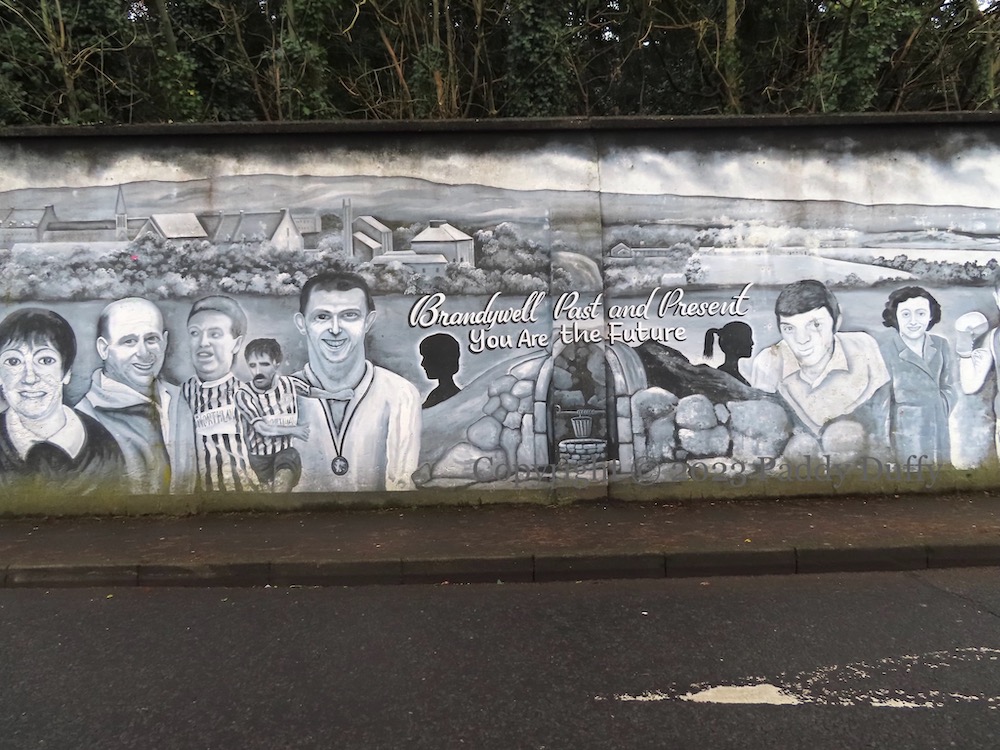
“You are the future” is the message from Long Tower Youth & Community Centre (Fb) to young people in the Brandywell. Sporting heroes of the past, especially boxing and soccer (for a mural of local clubs, see I Don’t Like Mondays) are featured in black and white.
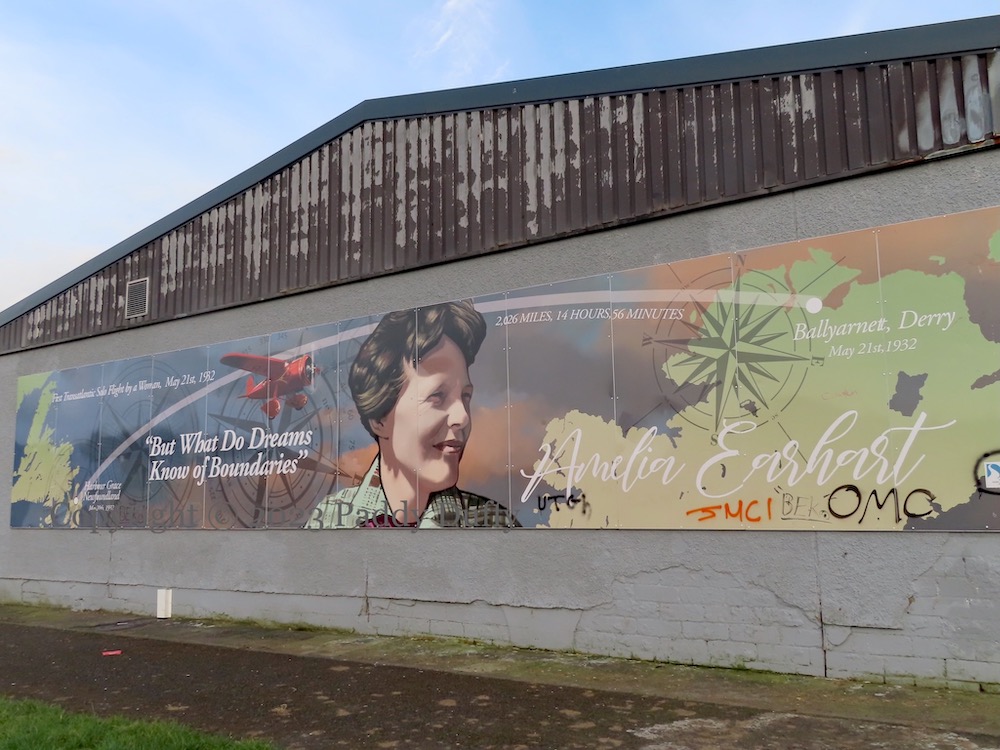
“Everyone has oceans to fly, if they have the heart to do it. Is it reckless? Maybe. But what do dreams know of boundaries?” When she left Harbour Grace, Newfoundland, on the evening of May 20th, 1932, Amelia Earhart’s intended destination for the first solo trans-Atlantic flight by a woman was Paris, France, but after various mechanical difficulties she landed instead in Ballyarnett, just outside Derry. For the 90th anniversary of her history-making flight, the artwork above was created by Joe Campbell (web), commissioned “by Community Restorative Justice in partnership with Derry & Strabane Distict Council’s Good Relations Programme and with the assistance of Greater Shantallow Community Arts.”
For the mosaic already mounted in 2010, see Flying Solo.
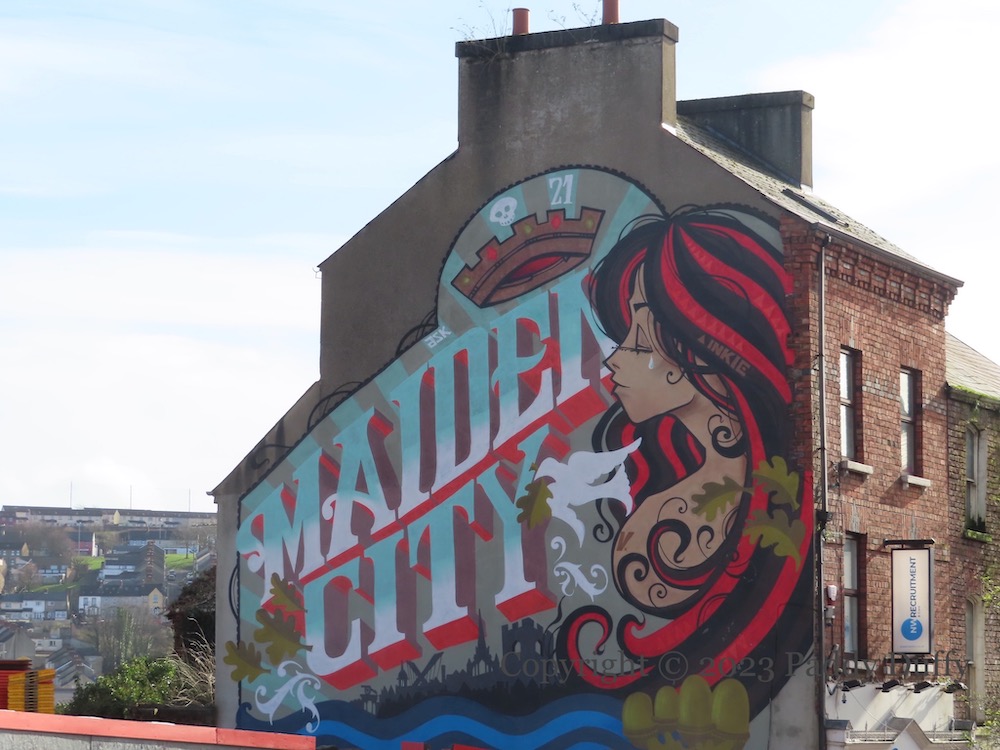
The city of (London)Derry takes its named from the Irish word “doire” meaning “oak wood” (and generically a “grove”) and the oak leaf is often used as a symbol of the city (here are 11 murals with oak leaves from the Peter Moloney Collection – Murals). In the mural above, in addition to the three leaves on the right-hand side, we also have some acorns.
The moniker “maiden city” is derived from the city’s resistance to sieges throughout its history, most famously in 1689 (again – a variety of images from Peter Moloney). The walls of the old city are shown above the river Foyle, with landmark buildings such as the Peace Bridge (see Waterside, Cityside, Quayside) behind them.
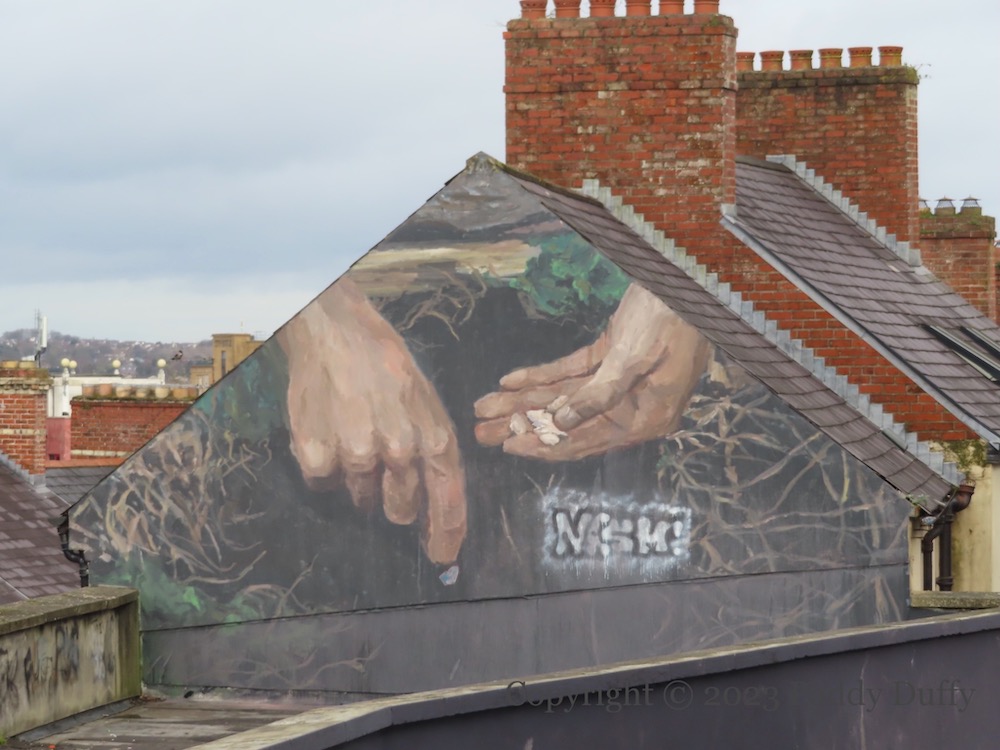
Graffiti-art by Inkie (ig) in Carlisle Road, Derry. The second piece, which shows two hands planting seeds in the ground (artist unknown) is at Butcher Gate.
Jon “Ugg” Clifford died in 2011, having founded Tristar Boys FC (web) in 1974. Bull Park in Creggan has been renamed in his honour and this portrait on boards has been mounted next to the park.
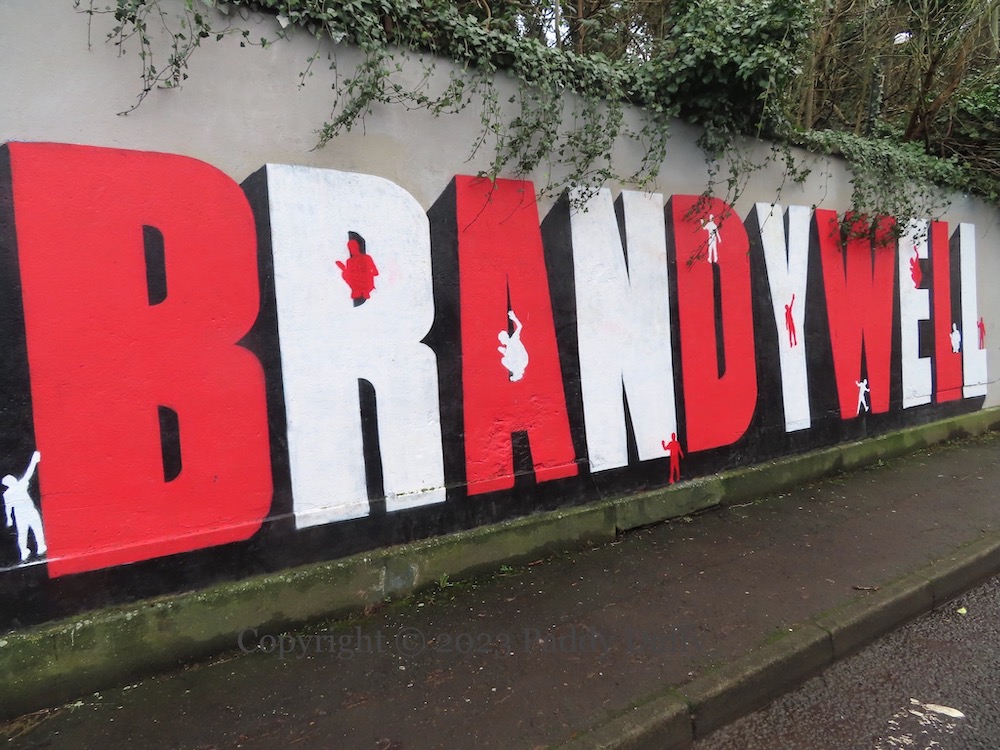
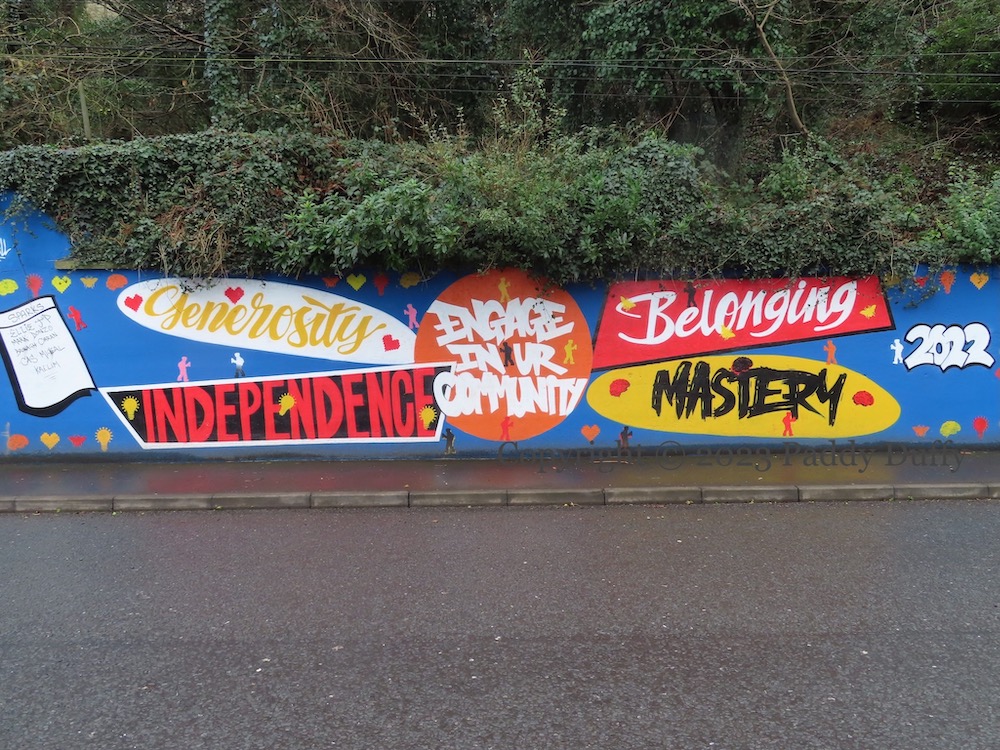
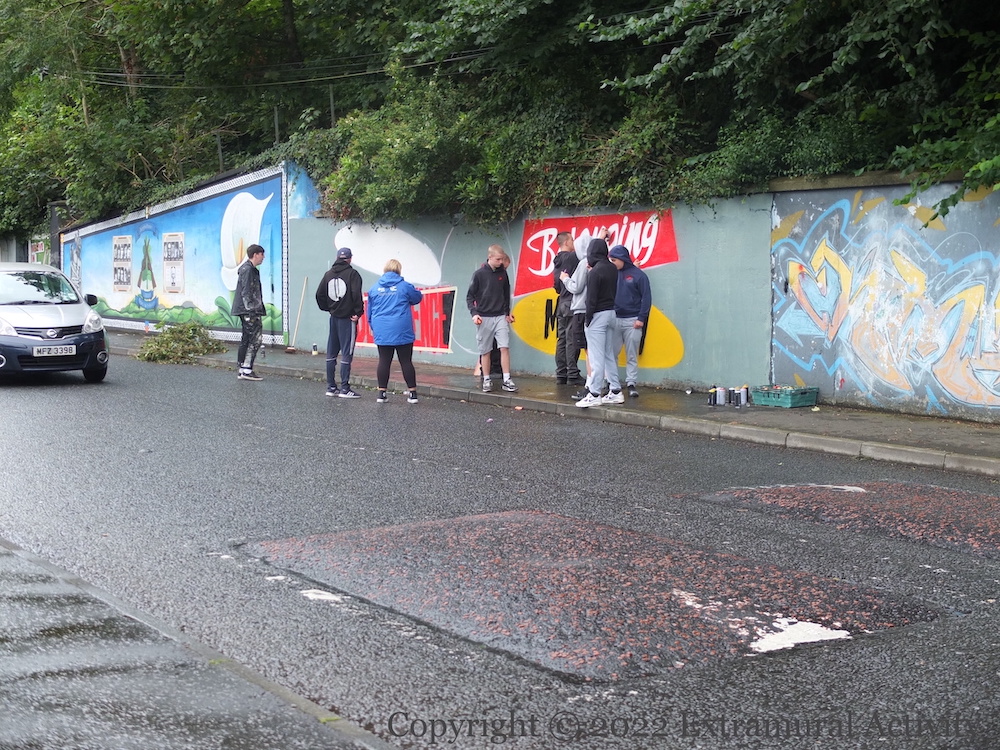
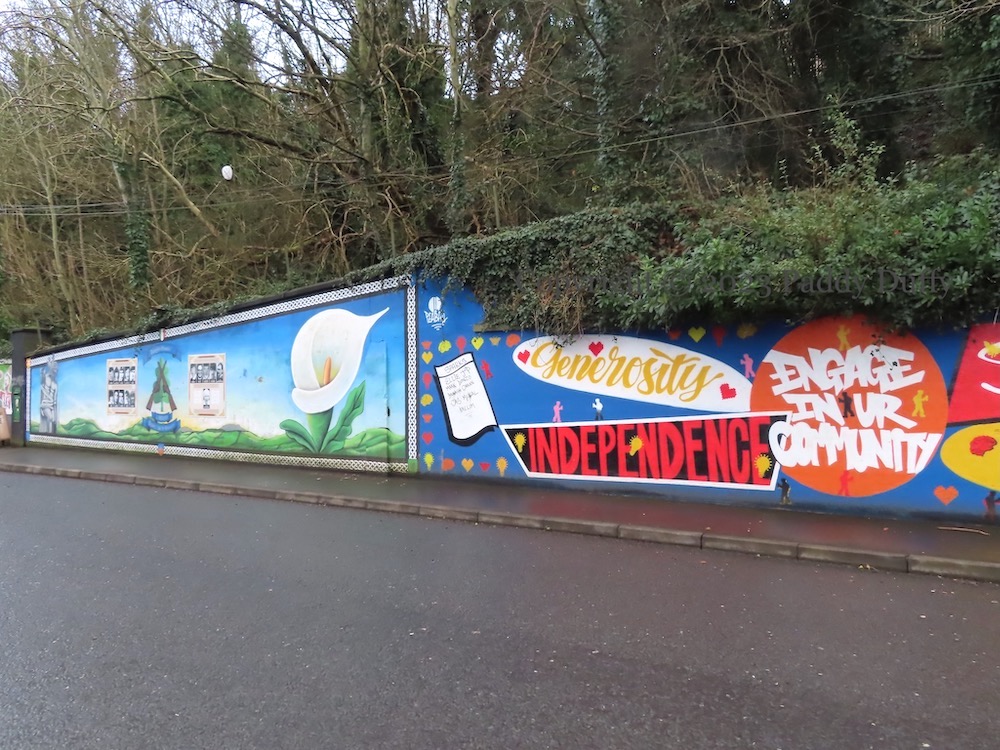
For a second time during the summer artists from Peaball (ig) (and local youths) took to the long Lecky Road wall in the Brandywell. The July work (“Brandywell” in red and white lettering) can be seen in Believe In Your Dreams. Today’s post shows the word-cloud done in August.
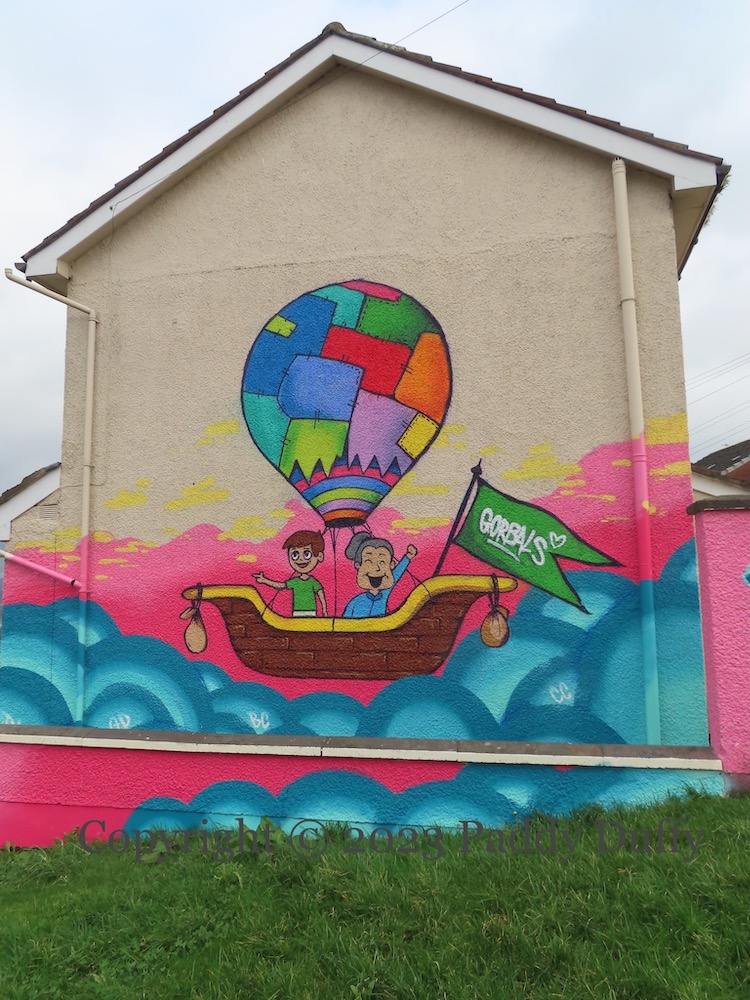
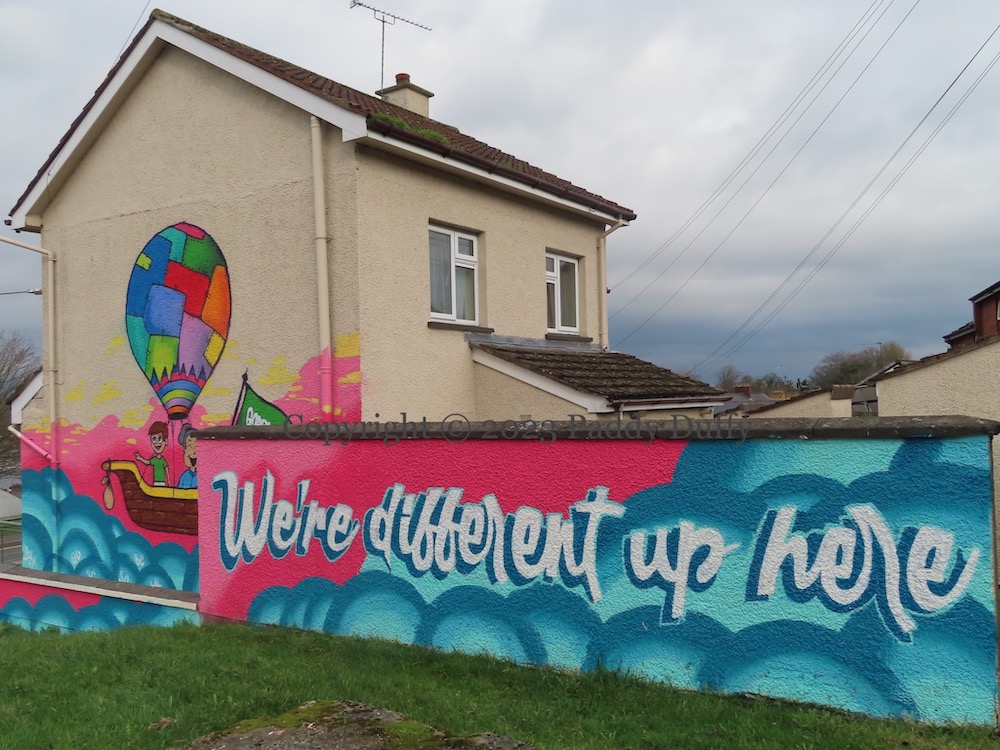
“Here” is Top Of The Hill, and “up here” refers to the elevated position of the community, 75 metres above the Foyle (topo map). You can get to TOTH by road or by sailing in a boat under a patchwork balloon. Art by Gorbals in Trench Road, Derry.
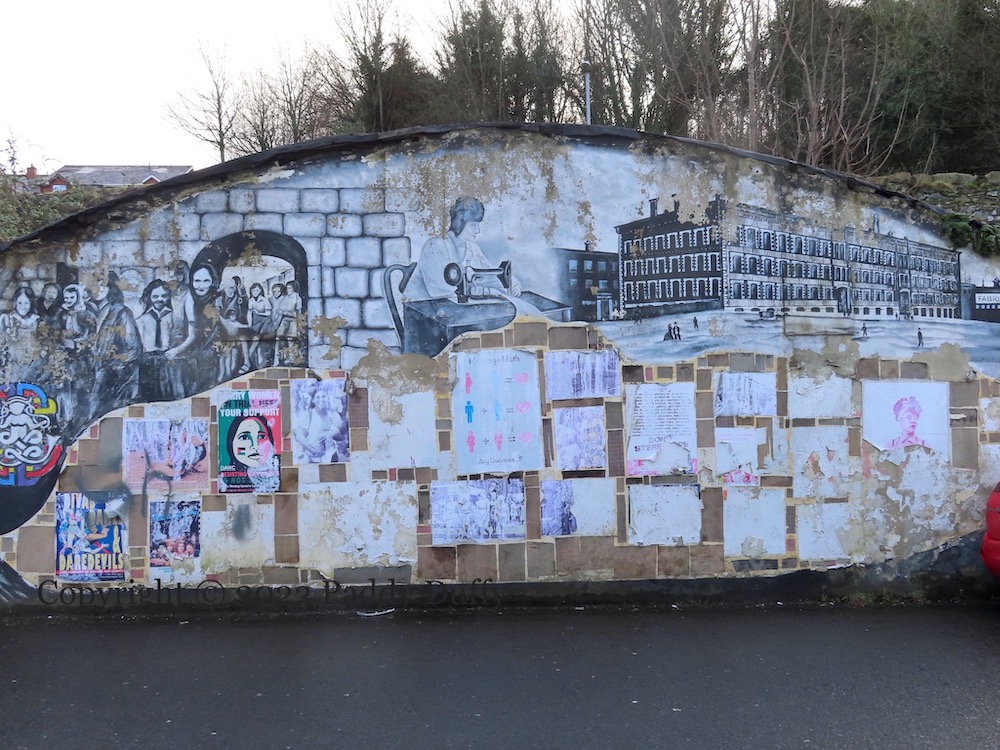
This piece was originally launched in 2014 and is now much the worse for wear. It celebrates the role of women in the cultural and economic life of Derry.





 Paddy Duffy Collection