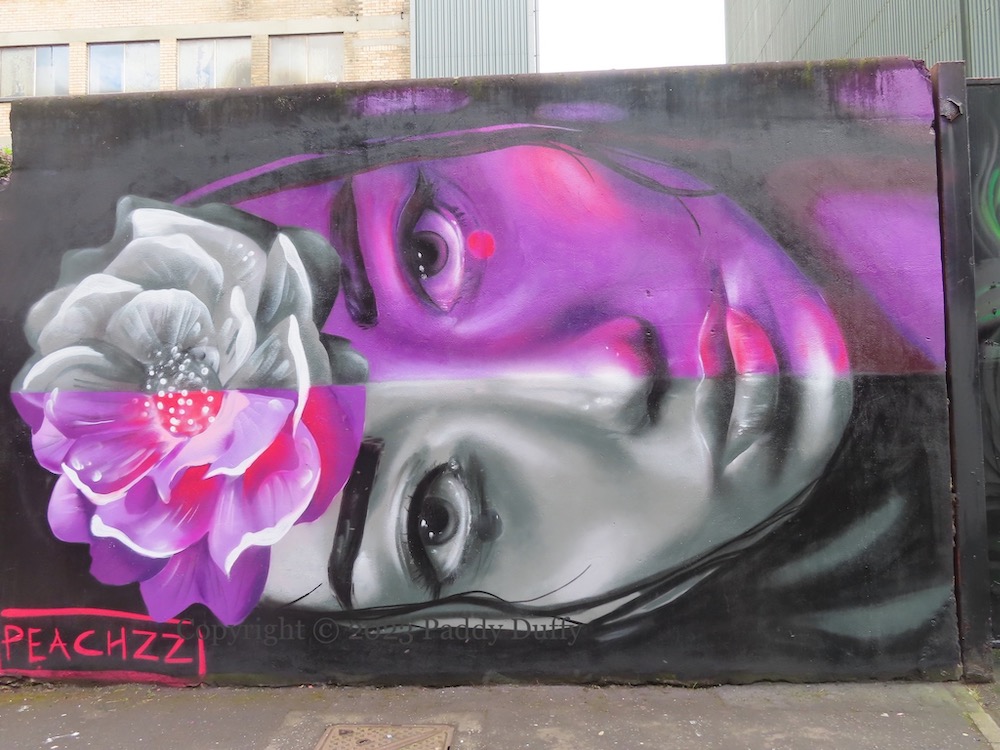
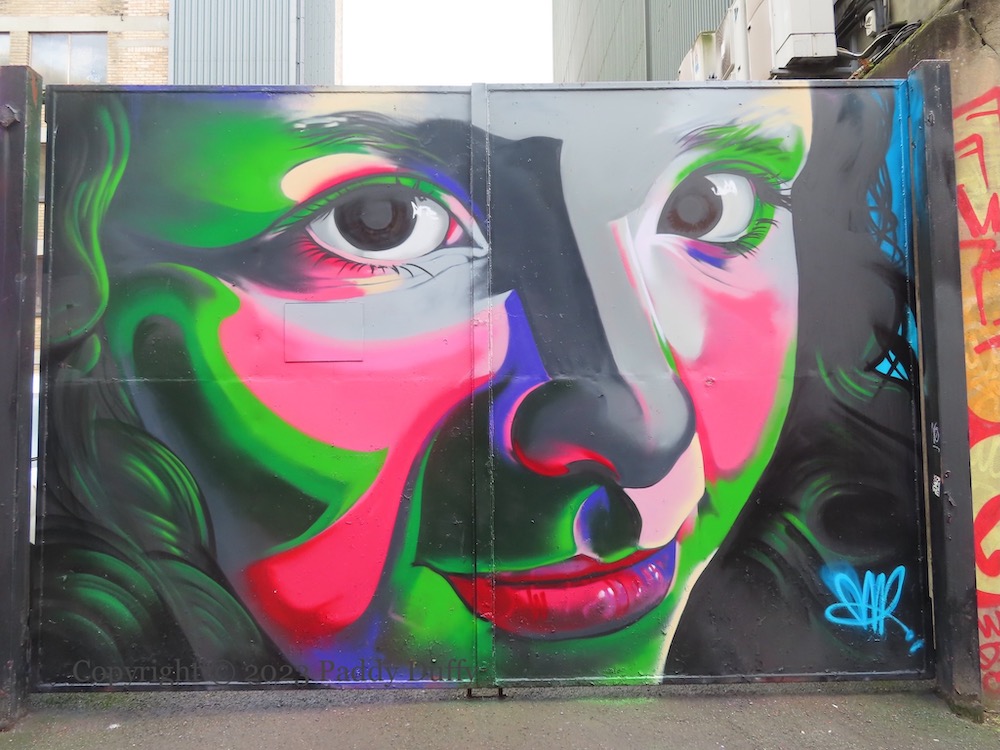
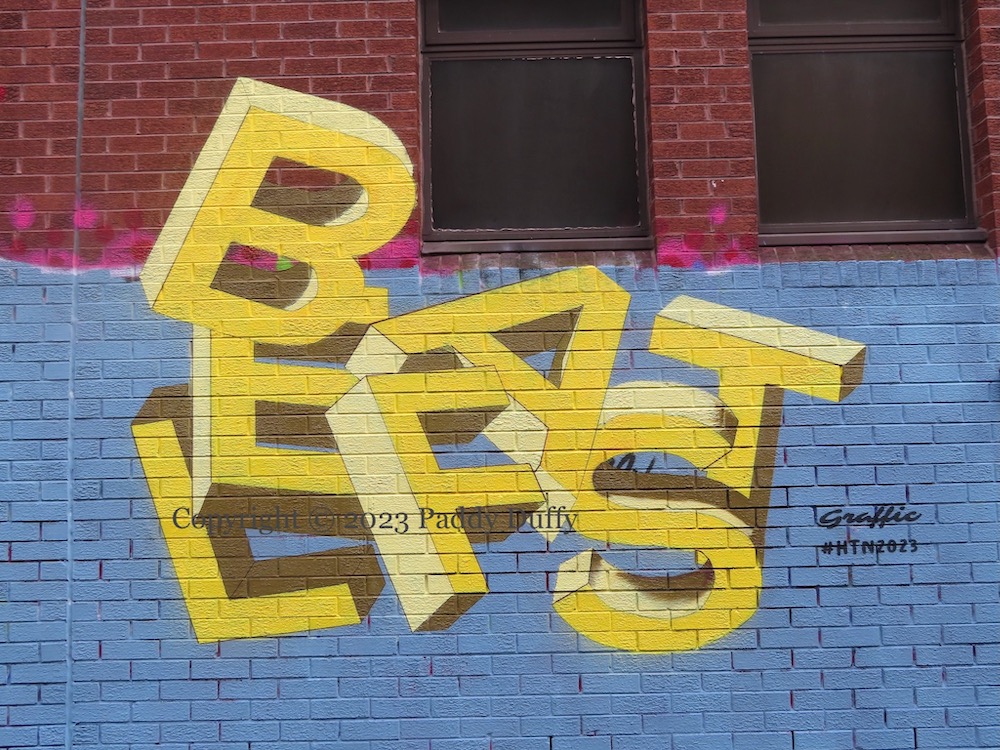
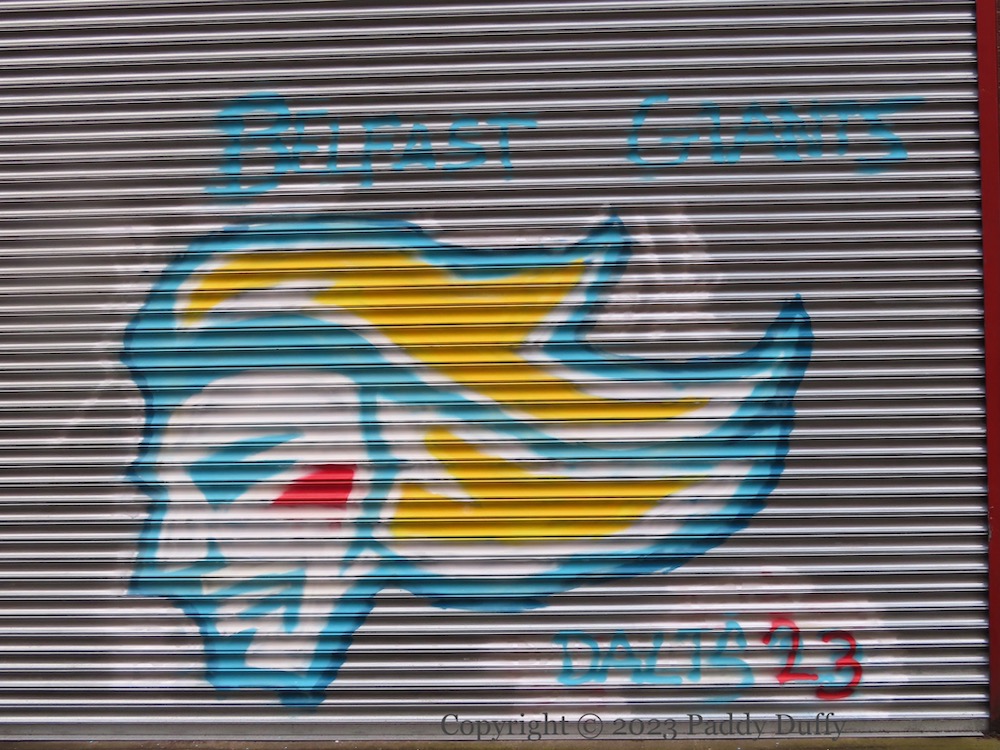
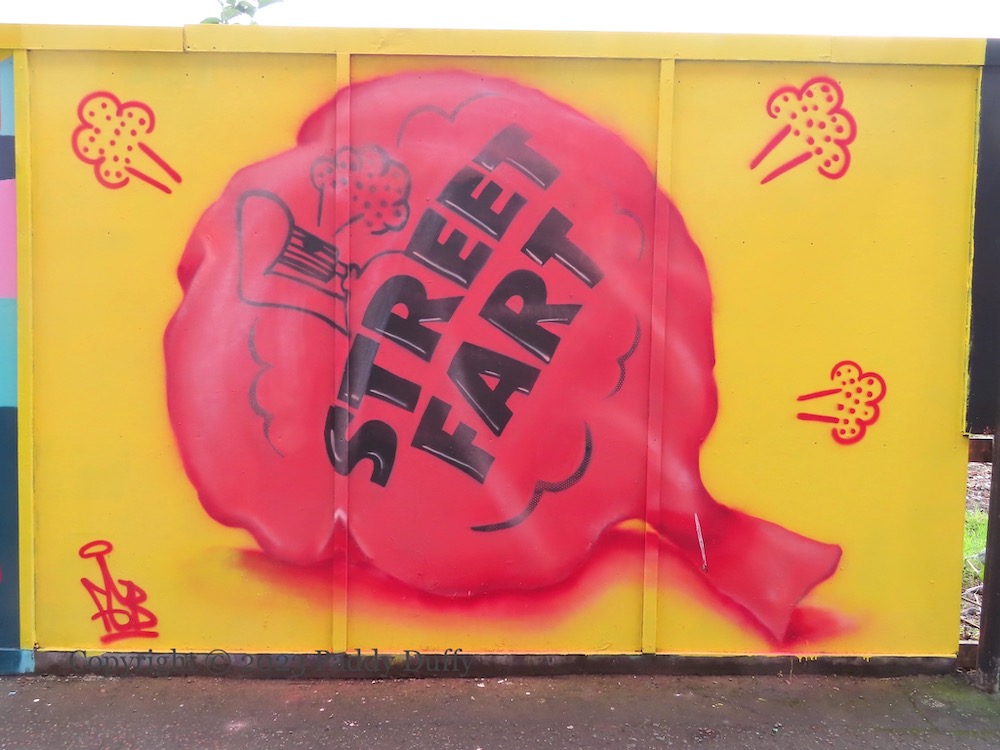
Here are the four pieces of street art in Library Street, Belfast, painted for Hit The North 2023, by Peachzz (ig), JMK (ig), Atmos (ig), and Graffic (ig).
Click image to enlarge
Copyright © 2023 Paddy Duffy
T02672 T02671 T02670 T02669

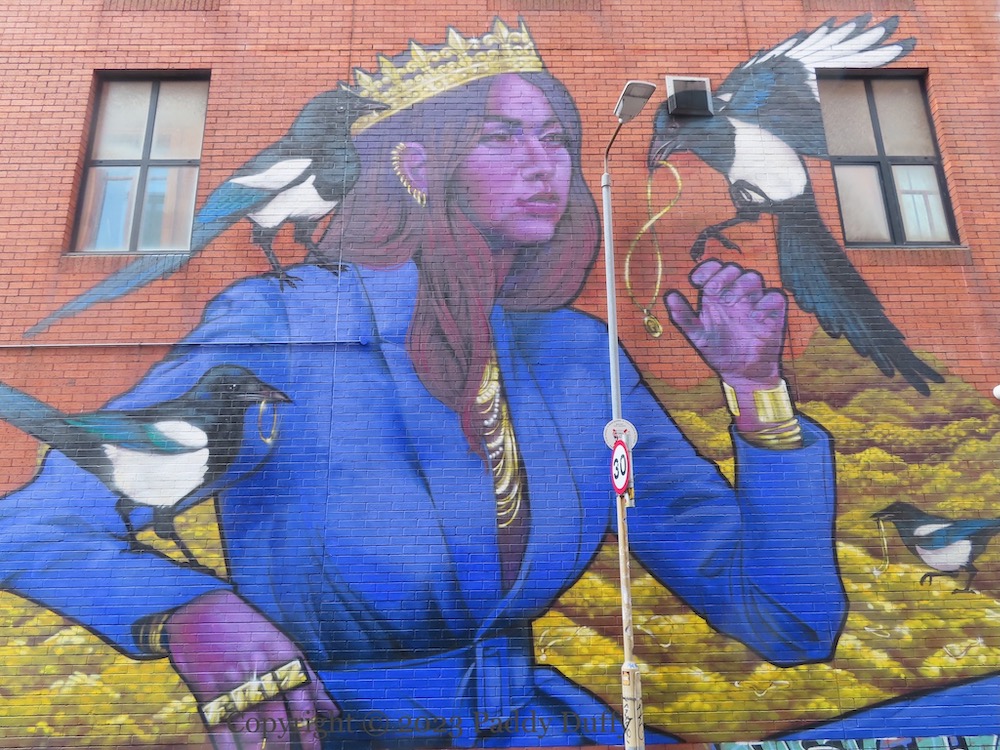
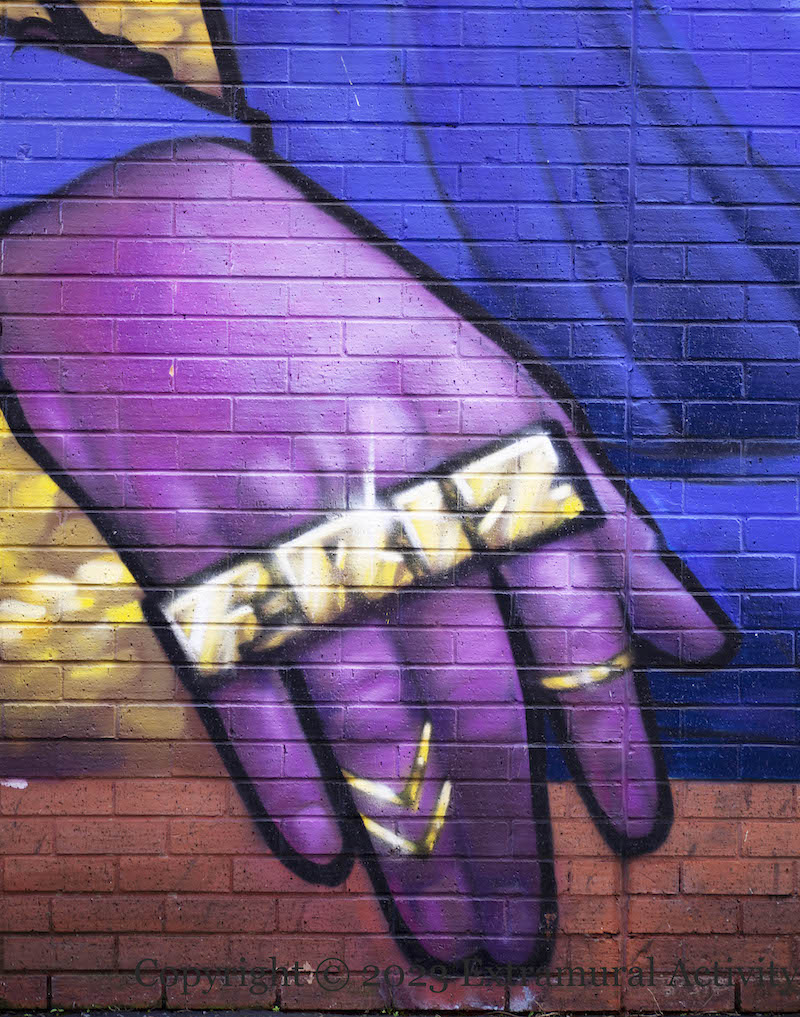
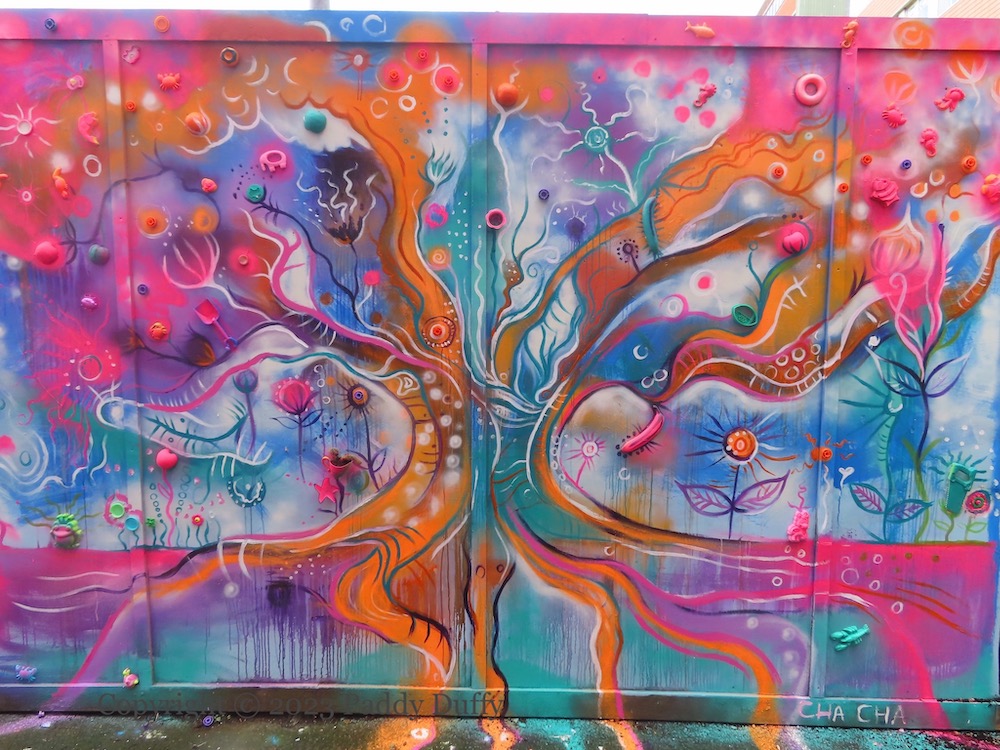
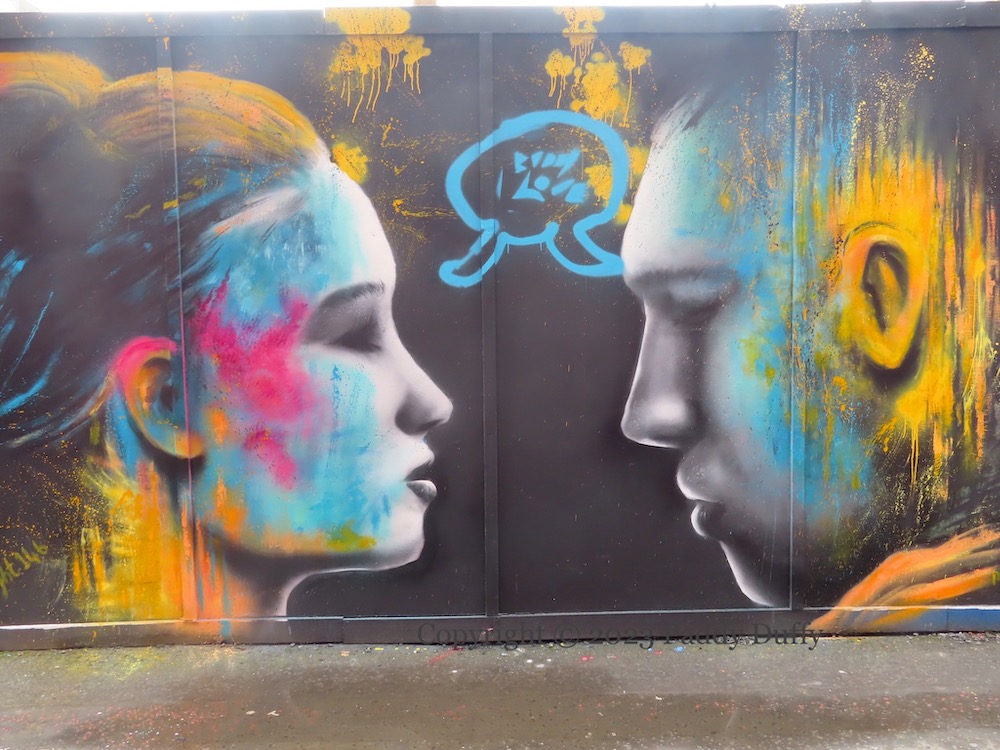
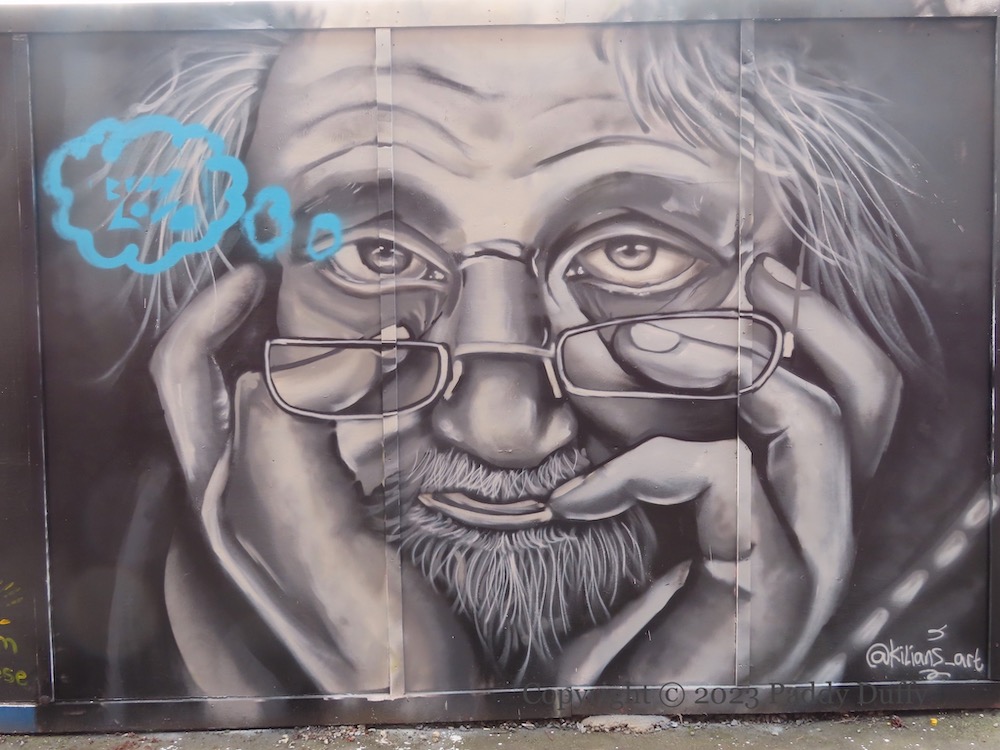
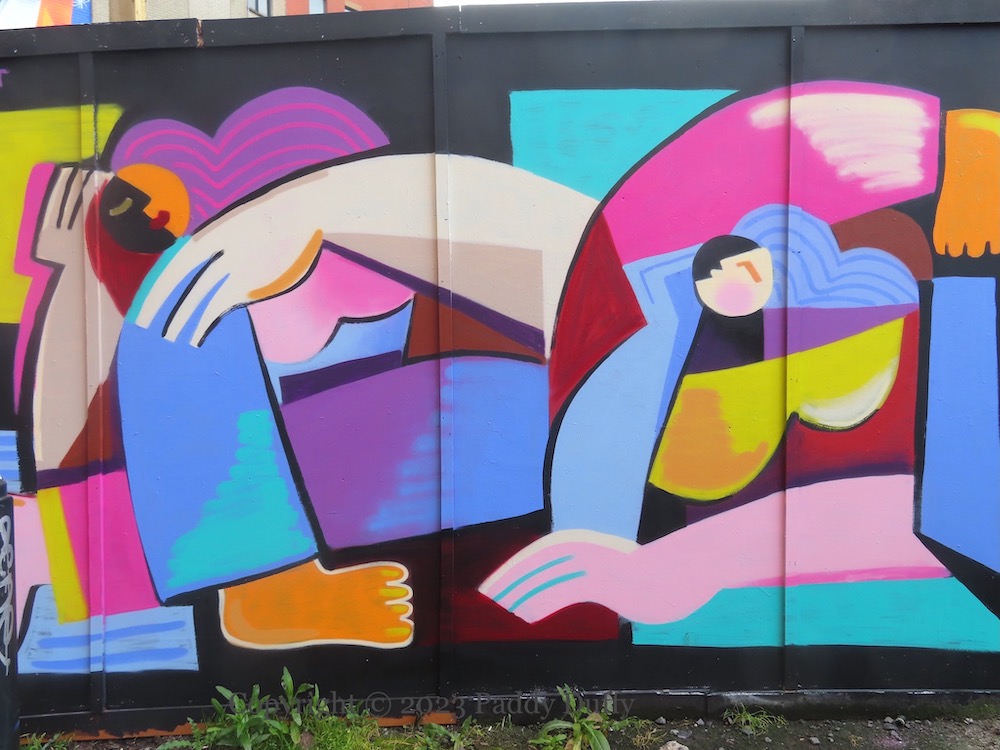
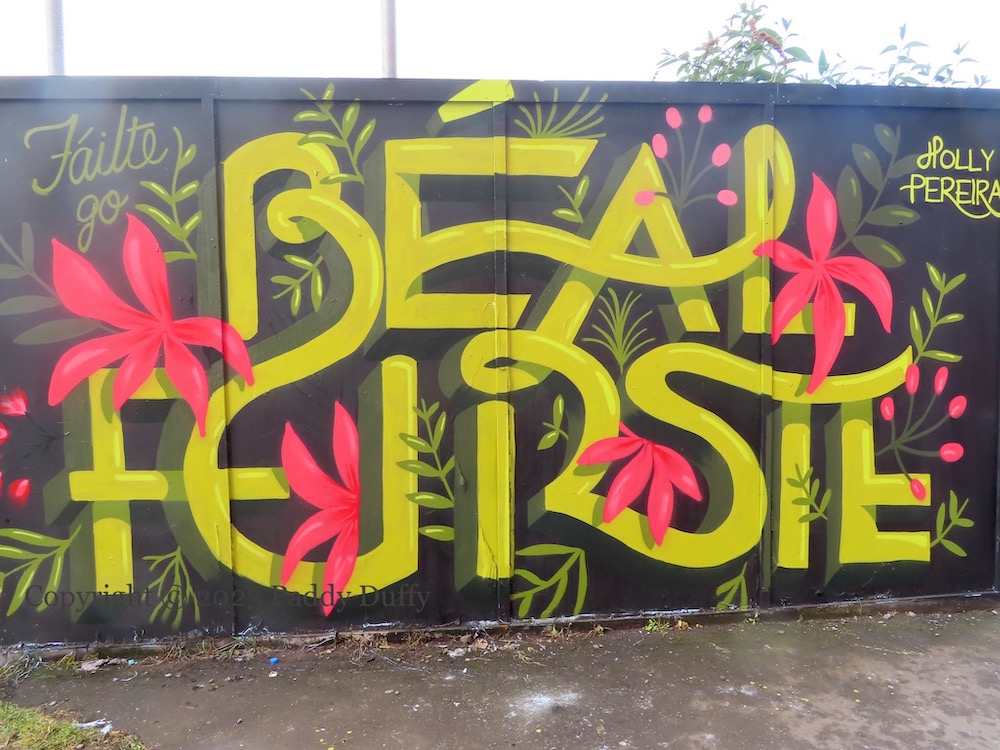
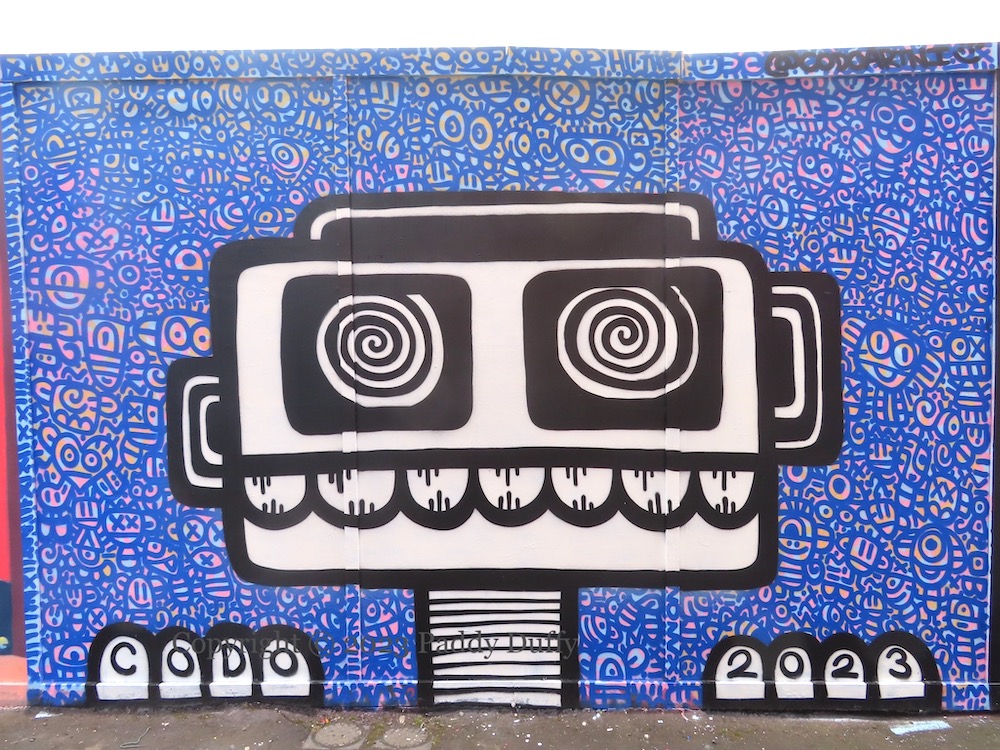
Here is a gallery of the new pieces from Hit The North 2023 on the south side of Kent Street (there is a separate post for the north side and there is a separate post for Kent Street above Union Street).
From left to right (top to bottom in this post), the art is by:
Friz (ig)
Annatomix (ig)
Cha Cha (ig)
CYD Noble (ig)
Ali-P (ig)
Kerrie Hannah (ig)
Saul Art (ig)
MWAK (ig)
Carly Wright (ig) + Sam McAleese (ig)
Kilian (ig)
Claire Prouvost (ig)
Holly Peirera (ig)
Myfanwynia (ig)
Leo Boyd (ig)
Novice (ig)
Codo (ig)
Danni Simpson (ig)
Chroma Chameleons (ig) + Sweetheart Streetart (ig)
FGB (ig)
HM Constance (ig)









Click image to enlarge
Copyright © 2023 Paddy Duffy
[T02603] T02607 T02631 [T02632] X14017 X14016 courtesy of Extramural Activity
[T02604] [T02605] T02608 [T02609] T02742
T02634 T02633
T02636 T02637 T02638 T02639 T02640 T02641 T02642
T02643 T02644 T02645 T02646 T02647 T02648 T02649 T02650 T02651
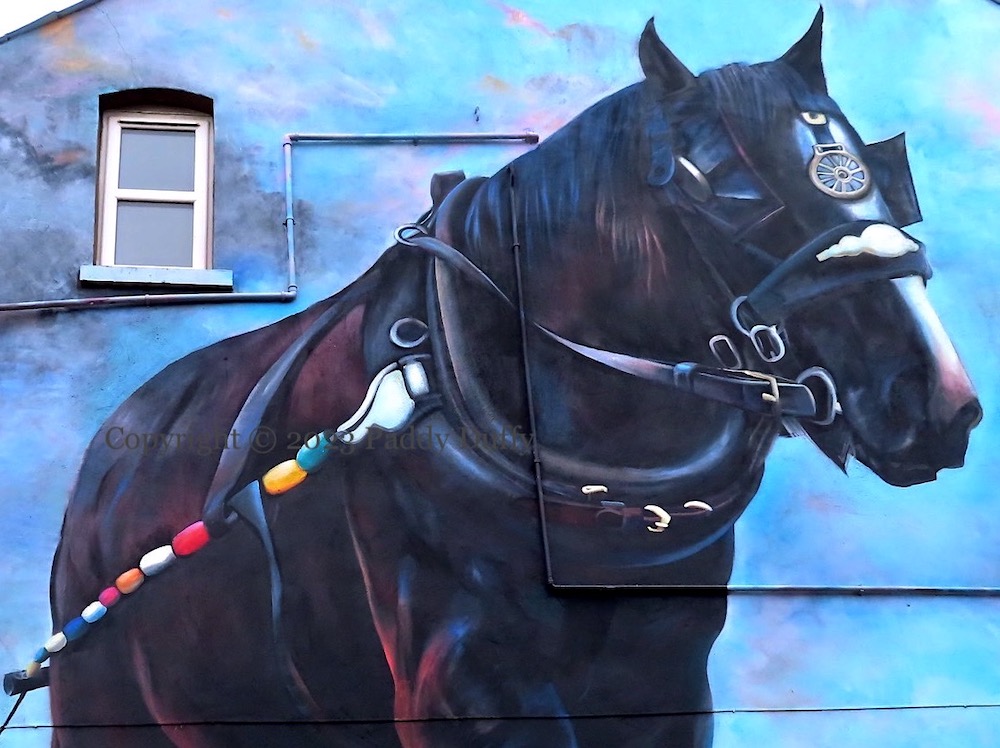
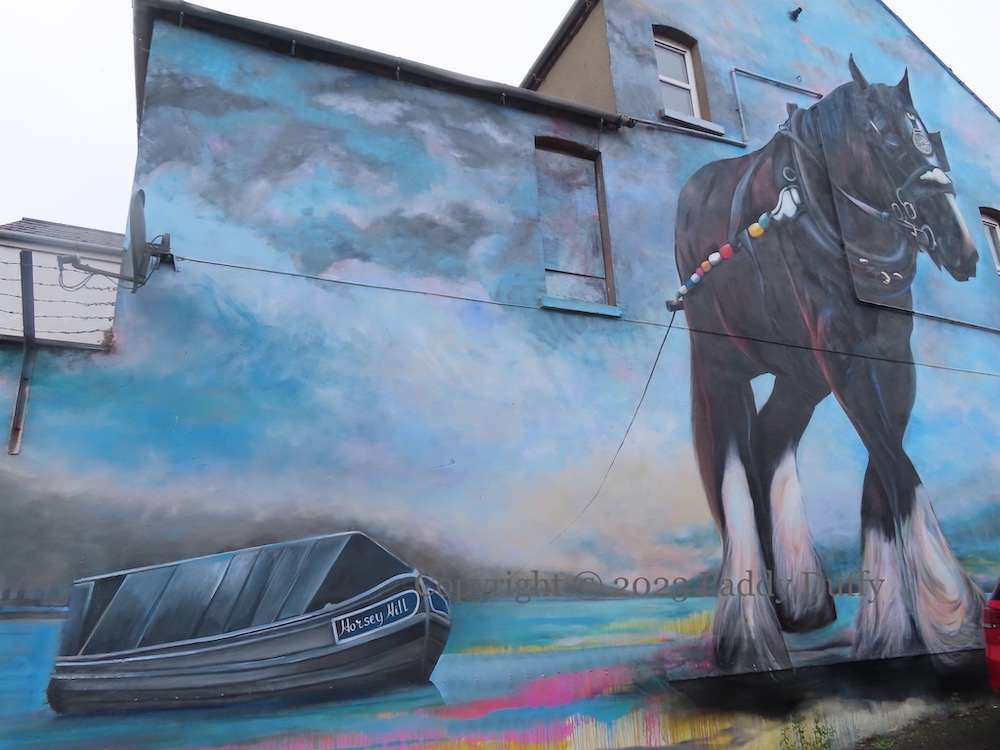
The Lagan river between Belfast and Lisburn was made navigable in 1763 after seven years of work. The remaining distance between there and Lough Neagh (and the coalfields of east Tyrone, which were connected to Lough Neagh and then Portadown and Newry) required a canal, which finally opened on January 1st, 1794. The were 27 locks on the route between Belfast and the lough, and horses walking on the tow-parth would pull the barges up river (WP | Lagan Valley | Lagan Navigation has photographs of horses at work). Horsey Hill was perhaps the site of stables in south Belfast; it is now the name of the alley that continues on towards the river from the Ukraine sunflower mural off Harrow Street in the Holylands.
Forward South Partnership/Connor McKernan’s video about the history of the Holylands, including Horsey Hill, can be seen on youtube.
Painted by Daniela Balmaverde (ig) and DMC. At the bottom of Horsey Hill, along the embankment, are Animals Two By Two.
Click image to enlarge
Copyright © 2023 Paddy Duffy
T02595 T02597 [T02596]

The Con O’Neill bridge crosses the Knock river just before it meets the Loop river to form the Connswater, which used to be Con’s water, and provided a way for “men, horses and livestock to cross the river” (Con O’Neill).
The mural depicting such a crossing, by Friz (ig), is on a gable wall in the car park next to the bridge; the area is now known as The Hollow, as in “Hey, where did we go?/Days when the rains came/Down in the hollow/Playin’ a new game.” (For an image of bridge partially submerged and impassable in 2012, see Geograph | more images at Google Maps Places.)
Con lived c. 1600 but the bridge might well pre-date that time. It was refurbished as part of the Connswater Greenway project in ?2014?.
Abetta Parade, east Belfast
Click image to enlarge
Copyright © 2023 Paddy Duffy
T02545
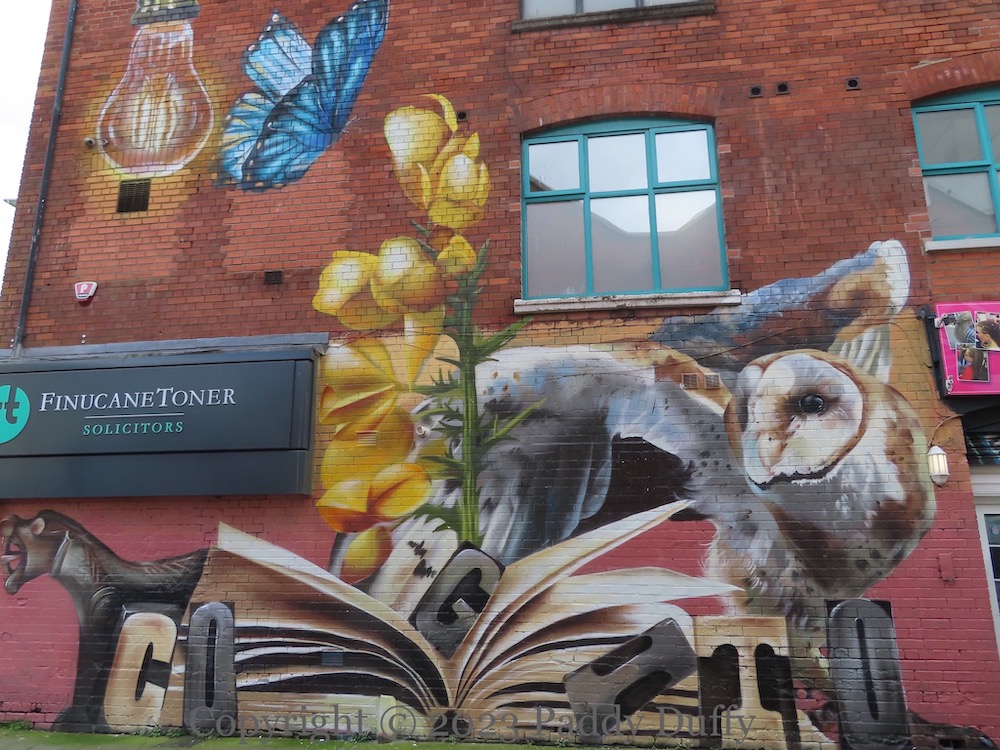
The first printing press in Belfast belonged to James Blow and his brother-in-law Patrick Neil in 1694 (DIB | Dublin Penny Journal gives 1696 | Mary Lowry Story Of Belfast gives 1690); a run of 8,000 Bibles is said to have been printed in 1751, one of which is part of the Linen Hall Library’s collection on Early Ulster Printing (RASCAL).
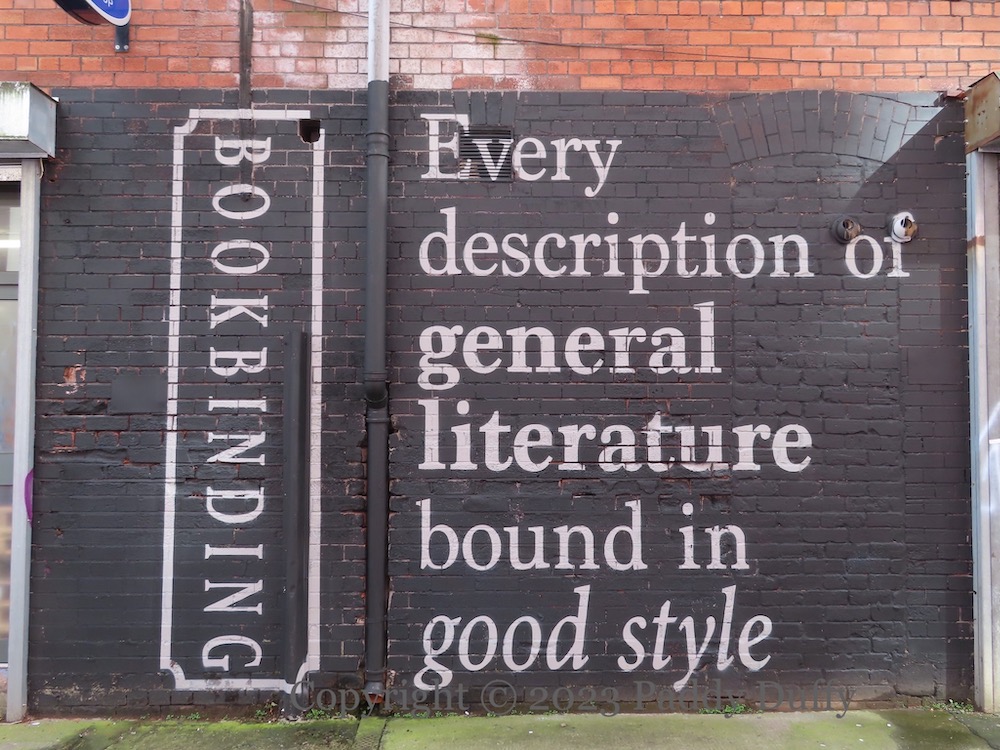
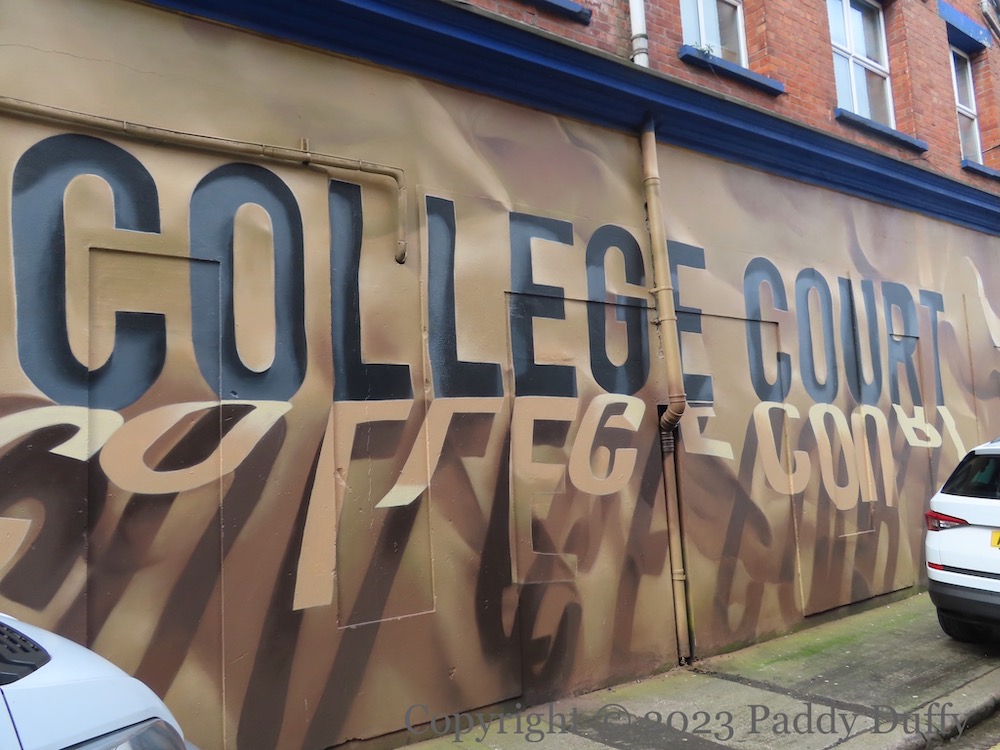
In 1895, Carswell & Sons opened a print-works and book-binders in a warehouse running with frontage in Queen Street and a rear in College Court (the building is now a bingo hall – see Kelly’s Eyes) which is currently being renovated as an office block (Bel Tel) – some of the scaffolding in College Cour can be seen in the later images in We Built This, the street art festival for International Women’s Day, 2023.
To complement those festival pieces, the mouth of College Court has been given a make-over, with work by Peachzz (ig) (above) and lettering by Woskerski (ig) that both draw on the street’s association with printing. If you know who did the “bookbinding” piece, please get in touch.
Previously on either side of College Court there were two pieces by Friz: Fox and Hare.
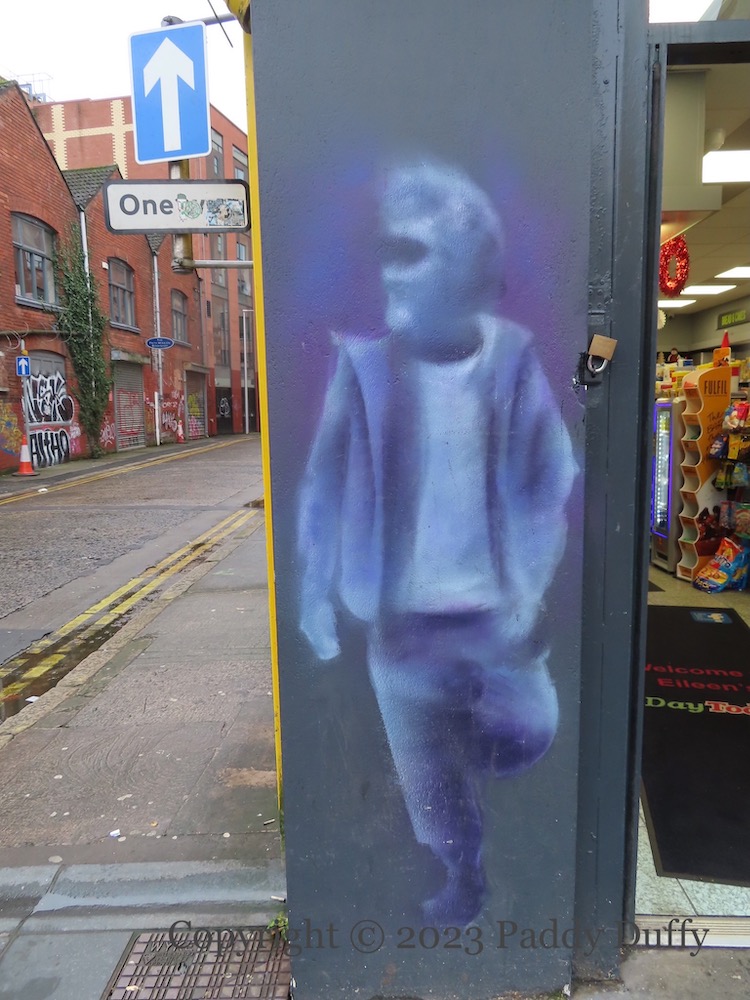
The bonus image, of a man leaning against the newsagent’s wall, is on the corner with Castle Street.
Click image to enlarge
Copyright © 2023 Paddy Duffy
T02439 T02441 T02440 T01737
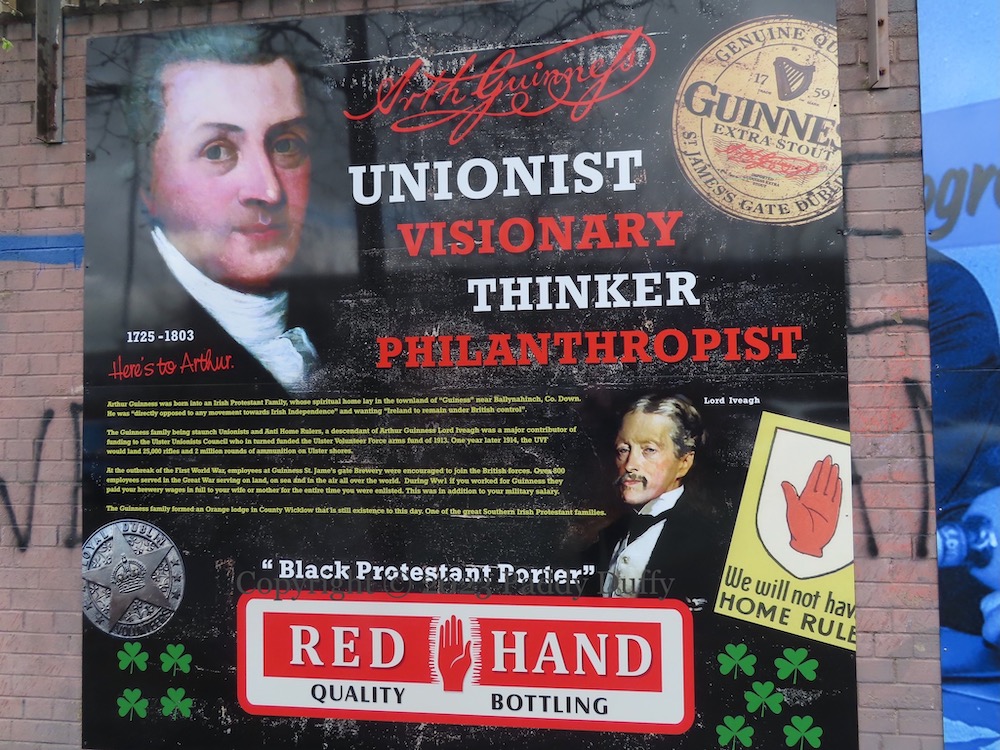
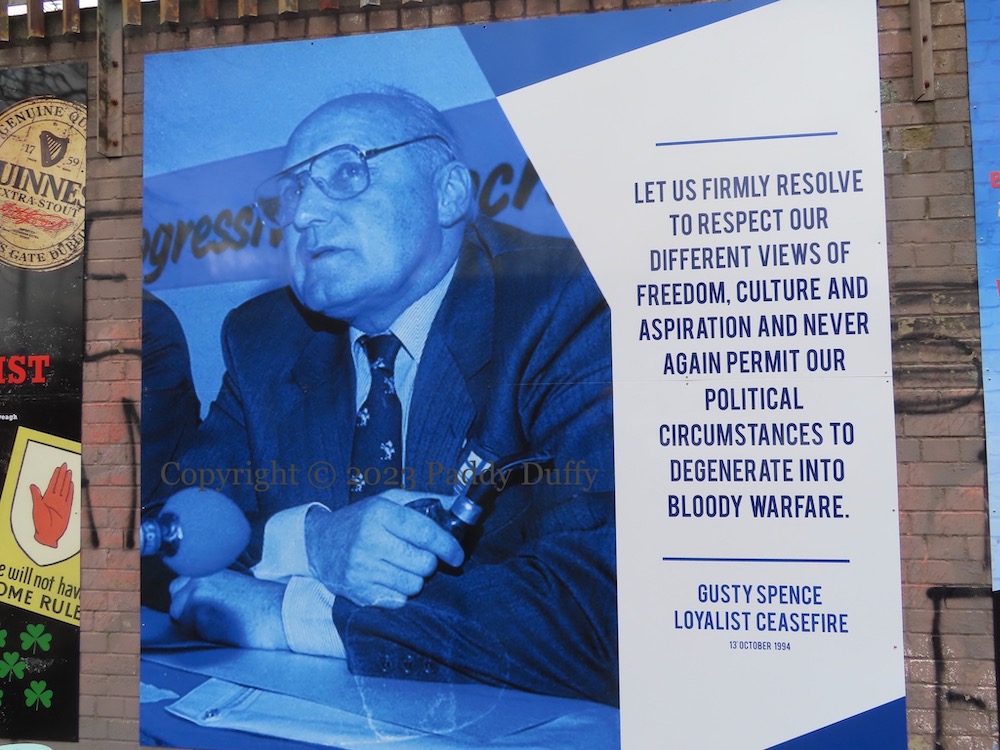
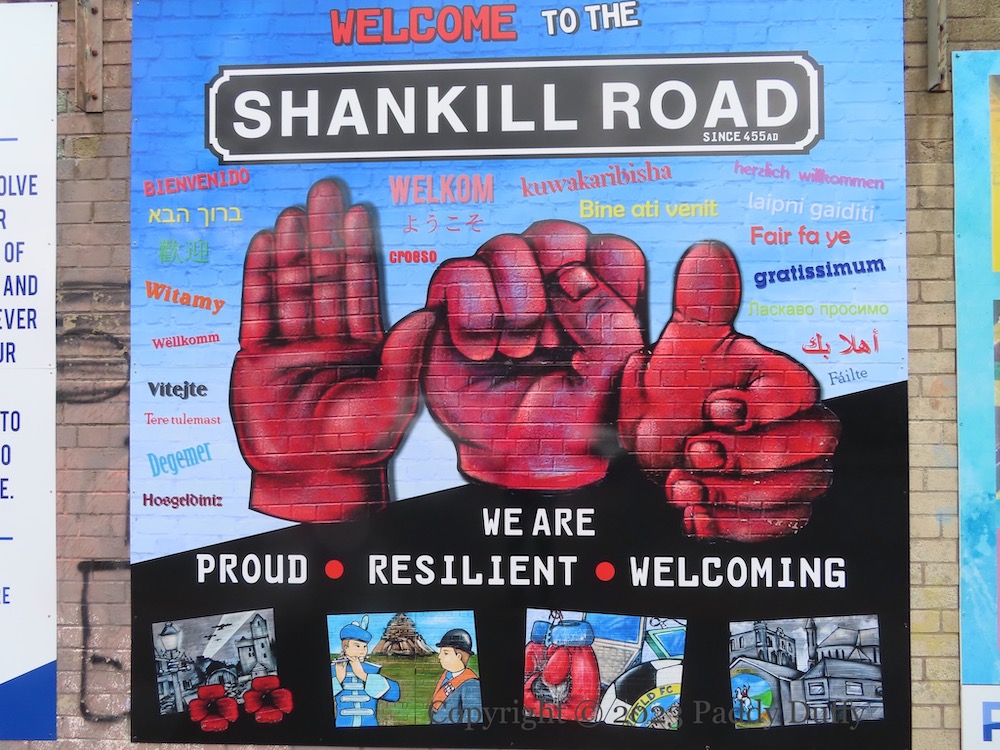
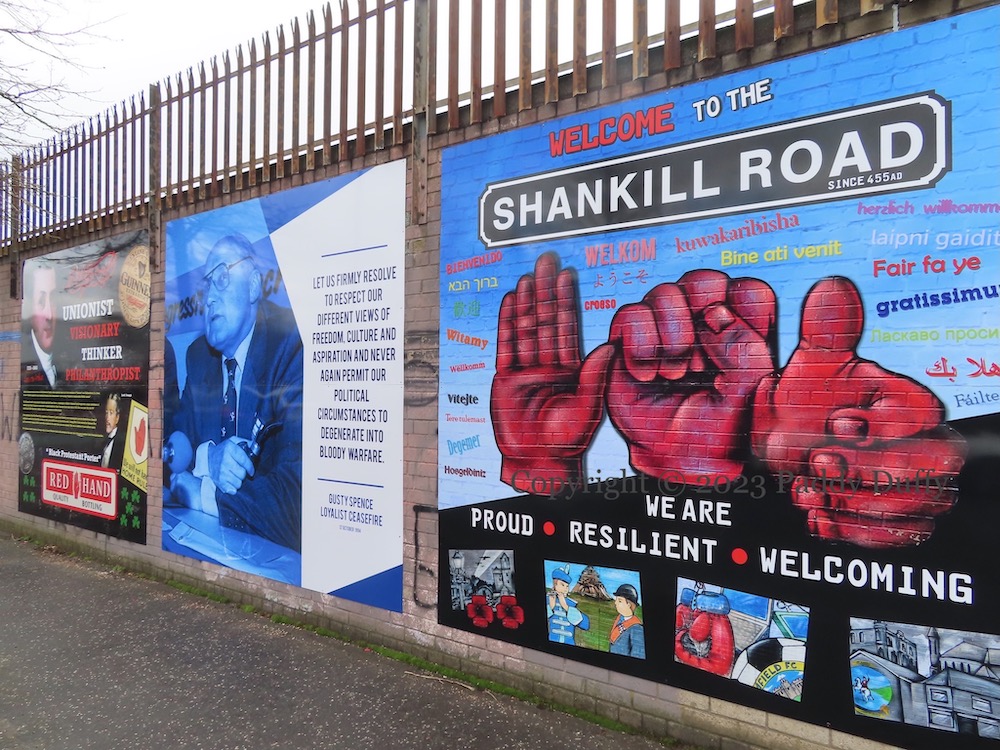
Here are three new pieces above the security gates on Northumberland Street, coving over the “Deserted! Well, We Can Stand Alone” graffiti in the last remaining spot on the wall without a mural. From left to right:
Arthur Guinness: “Black Protestant Porter” as a description of Guinness stems from Arthur Guinness’s opposition to the 1798 rebellion (Indo). The Union Star (newspaper in Belfast – A Planet Of Light And Heat) called Guinness a spy and advised that “United Irishmen will be cautious of dealing with any publican who sells his drink.” (An Phoblacht).
Gusty Spence, a former commander of the UVF, read out the ceasefire statement of the “Combined Loyalist Military Command” (UVF, RHC, and UDA): “Let us firmly resolve to respect our different views of freedom, culture and aspiration and never again permit our political circumstances to degenerate into bloody warfare – Gusty Spence, loyalist ceasefire [statement in full], 13 October, 1994.”
“Welcome To The Shankill Road – we are proud, resilient, welcoming”: The original ‘three hands’ was on Northumberland Street, just above this spot – see Proud, Defiant, Welcoming – which was then reproduced in reduced form in Gardiner Street – see Welcome To The Shankill Road.
This is the most conciliatory statement ever made by loyalism and the decision to put it on Northumberland Street, especially in the context of the internationally famous and associated-with-Ireland Guinness and the “welcome” mural, suggests that the trio is directed at tourists rather than locals.
For the 36th Division board to the far left, see XXXVI; for Kitchener, see To All Foreign Nationals Across The Empire; for the mental health board to the right, see Pain Is Real.
Click image to enlarge
Copyright © 2022 Paddy Duffy
T02389 T02388 T02387 T02390
“Arthur Guinness (1725-1803) – unionist, visionary, thinker, philanthropist. Arthur Guinness was born into an Irish Protestant Family, whose spiritual home lay in the townland of “Guiness” near Ballynahinch, Co. Down [BBC]. He was “directly opposed to any movement toward Irish independence” and wanting “Ireland to remain under British control.”
“The Guinness family being staunch Unionists and Anti Home Rulers, a descendent of Arthur Guinness Lord Iveagh was a major contributor of funding to the Ulster Unionists Council who in turned funded the Ulster Volunteer Force arms fund of 1913. One year later 1914, the UVF would land 25,000 rifles and 2 million rounds of ammunition on Ulster shores.
“At the outbreak of the First World War, employees of Guinness St Jame’s gate Brewery were encouraged to join the British forces. Over 800 employees served in the Great War serving on land, on sea and in the air all over the world. During Ww1 if you worked for Guinness they paid your brewery wages in full to your wife or mother for the entire time you were enlisted. This was in addition to your military salary.
“The Guinness family formed an Orange lodge in County Wicklow that is still in existence to this day. One of the great Southern Irish Protestant families.”

Memorial boards to Queen Elizabeth have been added to the ‘our community transformation’ board and community garden in Old Warren.
An image of the old “You are now entering loyalist Old Warren” display that is shown in the ‘before’ side of the board above is included below. On the ‘after’ side are the youth centre, the new houses at the top of Drumbeg Drive, and the Lagan View enterprise centre. For a brief history of the area, see Through Your Eyes.
The previous board on this wall – a UDA B Company board – can be seen in C02674 and its predecessor in M05916.
Click image to enlarge
Copyright © 2023 Paddy Duffy
T02323


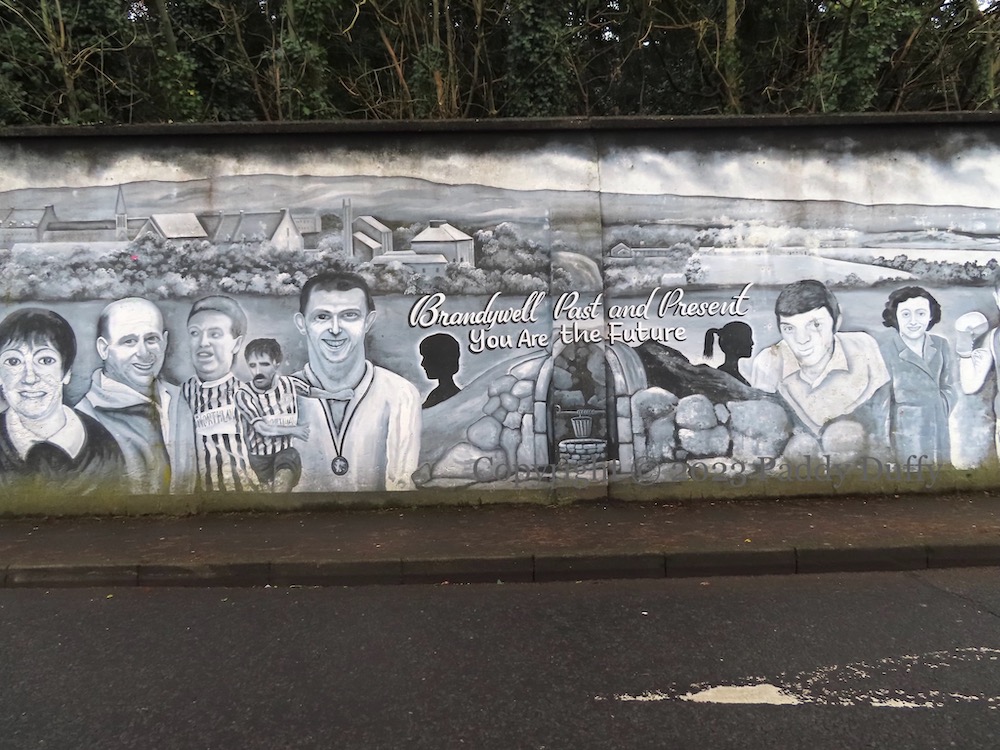
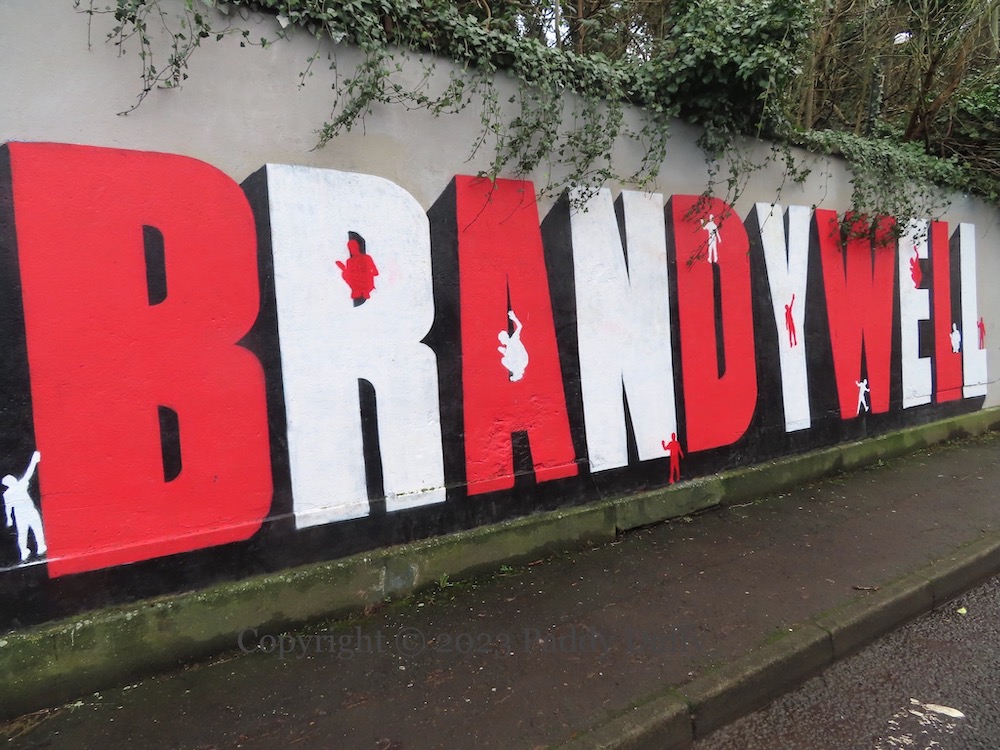
“You are the future” is the message from Long Tower Youth & Community Centre (Fb) to young people in the Brandywell. Sporting heroes of the past, especially boxing and soccer (for a mural of local clubs, see I Don’t Like Mondays) are featured in black and white.
Click image to enlarge
Copyright © 2023 Paddy Duffy
T02143 T02144 T02145
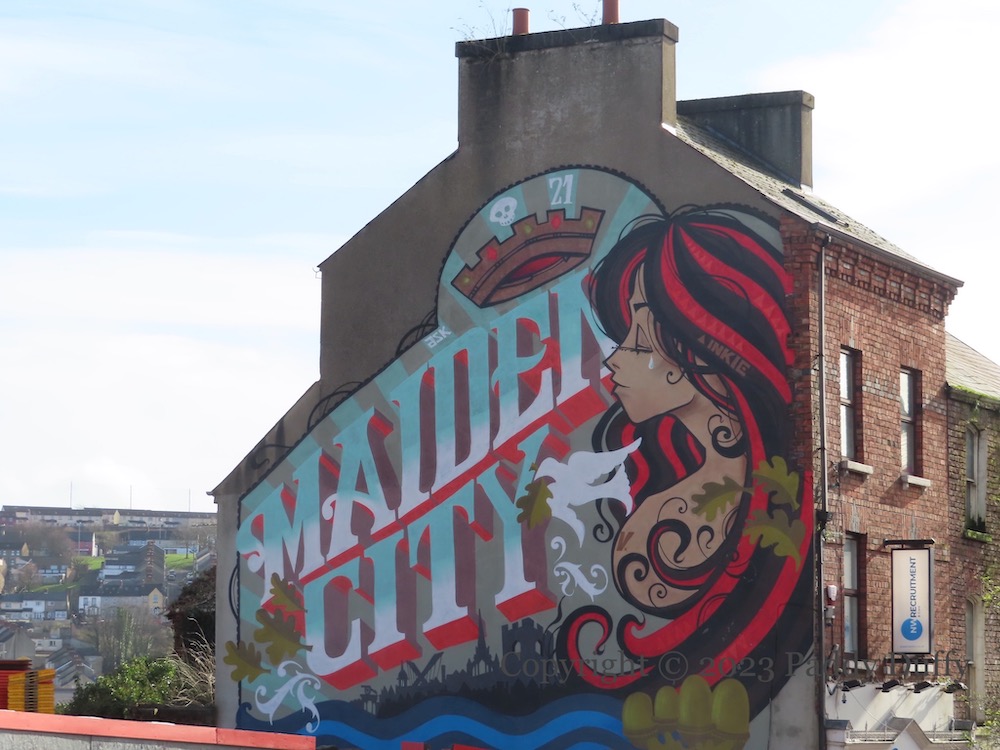
The city of (London)Derry takes its named from the Irish word “doire” meaning “oak wood” (and generically a “grove”) and the oak leaf is often used as a symbol of the city (here are 11 murals with oak leaves from the Peter Moloney Collection – Murals). In the mural above, in addition to the three leaves on the right-hand side, we also have some acorns.
The moniker “maiden city” is derived from the city’s resistance to sieges throughout its history, most famously in 1689 (again – a variety of images from Peter Moloney). The walls of the old city are shown above the river Foyle, with landmark buildings such as the Peace Bridge (see Waterside, Cityside, Quayside) behind them.
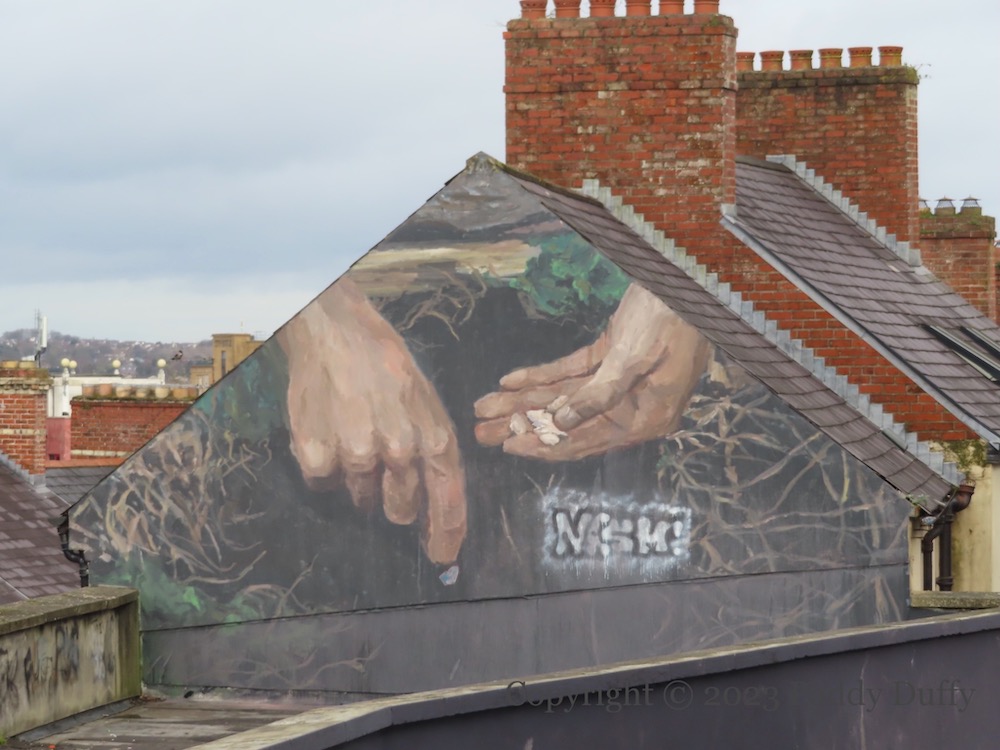
Graffiti-art by Inkie (ig) in Carlisle Road, Derry. The second piece, which shows two hands planting seeds in the ground (artist unknown) is at Butcher Gate.
Click image to enlarge
Copyright © 2023 Paddy Duffy
T02158 T02168
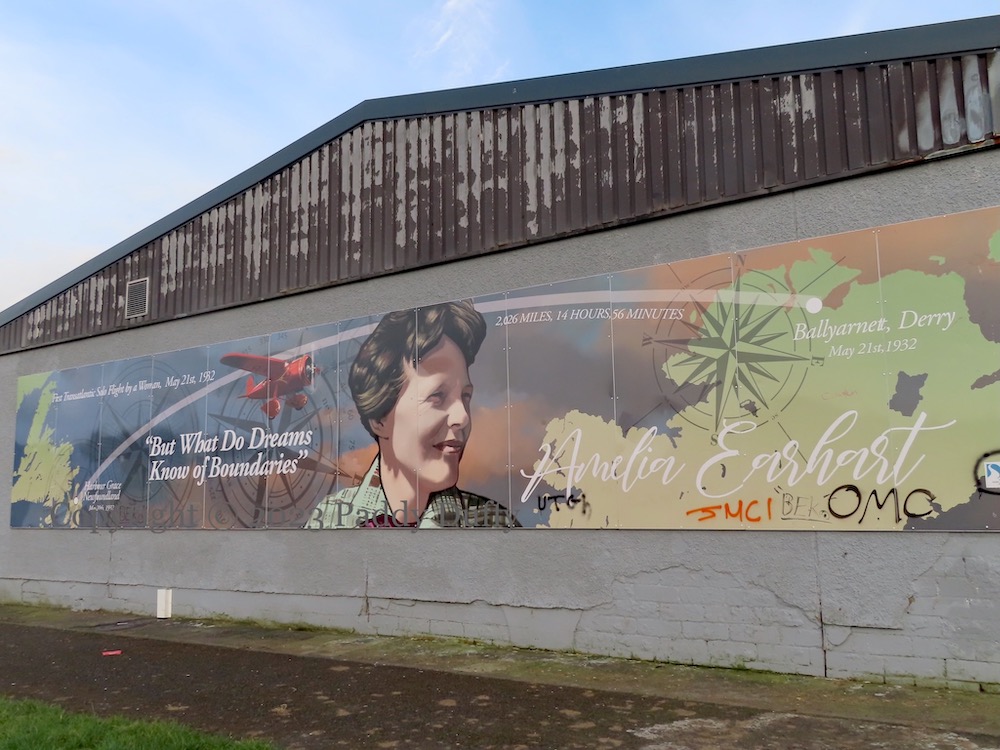
“Everyone has oceans to fly, if they have the heart to do it. Is it reckless? Maybe. But what do dreams know of boundaries?” When she left Harbour Grace, Newfoundland, on the evening of May 20th, 1932, Amelia Earhart’s intended destination for the first solo trans-Atlantic flight by a woman was Paris, France, but after various mechanical difficulties she landed instead in Ballyarnett, just outside Derry. For the 90th anniversary of her history-making flight, the artwork above was created by Joe Campbell (web), commissioned “by Community Restorative Justice in partnership with Derry & Strabane Distict Council’s Good Relations Programme and with the assistance of Greater Shantallow Community Arts.”
For the mosaic already mounted in 2010, see Flying Solo.
Fairview Walk, Derry.


Click image to enlarge
Copyright © 2023 Paddy Duffy
T02133 T02134 T02135 T02136
 Paddy Duffy Collection