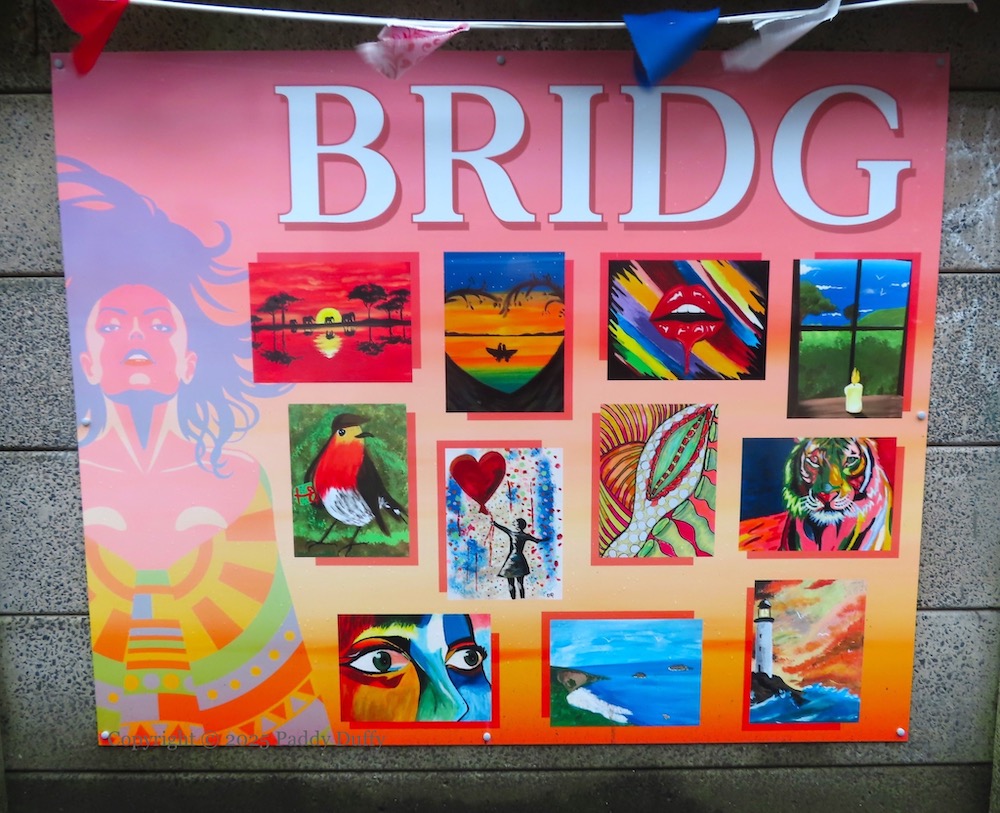
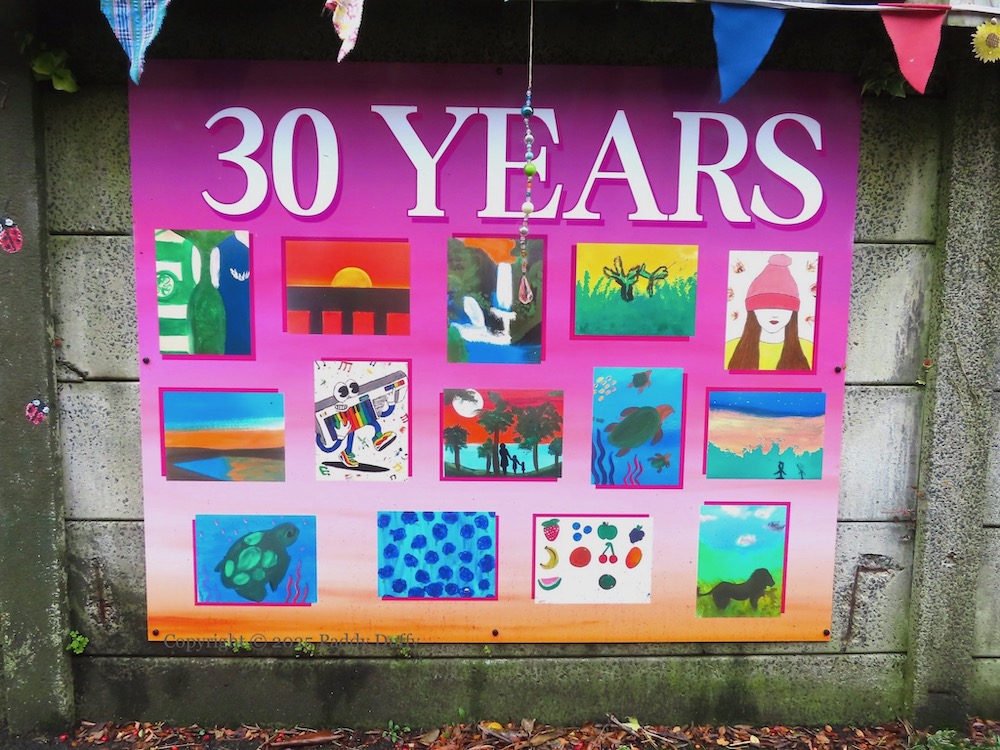
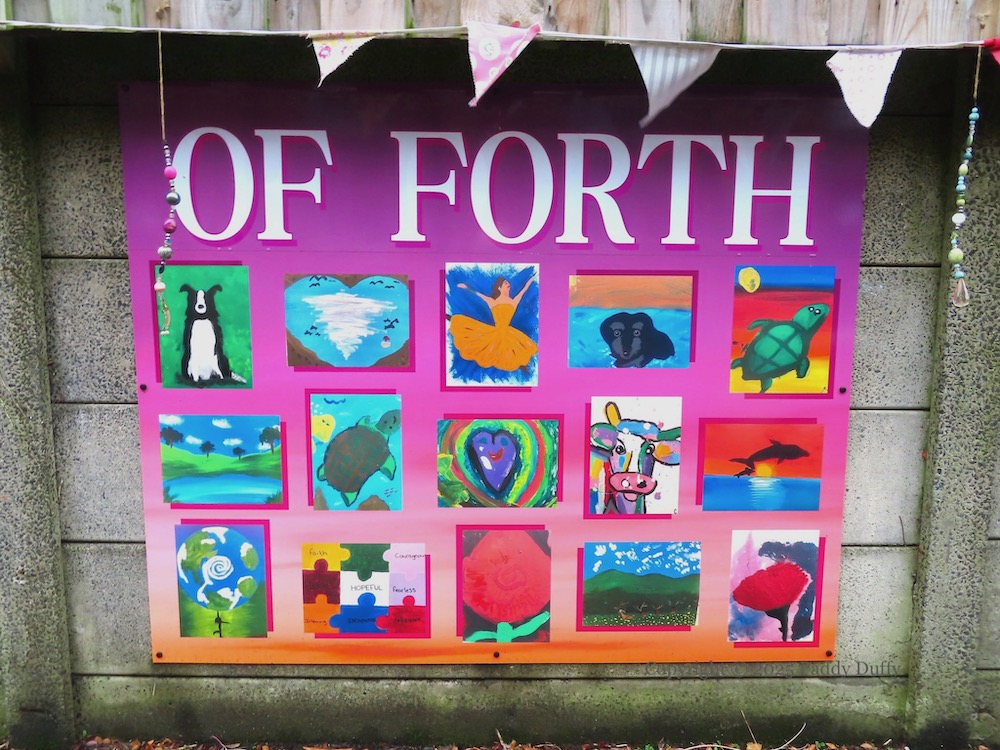
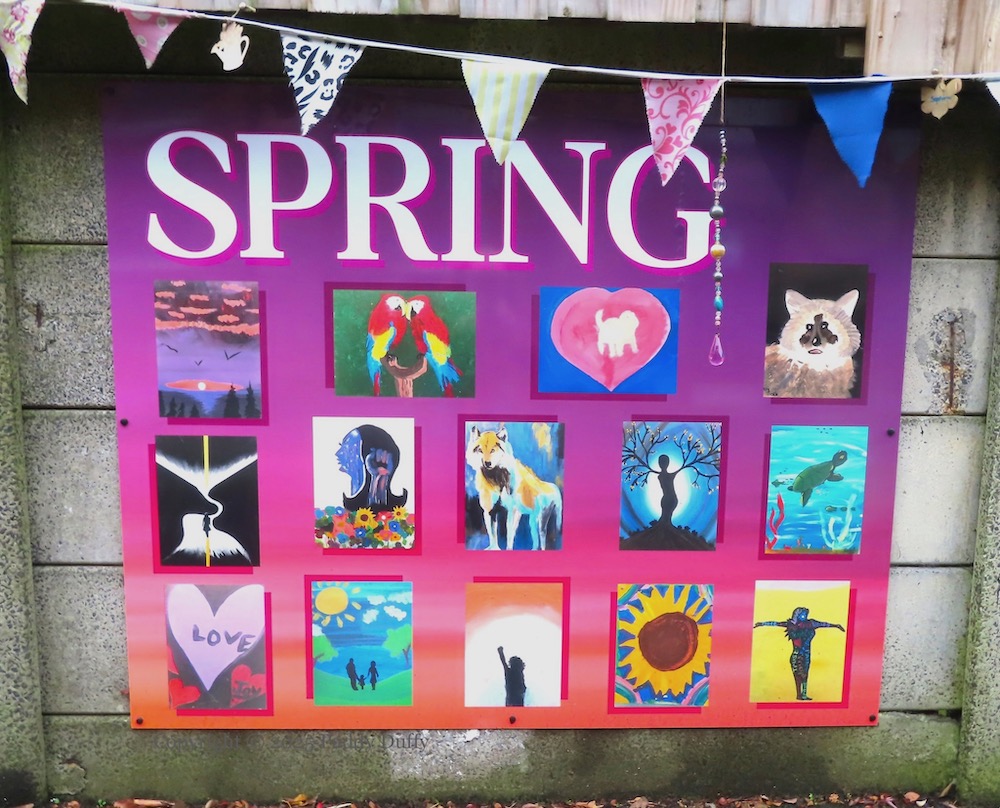
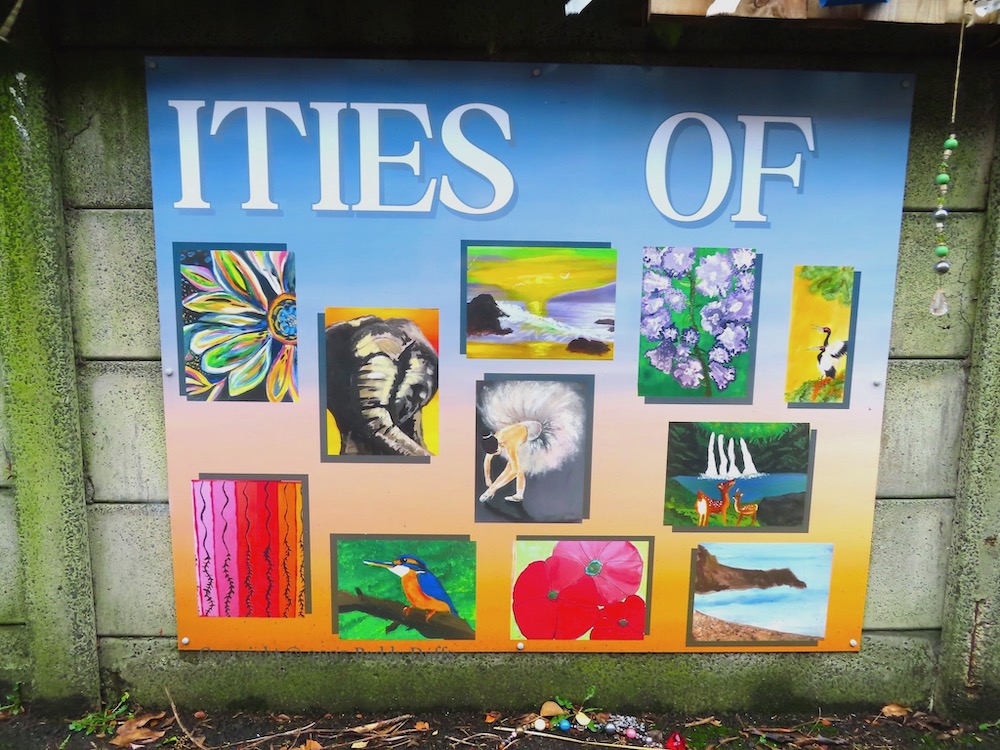
“Bridging divides”, “30 years of Forthspring”, “Communities of strength”. Forthspring is a cross-community group providing programming to residents of the CNR upper Springfield and PUL Woodvale areas. On its ‘about’ page, the organisation claims 1996 is the year of its founding, so this array of boards might be in anticipation of next year (2026).
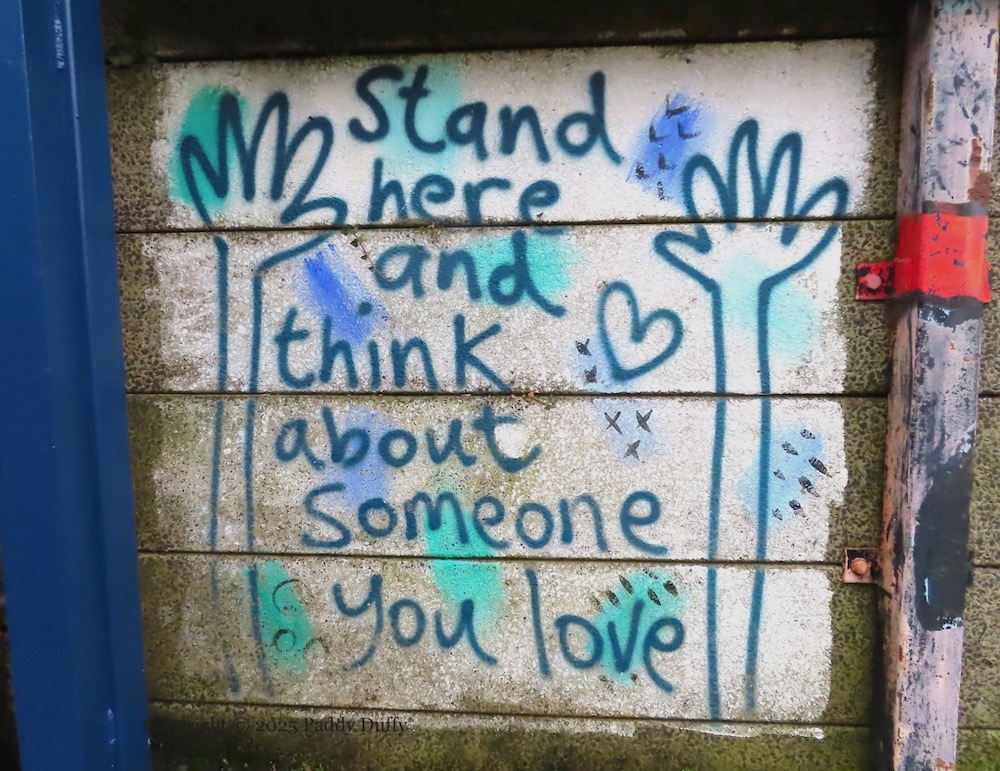
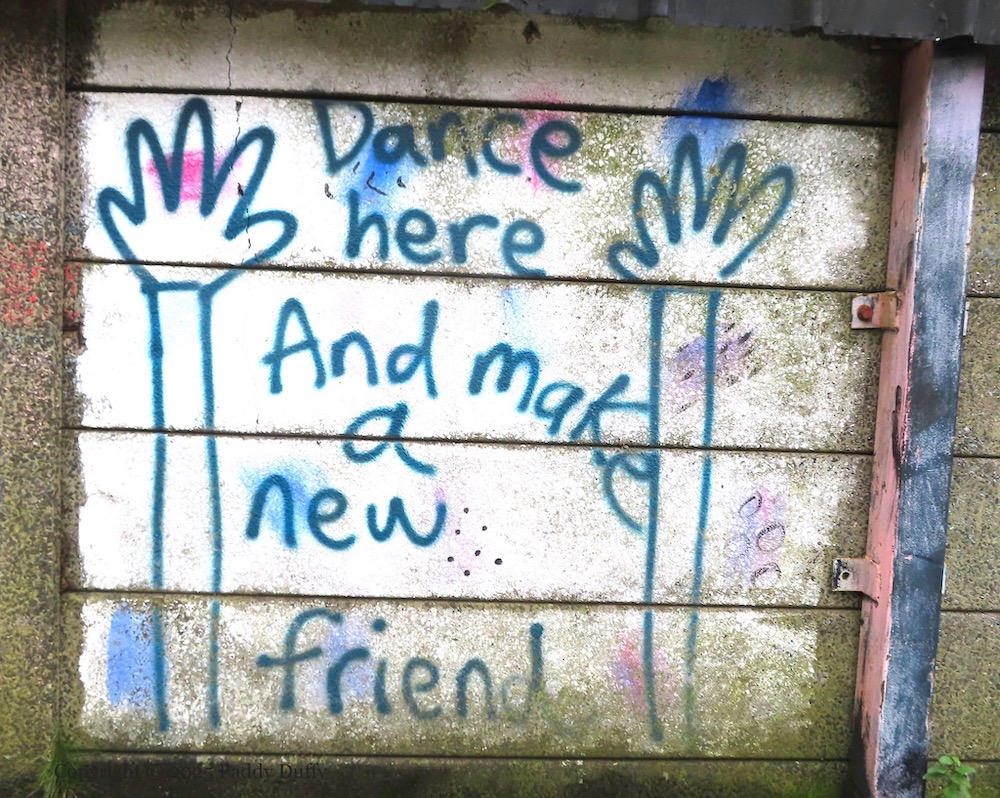
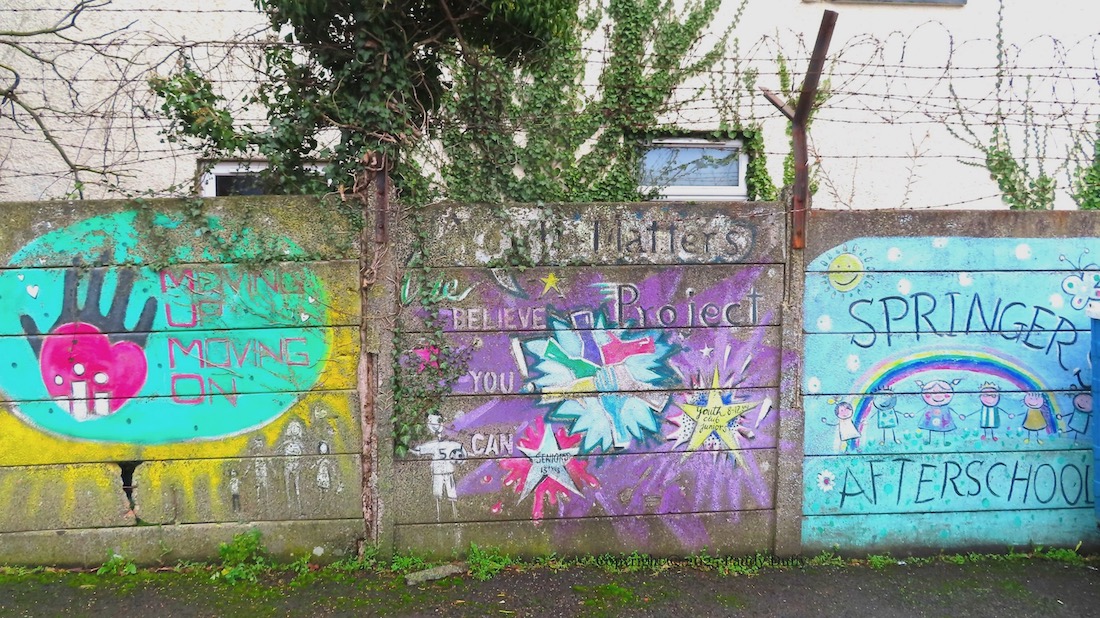
Also included are some of the older pieces on the panels at the front of the Springwell House. “Stand here and think about someone you love”, “Dance here and make a new friend”, “Youth Matters Project – believe you can”.
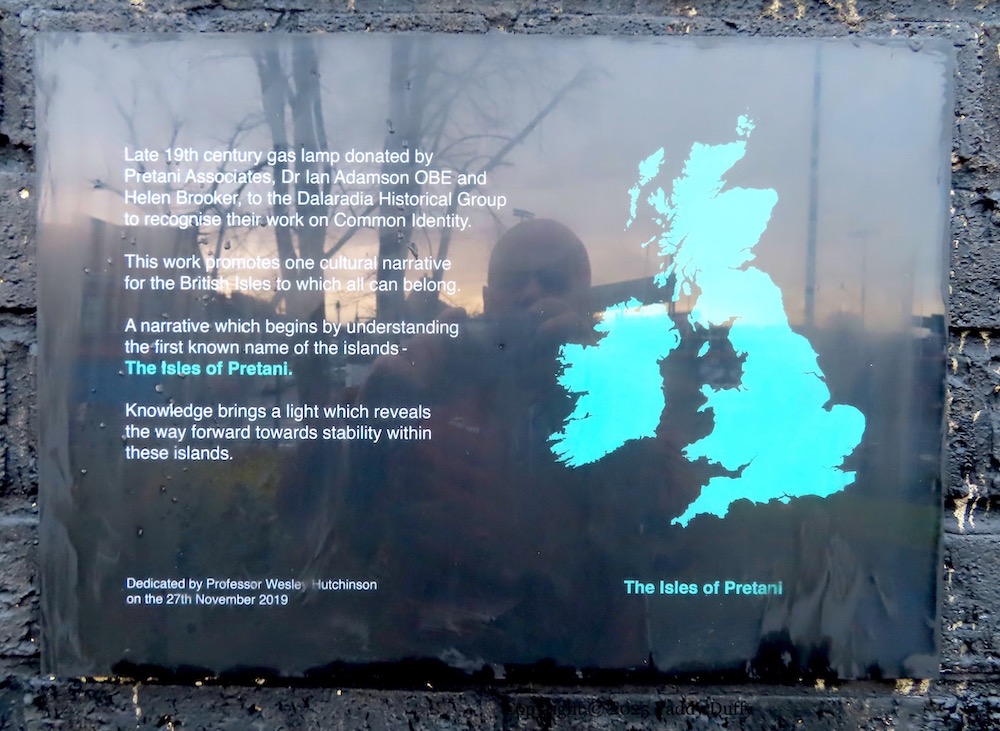
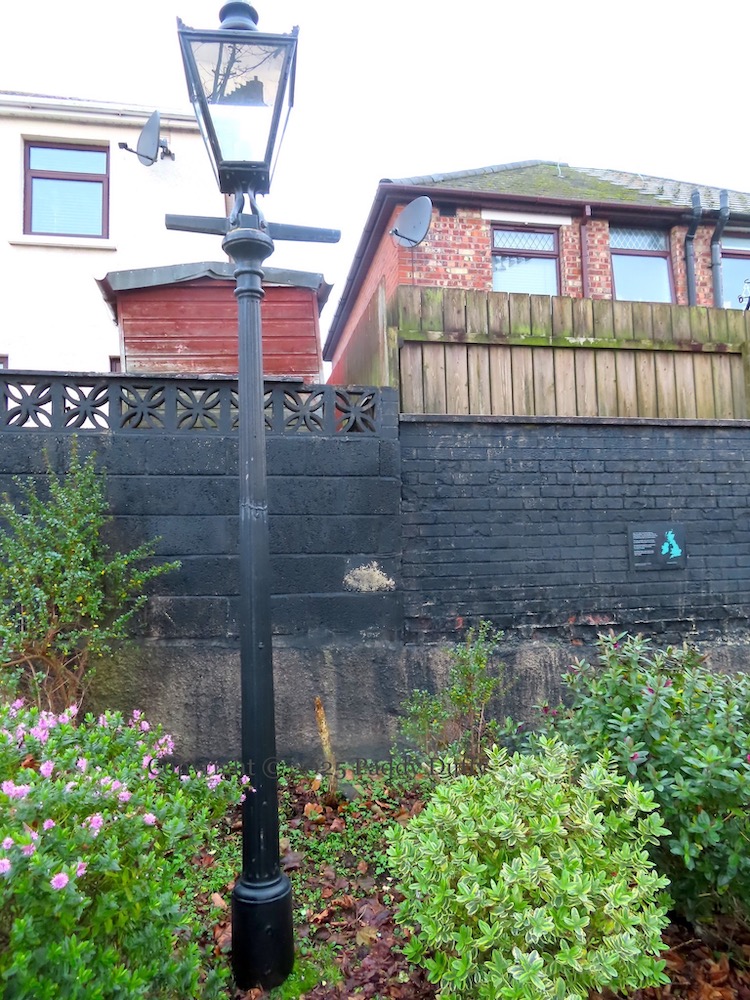
“Late 19th century gas lamp donated by Pretani Associates, Dr Ian Adamson OBE and Helen Brooker, to the Dalaradia Historical Group to recognise their work on Common Identity. This work promotes one cultural narrative for the British Isles to which all can belong. A narrative which begins by understand the first known name of the islands – The Isles of Pretani. Knowledge brings a light which reveals the way forward towards stability within these islands. Dedicated by Professor Wesley Hutchinson on the 27th November 2019.”
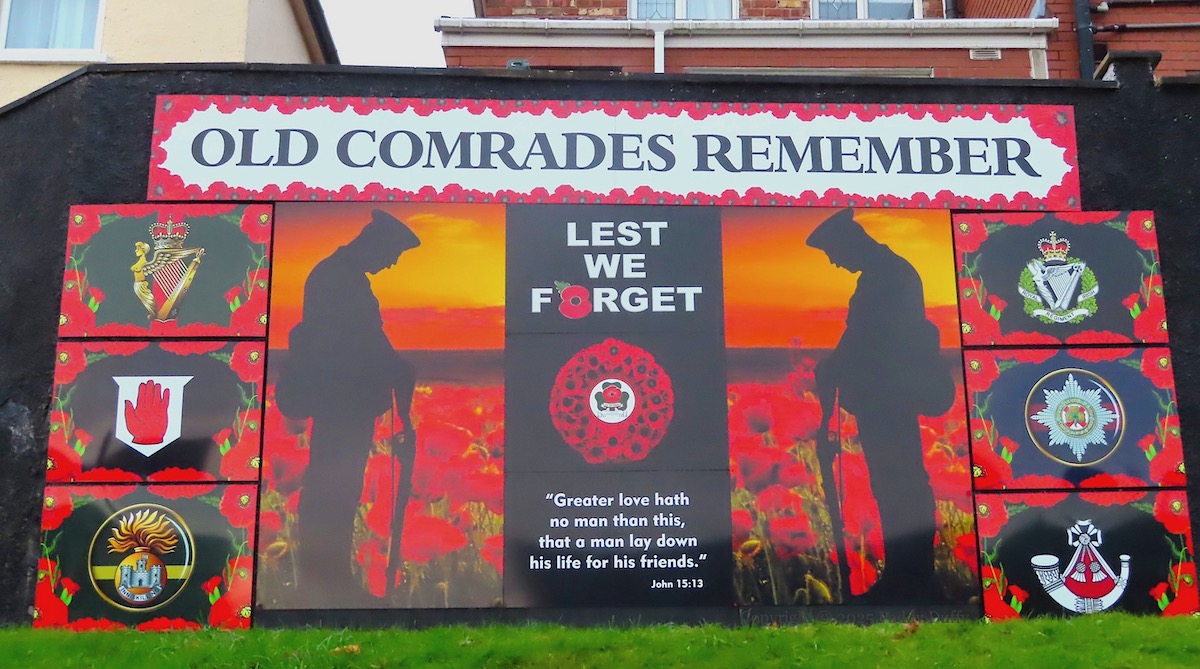
This entry updates the images seen in November’s Lest We Forget, with the addition of six military insignia to either side of the ‘Old Comrades’ board that was added just after Remembrance Sunday.
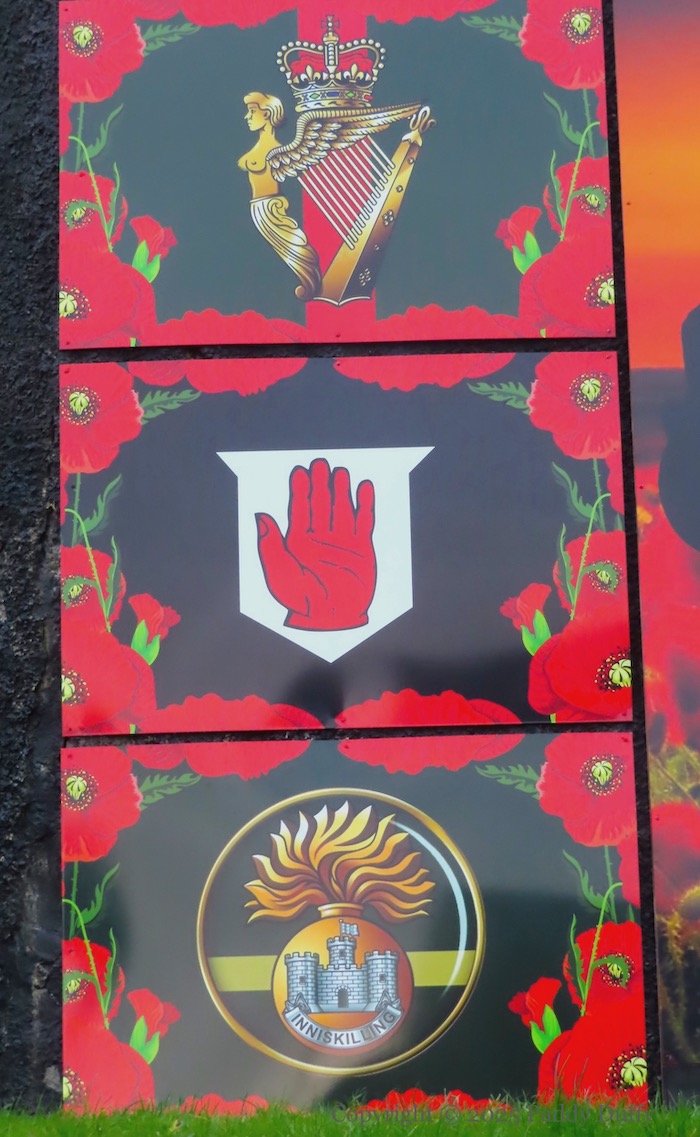
On the left (top to bottom): Royal Irish Rifles (later the Royal Ulster Rifles), 36th (Ulster) Division, Royal Inniskilling Fusiliers; on the right: Royal Irish Regiment, Order Of St Patrick, British Light Infantry.
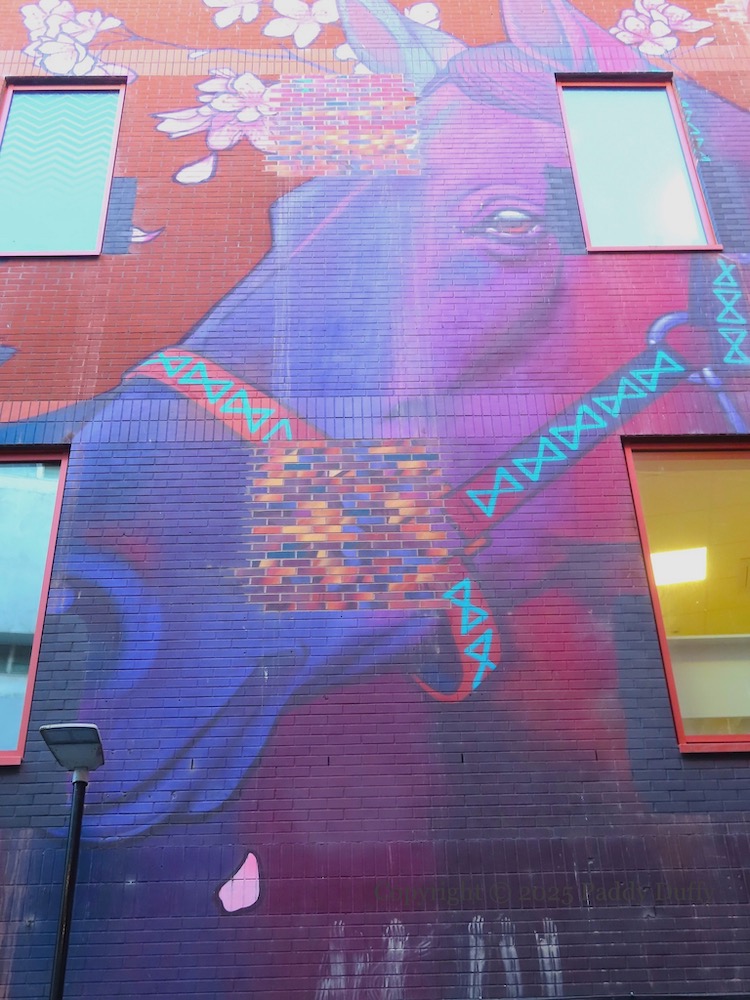
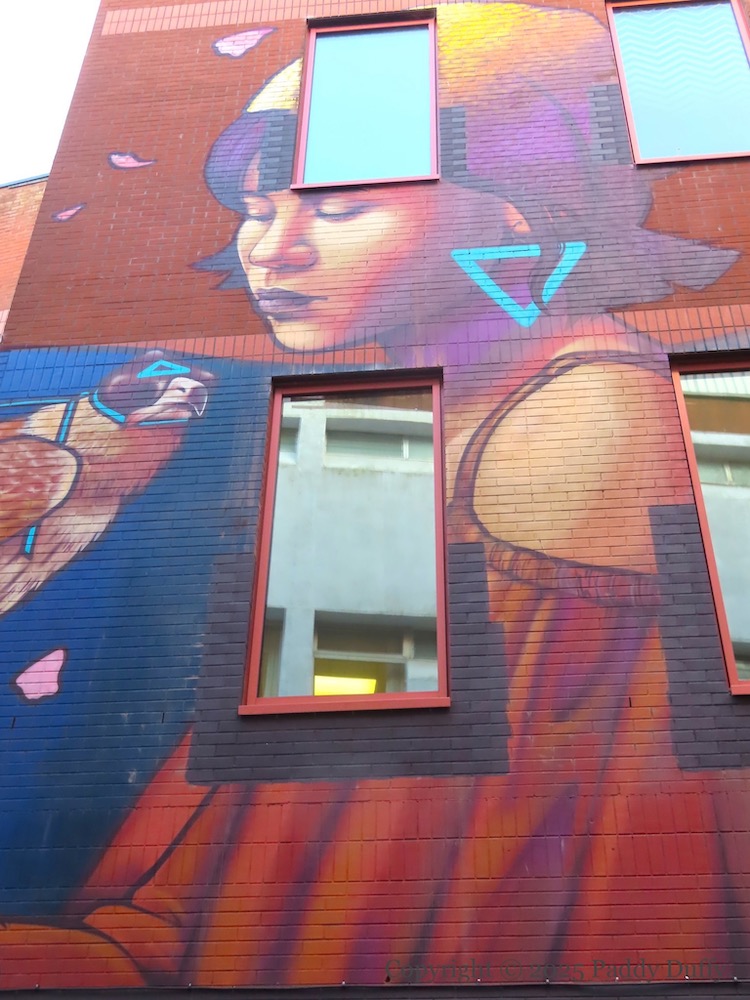
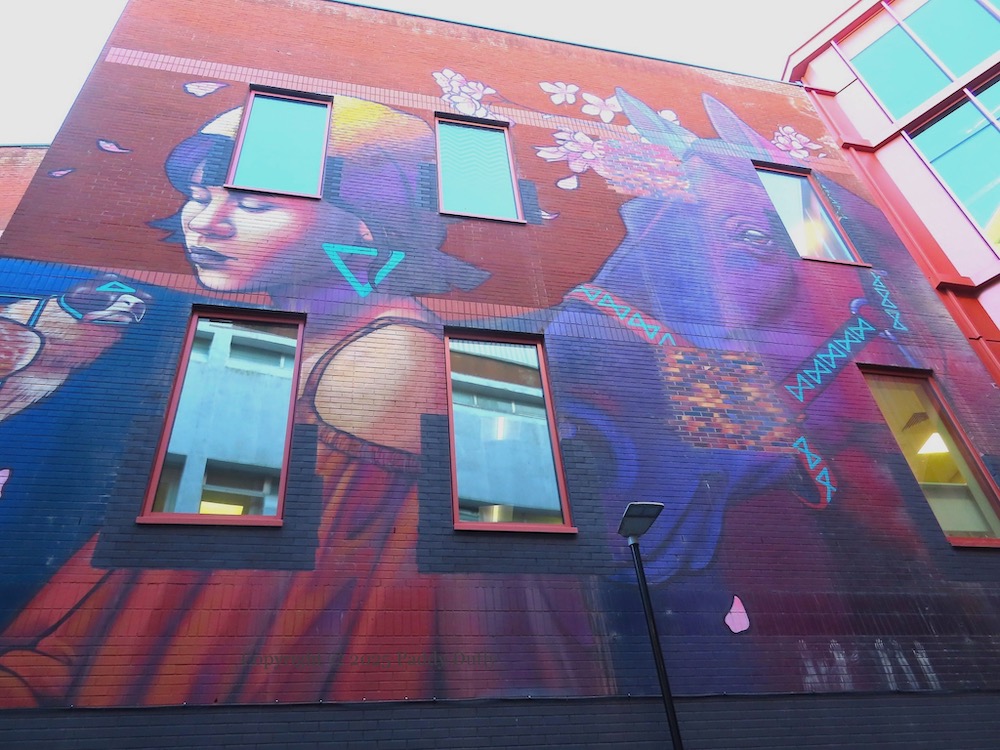
Work to the windows has been undertaken since this art was originally painted (in 2023) by Friz (web) and Gerry Norman (ig); two windows have been bricked up with multi-coloured bricks (best seen in the image immediately below), while others have been extended and narrowed, resulting in patches of black bricks (see the third and fourth images).
The piece is inspired by the seventeenth-century Belfast Castle. Castle Arcade is so-called because it is the site the original castle of Belfast, built by the Normans in the late 12th century and then rebuilt by Arthur Chichester in 1611. Chichester’s castle had “spacious gardens which extended from the river along to Cromac Woods and near Stranmillis” with “orchards, bowling greens and cherry gardens … fish ponds,” for “hunting, hawking, and other sports”. It was destroyed by fire in 1708, after which the area became commercialised as a market (ArchiSeek | Mary Lowry | BBC | Belfast Entries).
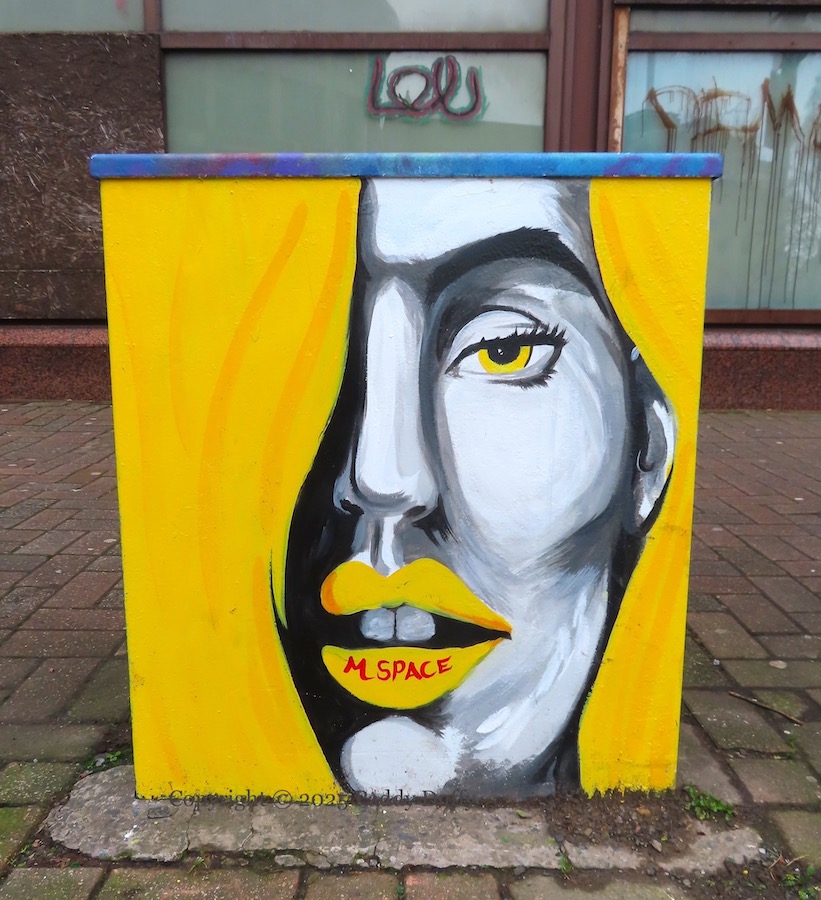
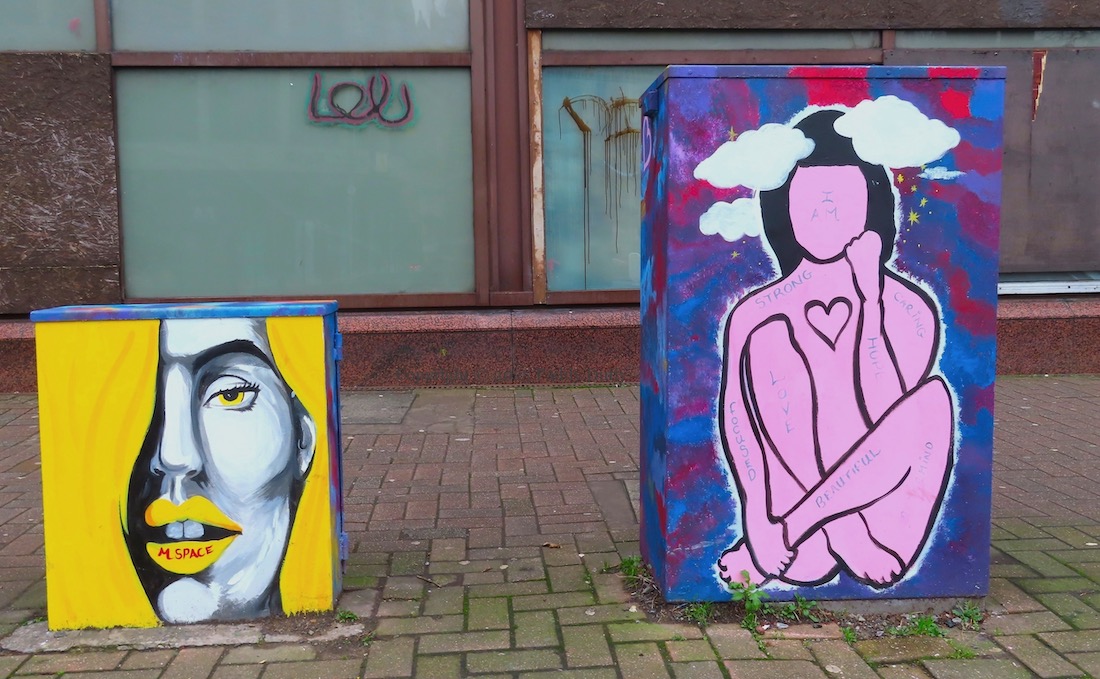
“I am … strong, focused, love, hope, caring, beautiful, body & mind.” M-Space is a project from Springboard Opportunities (web) providing intensive mental-health services for 115 young people.
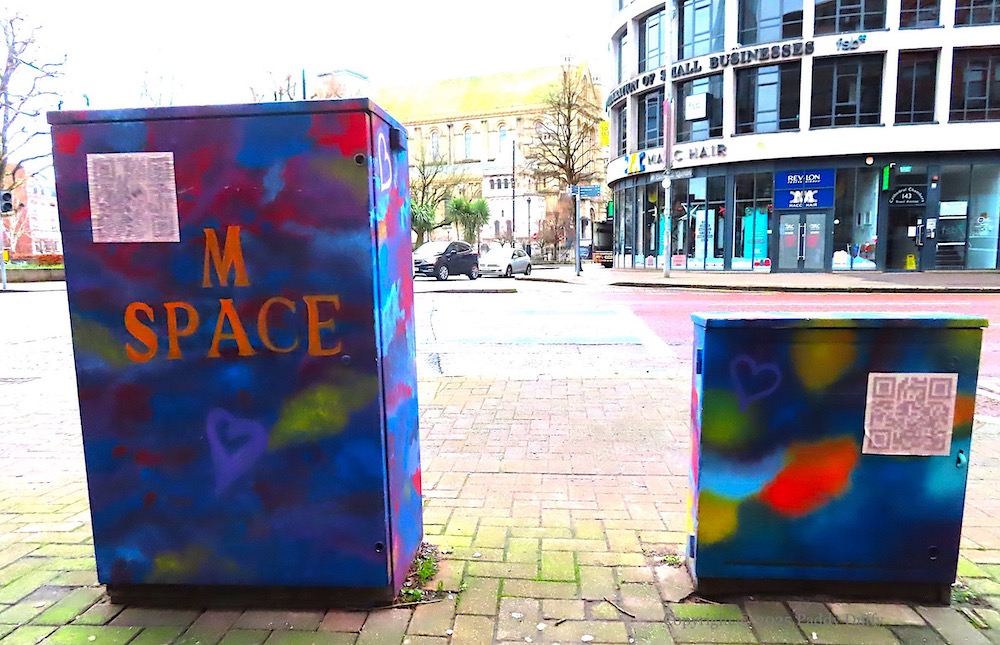
This pair of utility boxes is on Royal Avenue, Belfast city centre. The backgrounds on the rear were perhaps painted during Culture Night.
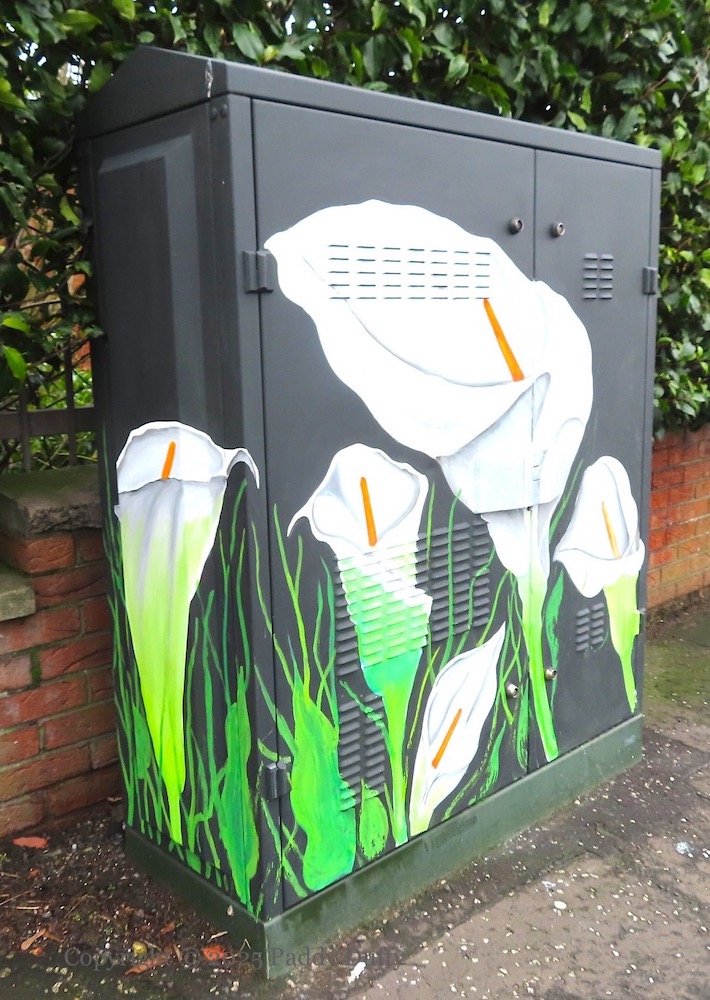
These Easter lilies are on a junction box on the Springfield Road at New Barnsley Park, west Belfast, and across the street from the boxes seen in Bóthar Chluanaí and Gaırdín Na hÉıreann.
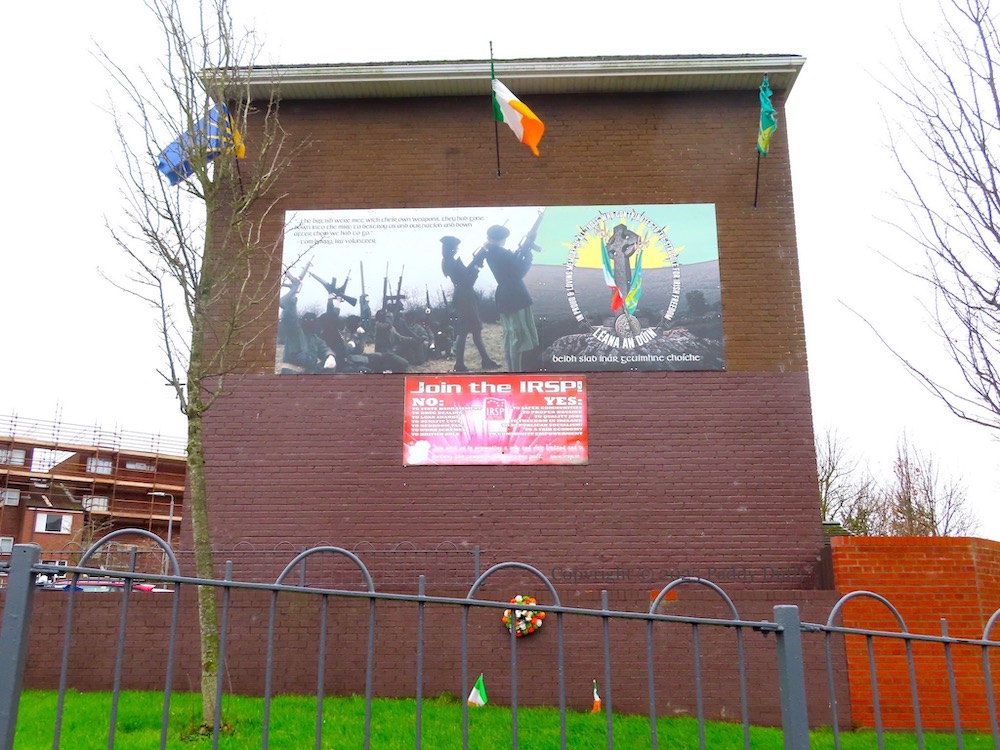
“[They said I was ruthless, daring, savage, blood thirsty, even heartless. The clergy called me and my comrades murderers; but] The British were met with their own weapons. They had gone down into the mire to destroy us and our nation and down after them we had to go. – Tom Barry, IRA volunteer.”
Tom Barry served in the British Army as a teenager and saw action in Mesopotamia and Egypt. The military training served him well when he joined the IRA and soon became commander of the West Cork brigade’s flying column. The quotation above offer a justification for the guerrilla tactics which helped drive the British to the negotiating table. In the Civil War, Barry was on the anti-Treaty side. (WP)
“In proud and loving memory of all those who contributed to the struggle for Irish freedom. Léana An Dúın. Beıdh sıad ınár gcuımhne choíche.”
The red board below is an old (2019) IRSP board, reading, “Join the IRSP. No to state harassment, to drug dealing, to loan sharks, to benefit cuts, to bedroom tax, to work schemes, to British rule. Yes to safer communities, to proper housing, to quality jobs, to freedom in Ireland, to republican socialism!, to a fair economy, to community empowerment. Join with us in promoting a new and fair Ireland and in building the campaign for a border poll. www.irsp.ie“
“NFC – representing our community with pride”. Newington Football Club [Fb], also known as “the swans”, is an NIFL team from north Belfast. The club was “est[ablished] 1979” as Jubilee Olympic FC, and was later Newington Youth Club, before becoming Newington FC c. 2018. A full list of its honours can be found on the club’s WP page.
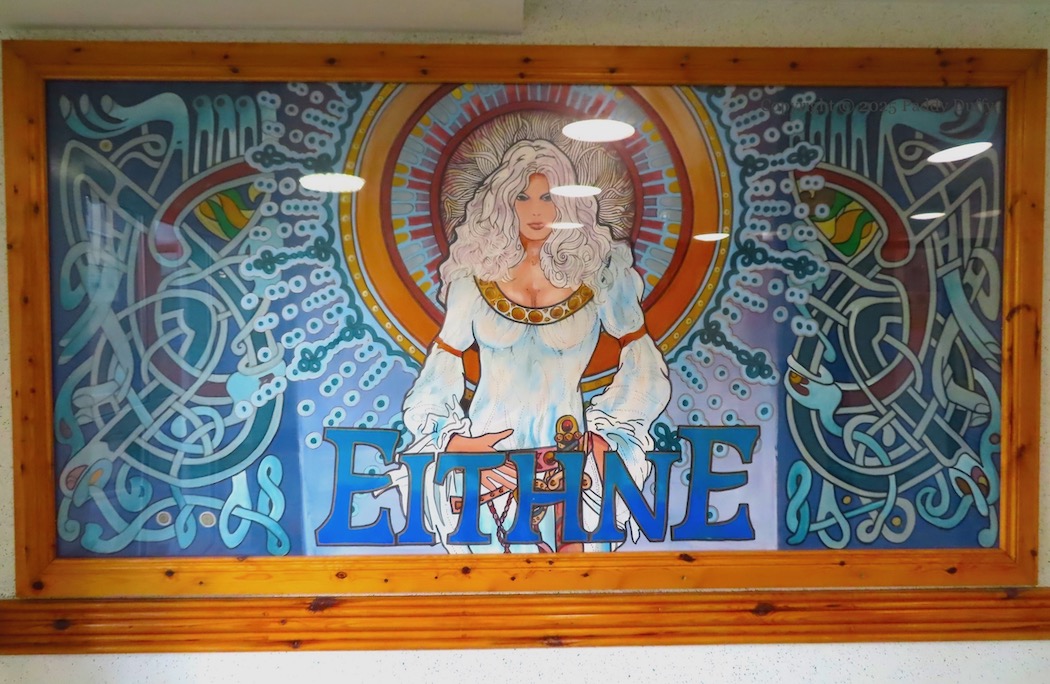
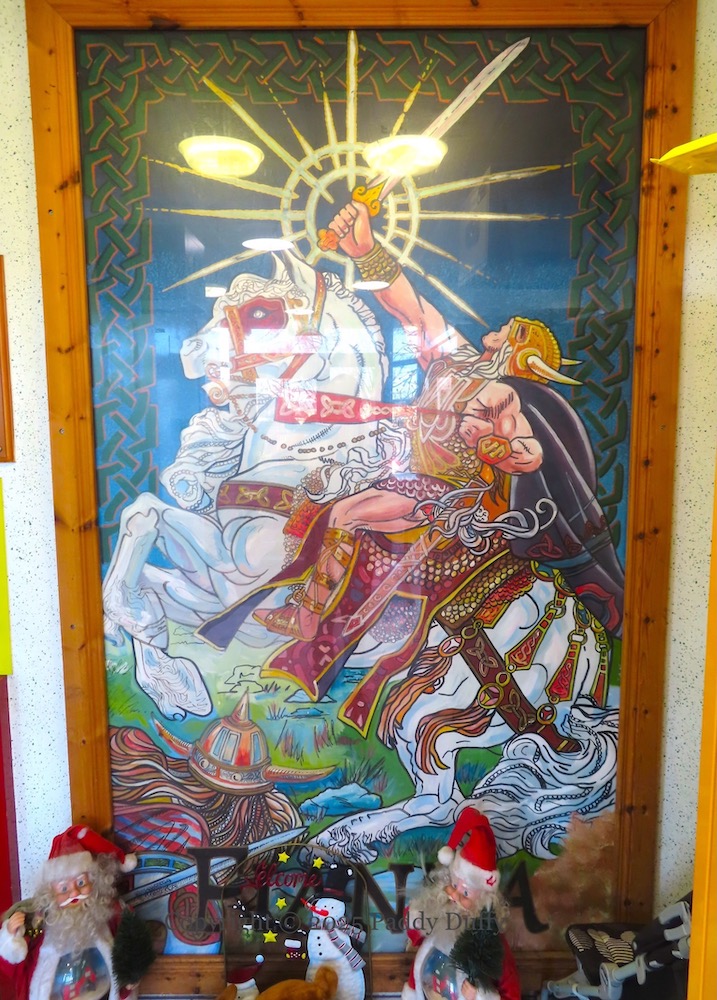
The seven “houses” (tower blocks) in the New Lodge are named after figures from Irish mythology: Méabh, Eıthne, Cú Chulaınn, Fınn, Na Fıanna, Gráınne, and Oısín. In the foyer of each house there is a painting of the eponymous hero, painted by Danny D and Marty L in imitation of Jim Fitzpatrick (as is explicitly acknowledged in the Gráınne painting, below): Eıthne is represented by Fitzpatrick’s Palu The Cat Goddess; Na Fıanna are represented by Lugh; Gráınne is represented by Fann. The bulls are by Finbarr O’Connor; Cú Chulaınn is inspired by the Oliver Sheppard statue in the GPO.
For the old names of the buildings, and the pairs of hunger-strikers painted on the tops of six of the seven towers, see New Lodge Flats.
“Fıonn Mac Cumhaıll gained fable knowledge after sucking his thumb which he burned while cooking the magical Salmon of Knowledge. He followed in his father Cumhall’s footsteps becoming captain of the Fıanna. His death at the Battle of Gabhra marked the beginning of the decline in the might of the Fıanna.”
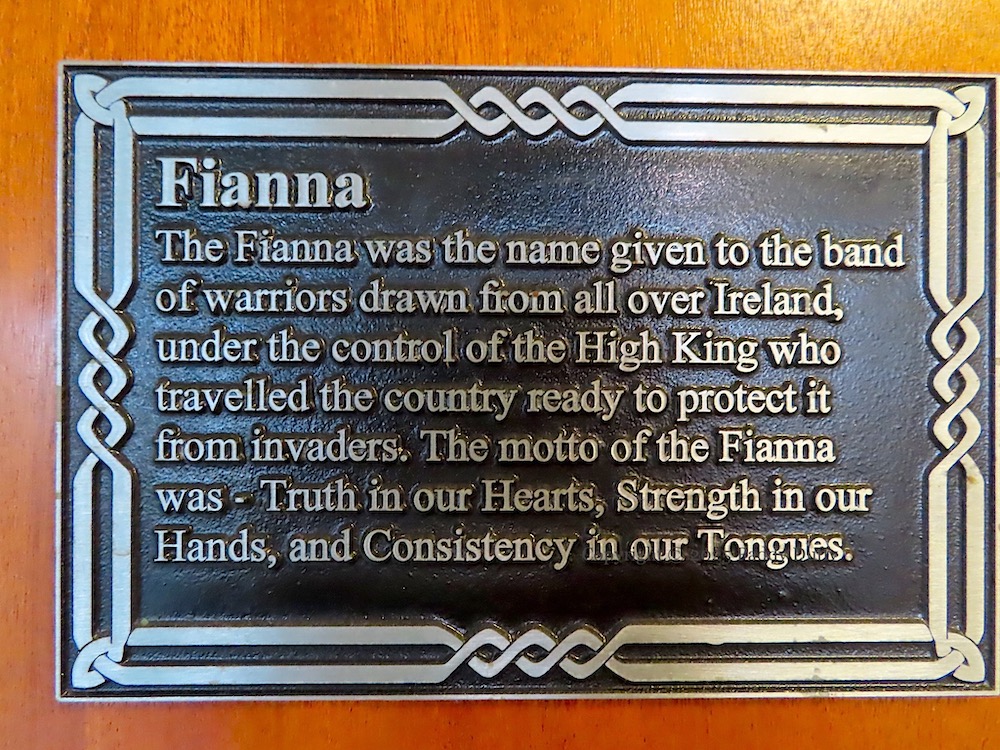
“The Fıanna was the name given to the band of warriors drawn from all over Ireland, under the control of the High King who travelled the country ready to protect it from invaders. The motto of the Fıanna was – Truth in our Hearts, Strength in our Hands, and Consistency in our Tongues.”
“Gráınne, daughter of Cormac Mac Art, High King of Ireland, betrothed to a grey-haired Fıonn Mac Cumhaıll but ran away with the handsome young Dıarmuıd before the marriage took place. She returned to marry Fıonn after Dıarmuıd’s death.”
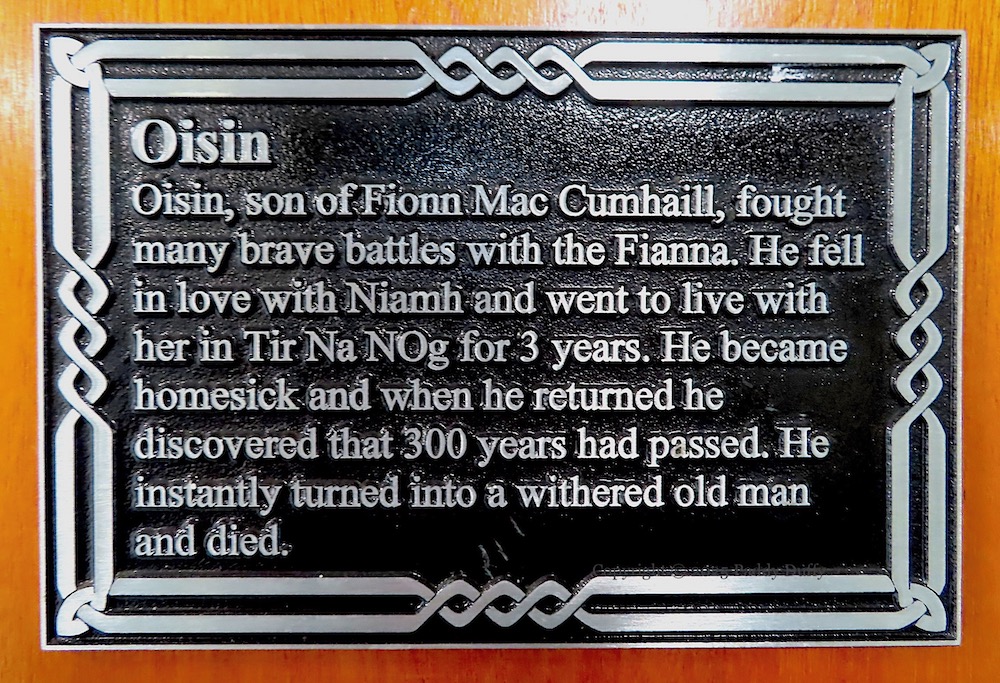
“Oısín, son of Fıonn Mac Cumhaıll, fought many brave battles with the Fianna. He fell in love with Nıamh and went to live with her in Tír Na nÓg for 3 years. He became homesick and when he returned he discovered that 300 years had passed. He instantly turned in a withered old man and died.”

















 Paddy Duffy Collection