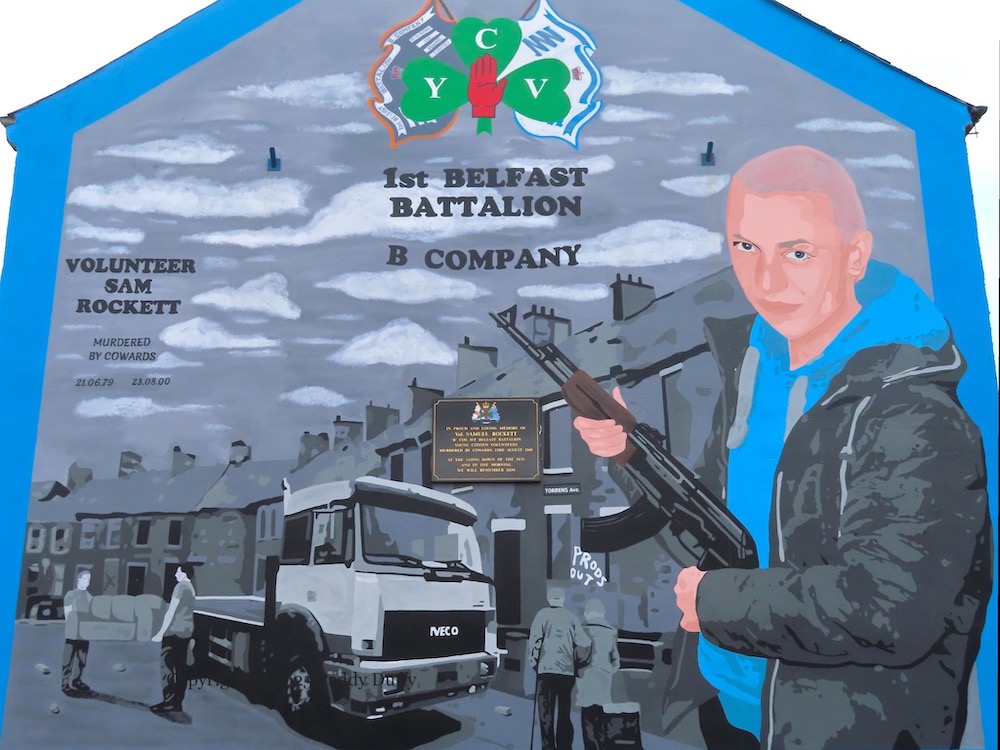
A few changes have been made to the Sam Rockett mural (compared to the 2023 original): Rockett’s hair has been lightened, the “Prods out” graffiti on the row of burned-out houses has been brightened, a simple “B Company” has replaced the smaller “1st Belfast Brigade, B Company”, and “Murdered by cowards 21.06.79 – 23.08.00” has been added on the left.
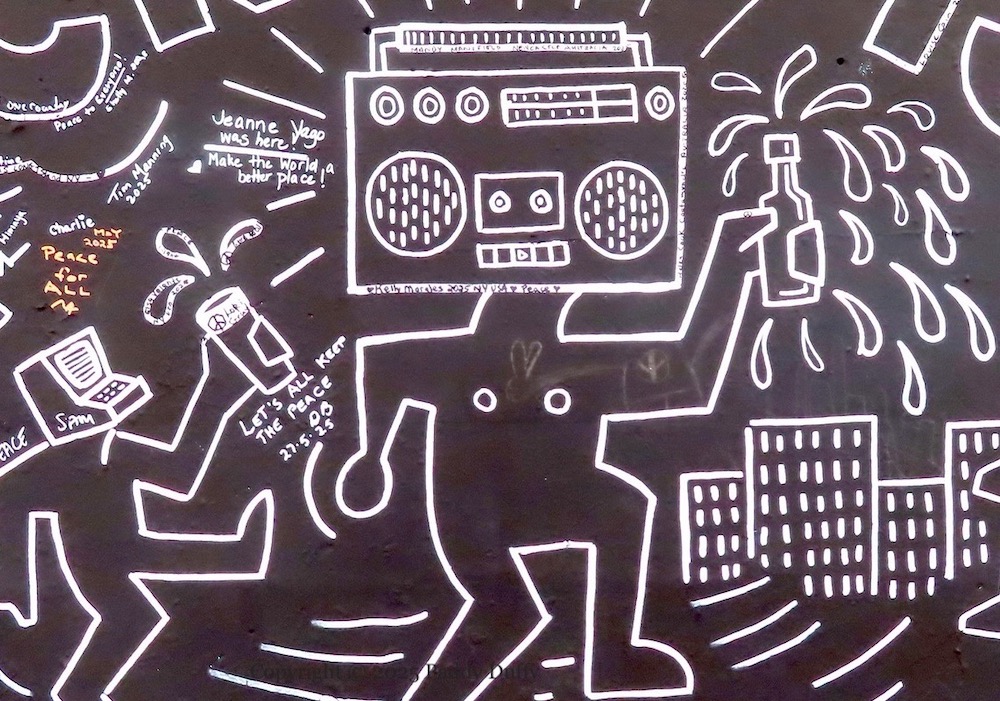
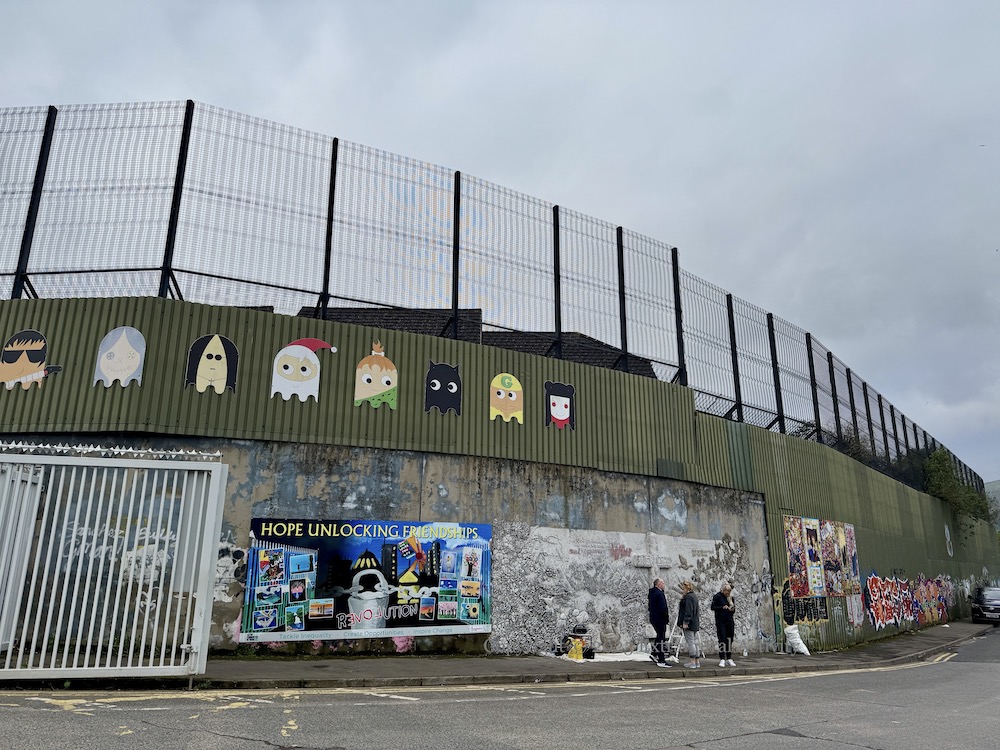
Boombox-head, computer-head, and light-bulb-head are having a good time in this new piece by Leo Boyd (web) on the Cupar Way war-wall (or: “peace” line), riffing on a vintage Keith Haring piece, 1986’s Crack Is Wack.
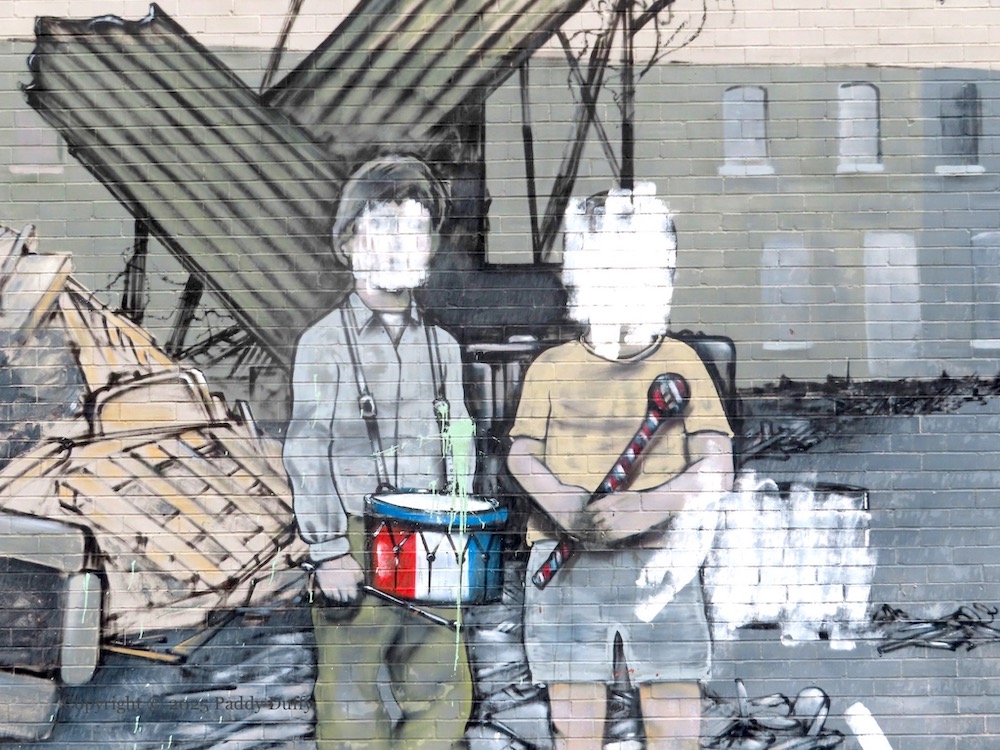
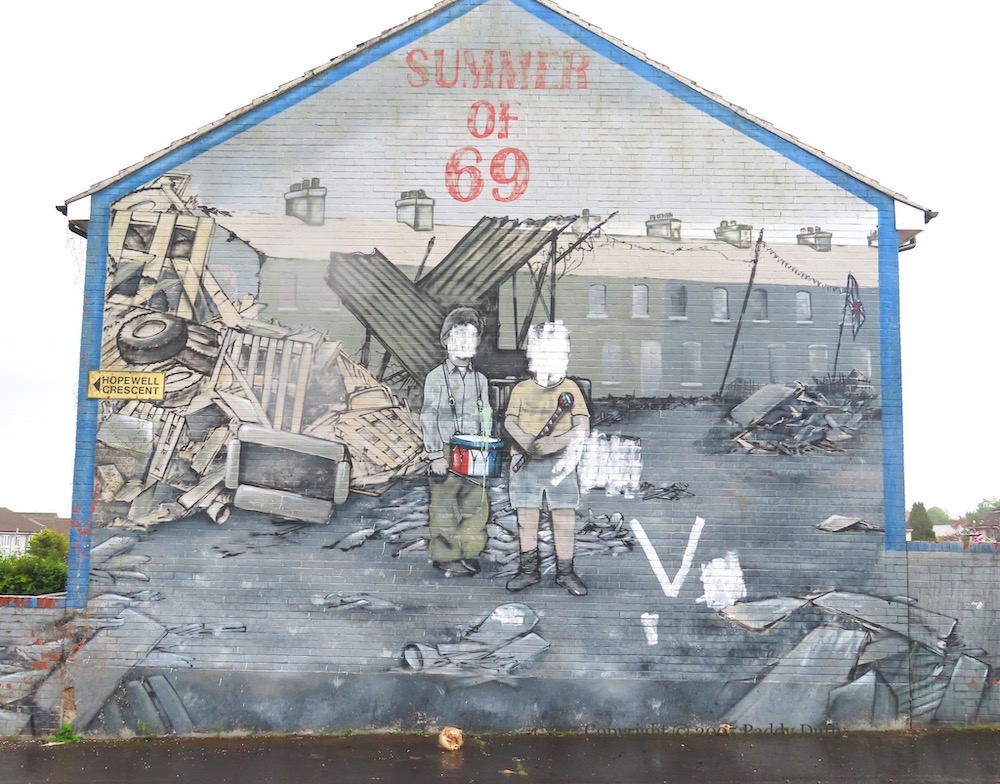
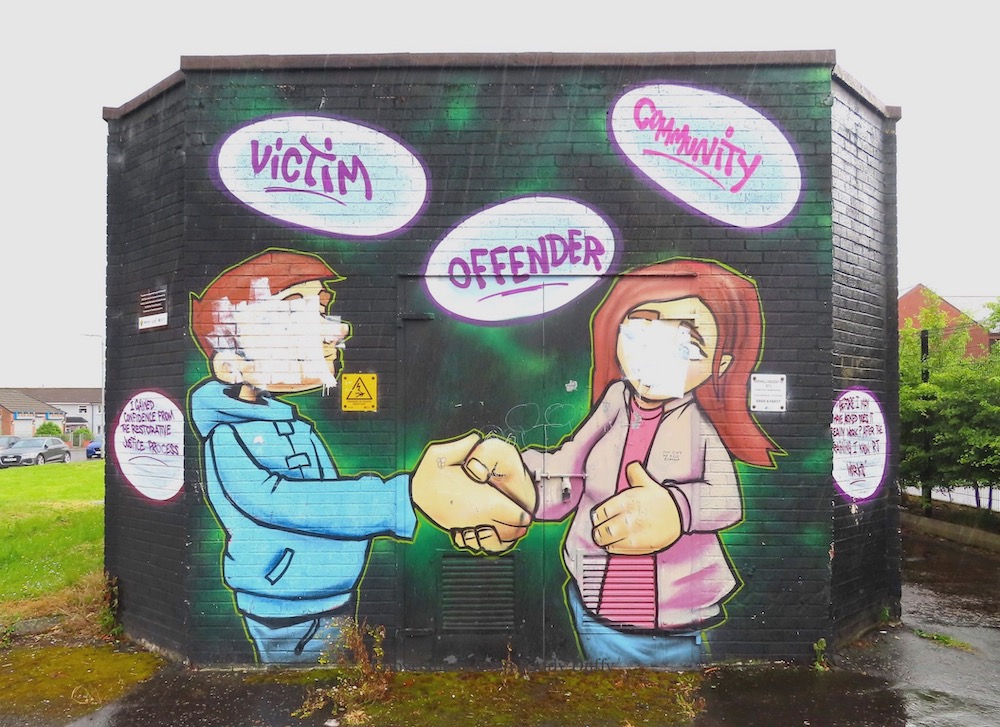
The faces in two wall-paintings in the lower Shankill estate have been painted out. It is not known if there is a specific point to this or whether it is simple vandalism.
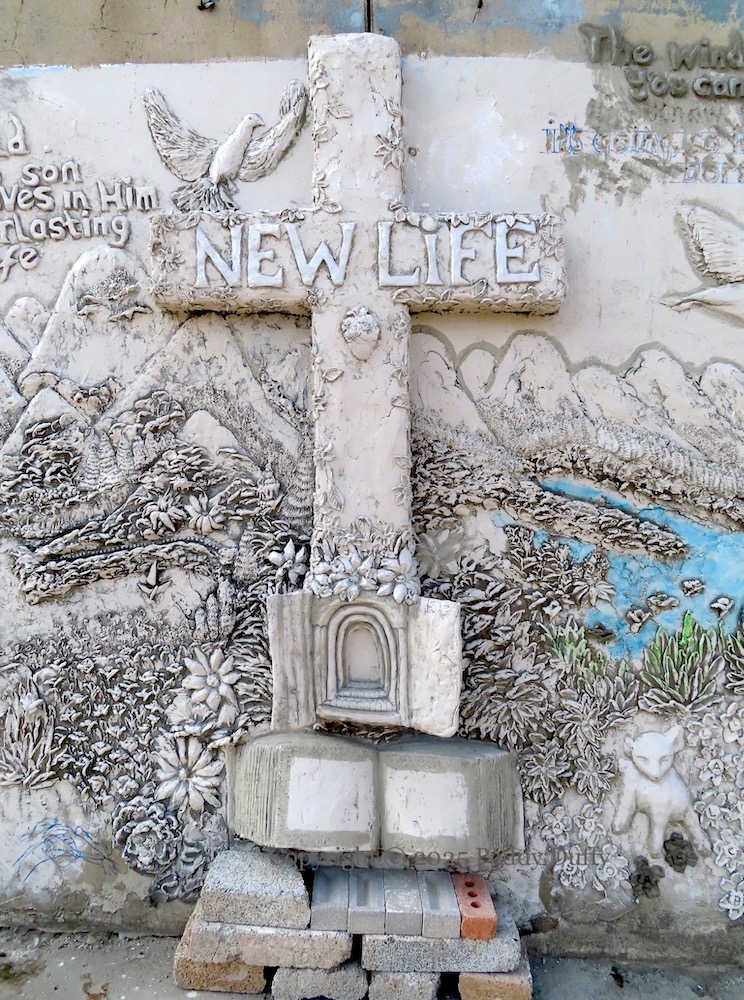
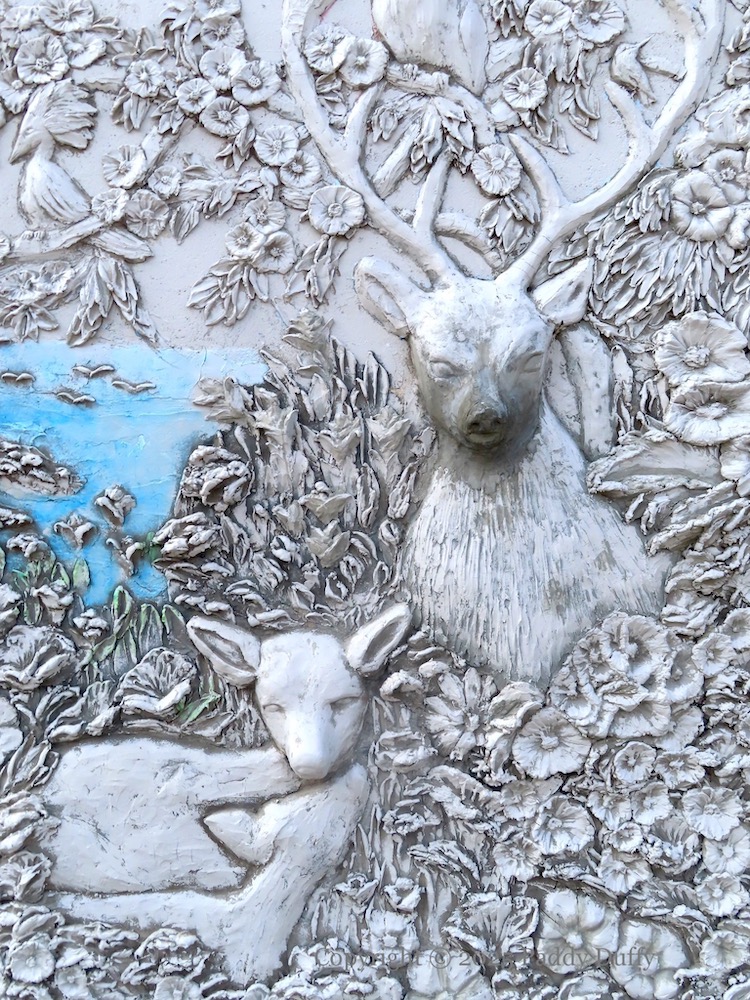
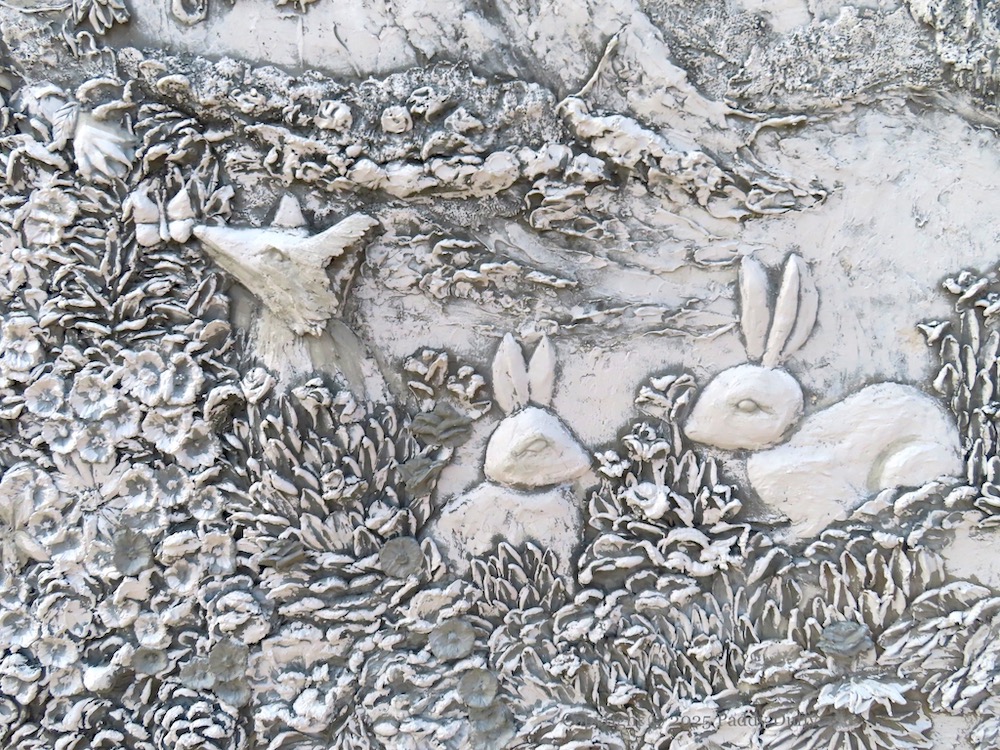
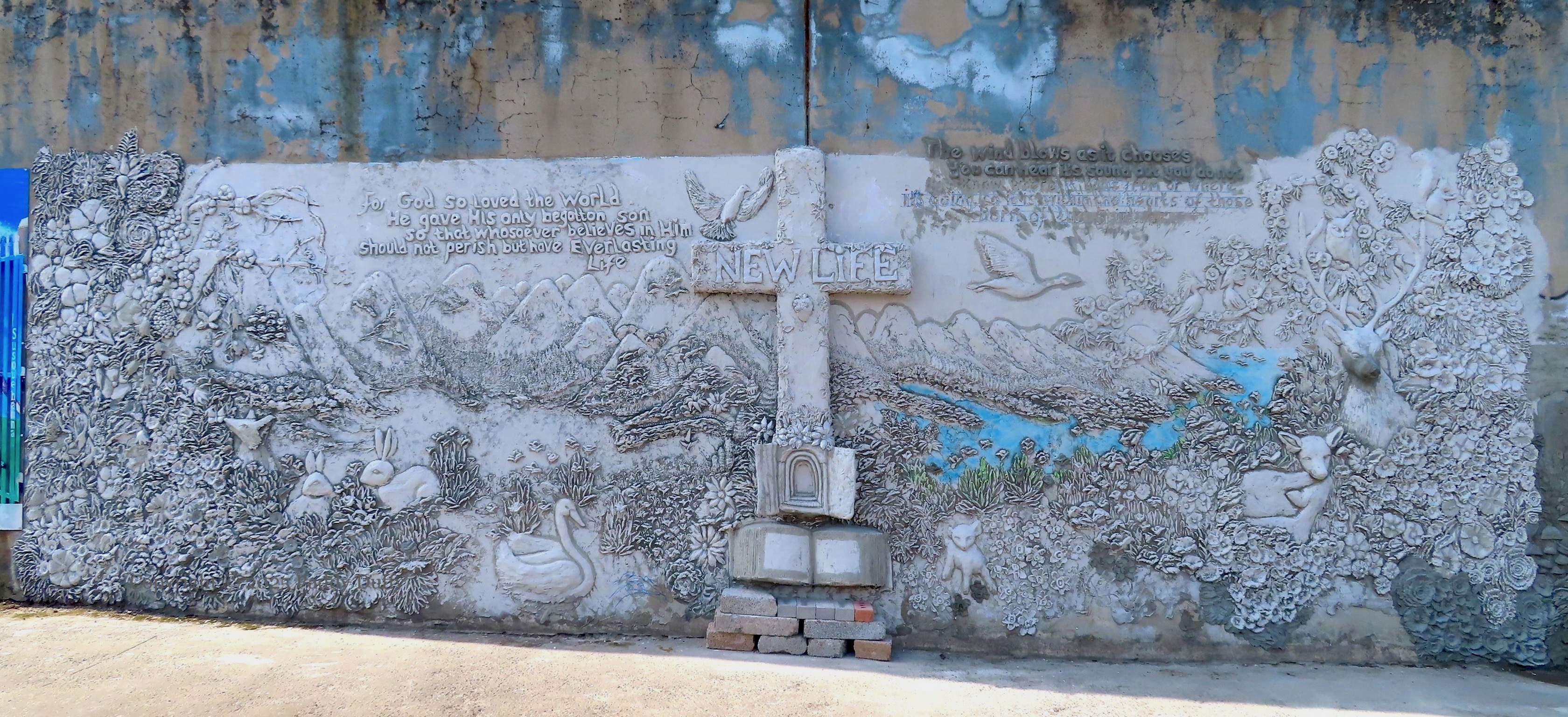
These are images of a new concrete relief-work in progress on the Cupar Way “peace” line (war wall) at the North Howard Street gates. The creator is Debbie Hutchings, a member of the New Life City church (Fb) (Belfast Media); the piece is on top of the ‘repent’ version of the New Life mural, and it contains a scriptural quote John 3:16: “For God so loved the world He gave His only begotton [begotten] son so that whosoever believes in Him should not perish but have everlasting life.”
There is video of Hutchings at work in this Irish News video on Fb and at the BelTel. Work began at the beginning of April and the piece is perhaps still unfinished – see the incomplete text of John 3:8 in the third image: “The wind blows as it chooses, you can hear it’s [its] sound but you do not know where it came from or where it is going; so it is with the hearts of those born of the spirit”.
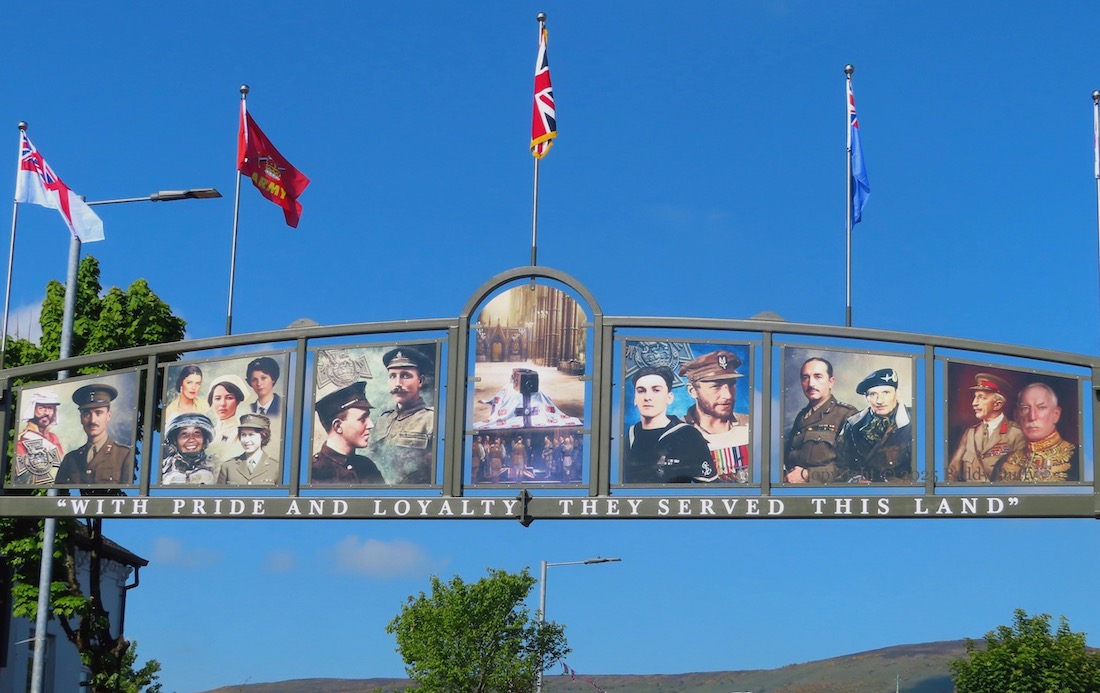
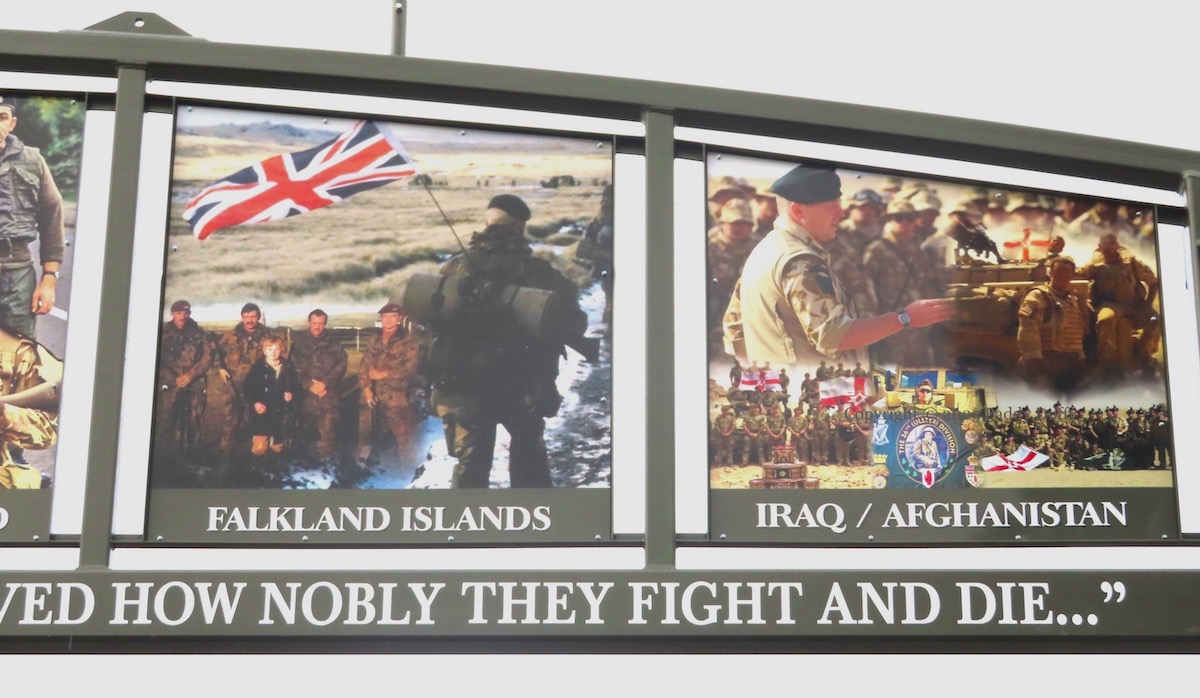
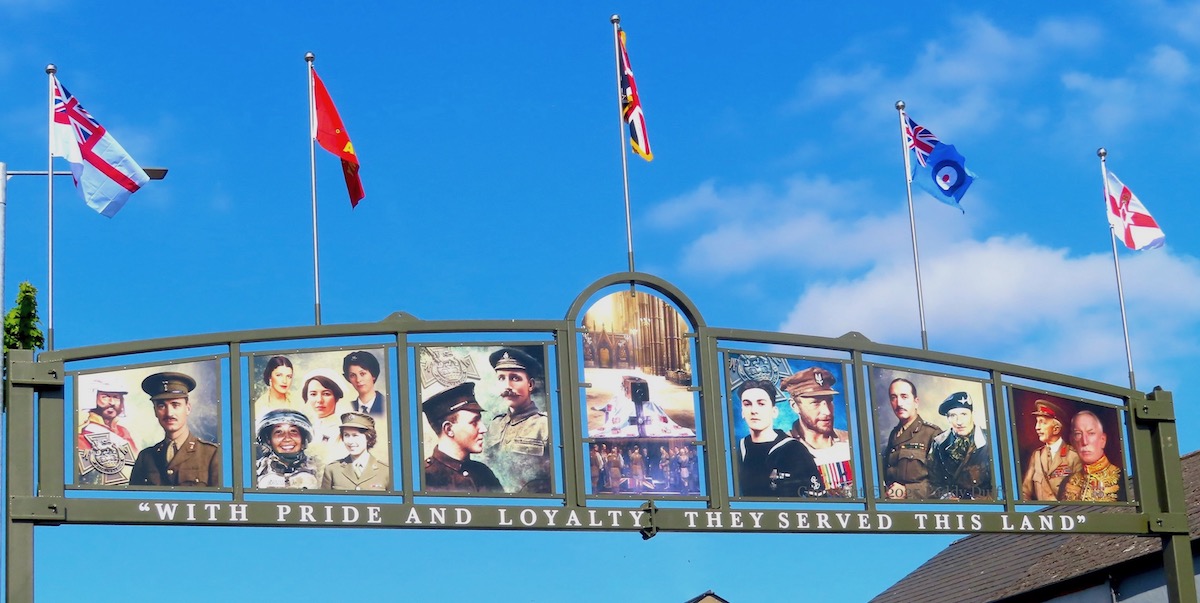
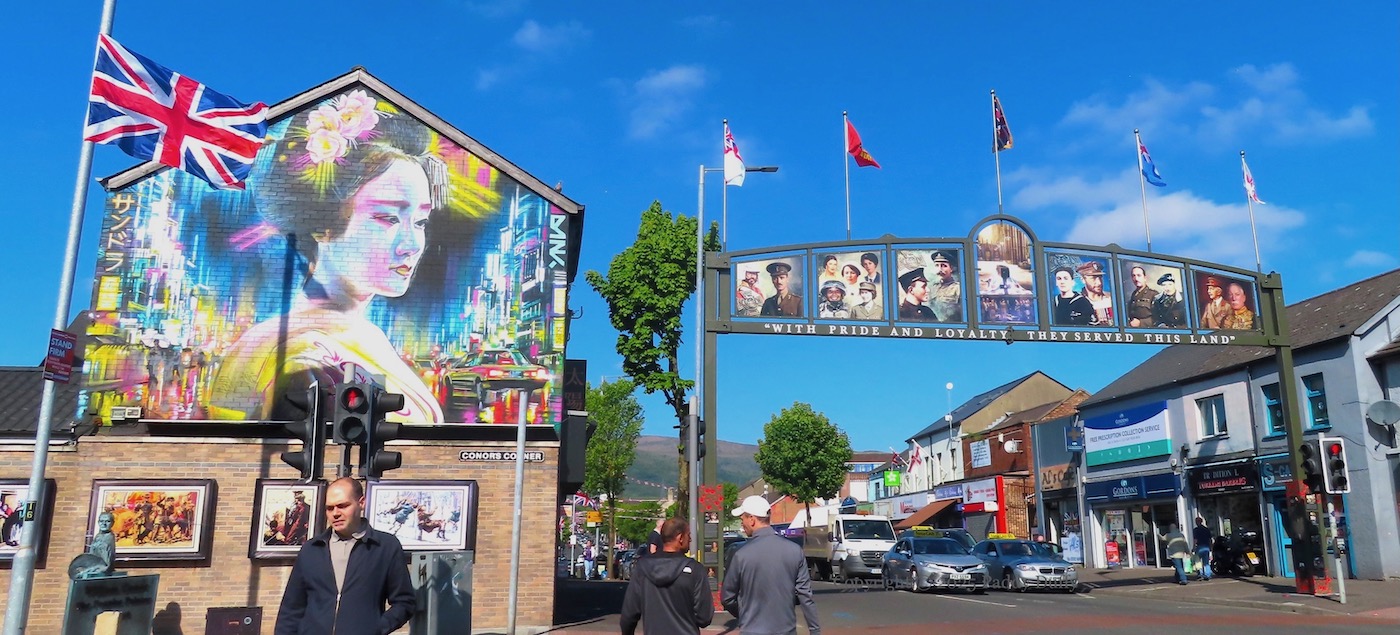
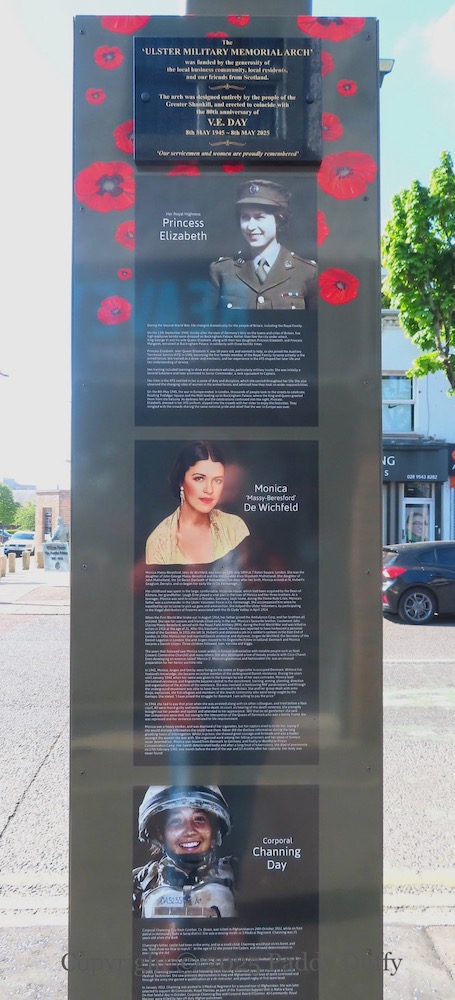
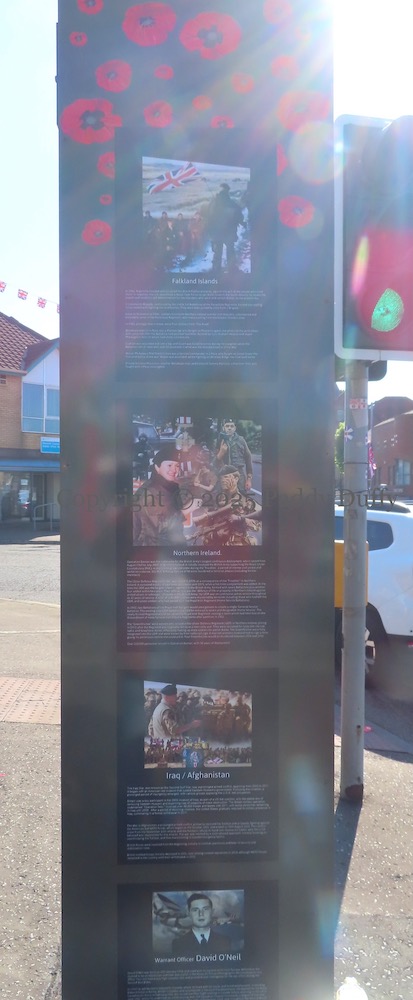
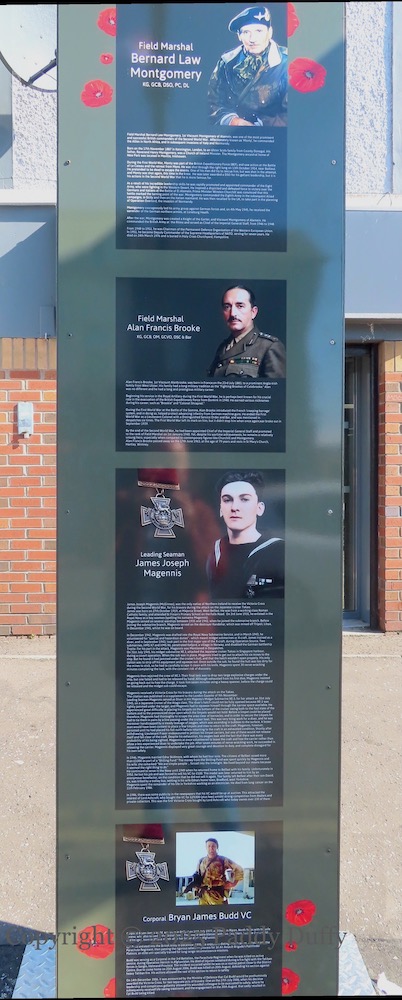
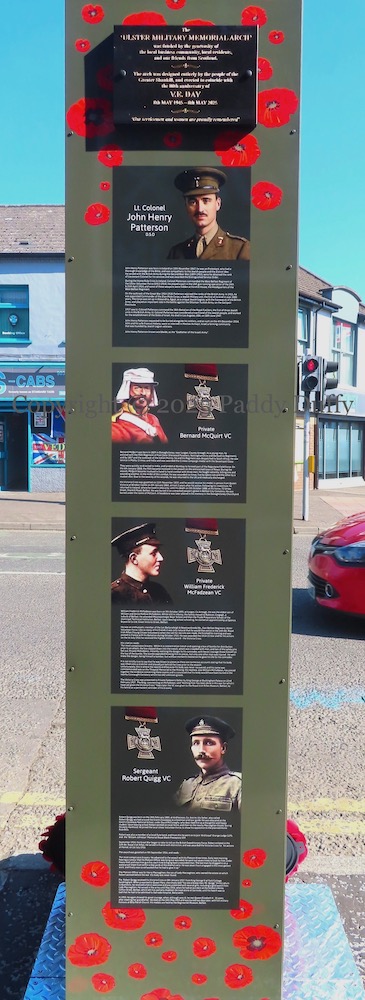
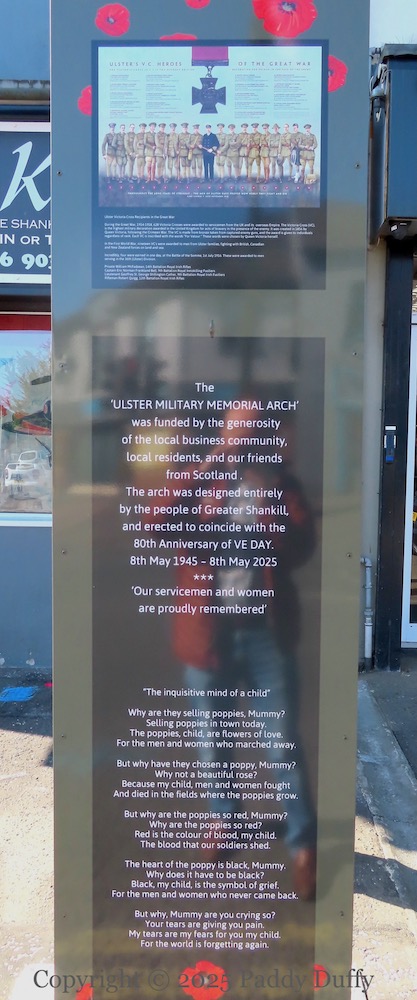
“The ‘Ulster Military Memorial Arch’ was funded by the generosity of the local business community, local residents, and our friends from Scotland. The arch was designed entirely by the people of the Greater Shankill, and erected to coincide with the 80th anniversary of VE Day 8th May 1945 – 8th May 2025. Our servicemen and women are proudly remembered.” For images of the VE Day launch, see the BelTel.
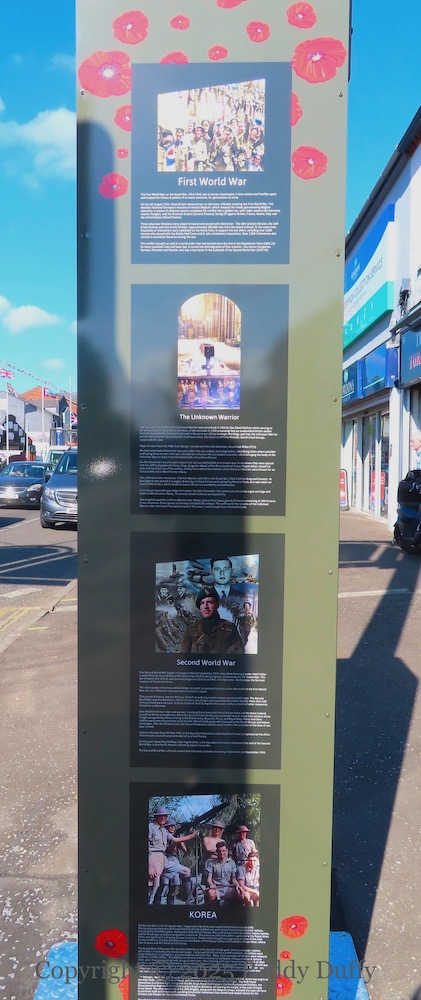
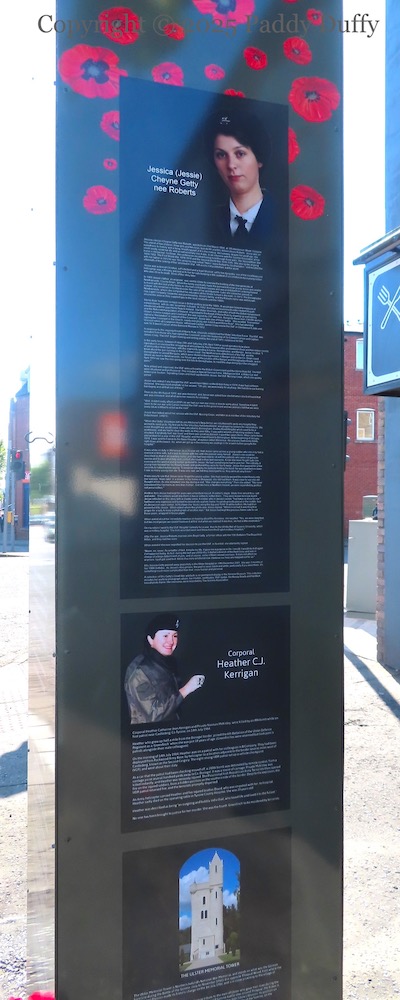
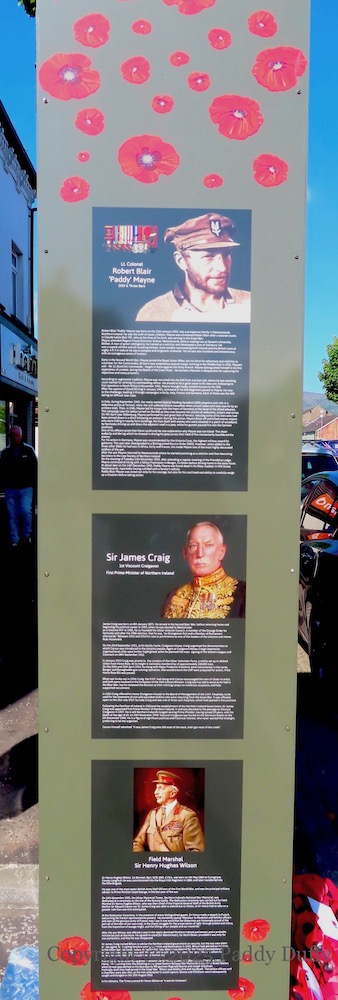
Pictured on Peter’s Hill side of the arch (bearing the quote “With pride and loyalty they served this land”) are (left to right) … Private Bernard McQuirt (a VC winner in 1858 during the Indian Rebellion) and Lt Colonel John Henry Patterson Monica De Wichfeld (raised in Fermanagh and Danish resistance member), Jessie Roberts (a nurse for the Ulster Volunteers and (in WWI) for the Volunteer Aid Detachment, serving in Birmingham and in Wimereux, France; she gets a very long entry on the info panels (see below), as her biography is not available on-line), a (unidentified) nurse, Corporal Channing Day (a medic killed in Afghanistan, 2012), Princess Elizabeth Private William Frederick McFadzean and Sergeant Robert Quigg the tomb of “the unknown warrior” (central panel) Leading Seaman James Joseph Magennis and Lt Colonel Robert Blair ‘Paddy’ Mayne Field Marshal Alan Francis Brooke and Field Marshal Bernard Law Montgomery Field Marshal Sir Henry Hughes Wilson and Sir James Craig
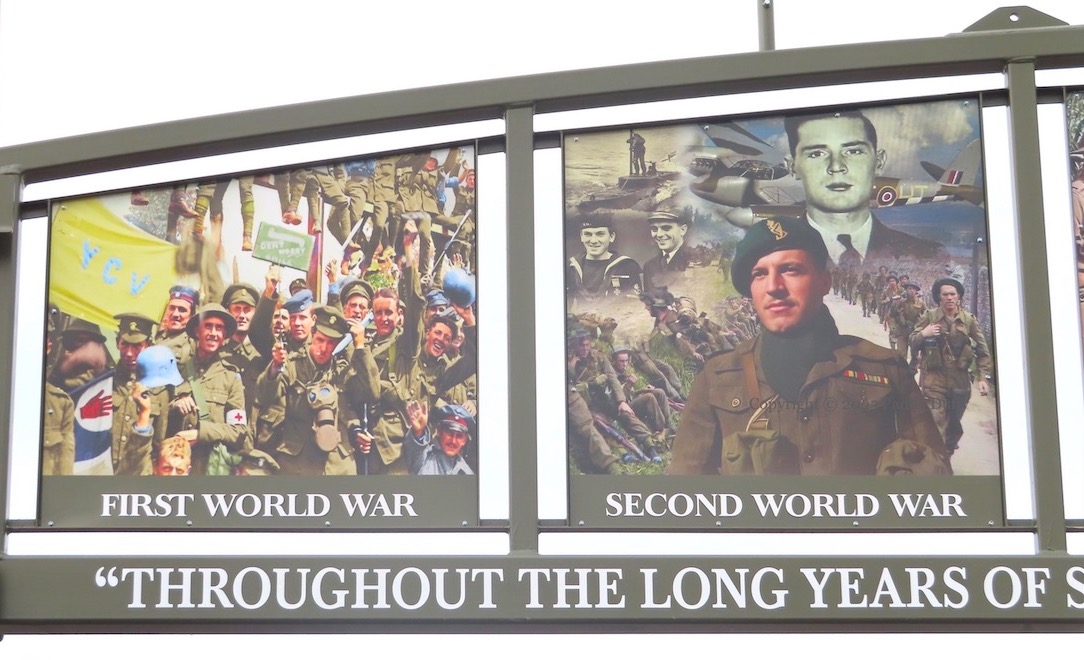
On the other/Shankill side of the arch, bearing the quote “Throughout the long years of struggle … the men and women of Ulster have proved how nobly they fight and die”, the ‘WWII’ panel includes (top right) Warrant Officer David O’Neill, a Canadian Air Force pilot hailing from Ballymena, lost in 1943, and the ‘Northern Ireland’ panel features (left) Corporal Heather CJ Kerrigan, a UDR Greenfinch killed by the IRA in 1984. These two are also profiled in the info panels around the legs of the arch, along with Corporal Bryan James Budd, a 3rd Para soldier killed by friendly fire in Afghanistan, 2006.
Also included is JF Willcocks’s poem Poppies (sometimes called The Inquisitive Mind Of A Child): Why are they selling poppies, Mummy? Selling poppies in town today./The poppies, child, are flowers of love. For the men who marched away./But why have they chosen a poppy, Mummy? Why not a beautiful rose?/Because my child, men fought and died in the fields where the poppies grow./But why are the poppies so red, Mummy? Why are the poppies so red?/Red is the colour of blood, my child. The blood that our soldiers shed./The heart of the poppy is black, Mummy. Why does it have to be black?/Black, my child, is the symbol of grief. For the men who never came back./But why, Mummy are you crying so? Your tears are giving you pain./My tears are my fears for you my child. For the world is forgetting again.”
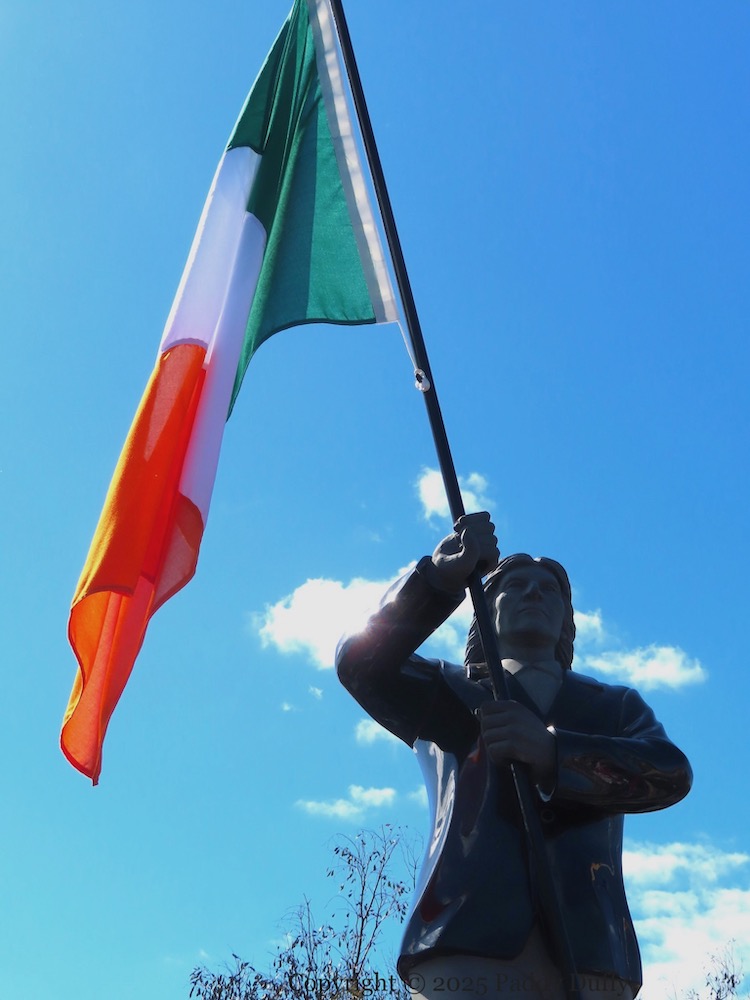
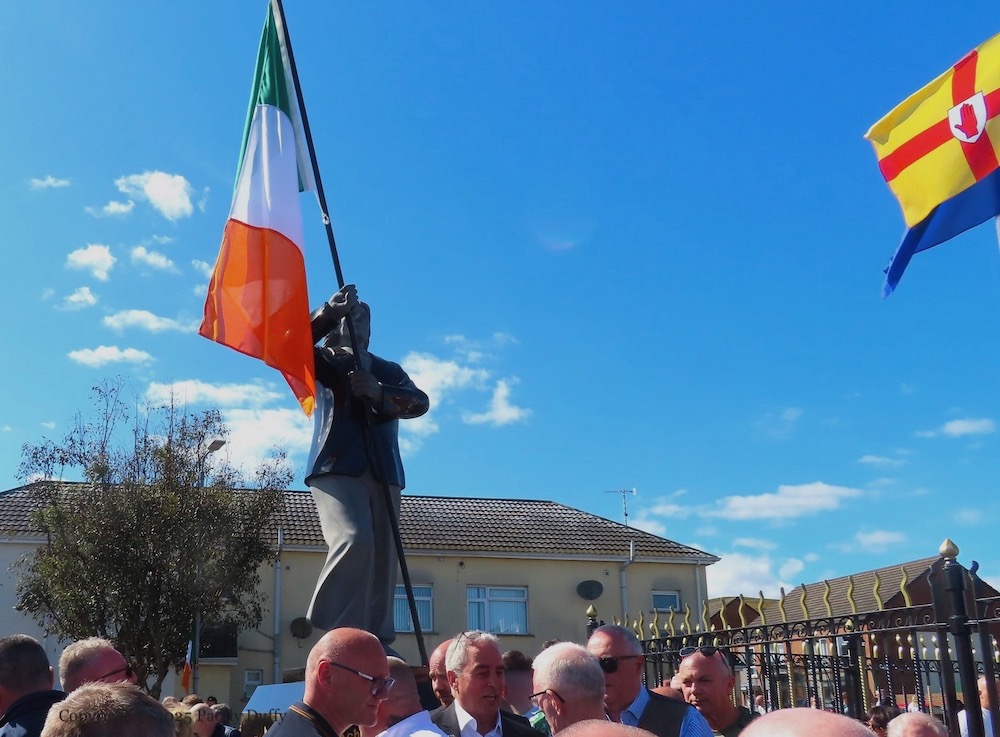
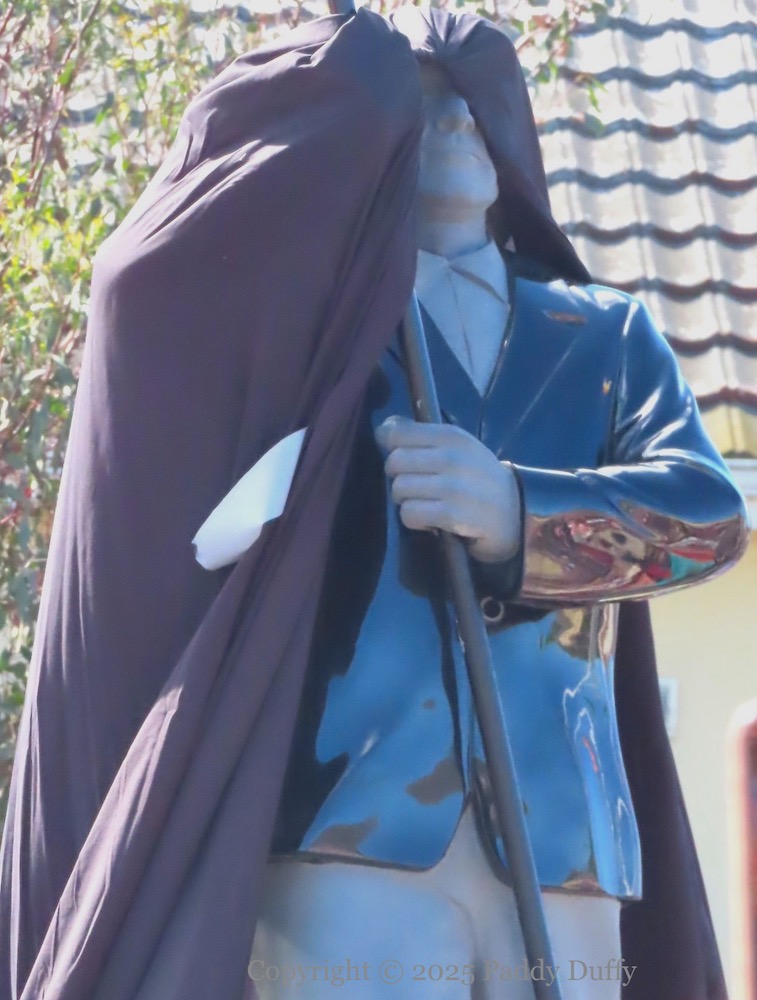
“Óglach Bobby Sands 9th March 1954 – 5th May 1981”. Sands was the first of the ten IRA and INLA prisoners to die in the second hunger strike. For the 44th anniversary of his death, a statue was unveiled in Twinbrook, near the Sands family home and next to the memorial garden in Gardenmore Road (Peter Moloney Collection).
The statue was created by Packy Adams (Belfast Media | Irish News) and appears to be based on the photographs by Gérard Harlay – discovered in 2019 – of Sands carrying a United Irishmen flag in a march that took place a few months before his (final) arrest in 1976 (Bobby Sands Trust). The new statue (which does not have planning permission) has a built-in flag-pole, to which an Irish Tricolour was added for the launch on May 4th.
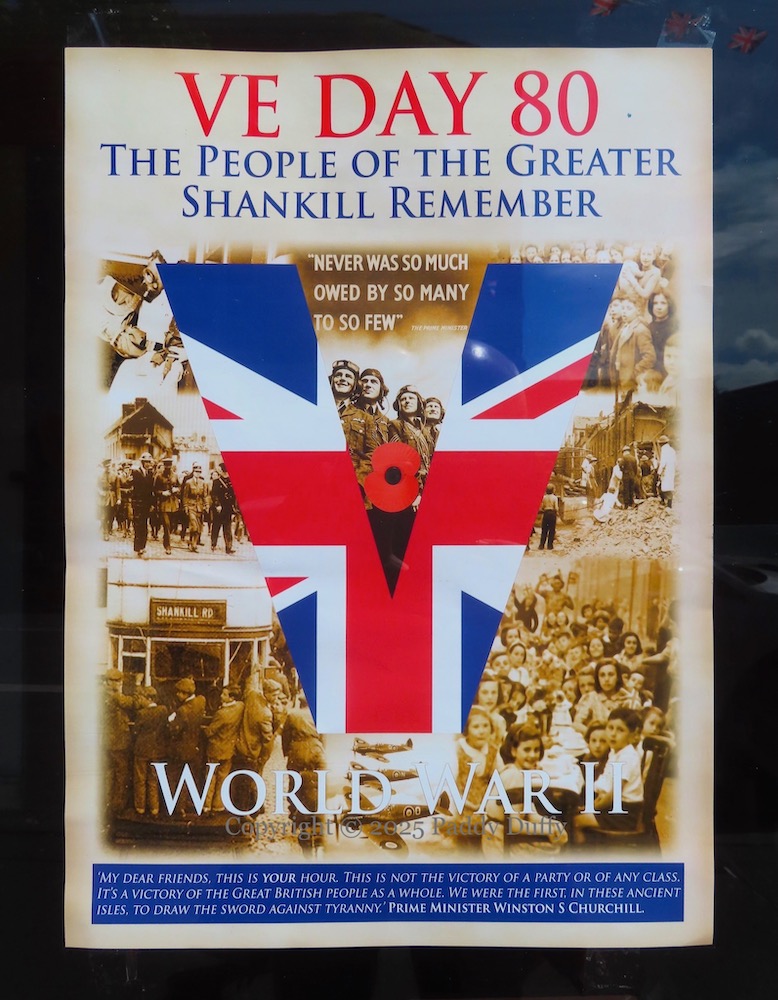
World War II ended in Europe at 11 p.m. on May 8th, after Germany’s unconditional surrender to the Allied forces. The date was dubbed “Victory In Europe Day” or “VE Day” and this year (2025) marks its eightieth anniversary.
The text at the bottom of this Shankill Road poster reads: “‘My dear friends, this is your hour. This is not the victory or of any class, it’s a victory of the Great British people as a whole. We were the first, in these ancient isles, to draw the sword against tyranny.’ – Prime Minister Winston S Churchill”. The lines come from brief remarks Churchill made to the crowds assembled at the Ministry Of Health in London – the text can be found at Forces News; Pathé newsreel of Churchill’s earlier radio announcement of the end of the war can be found on youtube.
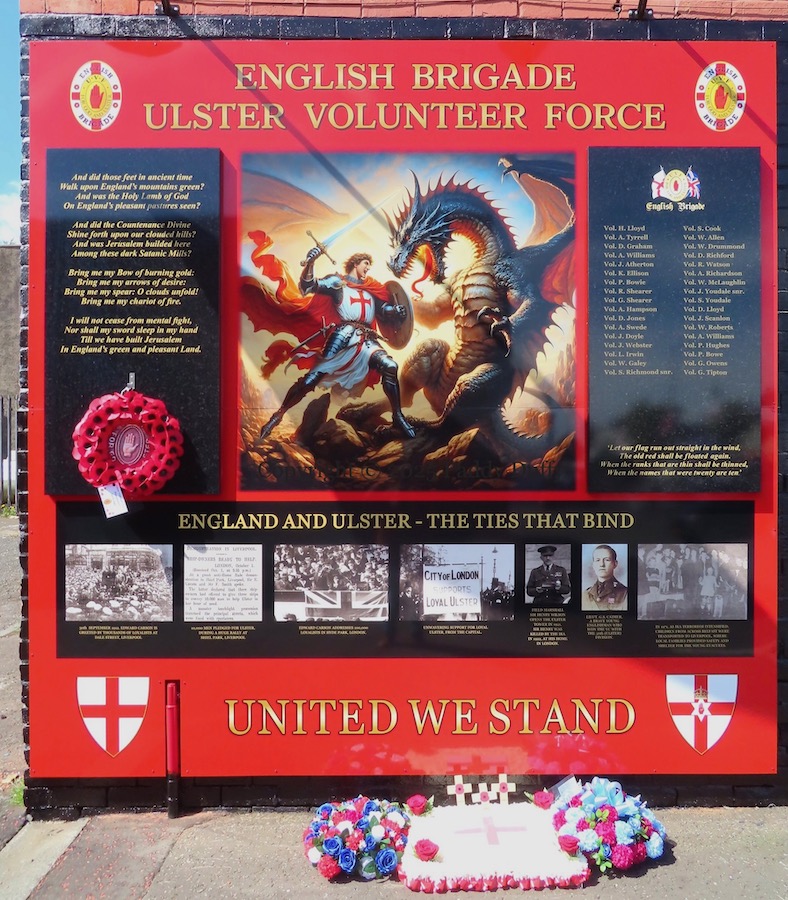
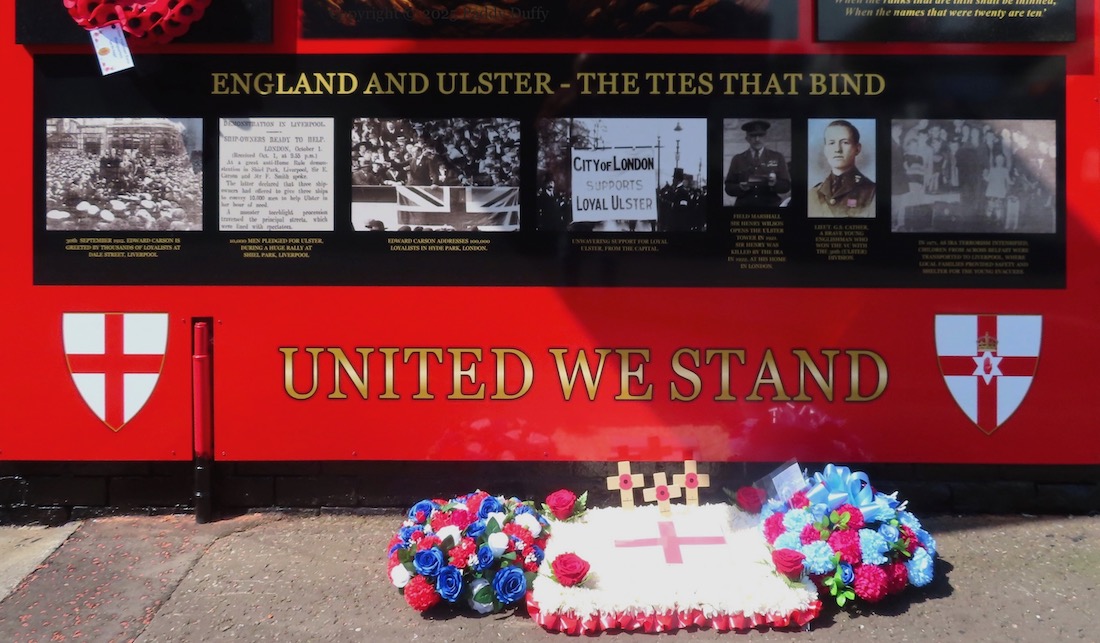
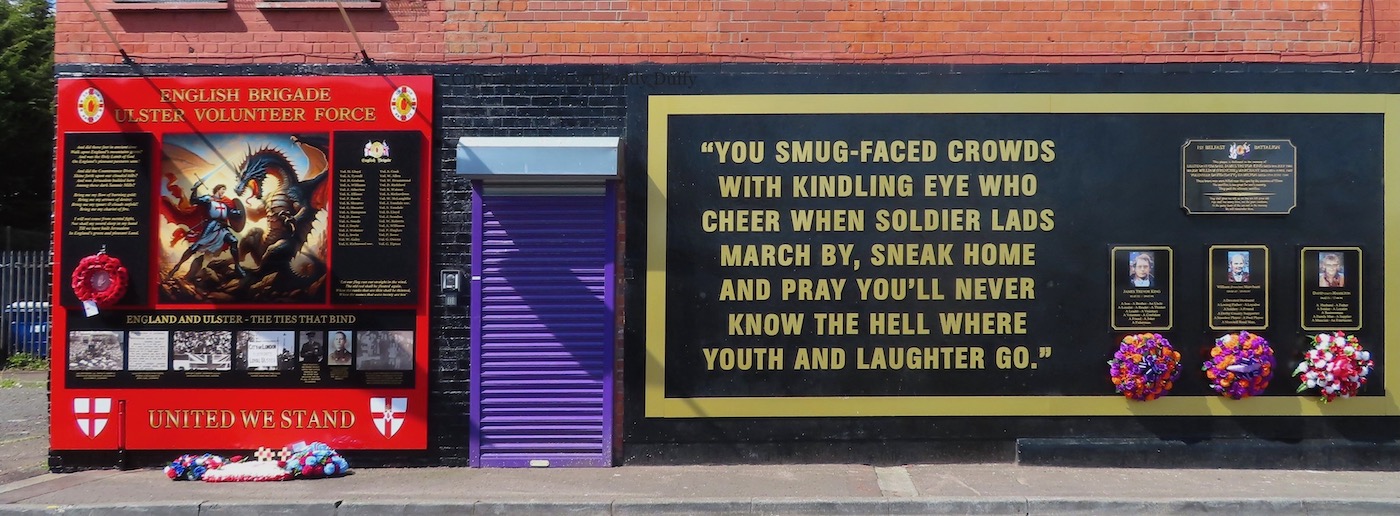
“English Brigade Ulster Volunteer Force.” “England and Ulster – the ties that bind.” “United we stand.”
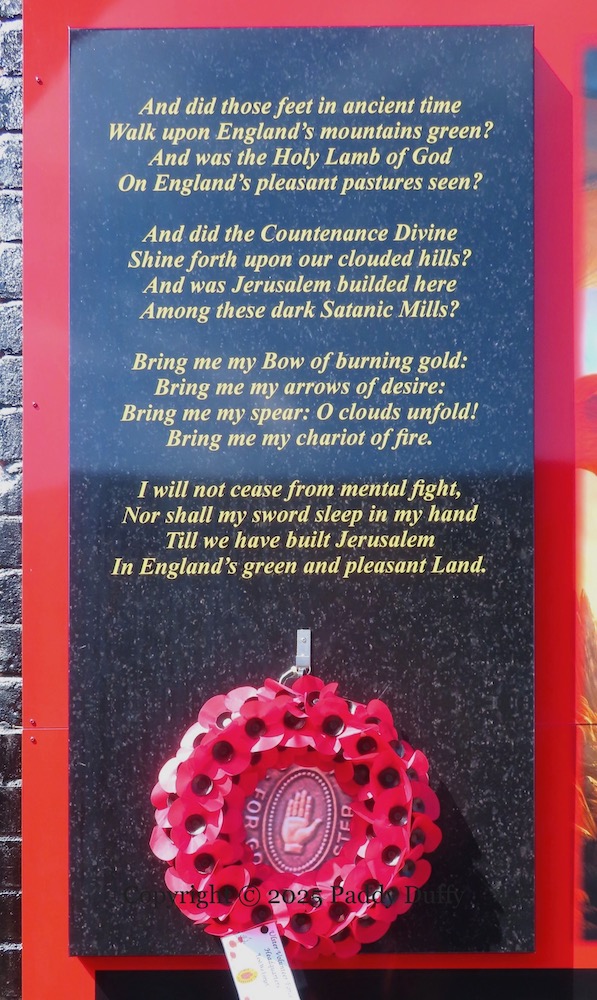
On the left are the words from William Blake’s poem, which also serve as the lyrics to the hymn Jerusalem.
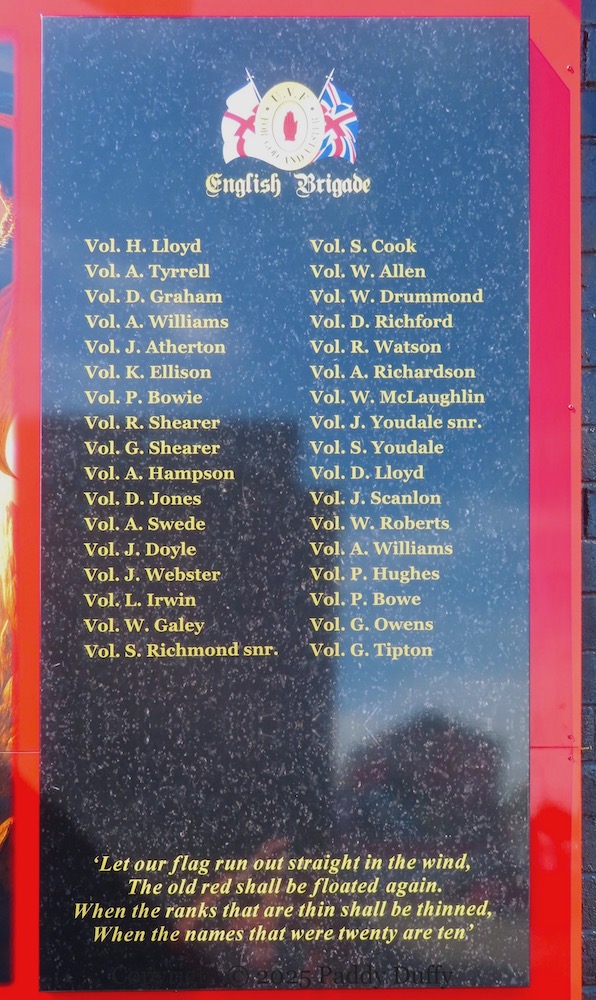
“Let our flag run out straight in the wind/The old red shall be floated again./When the ranks that are thin shall be thinned/When the names that were twenty are ten.” [from Swinburne’s A Song In Time Of Order which was also used as a socialist song]
The images along the bottom illustrate the connection between Northern Ireland and England. From left to right: Edward Carson in Liverpool in 1912; 10,00 pledges from Liverpool men; Carson addressing 100,000 people in Hyde Park, London; a banner reading “City of London supports loyal Ulster”; “Field Marshall Sir Henry Wilson opens the Ulster Tower in 1921. Sir Henry was killed by the IRA in 1922 at his home in London”; GS Cather, VC winner with the Ulster Division; evacuees to Liverpool in 1973.
Kneecap performed their Coachella sets in front of a large screen onto which messages were projected, including denunciation of the Israeli “genocide” of Palestinians “enabled” by the US (Rolling Stone).
Many cancelled gigs followed, as well as a call from Sharon Osbourne that the band’s work visas be revoked (BBC). In response, Kneecap insisted that their speech was not an incitement to violence (BBC).
The band’s visas might also be in jeopardy because the band has parted ways with booking agents IAG, which sponsored the band’s US tour (Hollywood Reporter).
Further, scrutiny of past performances revealed pro-Hamas and -Hizbollah chants, which have now led to an investigation by the UK’s anti-terror police (NME). The band also apologized for a 2023 remark that “the only good Tory [Conservative MP] is a dead Tory” (BBC).
Many artists and bands have come out in support of Kneecap – about 40 put their names to a statement posted to instagram. The band also has the support of the graffitist in the image above: “Free Palestine – silence = complicity. Seas le Kneecap [stand with Kneecap]”.
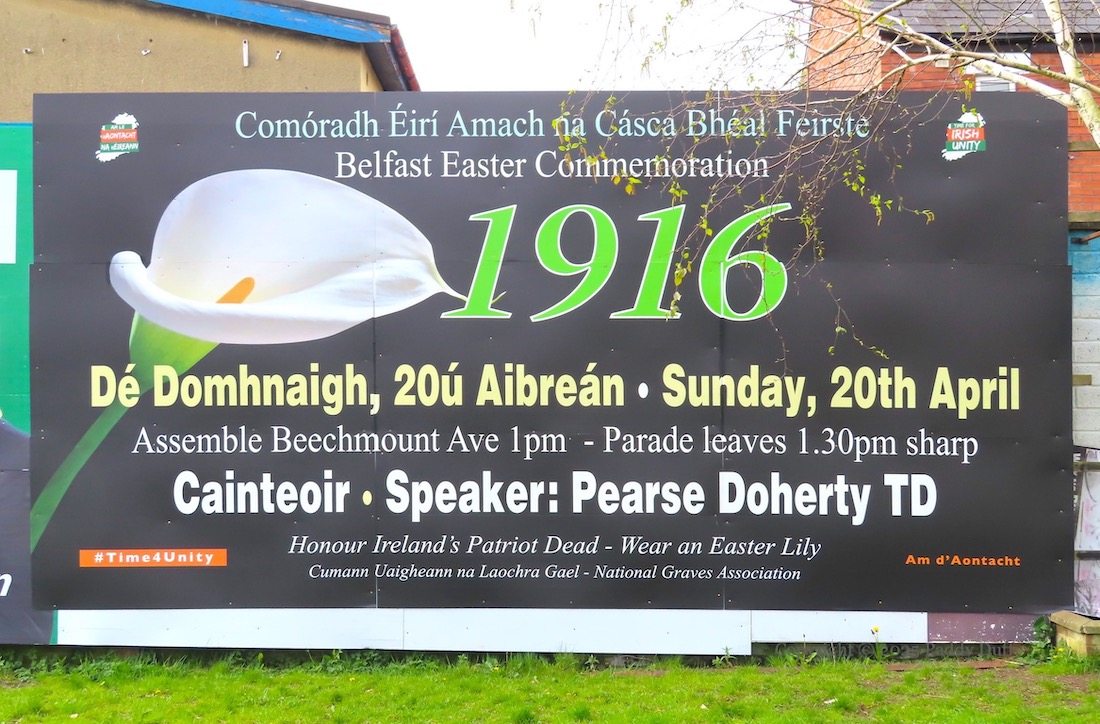
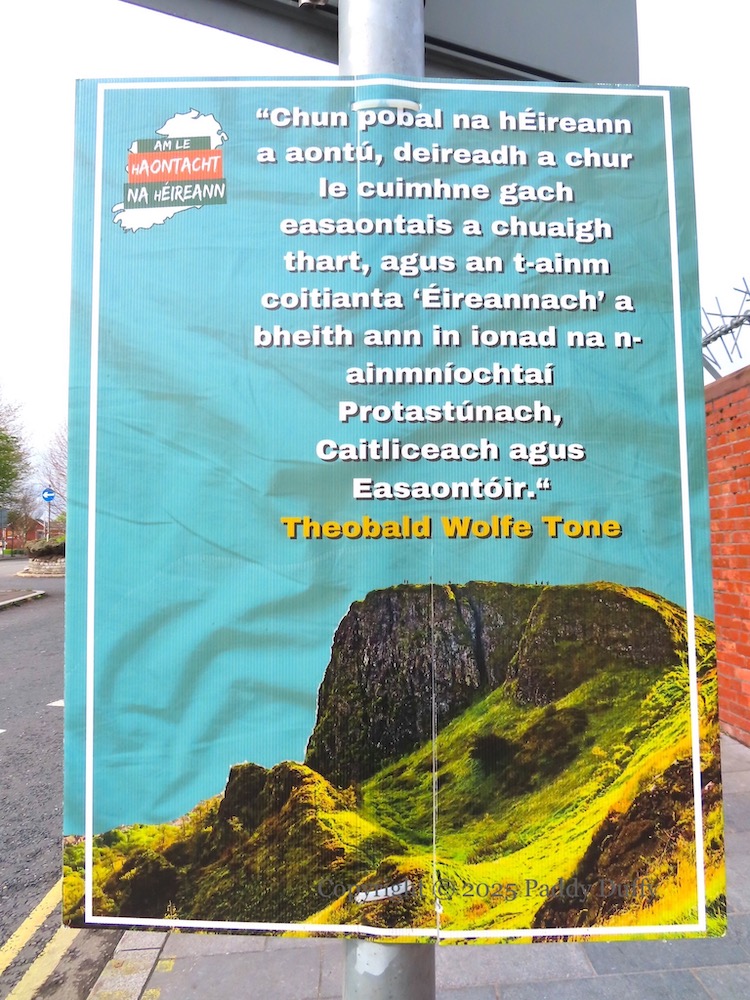
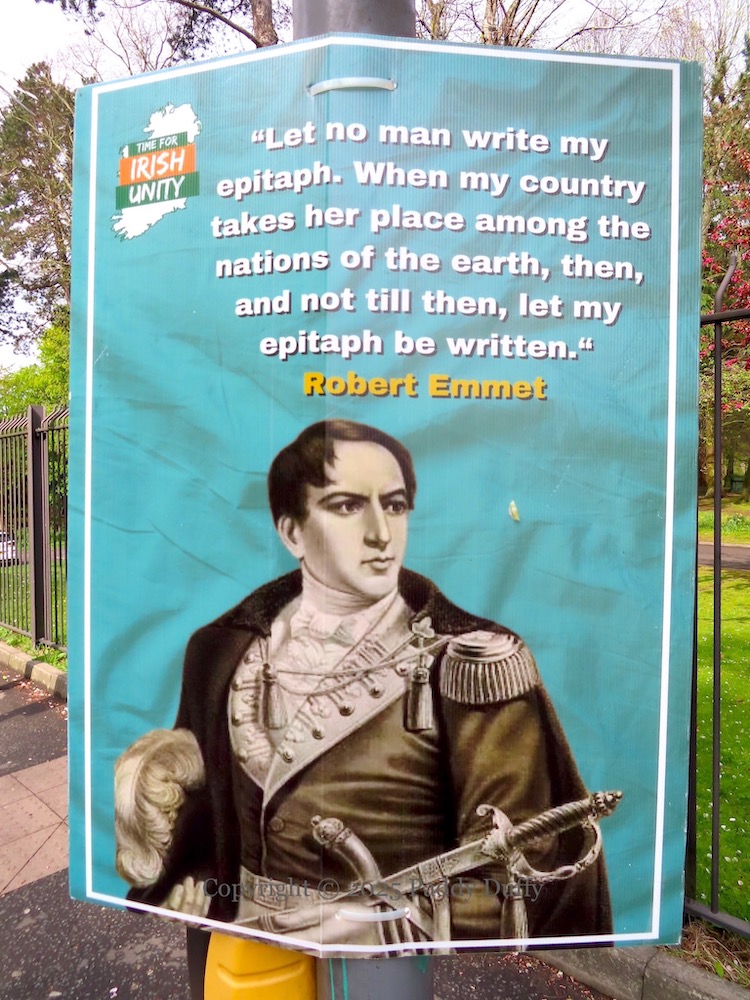
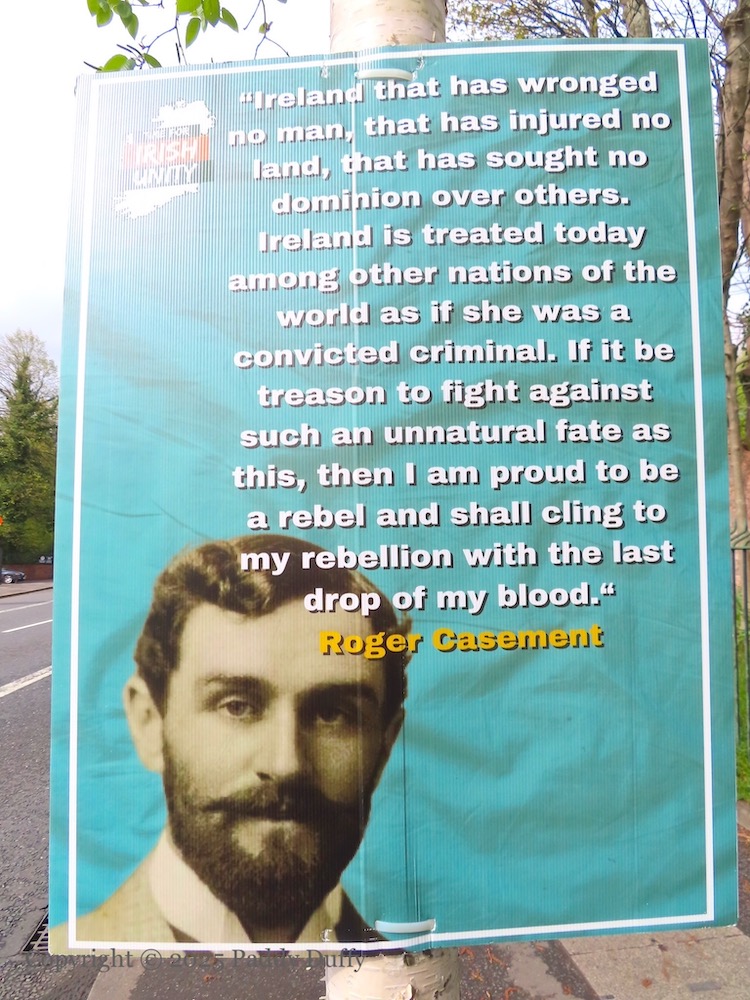
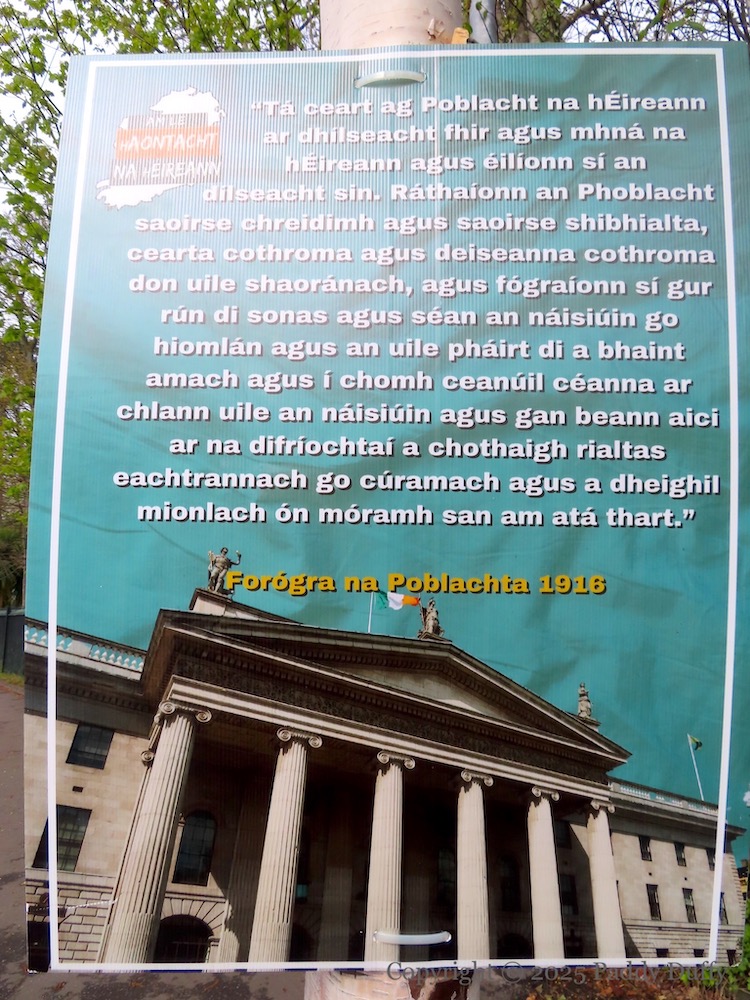
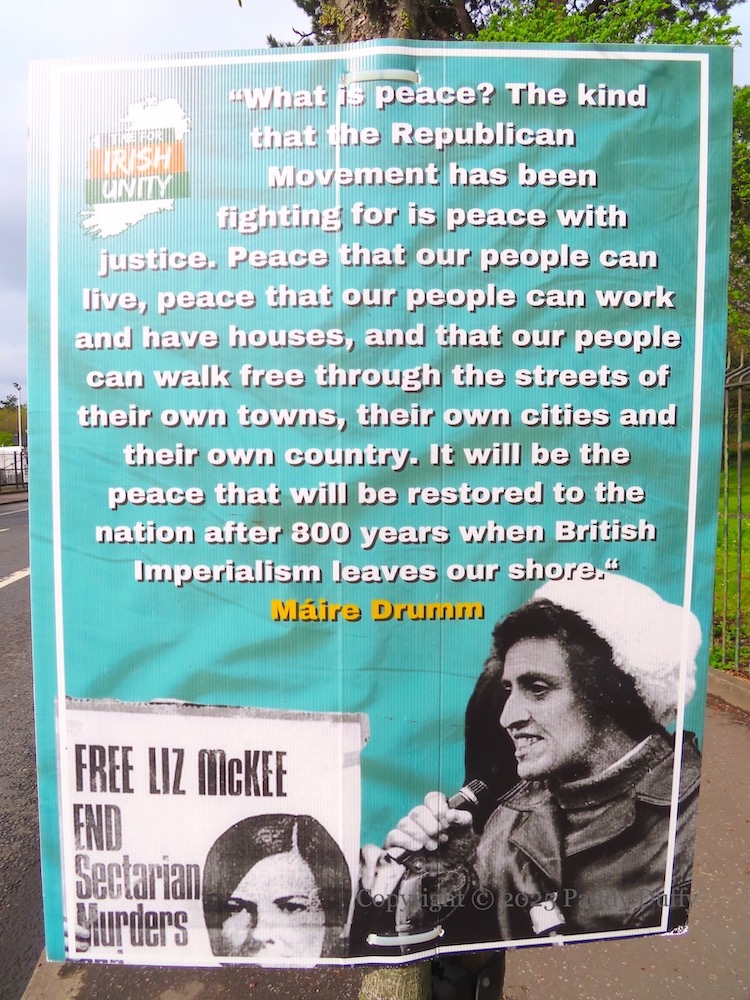
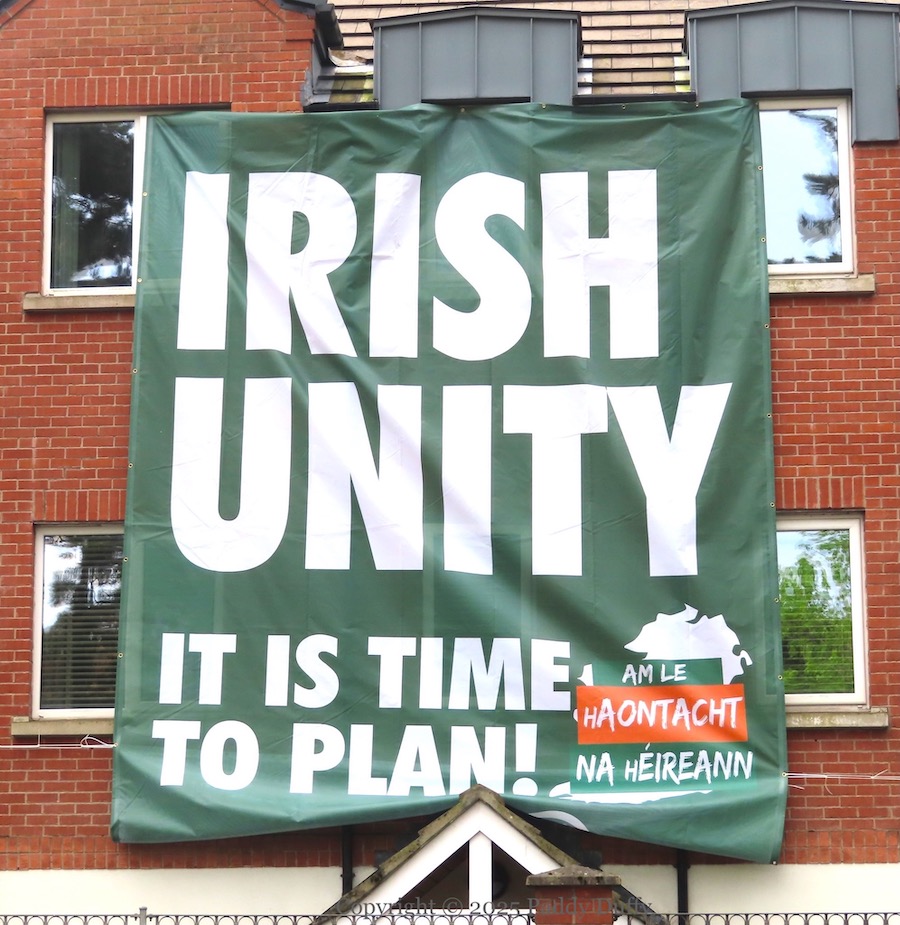
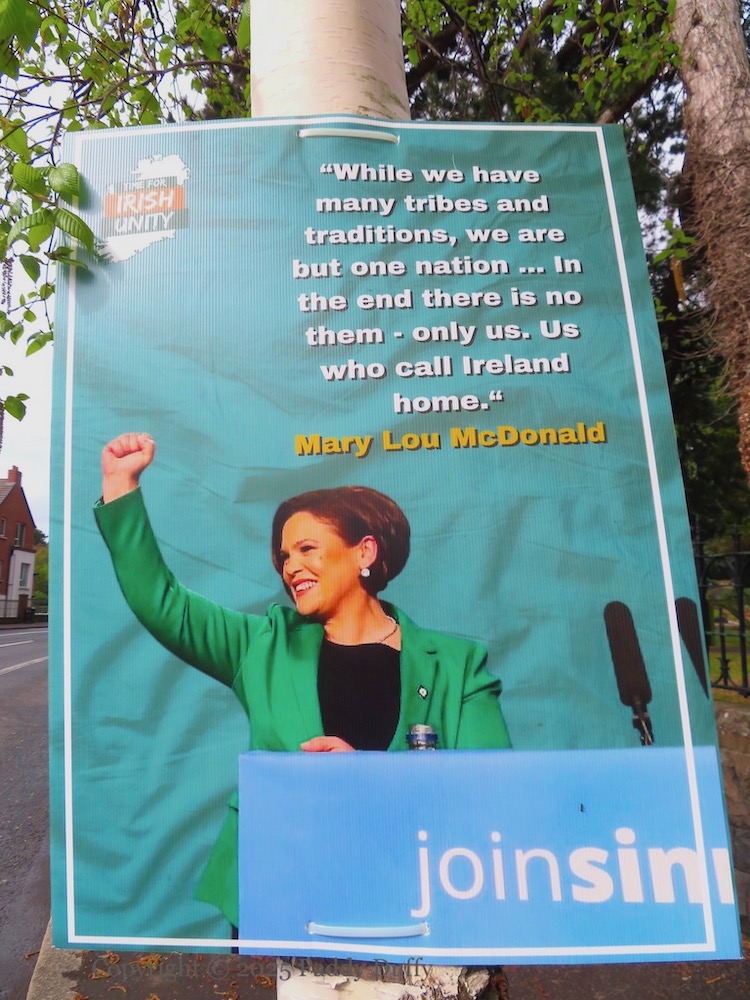
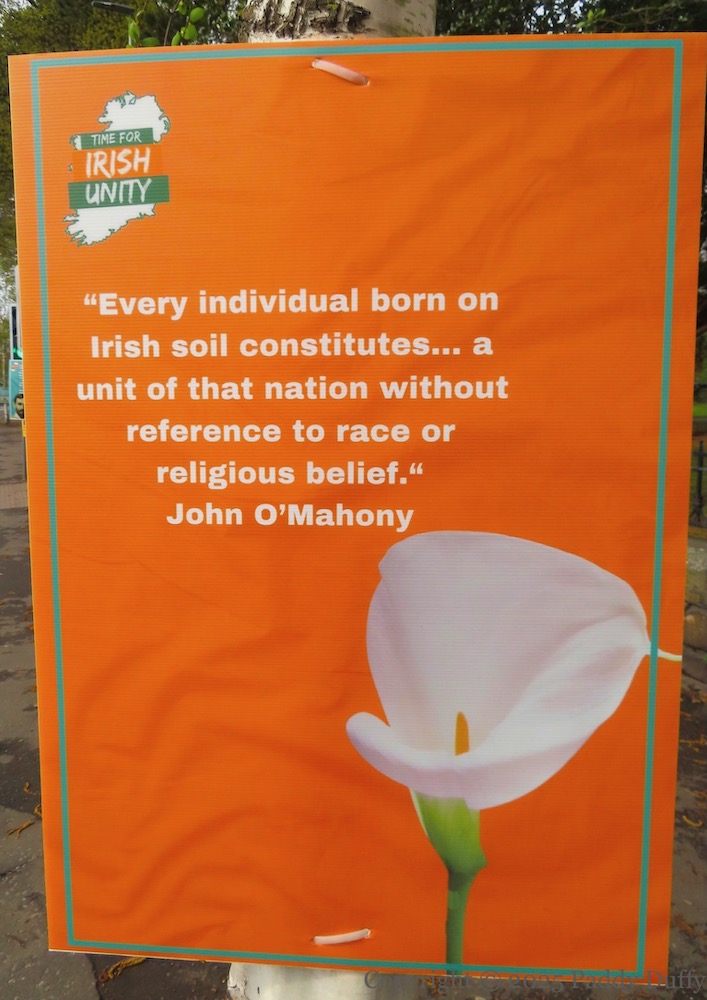
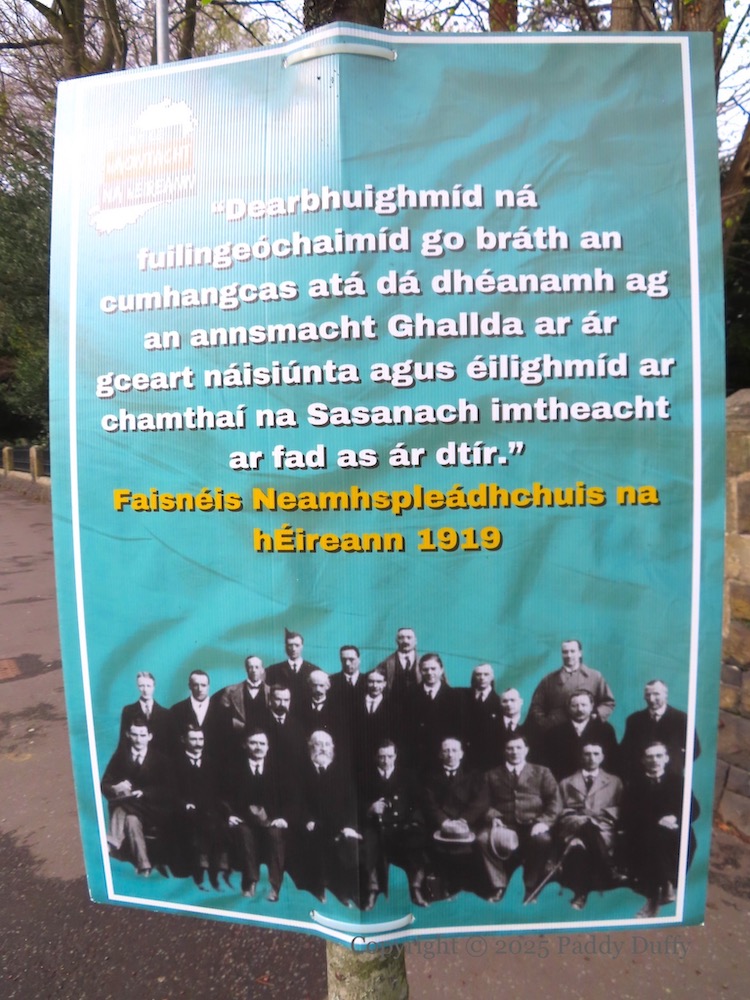
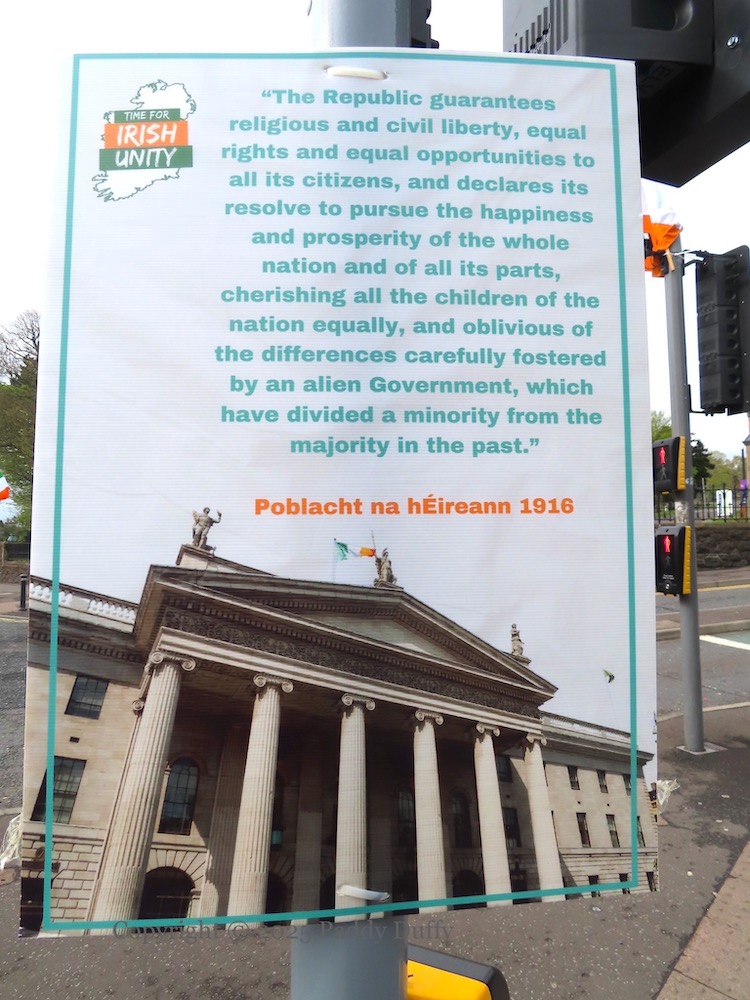
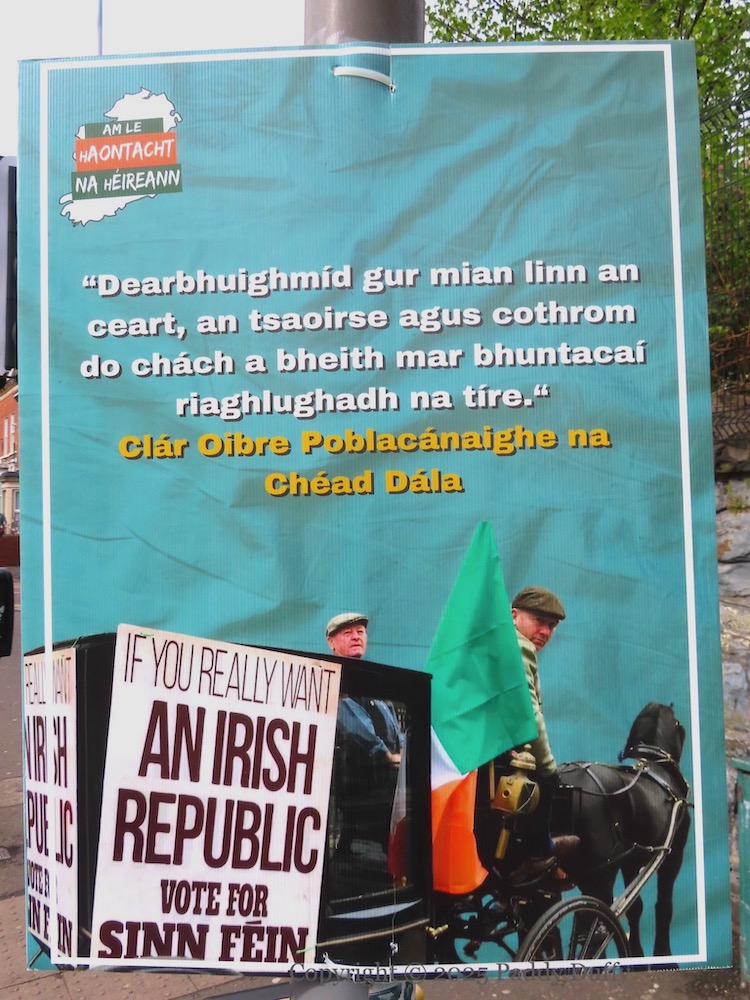
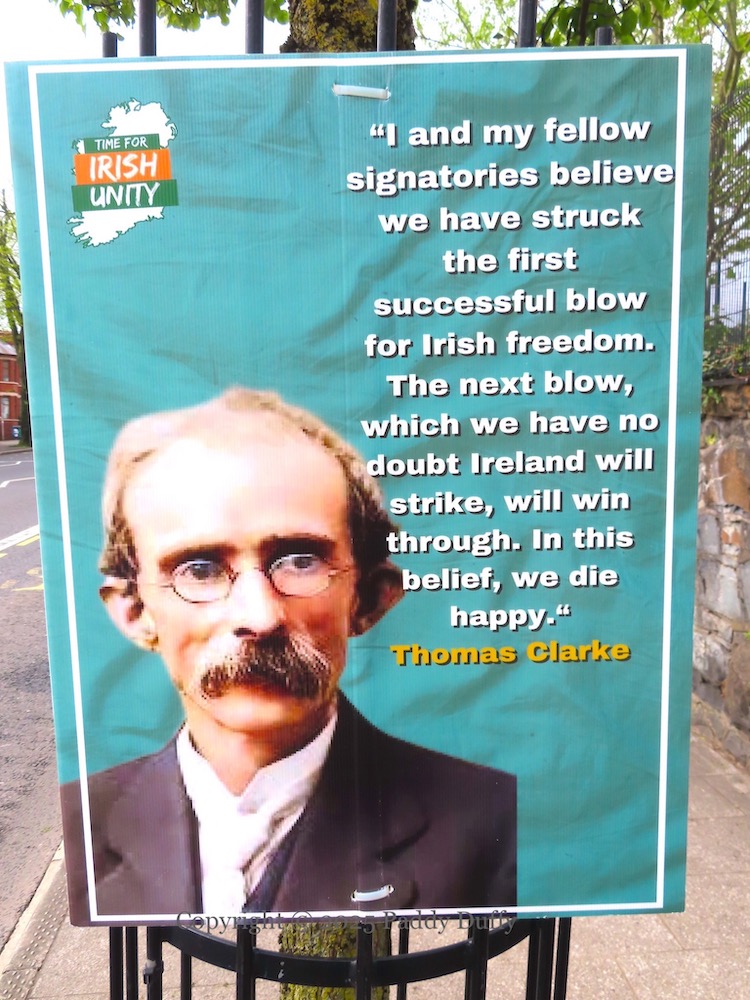
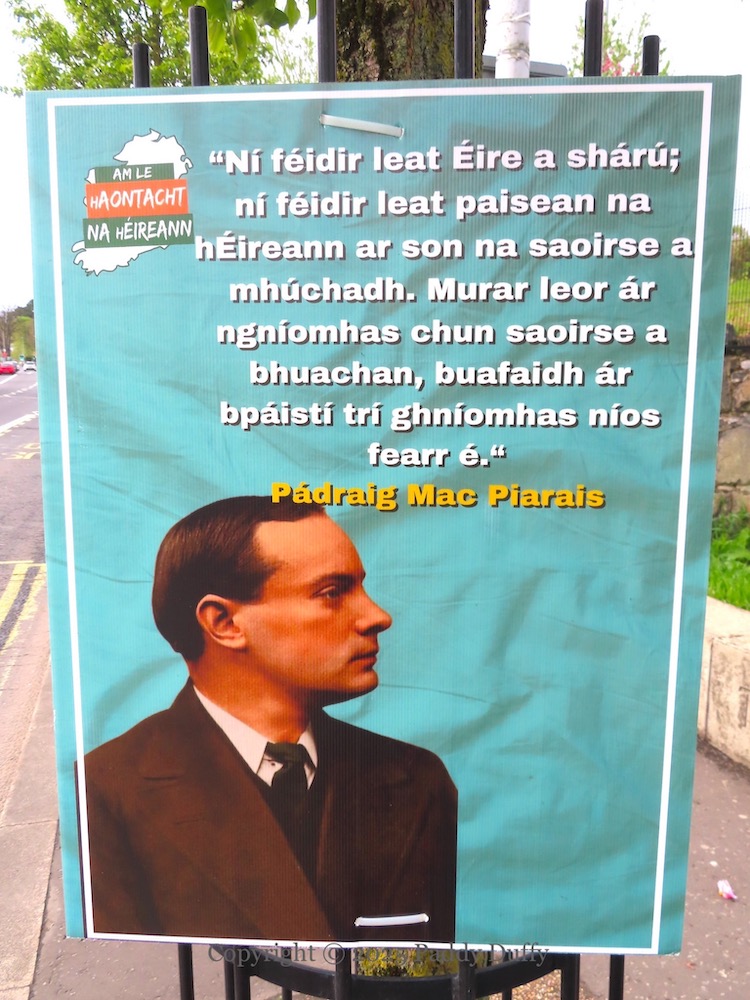
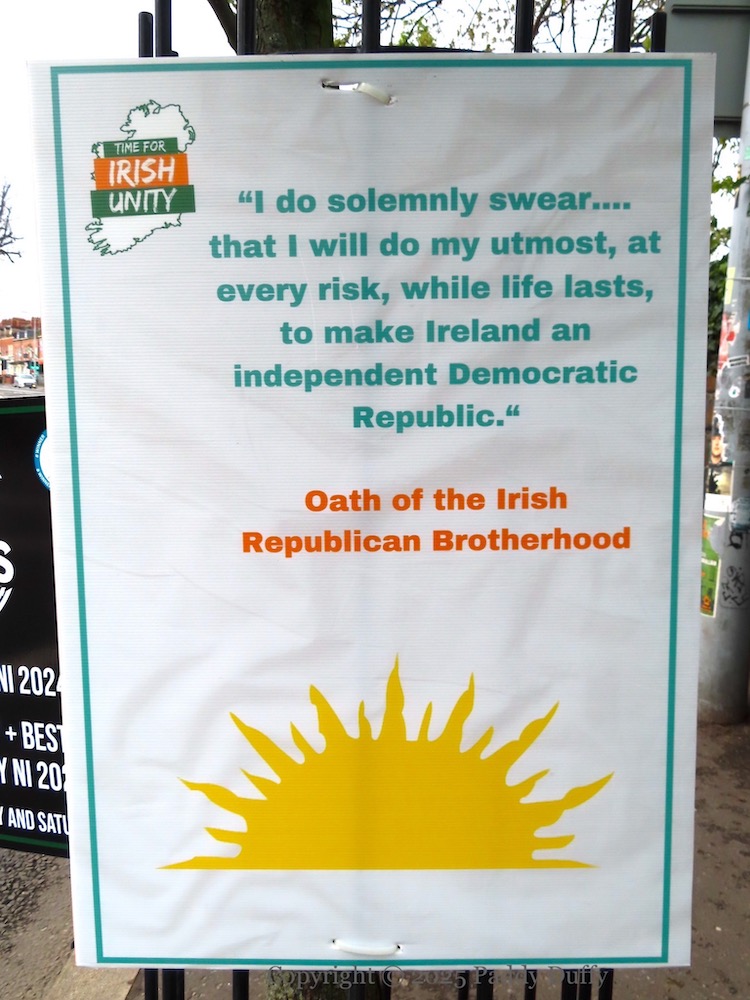
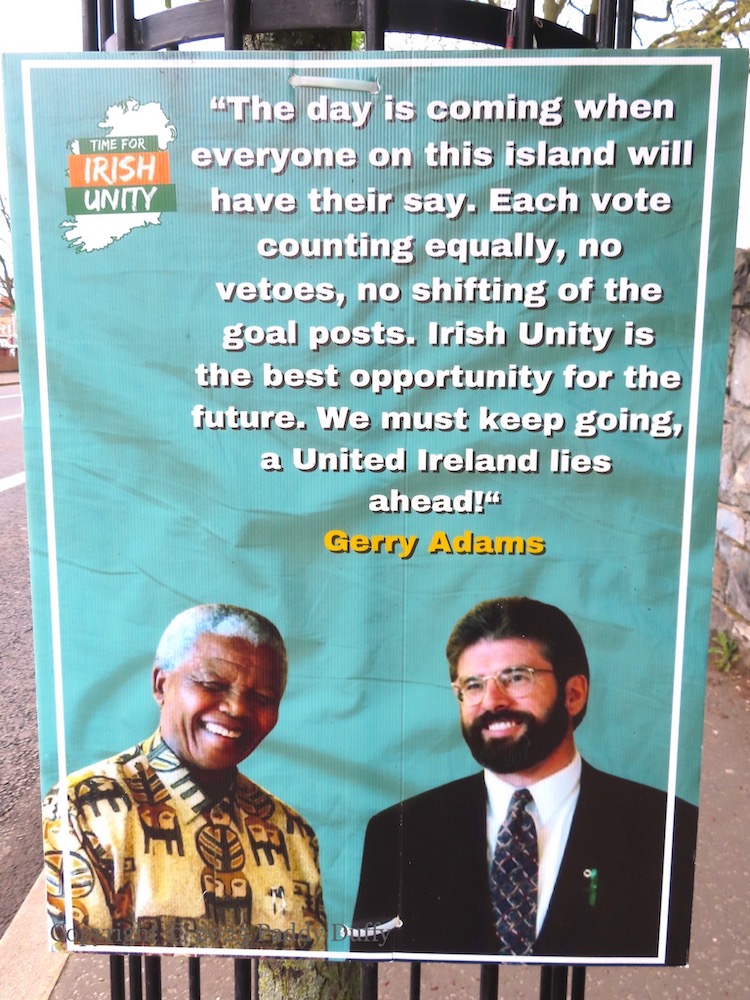
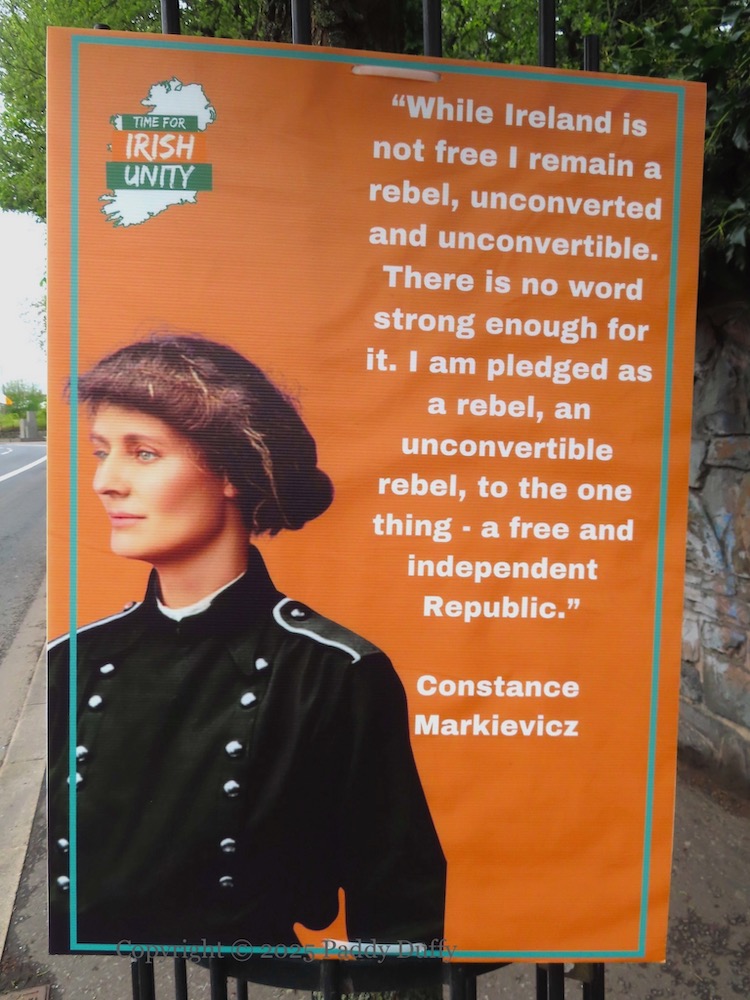
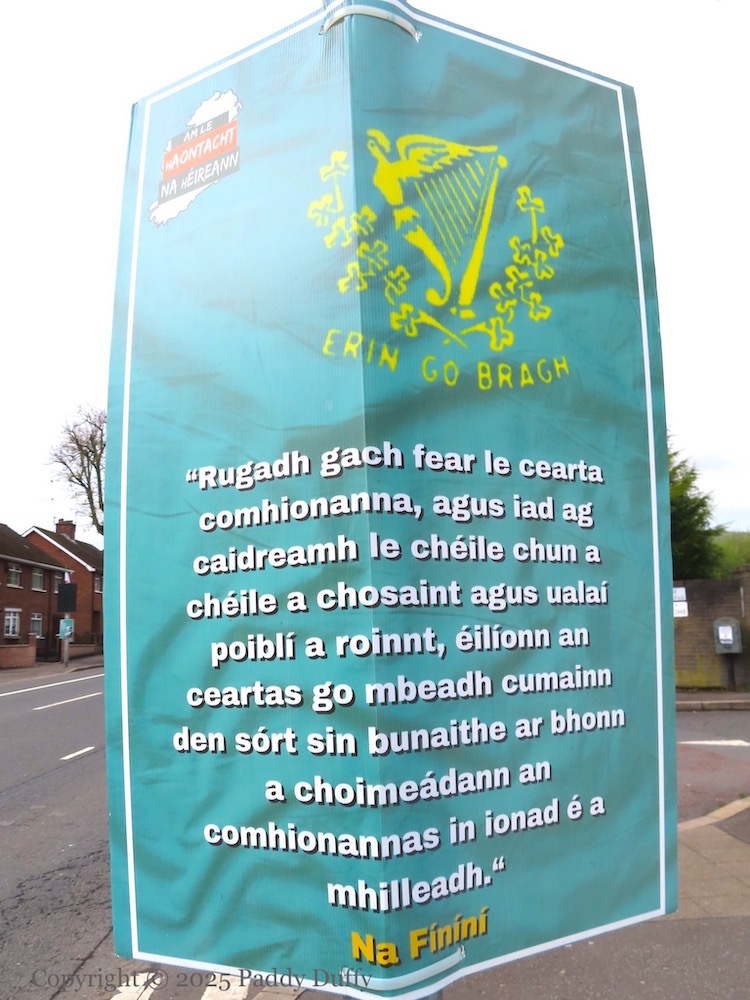
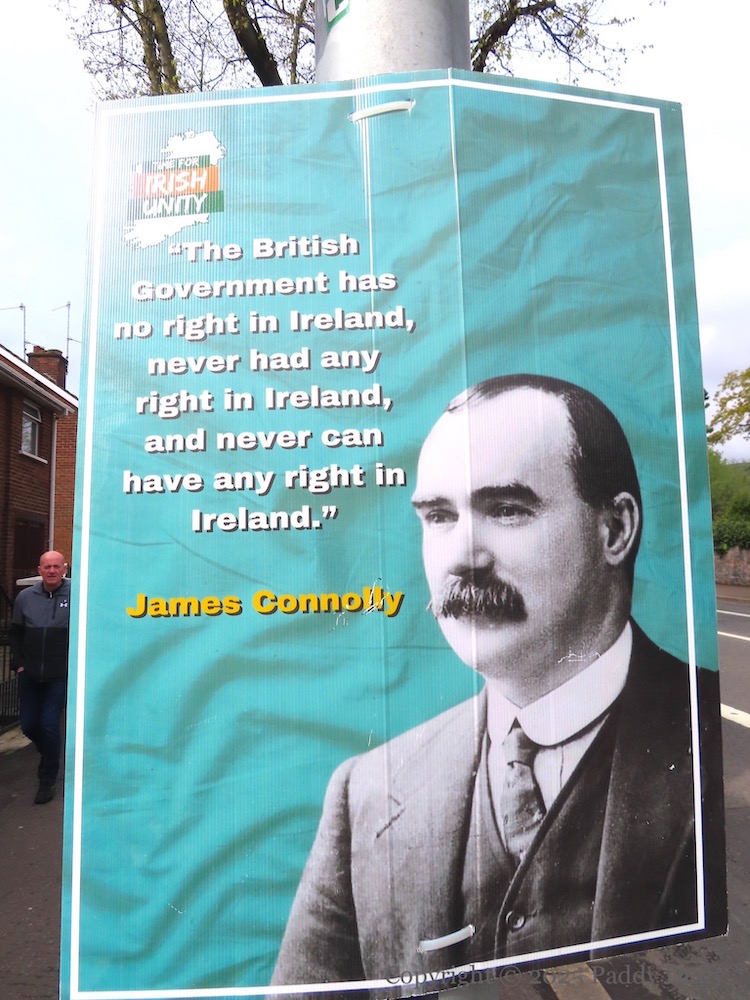
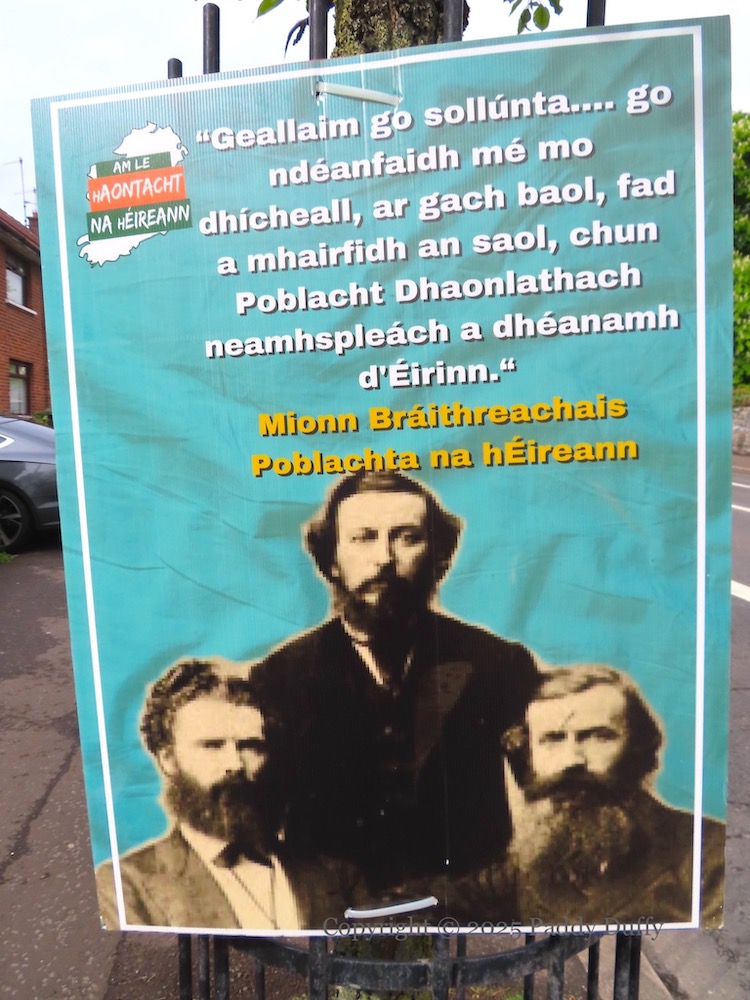
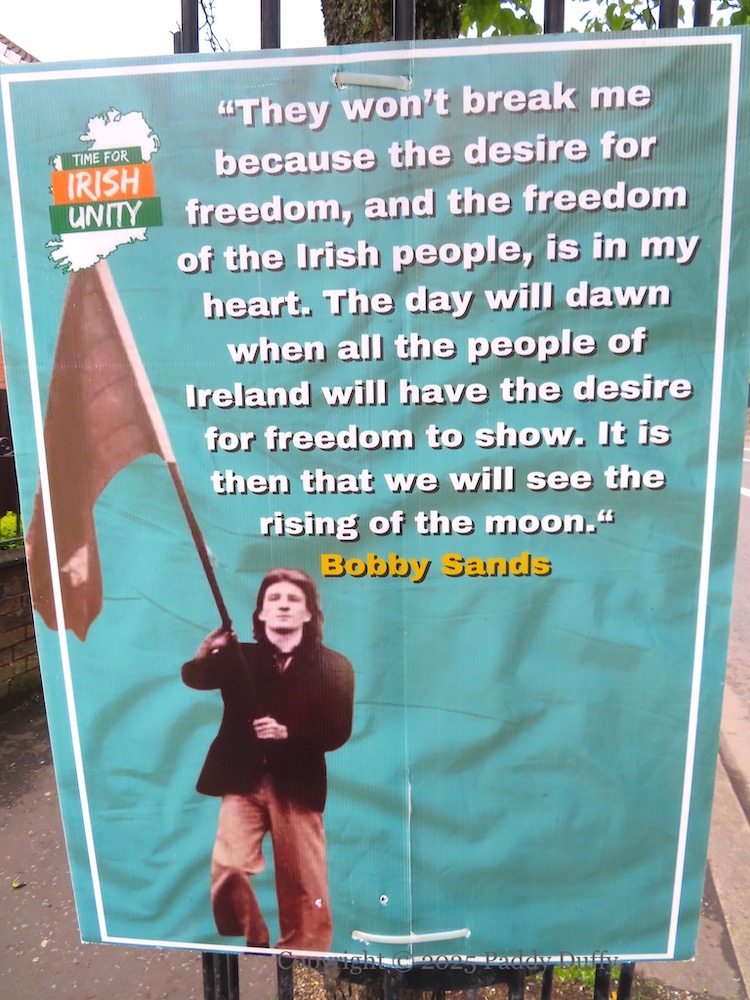
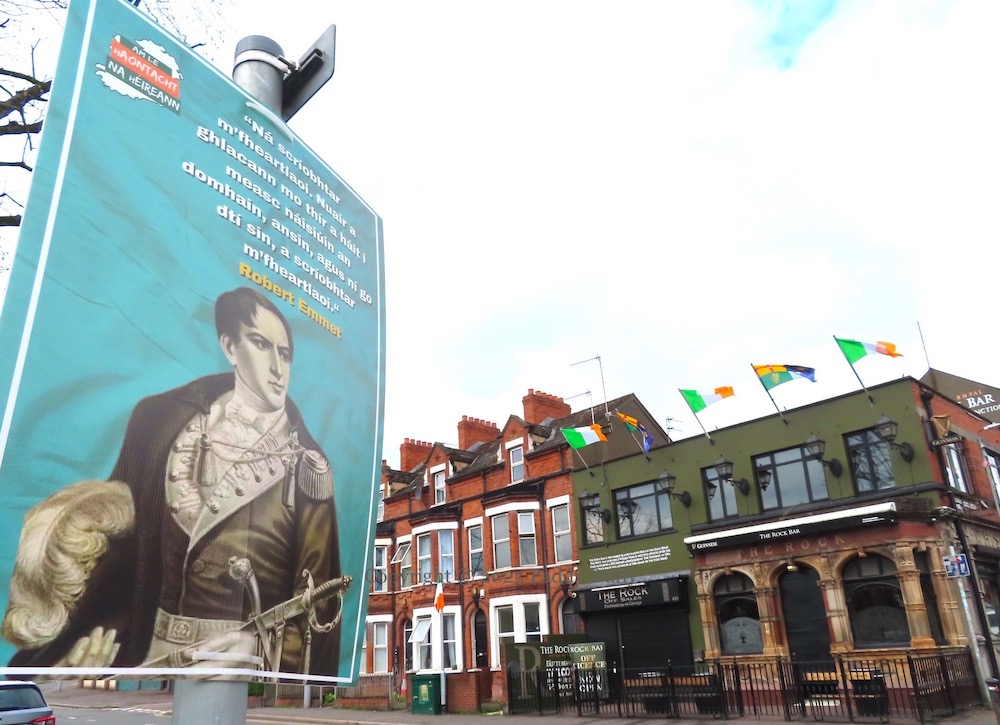
For Sunday’s parade (in Belfast) commemorating the Easter Rising of 1916, Sınn Féın lined the route with placards featuring quotations from republican heroes past and present: the first Dáıl, Wolfe Tone, Robert Emmet, James Fintan Lalor, Roger Casement, the Proclamation of 1916, William Allen, the Declaration Of Independence, James Larkin (as Gaeılge), Máıre Drumm, Rita O’Hare, Martin McGuinness, Mary Lou McDonald, Bobby Sands, O’Donovan Rossa, John O’Mahony, Seán Mac Dıarmada, James Connolly, Liam Lynch, Thomas Clarke, Pádraıg Mac Pıaraıs, Maıréad Farrell, the IRB, Michelle O’Neill, Gerry Adams, Constance Markievicz, Winifred Carney, Na Fíníní.
William Allen was one of the “Manchester Martyrs” – for a link to background and the photograph used on the placard see the Peter Moloney Collection.
The speaker in Belfast was Donegal Sınn Féın TD Pearse Doherty; party leader Mary Lou McDonald spoke in Carrickmore, Co Tyrone; Michelle O’Neill was in Coalisland and Dublin.
See also the new National Graves Association/Cumann Uaıgheann Na Laocradh Gaedheal mural in Beechmount: Cuımhnímıs.






























 Paddy Duffy Collection