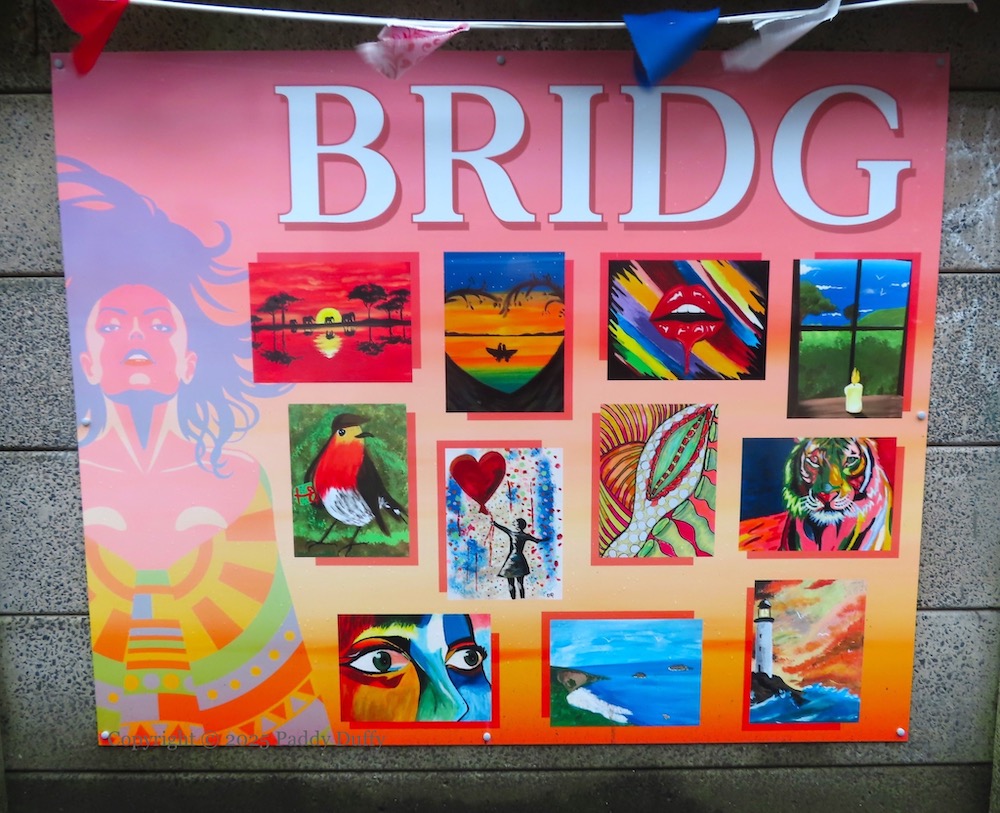
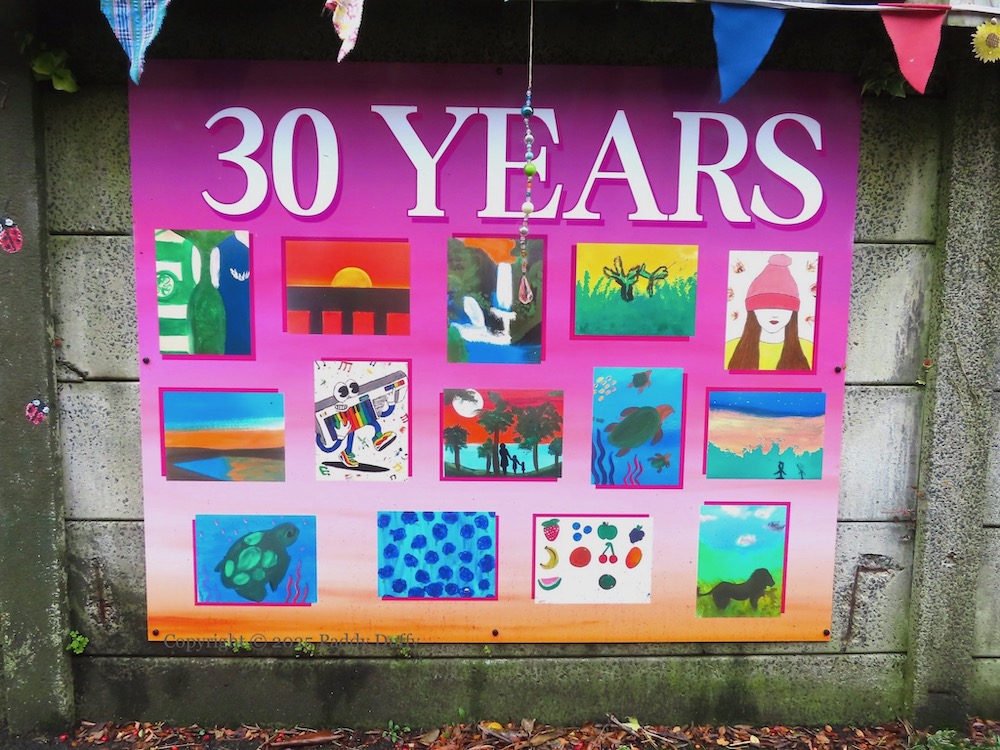
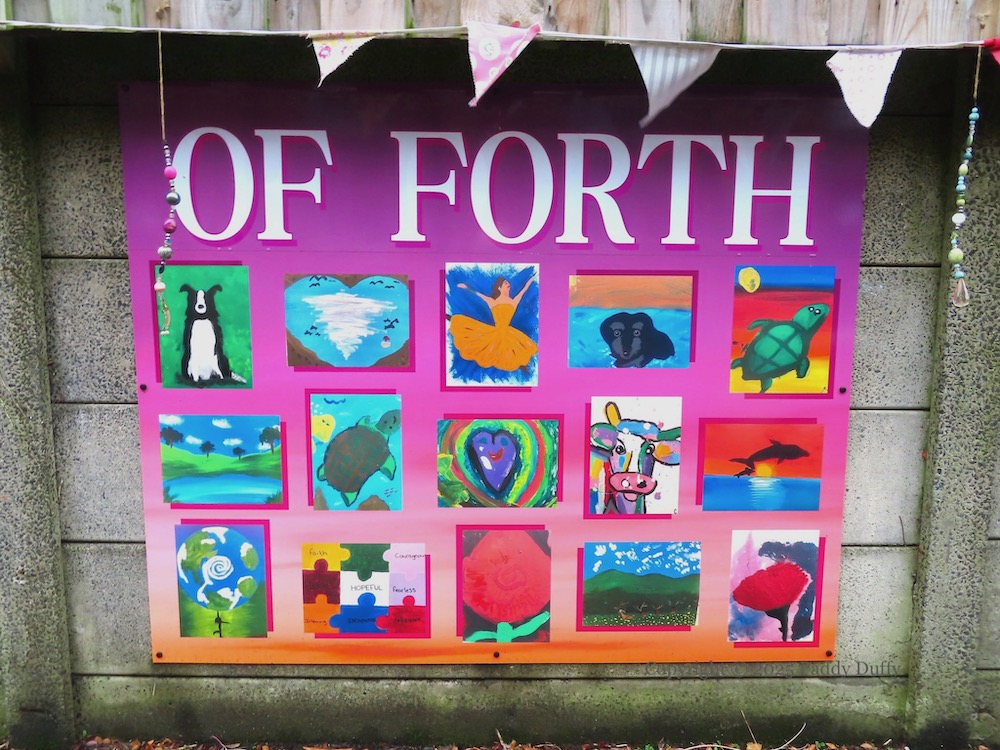
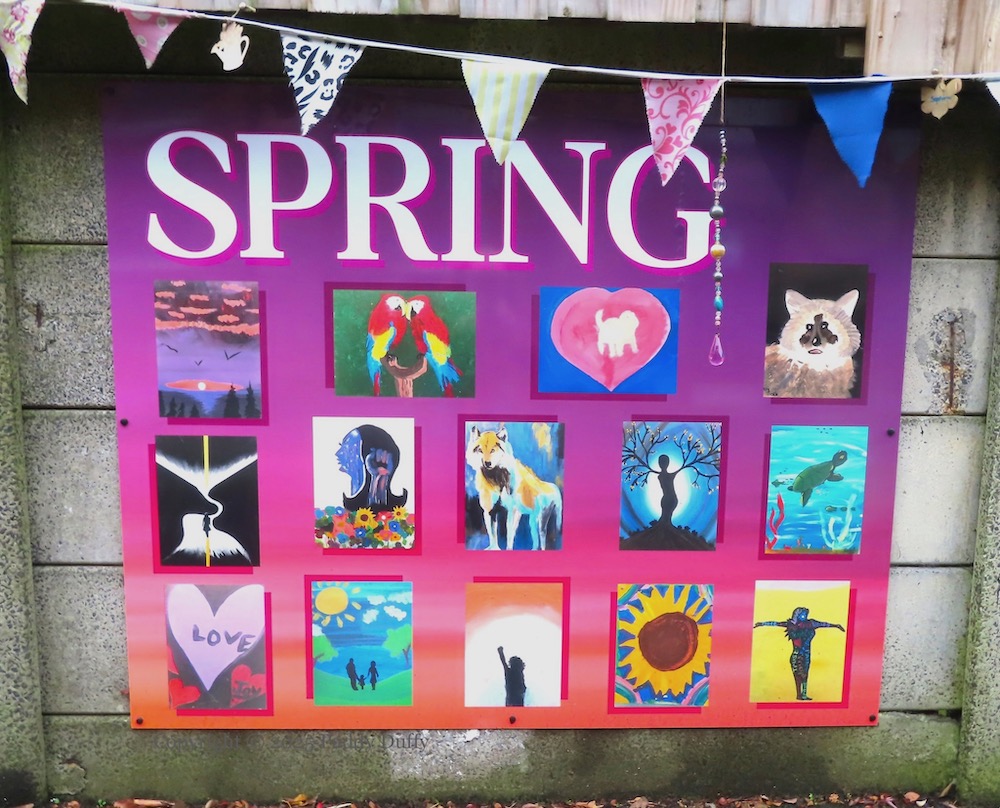
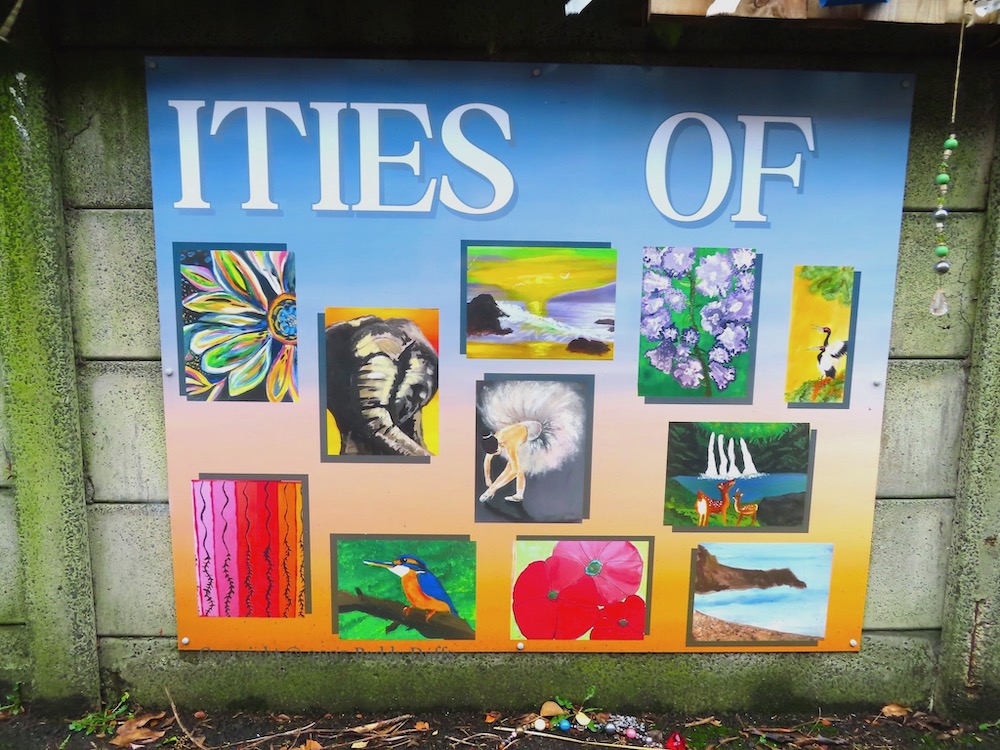
“Bridging divides”, “30 years of Forthspring”, “Communities of strength”. Forthspring is a cross-community group providing programming to residents of the CNR upper Springfield and PUL Woodvale areas. On its ‘about’ page, the organisation claims 1996 is the year of its founding, so this array of boards might be in anticipation of next year (2026).
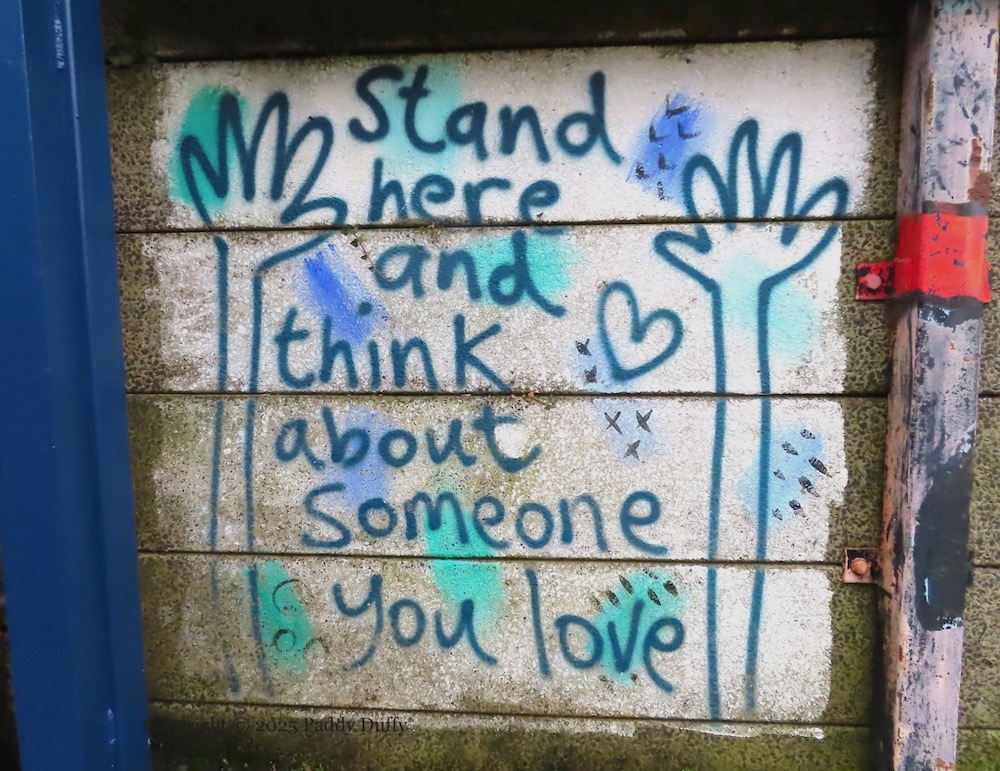
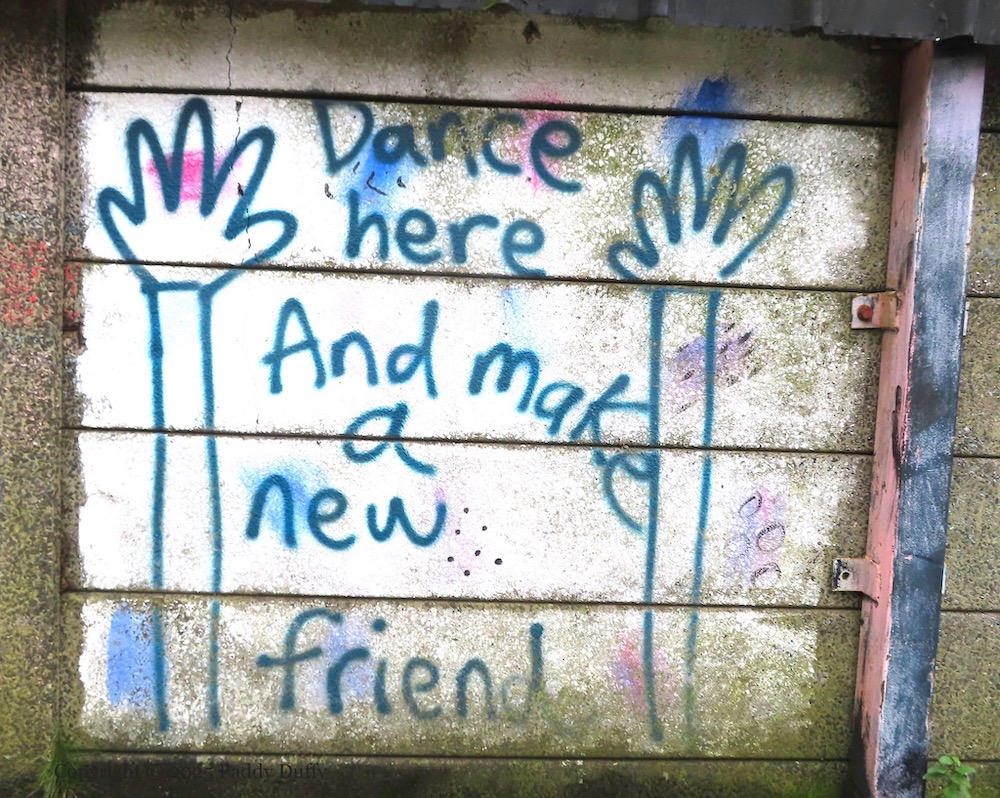
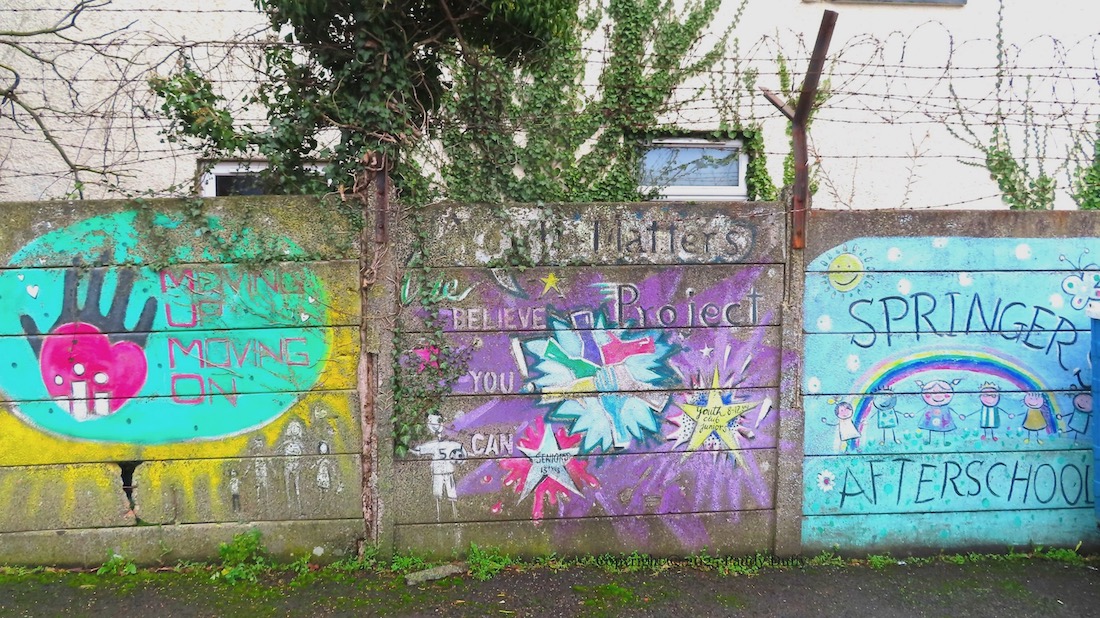
Also included are some of the older pieces on the panels at the front of the Springwell House. “Stand here and think about someone you love”, “Dance here and make a new friend”, “Youth Matters Project – believe you can”.
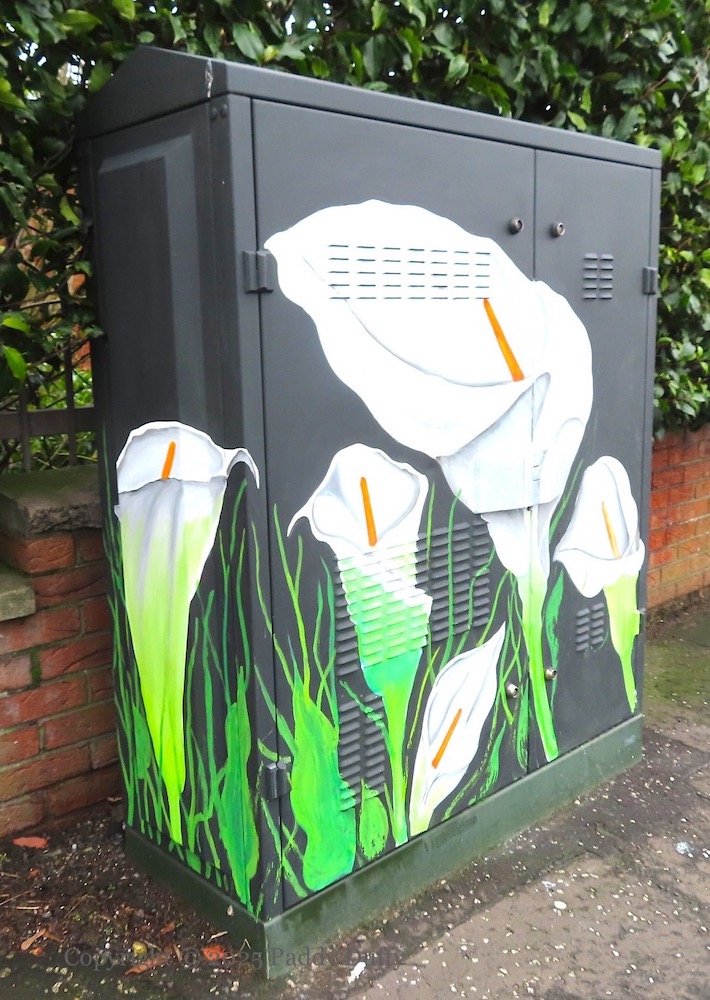
These Easter lilies are on a junction box on the Springfield Road at New Barnsley Park, west Belfast, and across the street from the boxes seen in Bóthar Chluanaí and Gaırdín Na hÉıreann.
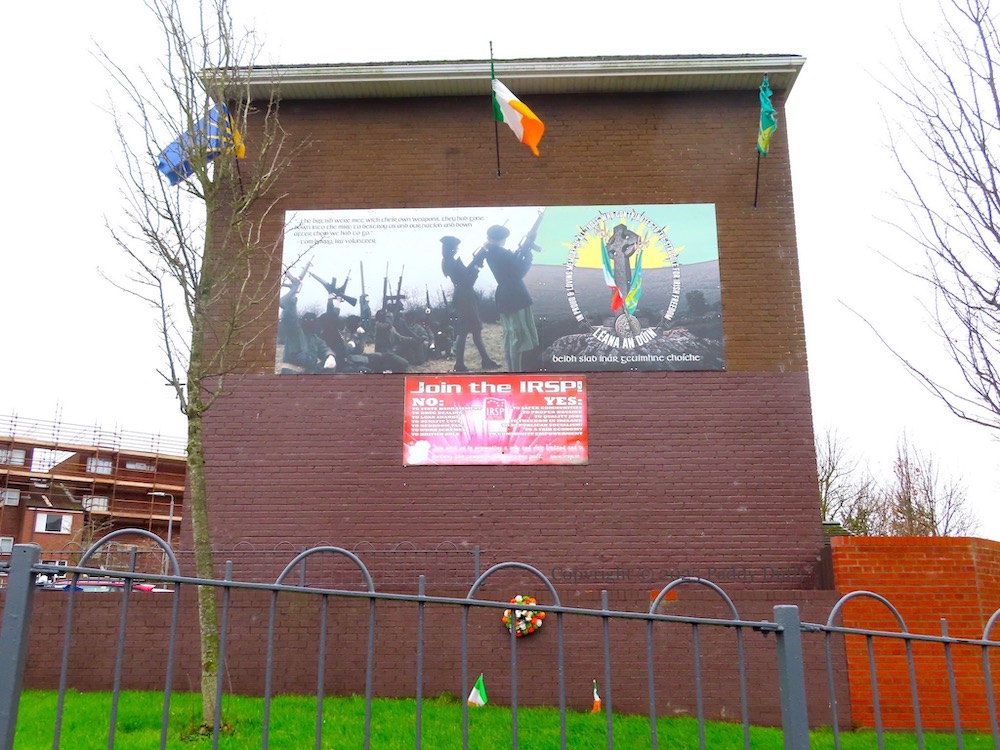
“[They said I was ruthless, daring, savage, blood thirsty, even heartless. The clergy called me and my comrades murderers; but] The British were met with their own weapons. They had gone down into the mire to destroy us and our nation and down after them we had to go. – Tom Barry, IRA volunteer.”
Tom Barry served in the British Army as a teenager and saw action in Mesopotamia and Egypt. The military training served him well when he joined the IRA and soon became commander of the West Cork brigade’s flying column. The quotation above offer a justification for the guerrilla tactics which helped drive the British to the negotiating table. In the Civil War, Barry was on the anti-Treaty side. (WP)
“In proud and loving memory of all those who contributed to the struggle for Irish freedom. Léana An Dúın. Beıdh sıad ınár gcuımhne choíche.”
The red board below is an old (2019) IRSP board, reading, “Join the IRSP. No to state harassment, to drug dealing, to loan sharks, to benefit cuts, to bedroom tax, to work schemes, to British rule. Yes to safer communities, to proper housing, to quality jobs, to freedom in Ireland, to republican socialism!, to a fair economy, to community empowerment. Join with us in promoting a new and fair Ireland and in building the campaign for a border poll. www.irsp.ie“
“RNU [Fb] stands with Palestine” – the board has been augmented by some knotwork corner-borders in the colours of the Palestinian and Irish flags, along with “freedom” in Irish (saoırse) and Arabic (الحرية).
For the board as originally presented in April 2024, see X14944.
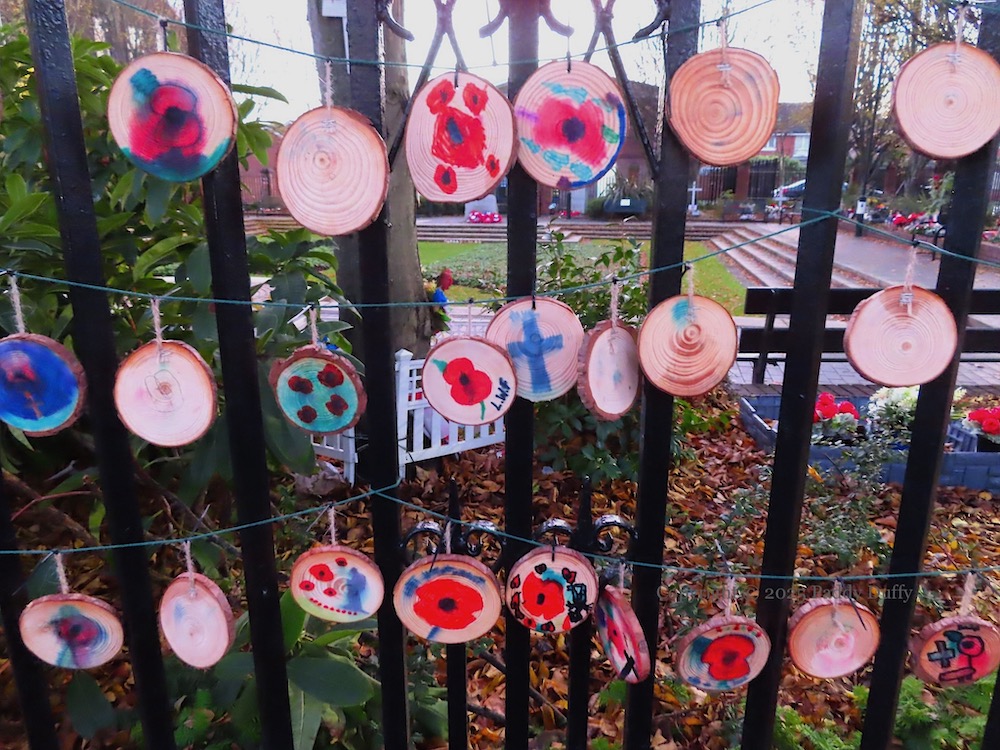
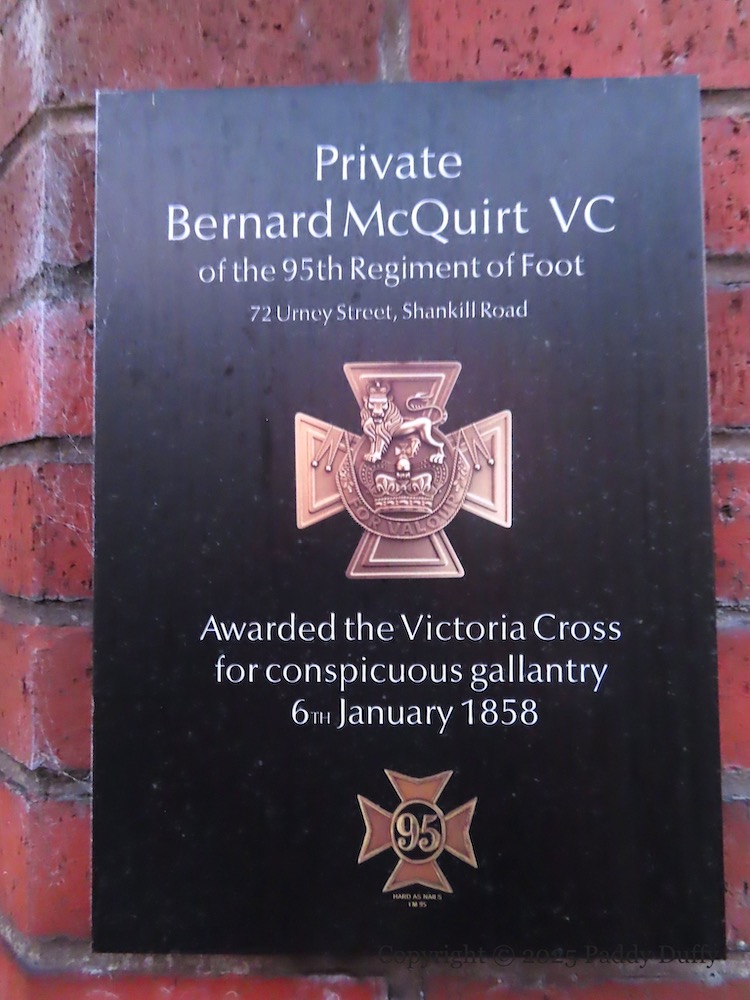
For Remembrance Sunday, rows of hand-painted wooden medallions were attached to the railings at West Kirk Presbyterian to pay homage to the dead of the British armed forces, including Bernard McQuirt, whose plaque is shown below. McQuirt was a VC winner for actions taken during the Indian Rebellion in 1858. Originally from Donaghcloney, he survived his injuries and died in 1888 at 72 Urney Street (HistoryHub | News Letter | WP) – Urney Street used to be where the plaque and the memorial garden now are, along the side of the West Kirk.
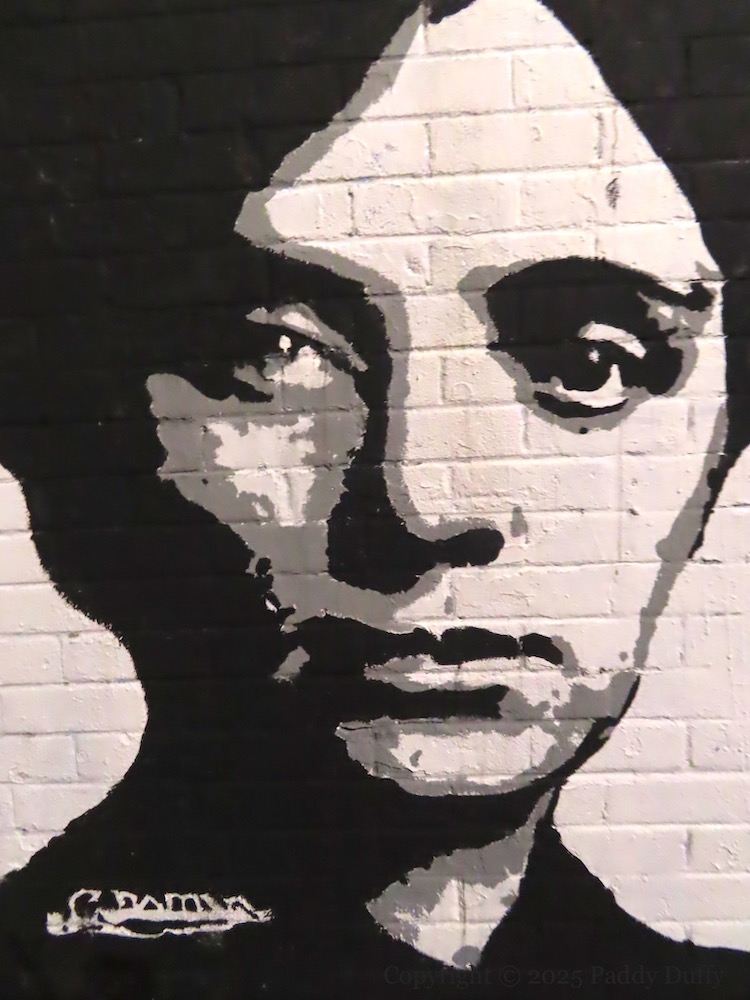
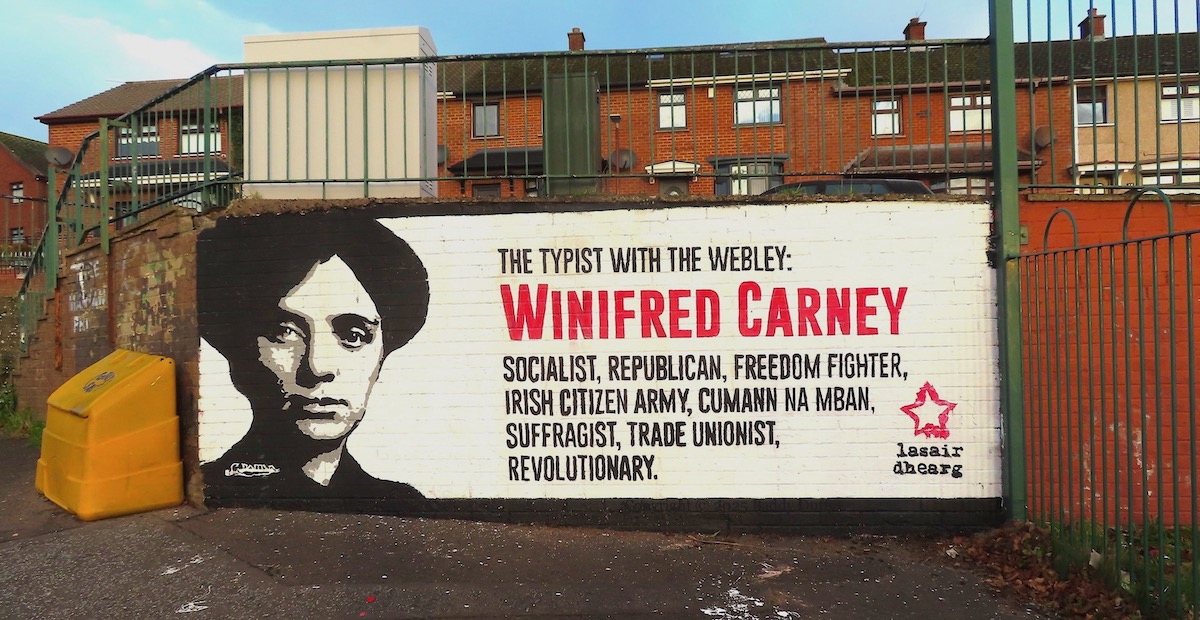
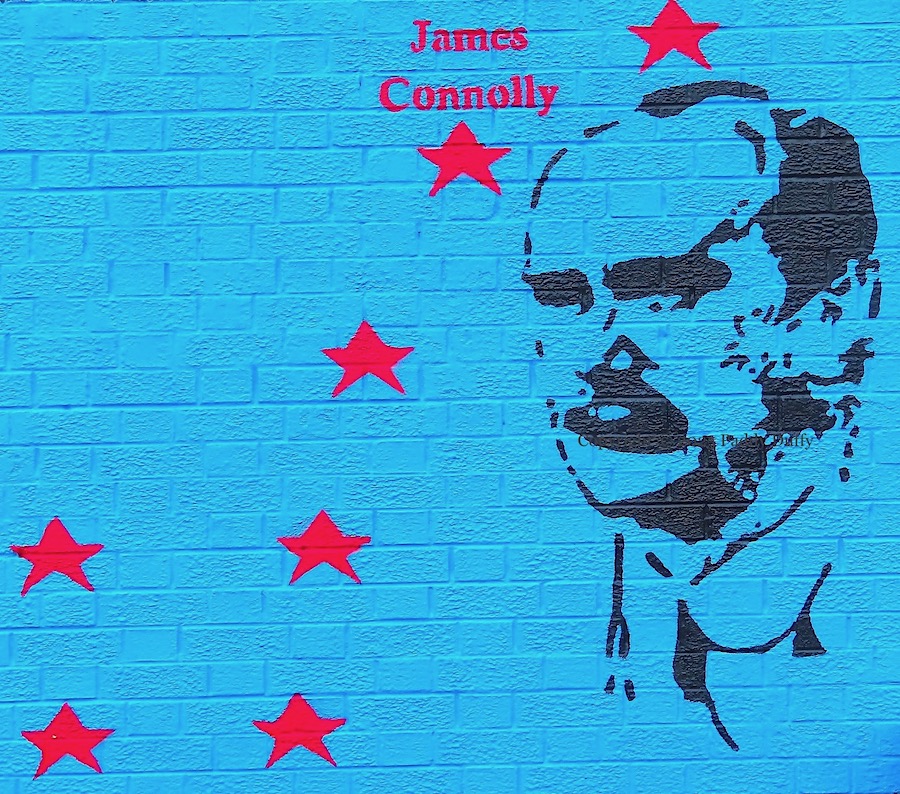
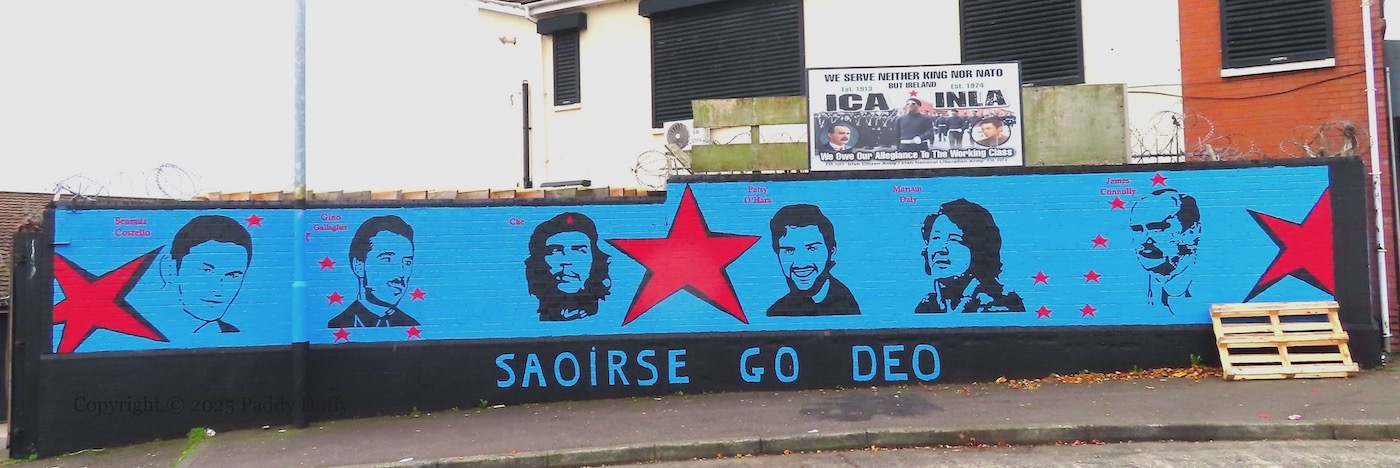
Winifred Carney was a qualified secretary and typist, and became secretary of the Irish Textile Workers’ Union in 1912, in which position she met James Connolly, who was secretary of the Belfast branch of the ITGWU. She was a member of Cumann Na mBan and participated in the Easter Rising of 1916. Carney was in the GPO when it was taken over and was among those who surrendered at the end; during the occupation she typed up dispatches from the Moore Street headquarters – this is how she was portrayed in the the 1916 Centenary mural.
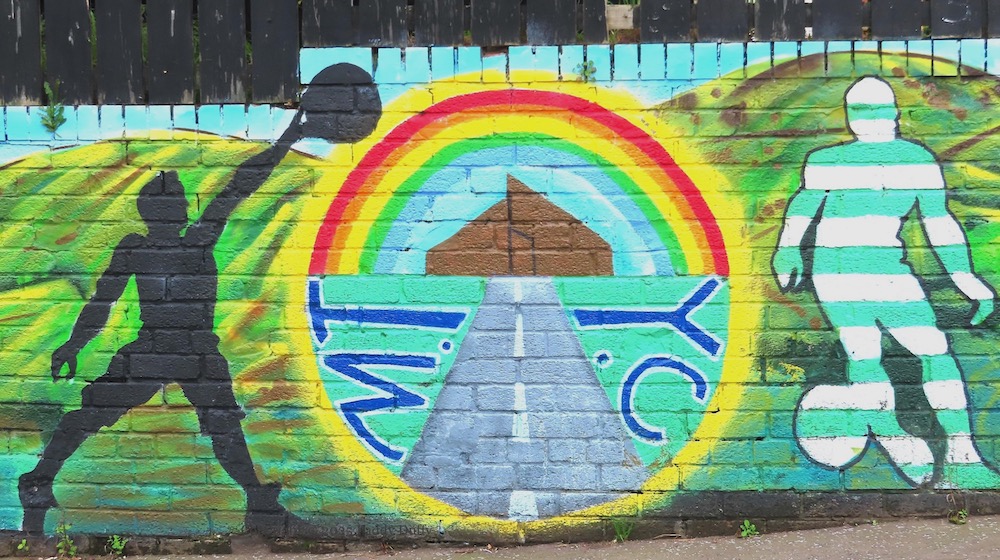
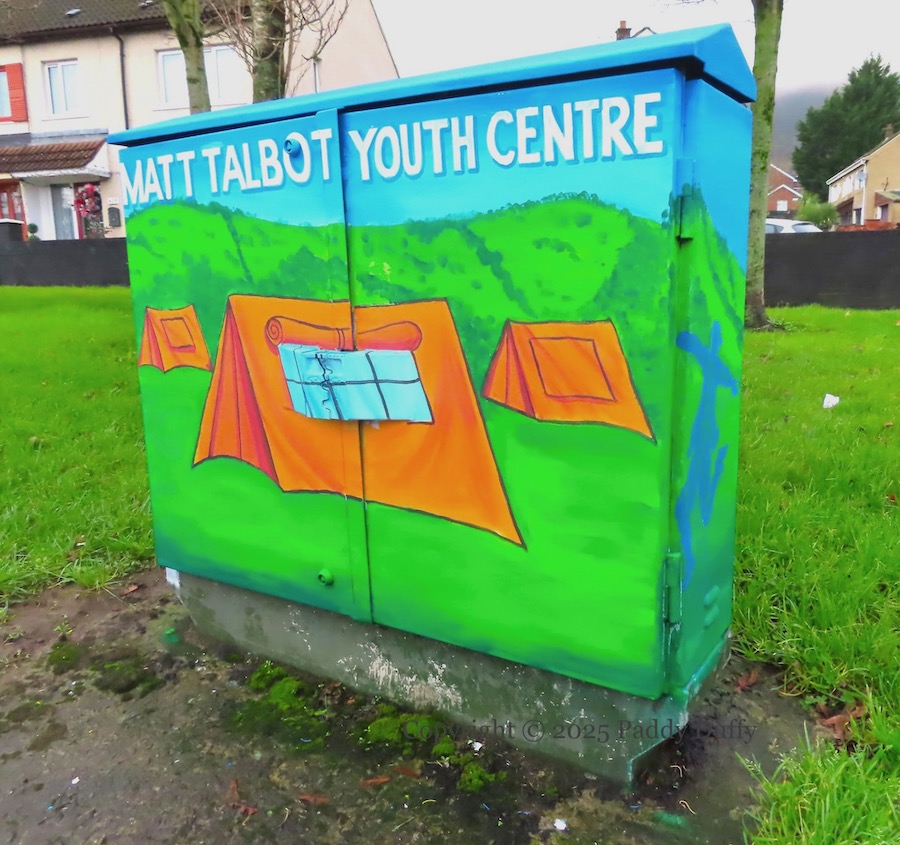
Matt Talbot Youth Centre (Fb) provides activities and services for young people from New Barnsley and Moyard, including an afternoon club, trips during the summer months, and Halloween and Christmas parties.
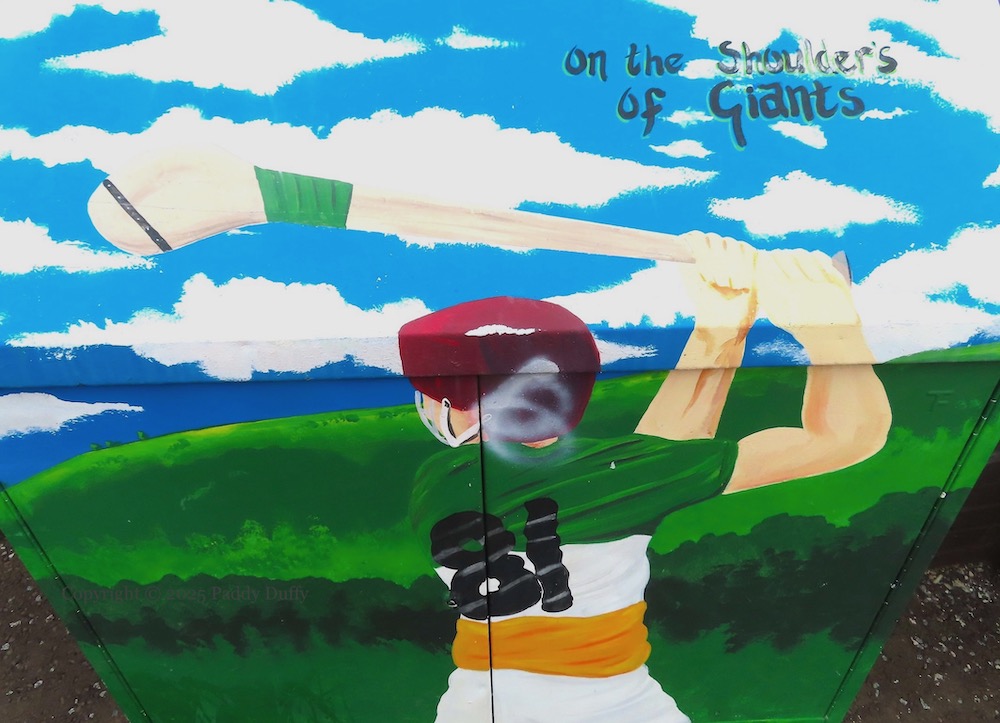
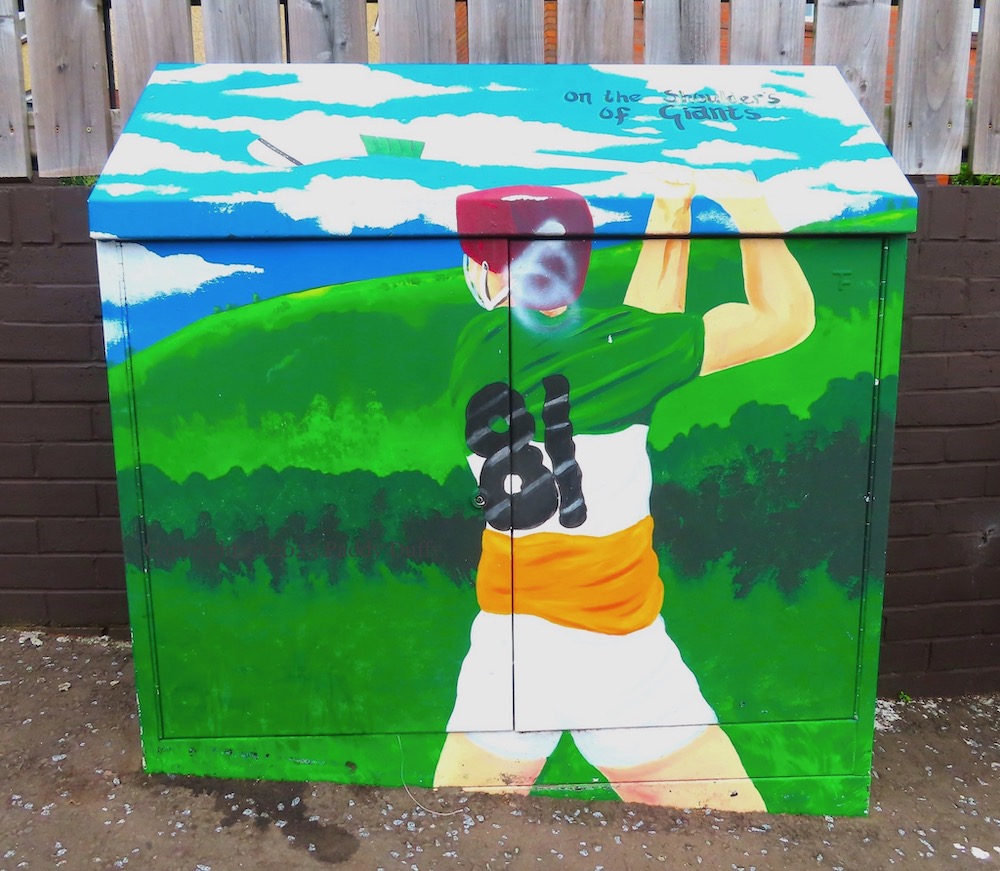
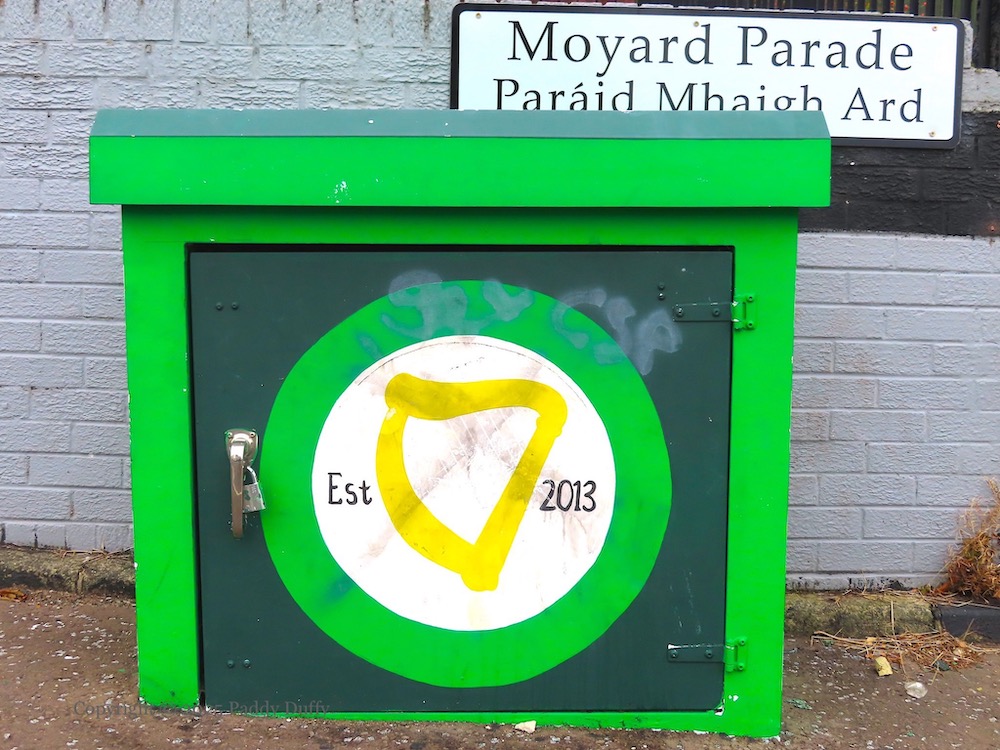
The two murals are face-to-face in New Barnsley Gardens. Also included are some painted utility boxes in the area, including a hurler/camogie-player from Michael Davitt’s GAC (web).
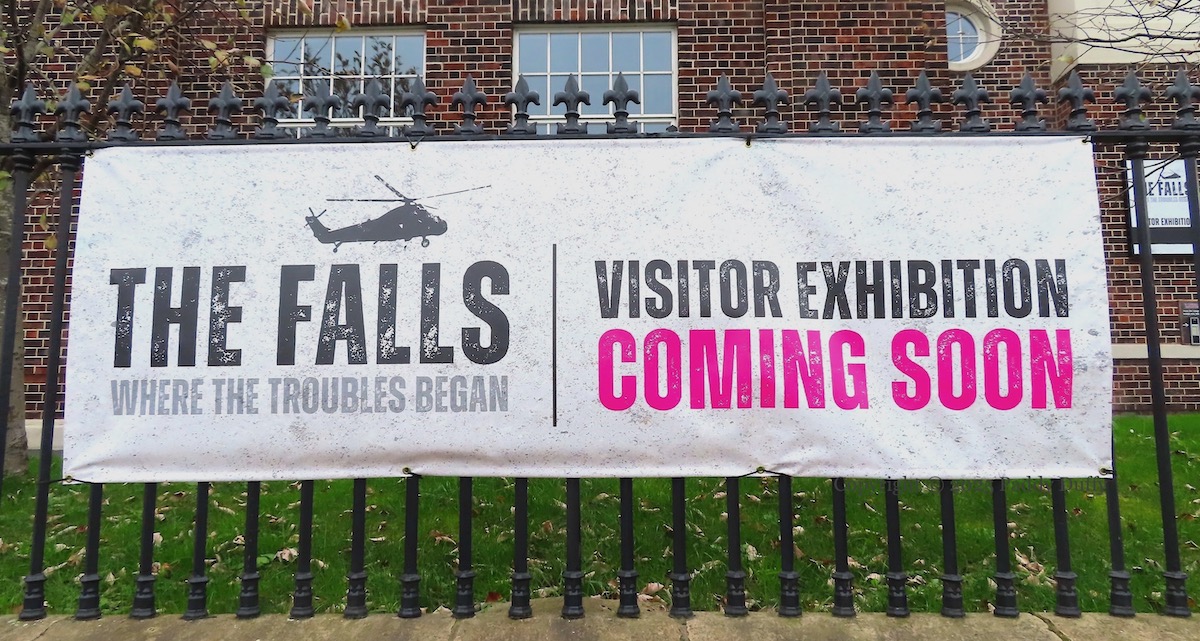
A new visitor exhibition will open on Thursday November 6th at Ionad Eileen Howell with images, video, and audio recordings covering the period from the start of the Troubles in 1969 to the Falls Curfew in 1970 (Belfast Media). The new exhibition is hosted by the Falls Community Council (Fb); tickets via Visit Belfast.
The Troubles are generally said to have started in August, 1969, rather than (e.g.) October, 1968, because the Battle Of The Bogside in Derry (beginning on August 12th) and the rioting in Belfast (beginning on the 13th) led to the deployment of British troops (on August 14th and 15th).
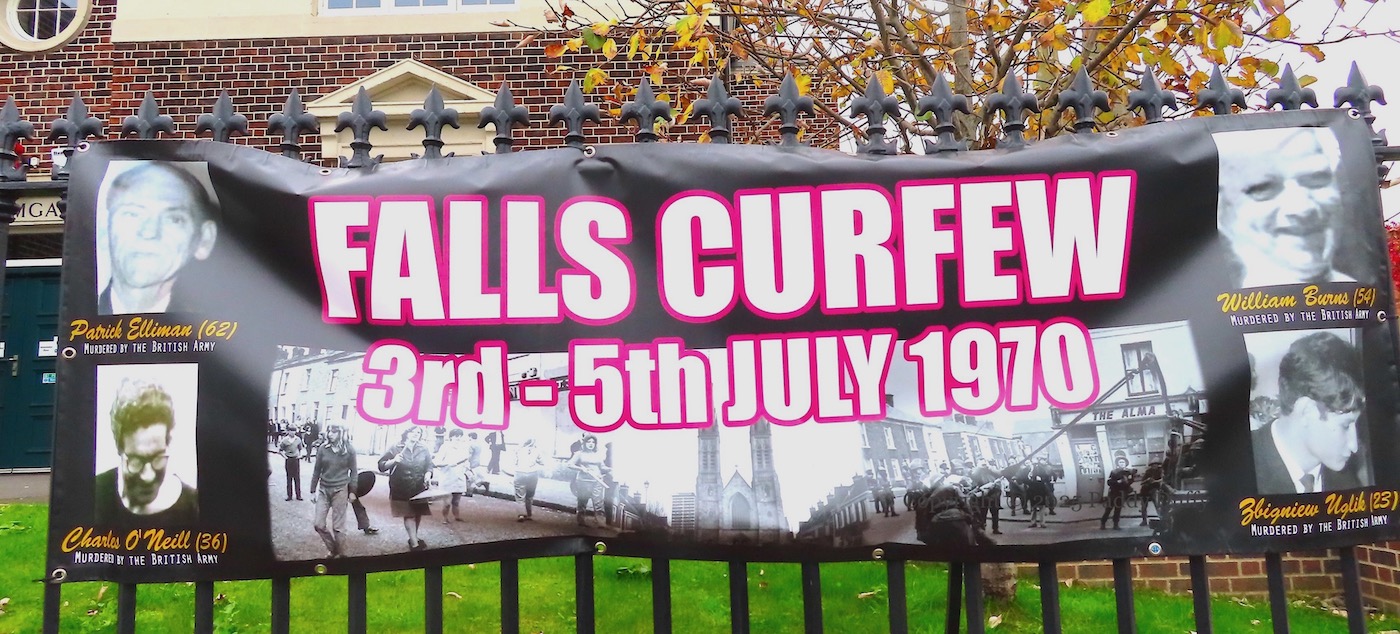
The Falls Curfew, in July 1970, was a pivotal event in the souring of relations between the CNR population and the British Army. About 3,000 homes were cordoned off, the area was saturated with CS gas, and thousands of bullets were fired by the Officials and Army soldiers, the latter killing Charles O’Neill, William Burns, Zbigniew Uglik, and Patrick Elliman; there is a plaque commemorating the four a little further up the road – see The Falls Curfew.
The upper Woodvale plaque “in memory of all those Protestants and members of the security forces who lost their lives in the greater Shankill area as a result of conflict” has sat unadorned since at least 2008 but now has a pair of boards to accompany it.
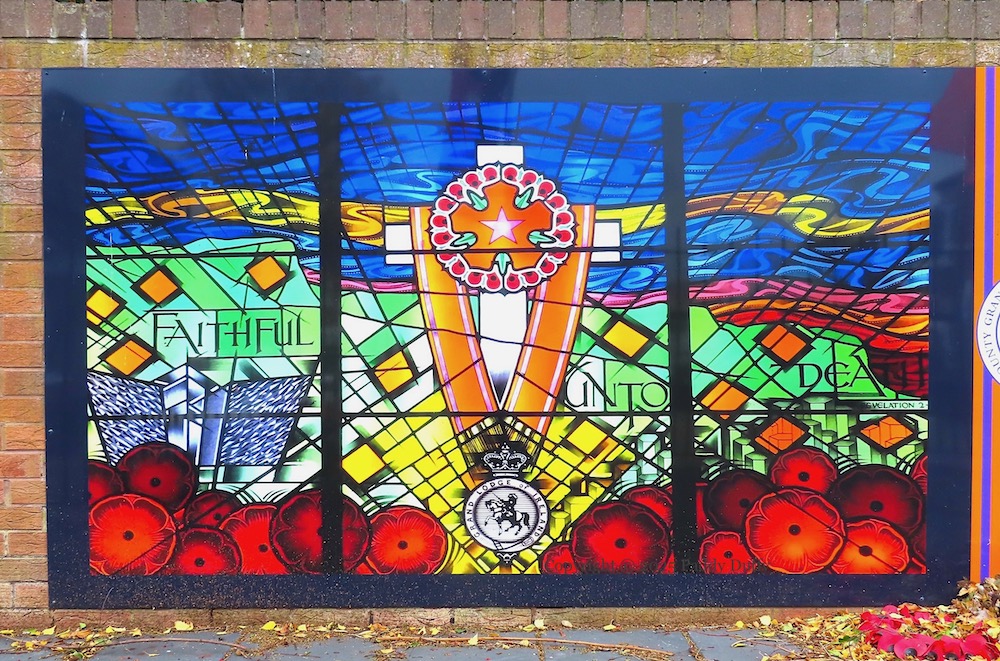
On the left, a reproduction of the “Faithful Unto Death” stained-glass window in the Museum of Orange Heritage in Schomberg House on the Cregagh Road (also reproduced in Newbuildings in 2022), along with the emblem of the Country Grand Orange Lodge Of Belfast (Fb).
On the right, a memorial to “all local residents whose lives were cruelly taken by Republican terrorists. Also those who selflessly gave their lives in the service of our country, and those who continue to do so.” (LOL “423” appears to be Banbridge Bible And Crown Defenders.)


















 Paddy Duffy Collection