“A little boy of fifteen years/was chosen thus to die./As a British soldier aimed his gun/And never questioned why!/The shots rang out, the echo[e]s still/Young Danny fell, shoot to kill./They shoot to kill & kill & kill/Oh please God stop them/But no one will.” Danny Barrett was shot and killed on July 9th, 1981 – a day after Joe McDonnell’s death and on evening of the same day as the shooting of Norah McCabe – by a single shot from a British army observation post on top of Ewart’s Mill. The mural in his memory is in Havana Way, close to his Havana Court home, where he had been sitting on a garden wall talking to a friend. For a full account, see Free Ireland or watch video of his sisters in front of the new mural. For the Lawrence/Hammil board in Brompton Road, see Same Story, Same Bigotry.
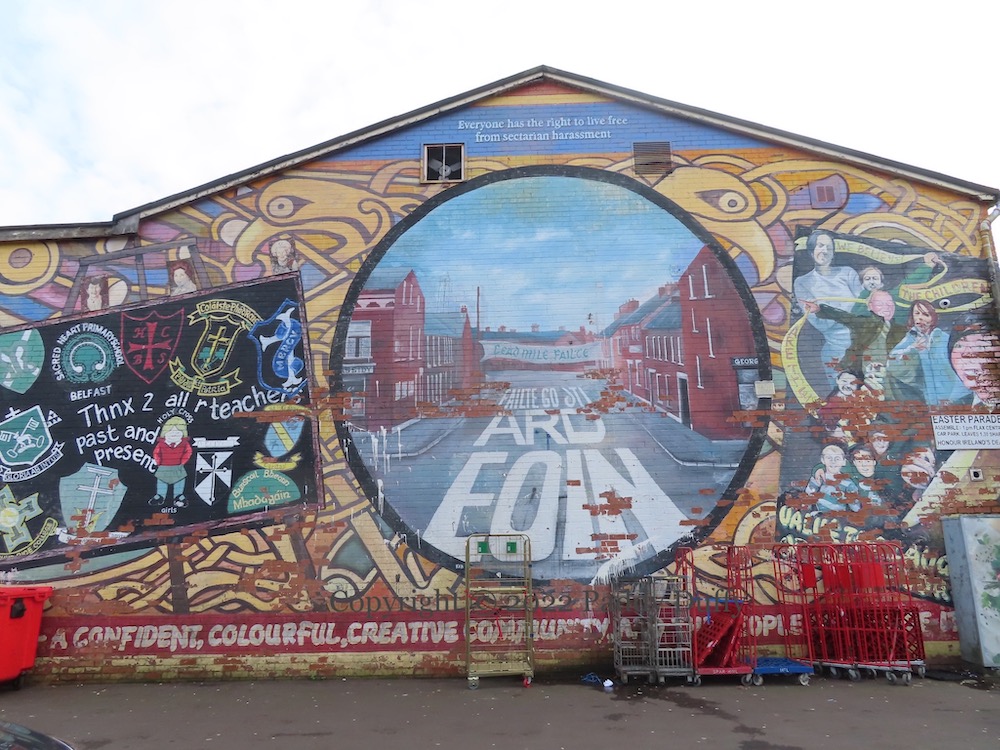
mural featuring (from left to right in the image below) Ardoyne Youth Club, Ard Eoın Kickhams, and the John Paul II Youth Club as alternatives to bullying, racism, homophobia, addiction, and other social ills. This panel shows Irish dancing, soccer, and Gaelic games; there are also images of young people practicing martial arts, DJing, and boxing on a side wall.
“Fáılte Go Dtí Ard Eoın. Ardoyne – a confident, colourful, creative community, and the people who made it so” particularly the local schools, whose insignia are shown on the left: “Thnx 2 all r teachers past and present.”
The previous mural in this spot (M01783) is invoked by the banner across the top: “Everyone has the right to live free from sectarian harassment” and the inclusion of Holy Cross Girls among the schools.
Whitney Houston and Bobby Sands are invoked on the right “We believe the children are the future – value the laughter of our children“.
For this year’s Twelfth, the famous UVF “Prepared for peace, ready for war” mural that has stood over the entrance to Mount Vernon for twenty years was retouched. The most obvious change is in the apex, as a different UVF symbol – with flags – has been included, along with the words “3rd Battalion” which had been in the much earlier version of this mural on another wall.
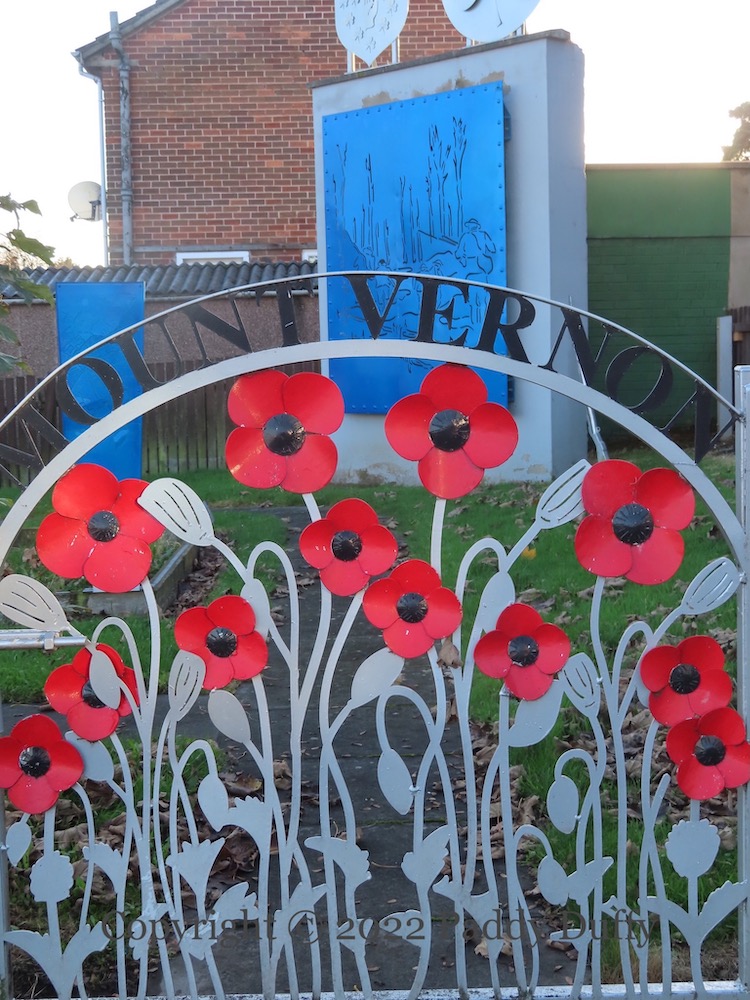
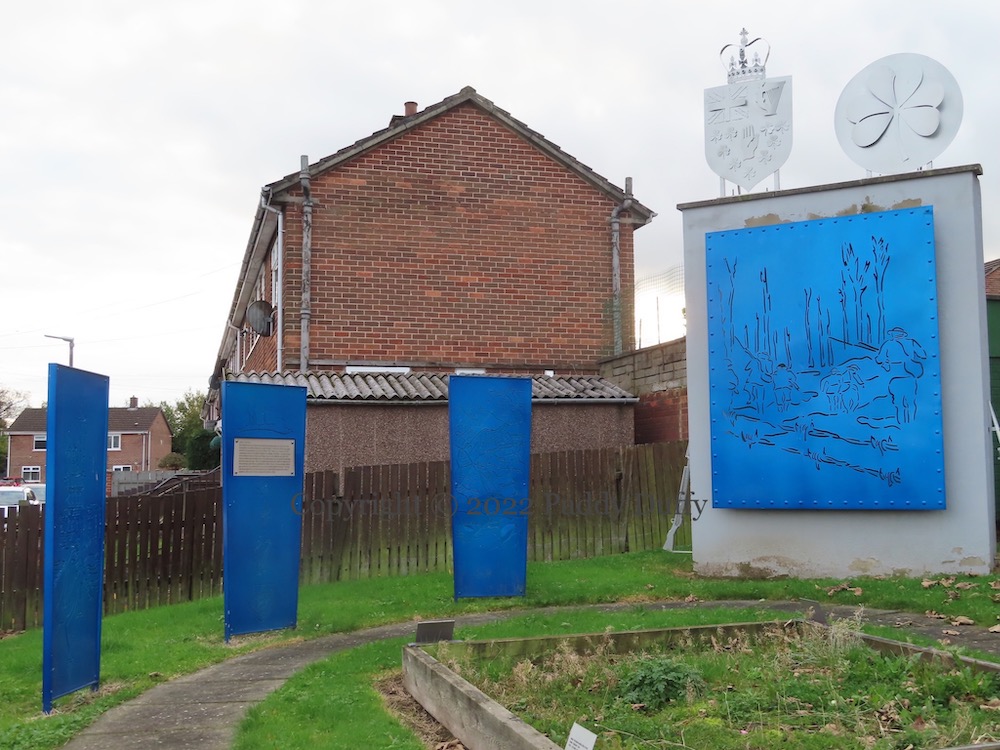
This metal gate of poppies opens onto a cluster of blue metalworks showing scenes from WWI and a map of the area around Messines. The silver emblems are of the 36th and 16th divisions.
For more, including the panels to John Cordon and William McFadzean, see M07770.
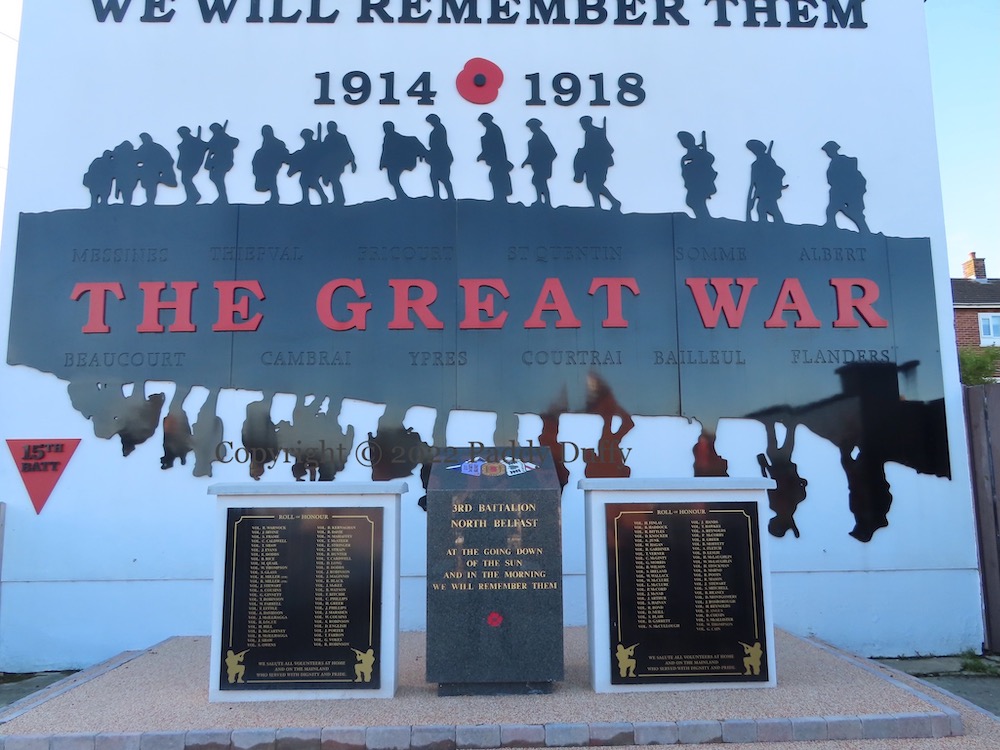
The memorial garden in Mount Vernon, has a “cut-out” mural to the 36th (Ulster) Division and memorial plaques to six UVF members who died between 1974 and 2000, including (lhs of the final image) Joe Shaw, who was shot by the UDA during the 1974-1975 feud. (For details of the killings and its aftermath, see this Balaclava Street article.) The stone in the centre is dedicated to the “3rd battalion North Belfast” Ulster Volunteer Force.
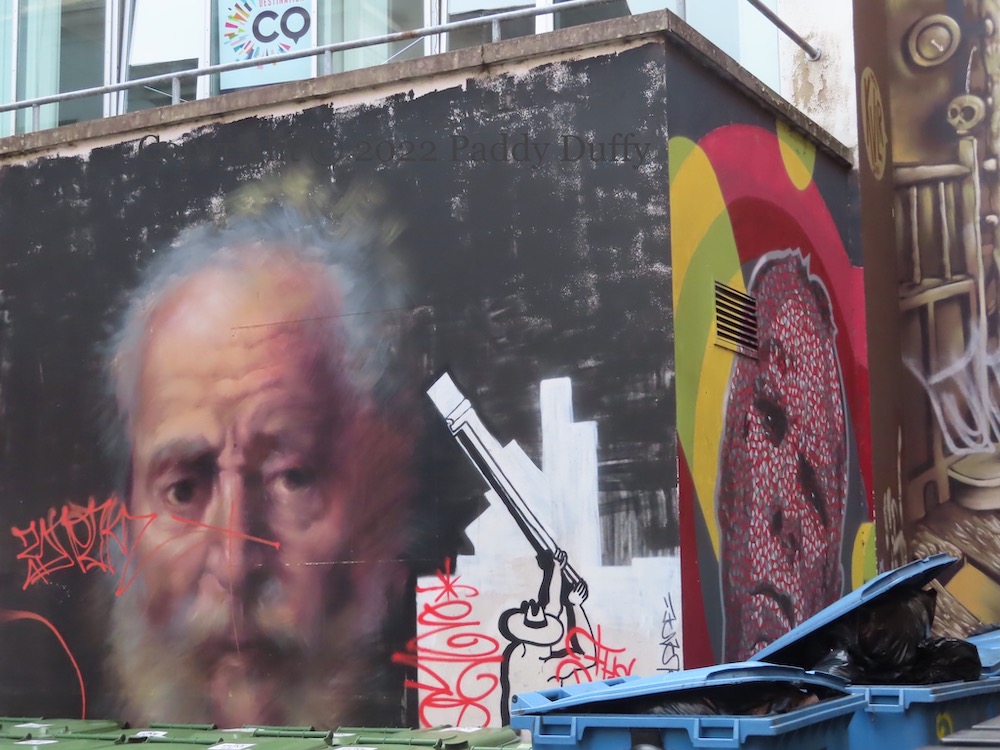
Two men fence while a third watches on; nature in the form of a deer lies dead on the floor. This is a 2012 mural by Cork artist Conor Harrington (whose blog is called ConorSaysBoom) in Hill Street (below the Duke Of York) – for being ten years old, it is holding up fairly well but some graffiti has been scrawled across it along the bottom (as is true on the adjacent street art, PANG’s Past Masters and Psychonautes’s portrait of Jay Adams).
Liz Truss’s Titanic hit not one but a series of icebergs (described previously in Broken Promises) and announced her resignation as leader of the Conservative party, and therefore as UK prime minister, on October 20th, triggering another leadership contest, with the previously-defeated Rishi Sunak back in the running in addition to – for a day, at least – former PM Boris Johnson; the third person shown is Penny Mordaunt. In the end, Sunak went unopposed (WP) and left the lifeboat to join the circling sharks: Putin, strikes, NI Protocol, energy costs.
This is the fourth in a chronicle of the Truss premiership by Ciaran Gallagher (web) in Hill St: And In The Blue Corner … (Truss vs. Sunak) | It’s A Knockout! (Truss wins) | Broken Promises (Truss crisis). Many of the pieces were later mounted in the courtyard of the Dark Horse bar – see Ship Of Fools.
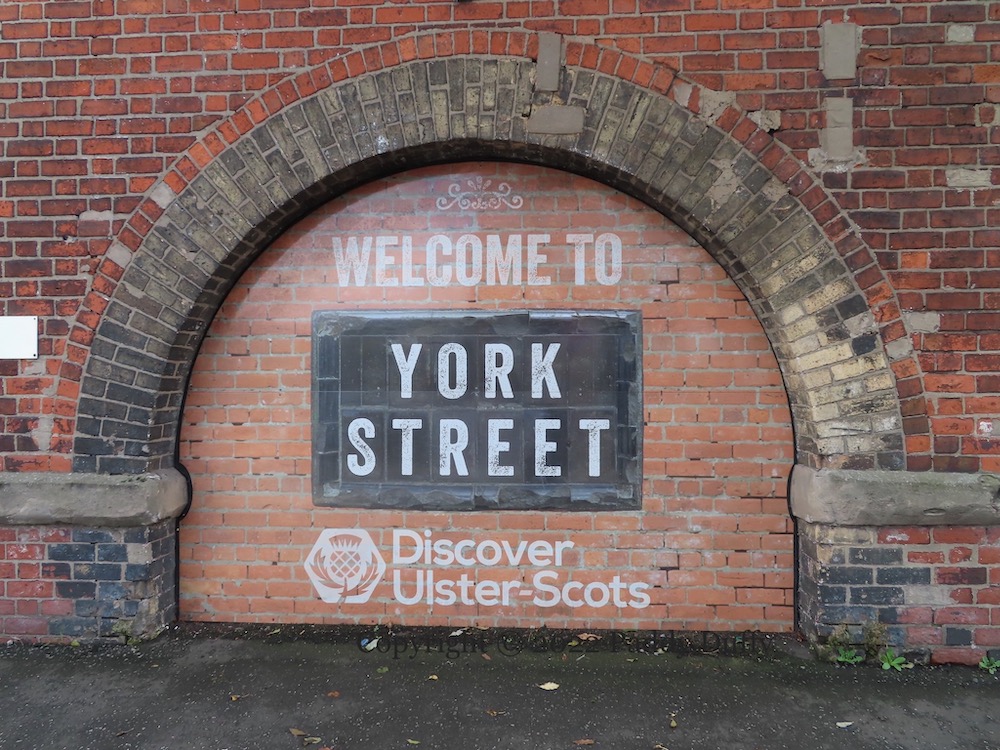
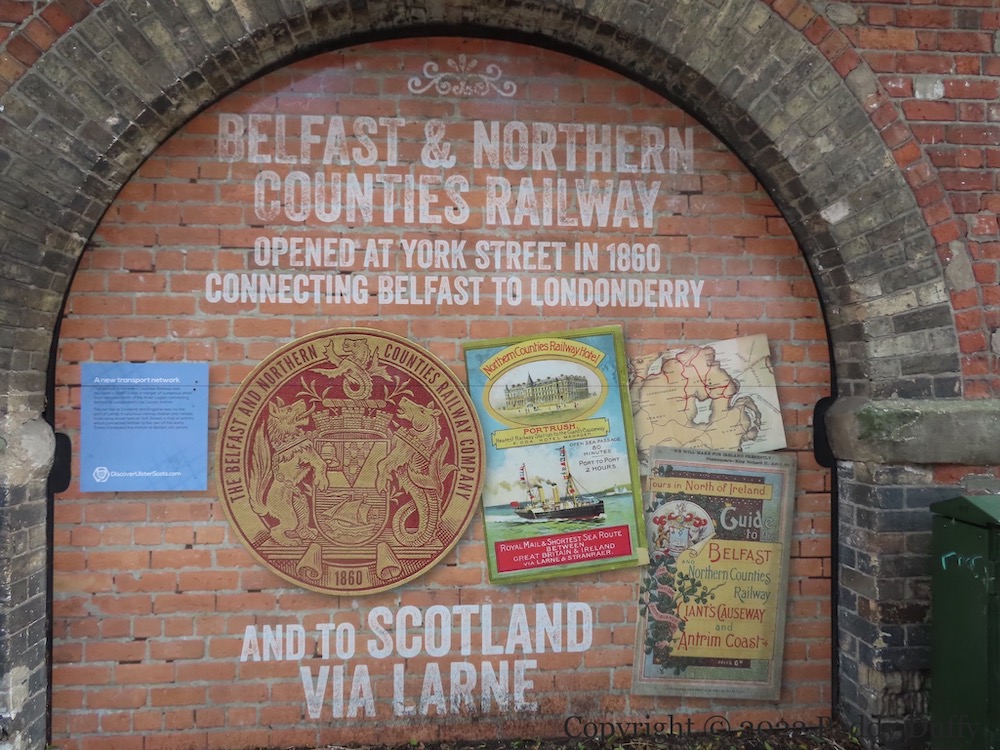
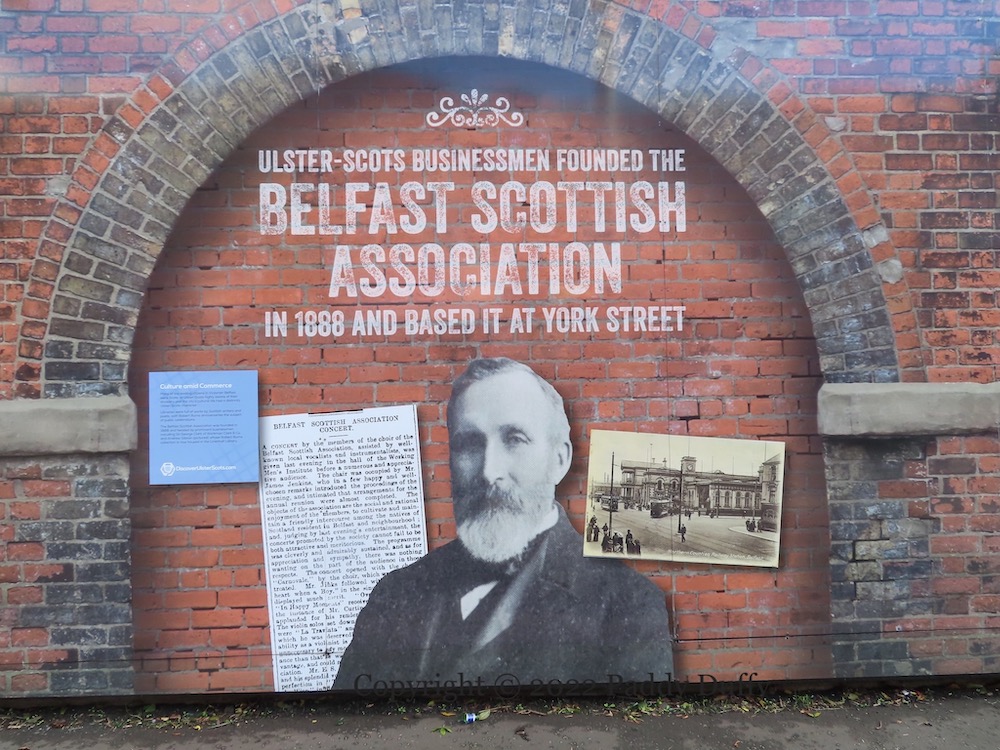
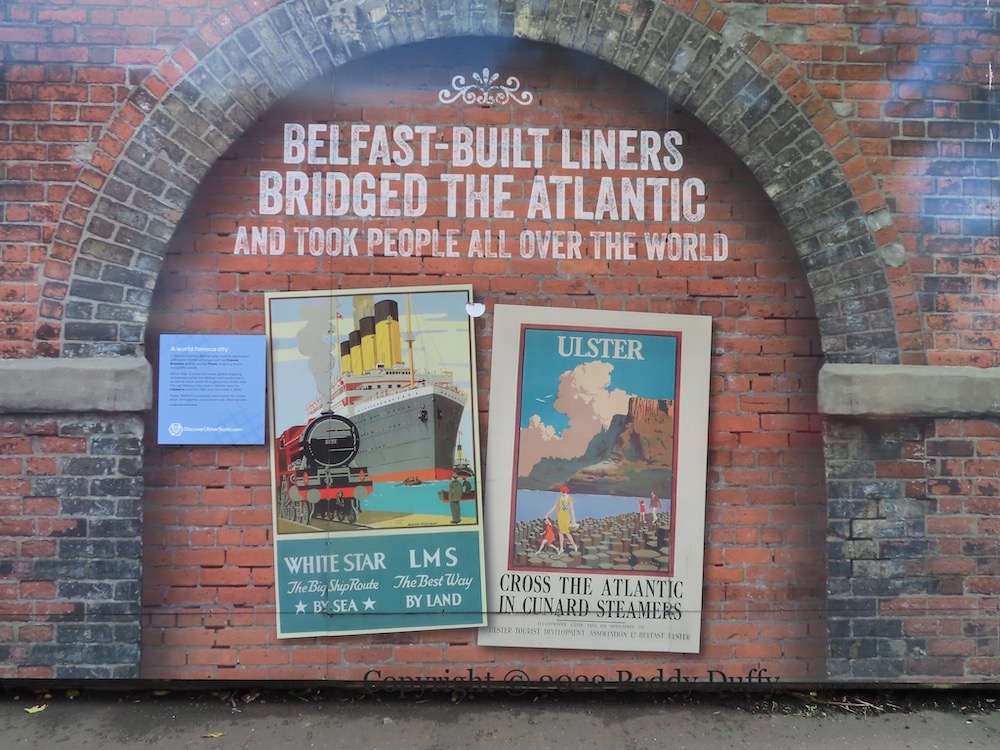
This is a 13-panel installation along York Road from discoverulsterscots.com about York Street businesses and Ulster Scots businessmen. It begins by telling a history of shipbuilding and its role in Belfast’s industrial life (“The harbour made York Street Belfast’s global gateway”) and in particular its connection with Scotland.
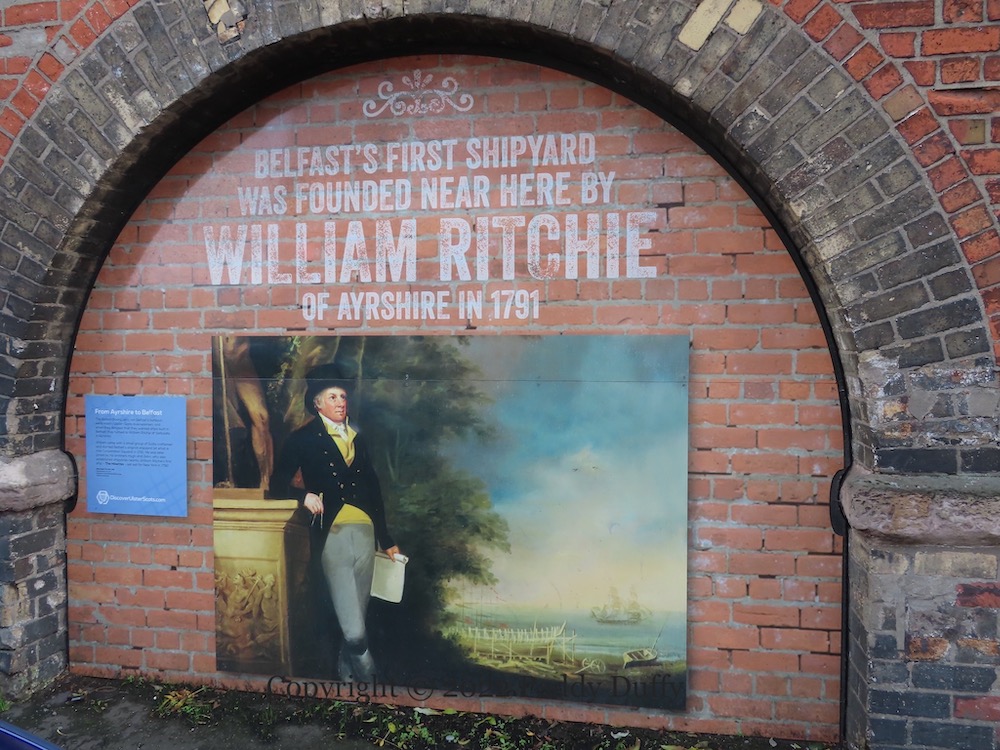
Two Scots, William Ritchie (whose 1802 portrait by Thomas Robinson is shown) and Charles Connell (who oversaw the construction of the first wooden steamboat in Belfast – Aurora, pictured below) along with another Scot, Alexander MacLaine, were the leading shipbuilders in Belfast from 1791 until the 1860s, when Englishman Edward Harland (soon joined by German Gustav Wolff, and then in 1874 by William Pirrie and Wilson brothers Walter and Alexander) took over the rival Hickson yard (which included land on Queen’s Island and on the south side of the Lagan) and became dominant. Their connection to York Street is that all of them except Pirrie lived on or near York Street.
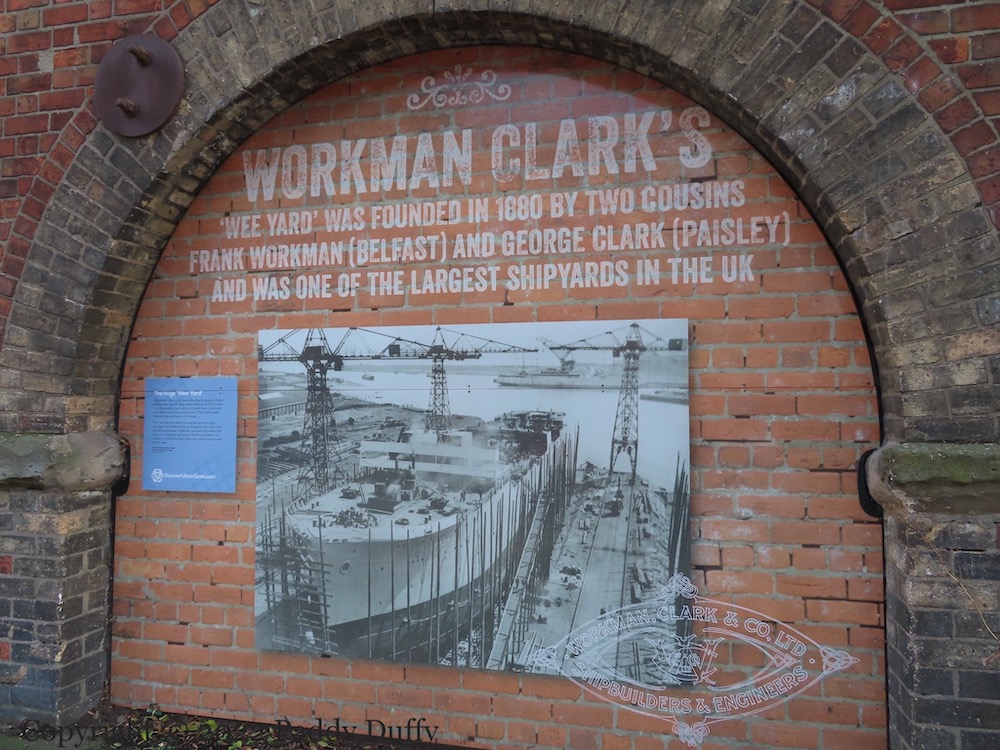
Workman & Clark’s was a Belfast shipyard existing from 1880 to 1935. During the first world war it took over the construction of two monitor ships (specifically, M29 and M31) for the Royal Navy that H&W did not have space to build. For more, see Grace’s Guide | BBC audio on monitor ships and their construction, including a record for number of rivets hammered in by one John Moore at Workman Clark’s.
Among the Belfast goods “exported around the world from York Street by rail and sea” were Gallaher’s Blues (cigarettes), Irish linens, Davidson & Co (Samuel Davidson, born in County Down to an Ulster-Scots family, was the inventor of the Sirocco centrifugal fan “for mine ventilation, dust removal, induced draft, forge fires”), and linen carpet thread from York Street (Threads) Ltd. Robinson & Cleaver’s department store is now out of business. Gallaher’s is now the multinational Gallaher Group, but its factories in Belfast and Ballymena have closed. And Davidson’s company was bought by Howden UK in 1988.
“The Belfast Scottish Association was founded in 1888 and headed by prominent businessmen, including Sir George Clark of Workman Clark and Andrew Gibson (pictured) whose Robert Burns collection is now housed in the Linenhall Library.”
In addition to the famous trans-Atlantic ships (image below), Belfast was part of the travel network in the UK and Ireland (image above). Before there was British Railways, there were the Big 4: the Southern, Great Western, London and Northeastern, and London, Midland, and Scottish (LMS) railways. The latter included the railways in the Northern Counties. In addition to railways, the company owned canals, ships (including the Princess Victoria which sank on the Larne-Stranraer route), and hotels. “Belfast-built liners bridged the Atlantic and took people all over the world.” “Railway-owned ships ensured a seamless journey throughout the British Isles.”
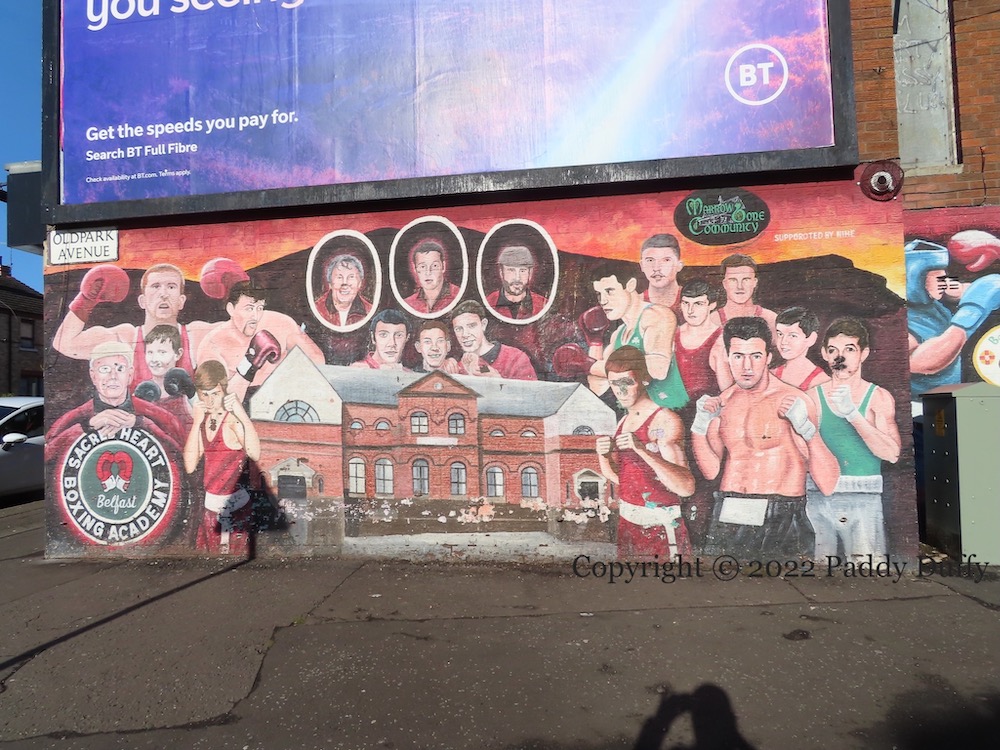
Sacred Heart Boxing Academy was housed in the parochial hall (shown in the middle of the mural) before closing perhaps because of safety concerns and/or debt.