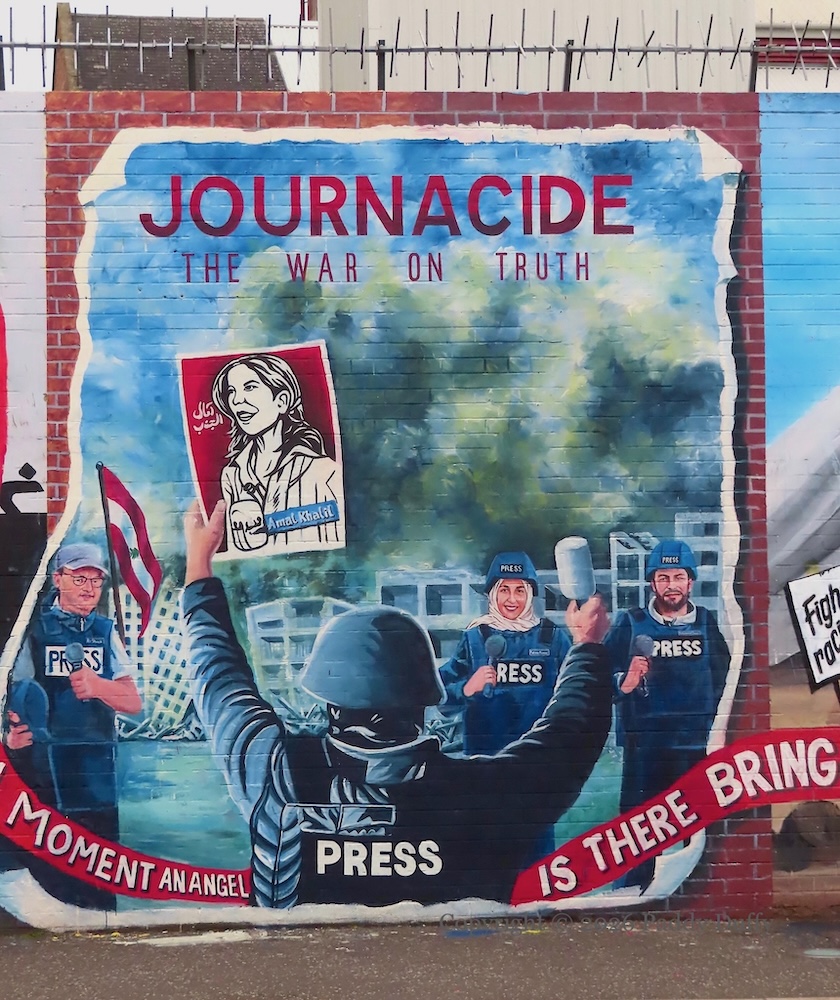
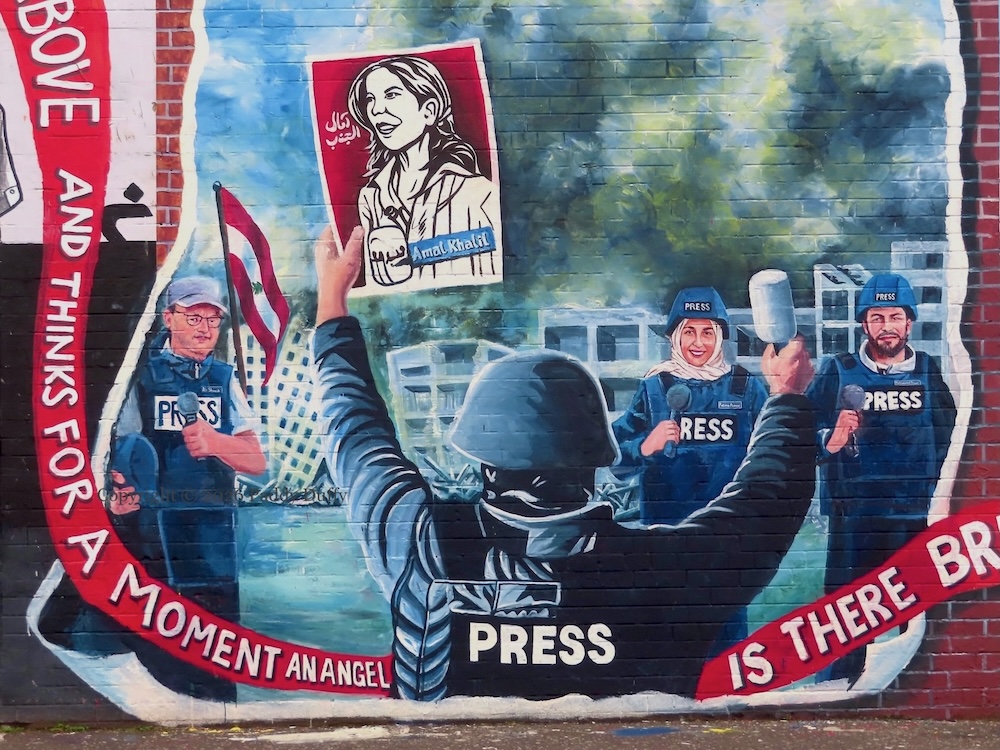
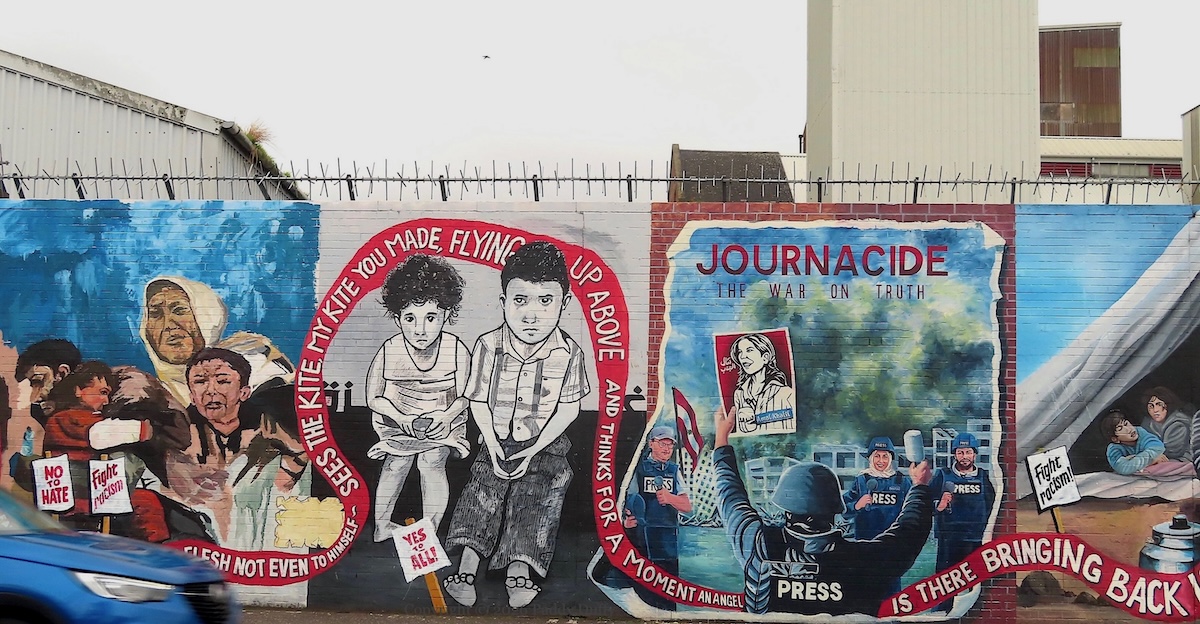
Since the Hamas attacks of October 7th, 2023, IDF forces have killed roughly 260 media workers in Gaza and 28 in Lebanon. The International Federation Of Journalists in 2025 declared Gaza to be the deadliest place for journalists (Al Jazeera); the Guardian calls it “journalism’s graveyard”.
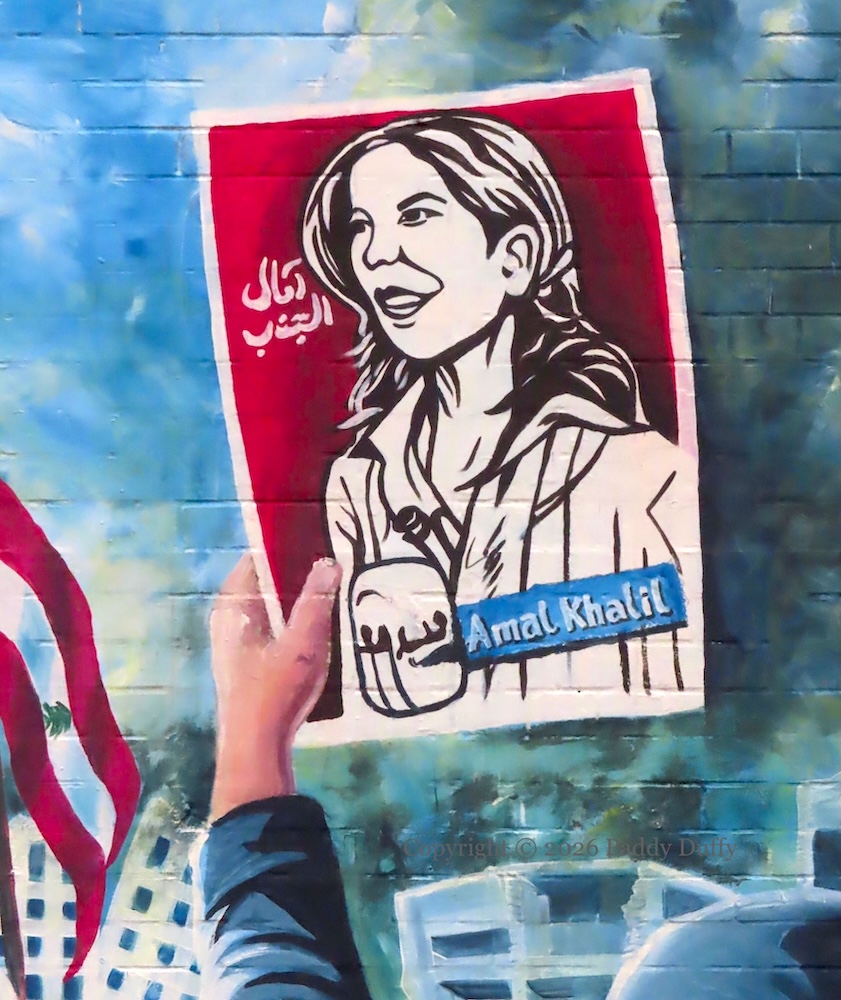
Seán Murray’s documentary “Journacide: The War On Truth” premiered in Belfast in June as part of Docs Ireland (pdf). It profiles four journalists killed this year (2026) in Lebanon: Amal Khalil (killed in al-Tayri on April 22nd (RSF)), and Ali Shoeib, Fatima Ftouni, and her brother Mohamed Ftouni (killed in Jezzine on March 28, 2026 (PBS))
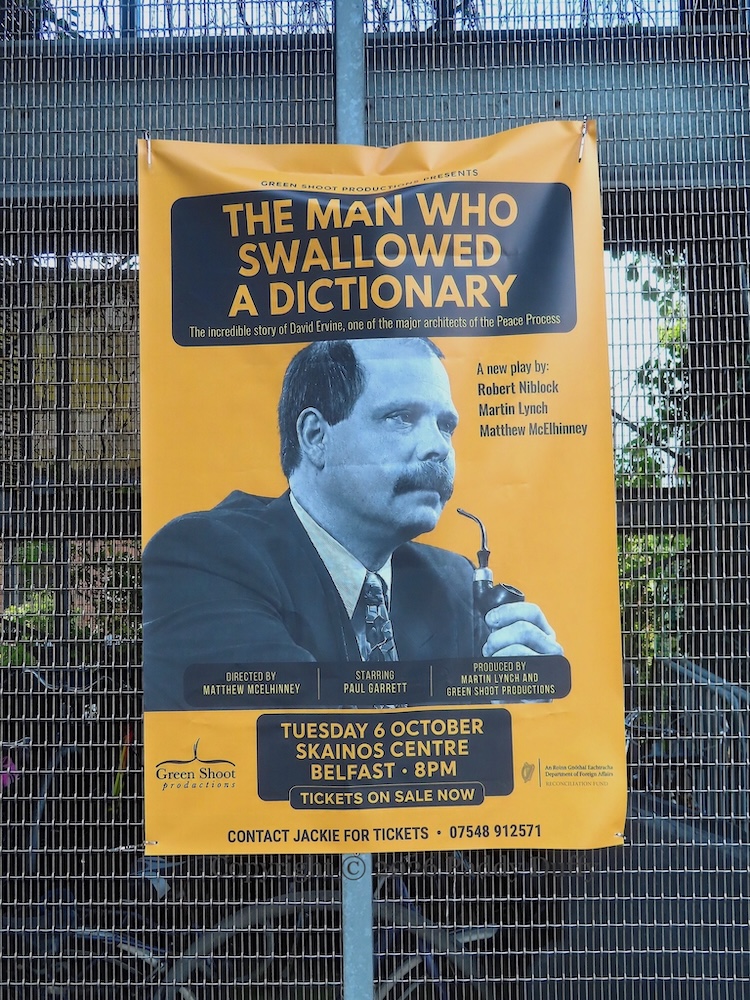
The one-man play about the life and evolution of David Ervine – from UVF volunteer and prisoner to PUP representative and ceasefire negotiator – returns for a short tour starting this evening, September 29th, at the Roddy’s in west Belfast. Dates for other locations can be found on the Fb page of Green Shoots productions. The play was performed at the Lyric in 2023 and 2024 and toured in 2025 (Green Shoots web page).
This poster is at the Skainos Centre in Ervine’s home area of east Belfast, which will host the production on October 6th.
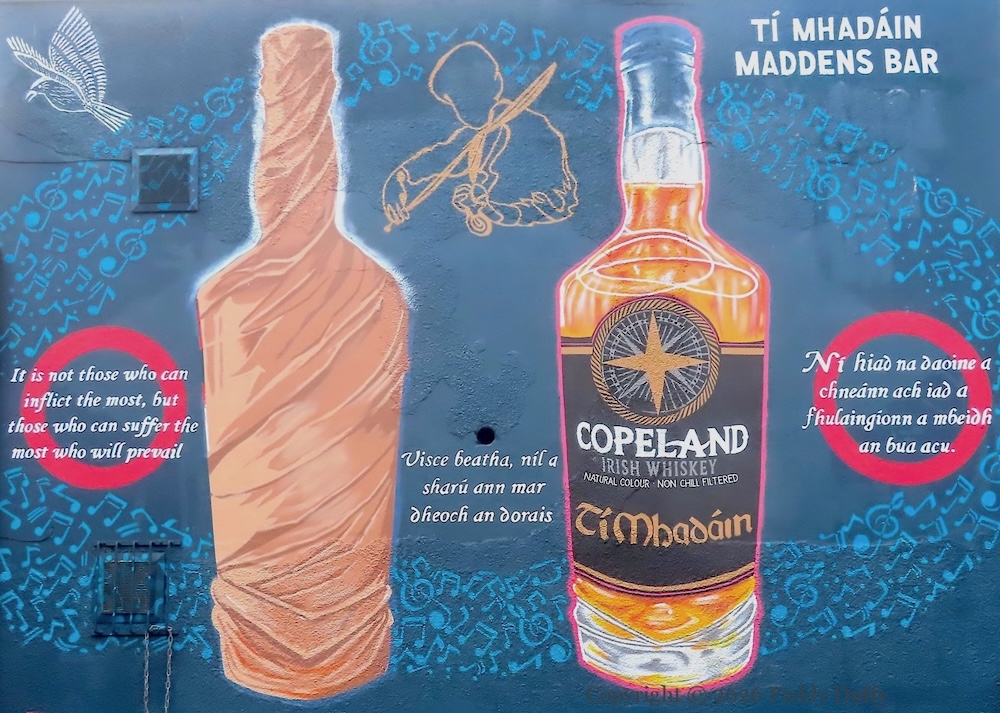
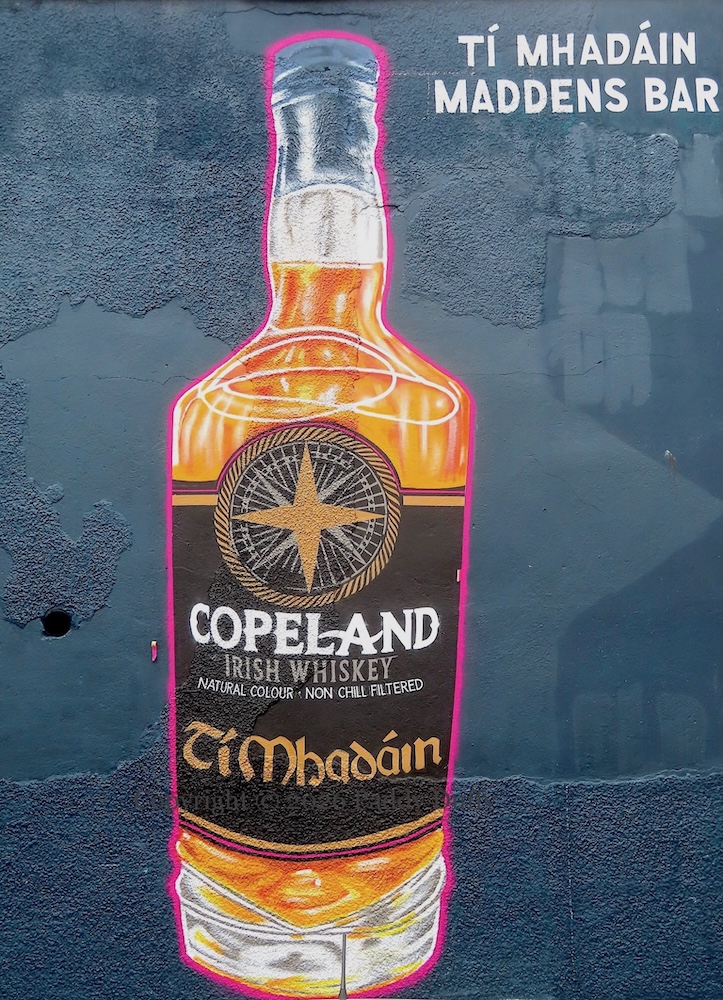
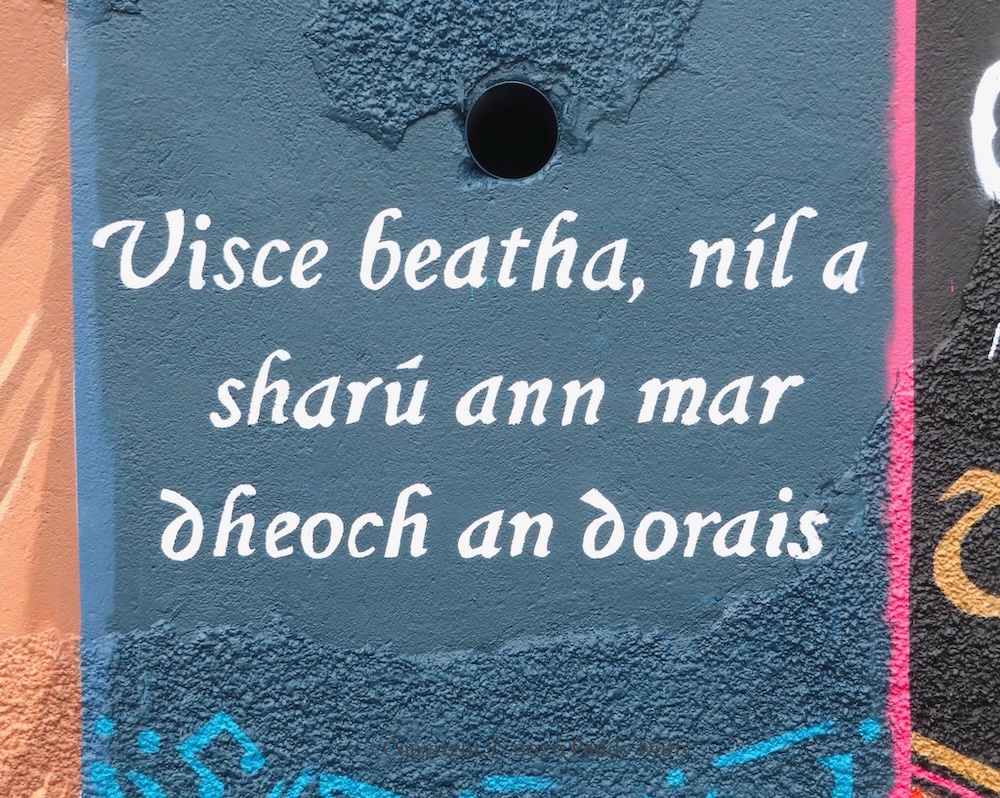
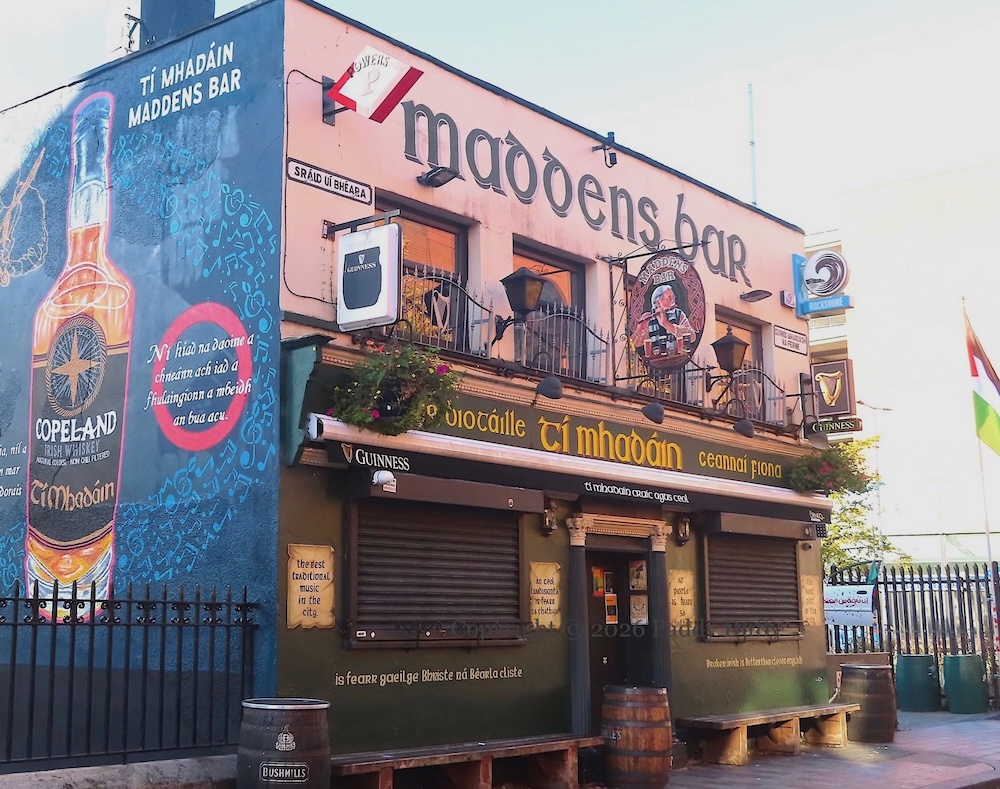
Copeland distillery in Donaghadee has partnered with Tí Mhadáın/Madden’s Bar in Belfast to produce a whiskey. The wrapped bottle on the left suggests that you take one home with you after sampling it in the bar: “Uısce beatha, níl a sharú [shárú] ann mar dheoch an doraıs. [Whiskey – there is no surpassing it as a parting drink]”
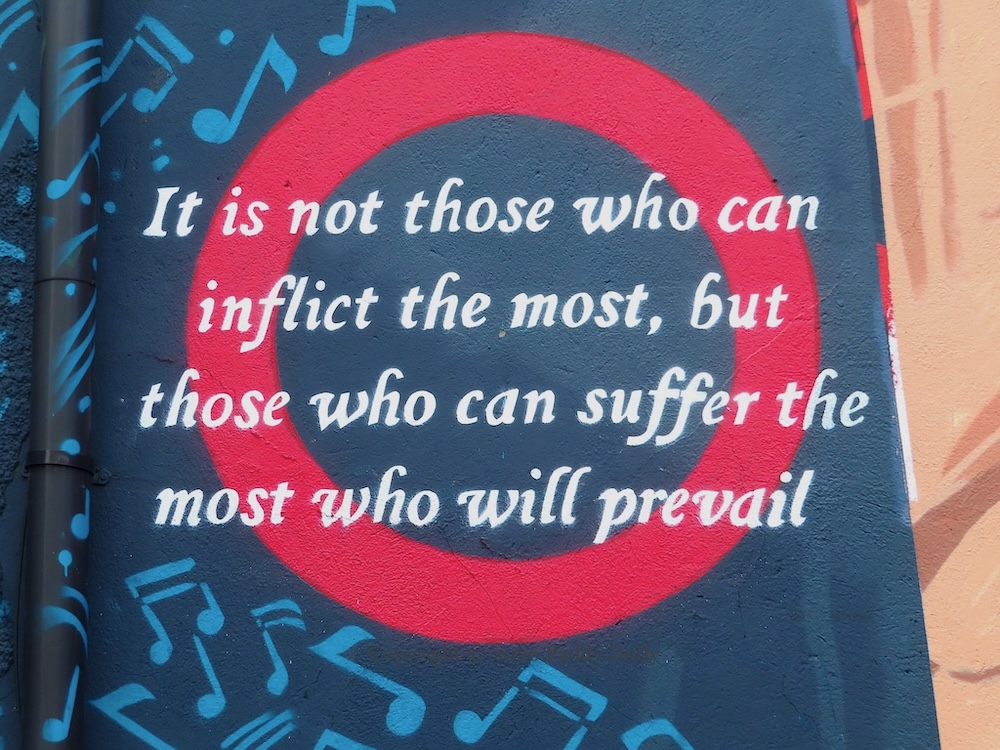
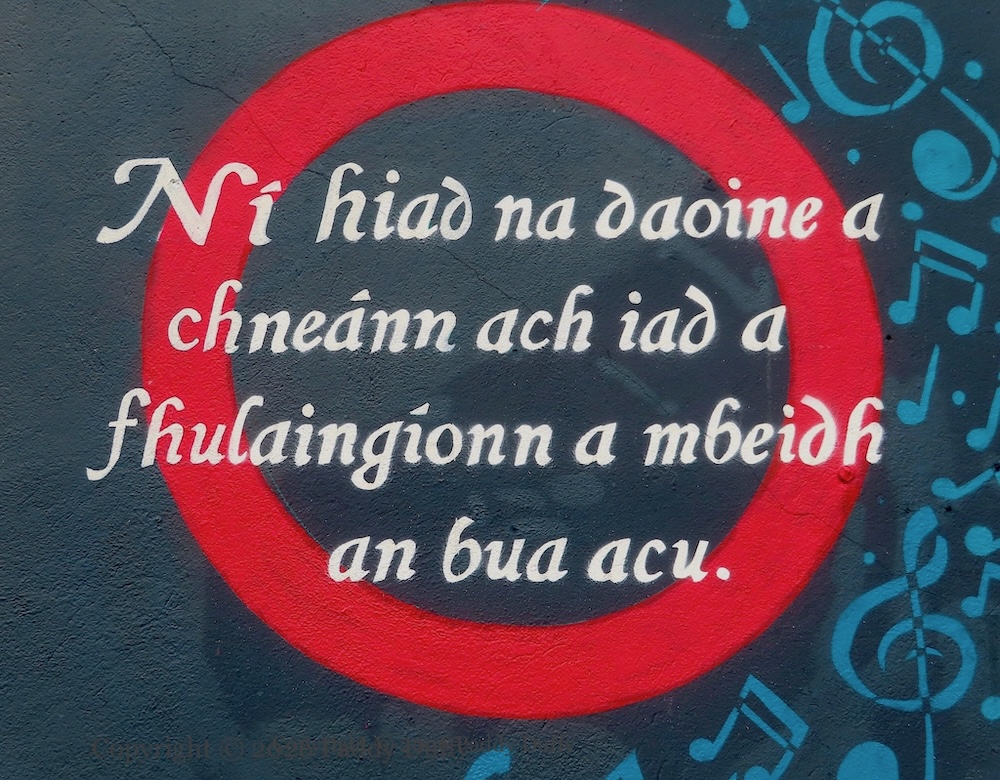
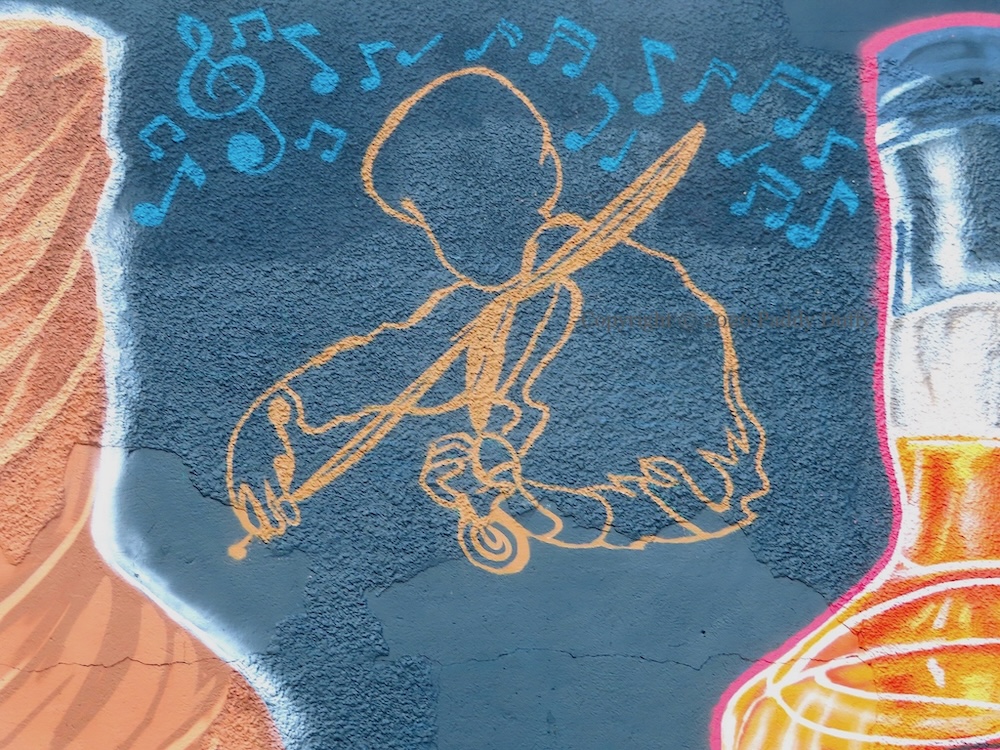
The mural is generally commercial, but a lark – symbol of republican POWs – and a quotation from Cork mayor and 1920 hunger-striker, Terence MacSwiney, are also included: “It is not those who can inflict the most but those who can suffer the most who will prevail. Ní hıad na daoıne a chneánn ach iad a fhulaıngíonn a mbeıdh an bua acu. [It is not the people who wound but those who endure who will achieve victory]”
The car door on the railings is a piece of protest art, entitled I’m Afraid Of The Dark.
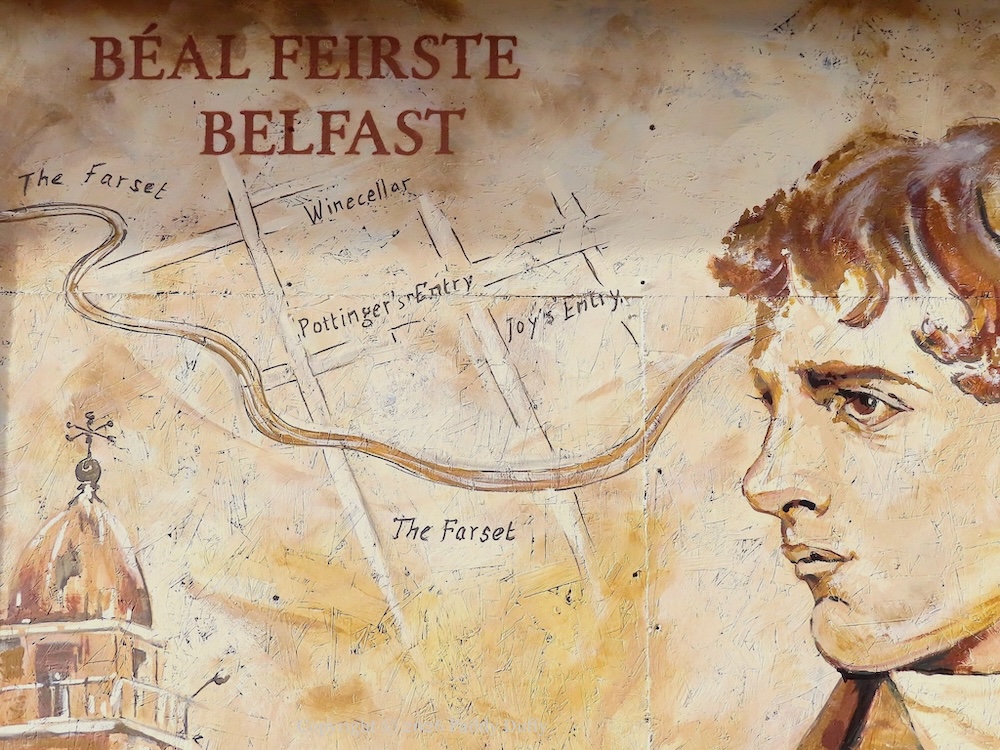
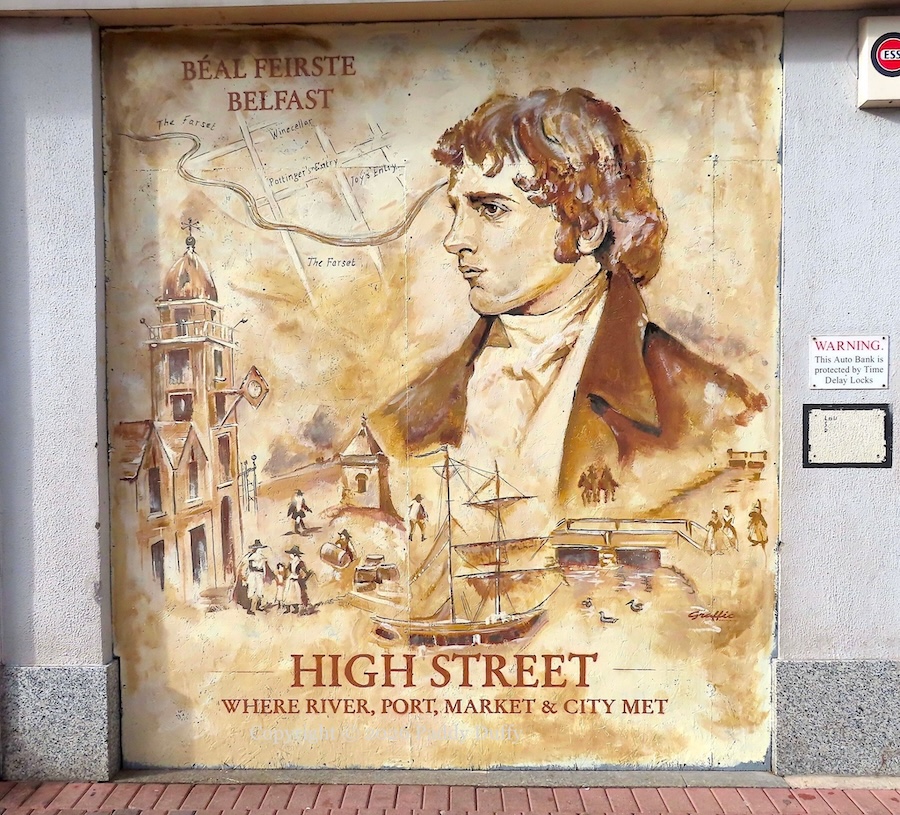
The Farset runs from the Horseshoe Bend above Ballysillan/Ligoniel south across the Shankill before turning east towards the city centre at what is now the western end of the west Belfast war wall (“peace line”) at junction of Lanark Way and Cupar Way (Visual History), before emptying into the Lagan. In the city centre, it ran along Castle Place and High Street, but, because it was used as a sewer, it was paved over by 1848 (BBC). It can still be seen (above ground) in Townsend Enterprise Park, former site of the Soho Foundry) and in spots closer to its source.
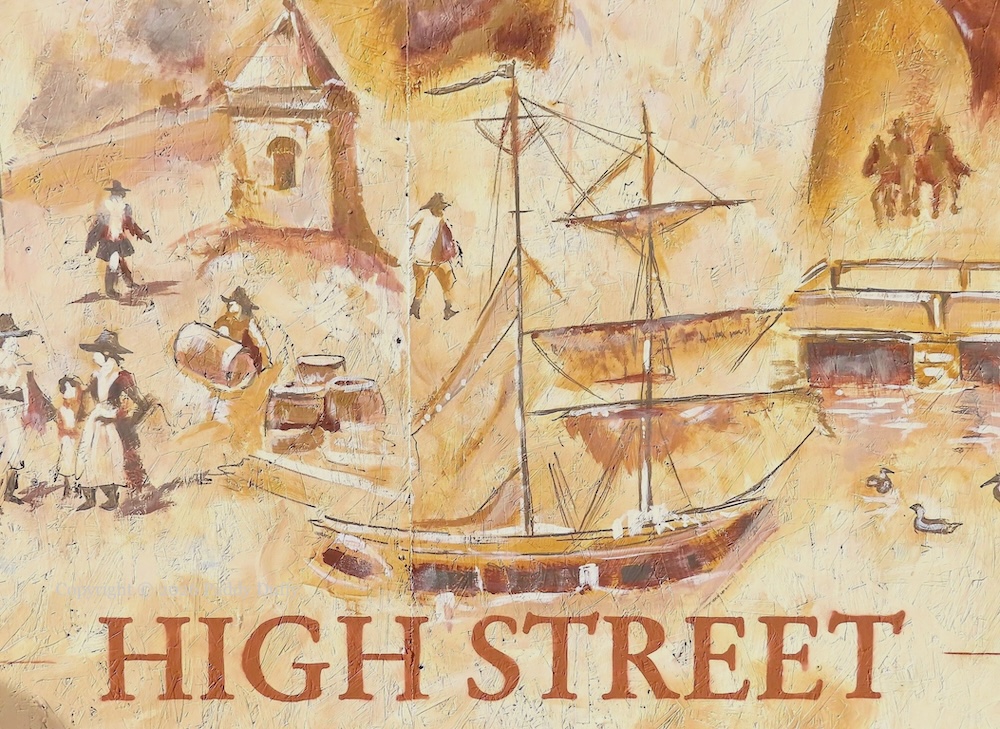
This new piece shows scenes along the Farset just inland from the Lagan shore, showing goods being unloaded along the High Street docks (here is a map (“ground plan”) from 1685 which labels the Farset as “Belfast River”, and a painting by Joseph Carey c. 1820) and the footbridge used to cross the Farset between the Entries (Visual History) at what is now Bridge Street. (There appears to be a mistake in the map: Pottinger’s Entry is east of Joy’s Entry.)
The portrait is of Henry Joy McCracken, leader of the United Irishmen, who was born and executed by the Farset, in High Street. He was born at 39 High Street (WP) and executed in front of the Market House (shown on the left of the painting) (Lord Belmont) at the top of Cornmarket (BBC) (where Dunnes Stores now is, and before it, Woolworths); he was buried in St George’s, at what was at that time the end of the Farset, where Victoria and High streets now meet.
In McCracken’s right oxter is the gatehouse of the old Belfast Castle, the great majority of which McCracken’s portrait supplants – see the original image at Eddie’s Extracts.
Painted by Graffic Belfast (ig) for Belfast One BID (ig) on Culture Night, on a boarded-up (since anchor tenant Bank Of Ireland departed in mid-2020) entrance to the Middleton Building in High Street, across from the site of the old Market.
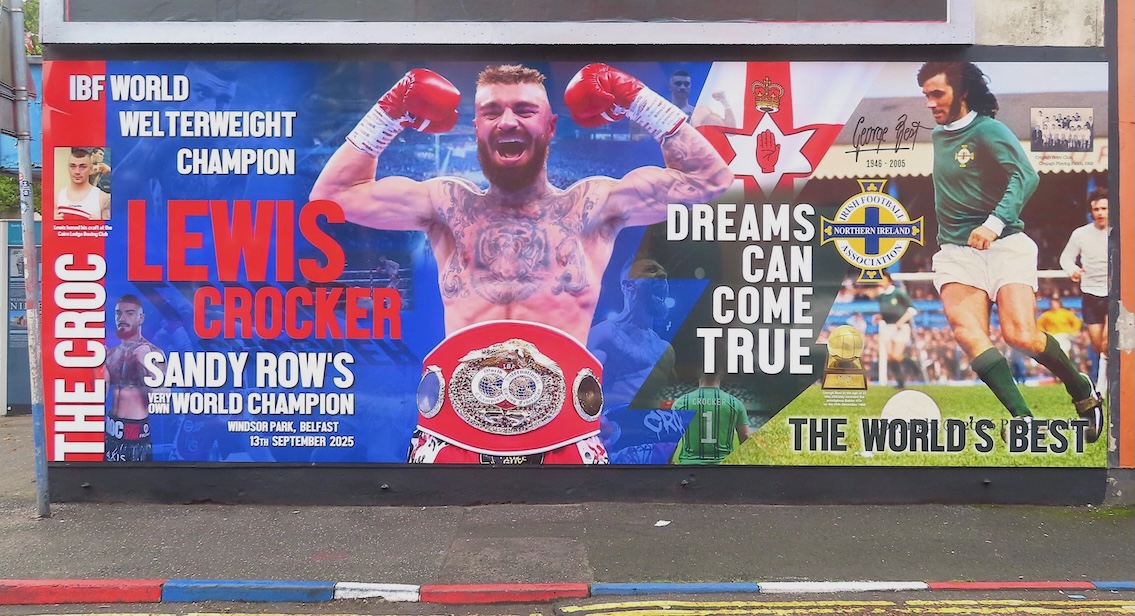
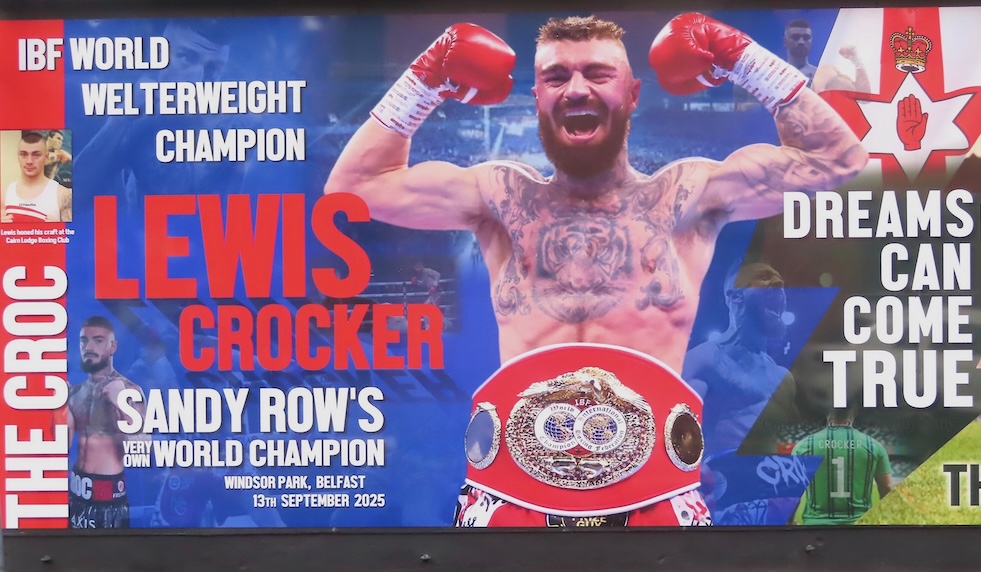
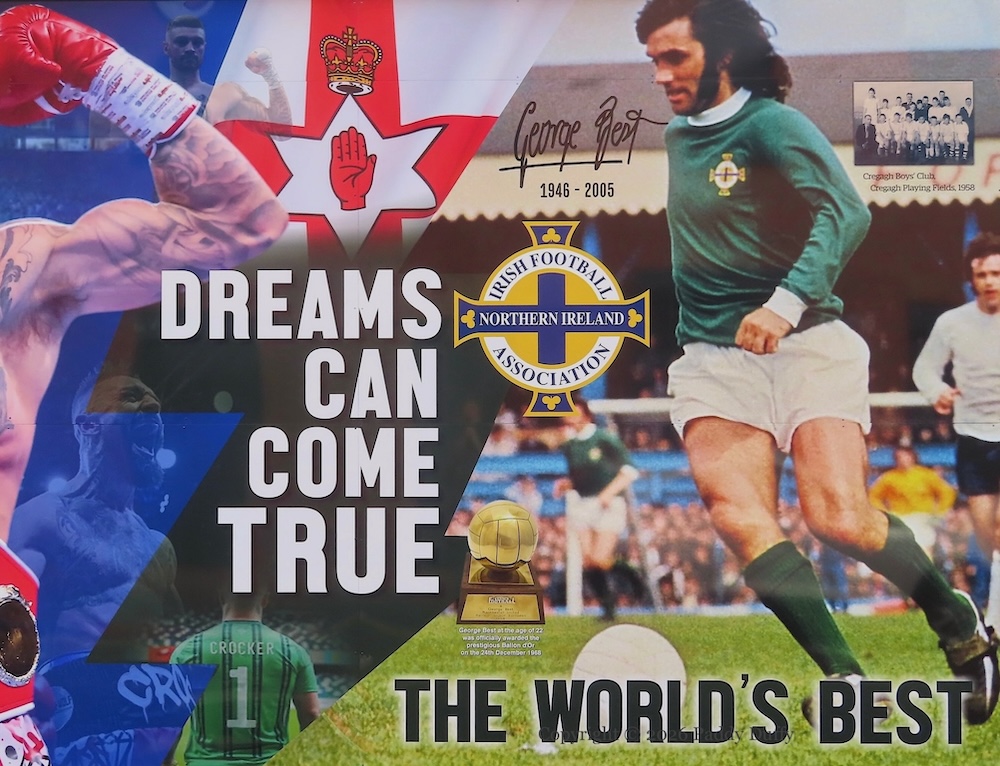
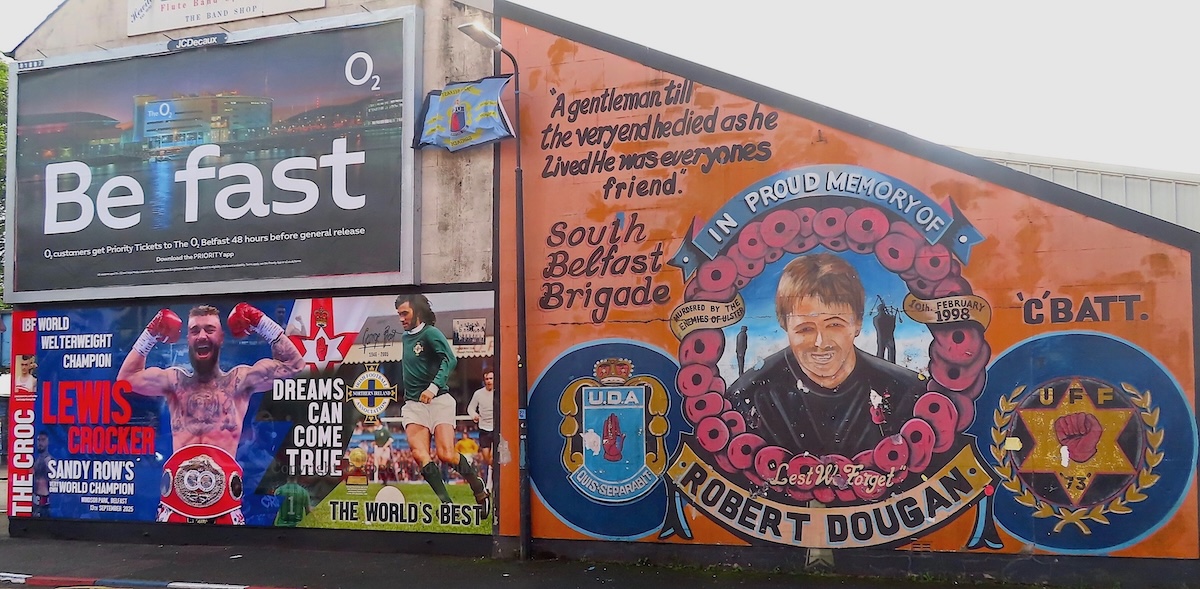
“The world’s best.” A new board has been mounted in Sandy Row to pay tribute to Lewis ‘The Croc’ Crocker, Sandy Row’s very own world champion, who “honed his craft at Cairn Lodge boxing club” on the West Circular and became “IBF world welterweight champion” at “Windsor Park, Belfast, 13th September 2025.” Crocker lost the title in June 2026, to the Australian Liam Paro.
On the right is soccer-player George Best, who grew up in Cregagh and debuted for Manchester United at the age of 17. “George Best at the age of 22 was awarded the prestigious Ballon d’Or on the 24th December 1968.”
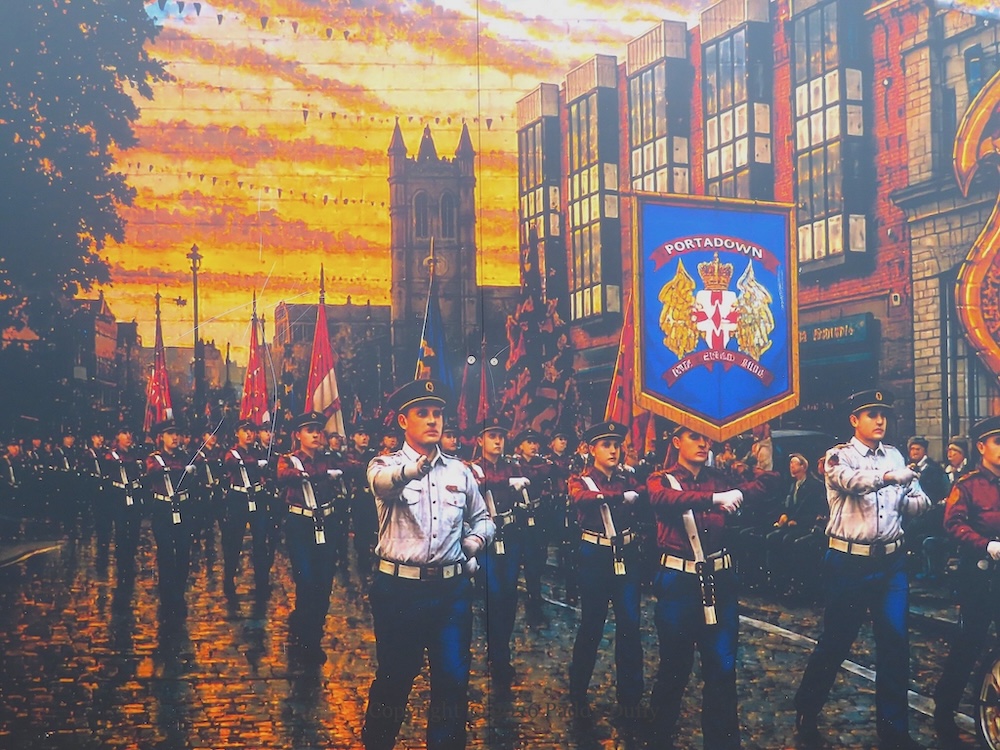
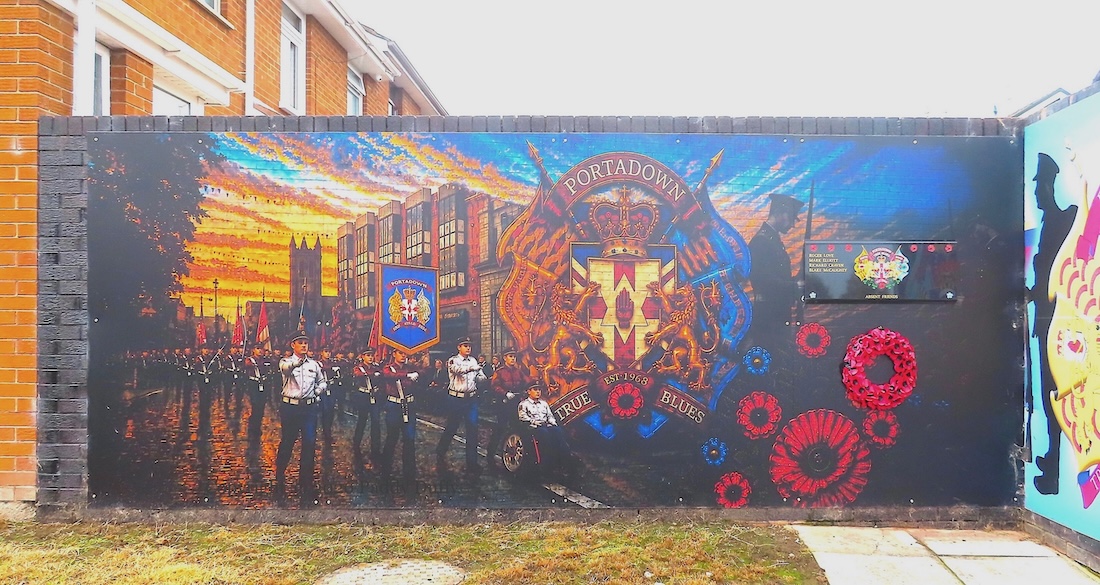
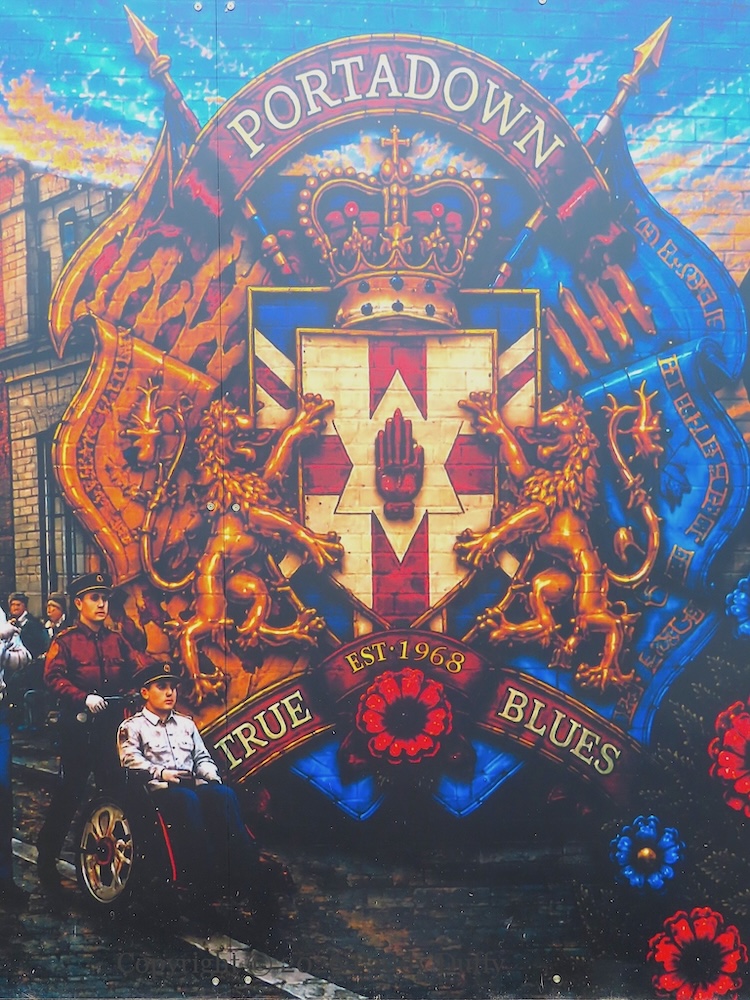
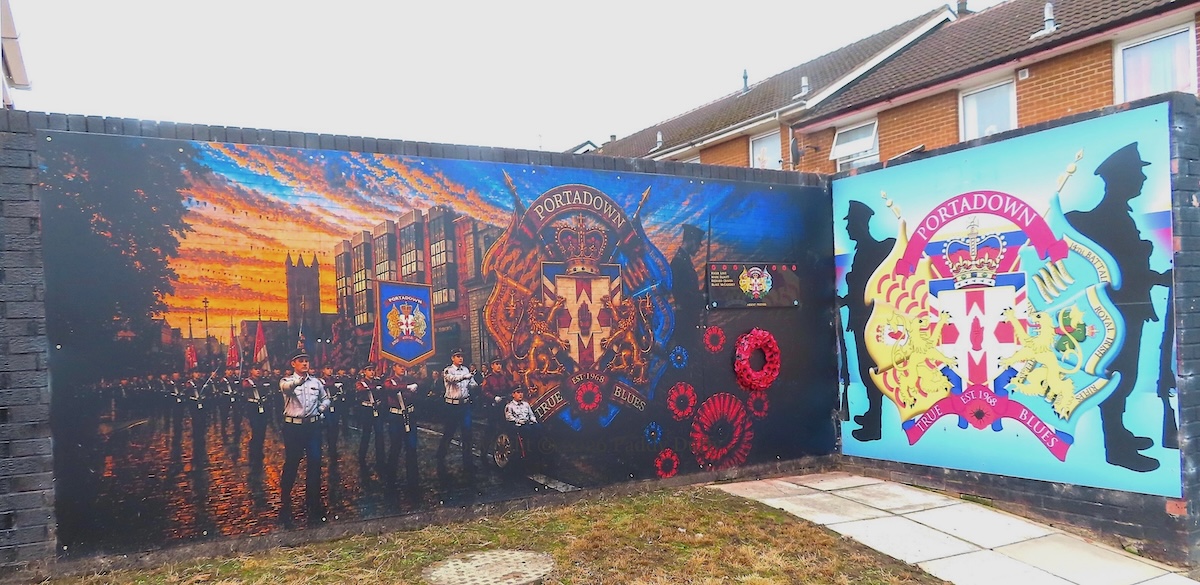
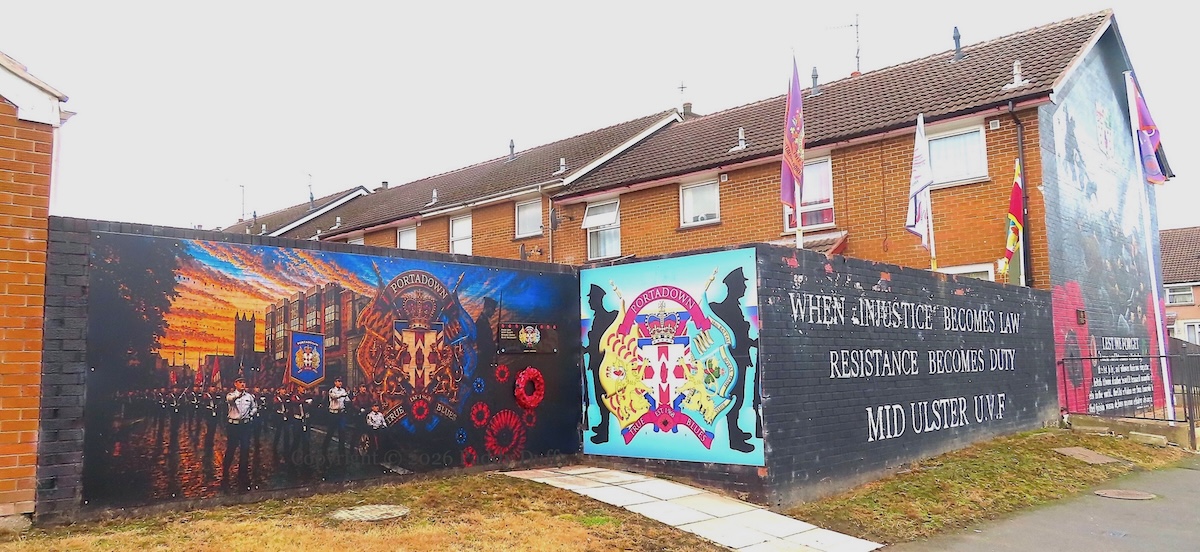
This is a new board featuring the Portadown True Blues flute band (Fb). The white lines around the second flag from the left in the image above are scratches caused to the board within days of its unveiling on June 20th.
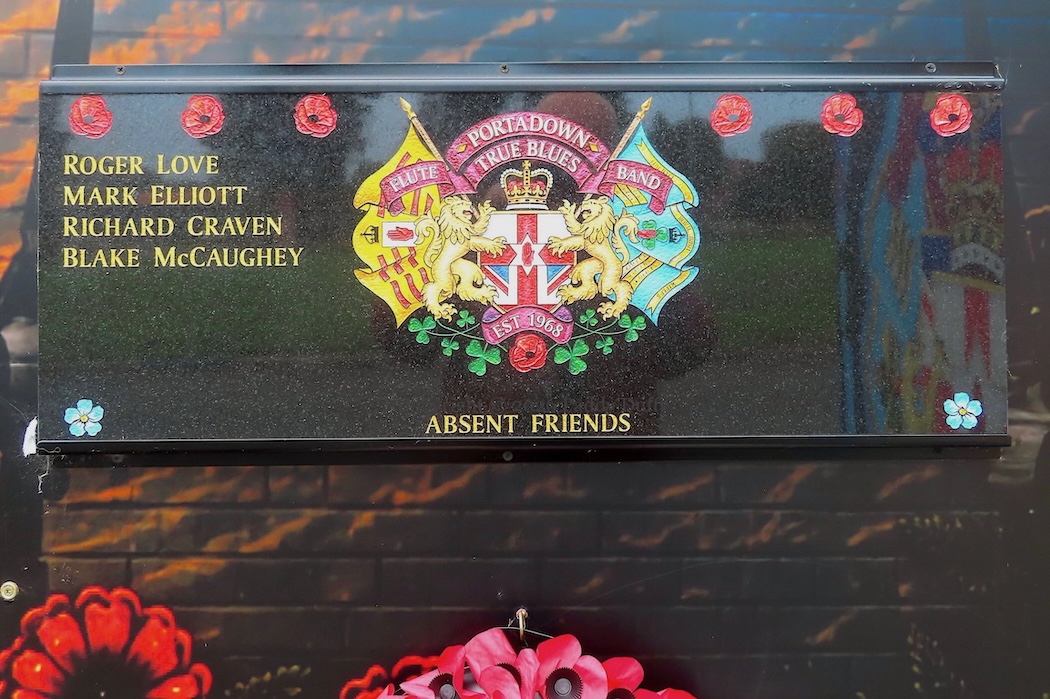
The plaque on the right names “Roger Love, Mark Elliott, Richard Craven, Blake McCaughey”. McCaughey is featured in the board leading the parade in a wheelchair; he suffered from a genetic disorder (BBC) and died in January (2026) at age 18 (NI World).
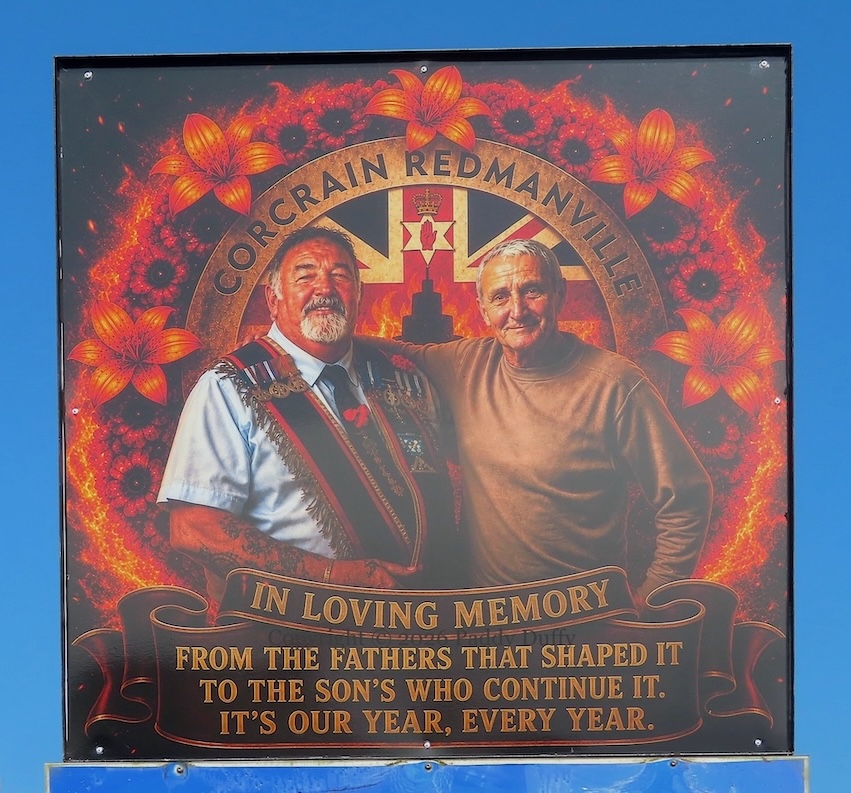
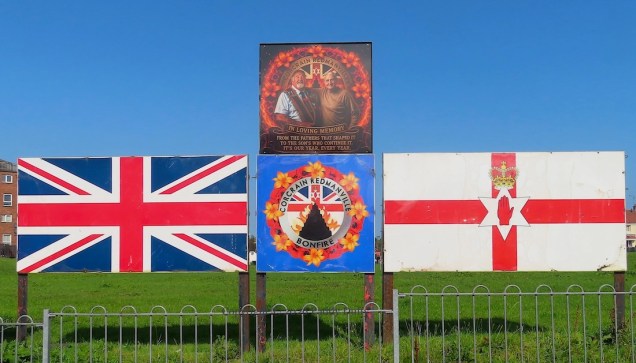
Here is a small gallery of images from the Redmanville and Corcrain estates in Portadown, specifically Westland Road and the bonfire site. To the trio of boards at the site (seen previously in January, 2026) has been added the board shown above: “In loving memory – from the fathers that shaped it to the son’s [sic] who continue it. It’s our year, every year.” The bonfire, which is lit on the 10th (of July) has its own Facebook page.
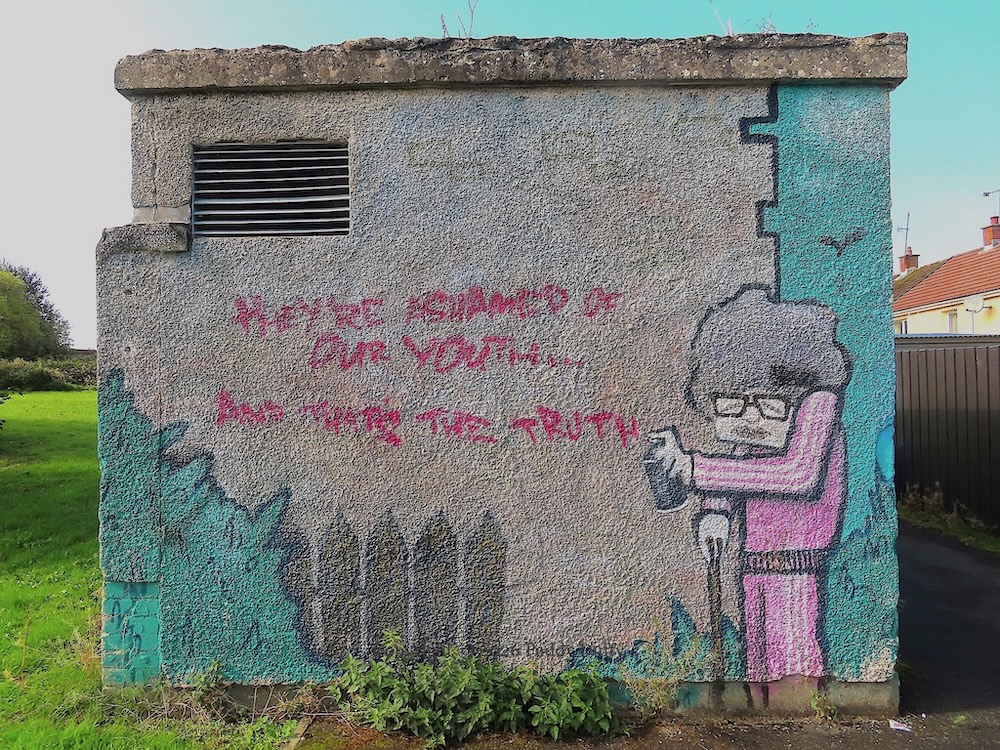
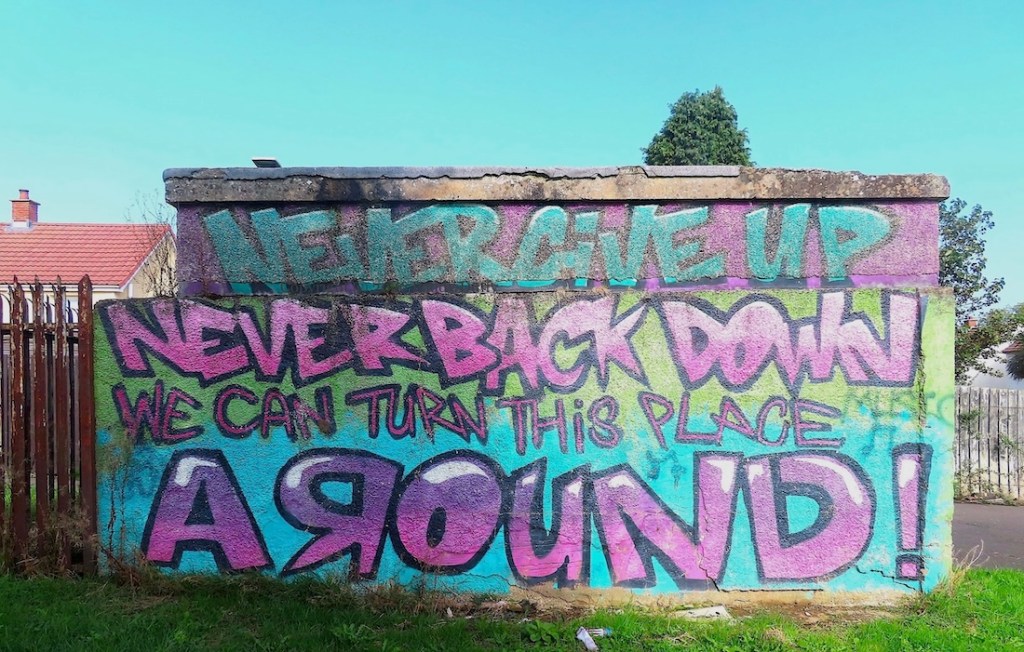
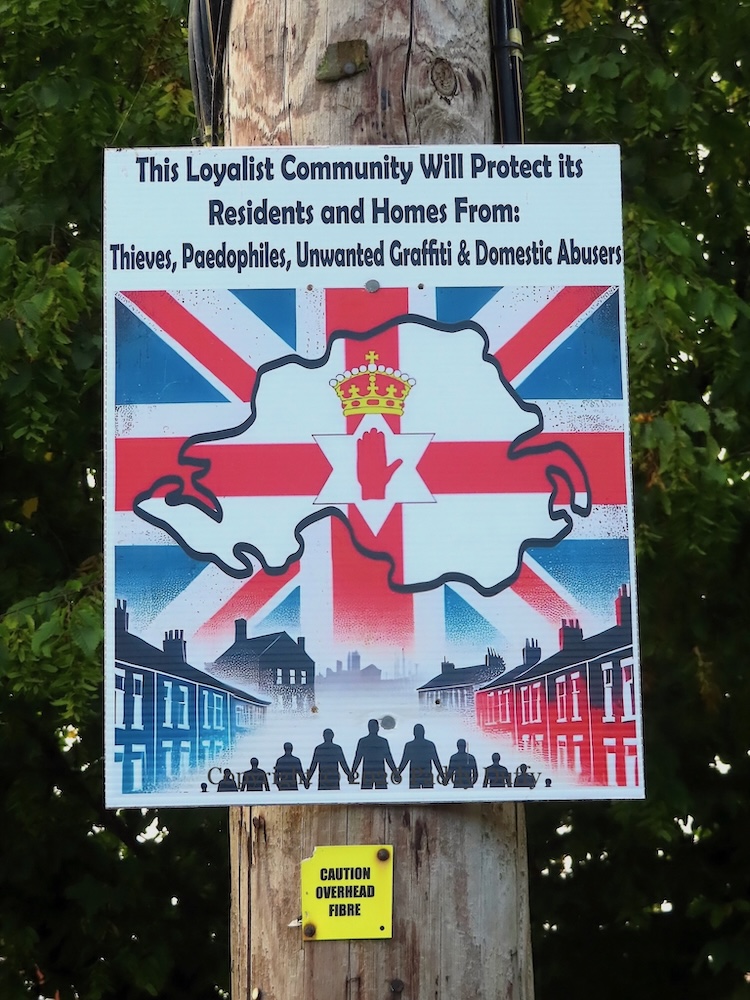
Elsewhere in the estates: An elderly woman is drawn spraying graffiti that reads “They’re ashamed of our youth … and that’s the truth” along with “Never give up, never back down. We can turn this place around!”, and an anti-immigrant placard, the same as the one recorded in January.
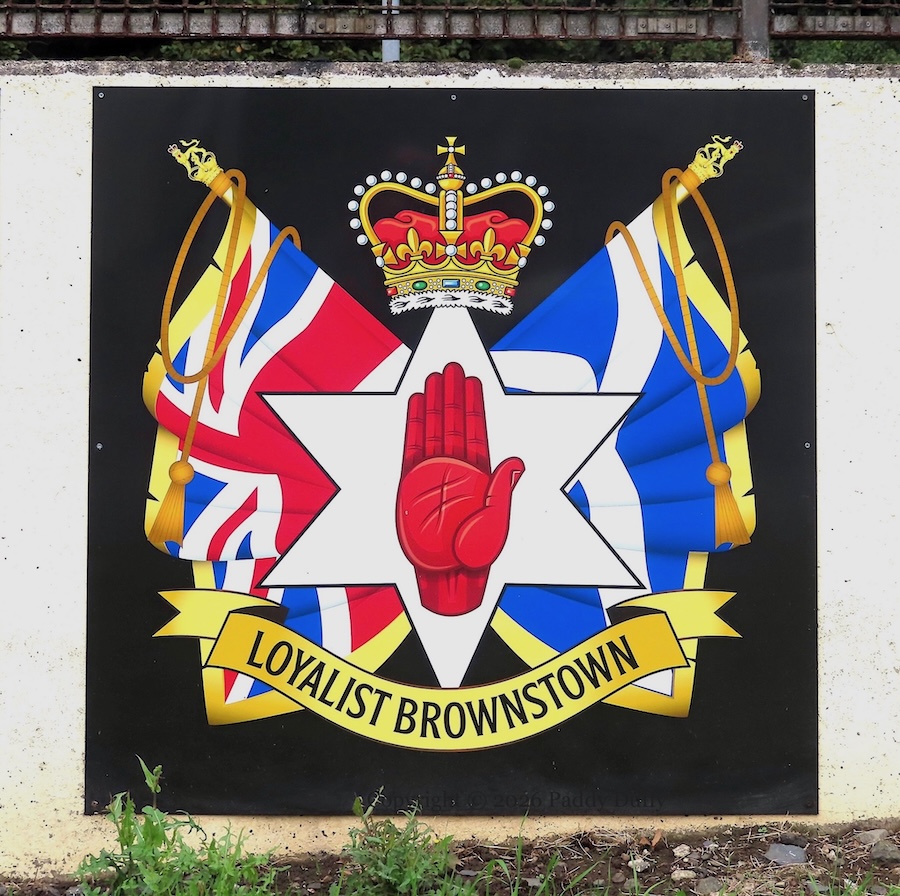
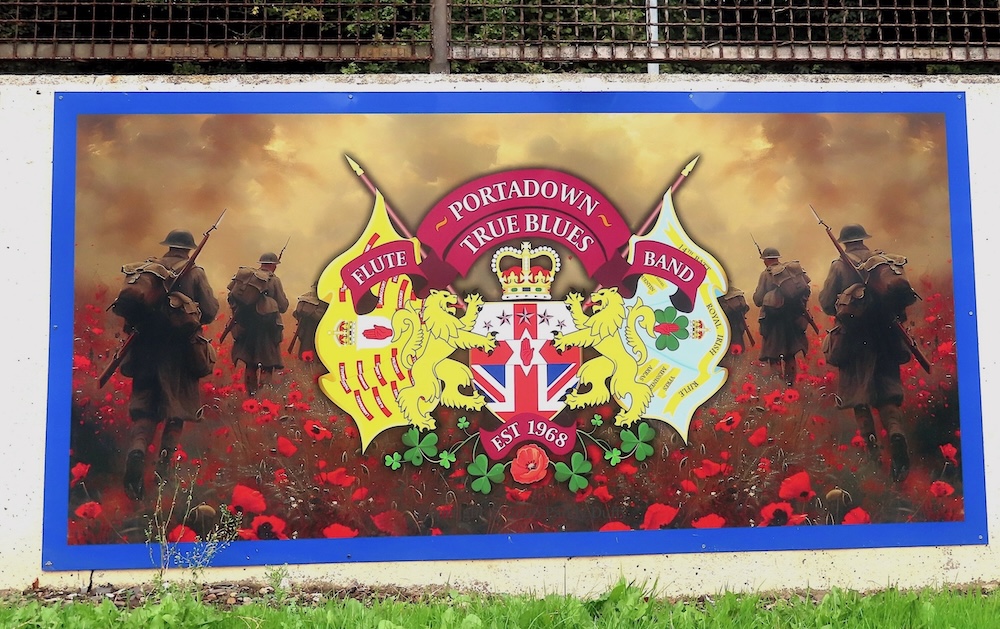
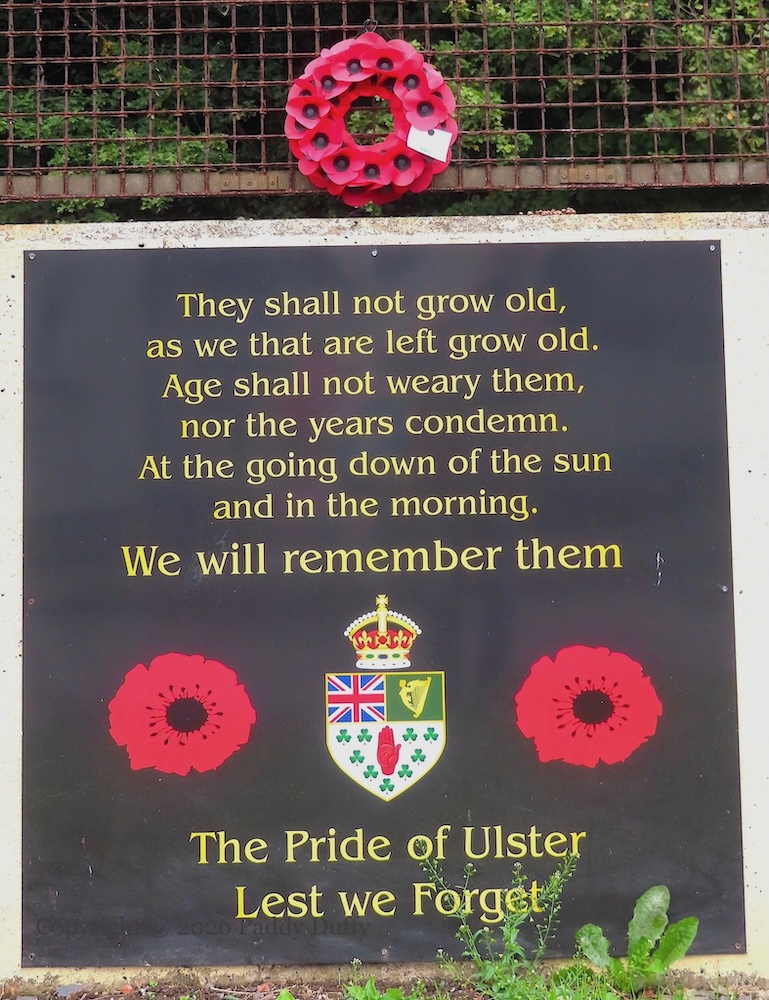
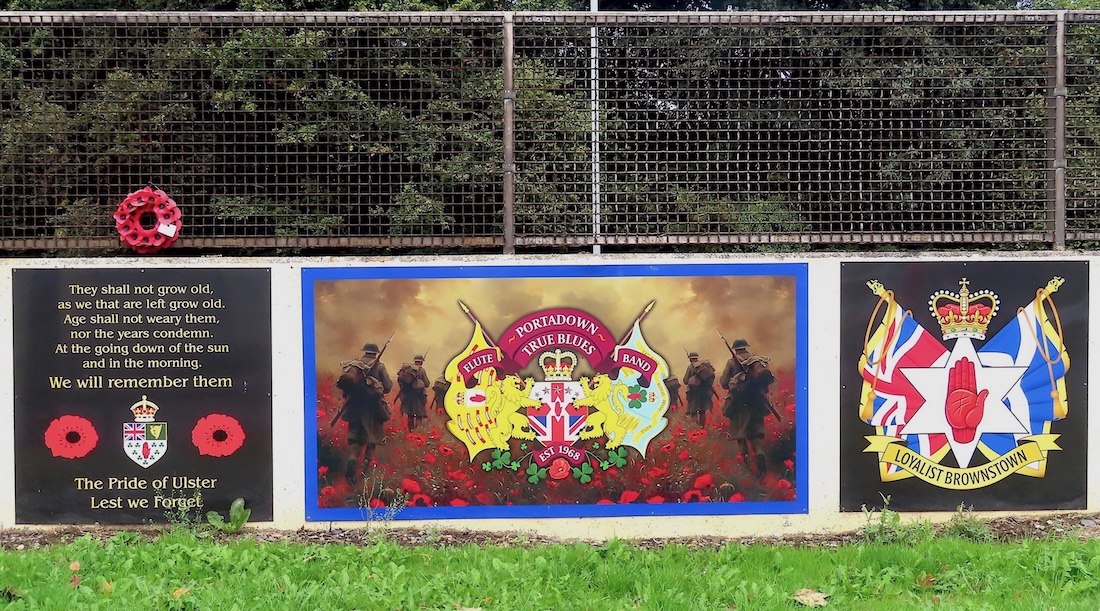
“Portadown True Blues flute band, est. 1968 [Fb].” This is a trio of boards at the top of the Brownstown estate, on the fence overlooking the “Northway” that separates Brownstown from Edgarstown. The flute band draws from both estates and has murals in both.
Both the main panel (immediately below) and the one to the left features WWI soldiers and the 36th Division – the band is associated with the Mid-Ulster brigade UVF (see the old Edgarstown mural in the Peter Moloney Collection).
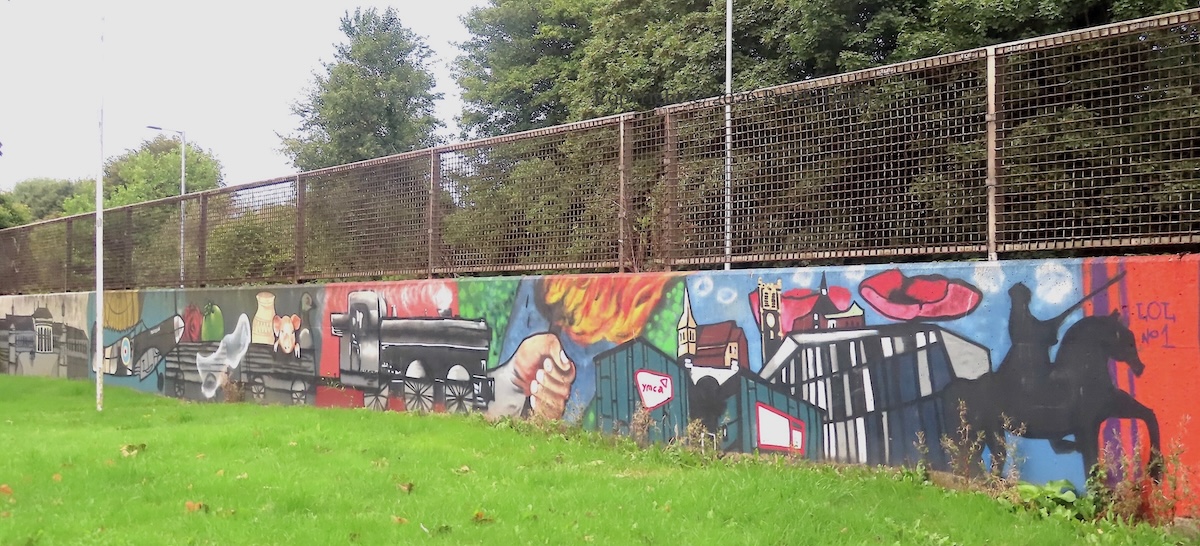
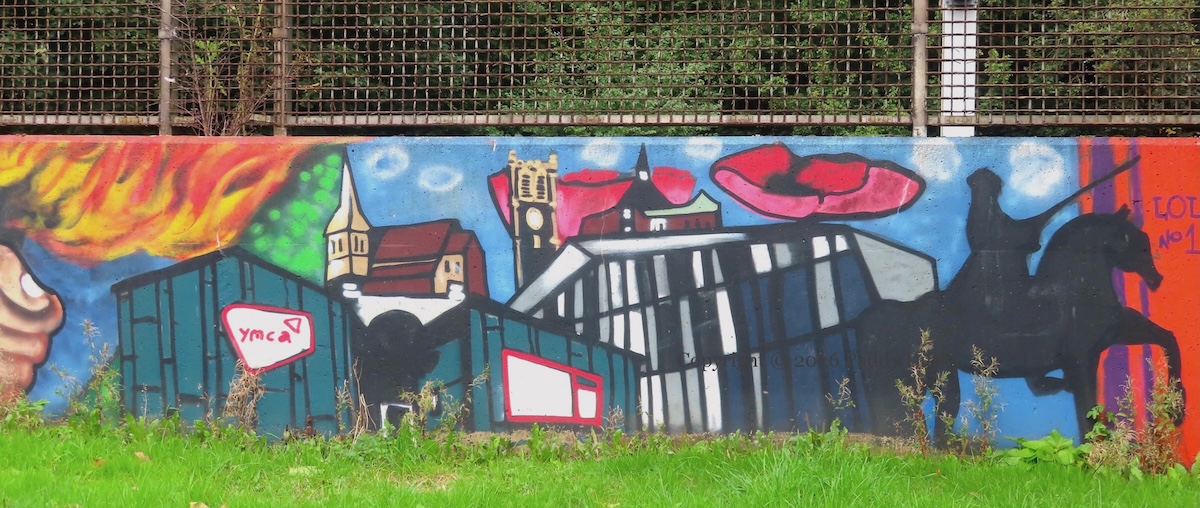
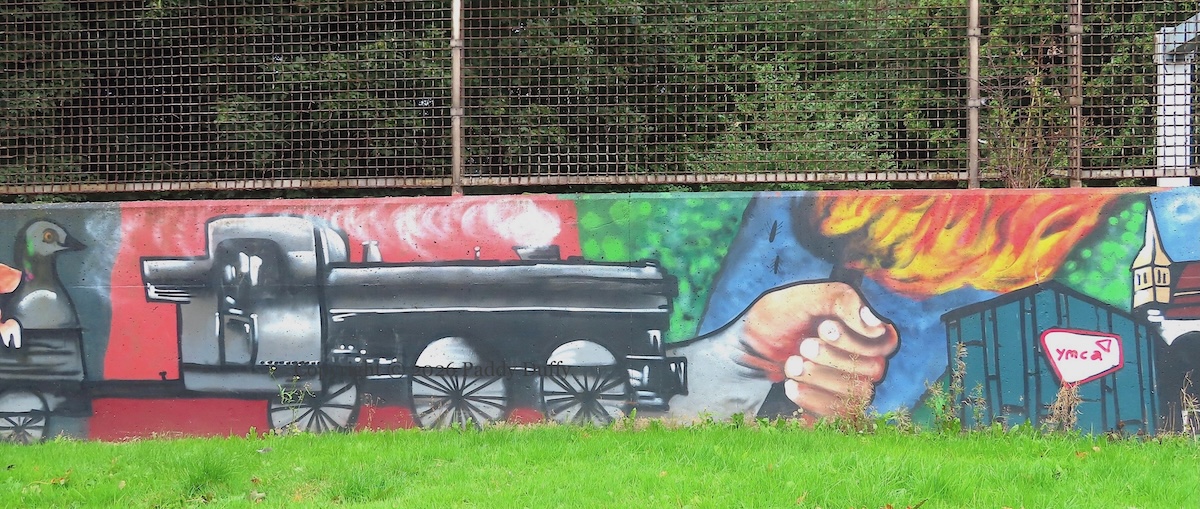
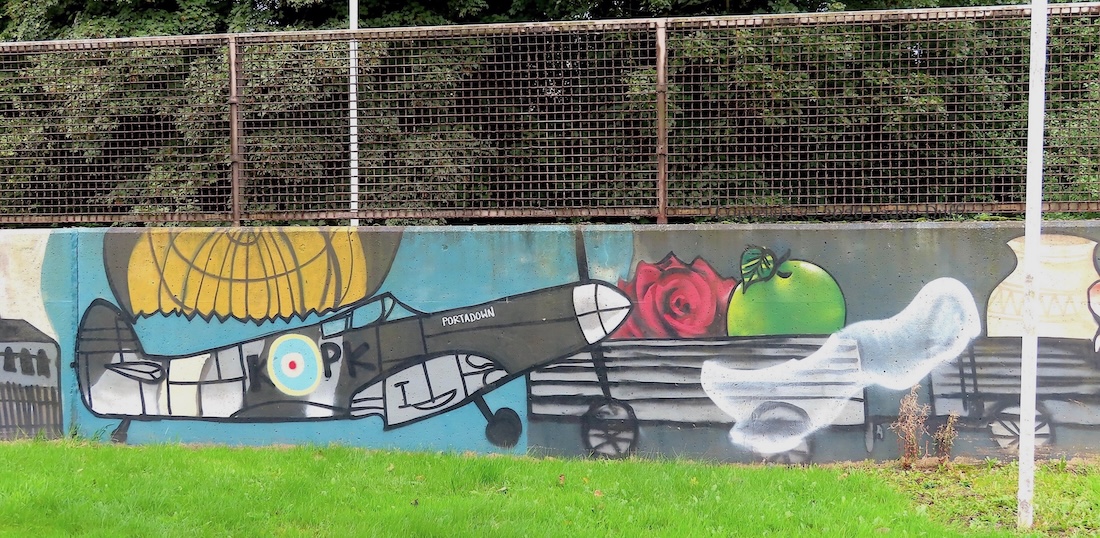
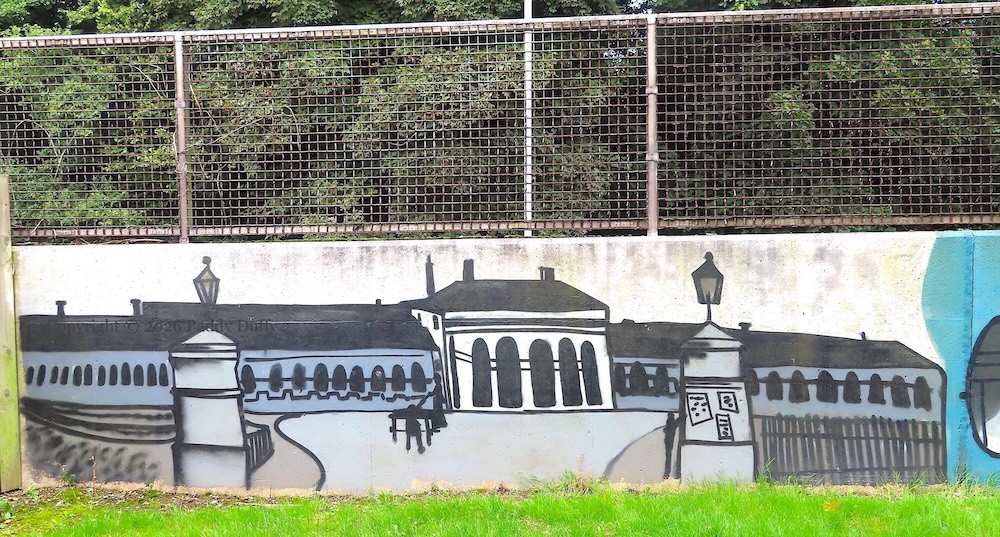
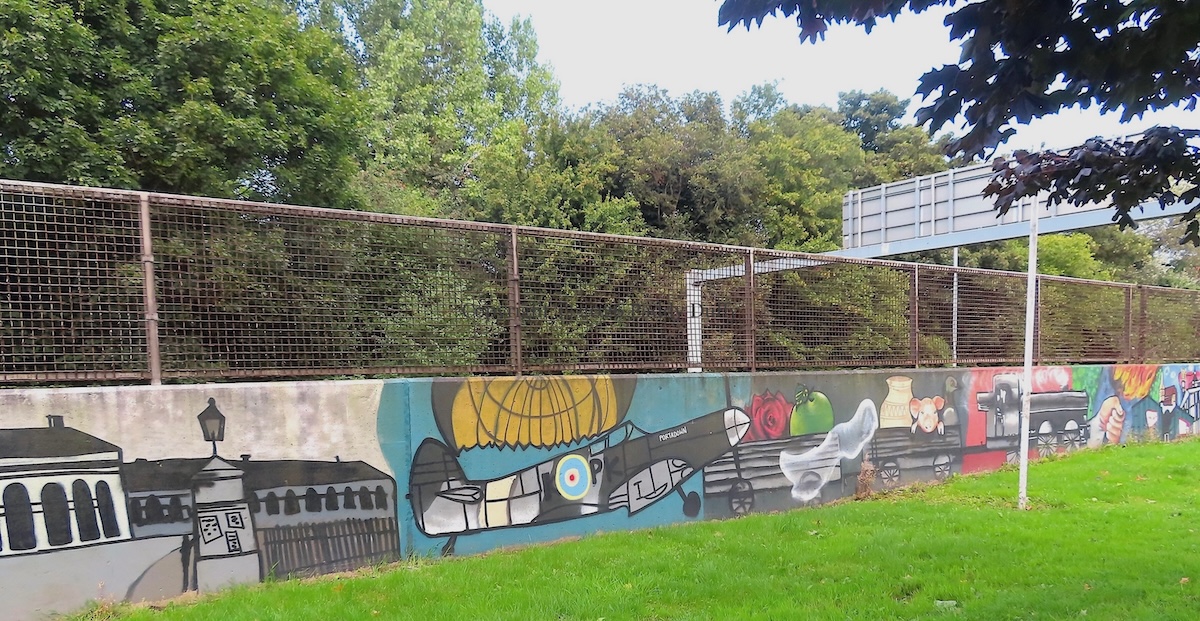
On the near side of this long mural of Portadown landmarks and history is the collarette of “LOL No. 1” and a silhouette of King William III on his horse. The Orange Order’s first district lodge was formed in 1796 in Portadown (LOLNo1), the same year that the first parades took place on the Twelfth, in Portadown, Lurgan, and Warrenpoint. (The first individual lodge was founded in Dyan, Co Tyrone. (Lurgan Ancestry))
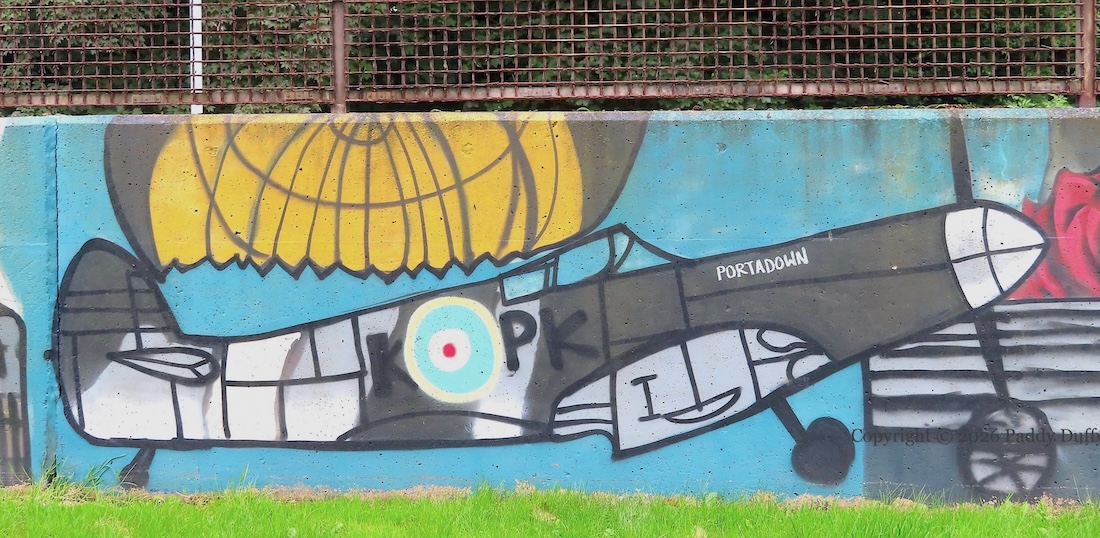
Also included in the mural is the “Portadown” spitfire – one of 17 spitfires purchased by a Belfast Telegraph fund-raising drive. See also the mural of the “Ballymena” spitfire.
The grand building on the far left is the former Portadown Railway station, in Watson Street – see FamilyPedia for a photograph.
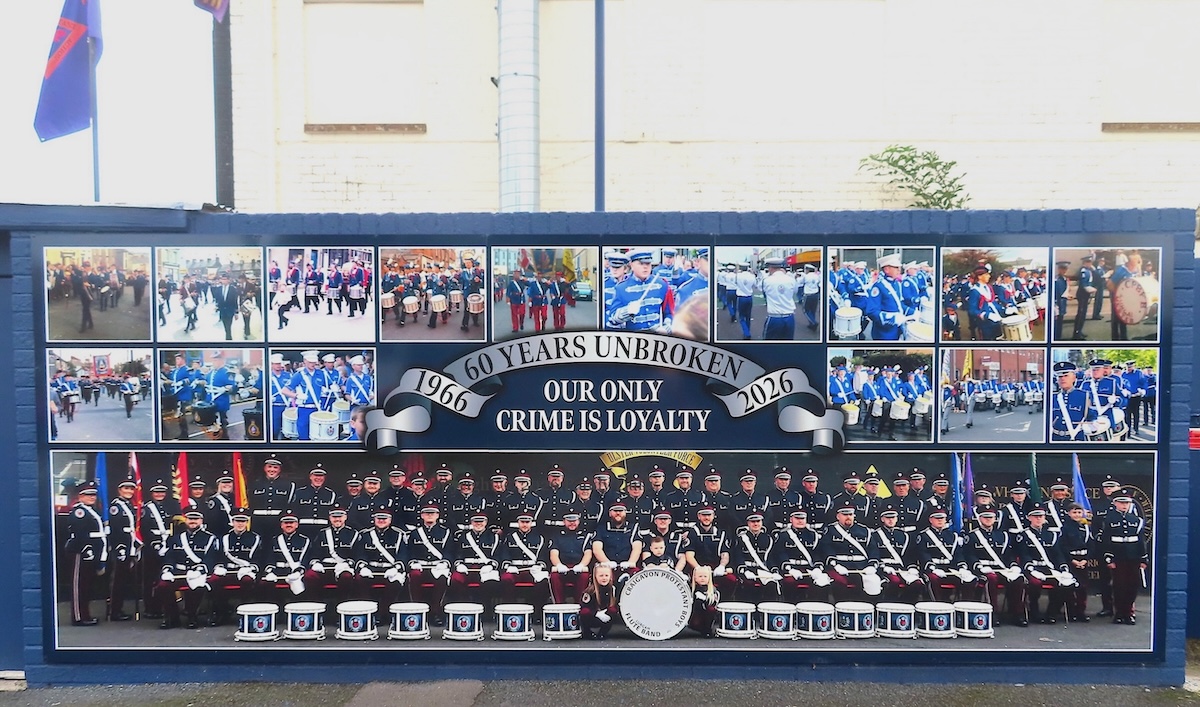
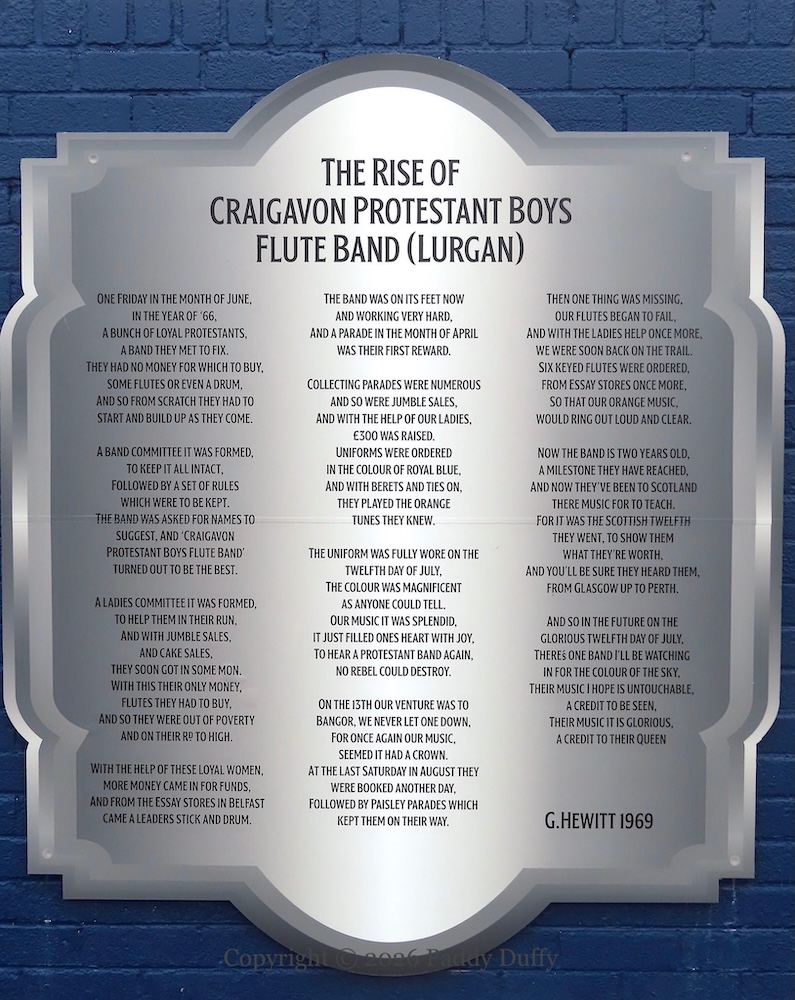
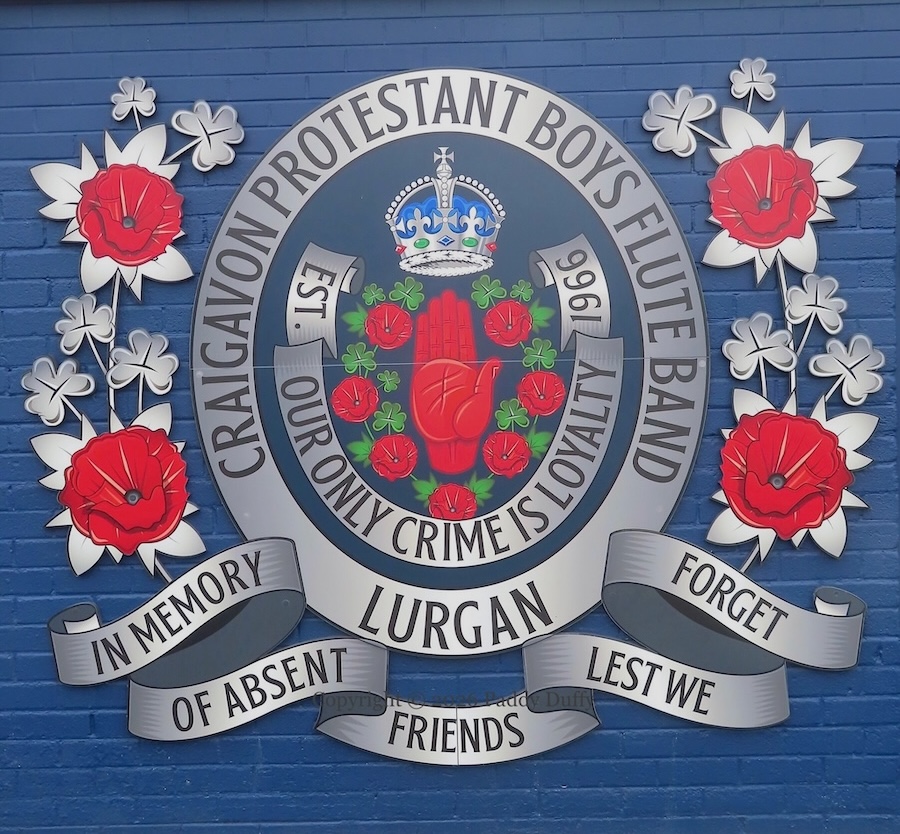
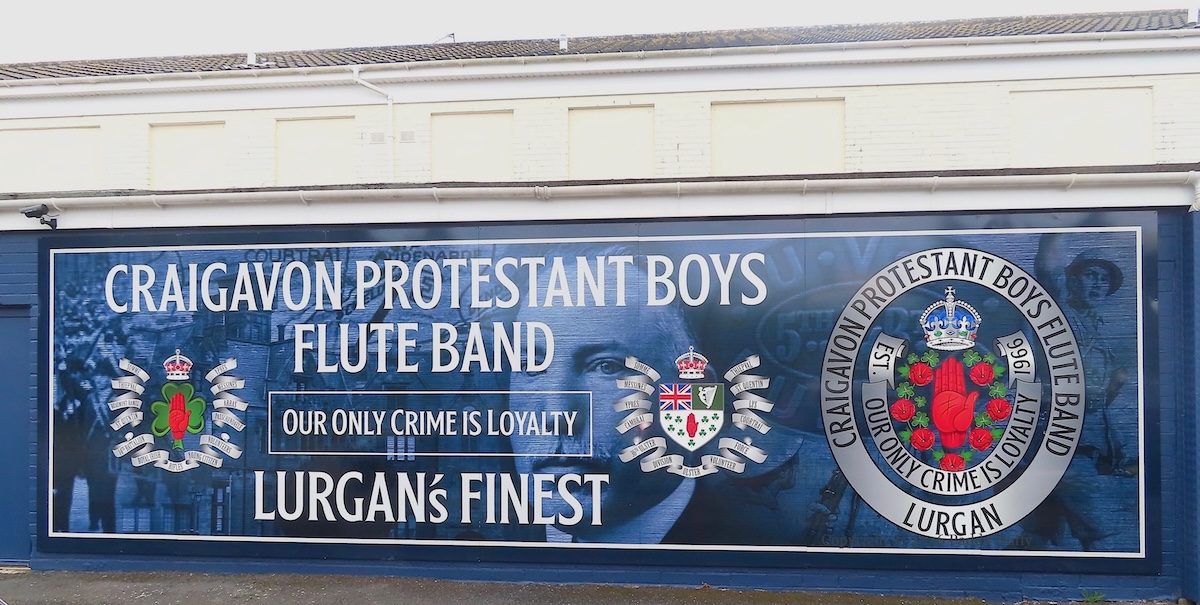
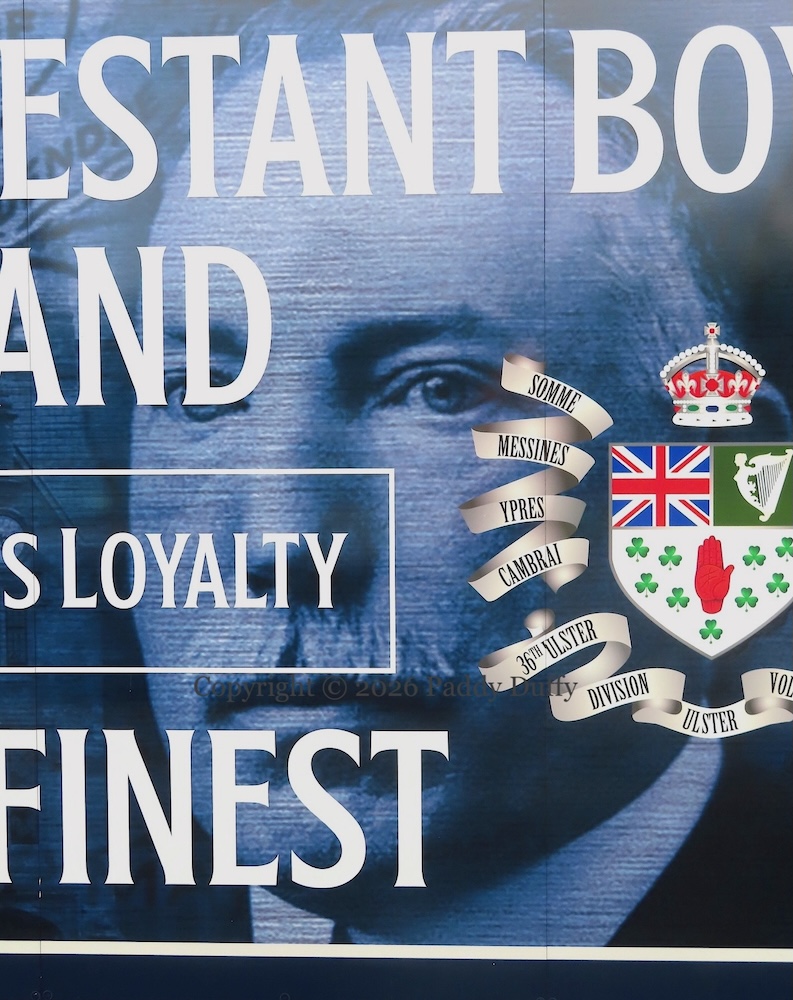
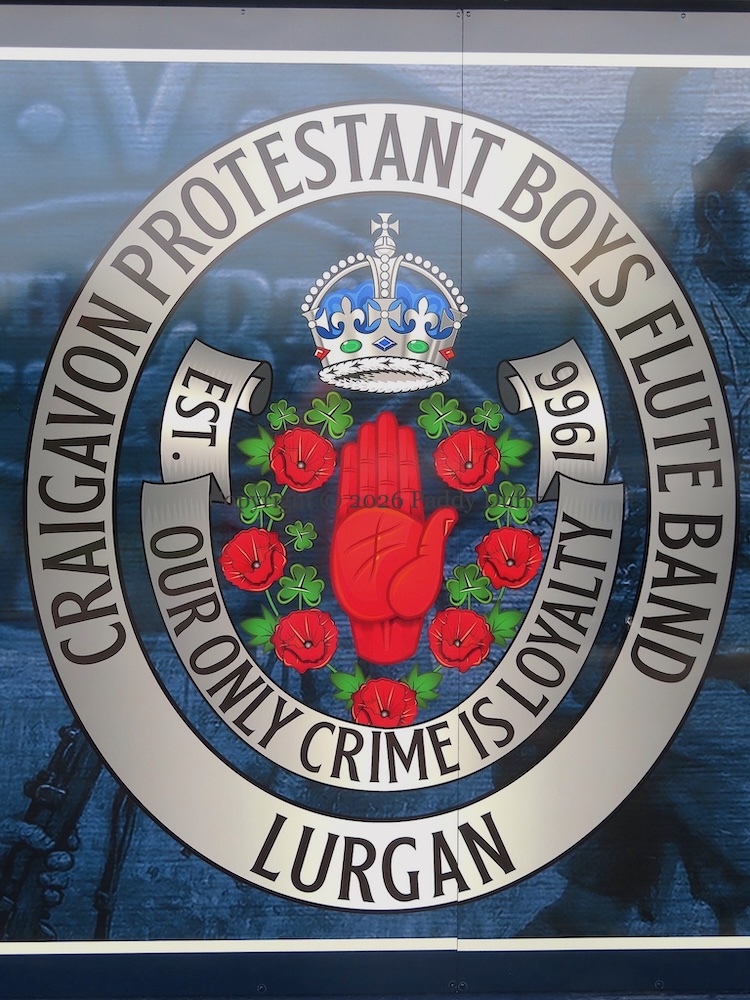
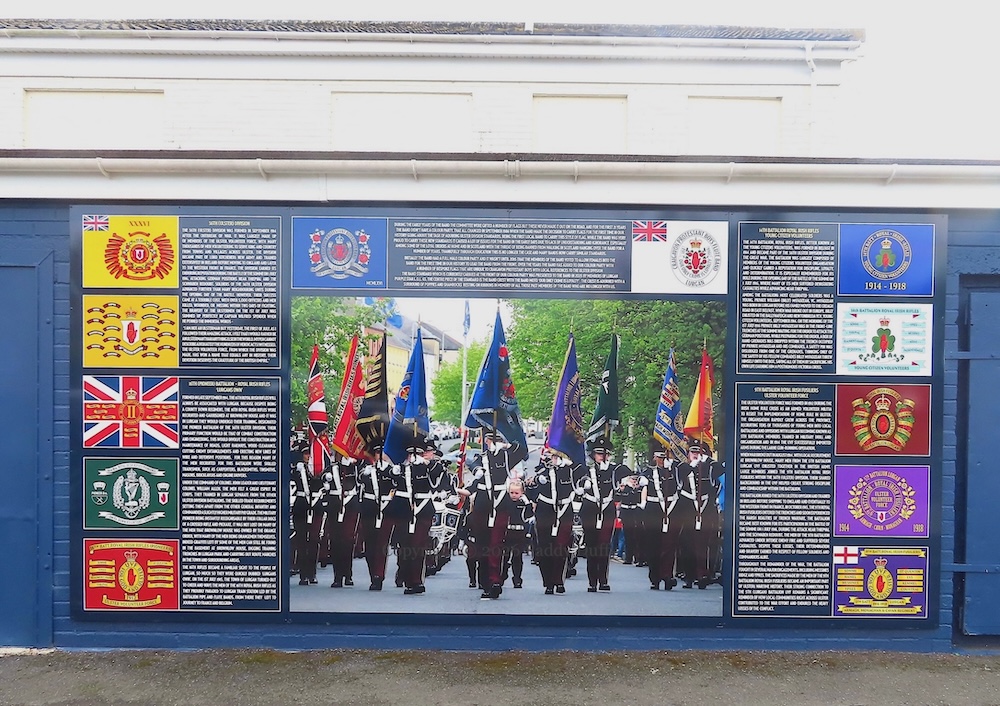
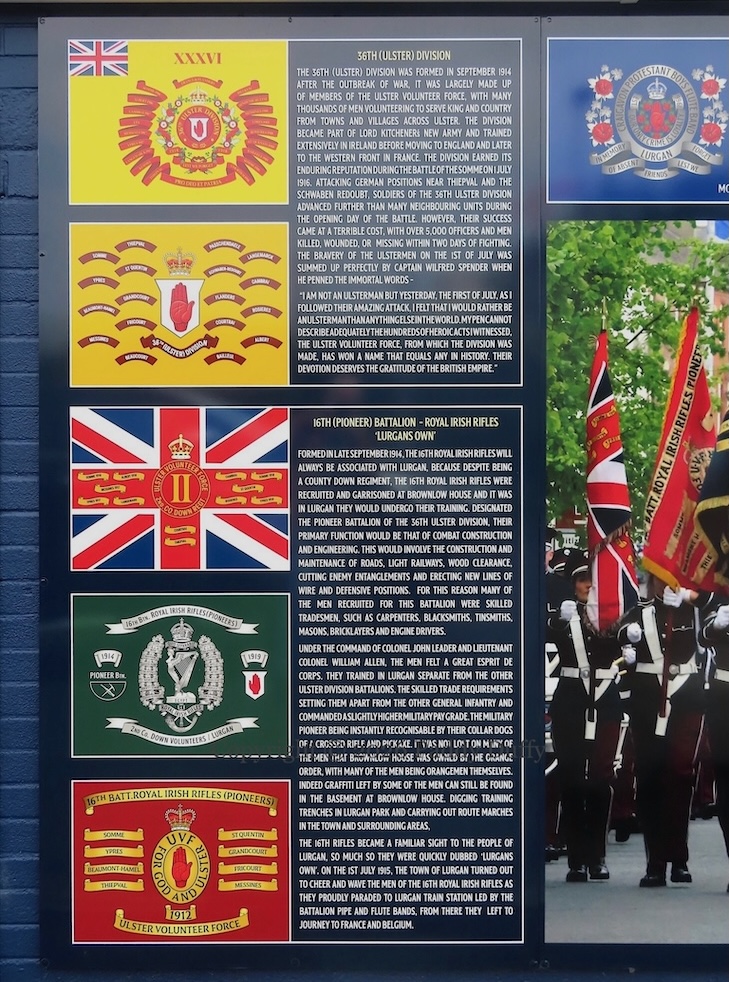
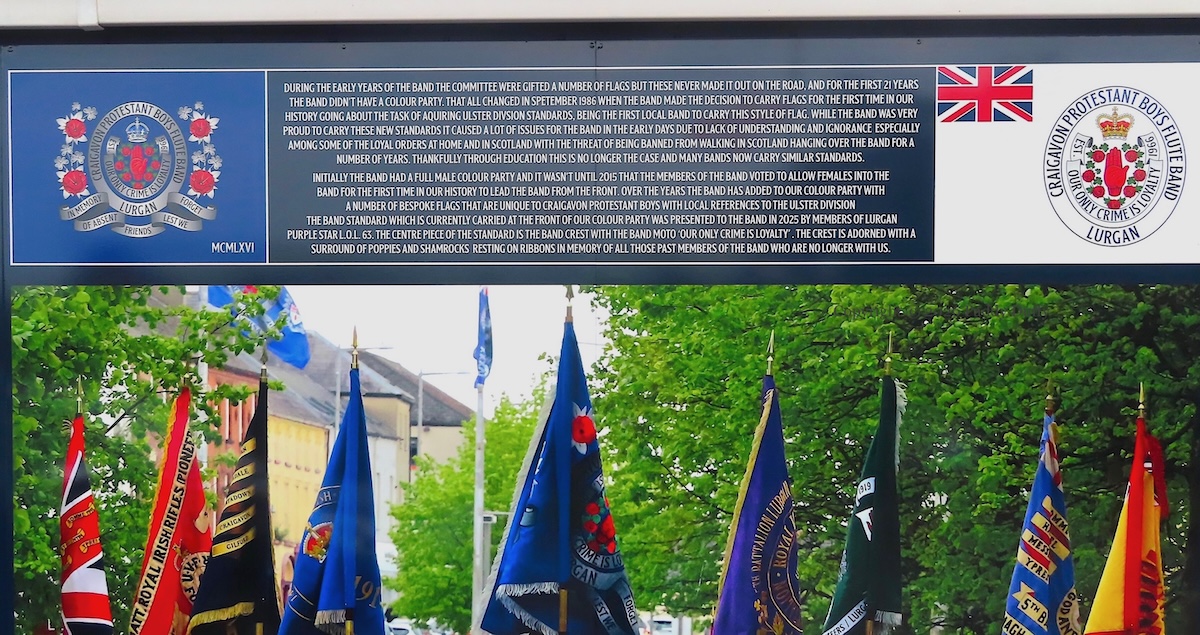
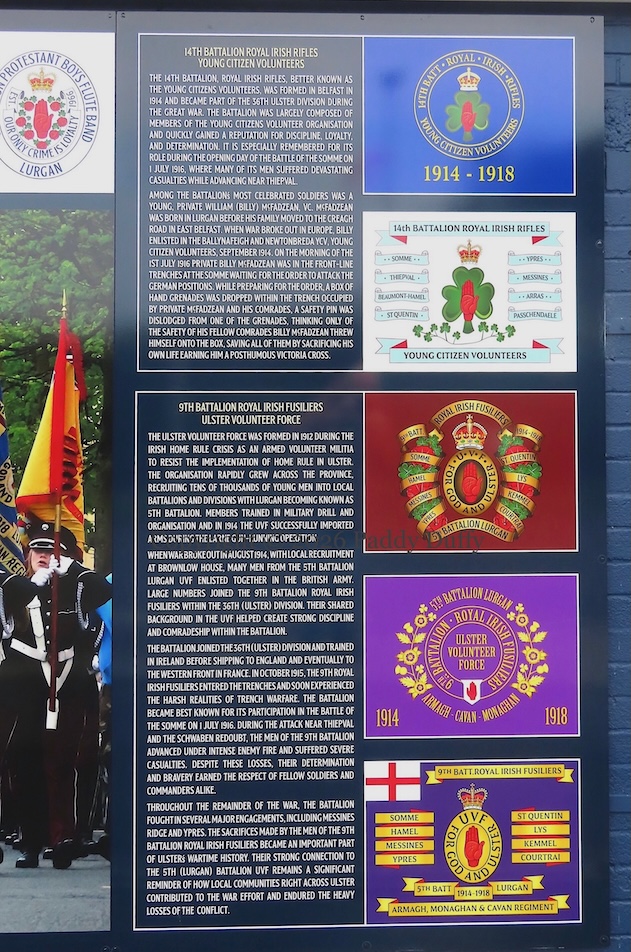
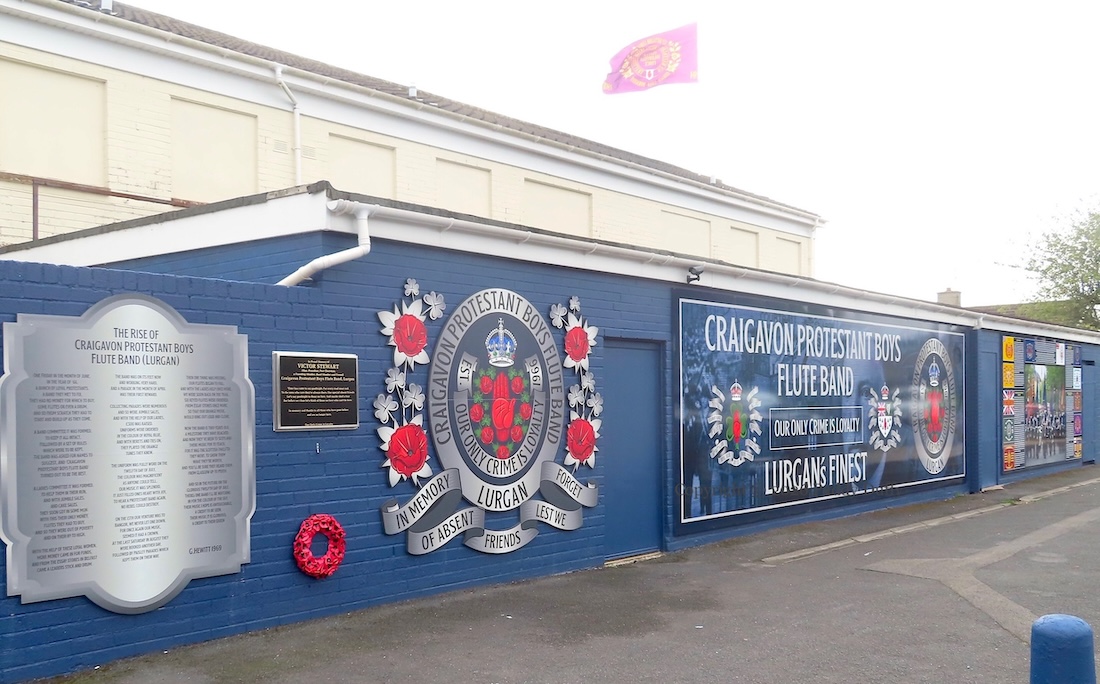
“Craigavon Protestant Boys flute band (Lurgan), 60 years unbroken, 1966-2026. Our only crime is loyalty.” Five new boards have been mounted at Mourne Road/Pollock Drive to celebrated the sixtieth anniversary of the Craigavon Protestant Boys (Fb).
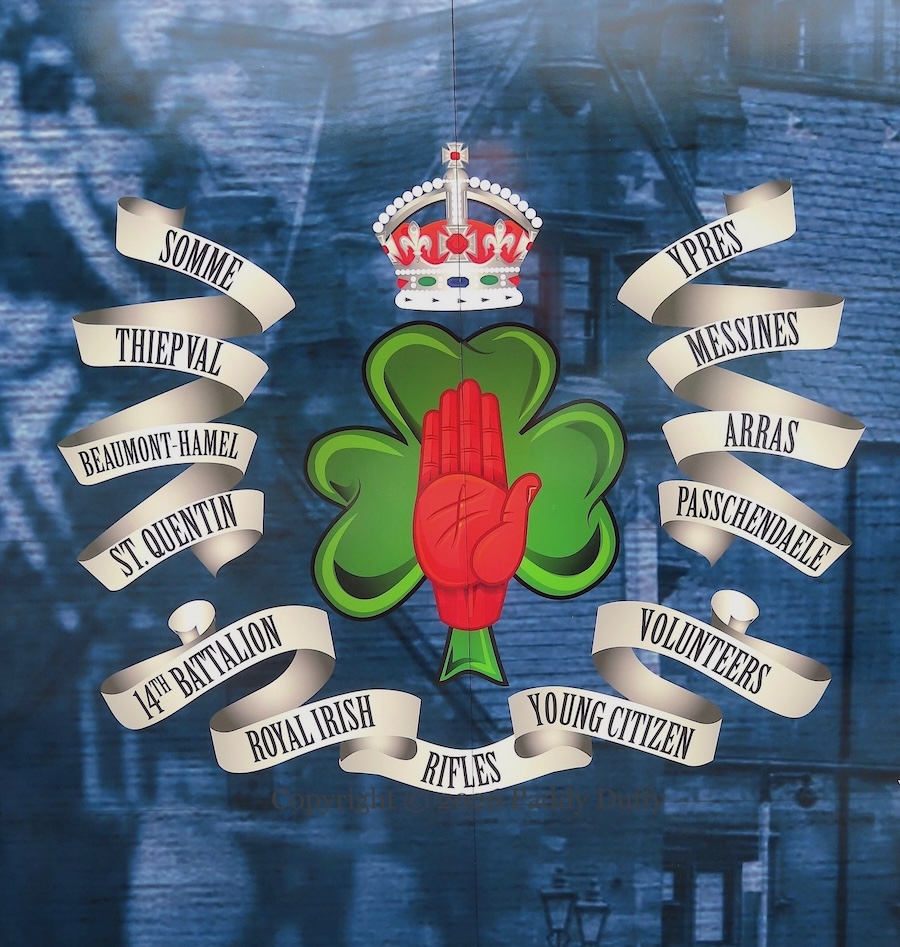
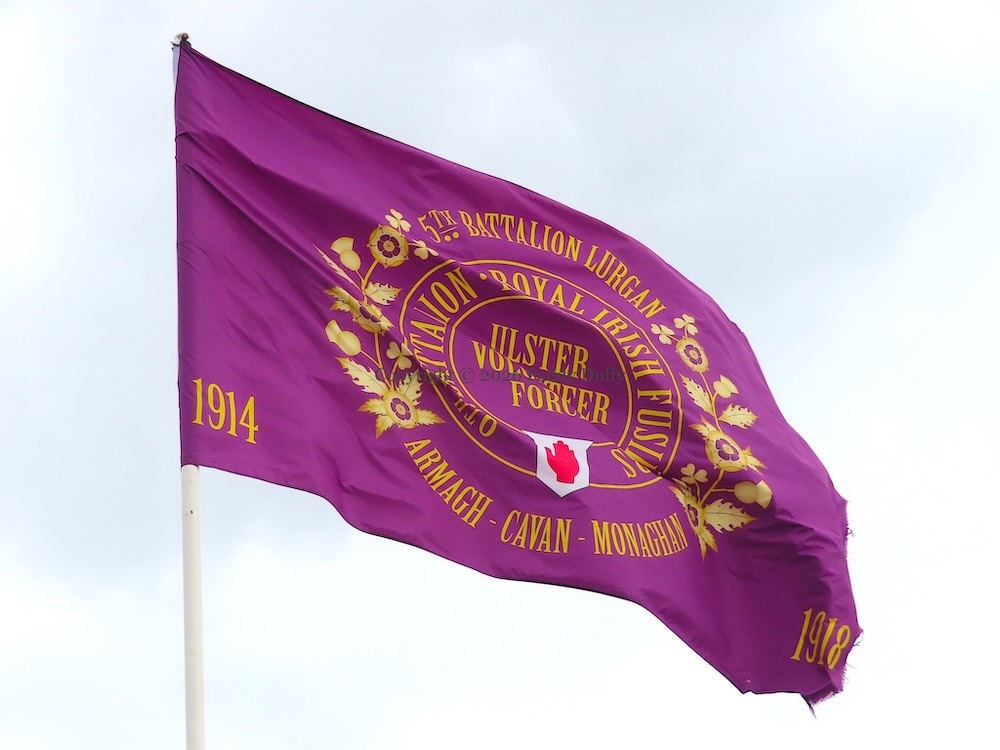
The final/right-most board mostly concerns the transformation of the Ulster Volunteers and Young Citizen Volunteers into the 36th Division of the British Army in WWI but the central text alludes to the dispute in the 1980s between some bands and the Orange Order, over the conflation of the different forms of the “Ulster Volunteer Force” from the beginning and end of the twentieth century. It reads, “During the early years of the band the committee were gifted a number of flags but these never made it out on the road, and for the first 21 years the band didn’t have a colour party. That all changed in Spetember [sic] 1986 when the band made the decision to carry for the first time in our history going about the task of acquiring Ulster Division standards, being the first local band to carry this style of flag. While the band was very proud to carry these new standards it caused a lot of issues for the band in the early days due to lack of understanding and ignorance especially among some of the loyal orders at home and in Scotland with the threat of being banned from walking in Scotland hanging over the band for a number of years. Thankfully through education this is no longer the case and many bands now carry similar standards.”
The Orange Order was not happy that bands that were affiliated with paramilitary groups were carrying the flag and wearing uniforms of the 36th Division. In Scotland, Greengairs Thistle flute band – which is associated with the Shankill Protestant Boys and C Company in the west Belfast UVF (see the Peter Moloney Collection) – was banned in 1988 from marching in Orange parades (CAIN), though it continued to march in Apprentice Boys parades (Fb).
Nowadays, blending the Ulster Volunteers/36th Division with the Troubles-era UVF is standard practise among loyalist groups, even if the authorities disapprove. In Bangor, for example, funds were secured for a WWI memorial to which paramilitary stones were added at the last minute (see Shared Space).