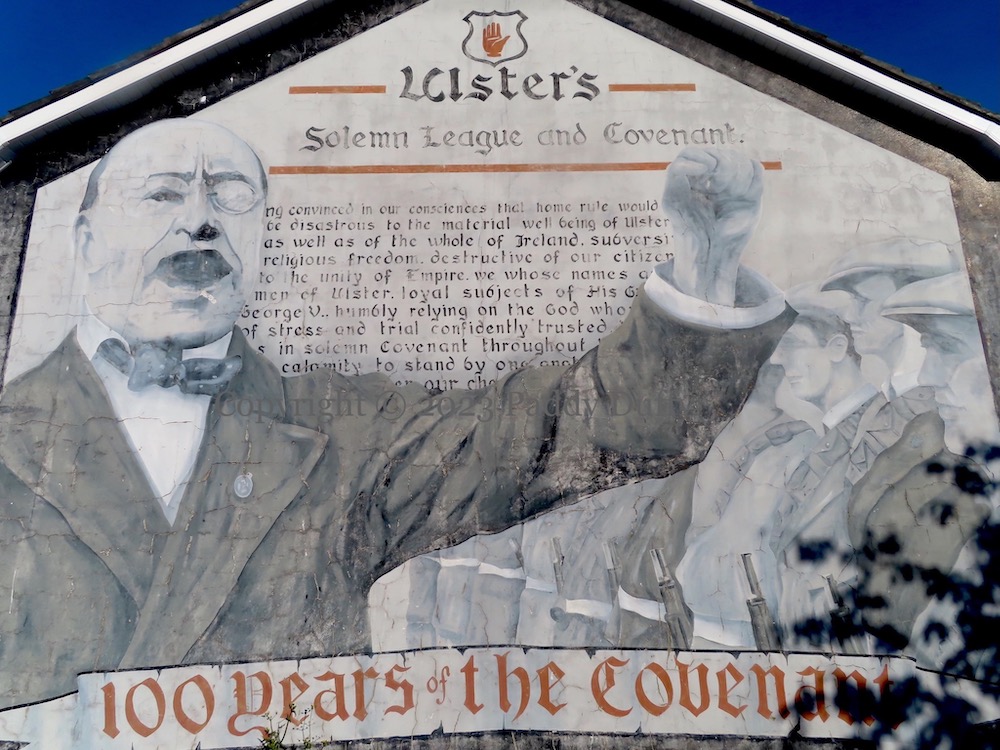
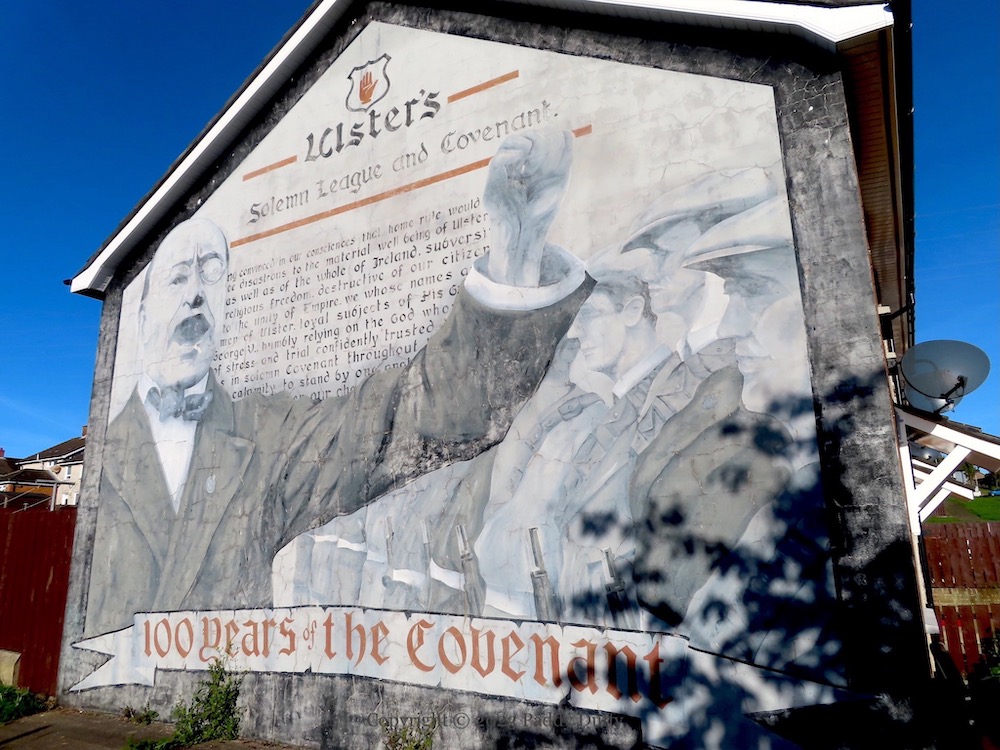
The mural above uses the text of the Ulster Covenant, signed in September, 1912, as a backdrop to a composite of two photographs from 1914, showing Edward Carson speaking and a row of Ulster Volunteers, which were formed in January 1913.
Alain Miossec/Murals Irlande Du Nord has an image of the previous printed version, which is almost identical, apart from Stormont as a backdrop rather than the text of the Covenant.
Painted by Dee Craig (Fb) in Carnhill Walk, Castlemara, Carrickfergus.
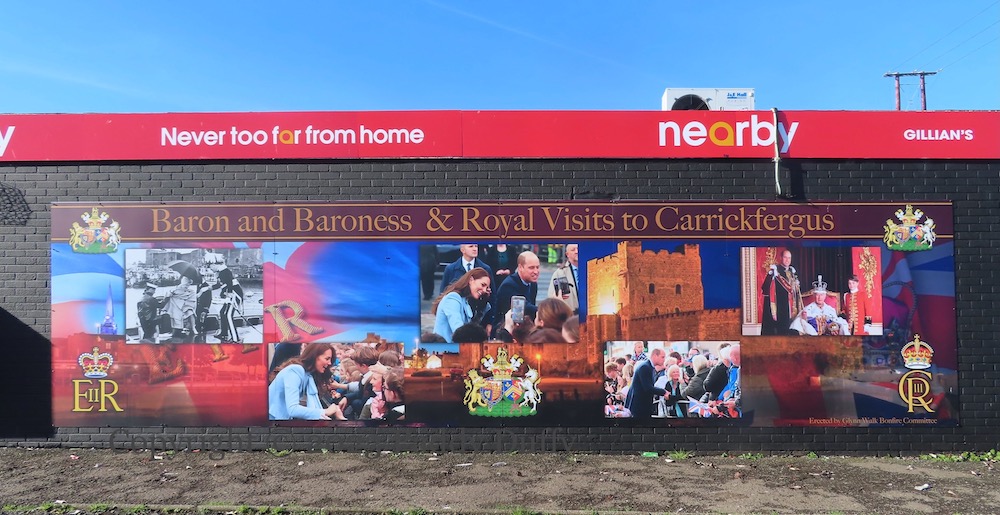
William was granted the peerage “baron Carrickfergus” as a wedding present in 2011, which made Catherine/Kate baroness (WP). They visited the town in 2022 (BBC). The black-and-white photograph on the left is of Queen Elizabeth visiting in 1961 (youtube).
Replaces the kids mural We Are Friends in Hawthorn Avenue, Carrickfergus.
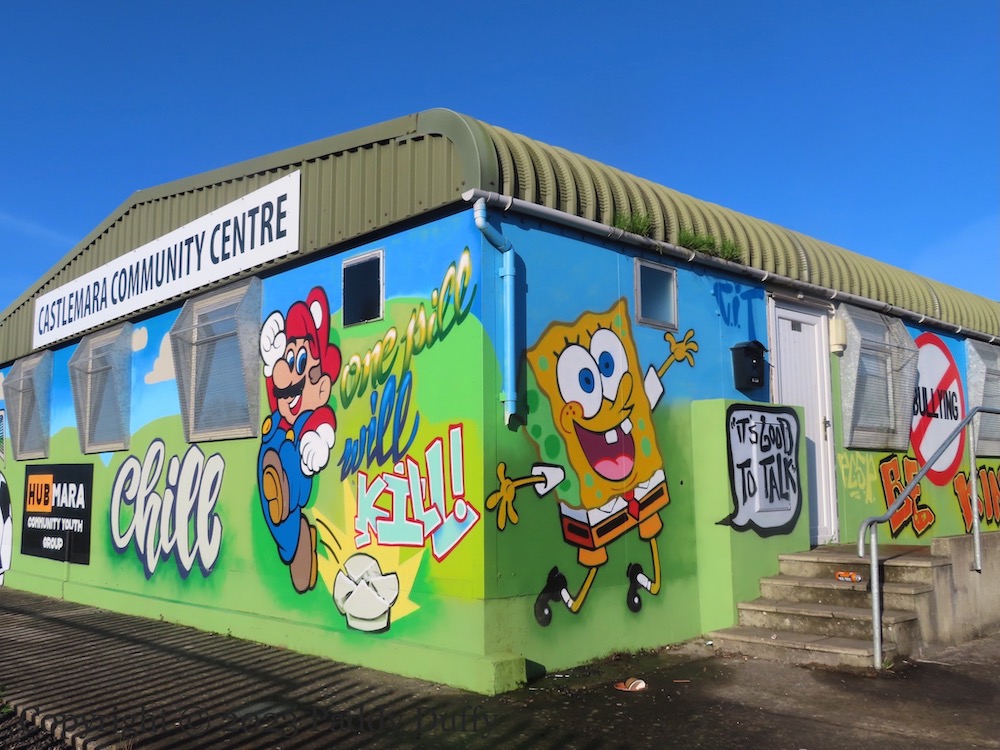
Castlemara Community Centre (Fb) got some new artwork to go with their signage from 2021 (Housing Executive). It’s mostly what you would expect for a kids’ centre – Mario and SpongeBob with anti-drugs and anti-bullying messages — but then there’s also the unfortunate black-and-orange logo on the right, suggesting a very different kind of hub – PornHub – “and chill”.
March 10th was the 52nd anniversary of the killings of three Highland Fusiliers, Dougald McCaughey and teen-aged brothers Joseph and John McCaig, who were drinking in a city centre pub and lured to their deaths in north Belfast at the hands of the (Provisional) IRA. The killings led to the resignation of NI prime minister James Chichester-Clark and an increase, to 18, in the minimum age for service (WP).
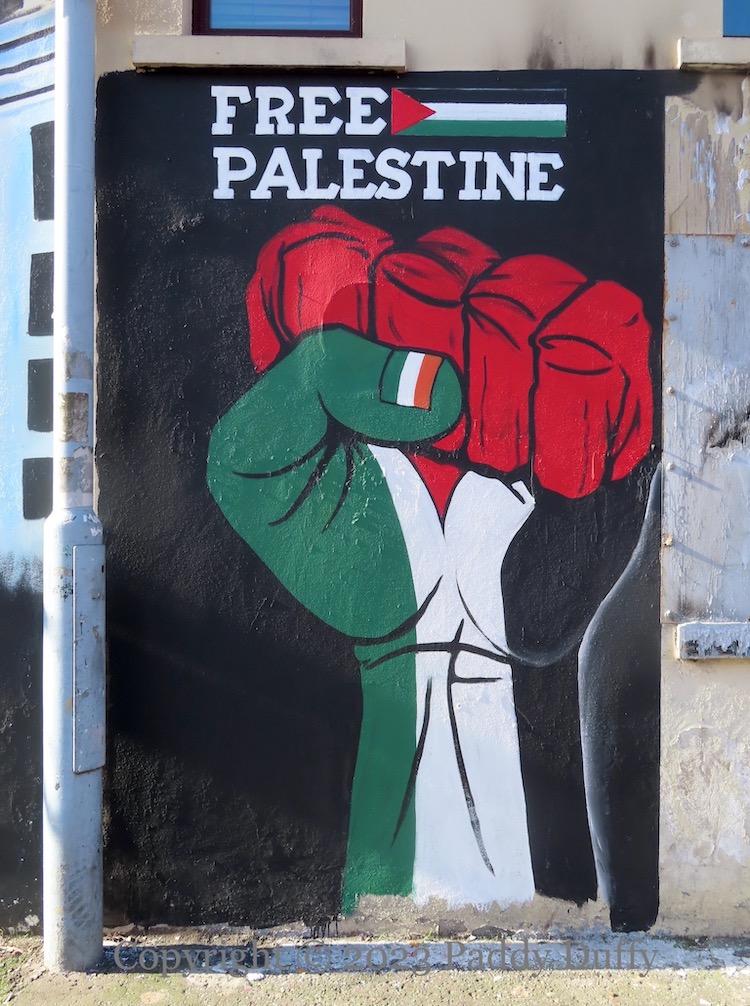
The “occupied Palestinian territories” include the West Bank (including East or Arab Jerusalem) and the Gaza Strip, which, although governed by Palestinians since 2005, is still considered occupied due to Israel’s blockade and control of Gaza’s borders and seas (UN).
This new mural on Ascaıll Ard Na bhFeá/Beechmount Avenue/RPG Avenue in Belfast is prompted by the current attacks on, and siege of, Gaza by Israel in response to the attacks by Hamas that left more than 1,300 Israelis dead (Jerusalem Post). The mural perhaps uses the same stencil as in Springhill in 2014, reproducing a Carlos Latuff (Xitter) cartoon.
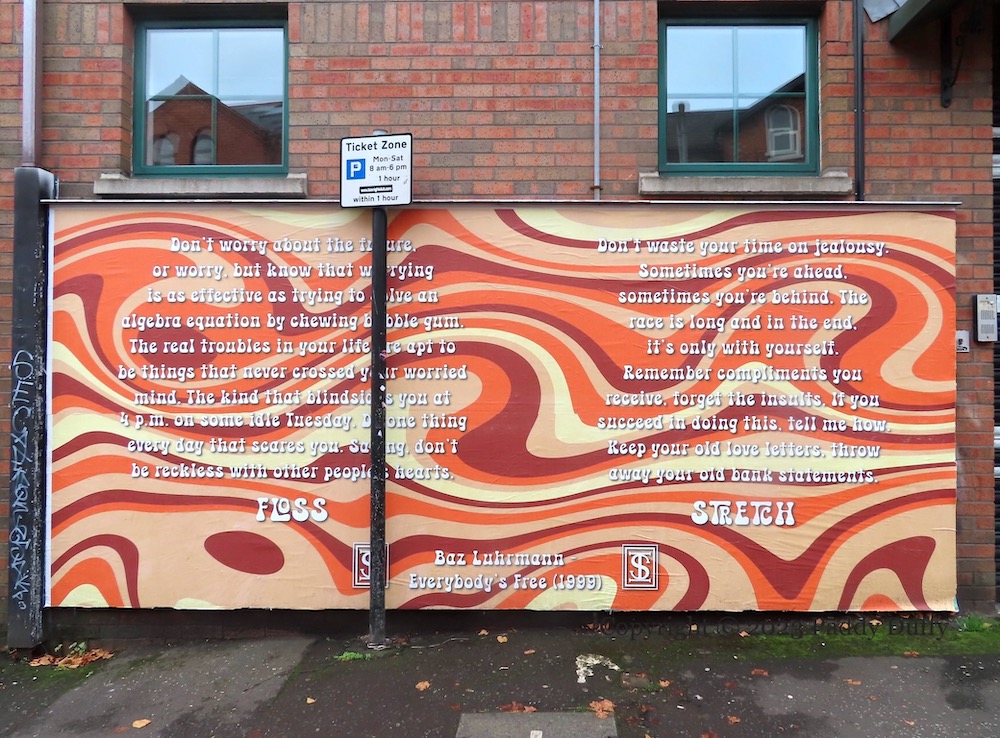
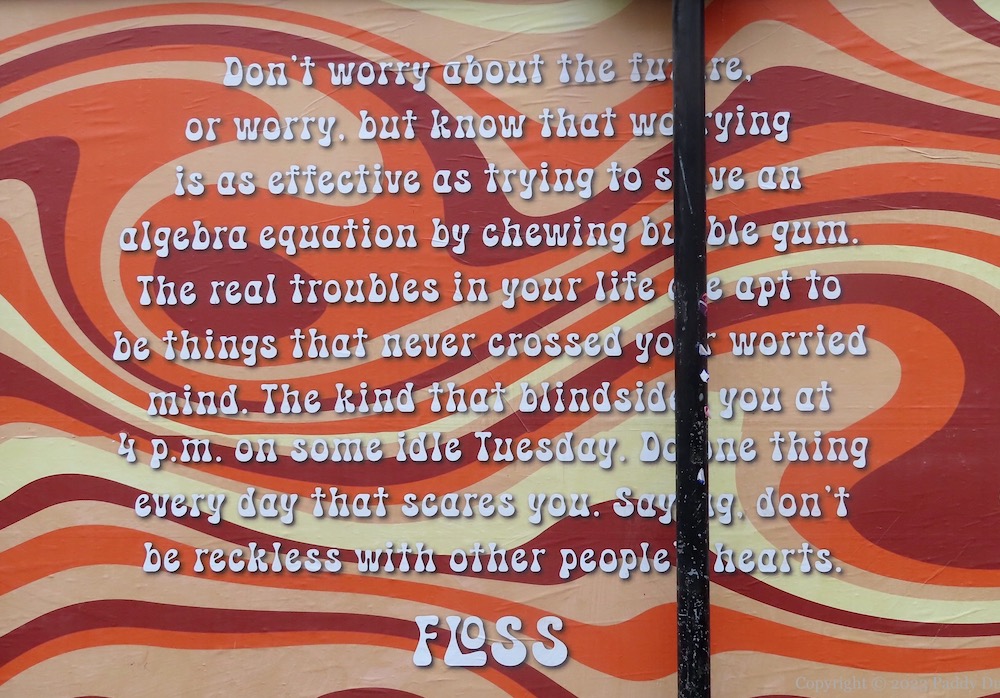
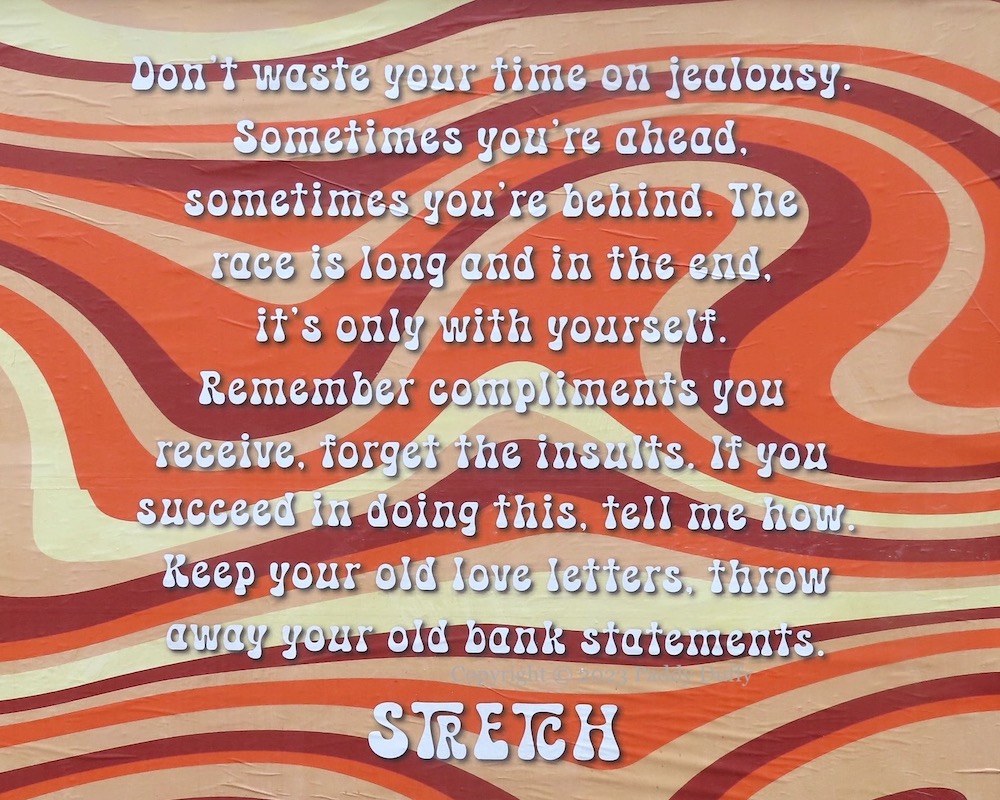
The words here are attributed to director Baz Luhrmann, who put the words (spoken by Lee Perry) against music by Rozalla, “Everybody’s Free (To Feel Good)”; the track (youtube) went to number one in the charts in the UK and Ireland in 1999. They are in fact part of a hypothetical commencement address entitled “Wear Sunscreen” written by journalist Mary Schmich. (WP)
Don’t worry about the future,/or worry, but know that worrying/is as effective as trying to solve an/ algebra equation by chewing bubble gum./The real troubles in your life are apt to/be things that never crossed your worried/mind. The kind that blindsides you at/4 p.m. on some idle Tuesday. Do one thing/ every day that scares you./Saying, don’t be reckless with other people’s hearts/[Don’t put up with people who are reckless with yours] … Floss
Don’t waste your time on jealousy./Sometimes you’re ahead,/sometimes you’re behind. The/race is long and in the end,/it’s only with yourself/Remember compliments you/receive, forget the insults. If you/succeed in doing this, tell me how./Keep your old love letters, throw/away your old bank statements … Stretch
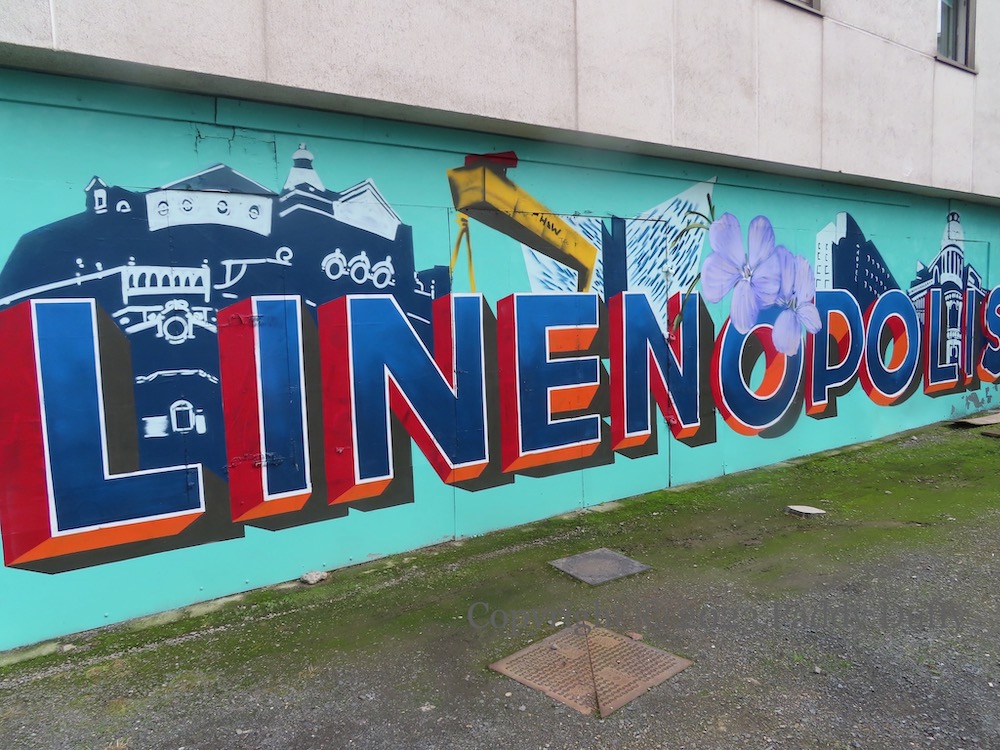
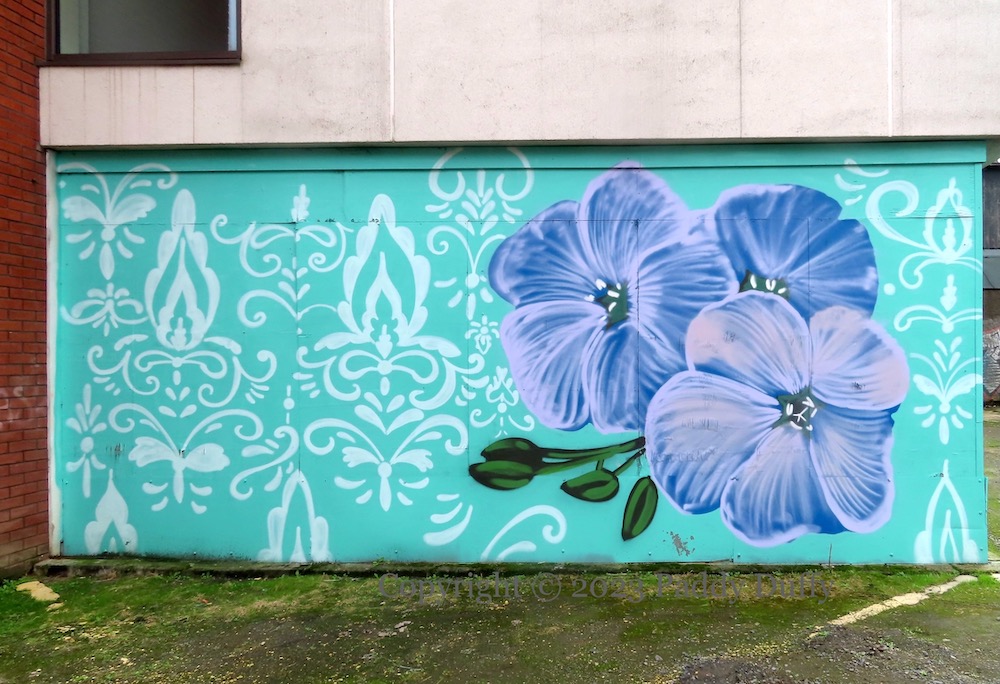
A celebration and exploration of Belfast’s most famous textile, the “linen biennale”, runs until October (web). The Linen Hall library also runs a tour of the “linen quarter” on Thursdays.
Visual Waste’s (ig) Great Victoria Street mural includes various linen quarter buildings: the Grand Opera House, the Europa hotel, and Inst., alongside the H&W cranes and the Titanic museum.




 Paddy Duffy Collection