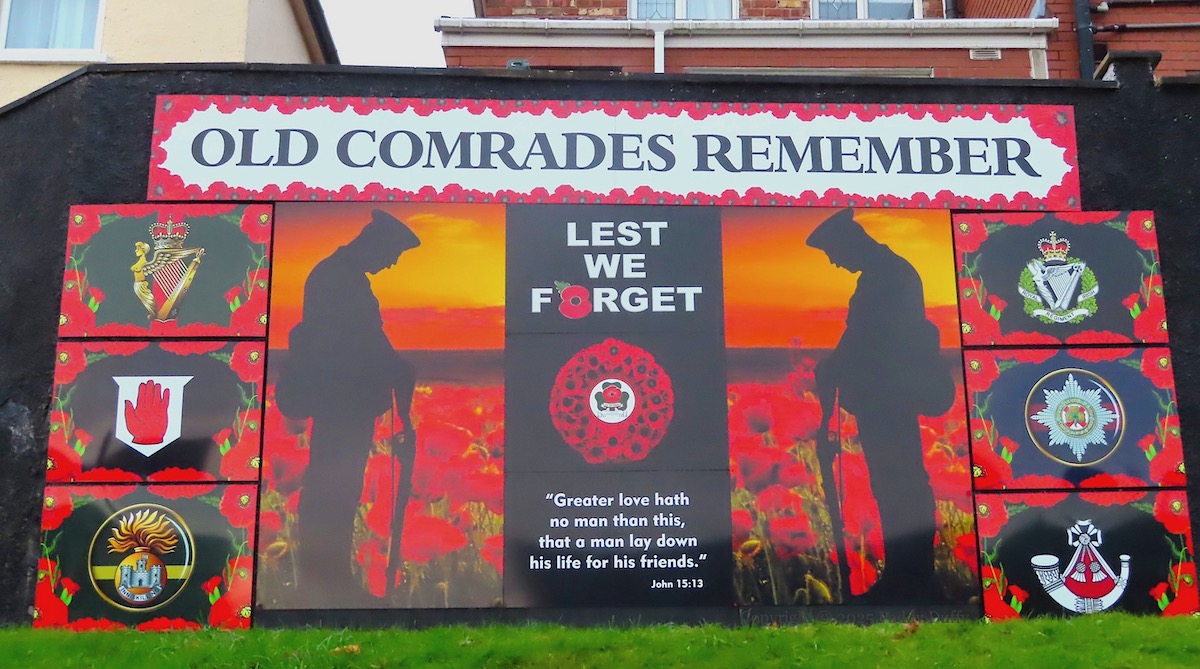
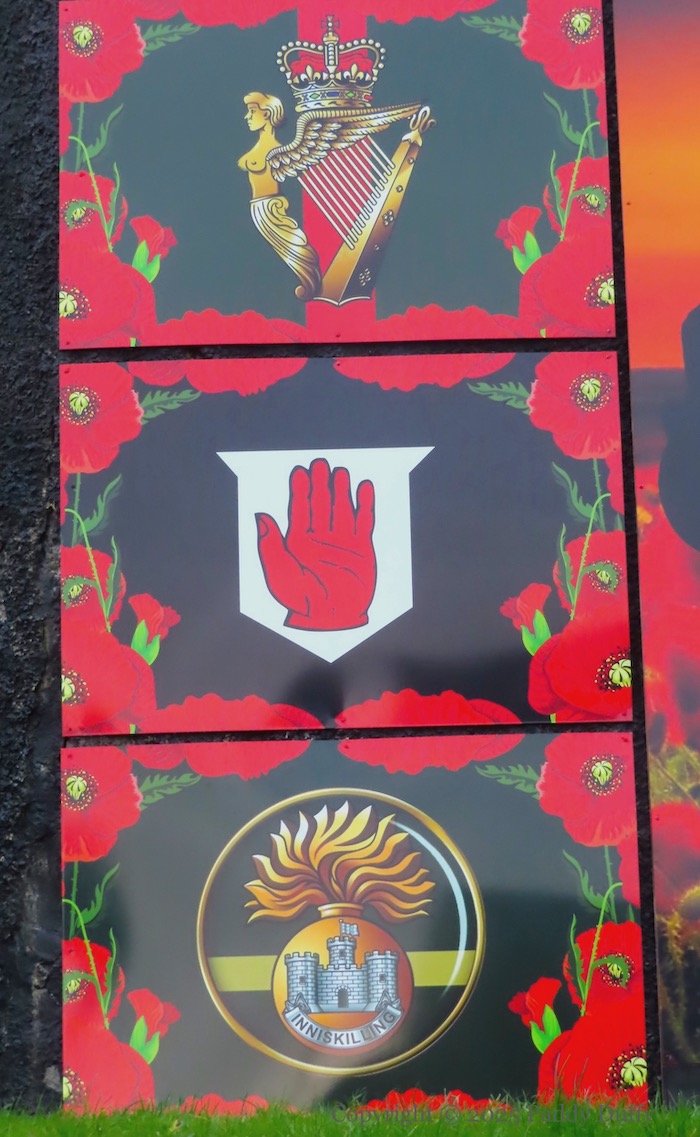
This entry updates the images seen in November’s Lest We Forget, with the addition of six military insignia to either side of the ‘Old Comrades’ board that was added just after Remembrance Sunday.
On the left (top to bottom): Royal Irish Rifles (later the Royal Ulster Rifles), 36th (Ulster) Division, Royal Inniskilling Fusiliers; on the right: Royal Irish Regiment, Order Of St Patrick, British Light Infantry.
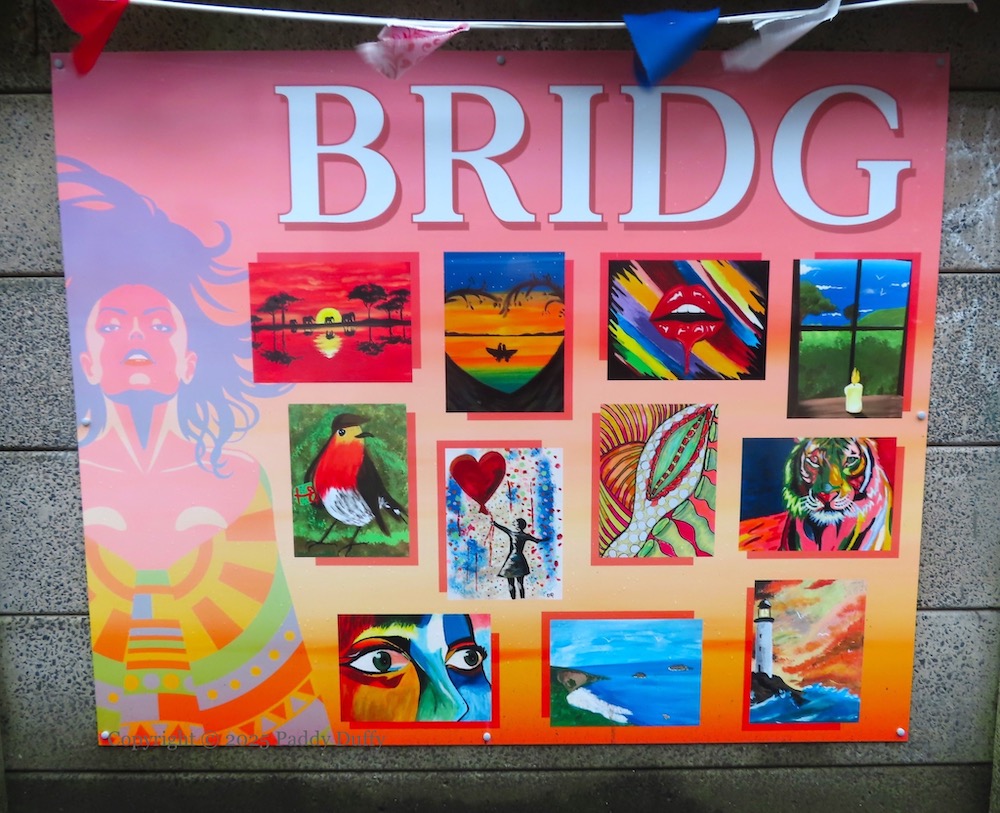
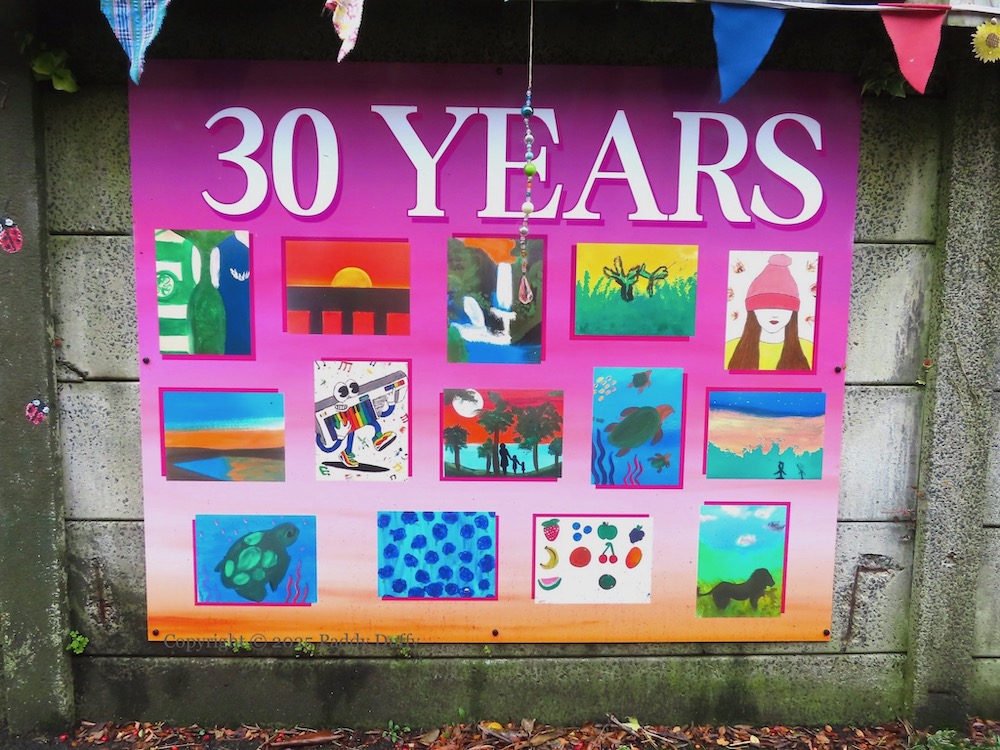
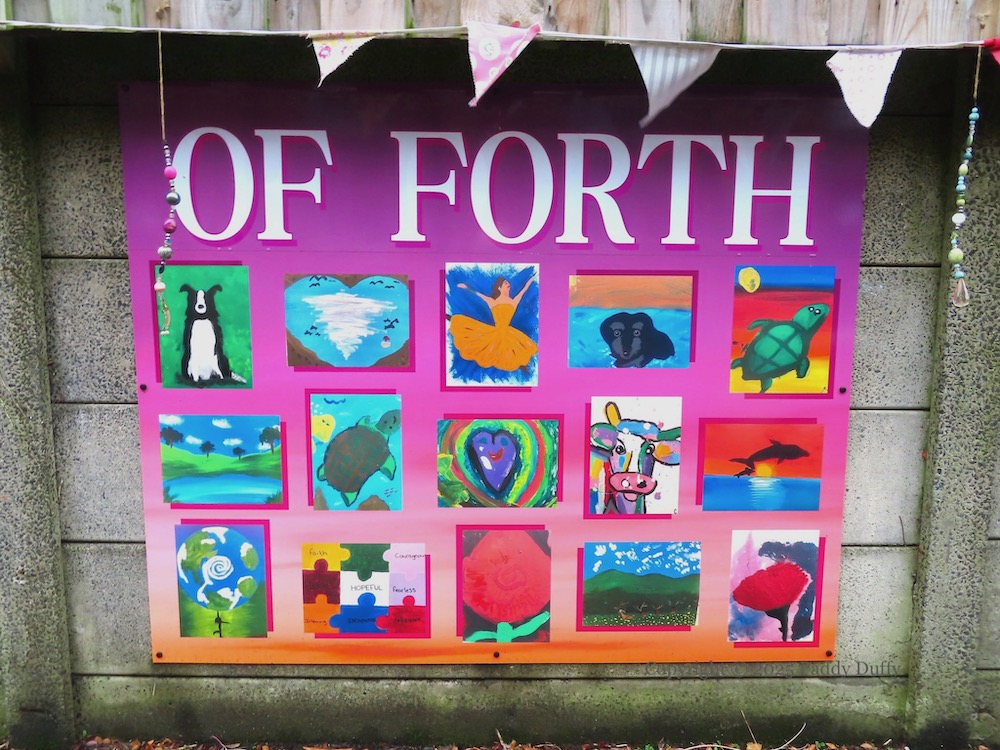
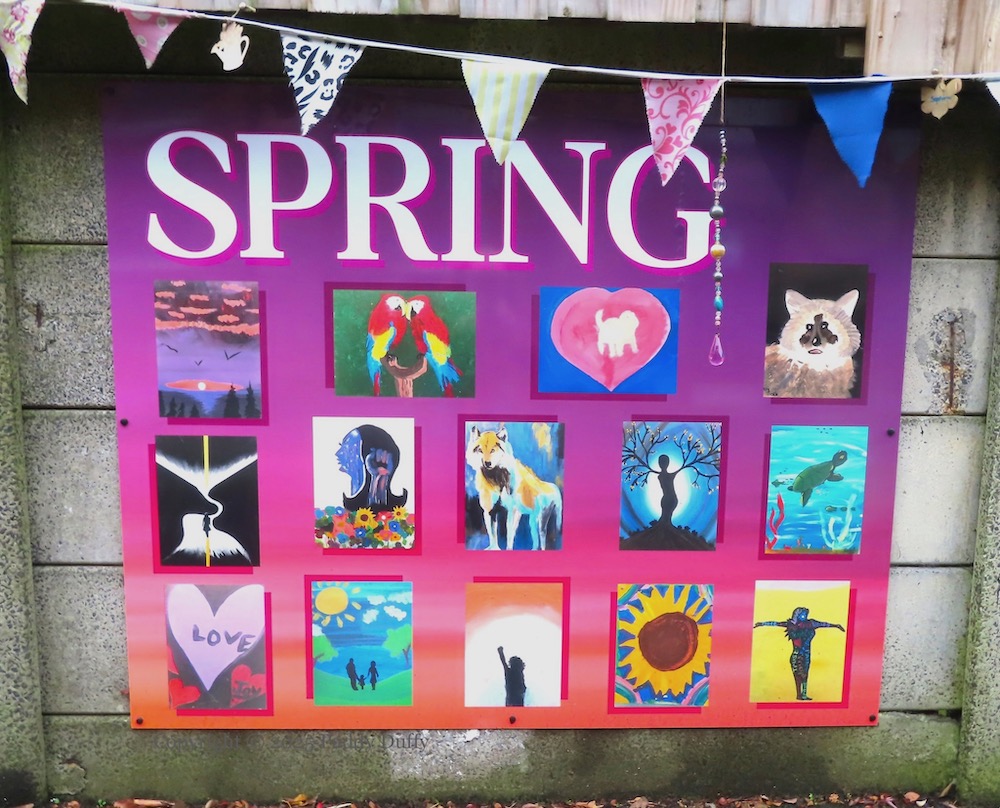
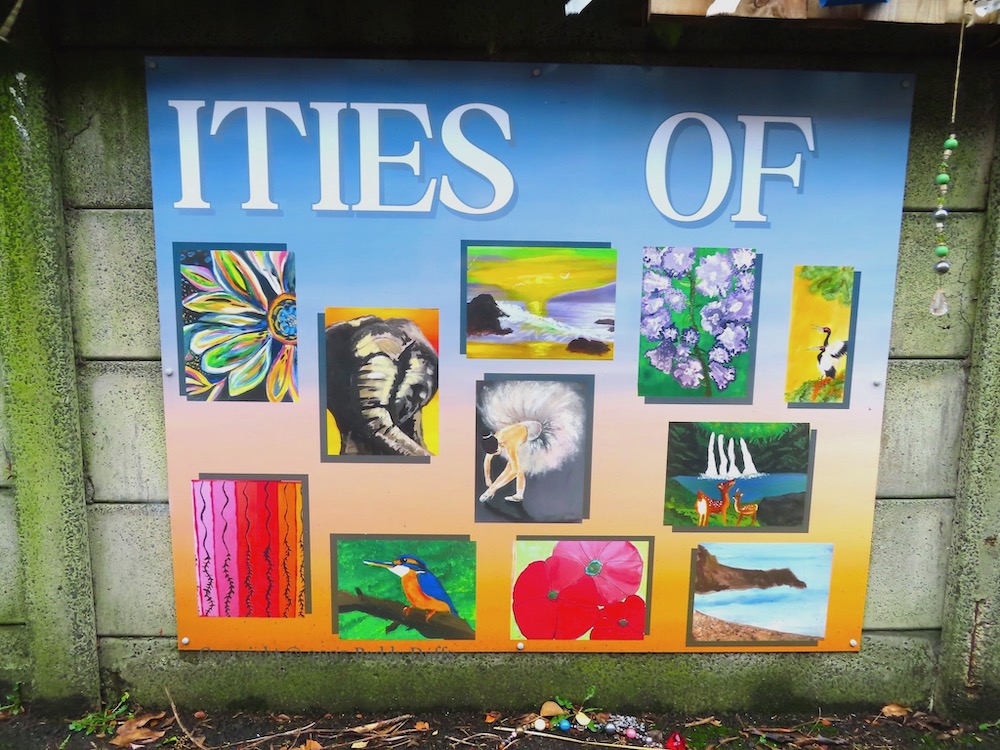
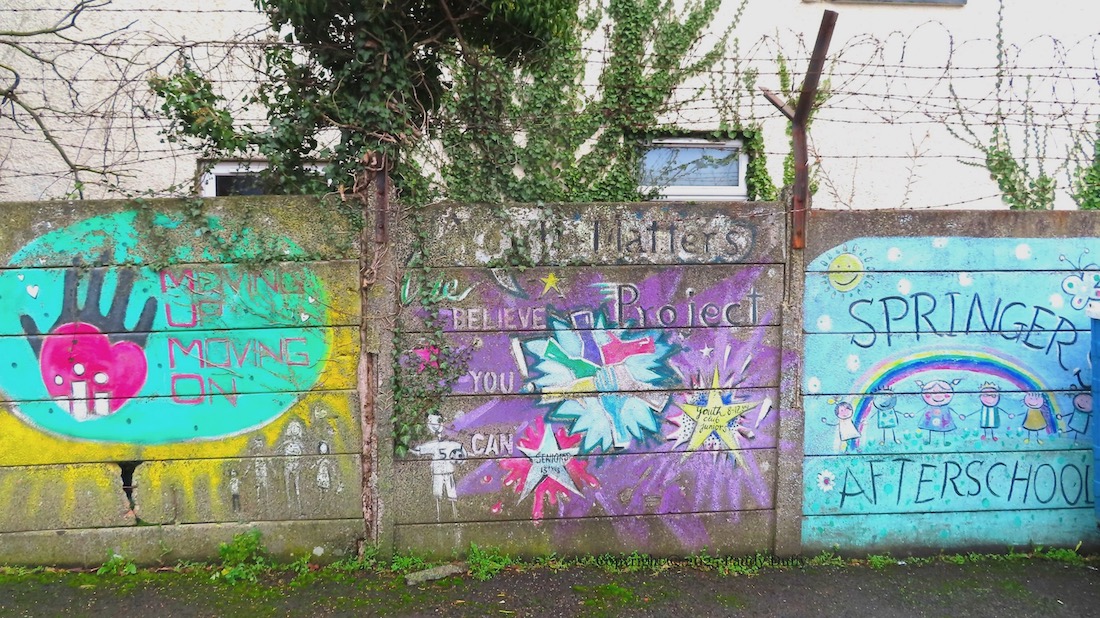
“Bridging divides”, “30 years of Forthspring”, “Communities of strength”. Forthspring is a cross-community group providing programming to residents of the CNR upper Springfield and PUL Woodvale areas. On its ‘about’ page, the organisation claims 1996 is the year of its founding, so this array of boards might be in anticipation of next year (2026).
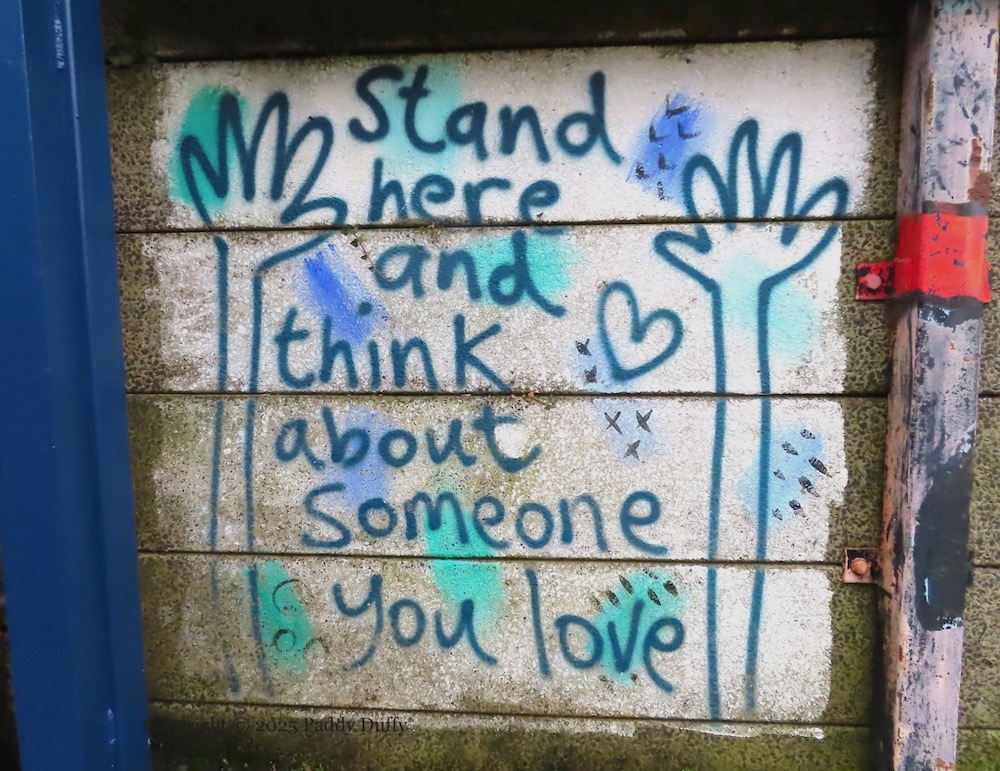
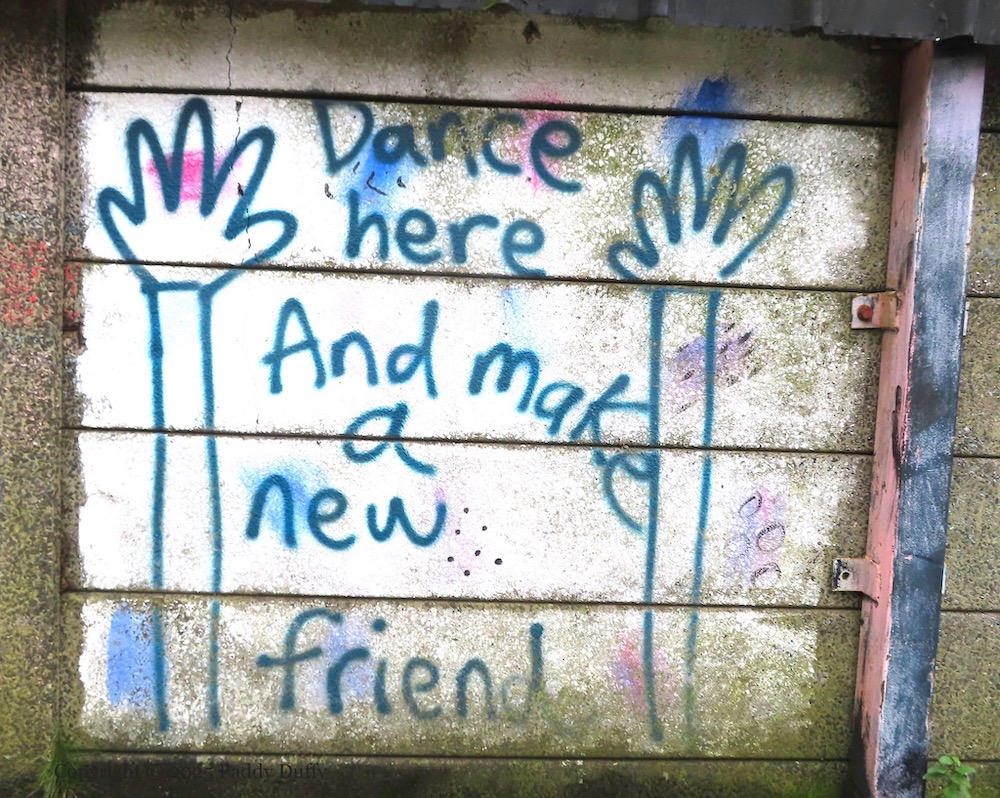
Also included are some of the older pieces on the panels at the front of the Springwell House. “Stand here and think about someone you love”, “Dance here and make a new friend”, “Youth Matters Project – believe you can”.
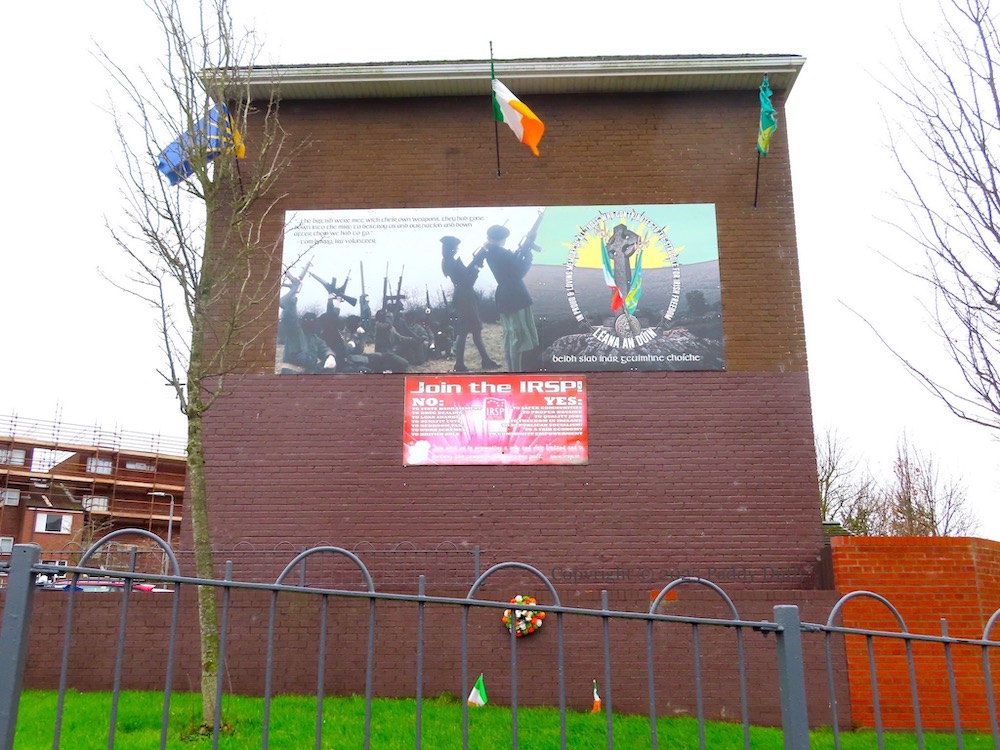
“[They said I was ruthless, daring, savage, blood thirsty, even heartless. The clergy called me and my comrades murderers; but] The British were met with their own weapons. They had gone down into the mire to destroy us and our nation and down after them we had to go. – Tom Barry, IRA volunteer.”
Tom Barry served in the British Army as a teenager and saw action in Mesopotamia and Egypt. The military training served him well when he joined the IRA and soon became commander of the West Cork brigade’s flying column. The quotation above offer a justification for the guerrilla tactics which helped drive the British to the negotiating table. In the Civil War, Barry was on the anti-Treaty side. (WP)
“In proud and loving memory of all those who contributed to the struggle for Irish freedom. Léana An Dúın. Beıdh sıad ınár gcuımhne choíche.”
The red board below is an old (2019) IRSP board, reading, “Join the IRSP. No to state harassment, to drug dealing, to loan sharks, to benefit cuts, to bedroom tax, to work schemes, to British rule. Yes to safer communities, to proper housing, to quality jobs, to freedom in Ireland, to republican socialism!, to a fair economy, to community empowerment. Join with us in promoting a new and fair Ireland and in building the campaign for a border poll. www.irsp.ie“
“RNU [Fb] stands with Palestine” – the board has been augmented by some knotwork corner-borders in the colours of the Palestinian and Irish flags, along with “freedom” in Irish (saoırse) and Arabic (الحرية).
For the board as originally presented in April 2024, see X14944.
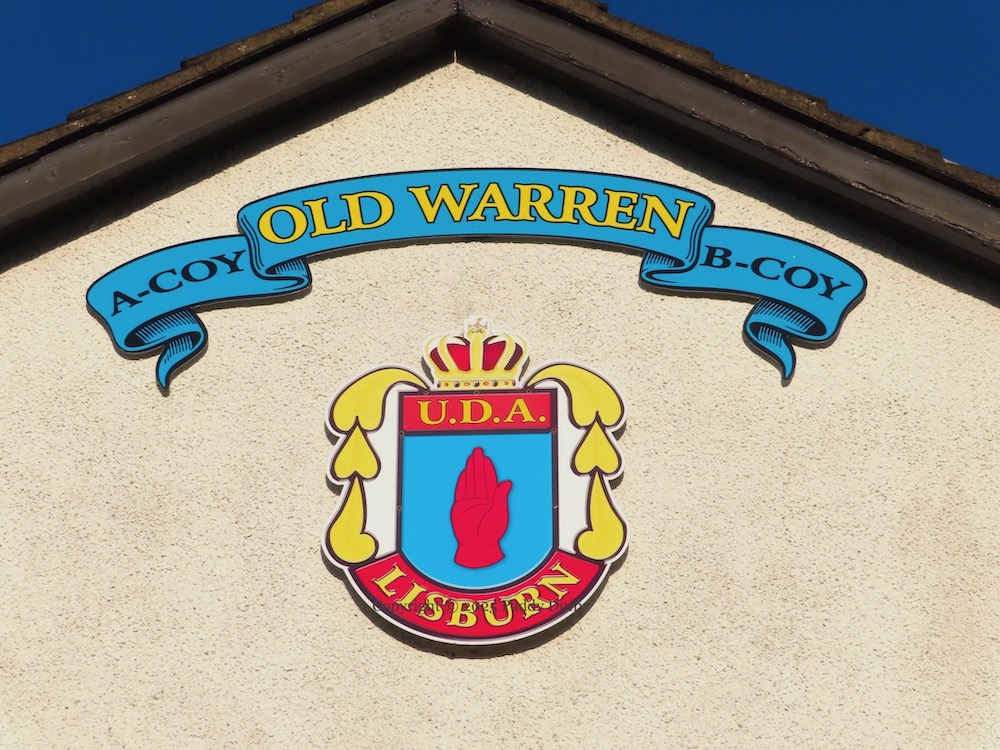
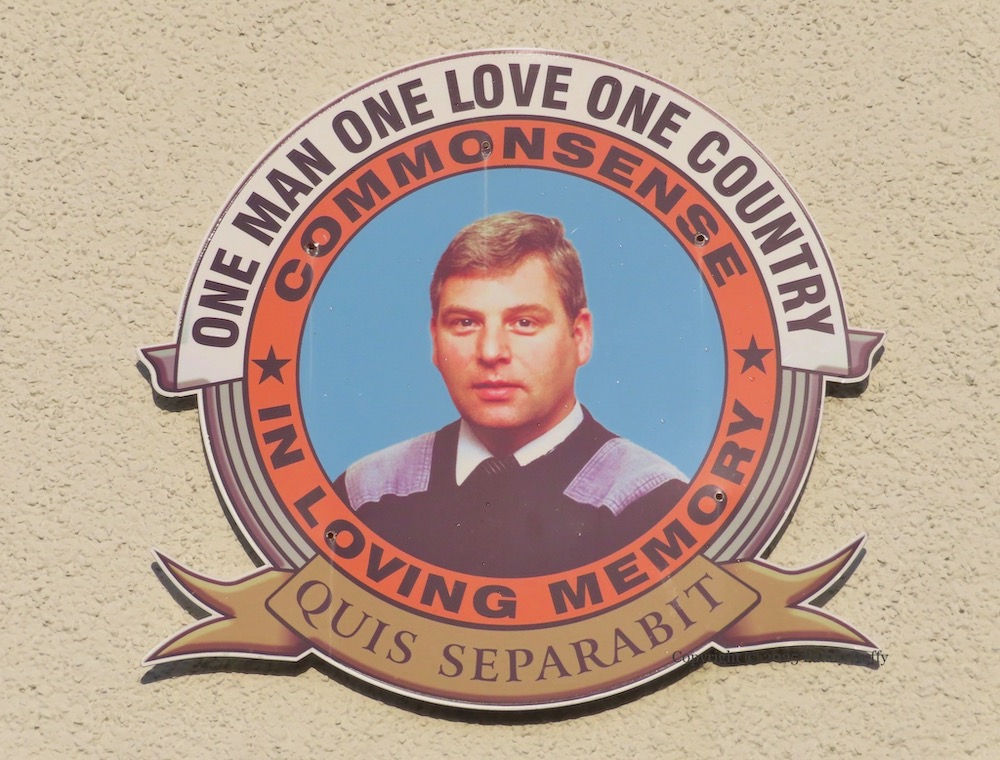
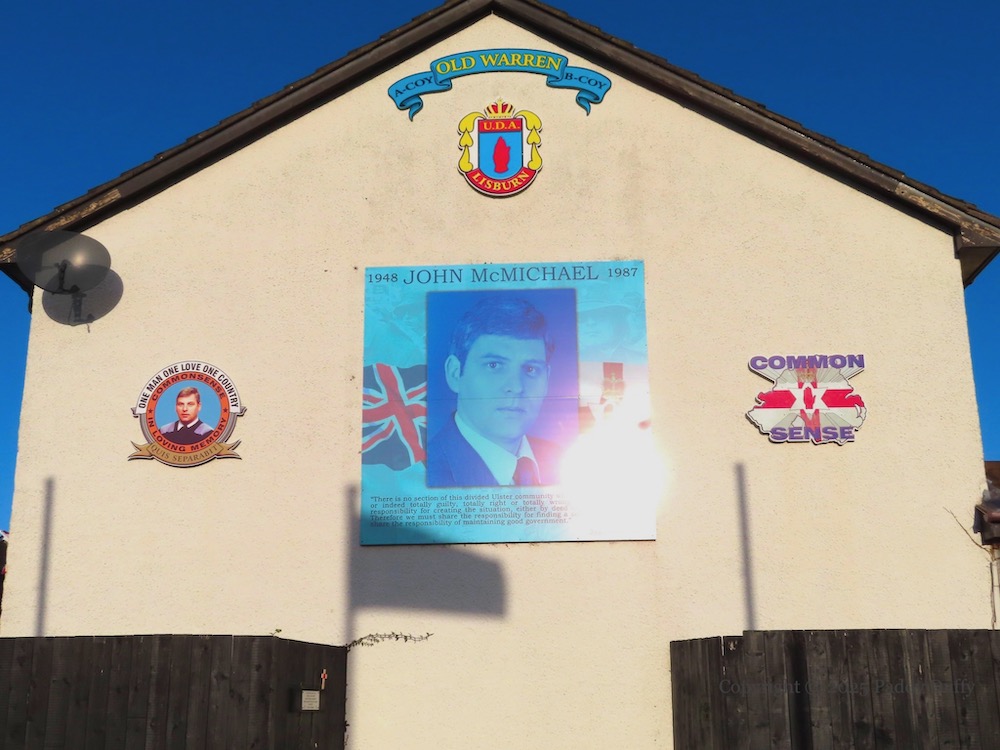
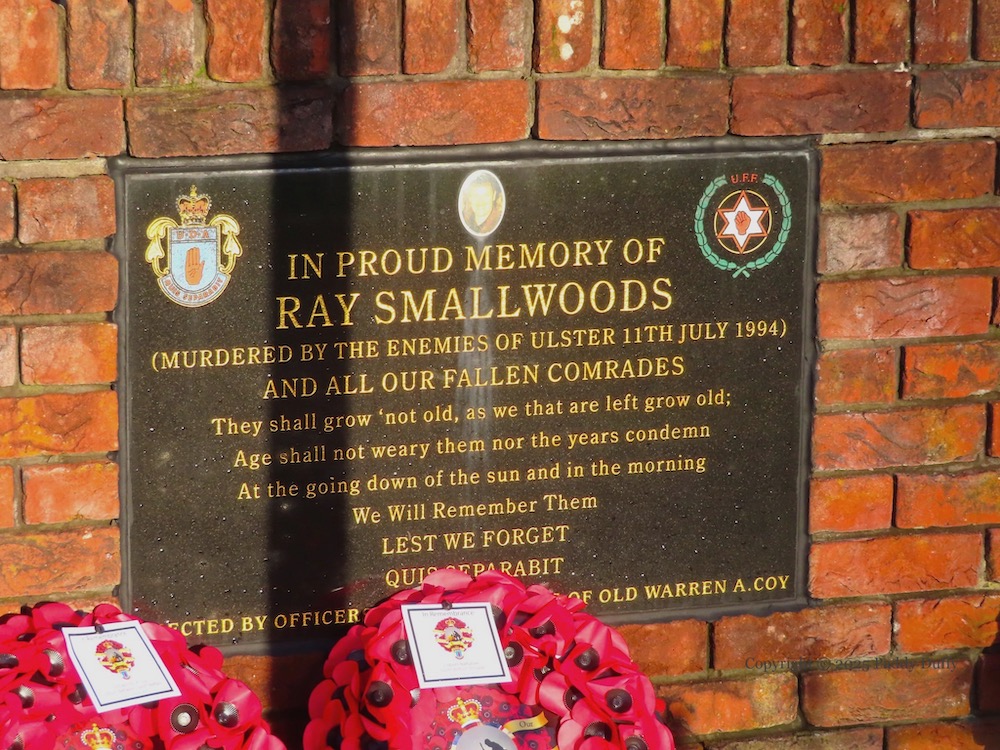
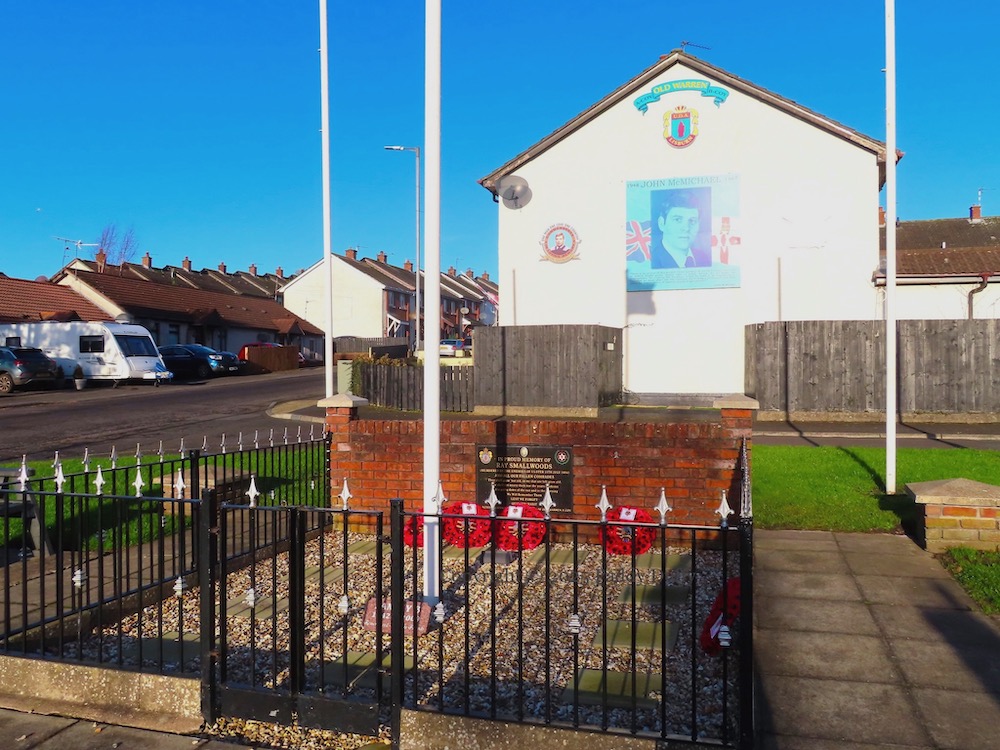
This entry updates 2023’s John McMichael, with close-ups of the smaller boards, in the apex and to either side on the main board, as well as of the stone to Ray Smallwoods, which reads, “In proud memory of Ray Smallwoods (murdered by the enemies of Ulster 11th July 1994) and all our fallen comrades. [For The Fallen] Erected by officers and volunteers of Old Warren A Coy.” Smallwoods was killed by the IRA in the garden of his home in Donard Drive, Lisburn (WP).
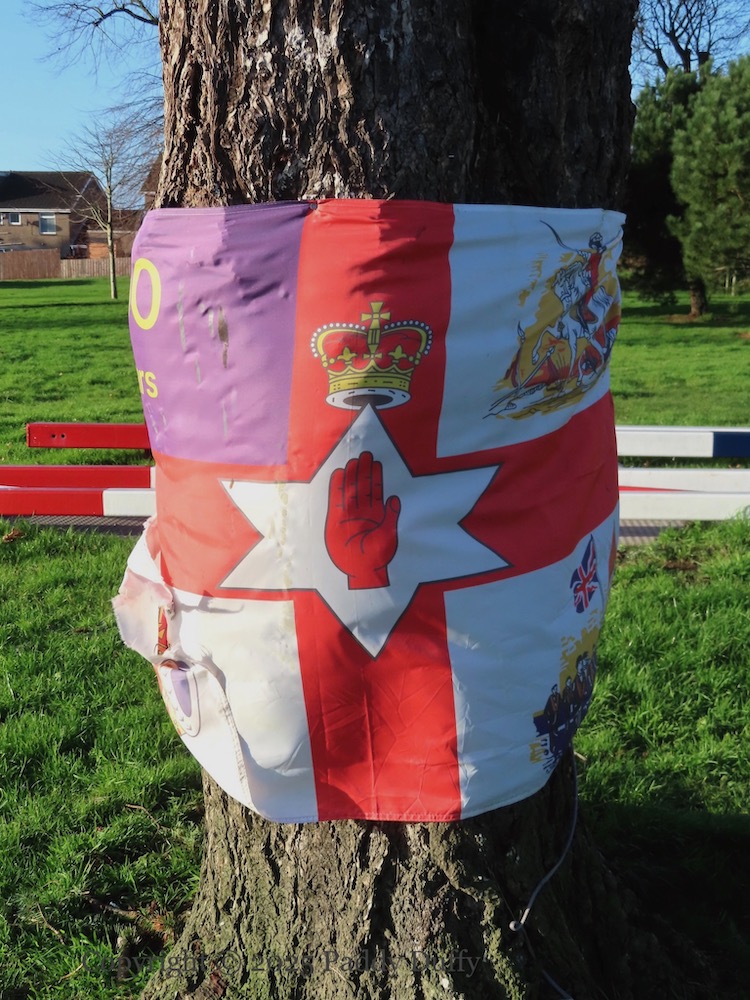
This pair of trees is in Ballymacash next to the bonfire site, hence the “No dumping and fly tipping” sign above the Union Flag on the tree to the right. The flag wrapped around the tree on the left is similar to one seen in 100 Years, an Ulster Banner with quadrants filled with (clockwise) King Billy, an Orange march, the Crown, and (instead of a Union Flag) what looks like UVF purple.
On both tree-trunks are small boards celebrating the “platinum jubilee 1952-2022” of “Her Majesty Elizabeth II”, with flowers of the nations and colonies (rose, thistle, shamrock, daffodil, silver fern, maple leaf) and an Orange star.
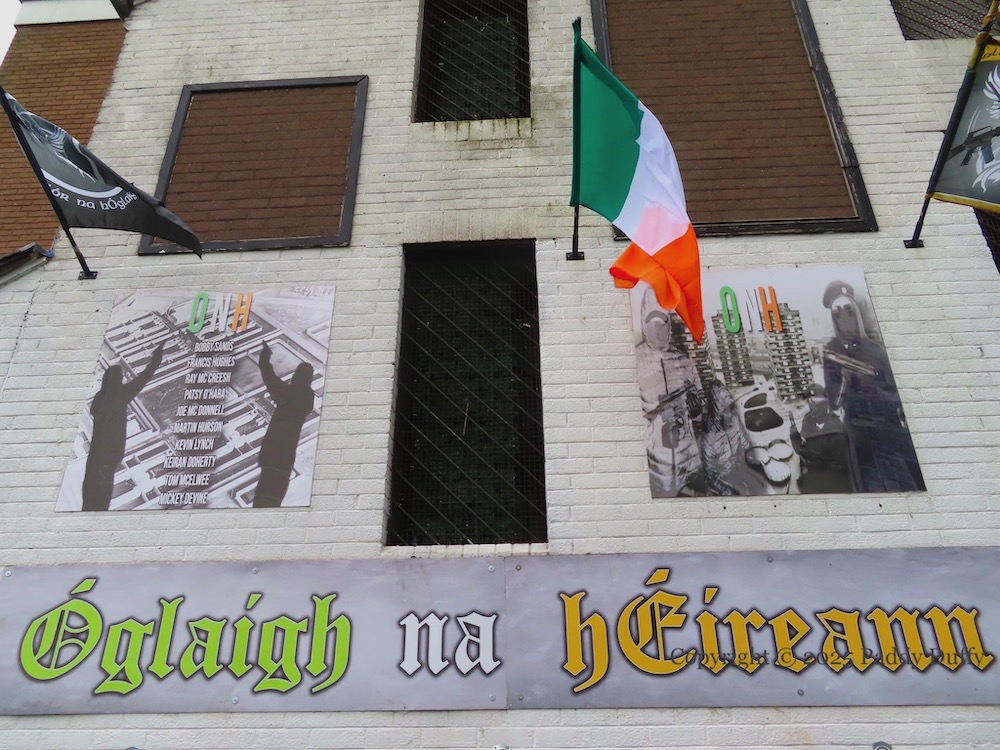
Anti-Agreement armed group Óglaıgh Na hÉıreann split in 2024 (BelTel) with the larger faction following Tony McDonnell (BelTel). Death threats against seven members from the smaller faction (under Sean O’Reilly) were issued and attacks were made in February (BBC), March (Irish News/reddit), and July (Irish News).
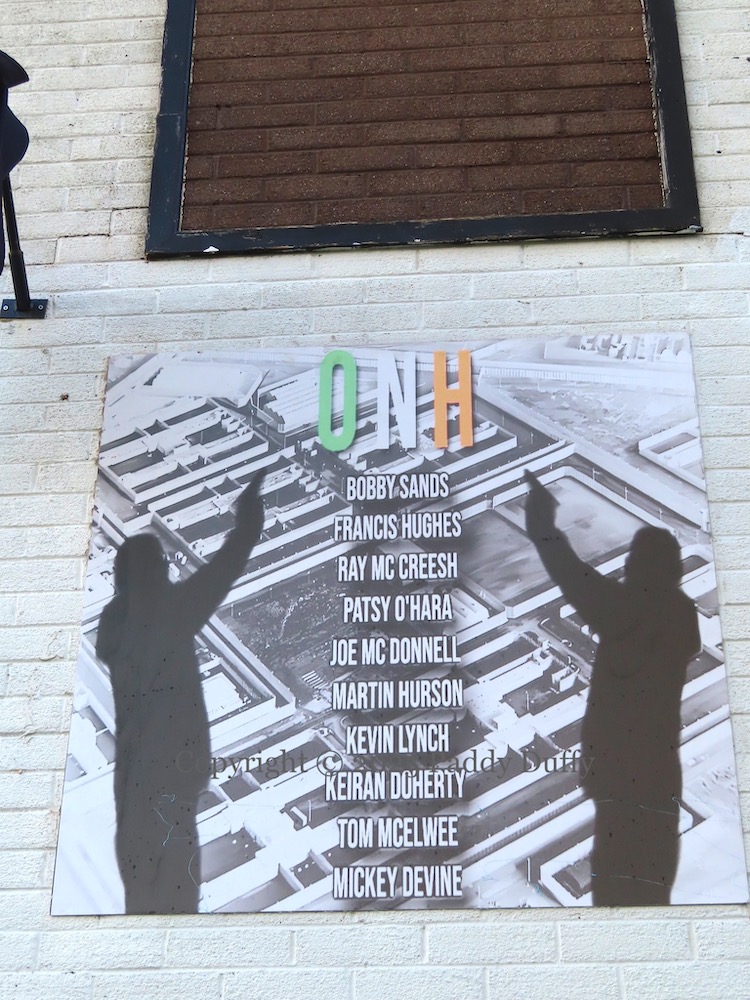
The signage seen here is in the New Lodge in north Belfast. On the left are the names of the ten deceased 1981 hunger-strikers, on the right, armed and masked volunteers pose against a background of a vintage picture of the flats (from Getty Images – BBC).
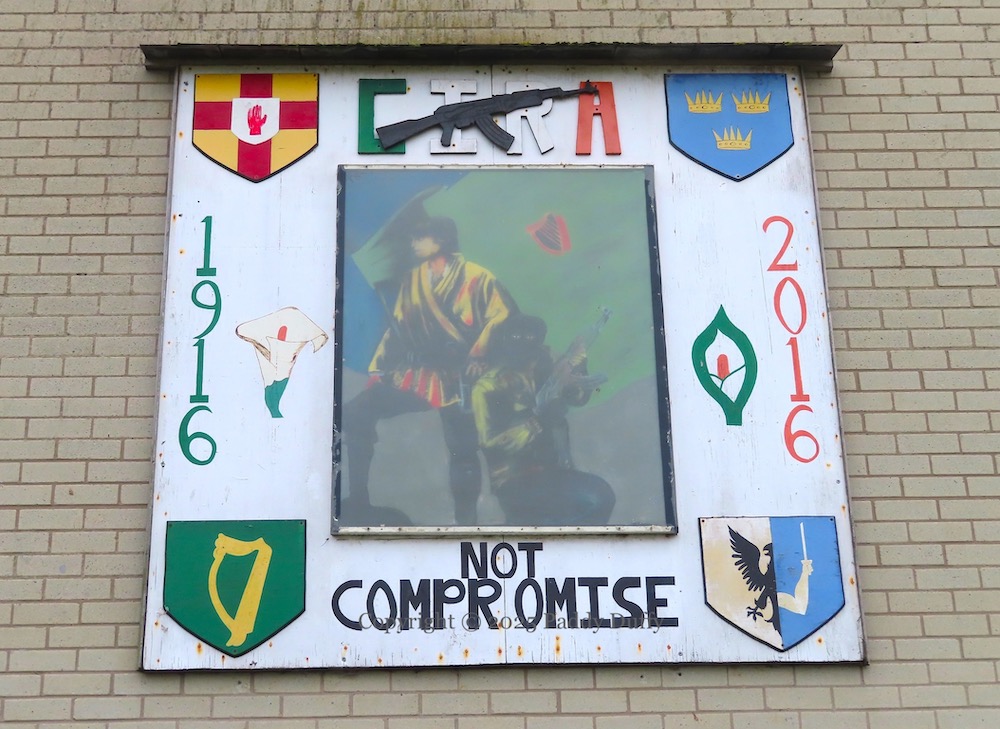
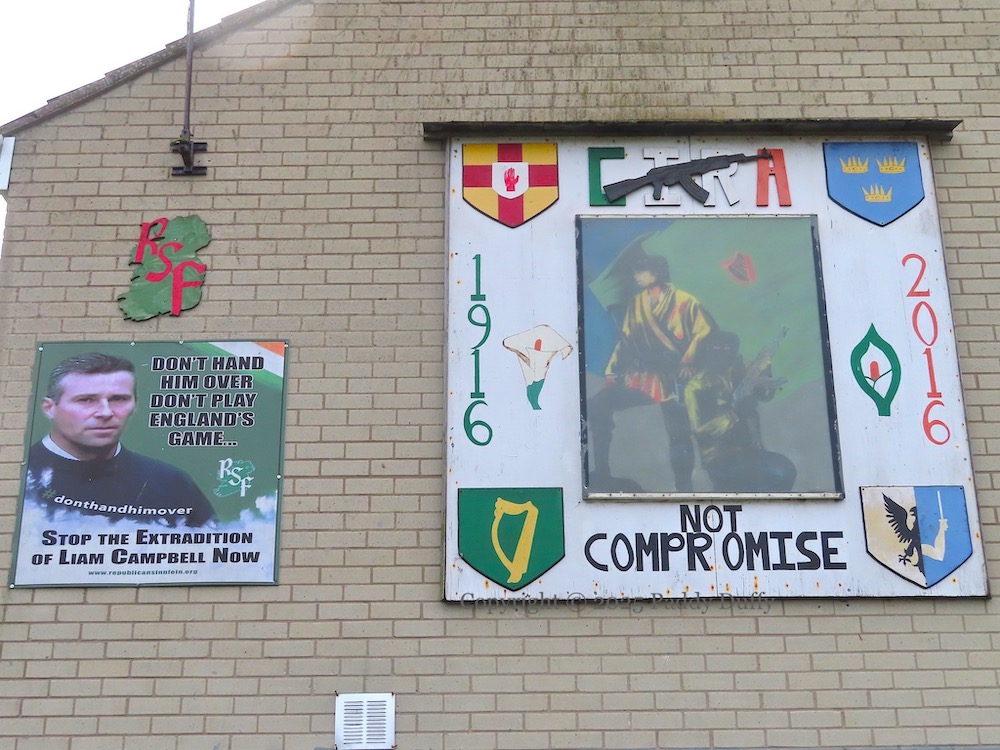
The CIRA (Continuity IRA) is the military wing of Republican Sınn Féın (RSF web), which split from Provisional Sınn Féın in 1986, though the military campaign did not begin until the Provisional IRA ceasefire in 1994. Like all of the various IRAs, the CIRA claims to be continuing the fight for (all-island) Irish freedom begun with the 1916 Easter Rising – the board (above) commemorates the centenary of the Rising.
To the left is a slightly newer RSF board: “Stop the extradition of Liam Campbell now – don’t hand him over, don’t play England’s game”. Campbell was extradited from the Republic to Lithuania in 2022 (BBC) but was returned to Ireland later the same year when a court ruled the statute of limitations has expired (RN).
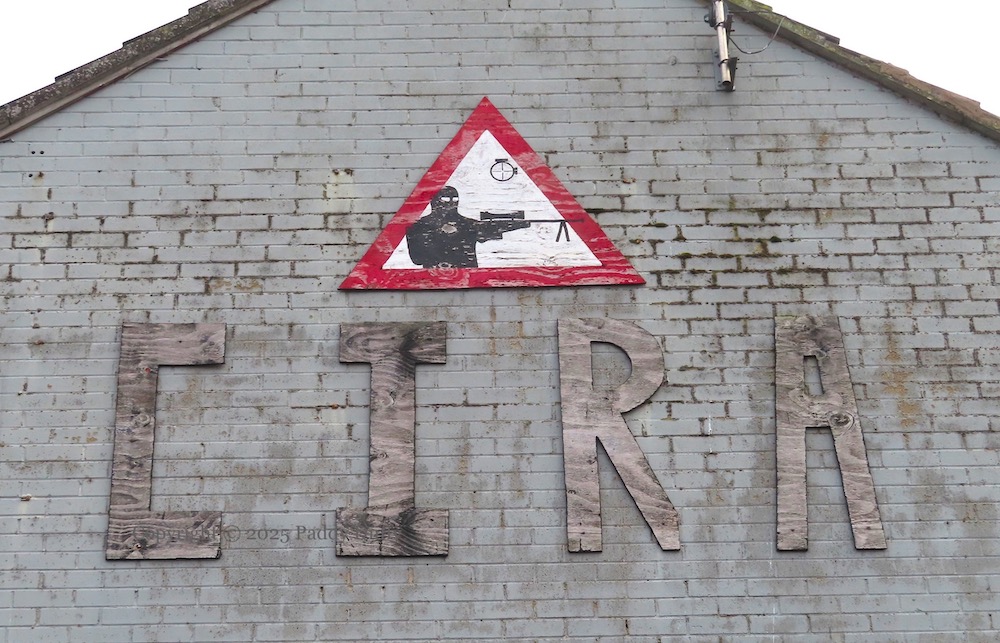
The CIRA’s armed campaign is represented by the hooded gunman in the ‘warning sign’ below.
Also included (last below) is a small IRSP (web) stencil.
The pieces are in the adjacent Meadowbrook and Drumbeg areas of Lurgan.
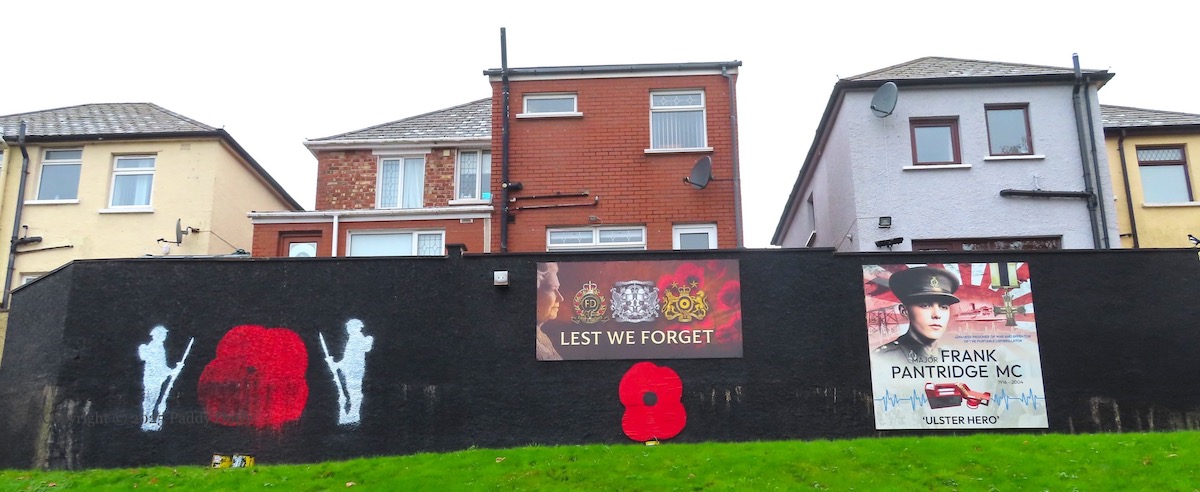
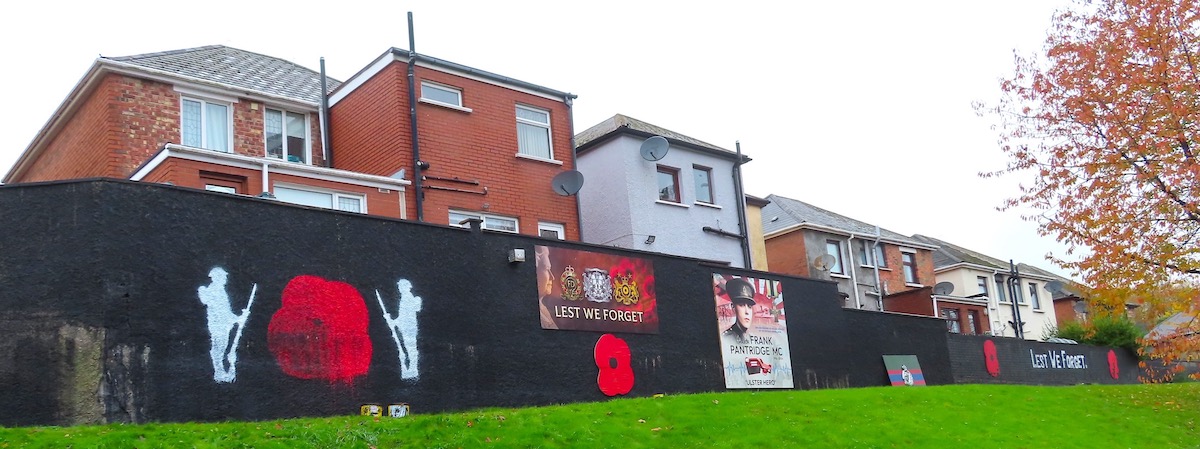
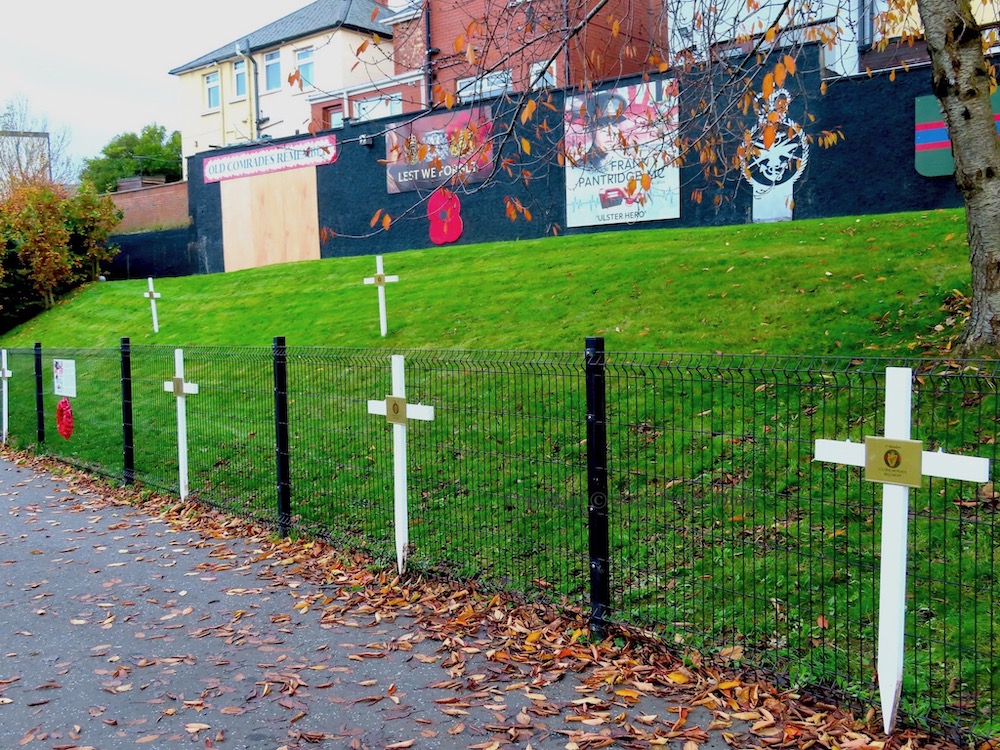
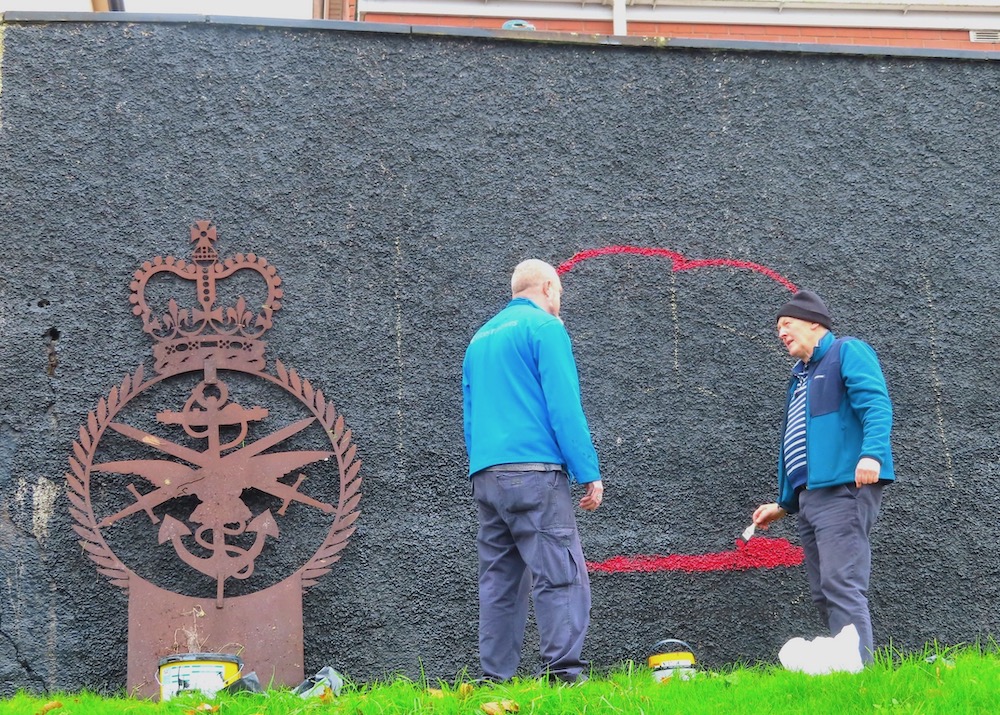
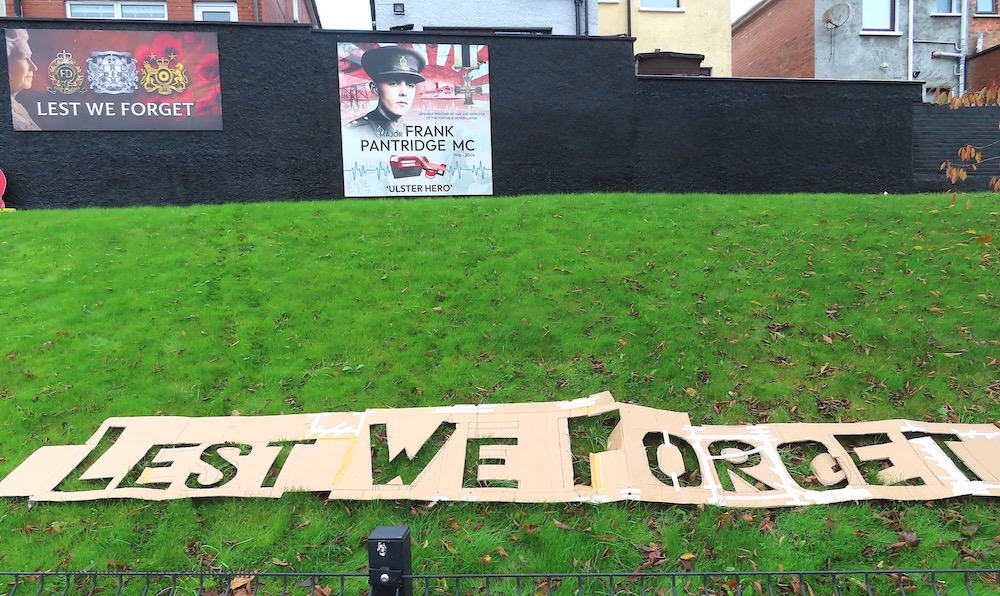
Here is a gallery of images from the wall behind the Shore Road ‘World Wars’ memorial (see Remembrance Sunday) which has a few new additions and re-ordered boards for this year’s commemorations. The main additions are the “Lest we forget” stencil shown above, and a large number of white crosses in the grass and along the fence bearing the emblem of the UDR. The UDR board has been moved from the slanted wall at the far left to what is now the central position on the wall.
For images from Sunday’s ceremonies at City Hall, see BBC.



















 Paddy Duffy Collection