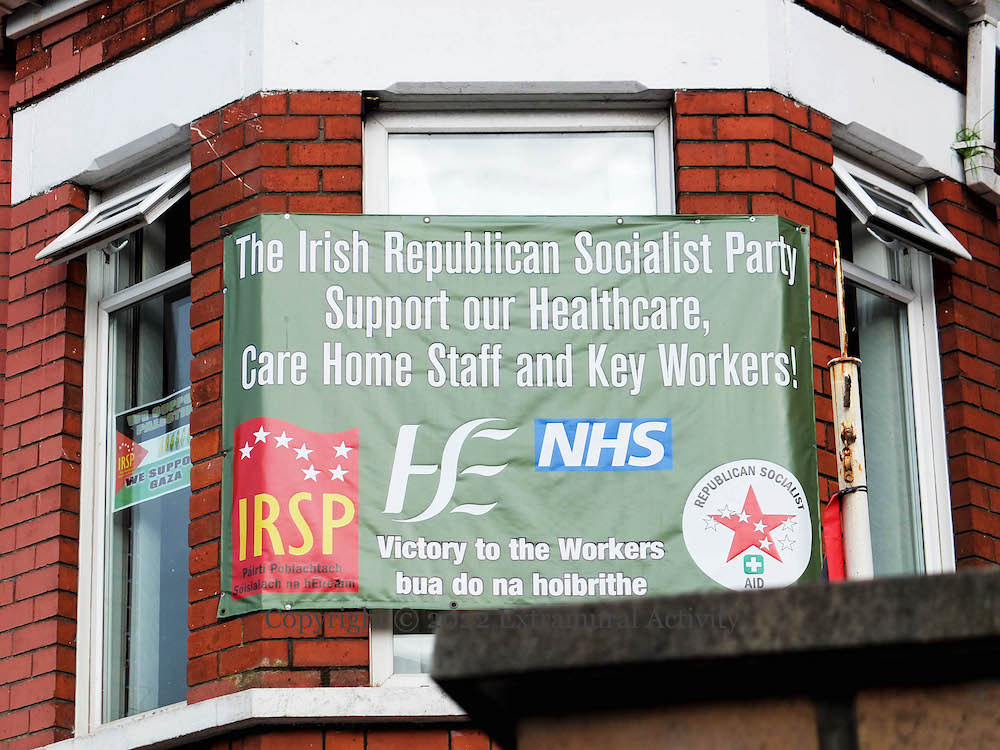
“Victory to the workers”. Costello House is home to the IRSP (tw) “Advice Hub” with representative Dan Murphy (Mid Falls & Springfield) and Michael Kelly (Lower Falls). Murphy (in Black Mountain) received 2.7% and Kelly (in Court) 3.2% of first-preference votes in the recent local elections (WP).
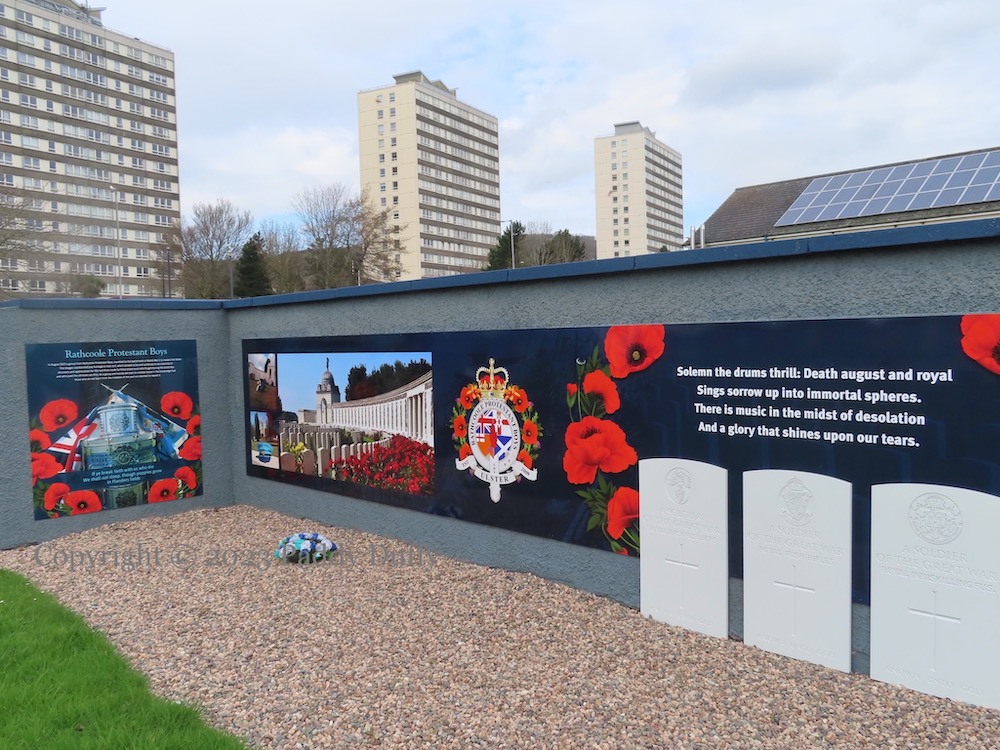
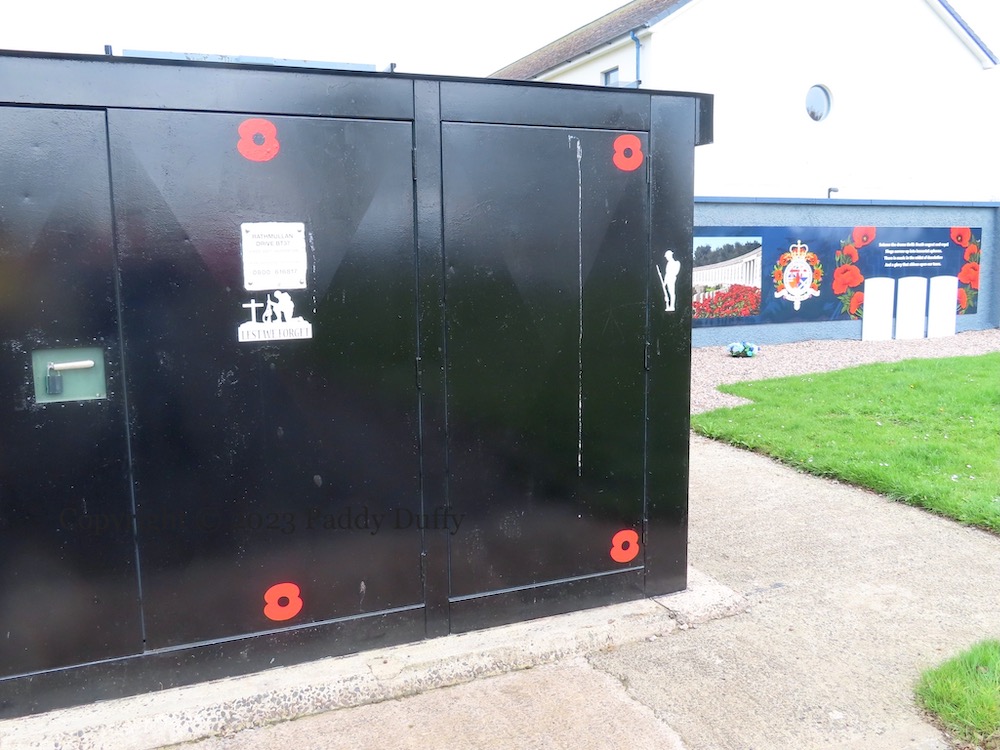
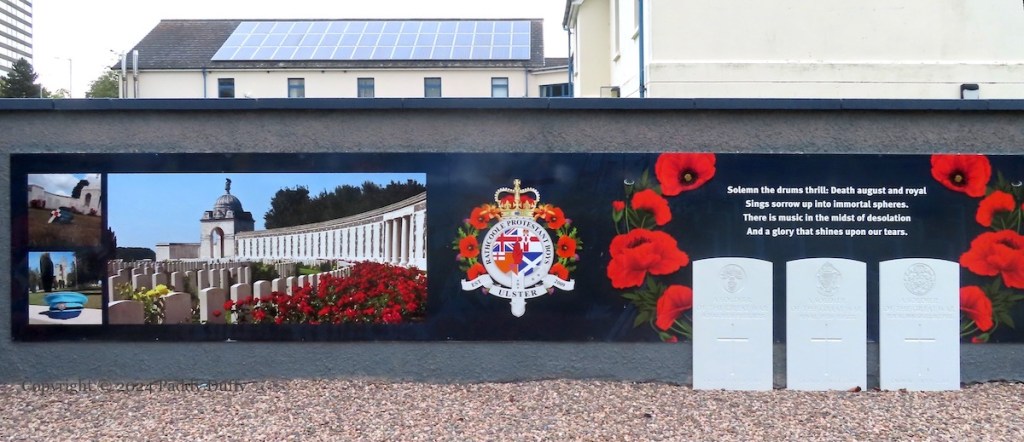
JP Beadle’s painting “Battle of the Somme: Attack of the Ulster Division” hangs in Belfast City Hall (Royal Irish has a history of its purchase) but is reproduced here in a new Rathcoole memorial to the dead of the Great War. (A list of “Ulster’s VC Heroes” can be found at the bottom of The Dead We Honour Here, from the east Belfast memorial garden. For the King George V quote, see How Nobly They Fight And Die.)
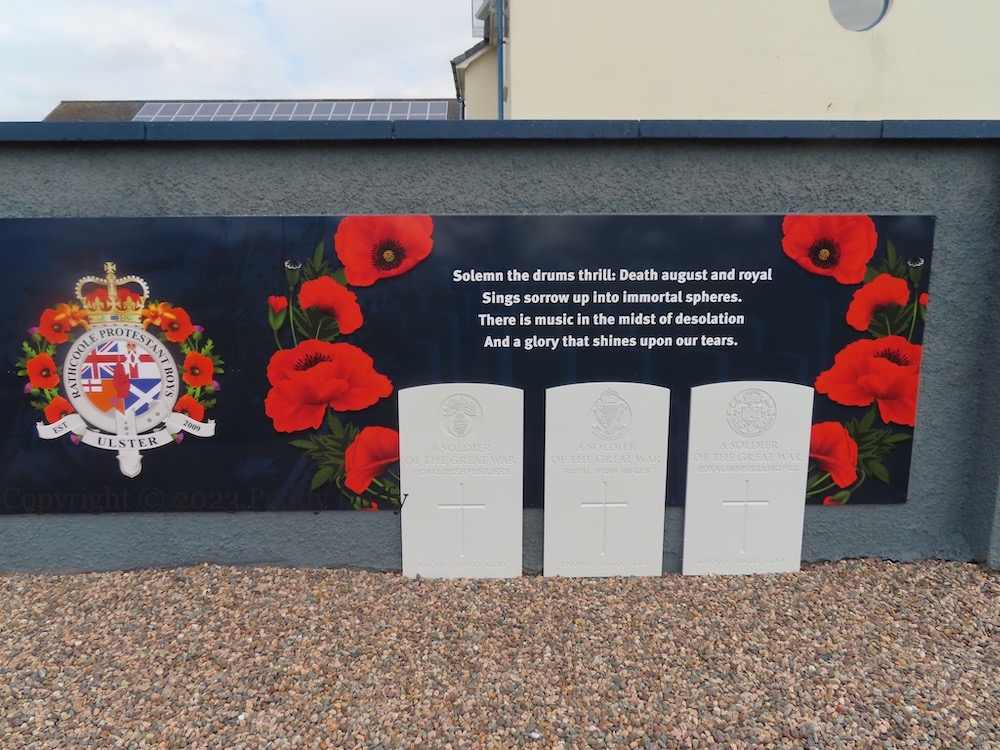
“Solemn the drums thrill: Death august and royal/Sings sorrow up into immortal spheres./There is music in the midst of desolation/And a glory that shines upon our tears.” This is the second verse of Binyon’s For The Fallen, a poem whose fourth verse – “They shall not grow old …” – is used in dozens of murals and memorials. (And in one case, the fifth verse: They Sleep Beyond England’s Foam.)
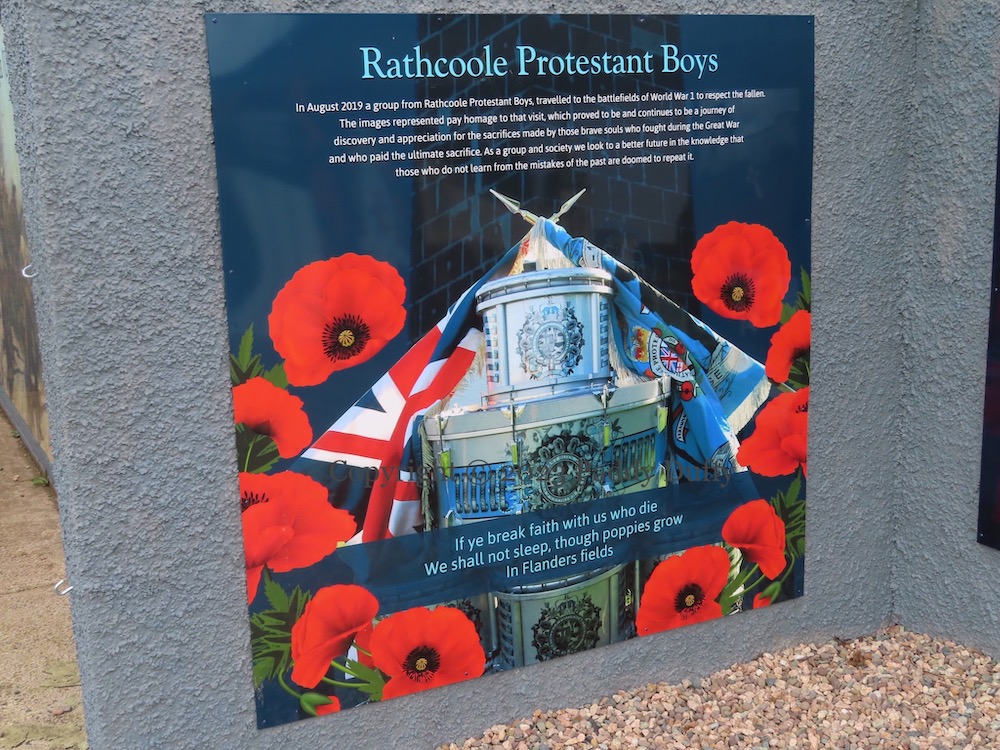
John McCrae’s poem concludes the board to the left: “In August 2019 a group from Rathcoole Protestant Boys [Fb] travelled to the battlefields of World War 1 to respect the fallen. The images represented pay homage to that visit, which prved to be and continues to be a journey of discovery and appreciation for the sacrifices made by those brave souls who fought during the Great War and who paid the ultimate sacrifice. As a group and society we look to a better future in the knowledge that those who do not learn from the mistakes of the past are doomed to repeat it. ‘If ye break faith with us who die/We shall not sleep, though poppies grow in Flanders fields.'”
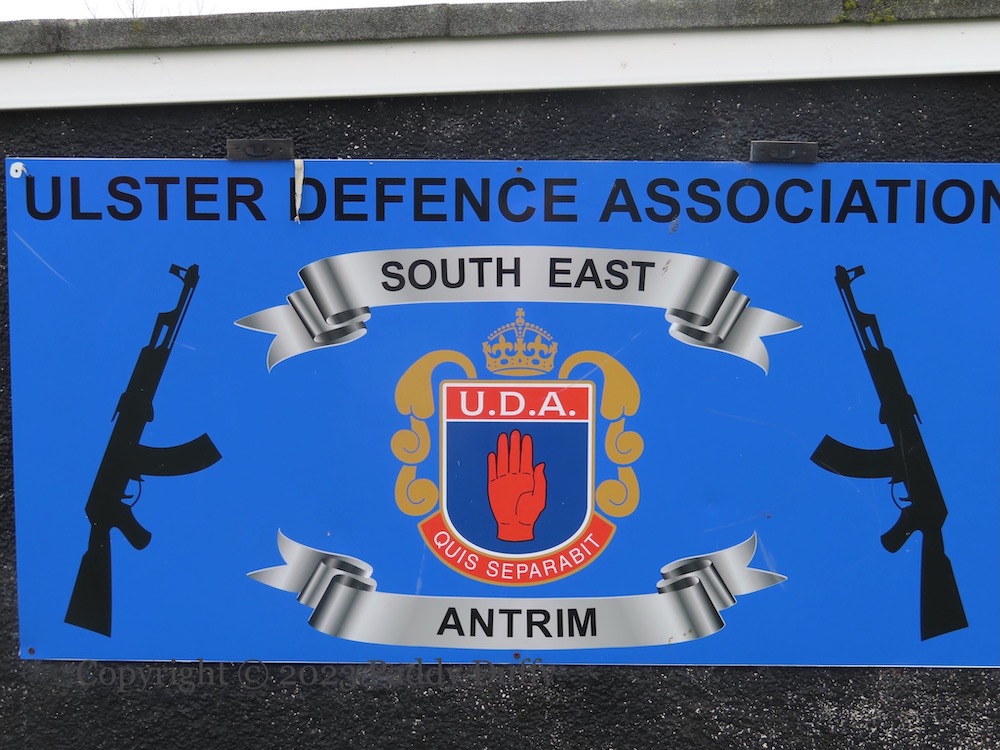
Above is a trio of boards on a wall behind the Antiville community centre, softening (somewhat) the very aggressive set of six UDA boards next to it.
The experts’ best guess is that the gentleman on the white horse (on the right of the painting) is James Scott, Duke of Monmouth, at the siege of Maastricht in 1673. Scott was commander of the English forces fighting with the French during the Franco-Dutch war. It’s not clear, thus, what the connection is to the Antiville area of Larne or the wars fought in Ireland over the English crown. It was painted by Jan Wyck, who also did a painting of the Battle of the Boyne. On either side (as shown below) are a portrait of Queen Elizabeth II and the English version of the Royal coat of arms of the United Kingdom.
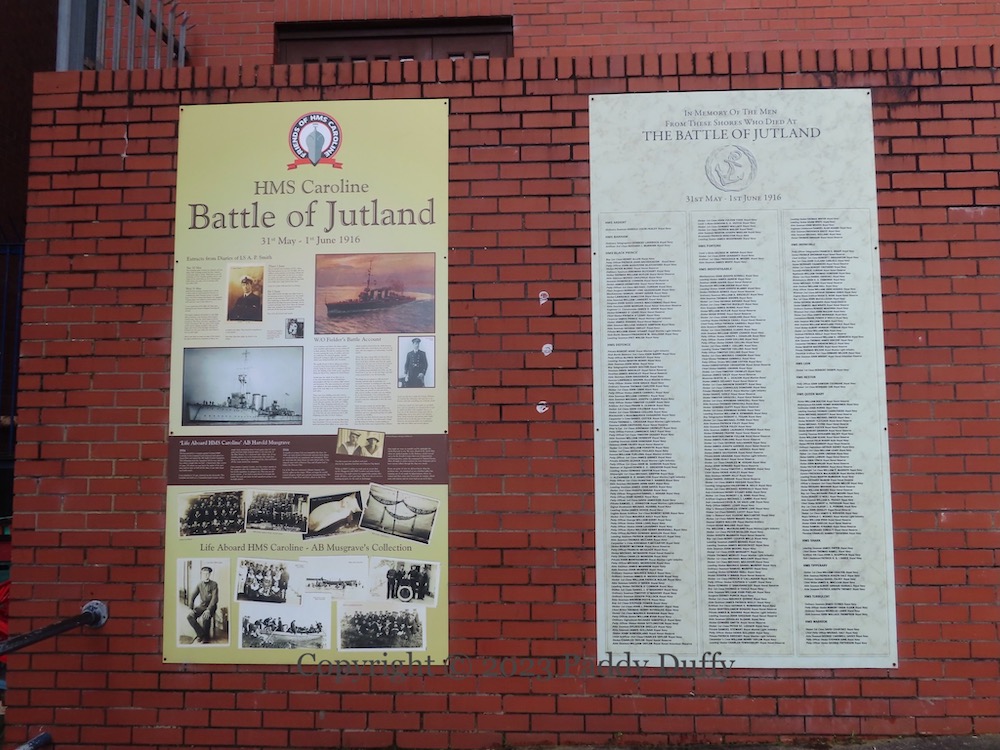
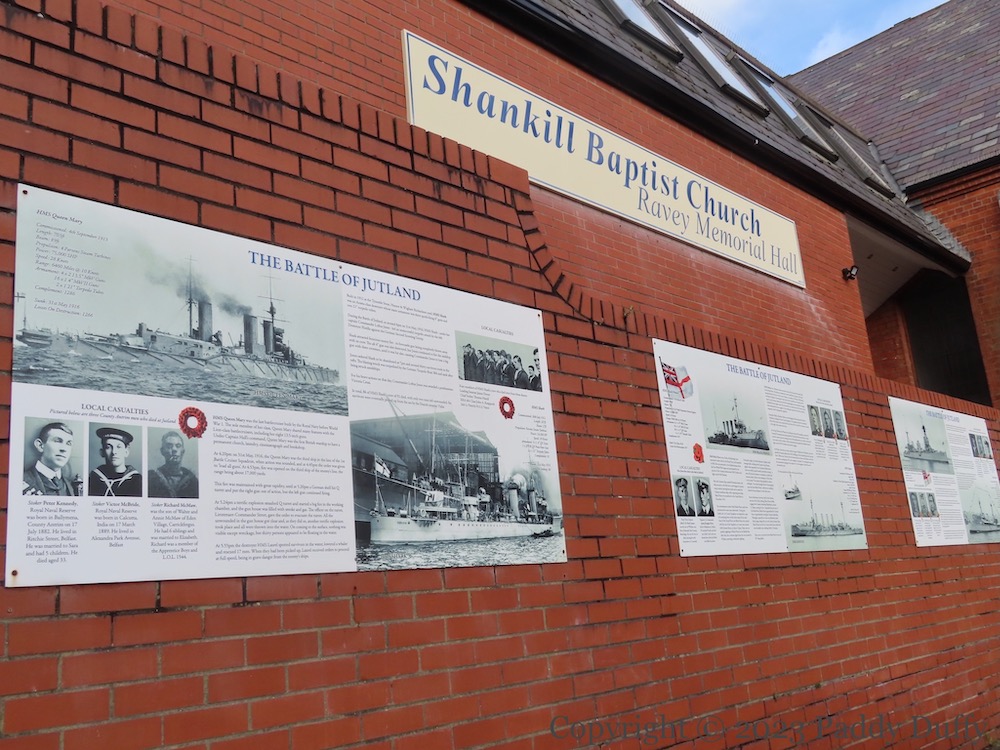
HMS Caroline re-opened in March, post Covid (Royal Navy). It opened as a floating museum in 2016, in time for the centenary of the Battle Of Jutland on May 31st-June 1st, 1916. There were almost 10,000 casualties and 25 ships were sunk that day but the Caroline survived. She served as a Navy headquarters during WWII, in Belfast habour, before being returned to reserves. (WP)
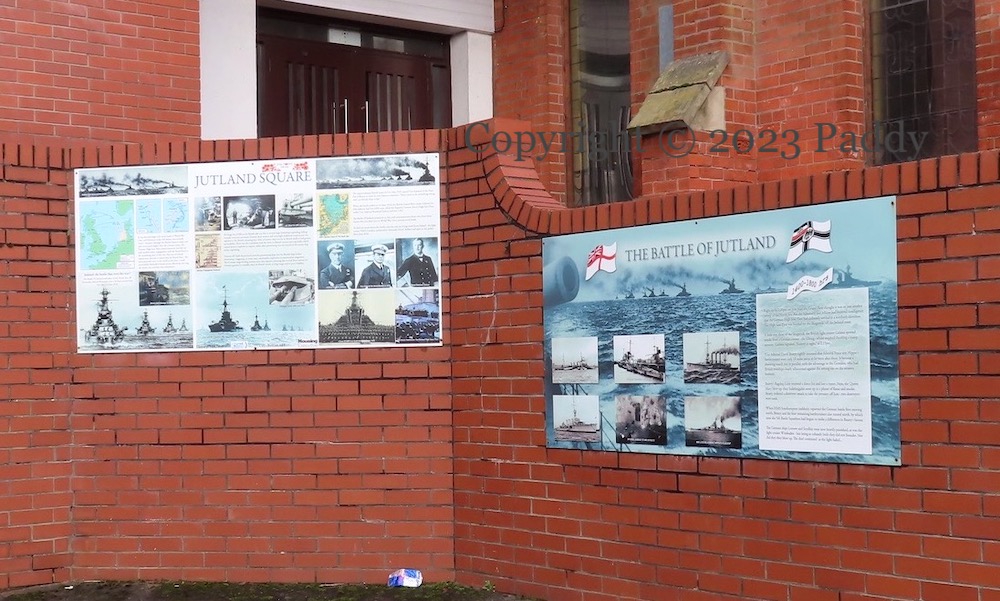
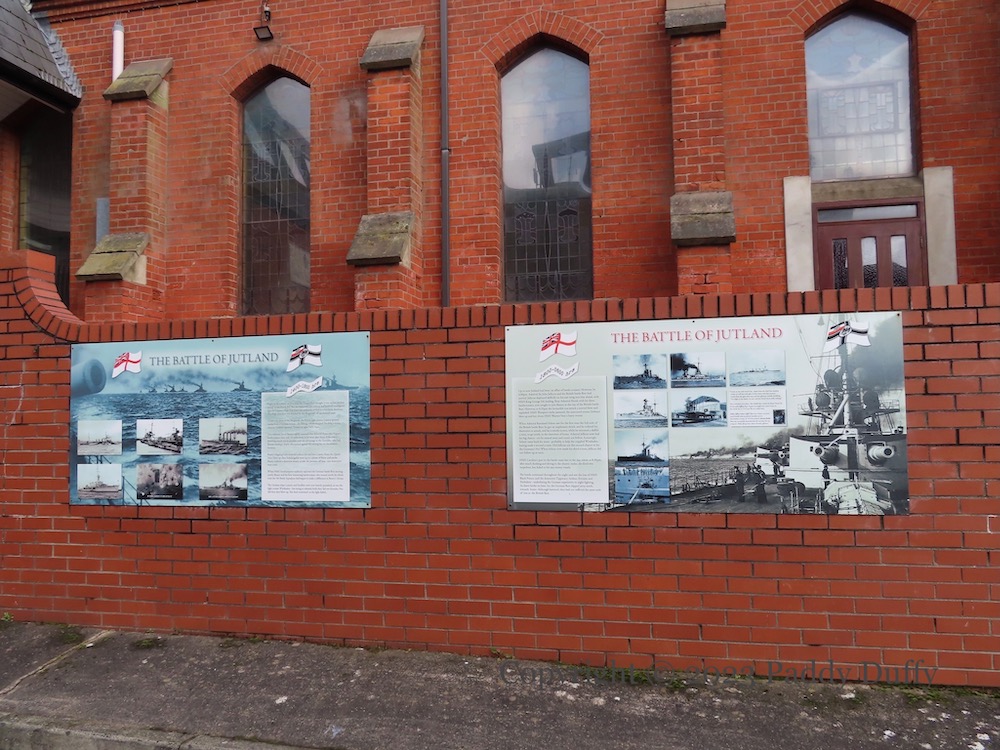
These eight panels are in Tennent Street in the Shankill. There was previously a painting of HMS Caroline at the Battle Of Jutland off the Shore Road in north Belfast – see HMS Caroline.
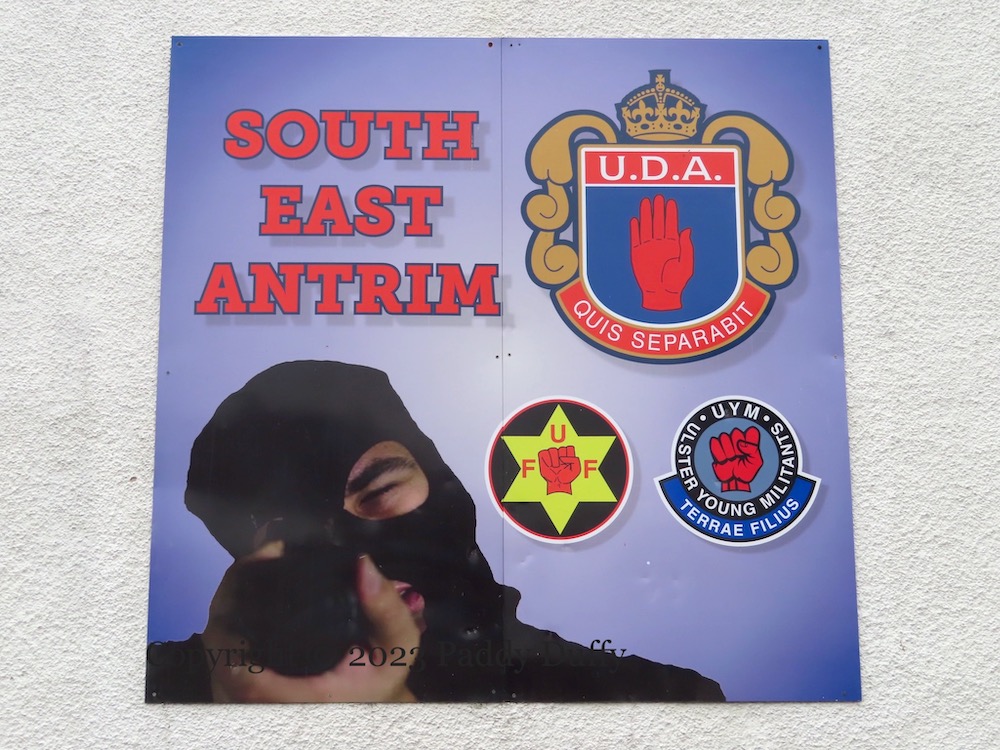
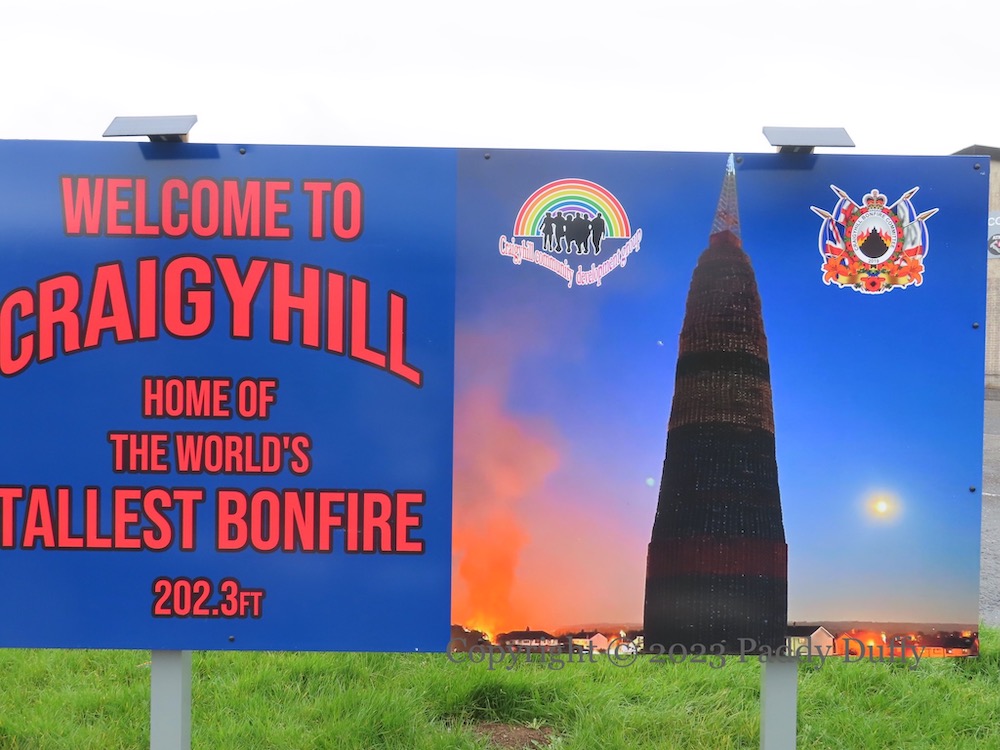
Bullets versus bonfires in Craigyhill, Larne: the hooded gunman shown above is next to the boards shown in The Loyalist Executioner in Glenfarne Place, Craigyhill (Larne). Both it and the second image (from the top of Cairngorm Drive) have been added since July, 2022. The image of a pair of assault rifles, is in Fanad Drive. The final image is of the board that (in 2019?) replaced the controversial Craigyhill Provost Team board that showed a hooded gunman with a pistol.
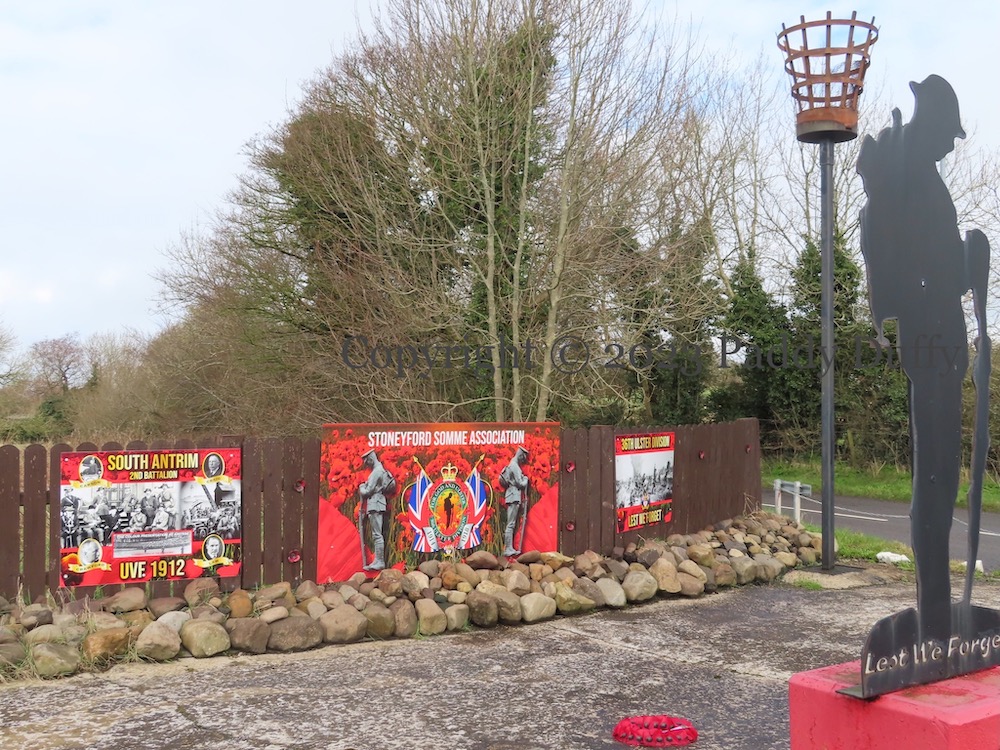
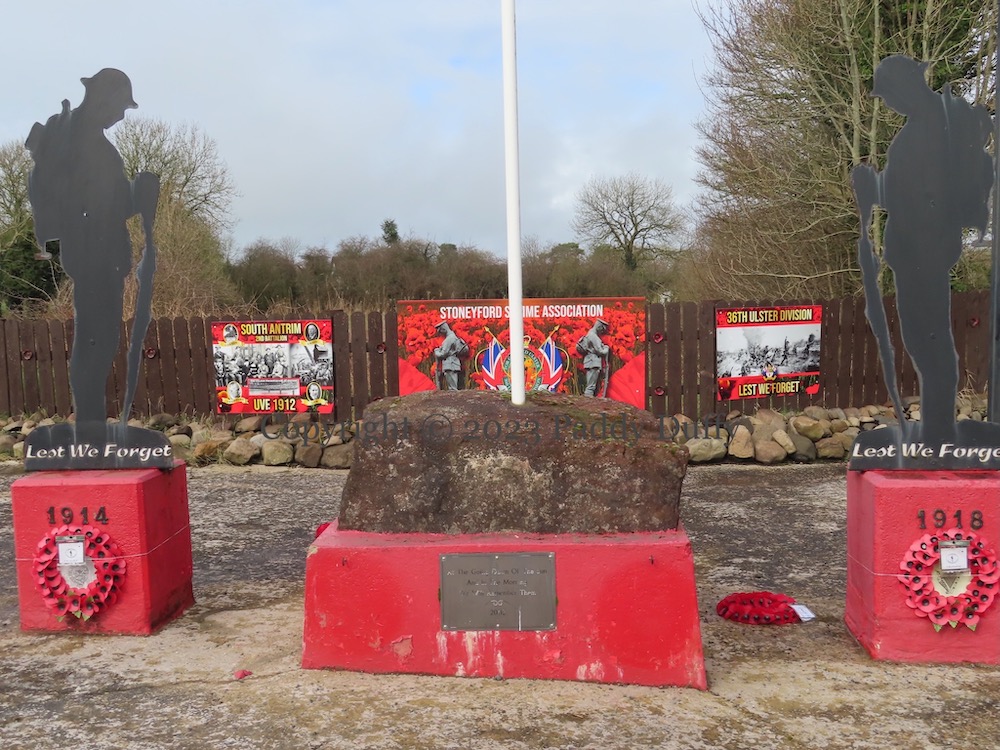
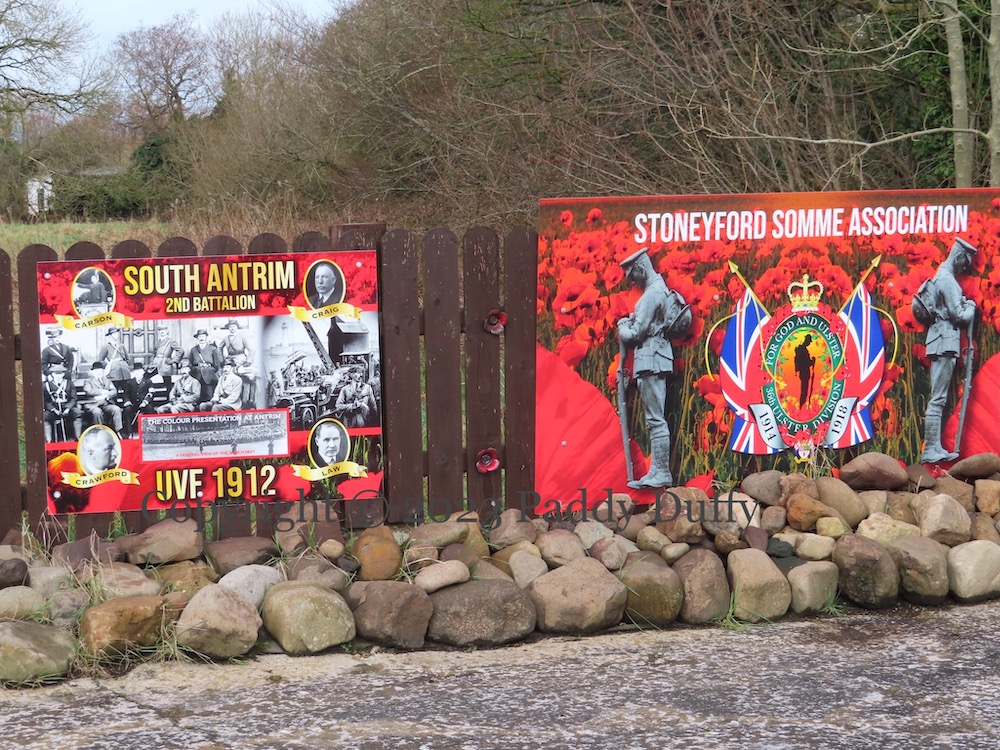
Boards have been added to the WWI memorial plaque in Stoneyford. On the right, the 36th Division go over the top in Beadle’s ‘Attack Of The Ulster Division’ (see Over The Top); the board on left more specifically commemorates the 2nd battalion of the South Antrim Ulster Volunteers, flanked by the leaders of the anti-Home Rule movement – Carson, Craig, Crawford, and Bonar Law.
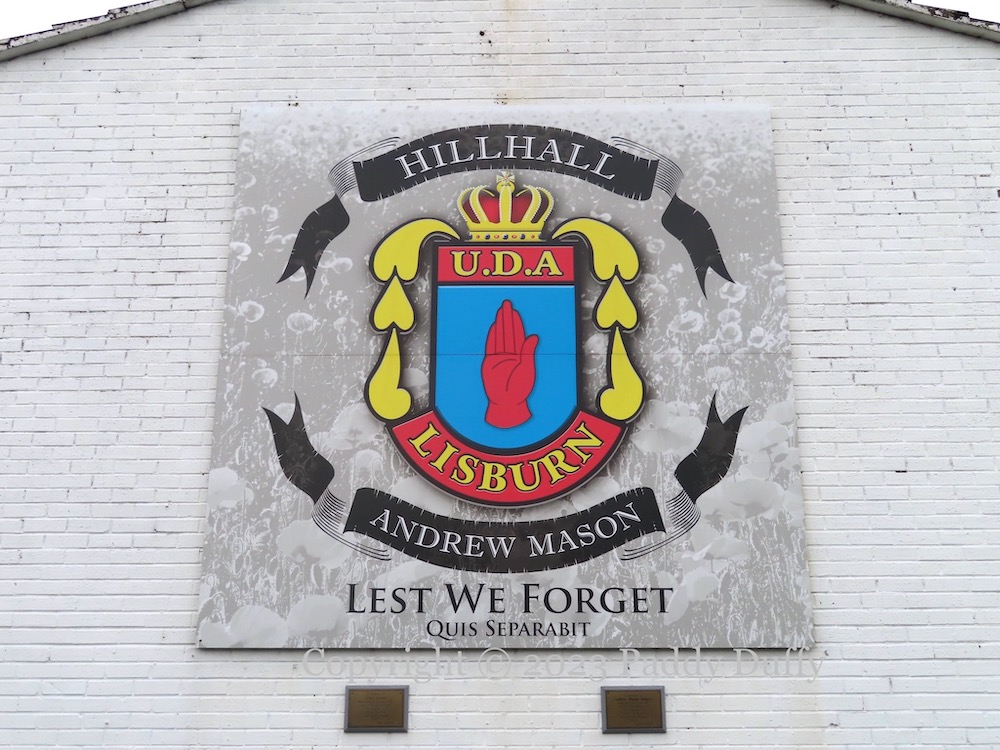
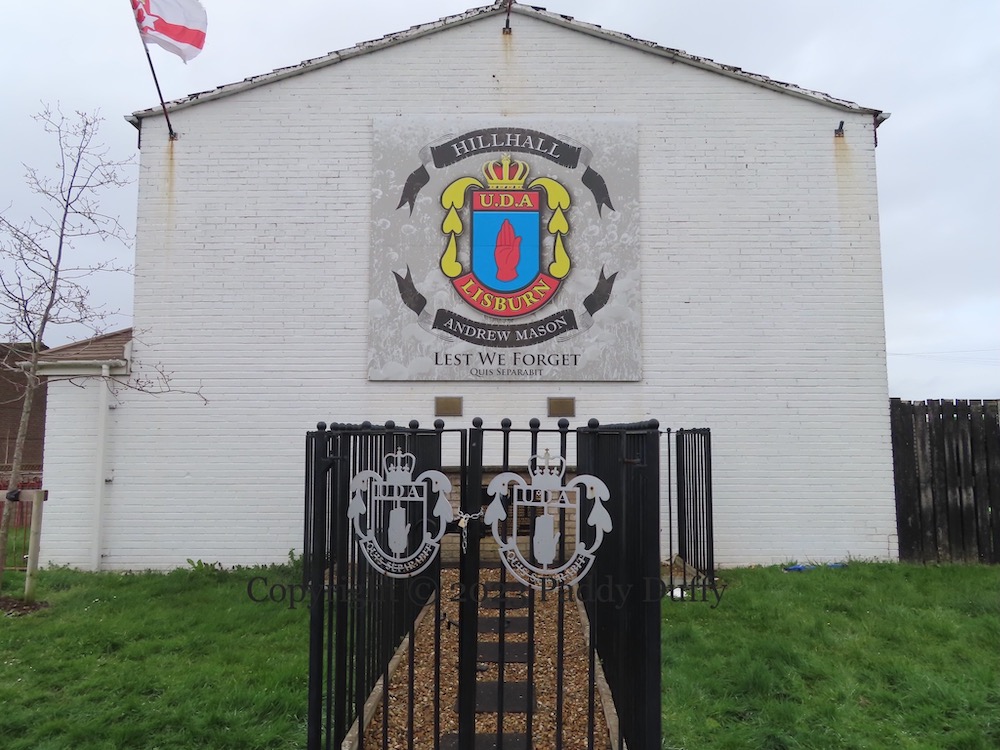
19-year-old Andrew “Macey” Mason was wearing his Hillhall band uniform and a UDA badge while en route to visit his girlfriend on April 19th, 1987, when he was set upon by two men near Carnlough on the Antrim coast. The gruesome details of the beatings and stabbings that followed are given in Lost Lives (#2827).
This is the second (see previously 2010 – M05938) memorial board to Mason in Hillhall. The memorial plaque (below) is a new version of the older plaque to John McMichael, Raymond Smallwood[s], Jim Guiney, and Mason.
Memorial boards to Queen Elizabeth have been added to the ‘our community transformation’ board and community garden in Old Warren.
An image of the old “You are now entering loyalist Old Warren” display that is shown in the ‘before’ side of the board above is included below. On the ‘after’ side are the youth centre, the new houses at the top of Drumbeg Drive, and the Lagan View enterprise centre. For a brief history of the area, see Through Your Eyes.
The previous board on this wall – a UDA B Company board – can be seen in C02674 and its predecessor in M05916.
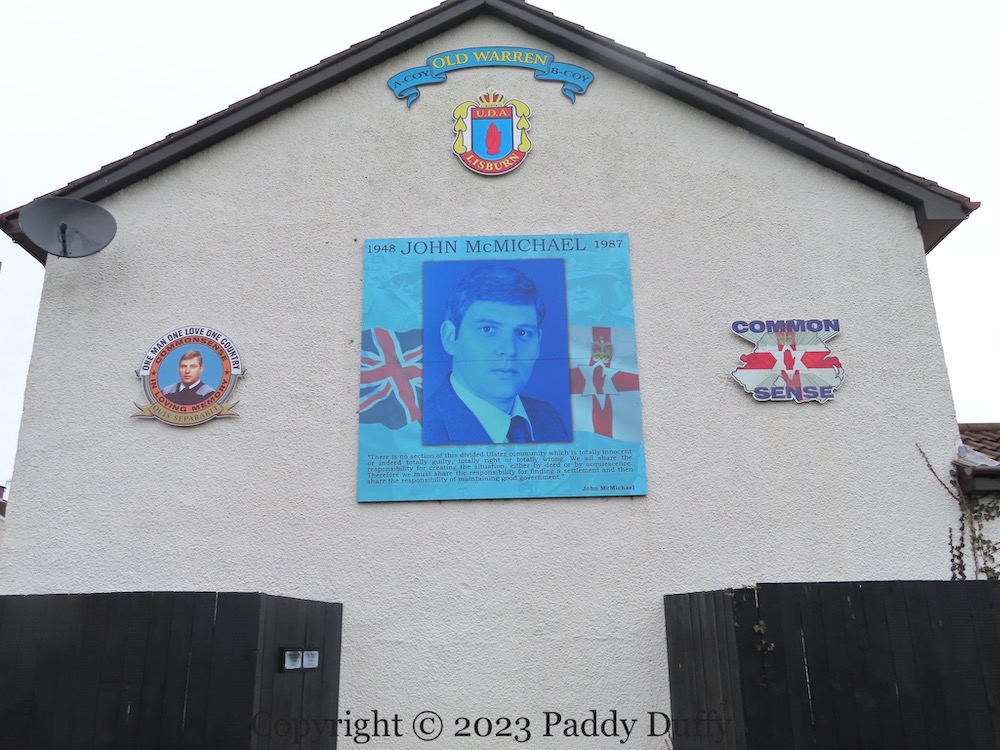
The South Belfast UDA/UFF commander John McMichael (1948-1987) was killed by an IRA car bomb. In addition to organising a team of assassins in the 70s and 80s, he founded a Political Research Group and wrote two documents proposing an independent Northern Ireland, 1979’s Beyond the Religious Divide and 1987’s Common Sense (available at CAIN), promoting the philosophy of ‘Ulster nationalism’. The quote on the board comes from the end of the Introduction to Common Sense:
“There is no section of this divided Ulster community which is totally innocent or indeed totally guilty, totally right or totally wrong. We all share the responsibility for creating the situation, either by deed or by acquiescence. Therefore we must share the responsibility for finding a settlement and then share the responsibility of maintaining good government.”
Above: “Old Warren A Coy/B Coy”. Right: “One man, one love, one country. Commonsense. In loving memory. Quis separabit.” around a portrait of McMichael. Left: “Common sense” with an Ulster Banner Northern Ireland.
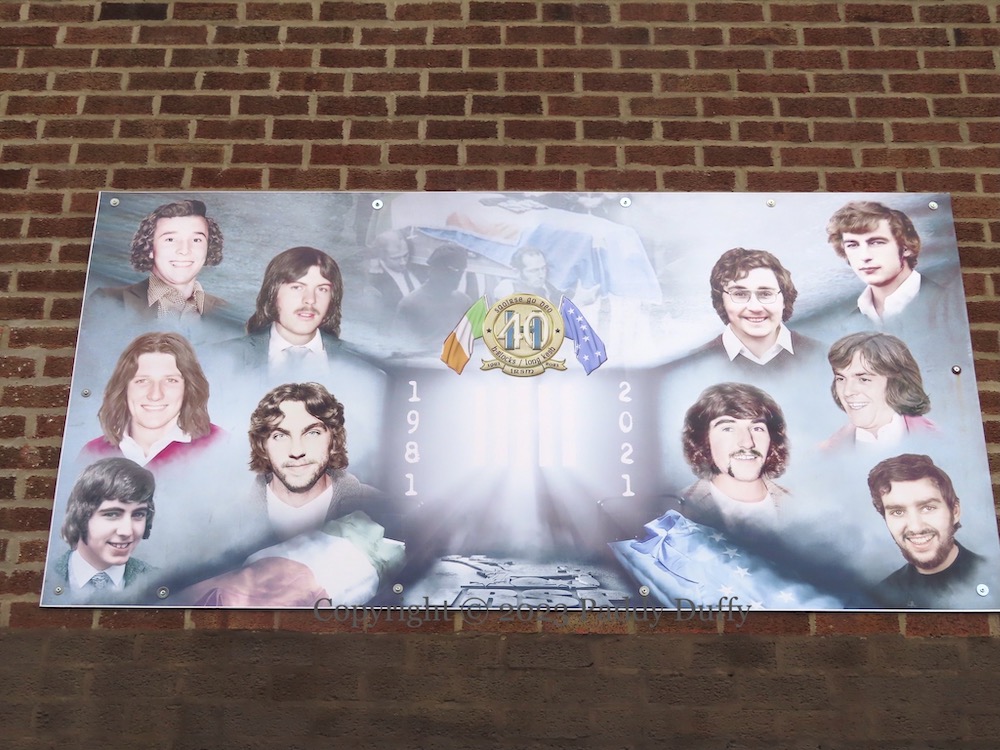
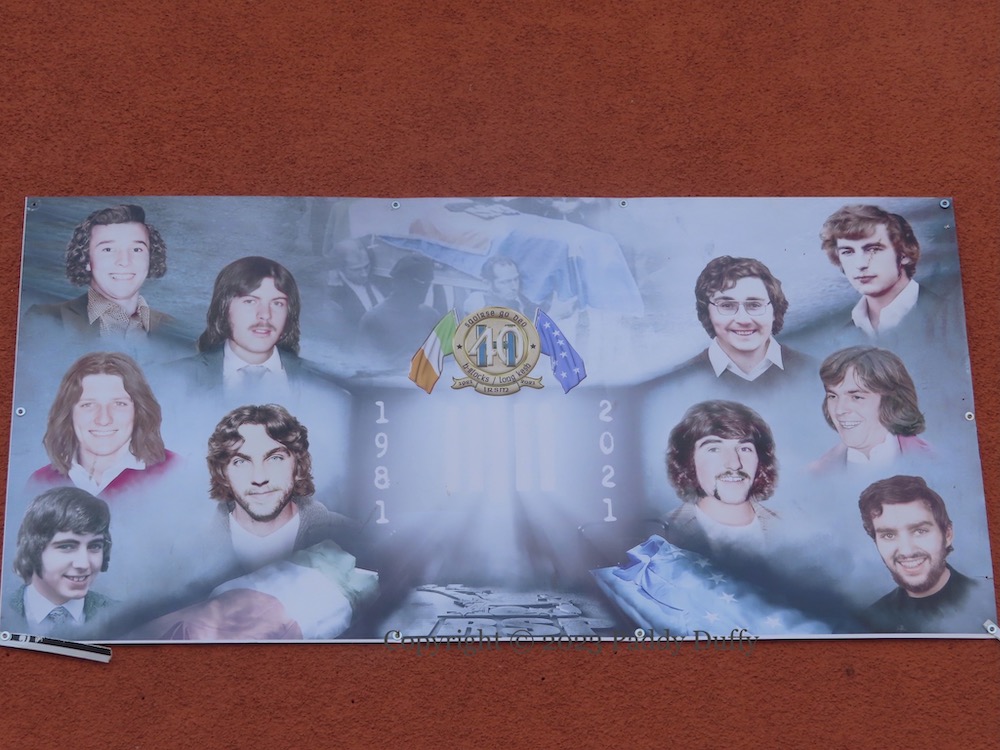
“Saoırse go deo.” INLA volunteer Kevin Lynch went on hunger strike on May 23rd, 1981. He would die 71 days later, on August 1st. His funeral is depicted in the top part of this IRSP/IRSM board commemorating the 40th anniversary of the 1981 hunger-strikes. The Tricolour (for the IRA) and Starry Plough (for the INLA) are used as blankets on the prison beds.











 Paddy Duffy Collection