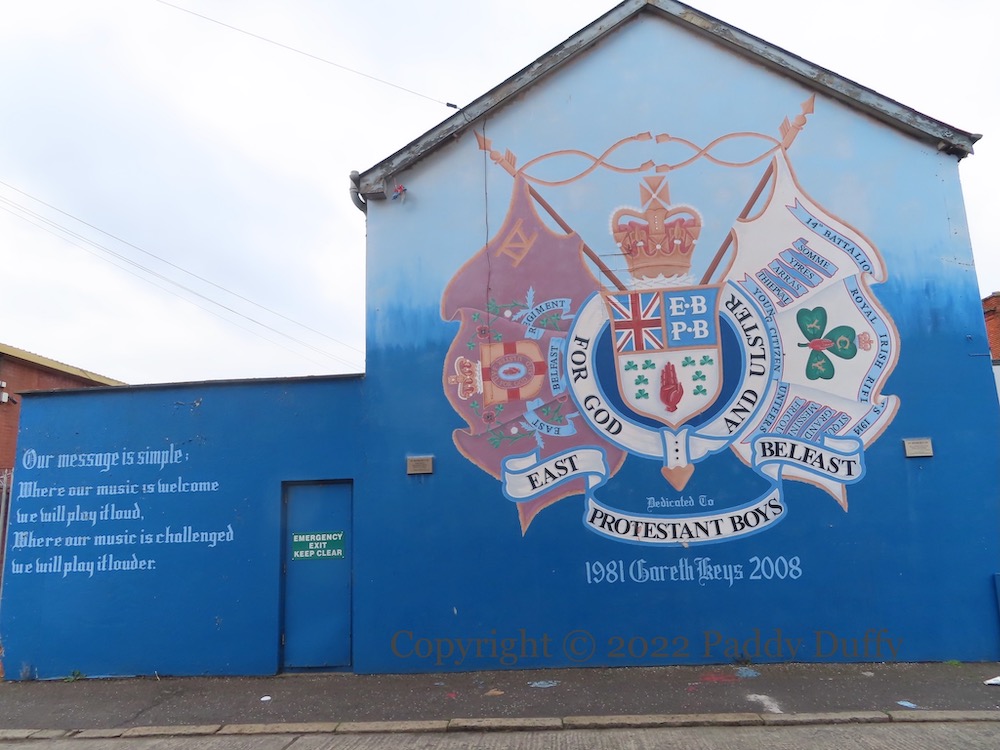
East Belfast Protestant Boys (Fb) mural “dedicated to Gareth Keys” with the statement (on the side wall): “Our message is simple: where our music is welcome, we will play it loud; where our music is challenged, we will play it louder.”
In the old Hemp Street, nearly opposite Derwent Street, east Belfast.
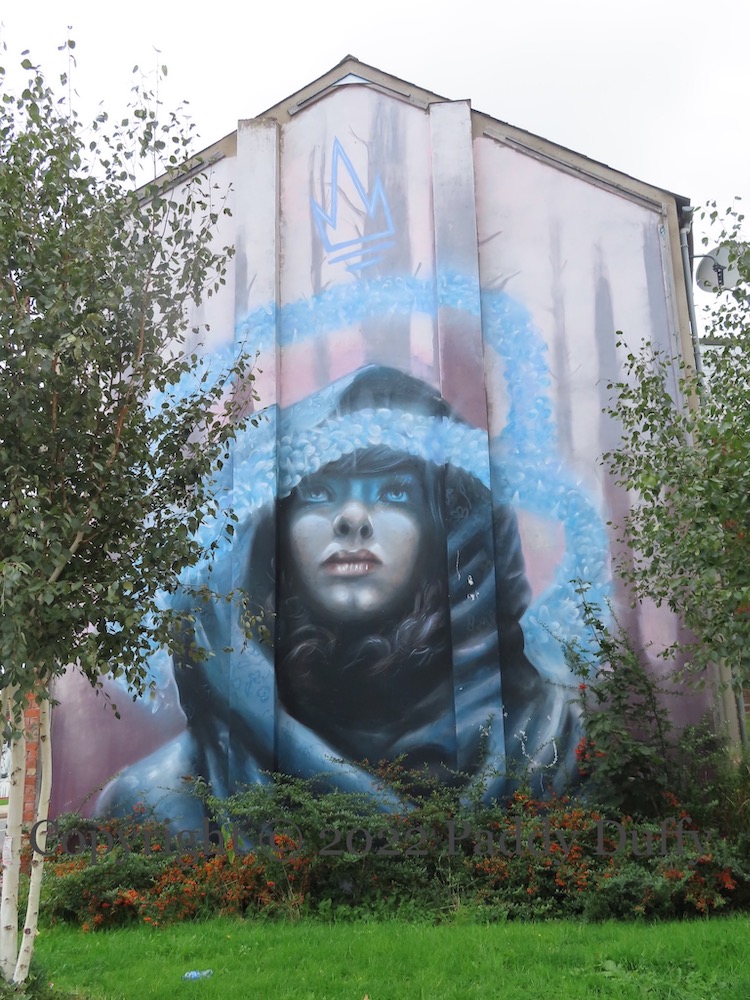
Manchester duo Nomad Clan (web) – seen painting Harland & Wolf at the Dirty Onion during Culture Night/Hit The North 2017 – returned a year later to paint on the Newtownards Road. In keeping with the previous piece at this site – Deirdre Robb’s flax flowers – they painted a “female flax gatherer from a bygone era” (East Side Partnership).
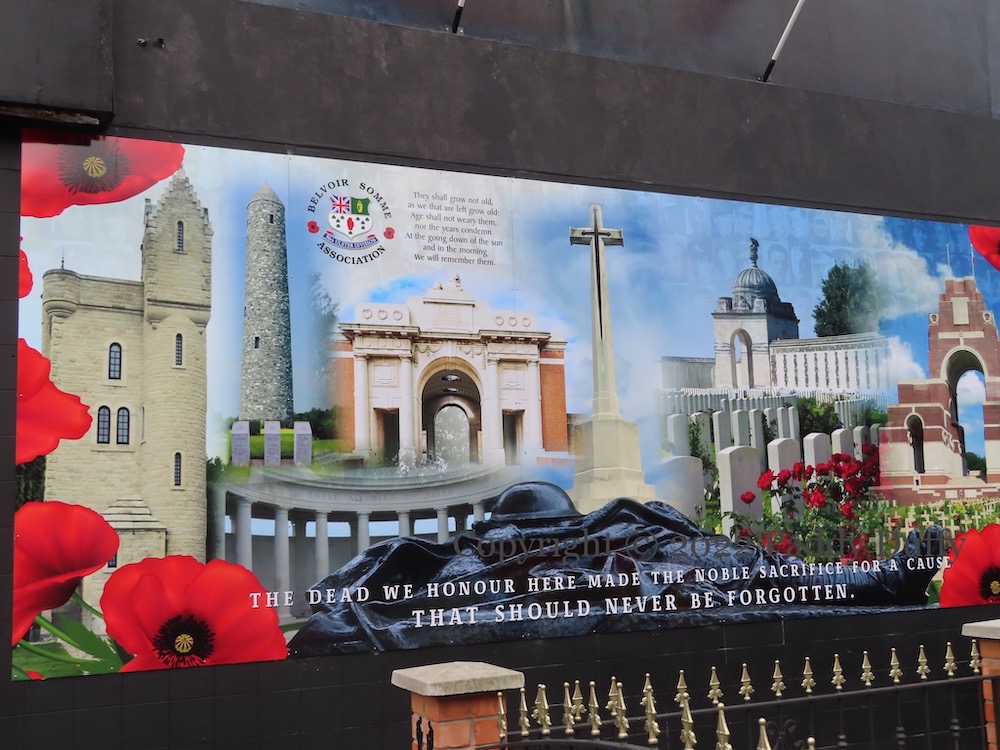
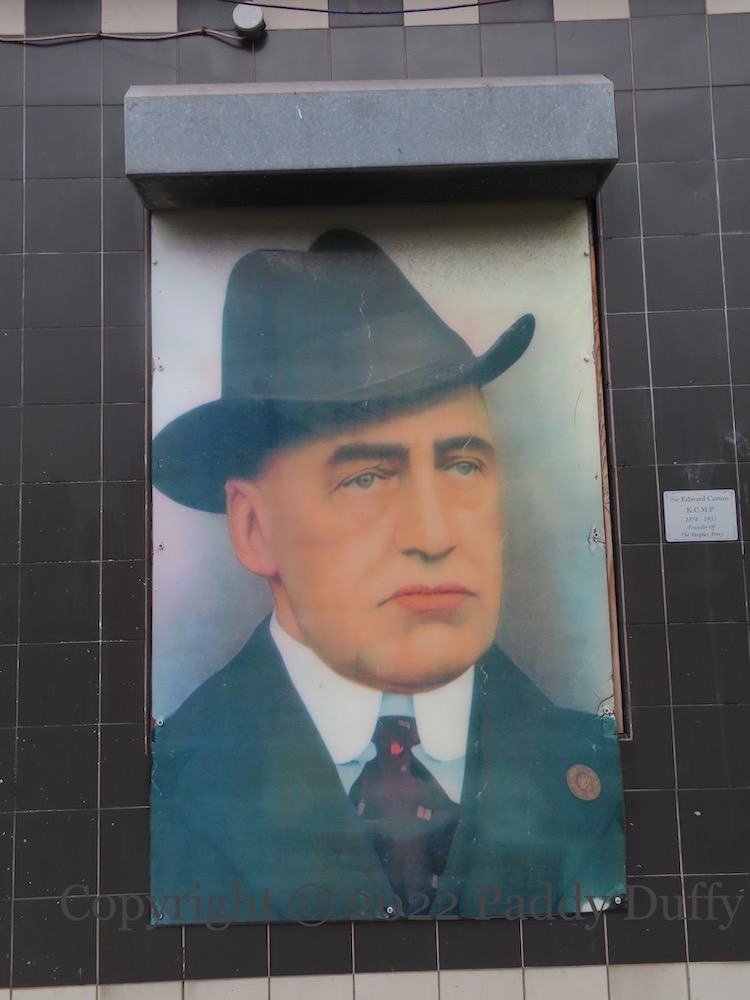
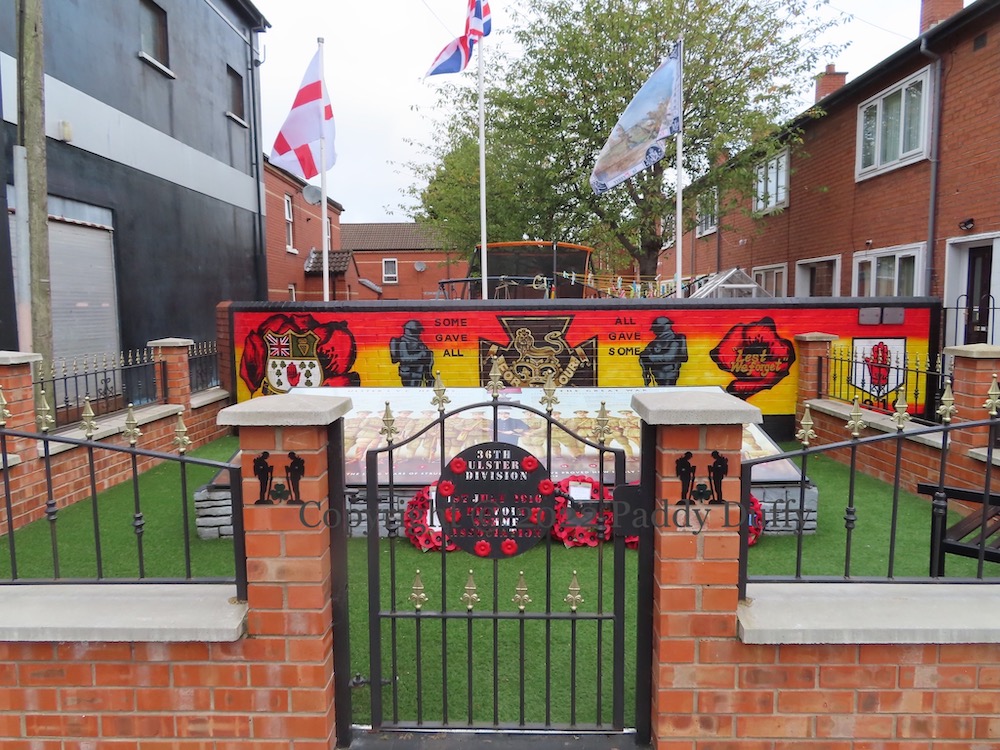
“The dead we honour here made the noble sacrifice for a cause that should never be forgotten.” A new board has been added to the memorial to the Ulster Volunteers on the Newtownards Road at St Leonard’s Crescent (the old Newcastle Street) over the bricked-up windows of the Belvoir Bar (see previously Not For Sale). The annual parade of the Belvoir Somme Association took place at the end of September (youtube)
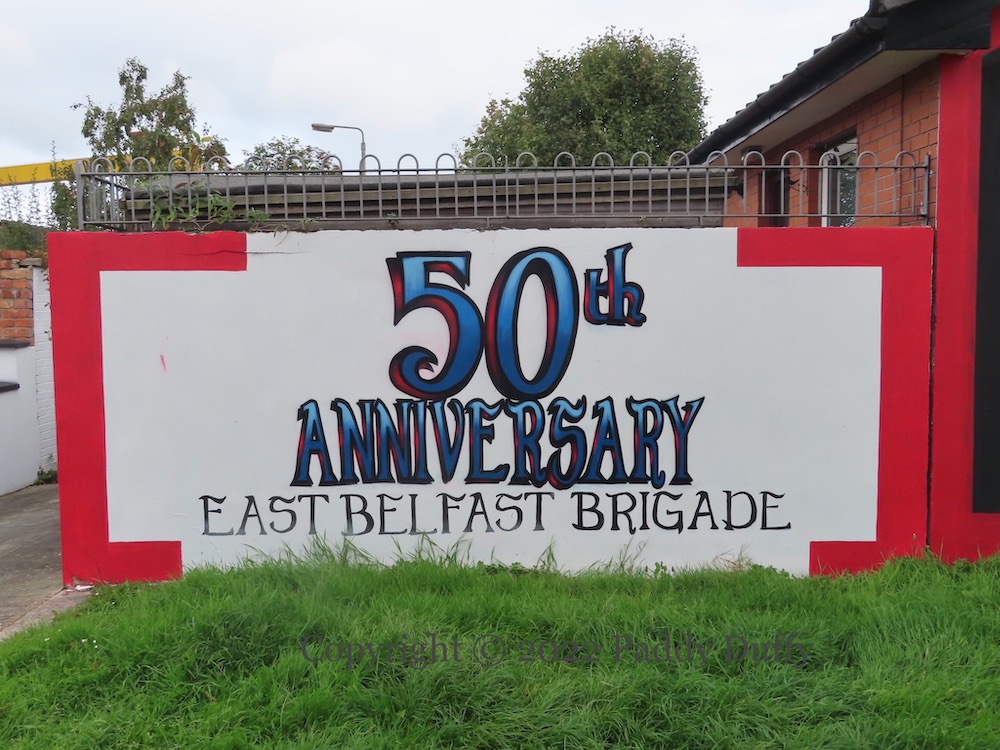
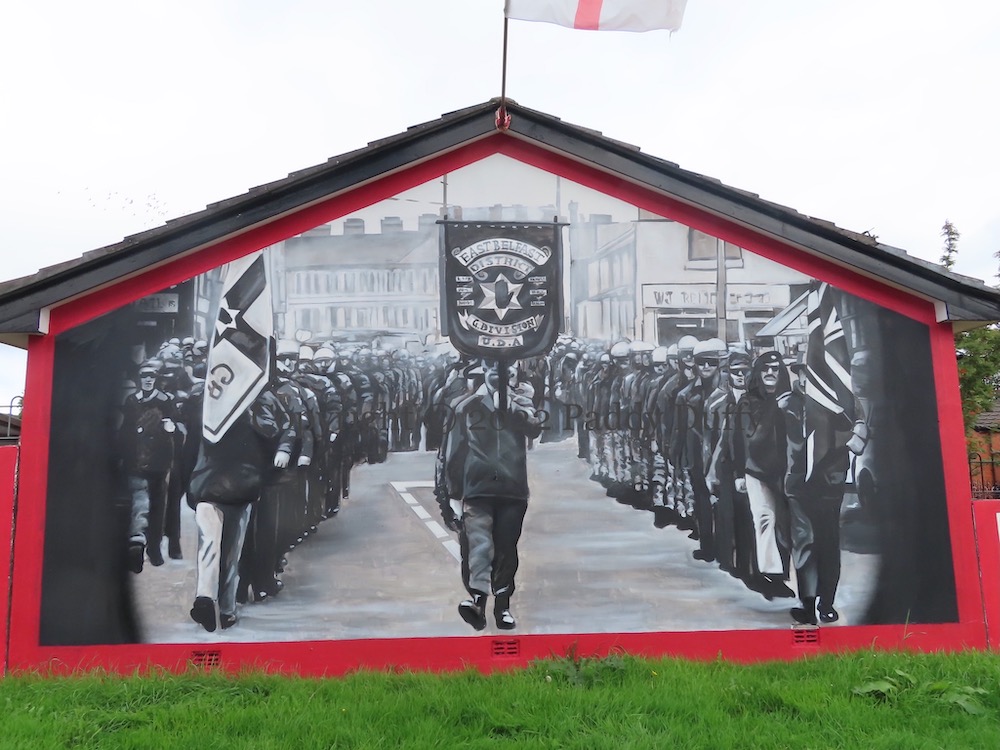
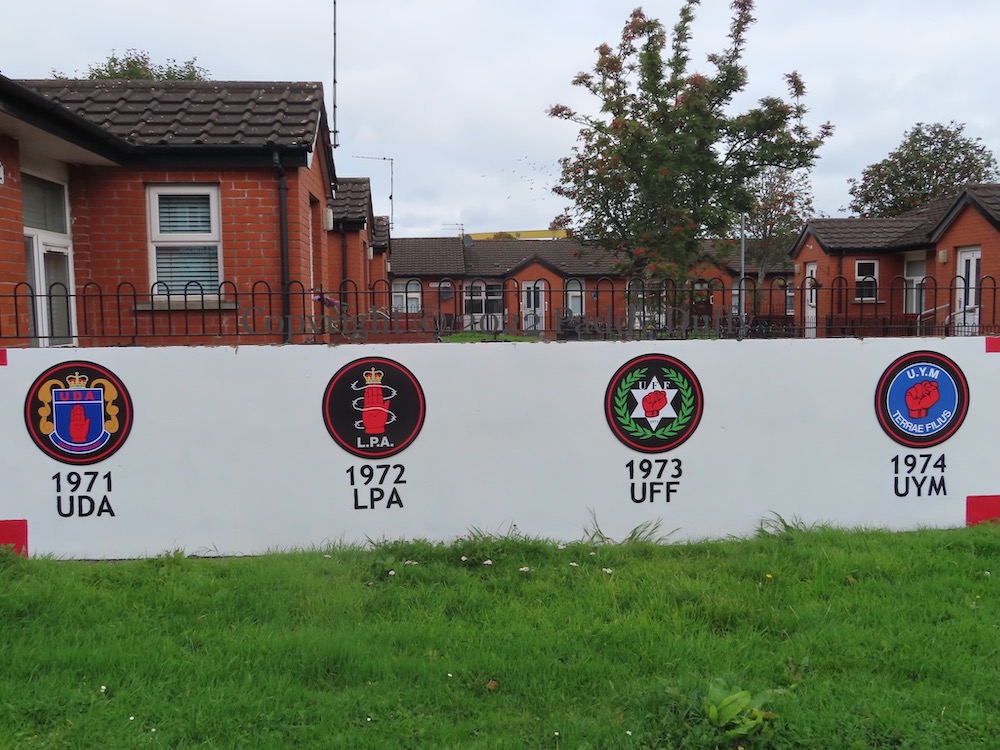
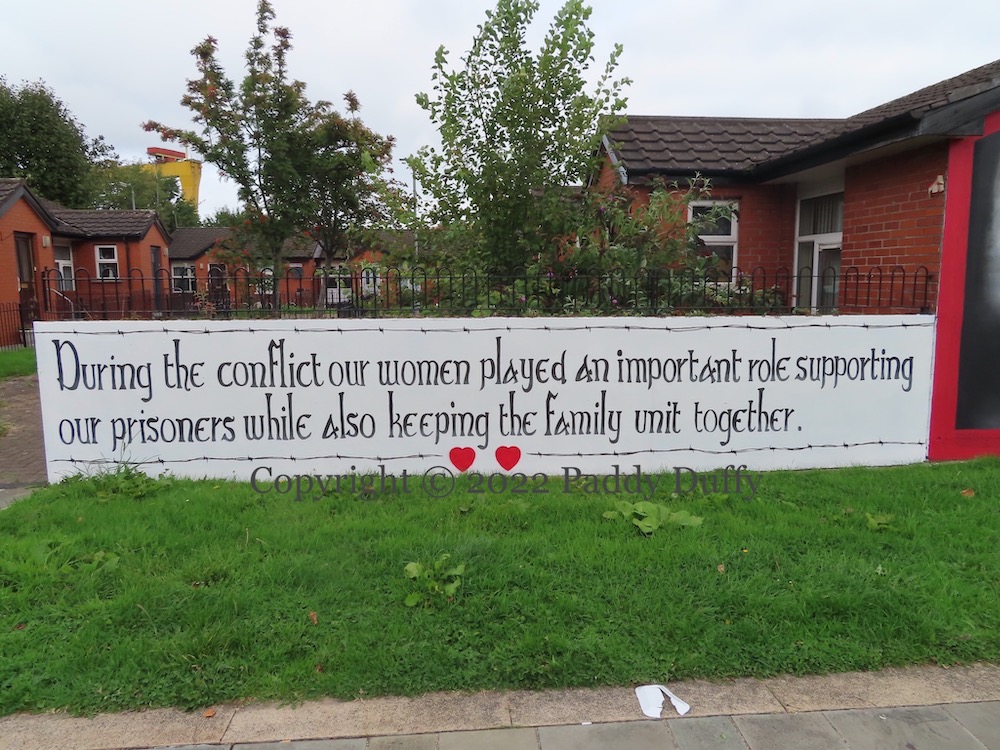
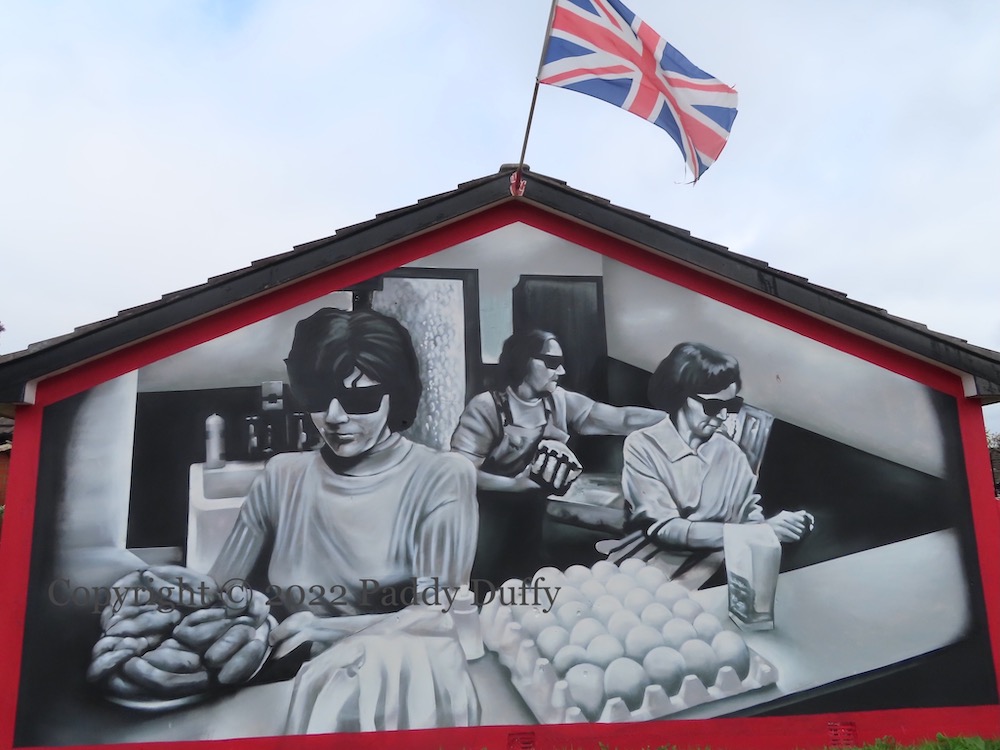
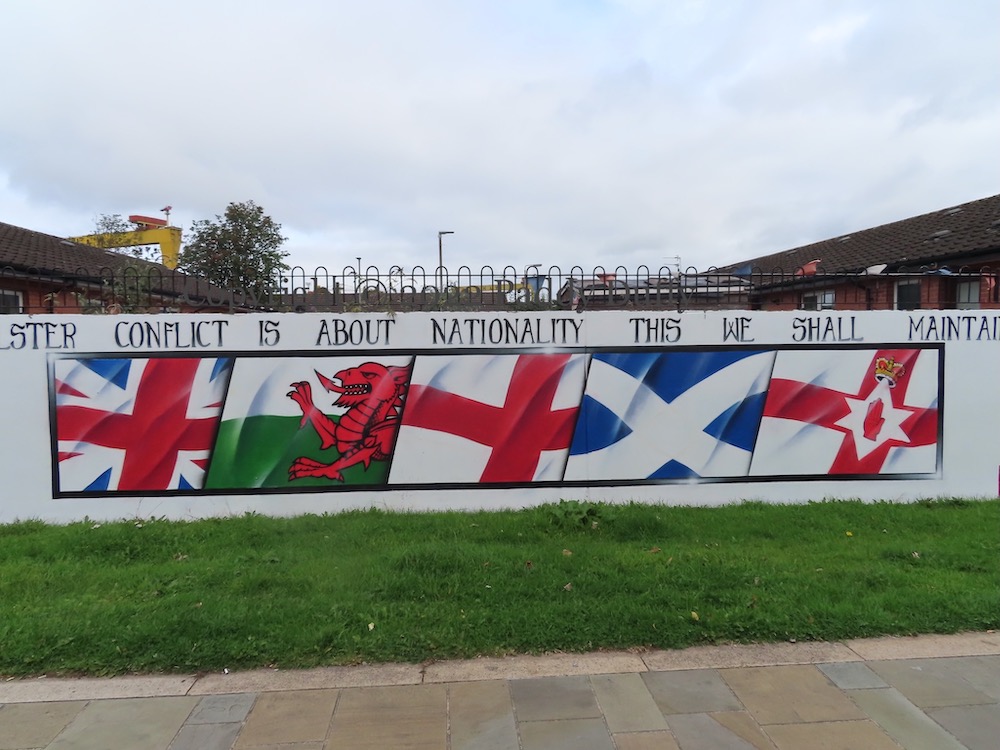
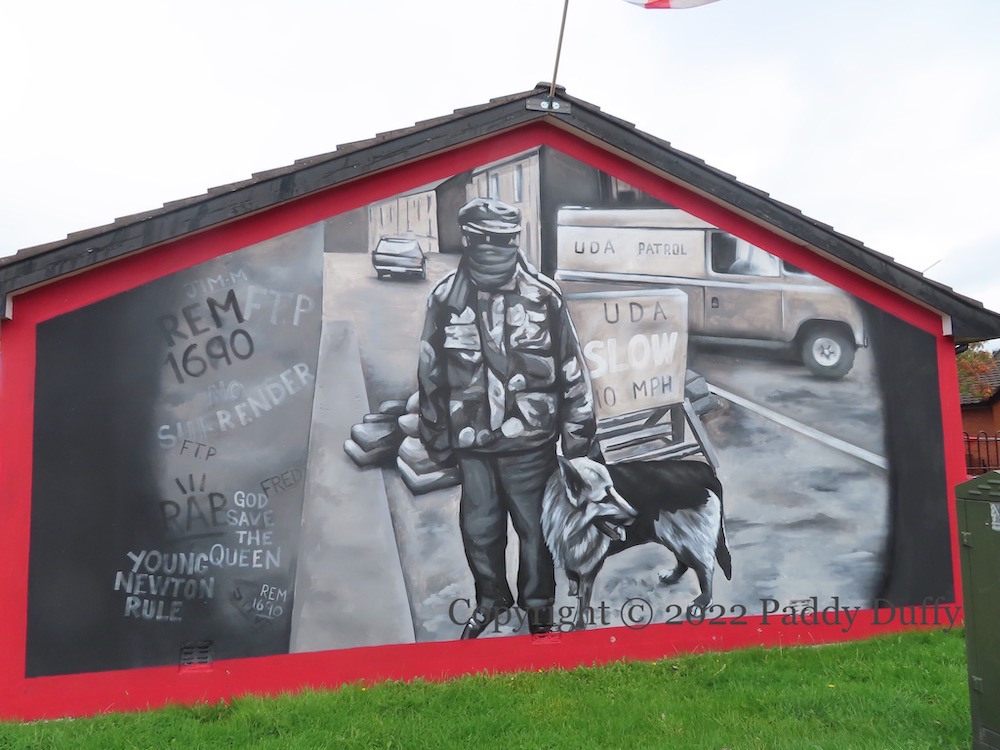
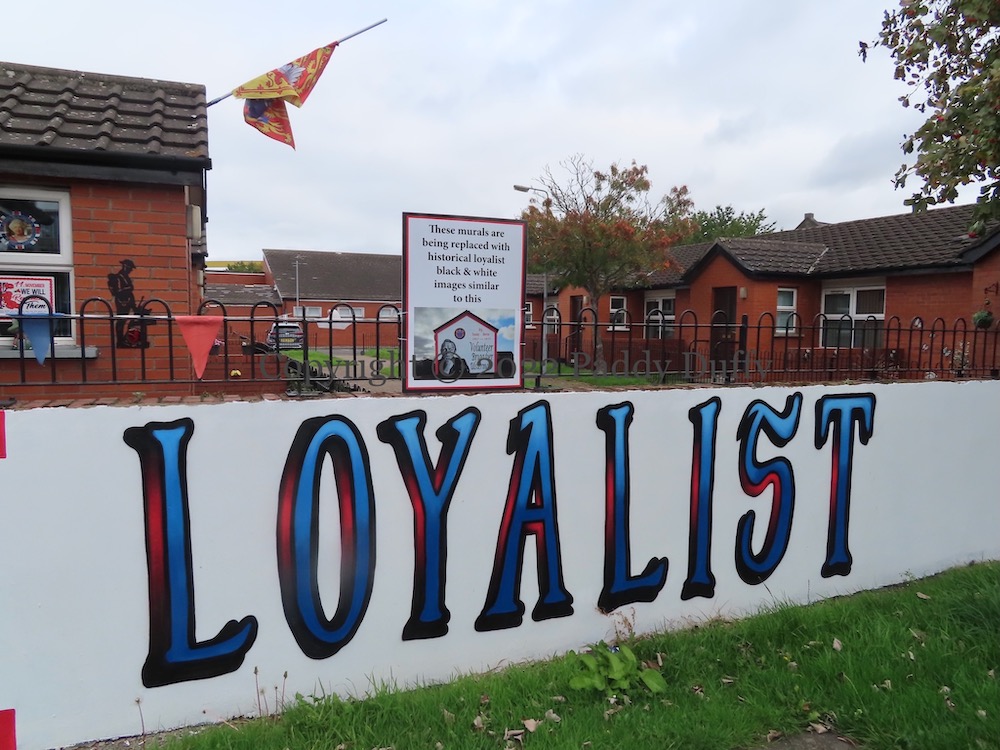
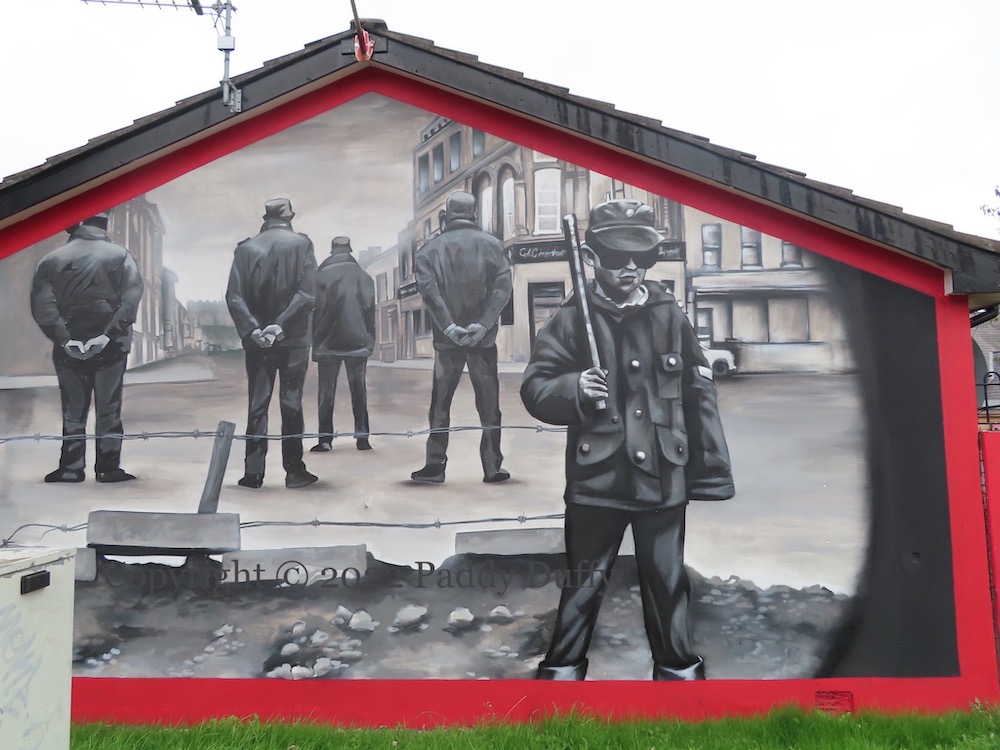
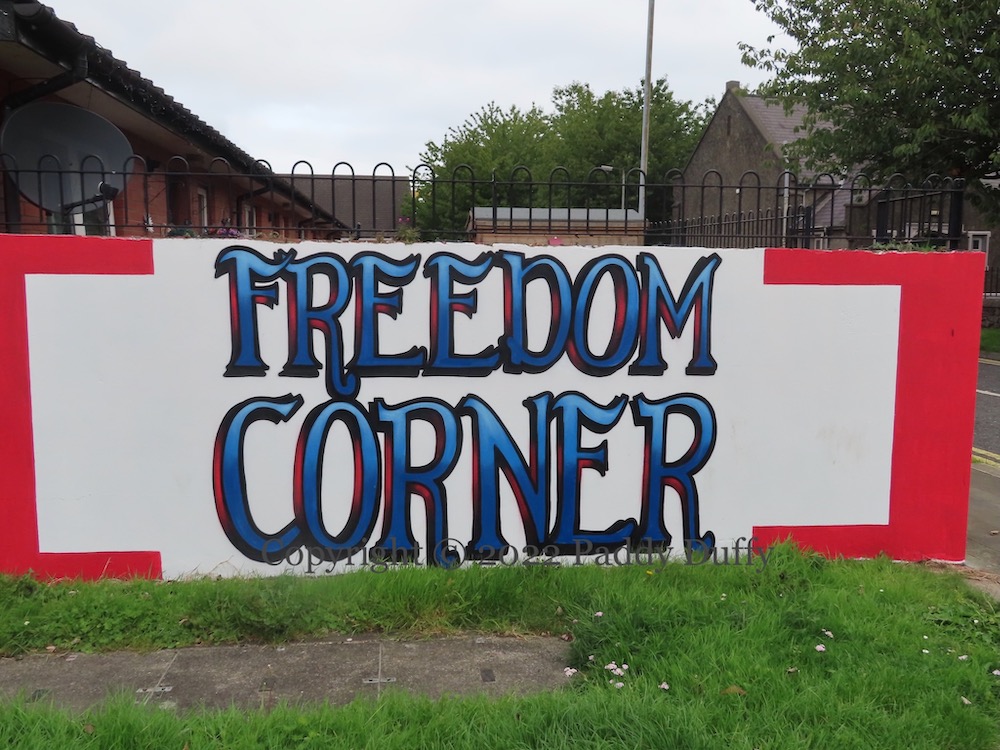
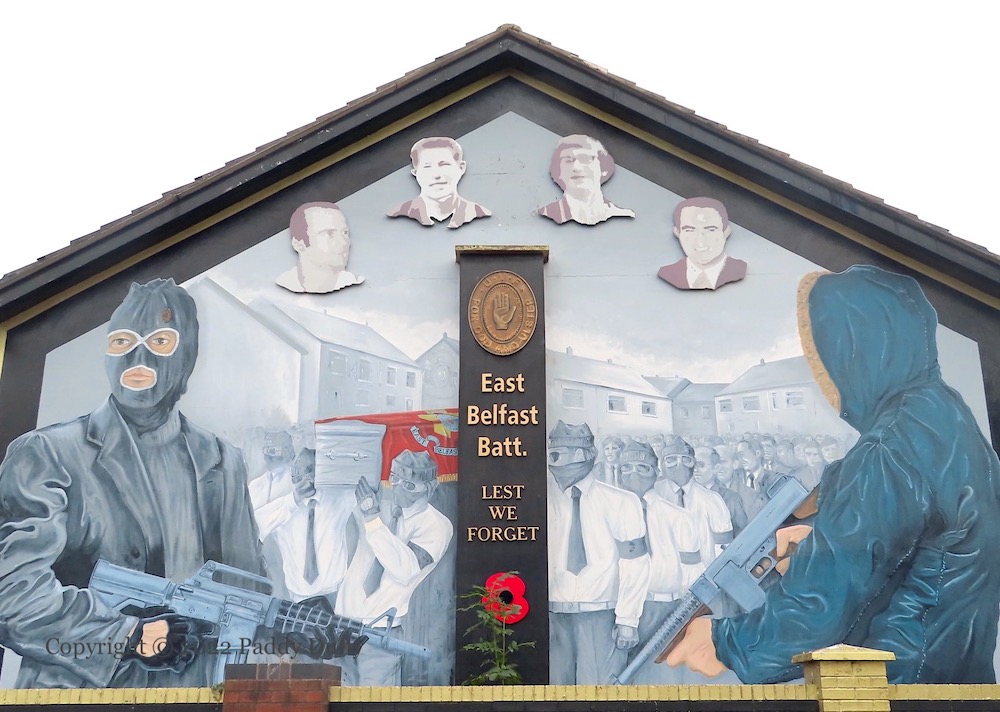
Three months after it was initially whitewashed (mid June, 2022), the repaint of so-called “Freedom Corner” was completed, with a new mural on each of the 11 panels that make it up. Here is a gallery of fifteen images from the wall. The main gables reproduce photographs of the UDA (and more specifically the East Belfast brigade) during the 1970s. The side walls celebrate the formation of the UDA/LPA/UFF/UYM in 1971-1974 and the role of women in supporting prisoners.
By Blaze FX (Fb | ig) on the Newtownards Road. Here is a small gallery of in-progress images: Waiting For The Wall.
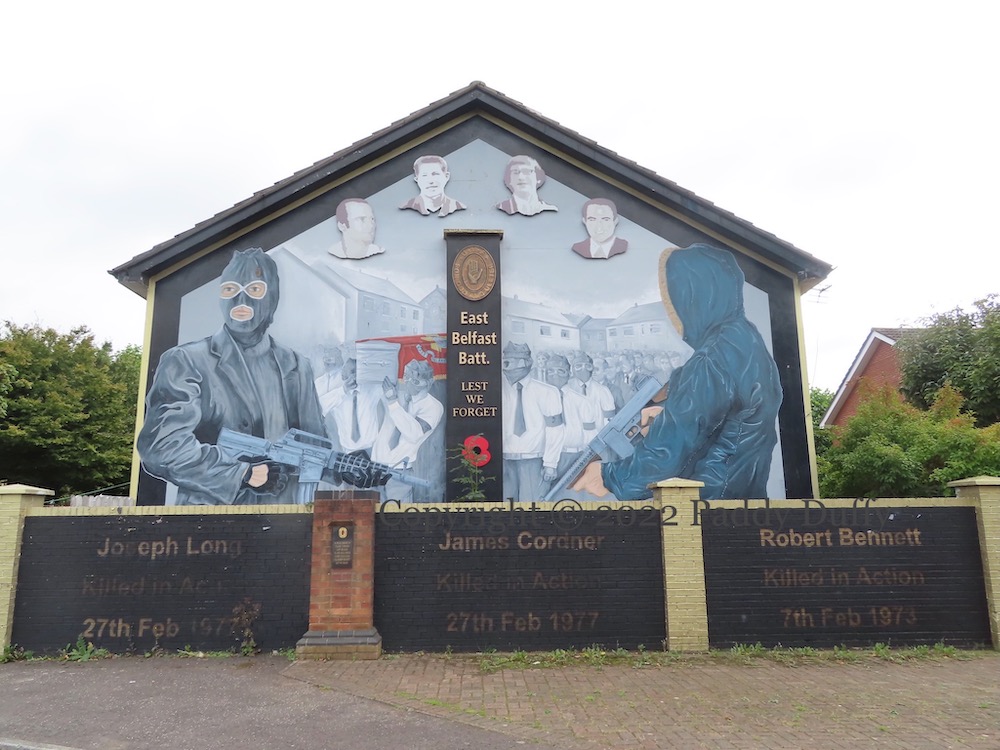
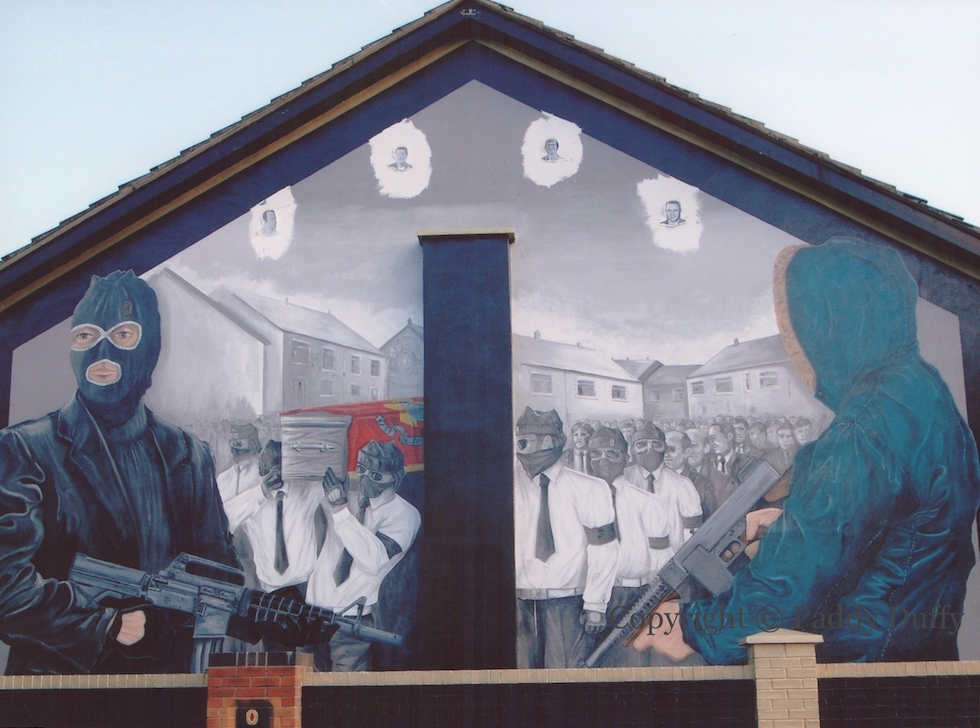
Four members of the East Belfast UVF are commemorated by a new mural in Fraser Pass, Ballymacarrett. The four named are: Robert Seymour, shot dead by the PIRA in 1988; James Cordner and Joseph Long, who were killed in a premature explosion in 1977; Robert Bennett, killed by the British Army during a riot in 1973.
In a previous version of the mural, Seymour and Long were featured alongside Crawford and Craig (of the Home Rule era) – see God, Give Us Men! (which also includes a close-up of the small plaque embedded in the front wall).
These same four are commemorated in the controversial 2013 mural featured in Years Of Sacrifice.
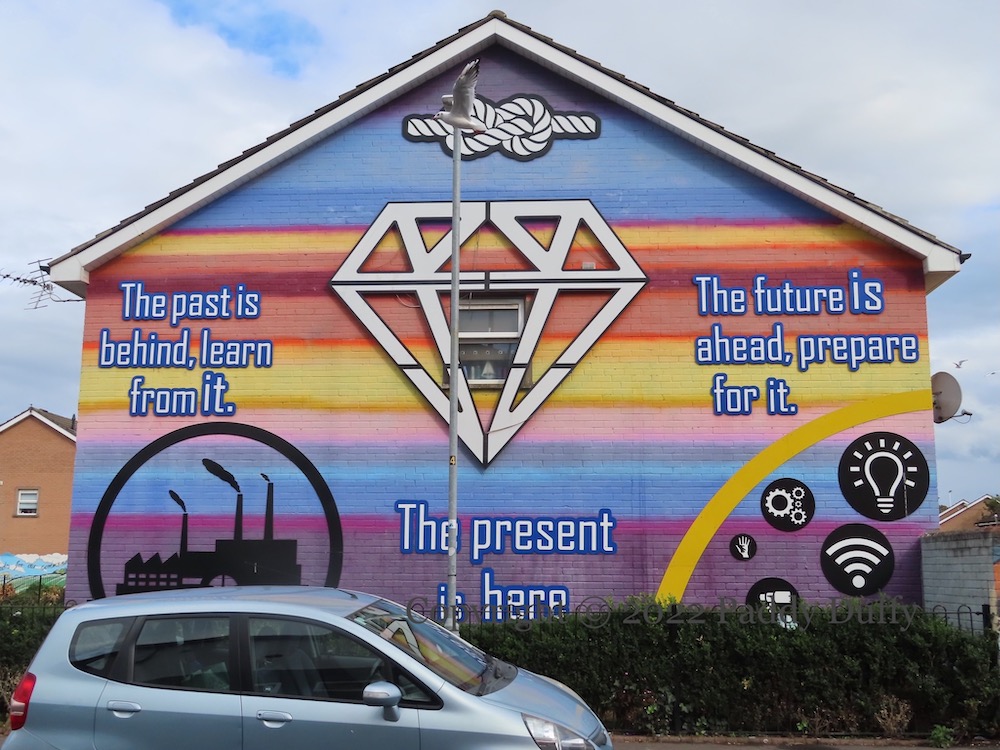
“The past is behind, learn from it. The present is here, live it. The future is ahead, prepare for it.” 2016 mural and board-cut diamond (which is lit from behind at night) in Lord Street, replacing the old LPA mural which lasted from 1997 to 2015.
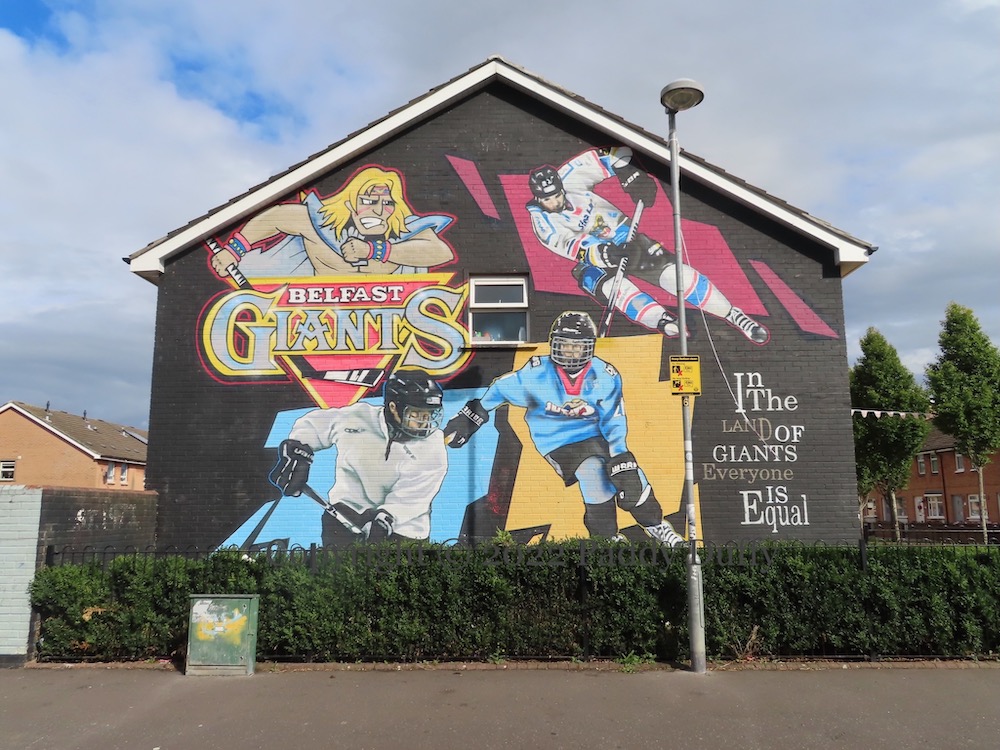
Here are three shots of the new Blaze Fx (web | Fb) “Belfast Giants” mural in east Belfast’s Lord Street. The Giants have been Belfast’s ice-hockey team for the last fifteen years, beginning in 2000. The detail above shows mascot Finn MacCool and the image of the full mural, below, includes the team motto, the (a)politically-motivated “In the land of the giants, everyone is equal.” The mural takes the place of a UDA mural (see, Feriens Tego) and is one of three large murals and various small murals to be replaced or painted out. (This News Letter article puts the total at nine.)
Perhaps because of the Covid pandemic, this mural of UDA volunteers on parade reflected in the sunglasses of one of their comrades took months to complete – it was started in late 2020 and was still unfinished in the summer of 2021.
The photograph reproduced is from the 1974 Ulster Workers’ Strike; it appeared on the cover of Don Anderson’s Fourteen May Days (CAIN).
The mural replaced the previous “UFF Formed 1973” mural – see Northern Island.
Free-hand sprayer Dan Kitchener’s (web | tw) latest mural in Belfast (in Enfield Street in the Woodvale) places a black taxi – a mainstay of transportation in West Belfast – in the streets of Tokyo. To our knowledge, this is the first piece of street art in PUL West Belfast other than on the “peace” line; it will be interesting to see how well it survives compared to both sectarian murals and street art in the city centre.
“The title of the piece is ‘You can go Anywhere’ to show that with hard work and determination, you can explore the world. The mural is Sponsored by local Butchers shop Hugh Linton Butchers and R City youth group which are an award-winning organization helping Communities Integrate Through Youth. With the help of Jonathan Hodge local community volunteer. The taxi’s number plate HWL 1970 is a nudge towards the establishment founder Hugh Linton” (Belfast Walking Tours Fb).
Dan released a video of the mural in progress. Previously by Dan for Culture Night: The Dream | Blurry Eyed.
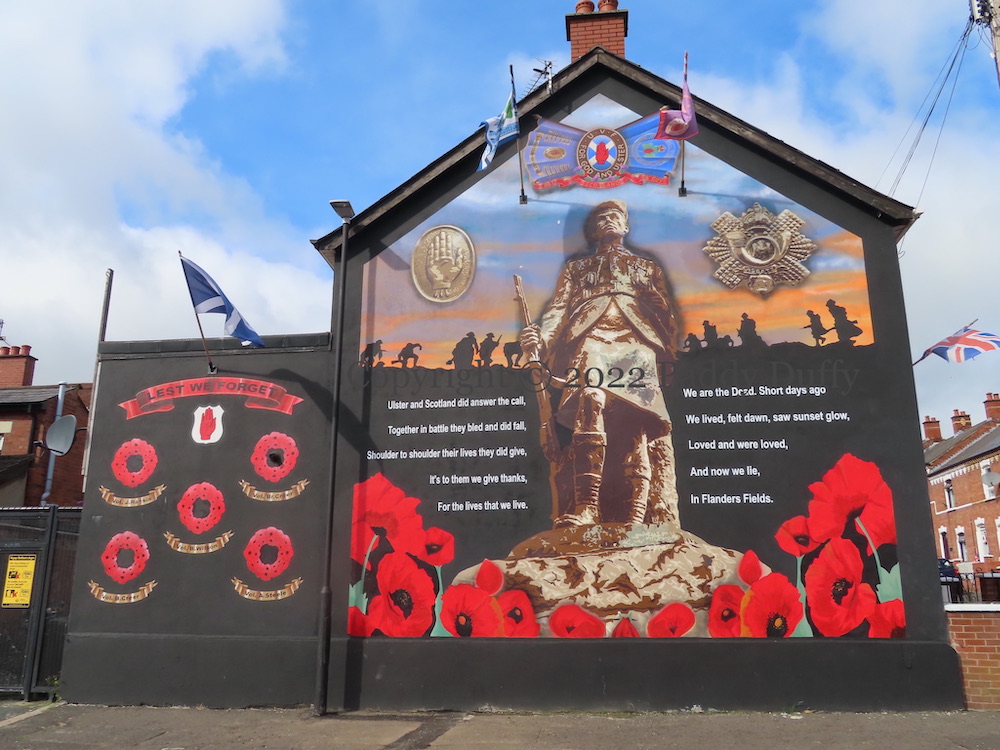
The Battle Of Assaye (India) took place on September 23rd, 1803, and the 74th regiment of the Royal Highland Fusiliers became known as the Assaye regiment in recognition of their performance (WP). By the time of WWI, the regiment had been merged into the Highland Light Infantry, whose 2nd battalion fought at the Somme in 1916 alongside the 36th (Ulster) Division (WP). The Highlanders’ emblem (which still includes the word “Assaye”) is on the right, the Ulster Volunteers’ on the left. In the apex are the flags of the UVF and YCV (14th battalion Royal Irish Rifles). This new mural commemorates the UVF volunteers of both WWI and the Scottish brigade: J. Rankin, Br. Creer, B. Wilson, B. Creer, A. Steele.
“Ulster and Scotland did answer the call/Together in battle they bled and fall/Shoulder to shoulder their lives they did give/It’s to them we give thanks/For the lives that we live.”
“We are the dead. Short days ago/We lived, felt dawn, saw sunset glow/Loved and were loved/And now we lie/In Flanders Fields.”