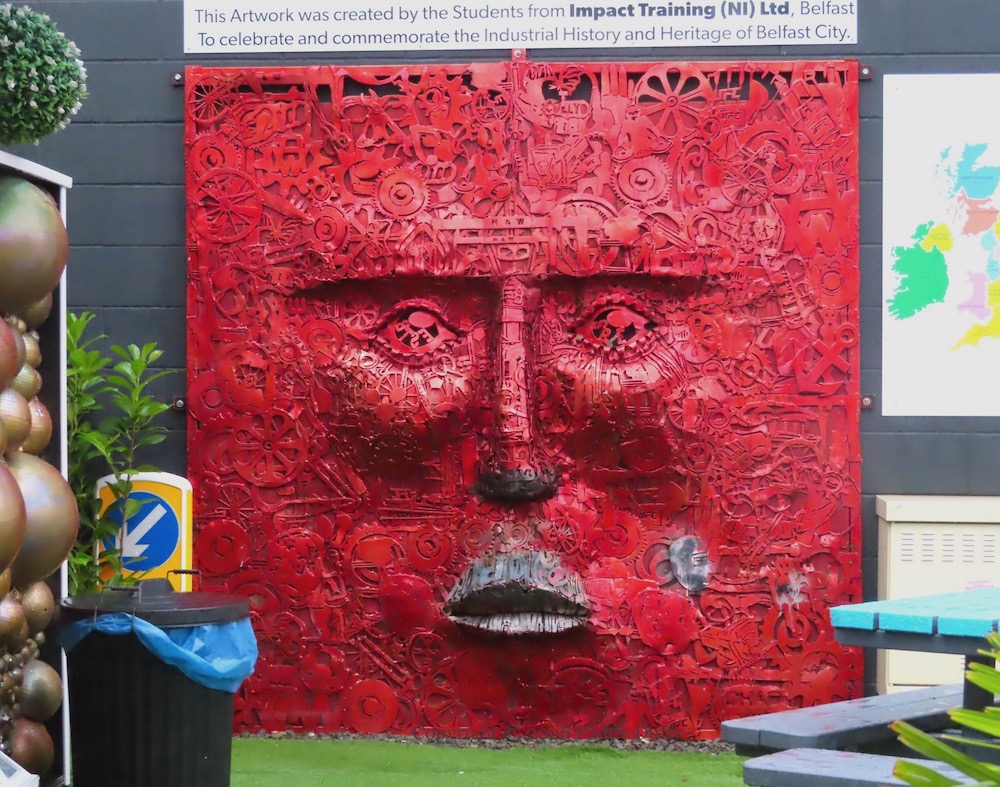
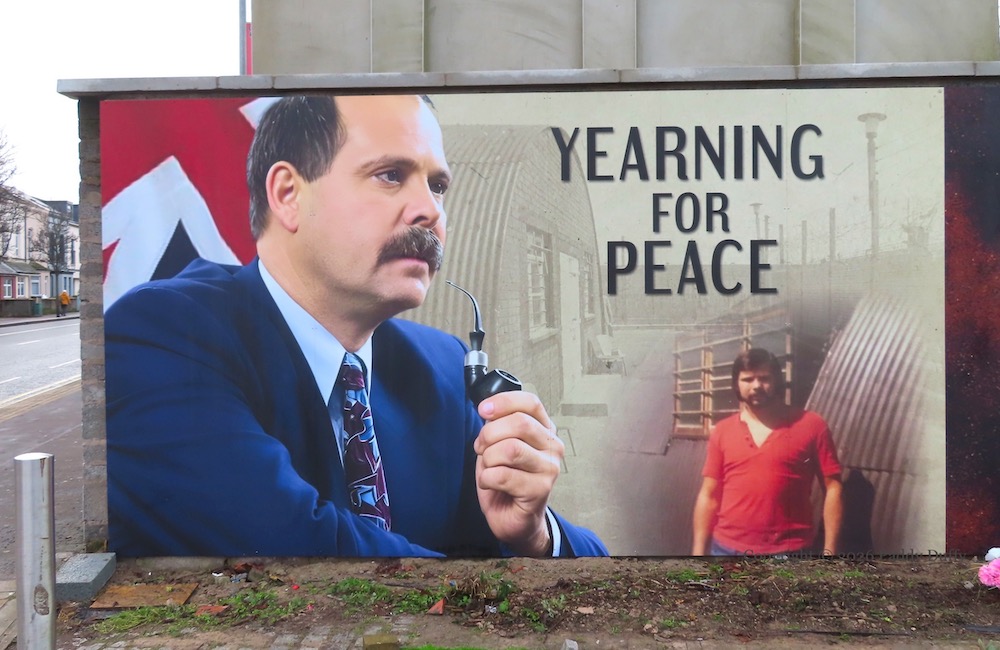
The Face was last seen on the Cupar Way war-wall in 2019 (see Please Respect Artwork). It was taken down (for reasons unknown) and put into storage in a works yard off Lanark Way, from where it was stolen it by thieves (perhaps thinking it might be valuable for its metal); it was found abandoned near the Slıabh Dubh car park (Belfast Live).
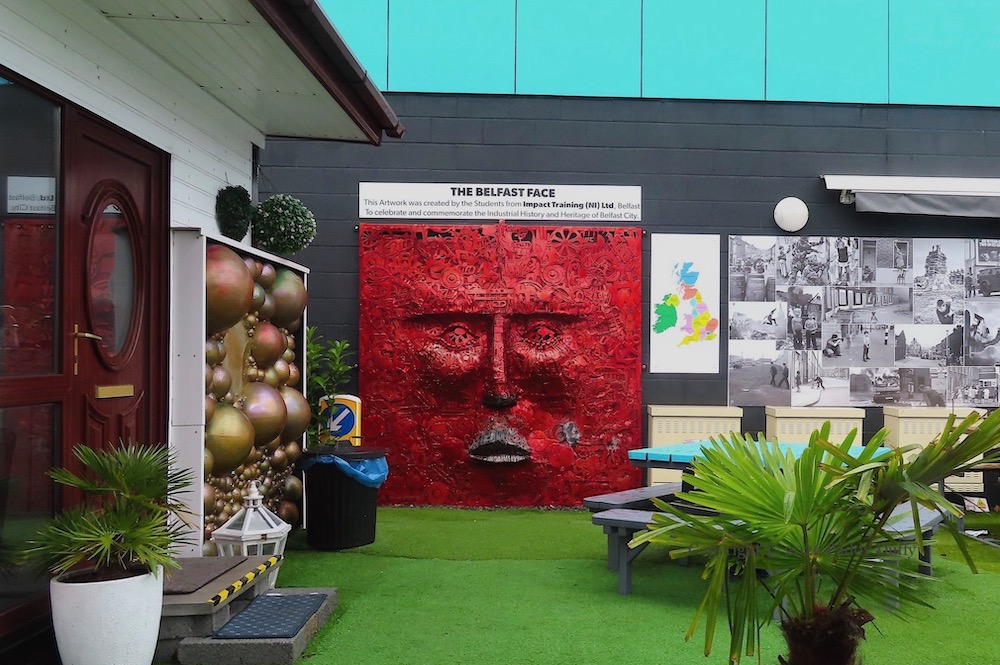
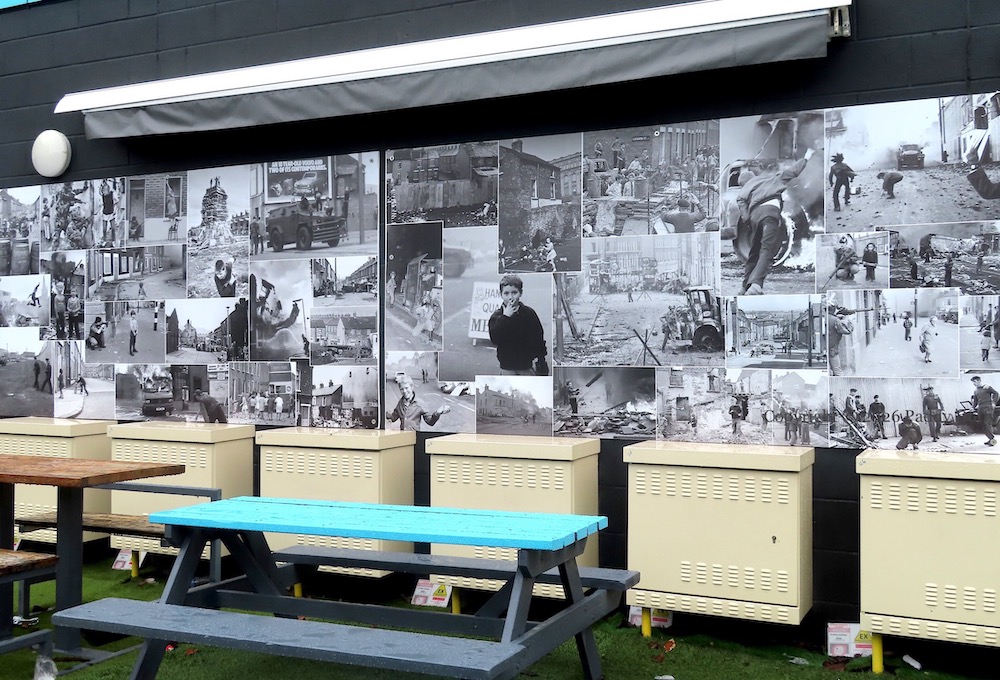
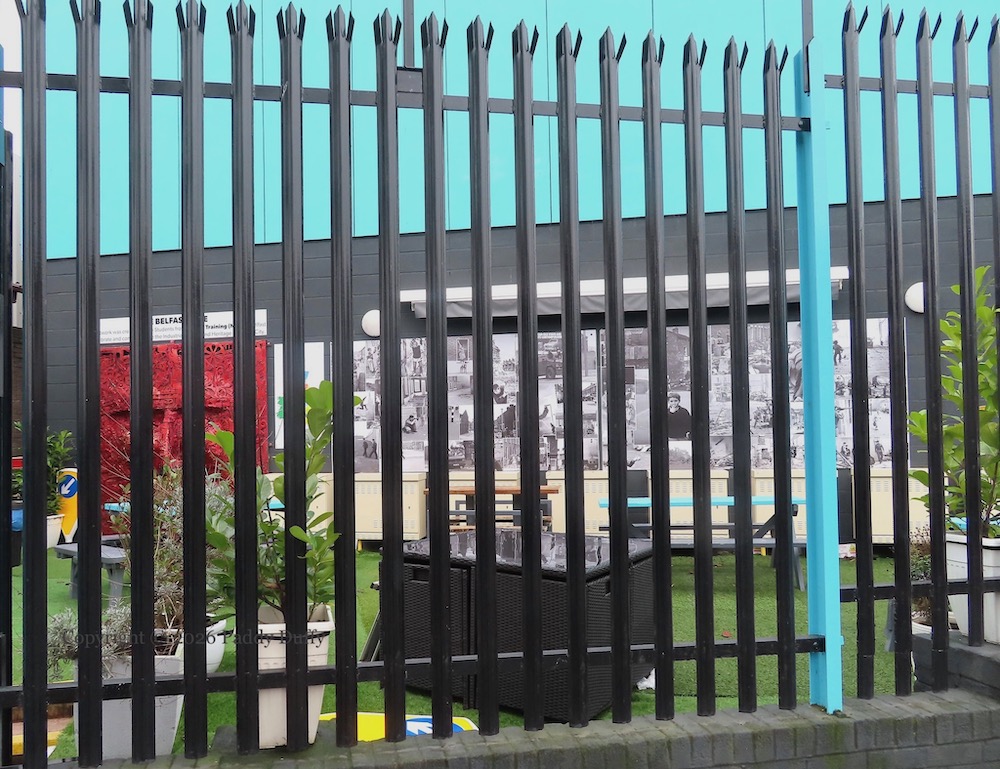
It has now found a home in a new coffee- and souvenir-shop (called Bean Around The World) that has been punched into the fencing at the top of Cupar Way in the shadow of a business park.
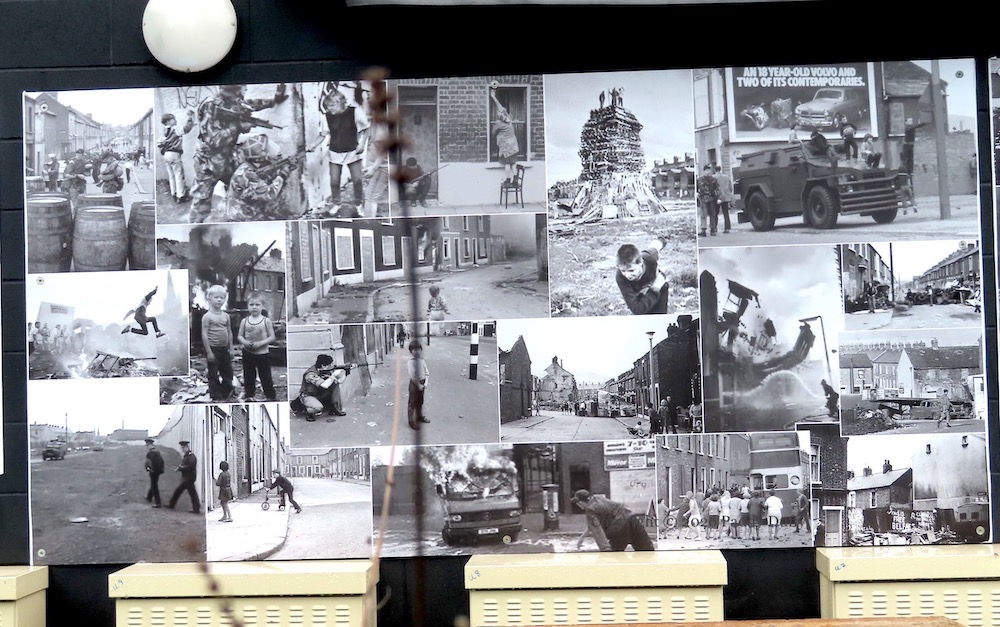
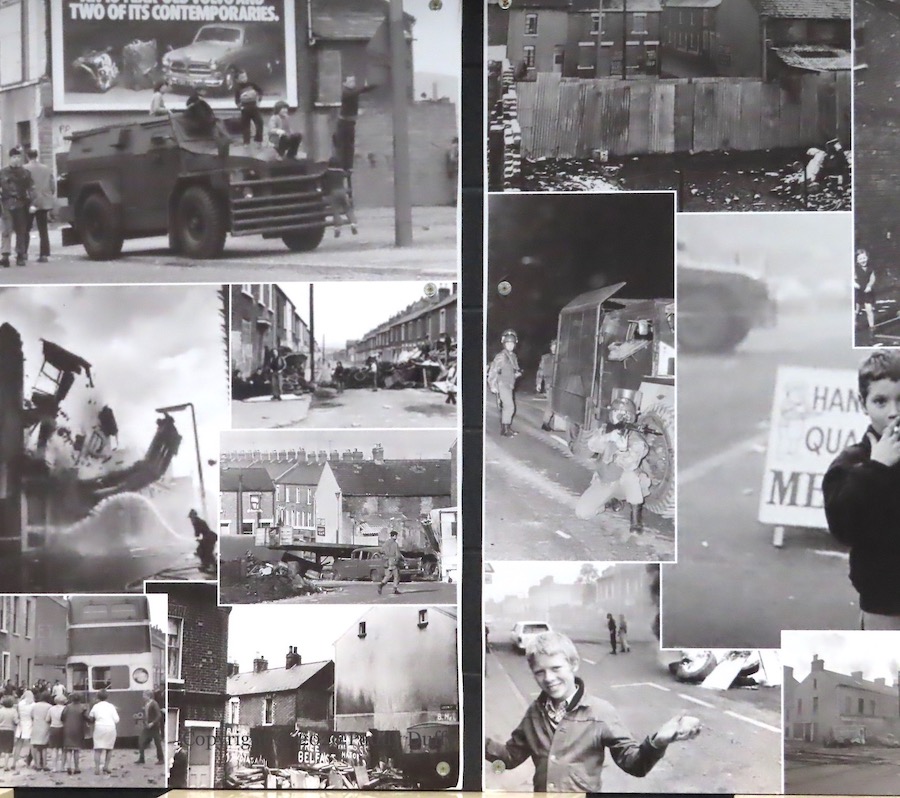
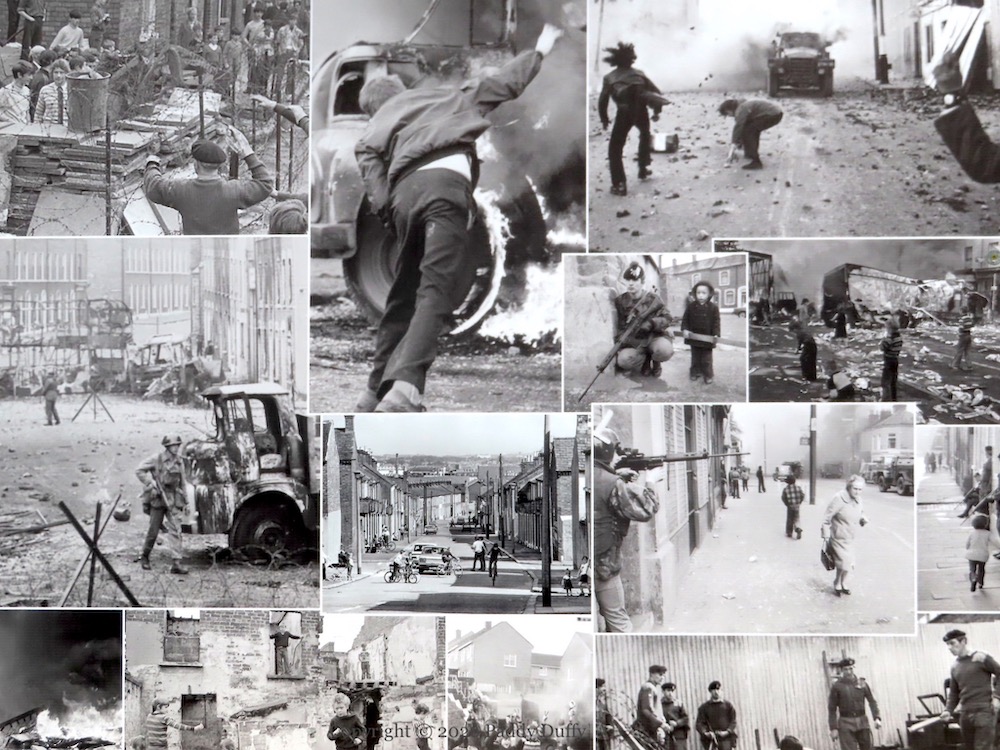
Next to The Face is a map of Ireland and Britain divided into regions, and a montage of black-and-white photographs from the Troubles (at least some of which come from the Belfast Archive Project).
The Face was created by Kevin Killen (web) and “the Students from Impact Training (NI) Ltd, Belfast To celebrate and commemorate the Industrial History and Heritage of Belfast City.”
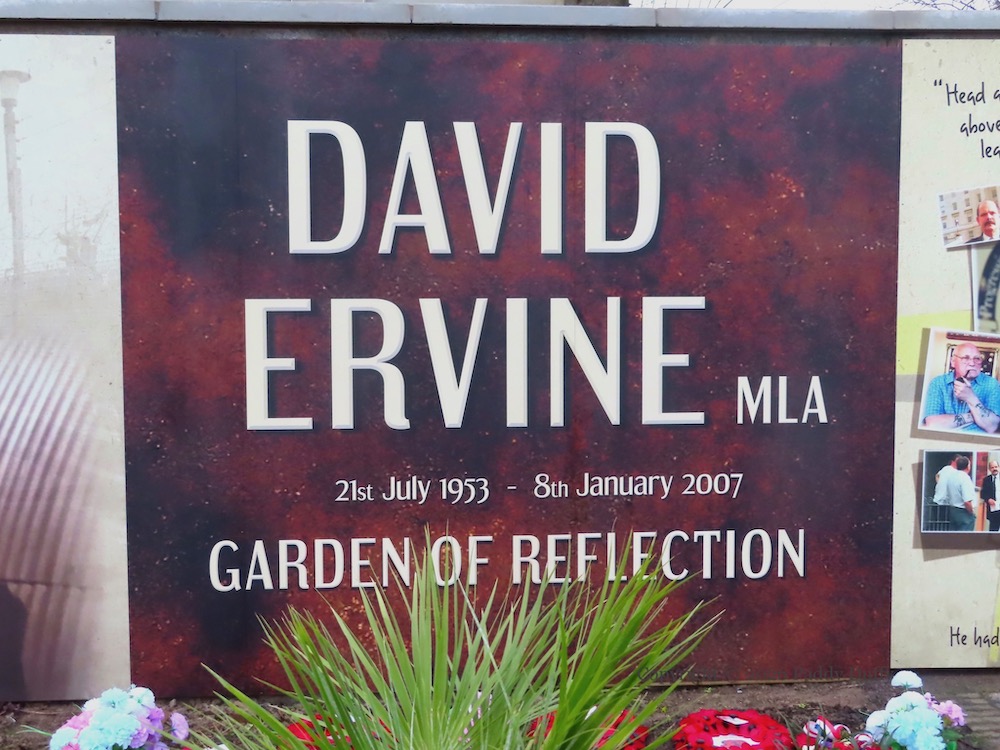
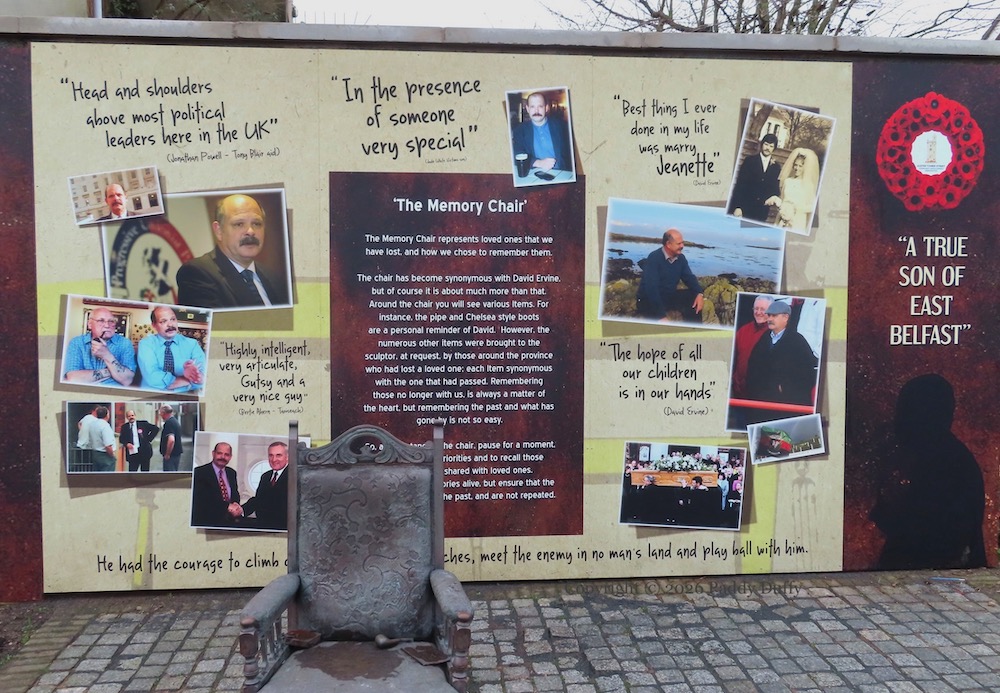
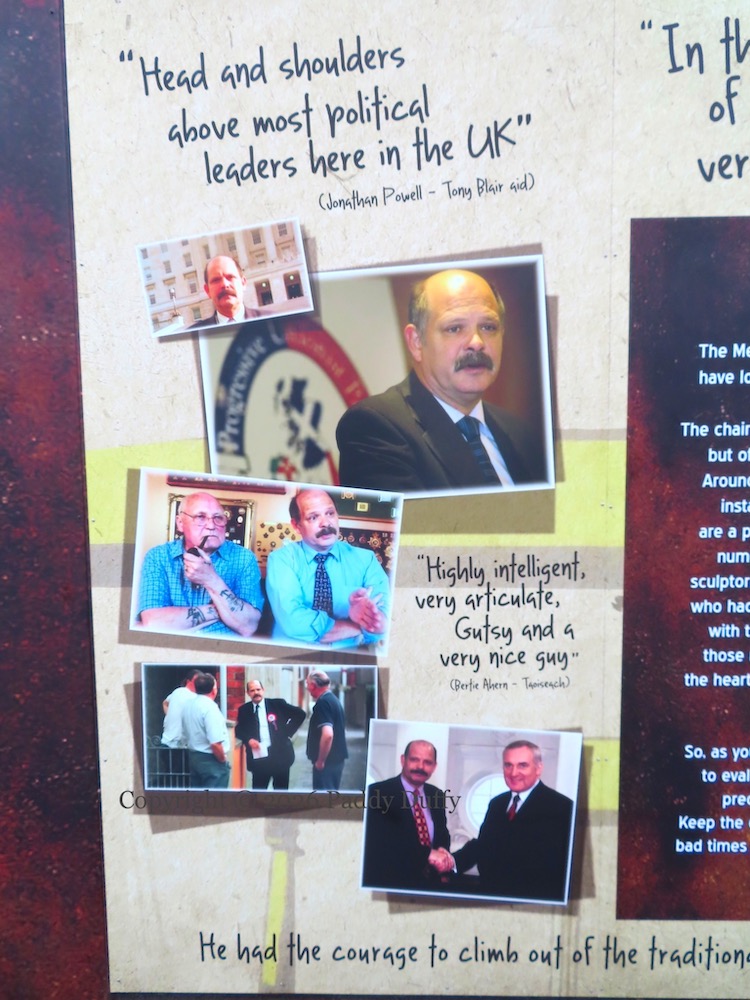
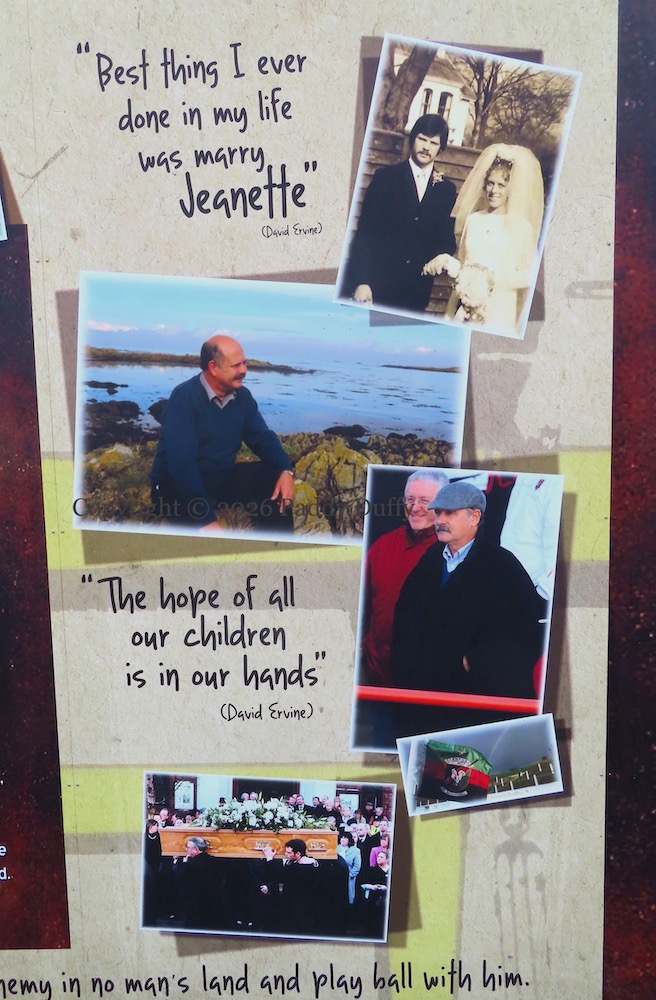
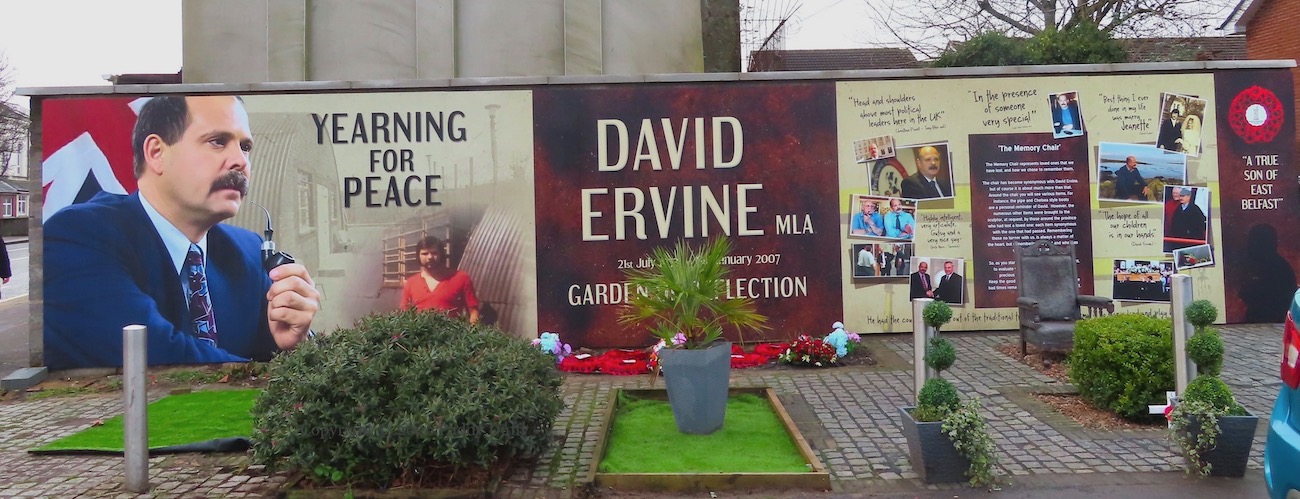
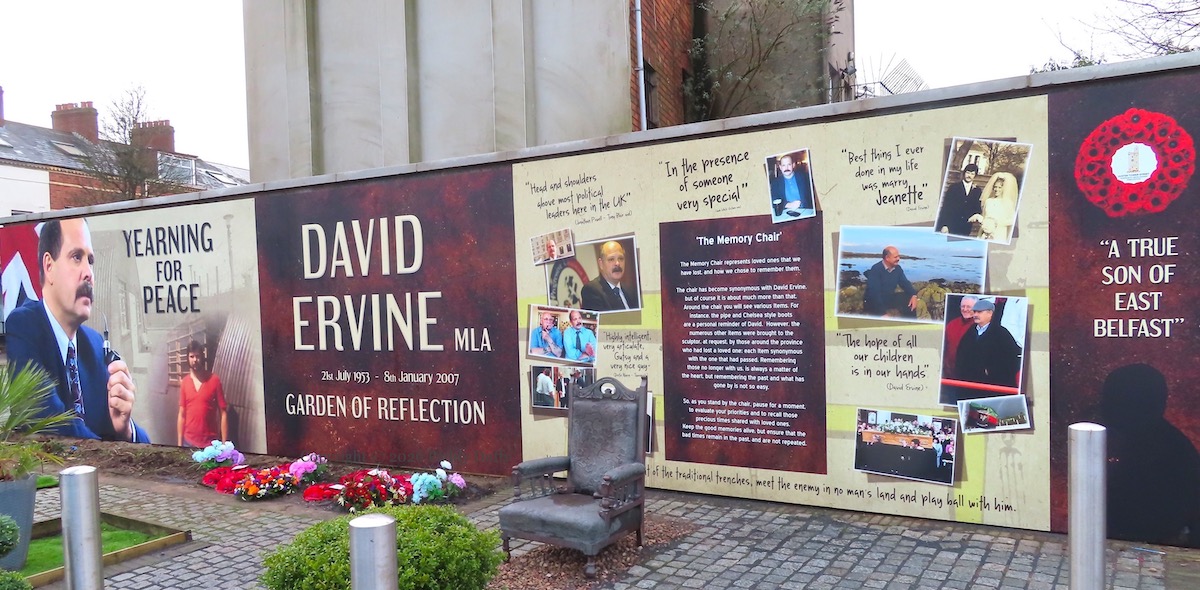
On the anniversary of David Ervine’s death, January 8th, a new board was launched in his memory, with images of Ervine “yearning for peace” in the cages of Long Kesh, where he met Gusty Spence (the pair can be seen together in the middle of the first column of photographs).
After his release, Ervine turned to politics, running unsuccessfully as a PUP candidate for Pottinger in the Belfast City Council elections of 1985 (WP); he would eventually be successful in 1997. In 1998 he was returned by Belfast East in the Assembly election (ARK). He helped bring about the loyalist ceasefire in 1994 – which was read aloud by Spence (youtube) – and was pro-Agreement in 1998 (DIB | Guardian | Slugger).
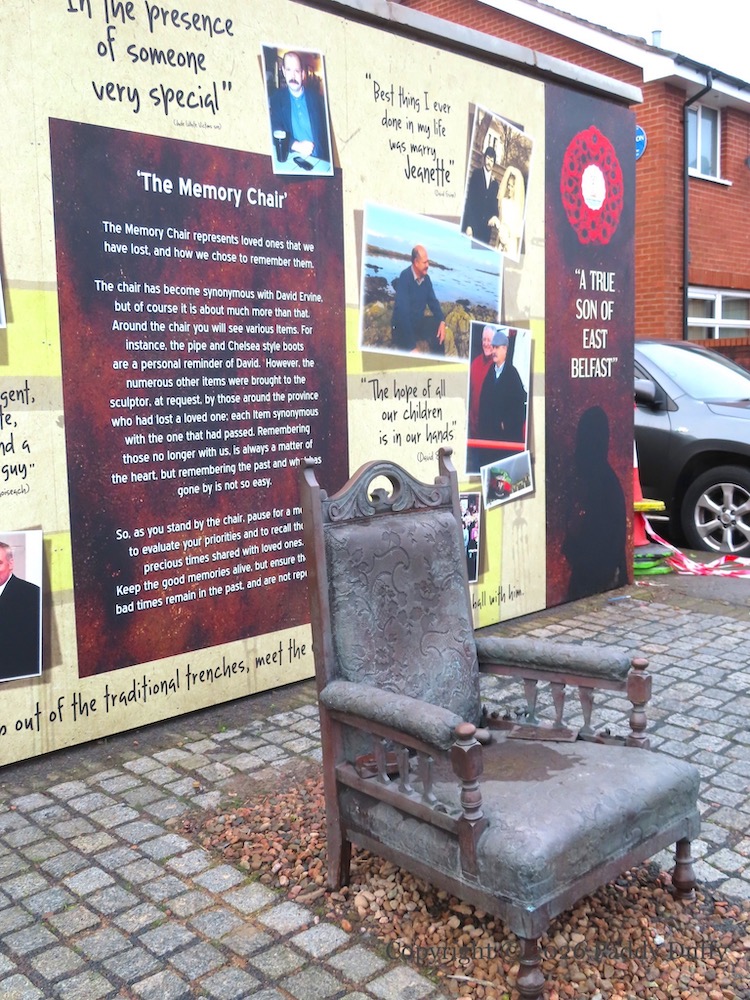
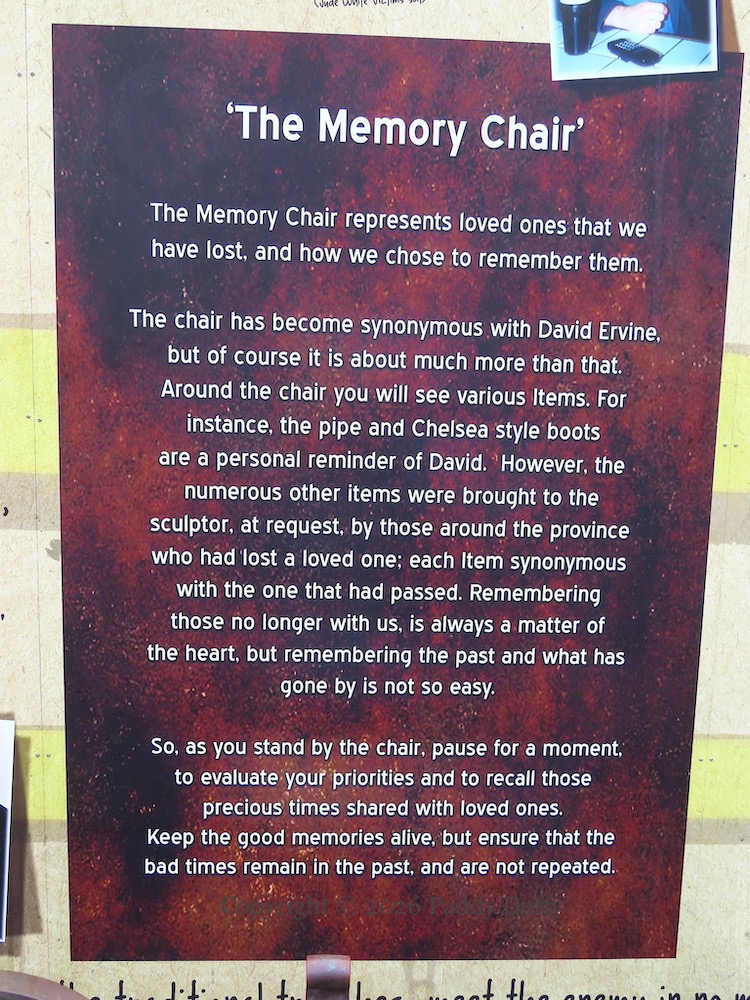
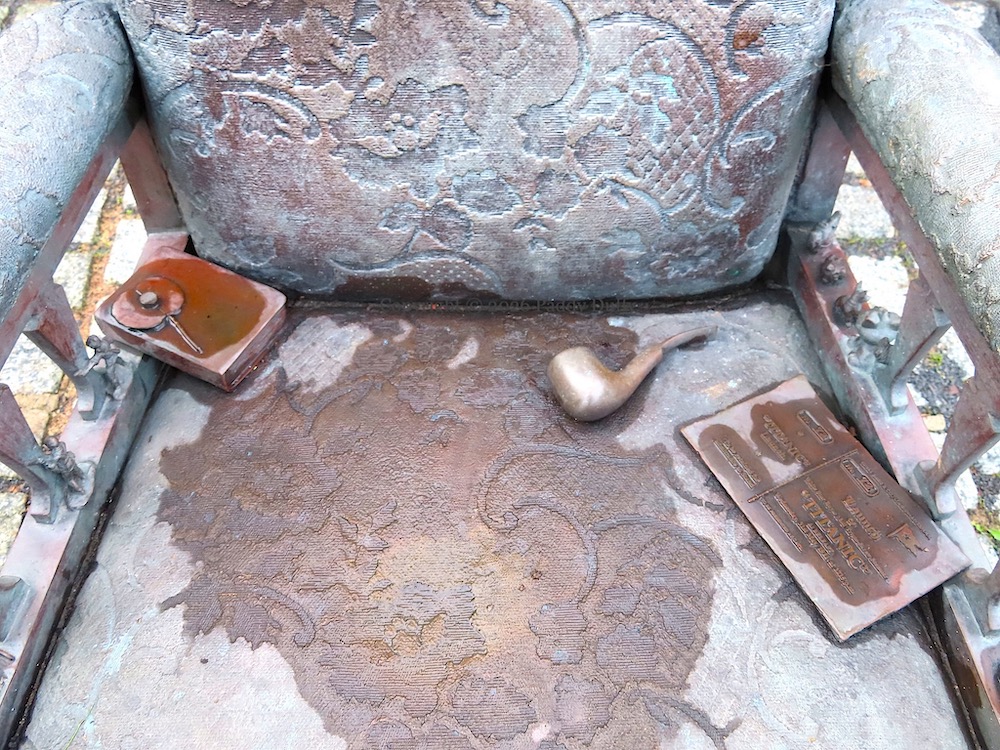
The information about the Memory Chair sculpture makes mention of Ervine’s boots but it seems they have not survived the mothballing of the sculpture which was last seen on site – boots included – in 2014.
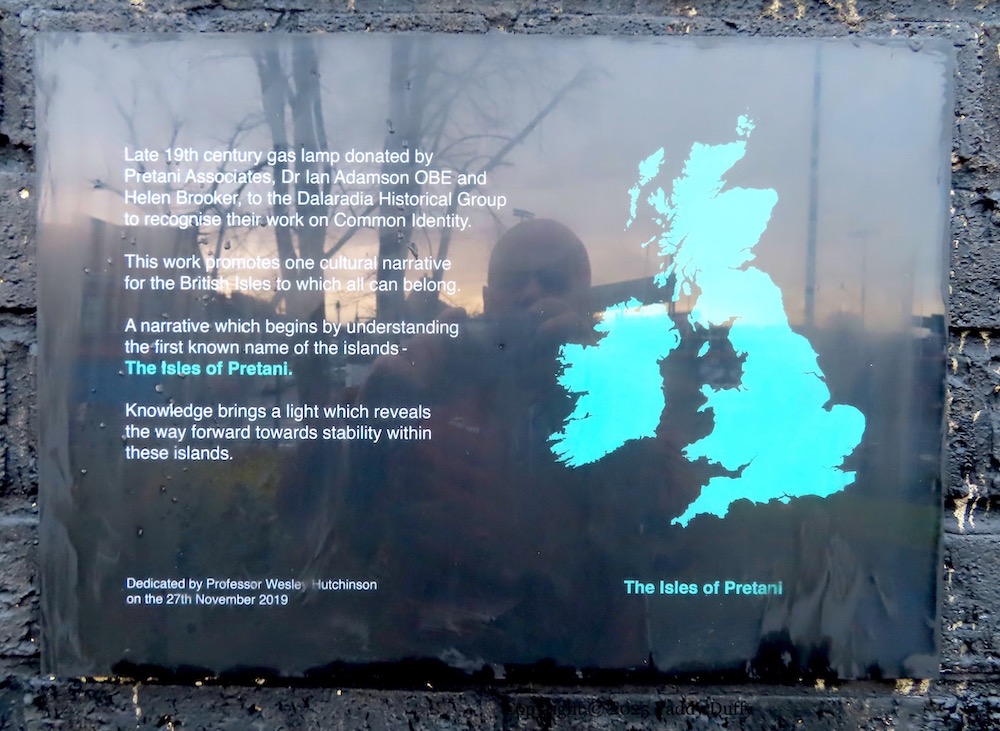
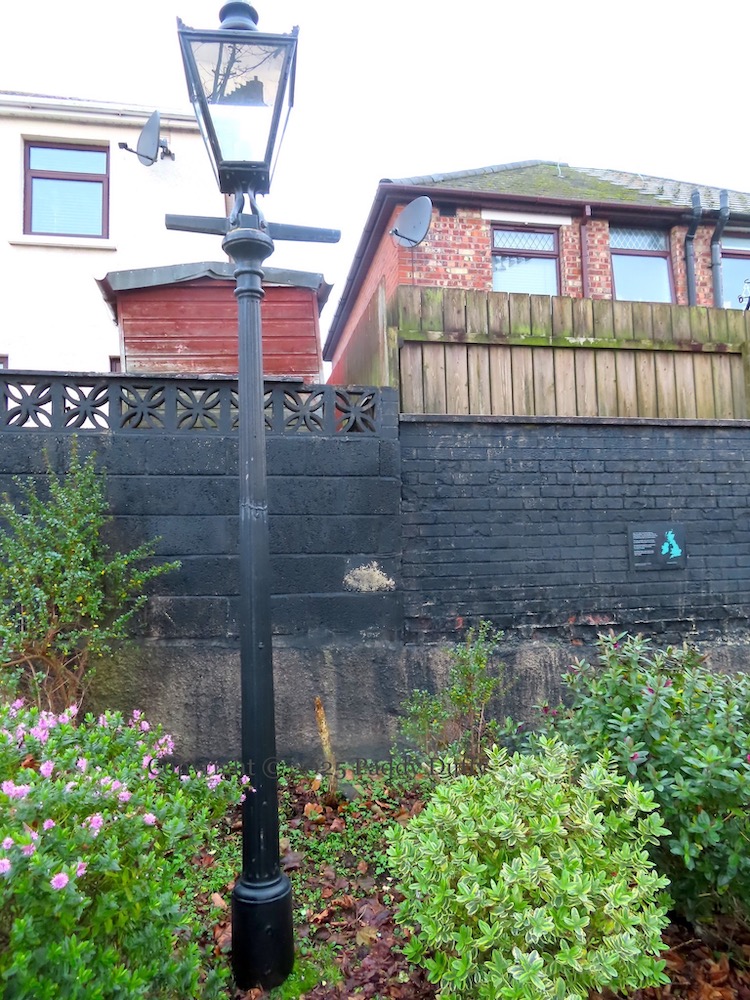
“Late 19th century gas lamp donated by Pretani Associates, Dr Ian Adamson OBE and Helen Brooker, to the Dalaradia Historical Group to recognise their work on Common Identity. This work promotes one cultural narrative for the British Isles to which all can belong. A narrative which begins by understand the first known name of the islands – The Isles of Pretani. Knowledge brings a light which reveals the way forward towards stability within these islands. Dedicated by Professor Wesley Hutchinson on the 27th November 2019.”
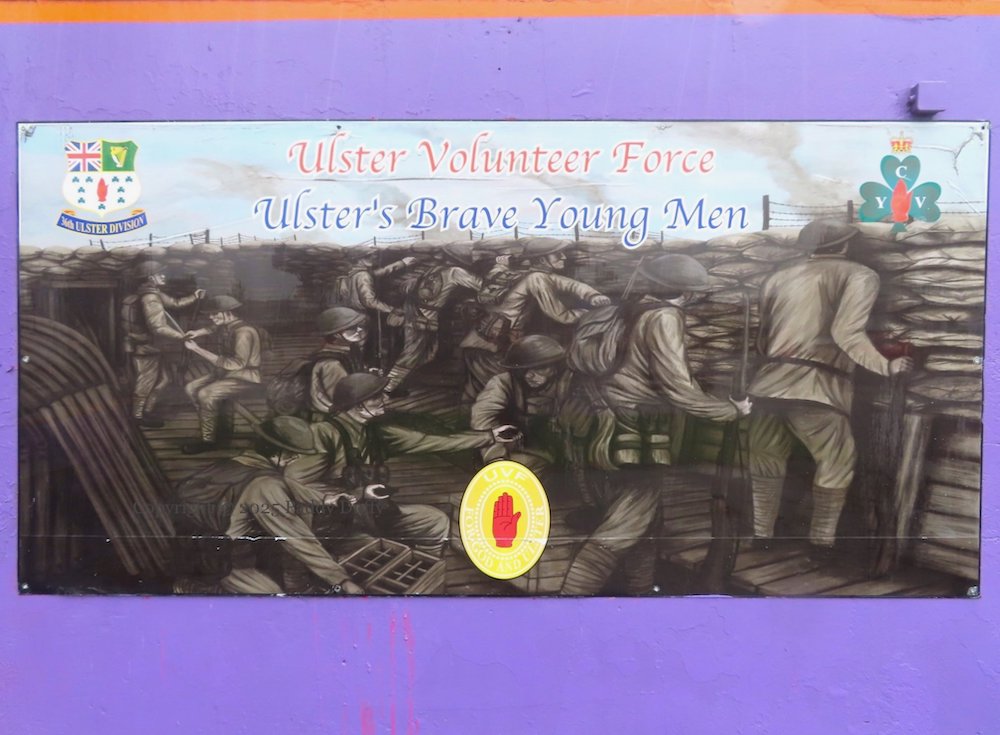
The background to the Avenue Road “Memorial to the 36th (Ulster) Division and to other men of Ulster who served in the Great War 1914 – 1918” has been repainted in the purple and orange of the UVF and the wall simplified by the removal of two smaller boards to each side of the main board (above) which shows soldiers looking out over the edge of a WWI trench. (For the the previous boards, see the Peter Moloney Collection.)
The seat is dedicated to “Jack”, an 11-year-old member of the Avenue Road Memorial flute band who died in 2019 (News Letter), with boxing gloves and emblem of the NI soccer association. 2 Timothy 4:7 says, “I have fought the good fight, I have finished the race, I have kept the faith.”
Avenue Road, Lurgan
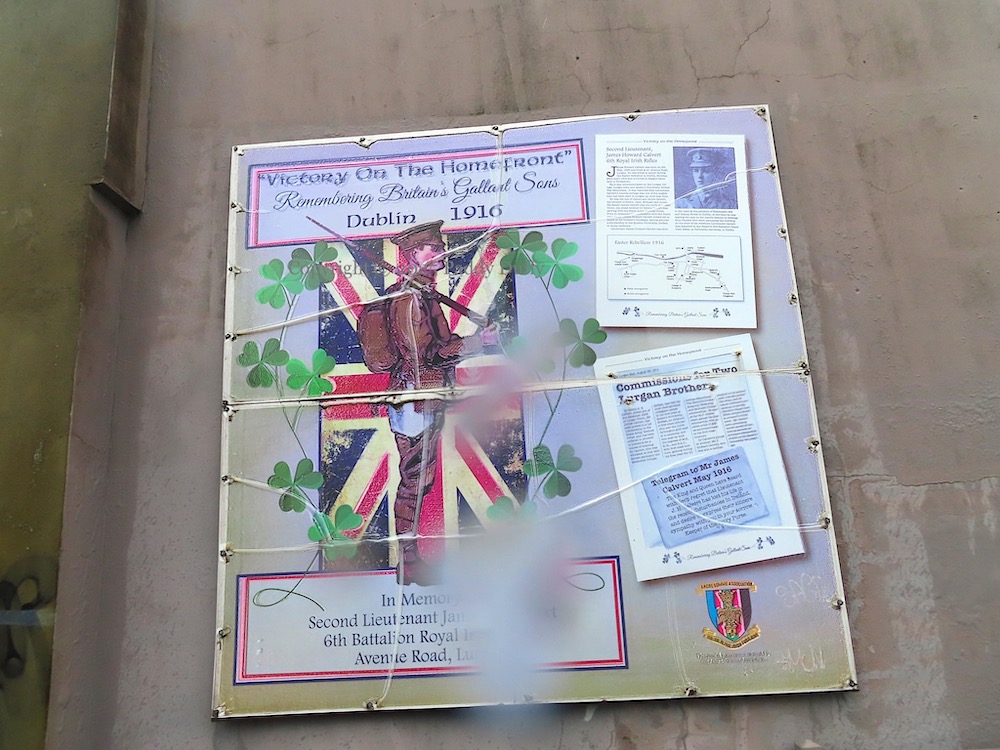
The final image is of a board in nearby King’s Park Mews to a soldier who died on “the homefront” – Dublin during the 1916 Rising – Second Lieutenant James Howard Calvert of the 6th Royal Irish Rifles.Calvert lived at 41 Avenue Road, Lurgan.
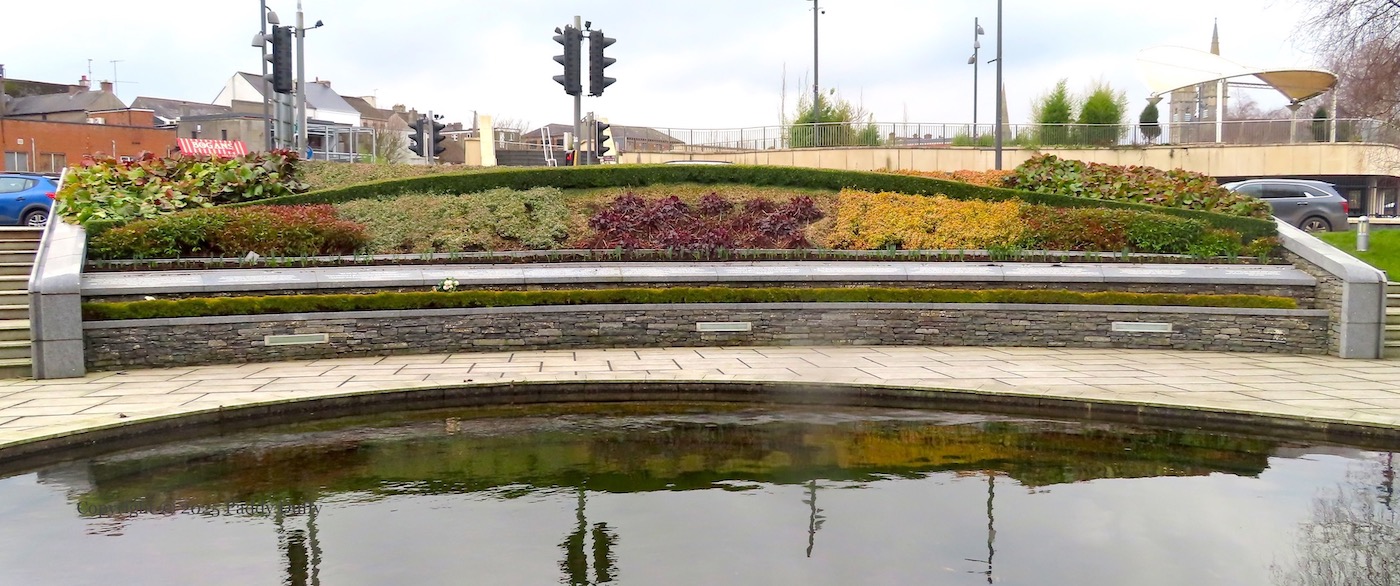
This memorial to the victims of the Omagh bombing is in a green-space along the Strule river about 300 metres (WP) from the spot where an RIRA car-bomb exploded on the afternoon of 15th of August 1998, killing twenty-nine people and injuring more than 200 others.
The garden was opened on the tenth anniversary, in 2008 (replacing a smaller obelisk). It includes 31 mirrors on poles (including a set of unborn twins in the number of deceased) which are part of a reflective system that sends sunlight towards a crystal pillar in Market Street that marks that spot of the bomb (Troubles Archive).
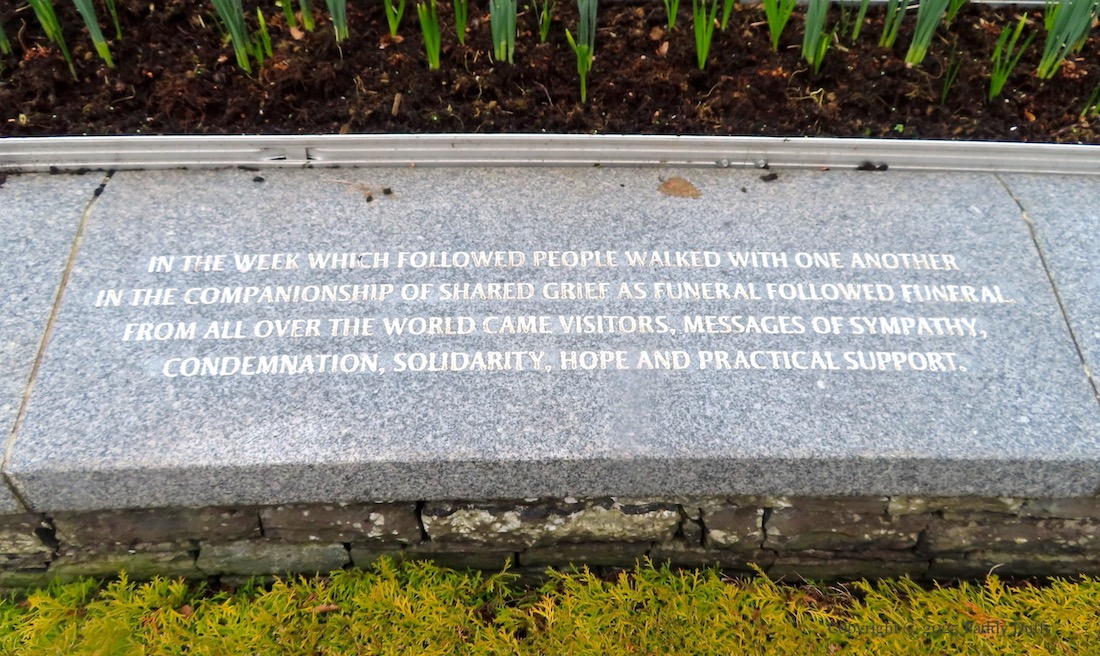
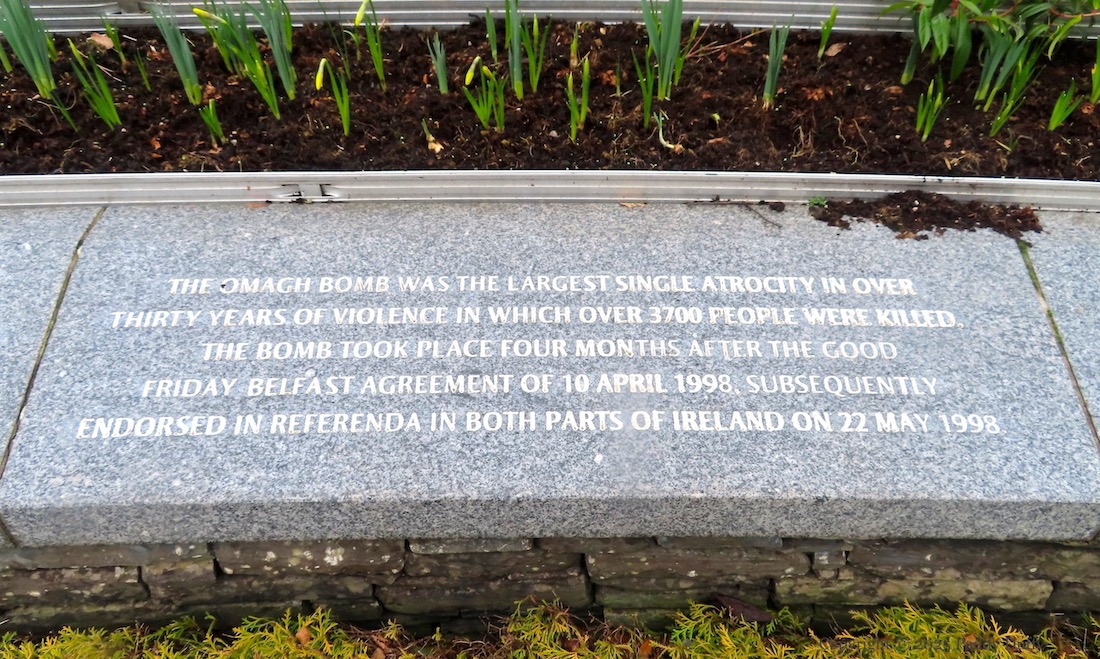
There are also a series of engraved stones on an arc around the pool that tell the story of the day and its aftermath, as well as naming the dead:
“Weather wise it was one of the best days that summer had seen. Ordinary people were doing ordinary things on an ordinary day. In one fateful moment all this was changed forever. Time stood still, futures were obliterated, loves were shattered, hearts were broken. In the carnage, emergency personnel and many ordinary people reached out, helped the injured, gave hope to the dying and held the dead. That evening a great silence descended on the town. In the week which followed the people walked with one another in the companionship or shared grief as funeral followed funeral. From all over the world came visitors, messages of sympathy, condemnation, solidarity, hope and practical support. The Omagh bomb was the largest single atrocity in over thirty years of violence in which over 3700 people were killed. The bomb took place four months after the Good Friday/Belfast Agreement of 10 April 1998, subsequently endorsed in referenda in both parts of Ireland on 22 May 1998. In the years that followed people Omagh and elsewhere sought to rebuild their lives, their families, their community, and to create a new future. Regardless of the past, every new days dawns as a gift laden with its own possibilities, as the morning sun banishes the darkness of night.”
One of the stones reads “Bear in mind these dead/Coınnıgh ı gcuımhne na maırıbh seo/Tened en cuenta a estos muertos – (John Hewitt)”; two of the victims were Spanish.
Drumragh Avenue, Omagh
“Saturday 15 August 1998 at 3.10 PM. To honour and remember the 31 men, women and children who were killed, the hundreds injured and those whose lives were changed forever in the Omagh bomb. ‘The light shines in the darkness and the darkness has not overcome it’ (John 1.5)”
“To honour and remember 31 people murdered and hundreds injured from three nations by a dissident republican terrorist car bomb. (Omagh Support And Self Help Group)”
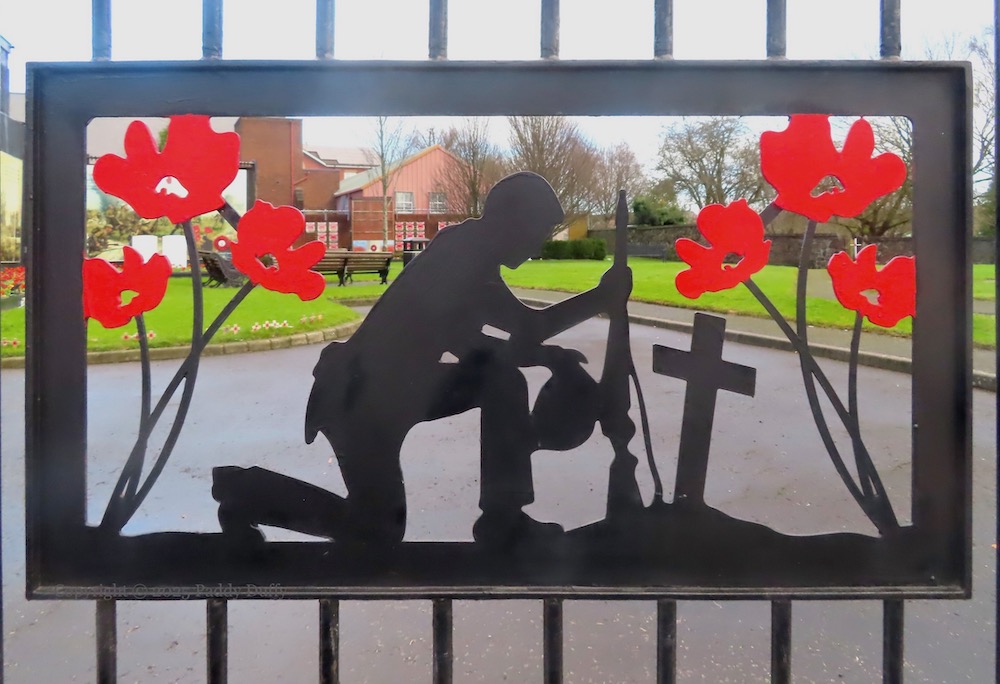
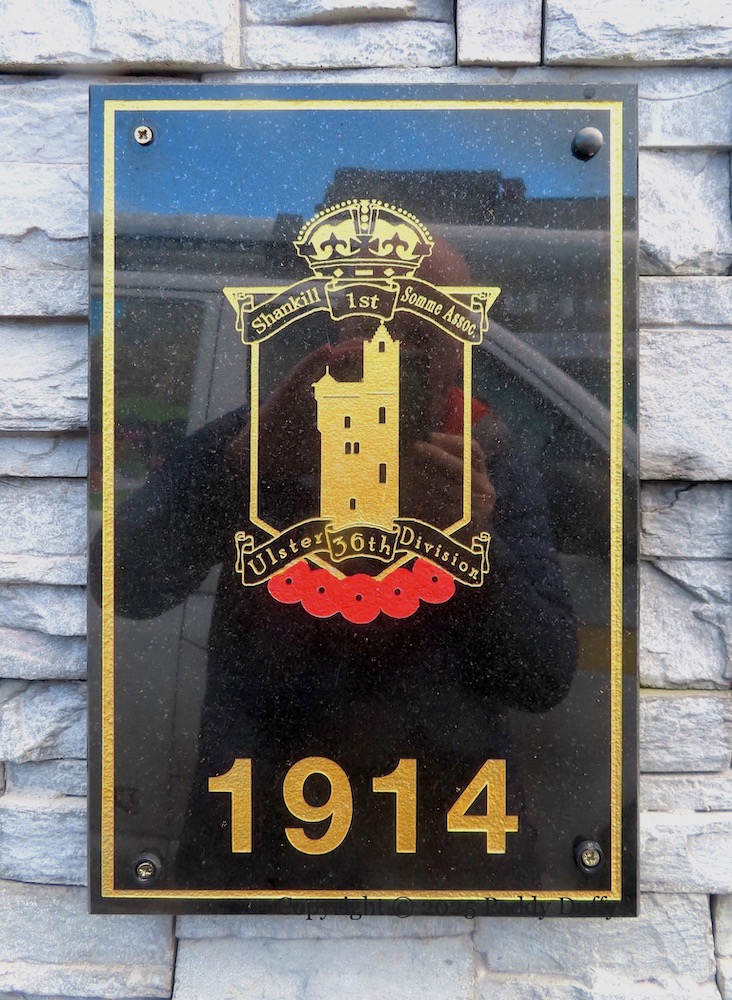
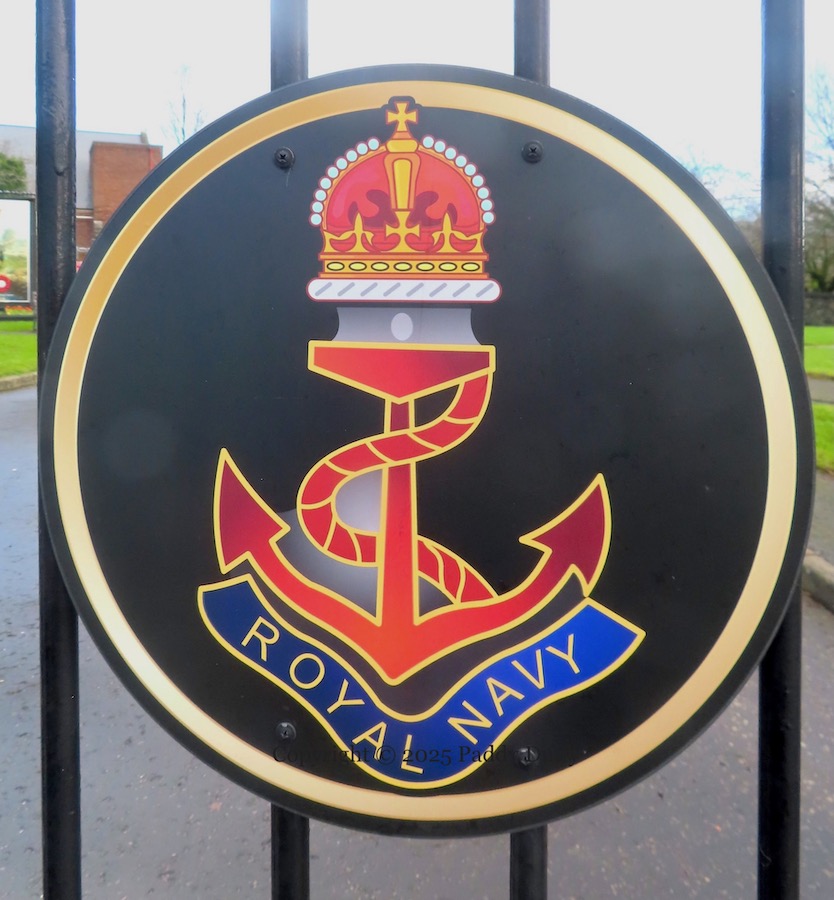
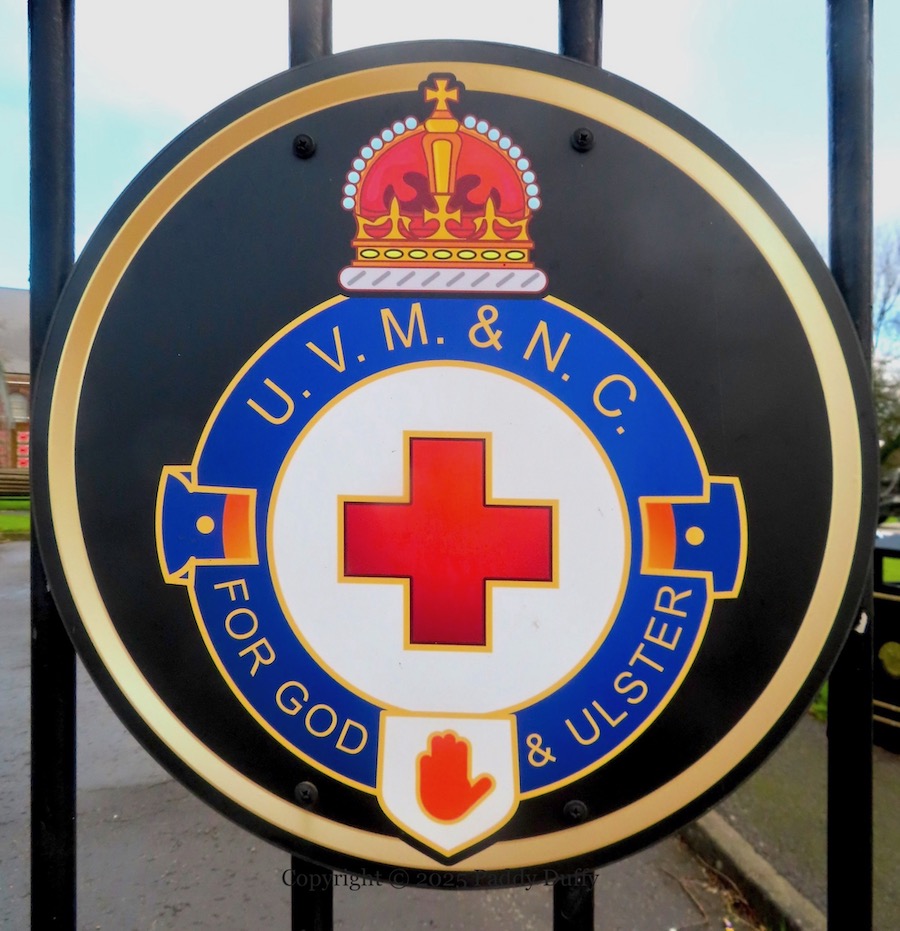
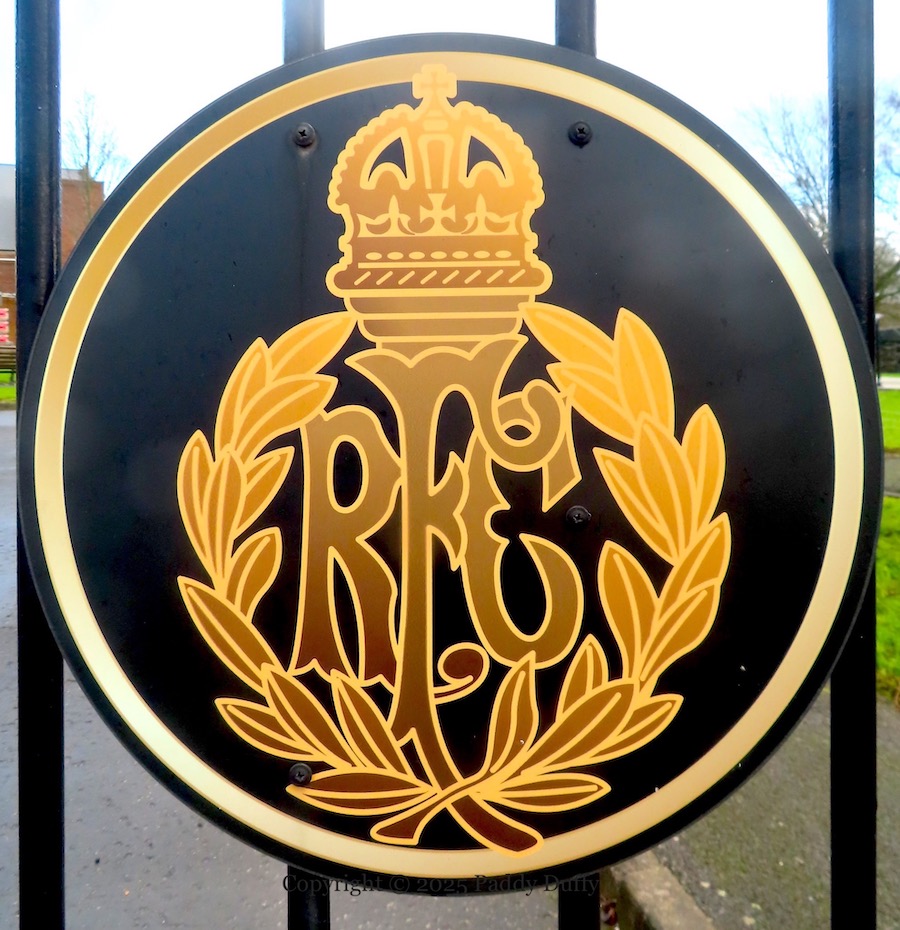
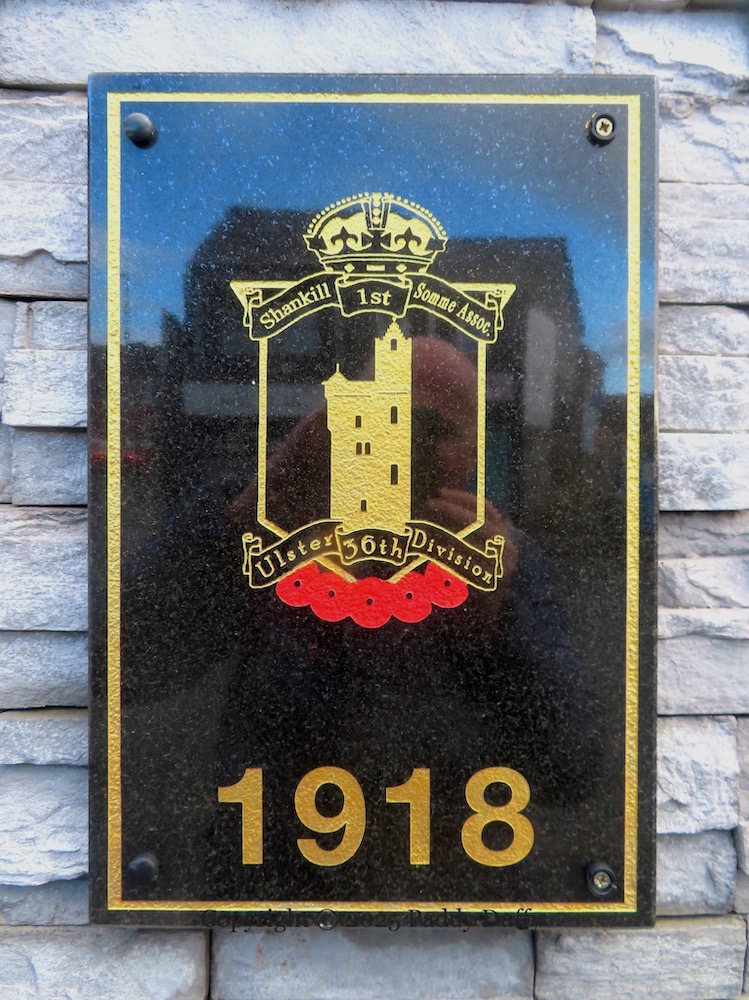
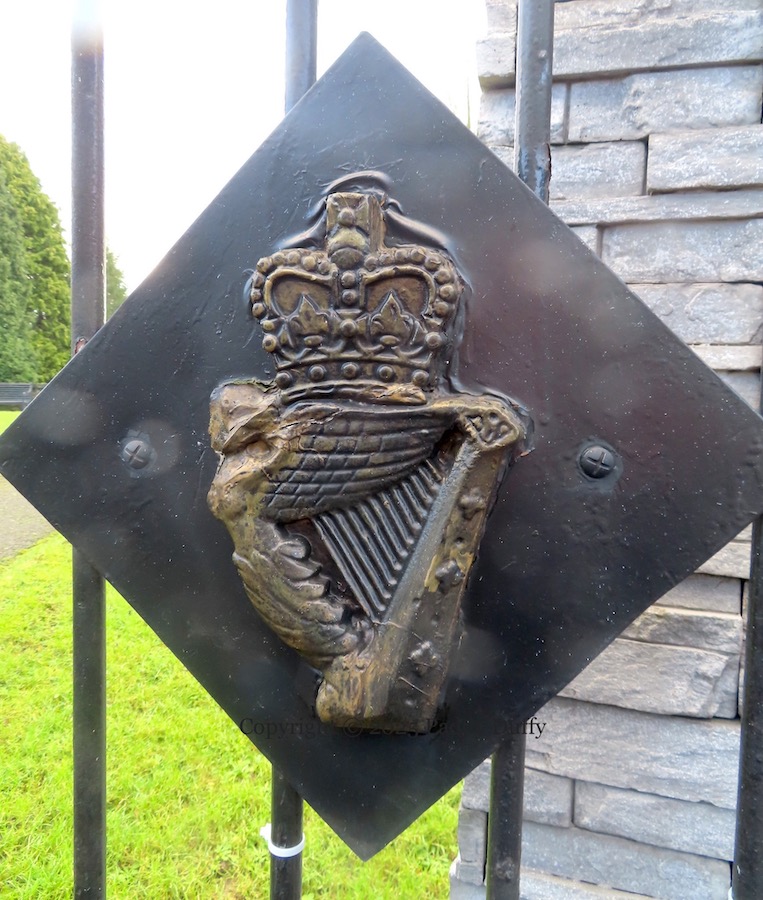
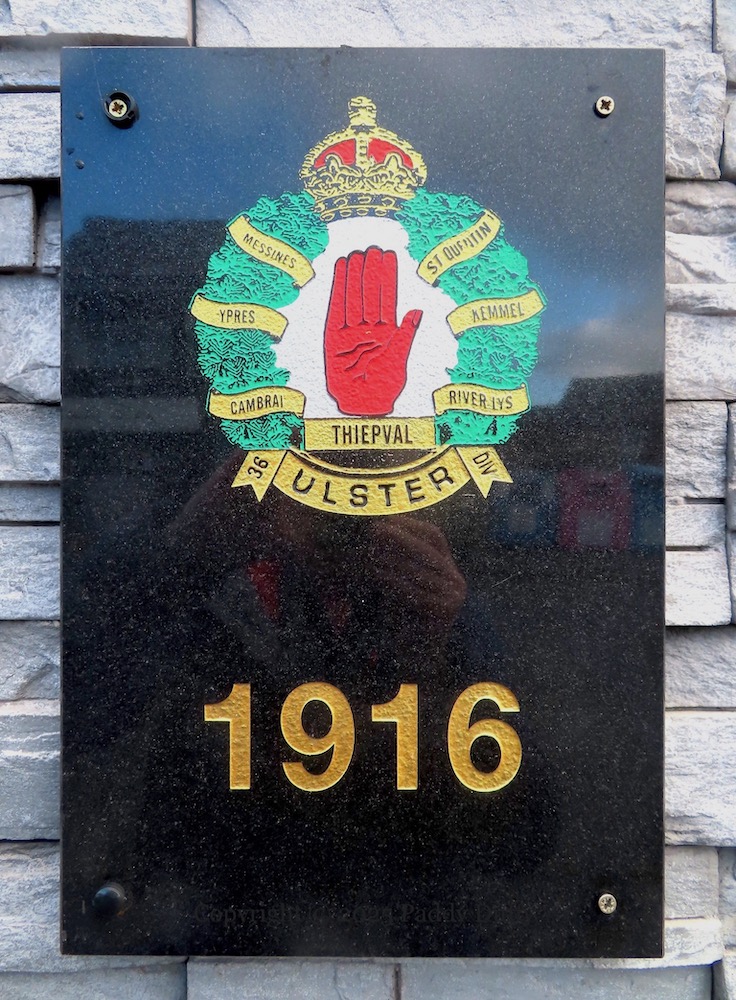
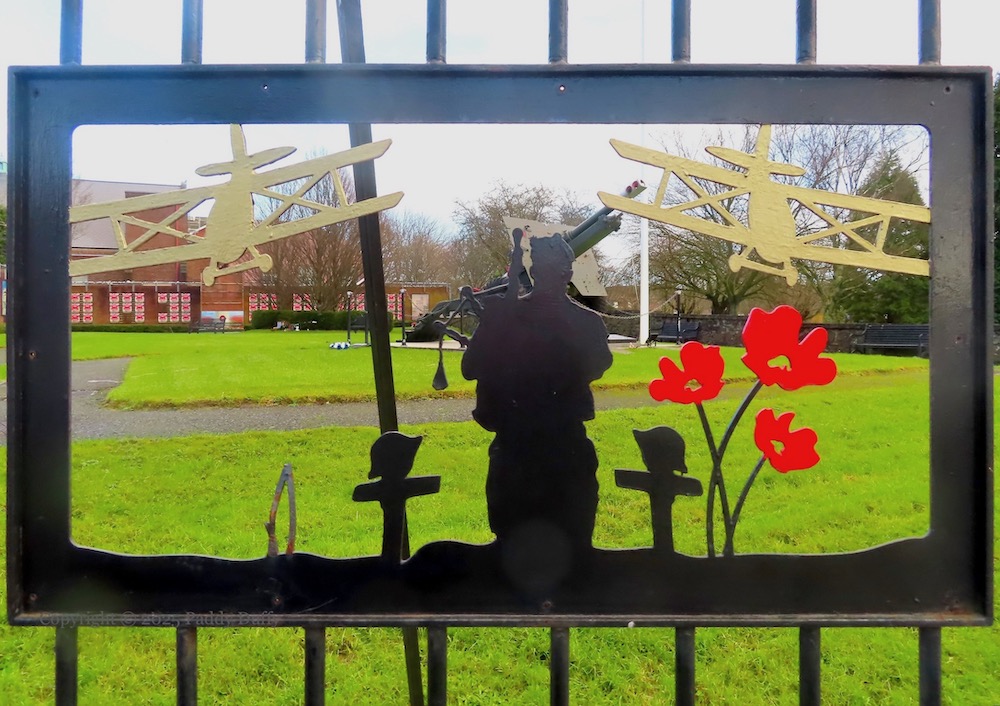
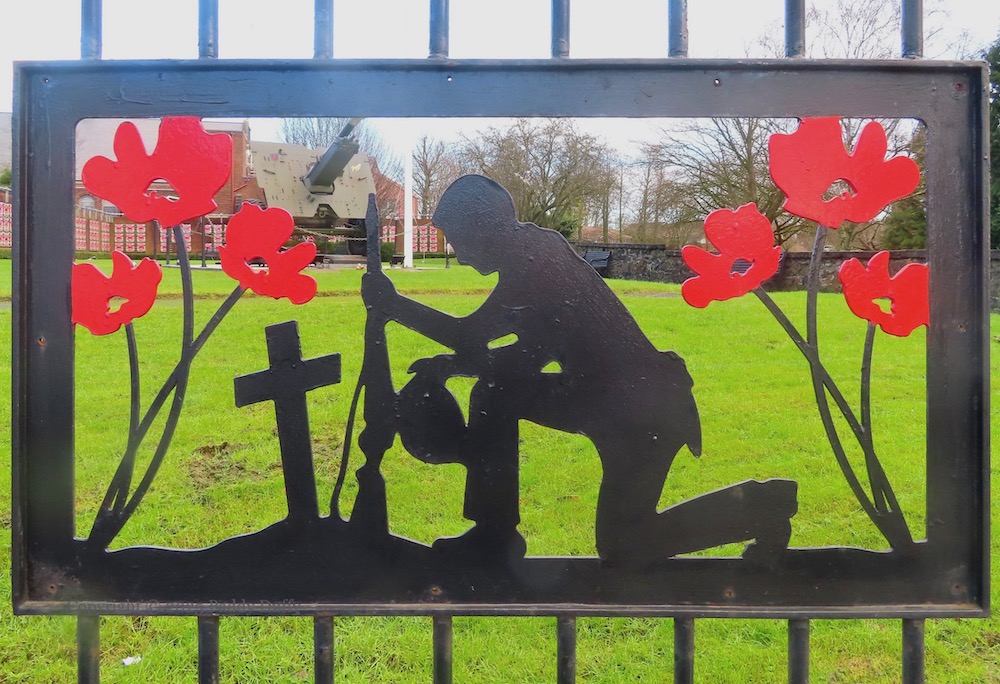
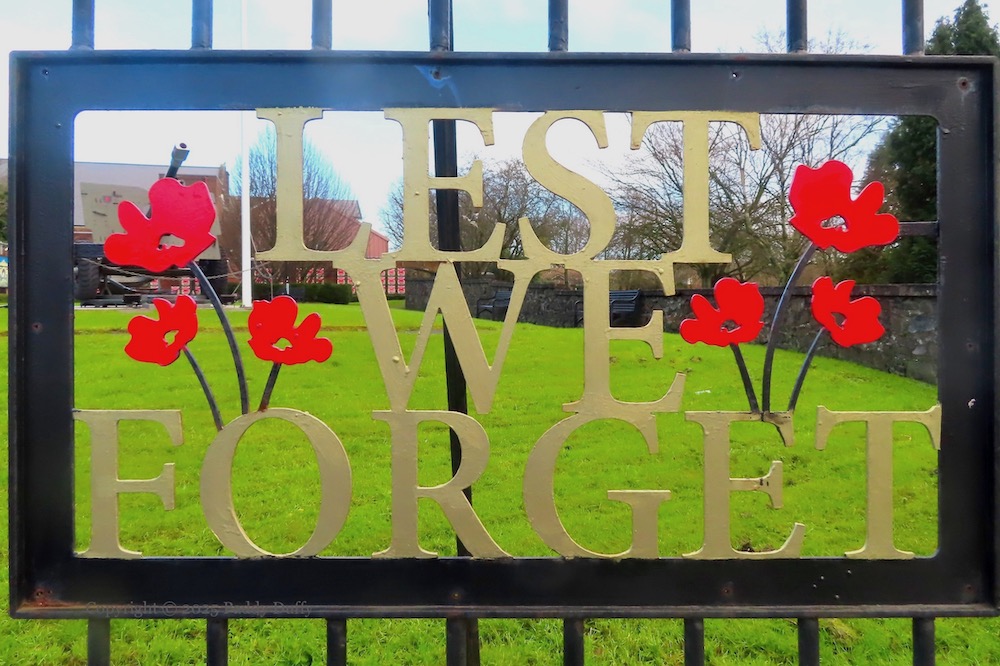
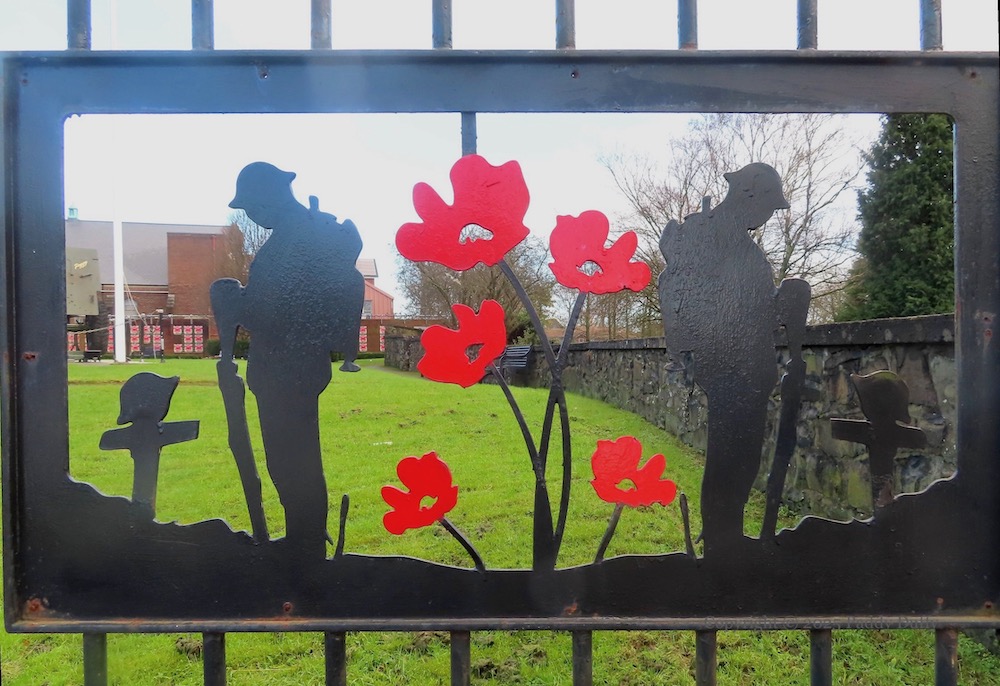
Here is a gallery of the metal-works which are inserted (c. 2020) into the fencing along the front of the 1st Shankill Somme Association’s ‘Garden Of Reflection’, and with the (replacement) plaques added to the stone when the wall and gate-columns were rebuilt in 2021.
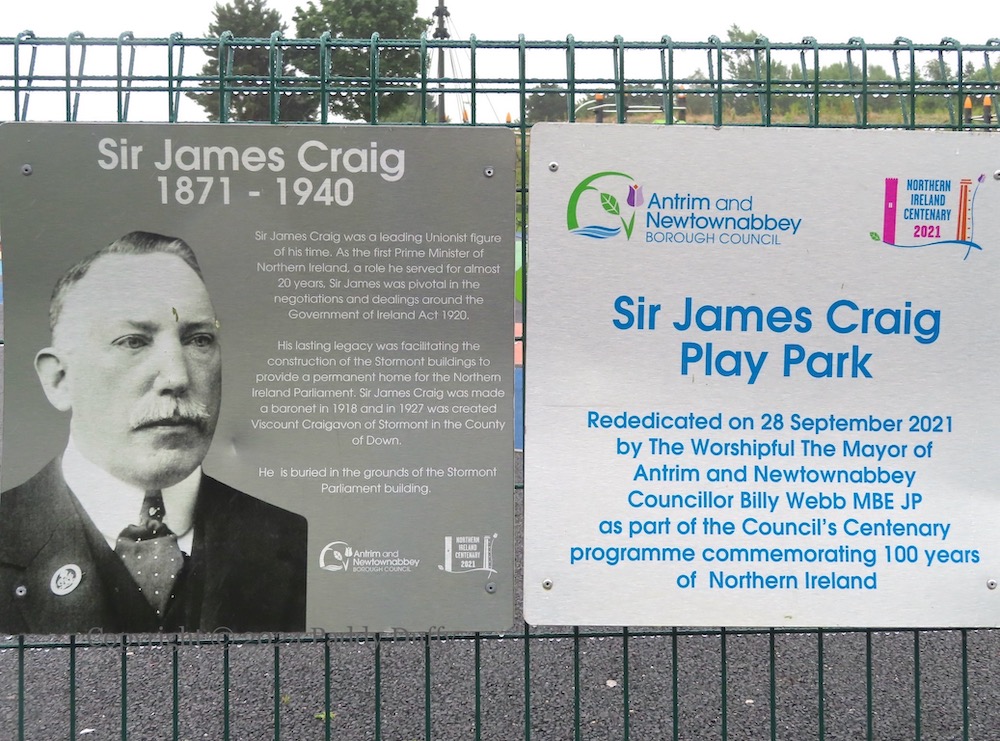
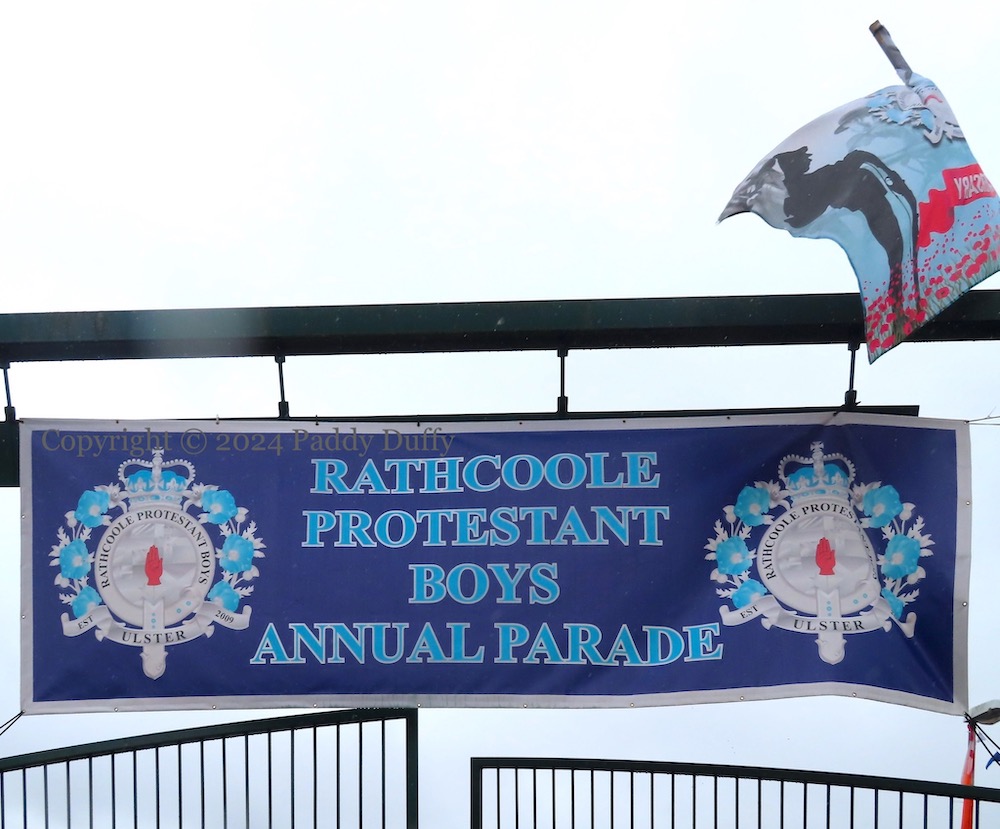
This images in this entry depict, above and below the information board about the park, the World Wars installation inside the park and the banners on the fence along Derrycoole Way.
There is an annual commemoration of the fallen in the World Wars in Rathcoole each year. The monument consisting of mourning soldiers and sandbags) was created in 2020 (Fb group | News Letter) and the bench was perhaps added in 2022. Images from the 2023 ‘row on row’ commemoration can be seen at NI World. The Row On Row group (web) hope to create a permanent memorial on the spot.
Rathcoole People’s Park was renamed the Sir James Craig Play Park by Antrim & Newtownabbey council in September, 2021, as part of the council’s celebrations of the centenary of Northern Ireland (NI World).
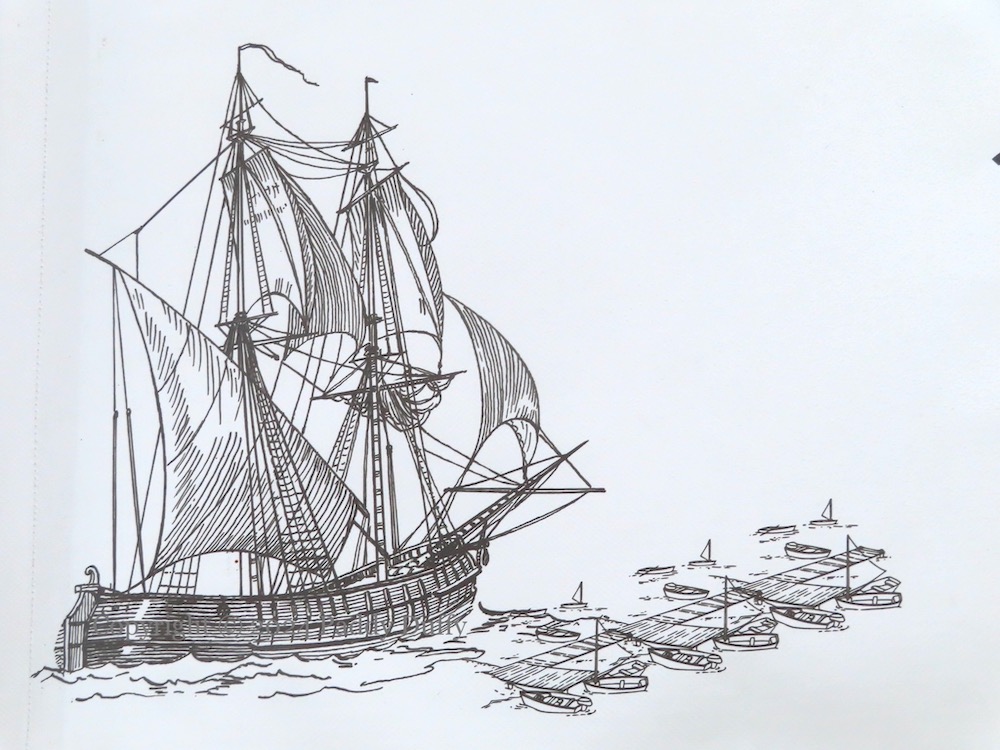
The banners on the side are from the Rathcoole Protestant Boys flute band (Fb) whose annual parade was at the end of June, and the Whitehouse Williamite Historical Society (Fb) whose fun-day on June 15th included a historical re-enactment of William’s army landing at Whitehouse. (For more on William’s connection to Whitehouse, see June 14th, 1690.)
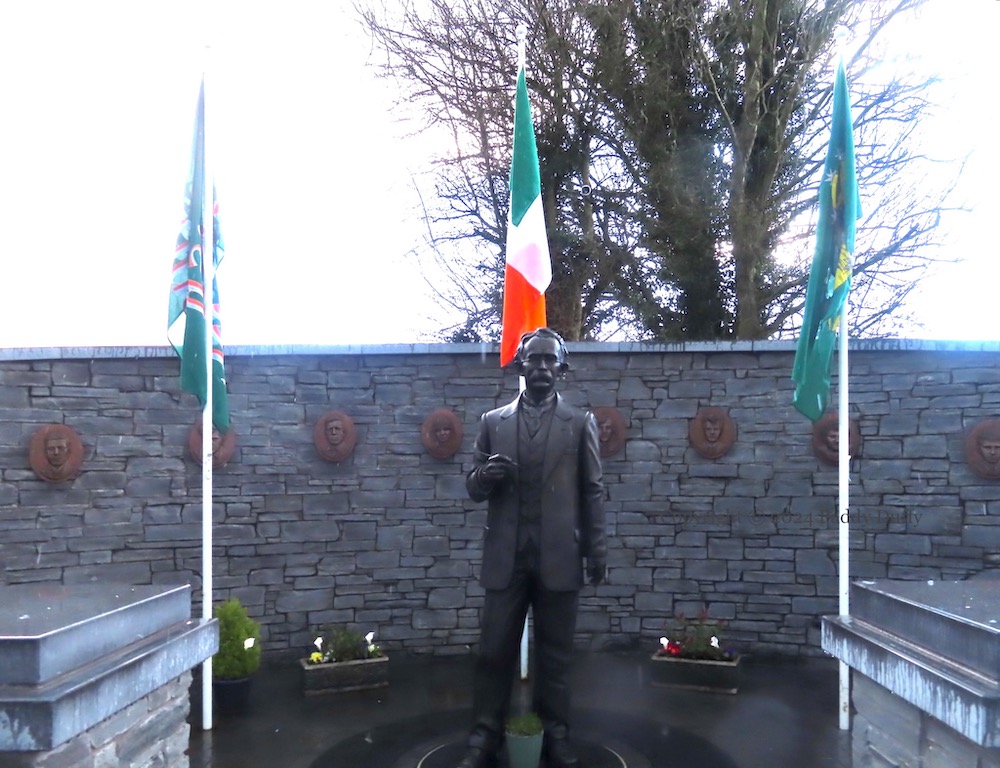
Thomas Clarke/Tomás Ó Cléırıgh (b. 1858) has a long career in Irish fenianism, including fleeing to America after firing at police (at age 20) and 15 years of hard labour for an attempted bombing in London, beginning in 1883 (DIB). He is best known for his role, along with Sean Mac Dıarmada (The Mainspring), as architect of the Easter Rising. He is particularly honoured in Dungannon, where he grew up from the age of nine onward, the last posting of his British-Army–sergeant father. This statue in the Lisnahull area was unveiled (in this location) in late November 2021 (We Are Tyrone | NI World).
The circular placard is on O’Neill Park, across the street from the Garden.
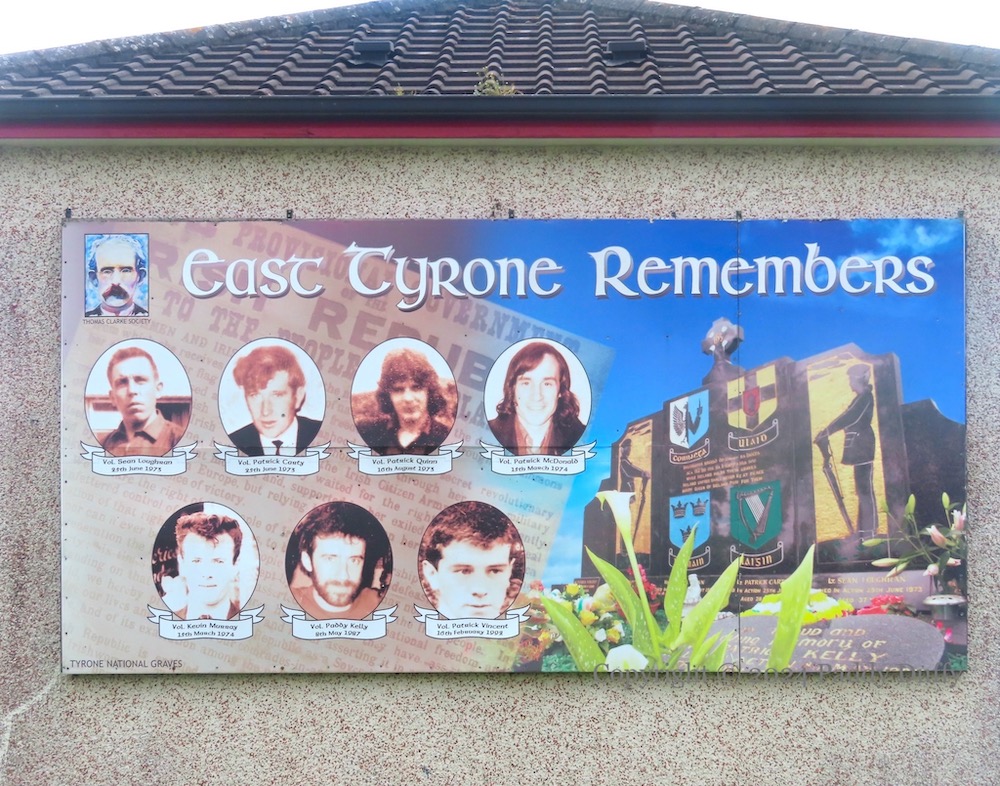
The ‘East Tyrone Remembers’ board to IRA volunteers Sean Loughran, Patrick Carty, Patrick Quinn, Patrick McDonald, Kevin Murray, Paddy Kelly, Patrick Vincent – either this one exactly or a re-print of it – is mounted periodically. It first appeared in 2010 to be replaced by the Clonoe Martyrs. It was back again in 2013 and has been in place since 2017.
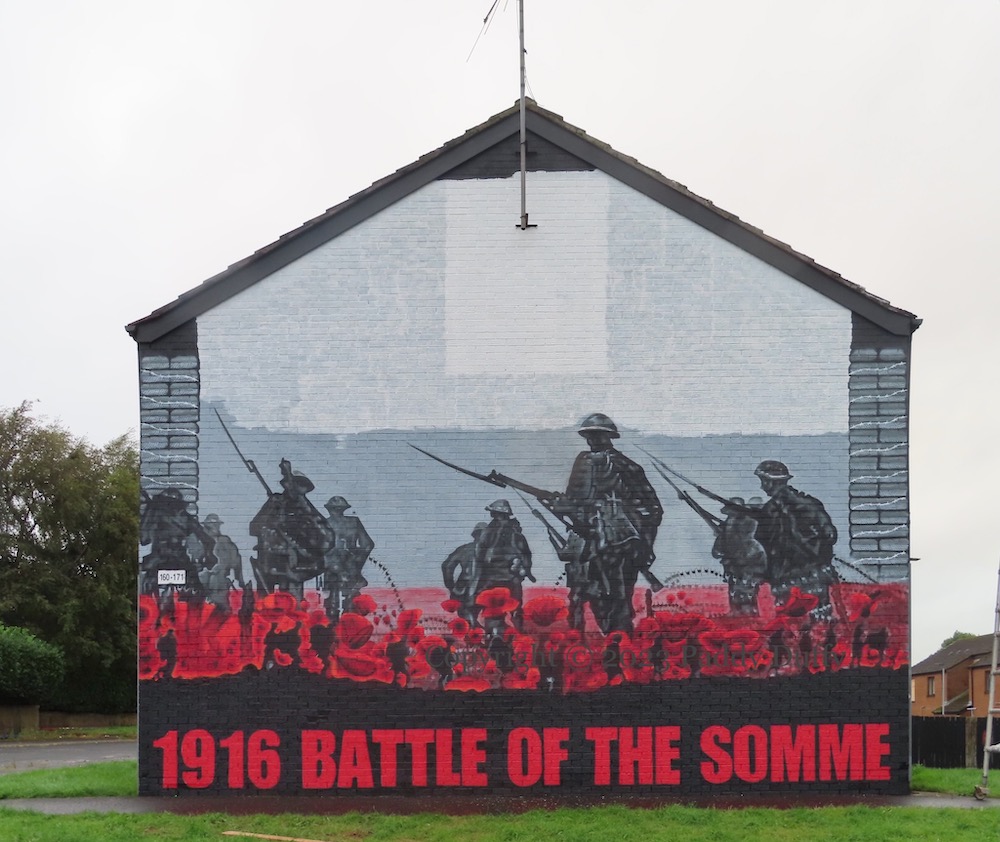
153 men of the 12th Battalion Royal Irish Rifles (which included men from Ballymena and other Central Antrim Volunteers) died on the first day of the Battle Of The Somme, July 1st, 1916, as they and the 9th Royal Irish Fusiliers attempted to take German trenches near Beaucourt railway station (Royal Irish). According to the account of the movements of the 12th Royal Irish Rifles by Des Blackadder on the Great War Forum, “they were cut down like corn before a scythe”. In all, more than 2,000 men from the 36th Division were killed that day (WP).
The new mural in Drumtara, Ballymena, was painted by Craig Gilmore, who also did the recent tribute to Elizabeth II (see The Crown) (Ballymena Guardian article on the mural, also by Blackadder). The cut-outs (in the third image) are on a wall at the bottom of the estate; the machine-gunner is unusual.
This memorial in the Coleraine diamond commemorates the six civilians who died in an IRA car-bomb explosion in Railway Road in 1973.
“In loving memory of those killed on Railway Road 12th June 1973 – never forgotten”, “Nan Davis, Elizabeth Palmer, Robert Scott // Francis Campbell, Dinah Campbell, Elizabeth Craigmile”, “What you leave behind is not what is engraved in stone but what is woven into the lives of others – Pericles”.






















 Paddy Duffy Collection