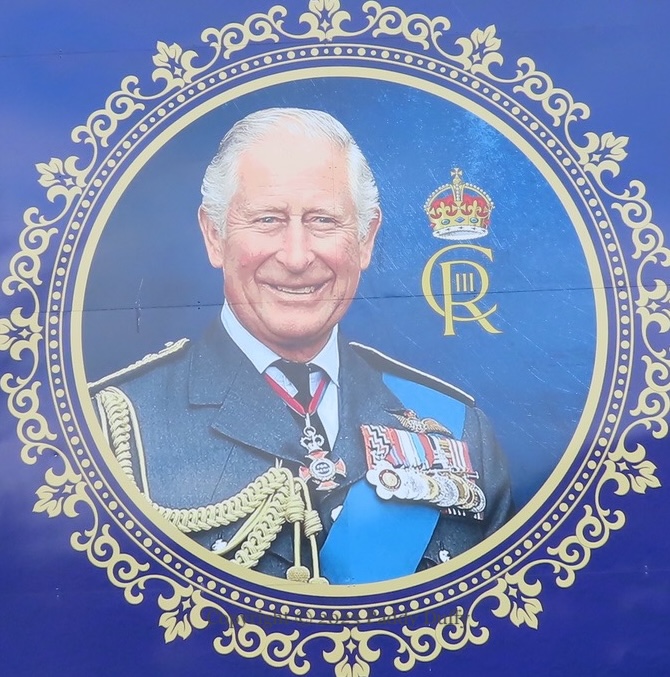
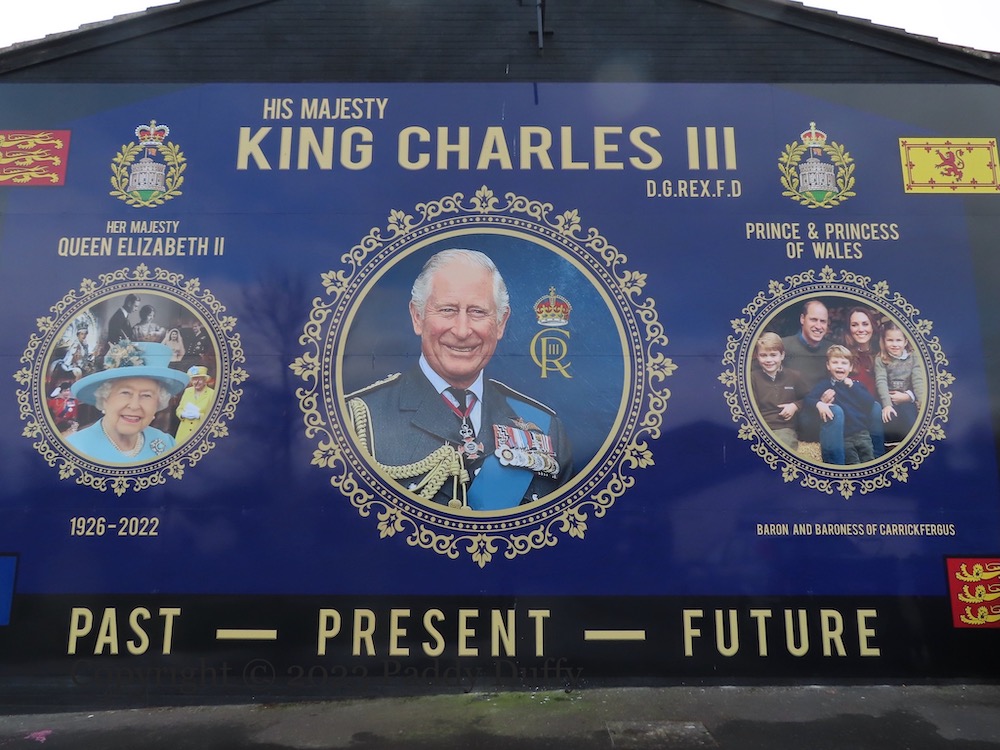
Here are two portraits of the recently crowned King Charles III in east Belfast. The image at the centre of the lower board is the standard one we have seen many times; the one above, however, appears to reproduce a slightly stylised painting or graphic.
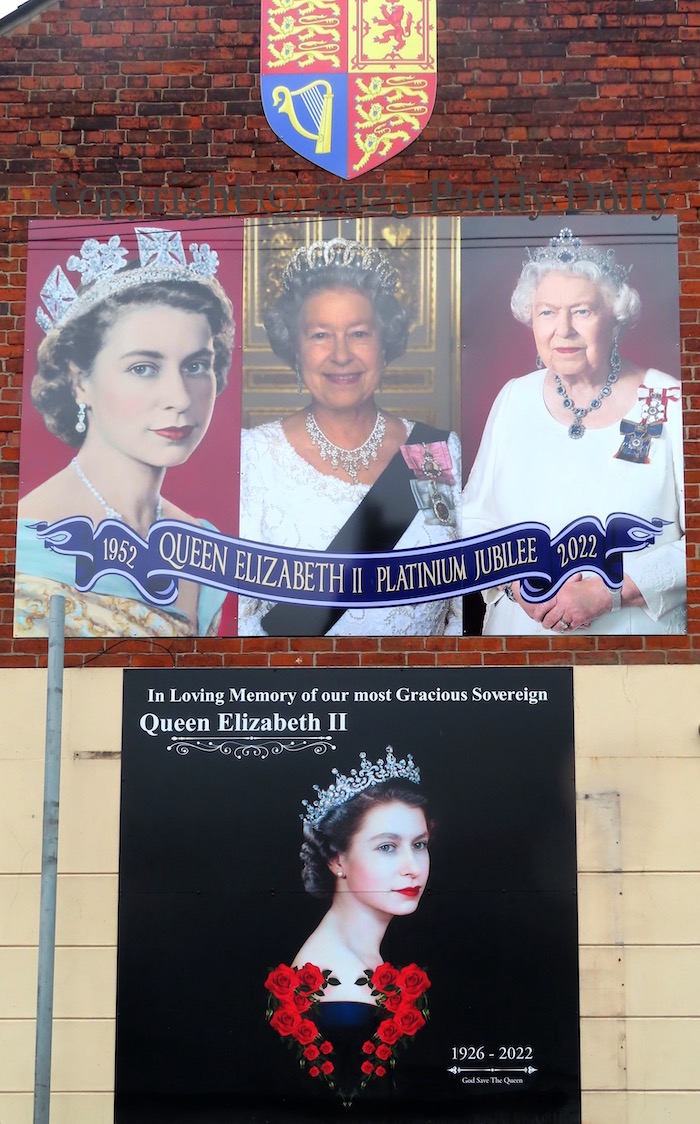
“In loving memory of our most gracious sovereign – Queen Elizabeth II 1926-2022. God save the Queen.” The platinum (70th) jubilee of Queen Elizabeth II, celebrated in June, 2022, was followed a short time later by her death, on September 8th. These two boards in Maldon Street, mark the two events.
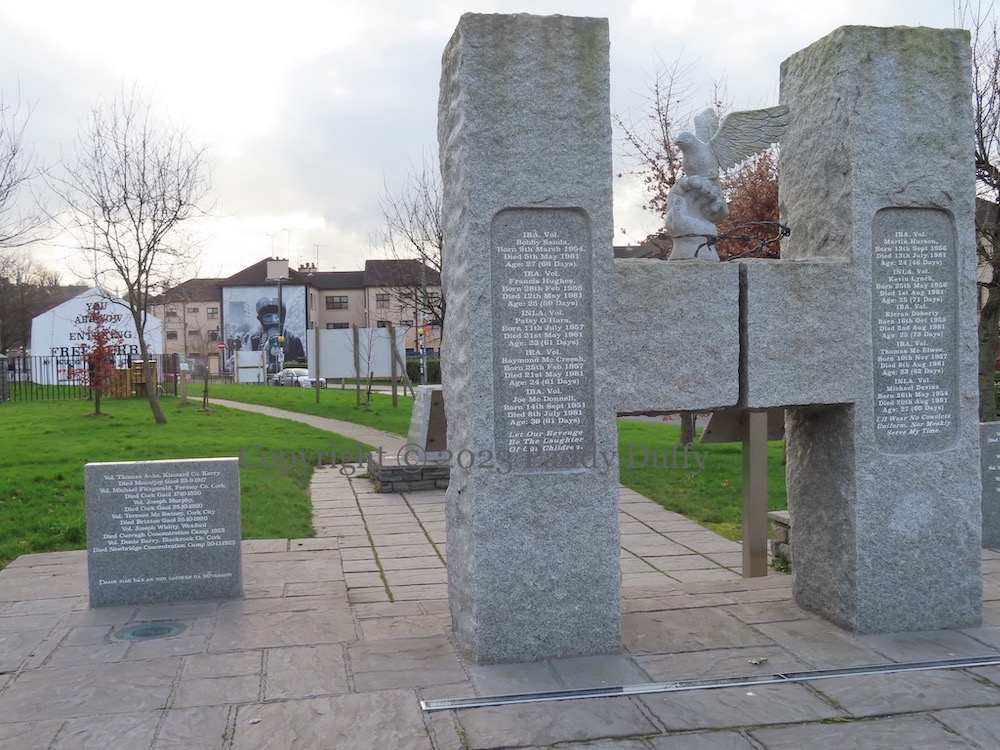
“Our revenge will be the laughter of our children” – The words of Bobby Sands are illustrated on an electrical box on the Whiterock Road, Belfast, with silhouettes of children at play in nature.
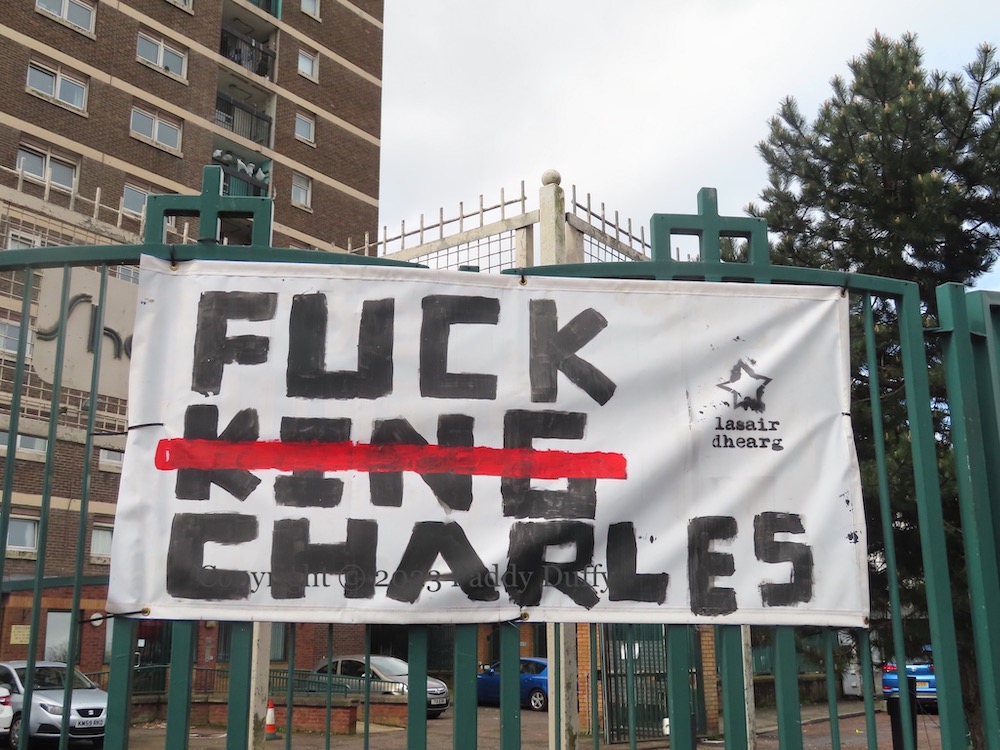
Here is another response to the coronation of King Charles last weekend: (above and last) a Lasaır Dhearg (web) tarp in north Belfast reading “Fuck King Charles”.
A traffic cone provides a makeshift flower holder in front of this board Clara Street board: “Grove Community Group [Baptist Church (web | Fb)] mourns the passing of Queen Elizabeth II 1926-2022″. Charter NI has images from last September of more bouquets and a piper at the board (tw).
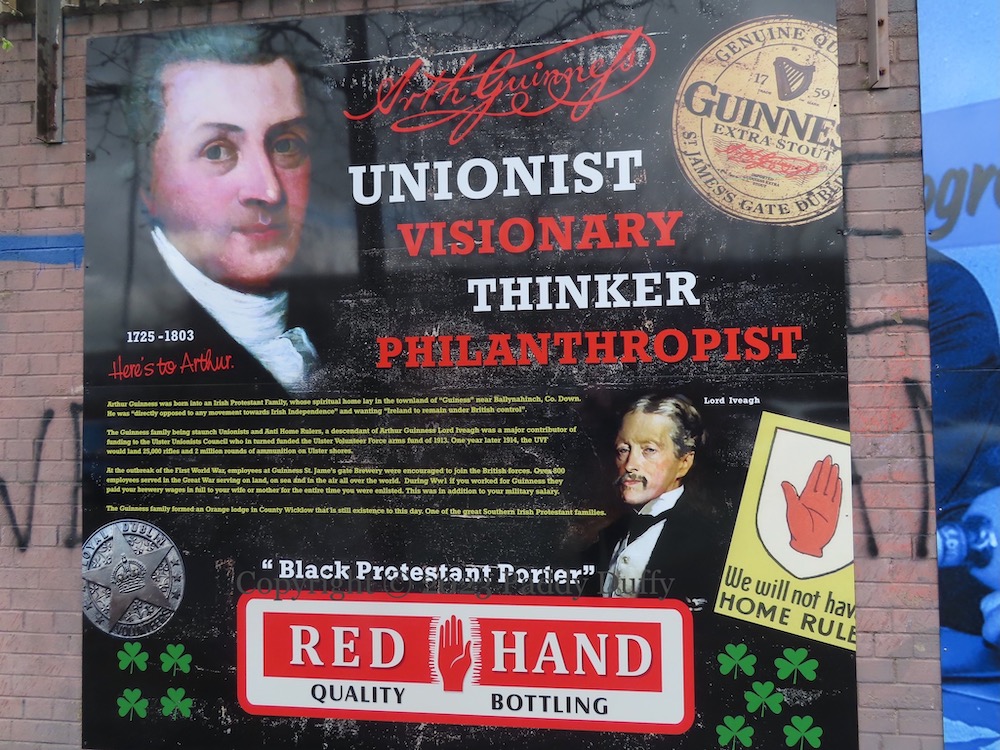
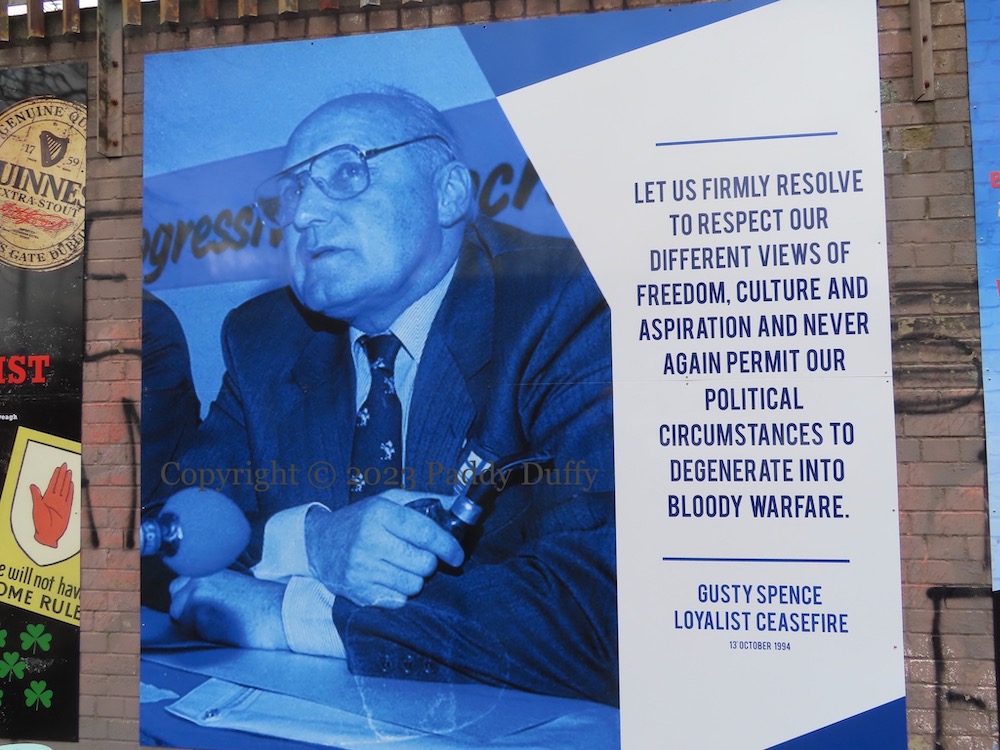
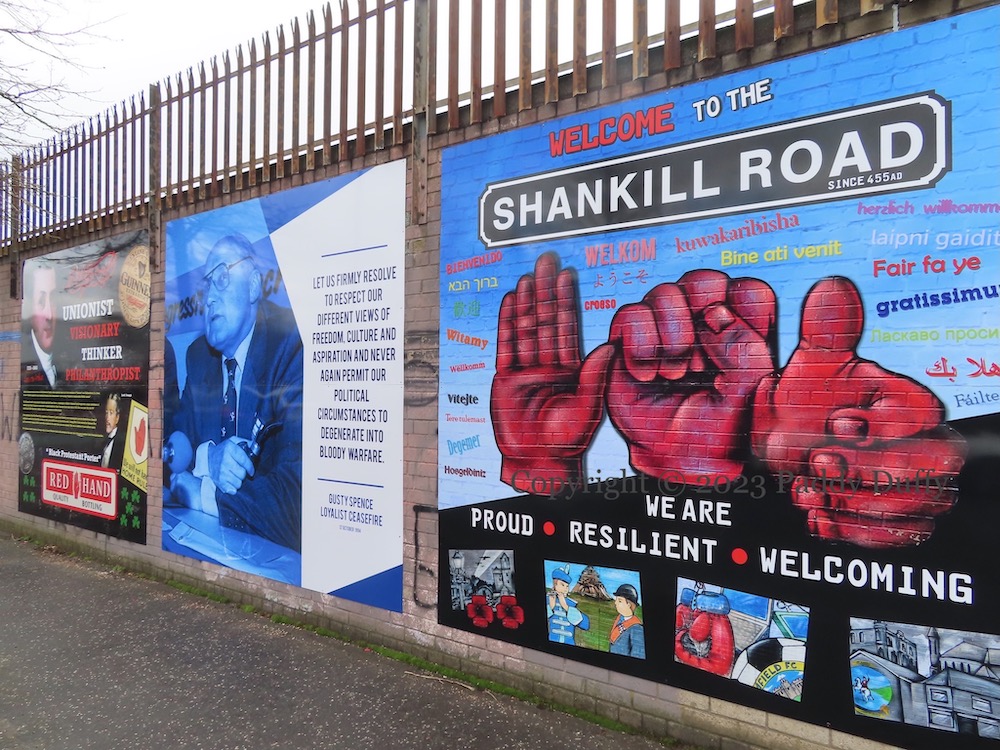
Here are three new pieces above the security gates on Northumberland Street, coving over the “Deserted! Well, We Can Stand Alone” graffiti in the last remaining spot on the wall without a mural. From left to right:
Arthur Guinness: “Black Protestant Porter” as a description of Guinness stems from Arthur Guinness’s opposition to the 1798 rebellion (Indo). The Union Star (newspaper in Belfast – A Planet Of Light And Heat) called Guinness a spy and advised that “United Irishmen will be cautious of dealing with any publican who sells his drink.” (An Phoblacht).
Gusty Spence, a former commander of the UVF, read out the ceasefire statement of the “Combined Loyalist Military Command” (UVF, RHC, and UDA): “Let us firmly resolve to respect our different views of freedom, culture and aspiration and never again permit our political circumstances to degenerate into bloody warfare – Gusty Spence, loyalist ceasefire [statement in full], 13 October, 1994.”
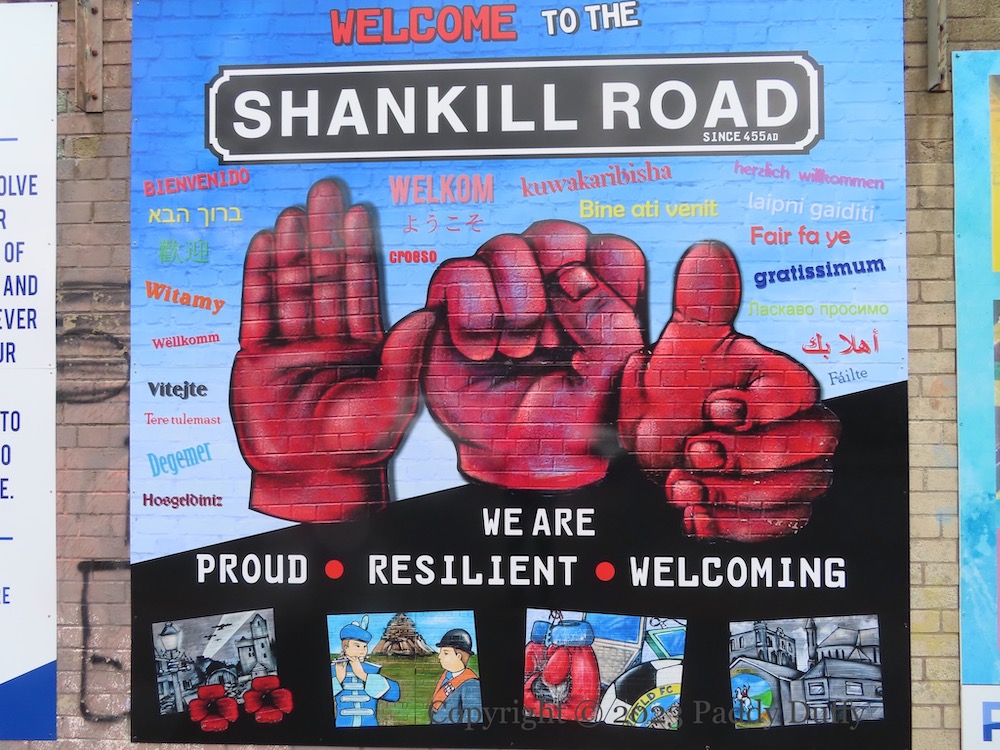
“Welcome To The Shankill Road – we are proud, resilient, welcoming”: The original ‘three hands’ was on Northumberland Street, just above this spot – see Proud, Defiant, Welcoming – which was then reproduced in reduced form in Gardiner Street – see Welcome To The Shankill Road.
This is the most conciliatory statement ever made by loyalism and the decision to put it on Northumberland Street, especially in the context of the internationally famous and associated-with-Ireland Guinness and the “welcome” mural, suggests that the trio is directed at tourists rather than locals.
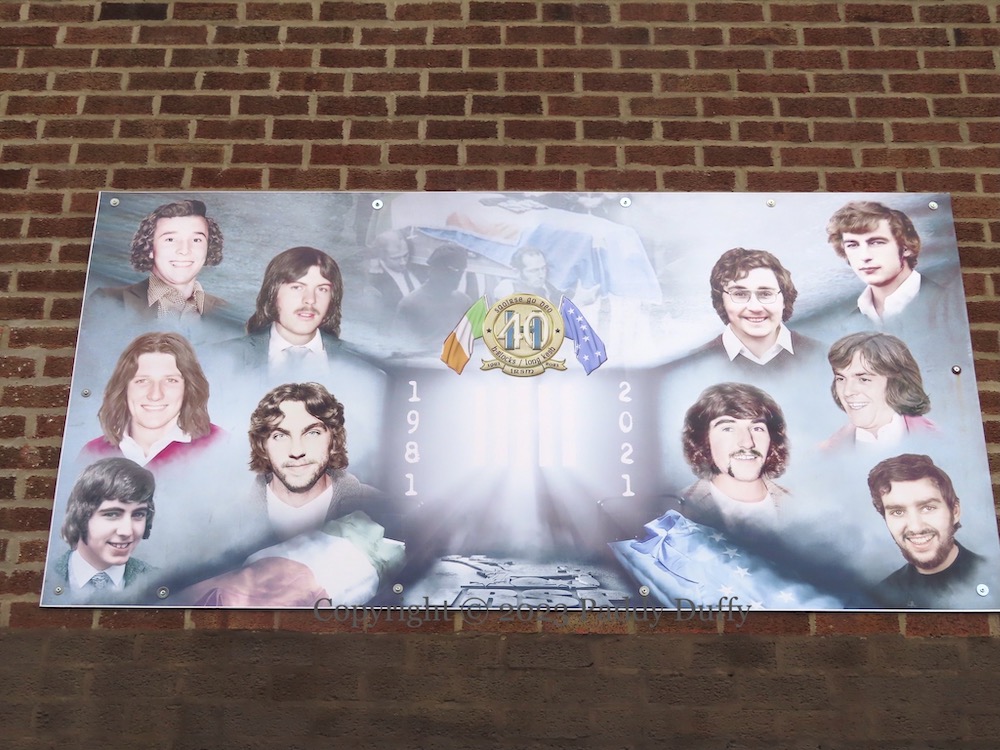
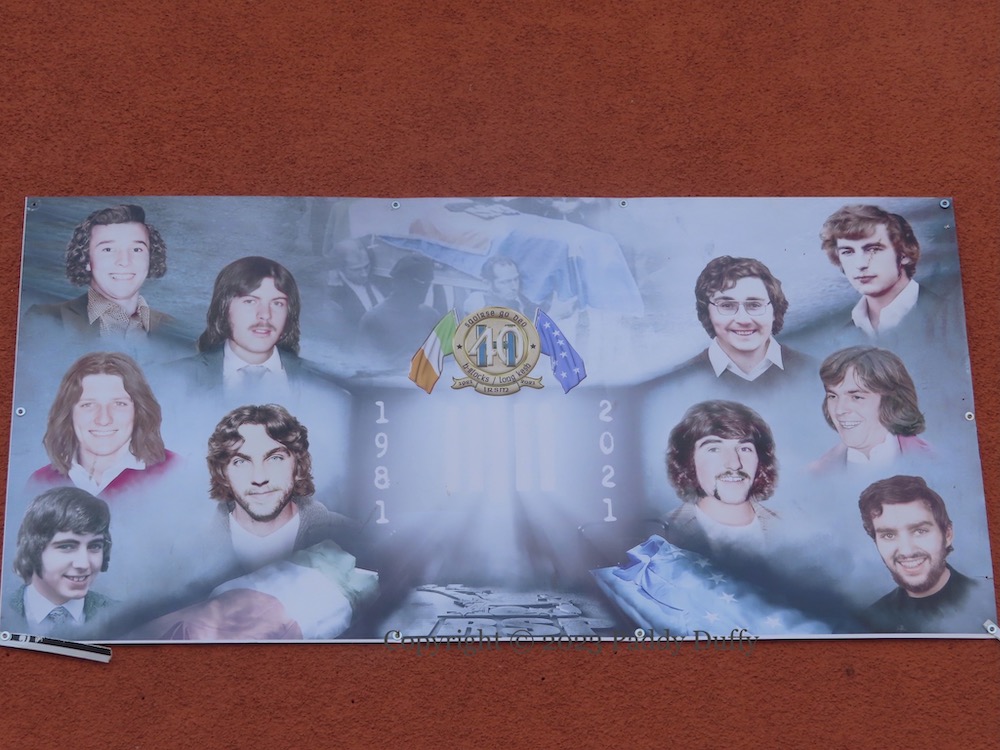
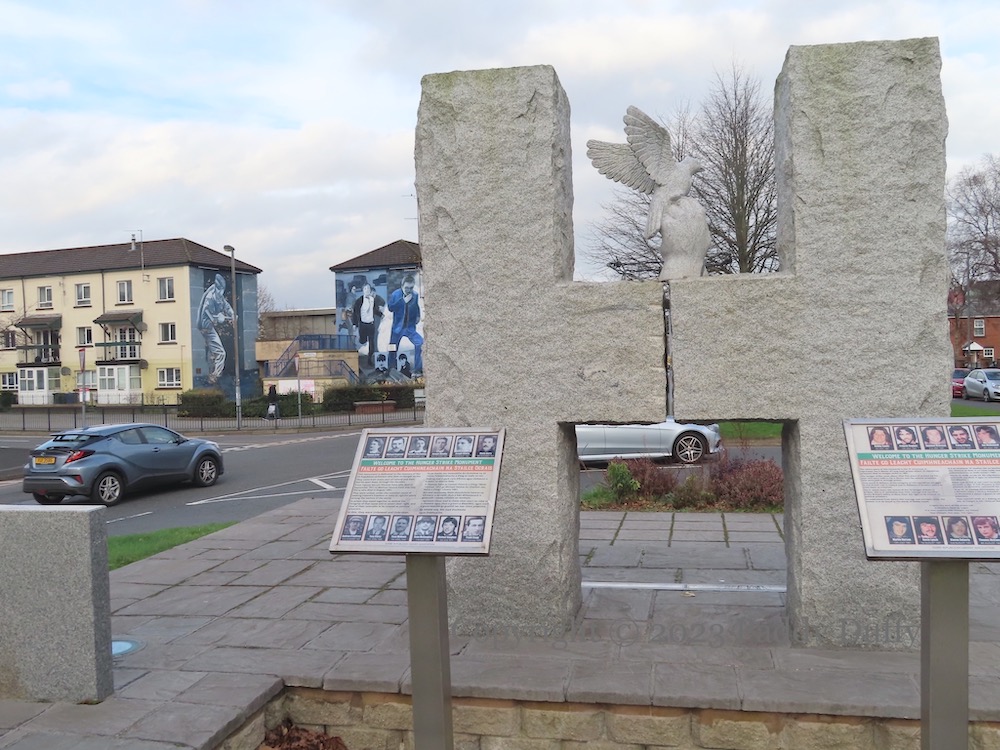
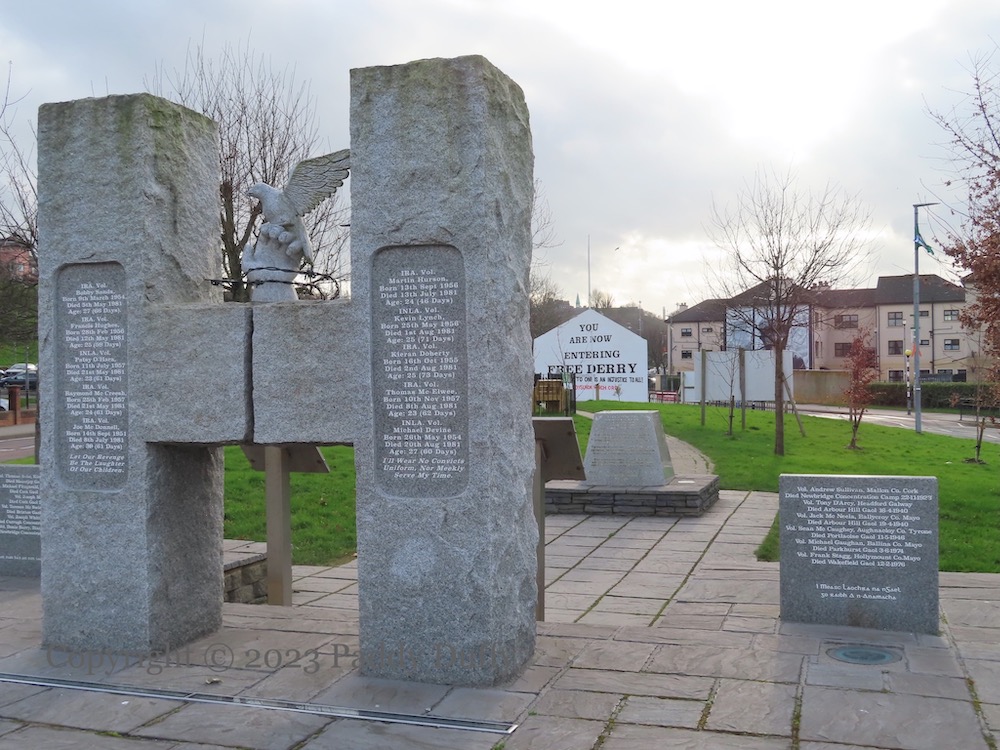
“Saoırse go deo.” INLA volunteer Kevin Lynch went on hunger strike on May 23rd, 1981. He would die 71 days later, on August 1st. His funeral is depicted in the top part of this IRSP/IRSM board commemorating the 40th anniversary of the 1981 hunger-strikes. The Tricolour (for the IRA) and Starry Plough (for the INLA) are used as blankets on the prison beds.
Four generations of UK royalty: the previous Queen Elizabeth II, the current King Charles III, the heir apparent William, baron Carrickfergus – here written as “baron of Carrickfergus” – (also the prince of Wales), and his nine-year-old son George. Charles’s coronation will be on May 6th, 2023.
“Queen Elizabeth II 1926-2022.” This memorial board in Stevenson Park, Londonderry, shows Queen Elizabeth around the time of her 1952 accession, perhaps by Dorothy Wilding (left and right) and (in the centre) a 2004 version of the 3-D portrait by Chris Levine and Rob Munday dubbed “Equanimity” (Sotheby’s).





 Paddy Duffy Collection