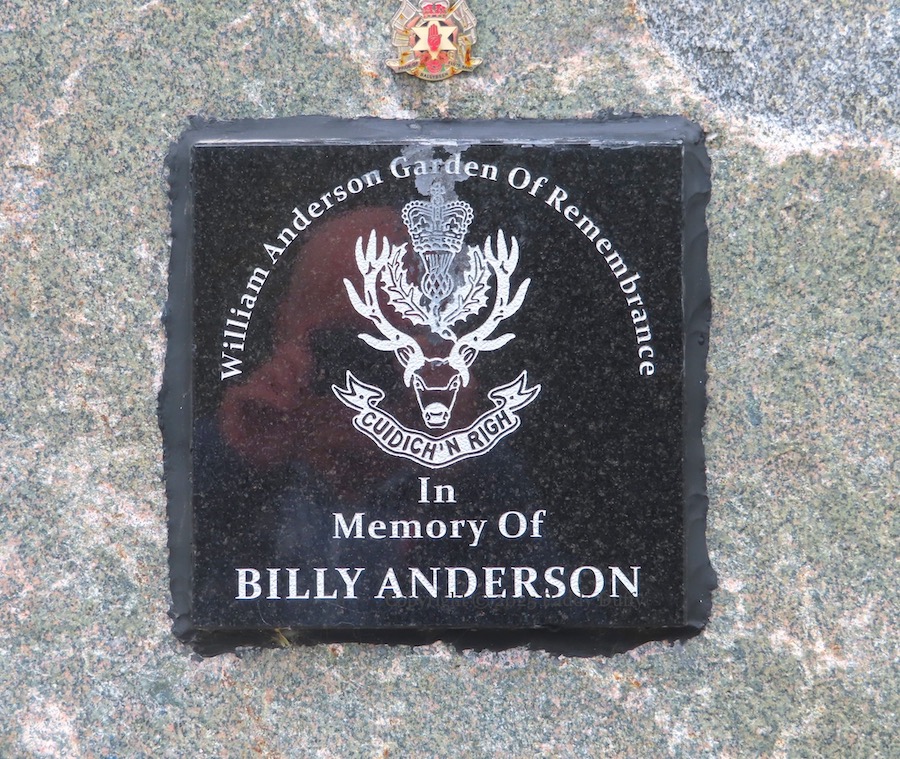
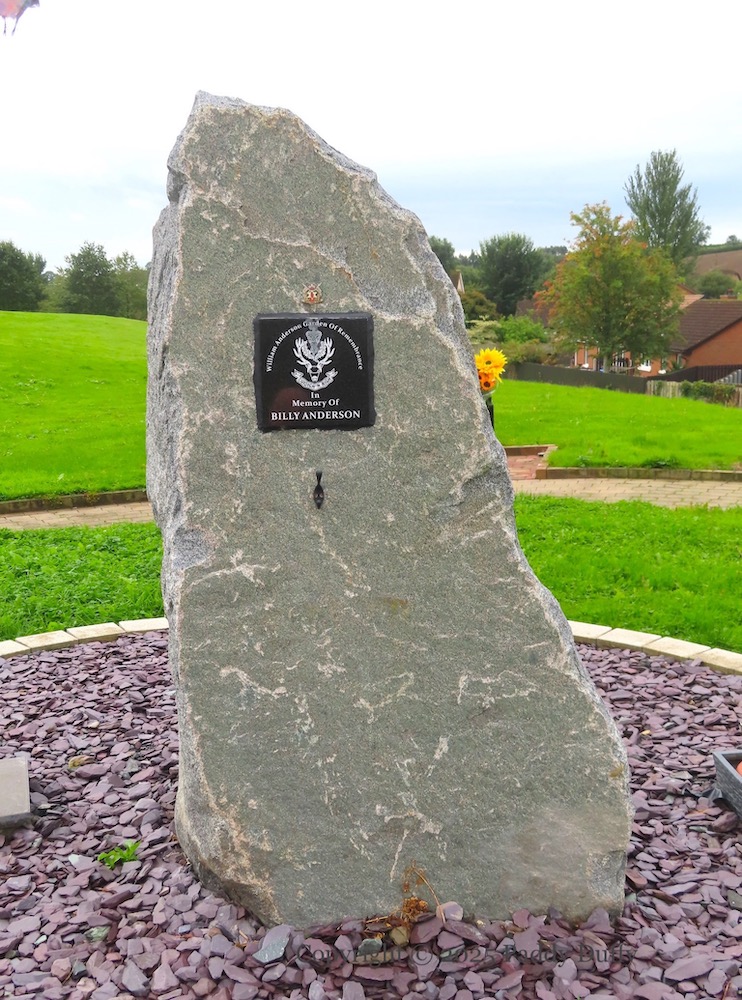
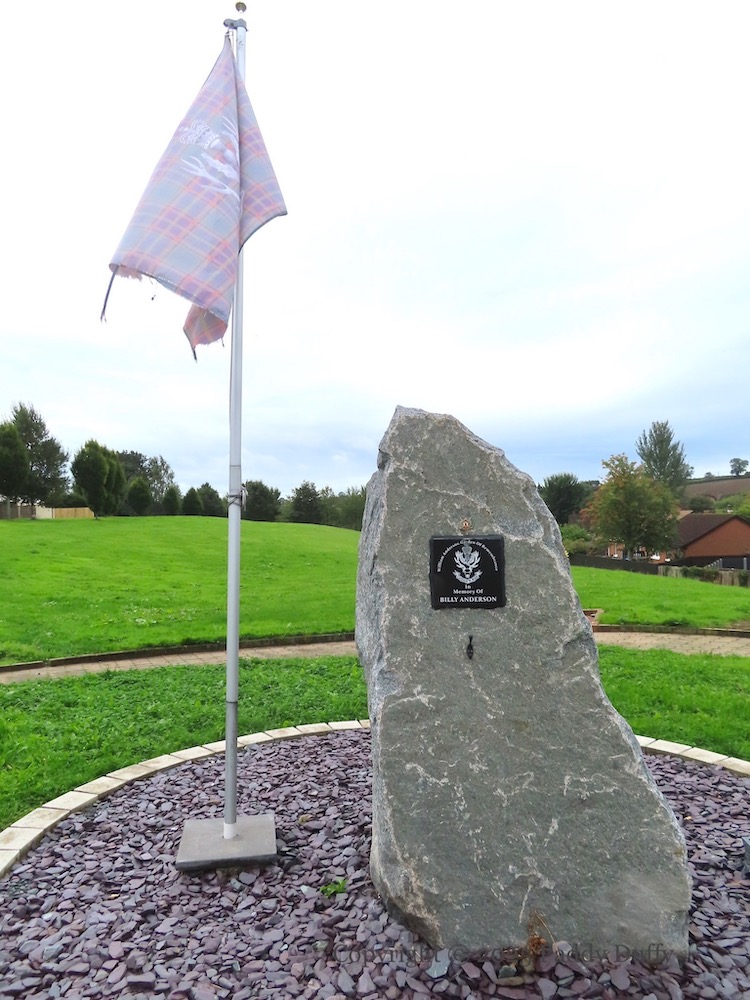
“William Anderson Garden Of Remembrance – In memory of Billy Anderson”. Billy “The Brick” Anderson was a member of the Pride Of Ballybeen flute band (Fb) – there is a small version of the band’s emblem above the black plaque in the image above.
The new Rangers supporters club in Donegall Pass is named after Alex “Doddie” MacDonald, who played midfield for Rangers from 1968 to 1980, which included the team’s victory in the European Cup-Winners’ Cup in 1972. (A full biography can be found on the Rangers web site.)
The new board announces the “Alex MacDonald Loyal RSC (Donegall Pass)” and the photographs show various high-points in MacDonald’s career: “Signed for Rangers 19 November 1968”, “Hampden Park on 25 October 1975 when MacDonald scored the winner in the Old Firm League Cup final”, “Rangers hall of fame”.
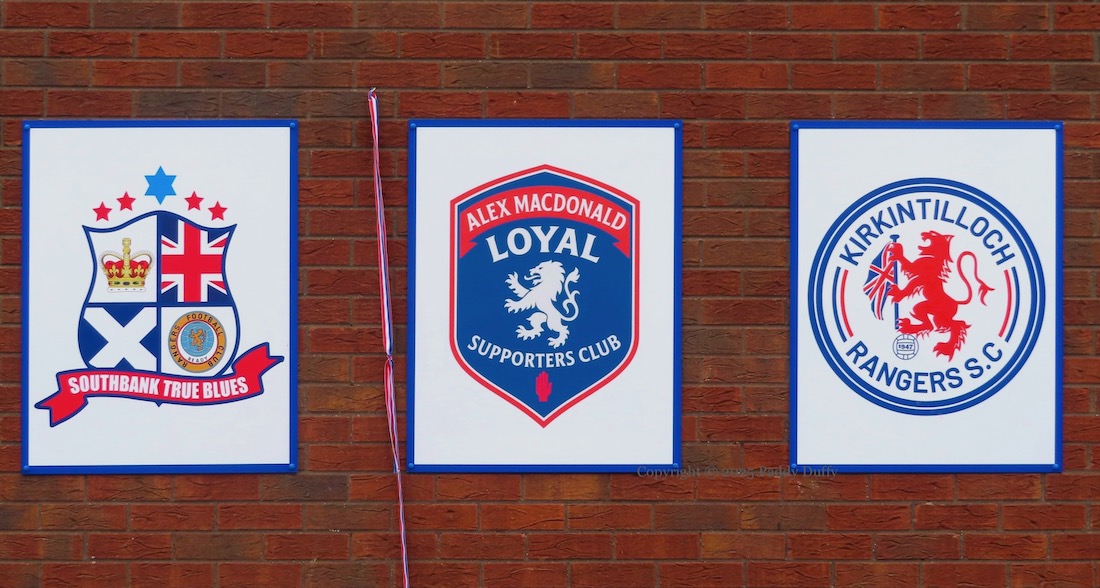
Also included beneath the main board are the crests of “Southbank True Blues” and “Kirkintilloch RSC” (Fb).
Pine Street, Donegall Pass, south Belfast. Launched on September 13th – Facebook.
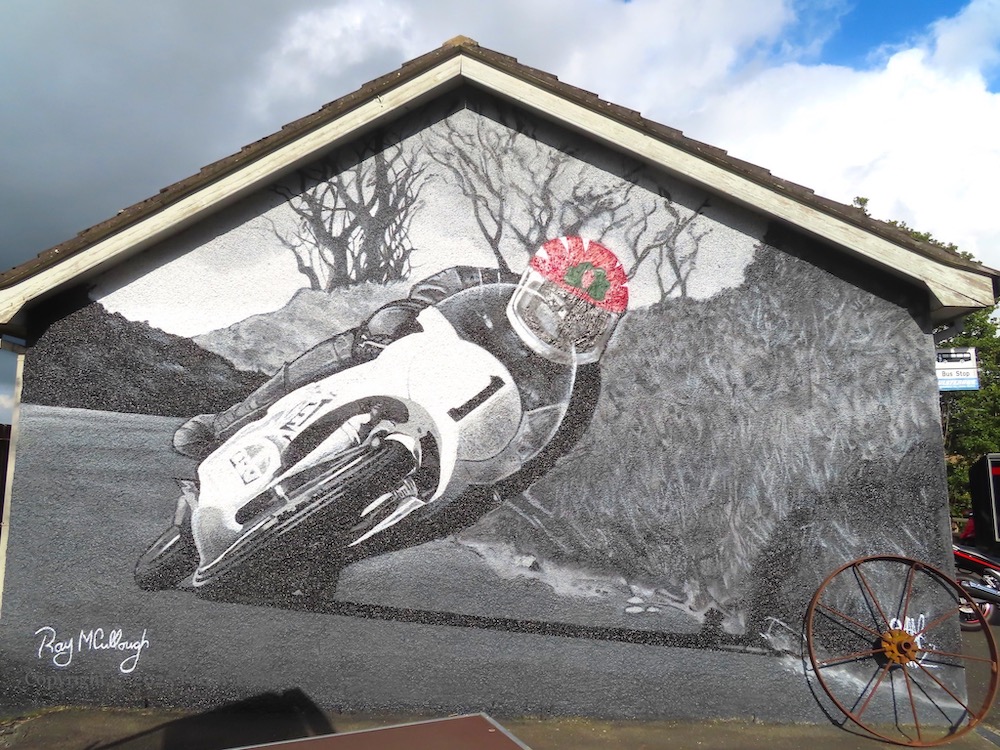
Ray McCullough “the Dromara destroyer” rode 250 and 350cc bikes during the late 60s and 1970s, winning 175 races (News Letter), including seven Ulster Cups (Devitt). For McCullough’s career as a motorbike engineer, see News Letter | NI World.
This new mural is in grey-scale except for McCullough’s distinctive red helmet with a green shamrock and red hand. Painted by JMK (ig); the photo reproduced can be seen on the Triumph Motorcycle forum.
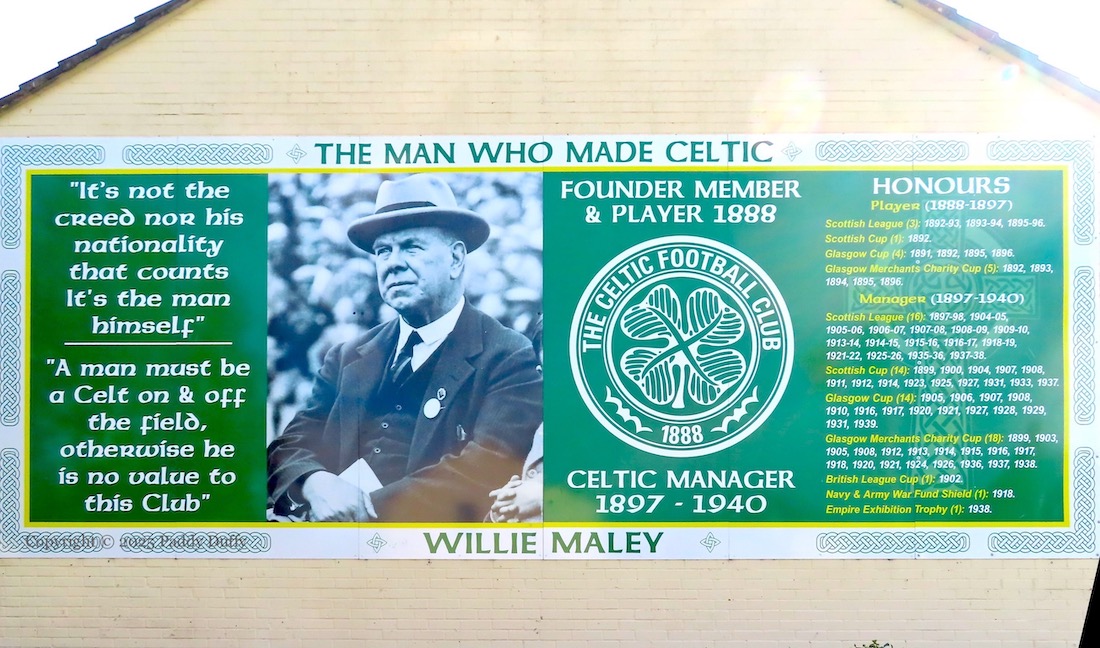
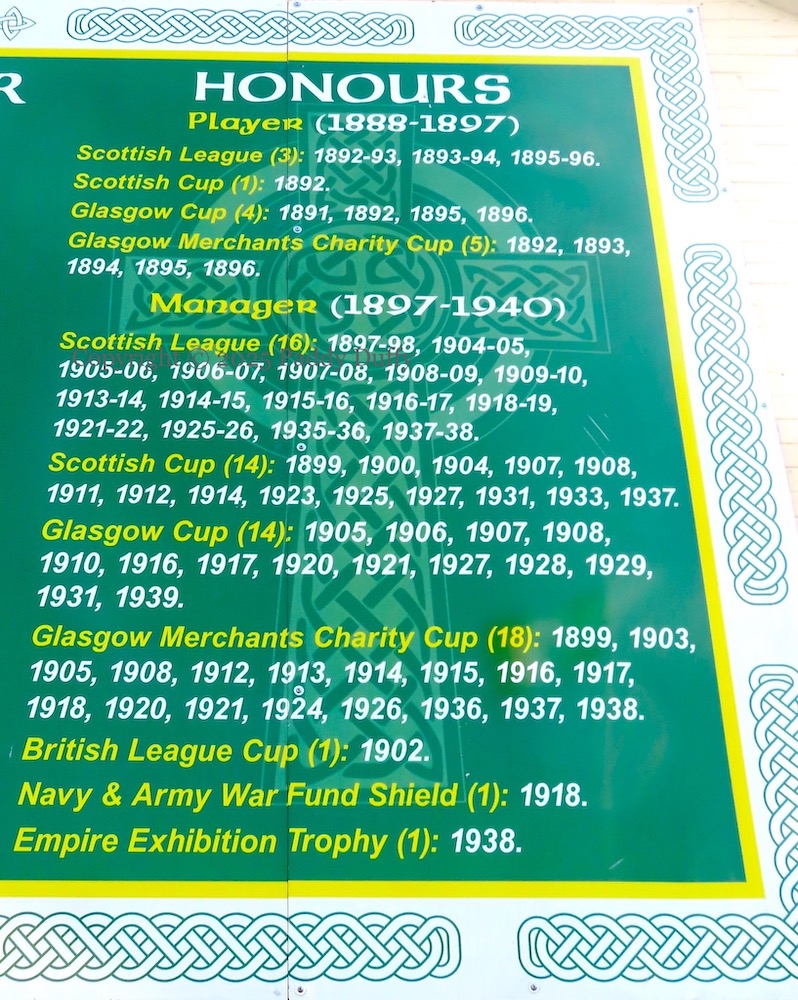
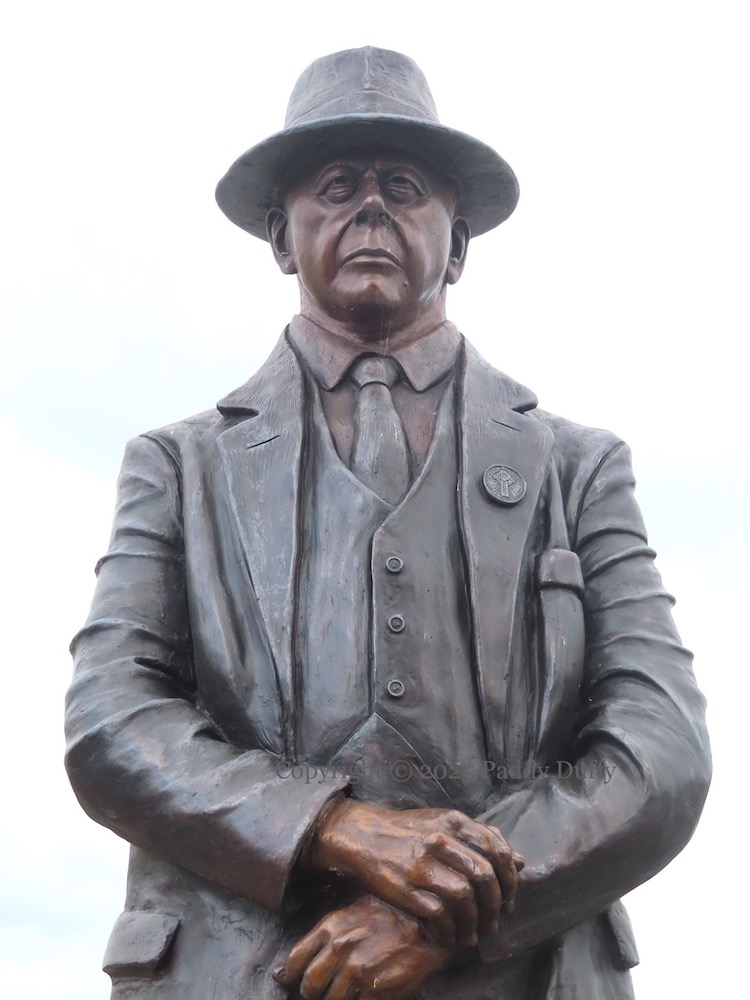
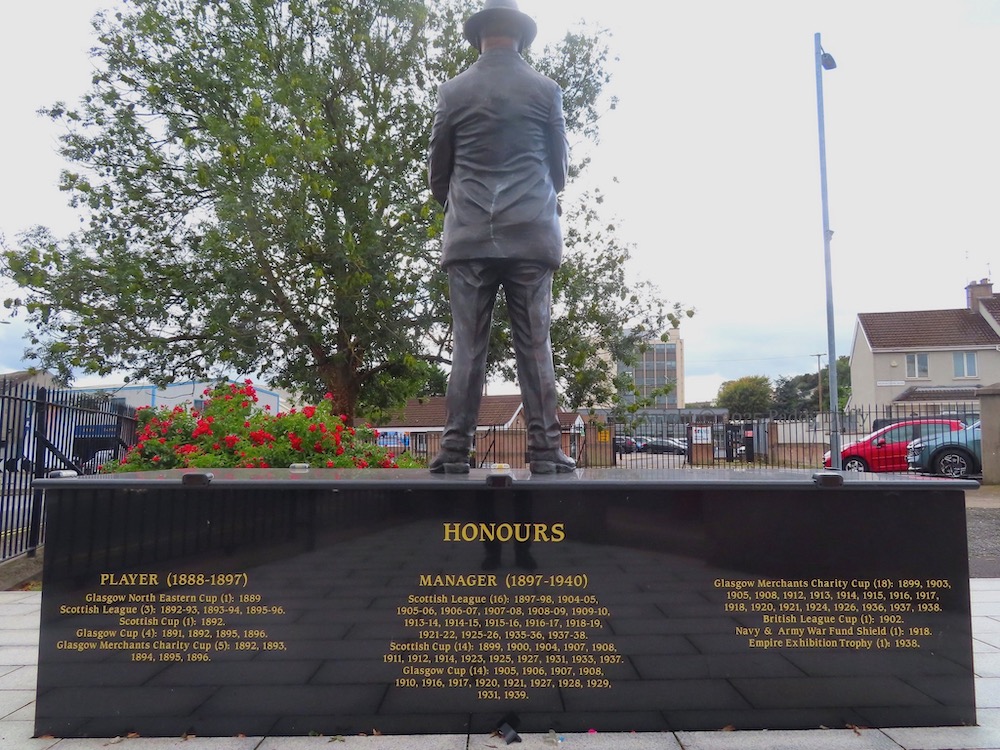
Here are three pieces (two boards and a statue) celebrating Willie Maley, who was born in Newry barracks in 1868 – his father was a sergeant in the 21st Regiment Of Foot. The following year the family moved to Scotland. Maley played in midfield for Celtic and made two international appearances for Scotland. He became manager in 1897 at the age of 29 and steered the club to sixteen league championships and fourteen Scottish Cups.
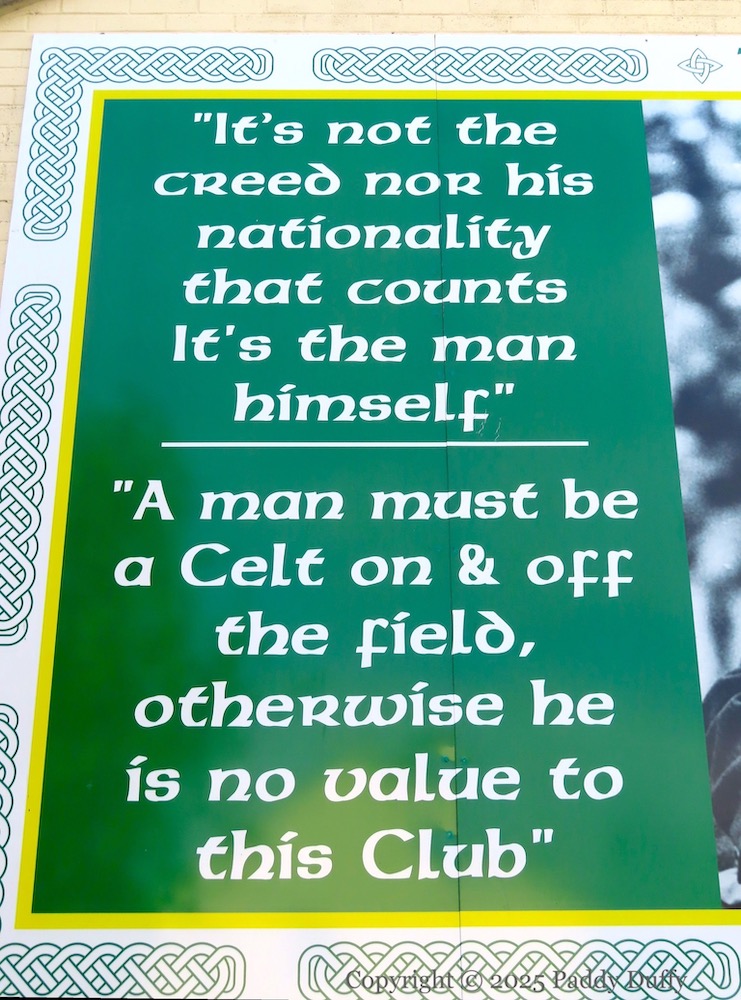
The board (above) in Mourne View Park (Mourne View is built on the site of the infantry barracks – the old walls are still standing): “The man who made Celtic – Willie Maley – founder member & player 1888, Celtic manager 1897-1940.” “It’s not the creed nor his nationality that counts. It’s the man himself.” “A man must be a Celt on & off the field, otherwise he is no value to this Club.”
The board is at the bottom of Mourne View Park in Erskine Street, on the south side of the barracks: “The Celtic vision was born here. William Patrick Maley born here 25th April 1868, the military barracks, Newry, died 2nd April, 1958, Glasgow.” “My love for Celtic has been a craze, without it my experience would be empty indeed.”
The statue is at the junction of Camlough Road and Monaghan Row and was launched in 2023 (Newry.ie): “”Mr. Celtic” William Patrick Maley. 43 years as Glasgow Celtic’s first ever manager, winning 19 league titles & over 40 other trophies as player/manager. “It’s not the creed nor his nationality that counts. It’s the man himself.” Born in Newry 25th April 1868. Glasgow Celtic fans will always fondly remember Mr Willie Maley.”
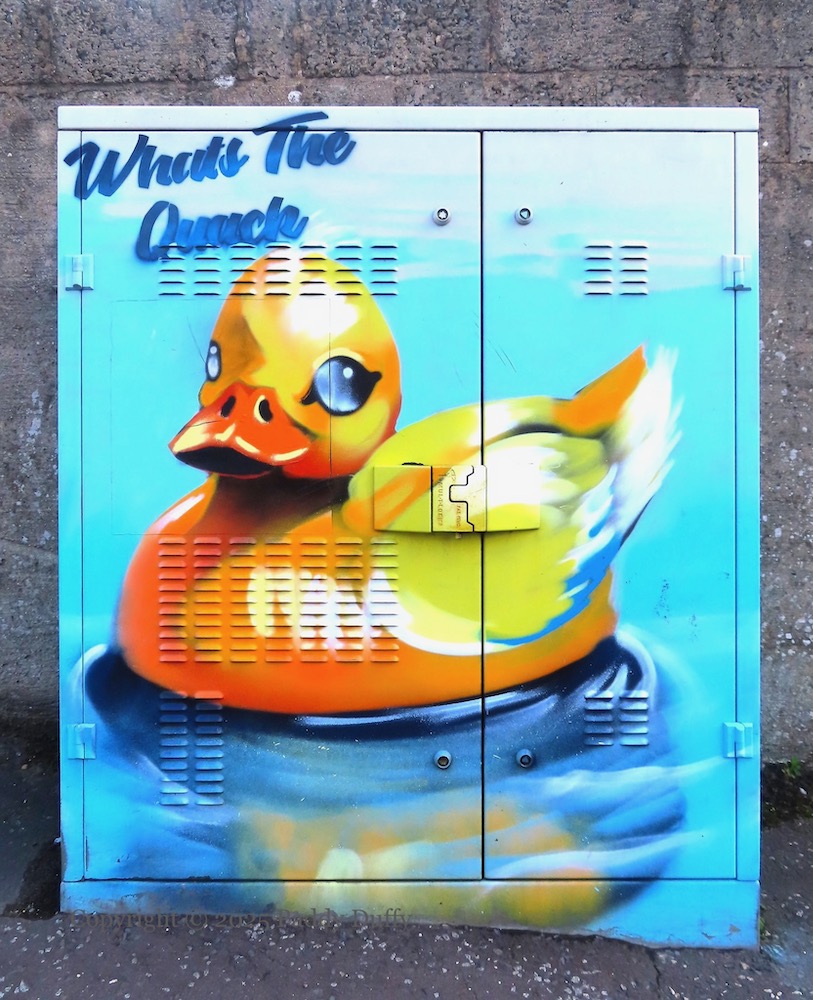
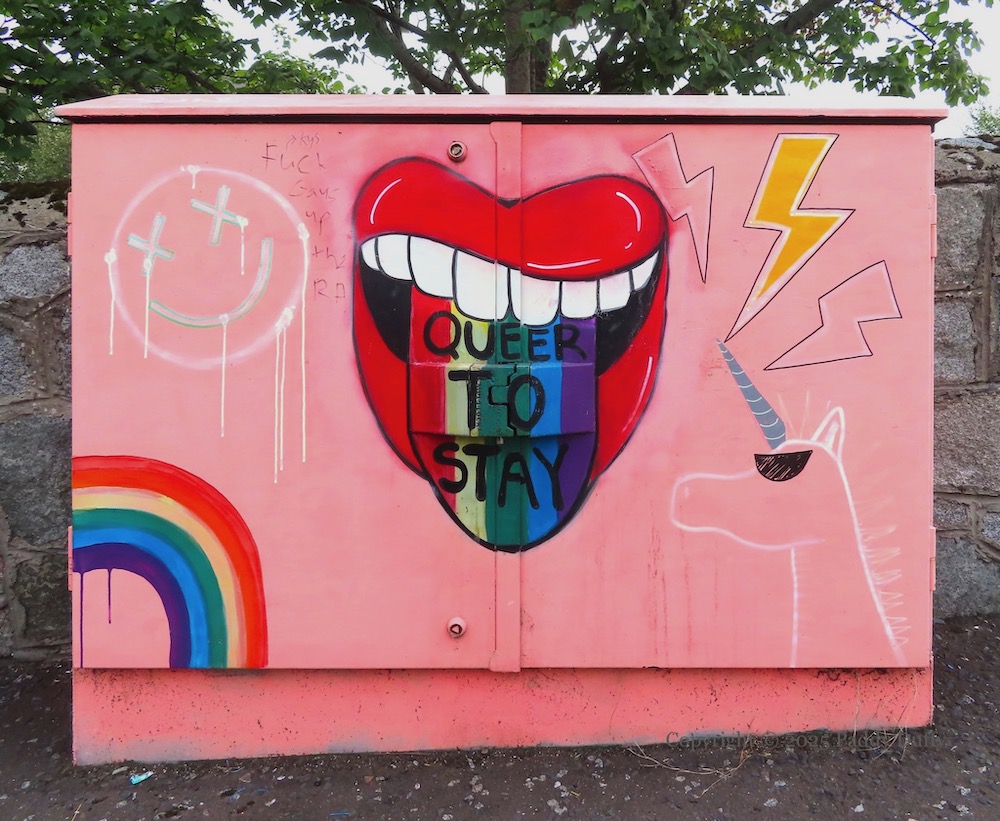
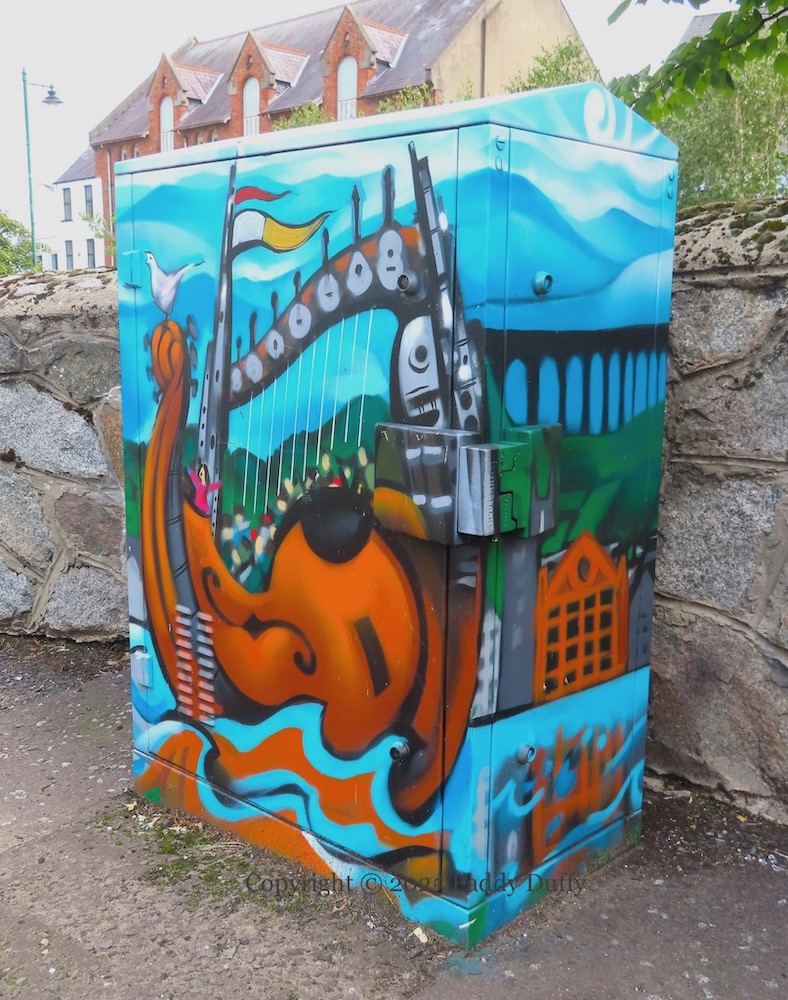
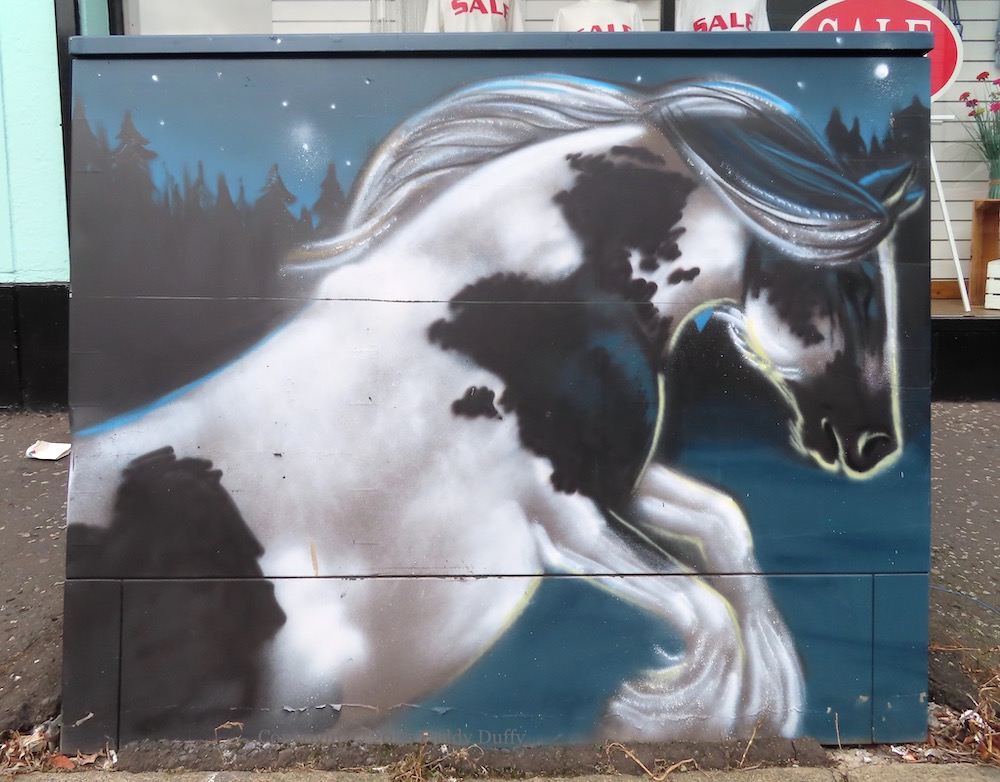
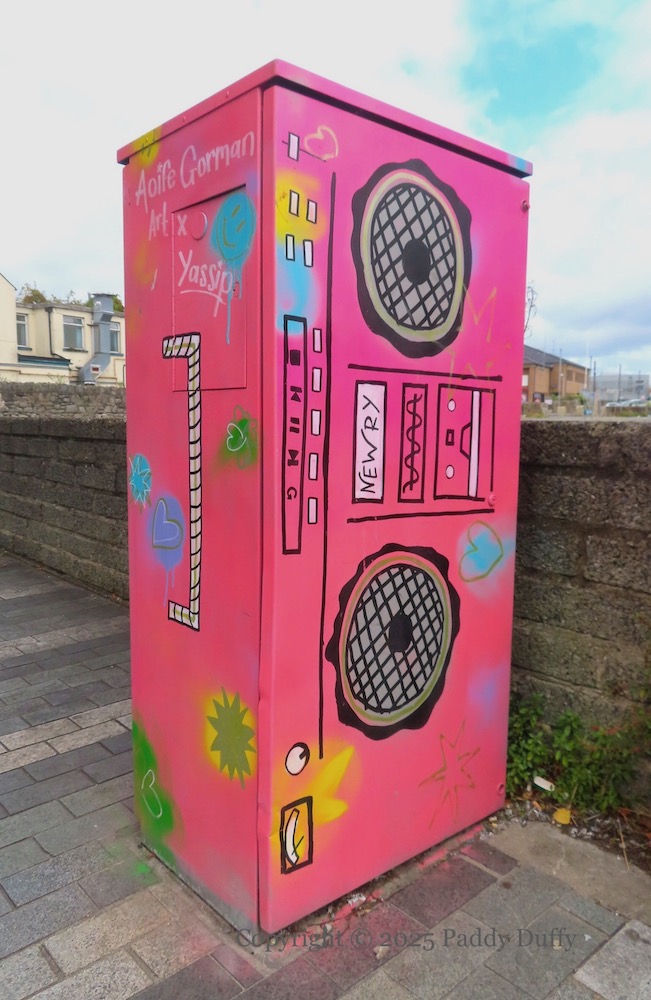
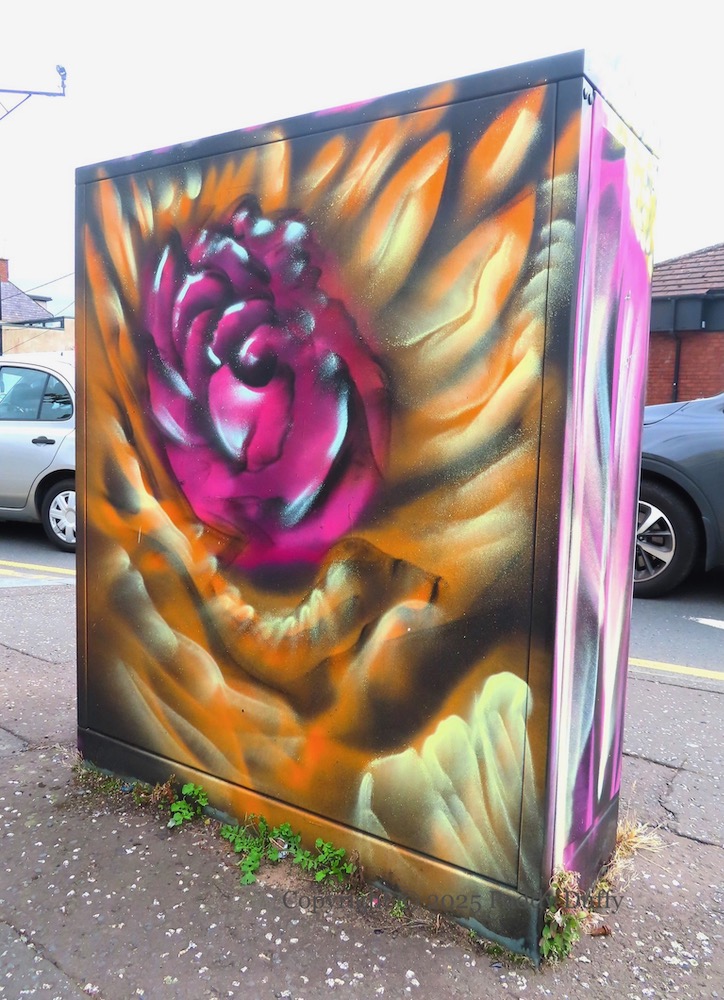
This is a second gallery of just some of the electrical boxes that have been painted in Newry in recent years, particularly 2024’s ‘Street Dreams’ initiative (web). (See previously Street Dreams.)
“What’s the quack?” and “Pure Class” are by Visual Waste (web), the boat made of harp and fiddle is by JMK (ig), the purple face, the covered wagon, and the draft-horse are by Friz (web), “looking at the stars” and “Queer to stay” are by FrankieB (ig), “Oh happy day” is related to the Choir Studio (Fb), and the boombox is by Aoife Gorman (ig).
This board in Donegall Pass mashes together not only Linfield and Rangers, but a Union Flag and Ulster Banner, and soccer with WWI soldiers making their way through barbed wire.
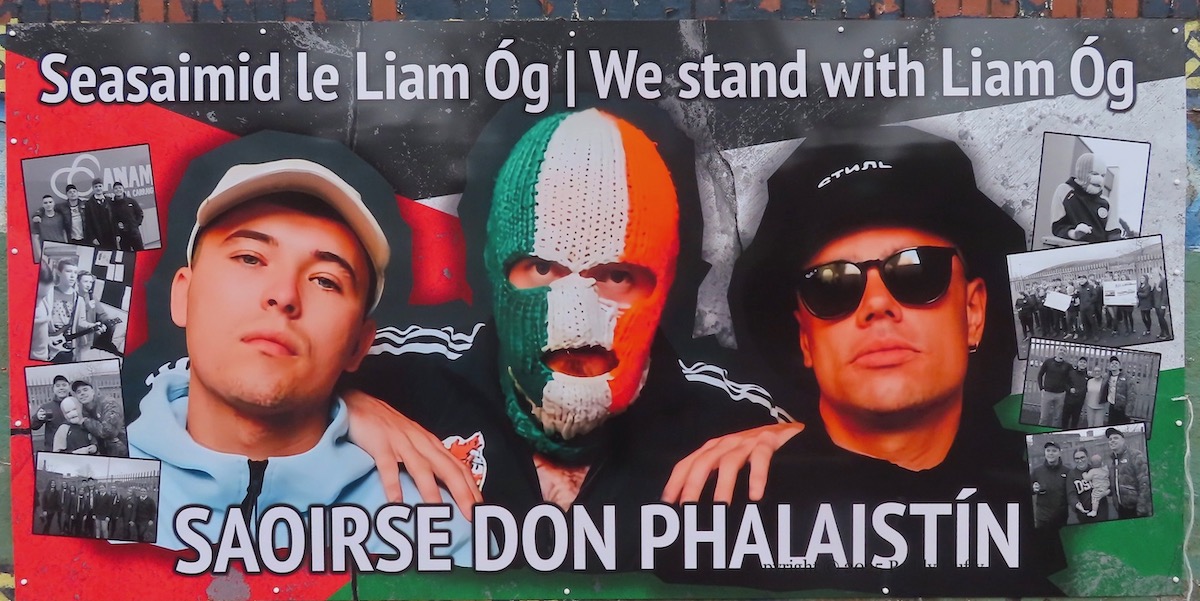
“We stand with Lıam Óg”, that is Lıam Óg Ó hAnnaıdh (on the left of the image above), a.k.a. Mo Chara, a member of the rap group Kneecap who appeared in court (in London) on Wednesday August 20th on “terrorism” charges and was bailed for a further month while the judge rules on a technical issue about whether the trial can go forward (BBC). (See previously The Magic Within and Seasaımıd Le Kneecap.)
The night before (the 19th) this board featuring images of the band-members and the band in its early days was unveiled on the Whiterock Road. (Video of the launch can be found on the Glór Na Móna instagram account.)
In the background is a Palestinian flag and “Saoırse don Phalaıstín” [Freedom for Palestine] is written along the bottom.
The Sergeant Lindsay Mooney Memorial Flute Band was formed in 1973 after the St. Patrick’s day death of Lindsay Mooney, a UDA member killed by the premature explosion of a bomb near Lifford, County Donegal (Sutton). The band was not in operation between 1993 and 2013 (NI World) but re-formed some time around 2021. This new piece replaces the faded board seen in 2023’s In A Foreign Land.
“‘Nothing great and durable can be created without the presence of an elite’ – SLMMFB” with a list of battalions from the Londonderry And North Antrim brigade of the UDA: Londonderry, Coleraine, Ballymoney, Ballymena, Bushmills, and “South Londonderry & East Tyrone”.
The quotation (“Nothing great and durable …”) seems to be a UDA creation; it has been used in other UDA murals in east Belfast (T00245) and Larne (J1611/J2039).
Kneecap member Mo Chara (Lıam Óg Ó hAnnaıdh) appeared in court (in London) on Wednesday on terrorism charges and was bailed for a further month while the judge rules on a technical issue about whether the trial can go forward (BBC). (See previously The Magic Within.)
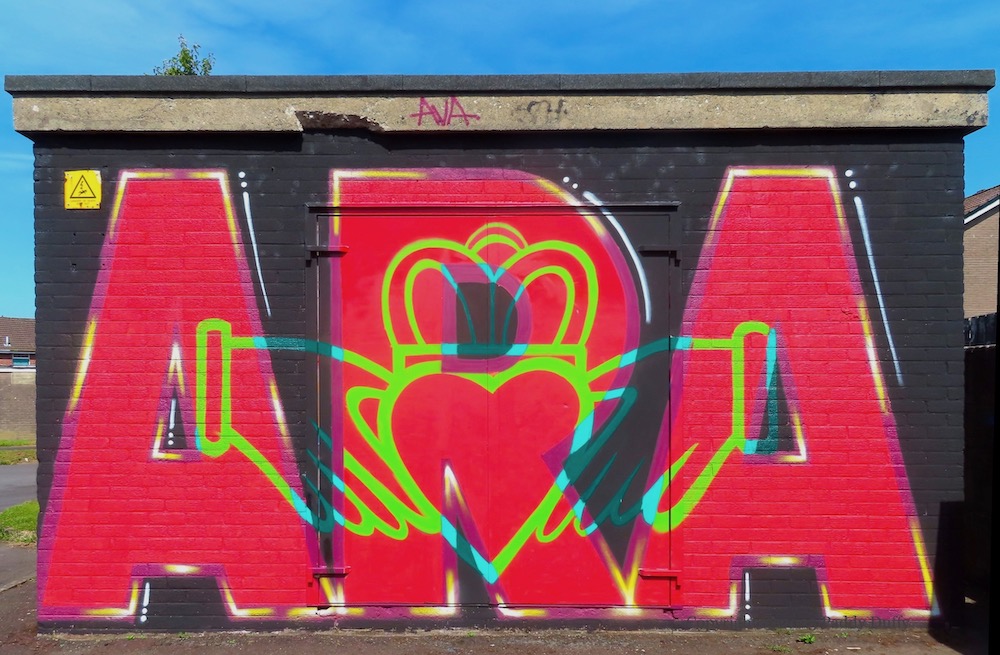
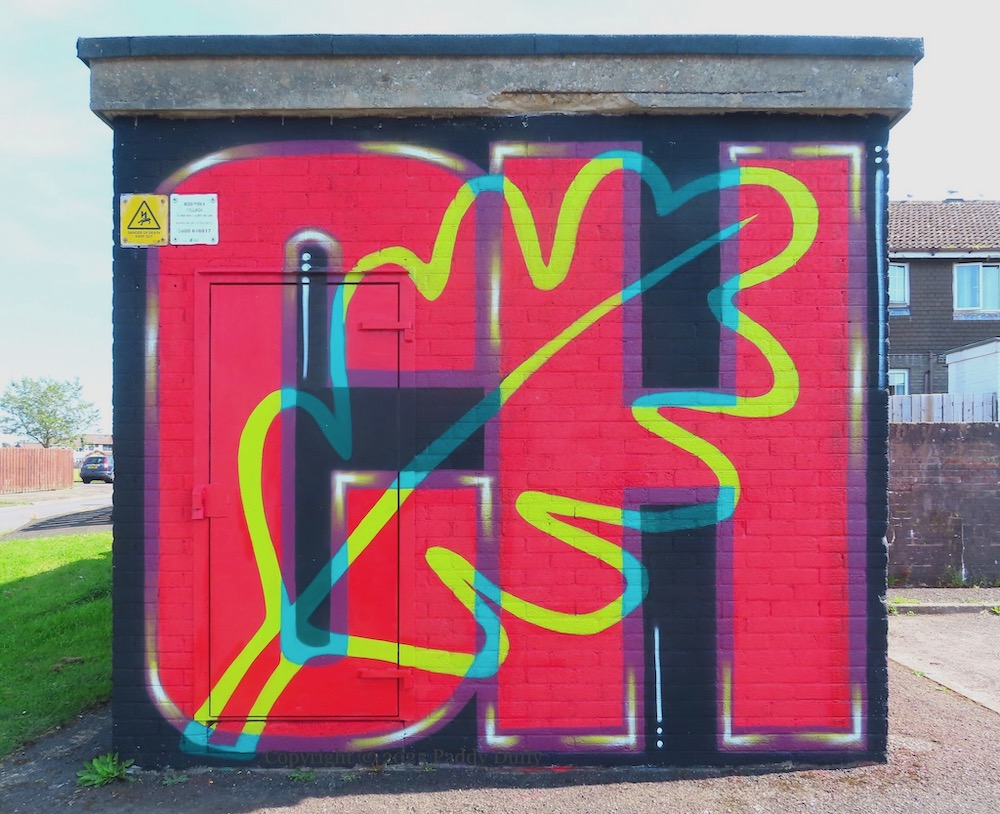
The art above on a Galliagh (Derry) sub-station reflects Kneecap’s popularity among local youth. The word “Mo Chara” (“my friend”) is painted with a shamrock, an oak leaf (symbol of Derry city), and a Claddagh ring.
Painted by Peaball (web) with young people from On Street (Galliagh Community Centre & Galliagh Youth Club) (Fb).
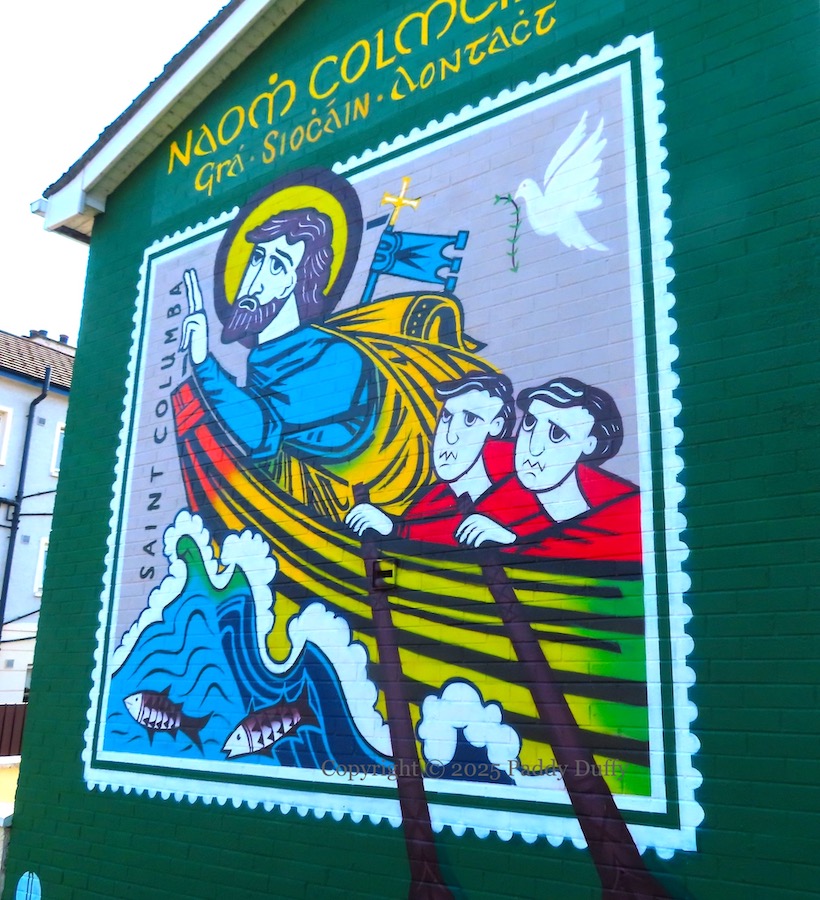
St Columba or Colmcılle or Columbcille established 50 or more abbeys and churches throughout Ireland in the sixth century AD, including one in Derry c. 540, but is most famous for the abbey established on the Scottish island of Iona and for spreading Christianity in Scotland.
This new art shows Columba in a leather-covered wicker currach sailing – with two of his twelve companions – to Scotland c. 563. The piece reproduces a commemorative stamp released in 1997 as one of four in a set of UK stamps designed by Clare Melinsky (web) called “Missions Of Faith”, two showing St Columba and two St Augustine (Collect GB Stamps).
The dove in the illustration is completely white – typically a Barbary pigeon or a rock dove bred for albinism – while a “colm cılle” is a wood pigeon.
Above: “Naoṁ Colmcılle – grá, sıoċáın [síoċáın], aontacht.” On the side-wall: “Naoṁ Colmcılle – Saint Columba Naoṁṗatrún Ḋoıre – Patron saint of Derry Rugad [Rugaḋ] ı nGartán ı nDún Na nGall – Born in Gartan, Donegal 521 D’eag [D’éag] ın Albaın – Died in Scotland 597. Grace will lead me home.”






















 Paddy Duffy Collection