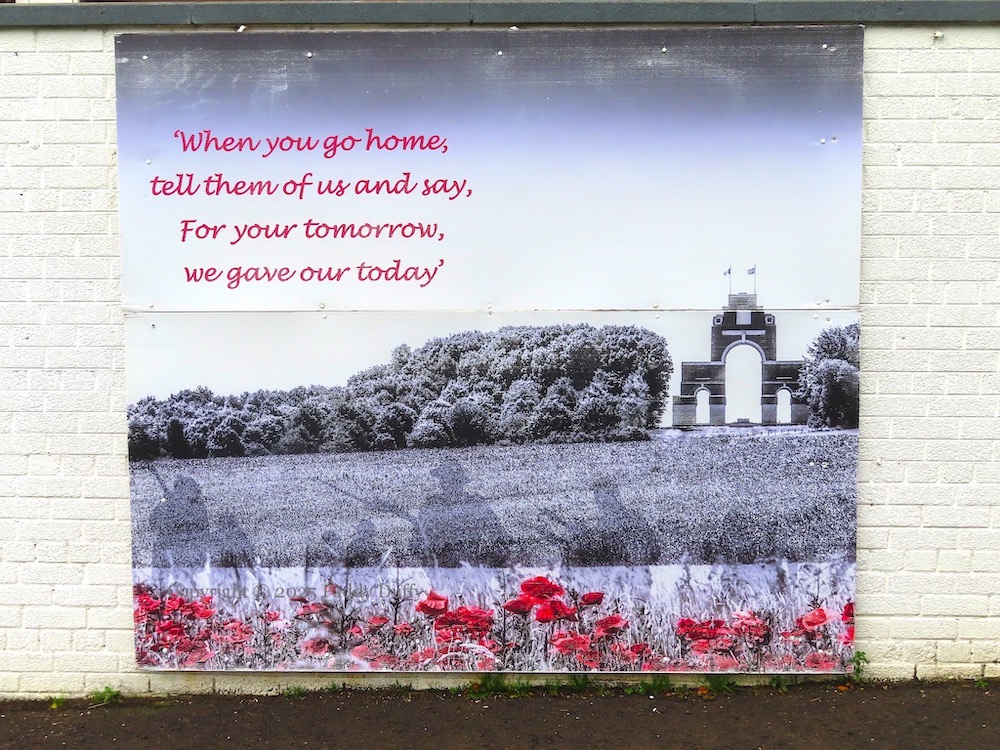
Etna Drive in Ardoyne has undergone a make-over in the last twelve months. The large board below was mounted in December 2024, the planters added in March 2025, and the boxes along the street were painted in June. The boxes celebrate local groups and initiatives: “Cıceam Ard Eoın [Fb]”, “Ardoyne-Bone Community health & leisure trust [Fb]”, “Community larder. Drop in. Locally sourced food.”, “Ardoyne Association [Fb] Citizens’ Advice Centre”, and the “Lawrenson-Toal academy of Irish dance [ig]”.
“When you go home tell them of us and say, ‘For your tomorrow we gave our today’.” The Thiepval Memorial commemorates British and South African soldiers who died in the Somme valley and have no known grave. The Battle Of the Somme took place from July 1st to November 18th, 1916, but soldiers were in the area from July 1915 until the end of the war; the Germans attacked in the Somme in the spring of 1918 (Operation Michael) and a second Battle Of The Somme took place in late August, 1918, as part of the Allies’ Hundred Days Offensive.
The words are from an epitaph by John Maxwell Edwards in the Kohima War Cemetery, Nagaland, India.
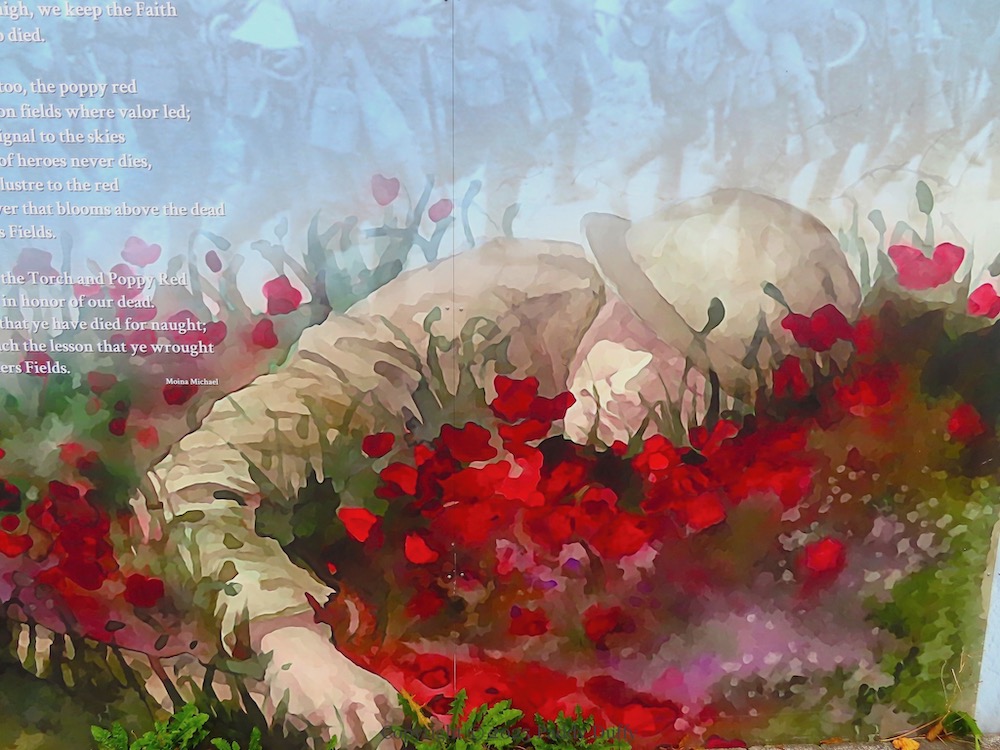
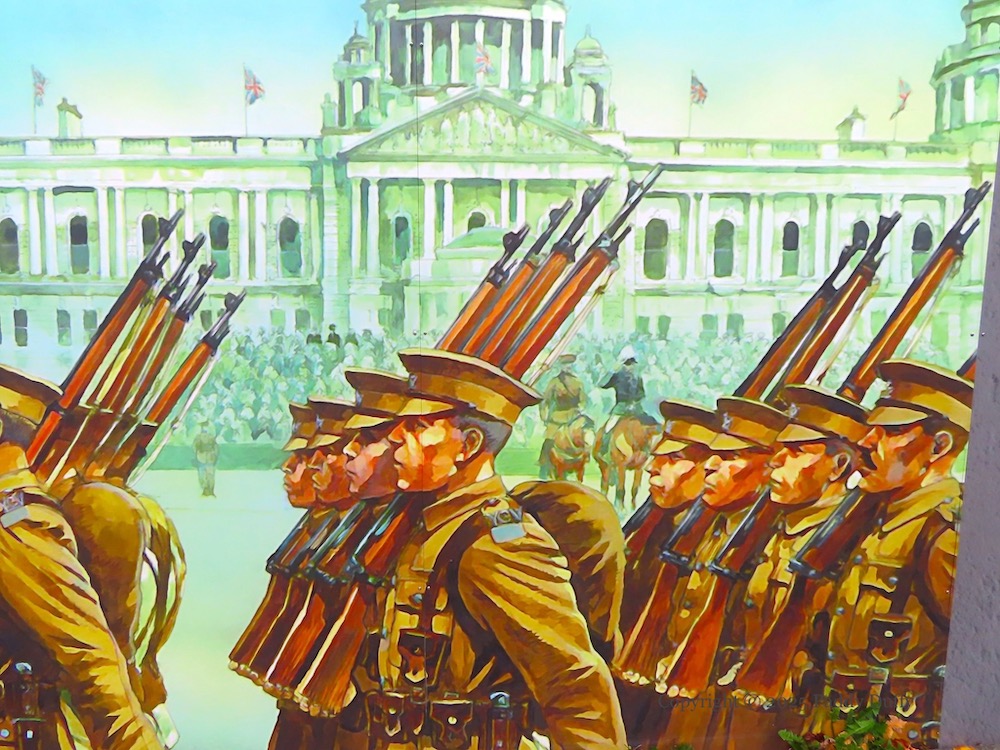
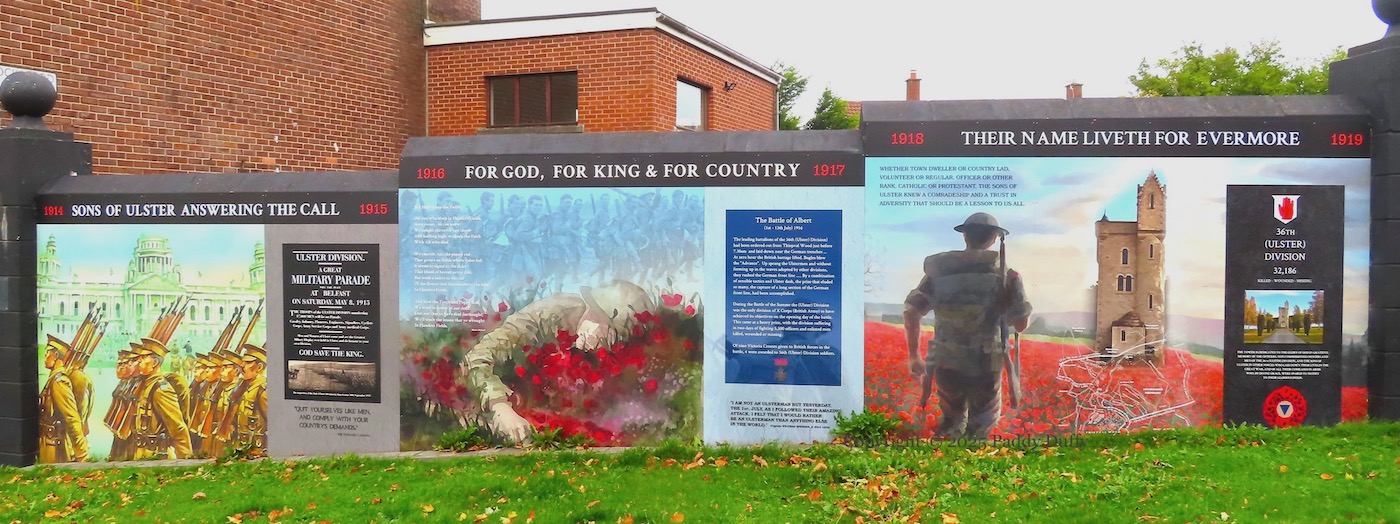
This entry provides close-ups of the WWI memorial display in Clarawood, east Belfast, and complements the images and text presented in 2023’s Spared To Testify To Their Glorious Deeds.
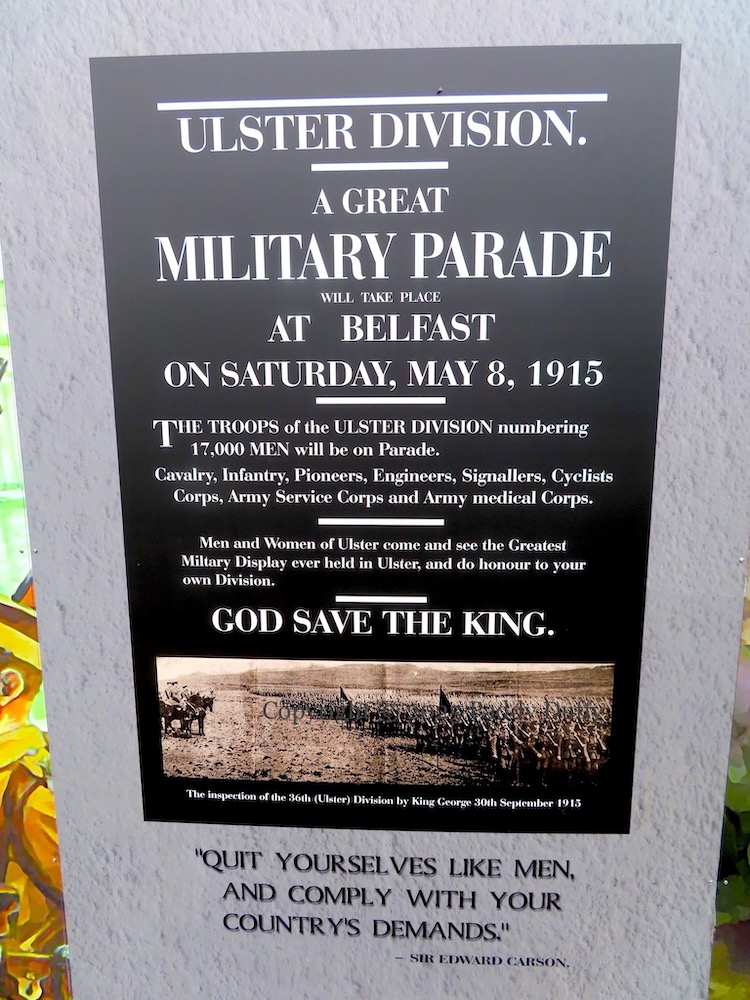
The three vertical panels with text read as follows:
“Ulster Division – a great military parade will take place on Saturday, May 8, 1915. The troops of the Ulster Division numbering 17,000 men will be on Parade. Cavalry, Infantry, Pioneers, Engineers, Signallers, Cyclists Cors, Army Service Corps and Army medical Corps. Men and Women of Ulster come and see the Greatest Military Display ever held in Ulster, and do honour to your own Division. God save the King.” (There is video of the May parade on Facebook and NI Screen. The photograph of George V inspecting the troops in Aldershot on September 30th, 1915, can be seen here.)
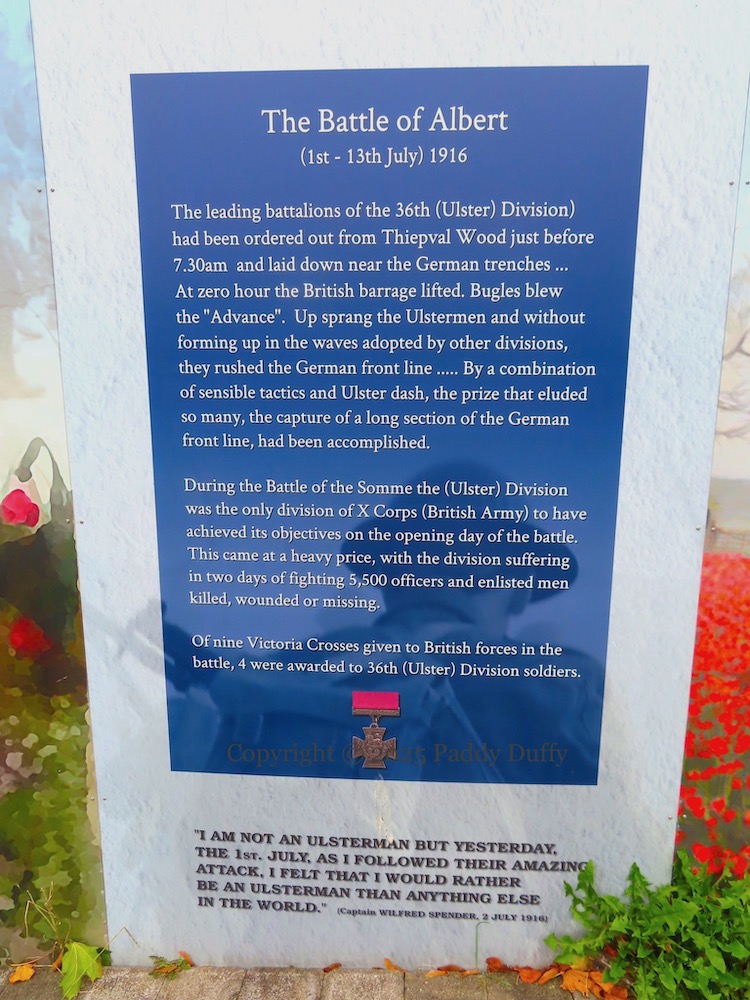
“The Battle Of Albert (1st – 13th July) 1916. The leading battalions of the 36th (Ulster) Division) [sic] had been ordered out from Thiepval Wood just before 7.30am and laid down near the German trenches … At zero hour the British barrage lifted. Bugles blew the “Advance”. Up sprang the Ulstermen and without forming up in the waves adopted by other divisions, they rushed the German front line … By a combination of sensible tactics and Ulster dash, the prize that eluded so many, the capture of a long section of the German front line, had been accomplished. During the Battle Of The Somme the (Ulster) [sic] Division was the only division of X Corps (British Army) to have achieved its objectives on the opening day of the battle. This came at a heavy price, with the division suffering in two days of fighting 5,500 officers and enlisted men killed, wounded or missing. Of nine Victoria Crosses given to British forces in the battle, 4 were awarded to 36th (Ulster) Division soldiers. ‘I am not an Ulsterman but yesterday, the 1st July, as I followed their amazing attack, I felt that I would rather be an Ulsterman than anything else in the world.’ – Captain Wilfred [sic Wilfrid] Spender, 2 July 1916.”
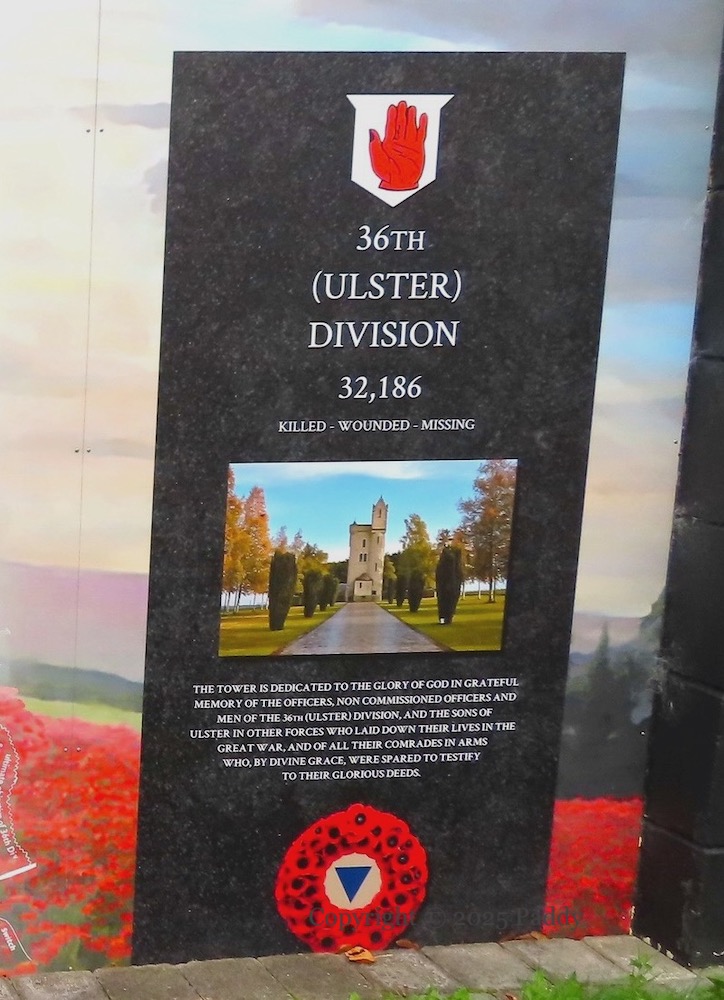
“36th (Ulster) Division 32,186 killed, wounded, missing. The tower is dedicated to the glory of God in grateful memory of the officers, non-commissioned officers and men of the 36th (Ulster) Division, and the sons of Ulster in other forces who laid down their lives in the Great War, and of all their comrades in arms who, by divine grace, were spared to testify to their glorious deeds.”
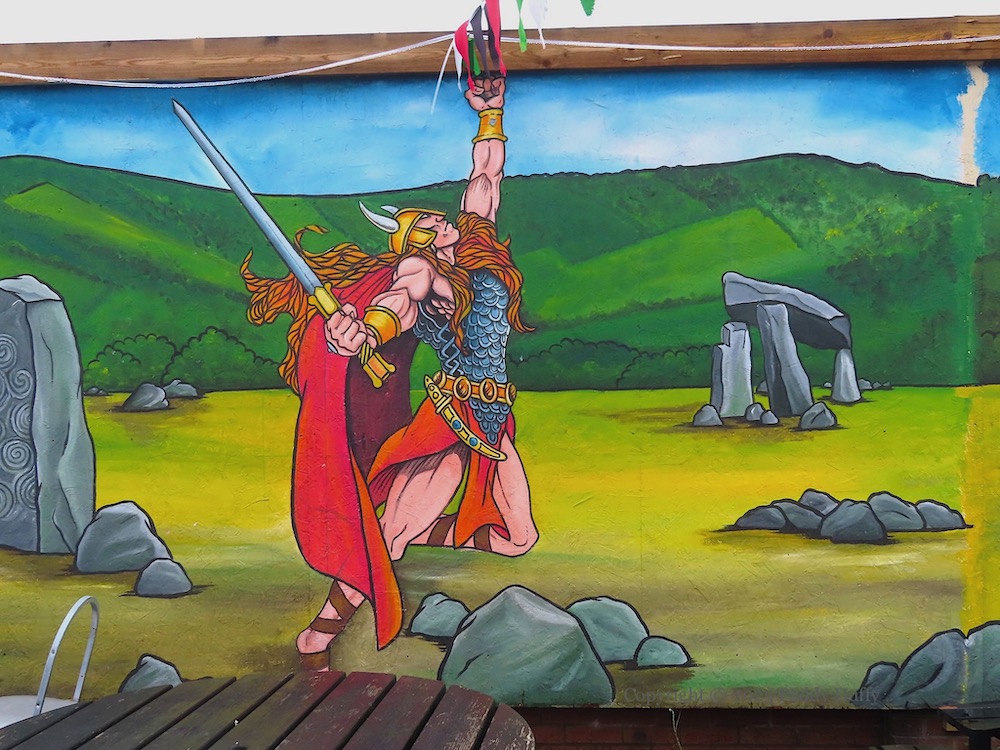
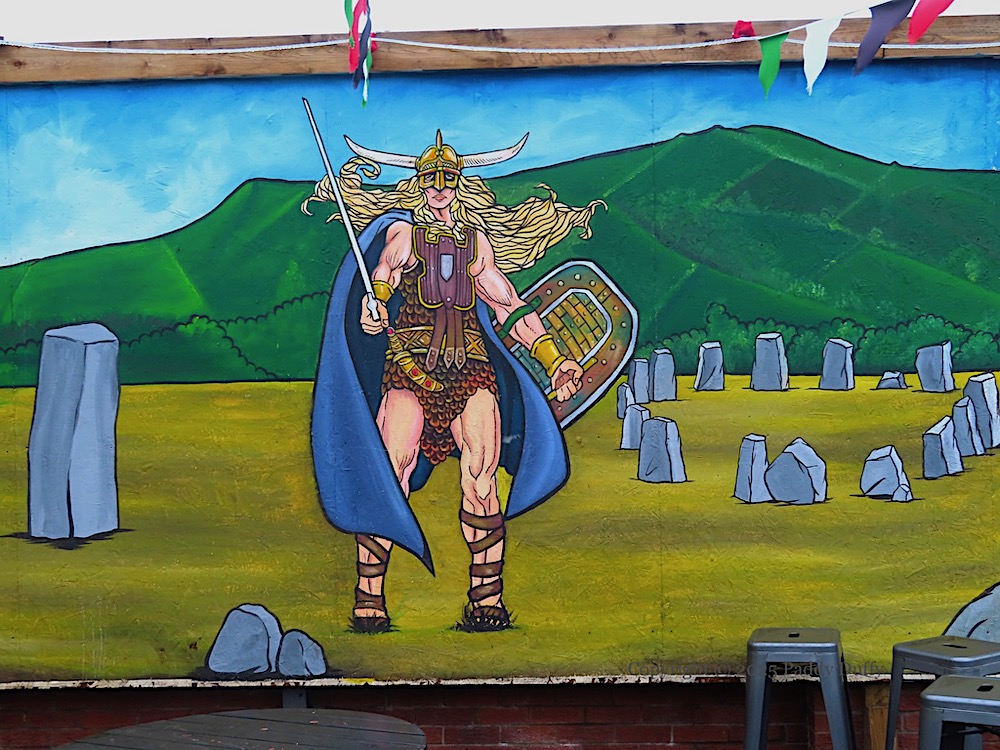
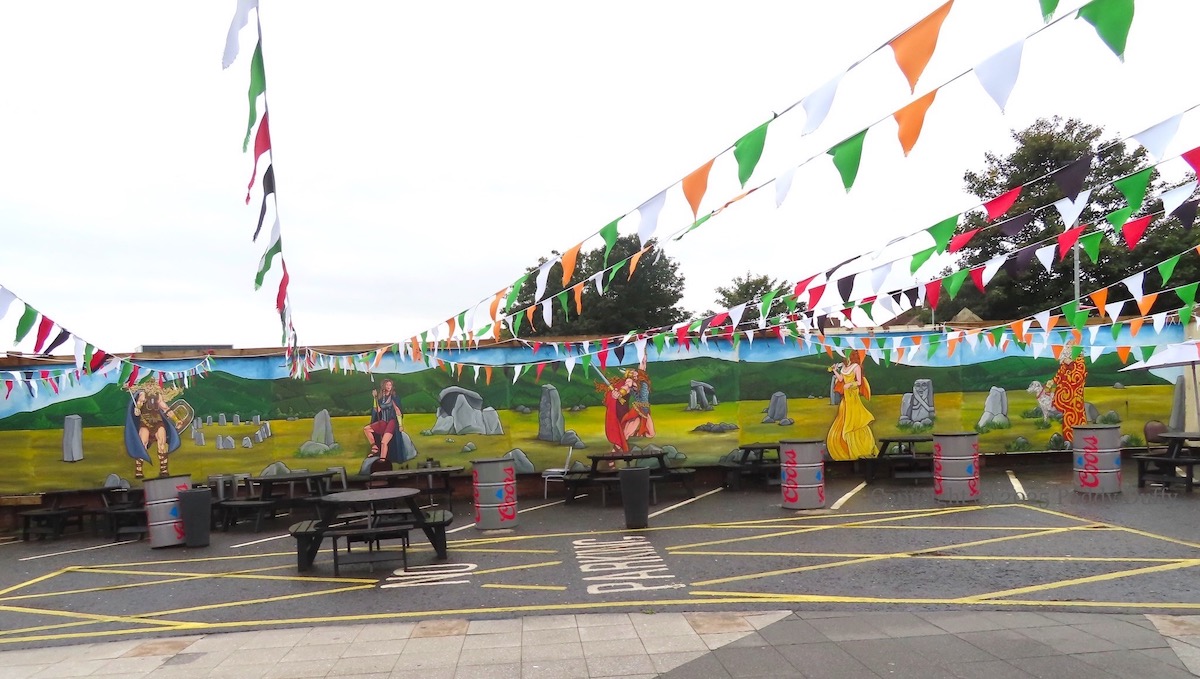
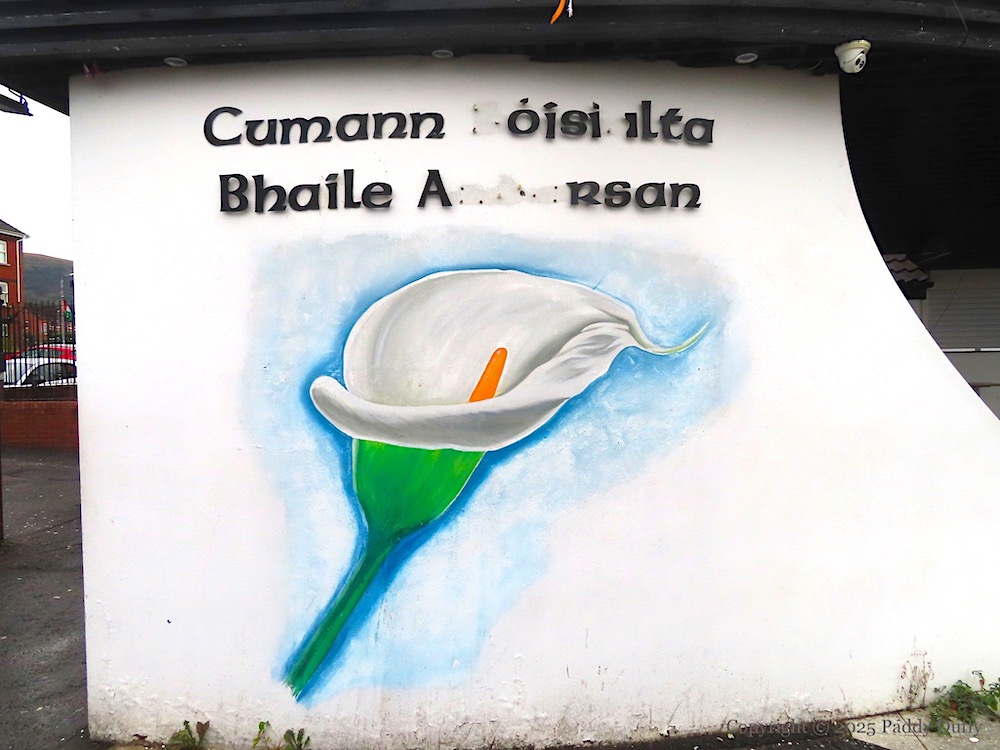
Here are five mythological figures placed against a backdrop of Celtic Ireland, including standing stones, a dolmen, a stone circle, and the Janus figure on Boa Island (WP), from the wall of the PD/Cumann Sóısıalta Bhaıle Andarsan.
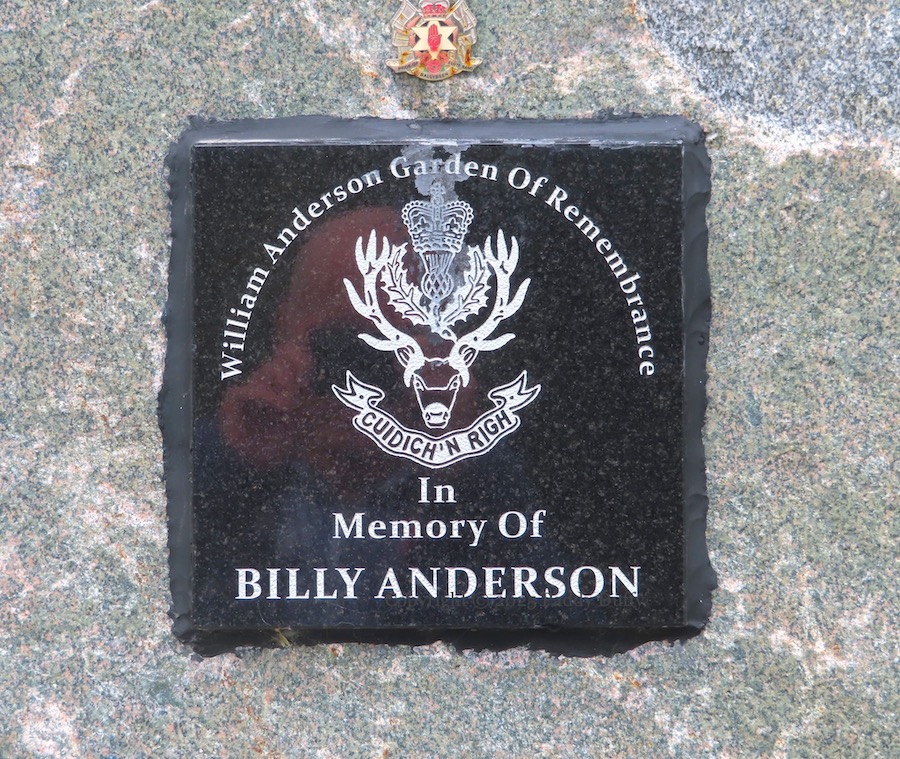
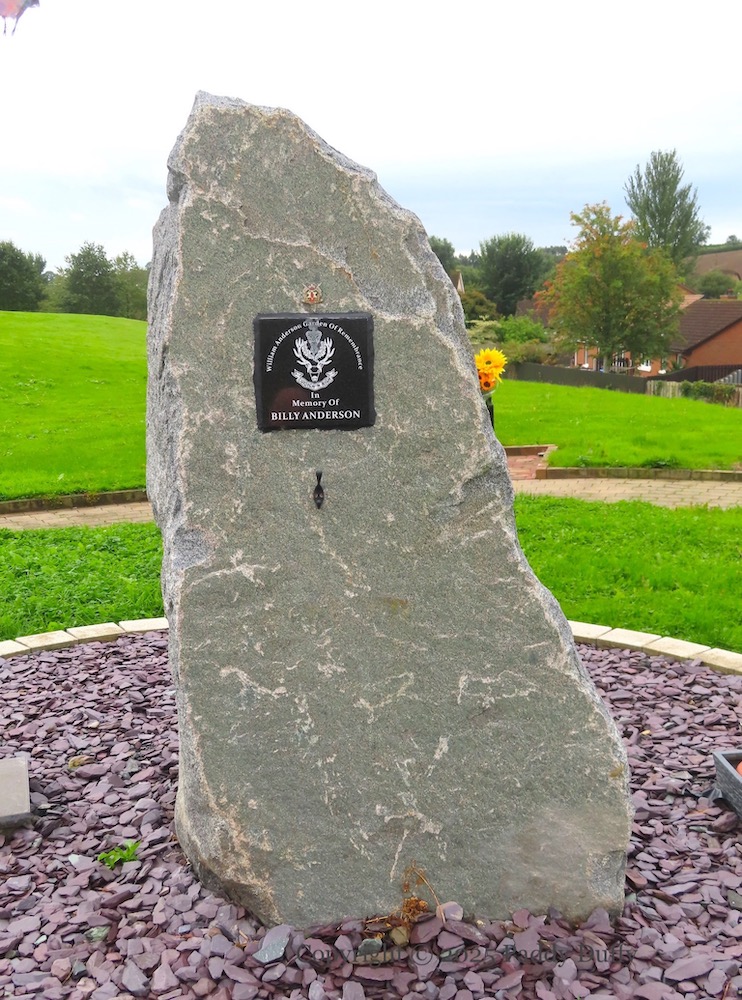
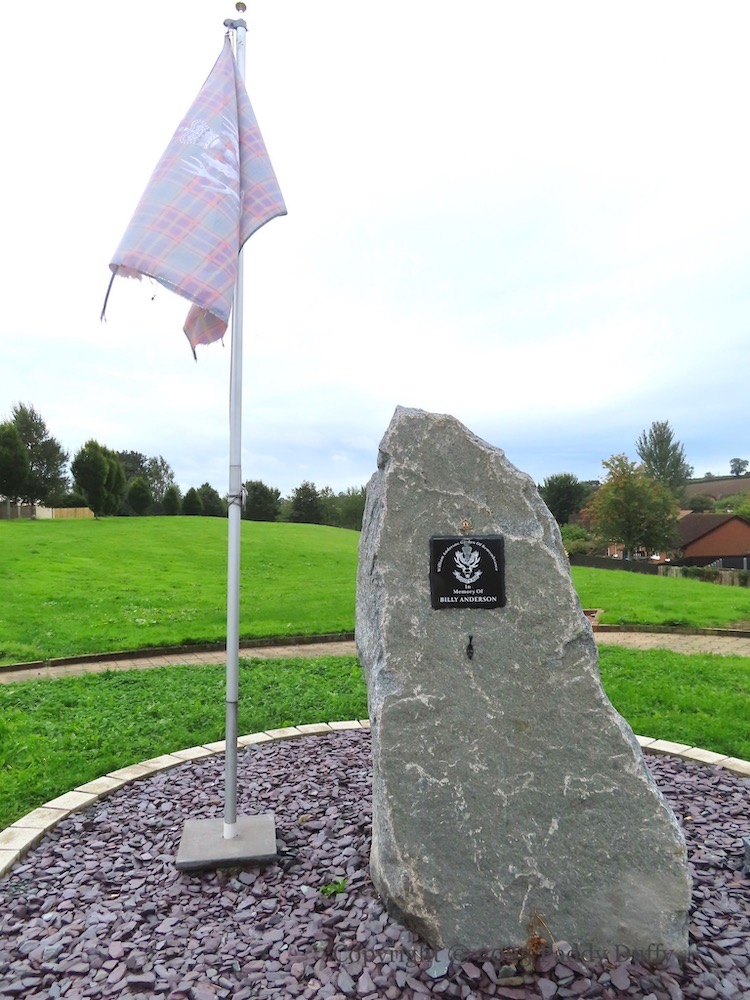
“William Anderson Garden Of Remembrance – In memory of Billy Anderson”. Billy “The Brick” Anderson was a member of the Pride Of Ballybeen flute band (Fb) – there is a small version of the band’s emblem above the black plaque in the image above.
The new Rangers supporters club in Donegall Pass is named after Alex “Doddie” MacDonald, who played midfield for Rangers from 1968 to 1980, which included the team’s victory in the European Cup-Winners’ Cup in 1972. (A full biography can be found on the Rangers web site.)
The new board announces the “Alex MacDonald Loyal RSC (Donegall Pass)” and the photographs show various high-points in MacDonald’s career: “Signed for Rangers 19 November 1968”, “Hampden Park on 25 October 1975 when MacDonald scored the winner in the Old Firm League Cup final”, “Rangers hall of fame”.
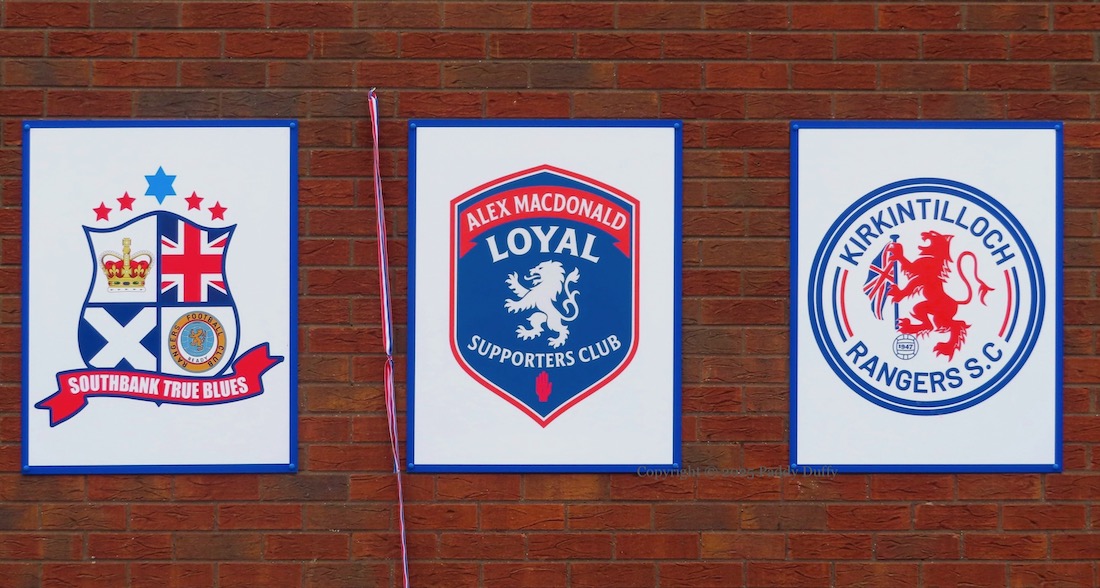
Also included beneath the main board are the crests of “Southbank True Blues” and “Kirkintilloch RSC” (Fb).
Pine Street, Donegall Pass, south Belfast. Launched on September 13th – Facebook.
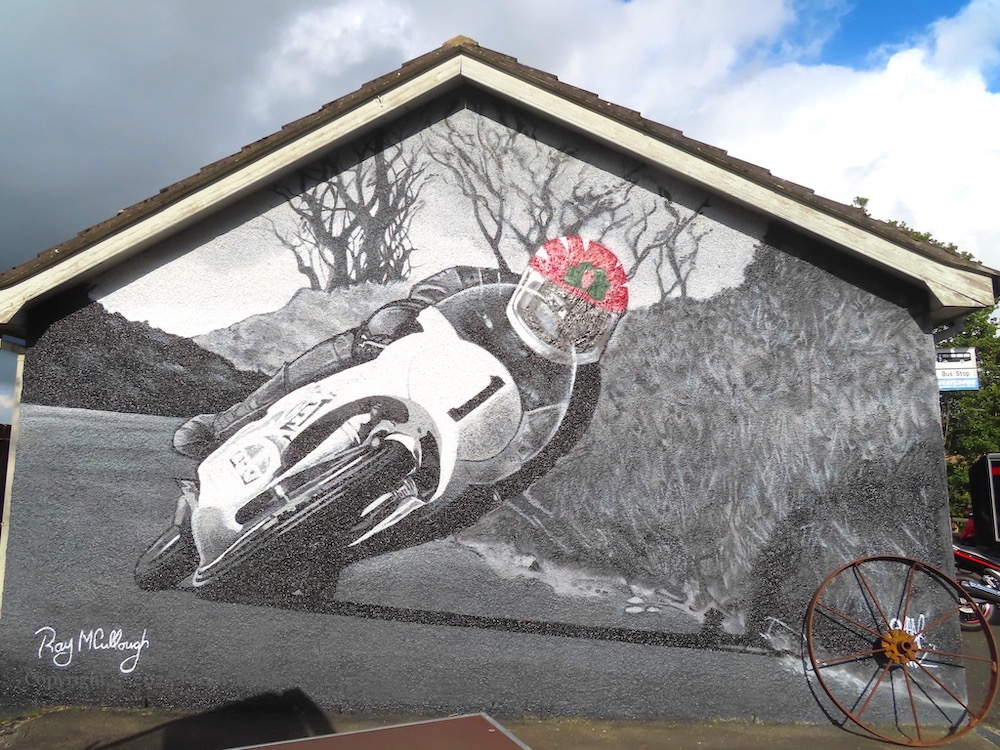
Ray McCullough “the Dromara destroyer” rode 250 and 350cc bikes during the late 60s and 1970s, winning 175 races (News Letter), including seven Ulster Cups (Devitt). For McCullough’s career as a motorbike engineer, see News Letter | NI World.
This new mural is in grey-scale except for McCullough’s distinctive red helmet with a green shamrock and red hand. Painted by JMK (ig); the photo reproduced can be seen on the Triumph Motorcycle forum.
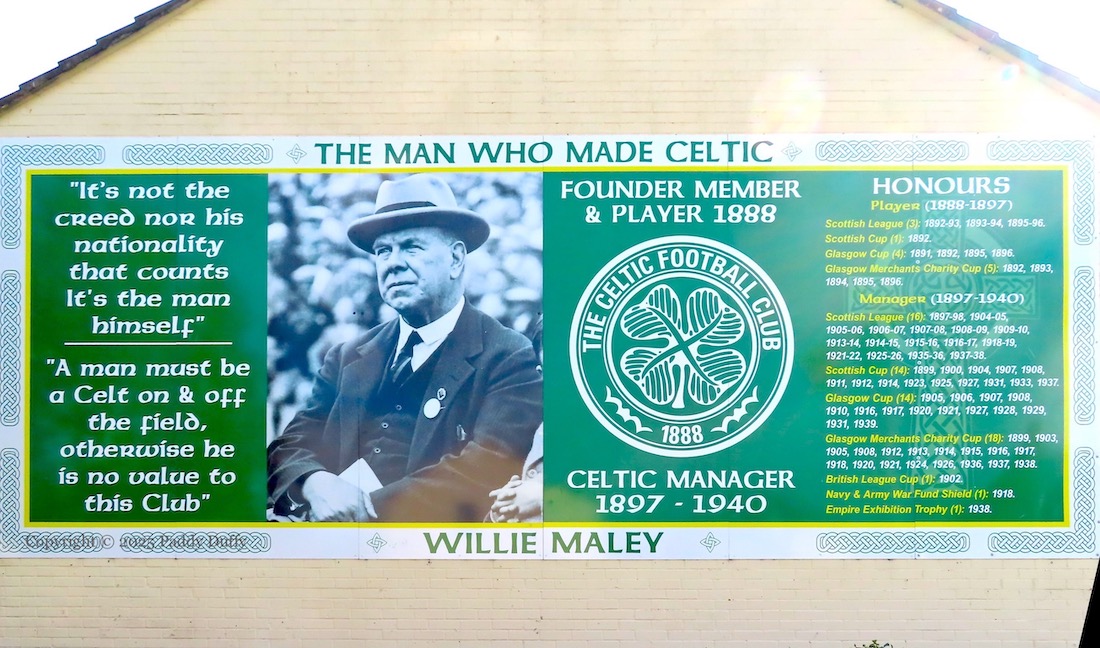
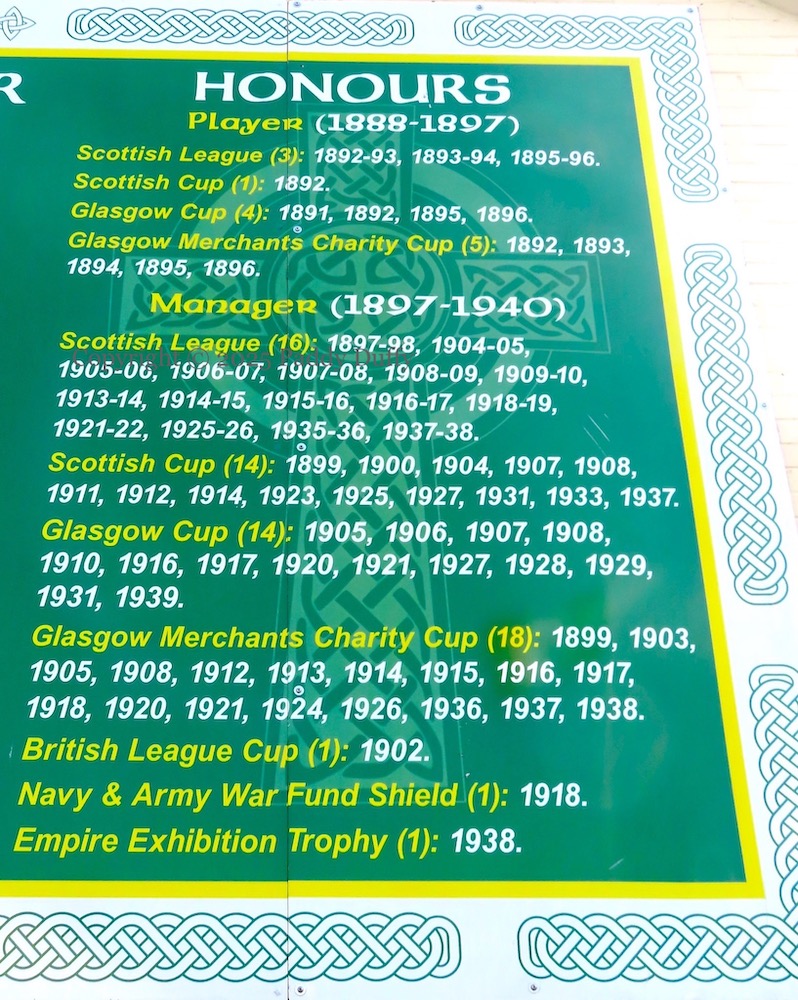
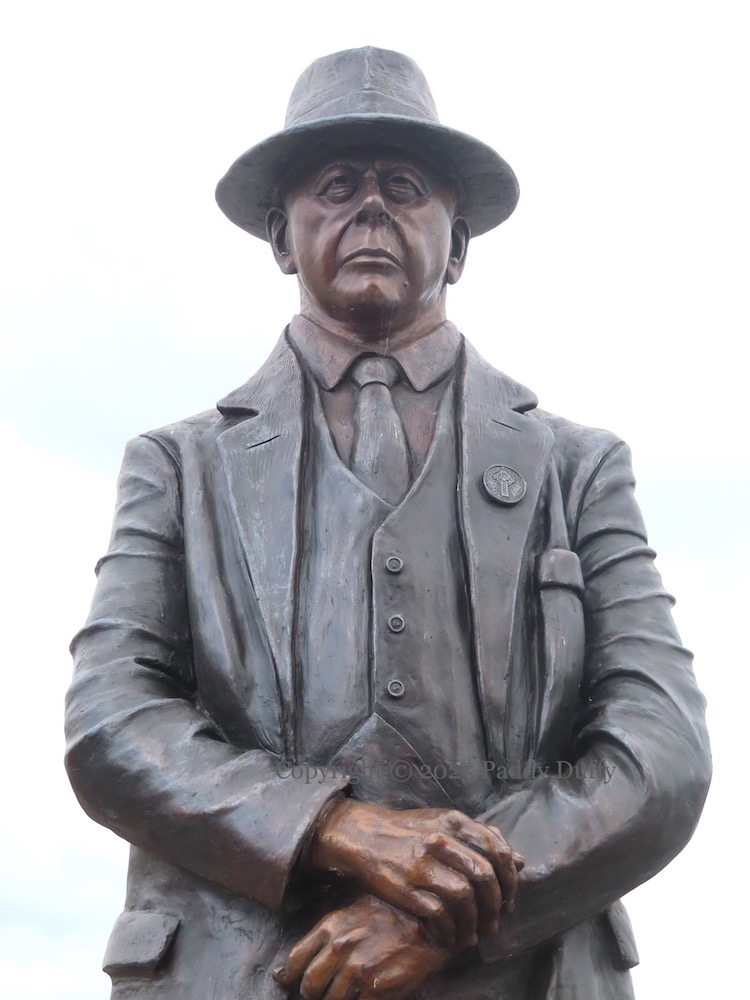
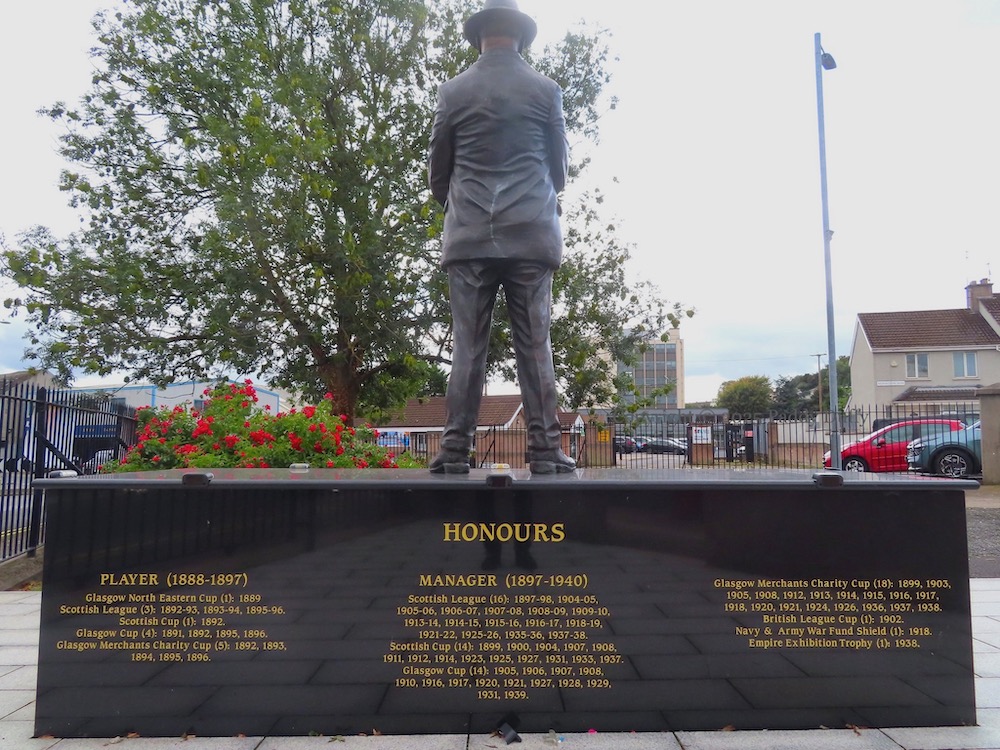
Here are three pieces (two boards and a statue) celebrating Willie Maley, who was born in Newry barracks in 1868 – his father was a sergeant in the 21st Regiment Of Foot. The following year the family moved to Scotland. Maley played in midfield for Celtic and made two international appearances for Scotland. He became manager in 1897 at the age of 29 and steered the club to sixteen league championships and fourteen Scottish Cups.
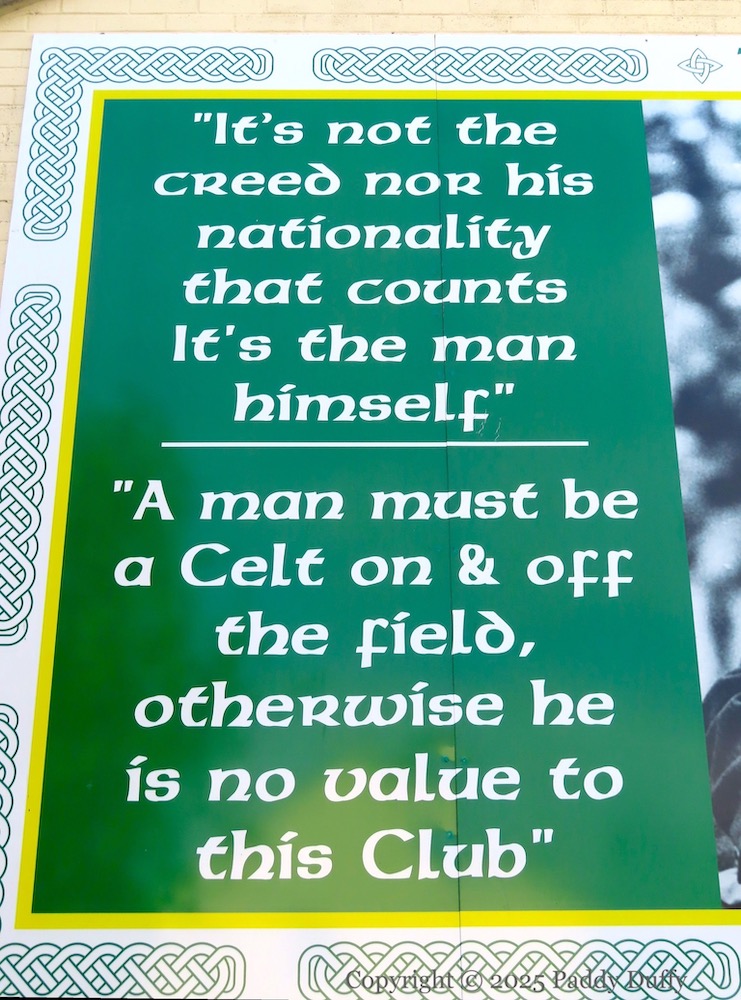
The board (above) in Mourne View Park (Mourne View is built on the site of the infantry barracks – the old walls are still standing): “The man who made Celtic – Willie Maley – founder member & player 1888, Celtic manager 1897-1940.” “It’s not the creed nor his nationality that counts. It’s the man himself.” “A man must be a Celt on & off the field, otherwise he is no value to this Club.”
The board is at the bottom of Mourne View Park in Erskine Street, on the south side of the barracks: “The Celtic vision was born here. William Patrick Maley born here 25th April 1868, the military barracks, Newry, died 2nd April, 1958, Glasgow.” “My love for Celtic has been a craze, without it my experience would be empty indeed.”
The statue is at the junction of Camlough Road and Monaghan Row and was launched in 2023 (Newry.ie): “”Mr. Celtic” William Patrick Maley. 43 years as Glasgow Celtic’s first ever manager, winning 19 league titles & over 40 other trophies as player/manager. “It’s not the creed nor his nationality that counts. It’s the man himself.” Born in Newry 25th April 1868. Glasgow Celtic fans will always fondly remember Mr Willie Maley.”
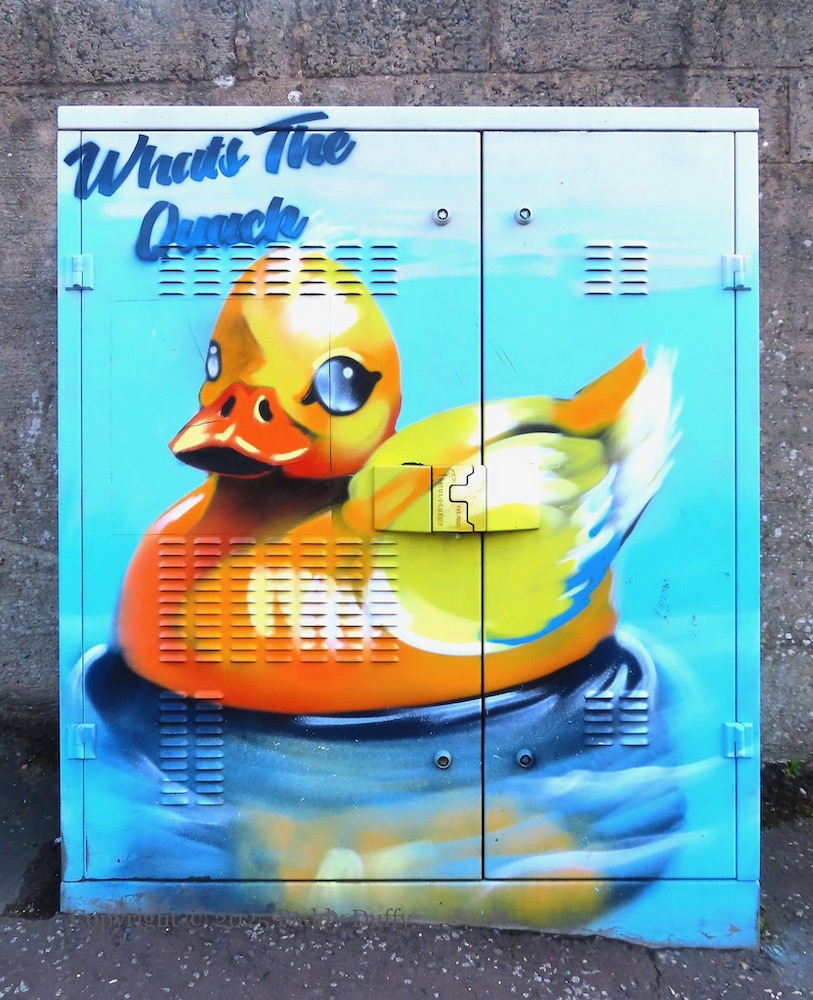
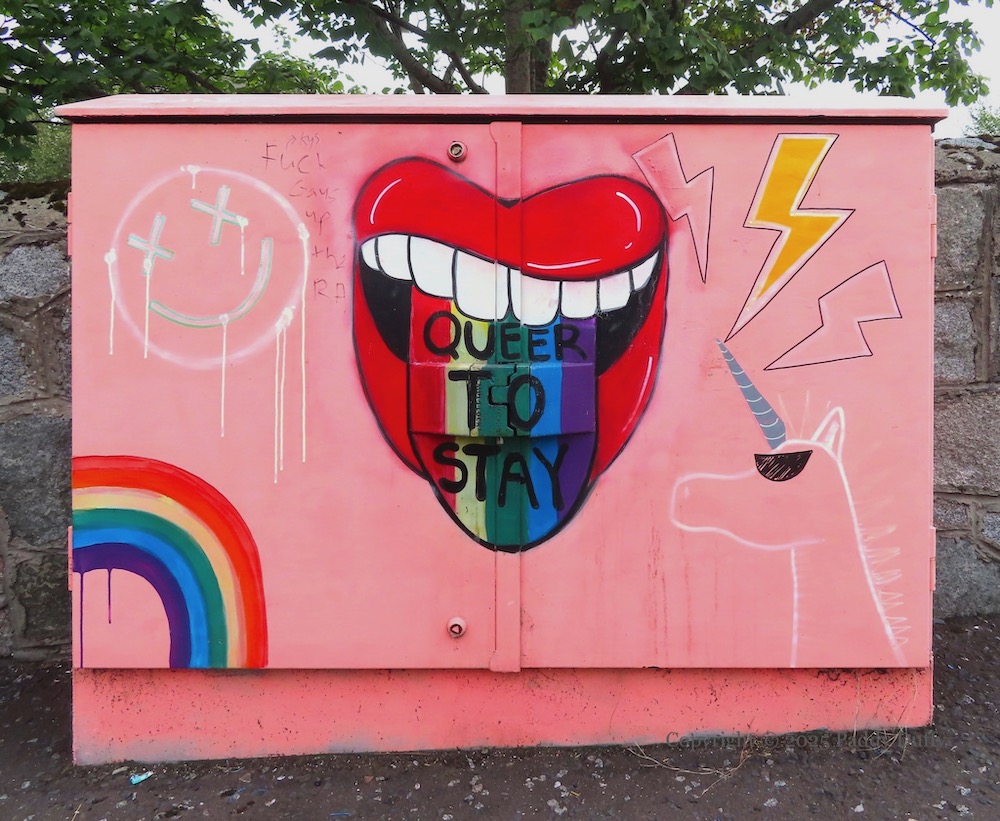
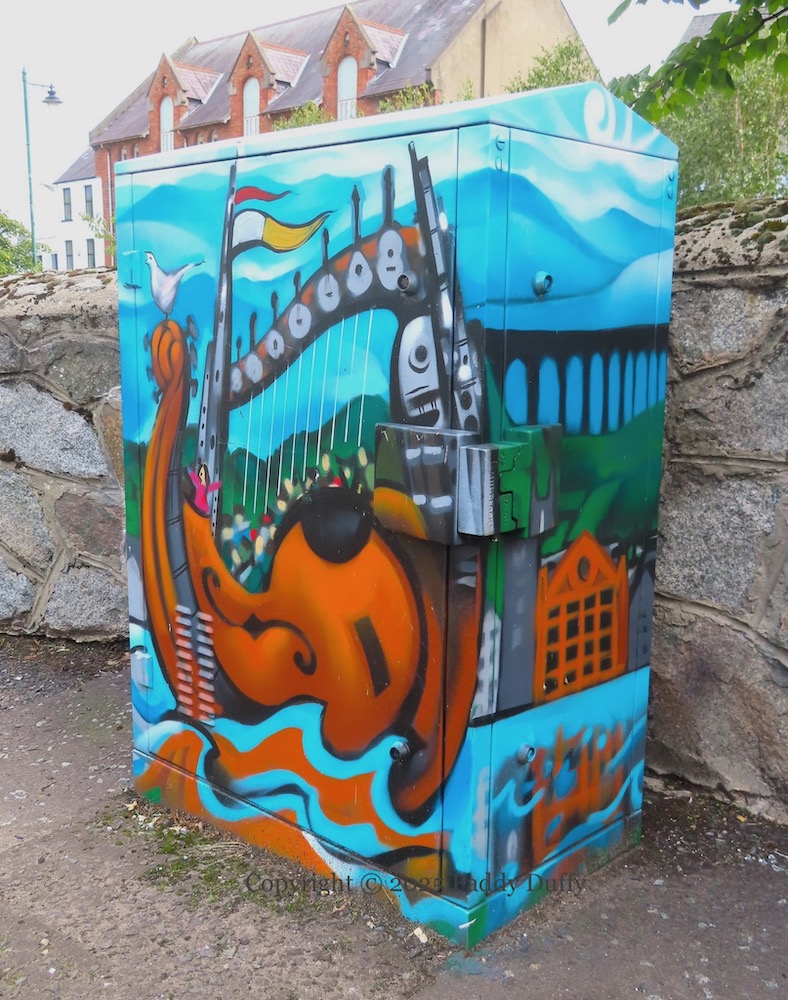
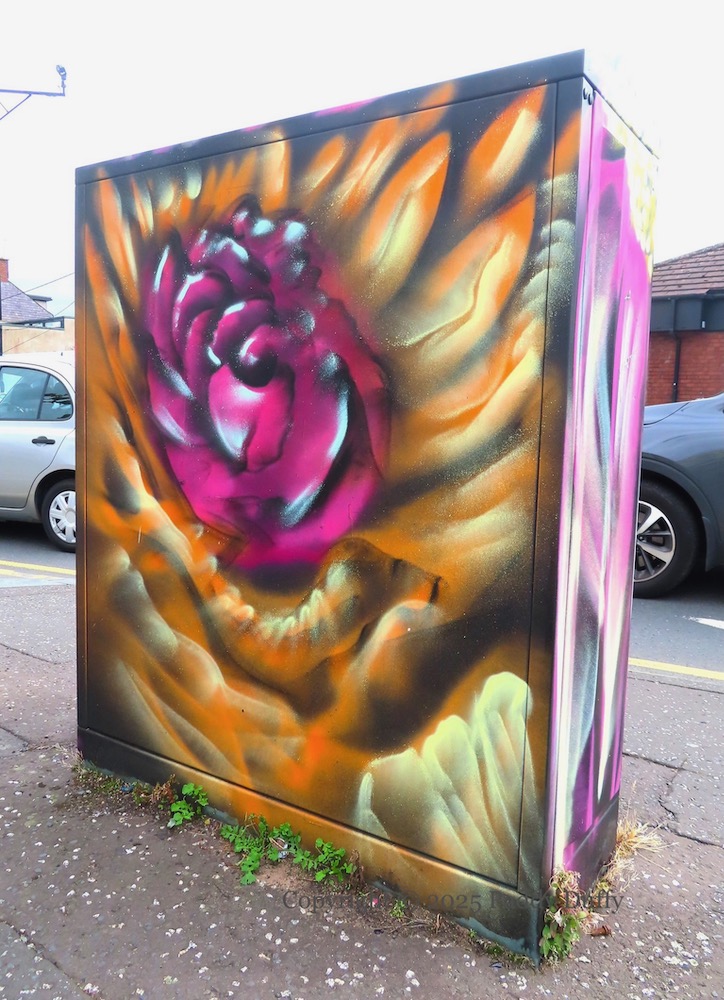
This is a second gallery of just some of the electrical boxes that have been painted in Newry in recent years, particularly 2024’s ‘Street Dreams’ initiative (web). (See previously Street Dreams.)
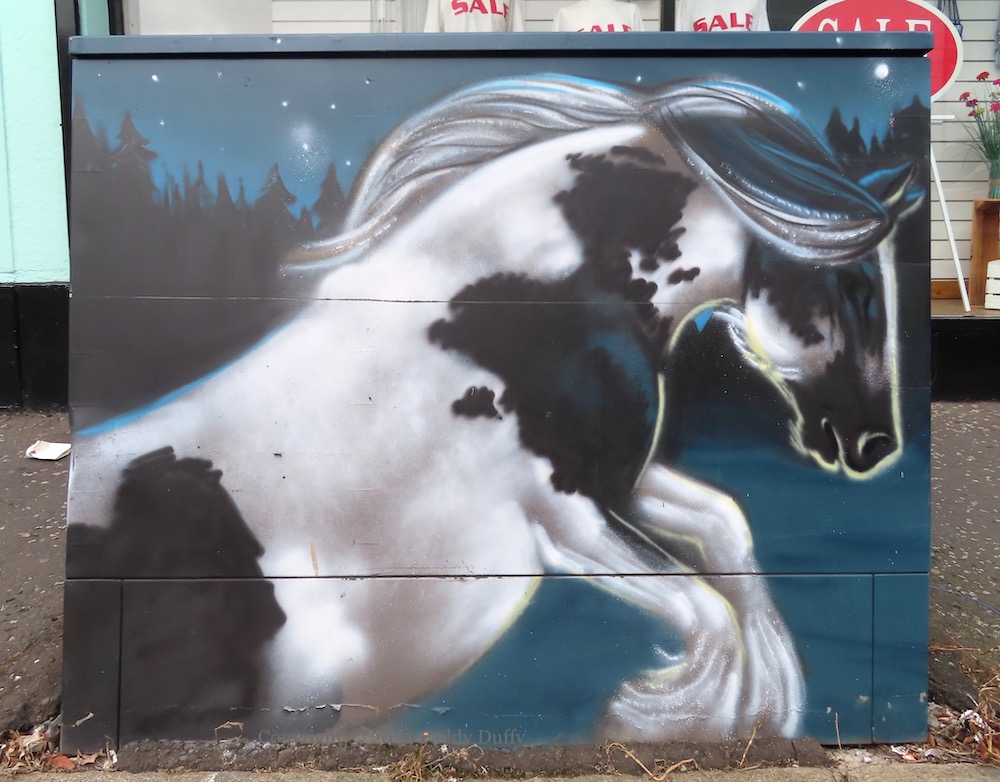
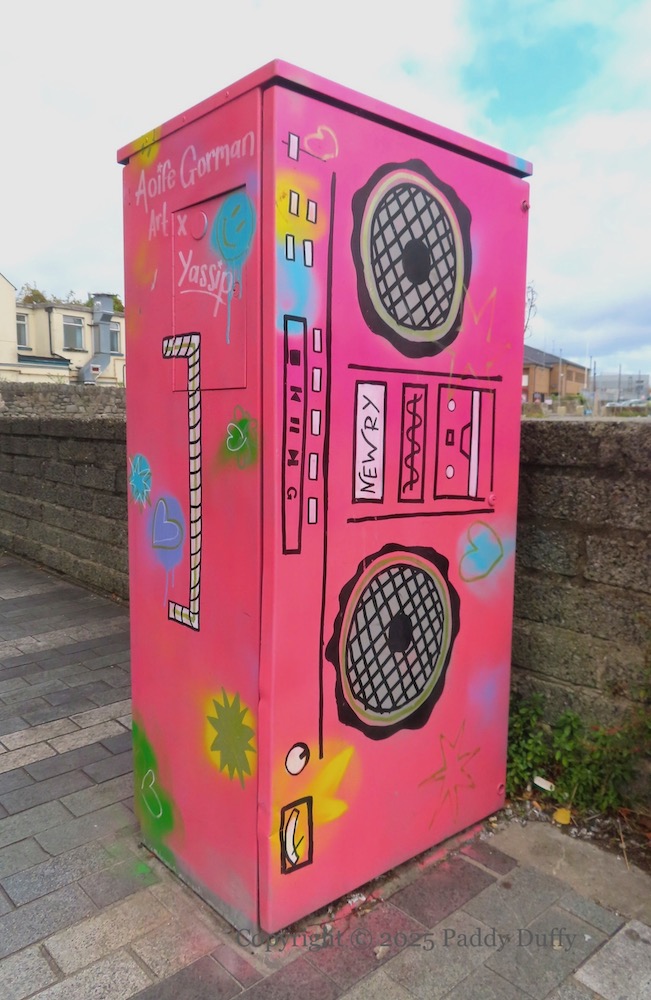
“What’s the quack?” and “Pure Class” are by Visual Waste (web), the boat made of harp and fiddle is by JMK (ig), the purple face, the covered wagon, and the draft-horse are by Friz (web), “looking at the stars” and “Queer to stay” are by FrankieB (ig), “Oh happy day” is related to the Choir Studio (Fb), and the boombox is by Aoife Gorman (ig).
This board in Donegall Pass mashes together not only Linfield and Rangers, but a Union Flag and Ulster Banner, and soccer with WWI soldiers making their way through barbed wire.