The Braid River rises in the Antrim hills between Carnlough and The Sheddings. It then flows (west) past Broughshane and Ballymena before joining the Maine and flowing into Lough Neagh. The river is at the centre of this new piece of street art by Shane O’Driscoll (ig) in Ballymoney Street, Ballymena.
These shutters of a solicitor’s office in Mill Street, Ballymena, are painted with a view of the street from around the turn of the (20th) century.
The original photograph, by photographer Robert French, can be seen in the National Library Of Ireland. French died in 1917, which provides an upper limit for the date of the scene.
In the misty distance is the tower of St Patrick’s (CI) church (WP) and closer to the camera (on the right of the left-hand panel) is the steeple on top of the old town hall, which was originally built in 1684 (one of the old “seven towers” in the town) and most recently replaced in 1928 (WP).
Here are two long panels of images of the sights and activities in and around Ballymena (below some advertising for TeamKit) in the car-park between Ballymoney Street and Broughshane Street.
Donaghadee harbour celebrated the bicentennial of its construction (which took from 1821-1834) with a mural towards the bottom of Manor Street. From left to right, we can see the “motte” or “moat”, an Anglo-Norman motte-and-bailey castle from the 1100s; the lifeboat (behind the crew) is the Sir Samuel Kelly, named for a hero of the Princess Victoria sinking in 1953 (Historic UK) – the station was established in 1910; the Copeland Islands and holiday-makers; Tom Blower, who left from Donaghadee to swim the North Channel in 1947; Bobby Simpson hiring out row-boats below the lighthouse, which was built in 1836.
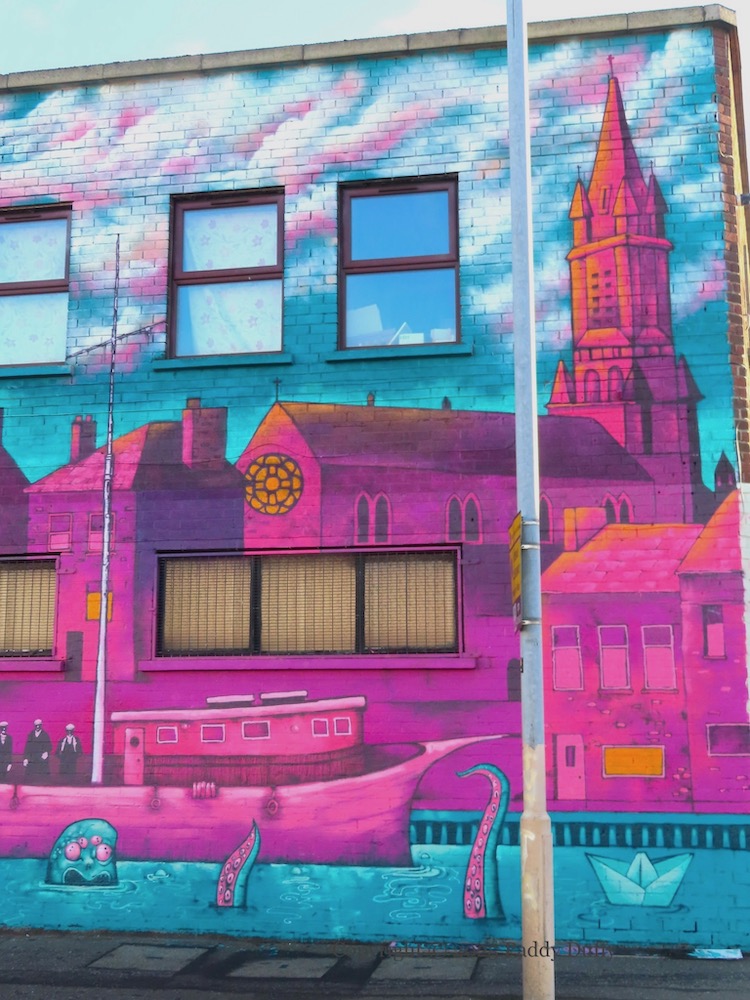
A kraken awakes in Belfast harbour, under the watchful eyes of working-class men on the waterfront in Belfast’s Sailortown, in front of local landmarks.
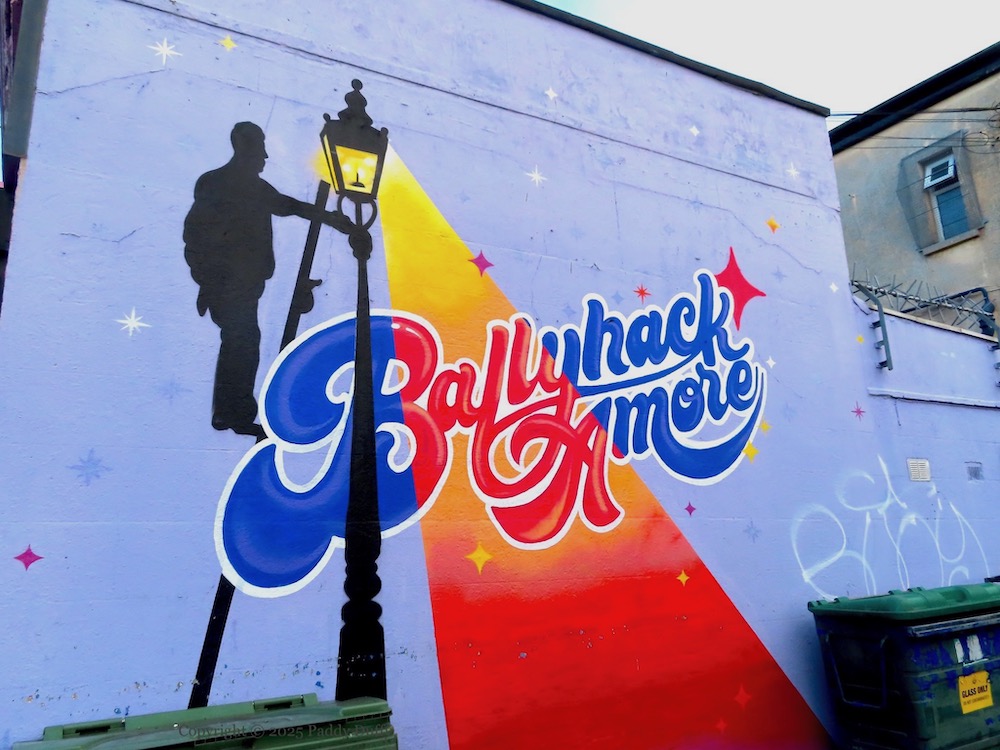
Another mural on Upper Newtownards Road on the lamp-lighter theme: Ballyhack-Amore by Alana McDowell (ig | web). The name “Ballyhackamore” comes from Irish: Baile An Chacamair, town of the mud flat (PlaceNamesNI).
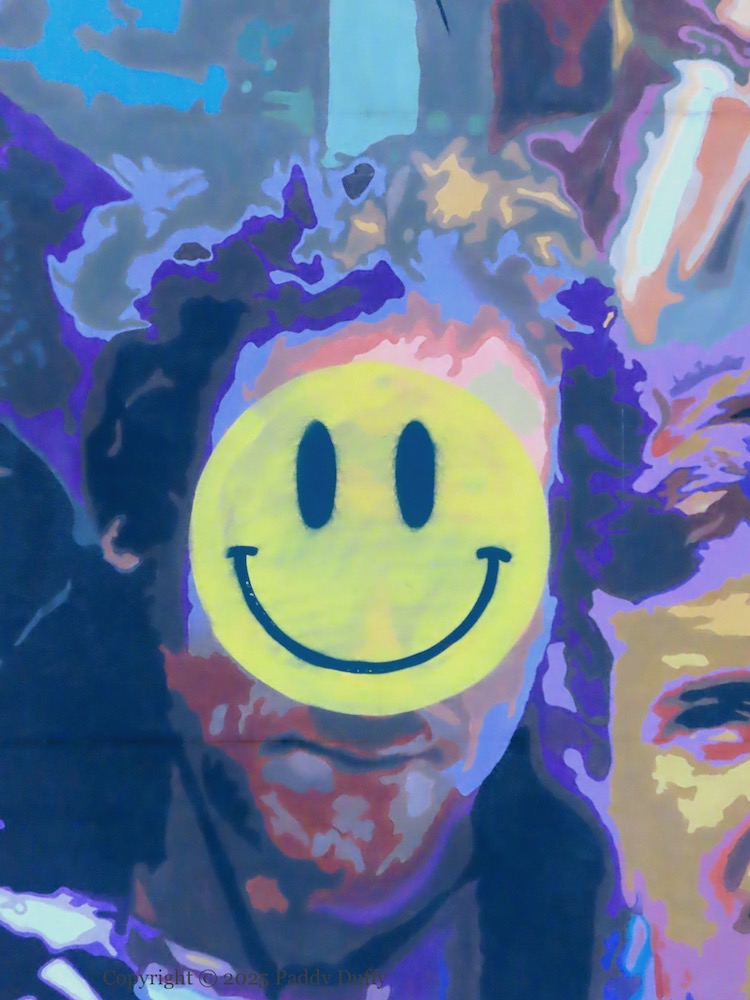
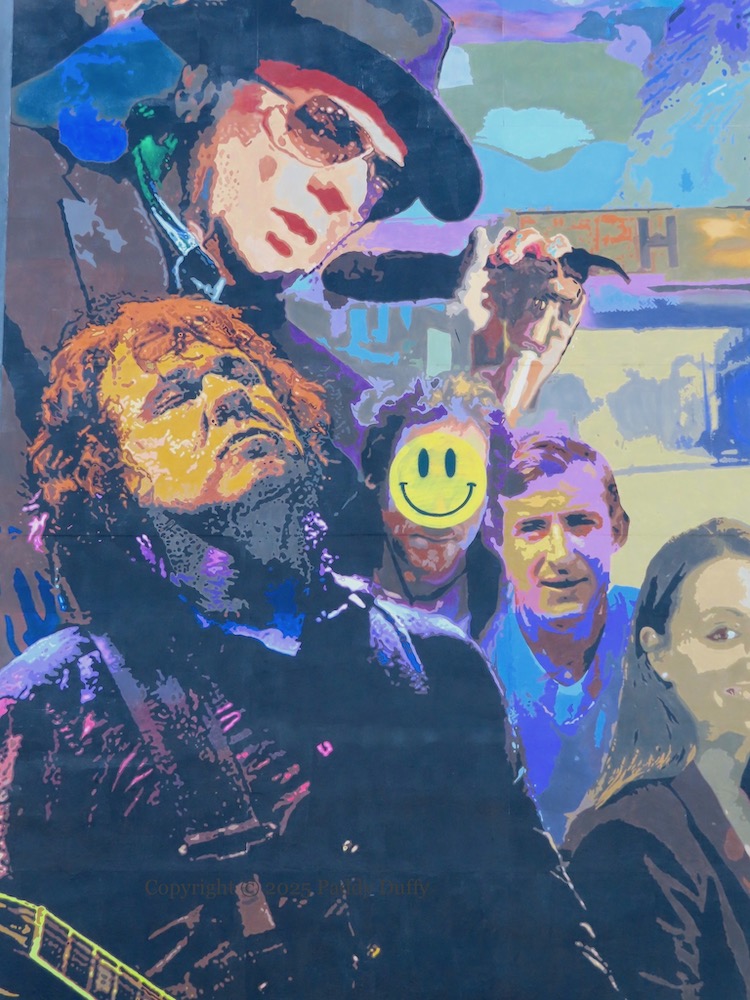
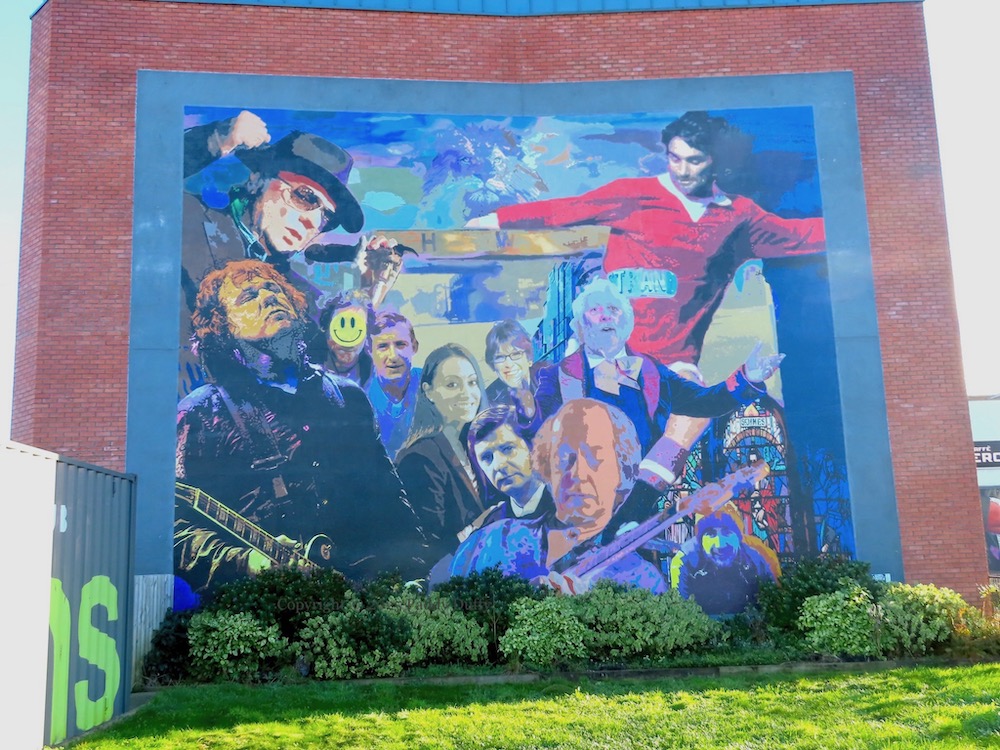
This entry updates (with close-ups) the image seen in 2022’s Luminaries And Legends Of Eastside which showed (from afar) the ‘famous faces’ mural at Connswater/CS Lewis Square in east Belfast with a large “smiley” face over DJ David Holmes – a (presumably) unauthorised addition to the 2017 original. Word is that Holmes’s image was painted over because he is not from east Belfast. It’s not clear (from on-line sources) where exactly in Belfast Holmes is from; he lived in Los Angeles, California, for a time before returning c. 2014 (Irish Times).
(MaskerAid is an app that allows one to cover faces in photos with smiley-faces and other emoji.)
The Pitt Stop caravan is a new community-services centre run by the Residents’ Association (Fb) in Pitt Park, east Belfast, a stone’s throw from the Ballymac Friendship Centre (Fb). The relationship between the two is unclear – this Sunday World article quotes one person as saying the some residents felt themselves excluded from the Centre and that the “good people of Pitt Park” need “access to a facility”. The article also suggests possible connections to the local UVF and to drug-dealing; the Association denounced the write-up in a brief Facebook post.
The Park itself was renovated in 2024 (Belfast Live before | after).
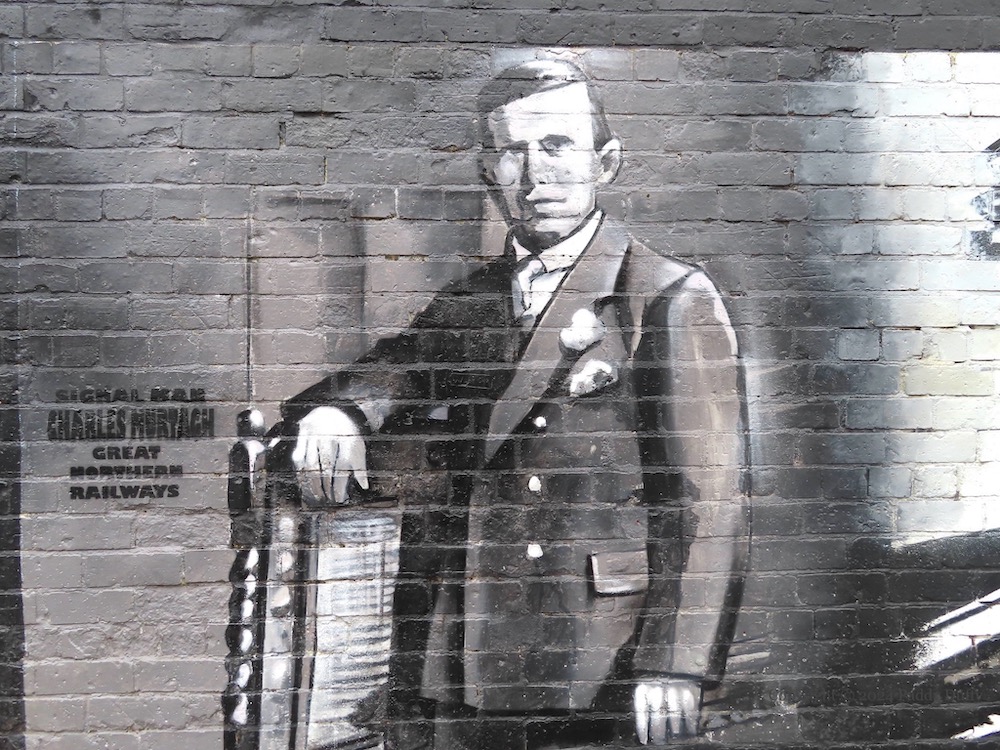
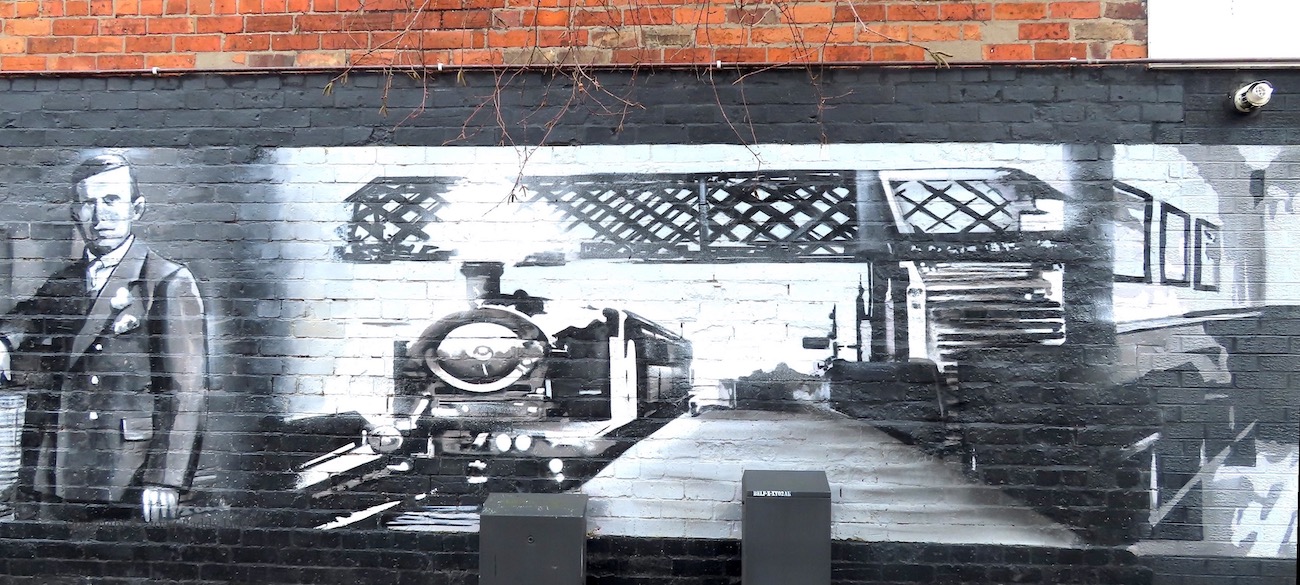
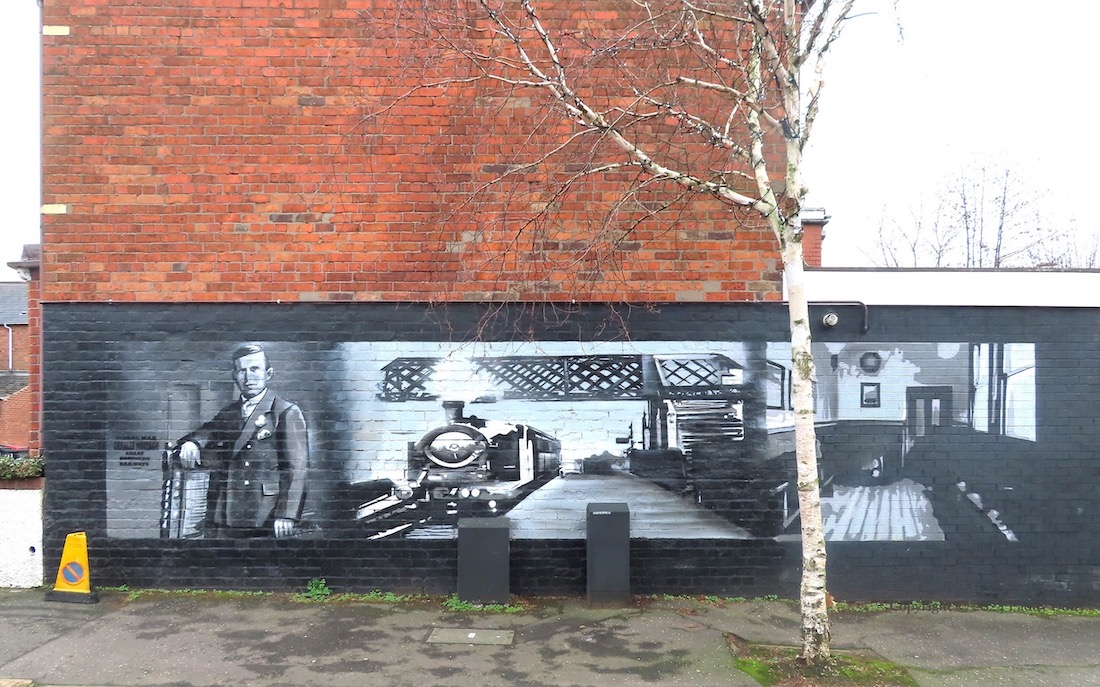
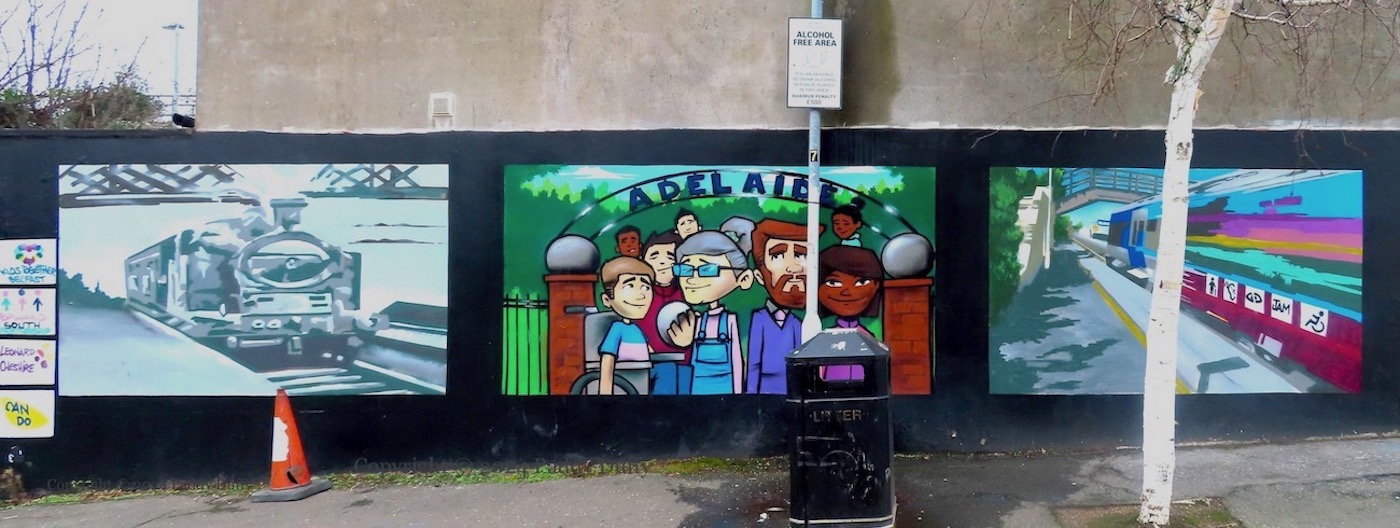
The Great Northern Railway joined Dublin with Belfast, Derry, and Ballyshannon, as well as many other smaller towns. It existed from 1876 until roughly 1958 (WP) and what was then called the “Adelaide & Windsor” station in south Belfast was opened in 1897 (WP) – the name was (presumably) based on the station’s proximity to local streets: the “Adelaide” streets were named for William IV’s consort (Street Names) and the “Windsor” streets were named for Windsor Castle (Street Names).
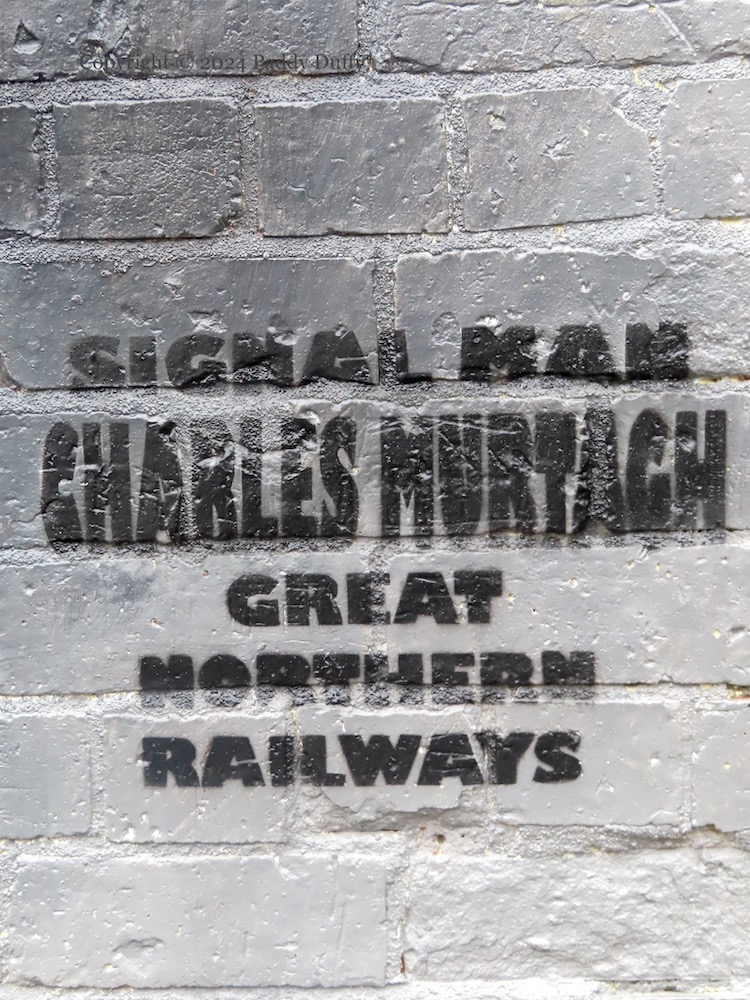
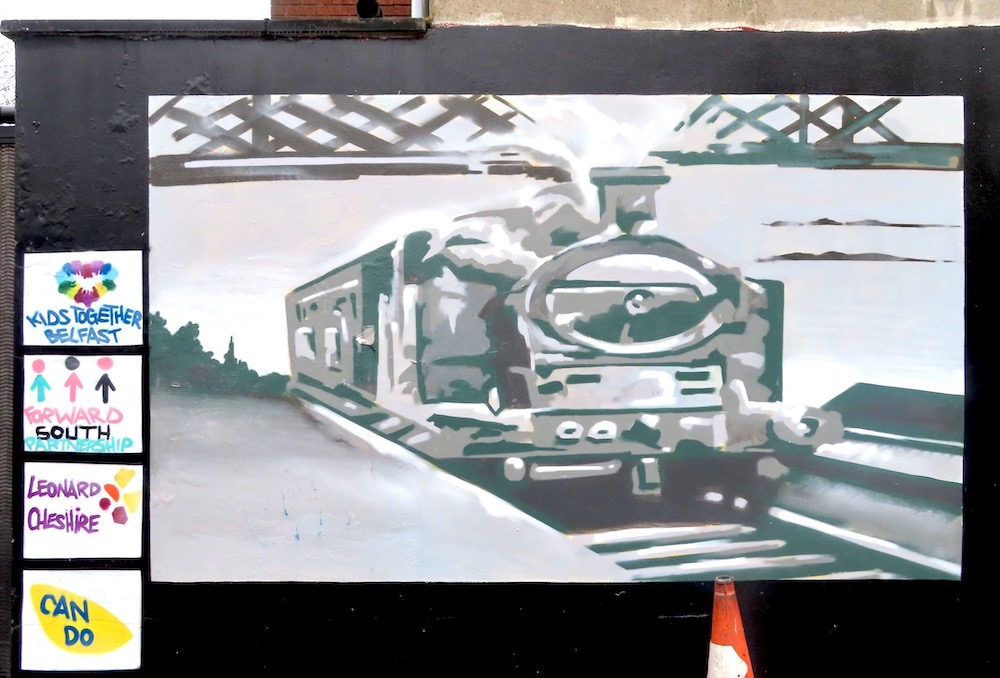
The mural shows the platform and waiting room, and a steam-powered train, and features local signal-man Charles Murtagh. Murtagh’s daughter still lives in the family home, near the station and provided the photograph from which Blaze FX (ig) reproduced (Translink).
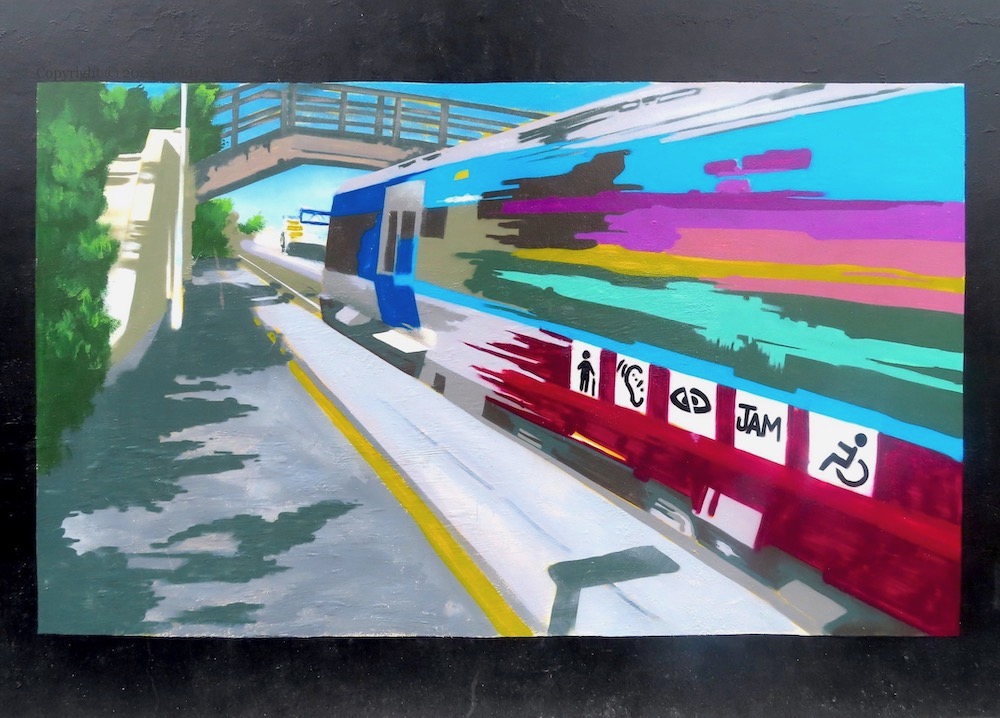
People with learning difficulties and autism who are carrying a “JAM” card (web) (for “Just a minute”) can use it on Translink buses and trains to let drivers and conductors know that they might need some extra time. The other symbols on the side of the train (in the third image, below) denote services for travelers who are visually-impaired, hearing-impaired, blind, or wheelchair-users.
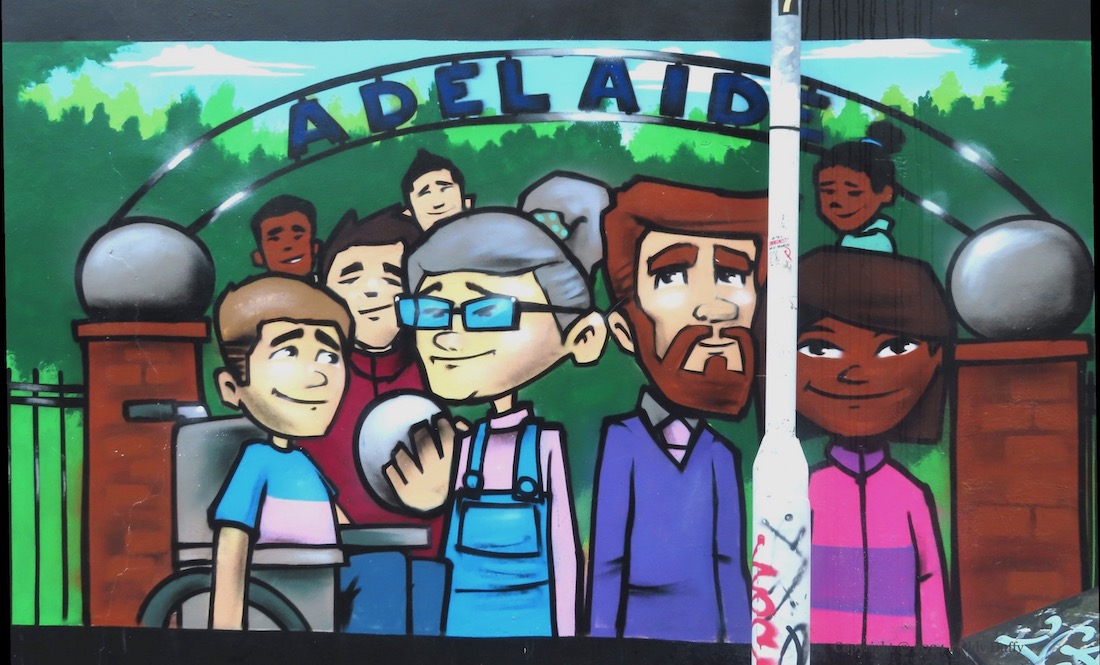
This wall-painting in south Belfast was painted by Blaze FX (ig) with help from young people with disabilities as part of a “Can Do” project (Fb) from Leonard Cheshire (web) and Kids Together Belfast (Fb). With funding from Forward South Partnership (web), Translink, and Belfast City Council (Belfast Live).