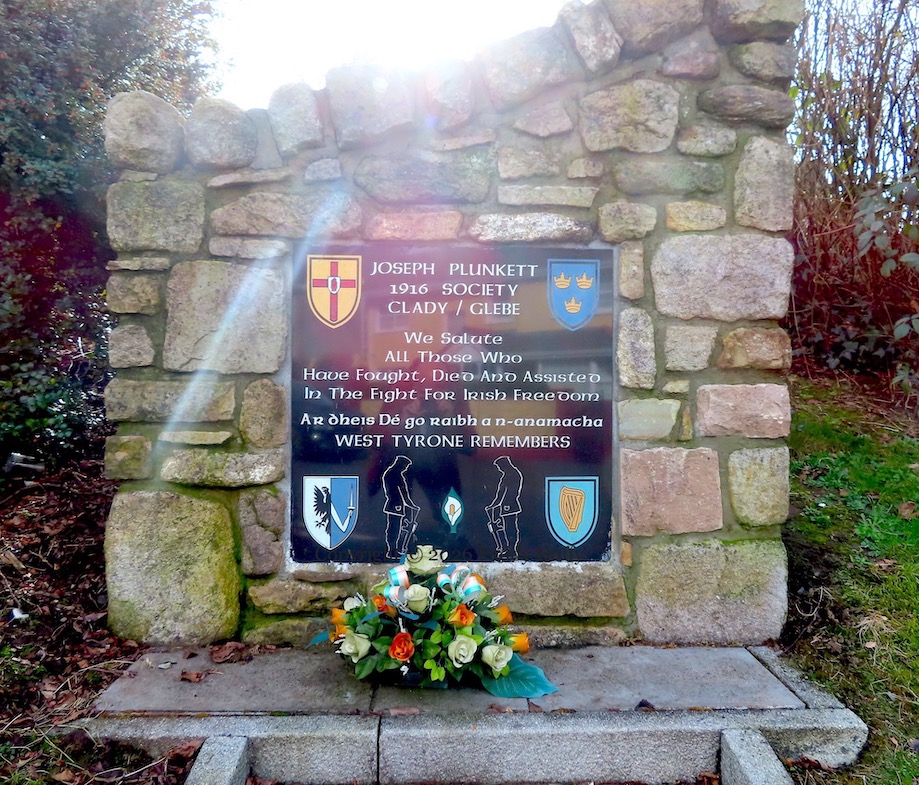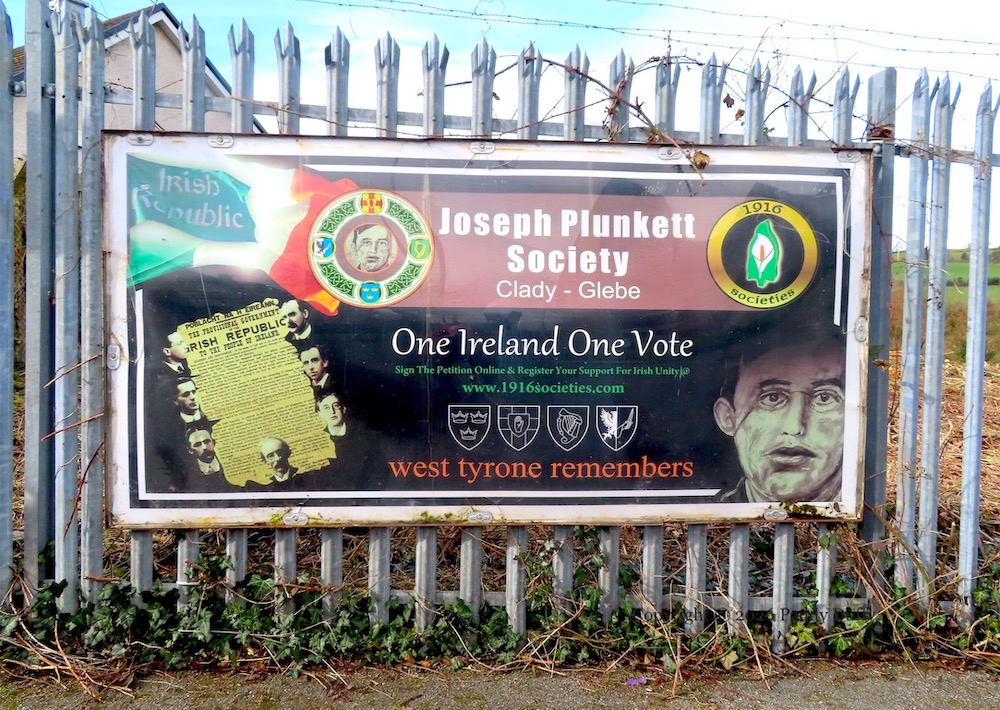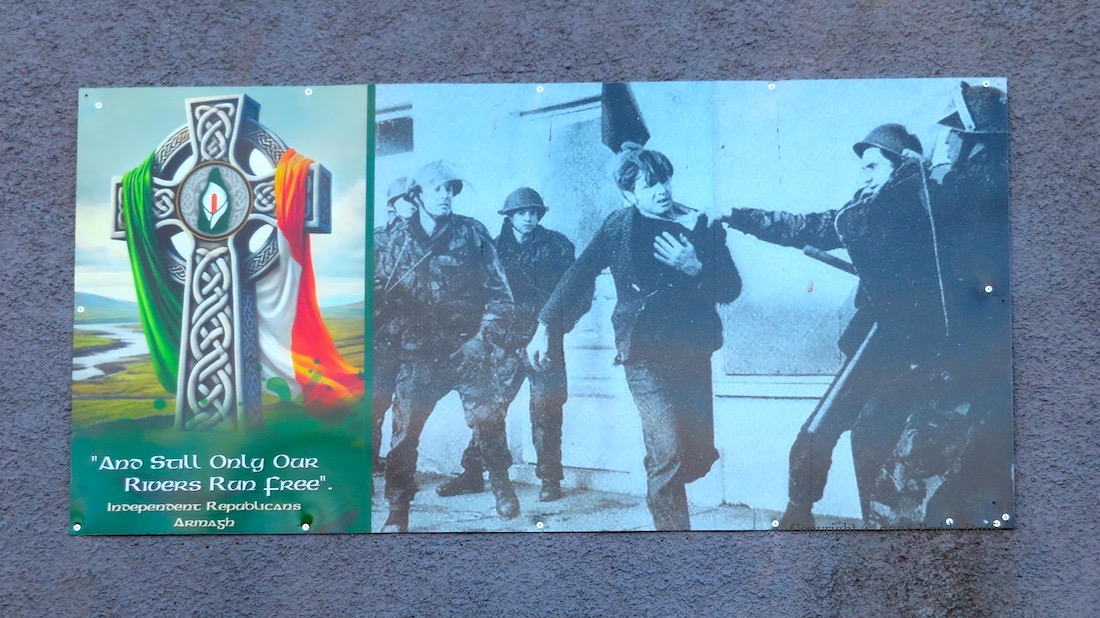
The photograph on the right is real: it shows British troops collaring a civilian in Coalisland in December 1971 – photographer unknown. The image on the left – a Celtic cross draped with a Tricolour – is AI slop. The first (or at least, an early and prominent) use of AI to produce images was Stop The Slaughter In Gaza from November 2023, and it is becoming more frequent in printed boards and wall-painting.
“”And still only our rivers run free” [youtube] – Independent Republicans Armagh [Fb]”
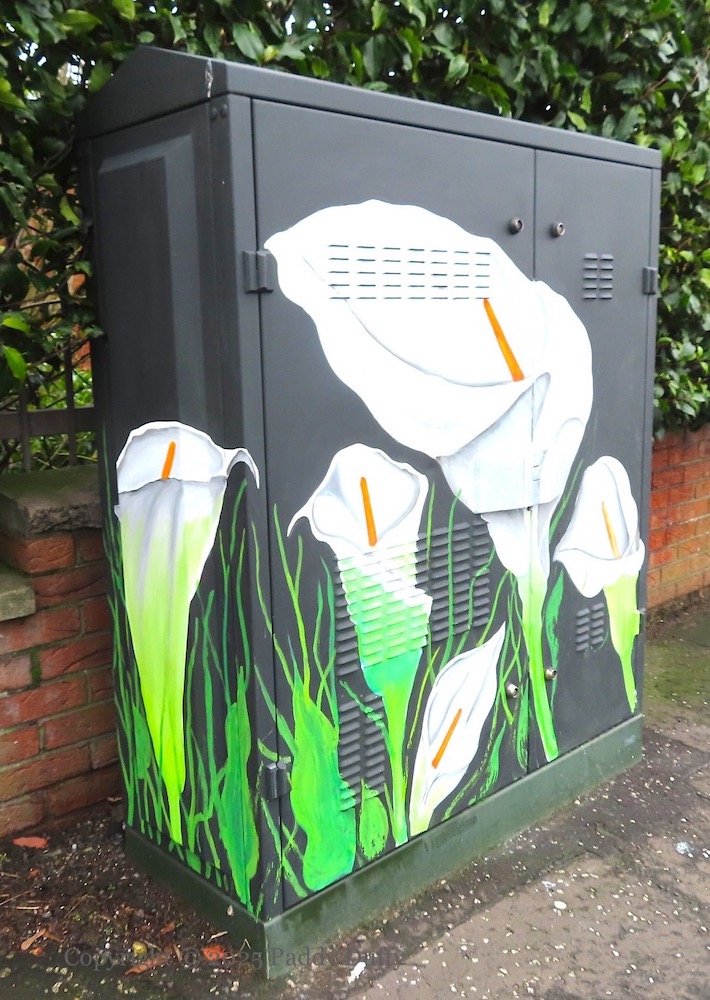
These Easter lilies are on a junction box on the Springfield Road at New Barnsley Park, west Belfast, and across the street from the boxes seen in Bóthar Chluanaí and Gaırdín Na hÉıreann.
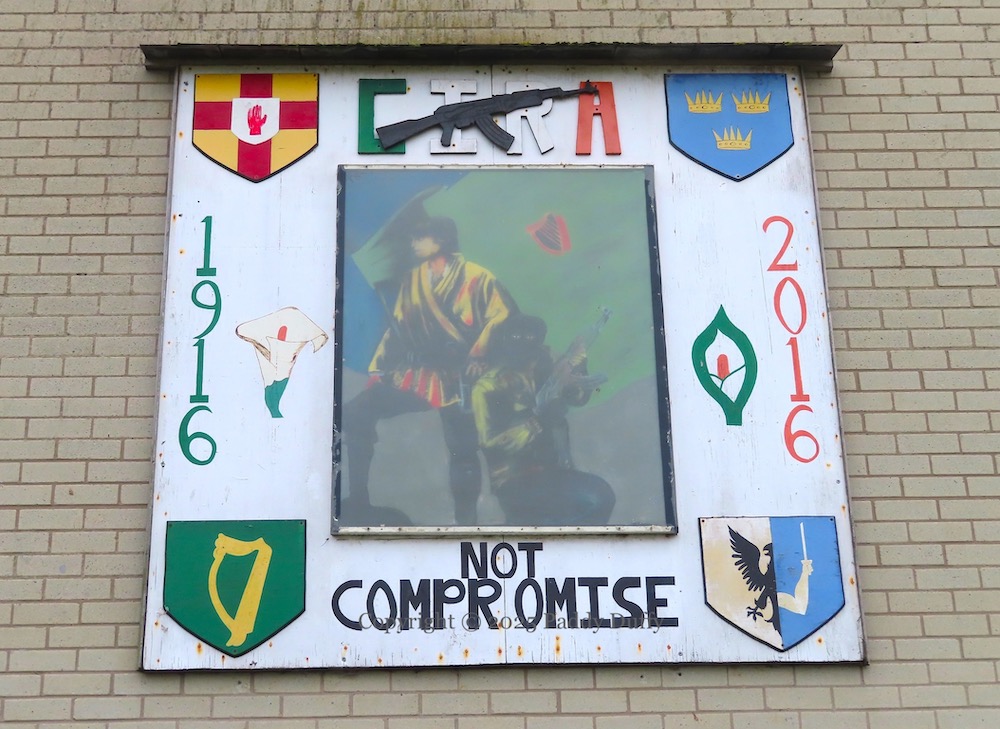
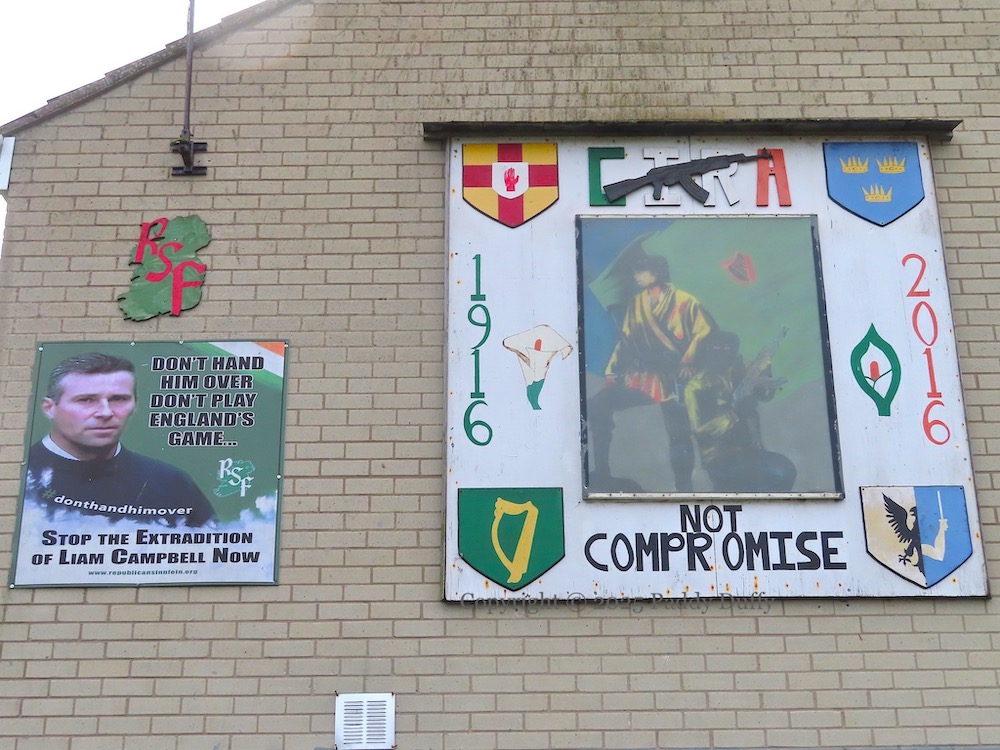
The CIRA (Continuity IRA) is the military wing of Republican Sınn Féın (RSF web), which split from Provisional Sınn Féın in 1986, though the military campaign did not begin until the Provisional IRA ceasefire in 1994. Like all of the various IRAs, the CIRA claims to be continuing the fight for (all-island) Irish freedom begun with the 1916 Easter Rising – the board (above) commemorates the centenary of the Rising.
To the left is a slightly newer RSF board: “Stop the extradition of Liam Campbell now – don’t hand him over, don’t play England’s game”. Campbell was extradited from the Republic to Lithuania in 2022 (BBC) but was returned to Ireland later the same year when a court ruled the statute of limitations has expired (RN).
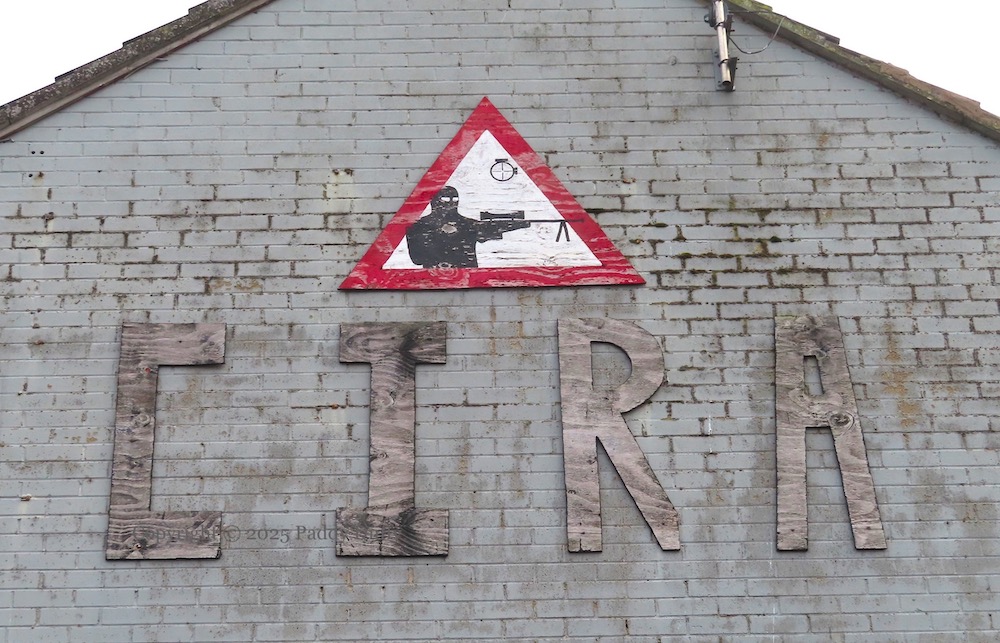
The CIRA’s armed campaign is represented by the hooded gunman in the ‘warning sign’ below.
Also included (last below) is a small IRSP (web) stencil.
The pieces are in the adjacent Meadowbrook and Drumbeg areas of Lurgan.
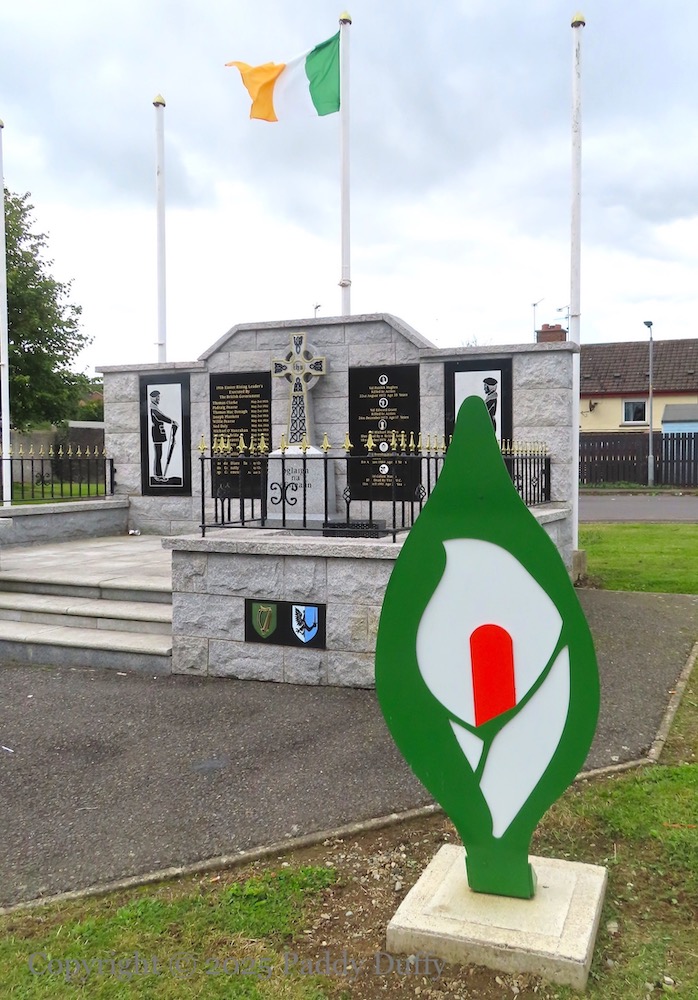
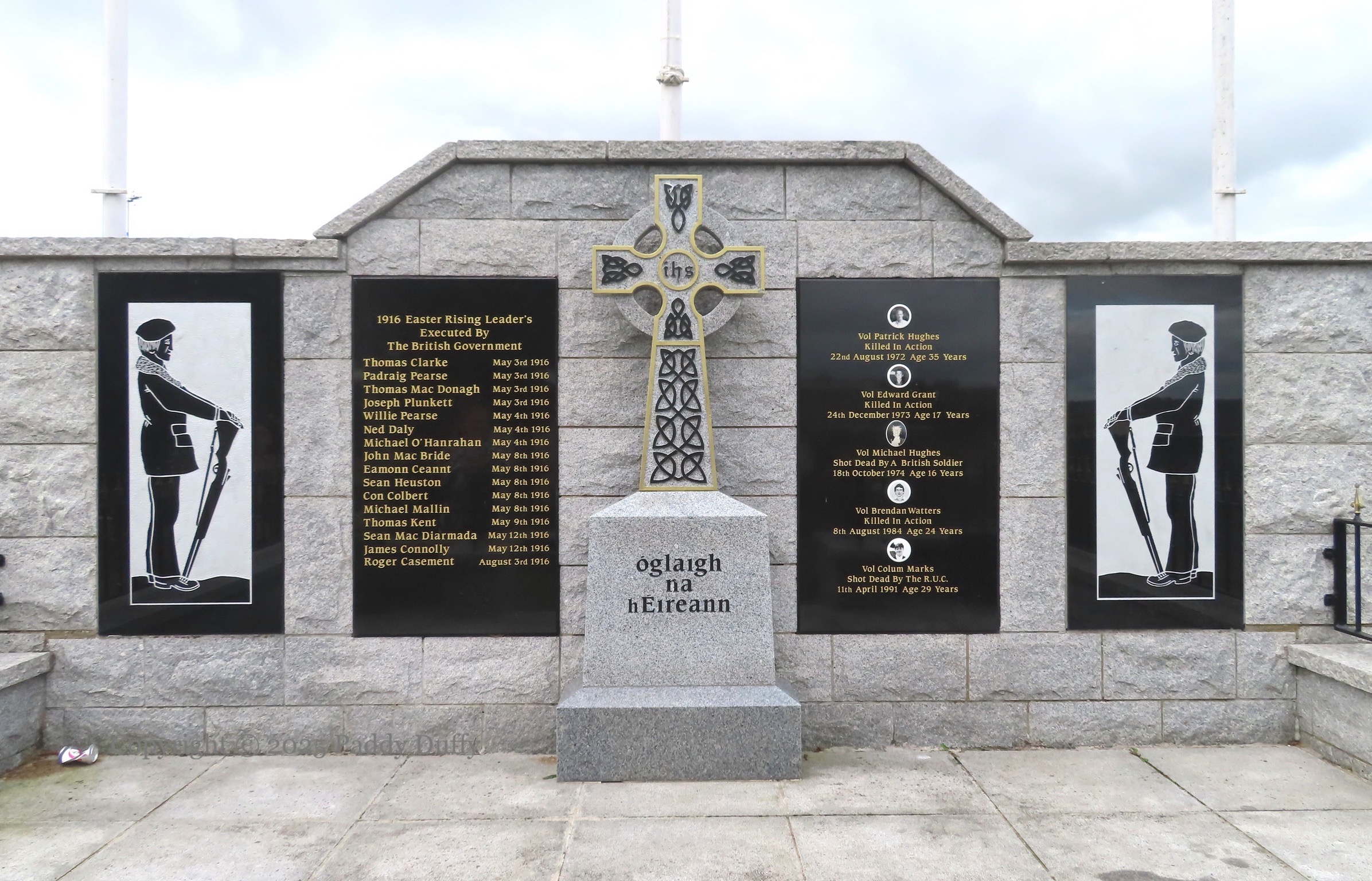
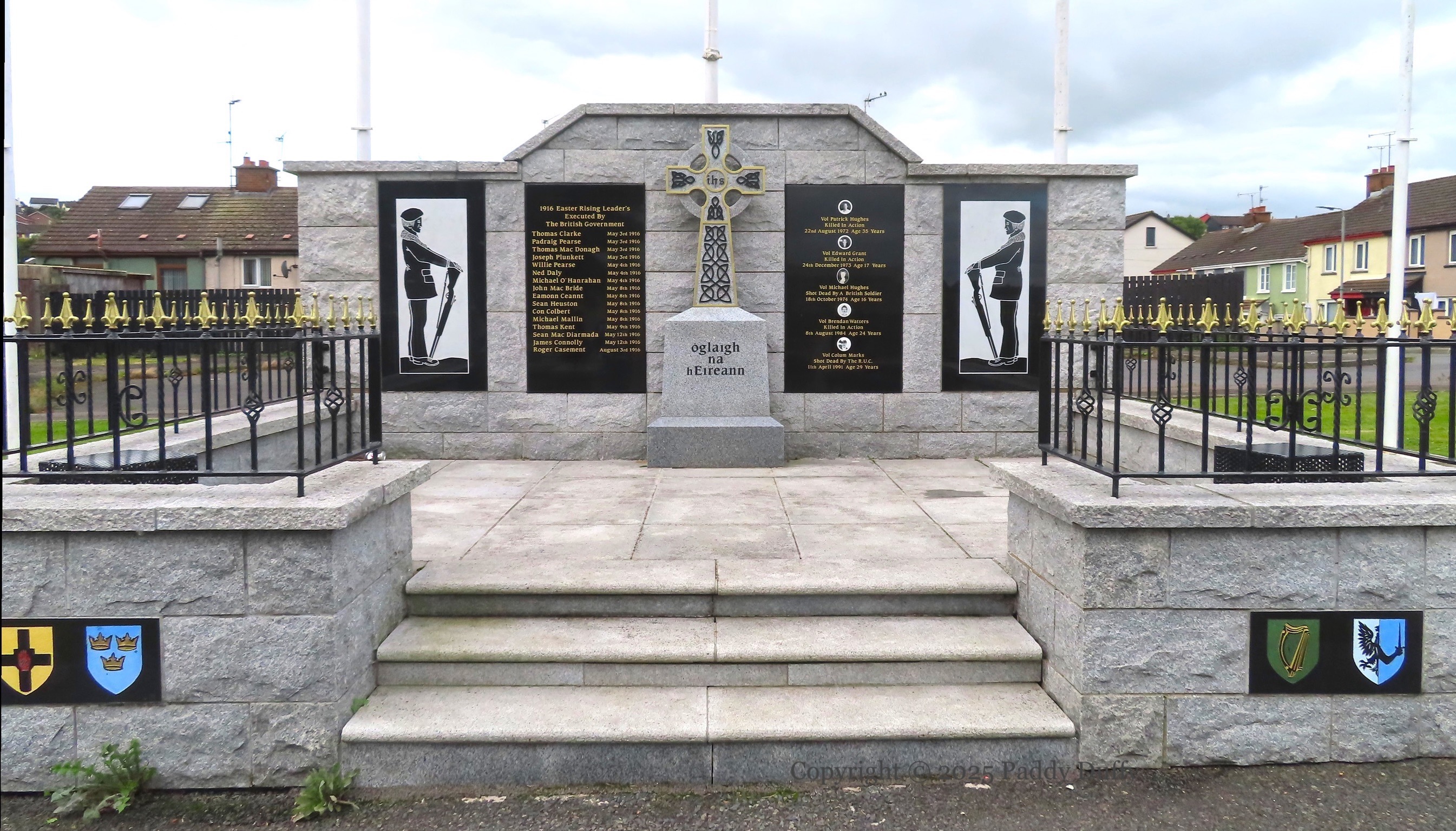
On the left of this Newry memorial is a list of the “1916 Easter Rising Leaders executed by the British government: Thomas Clarke, Padraig Pearse, Thomas Mac Donagh, Joseph Plunkett, Willie Pearse, Ned Daly, Michael O’Hanrahan John Mac Bride, Eamonn Ceannt, Sean Heuston, Con Colbert, Michael Mallin, Thomas Kent, Sean Mac Diarmada, James Connolly, Roger Casement.”
On the right are five members of the local Óglaıgh na hÉıreann: Patrick Hughes, Edward Grant, Michael Hughes, Brendan Watters, Colum Marks.” Michael Hughes/Mıcheál Ó hAodha is commemorated at the western entrance to the estate and the plaque also mentions the death of his father, Patsy, and the death by premature explosion of his friend Eddie Grant in 1973. Brendan Watters likewise died by premature explosion (UPI). There is a memorial stone in Downpatrick at the spot where Colum Marks was killed.
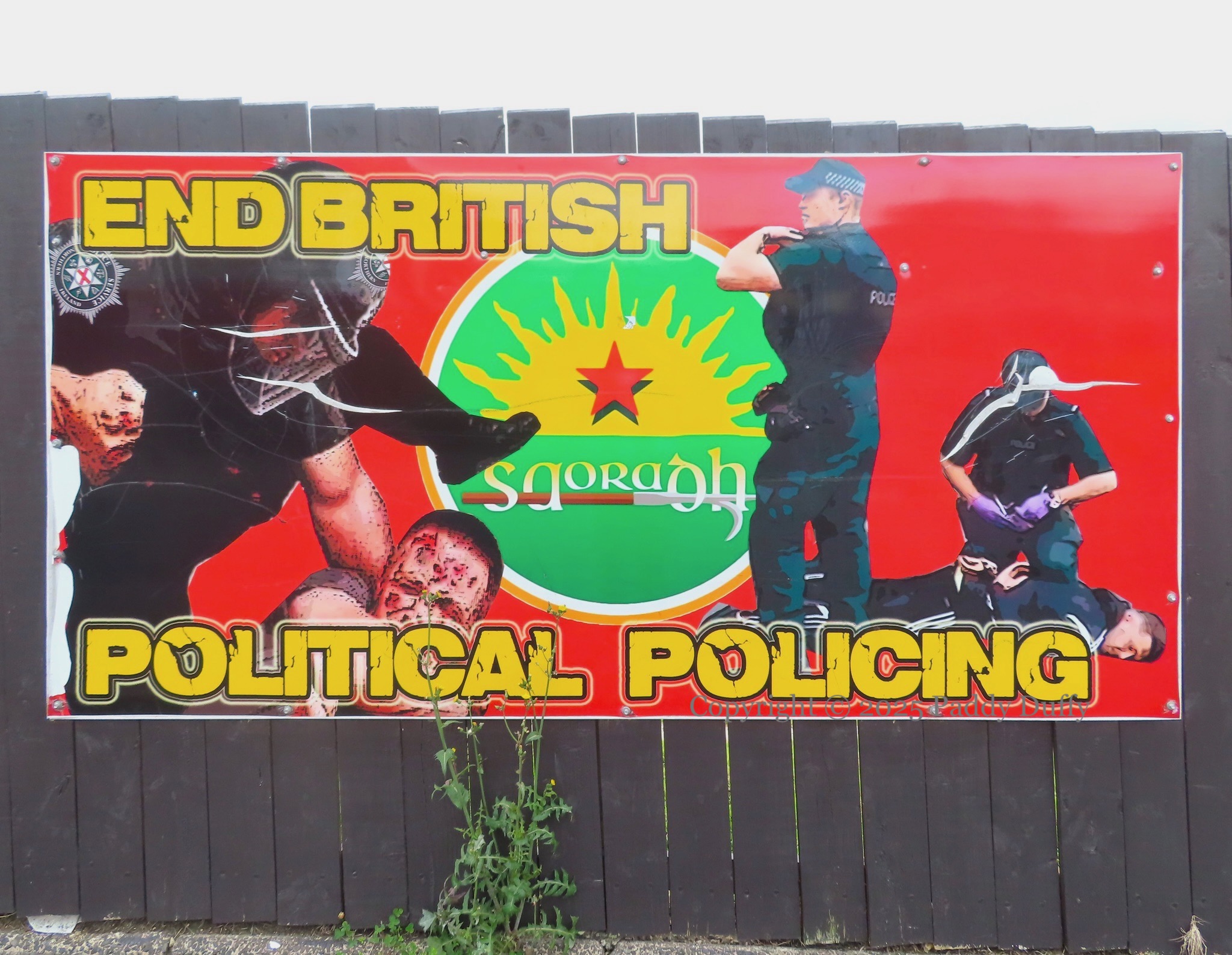
Included last below is a Saoradh (web) board: “End British political policing”.
The central space in Ardoyne’s Easter Rising centenary wall, combining stencils of the signatories to the Proclamation around a tarp of the document (see In Commemoration Of 1916) has been empty – except for some electoral signs – since 2019’s board marking the centenary of Sınn Féın (see Still The People Spoke). This new tarp returns to the Proclamation and Easter lily and matches the frame of signatories once more.
The last full mural on the wall fell down in 2014 and there does not appear to have been the energy to paint another full mural since then – but perhaps the fading paint around Clarke and Connolly will provoke a complete re-do.
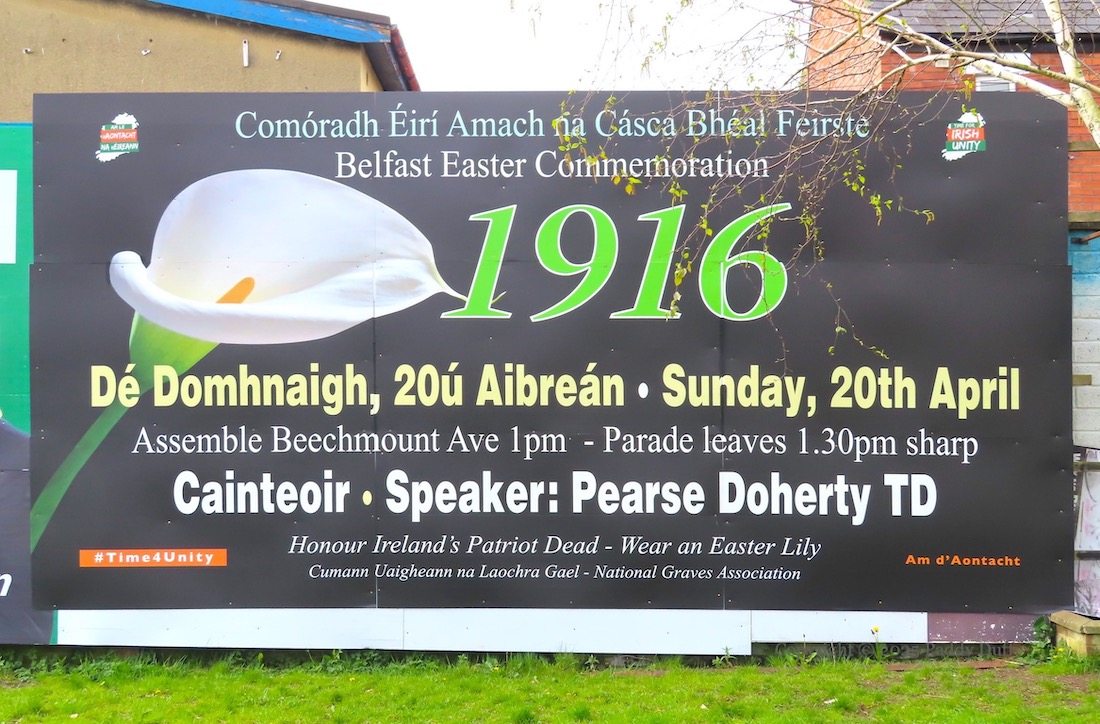
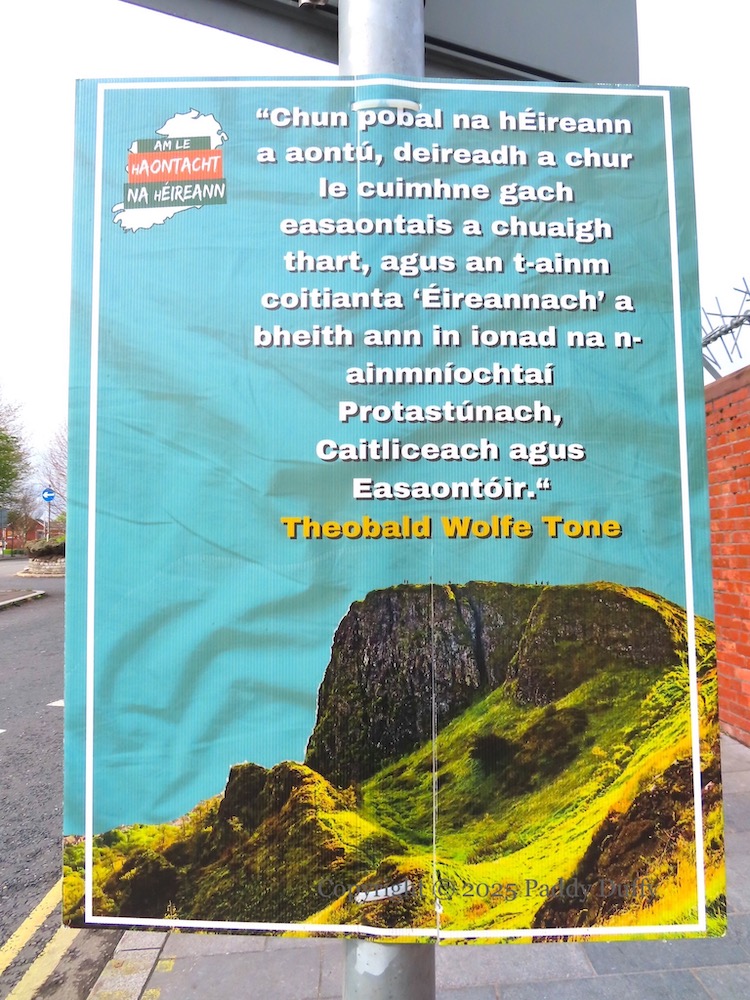
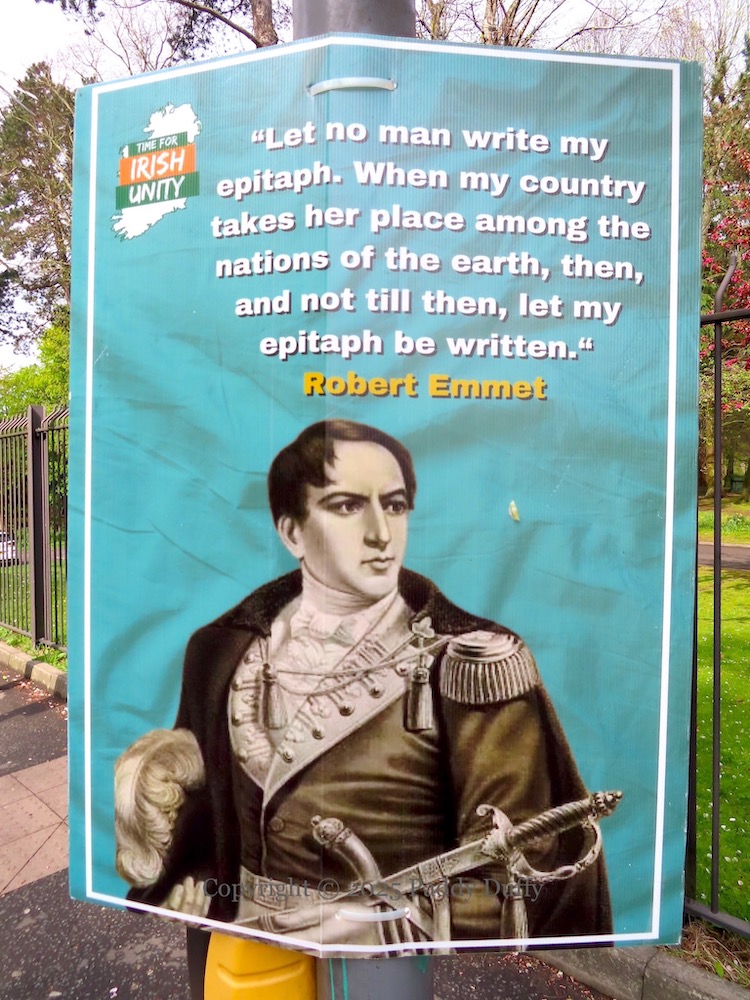
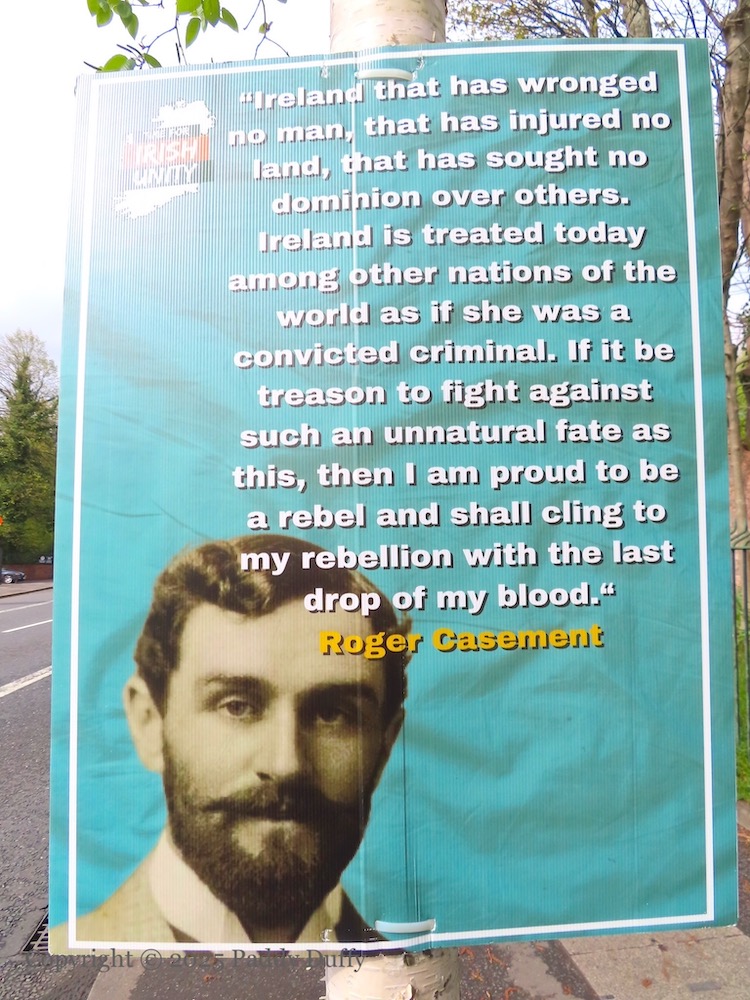
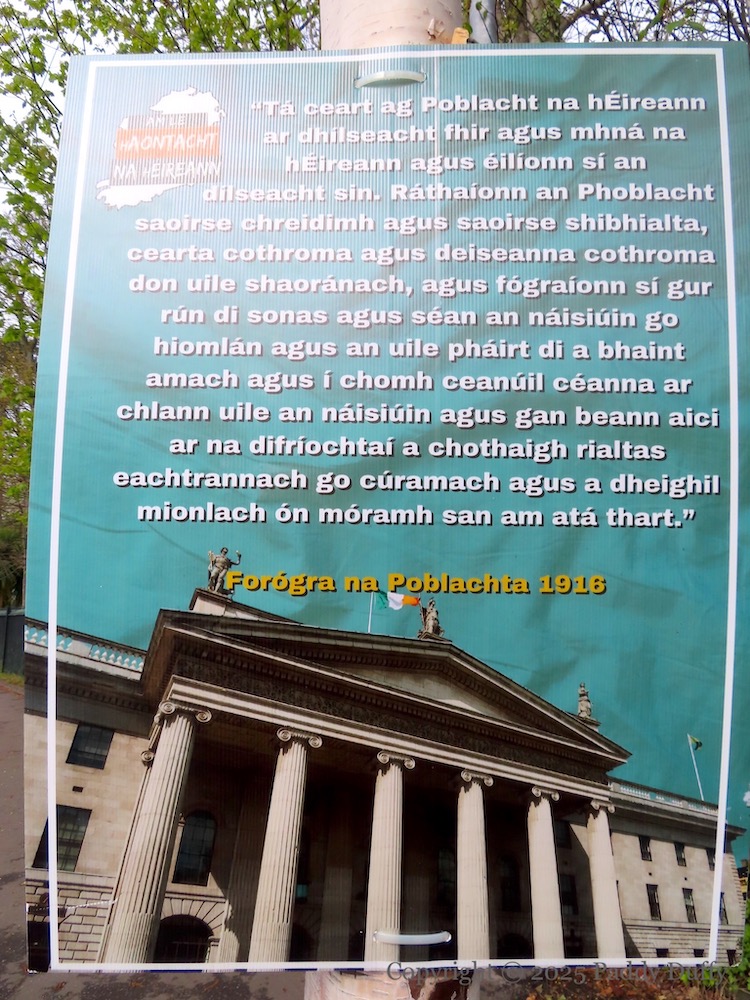
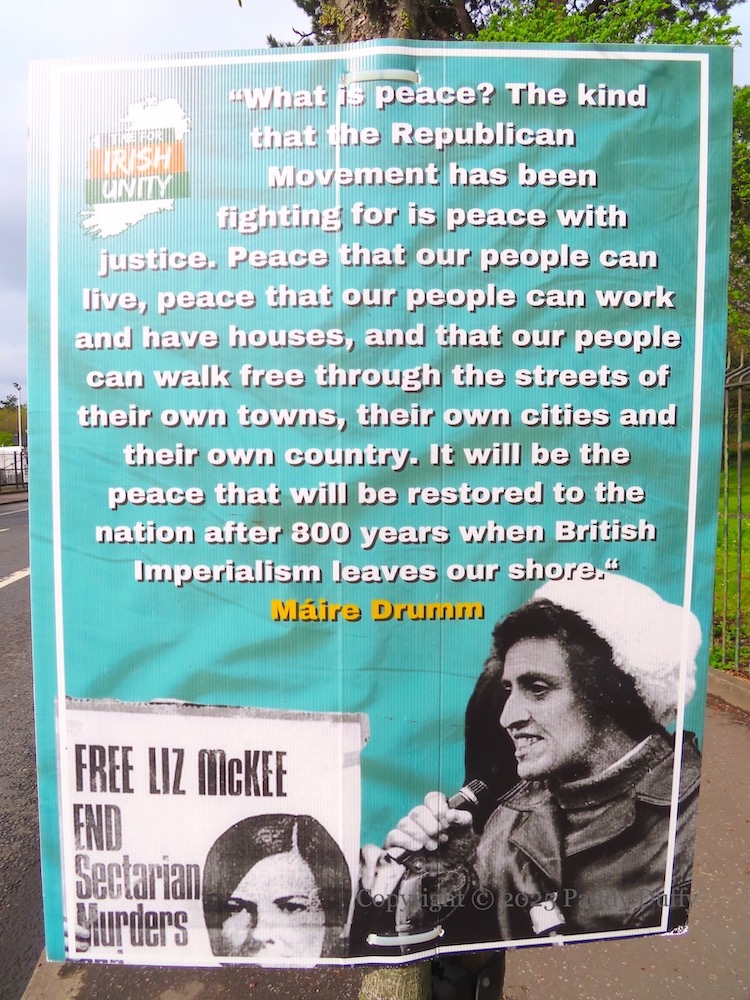
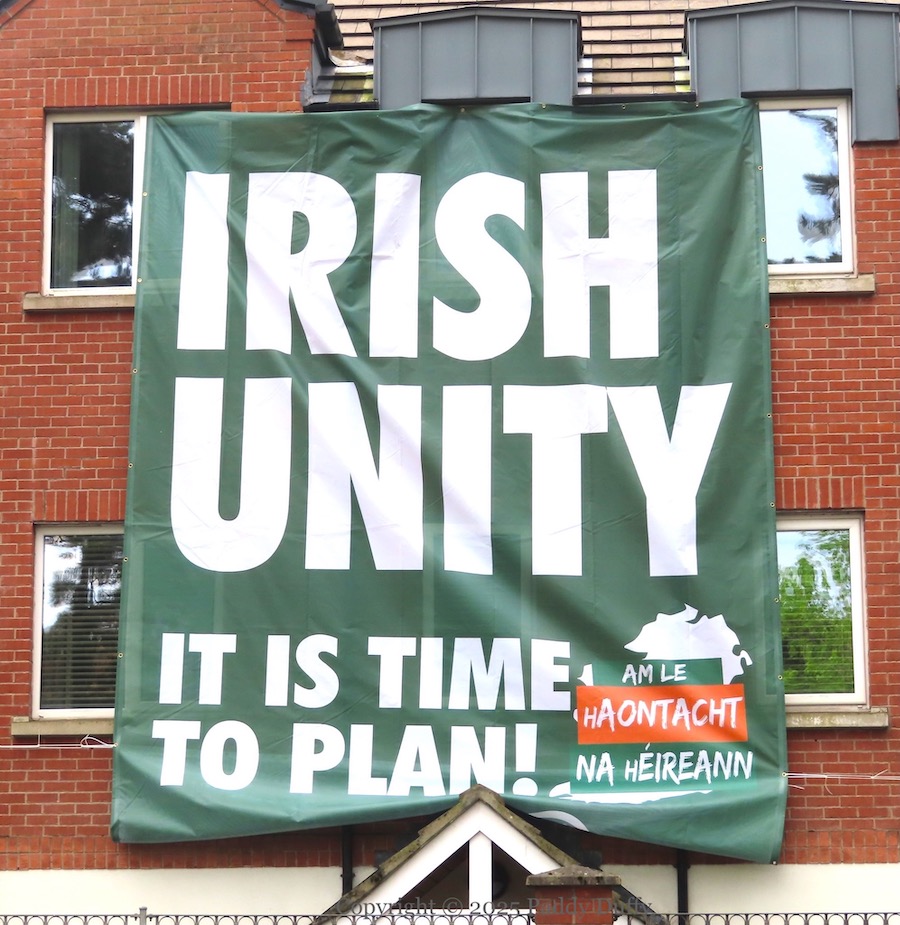
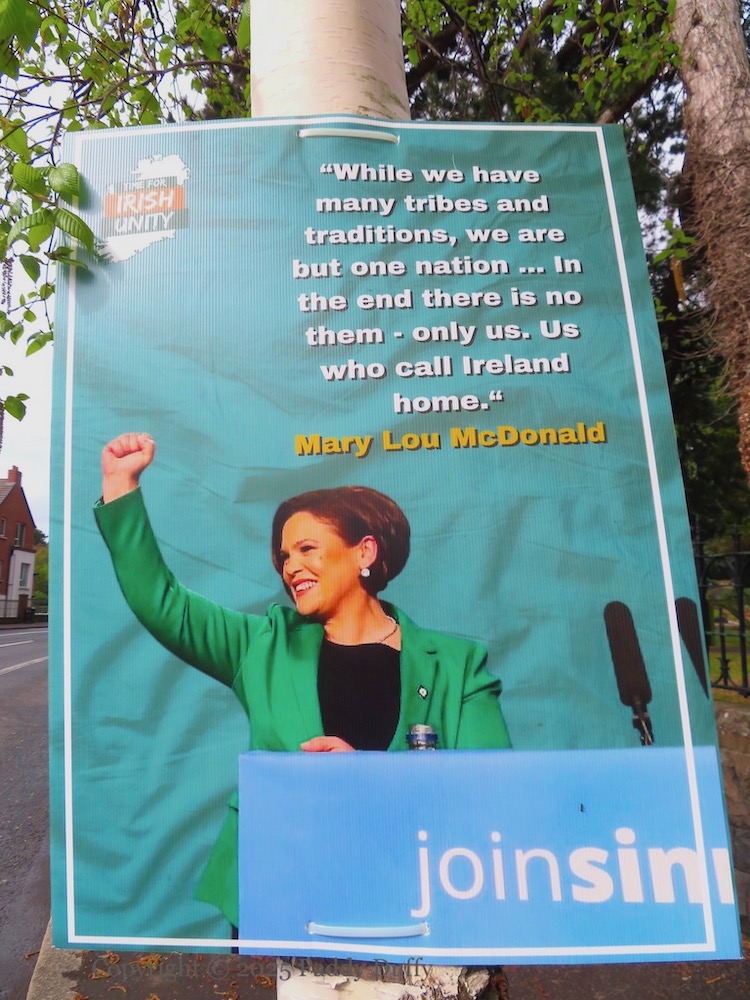
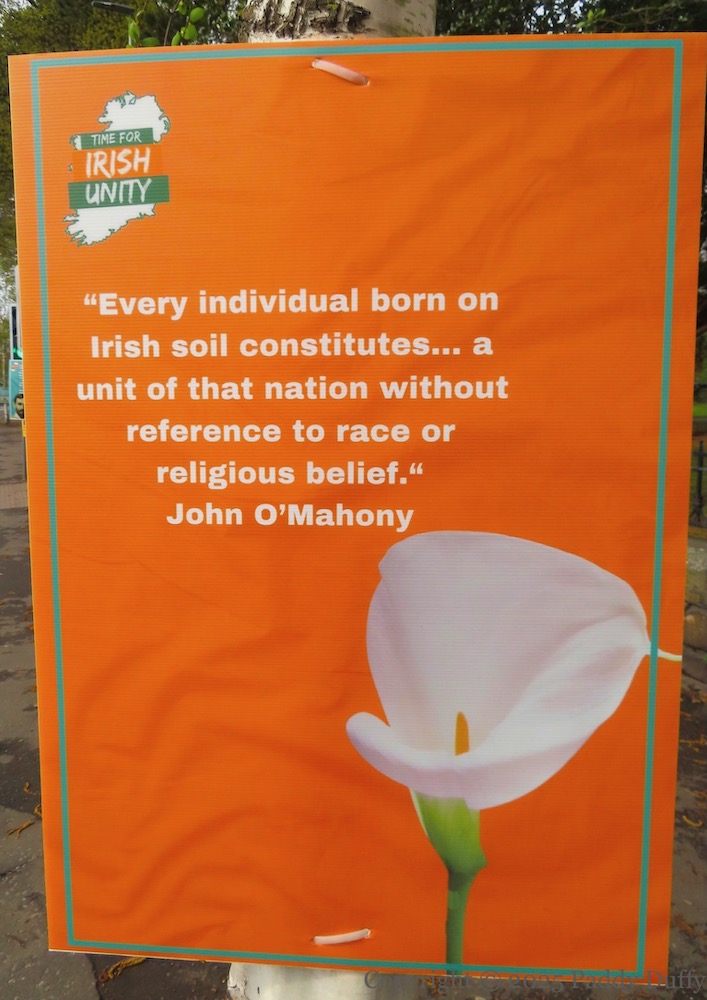
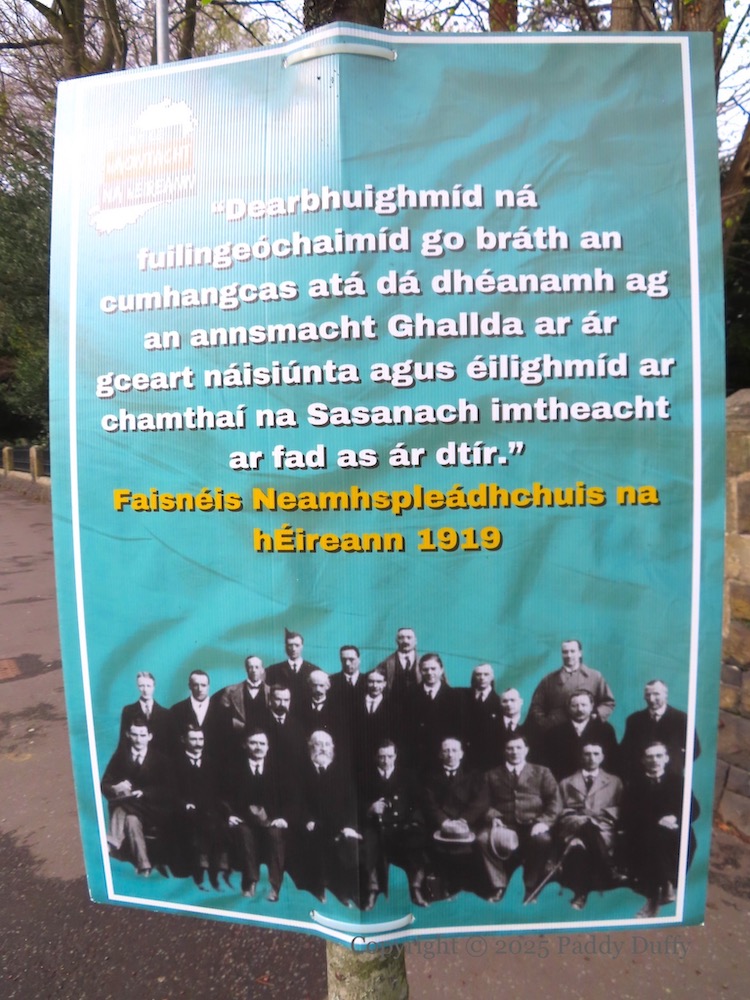
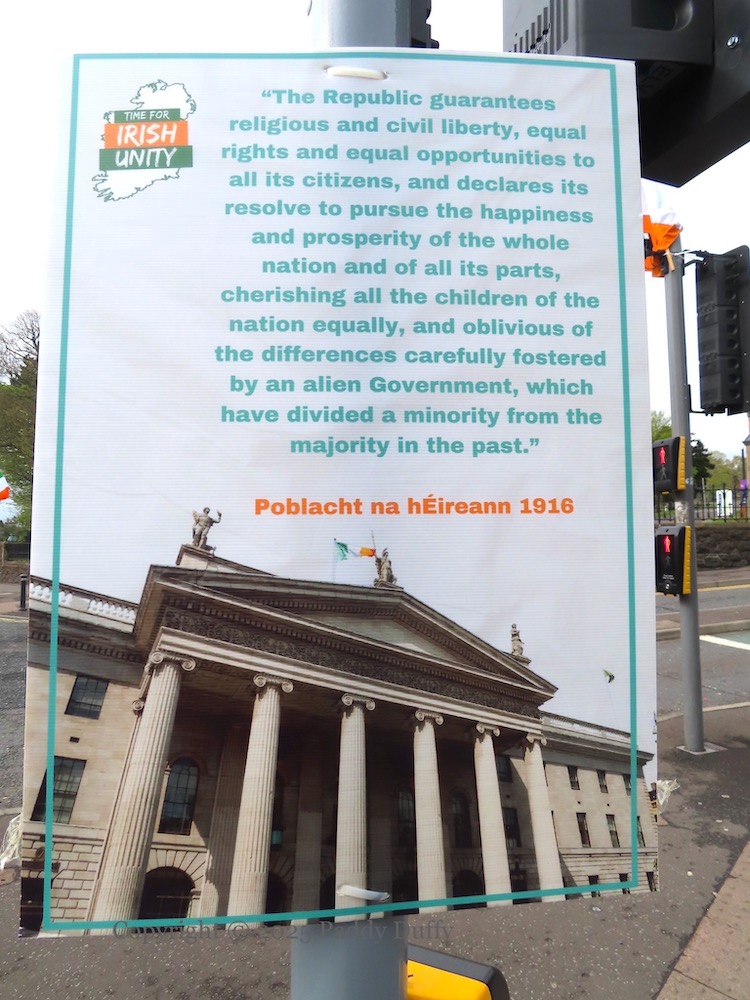
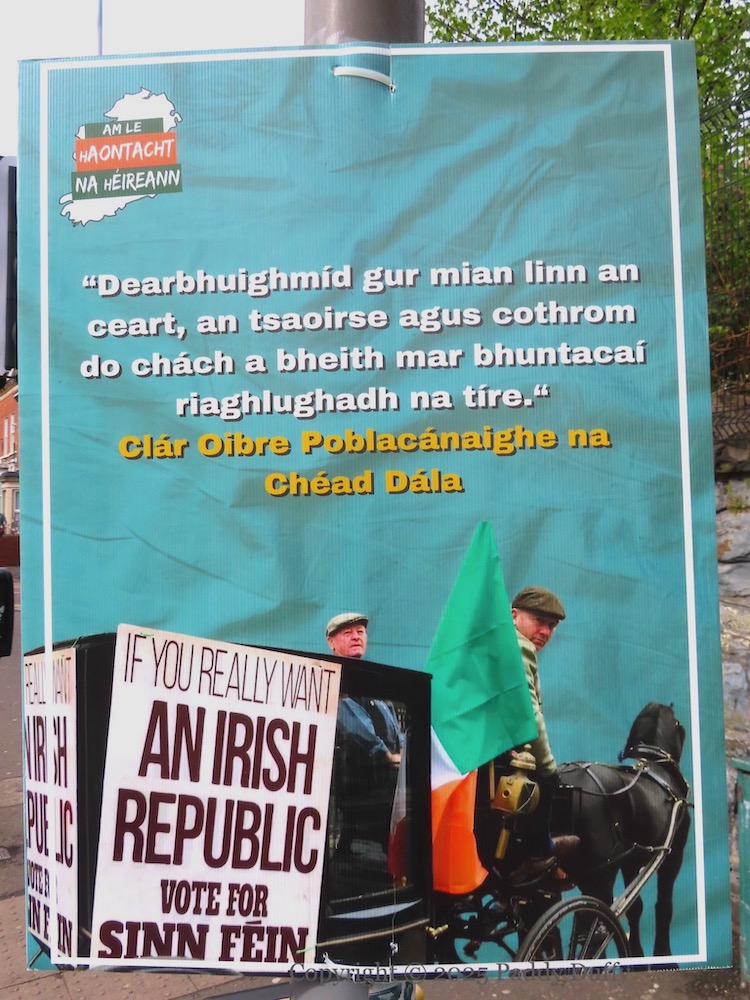
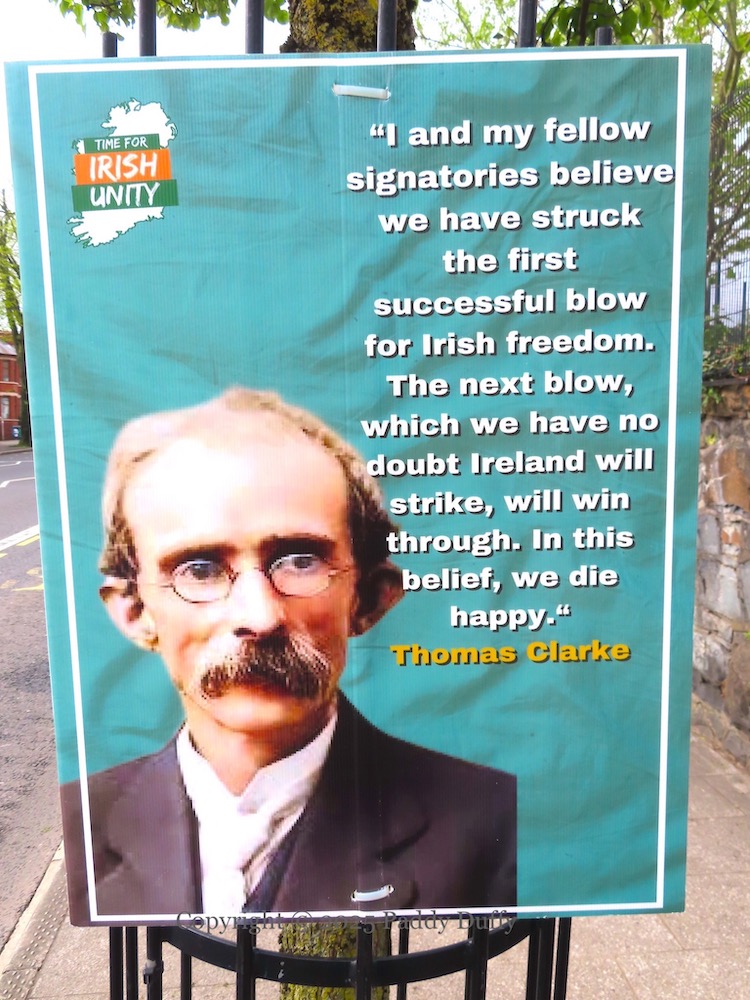
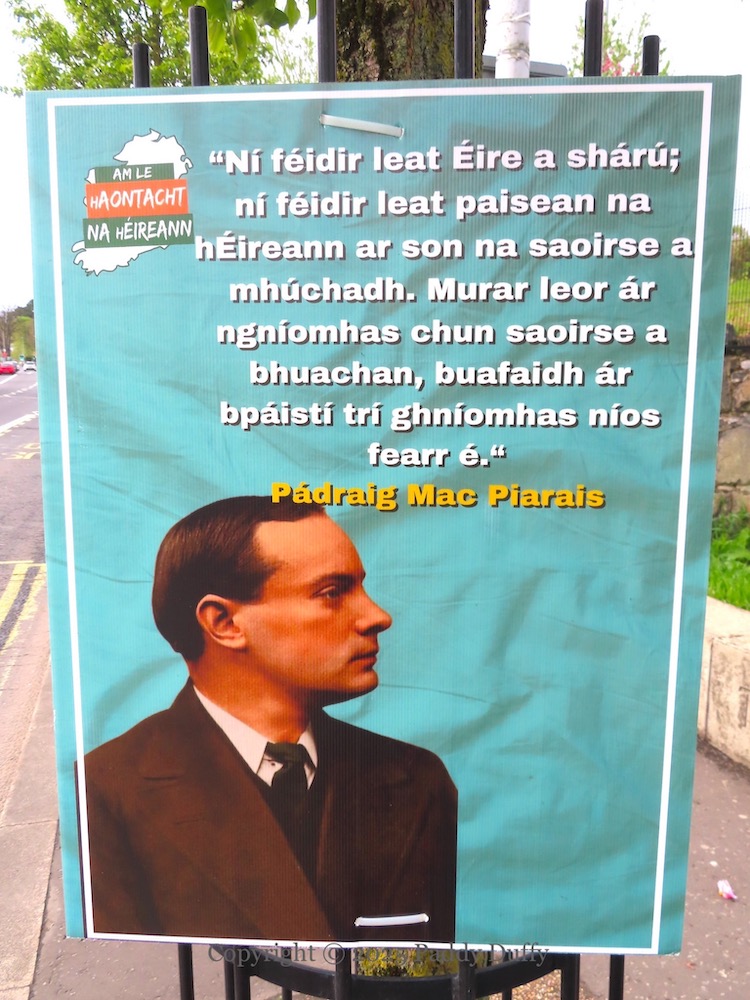
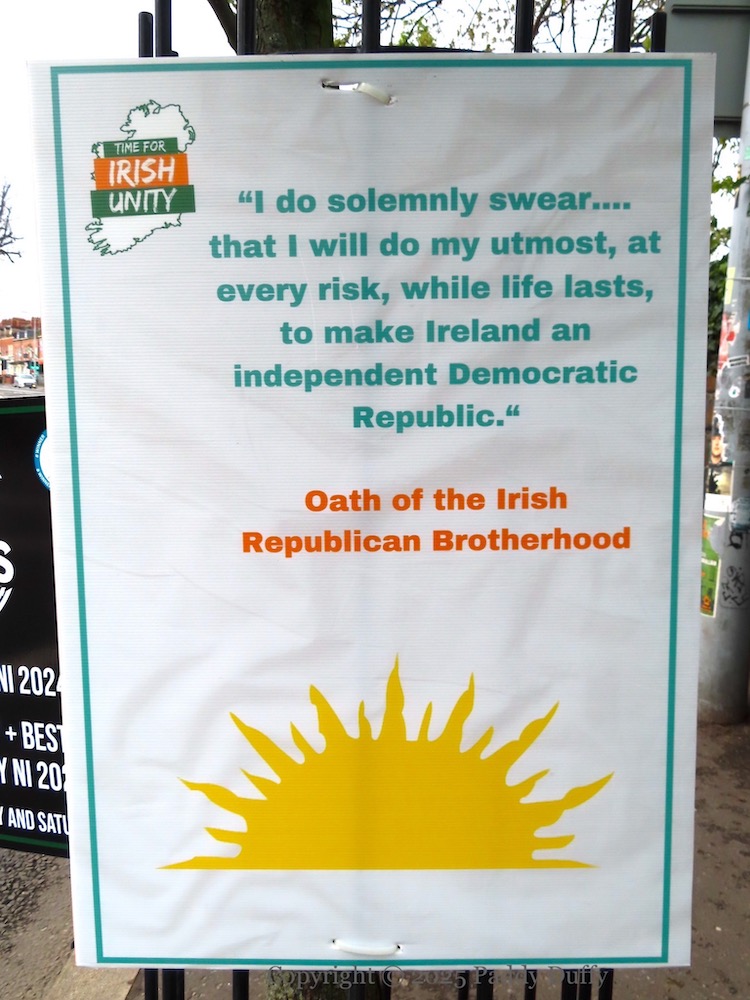
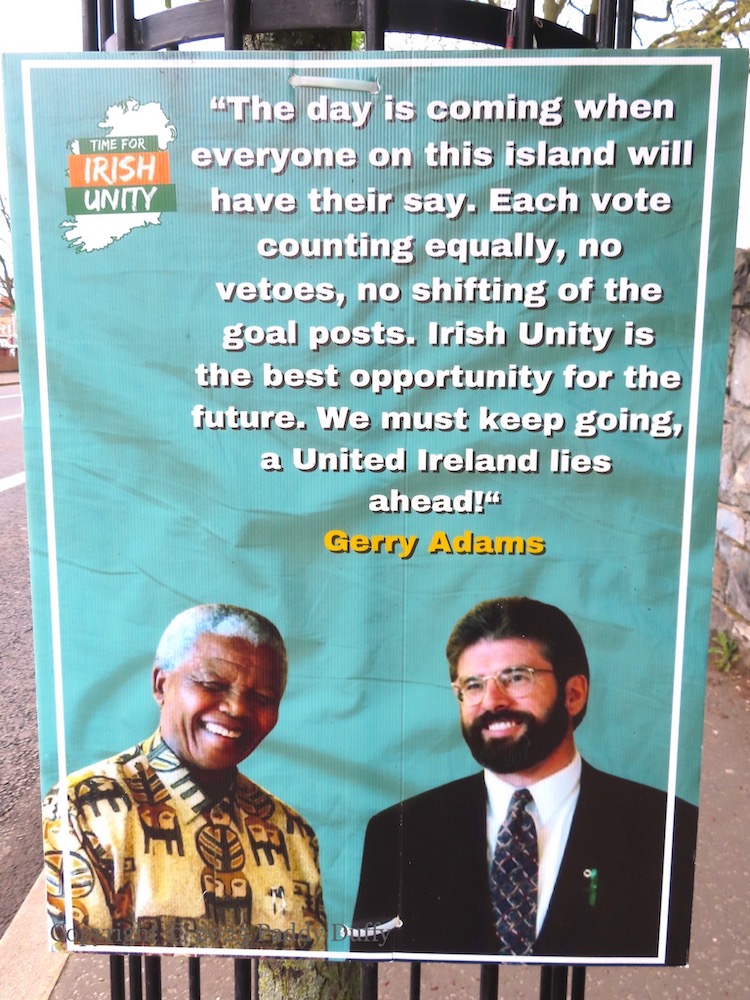
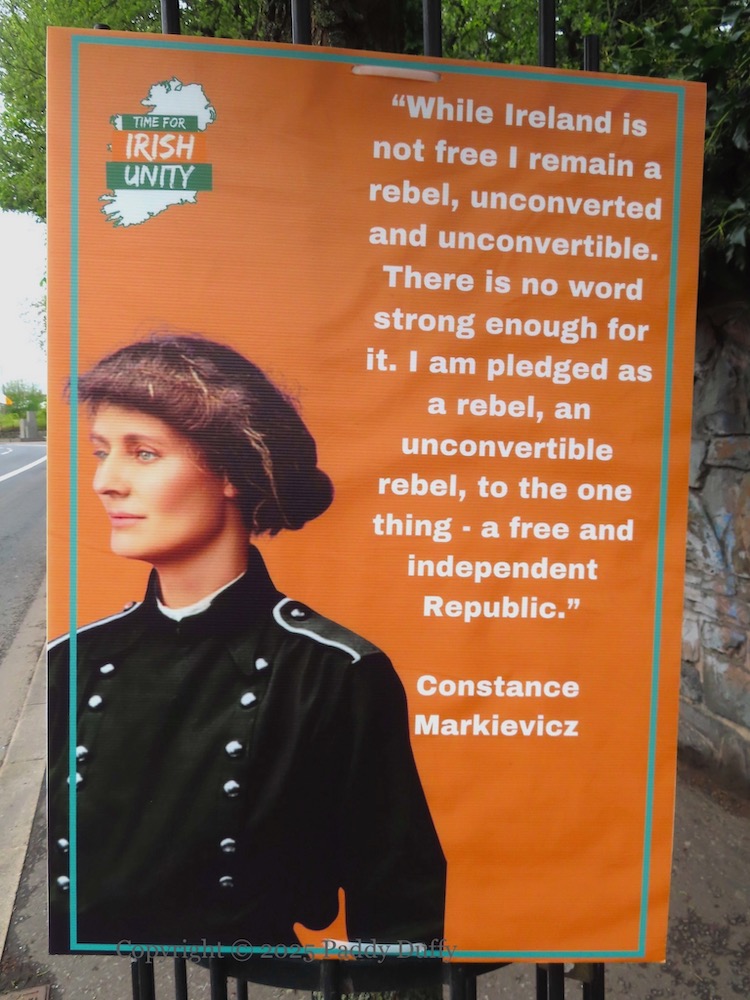
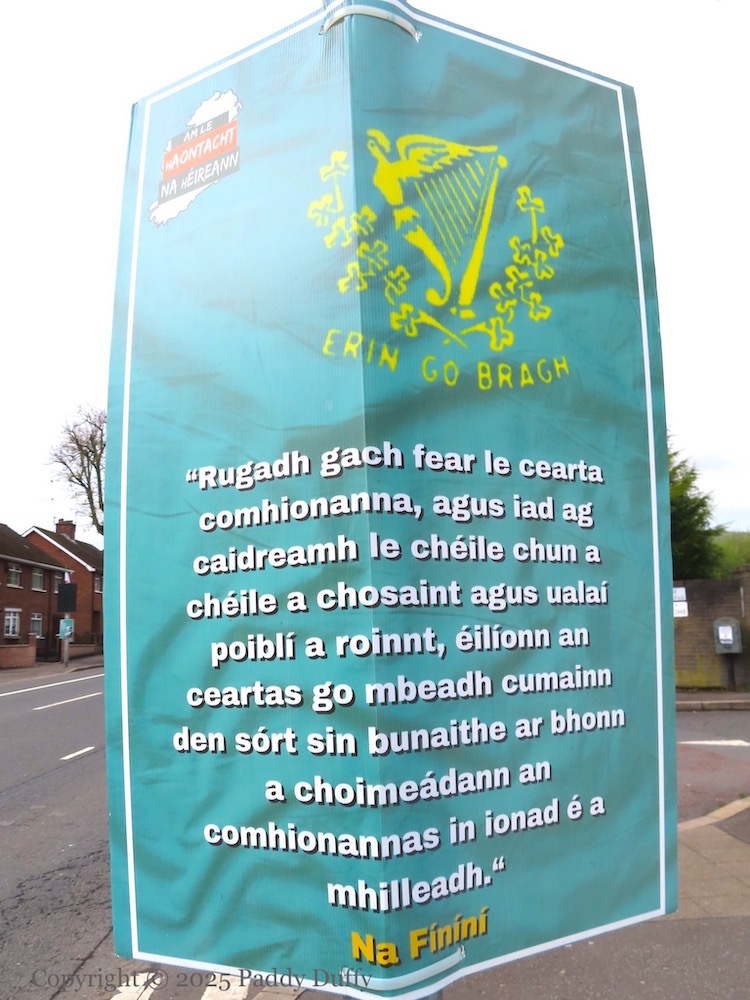
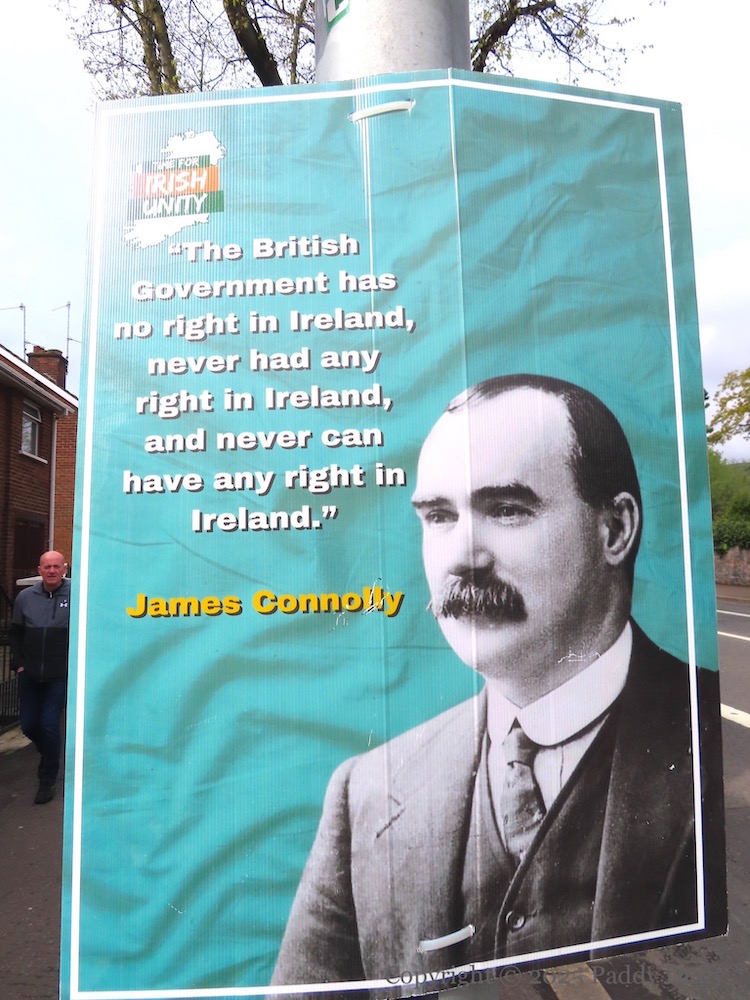
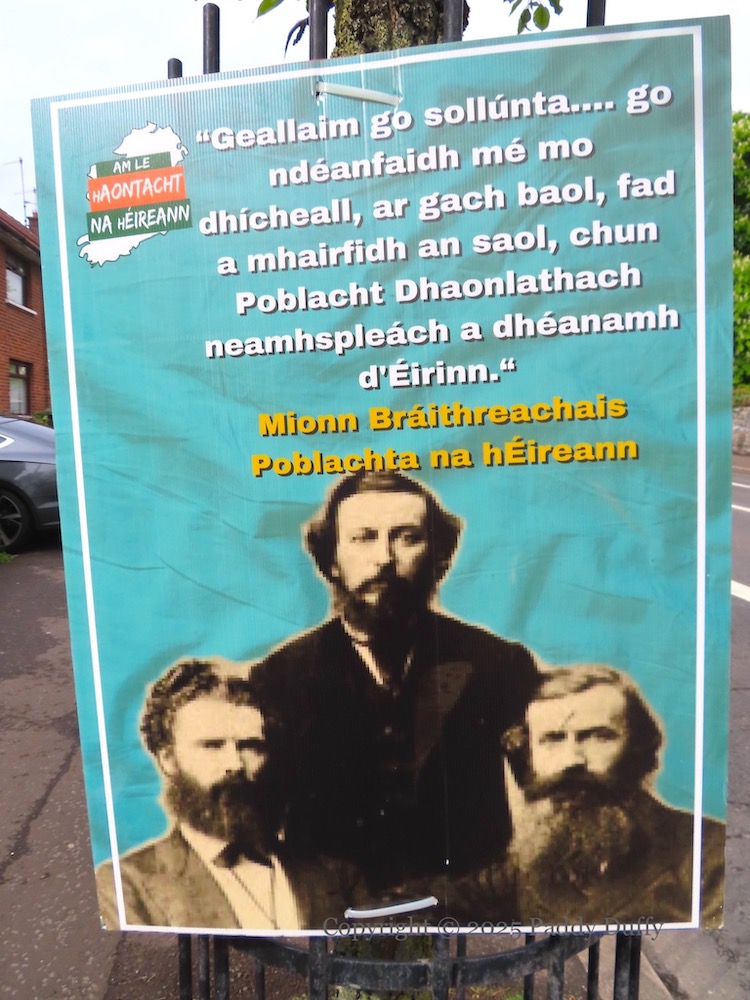
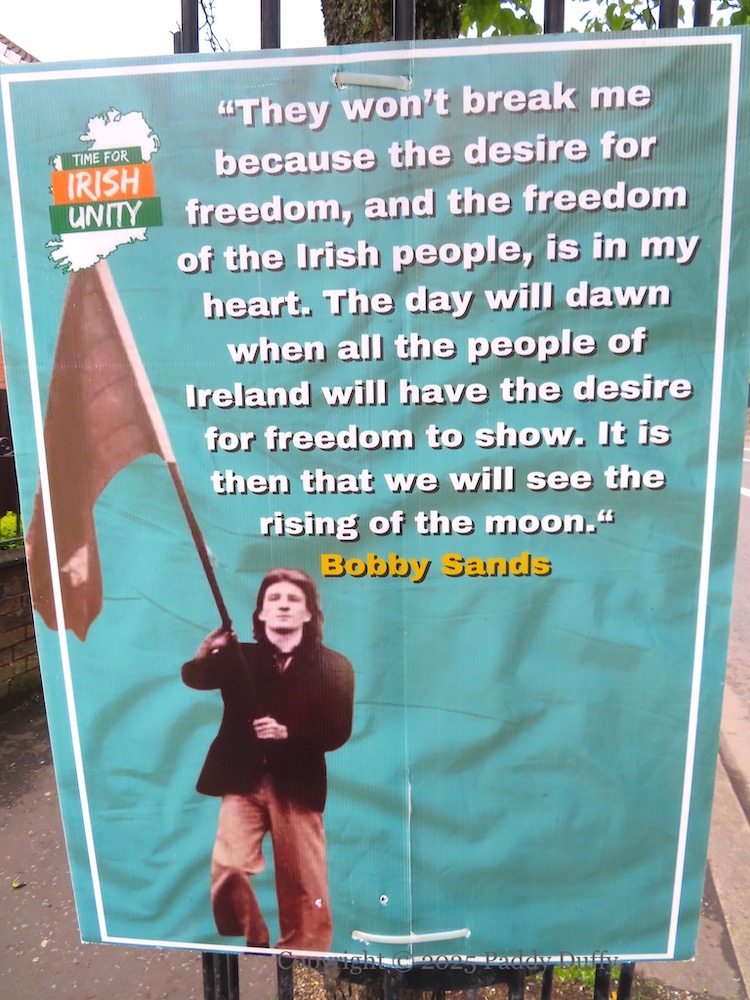
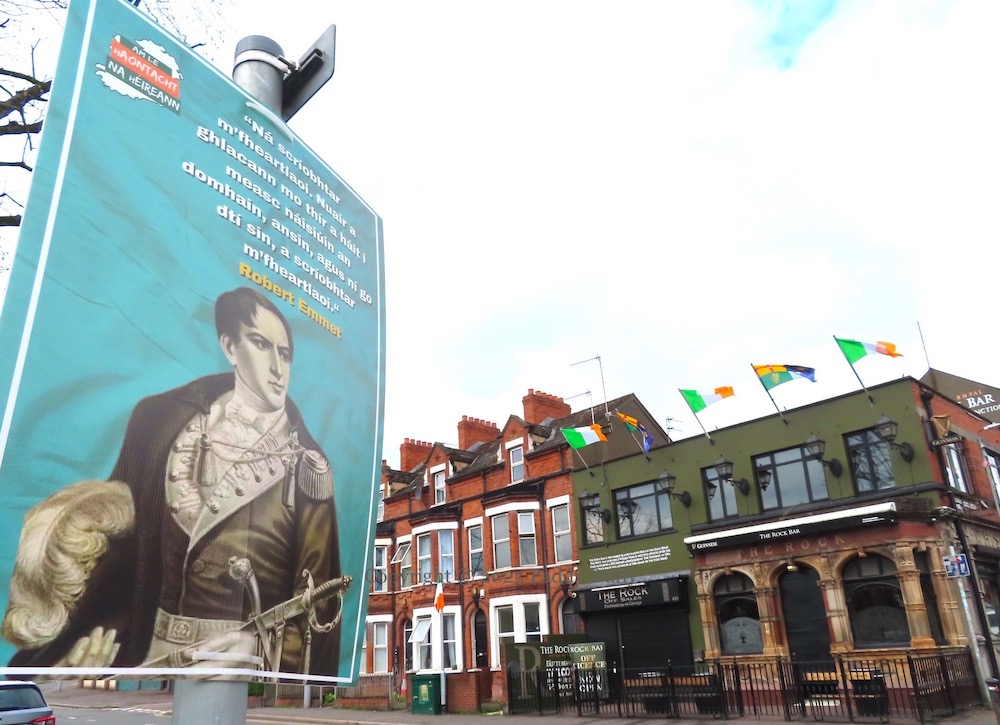
For Sunday’s parade (in Belfast) commemorating the Easter Rising of 1916, Sınn Féın lined the route with placards featuring quotations from republican heroes past and present: the first Dáıl, Wolfe Tone, Robert Emmet, James Fintan Lalor, Roger Casement, the Proclamation of 1916, William Allen, the Declaration Of Independence, James Larkin (as Gaeılge), Máıre Drumm, Rita O’Hare, Martin McGuinness, Mary Lou McDonald, Bobby Sands, O’Donovan Rossa, John O’Mahony, Seán Mac Dıarmada, James Connolly, Liam Lynch, Thomas Clarke, Pádraıg Mac Pıaraıs, Maıréad Farrell, the IRB, Michelle O’Neill, Gerry Adams, Constance Markievicz, Winifred Carney, Na Fíníní.
William Allen was one of the “Manchester Martyrs” – for a link to background and the photograph used on the placard see the Peter Moloney Collection.
The speaker in Belfast was Donegal Sınn Féın TD Pearse Doherty; party leader Mary Lou McDonald spoke in Carrickmore, Co Tyrone; Michelle O’Neill was in Coalisland and Dublin.
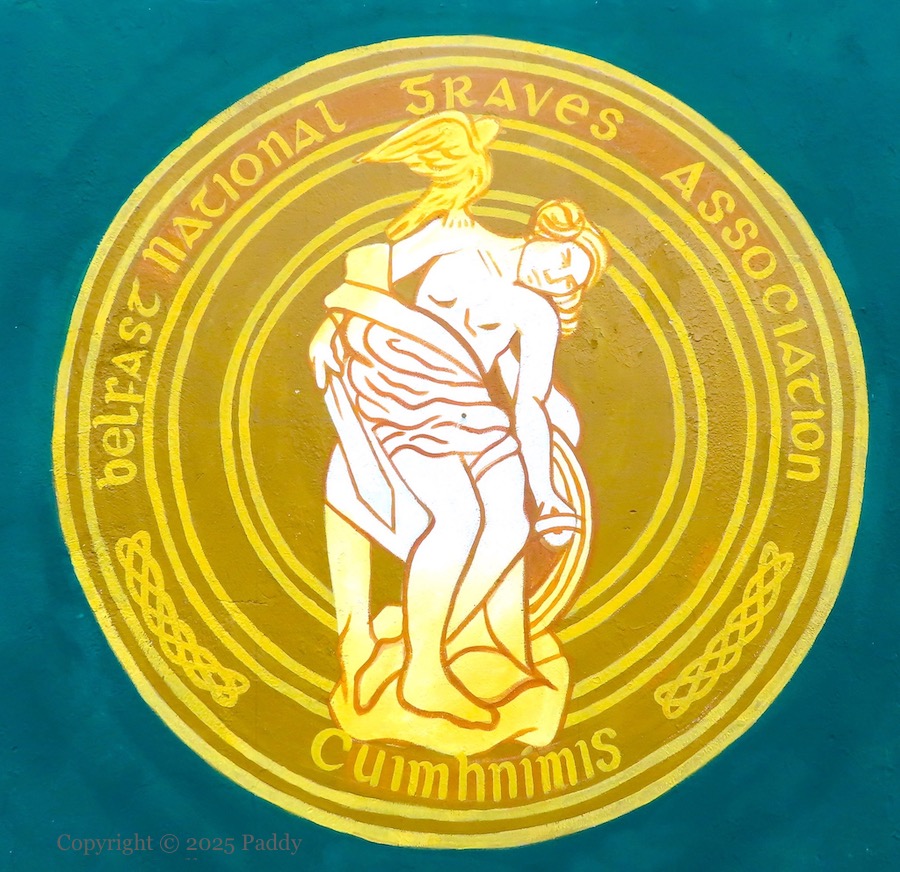
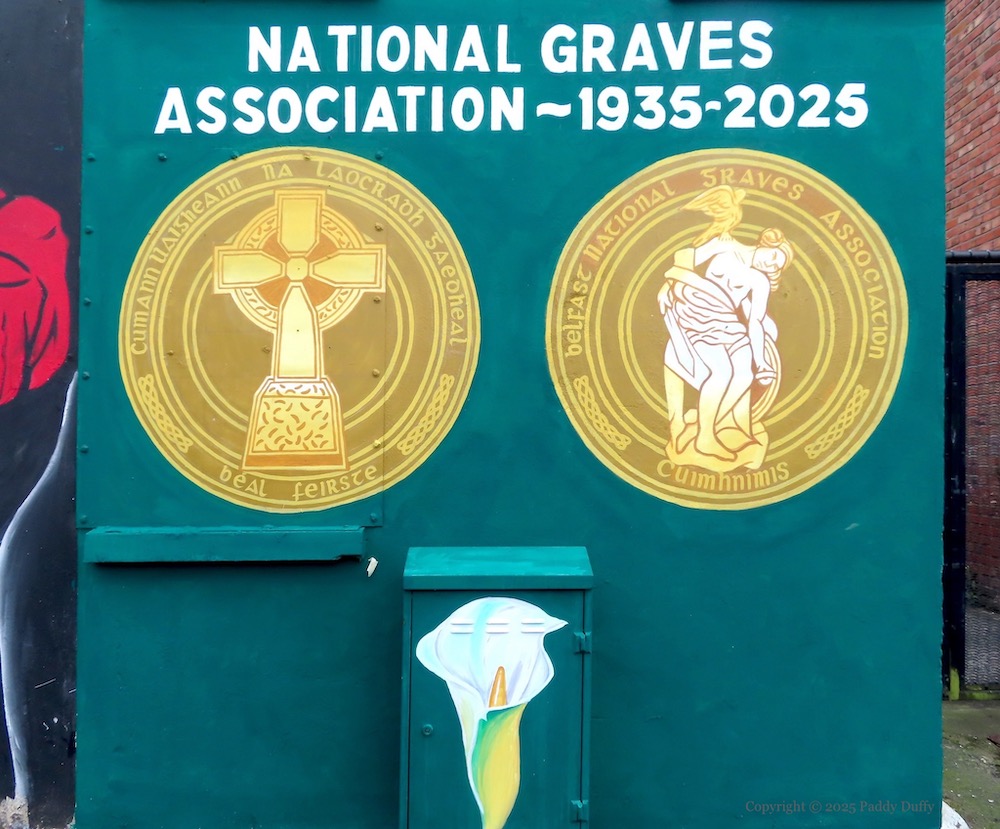
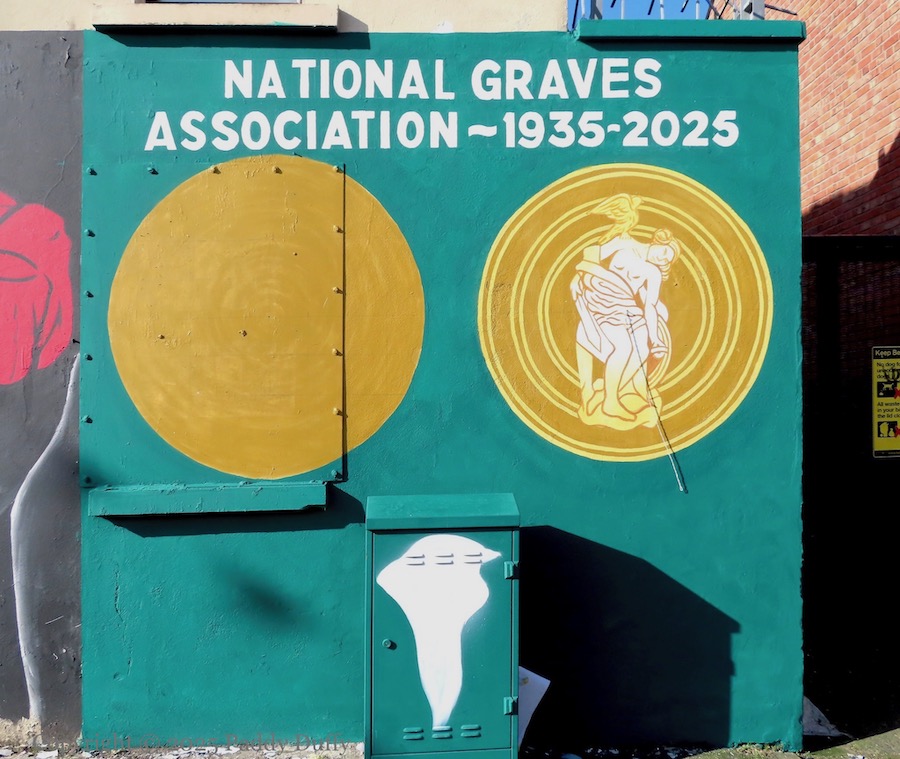
See also the new National Graves Association/Cumann Uaıgheann Na Laocradh Gaedheal mural in Beechmount: Cuımhnímıs.
“Honour Ireland’s dead – wear an Easter lily”. This year (2025) is the ninetieth anniversary of the founding of Cumann Uaıgheann Na Laocradh Gaedheal, Béal Feırste (the National Graves Association, Belfast (Fb)) which maintains the graves of about 149 republicans in Milltown Cemetery (Belfast Media).
The graves under its care are marked with a red hand – for an example, see the grave of Joseph (Joe) Malone in Far Dearer The Grave Or The Prison.
This new mural, which features a Celtic Cross (emblem of the Association) and Cú Chulaınn (symbol of republican dead), is part (along with Free Palestine) of the side-wall next to Éırí Amach Na Casca. Easter Monday, this year, is April 21st.
These Saoradh (web) boards calling for attendance at the national march from Creggan to the new (2022) “People’s Monument” in Rossville Street are in Hugo Street (above) and Beechmount Drive (below):
“National Republican Commemoration Committee national Easter commemoration: assemble at Creggan shops – 2pm Monday 21st April 2025 for march to the People’s Monument — Free Derry Corner. Wear your Easter lily with pride.”
For a full list of this year’s commemorative marches, see Republican News.
Easter Monday falls late this year – April 21st – though still not as late as it did in 1916, when it was on the 24th. The event is typically celebrated at Easter, regardless of its proximity to the 24th, though for the centenary in 2016, anti-Agreement republicans commemorated the Rising on April 24th, specifically, while others paraded at Easter (which was at the end of March).
“In our hearts your memory lives on”: the sixteen republicans executed in connection with the Easter Rising (in 1916) and the ten hunger strikers who died in the second (1981) hunger strike are remembered in a new board on Northumberland Street, west Belfast (Visual History).
64 republicans died during the Rising (An Phoblacht) and 3,500 arrested. 187 people were tried by court martial and 90 were found guilty and sentenced to death. Of these, 14 were executed over a period of ten days in May, 1916, including all seven of the signatories to the Proclamation (WP). Tomás Ceannt did not take part in the Rising; he was executed in Cork for shooting dead one of the RIC officers who were sent to round up the brothers Ceannt (WP). Roger Casement was executed in August, convicted of treason for attempting to smuggle weapons from Germany for use in the Rising. (Irish Times)
The sixteen are: Pádraıg Pearse, Thomas Clarke, Thomas McDonagh, Joseph Plunkett, Edward Daly, Michael O’Hanrahan, Willie Pearse, John Mac Bride, Eamonn Ceannt, Seán Heuston, Michael Mallin, Con Colbert, Tomás Ceannt, Seán Mac Dıarmada, James Connolly, Roger Casement.