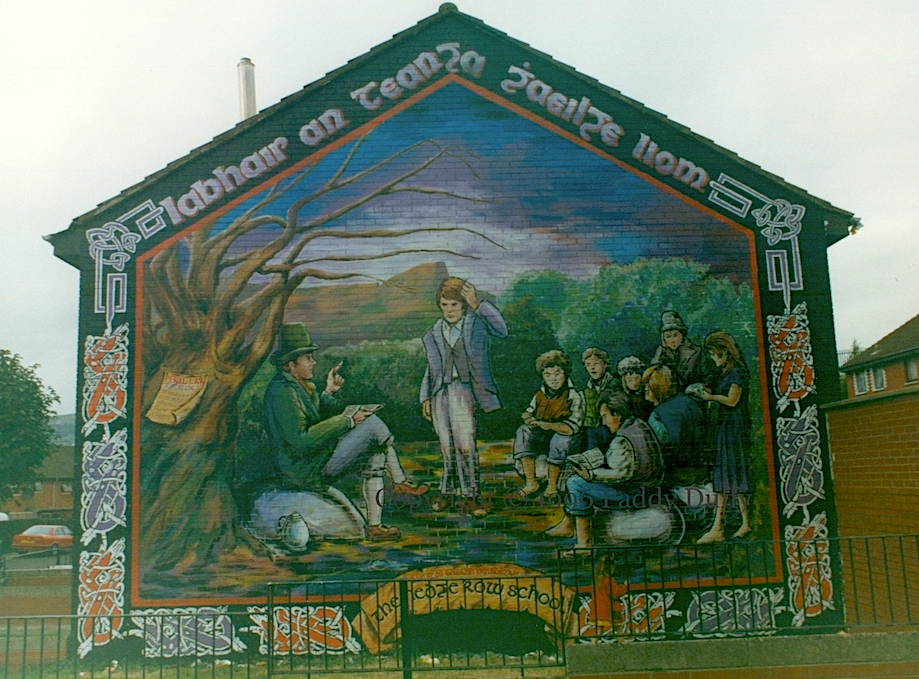
Catholic (and Presbyterian) education was prohibited by the penal laws (WP) and particularly the Education Act of 1695 (WP) – this is probably what’s on the notice on the left-hand tree. Schooling by Catholics (in Irish) nonetheless took place, in covert houses and outhouses, as well as in fields and hedge-rows. The Act was repealed in 1782, provided the teacher took an oath of allegiance to the Crown.
This is one of about nine murals painted in 1995 for the 150th anniversary mural of An Gorta Mór/the Great Hunger (Visual History).
There is a wall to the right that reads, “There was no famine; it was genocide.” (See the Peter Moloney Collection.)
The dove on the chimney and the green ribbon below are a nod to the other main movement during this period, the release of political prisoners as a leading goal of the peace process.
“Ardoyne Fleadh Cheoıl – meon an phobaıl a thógáıl tríd an chultúr” = “building community spirit through culture”.
“Eıre [Éire] (Éıru [Érıu]), a queen of the Tuatha Dé Danann, slain at the battle of Taıltean [Taılteann] (Telltown [Teltown], Co. Meath) 1698 BC.” Érıu is placed in a neolithic setting and is releasing a dove which flies off in a trail of stars. (In the repainted version, the date given is 698.)
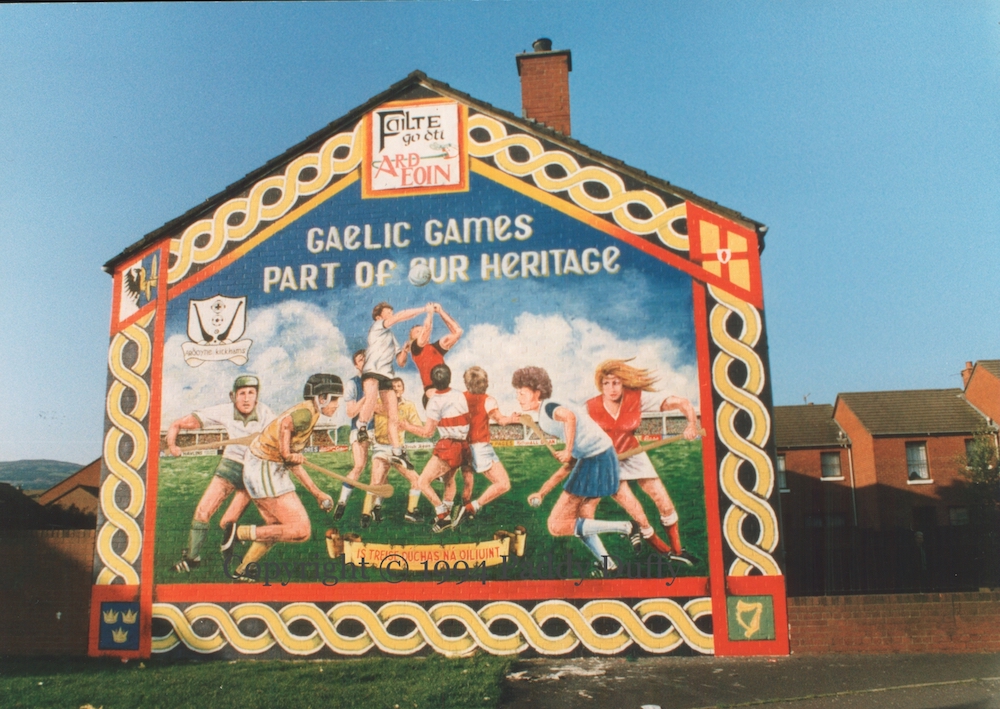
“Gaelic games – part of our heritage.” Athletes play hurling, football, and camogie and the local GAA club Ardoyne Kickhams (Fb) is celebrated. “Is treıse dúchas ná oılıuınt” means “heritage is stronger than upbringing”. “Fáılte go dtí Ard Eoın” [“Welcome to Ardoyne”] appears in the apex.
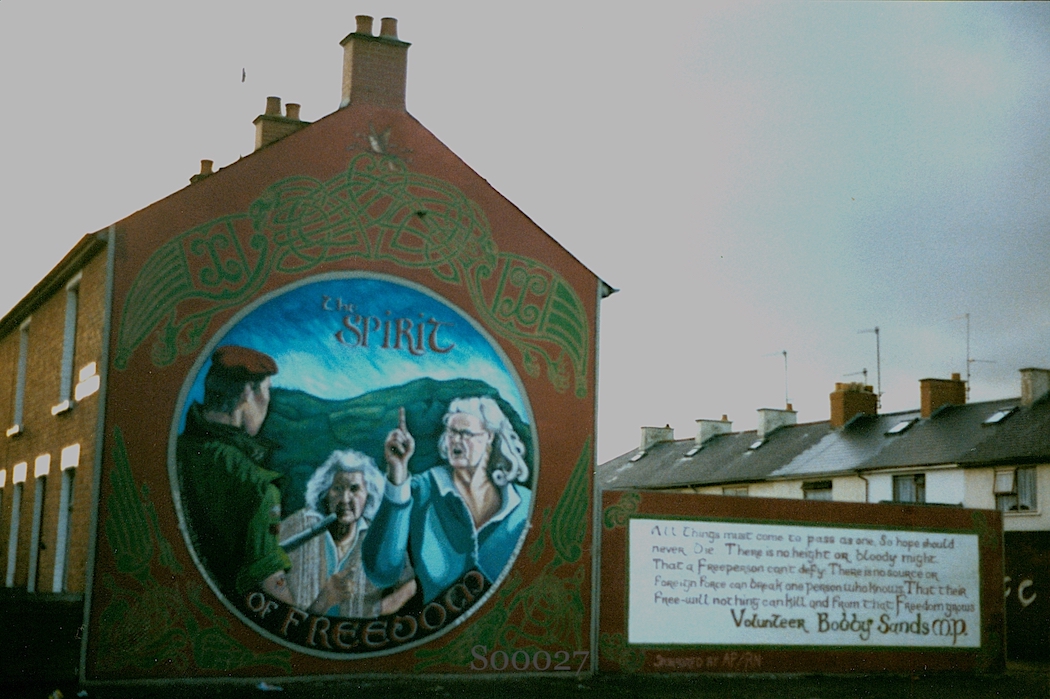
The frame of this mural in St James’s was originally painted by Andrea Redmond (Fb) in 1994 for a mural (included below) showing local pensioners remonstrating with a British Army soldier, under the title “The Spirit Of Freedom”, reproducing a photo that appeared in a French-language magazine (see below).
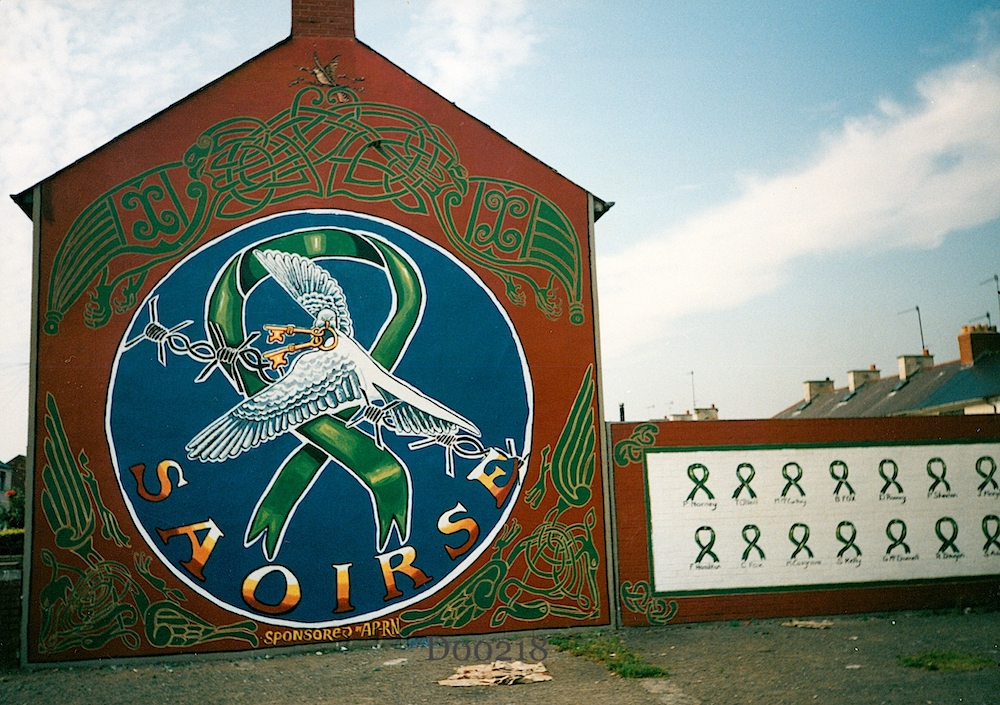
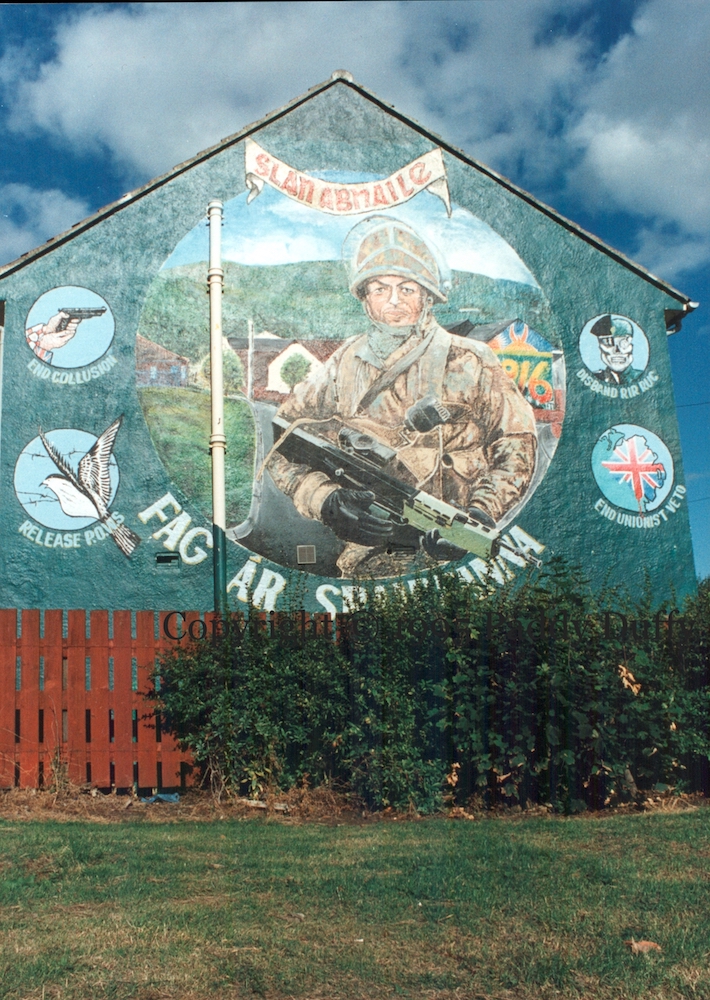
The central circle was repainted (again Redmond) for the 1995 “green ribbon” campaign: the dove holds the keys that will set free the republican prisoners, symbolised by the barbed wire and the lark in the apex. There was also a side-wall, showing two rows of green ribbons, each with the name of a POW (see immediately below).
“Sponsored by AP/RN” has been moved from the side-wall to the main wall.
In small letters on the part of the circle at the back of the soldier is written “This mural is dedicated to the memory of J[…] D[…] and M[…] Fitzsimons”.
On the side wall is a verse from the poem The Crime Of Castlereagh by “Volunteer Bobby Sands MP”: “All things must come to pass as one/So hope should never die/There is no height or bloody might/That a freeman can’t defy./There is no source or foreign force/Can break one man who knows,/That his free will no thing can kill/And from that freedom grows.”
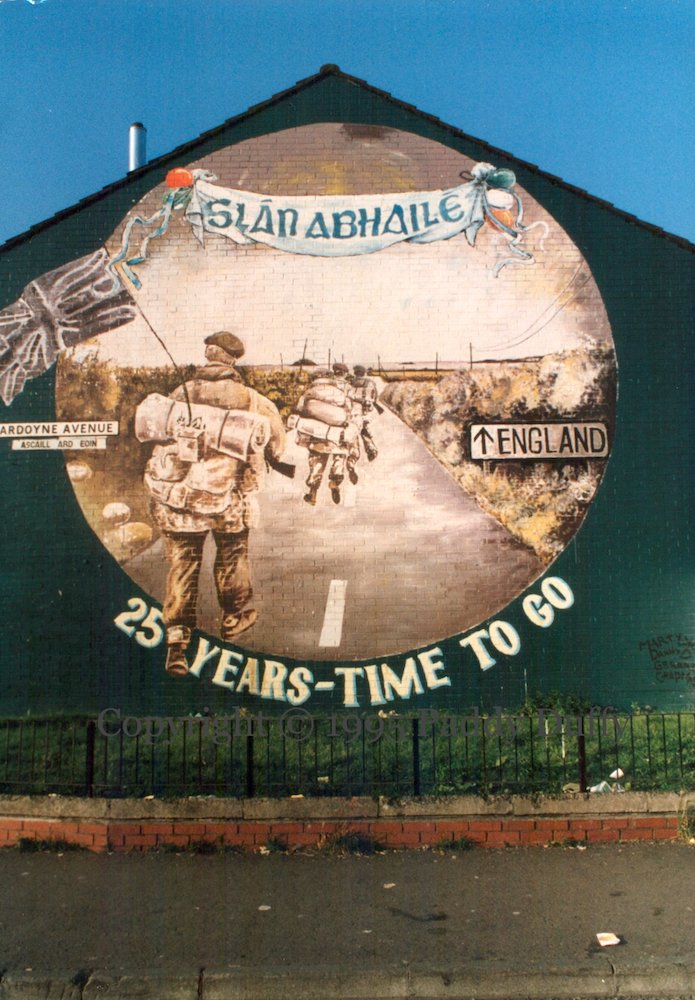
This is a mural on Whiterock Road, west Belfast, bidding “Slán Abhaıle” to a British soldier who is himself standing on Whiterock Road in front of the 1916 mural (Who Fears To Speak Of Easter Week?).
In the medallions to the left and right are four demands from during the (first) ceasefire: “End collusion, Release POWs, Disband RIR RUC, End Unionist veto”.
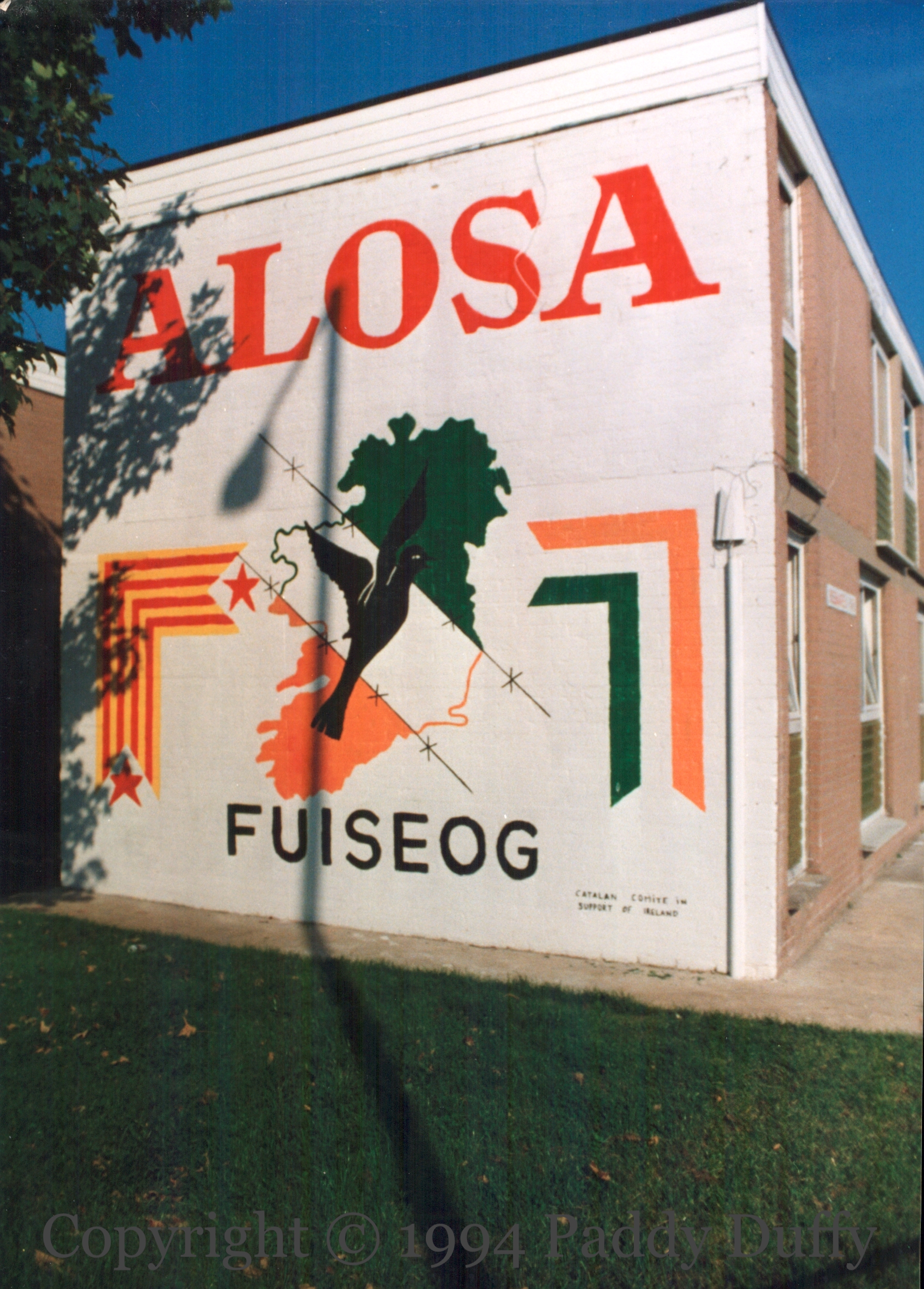
“Lark” in Catalan is “alosa” and in Irish “fuıseog”. This appears to be the earliest Catalan mural in the extant collections and it appears from the sponsorship in the lower corner – “Catalan comite [committee] in support of Ireland” – to be an expression of Catalonian solidarity with Ireland, rather than the other way around.
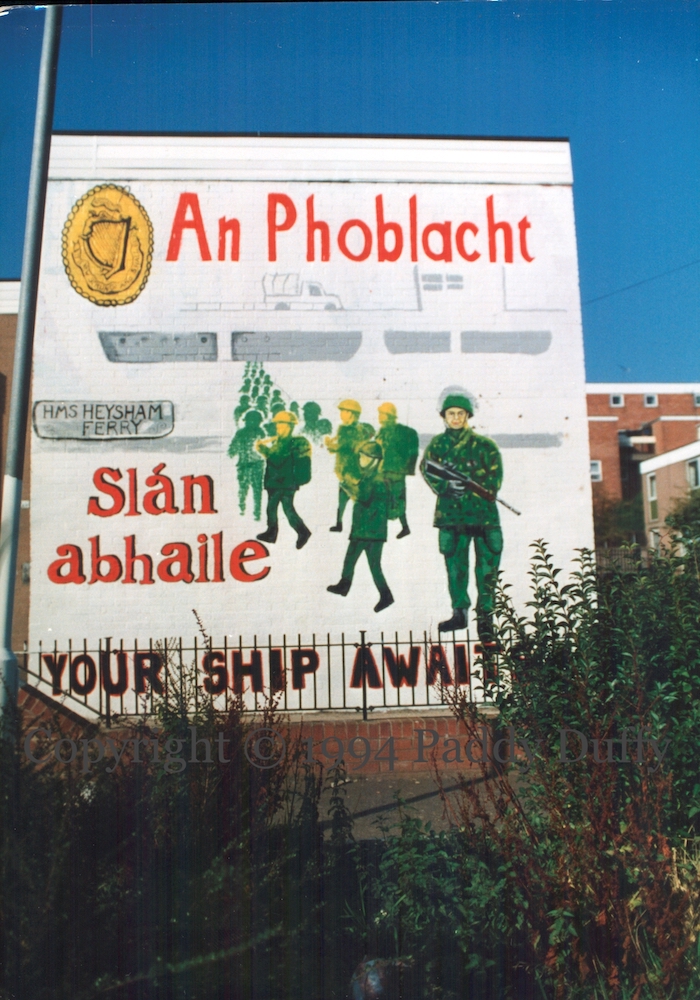
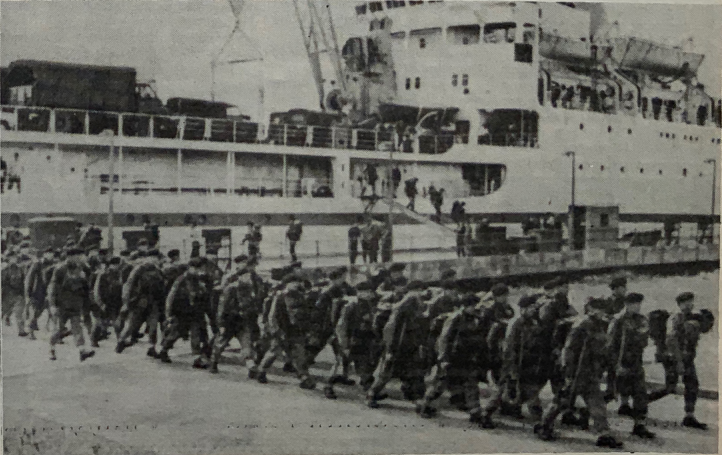
This mural calling for British troops to leave uses the same slogan as in other murals — “Slán abhaıle” — but different imagery, of soldiers boarding the Belfast-Heysham (Lancashire, England) ferry.
This is possibly a cover of An Phoblacht but no source has yet come to light. The image below appeared in the edition of August 11th.
At the front of Rossnareen, Shaw’s Road, west Belfast
British soldiers trooping back towards London, being painted on the back of Free Derry Corner, on Lecky Road, Derry. The piece is by Robert Ballagh, taking a famous photograph of British forces in the Falklands marching (“yomping”) towards Port Stanley and placing it in a circle (to suggest a closing eye, perhaps) below tricoloured party balloons.
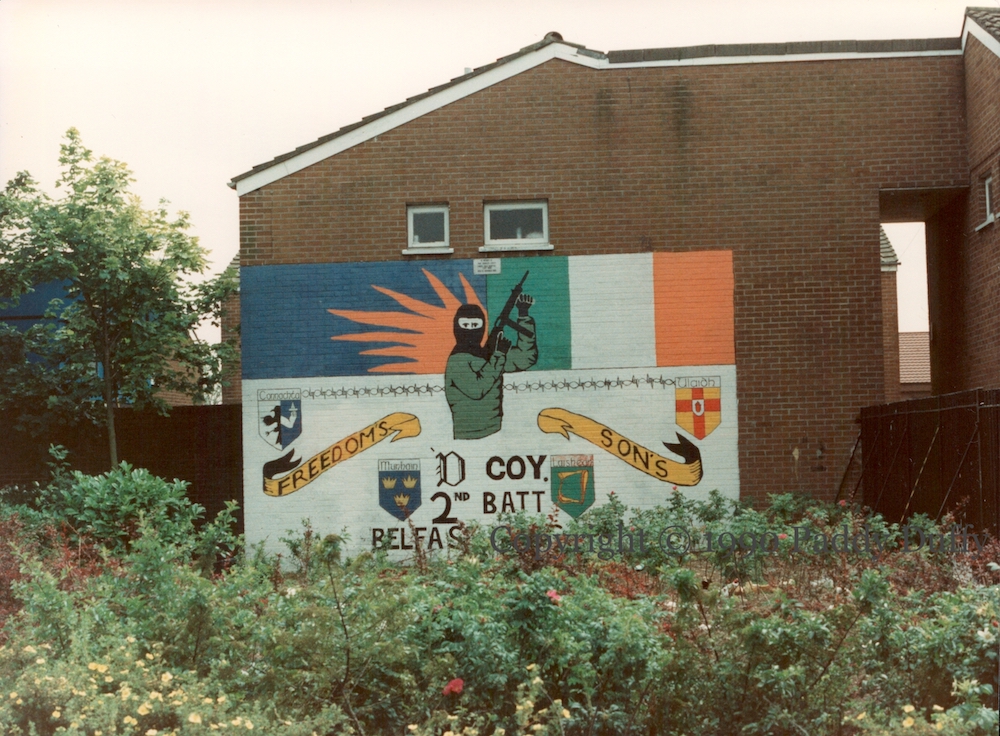
The writing – D coy, 2nd batt, Belfast Brigade [IRA] – has been added where the volunteer’s legs used to be – see the Peter Moloney Collection for the original. A small plaque has been added at the top. Otherwise, the mural remains as before, with a hooded volunteer raising an assault rifle in front of a sunburst and Tricolour, with a row of barbed wire and the four provinces named in Irish.
Falls Road, west Belfast, now the site of the Garden Of Remembrance



 Paddy Duffy Collection