Here are two takes on the distinctively Antrim-coast foods dulse (a seaweed) and yellowman (a honeycomb confection) on Castle Street, Ballycastle. Above, Rob Hilken’s (web); below, Shane O’Driscoll’s (ig).
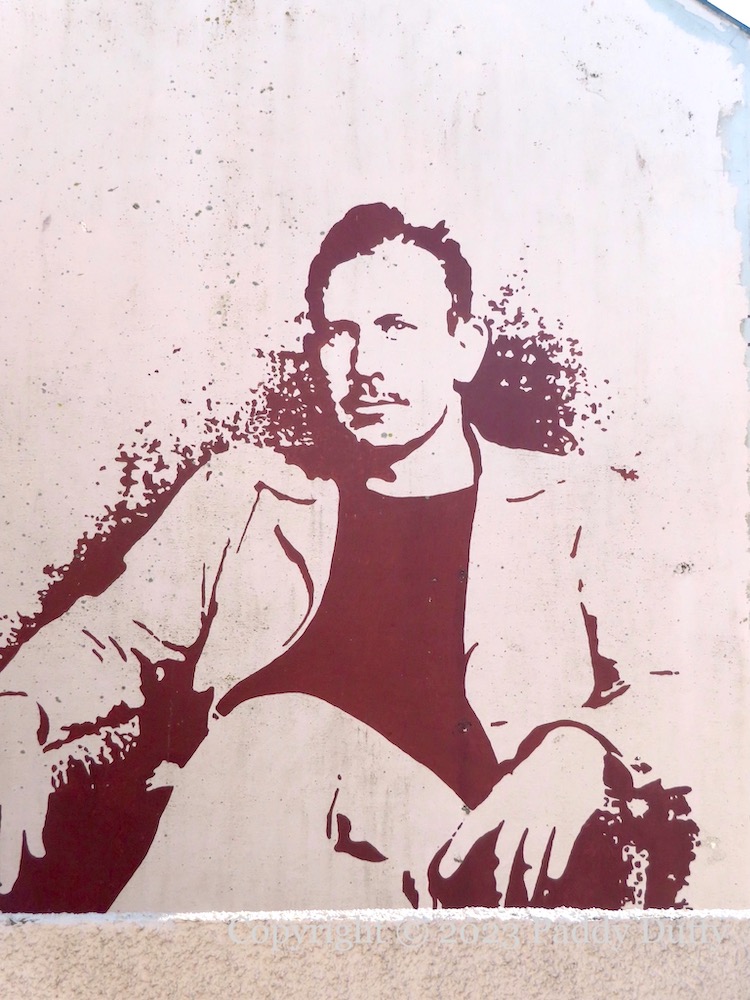
Today (December 20th) is the fifty-firth anniversary of John Steinbeck’s death in 1968. In 1952 he visited Northern Ireland to trace his Hamilton ancestors in Mulkeeragh, Ballykelly, Co. Derry (Irish Times) and wrote about it in Collier’s magazine.
The mural is on the side of (what was) the Hamely Gallery in Bushmills.
Limavady has been the home to an occasional Steinbeck literary festival since 2016 (Steinbeck Now).
Local storyteller Hugh Dillon in Castle Street, Ballycastle, by JMK (Jonny McKerr). The original photograph, of Dillon in Leyland Road, Ballycastle, in 1956 and is available at Dúchas.
Glentaisie Drive – site of this mural by Friz (web) – is named for Glentaisie, the glen – one of the nine Glens Of Antrim, at the foot of which lies Ballycastle – and Glentaisie is named for Taise Taobhgheal (Taise the bright-cheeked), daughter of King Donn of Rathlin island, renowned for her beauty, and who lived in the glen with her husband Congal, who had to kill the Norwegian king Nabghdon to prevent her being carried off (Archaeology Ireland). Or so they say. She also inspired the name “Fair Head” for the local cliffs. Or so they say.
In later years (1565), Sorley Boy MacDonnell was taken prisoner by the O’Neill’s after a battle in Glentaisie (WP).
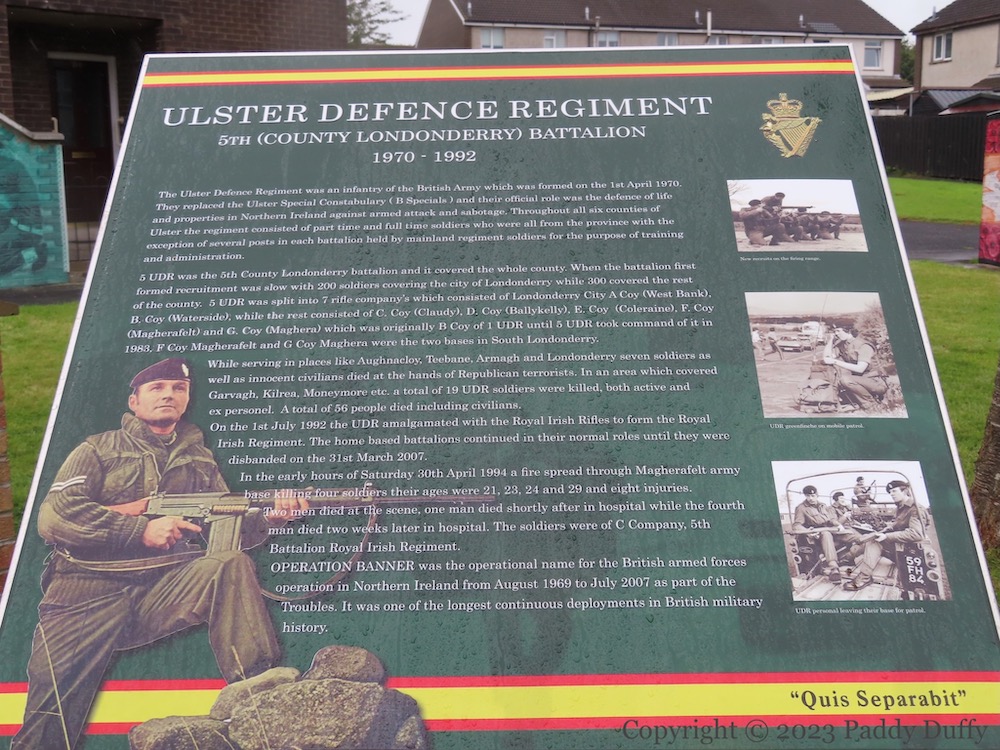
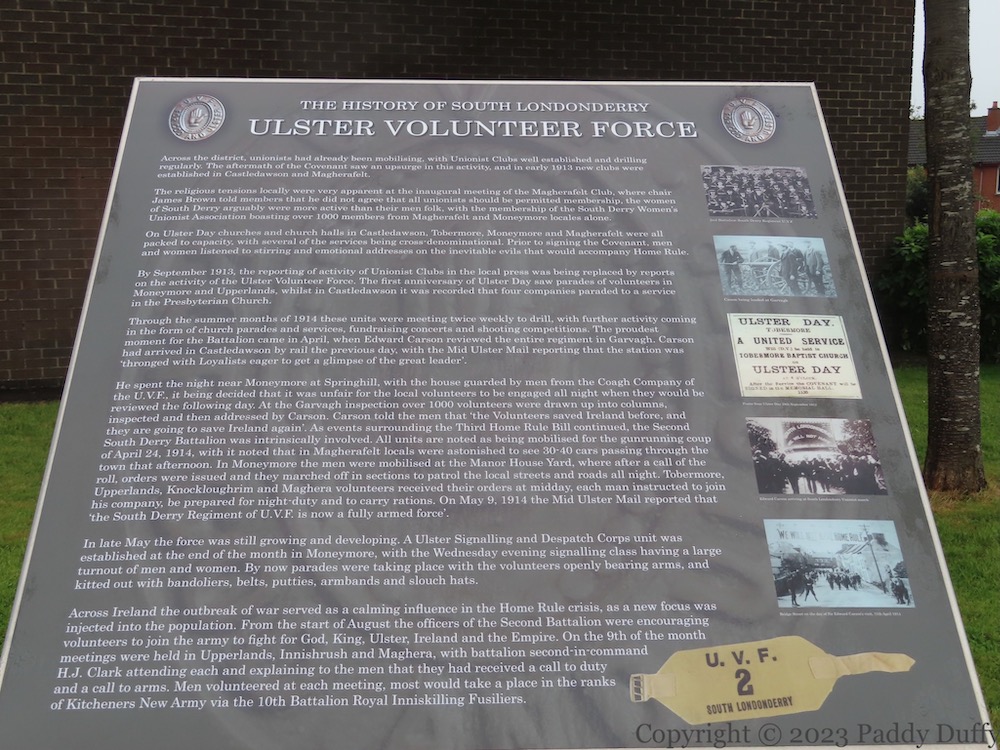
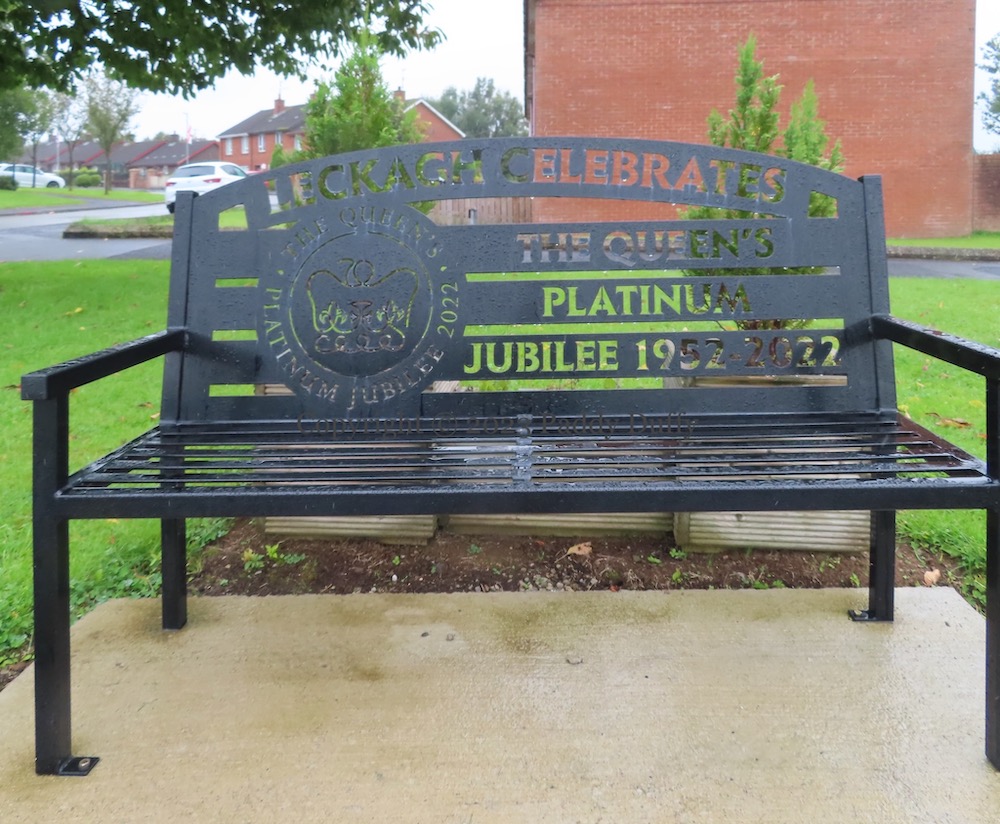
This selection of images from Leckagh Drive, Magherafelt, focuses on the memorials to the dead of WWI (and WWII in the mural above), with an additional board commemorating the UDR 5th (County Londonderry) battalion); there is also a mural and some plaques commemorating (modern-day) UVF volunteers, which will be in tomorrow’s post.
The board shown in the final image provides a history of the South Londonderry volunteers from towns such as Magherafelt, Castledawson, Moneymore, and Tobermore. Edward Carson reviewed the volunteers in April 1914. Later that same month, arms were received from the weapons landed in Larne. In the Great War, the men from the area served in the 10th battalion of the Royal Inniskilling Fusiliers in the 109th brigade of the 36th Division.
“Always remembered by the officers and volunteers of South Londonderry/Randalstown Ulster Volunteer Force.” This memorial mural and plaque in Magherafelt names Charlie Wright, Jonathan Wallace, Ken Wilkinson, and Ian McArthur.
Of these, Wilkinson seems the most well-known, as he served as a PUP representative for the area. He commented on sectarian tensions in Randalstown in 1999 (An Phoblacht) and in Coleraine in 2009 (Irish Examiner), and spoke against sueprgrass trials in 2011 as a member of FAST (Irish Times | see previously FAST and FASTing For Human Rights And Justice); he was accused of intimidation of Catholics in Antrim in 2003 (An Phoblacht). He stood for a number of elected positions (e.g. 2013) but was unsuccessful.
Ostensibly for his stand against drug-sellers, in 2010 a pipe-bomb (BBC), and in 2011 a make-shift car-bomb (BelTel), were placed against his home and he received death threats in 2013 (politics.ie). He died in 2021 (BelTel | News Letter | Irish News).
The plaque in the memorial garden (shown below) reads, “This plaque is dedicated in memory of all of the loyalist people of Ulster who have suffered at the hands of the enemies of our land. Lest we forget.”
This UDA board on the eastern side of the Leckagh estate names six men who “gave everything in defence of our civil and religious liberties”: Lindsay Mooney (remembered also in the Fountain and Lincoln Court areas of Londonderry), Benny Redfern (this board replaces a board dedicated to Redfern alone), Cecil McKnight (Waterside), Gary Lynch (Waterside), Ray Smallwoods (Lisburn), William Campbell (Coleraine).
“North Antrim – Londonderry – Tyrone brigade”, “Remembered by all South Londonderry & Tyrone 6th batt.”
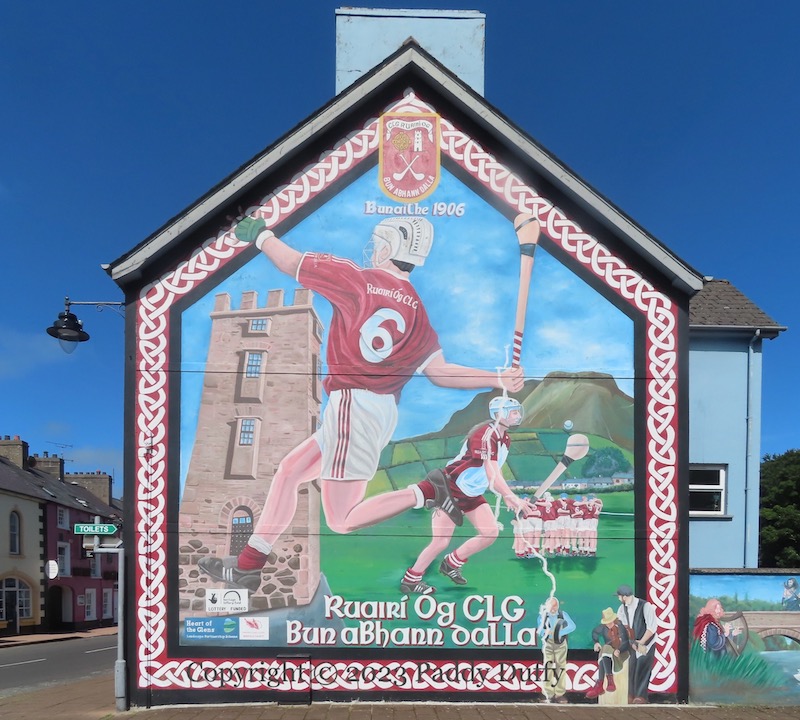
This is the second version of the Ruaırí Óg (web) (and Clann Lır) mural in the middle of Cushendall – the original dates back to 2006, which was the 100th anniversary of the club’s founding (“bunaıthe”) (see M02832). The hurlers and Curfew tower remain; the “Big Ears” (Volunteer) trophy is gone and in its place are three traditional musicians. The Clann Lır has been painted to include the harper seen in Jim Fitzpatrick’s painting of the Lear myth. A Celtic warrior has appeared on the bridge over the Dall.
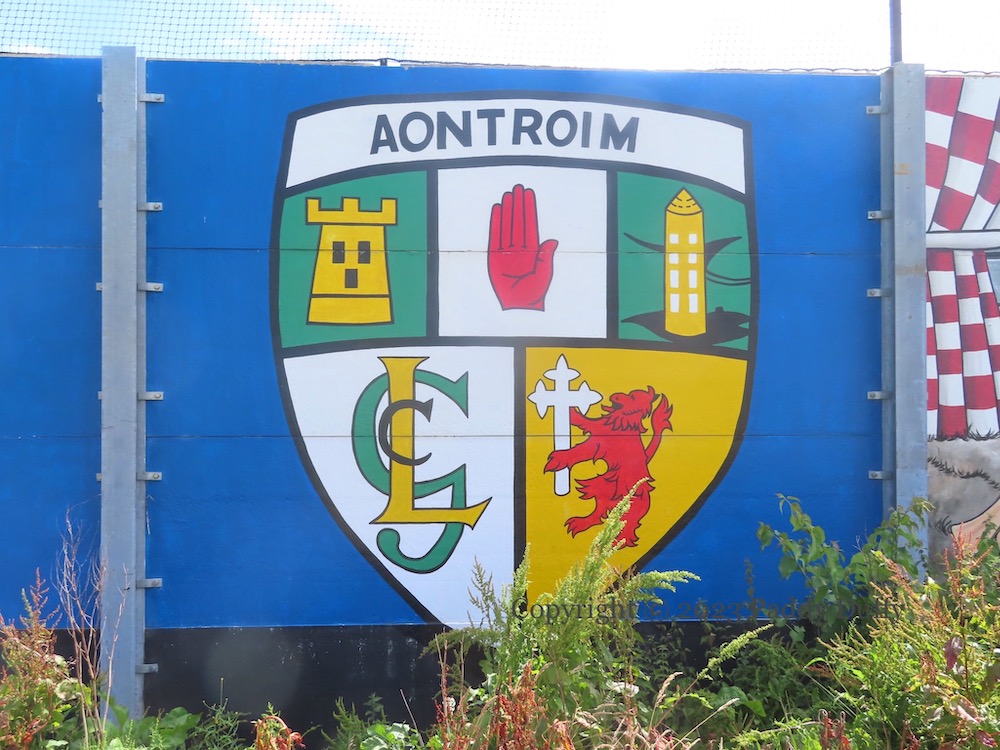
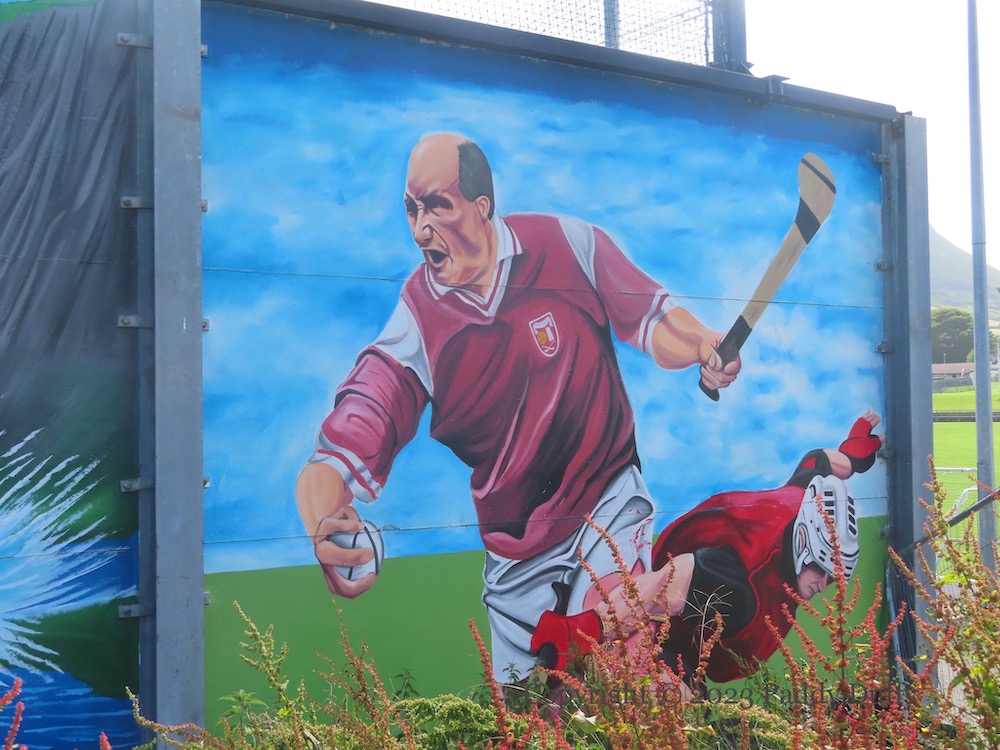
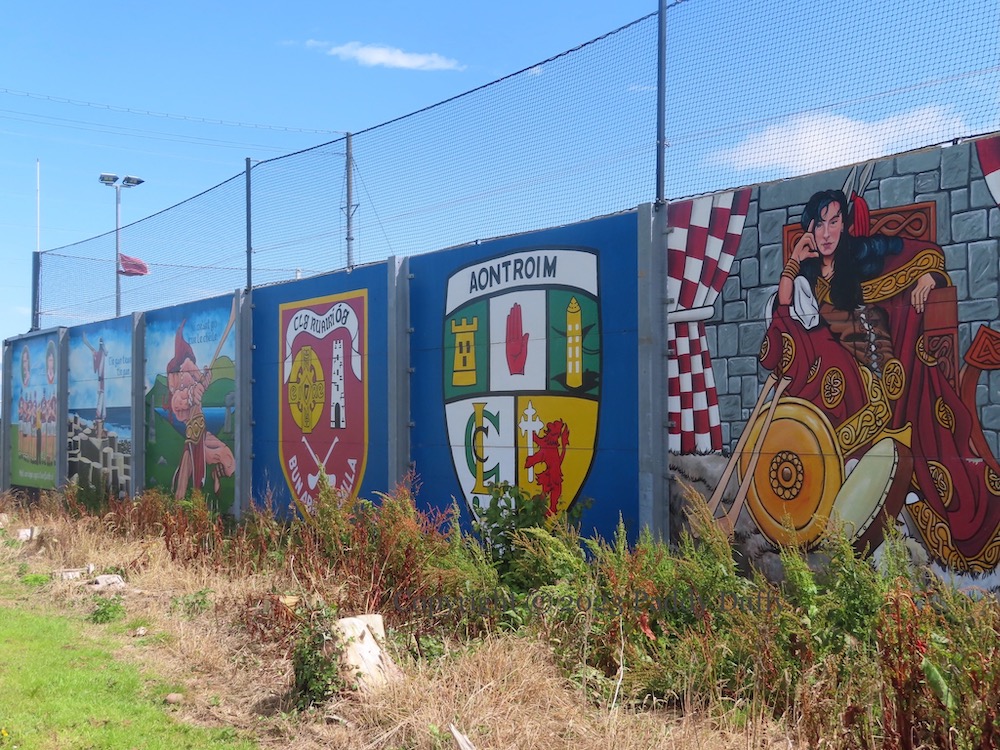
The two laochra featured in the first panel (above) are Danny McNaughton and John Darragh, while GAA hall-of-famer Terence “Sambo” McNaughton is featured in the final panel (BBC | GAA). Also included are Finn MacCool (on Giant’s Causeway), Setanta/Cú Chulaınn, and Queen Meadhbh – the latter two are in the style of Jim Fitzpatrick – the first is based on Fitzpatrick’s Hurling Match and the second takes Leyendecker’s painting of Maeve (WP) and renders it in Fitzpatrick’s style, complete with club-coloured drapes.
Coast Road, Cushendall at the grounds of Ruaırí Óg CLG (web).









 Paddy Duffy Collection
