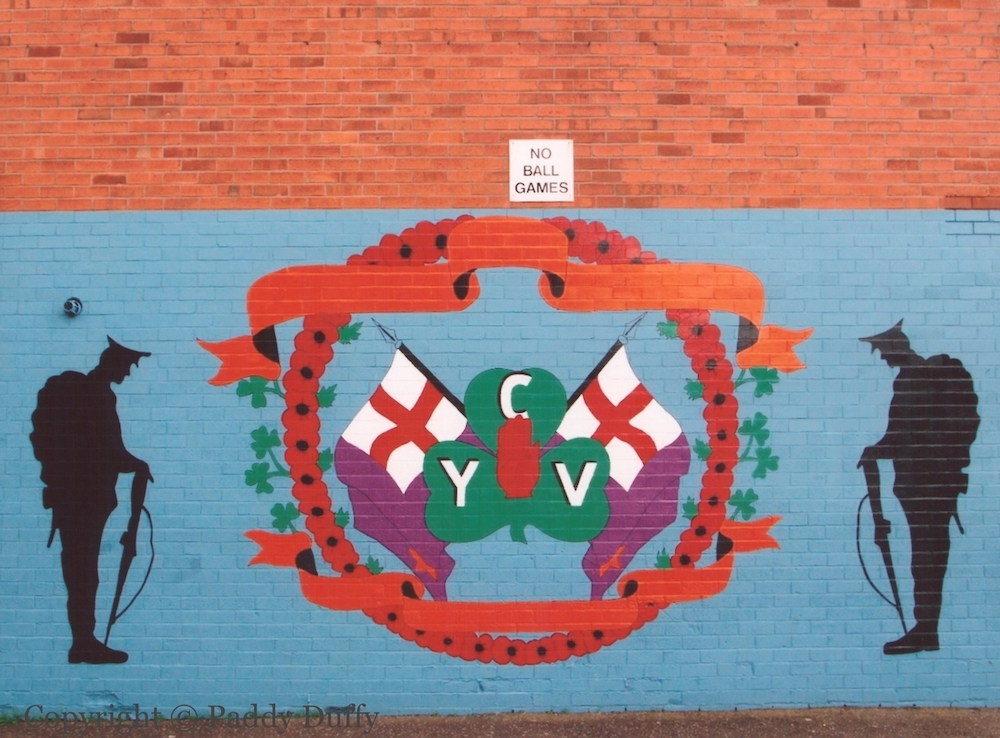
The shamrock in the wreath represents the Irish divisions of the British Army in WWI – the 36th, the 10th, and the 16th. The Young Citizen Volunteers formed the fourteenth battalion of the Royal Irish Rifles and so part of the 36th (Ulster) Division during the first world war.
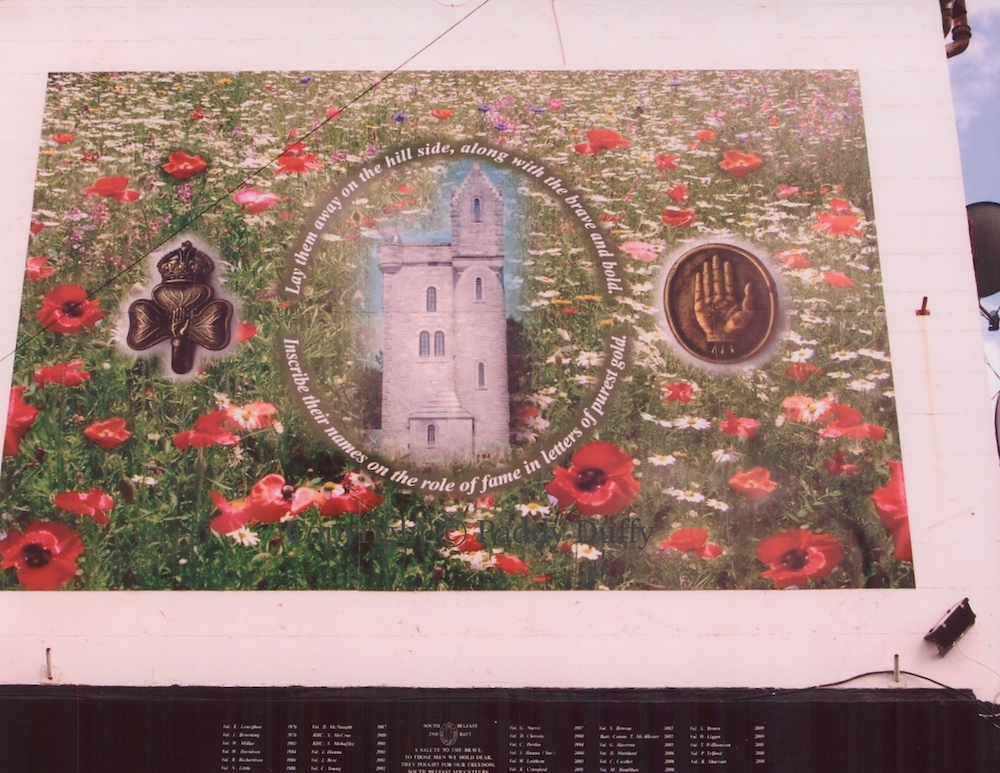
“Lay them away on the hill side/along with the brave and the bold/Inscribe their names on the role [sic] of fame/in letters of purest gold.” The Ulster Tower at Thiepval commemorates the WWI dead of the 36th (Ulster) Division. The words, however, come from a song about James Daly, who was executed by firing squad for taking part in a 1920 mutiny of the Connaught Rangers in India in protest of the activities of the Black and Tans.
Below the board is a roll of honour for the “UVF South Belfast 2nd battalion”: “A salute to the brave/to those men we hold dear/they fought for our freedom/south Belfast volunteers.”
Compare this mural to the previous (Here Lies A Soldier), which does not include any reference to the Great War.
On the side of The Hideout, Pine Street, Donegall Pass, south Belfast
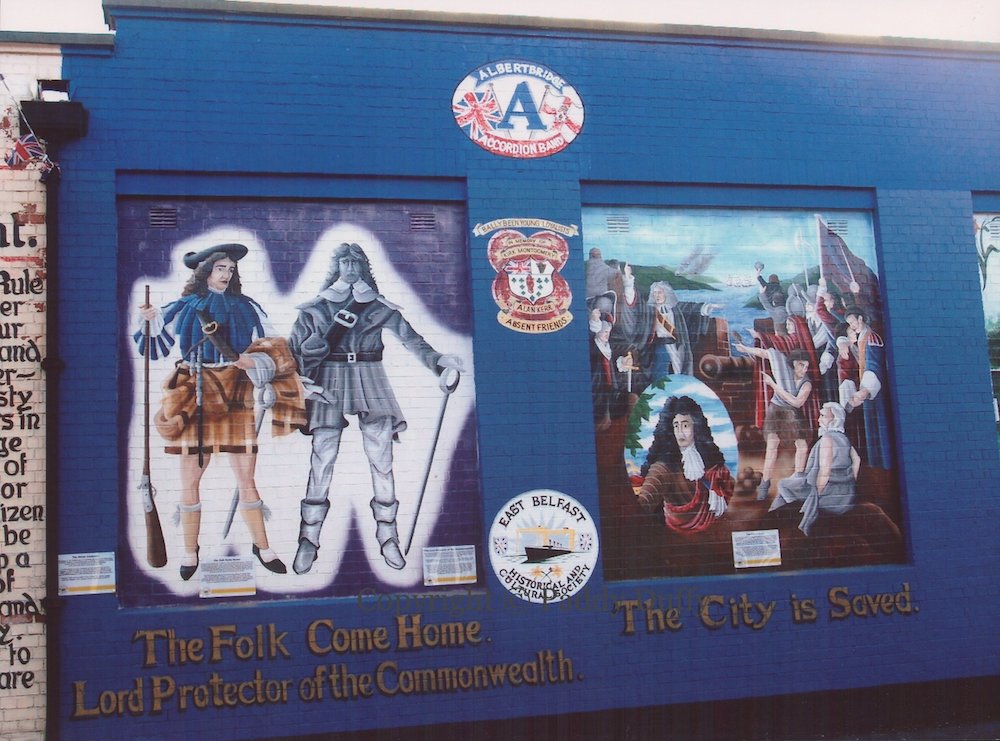
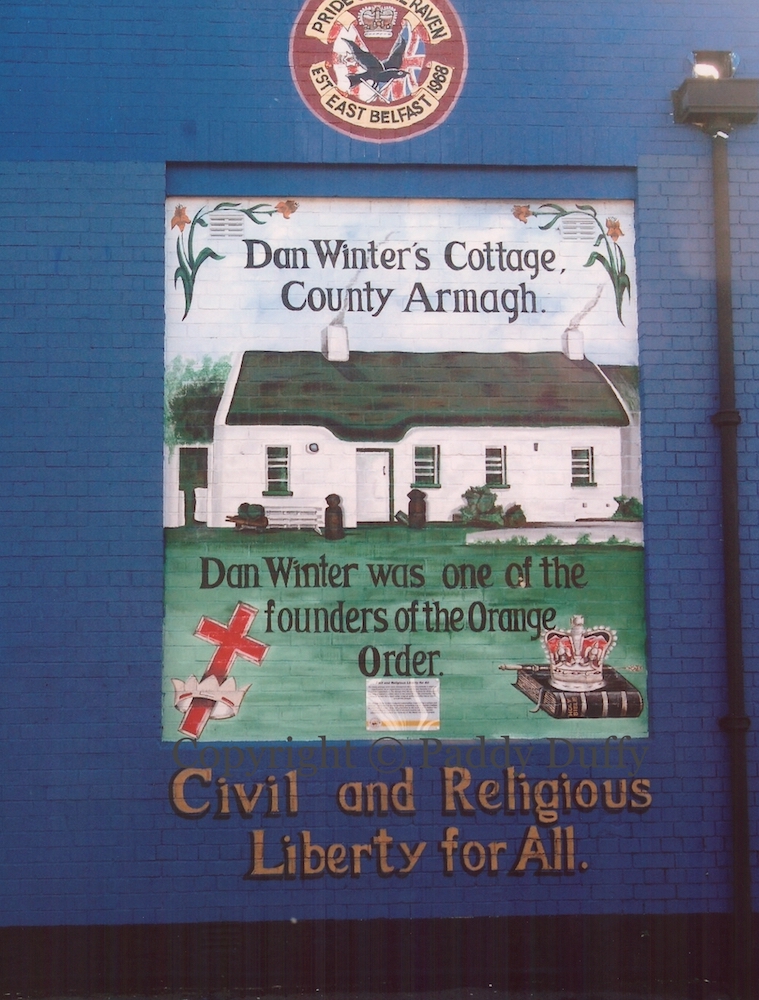
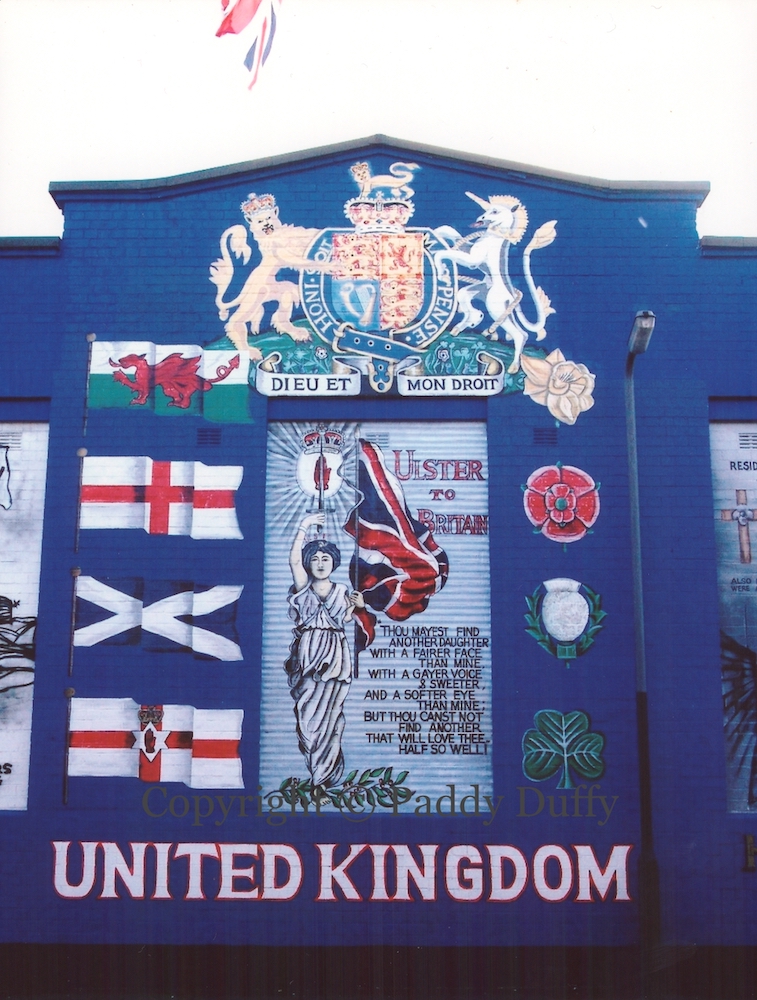
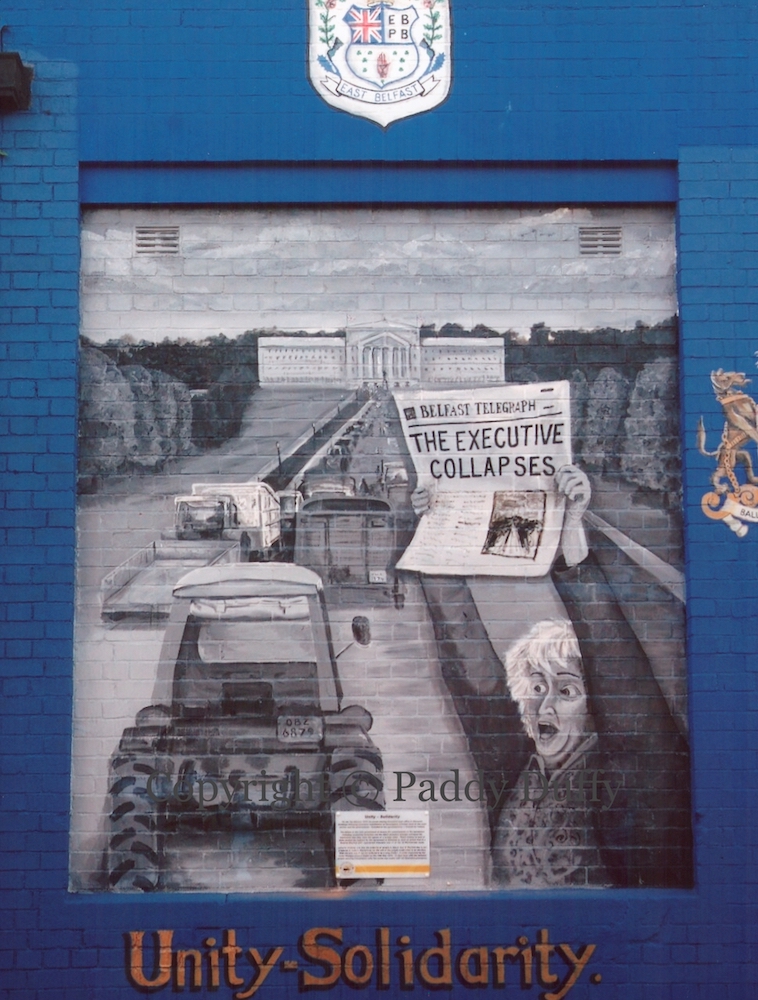
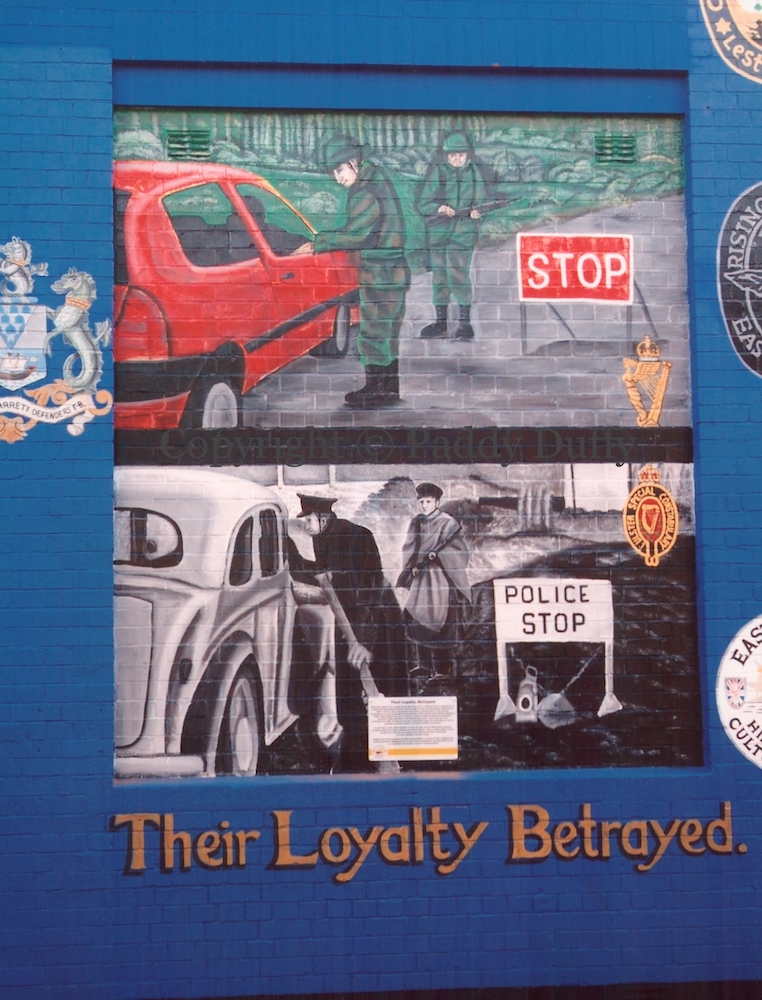
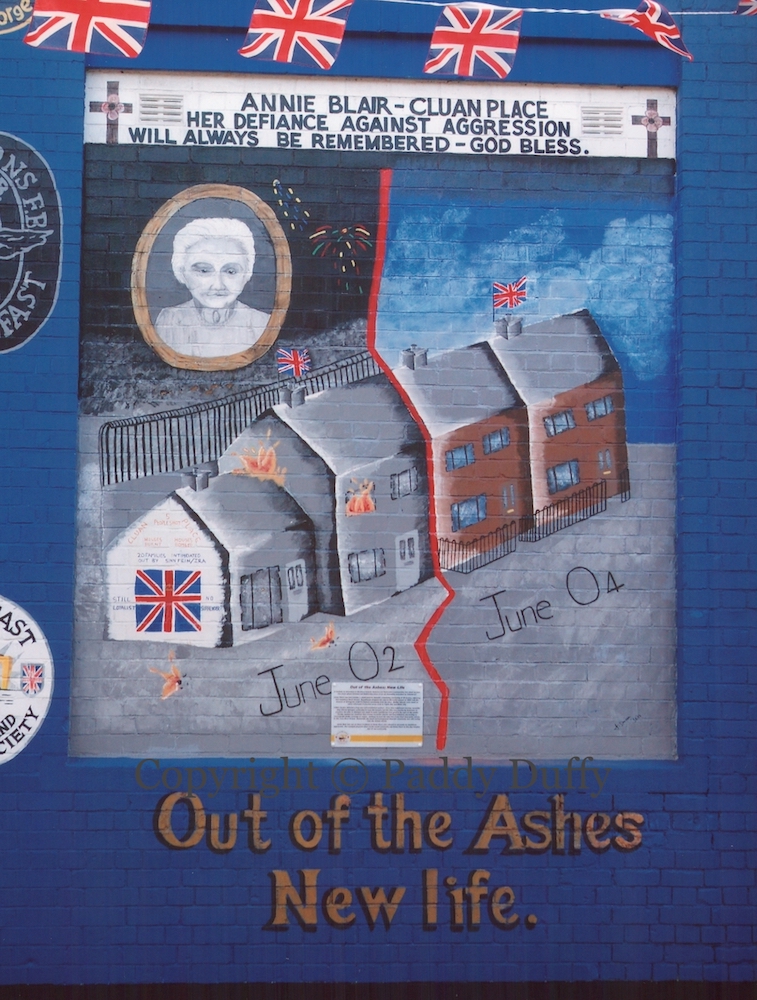
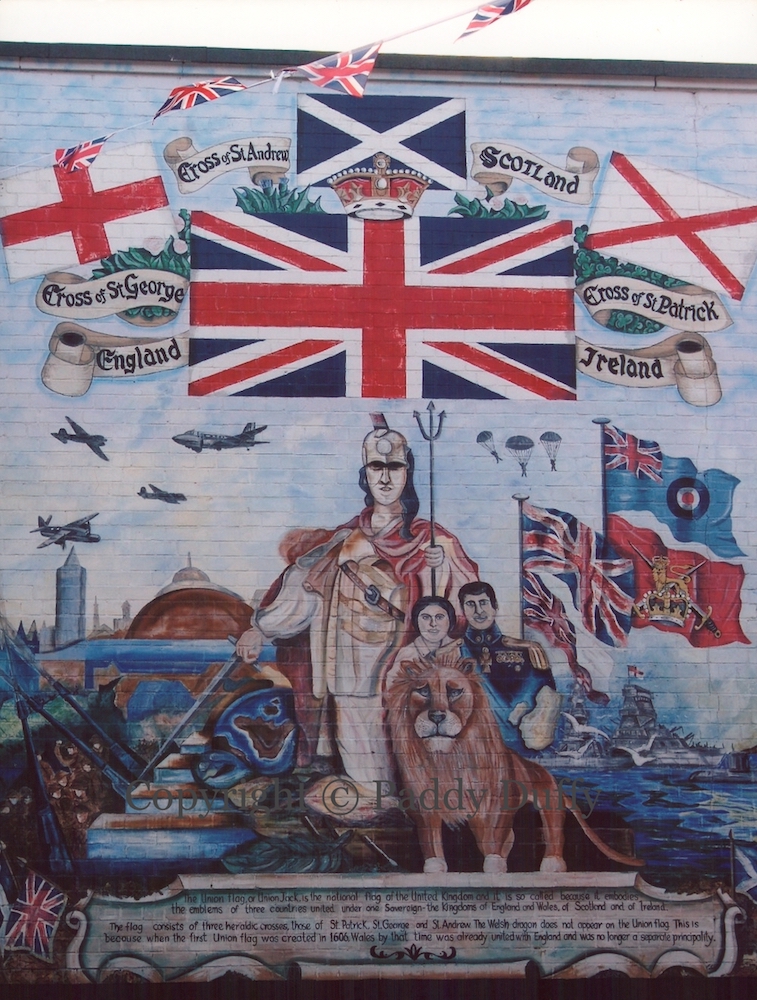
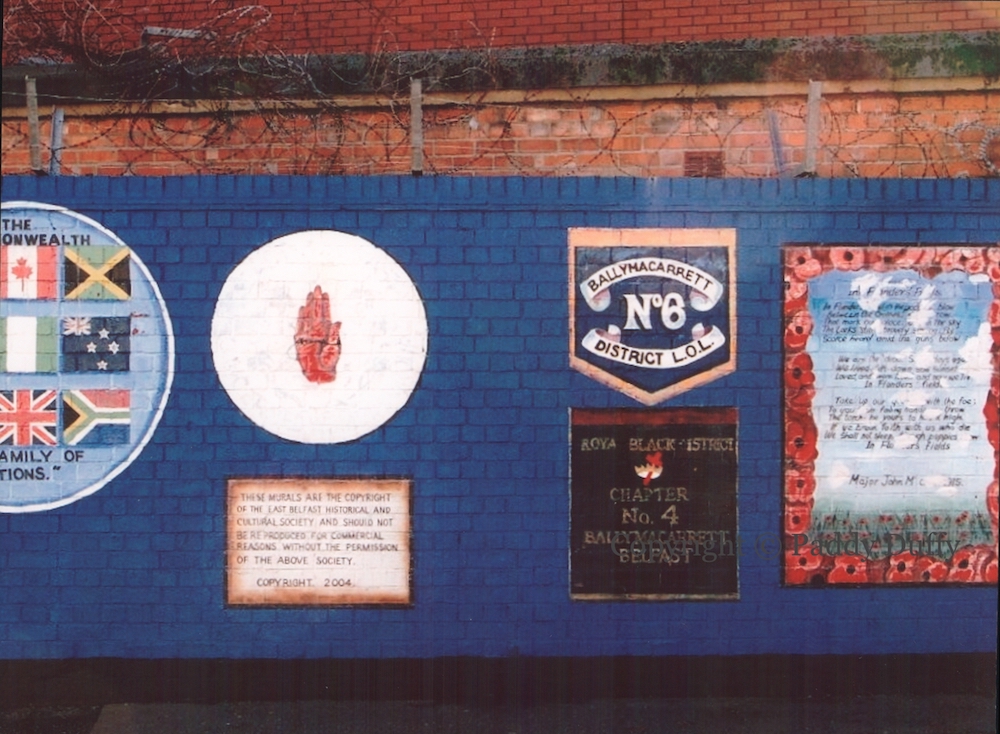
In 2004 the East Belfast Historical And Cultural Society sponsored a series of 14 murals in Thorndyke Street charting Protestant history from Cromwell to Cluan Place. From left to right, these are:
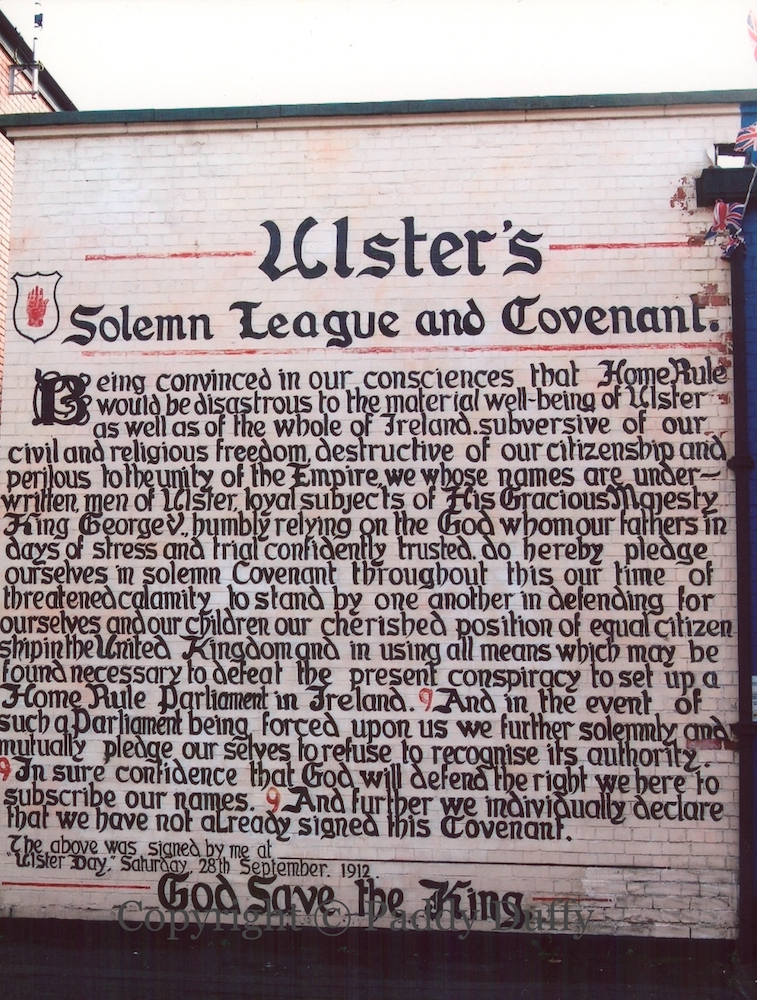
The Covenant
“The Folk Come Home. Lord Protector of the Commonwealth” (Cromwell)
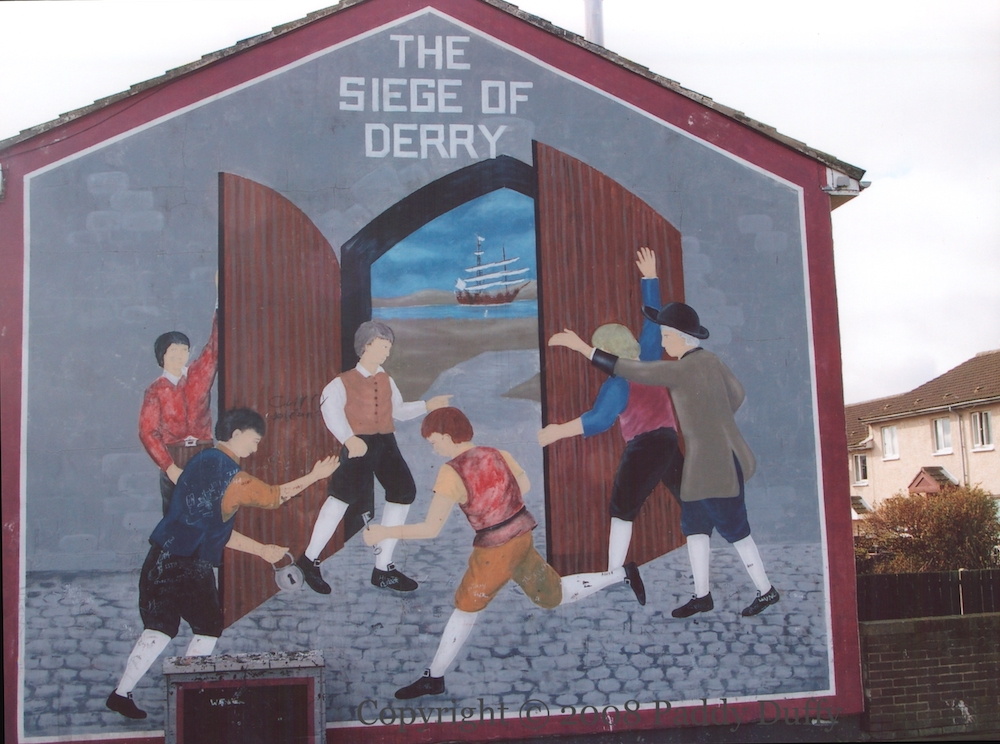
“The City Is Saved” (Siege Of Derry)
“Civil And Religious Liberty For All.” “Dan Winter’s cottage, County Armagh. Dan Winter was one of the founders of the Orange Order”
“Better The Grave Than Slavery.” “How is freedom measured? By the effort which it costs to retain. Freedom!” (WW1)
“Their Sacrifice, Our Freedom.” “As we scrambled over the trench ladders, the YCV flag appeared. Jim Maultsaid” (WWI)
“United Kingdom”
“Hitler Attacks Belfast”
“Defending The Community” (Paramilitaries)
“Unity – Solidarity” (Sunningdale Agreement)
“Their Loyalty Betrayed” (UDR/B Specials)
“Out Of The Ashes, New Life.” “Annie Blair – Cluan Place. Her defiance against aggression will always be remembered – God bless”
Britannia. “The Union flag, or Union Jack, is the national flag of the United Kingdom and it is so called because it embodies the emblems of three countries united under one sovereign – the Kingdoms of England and Wales, of Scotland and of Ireland. The flag consists of three heraldic crosses, those of St Patrick, St George and St Andrew. The Welsh dragon does not appear on the Union flag. This is because when the first Union flag was created in 1606, Wales by that time was already united with England and was no longer a separate principality.”
Commonwealth/Sponsors
The murals were launched in 2004 and information panels were added in 2005.
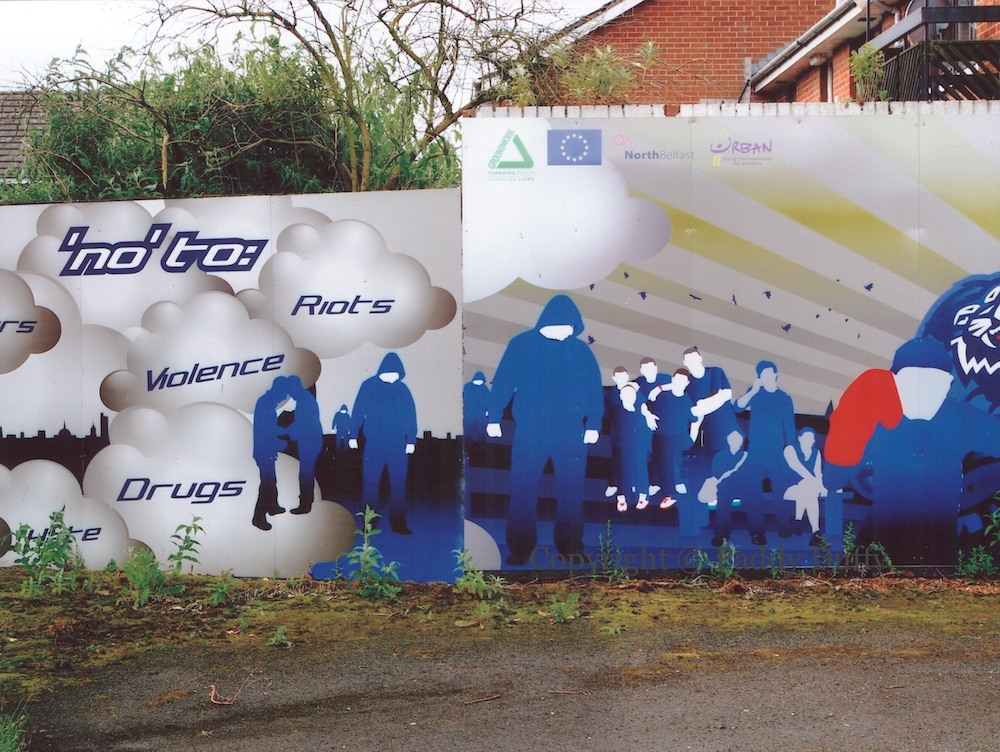
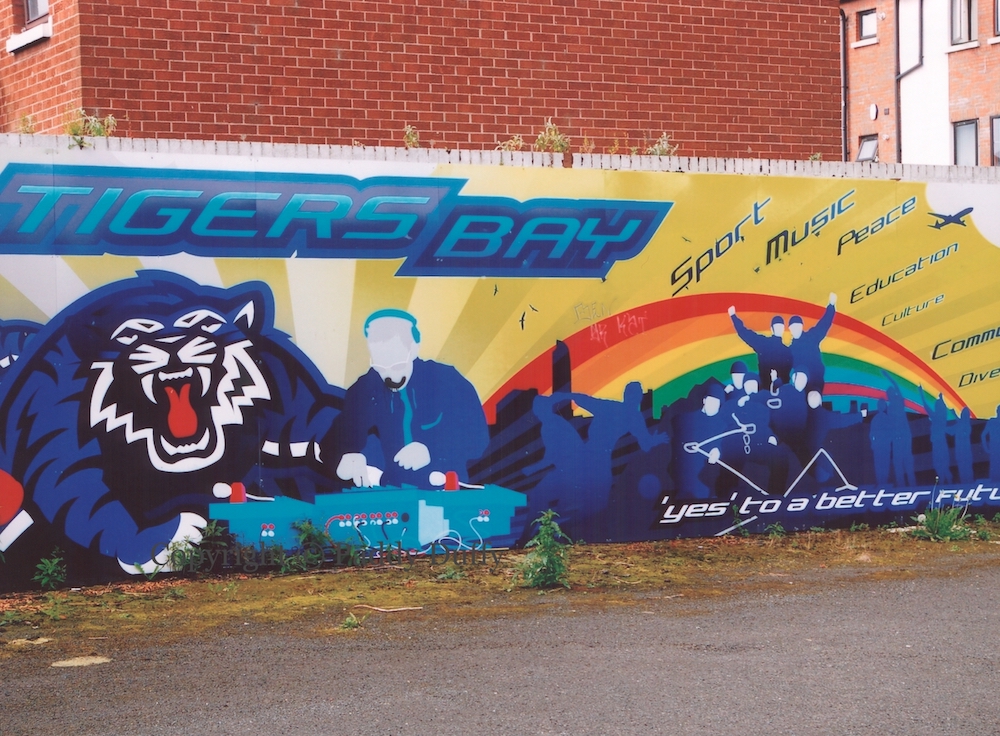
Tiger’s Bay says “‘No’ to dealers, riots, violence, drugs, hate.” on the black-and-white left and, on the right, “‘Yes’ to a better future … sport, music, peace, education, culture, community, diversity.” With funding from Groundwork, the European Union, NorthBelfast, Urban [development? regeneration?].
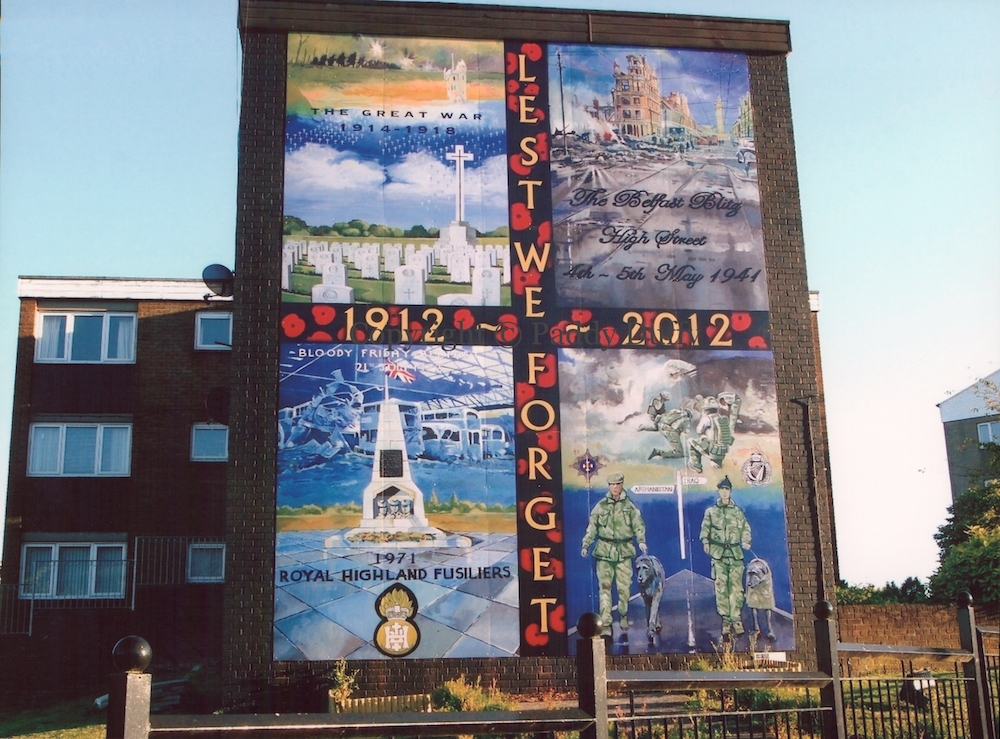
The three-storey mural above is in Ballysillan and replaced a UVF mural when it was added in 2011. The mural is the work of Jim Russell while artist-in-residence at Arts For All. The information below was provided by Arts For All.
The Great War: The first panel commemorates the Great War that ravaged Europe from 1914 to 1918 and shows troops advancing into battle, the Ulster Tower at Thiepval commemorating the sacrifice at the Somme and an image showing one of the war cemeteries and highlighting the true cost of war.
Second World War: The second panel features some of the devastation visited upon Belfast during a series of Luftwaffe raids during the early years of the Second World War. Belfast suffered greatly with over 1,000 people dying in four nights of bombing in April and May of 1941.
The Troubles: In the third panel highlight the dark history known as the Troubles. It features two events from the years of that time – the murder of the three young off-duty Scottish soldiers in 1971 [the monument depicted was featured in The Highland] and the Bloody Friday bombings of July 1972. In the midst of the horror that accompanied the early years of the Troubles these events still caused many to struggle to understand how people could carry out such atrocities.
Present Day Conflict: Panel four brings us up to the present day. Military service is a tradition for many in Northern Ireland and for many their first overseas trip came on the back of an overseas posting whilst serving in one of the Armed Forces. From times past, through the World Wars, the Korean War, to more recent conflicts in Iraq and Afghanistan soldiers and regiments drawn from Norther Ireland continue to play a role.
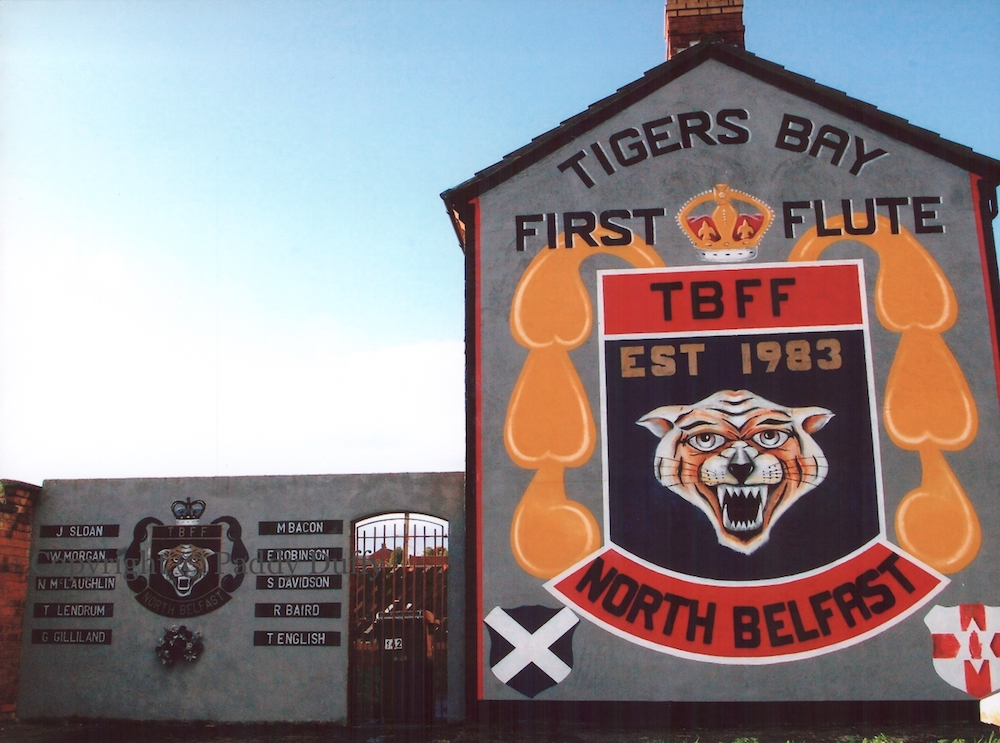
Tiger’s Bay First Flute, “Est 1983”. The emblem is in the style of the UDA emblem, and UDA members are listed on the side wall. For two of those listed, see Bacon and Baird. T[ommy] English was killed by the UVF in 2000.
Red Hand Commando volunteer Stevie McCrea was sentenced to 16 years for the murder of James Kerr in 1972 (Behind The Mask) and was subsequently “murdered by the enemies of Ulster” on February 18th, 1989 in an IPLO attack on the Orange Cross (see M00560 | WP). “For he shall not grow old as we that are left grow old. Age shall not weary him nor the years condemn. At the going down of the sun and in the morning, we will remember him.”
This is a repaint of the mural seen in 2007, which is itself a repainting of the original mural to McCrea – see T00152.
McCrea is included on murals in south Belfast’s Frenchpark Street and Broadway (dating back to at least 1993).
The mural shows people being hanged, speared, and drawn behind a horse, and houses in flames.” The persecution of the Protestant people by the church of Rome, 1600 [probably the Irish Rebellion of 1641 (WP)] – the ethnic cleansing still goes on today.”