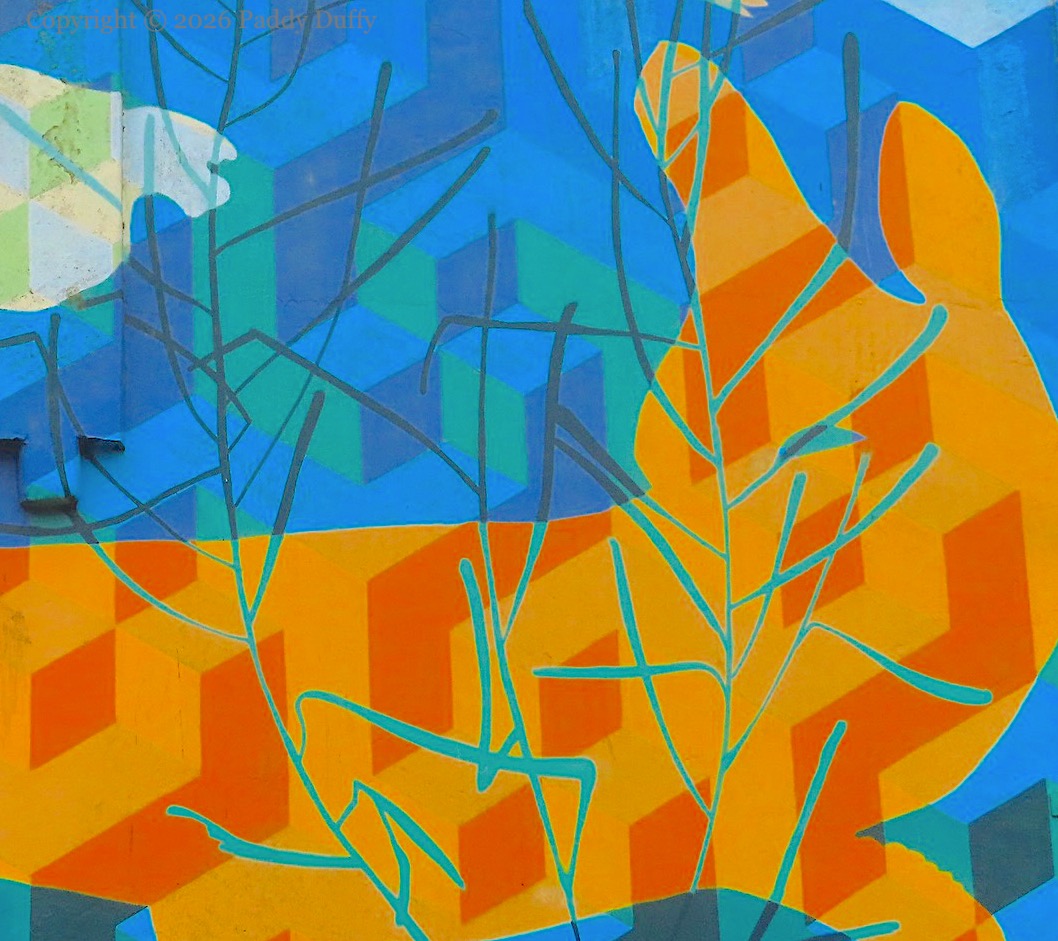
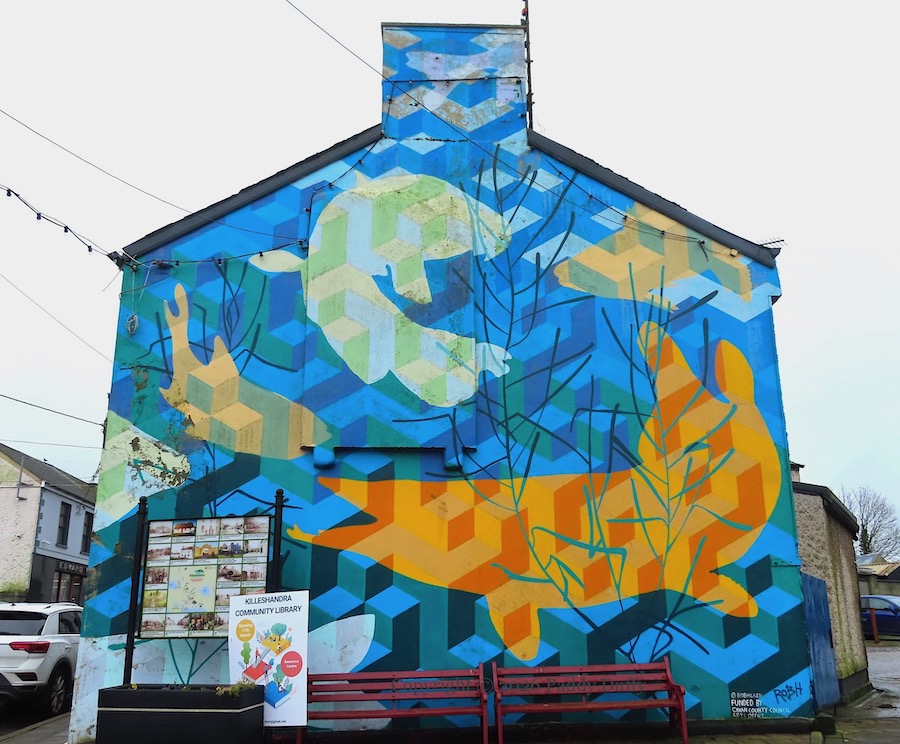
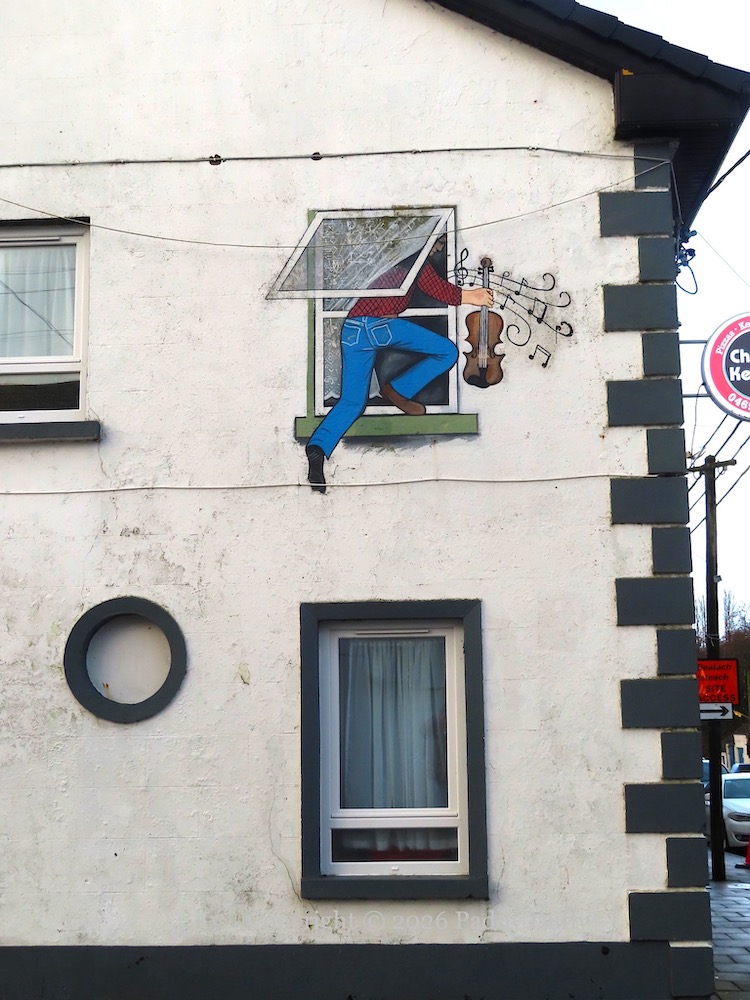
Killeshandra, County Cavan, is located near the Lough Oughter system of lakes, which is home to a wide variety of fish, including the roach, tench, perch, bream, and pike (Island View Cavan pdf) featured in this Rob Hilken (web) piece in the centre of town.
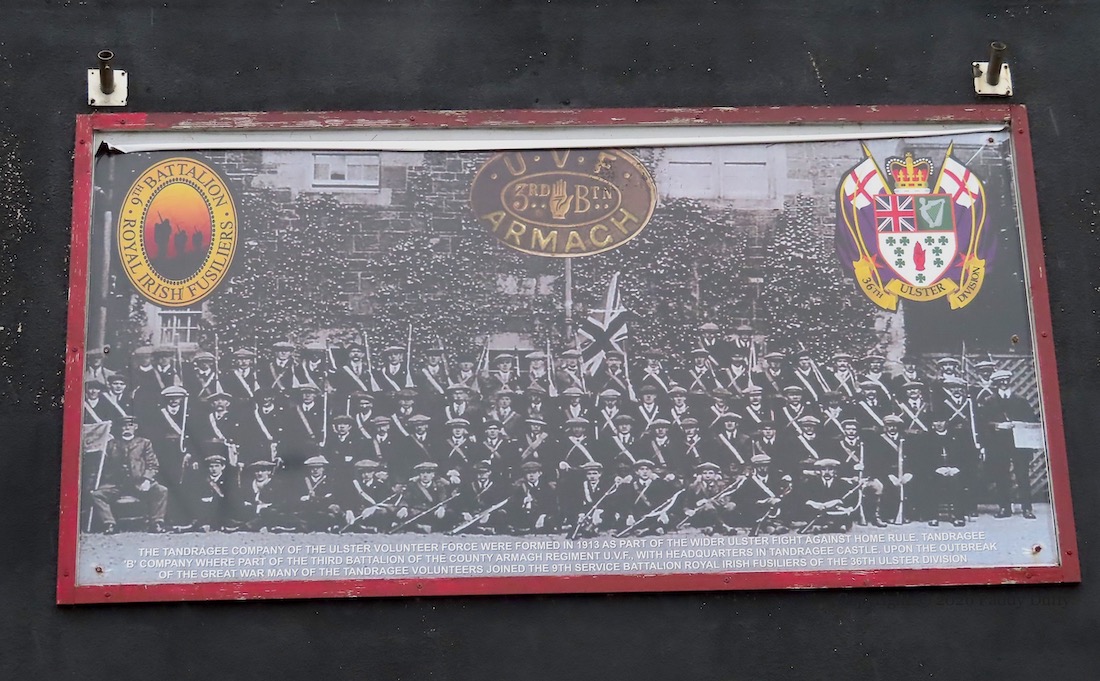
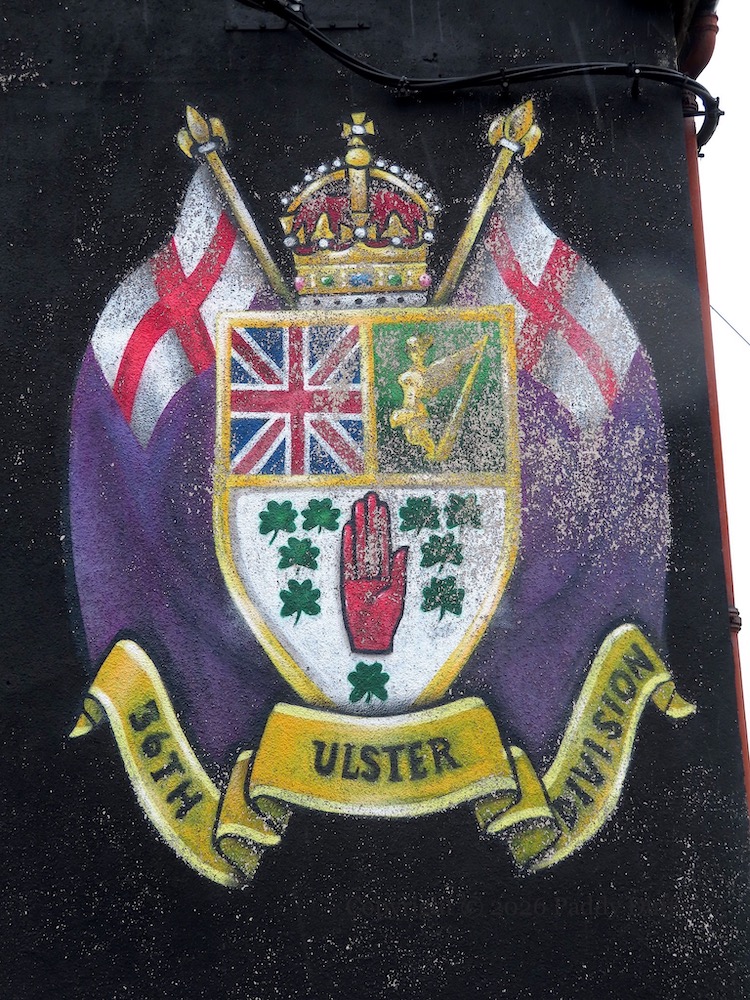
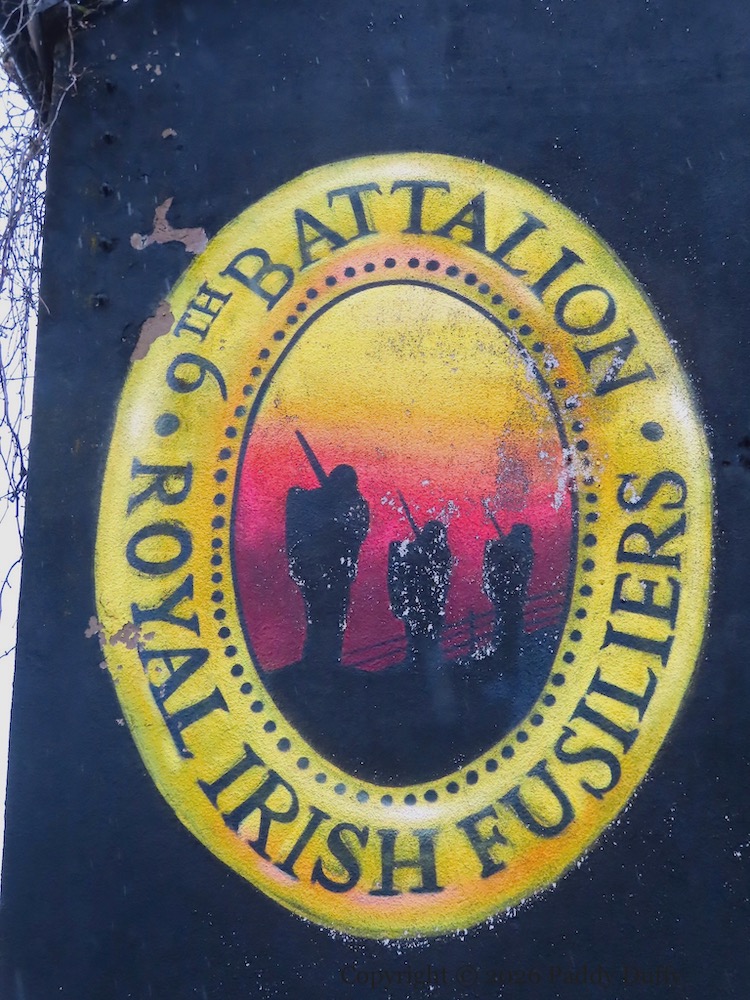
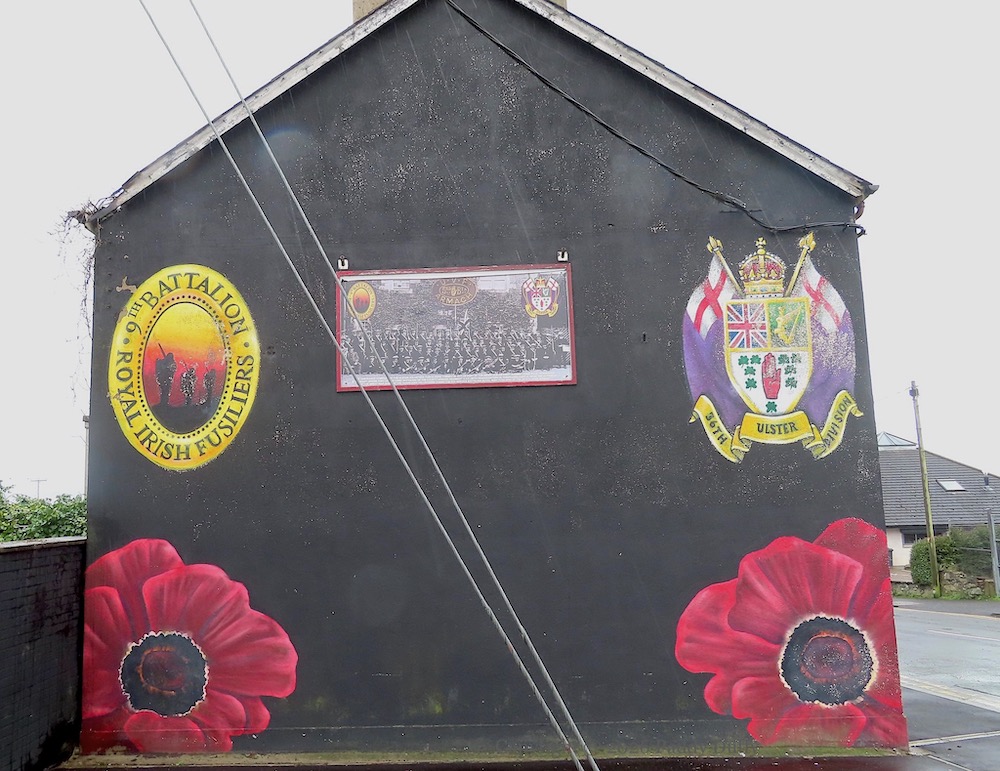
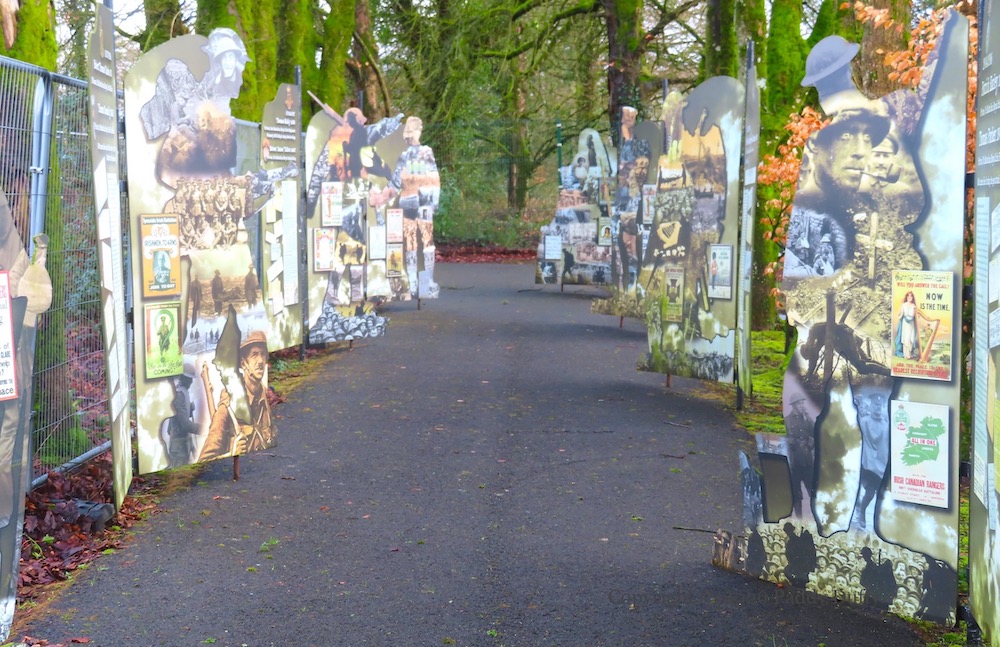
“The Tandragee company of the Ulster Volunteer Force were formed in 1913 as part of the wider Ulster fight against Home Rule. Tandragee ‘B’ Company where [were] part of the third battalion of the County Armagh Regiment UVF with headquarters in Tandragee Castle. Upon the outbreak of the Great War many of the Tandragee Volunteers joined the 9th Service Battalion Royal Irish Fusiliers of the 36th (Ulster) Division.”
The 9th battalion comprised volunteers from Armagh, Monaghan, and Cavan.
For a fuller version of the photograph, see Cyberprod.
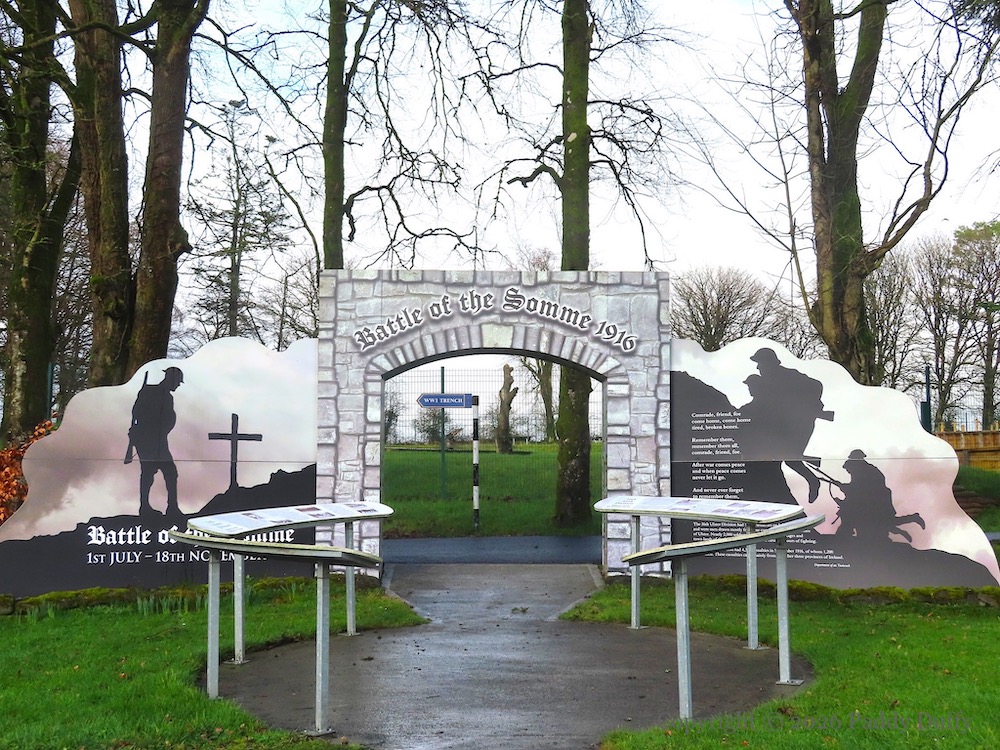
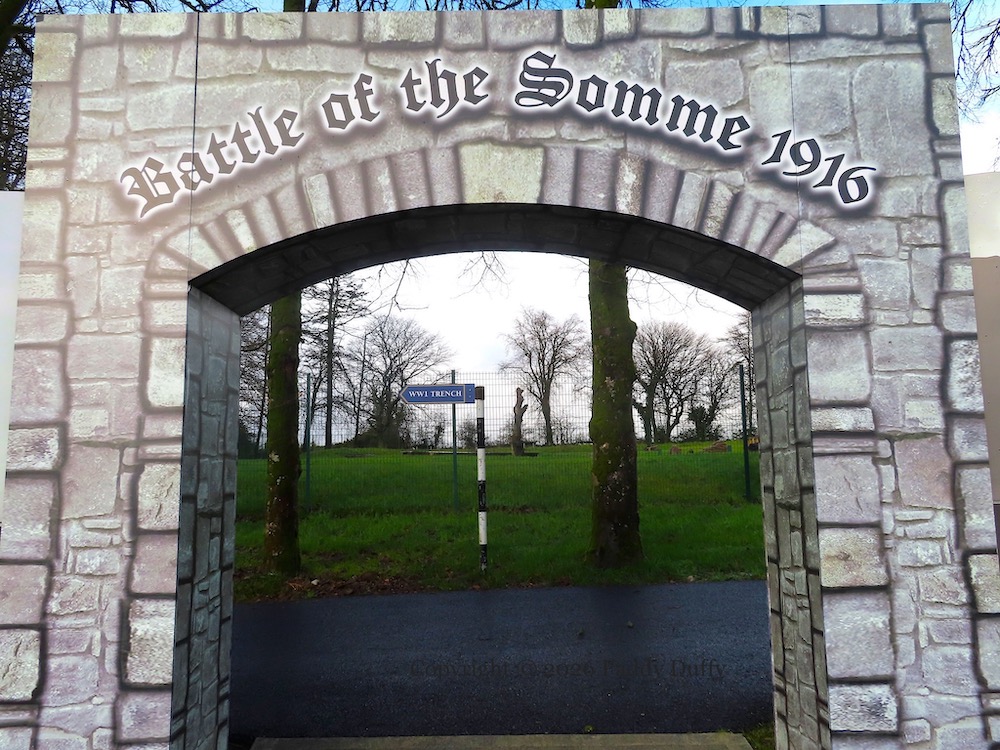
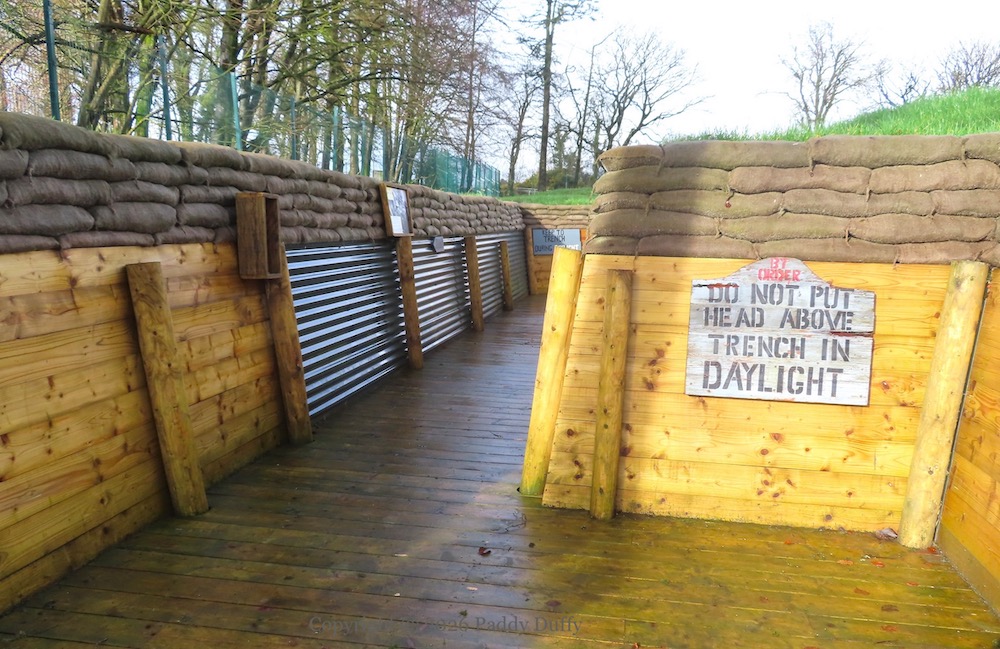
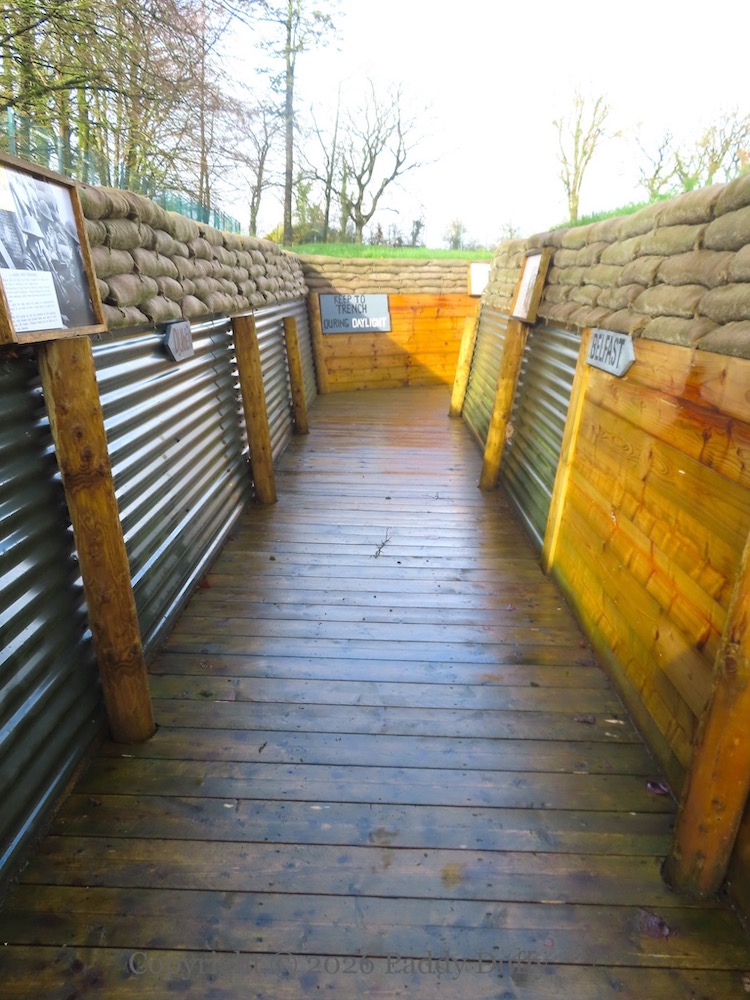
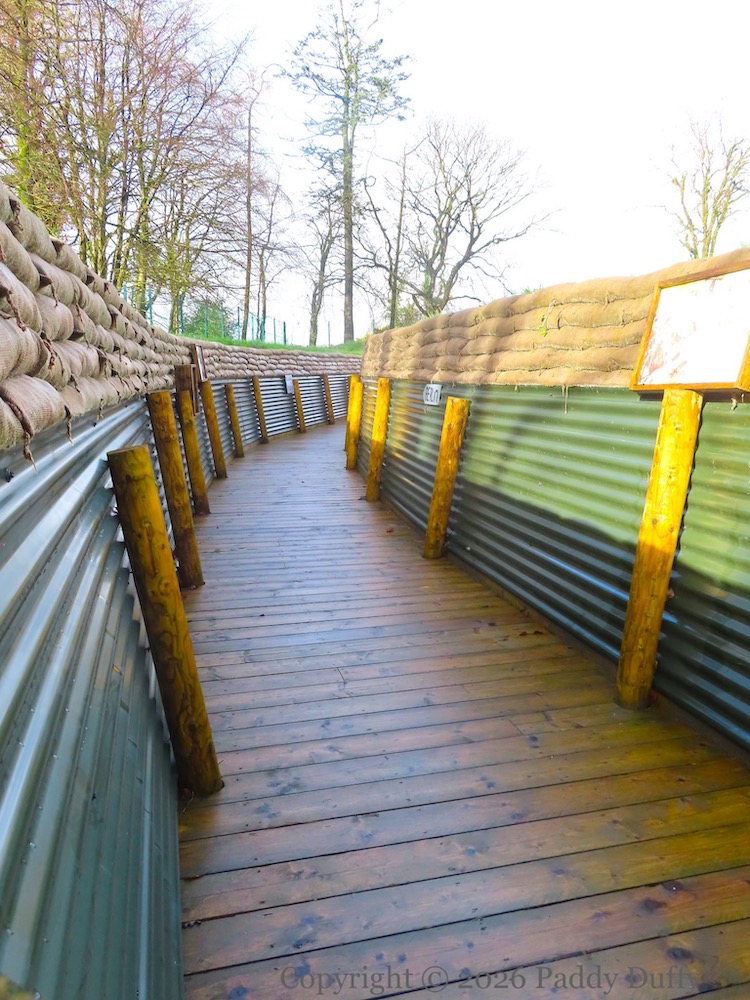
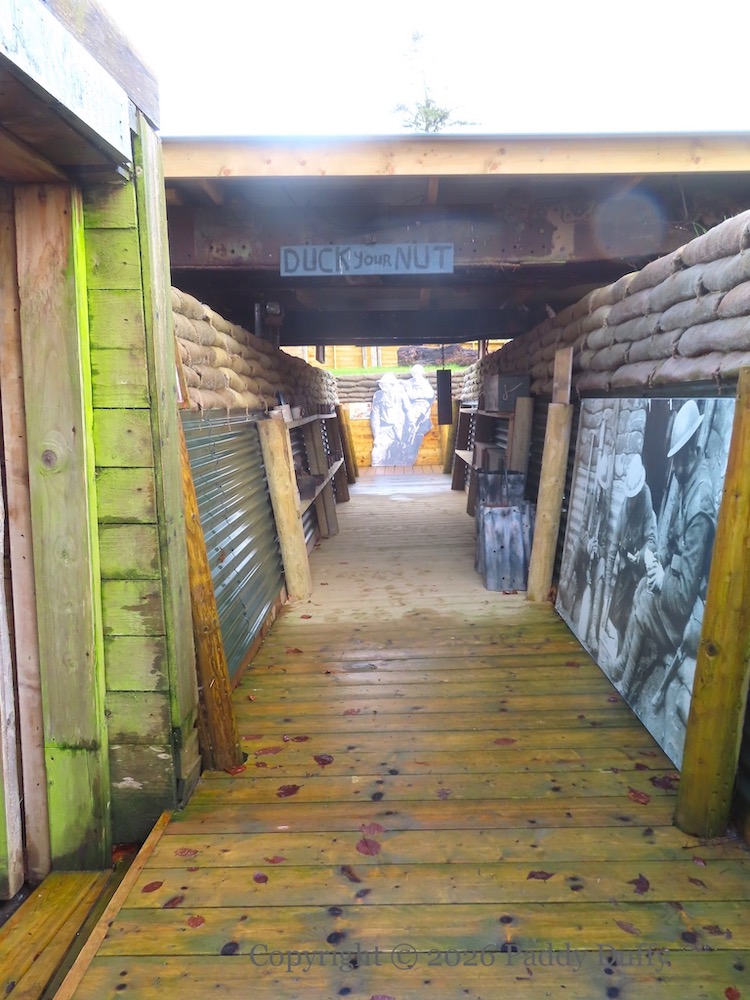
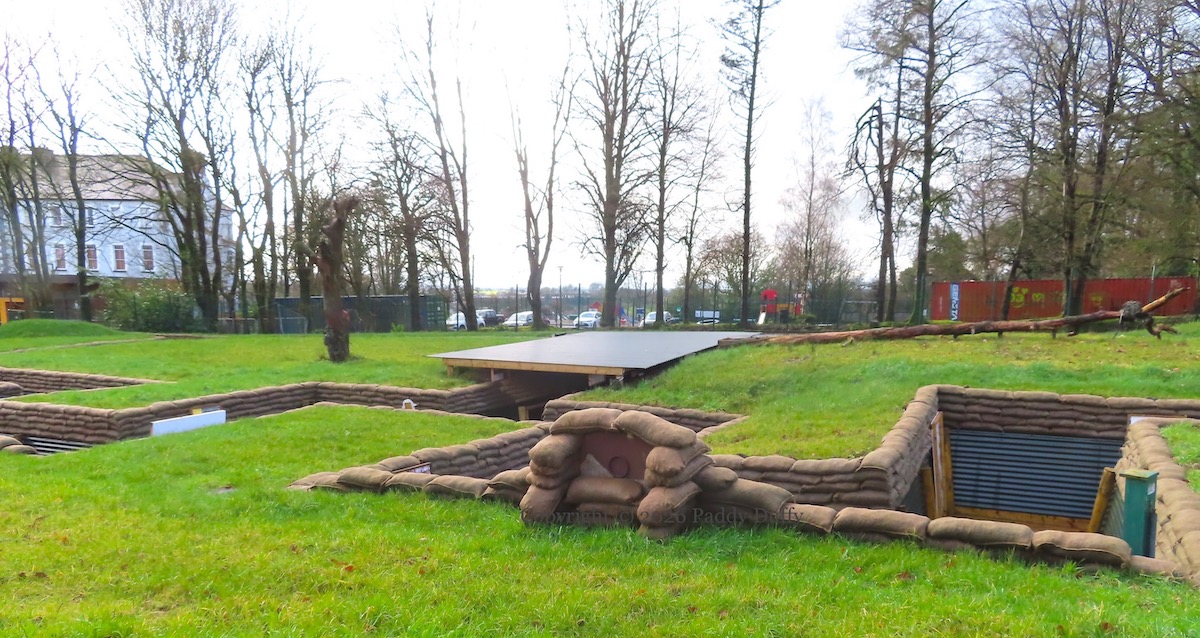
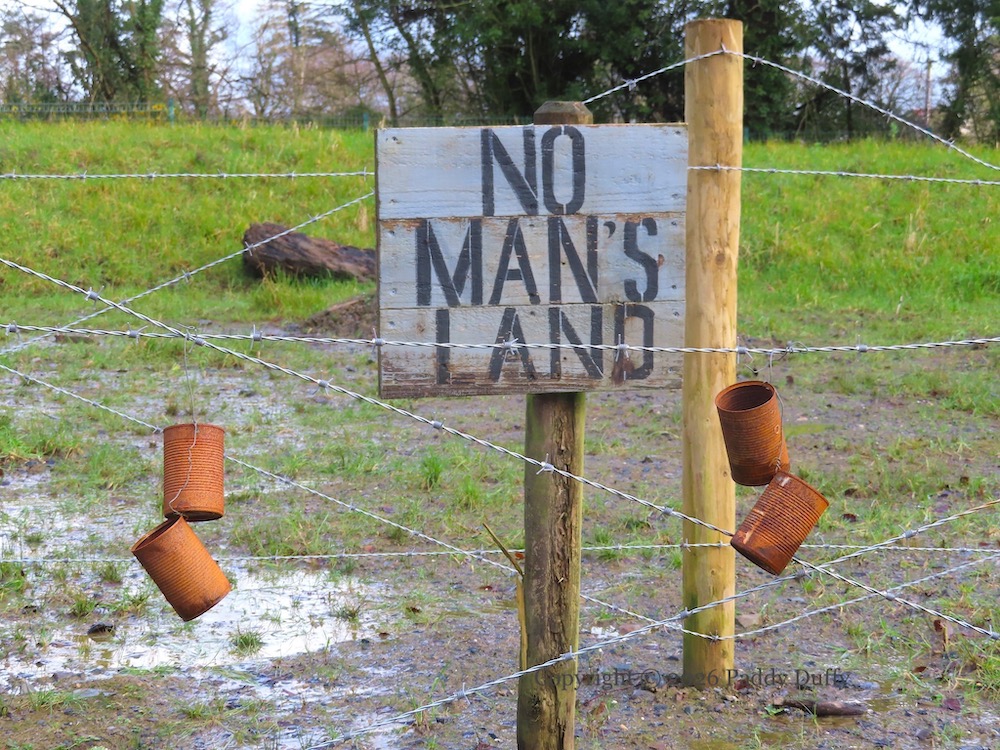
The Cavan County Museum (web) in Ballyjamesduff includes a “WWI trench experience”, with 350 metres of trench and more than 6,000 sand-bags. The Cavan volunteers joined the 9th battalion of the Royal Irish Fusiliers (108th brigade of the 36th). The officer commanding of the Division, Oliver Stewart Wood Nugent, was from Cavan (History Ireland).
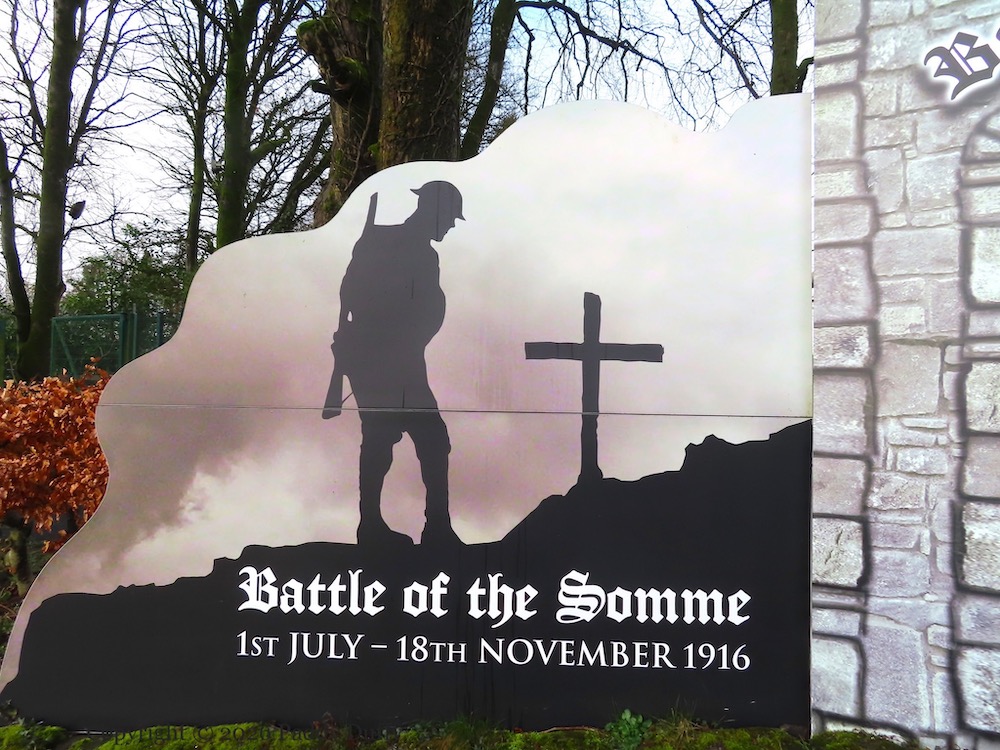
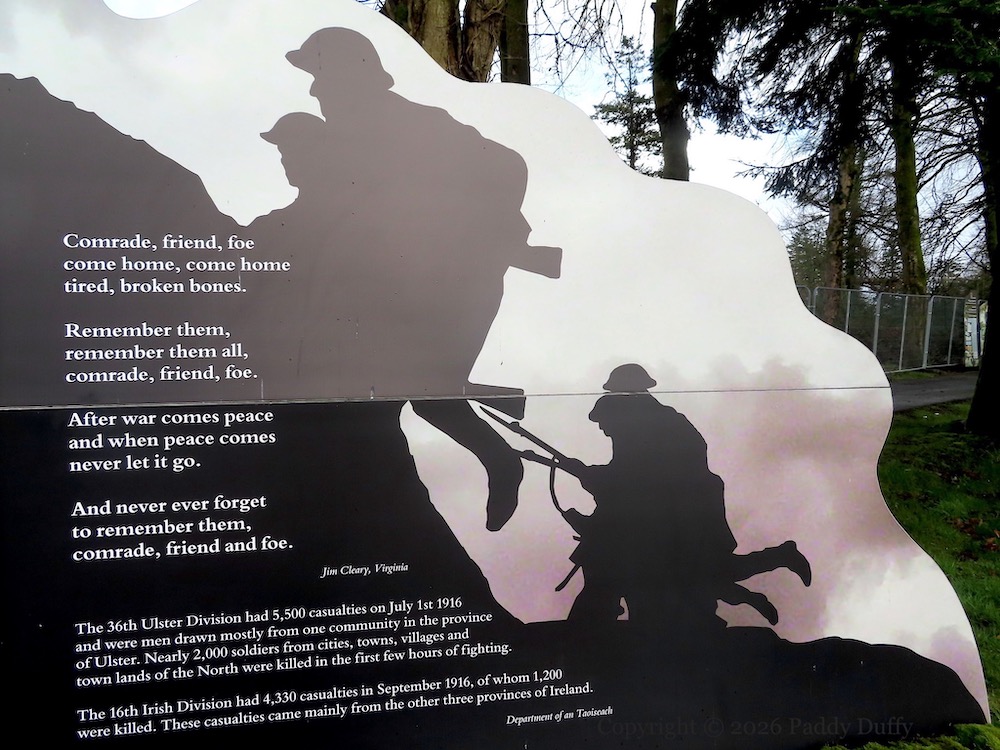
“Battle Of The Somme 1st July – 18th November 1916”, “”Comrade, friend, foe/come home, come home/tired, broken bones.//Remember them,/remember them all,/comrade, friend, foe.//After war comes peace/and when peace comes/never let it go.//And never ever forget/to remember them,/comrade, friend and foe.” – Jim Cleary, Virginia.”
“”The 36th (Ulster) Division had 5,500 casualties on July 1st 1916 and were men drawn mostly from one community in the province of Ulster. Nearly 2,000 soldiers from cities, towns, villages and town lands of the North were killed in the first few hours of fighting. The 16th (Irish) Division had 4,330 casualties in September 1916, of whom 1,200 were killed. These casualties came mainly from the other three provinces of Ireland.” – Department Of An Taoıseach”
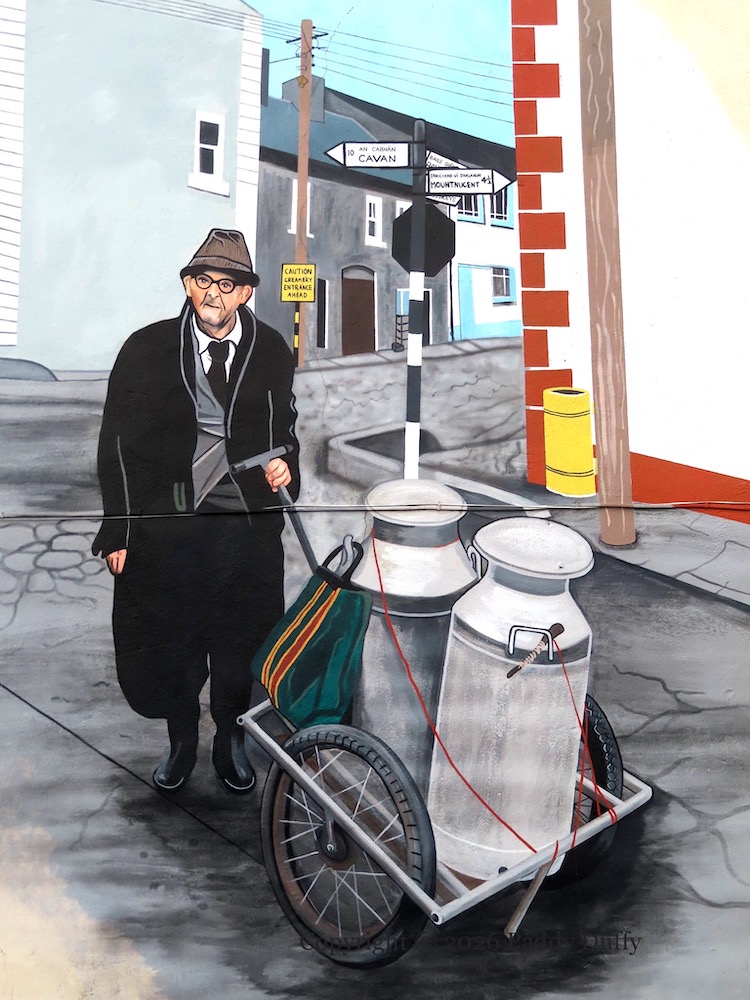
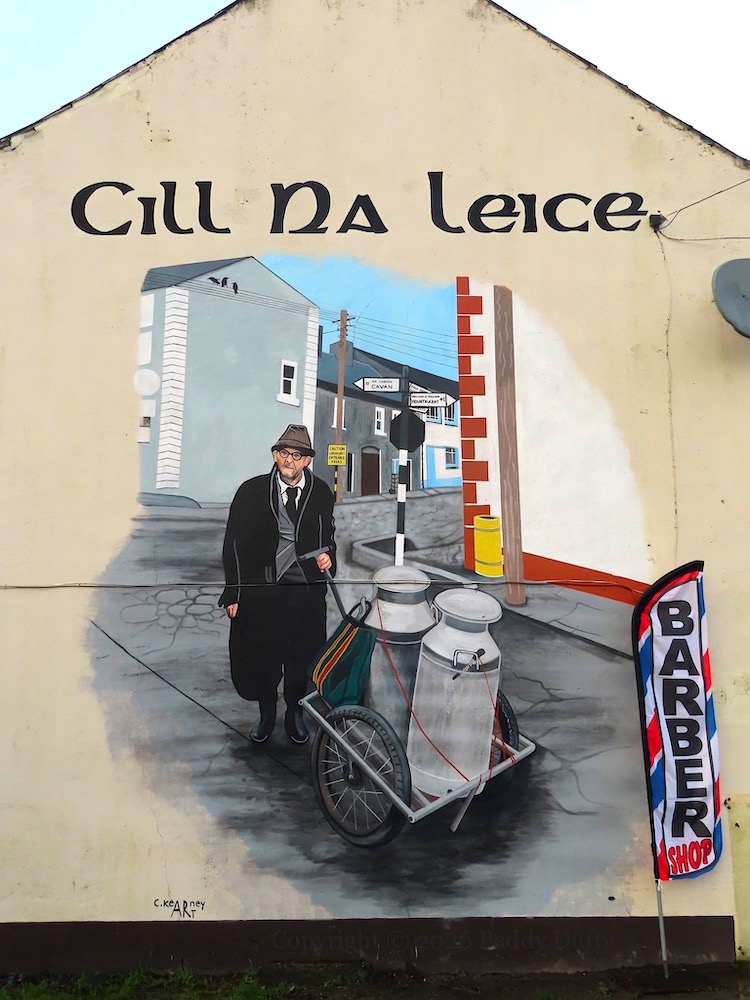
Kilnaleck local Frank Brook built the cart that he wheeled daily to the creamery. For more information about Frank, see this profile at AngloCelt of the artist, Colette Kearney (web).
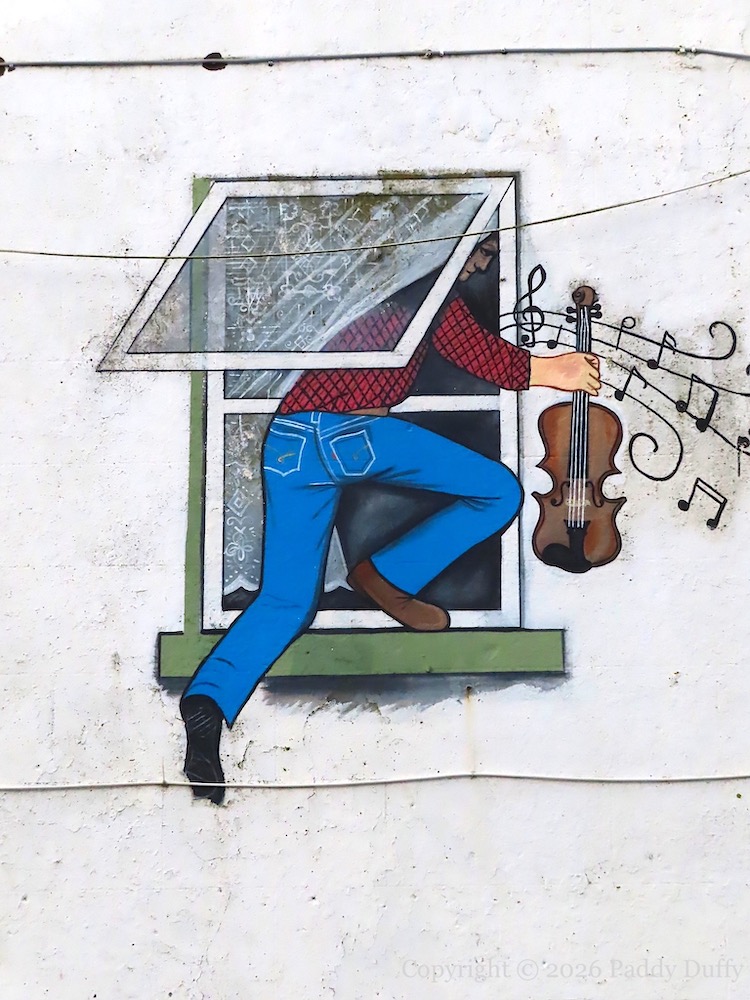
The other piece is on the side wall of (what was) the Copper Kettle.
The board on the left includes a quote from Séamus Ó Conghaıle [James Connolly] from a 1916 piece entitled The Irish Flag, extolling the “cause of labour” as the cause of Ireland (alongside a quote from Pádraıg Mac Pıaraıs [Patrick Pearse] and portraits by Jim Fitzpatrick (Revolutionaries)).
The board on the right, from “Independent Republicans Armagh” – of a Celtic cross draped with a Tricolour – was generated by AI.
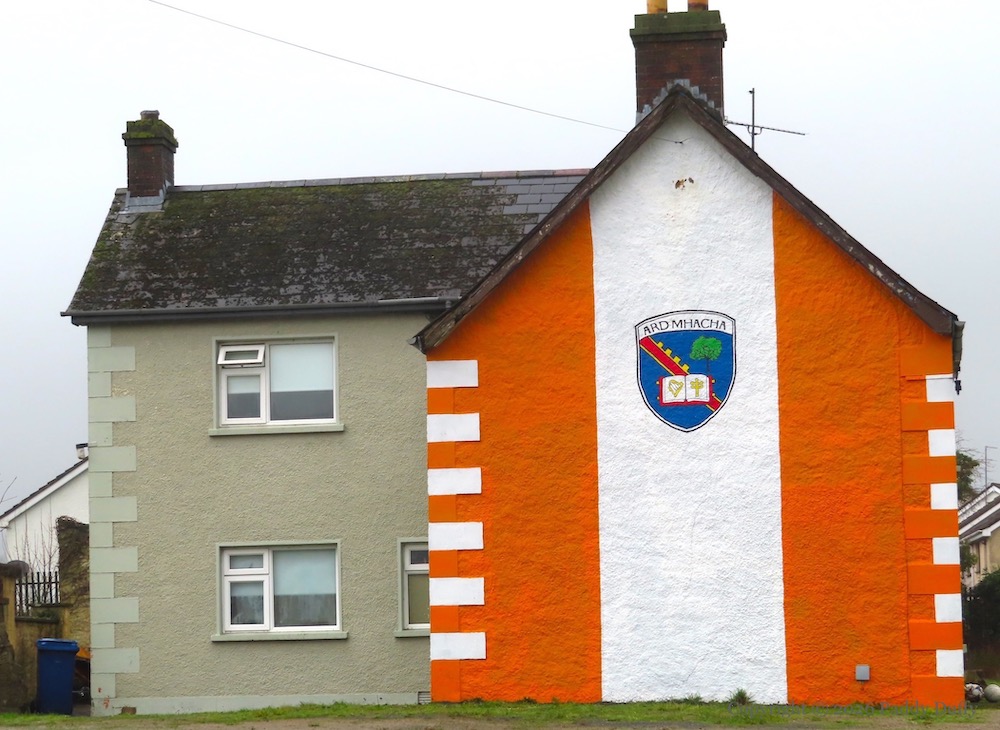
Here is another (see previously: Armagh For Sam) mural supporting Armagh’s senior football team, presumably in connection with its successful 2024 campaign, this time in Newry.
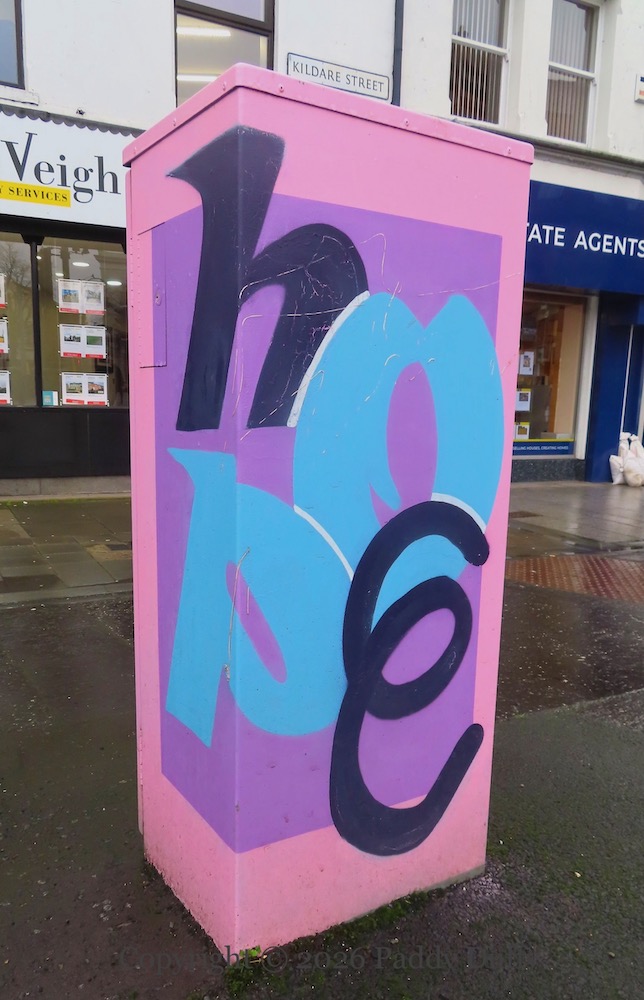
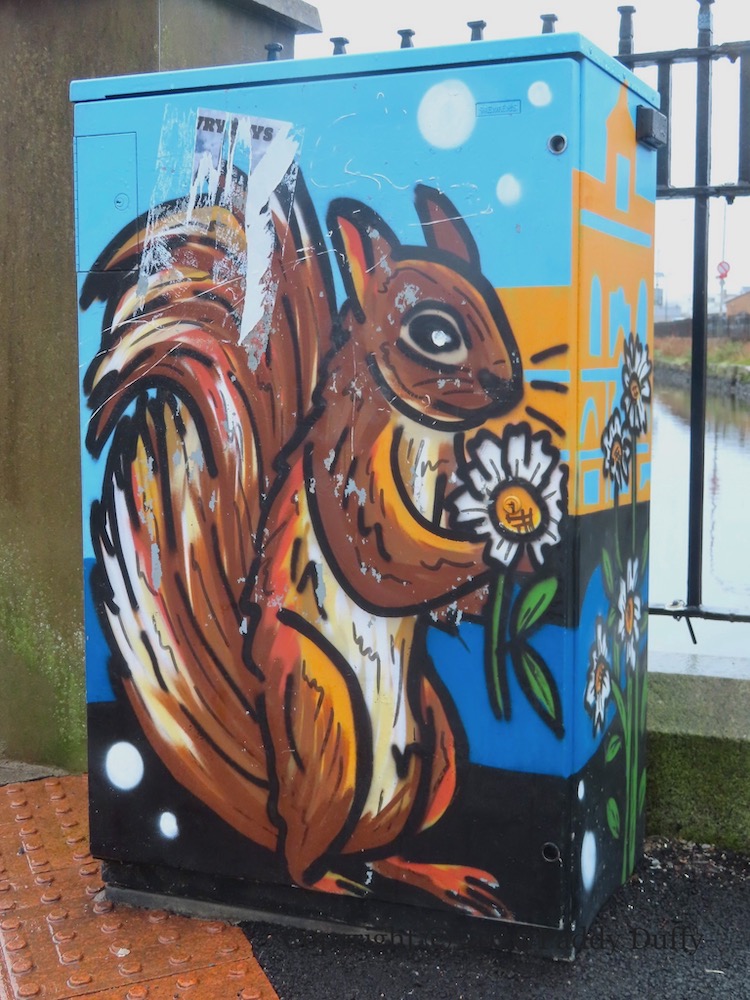
Upper Water Street, Newry. Also included below are two electrical boxes, the first, “Hope”, presumably by Zippy (web), in Kildare Street; the squirrel is in Merchants’ Quay.
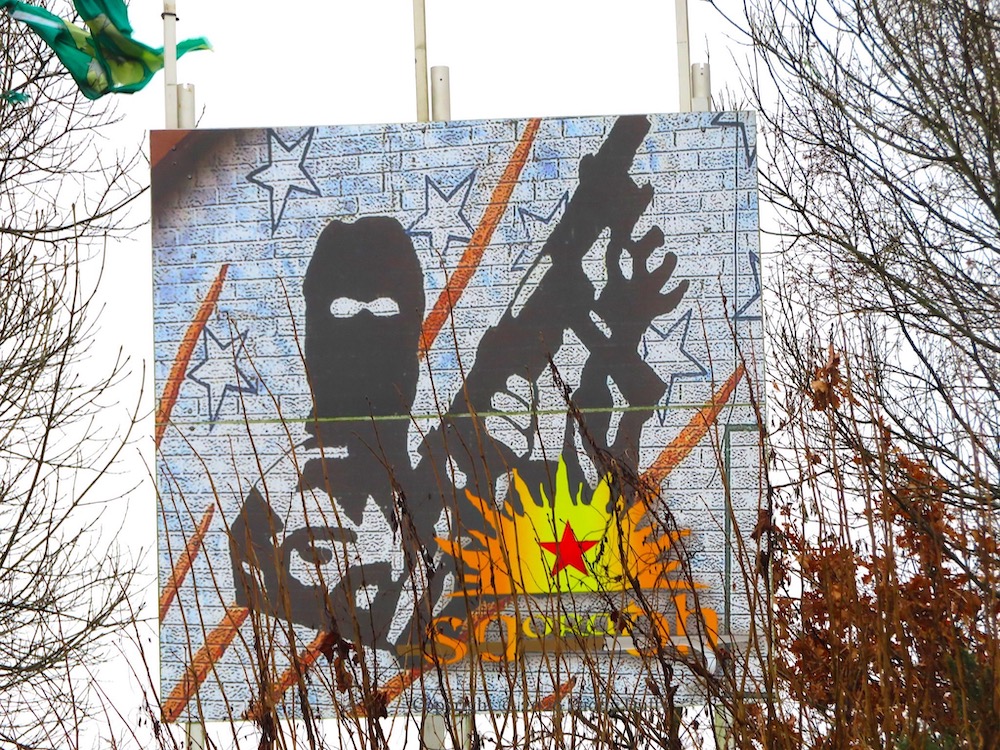
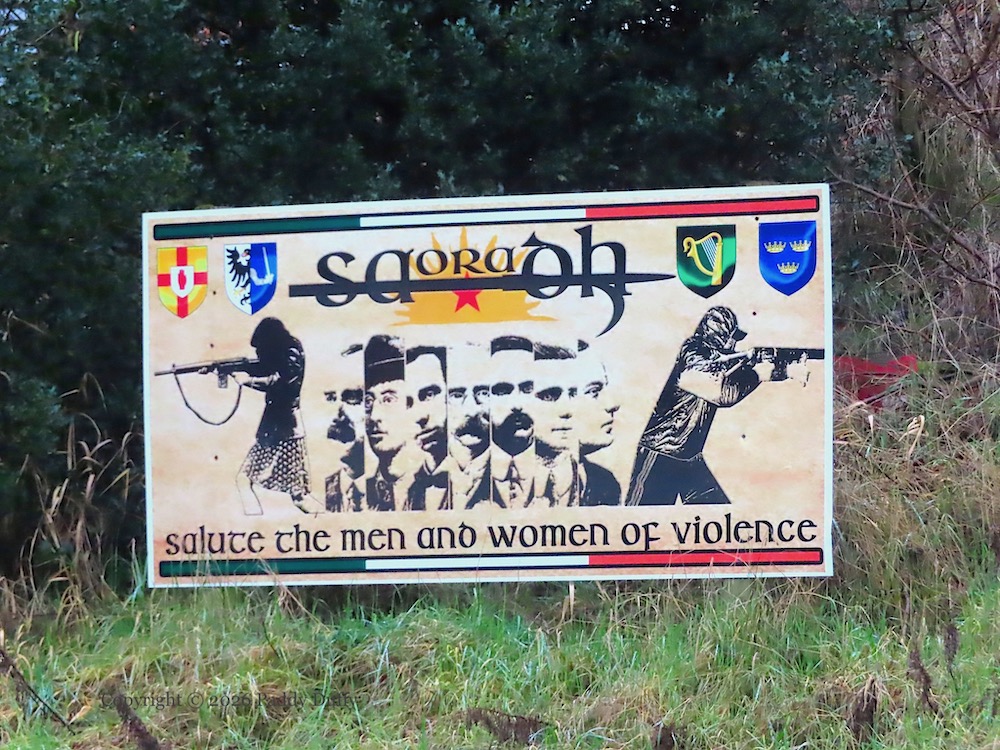
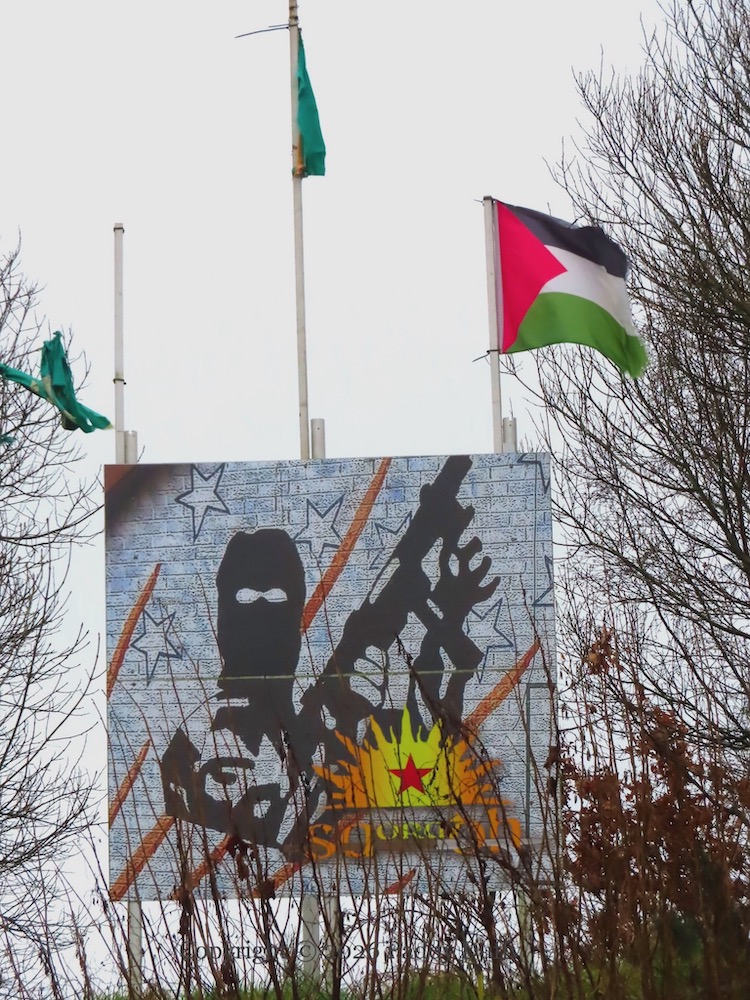
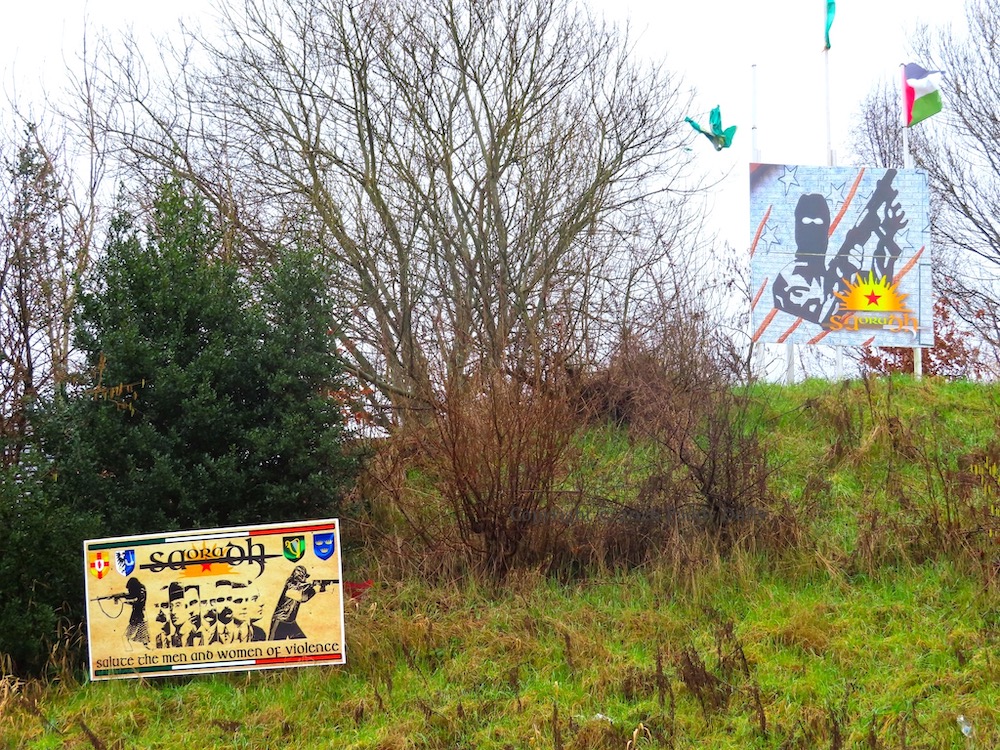
These two Saoradh (web) boards are at the roundabout on Camlough Road, Newry. The one above shows a vintage mural from nearby Carnagat Road that goes back to (at least) 1994 – the version painted in 2000 can be seen in the Peter Moloney Collection.
The other board reads “Salute the men and women of violence”, among whom are the seven signatories to the 1916 Proclamation, the IRA of the Troubles era – illustrated by Colman Doyle’s famous ?1973? (staged) photograph of a female IRA volunteer with AR-18 – and the post-Agreement groups (such as the New IRA) – illustrated by a home-made RPG (shown in Resistance).
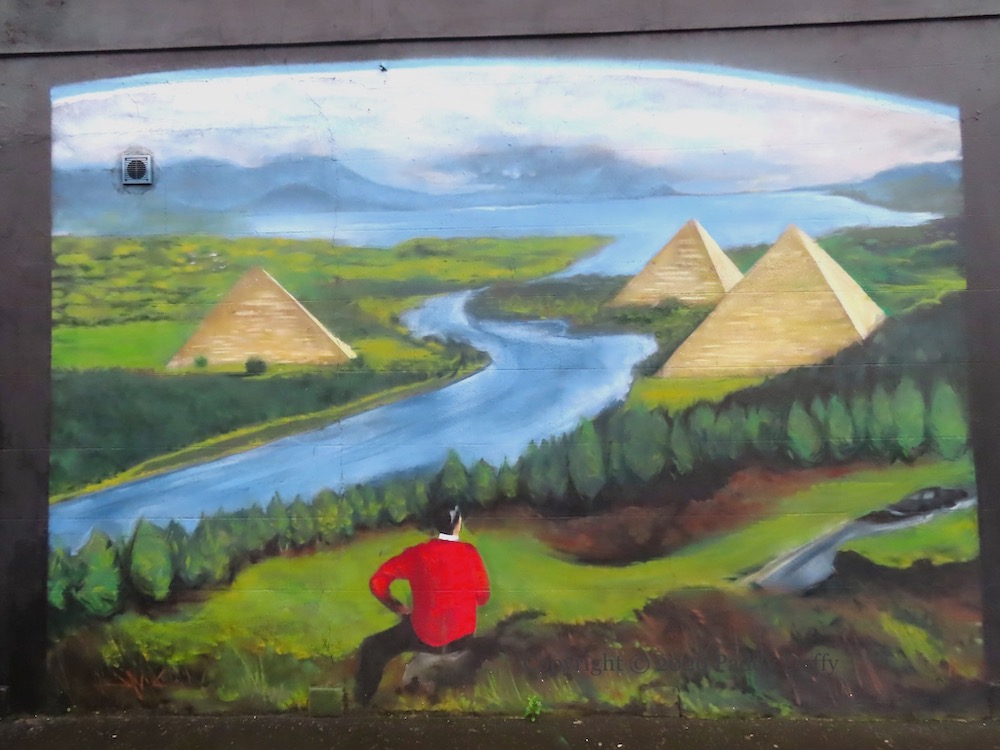
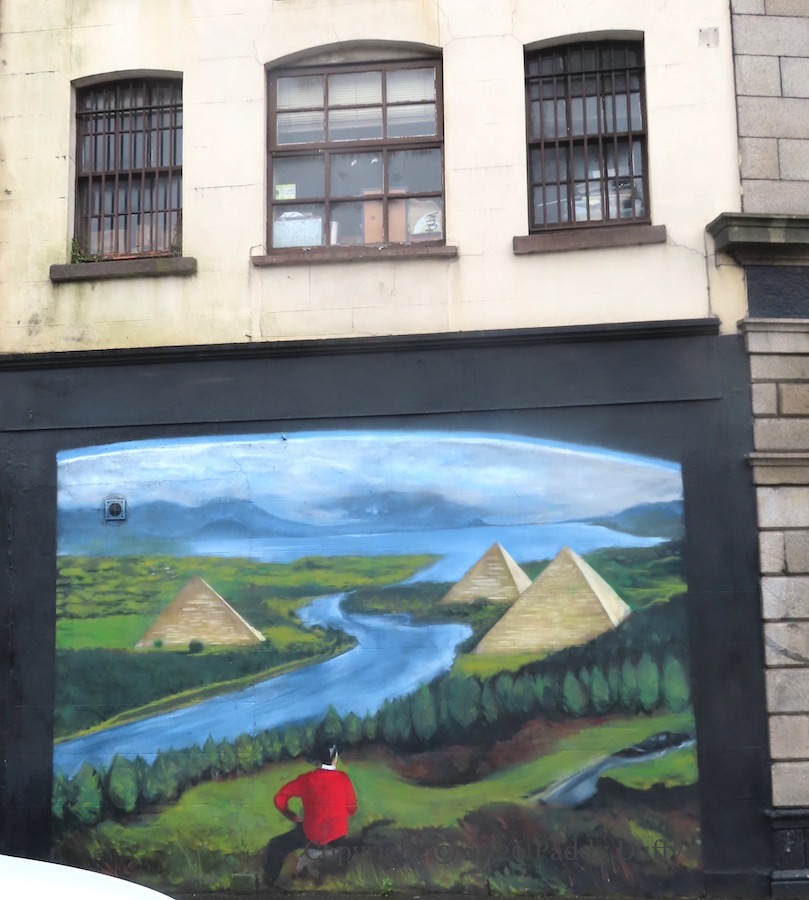
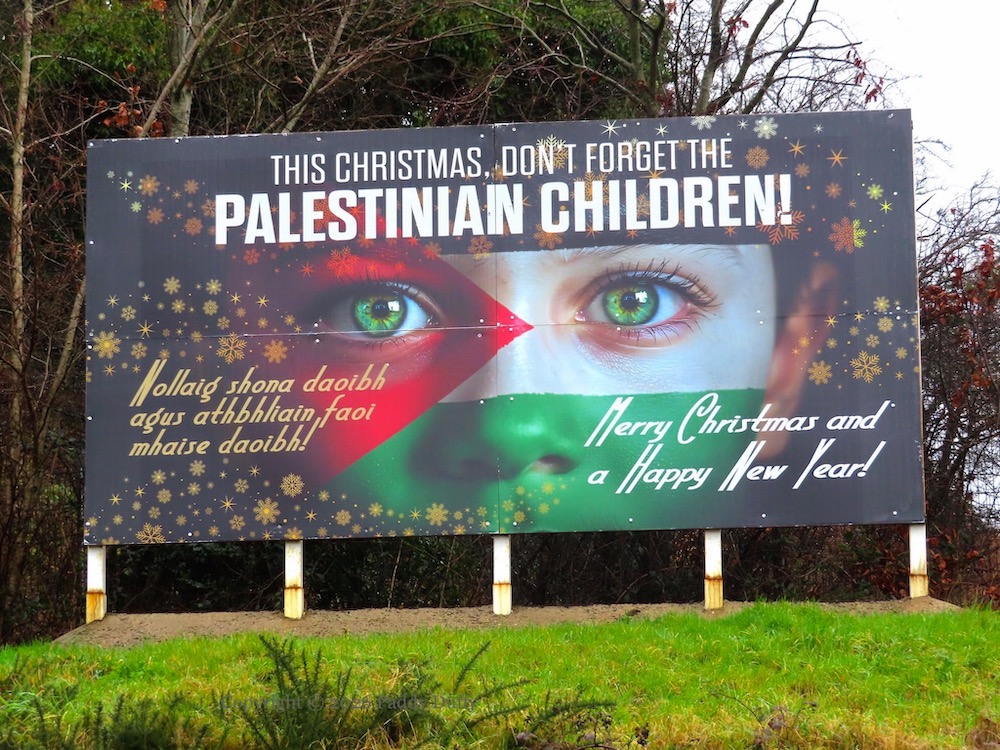
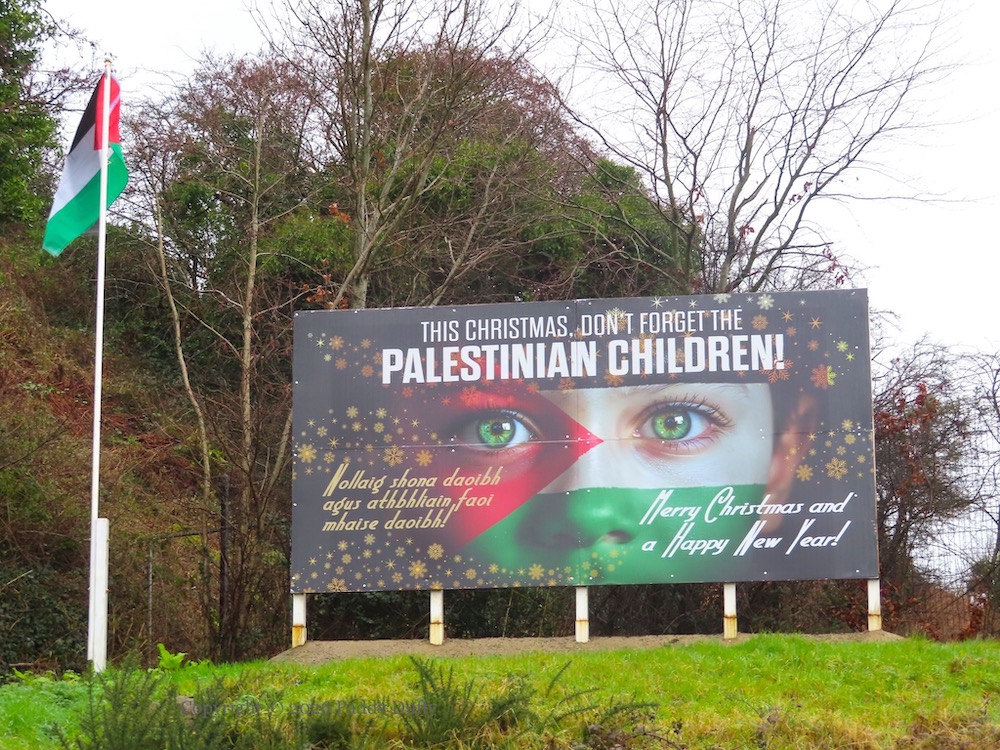
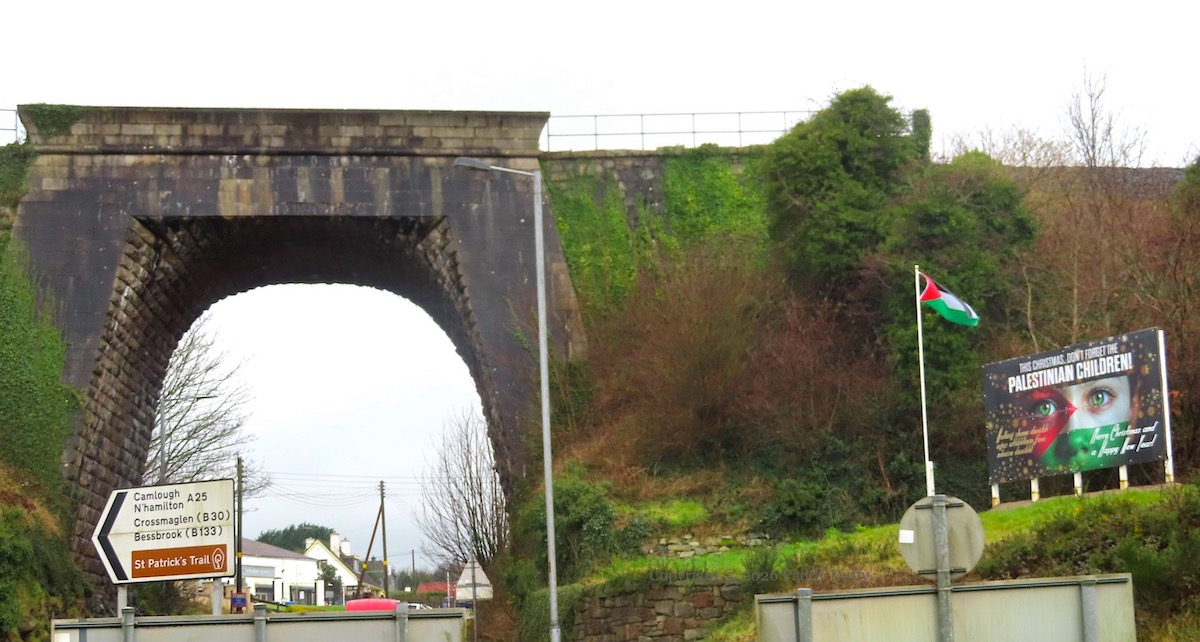
“This Christmas, don’t forget the Palestinian children! Nollaıg shona daoıbh agus athbhlıan faoı mhaıse daoıbh! Merry Christmas and a happy New Year!” As the final image shows, this board is next to the Egyptian Arch in Newry, and is on public land. The DUP called for the board’s removal in January; Liz Kimmins, minister for Infrastructure, said that at the time that there were no plans to remove it (BBC), and a few weeks later (February 10th, the day of these photographs) it was still in situ, though an investigation by Newry, Mourne, and Down council is on-going.
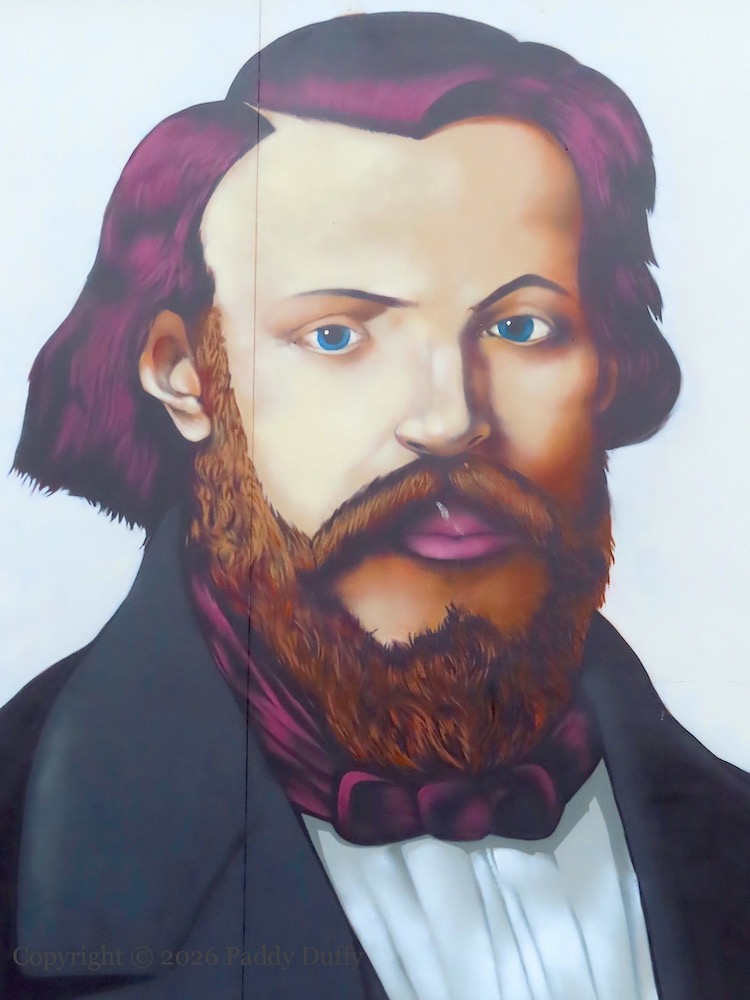
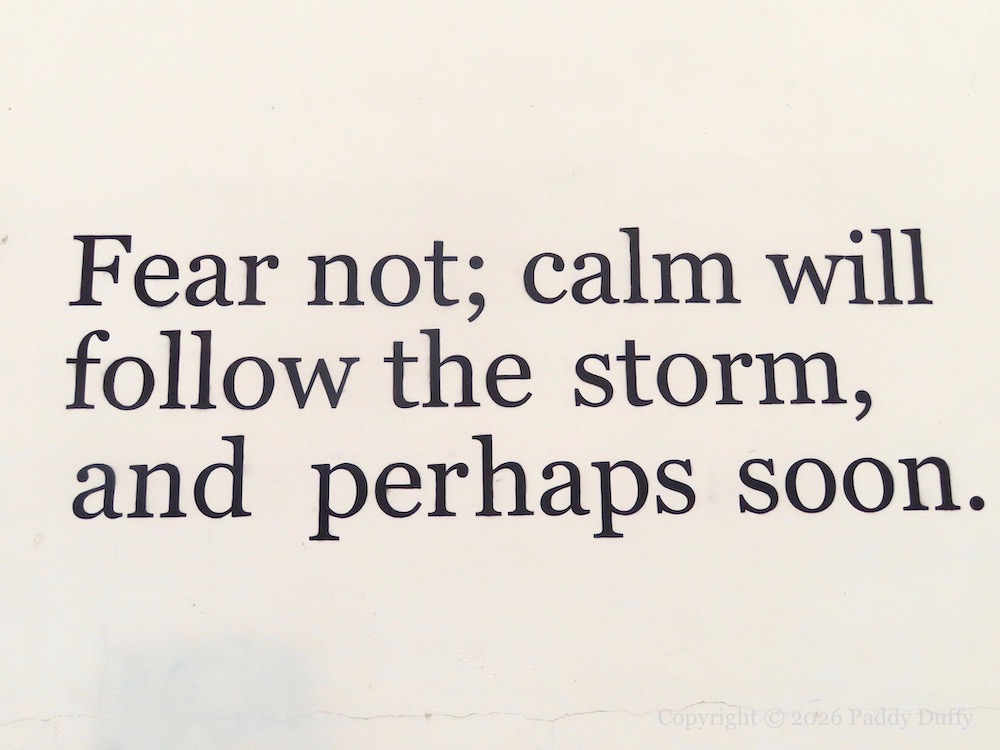
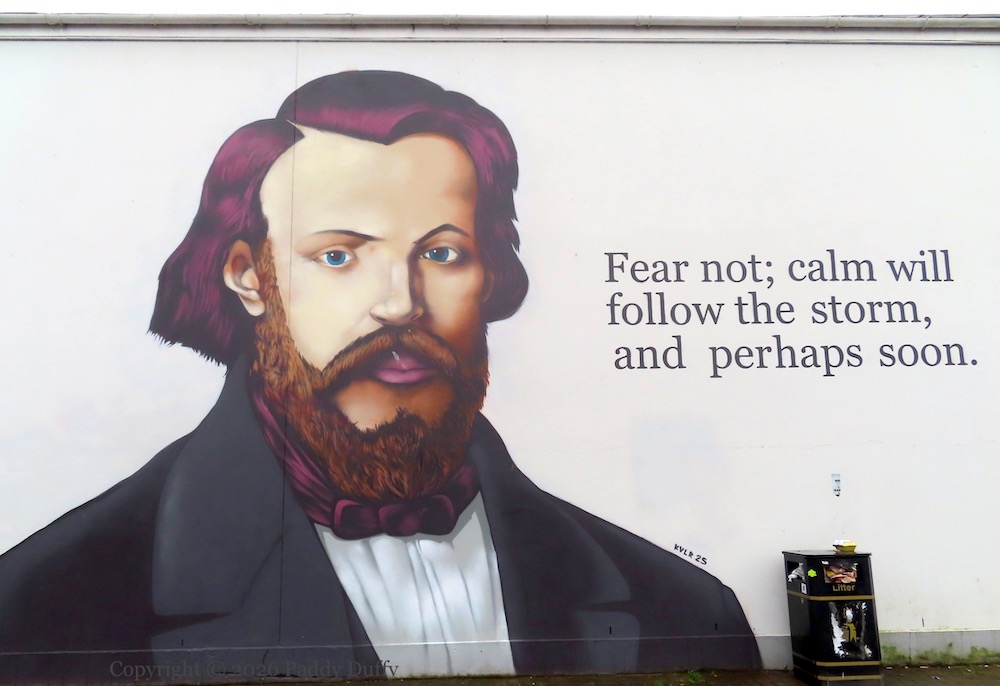
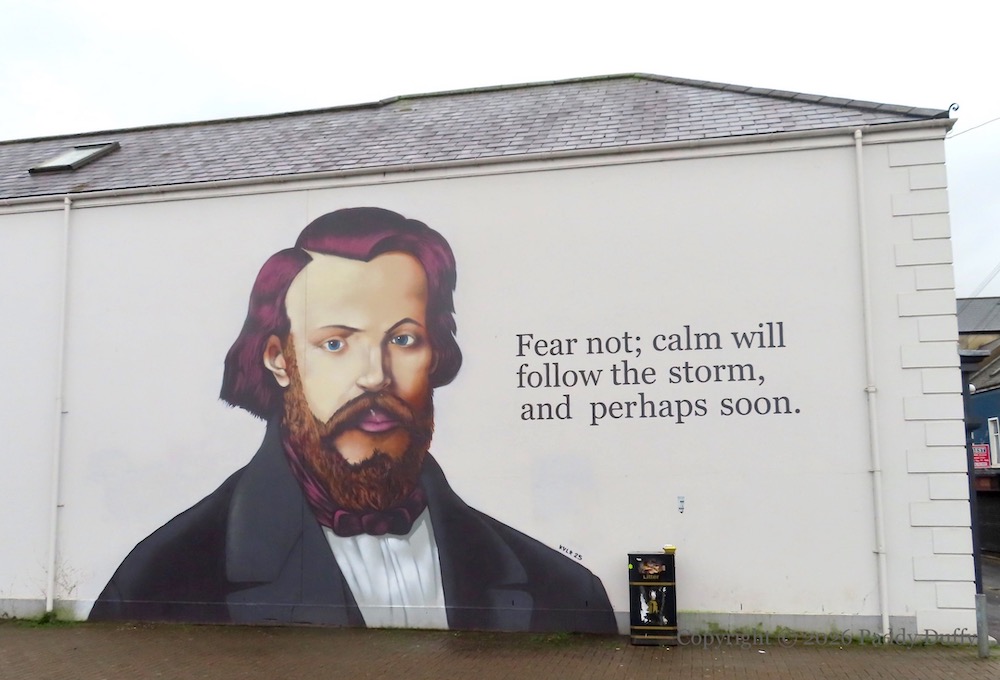
Frenchman Fréderíc Ozanam was beatified by Pope John Paul II in 1997 for establishing the Society Of St Vincent De Paul in 1833, itself named after a French priest from the 1600s, who is quoted to the right of Ozanam’s portrait: “Fear not; calm will follow the storm, and perhaps soon.”
Painted by KVLR (web) in Mill Street, Newry, on the side-wall of the St Vincent’s charity shop.

 Paddy Duffy Collection