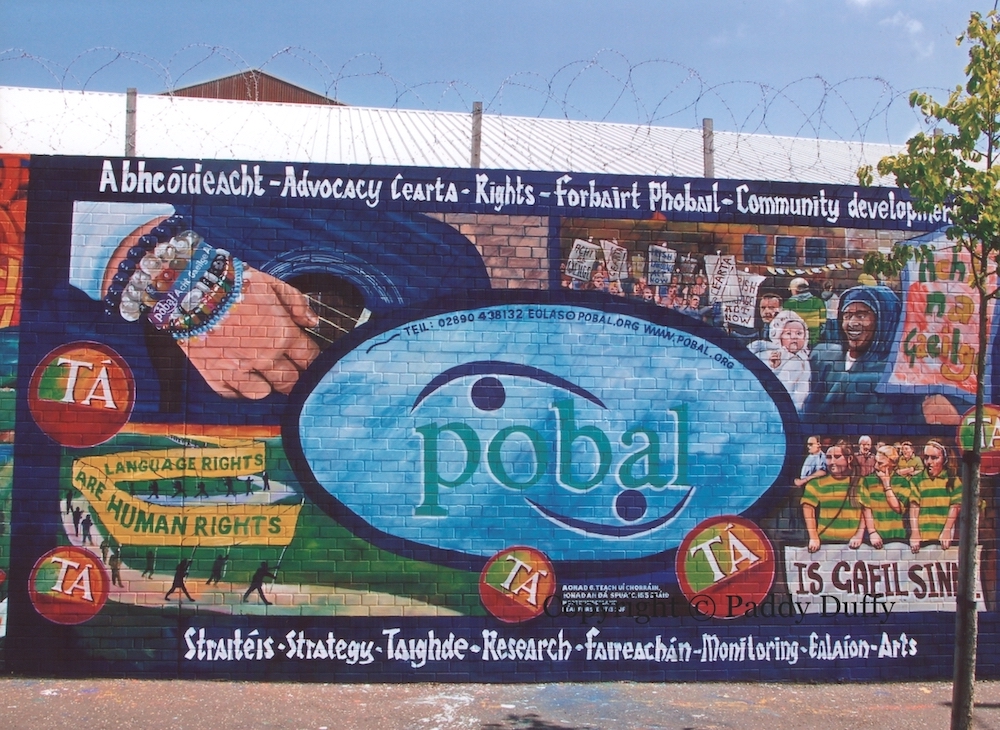
“Is Gaeıl sınne” [we are Irish-speakers]. Pobal promotes abhcóıdeachy/advocacy, cearta/rights, forbaırt phobaıl/community development, straıtéıs/strategy, taıghde/research, faıreachán/monitoring, ealaíon/arts, carried out in Teach Uí Chorráın in Ionad an Dá Spuaic [Twin Spires], and the “Tá” campaign for “acht na Gaeılge” an Irish-language act.
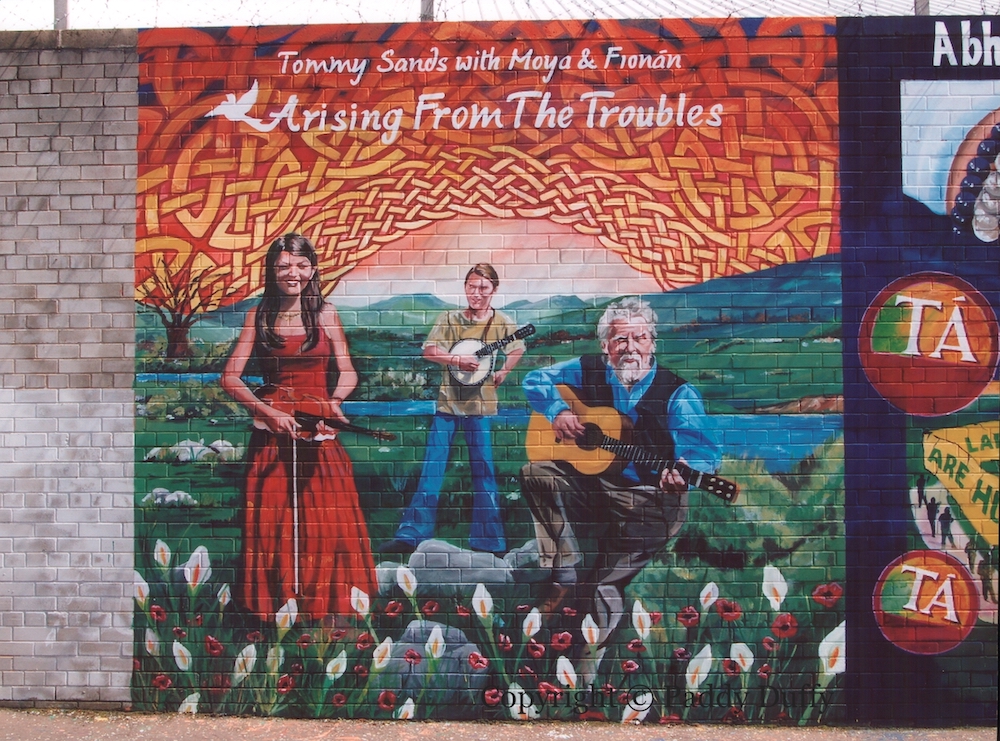
Tommy Sands records under his own name, as “the Sands Family” (with his siblings | web | Fb) and, as shown here, “with Moya & Fionán” (his children). This Northumberland Street mural was up towards the security gates just below Sean Garland.
“Understand the past – and build a better future le chéıle Catholic, Protestant and Dissenter.” “The past” in this case is the Battle Of St Matthew’s (“Chath Naomh Máıtıú”), one of the formative events of the Provisional IRA (“Óglaıgh Na hÉıreann”) (WP).
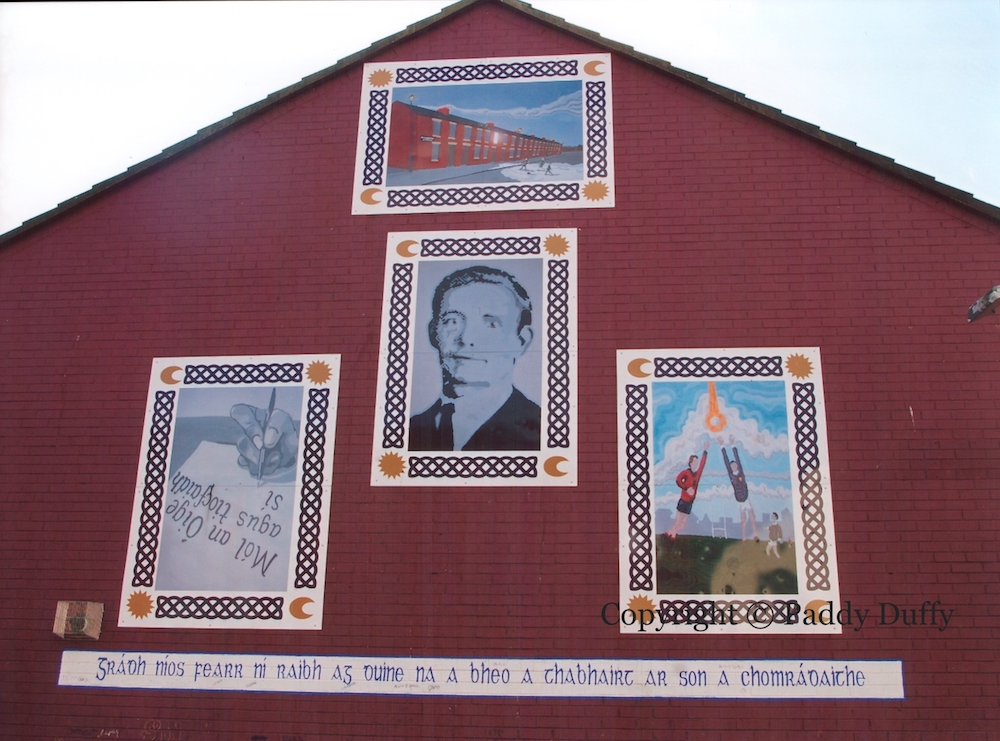
IRA Volunteer Sean Martin is at the centre of these panels in the Short Strand. The image in the apex of the house depicts his death in nearby Anderson Street (which no longer exists; roughly where Arran Street is).
milltowncemetery.com (link now dead) reports that Sean Martin “was killed in April 1940 during a lecture on arms and a Millis hand grenade in a small terrace house in Anderson Street. In the course of the lecture Sean, who was giving the instruction, had dismantled the grenade, and was putting it together again. The detonator which he was using was thought to have been a dud one. In demonstrating how to throw the grenade, he pulled out the pin and released the lever. Hearing the hissing sound of the fuse he realised that the detonator was live and that the grenade was about to explode. He rushed to the window with the intention of throwing it out on to the street, but some children were playing outside. In the few seconds left to him, Sean had to make that terrible choice; shouting to the others to get out of the house – he pulled the grenade into himself with his two hands and leaned over the kitchen table with the grenade covered by his whole body. The device exploded and blew him right across the kitchen, killing him instantly. All the others escaped uninjured.”
The Irish at the bottom reads “Grádh níos fearr ní raıbh ag duıne na a bheo a thabhaırt ar son a chomrádaıthe” – “A greater love no person has than to give his life for his comrades” (John 15:13)
Belfast Forum has some pictures of Anderson Street; according to the accompanying conversation, the Martins (might have) lived at no. 29. Sean Martin’s CLG/GAA club was named after Martin.
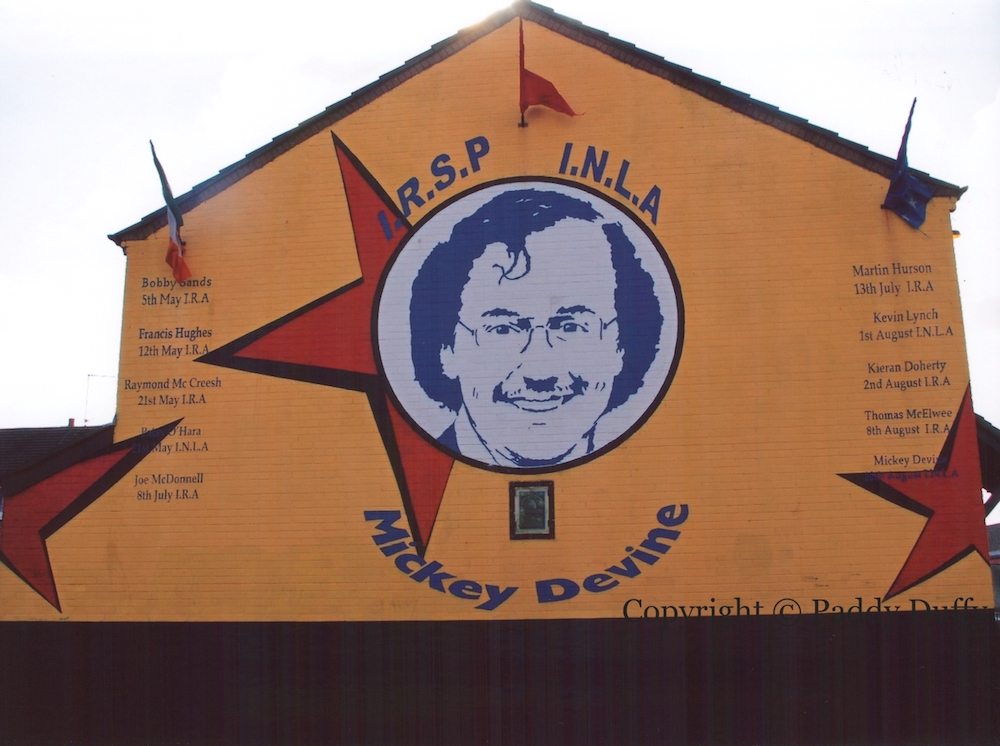
The mural is to Mickey Devine, with a smaller (and much older) plaque to Patsy O’Hara (the plaque was previously information about Devine). Both were INLA volunteers and both died in the 1981 hunger strike, along with Kevin Lynch; Liam McCloskey was taken off the strike by his family after 55 days.
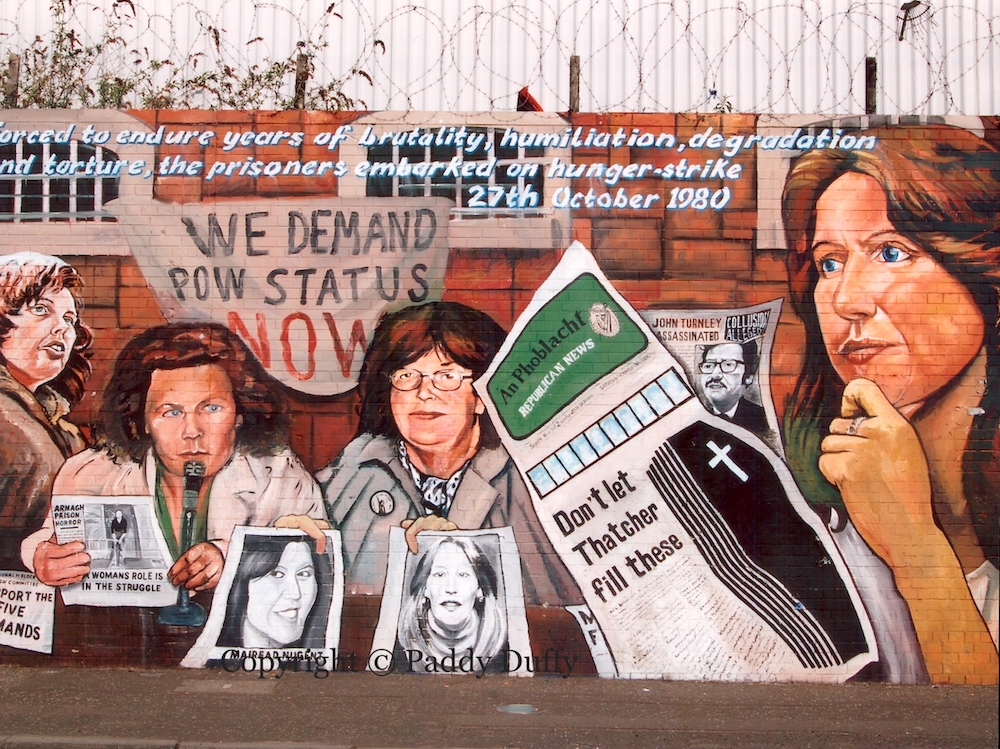
“Forced to endure years of brutality, humiliation, degradation and torture, the prisoners embarked on hunger-strike.” The 1980 hunger strike involved Brendan Hughes, Raymond McCartney, Tommy McKearney, Tommy McFeely, Leo Green, Sean McKenna, and John Nixon. On December first, three women in Armagh prison also went on strike (newspaper/posters from left to right): Maıréad Farrell (on the dirty protest in her cell), Maıréad Nugent, Mary Doyle.
On the right, Farrell reads An Phoblacht/Republican News reporting on the assassination of politician and hunger-strike activist John Turnley by the UDA (WP). The headline on the cover reads “Don’t let Thatcher fill these [coffins]”.
Initially without the quotation along the top. The mural was launched on the anniversary date: October 27th, 2010.
“Ceol gan teoraınn” – “unlimited music” or “music without boundaries”. Belfast’s Sean Maguire (also McGuire) (1927-2005) was an All-Ireland fiddle champion and world-wide ambassador for traditional music (WP). The Short Strand artist’s signature can be seen in the bottom corner.
IRA prisoner Kieran Nugent is reputed to have said – upon being imprisoned after the removal of Special Category status in 1976 – “I’m not a criminal – the Brits will have to nail prison clothes to my back.”
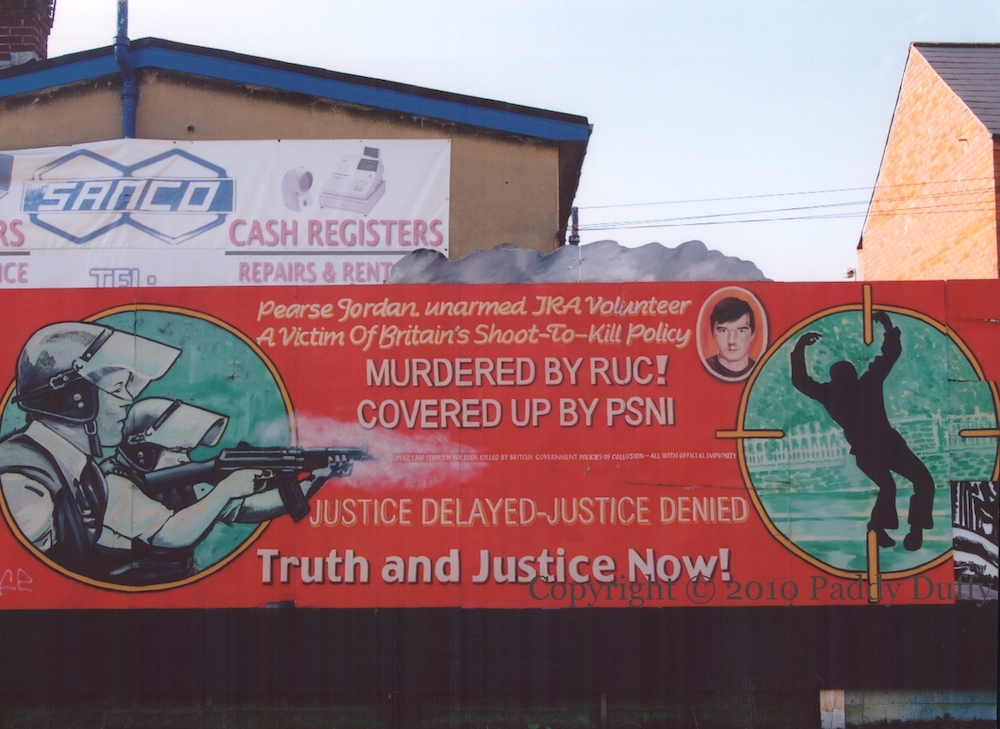
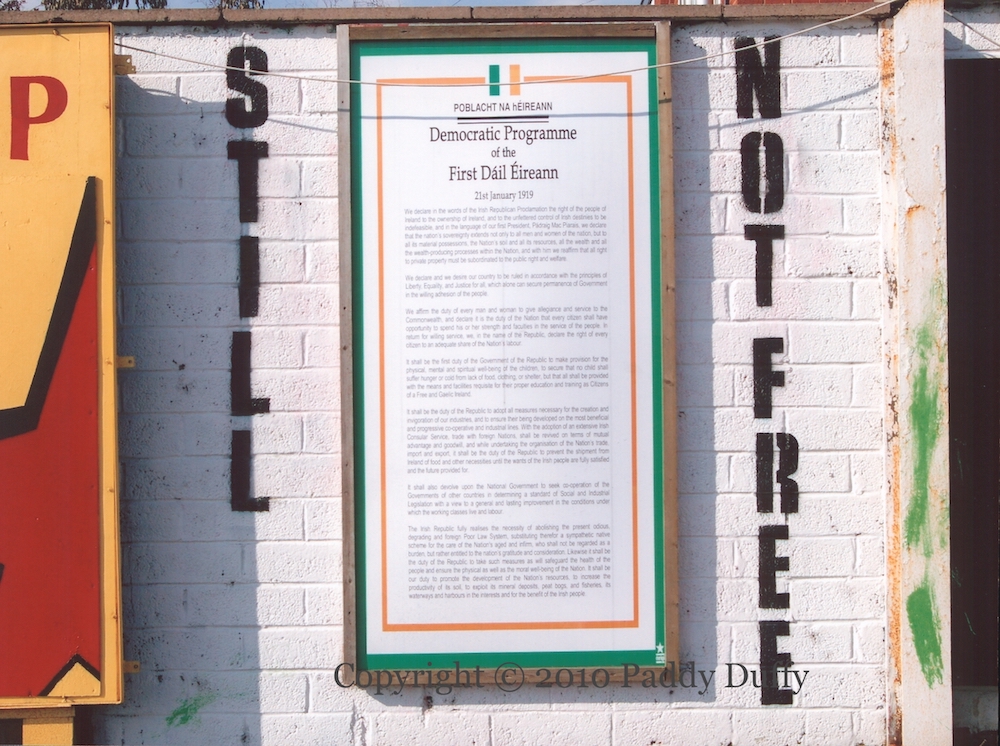
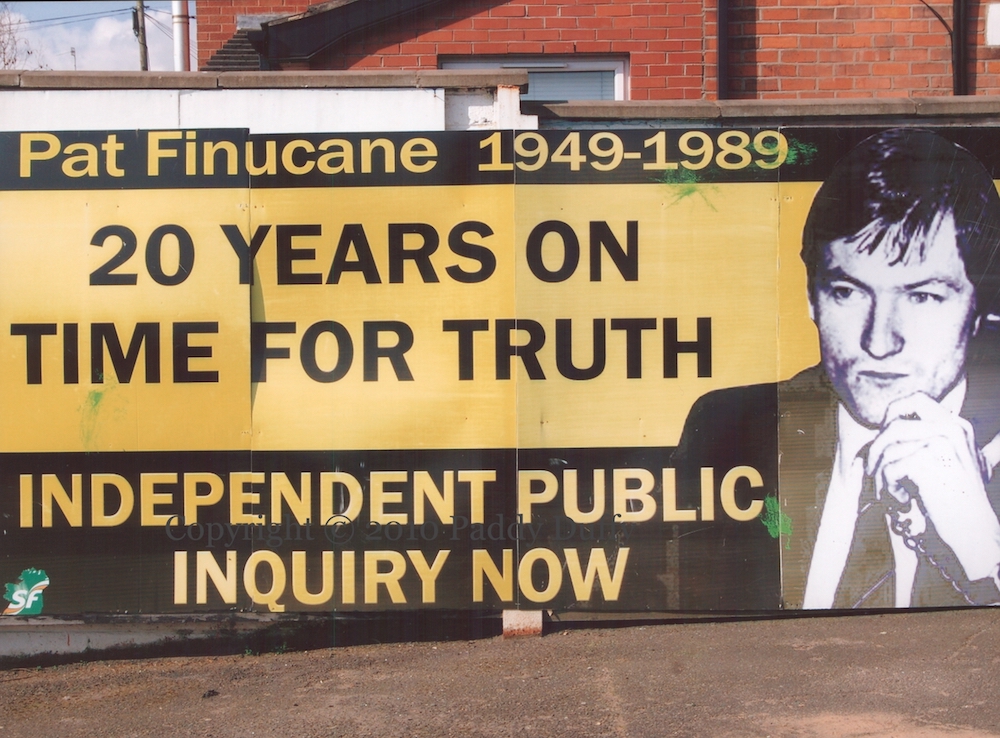
The RUC barracks at the junction of the Falls Road and Glen Road was demolished in 2005. Since then, it has become a small park and since 2008 the back wall has been full of republican messages and imagery. The metal-work commemorating the hunger strikers pre-dates the painted and printed works, dating back to 2006.
(There is a complete Visual History at Extramural Activity.)
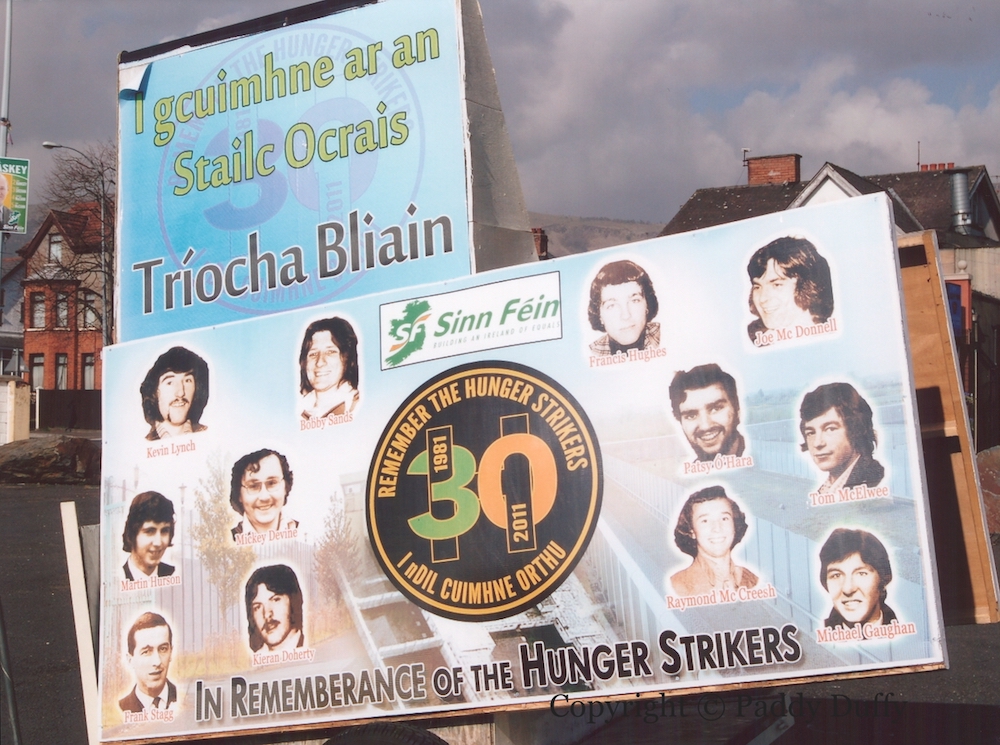
Also included (last) is a mobile board, parked on the Glen Road side, commemorating the thirtieth anniversary of the second hunger strike (“Stailc Ocrais Tríocha Bliain”), in which ten IRA and INLA prisoners died.
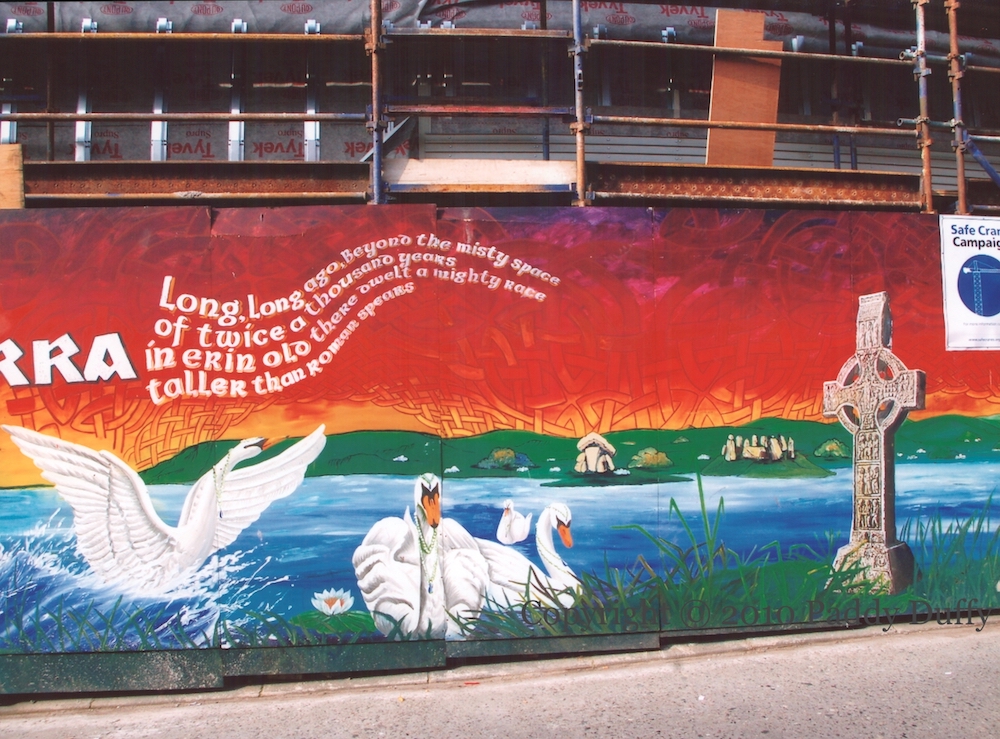
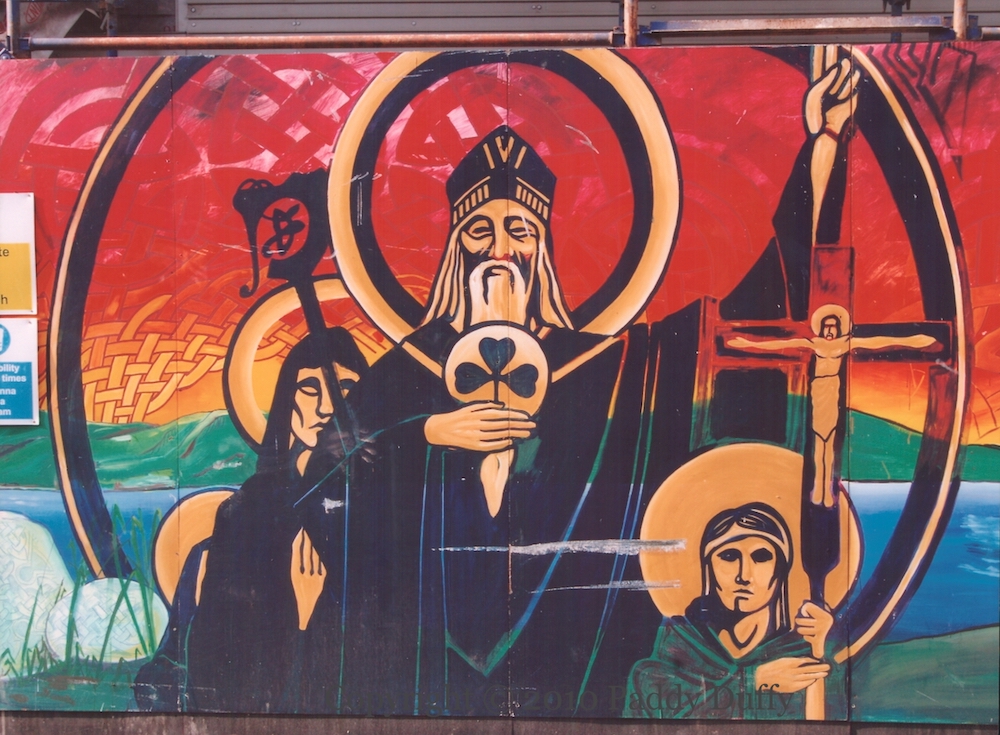
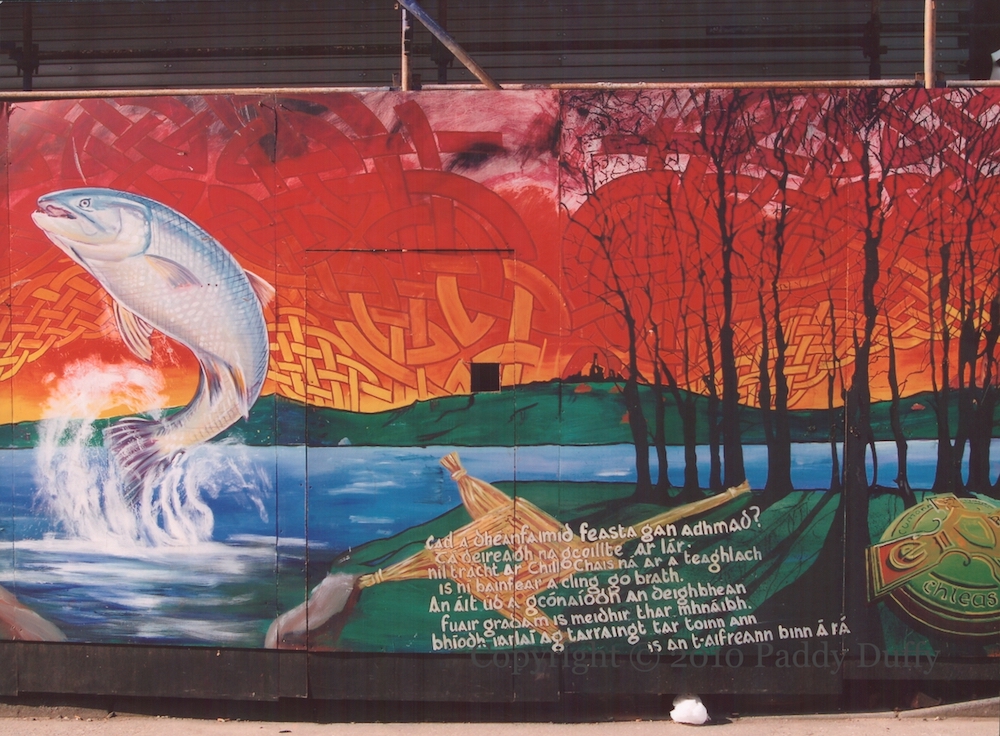
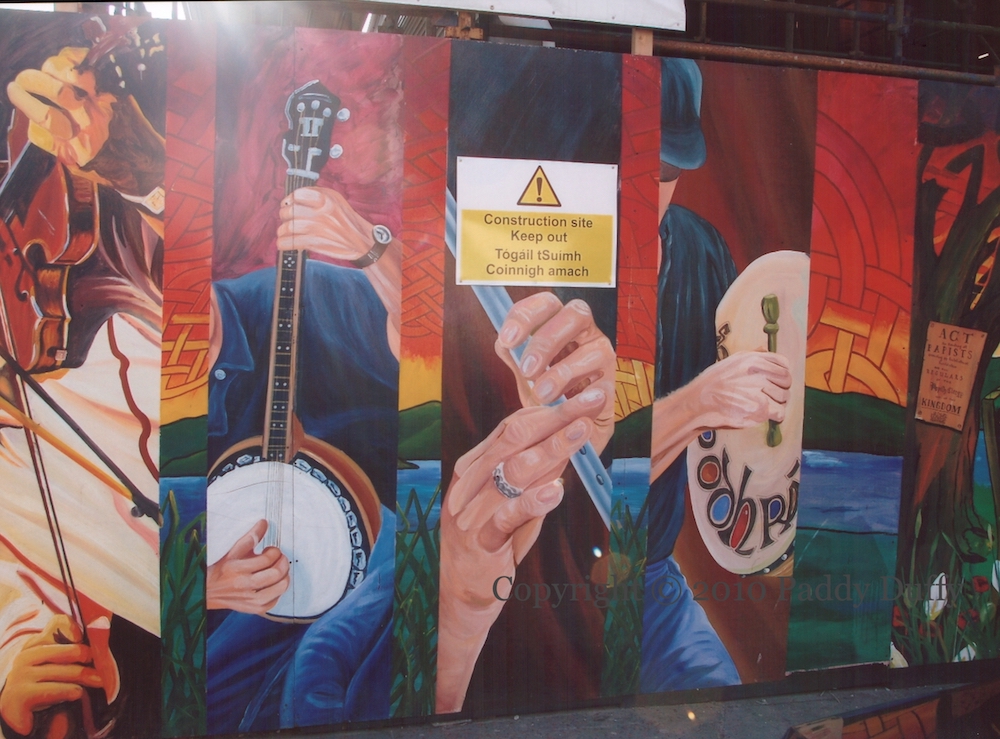
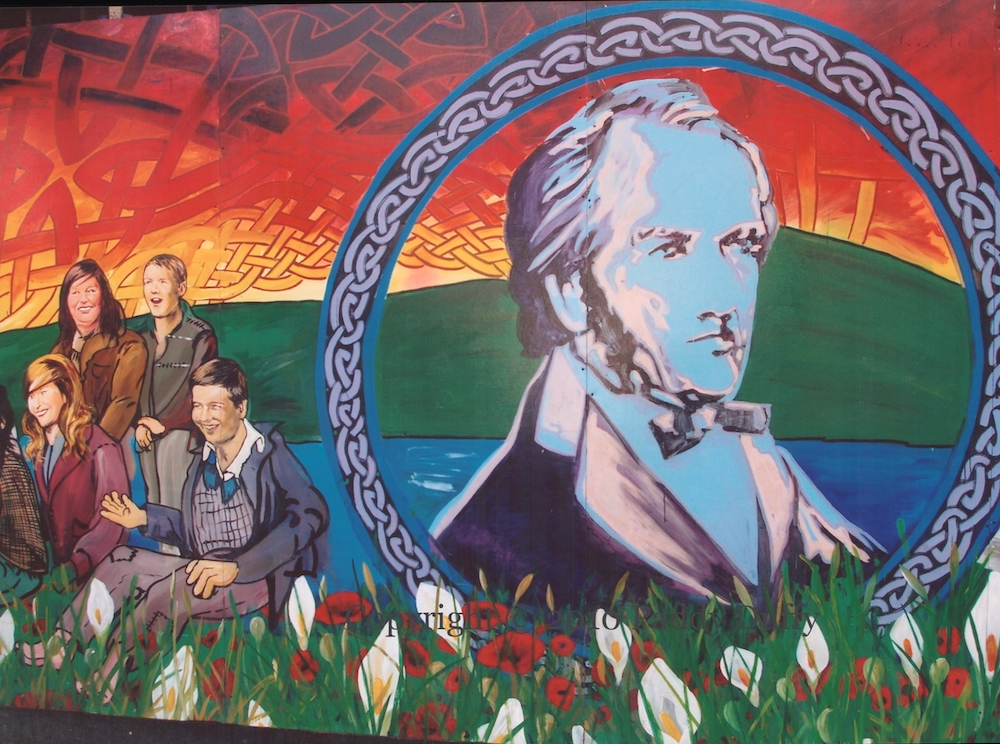
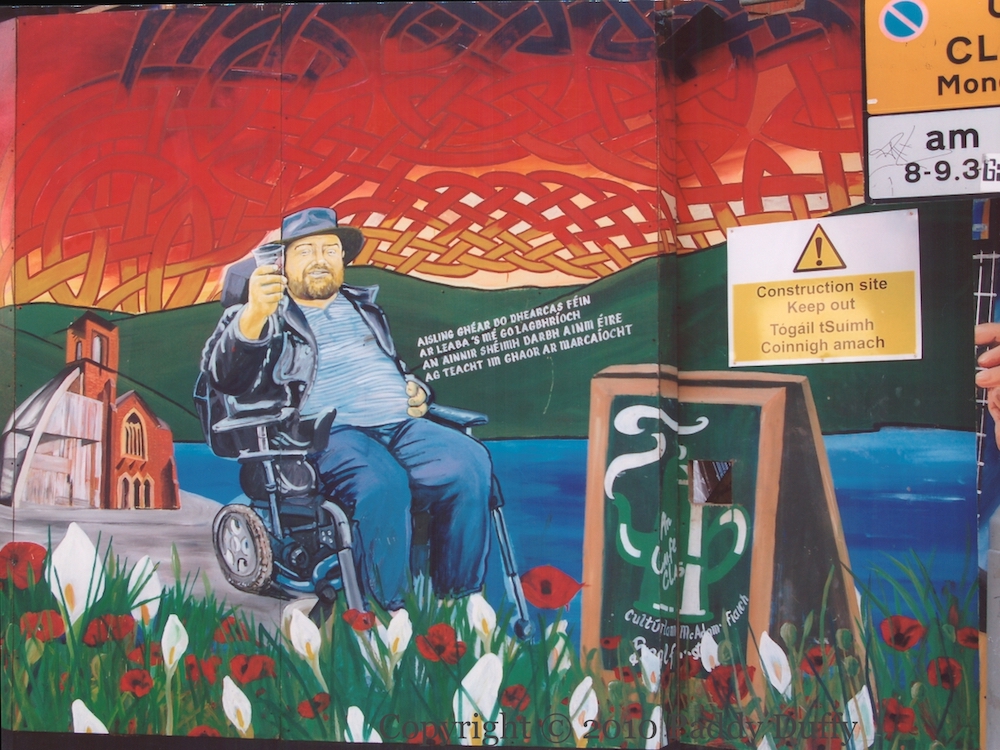
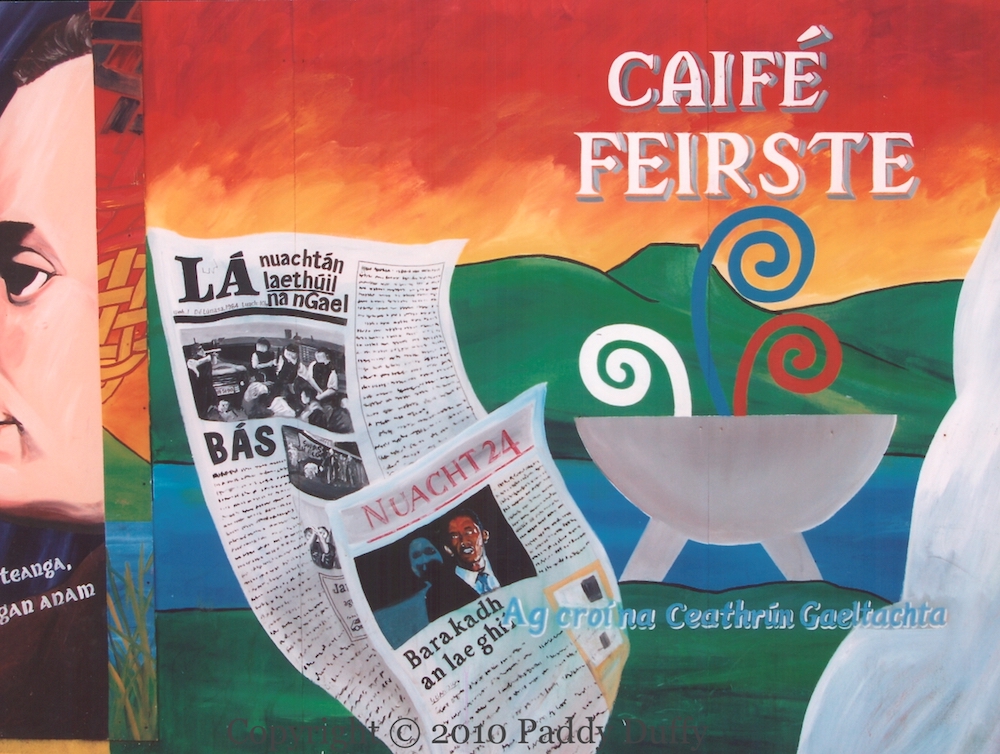
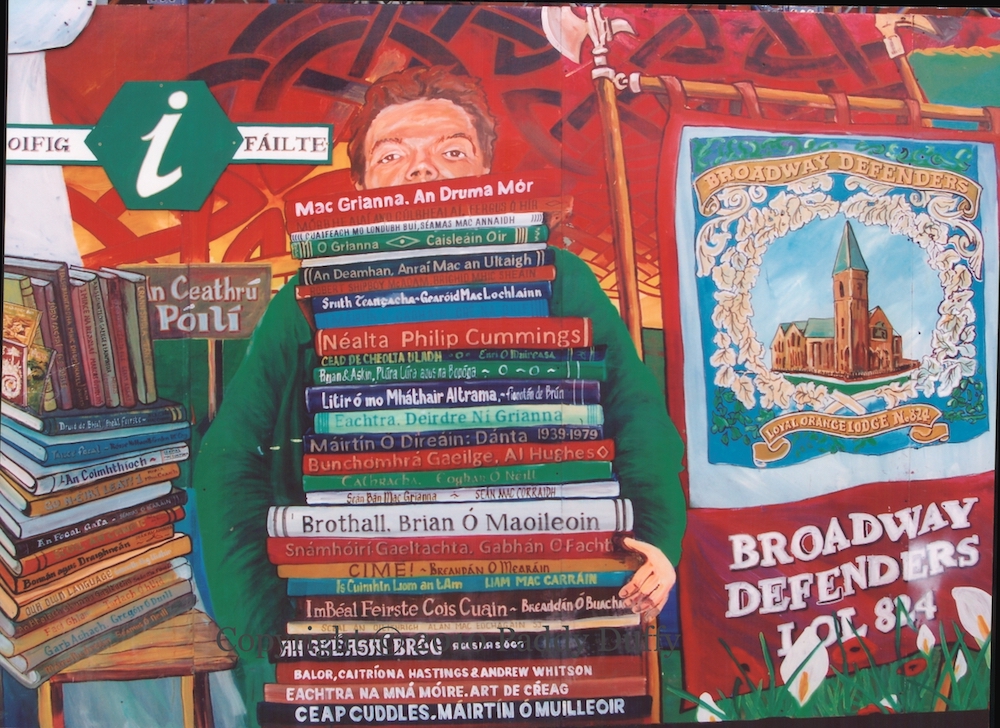
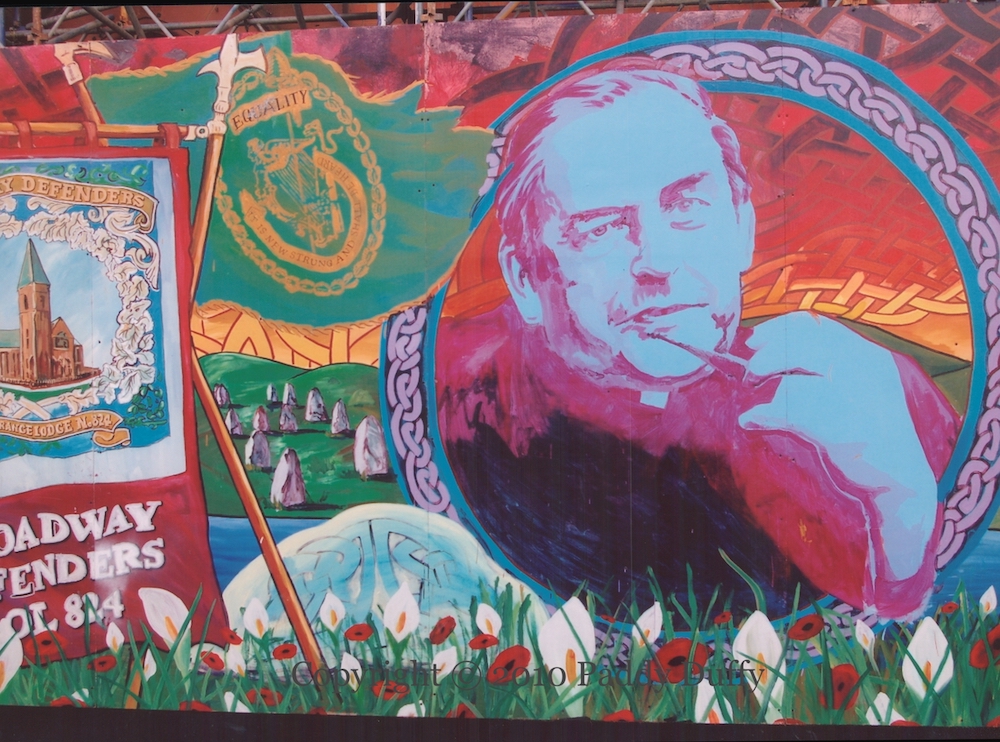
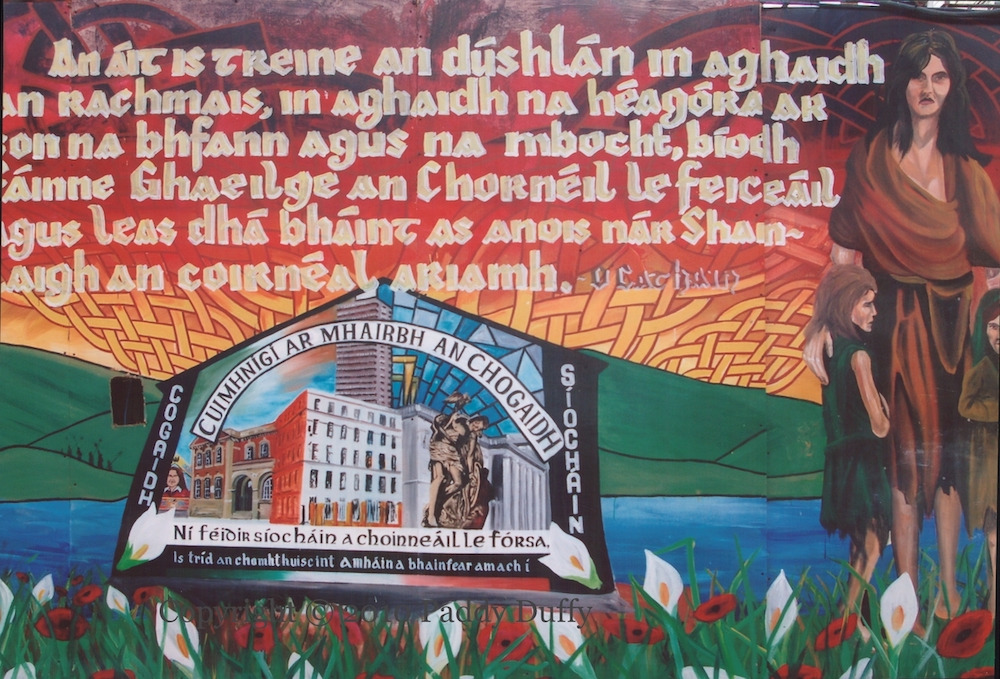
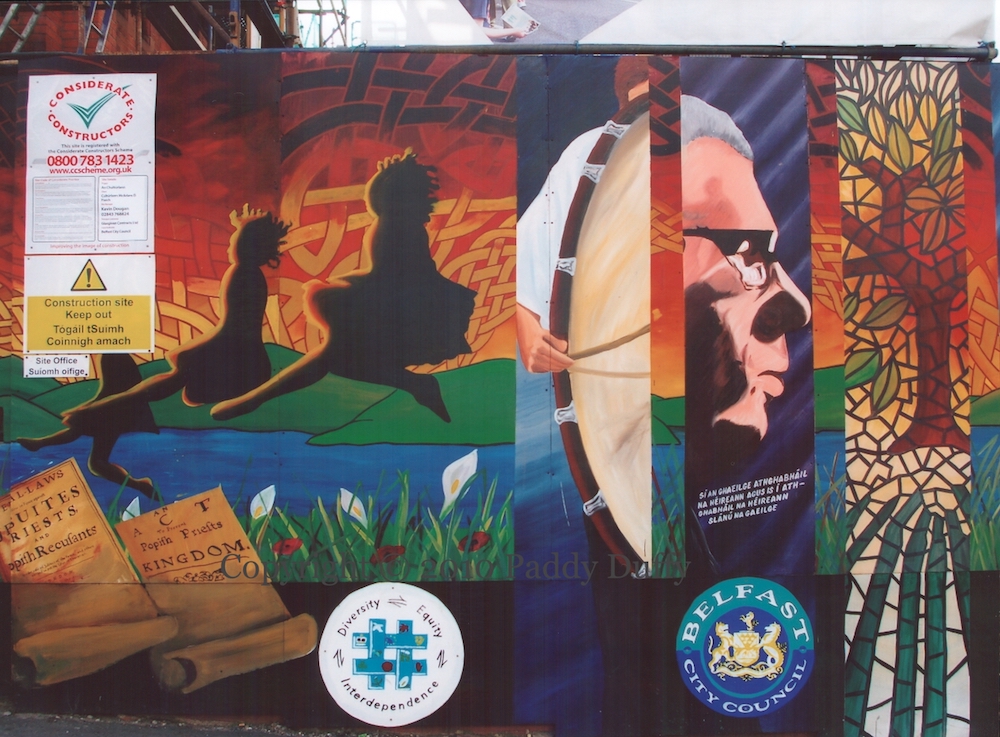
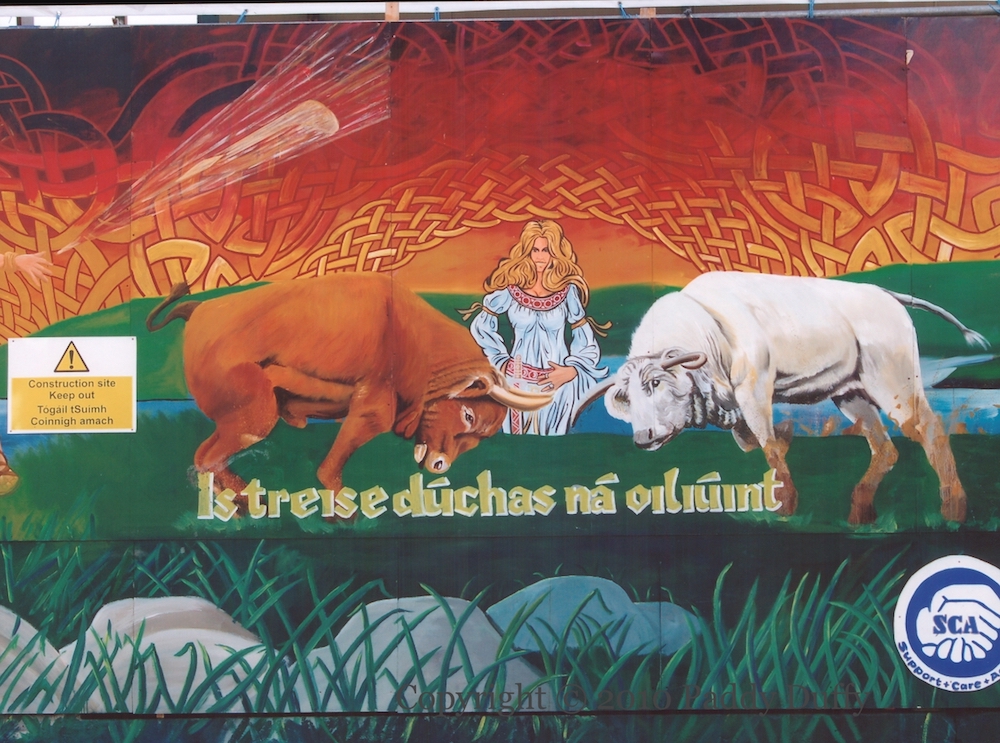
Cultúrlann McAdam – Ó Fıaıch was renovated in 2010-2011 at a cost of 1.9 million pounds, with the addition of the Dillon Gallery. It would be reopened on September 19th by President Mary McAleese (WP). The images here show some of the paintings on the construction hoardings from left (Nansen St) to front (Falls Road) to right (Fallswater St).