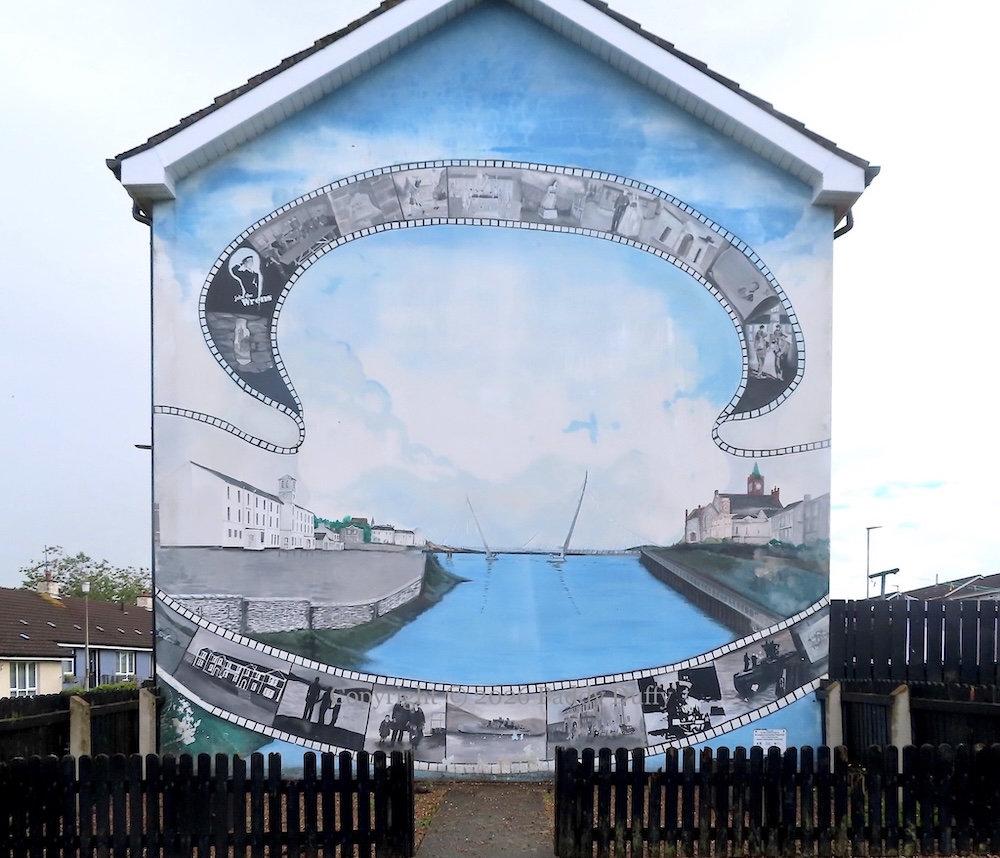
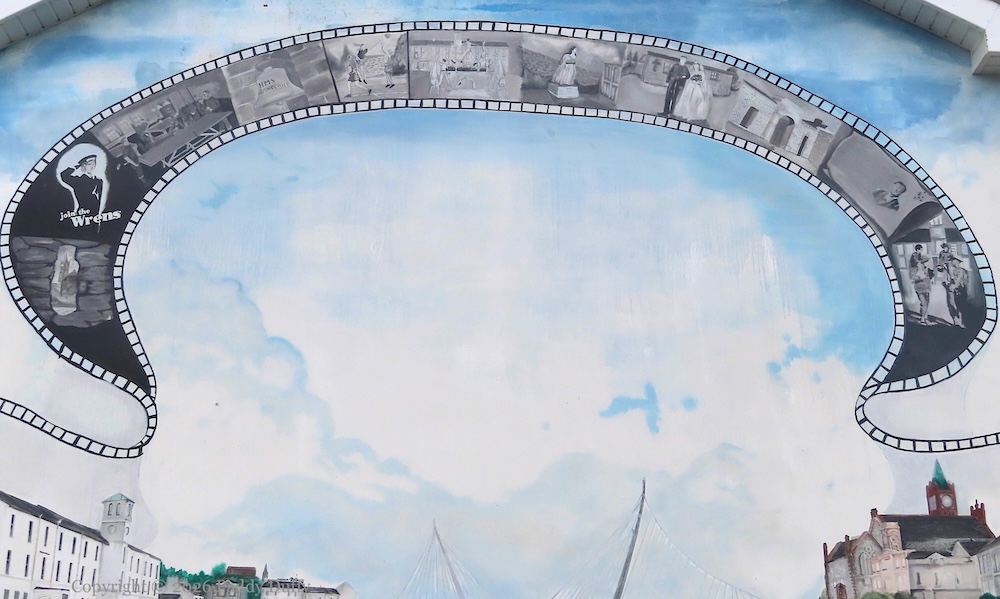
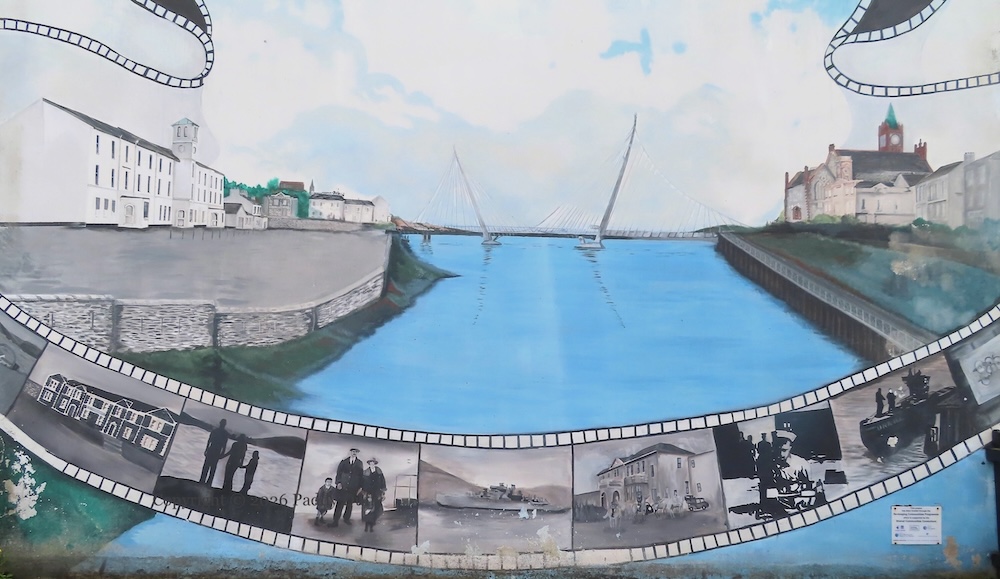
The Peace Bridge is shown spanning the Foyle between (the former) Ebrington barracks and the Guildhall, with a film-strip of images, many depicting naval and military scenes, above and below. The first few panels in the upper ribbon show a gap in the walls of Derry, a poster encouraging people to “Join the Wrens [and free a man for the fleet]” (the Women’s Royal Naval Service; see the poster at IWM), soldiers playing ping-pong in their barracks, and the ship’s bell of the HMS Londonderry (which served as a training ship during the Falkland War (WP)).
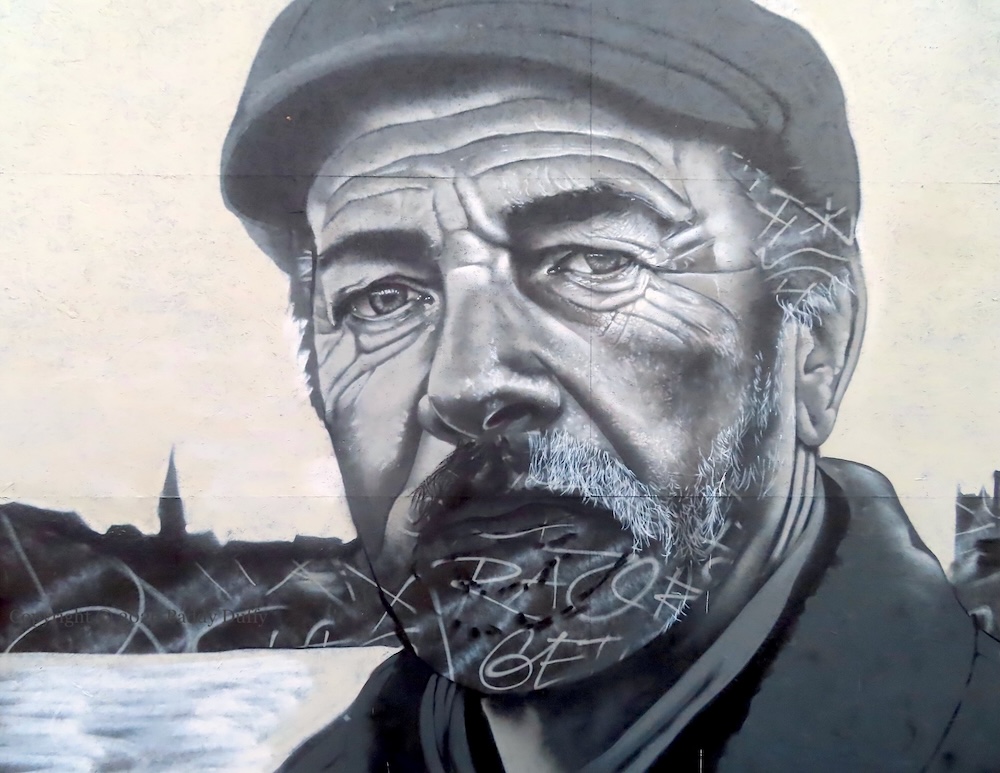
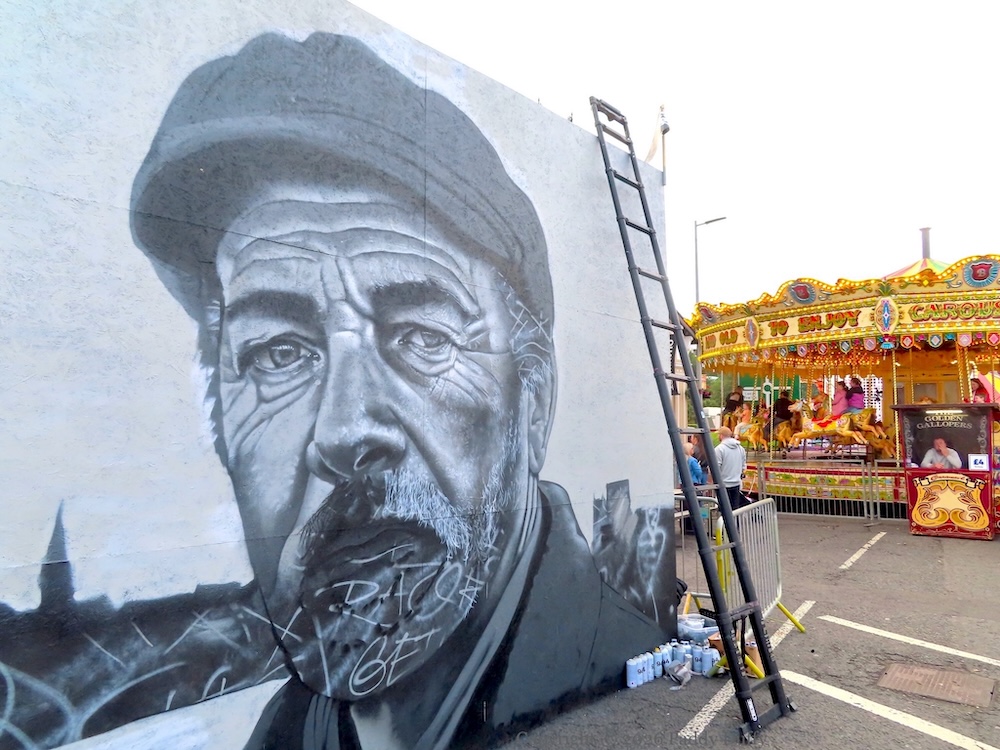
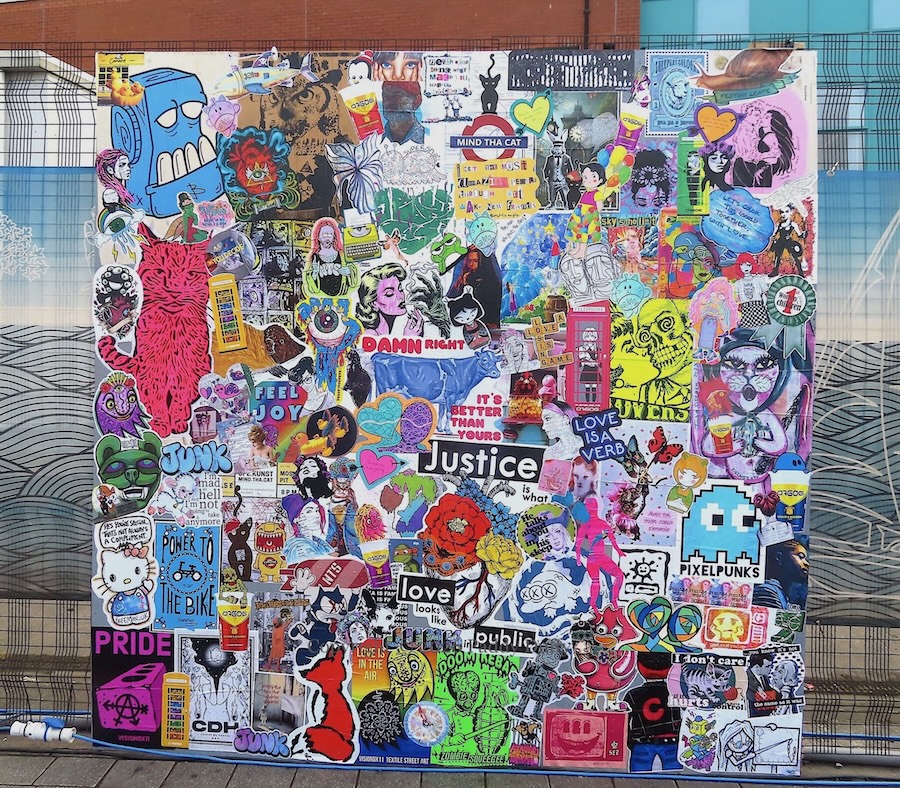
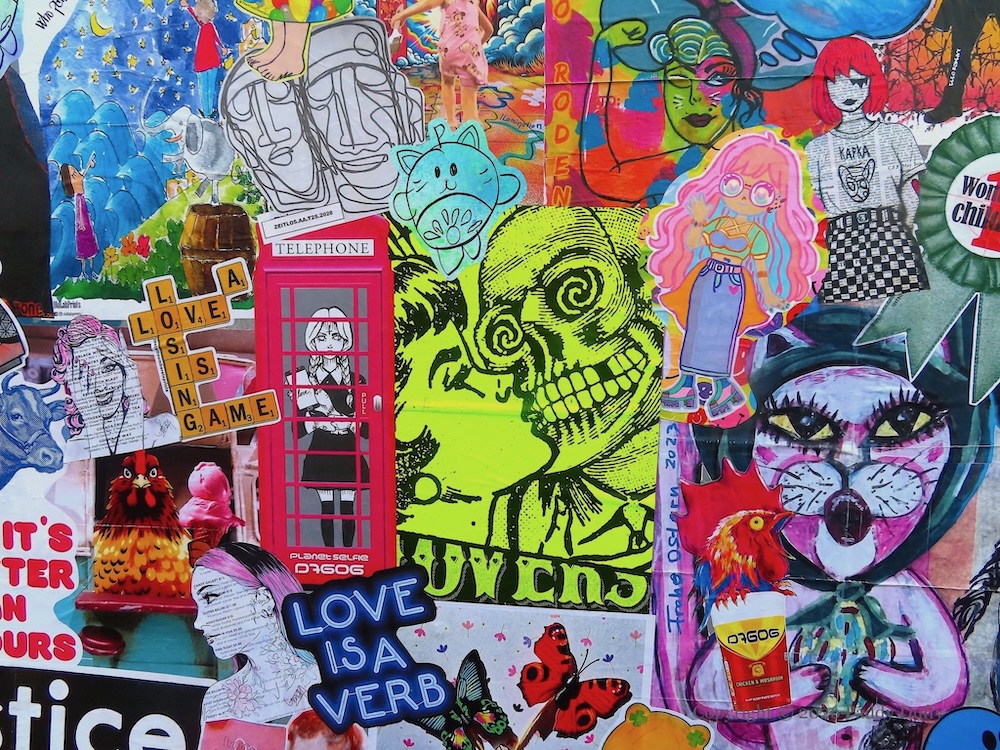
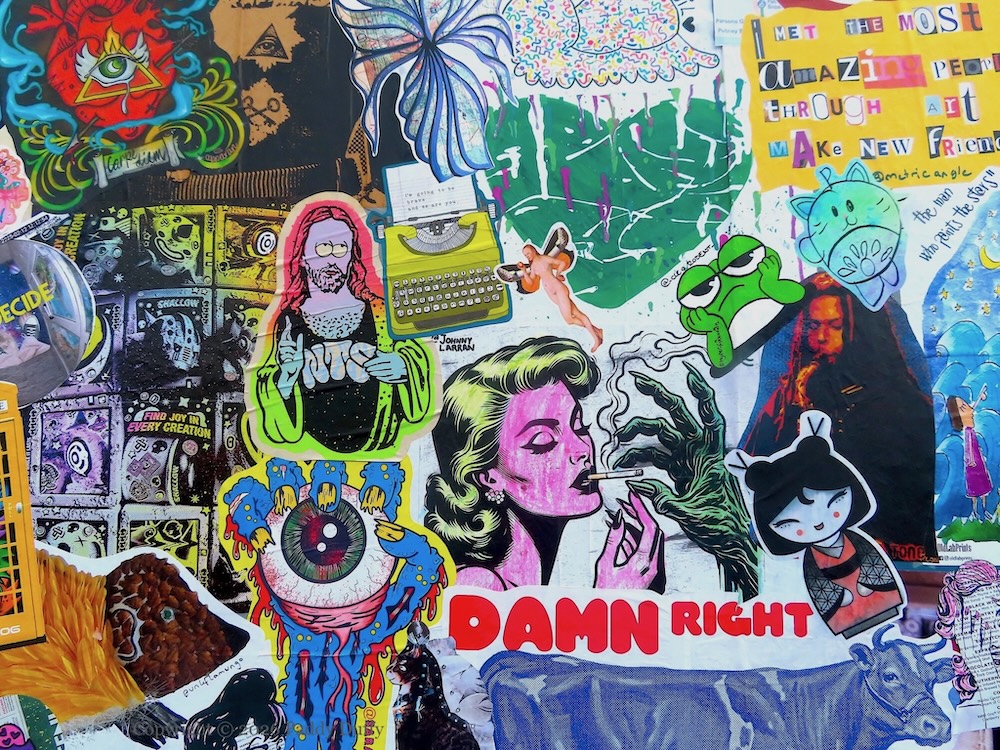
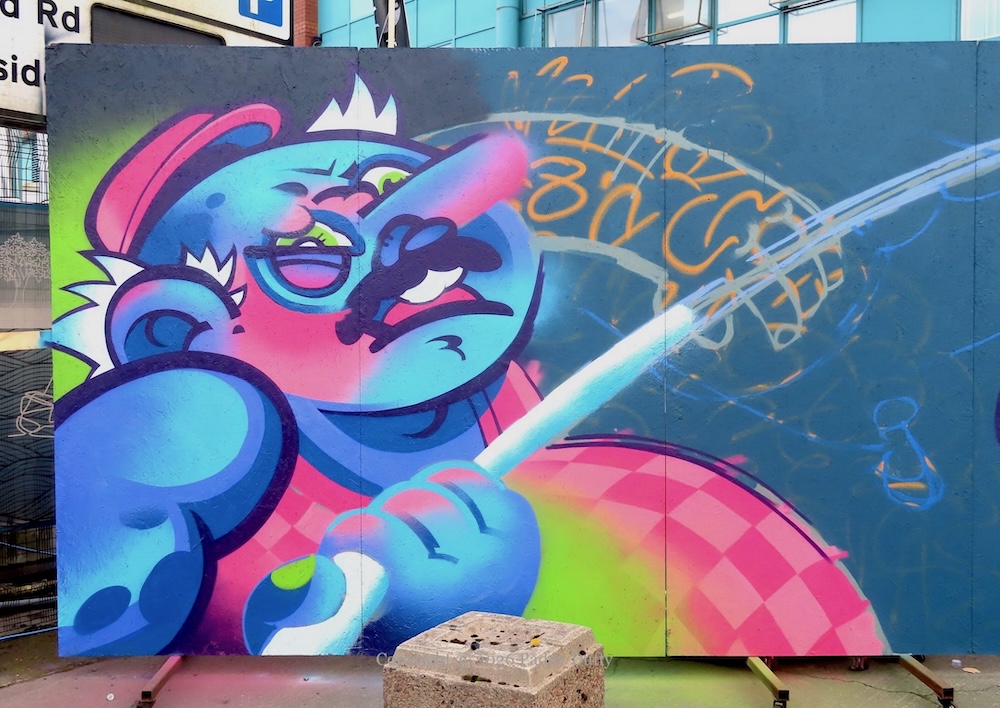
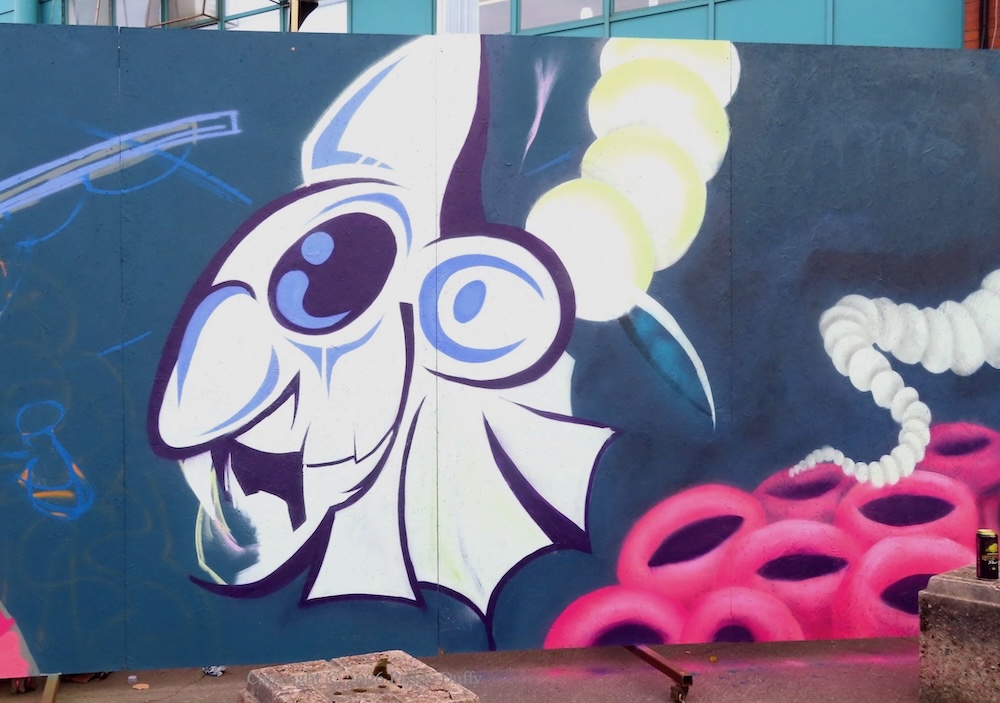
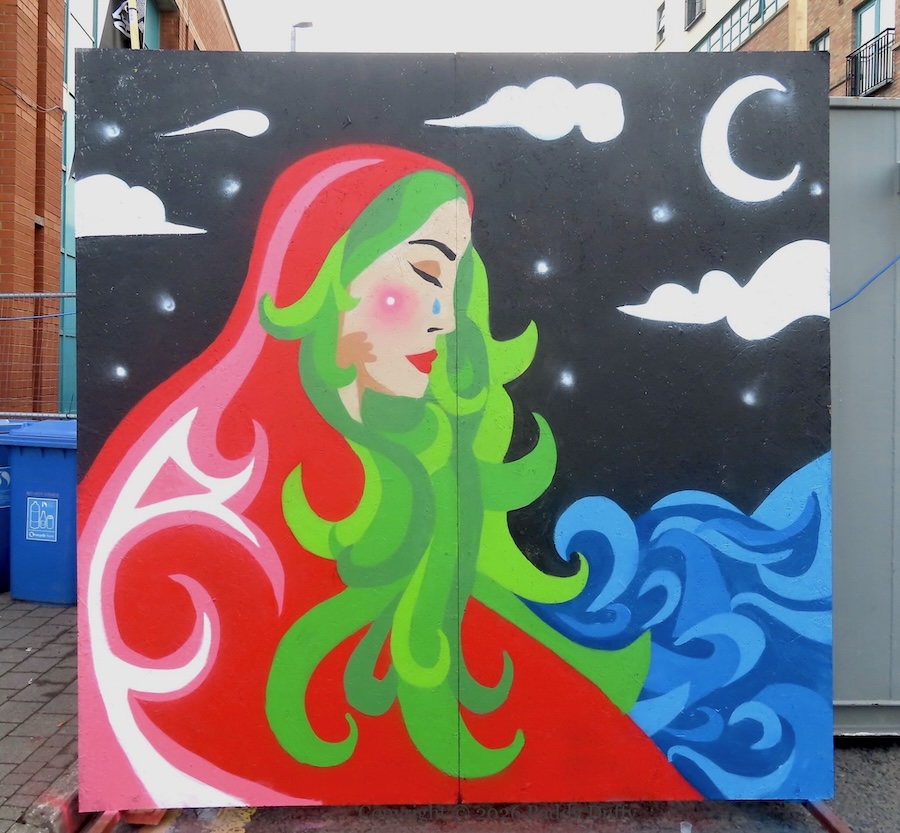
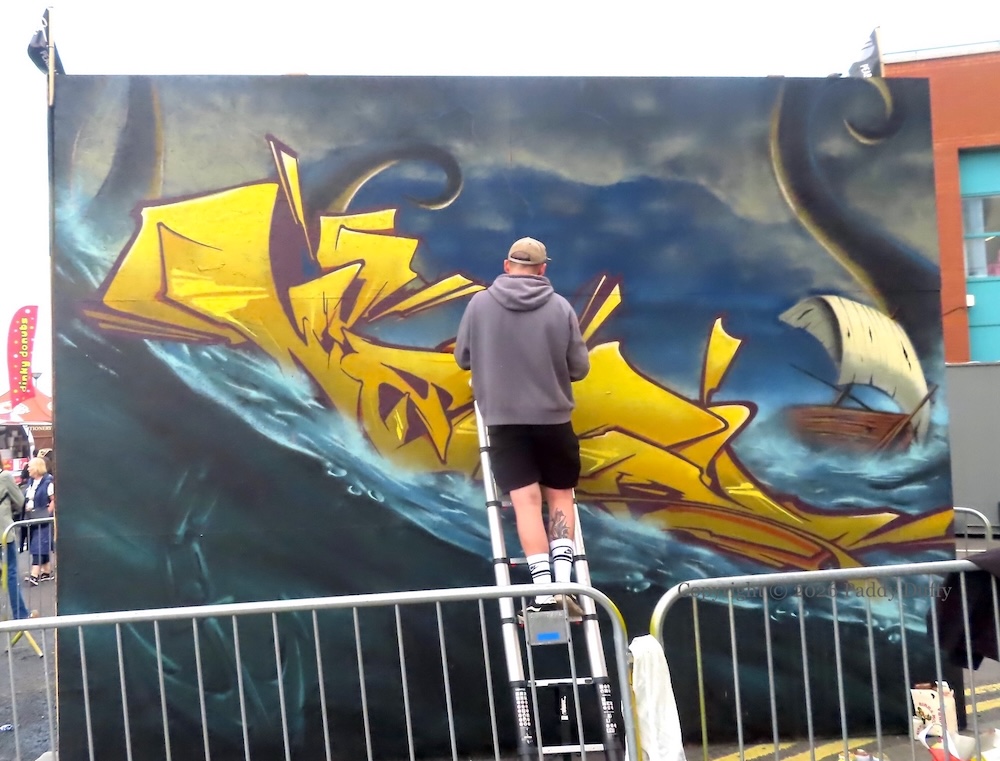
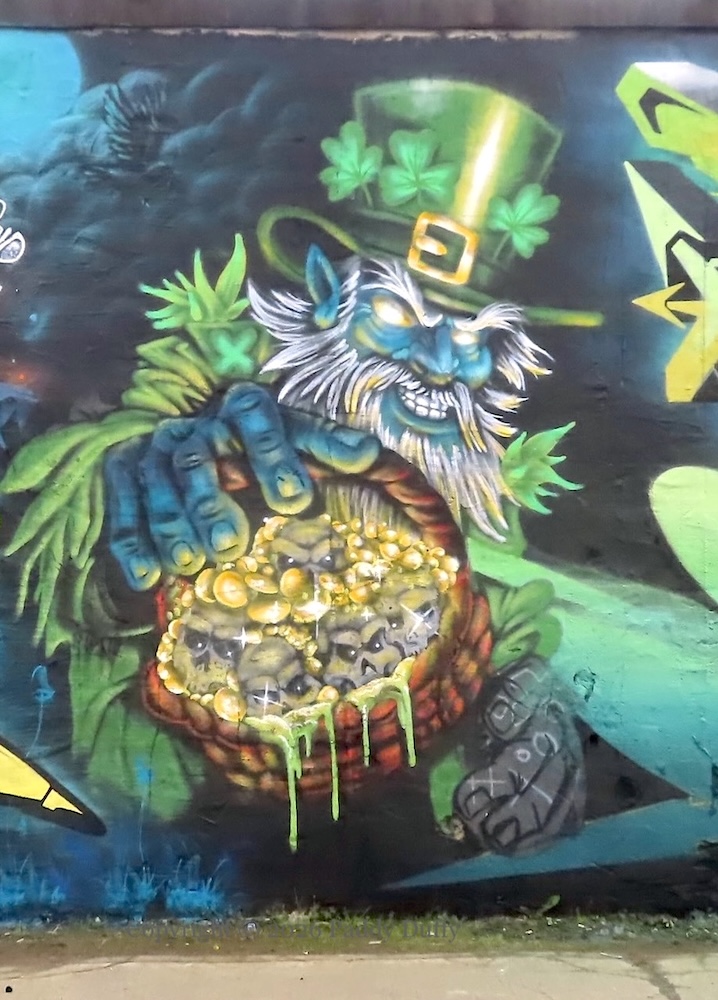
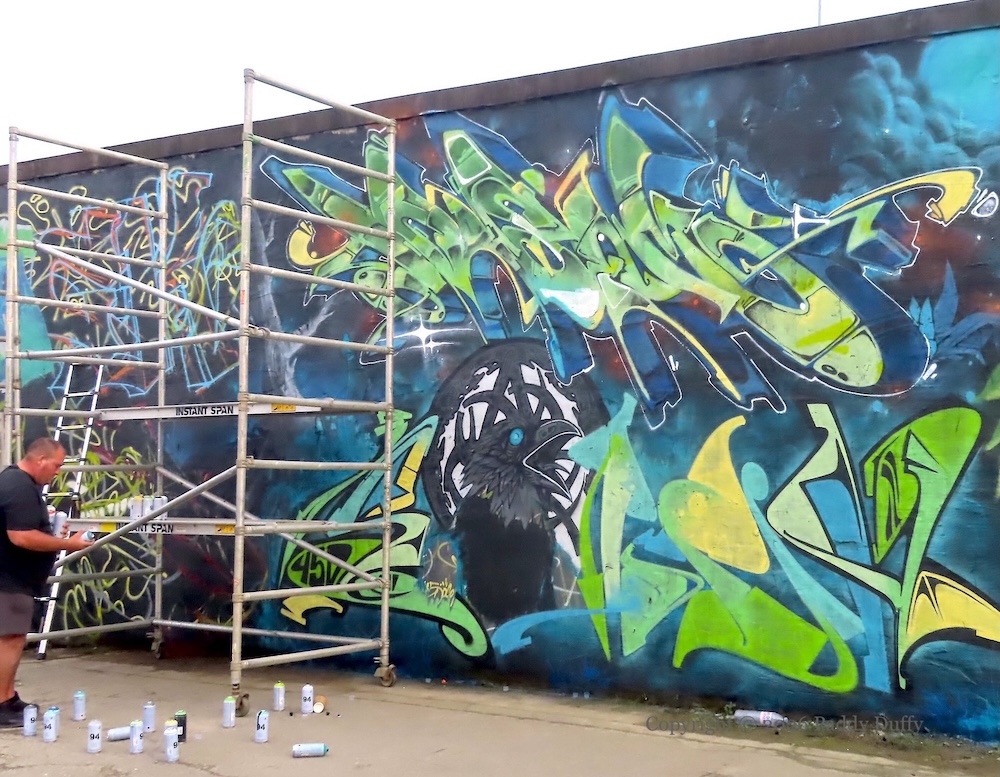
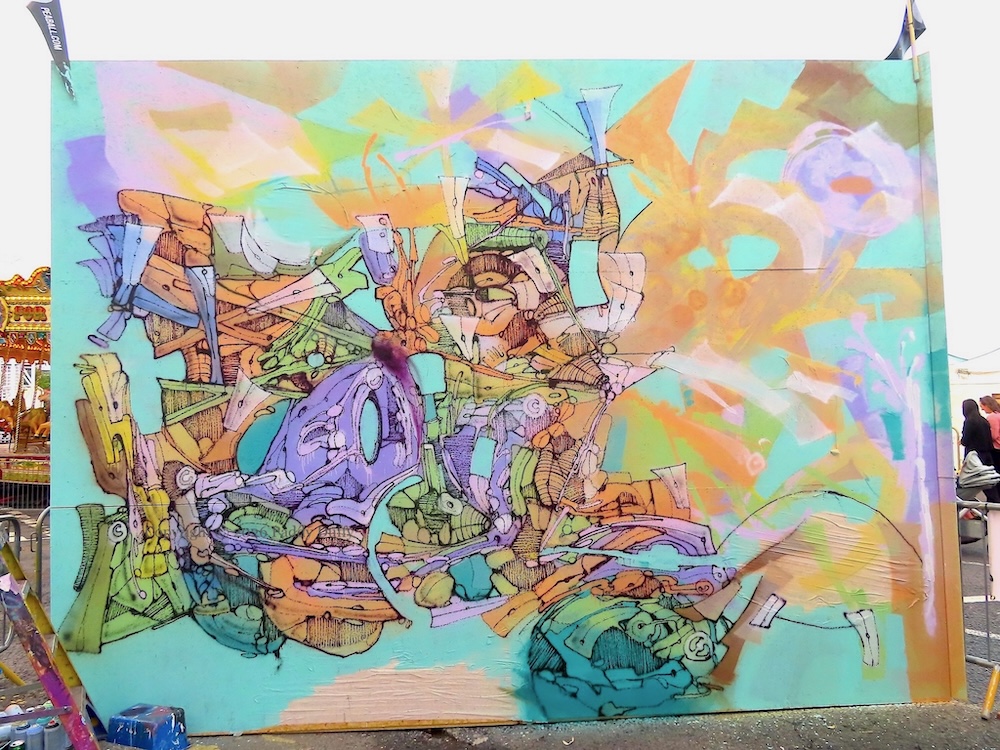
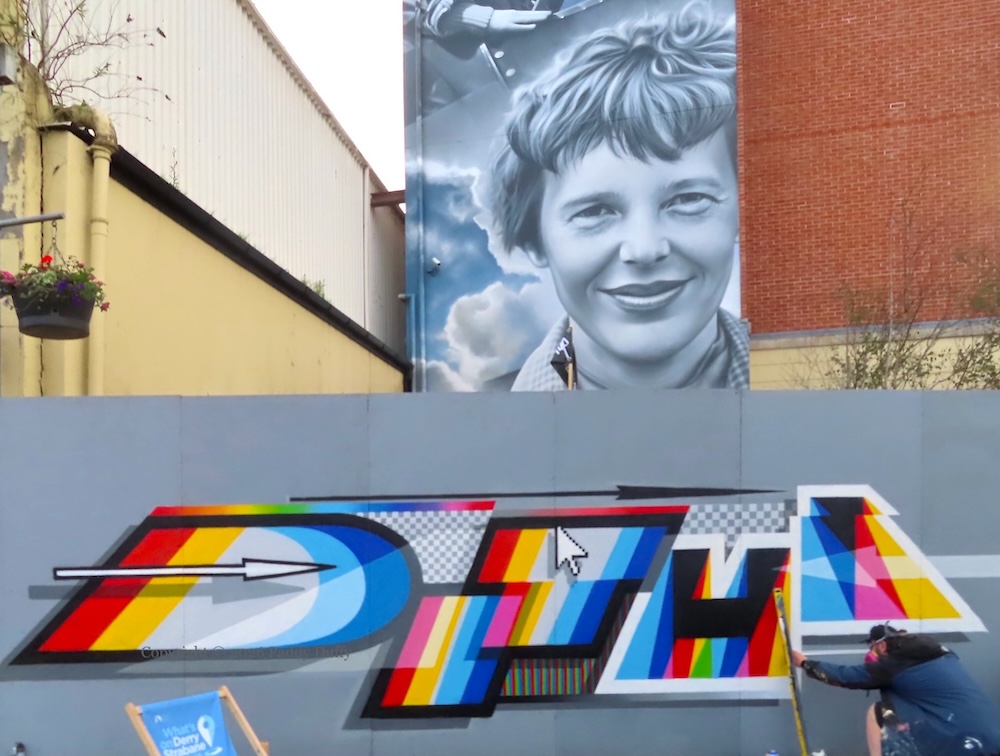
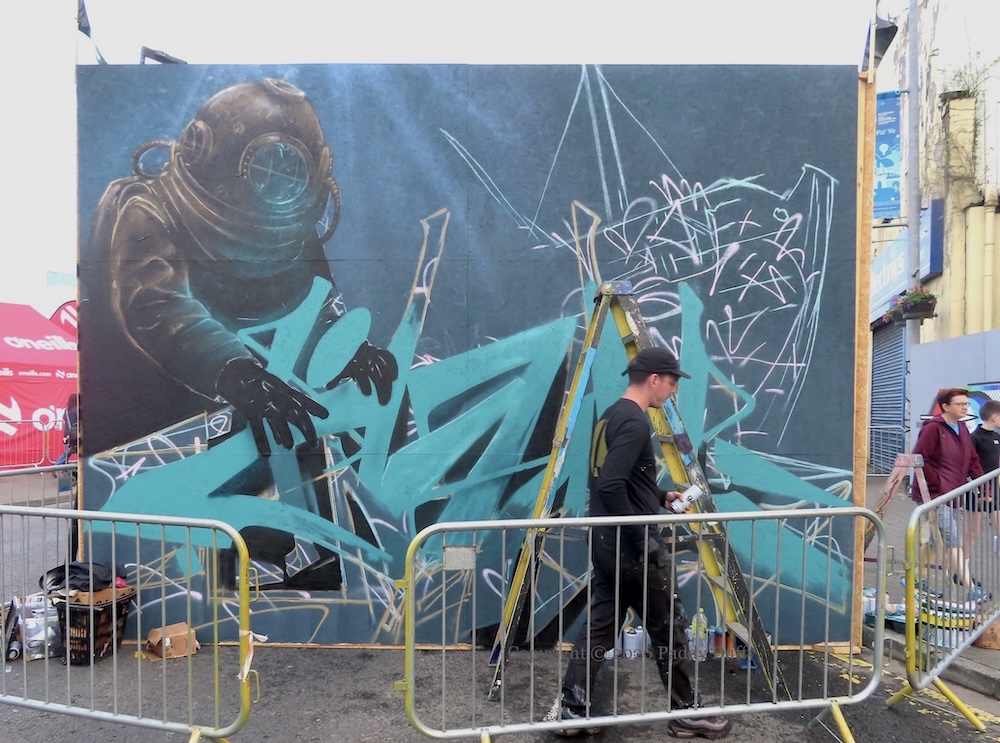
Here is a gallery of in-progress images from this year’s (2026) Get Up festival, which took place along Queen’s Quay, alongside the Foyle Maritime festival (web).
Above and immediately below are images of Razer’s piece; the others are by Rua (ig), Ana Fish (ig), Dire1 (ig), Sinead Crumlish (ig), Kyle McGinley (ig), ?, Seanbcj (ig), Leandrocantero (ig), Aches (ig), Chose Letters (ig), Jam2 (ig).
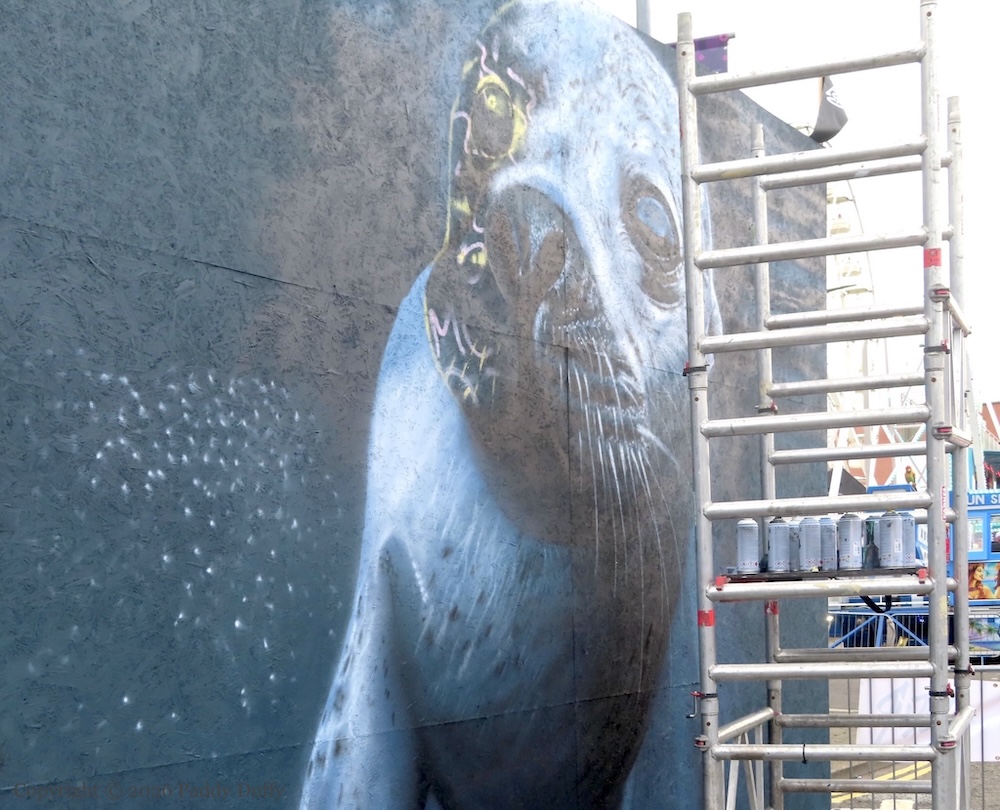
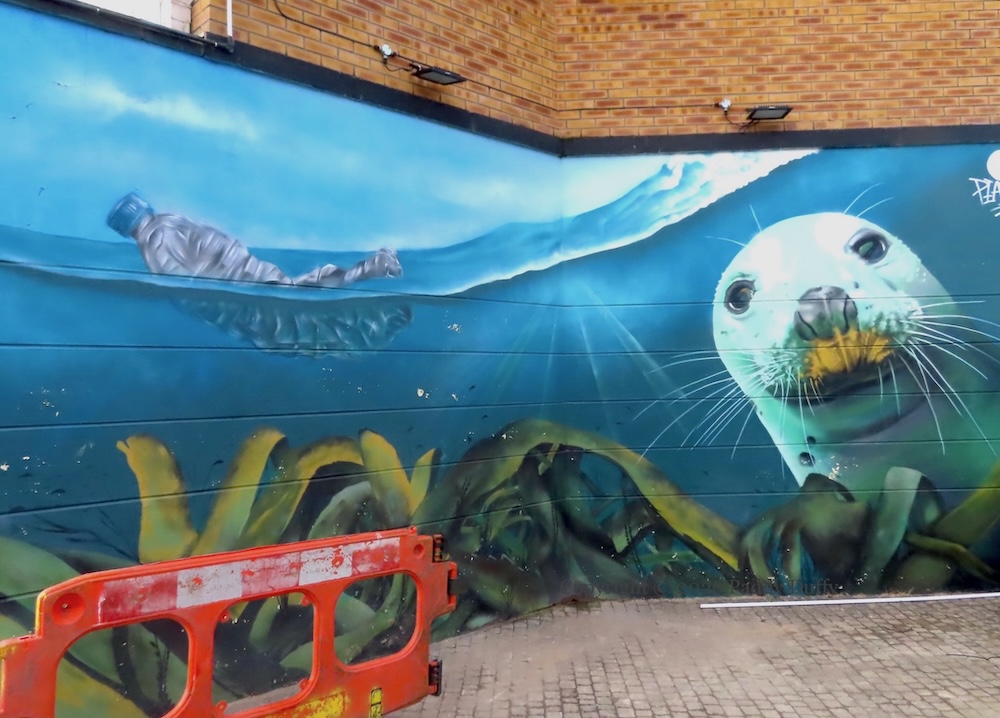
The Foyle Maritime Festival encourages people to pledge to reduce their use of plastics, so that the amount of plastic entering the seas and waterways is reduced. In 2022 this mural of a seal swimming next to a plastic bottle was painted to accompany the pledge by Peaball (ig) at Foyleview apartments. The Council had a competition to name the seal; the winner was “Ronan” or “Rónán” meaning “little seal” in Irish (ig video).
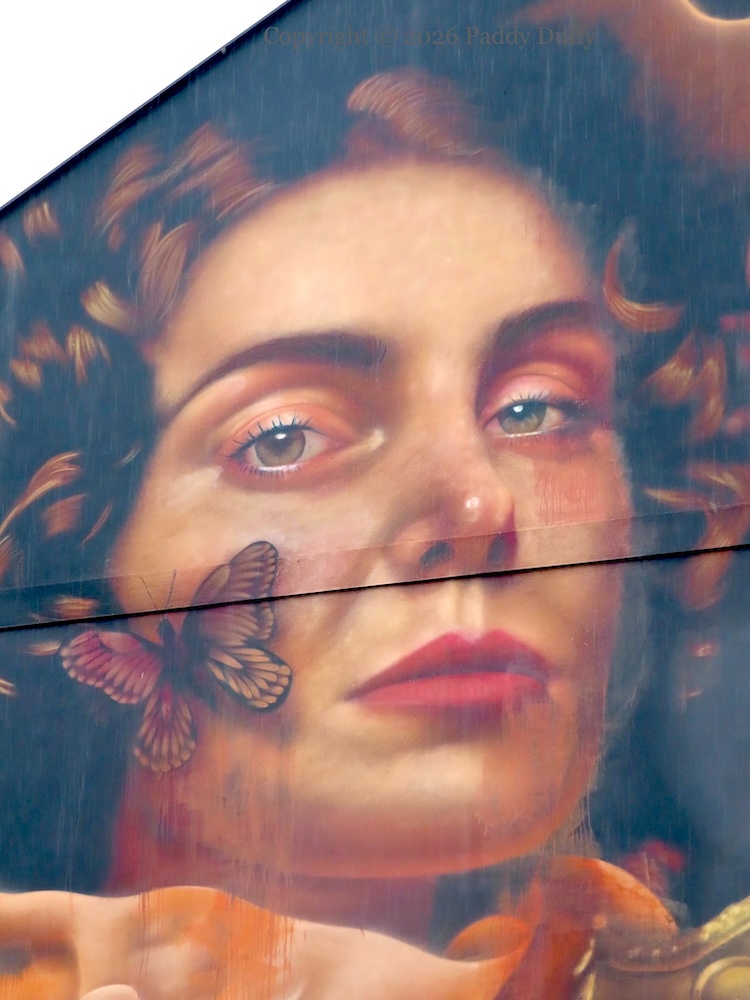
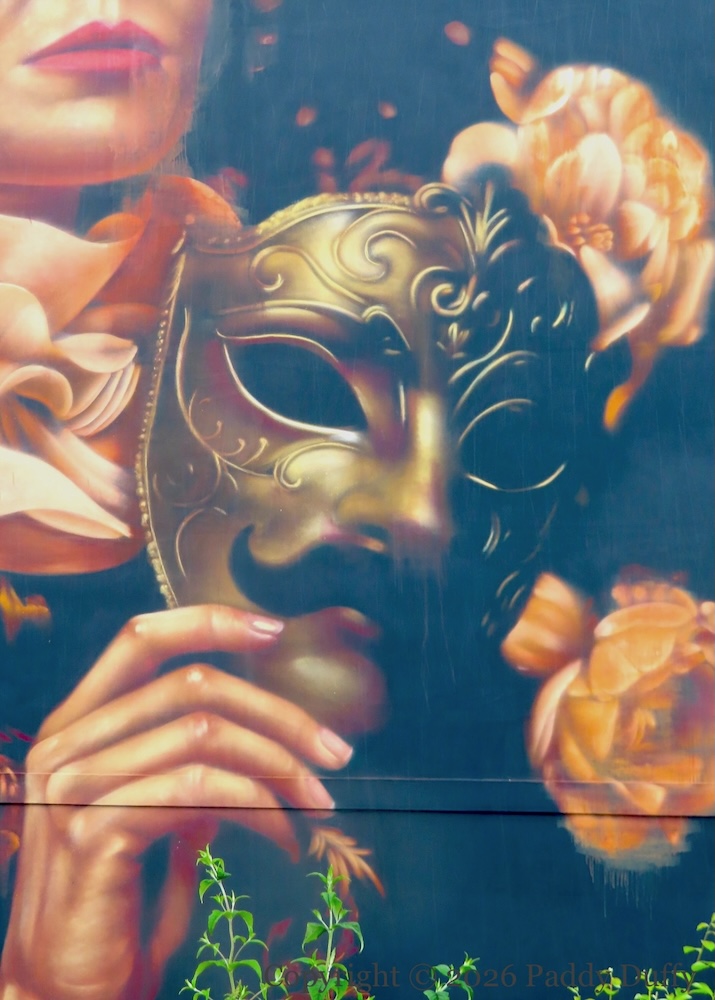
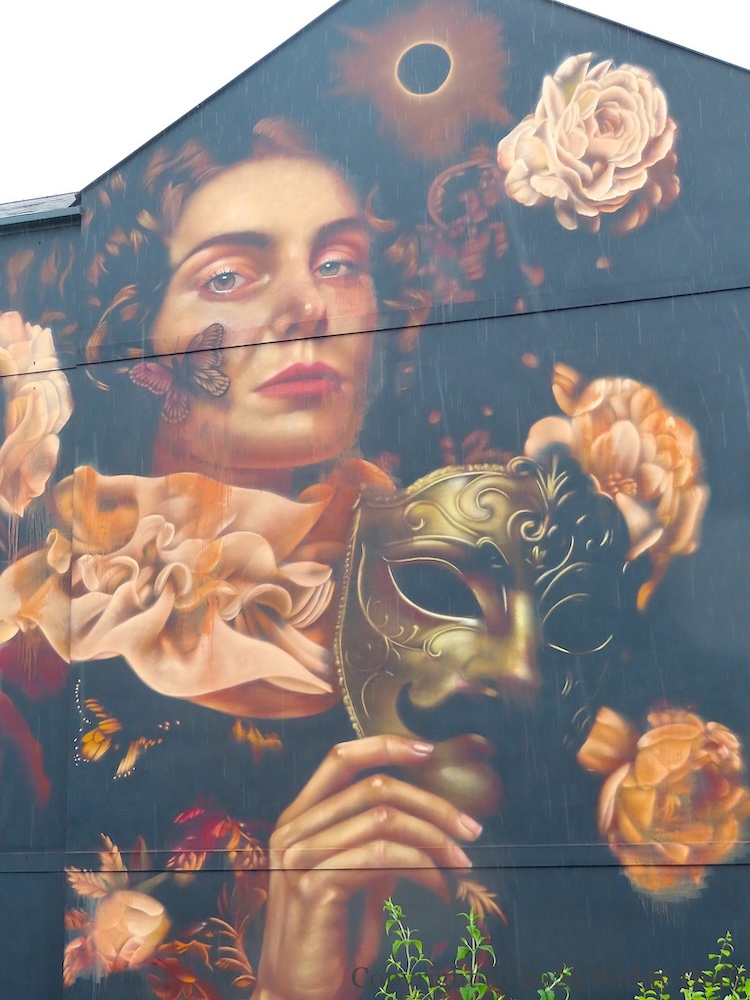
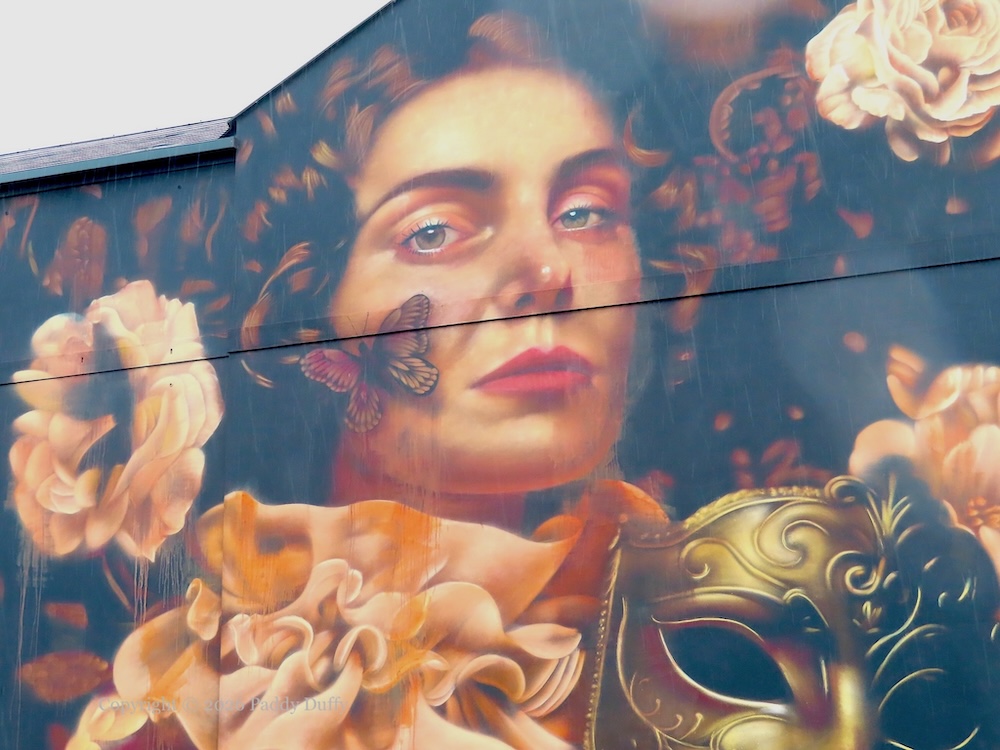
Annie Russell was born (1868) and raised in Strabane, Ireland. She studied at Girton College, Cambridge, and took a job at the Royal Observatory in Greenwich as a “computer”, photographing and analysing sunspots. She married Walter Maunder in 1895 and was admitted to the Royal Astronomical Society in 1916. She died in 1947.
The mural references Maunder’s work in a number of ways: the eclipse in the apex is a reference to Maunder’s work on eclipses – she travelled to Norway in 1896, India in 1898, Algiers in 1900, and Mauritius in 1901 in order to photograph and research the solar eclipses; the butterflies are a reference to the “butterfly” diagram for sunspots (WP).
Most particularly referential is the mask with a moustache that she is holding. This is a reference to the treatment of women in the academic and scientific communities of the time: as a woman, she received no degree for her studies at Cambridge; as a married woman she was compelled to give up her position at the Observatory; she had been first nominated for membership of the Society more than twenty years earlier; her work in her first year at the Observatory was not credited to her and the butterfly diagram was initially attributed solely to Walter.
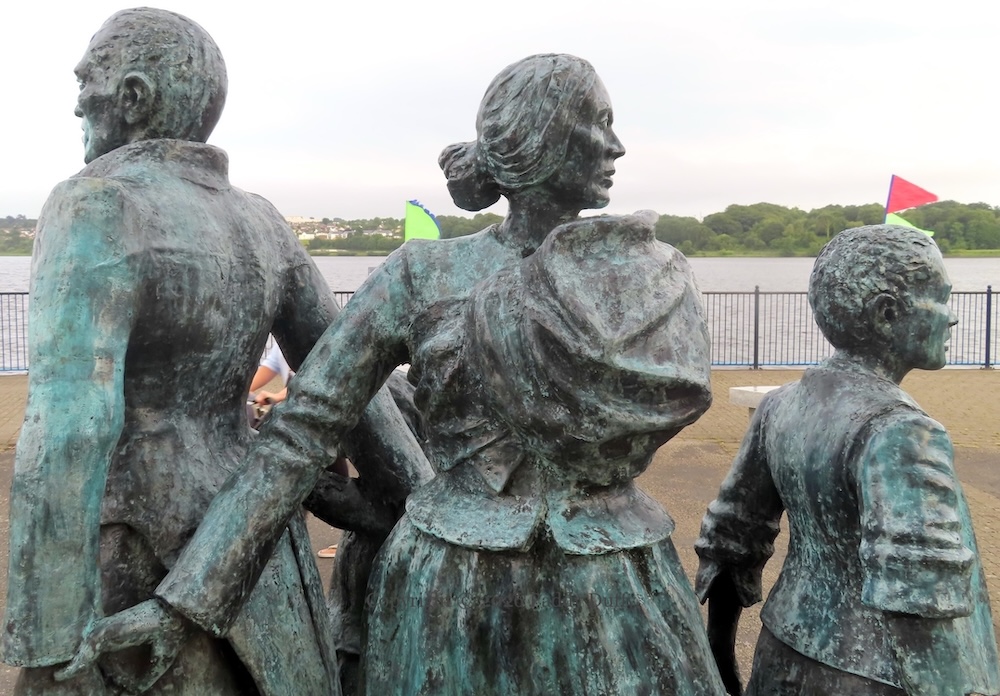
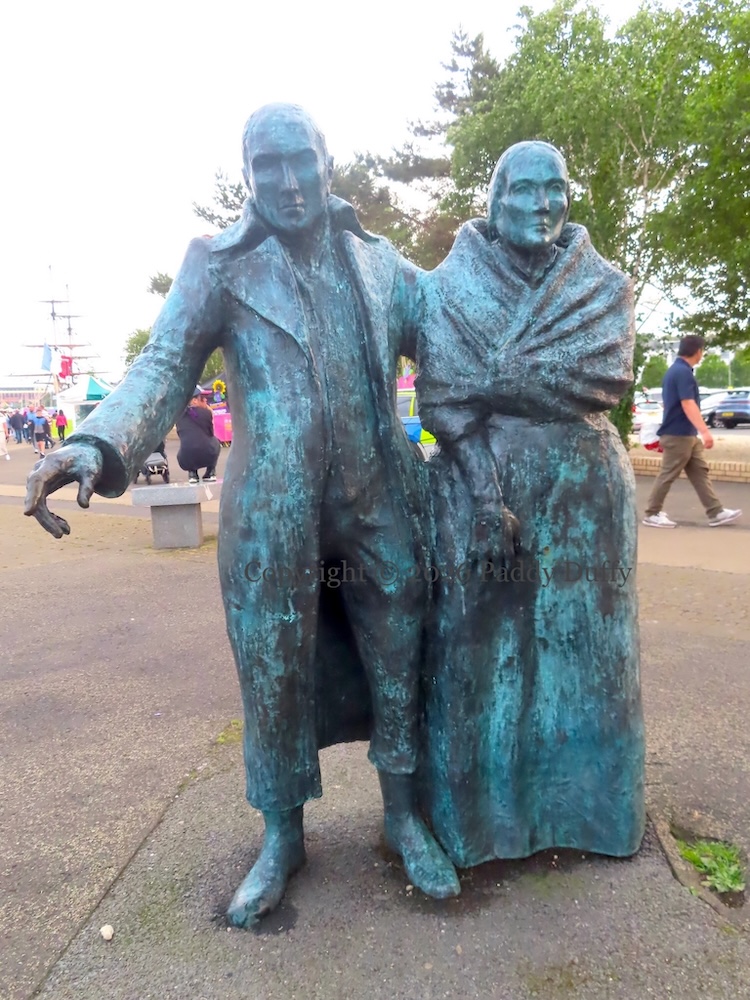
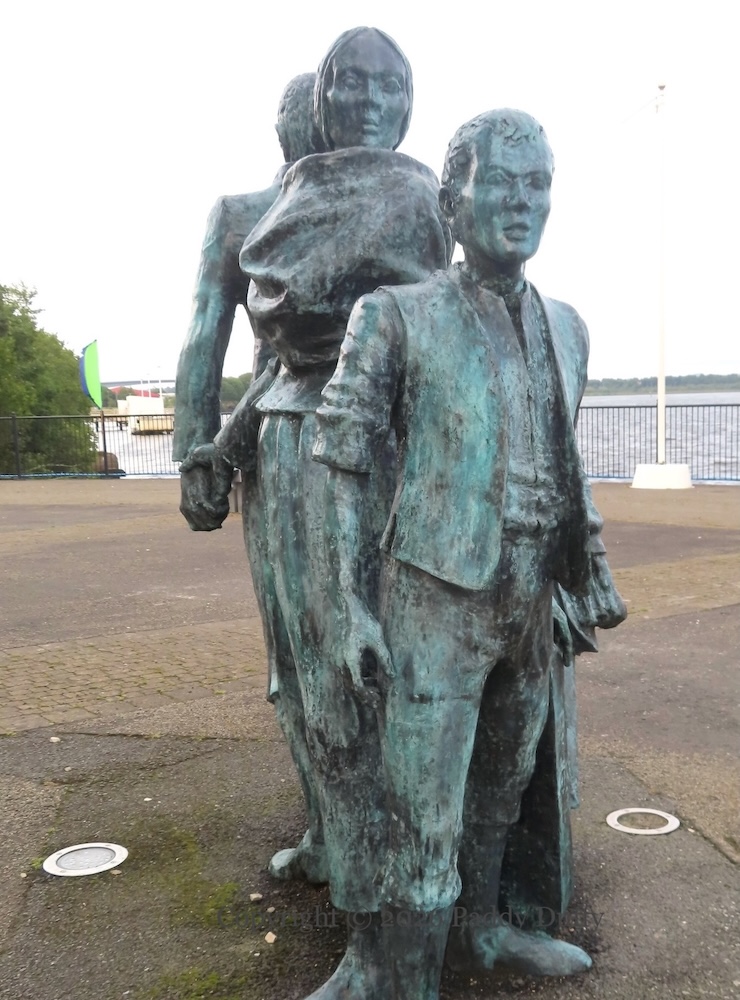
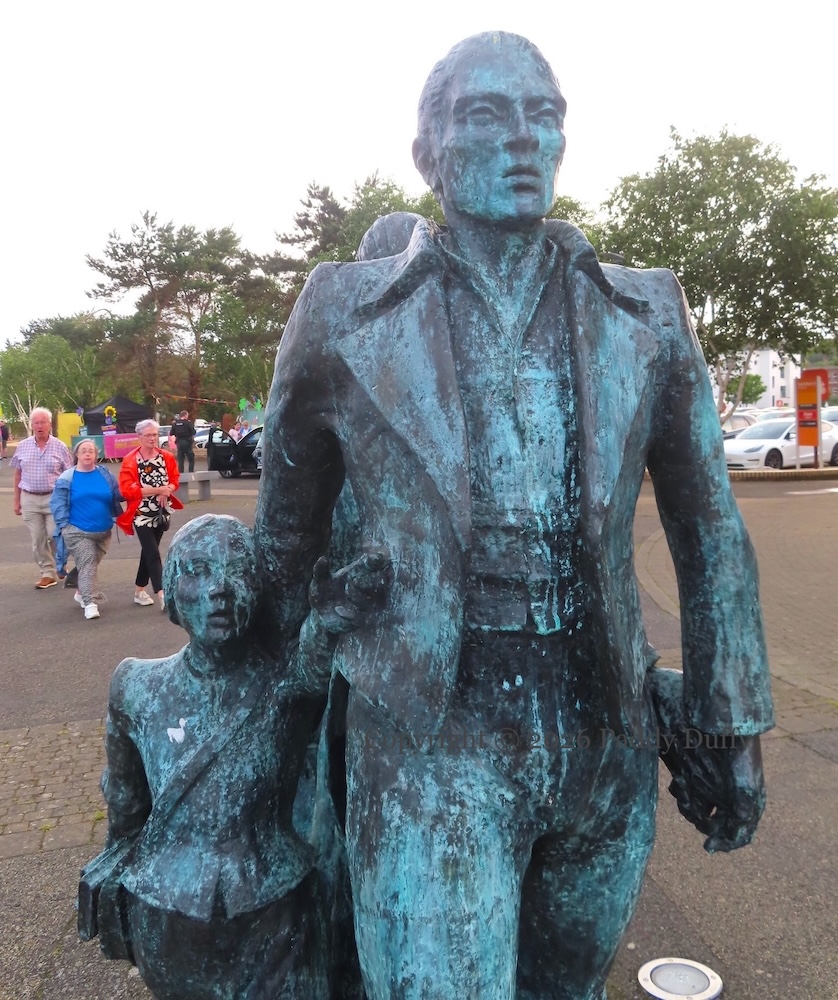
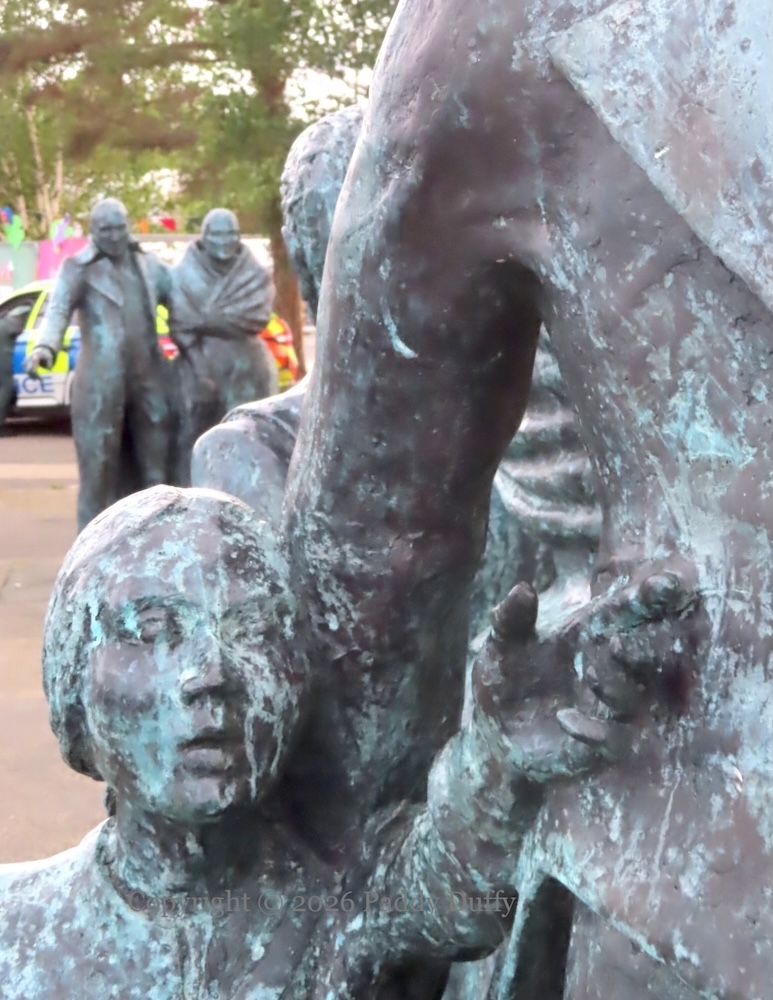
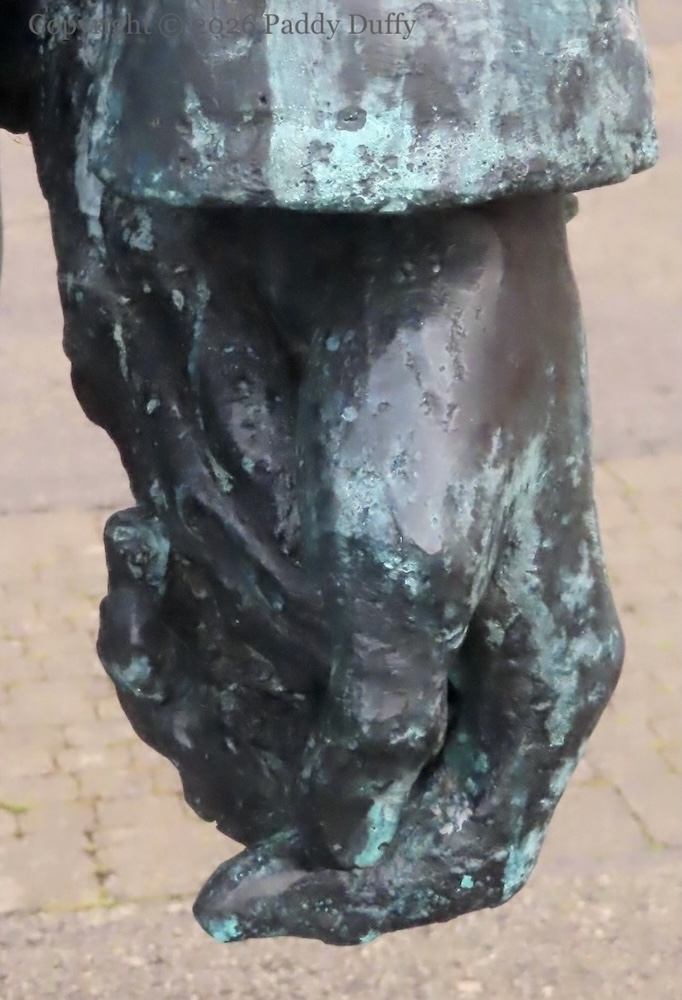
‘The Emigrants’ is a set of three statues (two of which are shown here) created by Eamonn O’Doherty in 1990 (DIB) which stood for many years in Waterloo Place (Peter Moloney has images) until c. 2008, when they were (put into storage and eventually) moved to the waterfront, at a point where ships would have departed for North America during the Hunger.
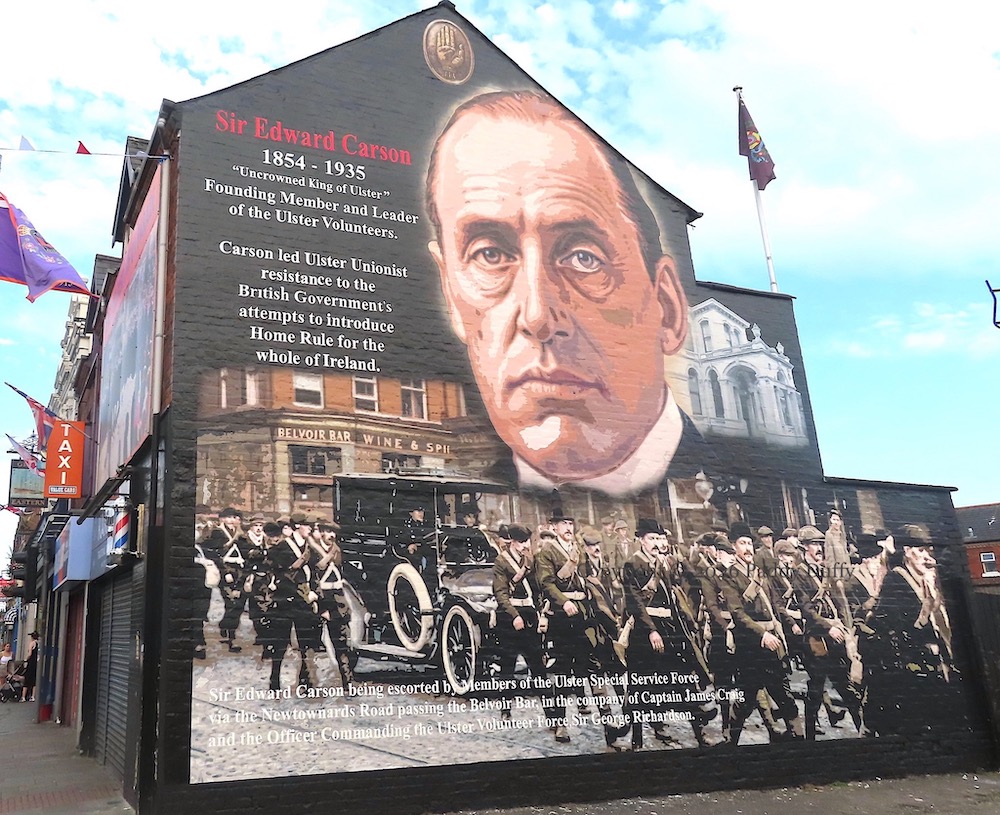
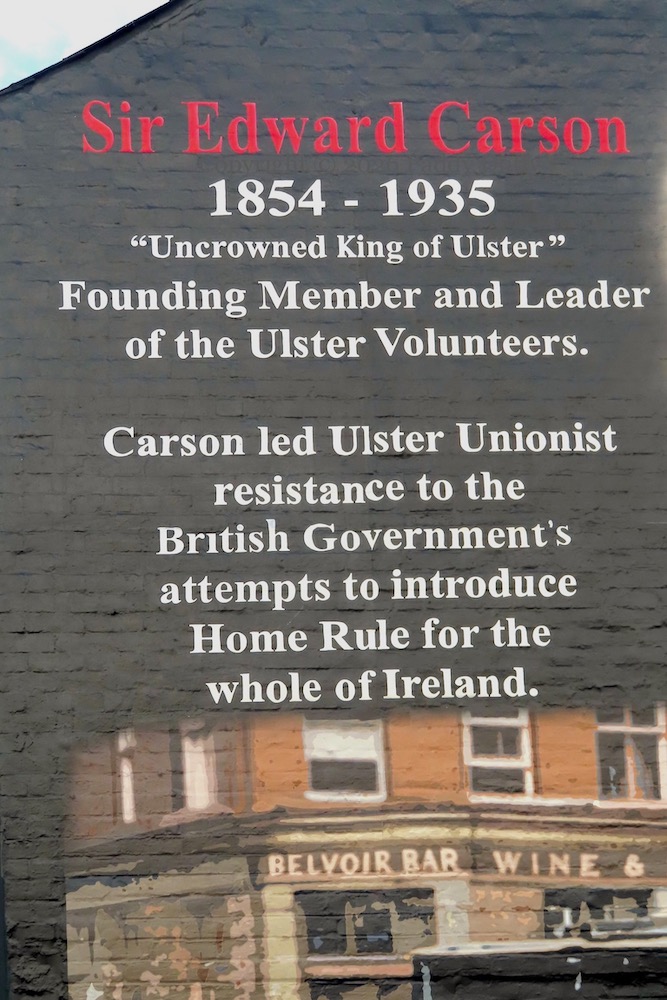
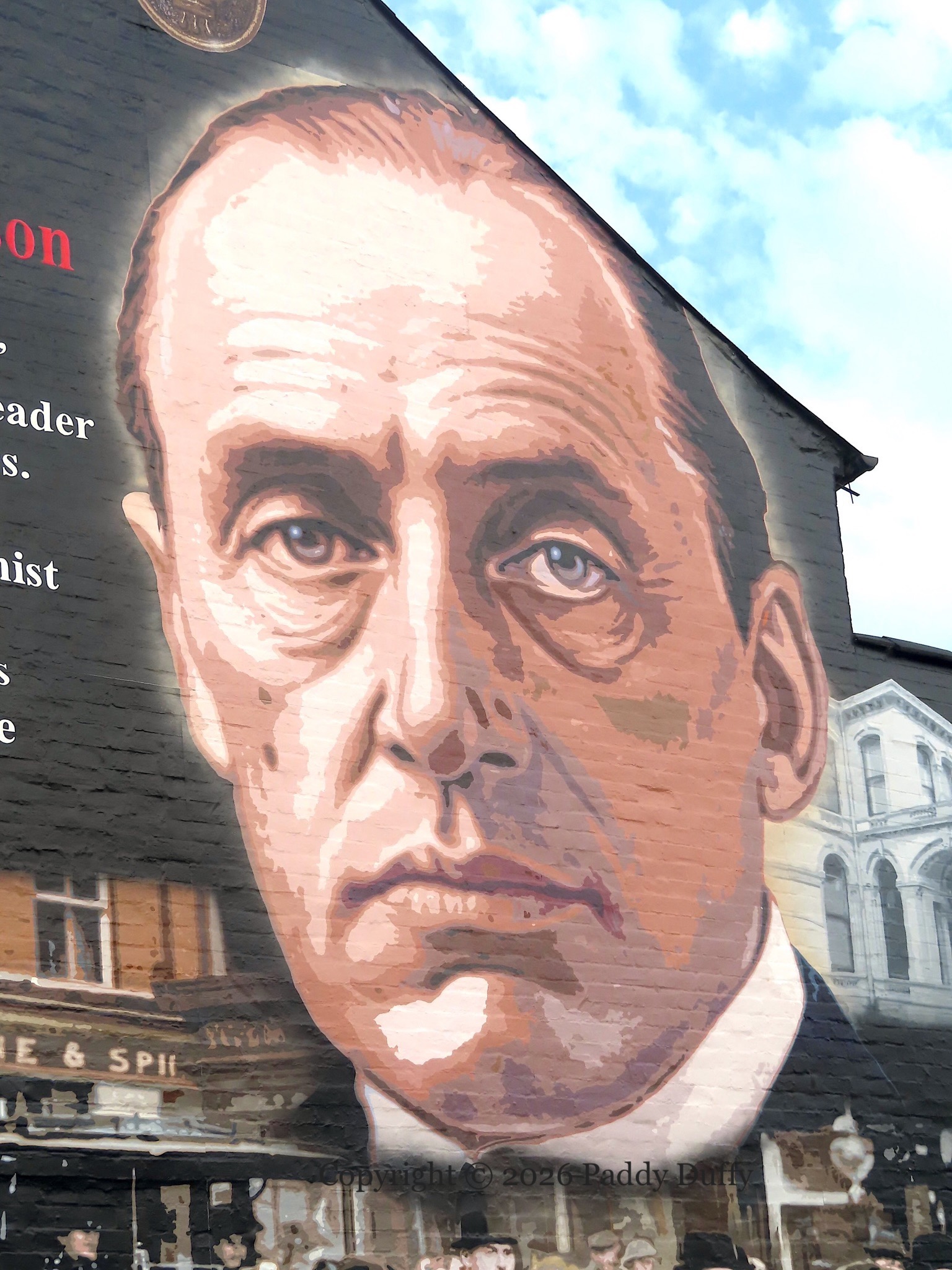
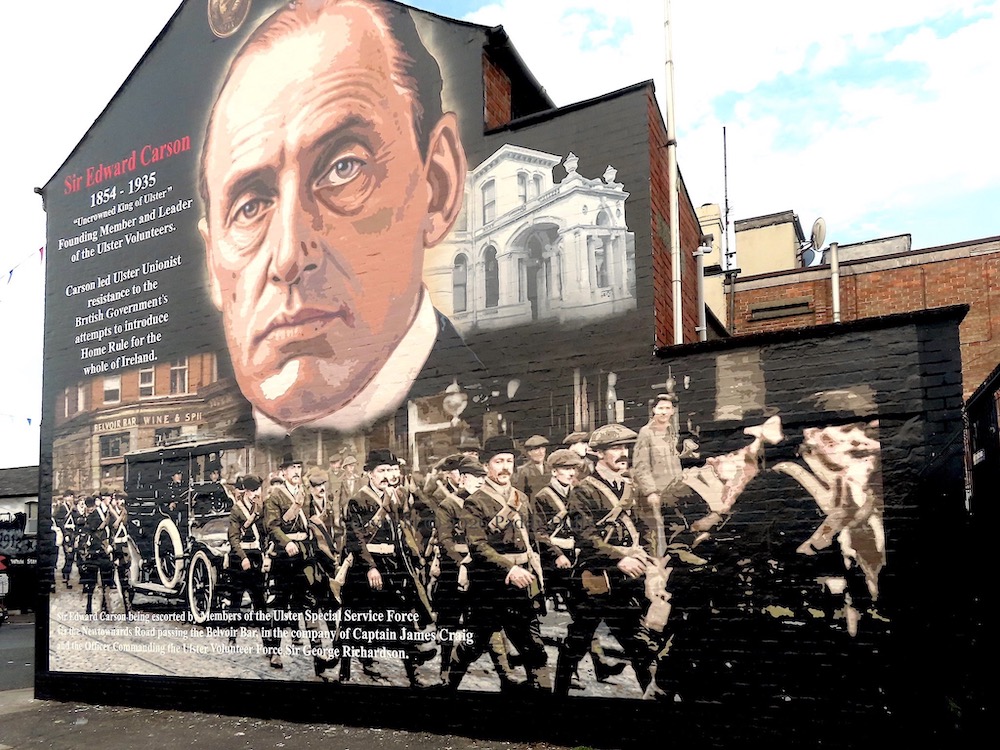
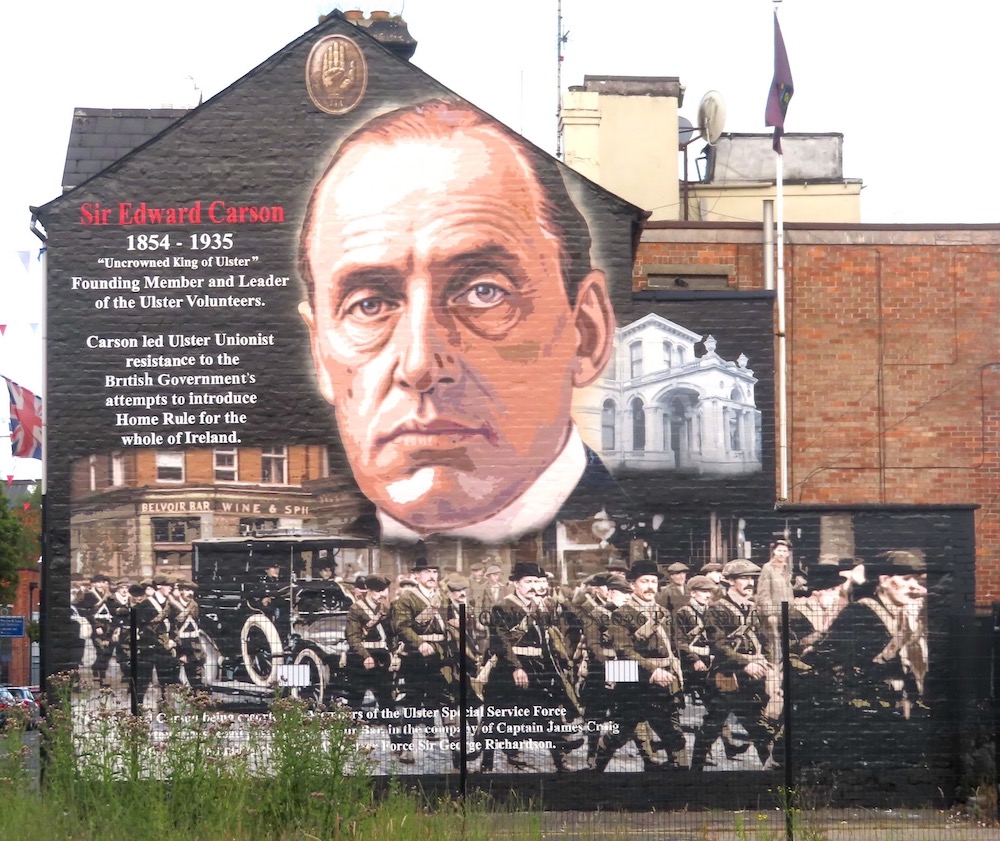
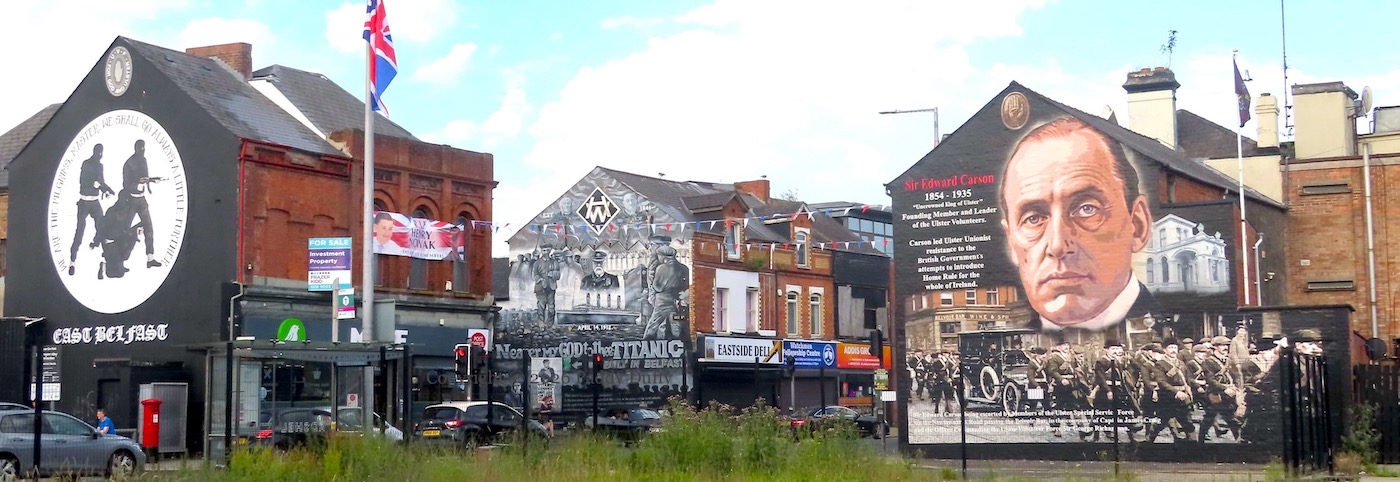
Text above: “Sir Edward Carson 1854 – 1935 “Uncrowned King of Ulster” Founding member and leader of the Ulster Volunteers. Carson led Ulster Unionist resistance to the British Government’s attempts to introduce Home Rule for the whole of Ireland.”
The epithet “uncrowned King” seems to be generally used of Carson and not attributable to any one source. Here is a September 1912 newspaper article that calls Carson the “uncrowned King of the North” and relays criticisms of a Carson reception in Portadown as “a parody upon a royal reception” and “an insult to the King”. A May 1914 review of (the book) The Reign Of Edward Carson refers to “King Carson”. (Here is a postcard depicting Carson as a king upon a throne – Postcards Ireland.)
The phrase is an echo of and response to the phrase “uncrowned king of Ireland”, which was used of both O’Connell and Parnell. Here is an 1847 article describing both O’Connell and the Napoleonic Governor-General of Algeria (WP) as “uncrowned monarch[s]”. According to WP, the epithet was first applied to Parnell in 1880, because he was so popular during a tour of the United States and Canada. At the end of James Joyce’s story ‘Ivy Day In The Committee Room’ a character recites a poem about Parnell, beginning “He is dead. Our uncrowned king is dead” (archive.com).
The wording “the British government’s attempts to introduce Home Rule” is more forthright than we are used to. Typically the resistance is simply to “Home Rule”. This wording makes clear that the Ulster Volunteers were a private militia preparing for the possibility of fighting the regular British Army and Navy. By being so explicit, this wording suggests that we are currently living through a time in which loyalists consider the “British government” to be insufficiently British, just as was the case in 1912.
Text below: “Sir Edward Carson being escorted by members of the Ulster Special Service Force on the Newtownards Road passing the Belvoir Bar in the company of Captain James Craig and the Officer Commanding of the Ulster Volunteer Force Sir George Richardson.”
According to a Regimental Band Fb post, “Sir Edward Carson was speaking at the Reform Club in Royal Avenue. There was an opinion that the British Government were going to try and arrest him so he was escorted to the safety of Craigavon House [shown on the right of the mural]. This photo was taken on the 20th March, 1914.” This October 1913 article, in addition to calling Carson “Ulster’s Uncrowned King”, notes that he travelled with a detective and carried a revolver.
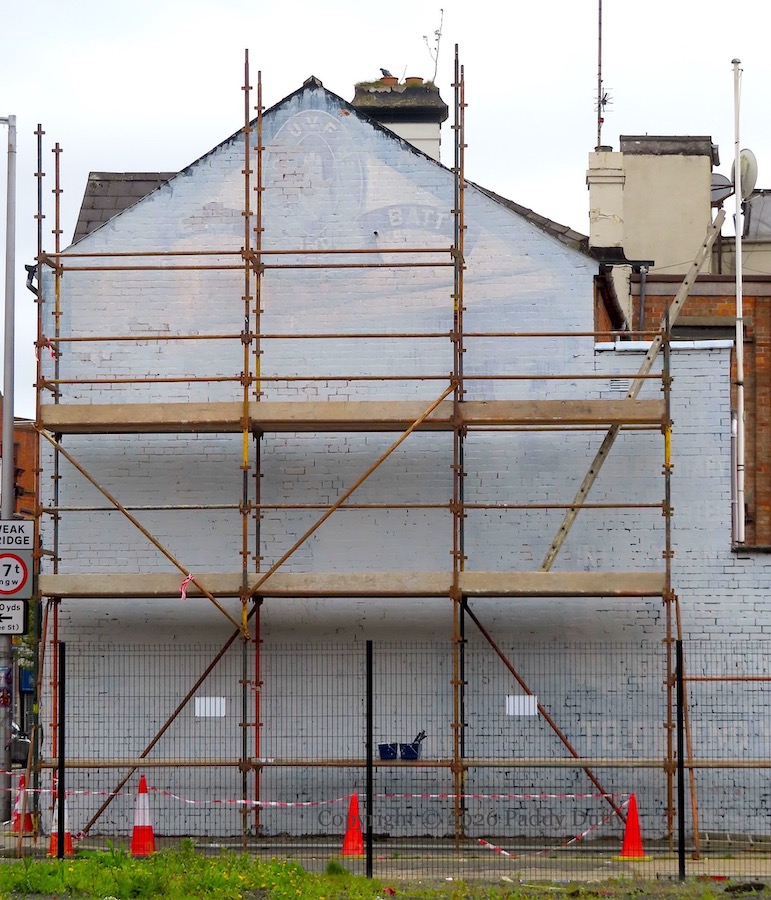
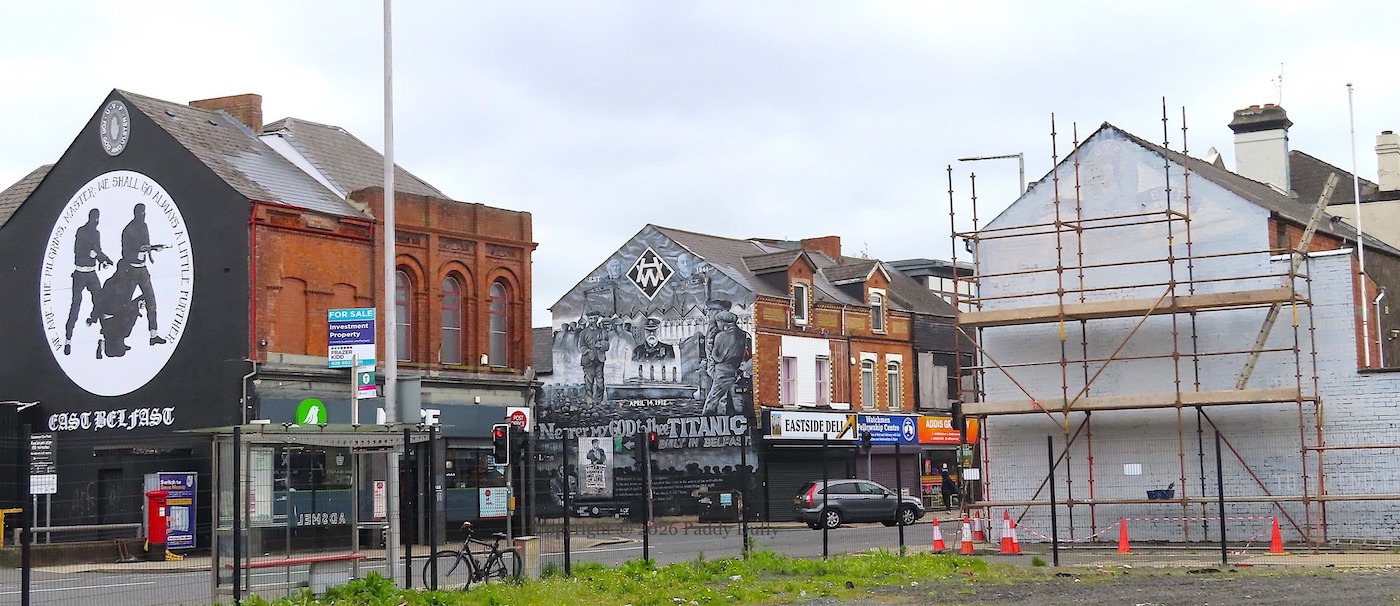
By Dee Craig (Fb), presumably, replacing his hooded gunmen mural The Right To Defend Yourself, on the Newtownards Road at (the former) Bright Street.
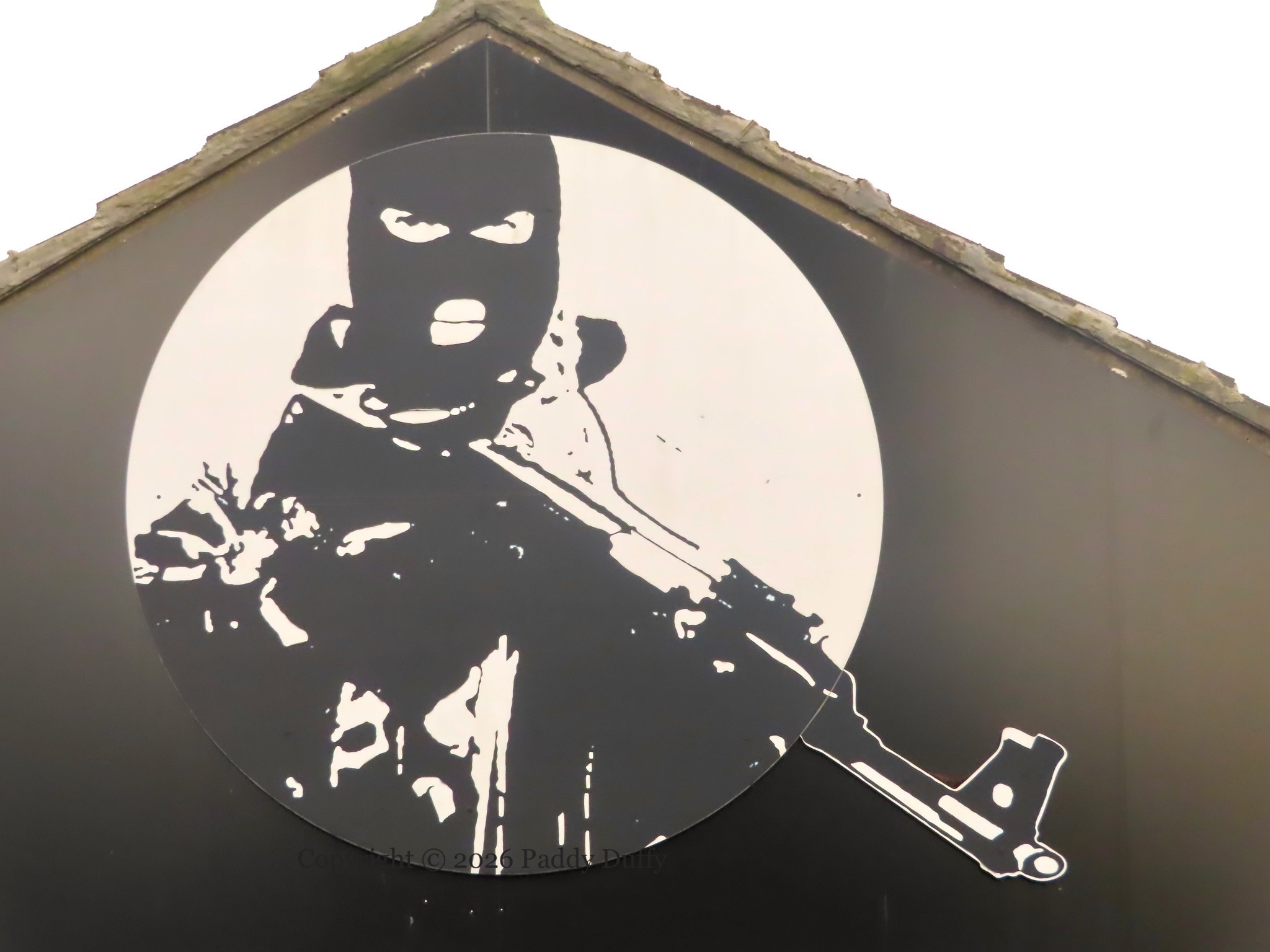
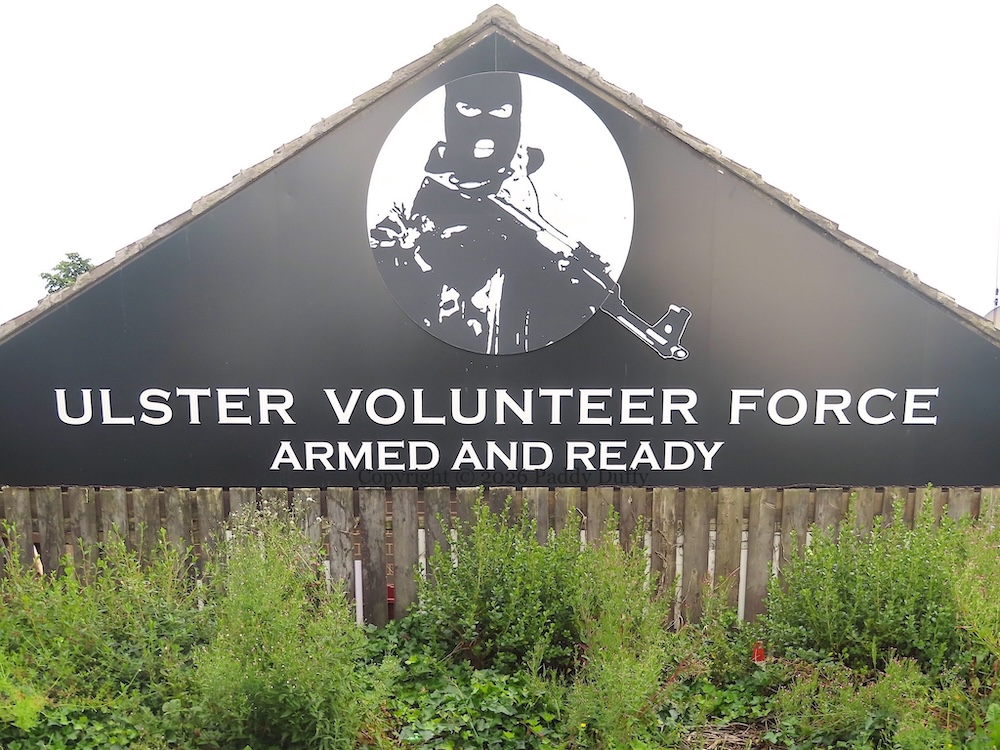
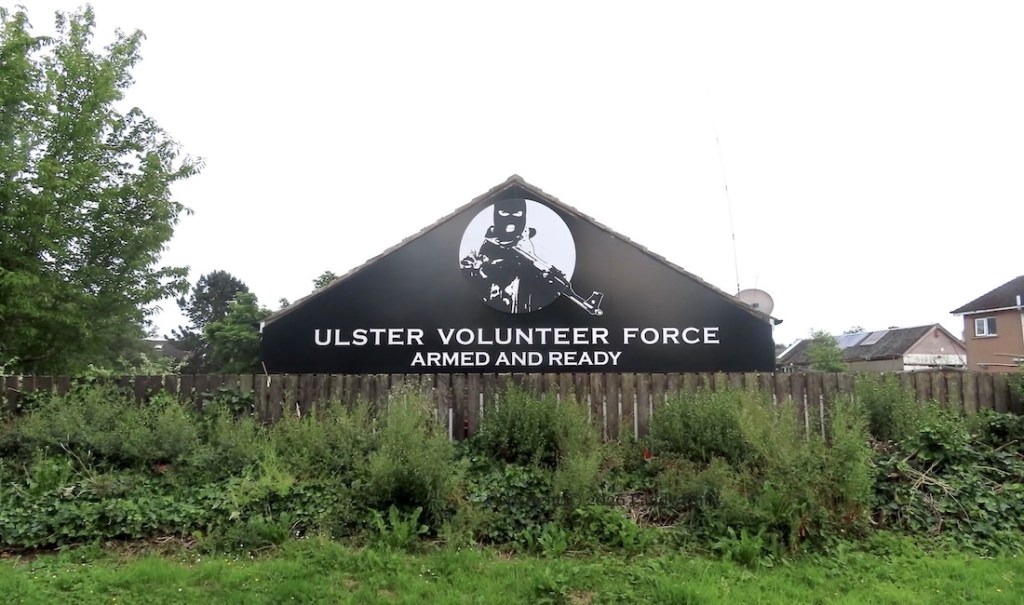
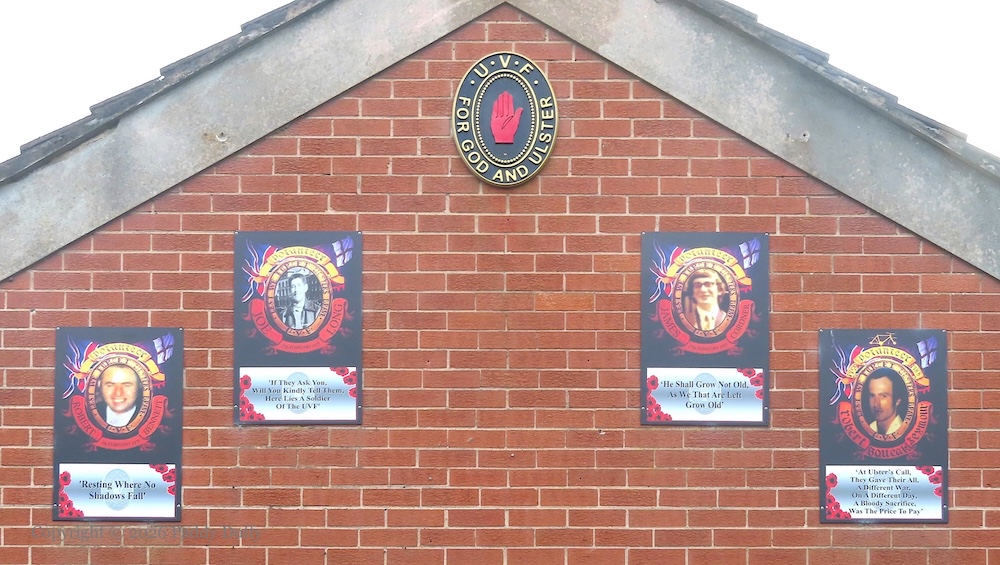
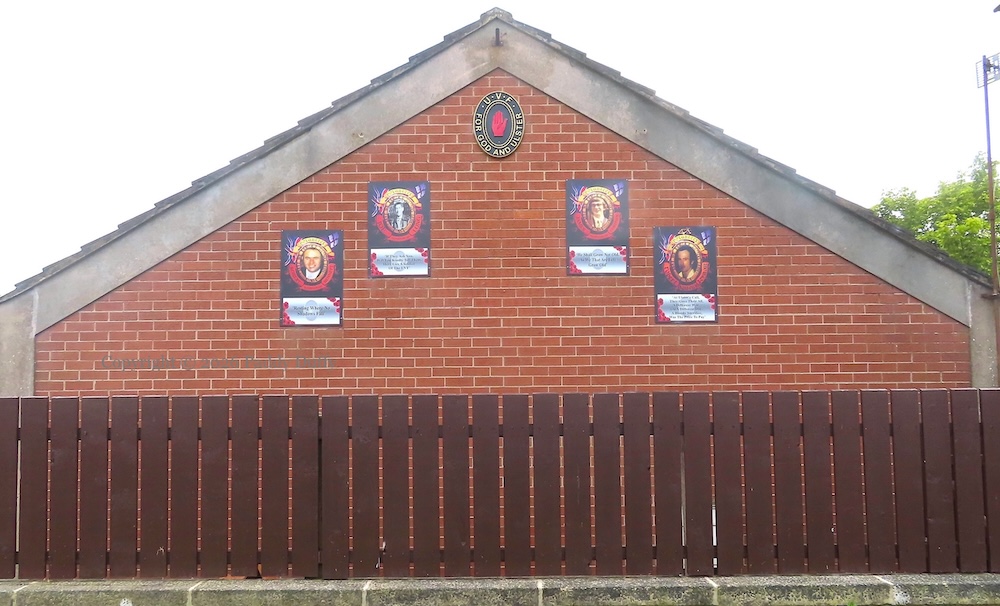
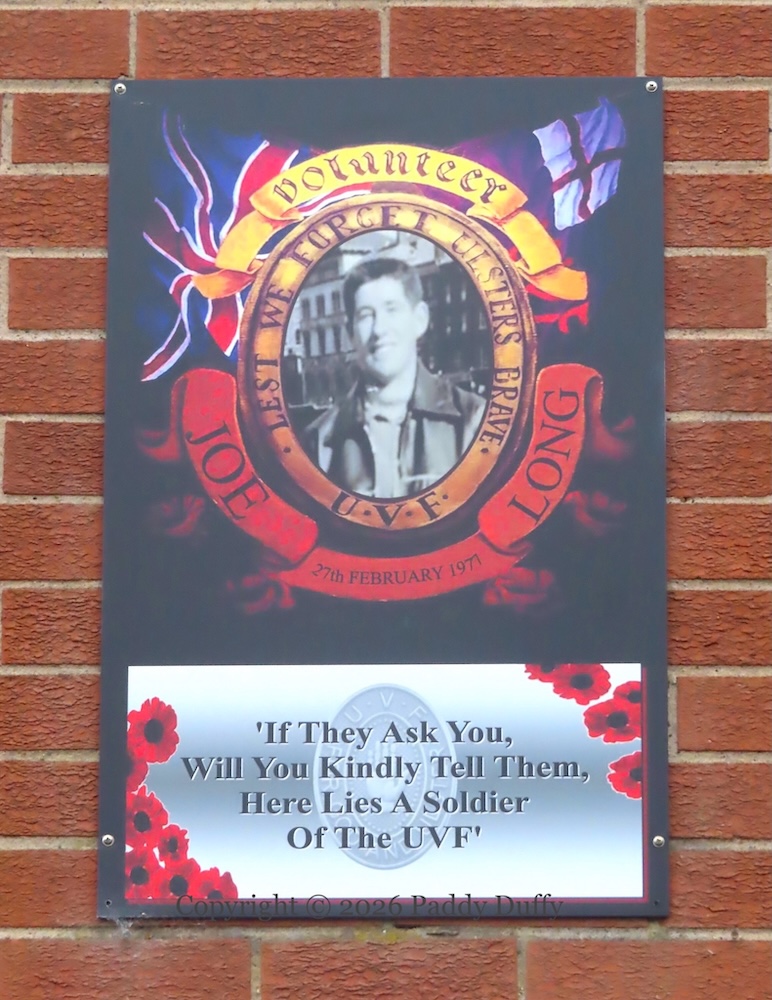
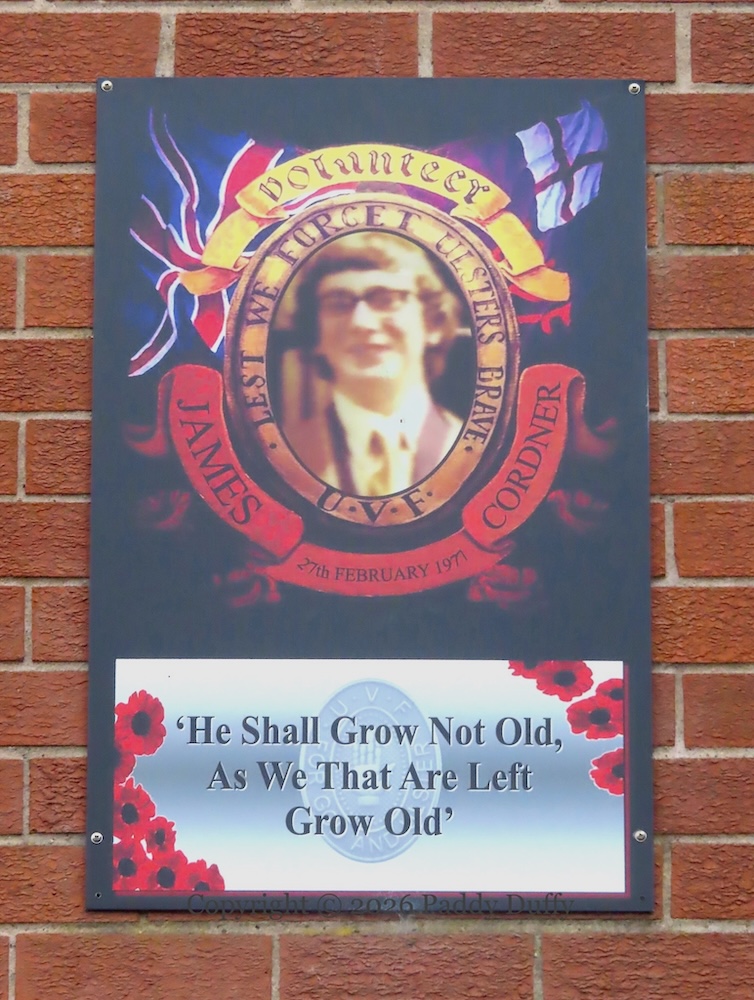
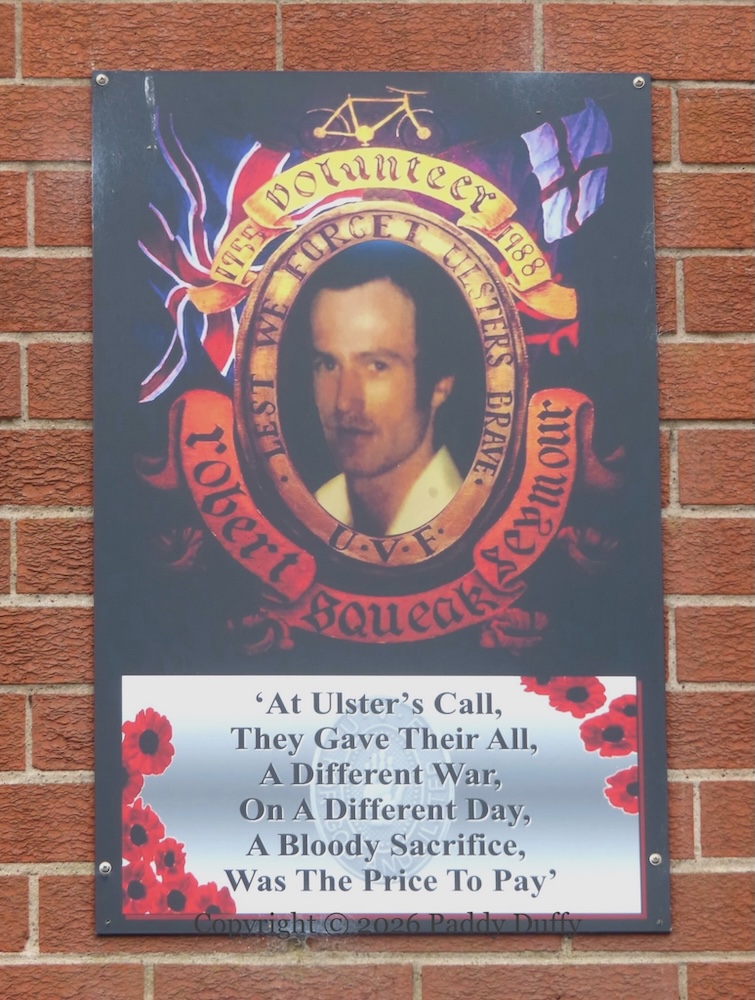
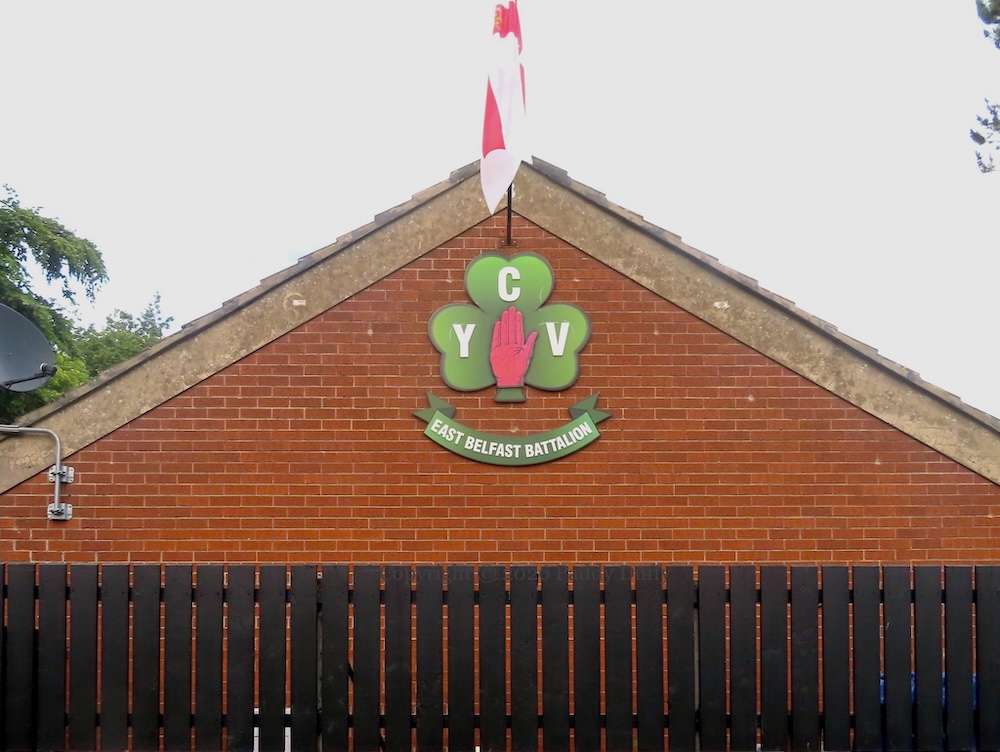
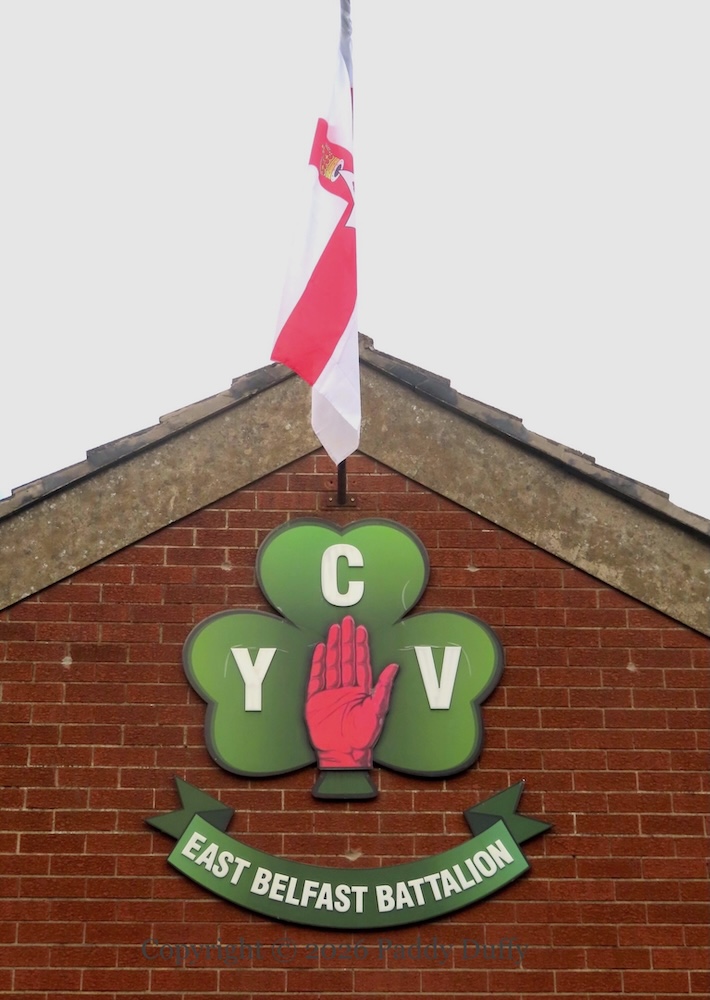
These UVF boards can be found in Inverary Street, Gardens, and Drive, in the Sydenham area of east Belfast. They mix a memorial with symbols of an active organisation: an emblem (of the YCV) and a hooded gunman above the slogan “armed and ready”.
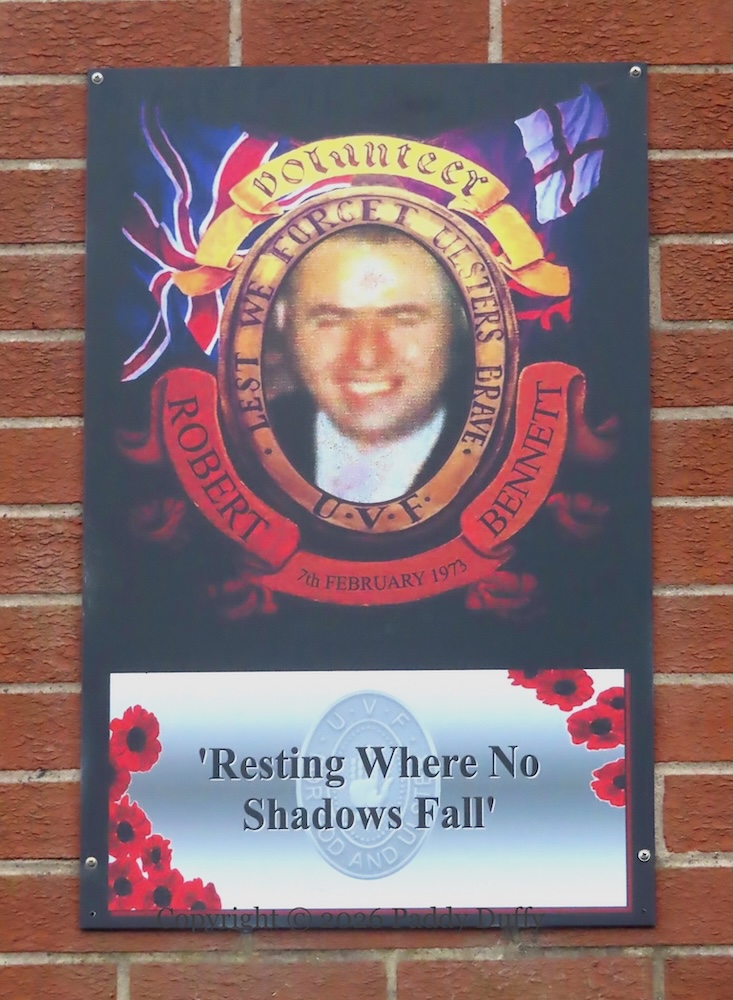
The memorial presents photographic portraits of four UVF members – Robert “Squeak” Seymour (east Belfast commander, shot dead by the PIRA in 1988), Robert Bennett (killed by the British Army during a riot in 1973), and Joe Long and James Cordner (killed in a premature explosion in 1977). “At Ulster’s call, they gave their all, a different war, on a different day, a bloody sacrifice, was the price to pay.”
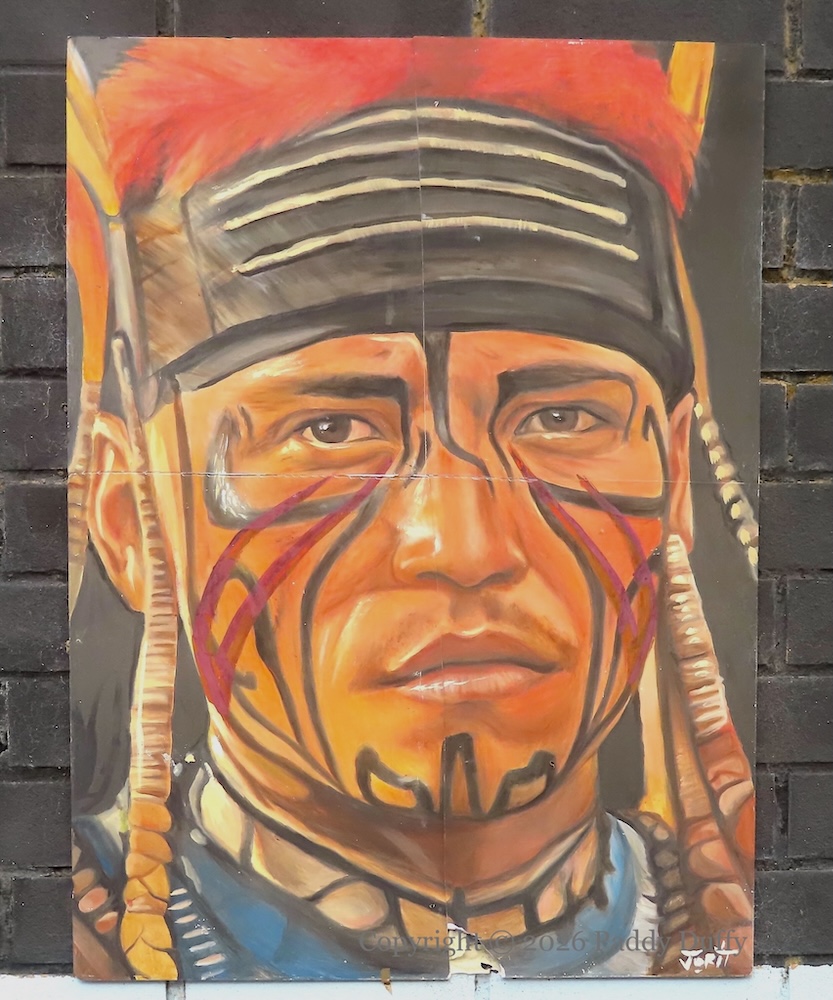
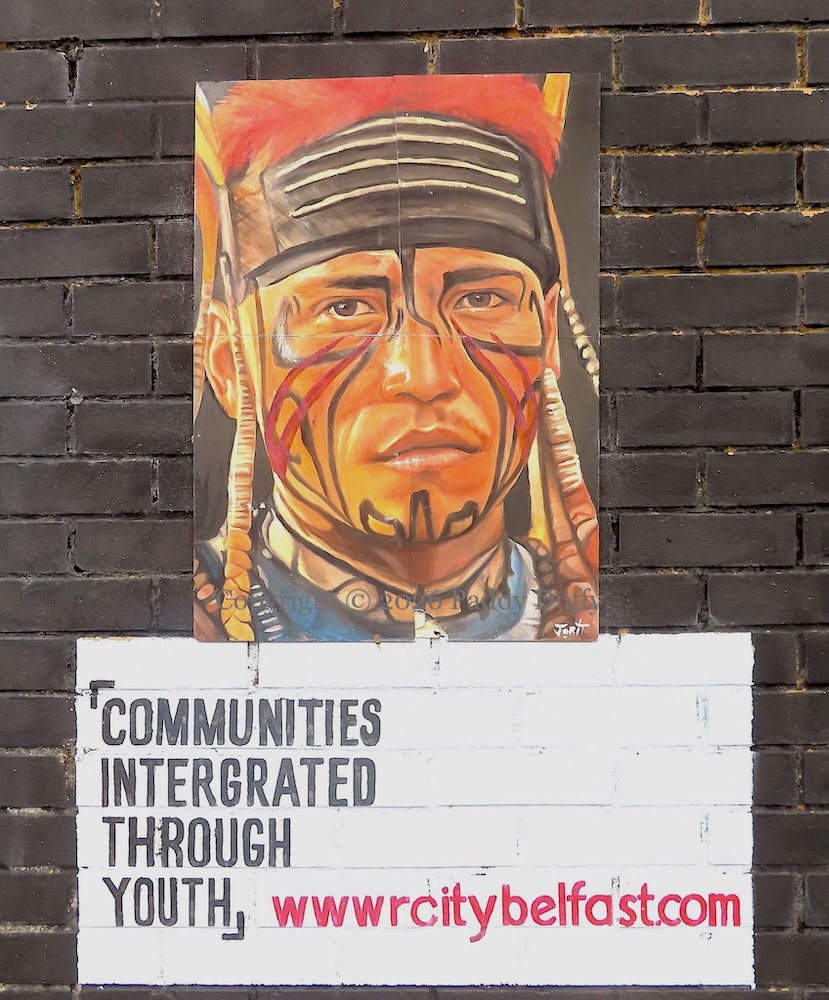
This is a third portrait by Italian artist Jorit (ig) – for two others see Save The Human Tribe. This one is on Lanark Way, inserted above the dash in the R-CITY mural.
A monorail glides by on an arched railway bridge above a field of flowers in which children play Ring-A-Ring-O’-Rosie. This mural is on the Barrack Street side of St Mary’s Primary School (web).
The Irish men’s soccer team is scheduled to play Israel in the Nations’ League, on September 27th and – at home – on October 4th, 2026. A campaign was launched to “Stop the game” in Dublin as a form of protest and disengagement, most prominently in the form of an open letter (instagram) sent to the FAI signed by footballers and various musicians.
The FAI instead appealed to UEFA to have the game played behind closed doors in a neutral country, saying that while it was “deeply conscious” of the suffering in Gaza and the West Bank, it did not want to forfeit the points or be disqualified from the competition (FAI).
The large tarp shown above has been added (on June 18th) on top of the long Painting For Palestine mural on Divis Street.
The various placards reading “No to hate”, “Fight racism”, and “Yes to all!” were added last week (June 17th) in response to the rioting in east Belfast and elsewhere – see McMaster Street Remembers. (These additions are reminiscent of the ‘Free Marian Price’ additions in 2013 – see Scaoıl Saor Marian Price in the Peter Moloney Collection.)