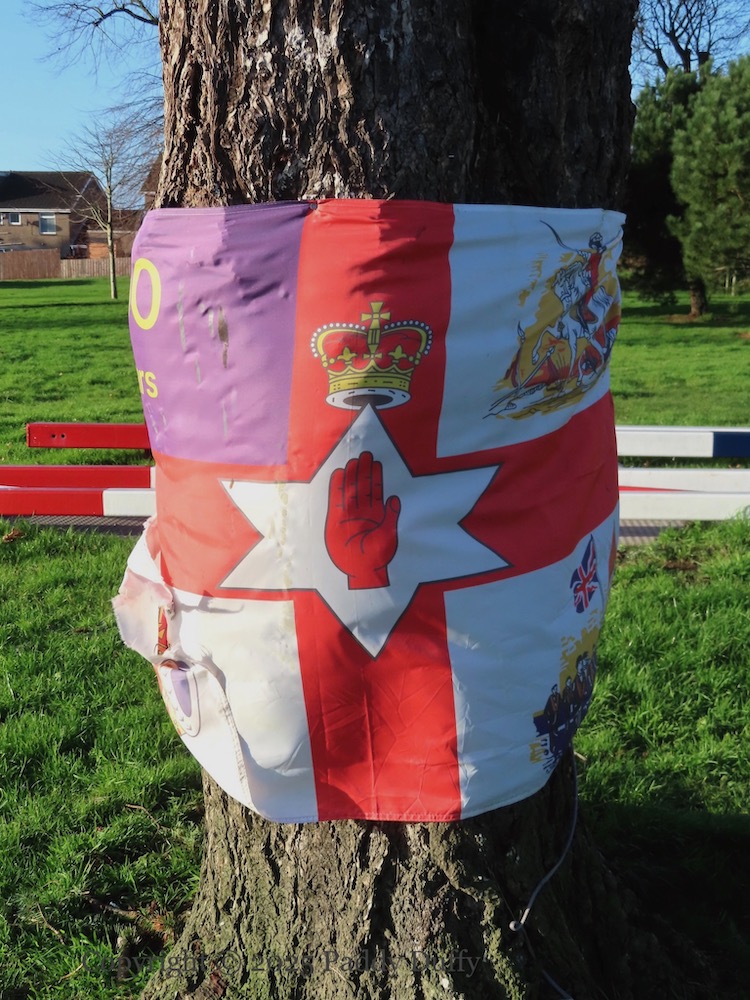
This pair of trees is in Ballymacash next to the bonfire site, hence the “No dumping and fly tipping” sign above the Union Flag on the tree to the right. The flag wrapped around the tree on the left is similar to one seen in 100 Years, an Ulster Banner with quadrants filled with (clockwise) King Billy, an Orange march, the Crown, and (instead of a Union Flag) what looks like UVF purple.
On both tree-trunks are small boards celebrating the “platinum jubilee 1952-2022” of “Her Majesty Elizabeth II”, with flowers of the nations and colonies (rose, thistle, shamrock, daffodil, silver fern, maple leaf) and an Orange star.
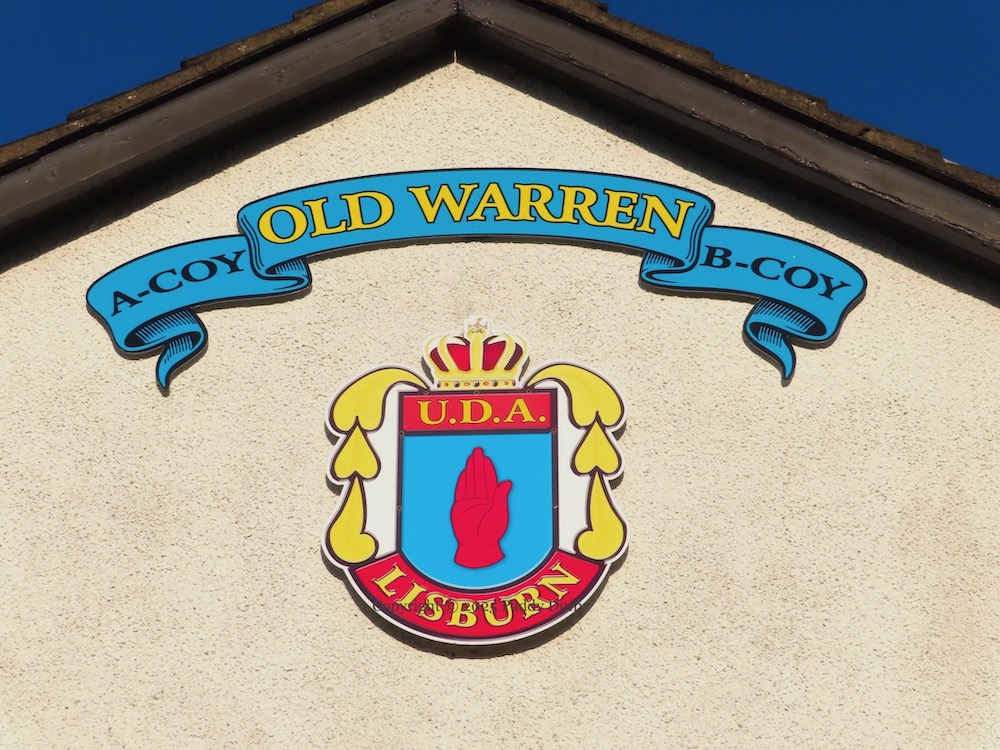
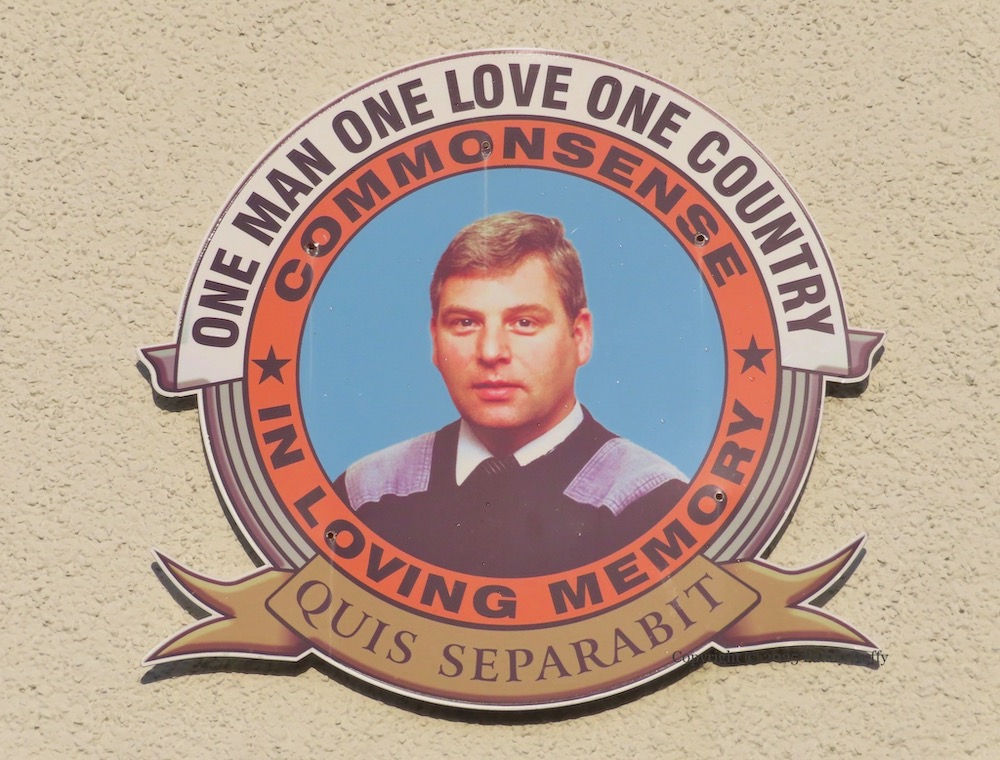
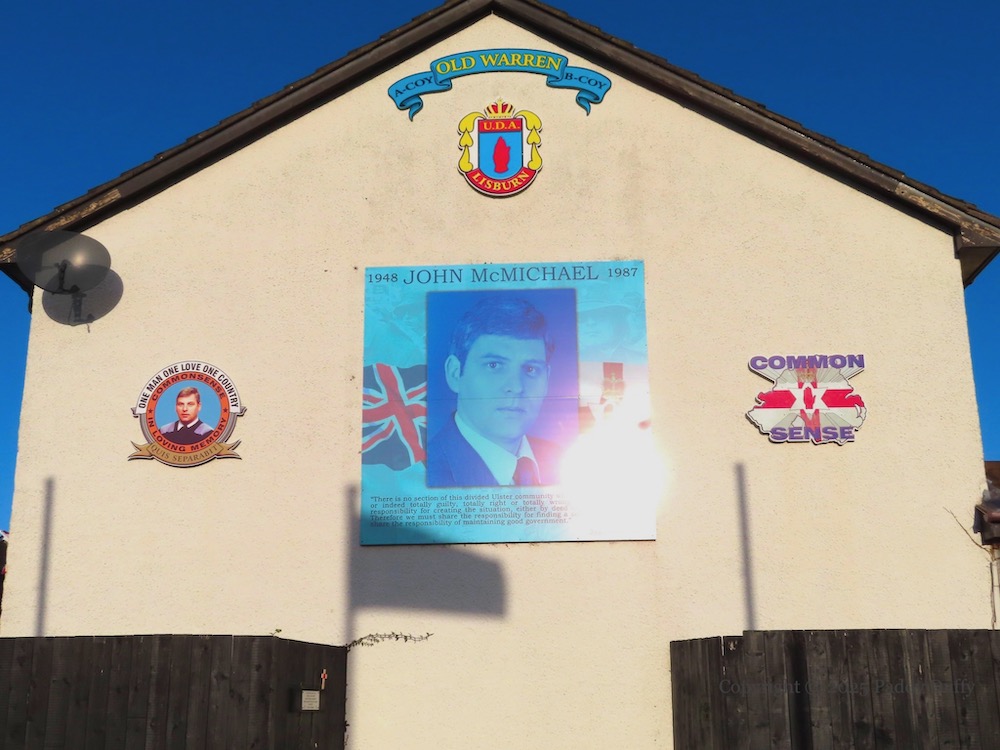
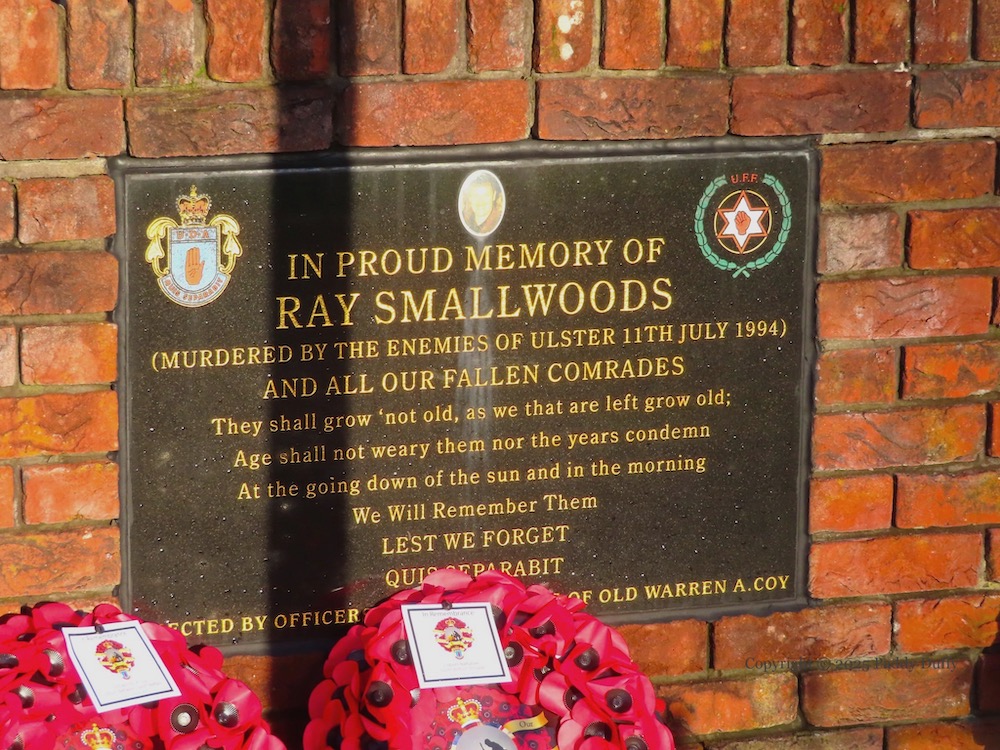
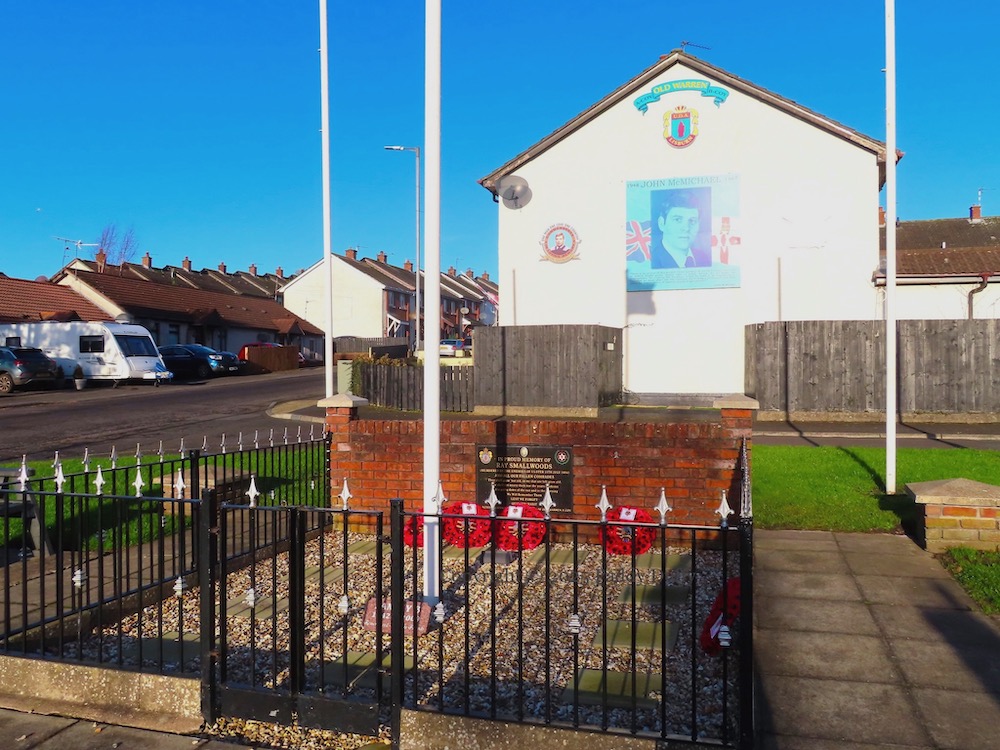
This entry updates 2023’s John McMichael, with close-ups of the smaller boards, in the apex and to either side on the main board, as well as of the stone to Ray Smallwoods, which reads, “In proud memory of Ray Smallwoods (murdered by the enemies of Ulster 11th July 1994) and all our fallen comrades. [For The Fallen] Erected by officers and volunteers of Old Warren A Coy.” Smallwoods was killed by the IRA in the garden of his home in Donard Drive, Lisburn (WP).
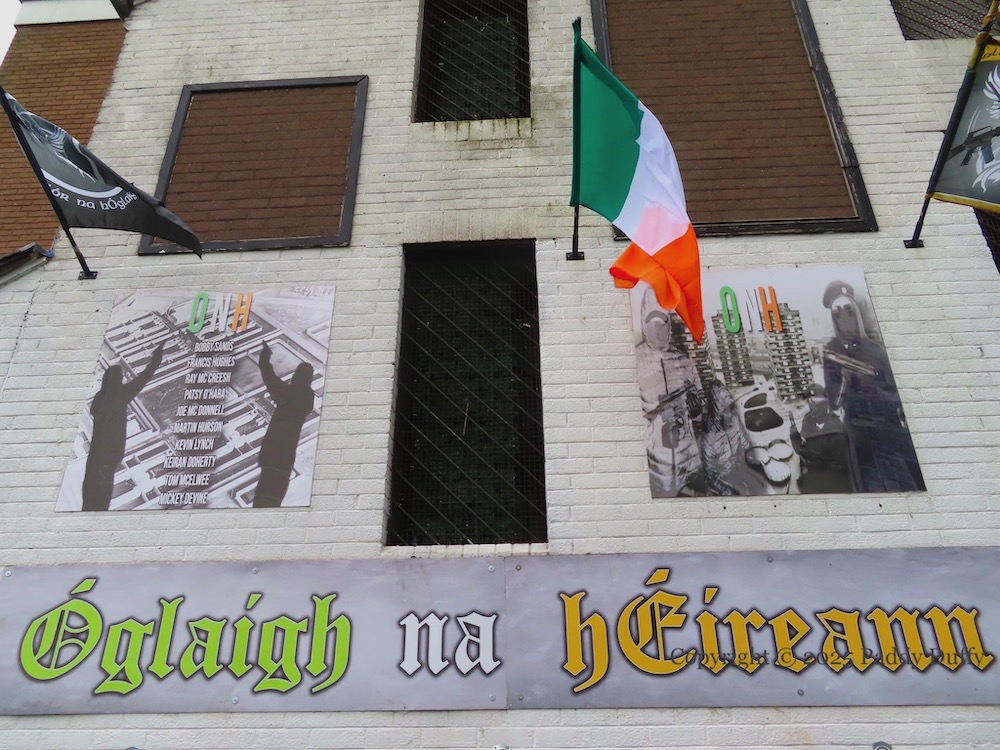
Anti-Agreement armed group Óglaıgh Na hÉıreann split in 2024 (BelTel) with the larger faction following Tony McDonnell (BelTel). Death threats against seven members from the smaller faction (under Sean O’Reilly) were issued and attacks were made in February (BBC), March (Irish News/reddit), and July (Irish News).
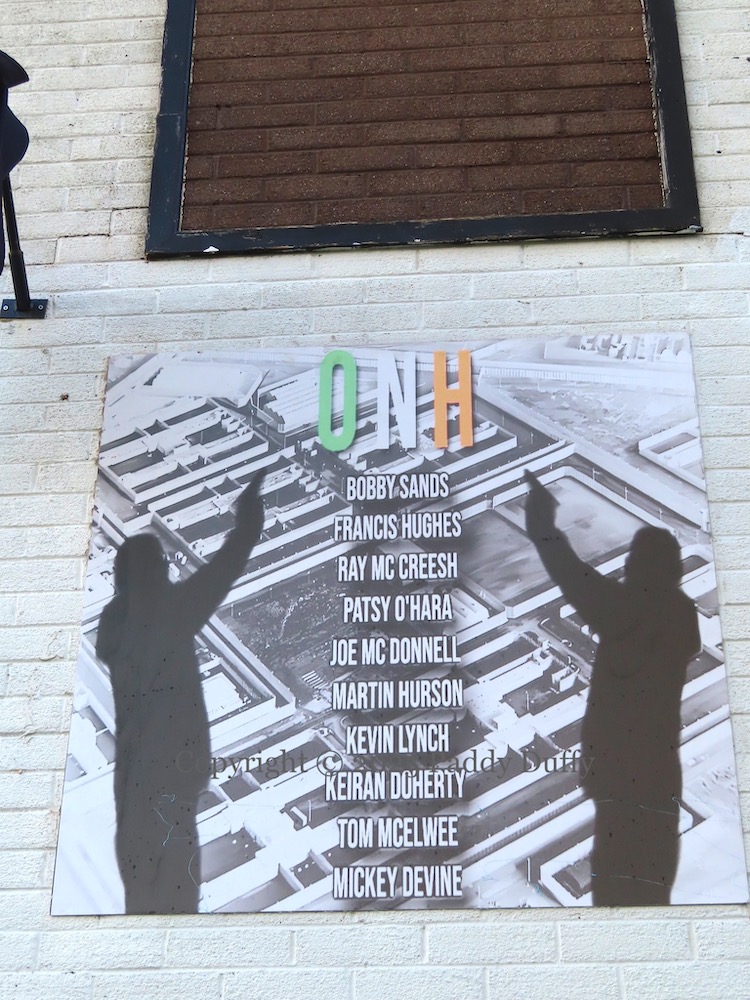
The signage seen here is in the New Lodge in north Belfast. On the left are the names of the ten deceased 1981 hunger-strikers, on the right, armed and masked volunteers pose against a background of a vintage picture of the flats (from Getty Images – BBC).
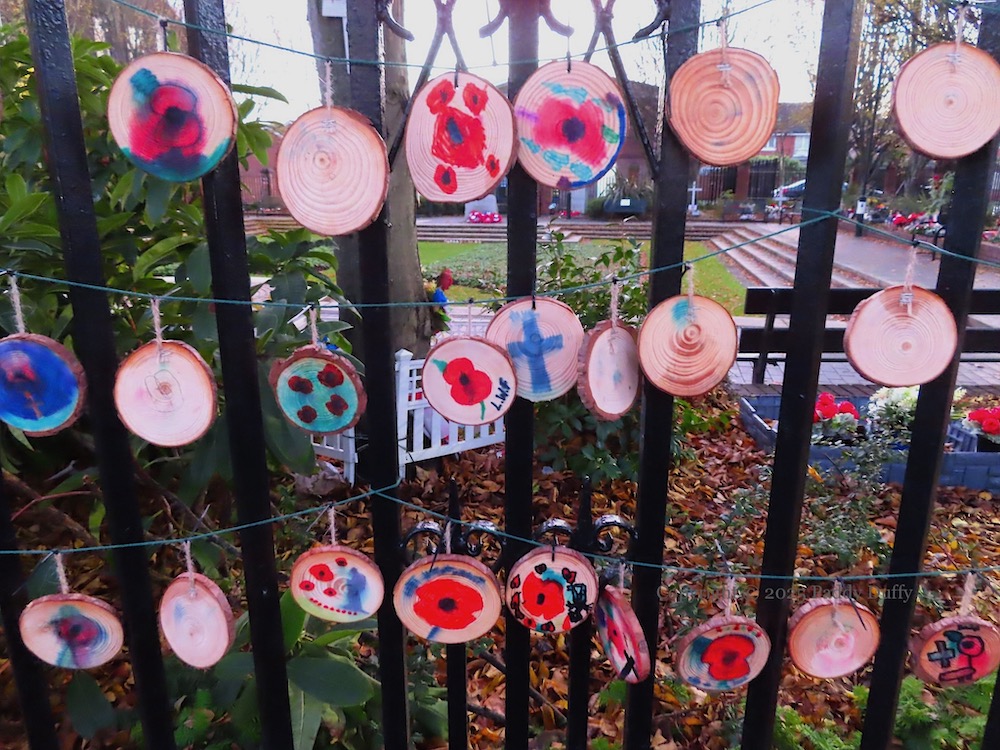
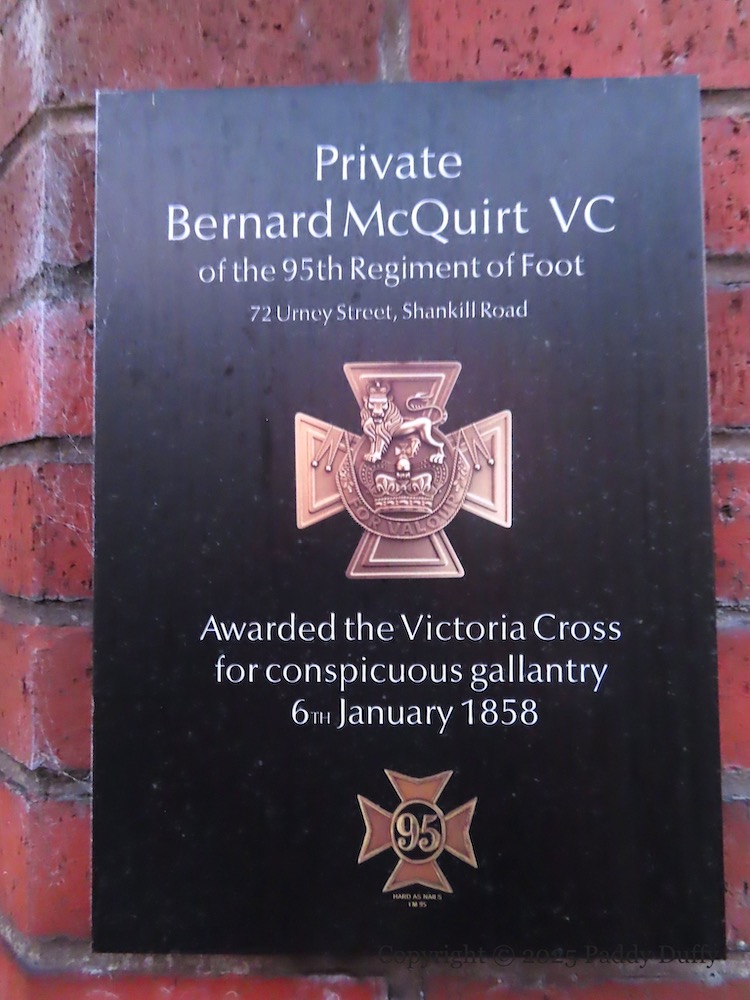
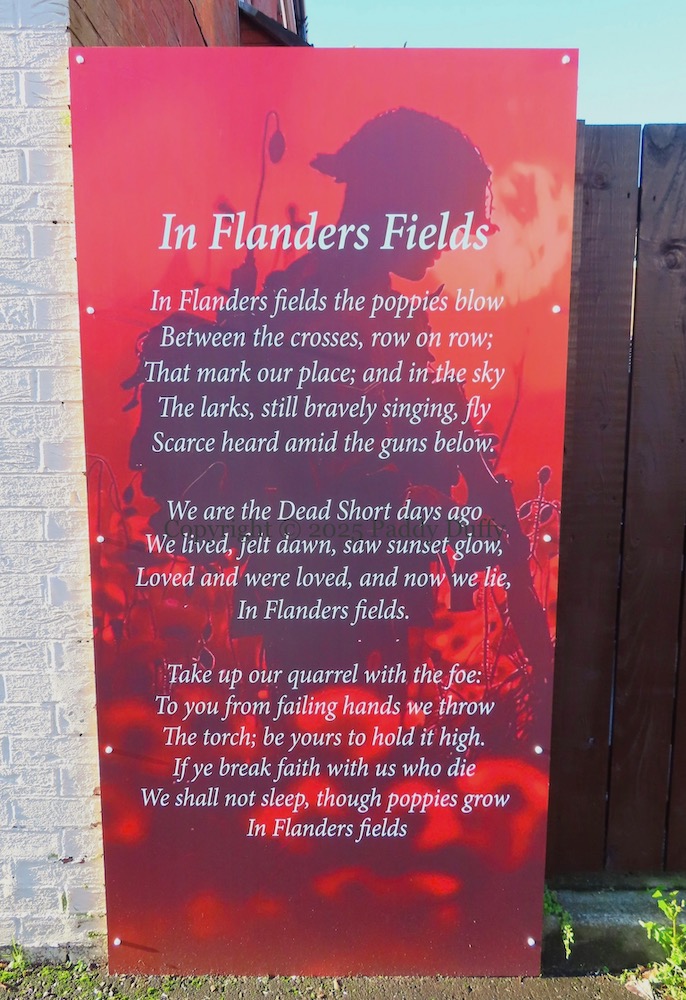
For Remembrance Sunday, rows of hand-painted wooden medallions were attached to the railings at West Kirk Presbyterian to pay homage to the dead of the British armed forces, including Bernard McQuirt, whose plaque is shown below. McQuirt was a VC winner for actions taken during the Indian Rebellion in 1858. Originally from Donaghcloney, he survived his injuries and died in 1888 at 72 Urney Street (HistoryHub | News Letter | WP) – Urney Street used to be where the plaque and the memorial garden now are, along the side of the West Kirk.
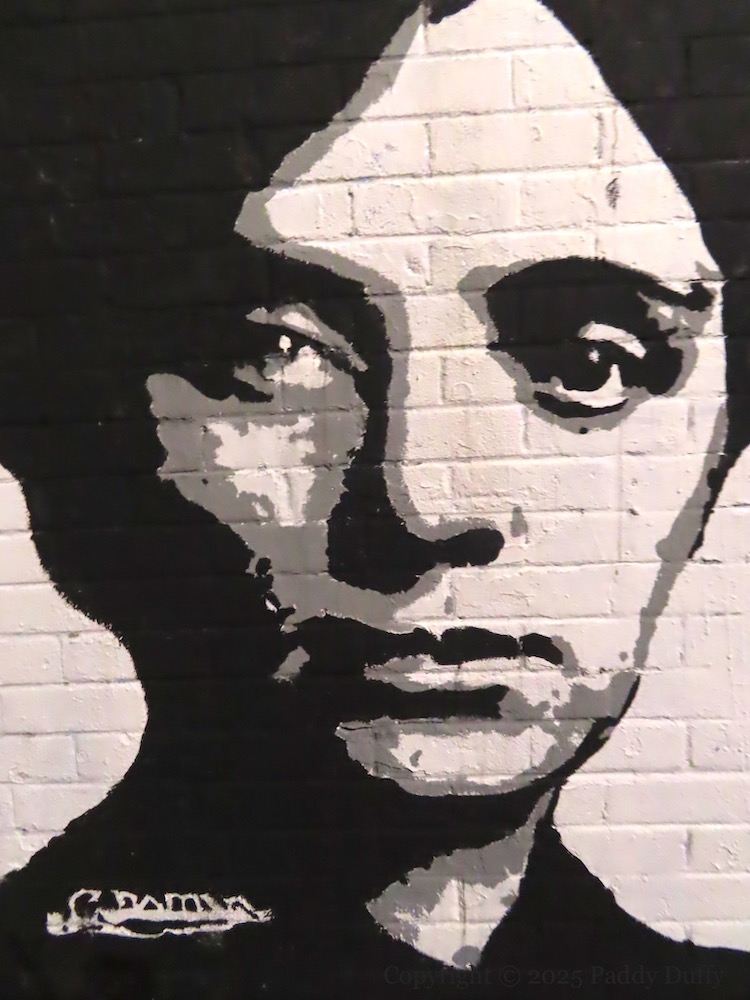
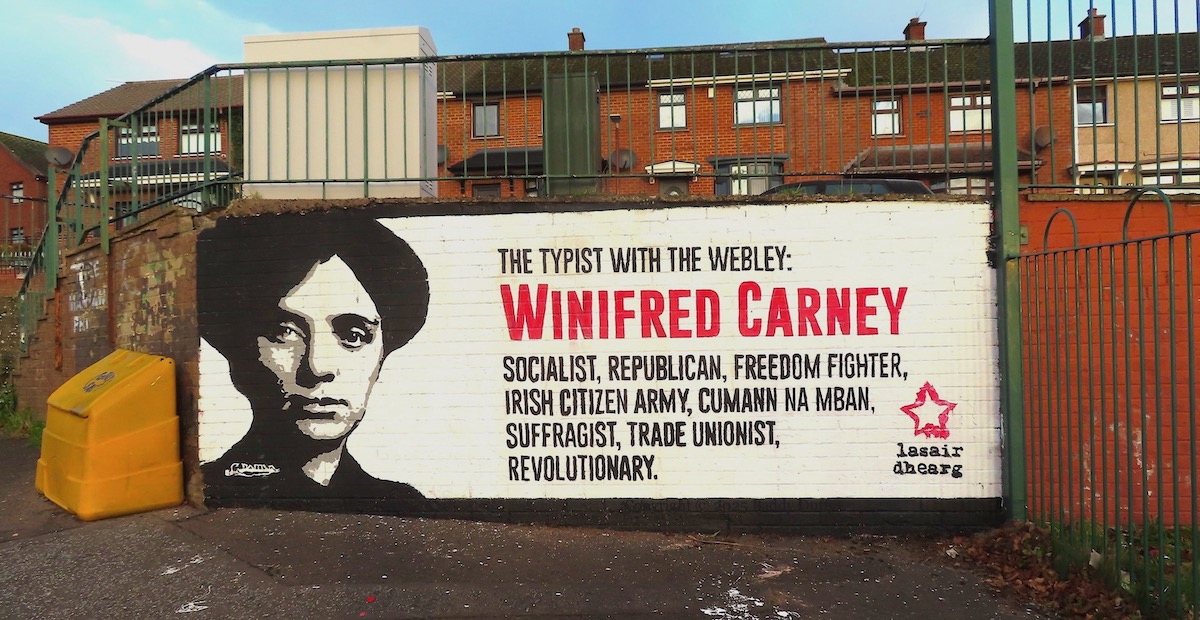
Winifred Carney was a qualified secretary and typist, and became secretary of the Irish Textile Workers’ Union in 1912, in which position she met James Connolly, who was secretary of the Belfast branch of the ITGWU. She was a member of Cumann Na mBan and participated in the Easter Rising of 1916. Carney was in the GPO when it was taken over and was among those who surrendered at the end; during the occupation she typed up dispatches from the Moore Street headquarters – this is how she was portrayed in the the 1916 Centenary mural.
This is a freshly-repainted sign for “South Belfast Ulster Volunteer Force, 2nd battalion, A company Donegall Pass” on the back wall of the Hideout bar. The previous version was painted c. 2005.
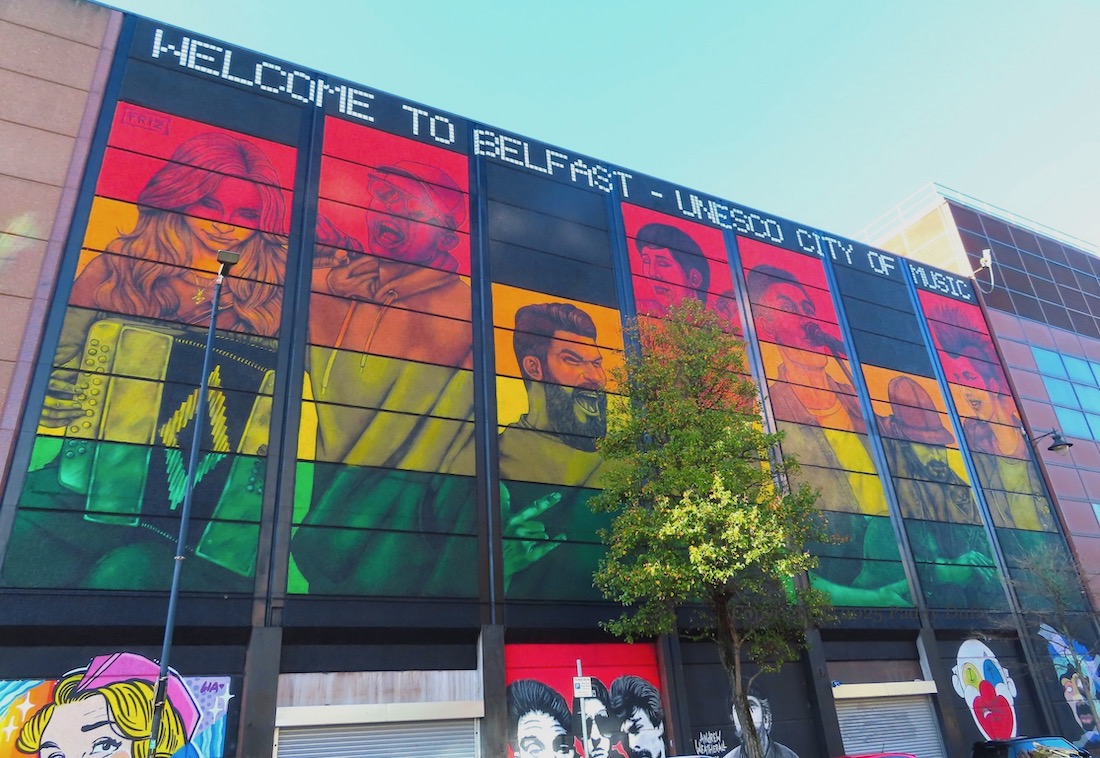
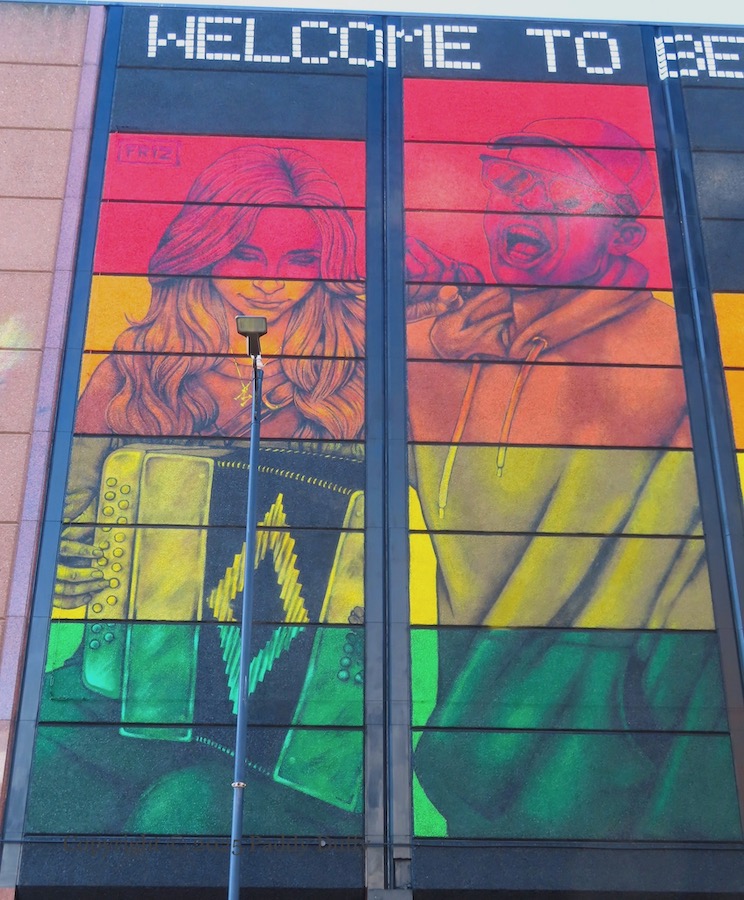
Belfast was designated a UNESCO “city of music” four years ago, in November, 2021. To mark the anniversary, Friz (web) and NRMN (ig) have painted this large piece of street-art in the guise of a VU indicator (with seven segments, nine levels, four colours). The city’s efforts to encourage music are outlined in the ‘Music Matters’ plan.
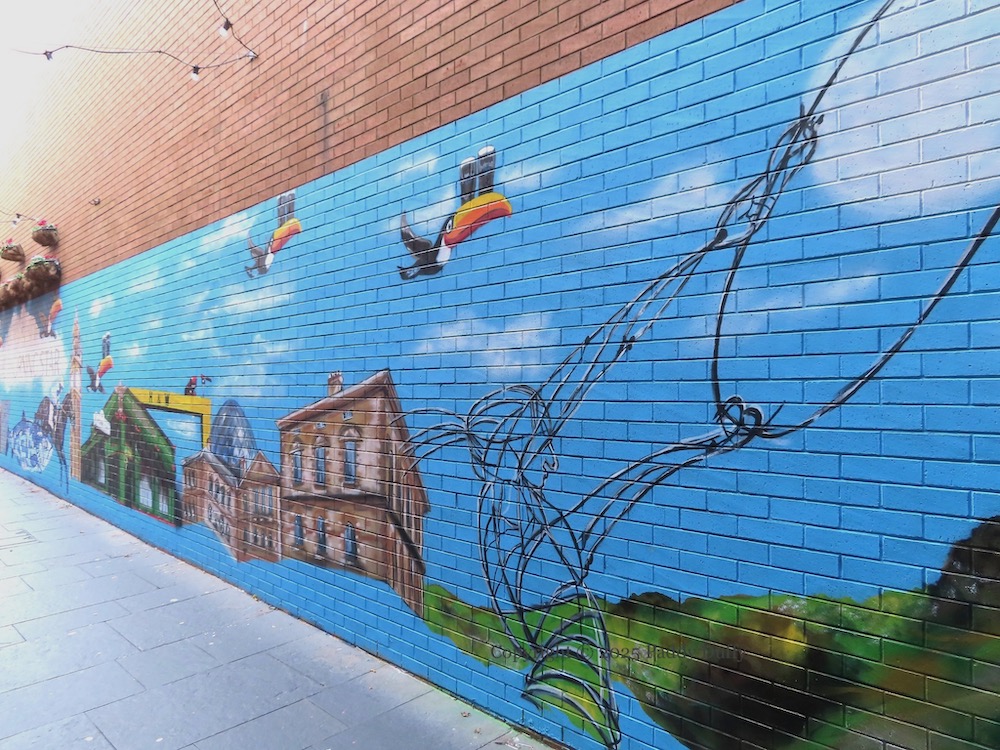
The Morning Star (web) is a bar in Pottinger’s Entry that dates back – as a coach halt – all the way to 1810. (For a full history, see Lord Belmont.) This new mural, by Graffic Belfast (ig), features Guinness toucans flying over a variety of local landmarks.
















 Paddy Duffy Collection