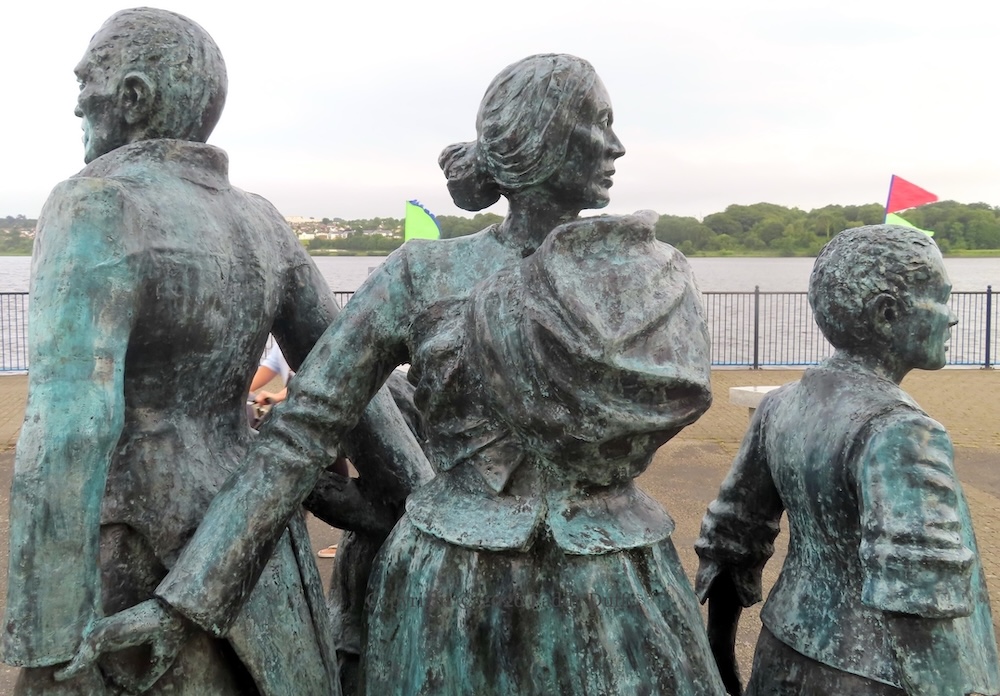
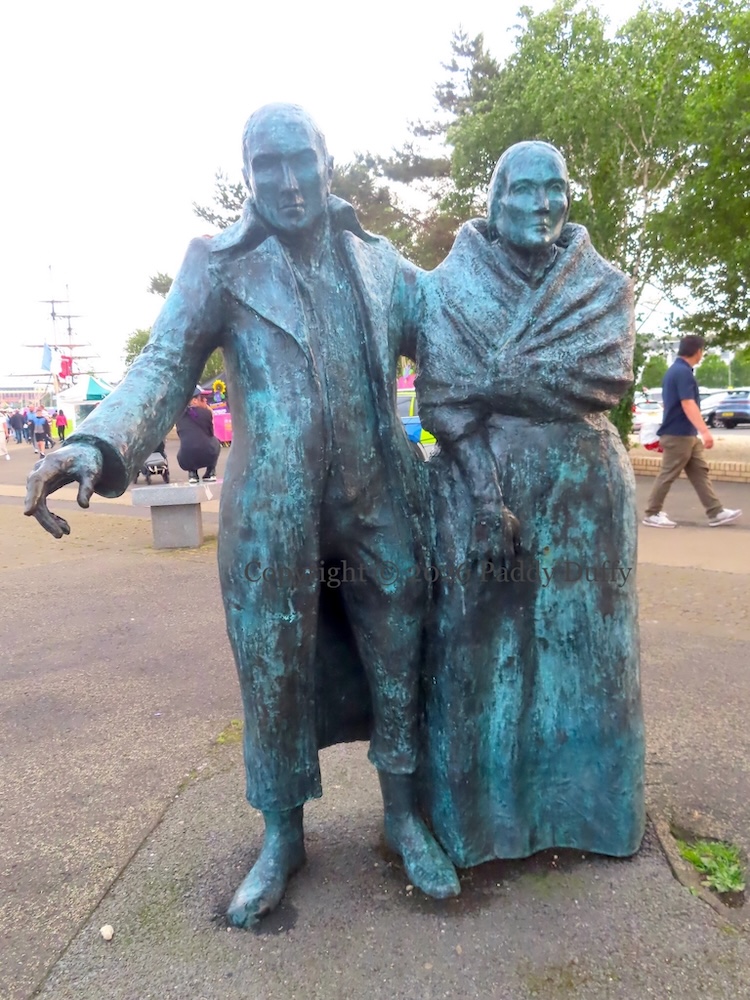
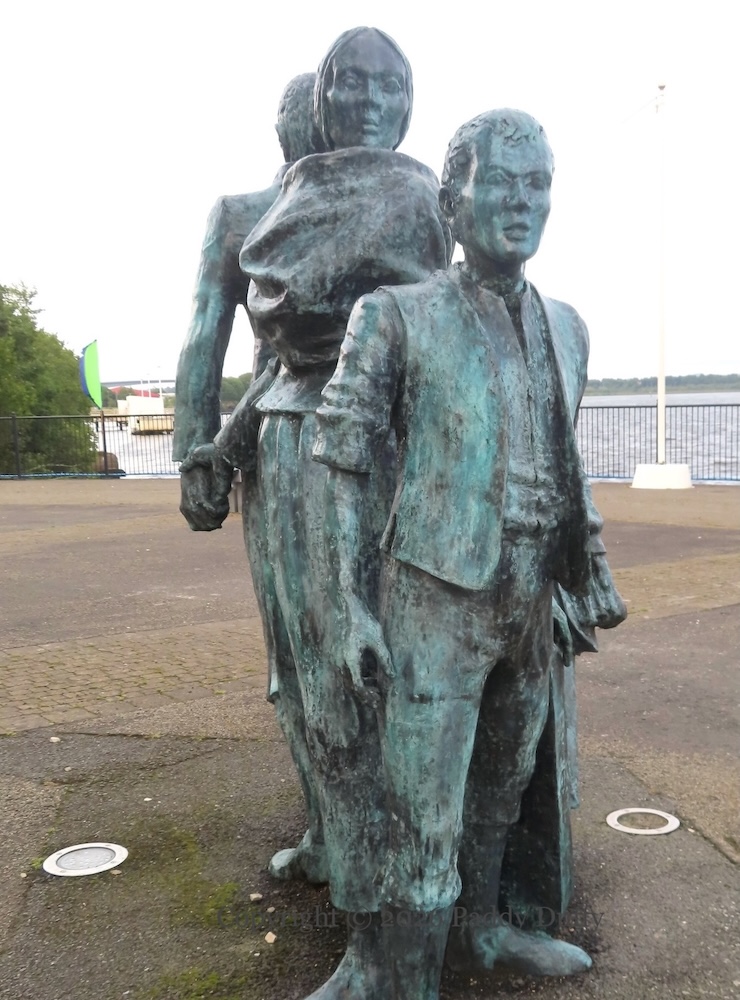
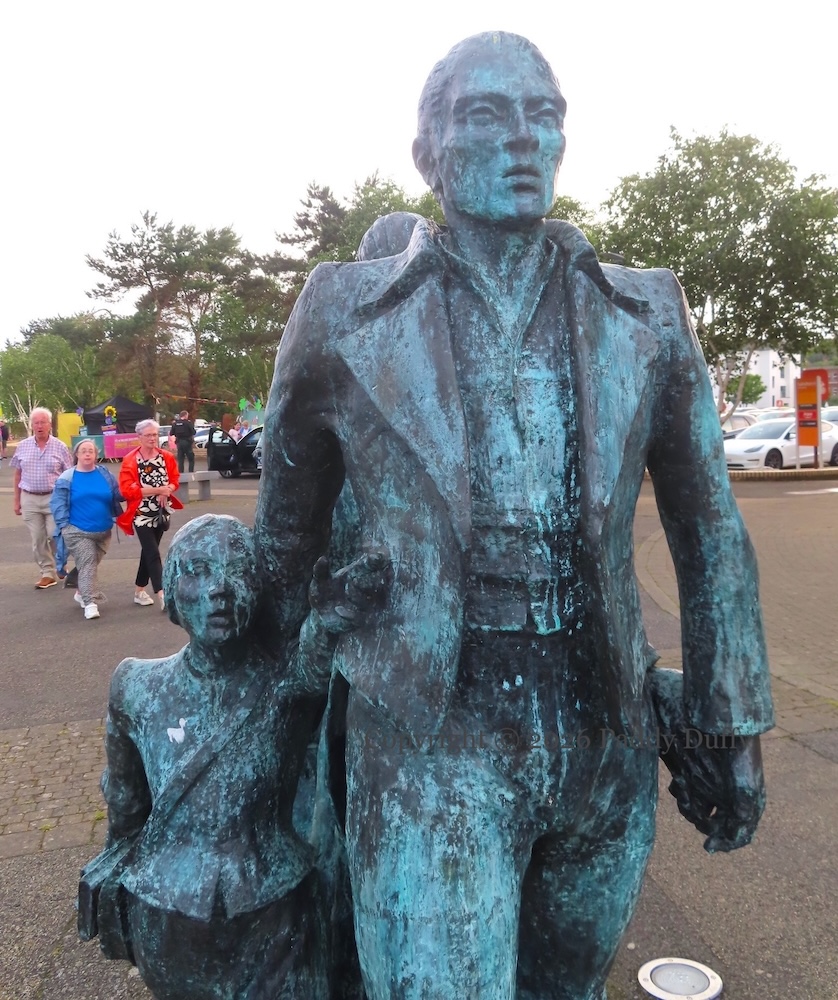
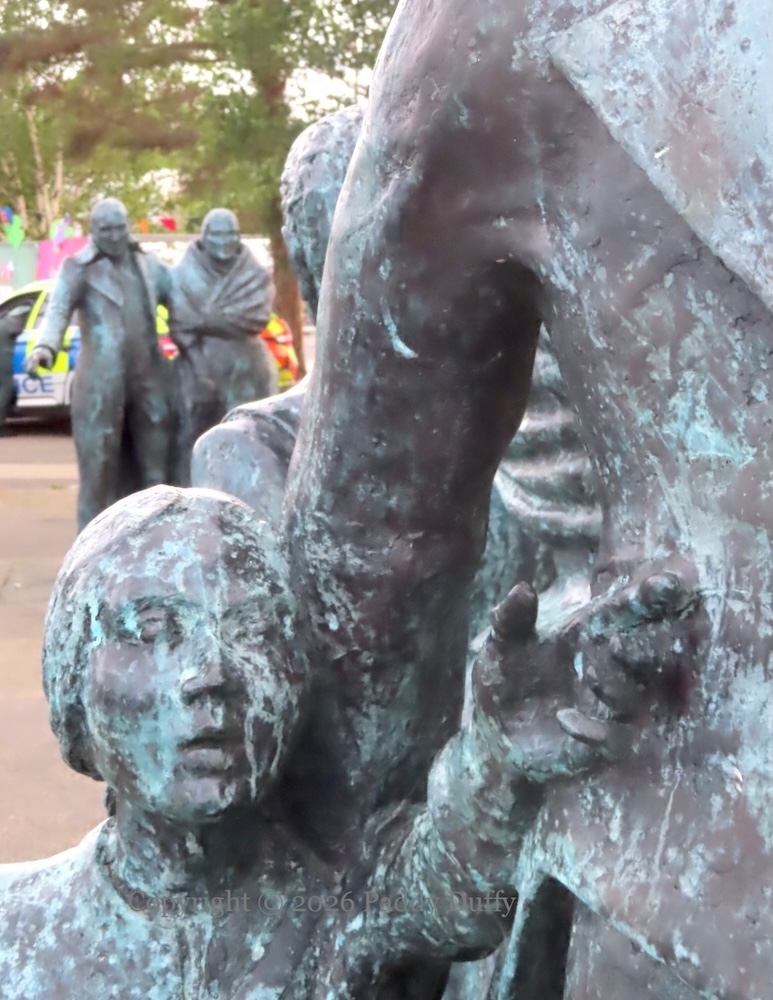
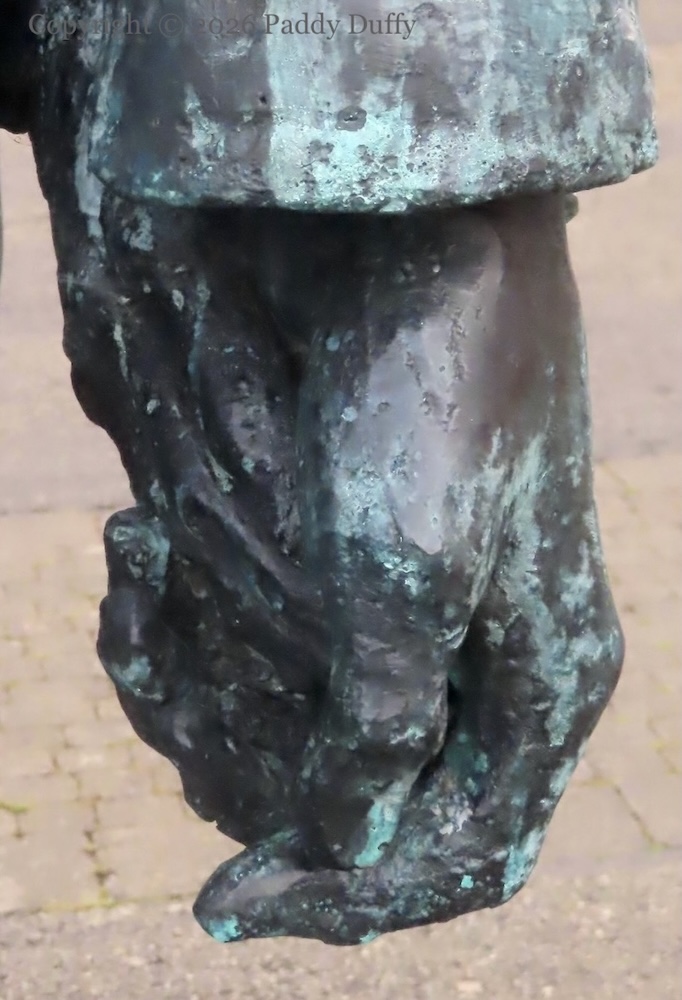
‘The Emigrants’ is a set of three statues (two of which are shown here) created by Eamonn O’Doherty in 1990 (DIB) which stood for many years in Waterloo Place (Peter Moloney has images) until c. 2008, when they were (put into storage and eventually) moved to the waterfront, at a point where ships would have departed for North America during the Hunger.
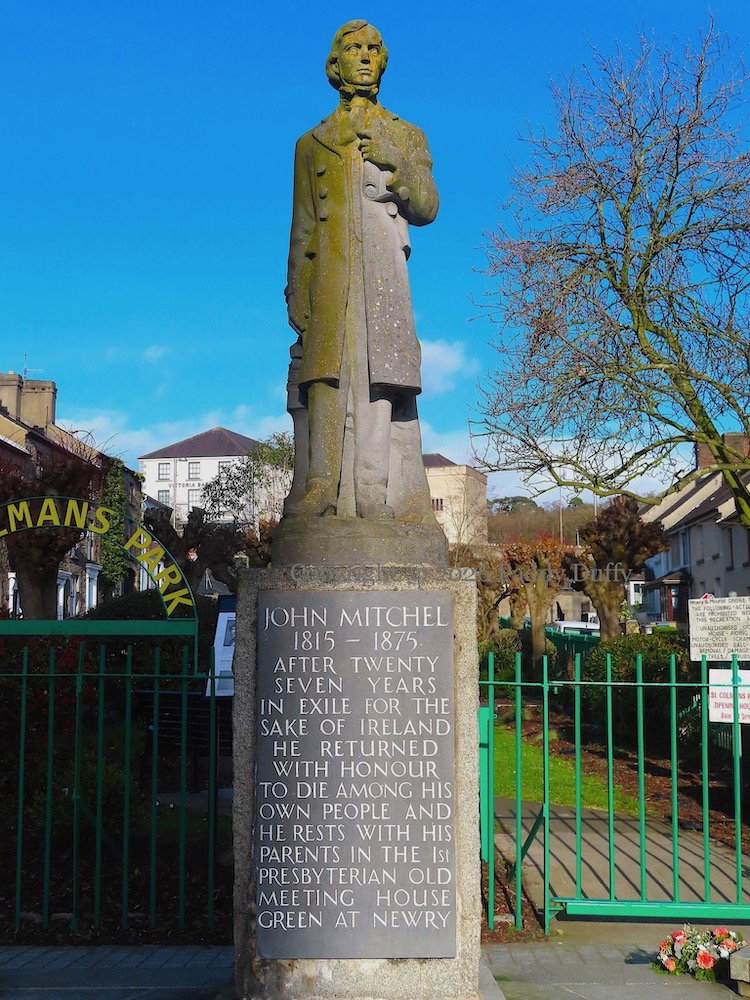
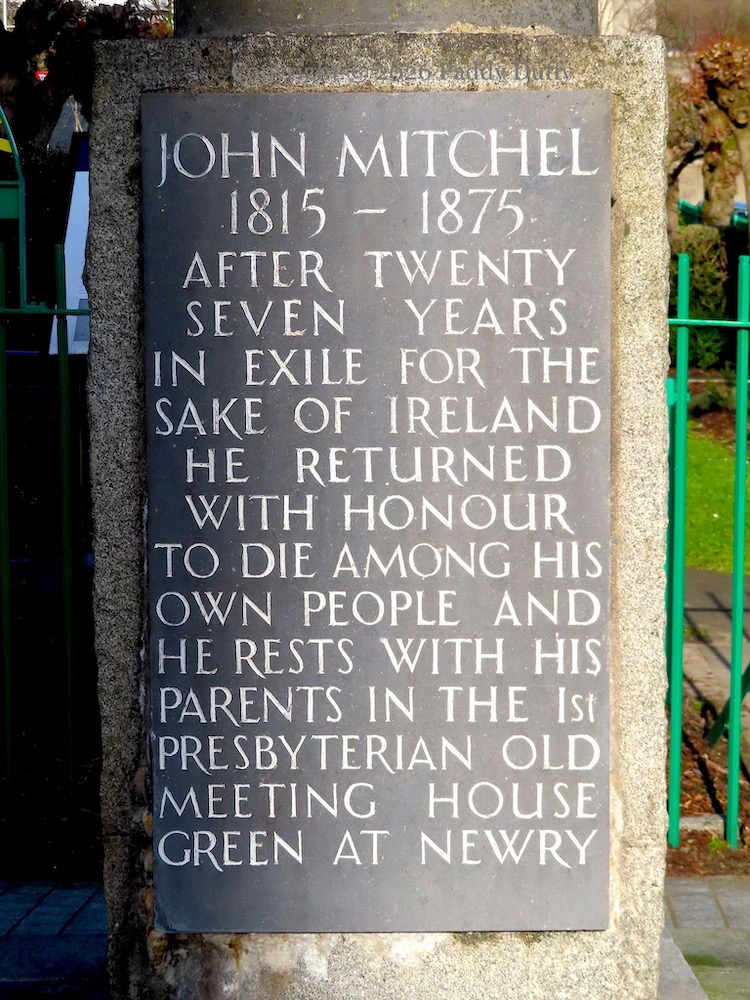
“John Mitchel 1815 – 1875 After twenty years in exile for the sake of Ireland he returned with honour to die among his own people and he rests with his parents in the 1st Presbyterian old meeting house green at Newry.”
Mitchel graduated from Trinity at 19 and became an attorney in Newry and Banbridge before becoming a writer and editor for The Nation (the phrase “England’s difficulty is Ireland’s opportunity” comes from an 1845 article) and then The United Irishman. After 16 editions, he was arrested and convicted of treason and sent to penal colonies in Bermuda and Tasmania. He escaped to the USA, where he was an ardent supporter of slavery. When slavery was abolished, he again took up the cause of Ireland, returned to Ireland, won the Westminster seat for Tipperary but was barred, as a felon, from taking it, and died unexpectedly at age 59 (WP).
John Mitchel Place, Newry, in front of St Colman’s Park.
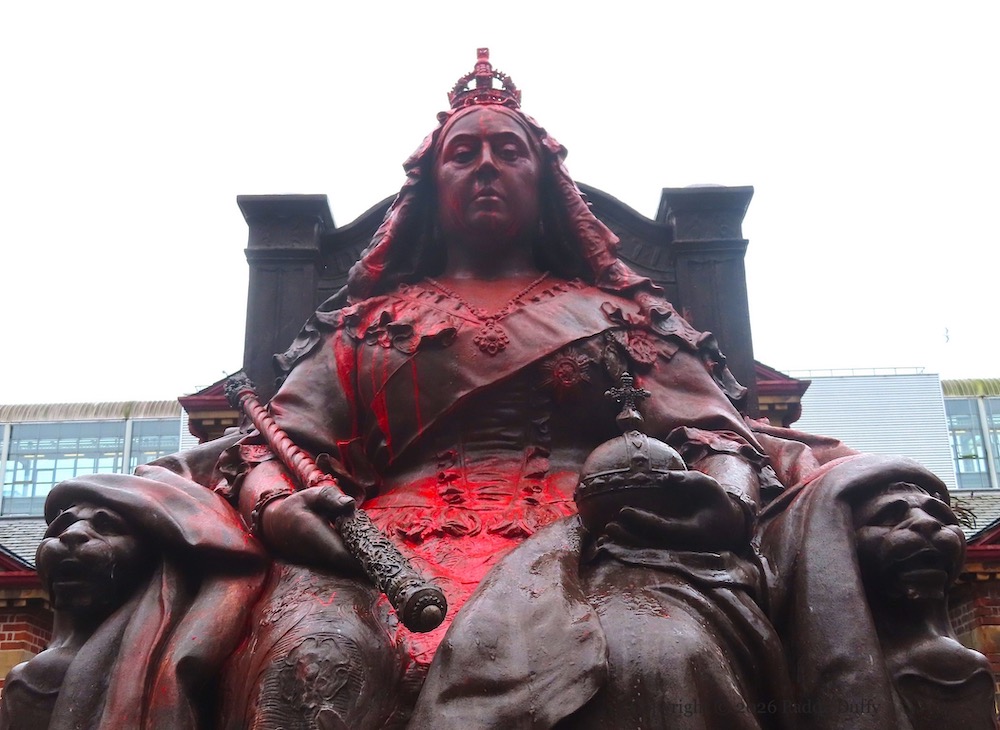
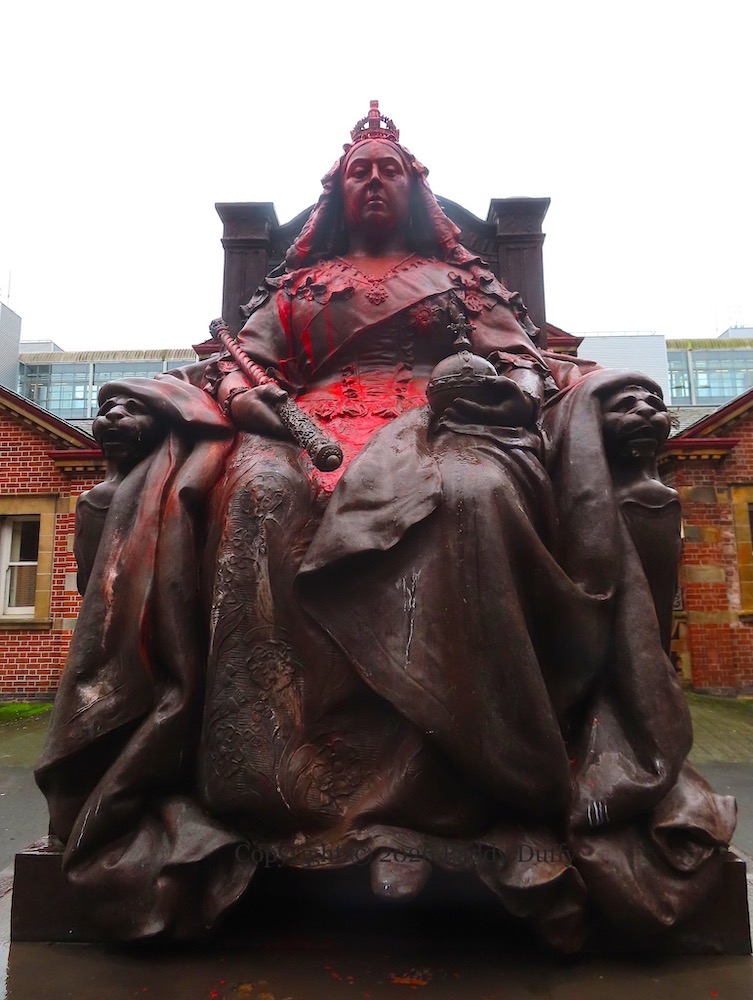
Belfast Royal Hospital was renamed in honour of Queen Victoria in 1899 (two years before her death) and a bronze statue by J. Wenlock Rollins (Public Statues) was installed in 1903 at the entrance to the hospital in its new Grosvenor Road location.
Activists from Lasaır Dhearg (web) poured red paint over what it called a “symbol of empire” on Friday (February 27th) (News Letter | MSN’s copy of the Irish News story). Paint remained on Sunday, despite an earlier attempt to wash it off (Independent).
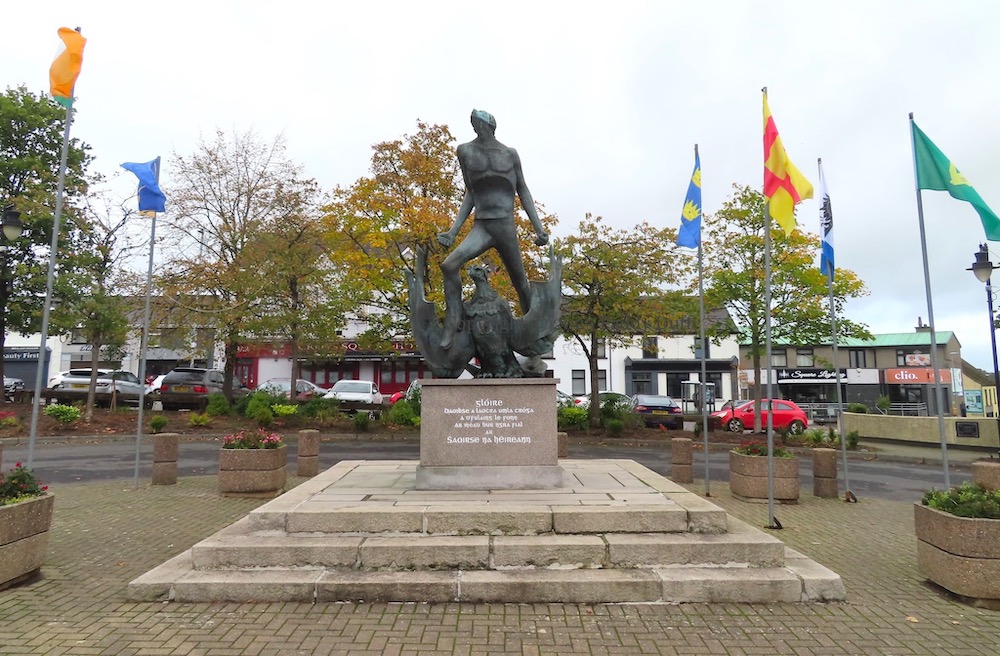
This is the republican memorial in the centre of Crossmaglen (in Cearnóg An Chaırdıneıl Ó Fıaıch). The monument was produced by Yann Goulet (1979), the same sculptor who did the memorial at Ballyseedy (1959), and like that work, this one depicts a young man striding forward in anger and anguish, though in this case he arises from a phoenix.
“Glóıre daoıḃse a laoċra uṁla cróga a d’ḟulaıng le fonn ar ṁéad ḃur ngrá fıal ar Ṡaoırse na hÉıreann.” “Glory to you all praised and humble heroes who have willingly suffered for your unselfish and passionate love of Irish freedom.”
To the right of the statue (in the corner of the car-park) is a plaque marking “the spot where the rosary was said each night during the 1981 hunger strike”, “unveiled by formed hunger striker Paddy Quinn on 6th May 2006”.
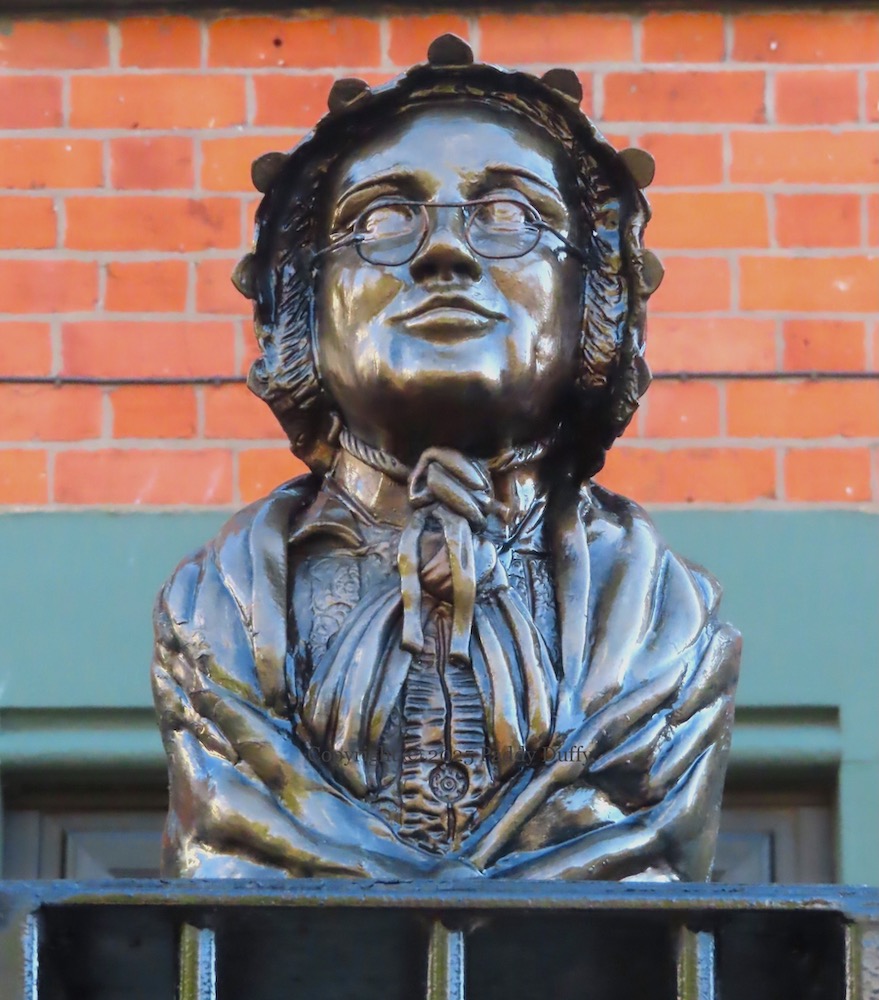
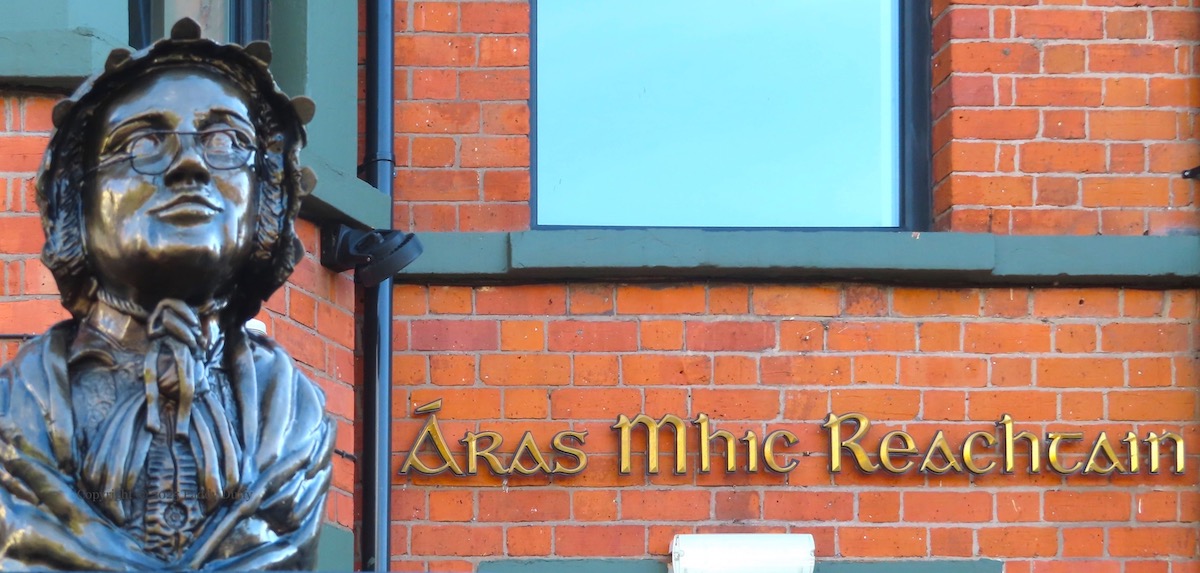
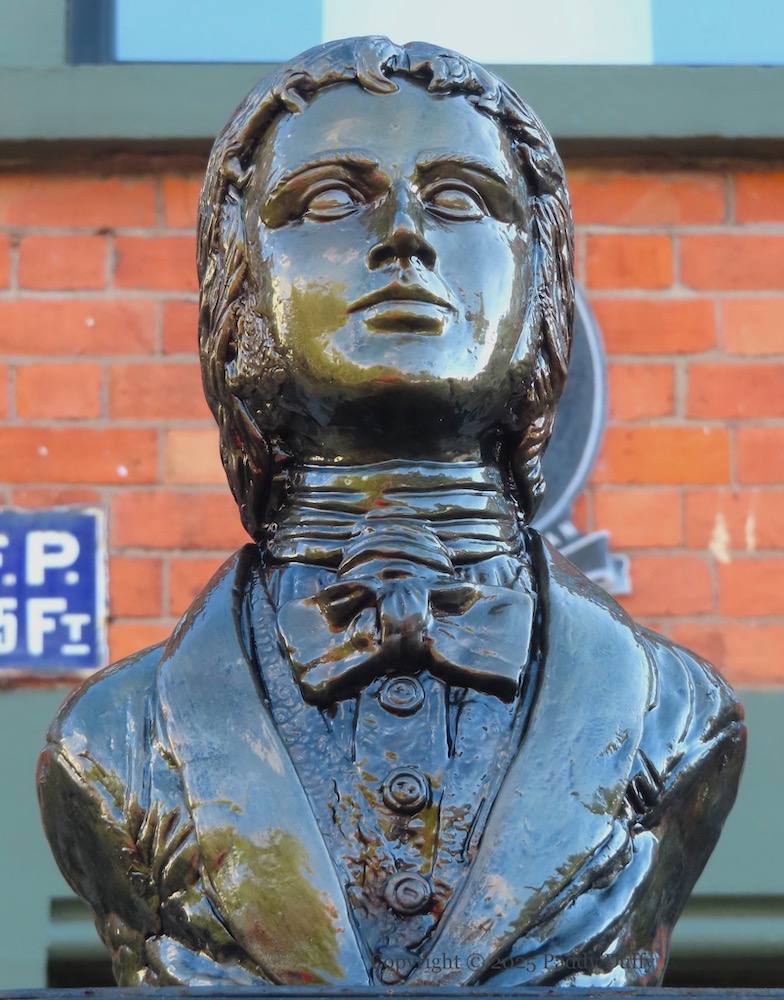
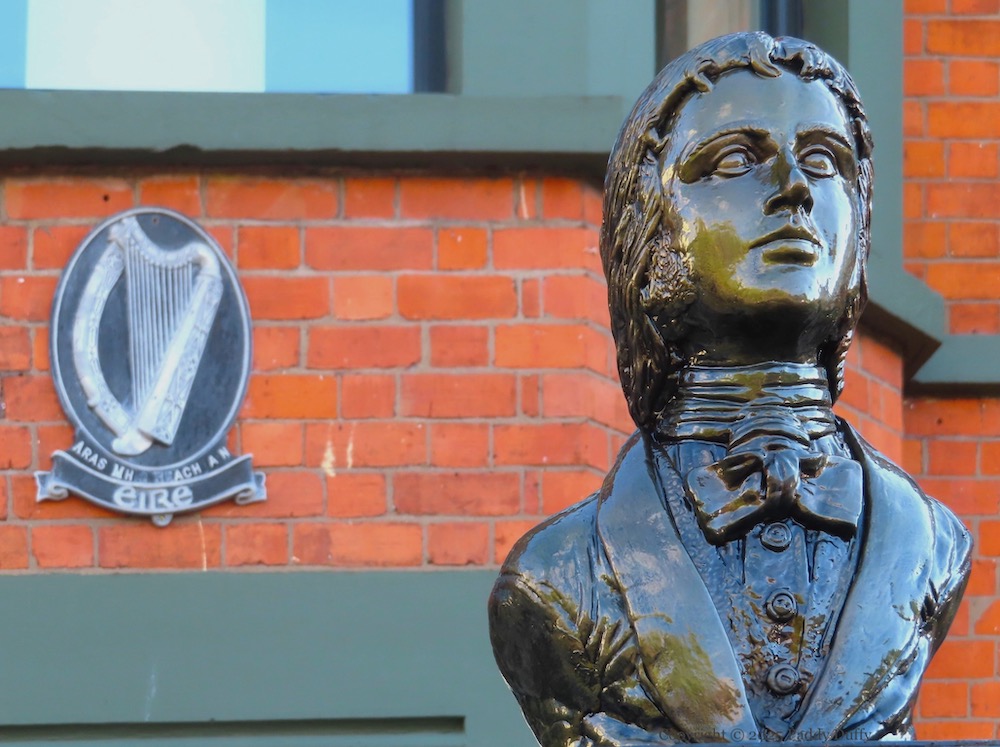
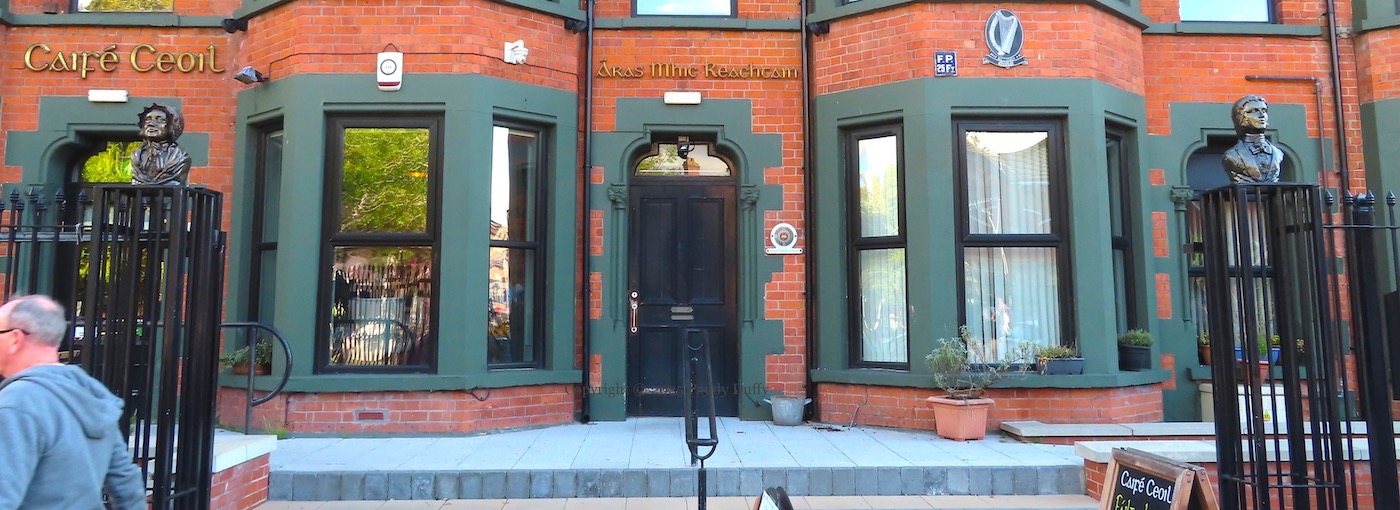
Bronze busts of Máıre Áıne Mhıc Reachtaın/Mary Ann McCracken and Anraí Seoıgh Mhıc Reachtaın/Henry Joy McCracken have been unveiled outside Áras Mhıc Reachtaın, the Irish-language centre on the Antrim Road and home of Cumann Cultúrtha Mhıc Reachtaın (web).
The pair – brother and sister – were Presbyterians and republicans; their mother was Ann Joy, daughter of Francis Joy, linen manufacturer and founder of the Belfast Newsletter. Henry led the Antrim uprising of the United Irishmen in 1798 and was hanged for it in Corn Market at age 30. (WP)
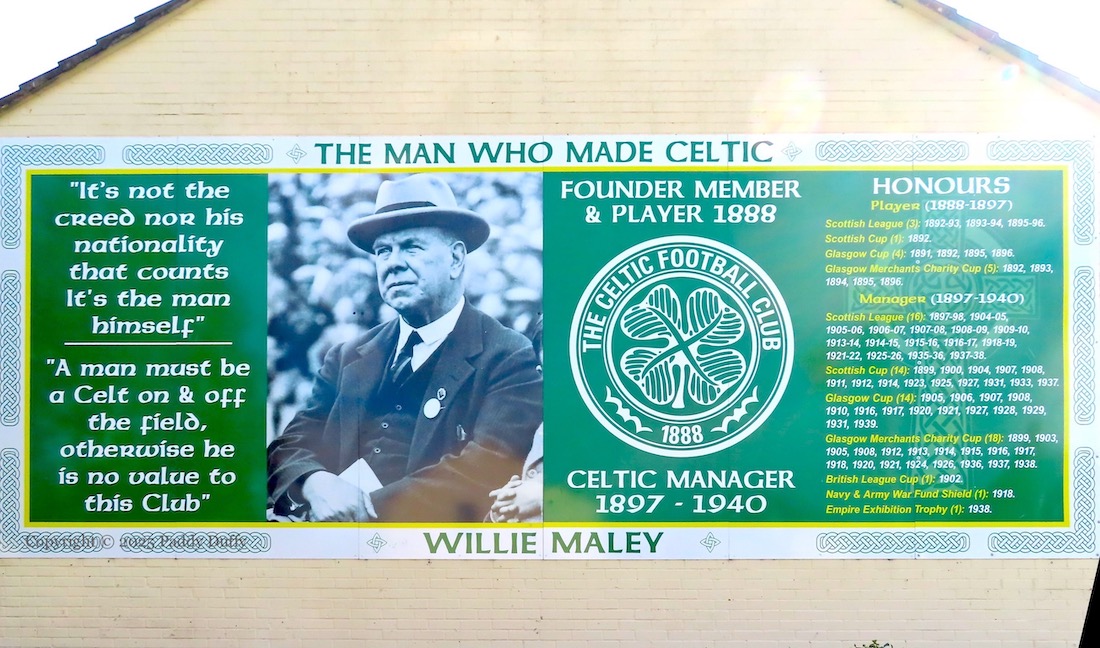
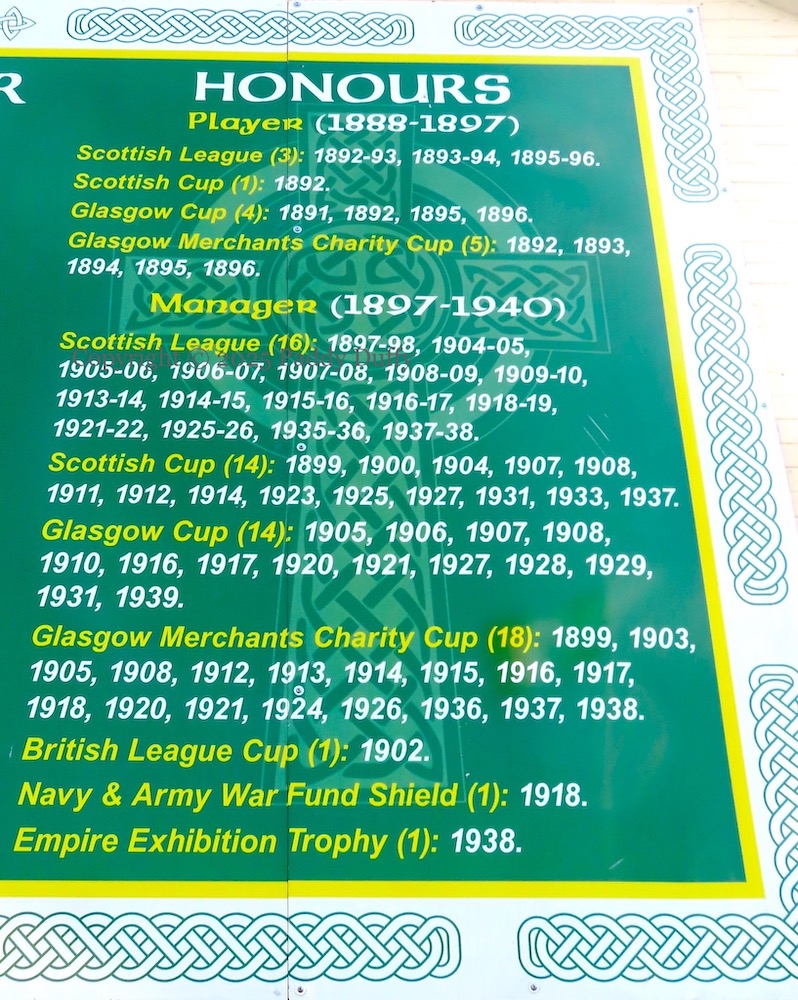
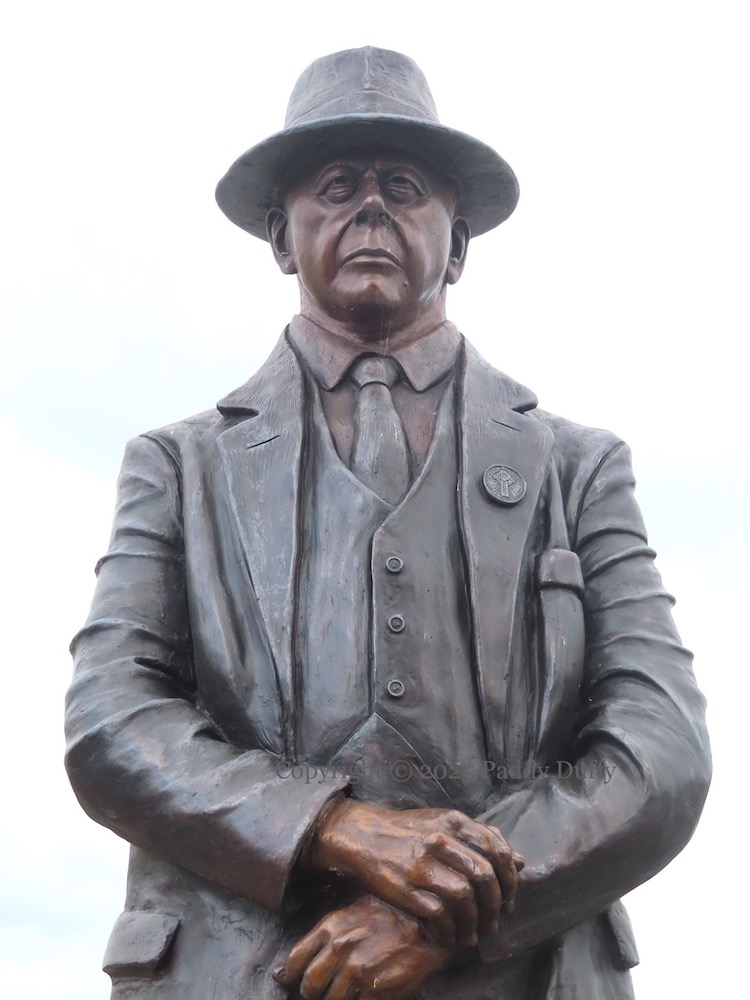
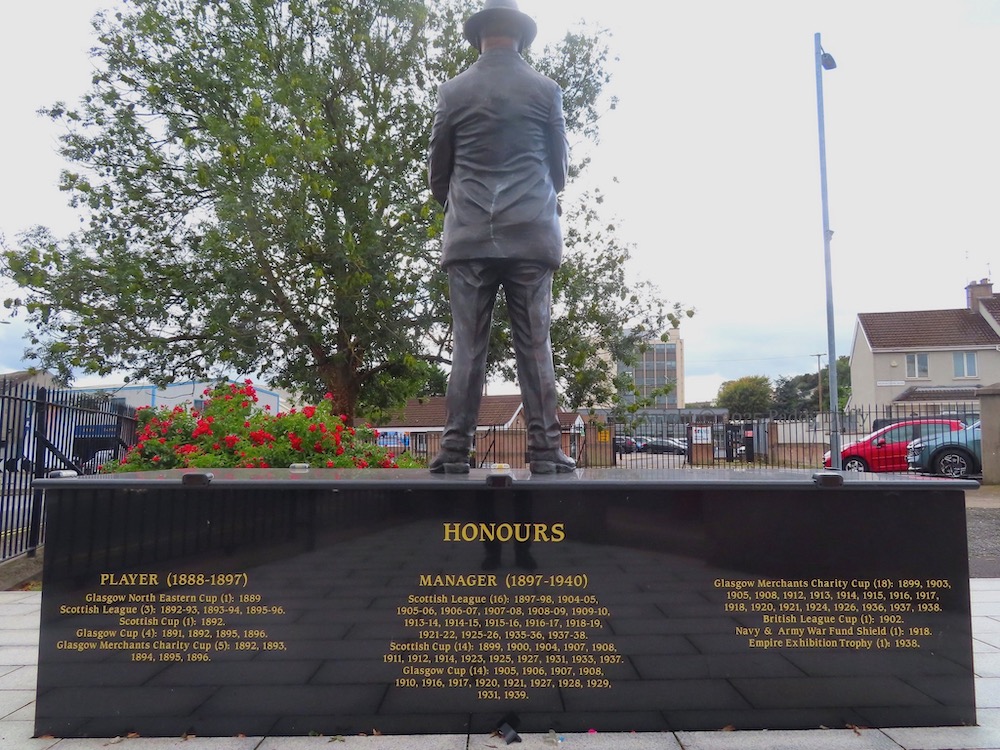
Here are three pieces (two boards and a statue) celebrating Willie Maley, who was born in Newry barracks in 1868 – his father was a sergeant in the 21st Regiment Of Foot. The following year the family moved to Scotland. Maley played in midfield for Celtic and made two international appearances for Scotland. He became manager in 1897 at the age of 29 and steered the club to sixteen league championships and fourteen Scottish Cups.
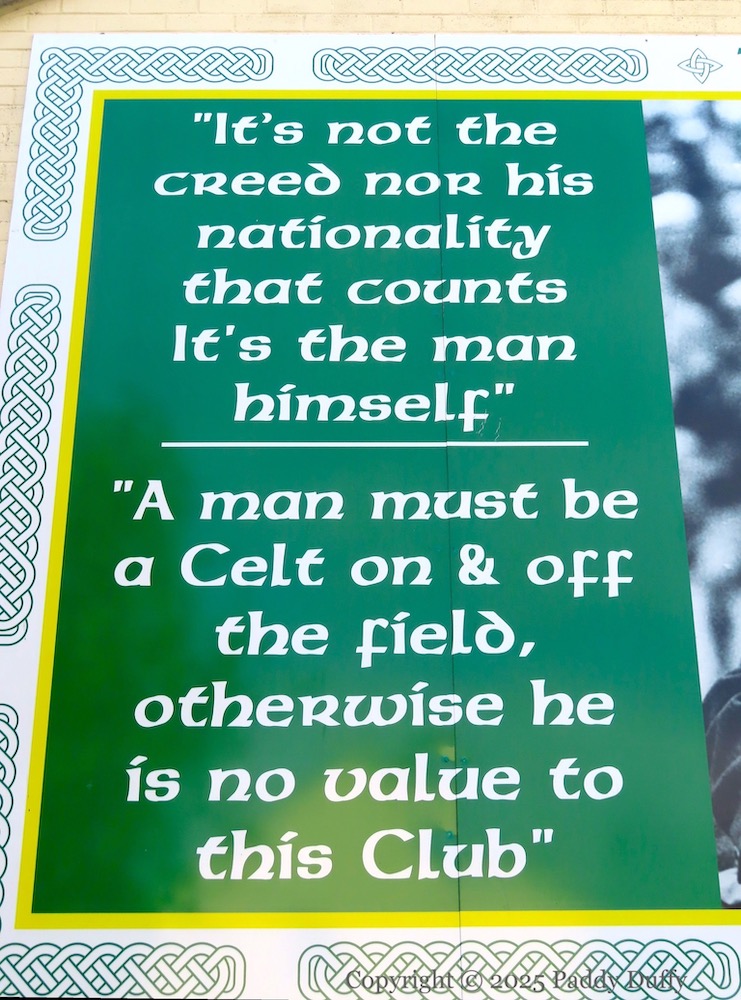
The board (above) in Mourne View Park (Mourne View is built on the site of the infantry barracks – the old walls are still standing): “The man who made Celtic – Willie Maley – founder member & player 1888, Celtic manager 1897-1940.” “It’s not the creed nor his nationality that counts. It’s the man himself.” “A man must be a Celt on & off the field, otherwise he is no value to this Club.”
The board is at the bottom of Mourne View Park in Erskine Street, on the south side of the barracks: “The Celtic vision was born here. William Patrick Maley born here 25th April 1868, the military barracks, Newry, died 2nd April, 1958, Glasgow.” “My love for Celtic has been a craze, without it my experience would be empty indeed.”
The statue is at the junction of Camlough Road and Monaghan Row and was launched in 2023 (Newry.ie): “”Mr. Celtic” William Patrick Maley. 43 years as Glasgow Celtic’s first ever manager, winning 19 league titles & over 40 other trophies as player/manager. “It’s not the creed nor his nationality that counts. It’s the man himself.” Born in Newry 25th April 1868. Glasgow Celtic fans will always fondly remember Mr Willie Maley.”
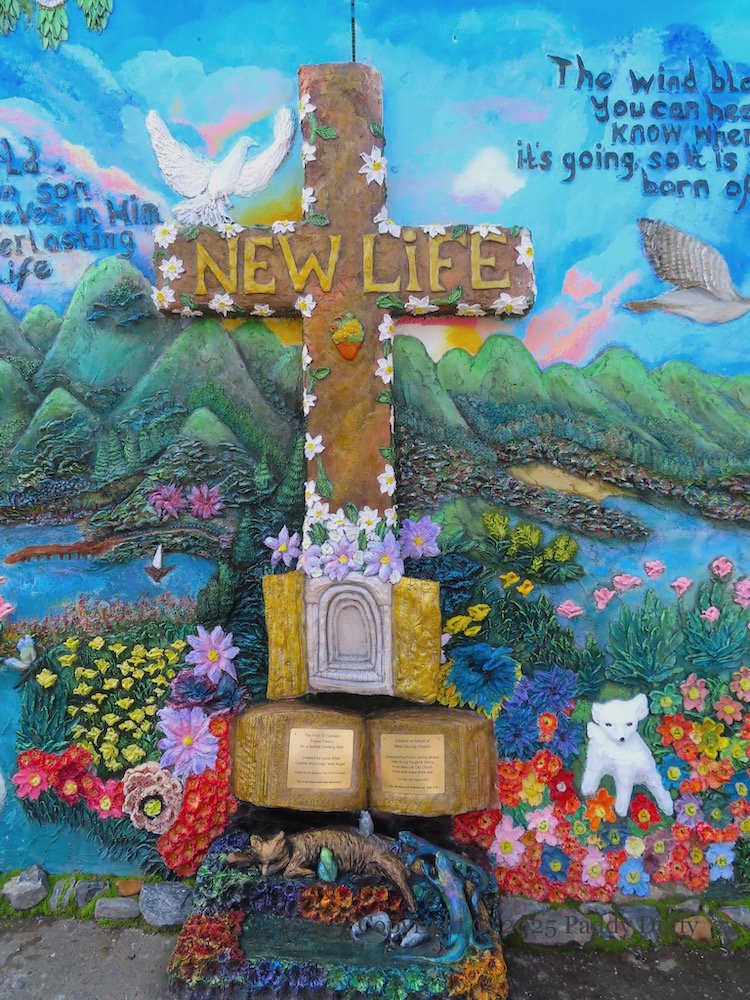
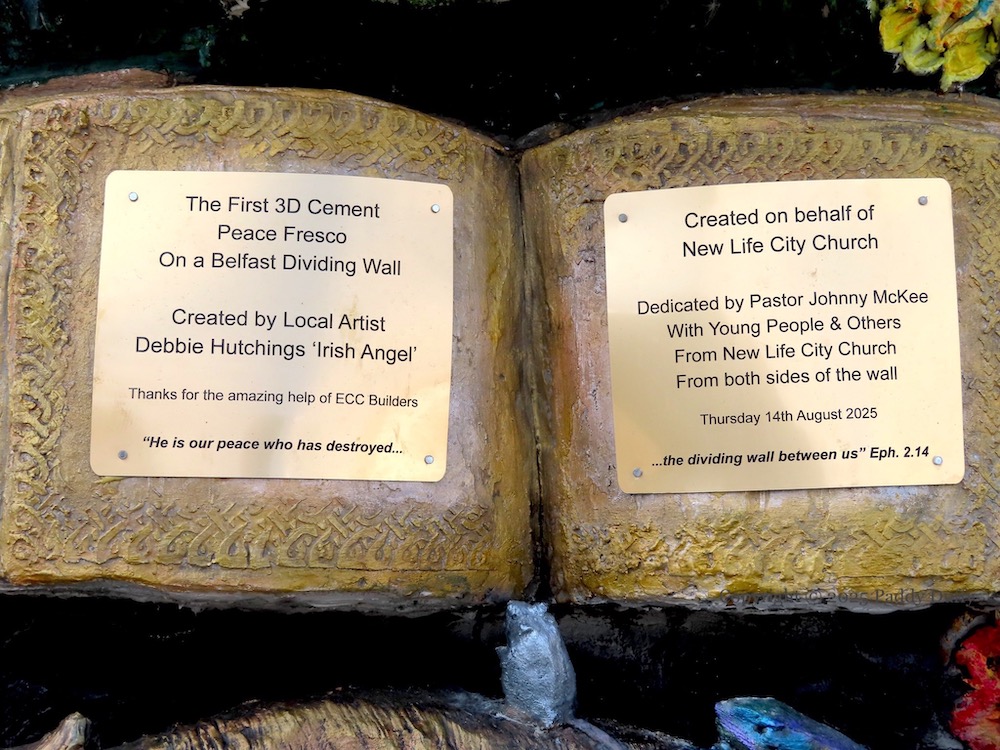
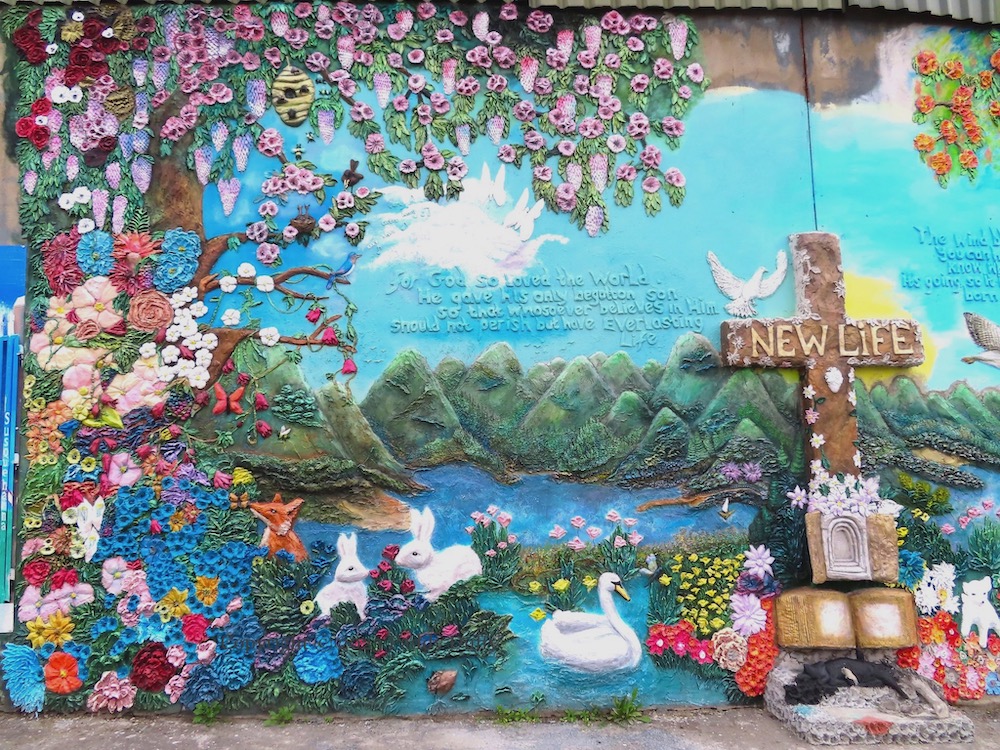
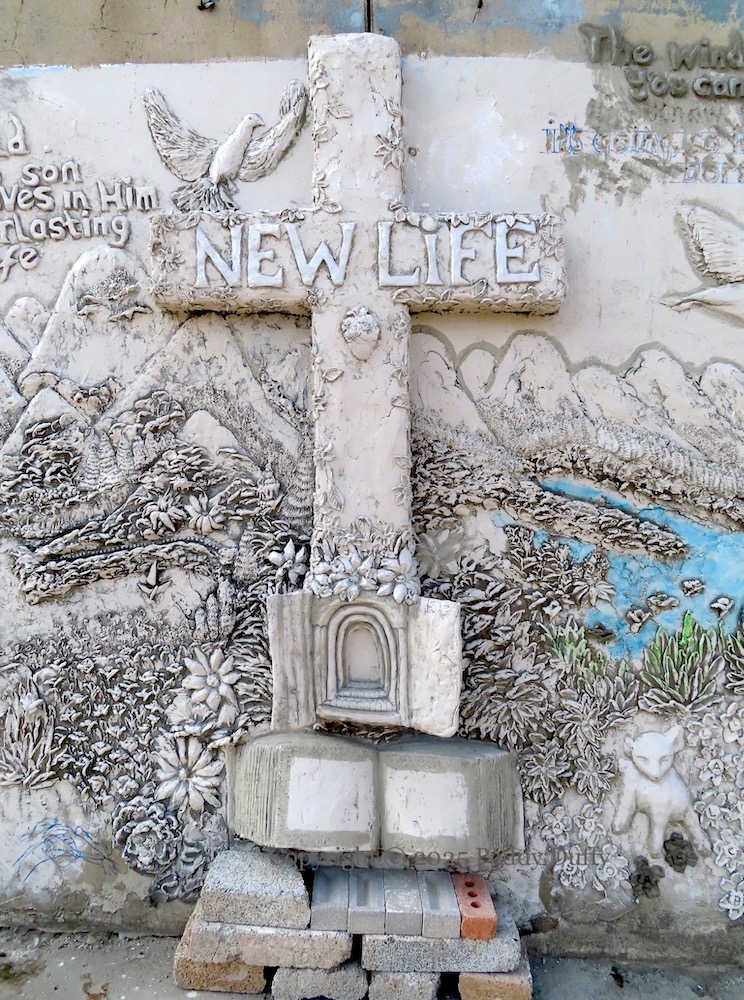
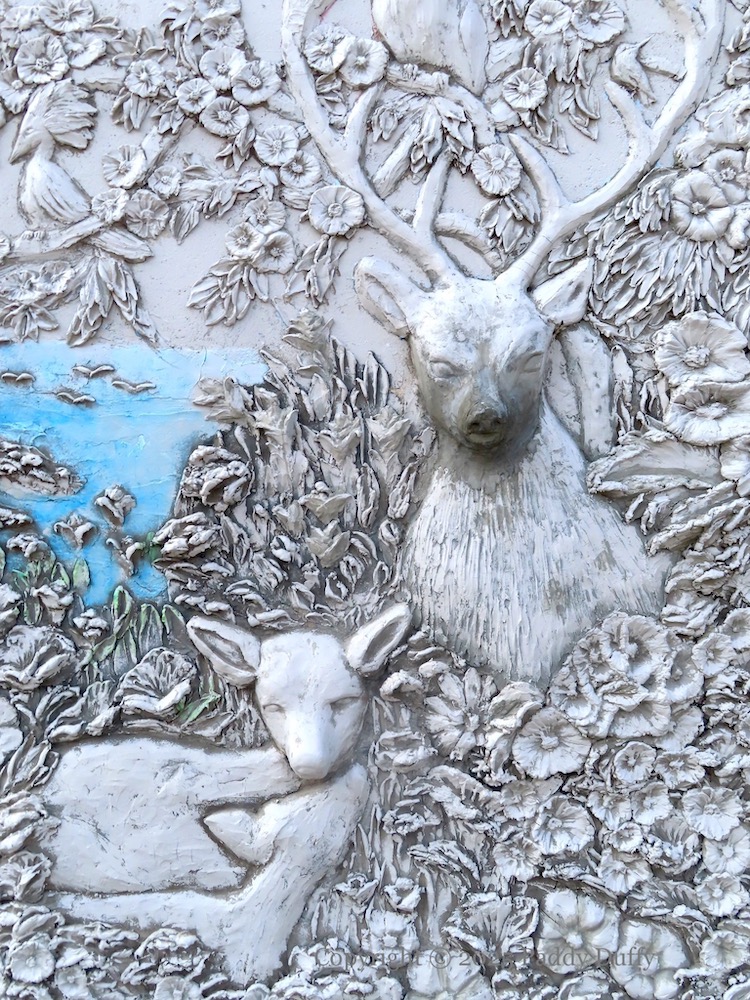
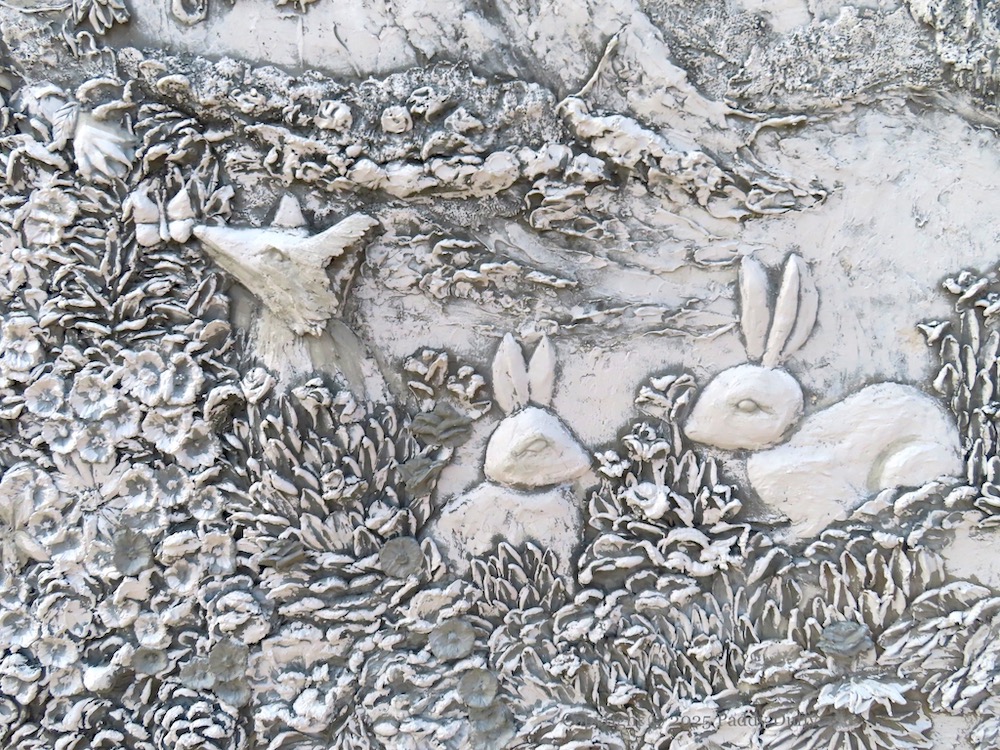
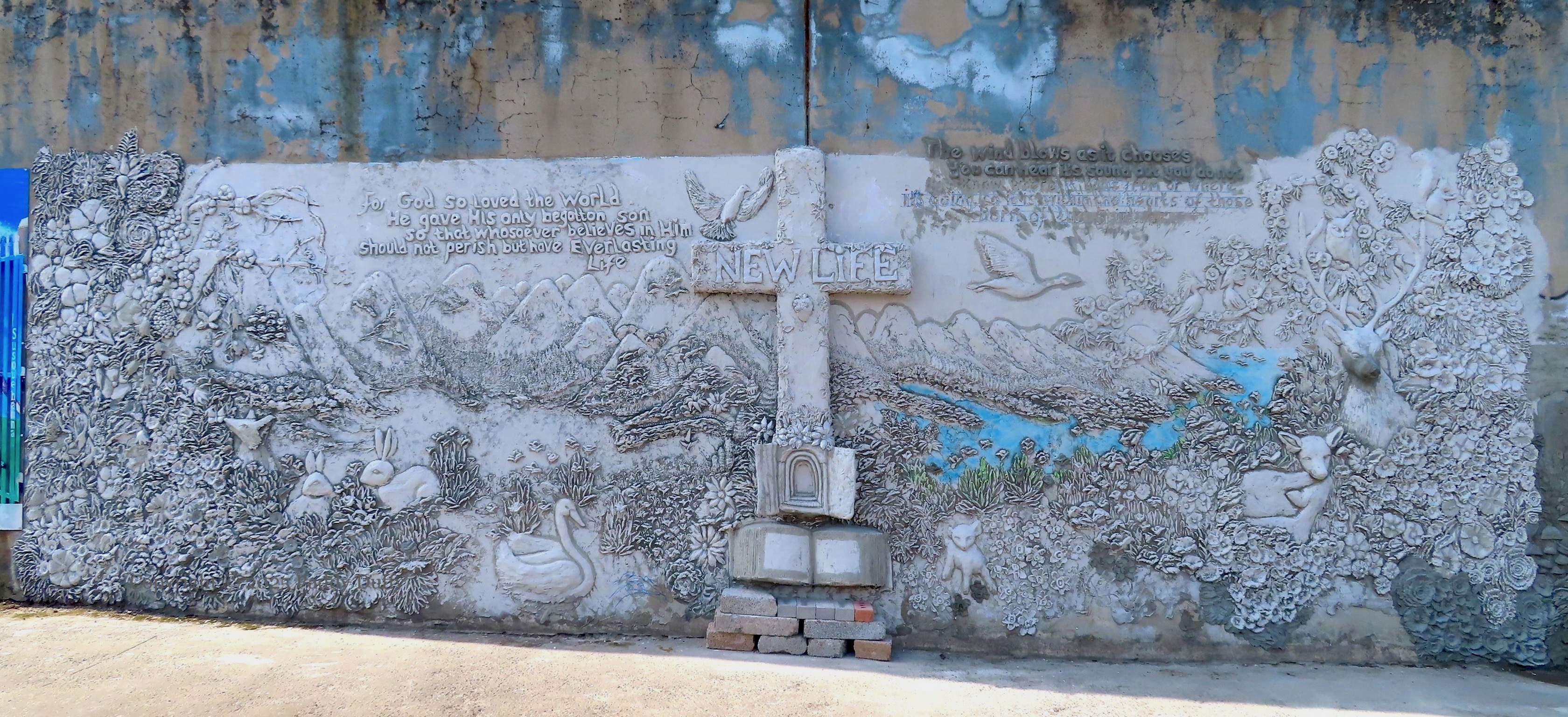
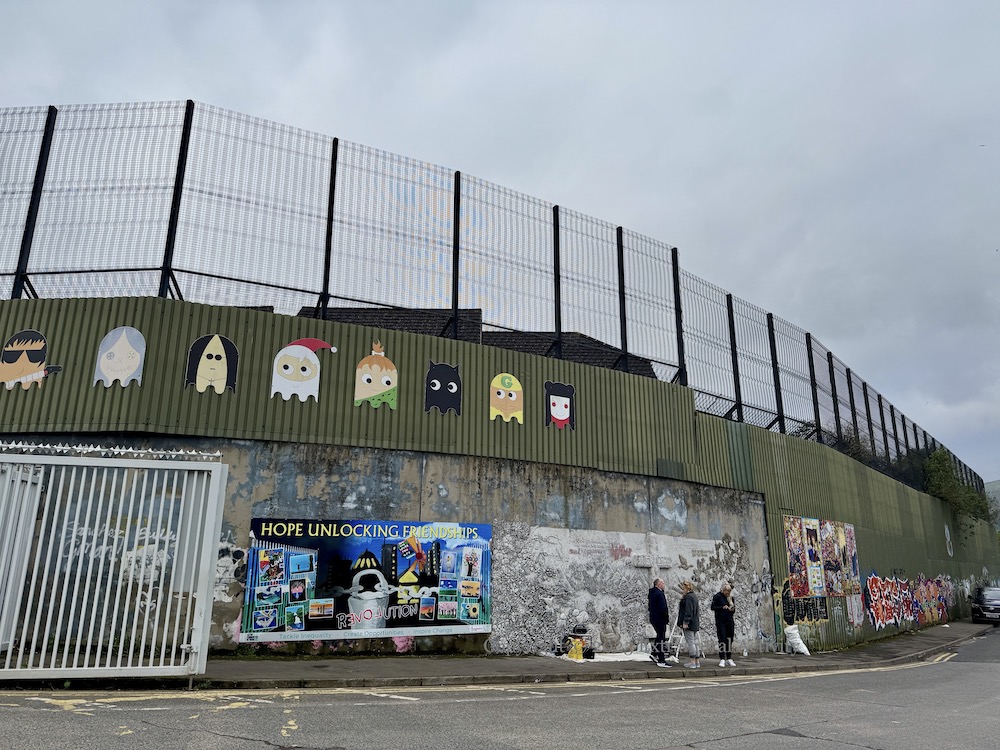
Work on the “New Life” (New Life City church – Fb) concrete relief on the Cupar Way “peace” line (war wall) at the North Howard Street gates has been completed – with brightly coloured paints and a pair of plaques below the cross that read “The first 3D cement peace fresco on a Belfast dividing wall. Created by local artist Debbie Hutchings ‘Irish Angel’. The for the amazing help of ECC Builders. Created on behalf of New Life City Church. Dedicated by Pastor Johnny McKee with young people & others from New Life City Church from both sides of the wall. Thursday 14th August 2025. ‘He is our peace who has destroyed the dividing wall between us’ Eph. 2.14.”
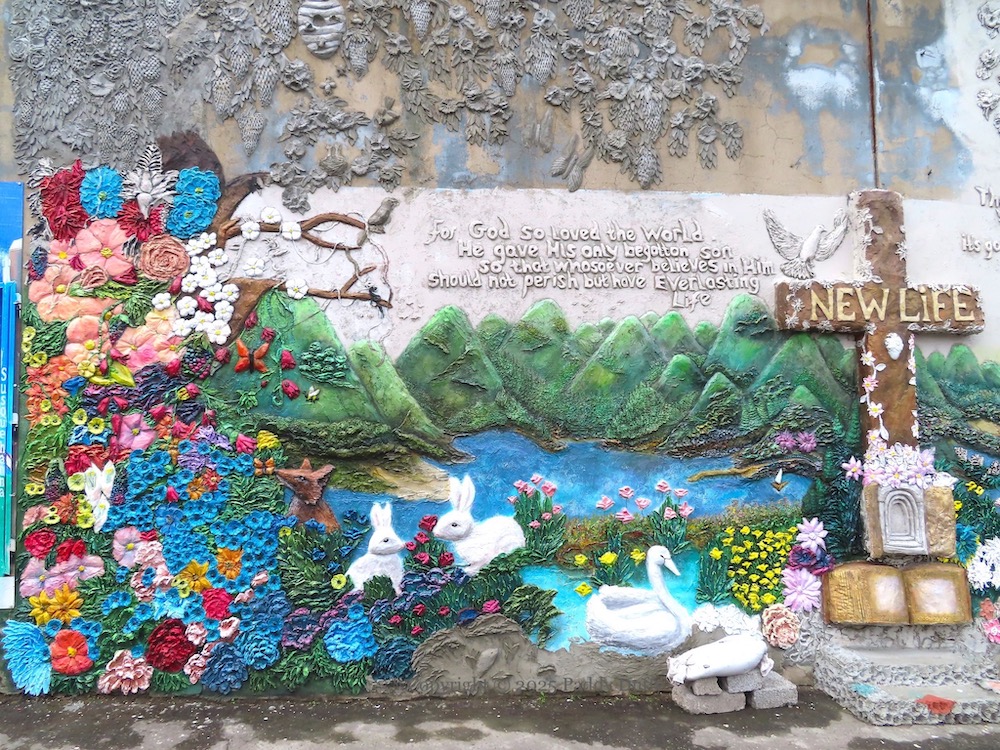
There are in-progress images below from August 3rd and July 6th. For images from May 11th and May 1st, see The Wind Blows As It Chooses.
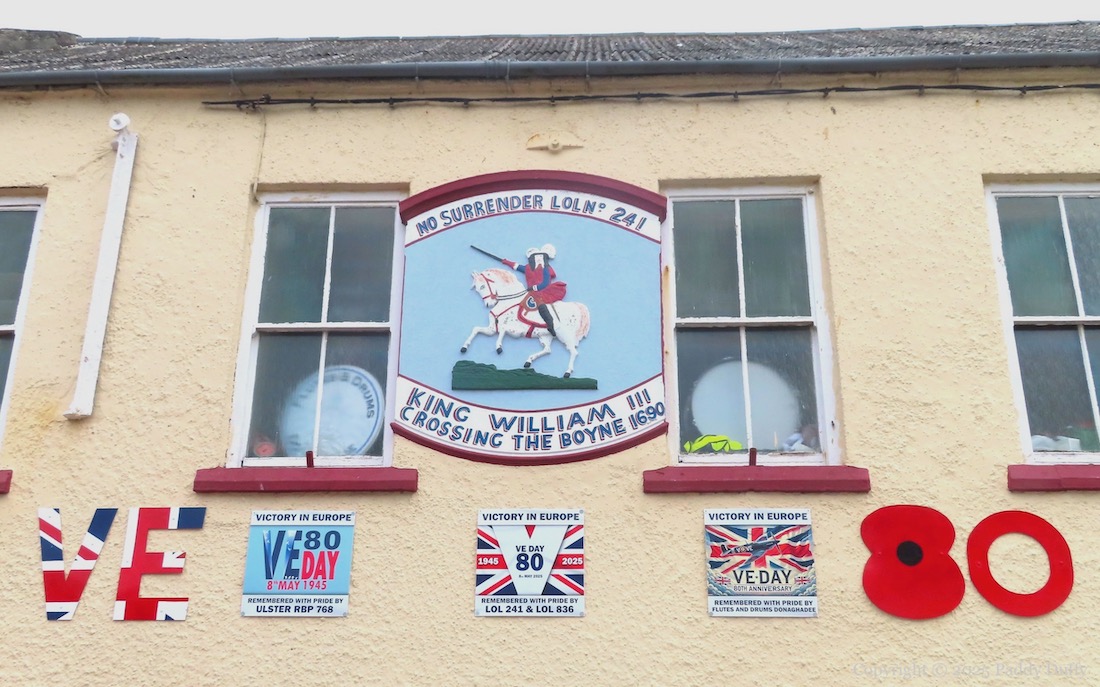
This image of King Billy crossing the Boyne in 1690 is on the No Surrender lodge (LOL 241) in Donaghadee. King William III’s victory in Ireland is celebrated annually on July 12th, with parades and gatherings of fraternal lodges and flute bands.
William’s victory is joined here by a number of small boards commemorating the 80th anniversary of Victory In Europe, on May 8th, 1945, “remembered with pride” by Orange lodges 241 and 836 (Brother Henry Ferguson Memorial), Royal Black Preceptory 768 (Ulster), and Flutes And Drums Donaghadee (Fb).
Manor Street, Donaghadee, replacing two Platinum Jubilee boards.
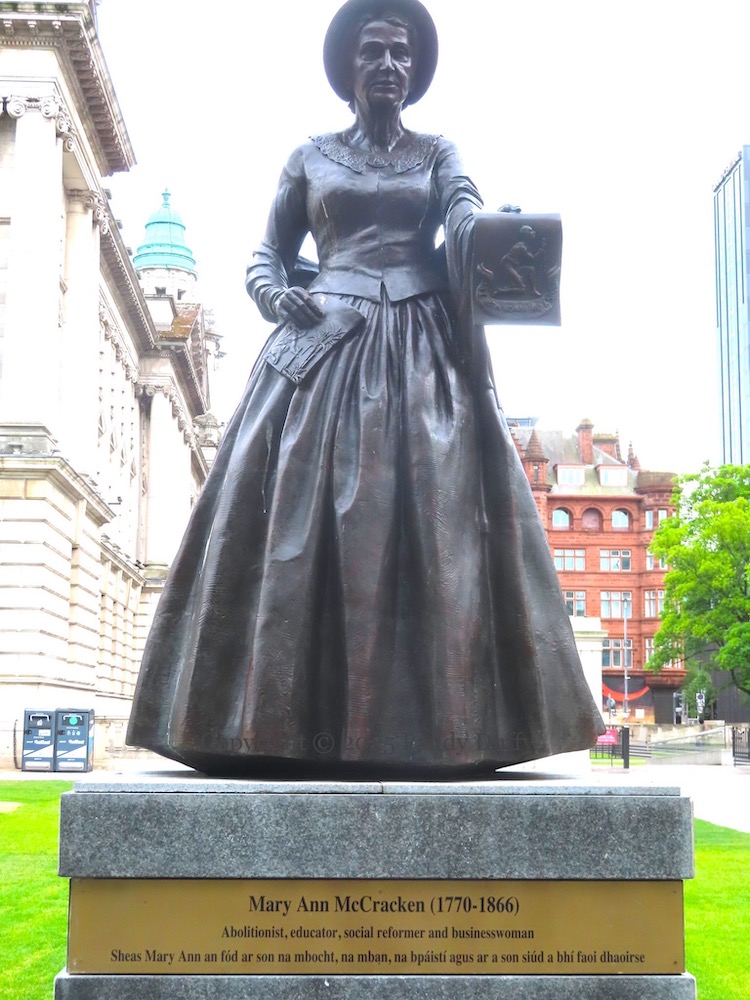
“Mary Ann McCracken (1770-1866) Abolitionist, educator, social reformer and businesswoman. Sheas Mary Ann an fód ar son na mbocht, na mban, na bpáıstí agus ar son sıúd a bhí faoı dhaoırse. [Mary Ann stood up for the poor, women, children, and for those who were enslaved.]”
“Mary Ann McCracken’s feminist ideals and commitment to the principles of Equality, Liberty, Fraternity applying equally to the Rights of Woman defined her participation in the United Irish Movement.” For McCracken’s connection to the 1798 Rebellion, see These Are Times That Try Men’s Souls.
The statue was unveiled in the grounds of Belfast City hall together with a statue to Winifred Carney on International Women’s Day (March 8th) 2024; both statues were produced by Ralf and Naomi Sander (BCC).
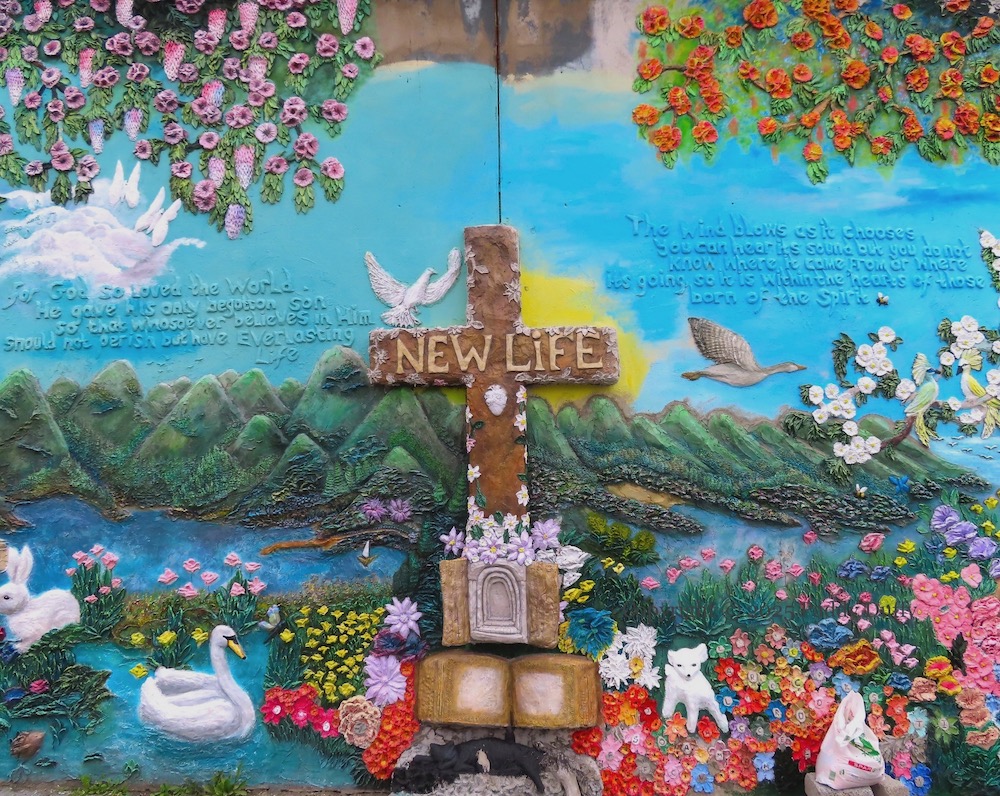
These are images of a new concrete relief-work in progress on the Cupar Way “peace” line (war wall) at the North Howard Street gates. The creator is Debbie Hutchings, a member of the New Life City church (Fb) (Belfast Media); the piece is on top of the ‘repent’ version of the New Life mural, and it contains a scriptural quote John 3:16: “For God so loved the world He gave His only begotton [begotten] son so that whosoever believes in Him should not perish but have everlasting life.”
There is video of Hutchings at work in this Irish News video on Fb and at the BelTel. Work began at the beginning of April and the piece is perhaps still unfinished – see the incomplete text of John 3:8 in the third image: “The wind blows as it chooses, you can hear it’s [its] sound but you do not know where it came from or where it is going; so it is with the hearts of those born of the spirit”.

















 Paddy Duffy Collection